Cracking a skill-specific interview, like one for Criticality Excursion Analysis, requires understanding the nuances of the role. In this blog, we present the questions you’re most likely to encounter, along with insights into how to answer them effectively. Let’s ensure you’re ready to make a strong impression.
Questions Asked in Criticality Excursion Analysis Interview
Q 1. Define criticality excursion and explain its potential consequences.
A criticality excursion is an uncontrolled chain reaction in a fissile material system, leading to a rapid increase in neutron population and potentially significant energy release. Imagine a snowball rolling downhill – initially small, it gathers more snow (neutrons), growing exponentially larger and faster. This uncontrolled growth in neutron population results in a significant increase in power, generating heat and potentially causing damage or even a catastrophic event. The consequences can range from minor equipment damage to severe radiological releases, depending on the amount of fissile material involved, its geometry, and the effectiveness of safety systems.
For example, a criticality excursion in a nuclear fuel reprocessing facility could lead to a significant release of radioactive materials into the environment, causing widespread contamination and health problems. Similarly, an excursion in a poorly designed storage facility for spent nuclear fuel could lead to a meltdown and a release of radioactivity.
Q 2. Describe the different methods used to prevent criticality excursions.
Preventing criticality excursions relies on a multi-layered approach that combines engineering design, administrative controls, and operational procedures. The key methods include:
- Subcritical Geometry: Designing systems so that the fissile material is always below the critical mass, even under worst-case scenarios, such as accidental accumulation. This is often achieved through careful design of fuel element spacing, vessel dimensions, and material composition.
- Neutron Poisons: Incorporating neutron-absorbing materials (e.g., boron, cadmium) into the system to reduce the neutron population and prevent a chain reaction. This acts like a brake on the chain reaction.
- Neutron Moderation Control: Controlling the amount and type of neutron moderator (e.g., water, graphite) to influence the rate of neutron interactions and prevent exceeding criticality. Removing or limiting the moderator can effectively shut down the reaction.
- Administrative Controls: Strict procedures governing the handling, storage, and processing of fissile materials, including limits on mass, concentration, and geometry. These controls act as a safety net, especially for situations where the engineering design can’t entirely eliminate risk.
- Safety Systems: Implementing automatic shutdown systems (e.g., quick-acting shutdown mechanisms) to quickly interrupt a chain reaction if abnormal conditions are detected. Think of it like an emergency brake for the nuclear reaction.
Q 3. Explain the role of reactivity coefficients in criticality safety.
Reactivity coefficients describe how the reactivity (the tendency of a system to become critical) changes in response to changes in various parameters. They are crucial for criticality safety because they indicate the potential for a system to go critical under different conditions. A positive reactivity coefficient signifies that an increase in the parameter leads to an increase in reactivity, potentially driving the system towards criticality. A negative coefficient, conversely, indicates that an increase in the parameter leads to a decrease in reactivity, helping to maintain subcriticality.
For instance, a positive temperature coefficient means the system becomes more reactive as its temperature increases. This is highly undesirable, as an increase in temperature (from an early stage of a chain reaction for example) could lead to a runaway reaction. Conversely, a negative temperature coefficient is desirable, providing an inherent safety mechanism. Examples include the void coefficient in light water reactors (where introducing a void reduces reactivity) and the Doppler coefficient (where increasing the temperature of fuel broadens neutron absorption resonances, reducing reactivity).
Q 4. What are the key parameters monitored to detect potential criticality excursions?
Monitoring key parameters is essential for detecting potential criticality excursions. The most important parameters include:
- Neutron Flux: Measuring the number of neutrons present in the system is a direct indicator of the chain reaction’s rate. A sudden increase in neutron flux is a strong indication of an excursion.
- Radiation Levels: Detectors measure gamma and neutron radiation levels, which directly correspond to the energy being released in a nuclear reaction. A sharp rise signals a criticality event.
- Temperature: Monitoring the temperature of fissile material can detect heat generation from a chain reaction. An unexpected temperature increase is a warning sign.
- Pressure: In systems containing liquids or gases, a sudden pressure rise due to heat generation can indicate a criticality event.
These parameters are often continuously monitored using a combination of sensors and alarm systems that automatically trigger safety responses upon exceeding pre-defined thresholds.
Q 5. Describe the process of performing a criticality safety assessment.
A criticality safety assessment involves a systematic evaluation of the risks associated with handling, storing, processing, and transporting fissile materials. It typically follows these steps:
- Define the System: Clearly specify the geometry, materials, and operating conditions of the system under consideration.
- Identify Hazards: Determine all potential scenarios that could lead to a criticality event, including normal operations, maintenance activities, and accidents.
- Perform Calculations: Use validated computational models and analytical methods to evaluate the reactivity of the system under different scenarios. This usually involves sophisticated computer codes.
- Assess Uncertainties: Account for uncertainties in input parameters, such as material composition, geometry, and density. Sensitivity studies are frequently performed.
- Establish Controls: Design and implement engineering controls and administrative procedures to prevent criticality excursions, taking into account the identified hazards and uncertainties.
- Verification and Validation: Verify the design and implementation of controls, and validate the accuracy of computational models used in the assessment. This may include experiments and comparison with benchmark data.
- Documentation: Thoroughly document the entire assessment process, including assumptions, methods, results, and conclusions. This is often regulated and subject to independent review.
Q 6. Explain the importance of using validated computational models in criticality analysis.
Using validated computational models is paramount in criticality analysis because it allows for a thorough and accurate assessment of system reactivity under various scenarios, without the need to perform potentially risky physical experiments. Validation ensures that the model accurately predicts the behavior of real-world systems, providing confidence in the criticality safety assessment. This is accomplished through comparisons with experimental data, benchmark problems, and peer review.
Unvalidated models can lead to inaccurate predictions, potentially resulting in unsafe designs and operation. Imagine relying on an unproven navigation system for a ship carrying highly radioactive materials. The potential risks are immense.
Q 7. How do you account for uncertainties in input parameters when performing criticality calculations?
Accounting for uncertainties in input parameters is crucial for a robust criticality assessment, as these uncertainties can significantly impact the results. Several methods are used to address these uncertainties:
- Monte Carlo Simulation: This statistical method allows for the propagation of uncertainties in input parameters through the calculation, providing a probability distribution of the results rather than a single point estimate. This gives a much more realistic assessment of the uncertainty range.
- Sensitivity Studies: These studies systematically vary individual input parameters to assess their impact on reactivity, helping to identify the most significant contributors to uncertainty.
- Best-Estimate plus Uncertainty Approach: This method combines a best-estimate calculation with an uncertainty quantification process, providing a range of likely outcomes.
By explicitly considering these uncertainties, safety margins can be appropriately defined, ensuring that the system remains safely subcritical even under adverse conditions. It’s about acknowledging that our models are approximations and building in enough safety to account for this.
Q 8. Describe different types of nuclear fuel and their impact on criticality.
Nuclear fuel’s composition significantly impacts criticality, the state where a sustained nuclear chain reaction occurs. Different types exhibit varying fissile material concentrations, neutron moderation properties, and geometry, influencing the likelihood and intensity of a criticality excursion.
Uranium Dioxide (UO2): The most common fuel in light water reactors (LWRs). Its criticality depends heavily on enrichment (percentage of 235U) and the presence of moderators like water. Higher enrichment increases the probability of criticality.
Plutonium Dioxide (PuO2): Used in some reactors and found in spent nuclear fuel. Plutonium’s higher neutron yield and spontaneous fission rate make it more prone to criticality than uranium, even at lower concentrations. The isotopic composition of plutonium also plays a crucial role.
Mixed Oxide (MOX) Fuel: Contains a mixture of plutonium and uranium oxides. Its criticality behavior is more complex due to the interaction of both isotopes. Careful design and control are essential to prevent criticality accidents.
Low-Enriched Uranium (LEU): Used in research reactors and other applications. Lower enrichment means a reduced probability of criticality, but it doesn’t eliminate the risk entirely. Geometry and moderation still play major roles.
Imagine it like a bonfire: Enriched uranium is like using highly flammable kindling (lots of easily combustible material). Low-enriched uranium is like using damp wood (requires more effort to ignite). The presence of a moderator (like water) is similar to adding more oxygen, making the fire (chain reaction) burn more intensely.
Q 9. Explain the concept of subcritical multiplication.
Subcritical multiplication refers to a nuclear chain reaction where the neutron multiplication factor (k) is less than 1. Each fission event produces, on average, fewer than one neutron that causes further fission. While the chain reaction doesn’t sustain itself, the neutron population doesn’t immediately decay to zero. Instead, it decreases gradually.
Think of it like a snowball rolling downhill, but it’s gradually shrinking in size. While it’s still moving (neutrons are being produced), it’s getting smaller (the neutron population decreases) until it stops (the reaction ceases). This is crucial because a subcritical system can still pose a risk if conditions change, leading to a supercritical state (k > 1).
For example, adding more fissile material, increasing the moderator density, or altering the geometry of the system can cause a subcritical system to become critical. Careful control of these parameters is essential for maintaining safety.
Q 10. What are the limitations of various criticality calculation methods?
Various methods exist for criticality calculations, each with its strengths and limitations. These methods range from simple hand calculations to sophisticated Monte Carlo simulations. The choice of method depends on the complexity of the system and the required accuracy.
Hand Calculations: Simple methods based on simplified models. Limited accuracy, suitable only for preliminary assessments or very simple systems.
Diffusion Theory: Provides approximate solutions to the neutron transport equation. Computationally efficient but less accurate than Monte Carlo for complex geometries.
Transport Theory: More accurate than diffusion theory but significantly more computationally expensive. Often used for detailed designs.
Monte Carlo Methods: Statistical techniques that simulate the individual neutron interactions. Highly accurate but computationally intensive, requiring significant processing power and time for complex systems.
Each method involves approximations and assumptions, influencing the results’ accuracy. For instance, simple methods might neglect complex geometries or interactions, leading to underestimation or overestimation of the criticality parameters.
Q 11. How do you ensure the accuracy and reliability of criticality safety analyses?
Ensuring the accuracy and reliability of criticality safety analyses requires a multi-faceted approach. This involves careful consideration of both the calculation methods and the experimental validation.
Conservative Assumptions: Employing conservative assumptions in calculations (e.g., overestimating the amount of fissile material, underestimating neutron absorption) creates a safety margin. It’s better to slightly overestimate the risk than underestimate it.
Independent Verification and Validation (IV&V): Having independent teams review the calculations and data ensures the results aren’t biased and increases confidence in the analysis. This is like having a second pair of eyes check your work.
Benchmarking and Experimental Validation: Comparing calculated results against experimental data from similar systems verifies the methods’ accuracy. This could involve comparing the results to past criticality experiments or utilizing criticality experiments specifically designed for validation.
Code Verification: Using established and well-validated computational codes for the analyses. Regular updates and testing of the software are crucial.
A holistic approach that combines these strategies establishes trust in the criticality safety analysis, reducing the potential for accidents.
Q 12. Explain the role of administrative controls in criticality safety.
Administrative controls play a vital role in maintaining criticality safety. They act as a supplemental layer of protection, minimizing the risk of exceeding criticality limits even if design or operational failures occur.
Procedures and Work Instructions: Detailed procedures should outline safe handling of fissile materials, covering all aspects of storage, transport, and processing.
Limits and Controls: Strict limits are established on the amount of fissile materials that can be kept in a specific area or configuration. These limits are rigorously monitored and enforced.
Training and Competency: Personnel must receive thorough training on criticality safety principles and procedures, ensuring they understand the risks and preventative measures.
Inspections and Audits: Regular inspections and audits verify adherence to established procedures and limits. This helps identify and correct any deviations promptly.
Emergency Procedures: Well-defined emergency plans are essential for handling unexpected criticality situations. This includes establishing evacuation routes and response protocols.
Administrative controls are a crucial safety net, providing an additional layer of defense against criticality accidents. They are equally important as engineering controls in maintaining nuclear safety.
Q 13. Describe the process of conducting a criticality excursion investigation.
Investigating a criticality excursion involves a systematic and thorough approach. The investigation aims to determine the cause of the excursion, identify contributing factors, and implement corrective actions to prevent future occurrences.
Immediate Actions: First responders focus on mitigating the immediate consequences—evacuation, radiation monitoring, and emergency response.
Data Collection: Detailed data are gathered, including radiation measurements, witness statements, process parameters, and equipment conditions. This is crucial for reconstructing the events leading up to the incident.
Cause Analysis: The data are analyzed to identify the root cause of the excursion. This often involves fault tree analysis or other systematic investigation techniques.
Corrective Actions: Once the cause is identified, appropriate corrective actions are implemented to prevent future occurrences. These may include design modifications, procedural changes, or additional safety measures.
Reporting and Lessons Learned: The findings are documented in a comprehensive report, shared with relevant stakeholders, and used to improve criticality safety practices across the industry.
Thorough investigations are not just about fixing the immediate problem, but also preventing similar accidents in the future. It’s about learning from mistakes and continuously improving safety practices.
Q 14. Explain the importance of emergency preparedness for criticality accidents.
Emergency preparedness for criticality accidents is paramount, as these events can have severe consequences. A robust emergency response plan is essential to mitigate the immediate effects and prevent further escalation.
Emergency Response Plan: This includes evacuation procedures, radiation monitoring, medical treatment, and communication protocols.
Training and Drills: Personnel must undergo regular training and drills to ensure they are prepared to respond effectively in a criticality accident.
Emergency Equipment: Ready access to appropriate emergency equipment, including radiation detection instruments, shielding, and medical supplies, is essential.
Communication Systems: Reliable communication systems are vital for coordinating emergency response efforts.
External Coordination: A clear plan for coordinating with external agencies (e.g., emergency services, regulatory authorities) is crucial.
The success of any emergency response hinges on planning and preparation. A well-defined plan and regular drills are vital for minimizing the consequences of a criticality accident. It is essentially a comprehensive insurance policy against a potentially catastrophic event.
Q 15. What is the role of the regulatory bodies in ensuring criticality safety?
Regulatory bodies like the Nuclear Regulatory Commission (NRC) in the US and similar organizations worldwide play a crucial role in ensuring criticality safety. Their involvement spans the entire lifecycle of nuclear facilities and materials, from design review and licensing to operational oversight and decommissioning.
This oversight includes establishing and enforcing strict regulations, conducting inspections, reviewing safety analyses, and approving operating procedures. They set limits on the amount of fissile material that can be handled in various settings, specify required safety features, and mandate regular criticality safety assessments. For instance, they might dictate the use of specific neutron absorbers or require the implementation of criticality alarm systems. Failure to comply with these regulations can result in significant penalties, including operational shutdowns and legal action. The ultimate goal is to minimize the risk of accidental criticality, protecting both workers and the public.
Career Expert Tips:
- Ace those interviews! Prepare effectively by reviewing the Top 50 Most Common Interview Questions on ResumeGemini.
- Navigate your job search with confidence! Explore a wide range of Career Tips on ResumeGemini. Learn about common challenges and recommendations to overcome them.
- Craft the perfect resume! Master the Art of Resume Writing with ResumeGemini’s guide. Showcase your unique qualifications and achievements effectively.
- Don’t miss out on holiday savings! Build your dream resume with ResumeGemini’s ATS optimized templates.
Q 16. How do you handle different types of nuclear waste to prevent criticality?
Handling different types of nuclear waste to prevent criticality requires a multifaceted approach based on the specific characteristics of the waste. The primary concern is preventing the accumulation of enough fissile material in a configuration that could lead to a chain reaction.
- Low-level waste: This typically contains small amounts of radioactivity and is often managed through methods like compaction, incineration, and solidification before disposal in dedicated landfills. Criticality is rarely a major concern here.
- Intermediate-level waste: This may contain higher concentrations of radioactive isotopes and needs more specialized handling. It might involve dilution, chemical treatment, or incorporation into a stable matrix to reduce the potential for criticality. Careful geometric control is essential to prevent accidental criticality.
- High-level waste: This is highly radioactive and contains significant quantities of long-lived fission products. It’s usually vitrified (converted into glass) to immobilize the radionuclides and stored in robust containers, often in deep geological repositories. Criticality is a significant consideration during the processing and handling of high-level waste, and geometric control and neutron absorption are crucial aspects.
In all cases, strict adherence to established procedures, regular monitoring, and the use of criticality safety calculations are vital to guarantee safe handling and storage of nuclear waste.
Q 17. Describe the different types of detectors used for criticality monitoring.
Several types of detectors are used for criticality monitoring, each with its strengths and weaknesses. The choice depends on the specific application and the characteristics of the radiation field.
- Fission chambers: These are highly sensitive detectors that measure neutron flux directly. They are reliable and robust but can be relatively expensive.
- BF3 proportional counters: These detectors are filled with boron trifluoride gas, which readily absorbs neutrons. They are less sensitive than fission chambers but are less expensive and more widely used.
- Helium-3 proportional counters: These detectors utilize helium-3, which has a high neutron capture cross-section. They are also sensitive detectors and offer good efficiency.
- Ionization chambers: While less sensitive to neutrons specifically, ionization chambers detect changes in the overall radiation level, which may indicate a criticality excursion. They often serve as a first-line alert system.
Many criticality monitoring systems incorporate multiple detector types for redundancy and improved accuracy. The signals from these detectors are processed to provide an early warning of potential criticality accidents.
Q 18. Explain the principle behind the use of neutron absorbers in criticality control.
Neutron absorbers are materials that readily absorb neutrons, thus reducing the number of neutrons available to sustain a chain reaction. This is a fundamental principle in criticality control. By introducing neutron absorbers into a system containing fissile material, the probability of a neutron causing further fission is significantly reduced.
The effectiveness of a neutron absorber depends on its neutron absorption cross-section (a measure of how readily it absorbs neutrons) and its concentration within the system. Common neutron absorbers include:
- Boron (B): Often used in the form of boric acid in reactor coolant or as boron carbide (B4C) in control rods.
- Cadmium (Cd): Historically used in control rods, but its use is decreasing due to its toxicity.
- Gadolinium (Gd): Used in burnable poisons within reactor fuel and control rods, providing long-term reactivity control.
The placement and concentration of neutron absorbers are carefully calculated to ensure that the system remains subcritical (unable to sustain a chain reaction) under all anticipated operating conditions and potential accident scenarios.
Q 19. How do you interpret criticality safety analysis results?
Interpreting criticality safety analysis results requires a thorough understanding of the methodologies used and the assumptions made. The results typically quantify the risk of criticality, often expressed as probabilities or margins of safety. A key aspect is understanding the uncertainties associated with the calculations, such as uncertainties in material compositions or geometric configurations.
Key aspects to consider include:
- keff values: The effective multiplication factor (keff) is a key indicator. A keff less than 1 indicates a subcritical system, while a keff greater than 1 indicates a supercritical system that can sustain a chain reaction.
- Margins of subcriticality: This is the difference between the calculated keff and 1. Larger margins indicate a greater degree of safety.
- Sensitivity studies: These assess the impact of uncertainties in input parameters on the calculated keff.
- Accident scenarios: Analyses should consider a range of potential accident scenarios, such as spills, floods, or equipment malfunctions.
If the results indicate an unacceptable risk of criticality, corrective actions are needed, such as modifying the geometry of the system, increasing the concentration of neutron absorbers, or implementing additional safety features. A team of nuclear engineers and safety experts typically reviews and interprets these results.
Q 20. What are the key safety features of a nuclear reactor related to criticality control?
Nuclear reactors incorporate numerous safety features designed to prevent criticality accidents. These features are designed to maintain the reactor in a subcritical state during normal operation and to quickly shut down the reactor in case of an abnormal event.
- Control rods: These contain neutron absorbers and can be inserted into the reactor core to reduce reactivity and shut down the reactor quickly.
- Burnable poisons: These are neutron absorbers incorporated into the fuel itself, which gradually deplete during operation, helping to manage the reactor’s reactivity.
- Safety systems: These include multiple independent systems designed to automatically shut down the reactor (scram) in response to various abnormal conditions, such as high power levels, temperature increases, or excessive neutron flux.
- Reactor vessel and containment: The reactor vessel and its surrounding containment structure are designed to withstand internal pressure and prevent the release of radioactive materials in case of an accident.
- Redundancy and diversity: Safety systems are designed with redundancy and diversity to ensure that multiple independent systems can perform the same function, thereby increasing the overall safety.
These safety features work in concert to ensure that the reactor remains subcritical under normal operating conditions and quickly returns to a subcritical state in the event of any anomaly.
Q 21. Explain the importance of human factors in maintaining criticality safety.
Human factors are paramount in maintaining criticality safety. Even with sophisticated safety systems in place, human error can compromise safety. Factors like inadequate training, procedural deviations, poor communication, or complacency can significantly increase the risk of criticality accidents.
To mitigate these risks:
- Comprehensive training programs: Personnel working with fissile materials must receive thorough training on criticality safety principles, procedures, and emergency response protocols.
- Clear and concise procedures: Operating procedures should be clear, concise, and easy to follow, leaving no room for misinterpretation.
- Effective communication: Open communication channels are crucial to ensure that any potential safety concerns are promptly addressed.
- Strong safety culture: A strong safety culture emphasizes proactive risk management, regular safety audits, and a commitment to continuous improvement. Regular exercises and simulations help to test procedures and train personnel.
- Human-machine interface design: Controls and displays should be ergonomically designed to minimize human error.
A robust safety culture and thorough training are vital to ensure that human factors do not compromise the effectiveness of criticality safety measures.
Q 22. Describe your experience with specific criticality safety software.
My experience with criticality safety software spans several widely-used codes. I’m proficient in MCNP (Monte Carlo N-Particle Transport Code), a powerful tool for simulating neutron transport and predicting criticality. I’ve also extensively used SERPENT, known for its efficiency in handling complex geometries and fuel compositions. In addition, I have experience with KENO, a deterministic code particularly useful for validating results from stochastic methods like MCNP. Each code has its strengths: MCNP excels at accuracy but can be computationally intensive; SERPENT offers a balance between speed and accuracy; and KENO is efficient for simpler systems. My experience includes not only running simulations but also validating results, comparing outputs from different codes, and interpreting the results to inform safety decisions. For example, in a recent project involving the design of a new spent fuel storage pool, I used MCNP to model neutron transport through various geometries and materials, ensuring the design met strict criticality safety limits.
Q 23. How would you determine the effectiveness of a proposed criticality safety improvement?
Determining the effectiveness of a criticality safety improvement requires a multifaceted approach. First, we must clearly define the baseline risk—the probability and consequences of a criticality accident under the current conditions. This often involves analyzing historical data, performing simulations with existing safety features, and potentially using fault tree analysis to identify potential failure modes. Next, we implement the proposed improvement and perform a similar risk assessment. The comparison of the pre- and post-improvement risk assessments shows the effectiveness of the improvement. This can be measured quantitatively by calculating the reduction in the probability of a criticality accident, or qualitatively by assessing whether the proposed changes mitigate identified vulnerabilities. For instance, if a proposed change reduces the probability of a criticality accident from 10-5 to 10-7, it signifies a significant enhancement in safety. The impact on operational efficiency and cost is also vital. A seemingly effective improvement might be impractical if it disrupts workflow significantly.
Q 24. Explain your understanding of the different types of criticality accidents.
Criticality accidents are broadly categorized by their initiating causes and resulting consequences. A common classification differentiates between prompt criticality excursions and delayed criticality excursions. Prompt criticality results from a rapid increase in reactivity, leading to a sudden and intense burst of radiation. This is often associated with unexpected fuel assembly configurations or uncontrolled reactions. Delayed criticality involves a slower accumulation of reactivity, potentially leading to a sustained, yet still hazardous, radiation release. This might arise from gradual accumulation of fissile material or a slow, undetected change in system conditions. Another way to categorize accidents is based on the severity: A prompt excursion can lead to a catastrophic event with potentially severe consequences. A delayed excursion might result in prolonged, but less intense, radiation exposure. Understanding these classifications is critical for effective accident prevention and response planning. The consequences range from localized radiation exposure to widespread environmental contamination depending on the severity and type of accident.
Q 25. What are the key considerations for criticality safety during fuel handling operations?
Criticality safety during fuel handling operations demands meticulous attention to detail. Key considerations include:
- Strict adherence to procedures: Detailed procedures must be followed precisely to prevent accidental configurations of fissile material.
- Geometric control: Maintaining appropriate spacing between fuel assemblies and other fissile materials is crucial to avoid exceeding criticality limits. This often involves using specific handling tools and equipment.
- Material control: Accurate accounting for the mass and isotopic composition of fissile materials is essential. Inventory tracking and control mechanisms are necessary.
- Instrumentation and monitoring: Real-time monitoring of neutron flux levels is vital to detect any deviation from safe operating conditions. This typically involves the use of neutron detectors and alarm systems.
- Administrative controls: Clear lines of authority and responsibility, coupled with adequate training and oversight, help prevent human error.
- Criticality safety analyses: Thorough simulations and analyses must be conducted to predict the behavior of the system under various operating conditions and potential accident scenarios.
Q 26. Explain your experience with different criticality safety analysis codes.
My experience encompasses a range of criticality safety analysis codes, extending beyond MCNP, SERPENT, and KENO mentioned earlier. I’ve worked with SCALE (Standardized Computer Analyses for Licensing Evaluation), a widely-used suite of codes for criticality, shielding, and other nuclear safety analyses. This suite offers a comprehensive set of tools for evaluating the safety of various nuclear fuel cycle facilities. Additionally, I’m familiar with the deterministic code DRAGON, often used for lattice physics calculations in reactor design. My experience includes not just running these codes but also understanding their underlying physics and limitations. Choosing the appropriate code for a specific problem depends heavily on the complexity of the geometry, the desired accuracy, the computational resources available, and the specific safety question being addressed. For example, in a recent project involving the design of a research reactor, I used DRAGON to determine the lattice parameters, which were then used as input to MCNP for a more detailed criticality analysis of the core.
Q 27. How would you manage a criticality safety related emergency situation?
Managing a criticality safety emergency requires a rapid and coordinated response. The immediate priorities are:
- Evacuation: Rapid evacuation of personnel from the affected area to minimize radiation exposure.
- Emergency shutdown: Initiate all available emergency shutdown systems to halt the chain reaction.
- Radiation monitoring: Deploy radiation monitoring equipment to assess the extent of contamination and radiation levels.
- Emergency response teams: Coordinate with emergency response teams, including medical personnel, to provide immediate medical care and decontaminate personnel.
- Communication: Establish clear communication channels to keep all stakeholders informed.
- Assessment and investigation: Conduct a thorough investigation to determine the root cause of the accident and implement corrective actions to prevent future incidents.
Q 28. Describe your experience with experimental criticality safety programs.
My involvement in experimental criticality safety programs has focused on validating computational models. These programs often involve carefully controlled experiments using subcritical assemblies to measure neutron multiplication factors and reaction rates under various conditions. The data collected from these experiments is then compared to the results of simulations using various criticality safety codes. This comparison helps validate the accuracy of the computational models and identify any biases or limitations. For example, I participated in a series of experiments involving the measurement of effective delayed neutron fractions in a specific fuel type. The experimental data was crucial for improving the accuracy of our simulations and refining the input parameters used in the safety analysis of a particular reactor design. The goal is to continuously improve the reliability of safety predictions and to reduce uncertainties in the analysis process. This feedback loop is critical for ensuring public safety.
Key Topics to Learn for Criticality Excursion Analysis Interview
- Fundamentals of Criticality Excursion Analysis (CEA): Understanding the core principles, definitions, and underlying assumptions of CEA methodology.
- Reactivity Feedback Mechanisms: Deep dive into the different types of feedback mechanisms (e.g., Doppler, void coefficient) and their impact on reactor behavior during transients.
- Transient Analysis Techniques: Familiarization with various analytical and numerical methods used in CEA, such as point kinetics, nodal methods, and computational fluid dynamics (CFD) techniques where applicable.
- Accident Scenario Analysis: Exploring the application of CEA to analyze various accident scenarios, including loss of coolant accidents (LOCAs), reactivity insertions, and operational transients.
- Uncertainty Quantification and Propagation: Understanding the importance of uncertainty analysis in CEA and methods for propagating uncertainties through the analysis.
- Safety Limits and Operational Boundaries: Knowledge of safety limits and operational boundaries relevant to CEA and their implications for reactor operation.
- Software and Tools: Familiarity with commonly used software and tools for performing CEA (mentioning general categories rather than specific software).
- Data Interpretation and Presentation: Ability to effectively interpret and present CEA results, drawing meaningful conclusions and recommendations.
- Practical Applications in Reactor Design and Operation: Understanding how CEA contributes to safe and efficient reactor design and operation.
- Problem-Solving Approaches: Developing a systematic approach to identifying, analyzing, and solving problems related to CEA, including troubleshooting and debugging numerical models.
Next Steps
Mastering Criticality Excursion Analysis is crucial for advancing your career in nuclear engineering and related fields. A strong understanding of CEA demonstrates a high level of technical expertise and problem-solving skills highly valued by employers. To significantly enhance your job prospects, creating an ATS-friendly resume is essential. ResumeGemini can help you build a professional and impactful resume that highlights your CEA skills and experience. ResumeGemini provides examples of resumes tailored to Criticality Excursion Analysis, giving you a head start in showcasing your qualifications effectively. Take the next step in your career journey and leverage the power of a well-crafted resume to land your dream job.
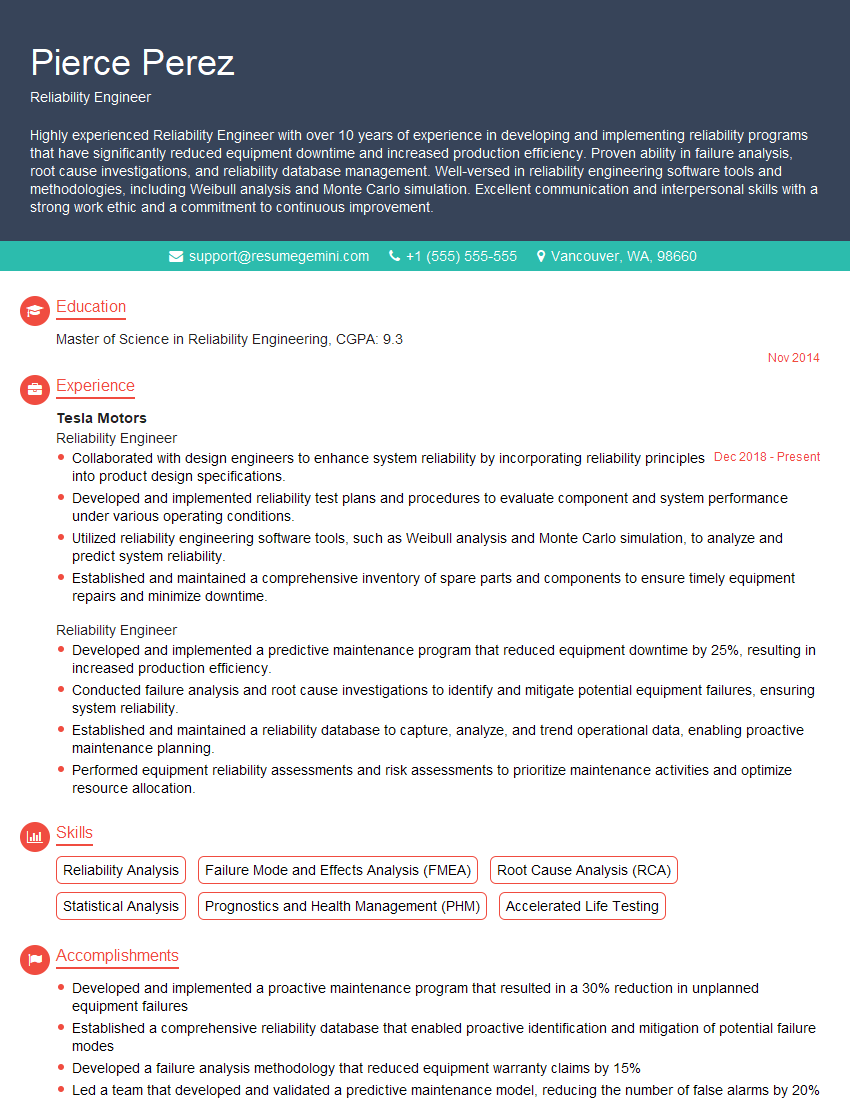
Reliability Engineer Resume Sample

Computational Physicist Resume Sample

Safety Analyst Resume Sample

Nuclear Engineer Resume Sample
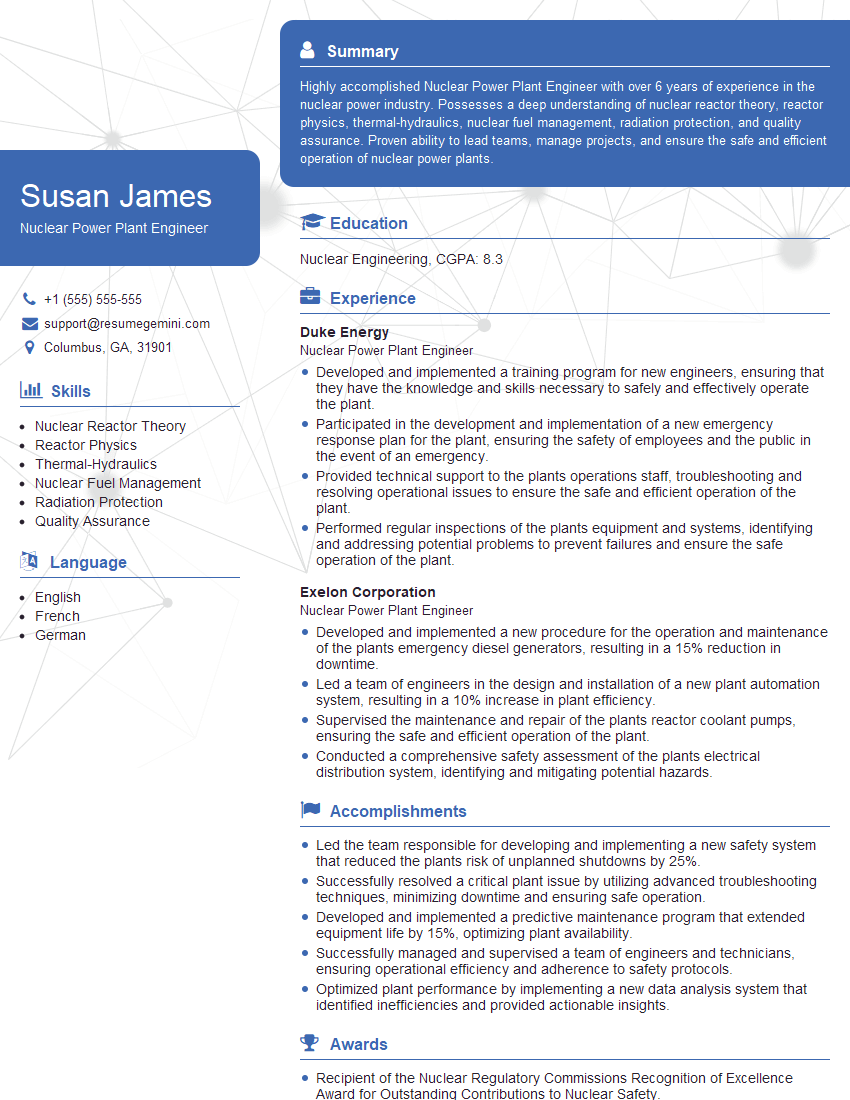
Nuclear Power Plant Engineer Resume Sample

Nuclear Safety Engineer Resume Sample

Control Systems Engineer Resume Sample

Health Physicist Resume Sample
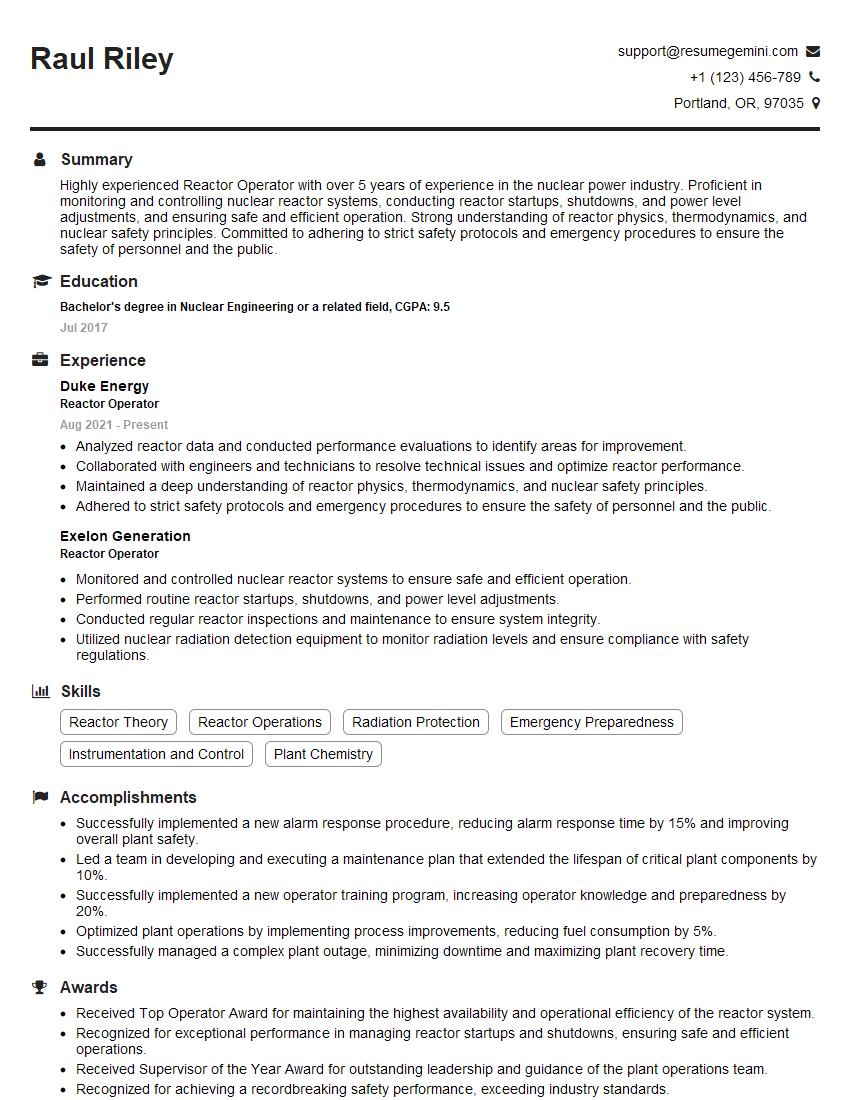
Reactor Operator Resume Sample

Radiation Protection Specialist Resume Sample
Explore more articles
Users Rating of Our Blogs
Share Your Experience
We value your feedback! Please rate our content and share your thoughts (optional).
What Readers Say About Our Blog
good