Preparation is the key to success in any interview. In this post, we’ll explore crucial Crop Harvesting Logistics interview questions and equip you with strategies to craft impactful answers. Whether you’re a beginner or a pro, these tips will elevate your preparation.
Questions Asked in Crop Harvesting Logistics Interview
Q 1. Describe your experience with optimizing harvest schedules to maximize yield.
Optimizing harvest schedules for maximum yield involves a strategic blend of forecasting, field analysis, and logistical planning. It’s like orchestrating a complex symphony, where each instrument (harvesting crew, equipment, transportation) needs to play its part at the right time. We begin by closely monitoring crop maturity using remote sensing technologies and in-field assessments. This helps us predict optimal harvest windows for each section of the field.
Next, we consider factors like weather forecasts, available equipment and labor, and processing capacity. We build a detailed schedule allocating resources effectively. For instance, if a particular variety ripens faster, we prioritize it, allocating more resources. We also build in buffer time to account for unexpected delays. Finally, we continuously monitor progress and adjust the schedule in real-time using data from the field, making adjustments as needed to ensure we harvest at peak ripeness, maximizing quality and yield. This might involve re-allocating resources to a section experiencing faster ripening or addressing equipment malfunctions promptly.
In one project, by using a predictive model incorporating weather data and crop growth rate, we were able to improve harvest completion time by 15% and increase yield by 8% compared to the previous year’s less optimized schedule.
Q 2. How do you manage logistics challenges presented by unpredictable weather?
Unpredictable weather is a significant challenge in crop harvesting, but effective management hinges on preparedness and adaptability. Think of it as navigating a stormy sea – you need a robust plan and the ability to react swiftly to changing conditions. We utilize advanced weather forecasting tools, coupled with real-time updates, to anticipate potential disruptions. This enables proactive decisions, such as moving equipment to a safer location or adjusting harvesting schedules to avoid periods of intense rain or extreme heat.
We also employ various mitigation strategies. These may include using covered storage to protect harvested produce from rain, utilizing rapid drying methods to prevent spoilage, and having backup plans ready for alternate harvesting routes or temporary storage locations. For example, having pre-arranged agreements with nearby storage facilities helps during unexpected downpours. In a recent instance, a sudden hailstorm threatened a large wheat field. By immediately shifting resources and rerouting equipment to unaffected areas, we minimized losses, showcasing the value of proactive weather monitoring and contingency planning.
Q 3. Explain your process for selecting and managing harvesting equipment.
Selecting and managing harvesting equipment is a critical aspect of efficient operations. It’s about choosing the right tools for the job, ensuring they’re well-maintained, and optimizing their utilization. We start by assessing the specific needs of the crop and the terrain. For example, a large-scale corn harvest might require combine harvesters with high throughput, while a delicate fruit harvest needs specialized equipment minimizing damage.
We then evaluate the equipment’s capabilities, considering factors like capacity, fuel efficiency, and maintenance costs. A thorough cost-benefit analysis is essential. Once equipment is acquired, a rigorous maintenance schedule is implemented, ensuring timely repairs and preventative maintenance. We invest in operator training to maximize equipment utilization and reduce the risk of damage. Regular performance monitoring ensures equipment continues to perform optimally. A recent case involved choosing self-propelled harvesters over trailed ones, improving field efficiency by 12% due to increased maneuverability and reduced turnaround time.
Q 4. What metrics do you use to track the efficiency of harvesting operations?
Tracking the efficiency of harvesting operations relies on a suite of key metrics. These metrics act like a dashboard, providing a clear picture of performance and areas for improvement. Key performance indicators (KPIs) include:
- Yield per hectare: Measures the quantity of harvested crop per unit of land.
- Harvesting speed: Tracks the rate at which the crop is harvested, typically measured in hectares per hour.
- Harvesting cost per unit: Calculates the cost of harvesting per unit of yield.
- Equipment downtime: Indicates the percentage of time equipment is not operational.
- Post-harvest losses: Measures the percentage of harvested crop lost due to damage or spoilage.
By continuously monitoring these metrics, we can identify bottlenecks, optimize resource allocation, and implement improvements for maximum efficiency. For example, if harvesting speed is consistently low, we might investigate whether maintenance issues, operator skill, or equipment capacity are contributing factors.
Q 5. How do you ensure the quality and safety of harvested crops during transportation?
Ensuring the quality and safety of harvested crops during transportation requires a multi-faceted approach, focusing on minimizing damage and maintaining product integrity. Think of it as transporting a delicate package requiring special care. We start by selecting appropriate transport vehicles, ensuring they are clean, properly ventilated, and climate-controlled as needed. We use proper handling techniques during loading and unloading to prevent bruising or damage. Packaging is crucial; we use containers designed to protect the crops during transit, avoiding crushing or excessive vibrations.
Regular temperature monitoring during transportation, particularly for perishable goods, is essential, ensuring produce stays within ideal storage conditions. Documentation of the entire transport process – from loading to delivery – ensures traceability and accountability. This may involve using GPS tracking and temperature logging devices to create a complete record. A recent successful implementation involved using refrigerated trucks with temperature monitoring and data logging, reducing post-harvest losses due to spoilage by 10%.
Q 6. Describe your experience with implementing post-harvest handling procedures.
Post-harvest handling encompasses all procedures from the moment the crop is harvested until it reaches the consumer or processing facility. It’s a critical phase that directly impacts the quality and shelf life of the produce. It’s like caring for a newborn – it needs meticulous attention to ensure healthy growth. We begin with careful cleaning and sorting, removing any damaged or diseased produce. Then, the produce undergoes necessary pre-processing steps, which may include washing, drying, grading, and packaging. These processes are tailored to the specific crop.
Proper storage conditions are vital, maintaining optimal temperature and humidity to prevent spoilage. This may involve refrigeration, controlled atmosphere storage, or modified atmosphere packaging. Depending on the crop, additional post-harvest treatments might be implemented, such as irradiation or chemical treatments, to extend shelf life and maintain quality. We continuously monitor the produce throughout the process, making necessary adjustments to ensure the highest possible quality and extend shelf life. For example, proper ventilation and humidity control in storage facilities reduce decay and spoilage considerably.
Q 7. What strategies do you employ to minimize post-harvest losses?
Minimizing post-harvest losses is a crucial aspect of efficient and profitable crop production. It’s like protecting your investment – preventing losses ensures a higher return. We employ several strategies to reduce losses during this phase:
- Timely harvesting: Harvesting at the optimal maturity reduces losses from over-ripening or spoilage.
- Careful handling: Gentle handling during harvesting, transport, and processing minimizes physical damage.
- Efficient processing: Streamlined processing techniques reduce delays and exposure to adverse conditions.
- Proper storage: Maintaining optimal storage conditions prevents spoilage and extends shelf life.
- Pest and disease control: Implementing effective pest and disease management strategies during post-harvest handling helps prevent losses.
- Technology integration: Using sensors and data analytics to monitor conditions, predict losses, and optimize operations.
For example, by implementing a combination of optimized storage conditions and improved pest control measures, we were able to reduce post-harvest losses of strawberries by 18% in one project, significantly enhancing profitability.
Q 8. How do you coordinate with transportation providers to ensure timely delivery?
Timely delivery is paramount in crop harvesting. My approach involves building strong, collaborative relationships with transportation providers. This starts with clear communication of harvest schedules, estimated volumes, and specific crop requirements (e.g., temperature-sensitive produce needs refrigerated transport). I use sophisticated route optimization software to map the most efficient delivery routes, taking into account factors like traffic patterns, road conditions, and the capacity of different vehicles.
Regular communication is key. I maintain open channels, frequently checking in with drivers for updates and proactively addressing any potential delays. We use GPS tracking to monitor shipments in real-time, allowing for immediate response to unexpected events such as traffic jams or vehicle breakdowns. For example, during a particularly busy harvest season, we utilized real-time tracking to reroute a delayed shipment, preventing spoilage and ensuring our customer received the produce on time.
Contracts with reliable transportation providers also include clear service level agreements (SLAs), outlining penalties for late deliveries and specifying acceptable delivery windows. These SLAs create accountability and incentivize prompt service. This proactive, multifaceted approach ensures timely and efficient delivery of our harvested crops.
Q 9. Explain your understanding of different harvesting methods and their applications.
Harvesting methods vary greatly depending on the crop type, scale of operation, and desired outcome. There are three main categories: manual harvesting, mechanical harvesting, and a combination of both.
- Manual Harvesting: This involves hand-picking the crops, often used for delicate fruits like strawberries or specialty crops where automation is impractical. It’s labor-intensive but ensures minimal damage to the product. For example, wine grapes are frequently hand-harvested to selectively pick only ripe bunches.
- Mechanical Harvesting: This uses machinery like combines, harvesters, and pickers to automate the process. This significantly increases efficiency and reduces labor costs. Cereals like wheat, corn, and soybeans are commonly harvested mechanically.
- Combined Harvesting: This is a common approach that combines both manual and mechanical methods. For instance, mechanical harvesters might be used for the majority of the harvest, but manual workers may pick the remaining crops that are inaccessible to the machinery or need more delicate handling. This allows for a balance of efficiency and quality control.
The choice of harvesting method depends on various factors, including the crop’s characteristics, the terrain, labor costs, and market demands. A thorough assessment of these factors allows me to select the most efficient and appropriate method.
Q 10. How do you manage inventory of harvested crops?
Inventory management of harvested crops is crucial to prevent spoilage, maintain quality, and meet market demands. My approach is based on a robust system that uses real-time data tracking. This begins with accurate yield estimations during the pre-harvest phase. We integrate data from various sources, including field sensors, satellite imagery, and historical harvest data, to create accurate forecasts.
Once harvested, crops are immediately graded and sorted based on quality parameters like size, color, and ripeness. Then, they are stored in appropriate facilities – refrigerated warehouses for perishable goods, and climate-controlled storage for others. Throughout the entire process, I use a barcode or RFID system to track individual lots, monitoring their location and quality. We employ a FIFO (First-In, First-Out) system to prioritize the movement of older stock. Regularly scheduled quality checks are conducted to identify potential spoilage issues early.
Inventory data is constantly updated and analyzed to inform decisions about sales, processing, and future planting. This provides real-time insights into stock levels, allowing us to meet orders promptly and anticipate any shortages. For example, using our system, we prevented a significant loss due to potential spoilage by identifying a batch nearing its expiry date and prioritizing its sale.
Q 11. Describe your experience with warehouse management in an agricultural context.
My warehouse management experience in agriculture focuses on optimizing space, maintaining product quality, and ensuring efficient order fulfillment. This includes designing warehouse layouts that consider crop types, storage requirements, and workflow. I leverage technology to streamline processes, such as Warehouse Management Systems (WMS) for inventory tracking, order management, and labor scheduling.
Proper climate control is paramount. We use sensors to monitor temperature and humidity levels, adjusting them as needed to maintain optimal conditions for different crops. Efficient receiving, handling, and shipping procedures are designed to minimize damage and ensure quick turnaround times. We frequently conduct audits to assess storage conditions and identify any areas for improvement. In one instance, we implemented a new shelving system in the warehouse, increasing storage capacity by 15% and improving accessibility.
Effective staff training is also a key aspect. Our warehouse staff is trained in safe handling procedures, proper storage techniques, and the use of warehouse management systems. This ensures the smooth and efficient operation of the warehouse, which is crucial to minimizing waste and maximizing profitability.
Q 12. How do you handle unforeseen issues or delays during the harvest season?
Harvest seasons are unpredictable. My strategy for handling unforeseen issues and delays involves proactive planning and a flexible, adaptable approach. This includes having contingency plans for potential problems like equipment malfunctions, adverse weather conditions, and labor shortages.
For example, we maintain a robust maintenance schedule for all harvesting equipment, minimizing the chances of breakdowns. We have backup equipment on standby for emergencies. Weather forecasts are closely monitored, and alternative harvesting schedules are prepared for potential delays caused by rain or extreme temperatures. We also maintain a pool of reliable contract laborers who can be called upon if needed to supplement our workforce.
Open communication is vital. If a delay occurs, I immediately inform all stakeholders – including transportation providers, processing facilities, and customers – providing transparent updates on the situation and outlining the corrective actions being taken. This proactive communication builds trust and mitigates potential negative impacts.
Q 13. What is your experience with using technology to improve harvesting logistics?
Technology plays a transformative role in improving harvesting logistics. We use a variety of technologies, including GPS-enabled machinery for precise navigation and yield mapping, remote sensing for crop monitoring and yield prediction, and sophisticated data analytics platforms to optimize resource allocation and decision-making. This integration helps in optimizing yield, minimizing waste and increasing efficiency.
For example, we use precision agriculture technologies to apply fertilizer and pesticides precisely, optimizing inputs and reducing environmental impact. We also implement IoT sensors in our storage facilities to monitor temperature, humidity, and other critical parameters, alerting us to potential problems in real-time. This significantly reduces the risk of spoilage and enhances our overall efficiency.
Furthermore, we’ve developed custom software to integrate data from various sources – harvesting equipment, GPS trackers, and warehouse management systems – creating a holistic view of the entire supply chain. This allows us to identify bottlenecks, optimize routes, and make data-driven decisions to improve overall efficiency and reduce costs.
Q 14. Describe your experience with implementing sustainable harvesting practices.
Sustainable harvesting practices are central to our operations. This involves minimizing environmental impact throughout the process. We focus on reducing fuel consumption by optimizing harvesting routes and utilizing fuel-efficient machinery. We implement soil conservation techniques to minimize erosion and maintain soil health. We also prioritize biodiversity by using integrated pest management strategies to reduce reliance on chemical pesticides.
We strive to minimize waste. This includes careful handling of crops to reduce damage and implementing efficient sorting and processing techniques to utilize all parts of the harvested produce. We recycle packaging materials where possible and explore strategies to reduce plastic usage. For example, we’ve invested in composting facilities to manage agricultural waste, transforming it into valuable organic fertilizer.
Working with local communities and promoting fair labor practices is also a key aspect of our sustainable approach. We ensure that our workers are treated fairly and with respect, providing them with safe working conditions and fair wages. Sustainability is not just an environmental concern; it’s also about creating a more equitable and resilient agricultural system.
Q 15. How do you ensure compliance with relevant regulations and standards?
Ensuring compliance in crop harvesting logistics involves a multi-faceted approach, prioritizing safety, environmental protection, and labor regulations. This begins with a thorough understanding of all applicable laws and standards at the local, state, and federal levels. For example, we must adhere to regulations concerning pesticide use, worker safety (OSHA standards), and transportation of agricultural products (DOT regulations). We maintain a comprehensive compliance manual, regularly updated to reflect any changes. This manual details all relevant regulations and our internal procedures for meeting them. We conduct regular internal audits to check our adherence to these standards and procedures. We also invest in training for all employees to ensure they understand and follow these regulations, and we document all training sessions. Finally, we utilize third-party audits periodically to ensure an objective assessment of our compliance program.
Career Expert Tips:
- Ace those interviews! Prepare effectively by reviewing the Top 50 Most Common Interview Questions on ResumeGemini.
- Navigate your job search with confidence! Explore a wide range of Career Tips on ResumeGemini. Learn about common challenges and recommendations to overcome them.
- Craft the perfect resume! Master the Art of Resume Writing with ResumeGemini’s guide. Showcase your unique qualifications and achievements effectively.
- Don’t miss out on holiday savings! Build your dream resume with ResumeGemini’s ATS optimized templates.
Q 16. How do you assess and manage risks associated with crop harvesting?
Risk assessment in crop harvesting is crucial. We utilize a structured approach, starting with identifying potential hazards. These include weather events (hail, frost, excessive rain), equipment malfunction, labor shortages, and market price fluctuations. For each hazard, we assess the likelihood and potential impact. This allows us to prioritize our risk mitigation efforts. For instance, weather risks are mitigated through the use of weather forecasting tools, crop insurance, and potentially adjusting harvesting schedules. Mechanical failures are addressed through regular equipment maintenance and investing in reliable machinery. We manage labor shortages through proactive recruitment and retention strategies, including competitive wages and benefits. Market risk is addressed through forward contracting and hedging strategies. We document all risk assessments and mitigation plans, regularly reviewing and updating them based on our experience and changing conditions.
Q 17. What is your approach to managing a diverse harvesting crew?
Managing a diverse harvesting crew requires fostering a culture of respect, inclusivity, and effective communication. We prioritize fair treatment and equal opportunities for all team members, regardless of their background. We ensure our communication strategies are accessible to everyone, offering training and support in multiple languages if needed. Clear roles and responsibilities are established and communicated upfront. We conduct regular team meetings, allowing for open dialogue and addressing any concerns. We actively encourage collaboration and teamwork, creating a positive and productive work environment. We also implement mechanisms for conflict resolution to deal effectively with disagreements, and we utilize performance management systems to reward hard work and address performance issues fairly. In one instance, we successfully integrated a crew of recent immigrants, providing language assistance and cultural sensitivity training, leading to increased efficiency and improved morale.
Q 18. How do you communicate effectively with stakeholders during the harvest season?
Effective communication during harvest is critical. We use a multi-channel approach, combining regular meetings with farmers, frequent updates via email and phone calls, and the use of project management software for progress tracking. Transparent reporting on yield estimates, logistical challenges, and potential delays keeps everyone informed. We utilize data visualization tools to present complex information in a clear and concise manner. We also establish clear communication protocols, defining roles and responsibilities for information sharing. For example, our field supervisors report daily progress to the logistics manager, who then communicates updates to the client. This system ensures timely information flow and minimizes confusion. Open communication channels also help identify and address problems quickly, preventing larger issues from developing.
Q 19. Explain your experience with forecasting crop yields and planning logistics accordingly.
Forecasting crop yields and planning logistics requires a combination of historical data, field assessments, and advanced technologies. We begin by analyzing historical yield data for specific fields, factoring in weather patterns and soil conditions. We complement this with in-field assessments, visually inspecting crops and taking sample measurements. We utilize remote sensing technologies, such as satellite imagery and drones, to get a more comprehensive view of crop health and development. This data is fed into predictive models to generate yield estimates. These forecasts inform our logistical planning, including the number of harvesting machines needed, transportation capacity, and storage requirements. We also build contingency plans to accommodate variations in yield and unexpected events. For instance, in a year with unexpectedly high yields, we proactively secured additional transportation and storage facilities, avoiding significant delays and losses.
Q 20. How do you optimize transportation routes for efficiency and cost-effectiveness?
Optimizing transportation routes for efficiency and cost-effectiveness involves leveraging route optimization software and considering several factors. We utilize GPS tracking to monitor vehicle location and speed, enabling real-time adjustments to routes to avoid traffic congestion or unexpected delays. We carefully select transportation modes (trucks, trains, etc.) based on the distance, volume, and fragility of the crop. We consolidate shipments whenever possible to maximize load capacity and minimize the number of trips. We also consider factors such as fuel costs, driver availability, and toll fees when planning routes. A route optimization software might provide several route options with cost and time estimations, aiding the decision-making process. Example: Software might compare a direct route costing $500 and taking 8 hours with an alternate route costing $450 and taking 9 hours. We continuously monitor and evaluate our transportation strategies to identify areas for improvement.
Q 21. Describe your experience with budget management in relation to harvesting operations.
Budget management in harvesting operations is crucial. We begin with a detailed budget outlining anticipated costs, including labor, equipment rental or maintenance, fuel, transportation, storage, and insurance. We meticulously track expenses throughout the harvesting season, comparing actual costs to the budgeted amounts. We regularly review the budget to identify potential cost overruns or areas for savings. For instance, we might negotiate better rates with fuel suppliers or streamline transportation routes to reduce costs. We also utilize forecasting models to predict potential cost fluctuations and adjust the budget accordingly. This involves understanding potential impacts from things like changes in fuel prices or equipment maintenance needs. Transparency and regular reporting on budget performance are key to successful budget management. Regular review allows for quick identification and mitigation of potential budget issues.
Q 22. How do you handle disputes or conflicts related to harvesting contracts?
Handling disputes in harvesting contracts requires a proactive and structured approach. My strategy centers on clear communication and a commitment to fair resolution. First, we meticulously review the contract itself, focusing on the specific clauses related to the disagreement. This ensures we’re operating within the agreed-upon framework. Second, I initiate open dialogue with all parties involved, aiming for a collaborative solution. This often involves mediating between farmers, harvesters, and buyers, clarifying misunderstandings and exploring mutually agreeable compromises. If amicable resolution fails, I advocate for formal dispute resolution methods like arbitration or litigation, always prioritizing preserving business relationships where possible. For example, in a case involving delayed harvest due to unforeseen weather, I successfully negotiated an extension on the delivery date and a slight price adjustment, preventing costly litigation and maintaining a positive relationship with the farmer.
A key aspect is having robust contract language that clearly defines responsibilities, payment schedules, and dispute resolution mechanisms. This proactive approach minimizes the likelihood of disputes arising in the first place.
Q 23. What is your understanding of different storage methods for harvested crops?
Storage methods for harvested crops vary depending on the type of crop, its intended use, and available resources. Proper storage is crucial to maintain quality and prevent spoilage. Common methods include:
- On-farm storage: This involves storing crops directly on the farm, often in barns, silos, or temporary structures. This is cost-effective but can be vulnerable to pests and weather conditions. Examples include grain stored in silos or potatoes in ventilated storage.
- Warehousing: This uses purpose-built warehouses with climate control and pest management. It offers better protection but incurs higher costs. Specialized warehouses might exist for sensitive crops like fruits and vegetables requiring specific temperature and humidity.
- Cold storage: This involves refrigerating crops to slow down spoilage. It’s essential for perishable items like fruits, vegetables, and certain dairy products. Controlled Atmosphere (CA) storage extends shelf-life even further.
- Modified Atmosphere Packaging (MAP): This extends the shelf-life of many products by changing the gas composition in the packaging to slow down respiration and microbial growth.
The choice of storage method is a critical logistical decision impacting both cost and crop preservation.
Q 24. How do you manage the traceability of harvested crops throughout the supply chain?
Traceability in the crop supply chain is vital for ensuring food safety, quality control, and meeting market demands. We implement a robust system combining physical and digital tracking methods. Physically, each batch of harvested crops is labeled with unique identifiers – lot numbers or barcodes – that are linked to detailed records. These records include the farm of origin, harvesting date, handling processes, and any quality checks performed. Digitally, we leverage blockchain technology and cloud-based databases to store and share this information across the supply chain. This creates a transparent and immutable record of the crop’s journey, allowing us to quickly trace its origin and history if needed. For example, in case of a quality issue, we can pinpoint the exact batch and identify the source of the problem quickly, facilitating efficient recall and remediation.
This approach enhances efficiency, reduces waste, and builds trust with consumers and stakeholders.
Q 25. Describe your experience with implementing quality control measures during harvest.
Implementing quality control during harvest is paramount. We start with pre-harvest checks, ensuring crops are ready for harvest based on maturity and quality standards. During the harvest itself, we use standardized procedures and trained personnel to minimize damage and ensure proper handling. This includes using appropriate equipment, monitoring harvesting speeds, and conducting regular quality assessments. We employ various inspection methods, from visual checks to advanced technologies like near-infrared (NIR) spectroscopy, which rapidly analyzes the quality parameters of a crop. This allows for immediate feedback and adjustments to the harvesting process to maintain consistent quality. Post-harvest, we rigorously inspect the crops for damage and impurities before packing and transport. Regular training for harvesters on best practices and quality standards is essential to maintain consistency and adherence to standards.
Data analysis of our quality control checks helps identify areas for improvement and prevents future quality issues.
Q 26. How do you monitor and analyze key performance indicators (KPIs) for harvesting logistics?
Monitoring and analyzing KPIs for harvesting logistics are critical for efficient operation and continuous improvement. Key performance indicators we track include:
- Harvesting Yield: Tons or units harvested per hour/day/acre.
- Harvesting Time: Time taken to harvest a specific area or volume.
- Harvesting Cost: Cost per unit harvested.
- Post-harvest Loss: Percentage of crop lost due to spoilage, damage, or other factors.
- Transportation Efficiency: Distance covered per unit of fuel, time taken for delivery.
- On-time Delivery Rate: Percentage of deliveries made on schedule.
We use data visualization dashboards to track these KPIs, enabling real-time monitoring and quick identification of bottlenecks or inefficiencies. This data informs decision-making on resource allocation, process optimization, and strategic planning. For instance, consistently low harvesting yield might indicate a need for better equipment or improved harvesting techniques.
Q 27. Explain your experience with using GPS tracking and other technologies for asset management.
GPS tracking and other technologies are indispensable for efficient asset management in crop harvesting logistics. We utilize GPS tracking systems on our harvesting machinery to monitor their location, operational status (e.g., idle time, fuel consumption), and progress in real time. This provides valuable data for optimizing routes, scheduling maintenance, and preventing theft. We also integrate this data with other technologies, like farm management software, to create a holistic view of our operations. This integration allows for improved resource allocation, precise field mapping for harvesting, and better overall logistical planning.
Furthermore, we employ RFID (Radio-Frequency Identification) tags on pallets or containers to track crop movement throughout the supply chain, from harvest to storage and transportation. This ensures accurate inventory management and reduces discrepancies. This technological integration has significantly improved our efficiency, reduced costs, and strengthened our decision-making process.
Q 28. How would you address a sudden increase in harvested crop volume?
Addressing a sudden increase in harvested crop volume requires a flexible and scalable approach. Our strategy involves several steps:
- Assess the situation: Quickly determine the extent of the increase and its impact on existing resources.
- Enhance storage capacity: Secure additional warehousing space, or utilize temporary storage solutions such as rented facilities or on-farm expansion.
- Optimize transportation: Increase transportation capacity by either using more vehicles or negotiating contracts with additional carriers. We may prioritize deliveries to ensure perishable crops are handled first.
- Re-evaluate staffing needs: Increase manpower temporarily, as needed, to handle increased workload in handling, processing, and transportation.
- Adjust scheduling: Prioritize harvesting and processing of most perishable crops first. This might involve altering harvesting schedules and working longer hours.
- Communicate proactively: Keep stakeholders (farmers, buyers) informed about the situation and any potential delays.
Flexibility and strong communication are key to managing this kind of unexpected surge in volume effectively, minimizing losses and ensuring timely delivery to the market.
Key Topics to Learn for Your Crop Harvesting Logistics Interview
- Planning & Scheduling: Understanding the intricacies of harvest timelines, resource allocation (equipment, personnel), and route optimization for maximum efficiency and minimal losses.
- Yield Prediction & Forecasting: Applying data analysis techniques and field knowledge to accurately predict yields, enabling proactive planning for harvesting and post-harvest processes.
- Equipment Maintenance & Logistics: Knowledge of various harvesting machinery, their maintenance requirements, and effective logistics for timely repairs and preventative measures.
- Supply Chain Management: Understanding the flow of harvested crops from the field to processing facilities or storage, including transportation, handling, and quality control.
- Weather & Environmental Factors: Assessing the impact of weather conditions on harvest operations and implementing contingency plans to minimize disruptions and losses.
- Post-Harvest Handling & Storage: Understanding the best practices for handling and storing harvested crops to maintain quality and prevent spoilage, including temperature control and proper storage facilities.
- Safety Regulations & Compliance: Familiarity with relevant health and safety regulations pertaining to crop harvesting, including equipment operation, worker safety, and environmental protection.
- Cost Optimization & Budgeting: Developing strategies to minimize operational costs while maintaining efficient and effective harvesting practices. This includes fuel consumption, labor costs, and equipment maintenance.
- Technological Advancements: Exploring the role of technology in modern crop harvesting, including GPS tracking, precision agriculture techniques, and automated harvesting systems.
- Problem-Solving & Decision-Making: Developing strategies for addressing unexpected challenges during harvest operations, such as equipment malfunctions, weather delays, or quality issues.
Next Steps
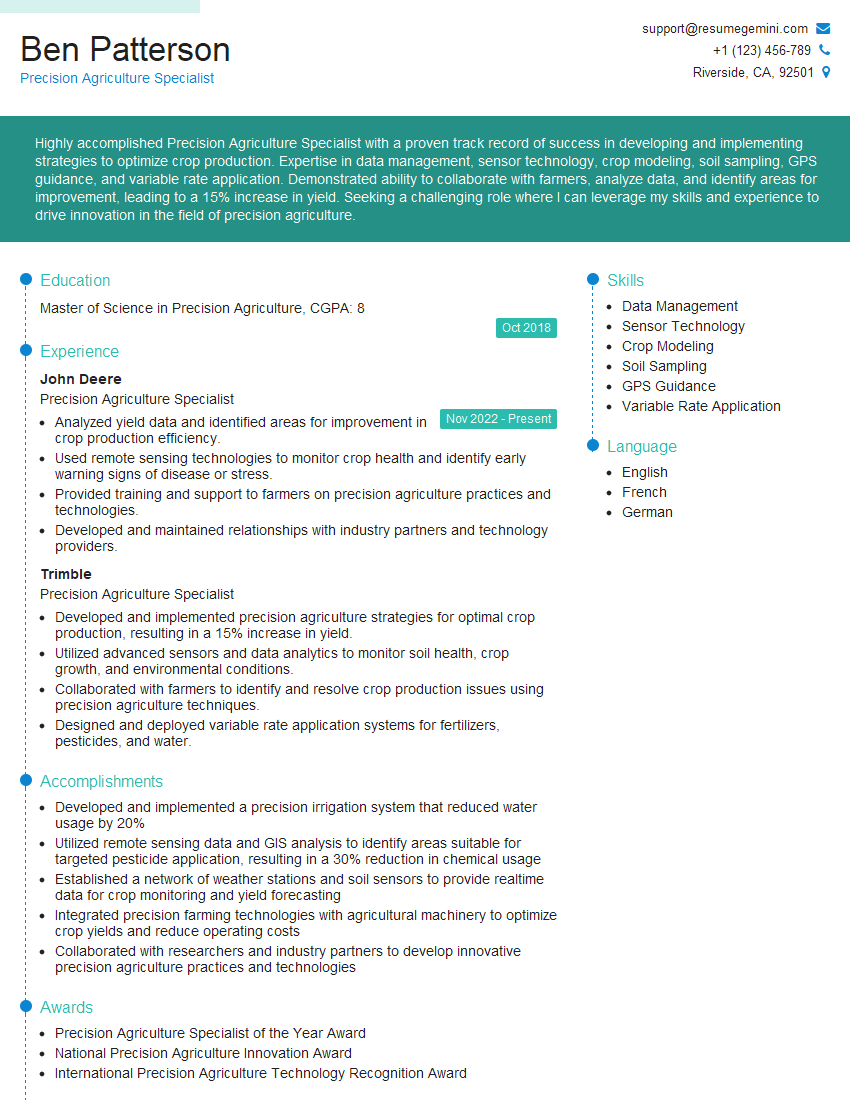
Mastering Crop Harvesting Logistics is crucial for career advancement in the agriculture sector, opening doors to leadership roles and specialized positions. A strong resume is your key to unlocking these opportunities. Creating an ATS-friendly resume is essential for getting your application noticed by recruiters. To build a compelling and effective resume, leverage the power of ResumeGemini. ResumeGemini provides a user-friendly platform to craft a professional document tailored to your experience and the specific demands of the Crop Harvesting Logistics field. Examples of resumes tailored to this sector are available within the ResumeGemini platform to guide and inspire you. Take the next step towards your dream career today!

Explore more articles
Users Rating of Our Blogs
Share Your Experience
We value your feedback! Please rate our content and share your thoughts (optional).
What Readers Say About Our Blog
Very informative content, great job.
good