Cracking a skill-specific interview, like one for CTP (ComputertoPlate), requires understanding the nuances of the role. In this blog, we present the questions you’re most likely to encounter, along with insights into how to answer them effectively. Let’s ensure you’re ready to make a strong impression.
Questions Asked in CTP (ComputertoPlate) Interview
Q 1. Explain the workflow of a typical CTP process.
The CTP (Computer-to-Plate) process is a digital workflow that replaces the traditional method of creating printing plates. It streamlines the process from digital file to print-ready plate, significantly increasing efficiency and reducing errors. Here’s a breakdown of a typical workflow:
- Design and Prepress: The design is created and prepared in a design software (e.g., Adobe InDesign, Illustrator). This involves ensuring correct color profiles, image resolution, and proper trapping.
- RIP (Raster Image Processor): The prepared design file is sent to a RIP, which converts the vector-based design into a raster image (a series of dots) that the CTP device understands. This process also manages color separation, screening, and other image adjustments.
- Plate Imaging: The RIP’s output is sent to the CTP device. The CTP uses lasers to expose the photosensitive plate, creating the image based on the data received from the RIP.
- Plate Processing: After exposure, the plate goes through a processing stage. This involves washing away unexposed areas, leaving only the image on the plate. The specific process depends on the plate type (thermal, UV, violet).
- Plate Mounting and Printing: The processed plate is then mounted onto the printing press, ready for the printing process.
Think of it like baking a cake: The design is the recipe, the RIP is the translator making sure all ingredients are correct and in the right order, the CTP is the oven baking the plate, and the printing press is the final presentation.
Q 2. What are the different types of CTP plates and their applications?
Several types of CTP plates exist, each with specific properties and applications:
- Thermal Plates: These plates are exposed using heat from a laser. They are known for their ease of use, relatively low cost, and good quality. However, they are less durable than other types and may have limitations with fine detail or high-resolution printing.
- UV Plates: These use ultraviolet light for exposure. UV plates tend to be more durable and offer higher resolution, making them suitable for demanding jobs with fine details and vibrant colors. They typically involve more complex processing steps and are more expensive.
- Violet Plates: These are exposed by violet lasers, offering a balance between thermal and UV plates. They offer good durability, resolution, and sensitivity while being slightly more cost-effective than UV plates.
The choice of plate type depends heavily on the job requirements. A small print run of brochures might utilize thermal plates for their cost-effectiveness, while a high-volume, high-quality magazine print job would likely call for UV or violet plates.
Q 3. Describe the role of a RIP (Raster Image Processor) in CTP.
The RIP (Raster Image Processor) is the crucial link between the digital design and the CTP device. It’s essentially a powerful computer that takes the vector-based design file (like an Adobe Illustrator file) and translates it into a raster image – a grid of dots that the CTP imaging system can understand. This involves several critical functions:
- Rasterization: Converting vector graphics and text into a bitmap (a grid of pixels).
- Color Separation: Separating the design’s colors into individual plates (Cyan, Magenta, Yellow, Black – CMYK).
- Screening: Applying a halftone screen, which simulates continuous tones using dots of varying sizes. This is crucial for achieving smooth gradients and tonal variations in the print.
- Image Processing: Performing image adjustments such as sharpening, color correction, and trapping (overlapping colors to prevent gaps).
- Plate Preparation: Creating the image data in a format compatible with the CTP device.
Think of the RIP as a skilled chef who meticulously prepares the ingredients (design file) according to the specific needs of the oven (CTP device) to create the perfect dish (printed material).
Q 4. How do you ensure color accuracy in CTP?
Color accuracy in CTP involves meticulous attention to detail throughout the entire workflow. Here are key strategies:
- Color Management System (CMS): Implementing a robust CMS is paramount. This ensures color consistency from design to final output. Calibrated monitors, profile creation, and the use of industry-standard color spaces like Adobe RGB or sRGB are essential.
- Proofing: Soft proofing on a calibrated monitor and hard proofing (printed samples) are crucial for evaluating color accuracy before committing to plate creation. This allows for early identification and correction of any color discrepancies.
- RIP Settings: Careful optimization of the RIP’s color settings is vital. This includes selecting the correct color profiles, managing dot gain compensation, and fine-tuning other parameters to align with the desired color output.
- Plate and Press Calibration: Regular calibration of both the CTP device and the printing press itself is essential for consistent color reproduction. Calibration targets should be used to ensure that the output accurately matches the intended colors.
Imagine a painter meticulously matching colors to a reference image. Each step in the CTP workflow requires this level of precision to achieve accurate color reproduction.
Q 5. What are the common troubleshooting steps for CTP plate issues?
Troubleshooting CTP plate issues requires systematic investigation. Here are common steps:
- Inspect the Plate: Examine the plate for any visible defects such as scratches, fingerprints, or uneven exposure. This often reveals the root cause quickly.
- Check the RIP Settings: Verify that the RIP settings are correct, including color profiles, screening, and image adjustments. Incorrect settings are a frequent source of problems.
- Examine the CTP Device: Inspect the CTP device for any malfunctions, such as laser issues, inconsistencies in the plate-processing chemicals or mechanical problems. Routine maintenance is important here.
- Review the Design File: Ensure the design file is properly prepared, with sufficient resolution and no issues with color management or trapping.
- Test Prints: Conduct test prints to isolate the problem and check if it stems from plate preparation or the printing process itself.
Troubleshooting is like detective work. By systematically eliminating possibilities, the root cause can be identified and rectified.
Q 6. Explain the concept of dot gain in CTP and how to compensate for it.
Dot gain is the phenomenon where the printed dots are larger than the intended size specified in the design file. This leads to darker and less detailed prints than intended. Several factors contribute to dot gain, including the type of paper used, ink characteristics, and the printing press settings.
To compensate for dot gain, we use dot gain compensation in the RIP. This involves adjusting the design file before it’s sent to the CTP device, creating smaller dots to account for the expected expansion during printing. The RIP software typically offers this feature, allowing the user to input the expected dot gain percentage, determined through testing.
Without dot gain compensation, your final print would appear darker and less vibrant than the design, especially in areas with smooth gradients or fine details. Proper compensation ensures the final print closely matches the design intent.
Q 7. How do you handle different file formats in CTP?
The CTP workflow handles a variety of file formats, primarily focusing on industry standards for prepress. Common formats include:
- PDF (Portable Document Format): The most widely used format, offering excellent color management and a reliable platform for handling complex designs.
- TIFF (Tagged Image File Format): Used for raster images, especially for high-resolution images and scans.
- EPS (Encapsulated PostScript): A vector-based format often used for incorporating vector graphics within larger layouts.
- JPEG (Joint Photographic Experts Group): Though less common in prepress, JPEG can be used for images that are not critical for high color accuracy.
The RIP software is typically designed to support multiple formats. However, ensuring the file is properly prepared for printing is crucial. This involves color management, image resolution, and other preflight checks to eliminate errors before plate creation. Choosing the right format depends on the content of the file and the needs of the workflow.
Q 8. What are the advantages and disadvantages of thermal and violet CTP?
Thermal and violet Computer-to-Plate (CTP) technologies both expose printing plates, but they differ significantly in their imaging mechanisms and resulting plate properties. Let’s break down the advantages and disadvantages of each:
Thermal CTP
- Advantages:
- Generally lower initial investment cost compared to violet.
- Simpler operation, often requiring less technical expertise.
- Suitable for a wide range of applications, particularly those with shorter print runs and less demanding quality requirements.
- Disadvantages:
- Lower resolution and finer detail capabilities compared to violet.
- Plates can be less durable and more prone to scratching or damage during printing.
- Slower imaging speeds in many cases.
- Higher running cost per plate due to higher plate consumption.
Violet CTP
- Advantages:
- Higher resolution, providing sharper images and finer details, essential for high-quality printing.
- Plates are generally more durable and resistant to wear and tear, leading to longer print runs.
- Faster imaging speeds for increased productivity.
- More environmentally friendly as they use less energy per plate.
- Disadvantages:
- Higher initial investment in equipment and software.
- Requires more specialized technical skills for operation and maintenance.
- Often higher running cost per plate despite longer life, due to higher plate price.
Choosing between thermal and violet CTP depends on the specific needs of the print shop, balancing initial cost, operational complexity, print quality requirements, and production volume. For instance, a small print shop focusing on short-run jobs might opt for thermal CTP, while a large commercial printer producing high-quality publications would likely prefer violet CTP.
Q 9. Describe your experience with different CTP devices/manufacturers.
Throughout my career, I’ve worked extensively with various CTP devices from leading manufacturers such as Heidelberg, Kodak, and Creo (now part of Kodak). My experience encompasses both thermal and violet systems, including different plate sizes and formats.
For example, I spent three years managing a Kodak Trendsetter thermal CTP system, which provided a reliable solution for our shorter-run jobs. The workflow was straightforward and the maintenance relatively simple. More recently, I’ve been heavily involved in the implementation and operation of a Heidelberg Suprasetter violet CTP system, which significantly improved our image quality and print speed for higher-volume, high-quality work. This involved training staff on the advanced features and troubleshooting complex issues. This experience included in-depth knowledge of their respective RIP software and prepress workflows.
I’m also familiar with the various aspects of plate handling and processing, from plate loading and exposure to the final plate processing. My experience extends to troubleshooting issues related to plate imaging quality, registration, and physical damage, addressing issues like insufficient exposure, uneven ink distribution or plate defects. I’m comfortable working with a diverse range of plate sizes, resolutions and manufacturers.
Q 10. How do you maintain CTP equipment and ensure optimal performance?
Maintaining CTP equipment is crucial for optimal performance and consistent output. My approach involves a multi-faceted strategy emphasizing preventive maintenance and prompt troubleshooting.
- Preventive Maintenance: This includes regular cleaning of the laser unit, exposure optics, and the plate handling mechanisms. We follow a scheduled maintenance plan including regular checks on the laser’s power output, optics alignment, and the overall cleanliness of the system. Regular software updates are essential to improve functionality and address any known bugs. This plan also includes checking and cleaning all rollers and moving parts on a regular basis.
- Chemical Management: CTP processes often involve specialized chemicals (developers, processors). Careful monitoring of chemical levels, regular replenishment, and proper disposal are essential. This involves maintaining accurate records of chemical usage and performing routine quality control checks on the chemicals themselves.
- Troubleshooting: When issues arise, I follow a systematic approach: analyze the error messages, inspect the plates for defects, check the chemical levels and quality, verify the RIP settings and file integrity. Often, the problem is easily solvable by simple checks and adjustments. For more complex issues, I consult technical manuals and sometimes involve the manufacturer’s support team. Documenting issues and their resolutions is key for future reference.
In essence, proactive maintenance minimizes downtime, ensures high-quality output, and extends the lifespan of the CTP equipment. It is like regular servicing of a car, preventing major problems and ensuring it runs smoothly.
Q 11. Explain the importance of quality control in CTP.
Quality control (QC) in CTP is paramount to ensuring consistent and high-quality printing. It’s a multi-stage process that begins long before the plates are even created.
- Input File Verification: Ensuring that the digital files (e.g., PDF, TIFF) are properly formatted, have the correct color profiles, and are free from errors. This process should include a detailed preflight check.
- RIP Settings Optimization: Precise control of the RIP (Raster Image Processor) settings is critical for accurate image reproduction. This includes managing resolution, screening angles, and color profiles.
- Plate Imaging Quality Control: Regular checks are needed throughout the plate-making process to ensure the laser is functioning correctly and the plates are consistently exposed. This often involves visually inspecting the plates for any defects.
- Proofing: Color proofing is crucial to verify that the printed output matches the digital design, ensuring color accuracy, image sharpness, and proper registration. This proofing stage is the most important step to ensure that the print is exactly as requested.
- On-Press Monitoring: Monitoring the print run itself helps identify any issues that might have arisen during platemaking. This involves examining the printed sheets for defects and adjusting the press as needed.
Implementing a robust QC system minimizes errors, reduces waste, and maintains a consistent level of quality throughout the printing process, ensuring customer satisfaction and a positive reputation for the print shop.
Q 12. What are the safety precautions when working with CTP chemicals?
Working with CTP chemicals necessitates a strict adherence to safety protocols to protect both the operators and the environment. These precautions are essential to avoid health hazards and environmental damage.
- Personal Protective Equipment (PPE): Always wear appropriate PPE, including gloves, safety glasses, and lab coats, when handling chemicals. This is the most important step to ensure your safety when working with chemicals.
- Ventilation: Ensure adequate ventilation in the processing area to prevent the build-up of harmful fumes. Well-ventilated areas are critical when working with chemicals.
- Chemical Handling: Follow the manufacturer’s instructions for handling, mixing, and storing chemicals carefully. Store chemicals according to the manufacturer’s instructions and in clearly labeled containers.
- Spill Response: Have a well-defined spill response plan in place and follow the recommended procedures in case of accidental spills. This plan should include the necessary chemicals to neutralize spills.
- Waste Disposal: Dispose of chemical waste according to local regulations and guidelines. This is especially important as these chemicals can be environmentally hazardous if disposed of improperly.
Regular safety training for personnel working with CTP chemicals is crucial to reinforcing these safety procedures. Regular safety audits also help keep a check on how safety standards are being maintained.
Q 13. How do you manage and troubleshoot CTP workflow issues?
Managing and troubleshooting CTP workflow issues requires a systematic and analytical approach. My strategy involves careful investigation and a step-by-step process.
- Identify the Problem: Precisely define the issue. Is it a plate imaging problem, a RIP issue, a press problem, or a problem with the pre-press workflow? Gather all available information such as error messages, visual inspection of the plate and printed output, and any relevant logs.
- Isolate the Source: Determine the root cause. Is it a hardware malfunction, a software bug, incorrect settings, or an issue with the input files? Isolating the cause will determine the right course of action.
- Systematic Troubleshooting: Depending on the identified source, systematically troubleshoot the problem, starting with the simplest solutions. This might involve checking cables, power supplies, software settings, RIP configurations, file integrity or chemical levels, depending on the nature of the issue.
- Documentation: Meticulously document the issue, the troubleshooting steps taken, and the solution implemented. This is crucial for future reference and for preventing similar issues from occurring again. Documentation is a key step to learning from the mistakes made.
- Seek External Assistance: If the problem persists, contact the equipment manufacturer’s support team for assistance. Provide them with all the documented information gathered during troubleshooting.
Effective workflow management also involves preventive measures like regular maintenance, process optimization and operator training to minimize issues and optimize productivity. This includes training staff on the basics of troubleshooting, as well as setting up detailed processes and checklists that address common problems.
Q 14. Describe your experience with different plate types (e.g., PS, CtP, etc.)
My experience with various plate types is extensive, covering a range of technologies and applications. While the terms ‘PS’ and ‘CtP’ are sometimes used interchangeably, it’s important to clarify that PS refers to photosensitive plates (generally the older, film-based methods) and CtP specifically refers to computer-to-plate systems. Let’s discuss different types within the CtP context:
- Thermal Plates: These plates use heat to expose the image. They’re generally less expensive but offer lower resolution and durability compared to violet plates. I’ve worked with various thermal plate types from different manufacturers, each having slightly different characteristics regarding their sensitivity, resolution and processing requirements.
- Violet Plates: These plates use violet lasers for exposure. They provide higher resolution, sharper images, and better durability, making them suitable for high-quality printing and longer print runs. My experience includes working with various violet plate types, specifically focusing on their differences in sensitivity, resolution, and chemical compatibility.
- Processless Plates: These plates eliminate the need for chemical processing, streamlining the workflow and reducing environmental impact. However, they tend to have higher costs per plate.
- Different Plate Materials: Aluminum is the most common substrate for printing plates. However, there are variations in the coating and surface treatments that impact the plate’s performance, such as its sensitivity to light, its scratch resistance and its ability to hold ink. Understanding these subtleties is key to optimal performance and print quality.
Selecting the appropriate plate type depends on the print job’s quality requirements, the run length, the budget and the environmental considerations. My expertise lies in understanding these nuances and selecting the right plate for a specific application.
Q 15. What is your experience with different RIP software?
My experience with RIP (Raster Image Processor) software spans several leading industry solutions. I’m proficient in Esko CDI, Creo (now part of Kodak), and Agfa Apogee. Each system presents unique strengths, particularly regarding their handling of color management, screening, and workflow integration. For instance, Esko CDI excels in its automation capabilities and integration with prepress workflows, while Creo is known for its robust color control and high-end screening options. Agfa Apogee offers a flexible and customizable approach. My expertise extends beyond basic operation; I understand the intricacies of each software’s configuration, allowing me to optimize settings for specific plate types and printing conditions to achieve optimal image quality and press performance.
In a previous role, we transitioned from a legacy Creo system to Esko CDI. This involved not only learning the new software but also meticulously mapping the color profiles and screening techniques to maintain color consistency. The successful transition resulted in improved turnaround times and enhanced print quality, demonstrating my adaptability and problem-solving skills in this area.
Career Expert Tips:
- Ace those interviews! Prepare effectively by reviewing the Top 50 Most Common Interview Questions on ResumeGemini.
- Navigate your job search with confidence! Explore a wide range of Career Tips on ResumeGemini. Learn about common challenges and recommendations to overcome them.
- Craft the perfect resume! Master the Art of Resume Writing with ResumeGemini’s guide. Showcase your unique qualifications and achievements effectively.
- Don’t miss out on holiday savings! Build your dream resume with ResumeGemini’s ATS optimized templates.
Q 16. How do you handle a situation where a plate is damaged or unusable?
A damaged or unusable plate is a critical issue that necessitates immediate action. The first step involves carefully assessing the extent of the damage. If it’s minor, such as a small scratch, it might be repairable depending on the location and the printing method. However, significant damage generally means the plate must be remade.
The process starts by identifying the root cause of the damage. Was it a handling error, a problem with the CTP imager, or a defect in the plate itself? Documenting this is crucial for preventative measures. Next, we retrieve the original job ticket and associated files. We verify the job settings, ensuring accurate color profiles and resolution are maintained. We then re-image the plate using the same parameters as the original, ensuring quality control checks are performed throughout the process to avoid repetition of the error.
In situations where time is critical, having backup plates, and utilizing faster CTP imaging speeds are vital. This minimizes downtime and avoids delays in the printing process. In high-volume environments, a second CTP device can also act as a backup, creating redundancy. Preventing future damage involves staff training on proper handling procedures and regular maintenance of CTP equipment.
Q 17. Explain your understanding of color profiles and their use in CTP.
Color profiles are essential in CTP to ensure accurate color reproduction. They act as translators, mapping the color values from the digital file to the output device (the CTP imager and ultimately the printing press). Without accurate color profiles, the printed output will likely deviate significantly from the designed image.
In CTP, we use ICC (International Color Consortium) profiles. These profiles define the color characteristics of each device involved in the workflow – the monitor, RIP, CTP imager, and the printing press. Using appropriate color profiles ensures that the colors seen on the screen are as close as possible to the final printed result. For example, a profile for an Epson monitor might be different from one for a specific type of printing plate and press. Different substrates (paper types) will also require different profiles.
Mismatched or poorly configured color profiles lead to color shifts, inconsistencies, and ultimately, printing errors. Accurate profile creation and management are essential to maintaining brand consistency and delivering quality print products. My experience includes using dedicated color management software and devices to create and verify color profiles, ensuring accuracy and repeatability.
Q 18. What is your experience with imposition software?
I have extensive experience with imposition software, primarily using Esko PackEdge and other similar solutions. Imposition is the process of arranging pages to efficiently use the printing plate’s surface area. This includes considering margins, gutters, and the overall layout for optimal printing. Using imposition software dramatically streamlines the prepress process, saving time, material, and cost.
My expertise encompasses creating imposition layouts for various printing formats, such as sheets, rolls, and web printing. I’m skilled in creating imposition schemes based on different job requirements, including the type of printing press, substrate, and job specifications. I am adept at setting up the correct imposition settings, such as bleed and trim marks, ensuring accurate sheet alignment and perfect registration on the press.
For example, in one project, we used imposition software to create a complex imposition layout for a large-format book project, optimizing the page order and minimizing waste. The correct imposition dramatically reduced the cost and lead time for that project.
Q 19. How do you optimize image resolution for CTP?
Optimizing image resolution for CTP is crucial for achieving the balance between image quality and file size. Too low a resolution results in poor image quality, whereas too high a resolution unnecessarily increases file size, slowing down the imaging process and potentially increasing the risk of errors.
The optimal resolution depends on the printing technique (e.g., offset, flexo), screen ruling (lines per inch or LPI), and the printing plate’s imaging technology. Generally, a higher resolution is needed for fine details and sharper images. However, excessively high resolutions can lead to unwanted moiré patterns. We typically work with resolutions ranging from 2400 to 3600 dpi for high-quality offset printing.
During prepress, I always carefully evaluate the image’s content and its intended use. Detailed images need higher resolution than text-heavy pages. Image sharpening and resizing tools are used within the RIP or during pre-processing to optimize the image for CTP without sacrificing quality. It’s crucial to strike a balance between high-quality output and efficiency in the CTP workflow.
Q 20. How do you manage different types of substrates in CTP?
Managing different substrates in CTP involves understanding the specific characteristics of each material and adjusting the imaging parameters accordingly. Substrates like paper, cardboard, and various plastics have unique properties impacting plate exposure and printing results. These differences influence the required laser power, exposure time, and processing techniques.
For instance, some substrates might require a higher laser power for proper exposure, while others might be more sensitive and require lower power settings. The plate type is also a crucial factor. Different plates (e.g., thermal, violet, UV) exhibit varied sensitivity and suitability for different substrates. We meticulously document and maintain records of settings used for different substrates to ensure consistent results.
My experience encompasses a wide range of substrates, and I adjust platemaking parameters, and even select different plate types to ensure optimal results for every material. This involves careful testing and calibration to prevent issues like poor image transfer or plate damage.
Q 21. How do you handle job tickets and job-related information?
Efficient job ticket and job-related information management is the backbone of a smooth CTP workflow. We use a dedicated Job Management System (JMF) that integrates with our prepress software and printing press. Each job ticket contains essential details including:
- Client name and job number
- File names and formats
- Substrate type and specifications
- Color profiles
- Imposition settings
- Printing parameters
- Due dates
The JMF allows for easy tracking of jobs, monitoring their progress, and efficiently managing resources. This also allows for complete audit trails, which is crucial for maintaining quality control and troubleshooting issues. Data is backed up regularly to ensure data security and prevent loss of crucial information. This systematic approach avoids errors, minimizes waste, and streamlines the entire production workflow.
Q 22. Describe your experience with preflighting files for CTP.
Preflighting files for CTP is crucial to avoid costly errors during platemaking. It’s essentially a quality control check before the file is sent to the CTP device. Think of it as a final proofread before printing a million copies! My experience involves using dedicated preflight software that analyzes the file for potential issues like missing fonts, color space inconsistencies (e.g., using RGB instead of CMYK), incorrect resolution, embedded profiles, and problems with trapping and bleeds. The software checks for these issues and generates a report highlighting any problems. I typically use a workflow that includes:
- Automated Checks: Using software to identify common issues like missing fonts, low resolution images, and color profile errors.
- Manual Review: Carefully inspecting the file for subtle problems that automated checks might miss, such as incorrect bleed settings or undesirable trapping.
- Corrective Actions: Fixing the identified problems or working with the designer to correct them.
For example, I once caught a missing font during preflighting, which would have led to incorrect text rendering on the final printed material, costing both time and money. This prevented a significant production delay.
Q 23. What is your understanding of the different screen angles in CTP?
In CTP, screen angles refer to the orientation of the halftone dots used to create the illusion of continuous tone images. Different screen angles are used for the CMYK color plates to minimize moiré patterns—unwanted interference patterns that appear when the dots of different colors overlap at similar angles. Imagine looking at a fabric with repeating patterns; if the patterns are too similar, you see a distortion. The same principle applies to halftone dots.
Typically, the standard screen angles are:
- Cyan: 15°
- Magenta: 75°
- Yellow: 90°
- Black: 45°
These angles are chosen to be as far apart as possible to minimize the chances of moiré. However, this can be adjusted based on the specific job requirements and the printing press being used. Sometimes, stochastic screening techniques negate the need for specific angles.
Q 24. How do you calibrate and maintain color accuracy on a CTP system?
Maintaining color accuracy on a CTP system is critical for achieving consistent results. This involves a multi-step process focusing on both hardware and software calibration. First, the system’s hardware—including the CTP imager and the platesetter itself—needs regular calibration using standardized color targets. This involves using a densitometer to measure the density of printed patches and adjusting the system settings to match known color values.
Next, I use color management software to ensure the correct color profiles are used throughout the workflow. This involves profiling both the CTP device and the printing press to ensure accurate color reproduction. Regularly checking the output against color standards and making adjustments as needed is a crucial ongoing process. I use a combination of:
- Regular Density Measurements: Using a densitometer to measure and adjust the density of printed patches to maintain color accuracy.
- Color Profile Management: Ensuring accurate color profiles are used throughout the workflow, from design to final output.
- Test Prints: Regularly producing test prints to verify color accuracy and make adjustments as needed.
- Spectral Measurement: Using a spectrophotometer for a more precise and comprehensive color measurement.
For instance, I once discovered a drift in color due to aging in the CTP imager’s lamps. By recalibrating using spectral data, I was able to quickly restore accurate color reproduction.
Q 25. Explain the difference between stochastic and amplitude modulated screening.
Both stochastic and amplitude modulated (AM) screening are techniques for converting continuous-tone images into halftone representations for printing. The core difference lies in how they achieve this conversion:
- Amplitude Modulated (AM) Screening (Conventional Screening): This traditional method uses dots of varying size to represent different tones. Larger dots represent darker areas, while smaller dots represent lighter areas. The dot size is directly proportional to the tone. Think of it as using different sized paint splatters to represent light and dark areas.
- Stochastic Screening (Frequency Modulated Screening): This technique uses dots of the same size but varies their frequency or density to represent different tones. More dots in a given area create a darker tone, while fewer dots create a lighter tone. It’s like having a pattern of identical small dots. The closer the dots, the darker the result.
Stochastic screening offers finer detail and smoother tonal transitions compared to AM screening, but it requires a higher resolution. It’s also more demanding on the printing press and plates. The choice between them often depends on the quality requirements, press capabilities, and the budget.
Q 26. Describe your experience with different types of CTP plate readers.
My experience encompasses various CTP plate readers, each with its strengths and weaknesses. Plate readers are crucial in verifying the quality of the CTP plates before printing. They use a variety of technologies to analyze the plate and detect any errors or inconsistencies. I’ve worked with thermal, violet laser, and UV laser imagers. Each type requires different handling and quality control techniques.
- Thermal Plate Readers: These readers analyze the thermal properties of the plate, checking for the correct exposure and development.
- Violet Laser Plate Readers: These are highly accurate, checking the resolution and detail of the image on the plate.
- UV Laser Plate Readers: These offer high resolution and high throughput, often used for high-volume production.
For instance, a violet laser reader allows for a precise inspection of subtle details, preventing costly misprints, while a thermal plate reader’s speed is ideal for high-volume jobs that require fast turnaround times. Choosing the appropriate plate reader depends on the job specifications and budget.
Q 27. How do you ensure the efficient workflow between prepress and press operations?
Efficient workflow between prepress and press operations is essential for minimizing delays and maximizing productivity. This requires clear communication, standardized file formats, and a well-defined process. My approach emphasizes:
- Digital Proofing: Sending soft proofs for client approval before plate creation. This avoids costly corrections after platemaking.
- Standardized File Formats: Ensuring that all files are in a consistent format (like PDF/X-1a) to avoid compatibility issues.
- Pre-flighting: Rigorous preflight checks to identify and correct potential problems before platemaking.
- Job Ticketing Systems: Implementing a system to track job progress and provide real-time updates to both prepress and press operators.
- Regular Communication: Maintaining open communication between prepress and press operators to address any issues promptly.
An example of smooth workflow is using JDF (Job Definition Format) to transfer job information between prepress and press, automating the process and reducing errors. This helps in streamlining workflow and optimizing resource allocation. This automated system reduces human error and ensures consistency throughout the process.
Q 28. What are the latest advancements in CTP technology that you are aware of?
The CTP industry is constantly evolving. Some of the latest advancements I’m aware of include:
- Higher Resolution Imaging: CTP systems now offer significantly higher resolutions, enabling finer detail and smoother tonal transitions in printed output.
- Improved Automation and Workflow: JDF and other automation technologies are becoming increasingly sophisticated, leading to greater efficiency and reduced manual intervention.
- Environmentally Friendly Plates: The industry is moving toward plates that require fewer chemicals and are more sustainable.
- Hybrid and Digital Printing Integration: CTP is becoming more integrated with other printing technologies, such as digital inkjet printing, allowing for greater flexibility and customization.
- AI-Driven Quality Control: Artificial intelligence is being applied to improve quality control, automatically identifying defects and inconsistencies in the plates.
For instance, the development of waterless plates represents a significant step toward environmental sustainability, reducing water and chemical waste, and aligning with environmentally conscious printing practices.
Key Topics to Learn for CTP (ComputertoPlate) Interview
- CTP Workflow: Understand the entire process from design to plate creation, including prepress operations, RIP software functionality, and color management.
- Image Processing and RIP Software: Become proficient in using industry-standard RIP software, mastering features like color profiles, screening techniques, and image optimization for various printing methods (offset, flexo, etc.). Practical application: Explain how you would troubleshoot a banding issue in a printed image.
- File Formats and Color Spaces: Demonstrate a strong understanding of common file formats (PDF, TIFF, etc.) and color spaces (CMYK, RGB) used in CTP workflows. Practical application: Describe the implications of converting a file from RGB to CMYK.
- Platemaking Technologies: Familiarize yourself with different plate types (thermal, violet, UV), their characteristics, and the appropriate processing techniques. Practical application: Explain the advantages and disadvantages of thermal plates versus violet plates.
- Quality Control and Troubleshooting: Develop your skills in identifying and resolving common CTP-related issues, such as dot gain, moiré patterns, and registration problems. Practical application: Describe your approach to diagnosing and fixing a registration error on a printed sheet.
- Prepress Workflow Automation: Understand the role of automation in streamlining the CTP workflow, including JDF/JMF standards and workflow software integration. Practical application: Discuss the benefits and challenges of implementing automated workflows in a prepress environment.
- Health and Safety: Understand and be able to discuss relevant health and safety procedures associated with CTP equipment and chemicals.
Next Steps
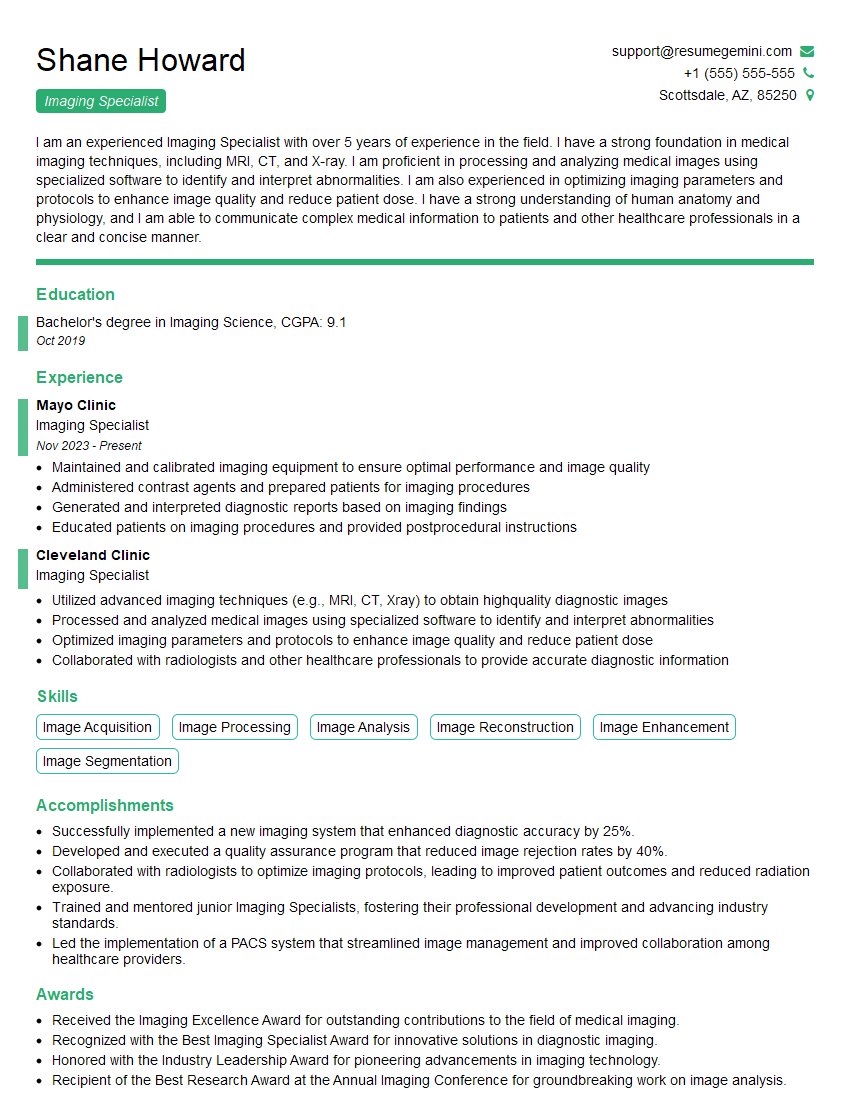
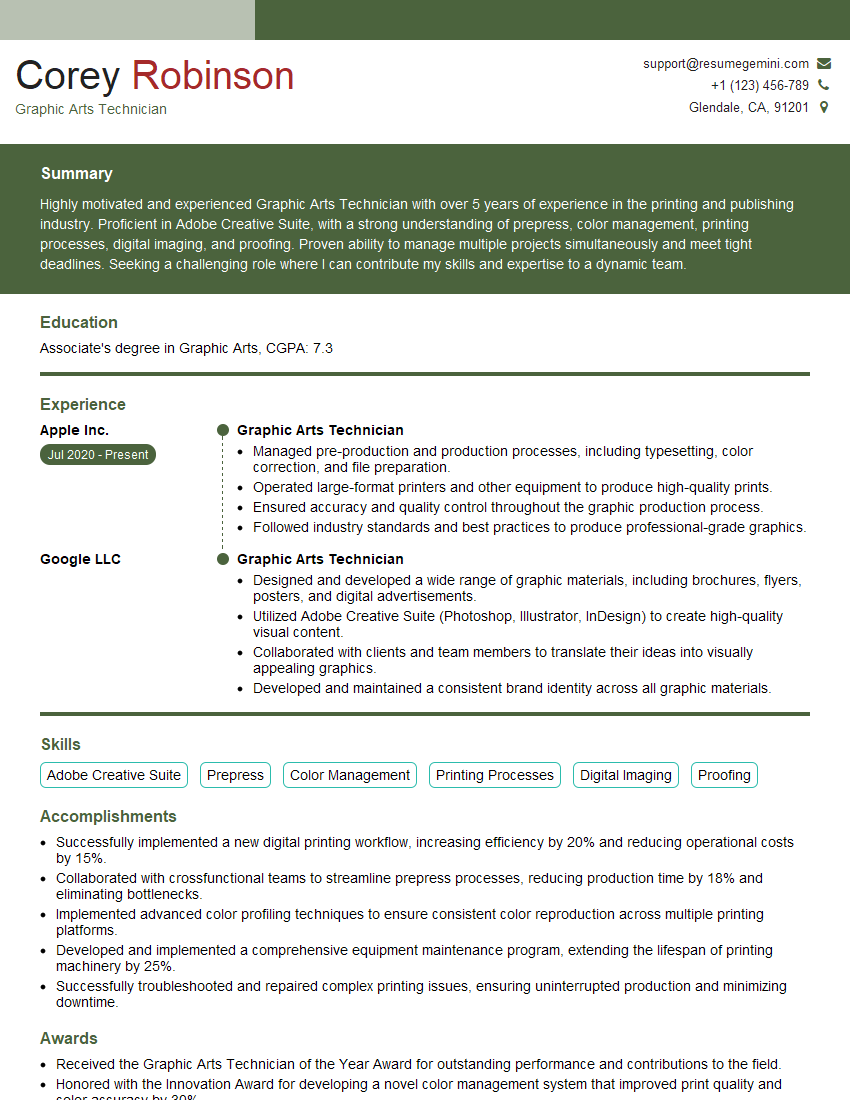
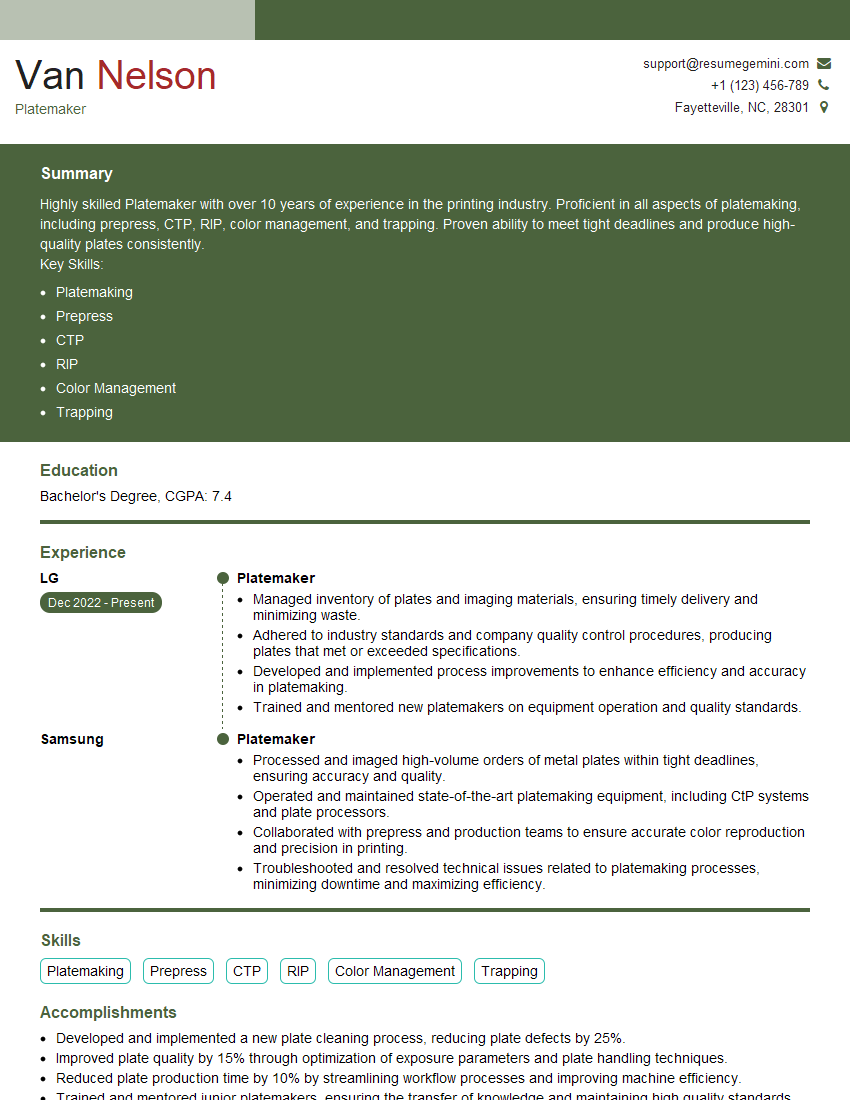
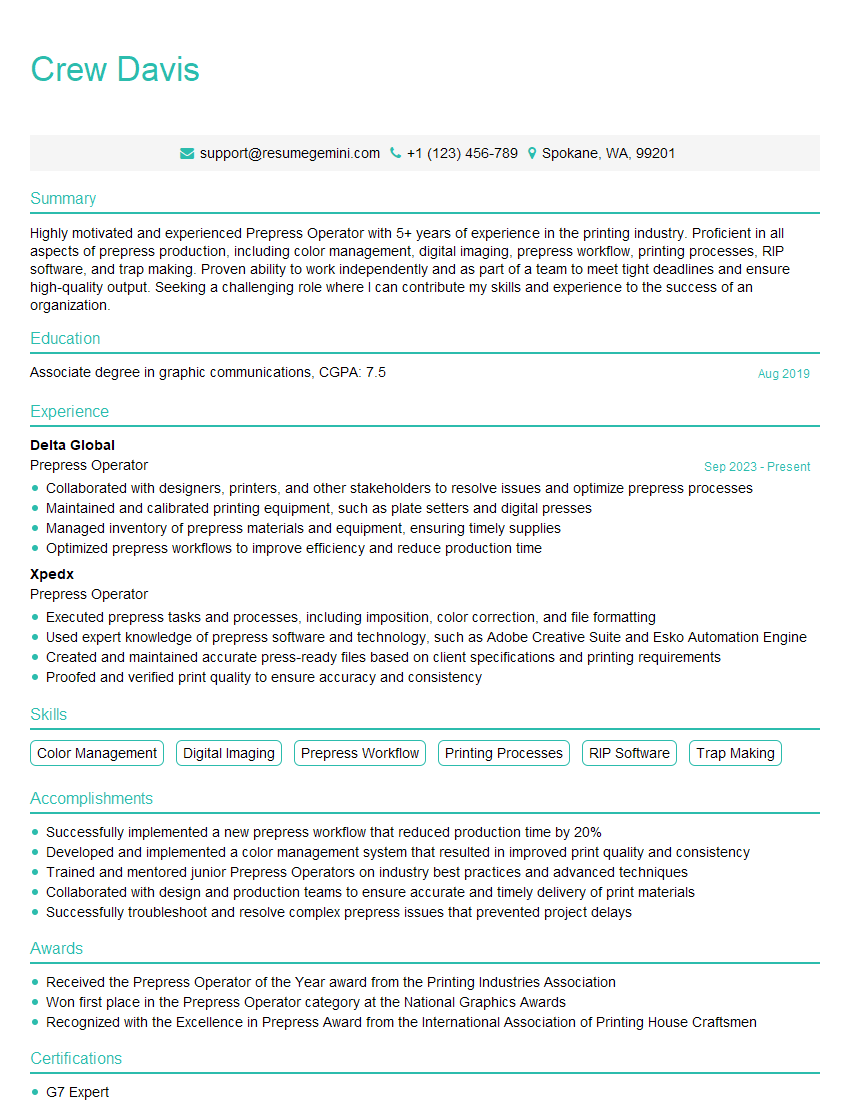
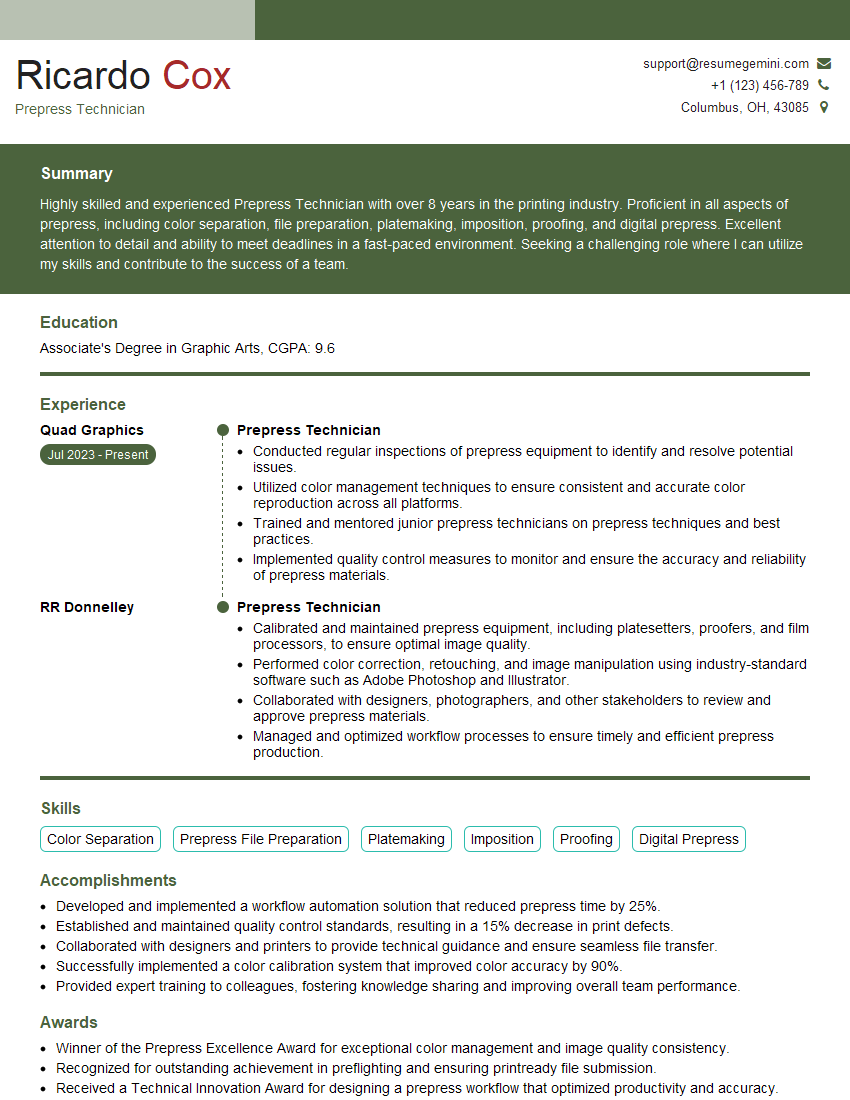
Mastering CTP skills significantly enhances your career prospects in the printing industry, opening doors to specialized roles and higher earning potential. To maximize your job search success, create an ATS-friendly resume that highlights your relevant skills and experience. ResumeGemini is a trusted resource to help you build a professional and impactful resume that gets noticed. They provide examples of resumes tailored to CTP (ComputertoPlate) roles to help you craft the perfect application. Take the next step towards your dream job today!


Explore more articles
Users Rating of Our Blogs
Share Your Experience
We value your feedback! Please rate our content and share your thoughts (optional).
What Readers Say About Our Blog
Very informative content, great job.
good