The right preparation can turn an interview into an opportunity to showcase your expertise. This guide to CTP Plate Making interview questions is your ultimate resource, providing key insights and tips to help you ace your responses and stand out as a top candidate.
Questions Asked in CTP Plate Making Interview
Q 1. Explain the process of CTP plate making from start to finish.
CTP (Computer-to-Plate) plate making revolutionized the printing industry by eliminating the need for film. The process begins with a digital file, usually a PDF, containing the artwork for printing. This file is then processed through RIP (Raster Image Processor) software. The RIP software converts the vector-based artwork into a raster image, essentially a bitmap, specifying the precise location of ink dots on the plate. This raster image is then sent to the CTP imager.
The CTP imager exposes the plate using a laser. There are various types of lasers and plate chemistries, but the fundamental principle is the same: the laser alters the photosensitive layer of the plate, making the exposed areas receptive to ink and the unexposed areas water-receptive.
After exposure, the plate is processed. This involves washing away the unexposed areas to reveal the image. The processing can be automated or manual, depending on the type of plate and equipment used. Once processed, the plate is inspected for any defects, cleaned, and mounted onto the printing press. The plate is then ready for printing.
Think of it like baking a cake: the recipe (digital file) is interpreted (RIP), the batter (plate) is cooked in a specific way (imager), washed (processed), and then is ready to be enjoyed (printing).
Q 2. What are the different types of CTP plates available?
CTP plates are categorized based on their chemistry and sensitivity. Common types include:
- Thermal Plates: These plates use heat from a laser to create the image. They are generally easier to process and require less water, making them environmentally friendly. They are well-suited for smaller print runs and high-quality color reproduction.
- Violet Plates: These plates are exposed using violet lasers. They are known for their high resolution and durability, often preferred for longer print runs and demanding applications like high-fidelity color reproduction.
- UV Plates: Exposed using ultraviolet lasers, these plates are increasingly used for their excellent print quality and longevity.
The choice of plate depends on factors like print volume, required resolution, budget, and environmental considerations. A higher resolution plate will provide sharper images, but at a higher cost.
Q 3. Describe the role of RIP software in CTP workflow.
RIP software is the crucial link between the design software and the CTP imager. It takes the digital file, typically a PDF or PostScript file, and performs several critical functions:
- Rasterization: Converts vector graphics into a bitmap (raster) image, which consists of a grid of pixels.
- Image Processing: Adjusts image parameters such as resolution, color profiles, and screening to ensure optimal print quality. It can also perform image enhancements and corrections.
- Plate Imposition: Arranges multiple pages (or images) onto the plate in a manner suitable for the printing press.
- Image Compression: Optimizes the image data to reduce file size for efficient transmission to the imager.
- Plate-specific settings: The RIP accounts for the plate’s sensitivity and the imager’s parameters to ensure correct exposure.
Without proper RIP settings, you might encounter issues like inaccurate color reproduction, blurry images, or even plate defects.
Q 4. How do you ensure proper plate exposure and processing?
Proper exposure and processing are paramount for high-quality plates. Exposure involves controlling the laser’s intensity and duration, ensuring every area of the plate receives the correct amount of energy to form the image. This is meticulously controlled by the RIP software and the imager’s settings.
Processing involves carefully washing away the unexposed areas. The water temperature, pressure, and chemical solutions used in processing must be precisely controlled. This process is often automated, but even manual processing requires skill and attention to detail. Incorrect processing can lead to poor image quality, scumming (ink smearing), or plate degradation.
Regular calibration of the imager and processing equipment is crucial. This involves using test plates and comparing the output to pre-defined standards. Any deviations indicate the need for adjustments to optimize the process.
Q 5. What are the common causes of plate defects and how do you troubleshoot them?
Common plate defects include:
- Scumming: Excess ink on non-image areas. Causes include improper processing, poor plate chemistry, or incorrect exposure.
- Pin holes: Small holes in the image area leading to missing ink. Can be caused by dust, scratches, or improper processing.
- Ghosting: A faint image appearing in unwanted areas. This is frequently a result of poor exposure or processing chemicals.
- Mottle: Uneven ink distribution across the plate; often from insufficient laser power or inadequate plate surface.
Troubleshooting involves systematically investigating possible causes. Check the RIP settings for potential errors, examine the plate for physical damage, ensure proper processing conditions, and inspect the chemicals used. A well-maintained CTP system with regular preventative maintenance significantly reduces the likelihood of these problems.
Q 6. Explain the importance of image resolution in CTP plate making.
Image resolution is crucial because it dictates the detail and sharpness of the printed image. Higher resolution means more dots per inch (dpi), resulting in finer details and smoother gradients. However, higher resolution increases file size and processing time.
The optimal resolution depends on the application. For example, high-resolution images are essential for fine details and photography, while lower resolutions might suffice for text-heavy documents. If the resolution is too low, the printed image will appear blurry or pixelated; too high, and you might needlessly increase processing time and the risk of file corruption.
Imagine viewing an image on a low-resolution screen versus a high-resolution one. The same principle applies to print quality. Selecting the correct resolution is a balancing act between image quality and efficiency.
Q 7. What are the different types of plate imagers used in CTP?
Several types of plate imagers are used in CTP workflows, differing primarily in the type of laser they use:
- Thermal imagers: Use infrared lasers to expose thermal plates.
- Violet laser imagers: Employ violet lasers for exposing violet plates, offering high resolution and speed.
- UV laser imagers: Utilize ultraviolet lasers for UV plates, providing excellent print quality and durability.
The choice of imager depends on the type of plate being used and the desired production speed and quality. Factors such as throughput, resolution, and maintenance costs should all be considered when selecting an imager.
Q 8. Describe the process of plate mounting and cleaning.
Plate mounting and cleaning are critical steps in the CTP (Computer-to-Plate) workflow, ensuring optimal print quality and press performance. The process begins with carefully inspecting the plate for any damage before mounting. A precise, even pressure is crucial during mounting to prevent image distortion or ‘ghosting’ on the printed sheet. We typically use a plate mounting system that applies consistent, even pressure to secure the plate onto the cylinder.
Cleaning involves removing any residual chemicals or debris from the plate after processing. This is often done with a plate cleaning solution specifically designed for the type of plate (thermal or violet) to ensure compatibility and prevent damage. Incorrect cleaning can lead to poor ink transfer or plate degradation. We typically use a two-step process: first, a cleaning solution to remove the remaining developer, then a final rinse with a deionized water system to ensure a spot-free, clean plate surface. Failure to properly clean the plates can lead to contamination and print defects in subsequent jobs.
Q 9. How do you maintain the quality and consistency of CTP plates?
Maintaining the quality and consistency of CTP plates requires attention to detail throughout the entire workflow, from plate storage to the final printing. This involves several key elements:
- Plate Storage: Plates should be stored in a cool, dark, and dry place to prevent degradation. Proper shelving and organization systems keep them from being bent or damaged, maintaining consistency in use.
- Chemical Management: Using fresh, high-quality chemicals, and adhering to the manufacturer’s recommendations for their use and storage is crucial. Regularly checking the chemical levels and replacing them as needed is part of our standard operating procedure. Improper chemical handling can lead to inconsistencies in image quality.
- Processor Maintenance: Routine maintenance of the CTP processor is essential. This includes regular cleaning of rollers and other components, and adhering to the processor’s prescribed maintenance schedule, ensuring consistent plate processing conditions.
- Environmental Control: Maintaining a stable temperature and humidity level in the platemaking room minimizes variations in the plate processing.
- Quality Control Checks: Regular quality control checks are performed throughout the process to identify and correct any inconsistencies. This might involve inspecting plates before and after processing and performing test prints to ensure proper image density and sharpness.
Q 10. What are the safety precautions you should take while handling CTP plates and chemicals?
Safety is paramount when handling CTP plates and chemicals. We follow strict safety protocols, including:
- Personal Protective Equipment (PPE): This includes wearing gloves, safety glasses, and lab coats to protect against chemical splashes and skin irritation. Specific PPE depends on the chemical being used.
- Proper Ventilation: Working in a well-ventilated area is critical to minimize exposure to chemical fumes. We utilize exhaust systems in the platemaking area to ensure good air quality.
- Chemical Handling: Following proper chemical handling procedures, including reading and understanding the safety data sheets (SDS) for all chemicals, is non-negotiable. This includes careful dispensing and proper disposal techniques. We never mix different chemicals, and we meticulously follow the waste disposal regulations for these chemicals.
- Emergency Procedures: We have established clear emergency procedures, including the location of safety showers and eyewash stations, ensuring everyone knows what to do in case of an accident. Emergency spill kits are readily available.
- Training: All personnel involved in the CTP platemaking process receive comprehensive safety training. Regular refresher training is conducted to ensure that our procedures remain current and safe.
Q 11. How do you handle plate storage and archiving?
Plate storage and archiving are crucial for maintaining accurate records and retrieving plates for reprint jobs or future use. We use a system combining short-term and long-term storage solutions:
- Short-Term Storage: Newly processed plates are stored in designated racks in a controlled environment (temperature and humidity controlled) for easy access to currently used plates. This usually involves a clearly labeled rack system which categorizes plates by job name and date.
- Long-Term Archiving: Plates intended for long-term archiving are stored in a separate area, often in protective sleeves or archival boxes, in a climate-controlled environment, to prevent degradation. Proper labeling with job information and date is critical for easy retrieval.
- Digital Archiving: We maintain digital records, including job specifications and plate data, using a robust archiving system. This allows us to easily recreate plates if necessary, even if the physical plate is unavailable.
This dual approach ensures easy access to frequently used plates while preserving archived plates for future use, maintaining efficient operations and accurate record-keeping.
Q 12. Explain the differences between thermal and violet CTP plates.
Thermal and violet CTP plates differ primarily in their sensitivity to light and the imaging process used.
- Thermal CTP plates are exposed using a laser that generates heat, which initiates a chemical reaction in the plate that hardens the image areas. These are usually less expensive and have a relatively lower resolution. They’re known for their consistent image quality in stable processing environments. However, they are typically more sensitive to variations in temperature and humidity.
- Violet CTP plates are exposed using a violet laser. The violet laser triggers a photopolymerization reaction in the plate, creating the image. Violet plates generally provide higher resolution and finer detail compared to thermal plates. They tend to be more resistant to environmental conditions than thermal plates. However, they typically are slightly more expensive.
The choice between thermal and violet plates depends on several factors, including the desired print quality, budget constraints, and environmental conditions of the printing facility. For high-resolution applications, like packaging or fine art printing, violet plates are often preferred. For applications with less demanding resolution requirements, thermal plates represent a more economical option.
Q 13. Describe your experience with different plate processors.
Throughout my career, I’ve worked with a range of plate processors from various manufacturers, including Heidelberg, Kodak, and Agfa. Each processor has its unique features and operational characteristics. Some key differences include the type of plates they can process, their speed and throughput, the level of automation, and the type of cleaning and maintenance required. For example, the Heidelberg Suprasetter is known for its high speed and automation, while the Kodak Magnus is appreciated for its user-friendly interface. I am proficient in operating and maintaining each of these different processors, understanding their specific requirements and troubleshooting any issues that may arise.
My experience includes performing routine maintenance, troubleshooting malfunctions, and optimizing processor settings for optimal plate quality and efficiency. Understanding the nuances of each processor allows for effective management and ensures consistent high-quality results, regardless of the equipment in use. I am confident in my ability to adapt to and operate any CTP plate processor efficiently.
Q 14. How do you ensure the proper registration of plates on the press?
Ensuring proper plate registration on the press is critical for accurate print alignment, avoiding misregistration and ensuring consistent print quality. This involves several steps:
- Precise Plate Mounting: Accurate and consistent plate mounting on the printing cylinder is fundamental. Using appropriate tools and techniques helps minimize positional errors.
- Pre-Press Preparation: Accurate imposition and pre-flighting of the artwork are critical. This ensures the artwork is positioned correctly to match the plate geometry.
- Press Calibration: Regular press calibration and registration adjustments are necessary to ensure accurate positioning of the print image. This involves careful alignment of the printing units.
- Registration Marks: Using registration marks on the plates and printed sheets allows for precise alignment adjustments on the press. These marks allow for fine-tuning of the registration during the print run.
- Automated Registration Systems: Many modern printing presses incorporate automated registration systems that continuously monitor and adjust plate position, reducing manual intervention and enhancing accuracy.
Careful attention to detail at each stage, from pre-press to the printing press, is necessary to achieve and maintain proper registration and high-quality prints. Regular checks and adjustments during the print run, often utilizing color bars and registration marks, helps ensure consistent results throughout the entire print job.
Q 15. What is the significance of DPI and LPI in CTP platemaking?
DPI (dots per inch) and LPI (lines per inch) are crucial parameters in CTP (Computer-to-Plate) platemaking, defining the resolution of the digital image and the printing screen, respectively. DPI refers to the resolution of the digital file used to create the plate – the higher the DPI, the more detail the image contains. Think of it like the pixels on your computer screen; more pixels mean a sharper image. LPI, on the other hand, dictates the fineness of the halftone screen used to reproduce continuous-tone images (like photographs) as a pattern of dots. A higher LPI results in smoother gradations and finer detail in the printed output, but also requires higher DPI to avoid losing detail. For example, a high-quality publication might use a 300 DPI image output to a plate with a 175 LPI screen. A lower resolution image would lead to a loss of sharpness, while a low LPI screen would result in visible banding in the printed image. The optimal balance depends on the printing press capabilities and the desired print quality.
Career Expert Tips:
- Ace those interviews! Prepare effectively by reviewing the Top 50 Most Common Interview Questions on ResumeGemini.
- Navigate your job search with confidence! Explore a wide range of Career Tips on ResumeGemini. Learn about common challenges and recommendations to overcome them.
- Craft the perfect resume! Master the Art of Resume Writing with ResumeGemini’s guide. Showcase your unique qualifications and achievements effectively.
- Don’t miss out on holiday savings! Build your dream resume with ResumeGemini’s ATS optimized templates.
Q 16. Explain the concept of dot gain and how it affects CTP output.
Dot gain is the increase in the size of halftone dots during the printing process. Imagine you’re printing a small, dark dot; dot gain causes it to spread out and become larger on the printed paper. Several factors contribute to dot gain, including the type of paper, the ink, and the printing pressure. In CTP, dot gain impacts the final output because it affects the tonal range and color reproduction. Excessive dot gain leads to darker, muddier prints, while insufficient dot gain results in a lighter, less saturated image. We account for dot gain during prepress by using a process called ‘dot gain compensation’ in our RIP software. This software adjusts the digital file to anticipate the dot gain that will occur during printing. The goal is to accurately reproduce the intended colors and tones in the final printed piece. For instance, by calibrating our system using a densitometer, we measure the actual dot gain and adjust the RIP settings to compensate. Failure to manage dot gain leads to inconsistent color reproduction and a loss of image quality.
Q 17. How do you manage color profiles in CTP workflow?
Color profile management is critical in ensuring consistent color reproduction throughout the CTP workflow. We utilize ICC (International Color Consortium) profiles to standardize color information across different devices and software. Each device—scanner, monitor, RIP, and printing press—has its own unique color response, and ICC profiles help translate color data between them. For example, we use a calibrated monitor profile to ensure that what we see on screen closely matches what will be printed. Similarly, we use printer profiles that are specific to our particular CTP plate type and printing press to achieve accurate color reproduction. Regularly verifying and updating these profiles is essential, as changes in the equipment or inks may alter color response. Mismatched or outdated profiles can result in significant color discrepancies between the digital file and the final printed piece, and a lot of costly rework.
Q 18. What is your experience with different RIP software?
My experience encompasses a range of leading RIP software, including Creo, Agfa Apogee, and Kodak Prinergy. Each has its own strengths and weaknesses, particularly regarding features like color management, automation tools, and job tracking. For example, Creo’s strengths lie in its robust color management capabilities and advanced screening options. Agfa Apogee excels in its automation features and workflow integration, while Kodak Prinergy is known for its extensive tools for job management and quality control. My expertise extends to the configuration and optimization of these RIPs, including the creation of custom profiles and the troubleshooting of any processing errors. I’ve worked extensively on optimizing workflows and streamlining the prepress process, improving efficiency and reducing production time using these RIPs.
Q 19. Explain your troubleshooting skills regarding CTP plate issues.
Troubleshooting CTP plate issues often involves a systematic approach. I start by identifying the nature of the problem: Is it a color issue, a registration problem, or a plate defect? I then systematically examine each stage of the workflow, starting from the digital file, through RIP processing, to plate exposure and printing. Tools like densitometers and microscopes are useful for detailed analysis. For instance, if I’m seeing inconsistent color, I would check the ICC profiles, the RIP settings, and the plate exposure parameters. If there’s a registration problem, I would inspect the plate mounting, the press settings, and the imposition. A systematic approach helps isolate the source of the problem and prevents wasting time on unproductive fixes. Documenting every step and the results are key to both efficient troubleshooting and preventing future occurrences.
Q 20. How do you perform quality control checks on CTP plates?
Quality control checks on CTP plates are crucial for ensuring consistent print quality. My QC process begins with a visual inspection of the plate for any visible defects, such as scratches or pinholes. Then, I perform a densitometric reading to verify that the dot gain and density are within acceptable tolerances. This is done using a densitometer, a precise instrument for measuring the density of the dots on the plate. Next, I may expose a test print to verify the color accuracy and registration. Furthermore, I carefully check the plate for proper registration using a registration target. Finally, the plate is checked for any issues in the workflow, especially if there are any visible defects from previous steps that need to be investigated further. This multi-step process allows for early identification and correction of any issues, preventing costly reprints and maintaining a high standard of print quality. A comprehensive quality control system contributes significantly to delivering consistent and high-quality final products.
Q 21. What are the environmental considerations involved in CTP platemaking?
Environmental considerations are increasingly important in CTP platemaking. The chemicals used in plate processing, such as developers and cleaners, can have environmental impact. Therefore, we use environmentally friendly processing chemistry and employ strategies to minimize waste, such as recycling and proper disposal of used chemicals. We also focus on optimizing the platemaking process to reduce energy consumption. This includes choosing energy-efficient equipment and adopting best practices to minimize the plate exposure time, thereby reducing energy use. Additionally, we actively monitor and reduce our carbon footprint, making environmental sustainability a priority in all our platemaking operations. This commitment extends to selecting CTP plates and processing solutions with a focus on responsible manufacturing and reduced environmental impact. Ultimately, balancing quality and production efficiency with environmental responsibility is essential for sustainability in the industry.
Q 22. How do you manage workflow and maintain productivity?
Managing workflow and maintaining productivity in CTP plate making requires a systematic approach. It’s like orchestrating a symphony – each instrument (process) needs to play its part in perfect harmony. I employ a combination of techniques:
- Job Prioritization: I utilize job ticketing systems to prioritize jobs based on deadlines and client urgency. This ensures that the most time-sensitive tasks are addressed first.
- Process Optimization: I’m constantly looking for ways to streamline our processes. This includes analyzing bottlenecks, optimizing plate exposure times, and improving the efficiency of our workflow software. For instance, we recently implemented automated plate loading which significantly reduced manual handling and increased throughput.
- Preventive Maintenance: Regular maintenance on CTP devices is crucial. Scheduling preventative maintenance minimizes downtime and extends the lifespan of expensive equipment. Thinking ahead prevents costly repairs and lost productivity.
- Team Collaboration: Effective teamwork is essential. Clear communication and collaboration with prepress operators, press operators, and clients are key to ensuring a smooth workflow. Daily stand-up meetings help identify and address potential roadblocks early on.
- Data Analysis: Tracking key metrics like plate production time, error rates, and machine uptime provides valuable insights into areas for improvement. This data-driven approach allows for continuous optimization.
By combining these approaches, we’ve significantly improved our overall efficiency and reduced turnaround times, leading to increased customer satisfaction.
Q 23. Describe your experience with different types of printing presses.
My experience spans a variety of printing presses, from older Heidelberg presses to modern high-speed Komori and KBA machines. This experience has given me a deep understanding of how different press types impact CTP plate requirements. For example:
- Sheetfed Presses: I’m proficient in creating plates for various sheetfed presses, understanding the need for precise registration and high-resolution imaging to meet the demands of high-quality commercial printing.
- Web Presses: Working with web presses requires a different approach. The plates need to withstand higher speeds and longer runs, so durability and consistent image quality are paramount. I’m familiar with the specific plate types and processing parameters required for these high-volume applications.
- UV Presses: I have experience with creating plates for UV printing, which necessitates careful consideration of ink characteristics and plate selection to ensure optimal curing and prevent issues like plate degradation.
Understanding the capabilities and limitations of each press type allows me to optimize the CTP workflow and produce plates that consistently deliver exceptional results.
Q 24. Explain your understanding of color management systems (CMS).
Color management systems (CMS) are essential for achieving consistent color reproduction throughout the printing process. A CMS acts like a translator, ensuring that the color intended by the designer is accurately represented on the final printed product. It involves:
- Profile Creation: Creating color profiles for all devices involved in the process – scanners, monitors, CTP imagers, and printing presses – is a crucial first step. These profiles characterize the color response of each device.
- Color Transformation: The CMS uses these profiles to transform colors from one color space to another. For example, converting RGB data from a design file to CMYK for printing on a press.
- Proofing: Soft proofing, using a calibrated monitor, and hard proofing, using a dedicated proofing system, are used to verify color accuracy before printing.
My experience includes working with industry-standard CMS software like GMG ColorServer and Kodak Prinergy. I know how to calibrate devices, create accurate profiles, and troubleshoot color discrepancies to ensure accurate color reproduction in the final printed piece. For instance, I once resolved a significant color shift by identifying an incorrect ICC profile assigned to a particular press. Rectifying that issue eliminated the problem completely.
Q 25. How do you stay updated with new technologies and trends in CTP?
Staying current in the rapidly evolving world of CTP requires a multi-faceted approach. I actively engage in several strategies to remain up-to-date:
- Industry Publications & Trade Shows: I regularly read industry publications like WhatTheyThink and attend trade shows such as drupa. These events provide exposure to the latest technologies and trends.
- Vendor Training & Webinars: I participate in training sessions and webinars offered by equipment manufacturers like Agfa, Fuji, and Kodak. This ensures I’m familiar with the latest software and hardware advancements.
- Online Forums & Communities: Engaging in online forums and communities allows me to learn from other professionals and stay informed about emerging challenges and solutions.
- Continuous Learning: I dedicate time to research and self-learning, exploring new software features and investigating best practices in CTP platemaking.
By actively seeking knowledge, I ensure that I remain proficient in the most current technologies and best practices, enabling me to optimize our workflows and remain competitive.
Q 26. Describe a time you had to solve a complex problem in CTP plate making.
One particularly challenging situation involved a recurring problem with plate ghosting – faint, unwanted images appearing on printed sheets. This problem significantly impacted print quality and resulted in costly reprints.
To solve this, I implemented a systematic troubleshooting approach:
- Gather Data: I meticulously documented all instances of ghosting, including the types of plates used, press settings, and environmental conditions.
- Analyze Findings: After reviewing the data, I noticed a correlation between the ghosting and the humidity levels in our platemaking room. High humidity can lead to plate swelling and inconsistencies.
- Develop Solutions: I proposed installing a dehumidifier in the plate room to regulate humidity. I also reviewed our plate processing procedures to identify and eliminate any steps that might contribute to the problem.
- Implement & Test: After installing the dehumidifier and making adjustments to our processes, we monitored the results closely. The ghosting significantly decreased, and print quality improved dramatically.
This experience highlighted the importance of meticulous data collection, careful analysis, and a methodical approach to problem-solving in CTP plate making. The resolution significantly improved our print quality and saved the company a considerable amount of money.
Q 27. What is your experience with pre-flighting and proofing?
Preflighting and proofing are crucial steps in ensuring high-quality output. Preflighting is like a pre-flight check for an airplane – it involves verifying that the files are suitable for printing. This includes:
- Checking for Errors: Identifying errors such as missing fonts, incorrect color spaces, low-resolution images, and other potential problems that could halt production.
- File Validation: Ensuring that the files meet the specifications required for the printing process, including the correct resolution, color profile, and file format.
Proofing, on the other hand, is like a test run before the main event. It involves producing a visual representation of the final printed product to verify color accuracy, image quality, and overall design integrity. This can involve soft proofing on a calibrated monitor and hard proofing using a dedicated proofing system.
My experience with preflighting software includes tools like PitStop and Enfocus Switch. I’m proficient in using various proofing methods to ensure color accuracy and detect potential issues before they reach the printing press, saving time and resources. For instance, during preflighting I caught a crucial error in a client’s artwork that would have led to a costly mistake during printing – a missing image.
Key Topics to Learn for Your CTP Plate Making Interview
- CTP Plate Making Processes: Understand the entire workflow, from file preparation and RIP settings to plate exposure, processing, and quality control. This includes a thorough grasp of different CTP technologies (e.g., thermal, violet laser).
- Image Setting and Resolution: Learn the impact of resolution, screening angles, and dot gain on print quality. Be prepared to discuss how these factors influence the final product and how to troubleshoot related issues.
- Plate Handling and Maintenance: Demonstrate knowledge of proper plate storage, handling techniques to avoid damage, and routine maintenance procedures to ensure optimal performance and longevity.
- Troubleshooting and Problem Solving: Be ready to discuss common CTP plate making challenges, such as plate defects (e.g., pinholes, scratches), exposure inconsistencies, and processing issues. Explain your approach to identifying and resolving these problems.
- Color Management and Calibration: Understand the importance of color profiles and calibration in achieving accurate and consistent color reproduction. Be able to discuss different color spaces and their applications in CTP.
- Safety Procedures and Regulations: Demonstrate awareness of safety protocols related to chemicals used in plate processing and the operation of CTP equipment. This includes proper handling of hazardous materials and waste disposal.
- Prepress Workflow Integration: Understand how the CTP process fits within the larger prepress workflow, interacting with design, file preparation, and printing stages.
Next Steps
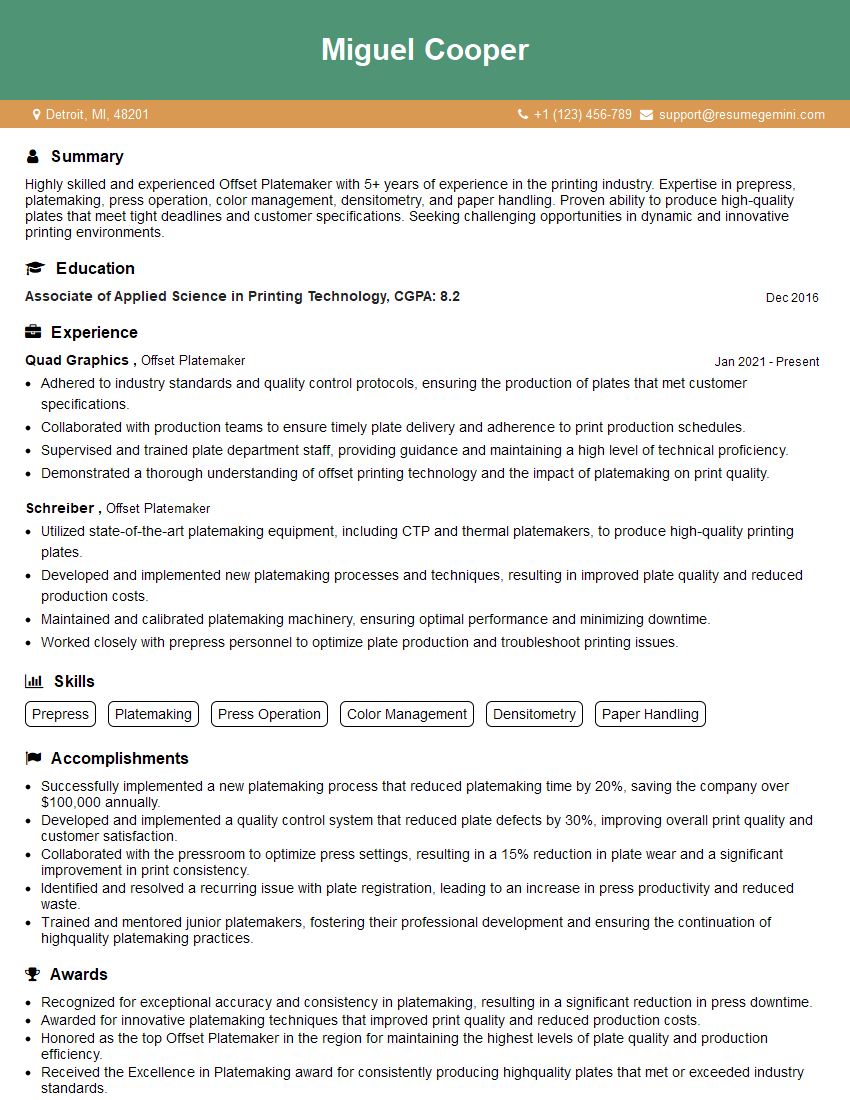
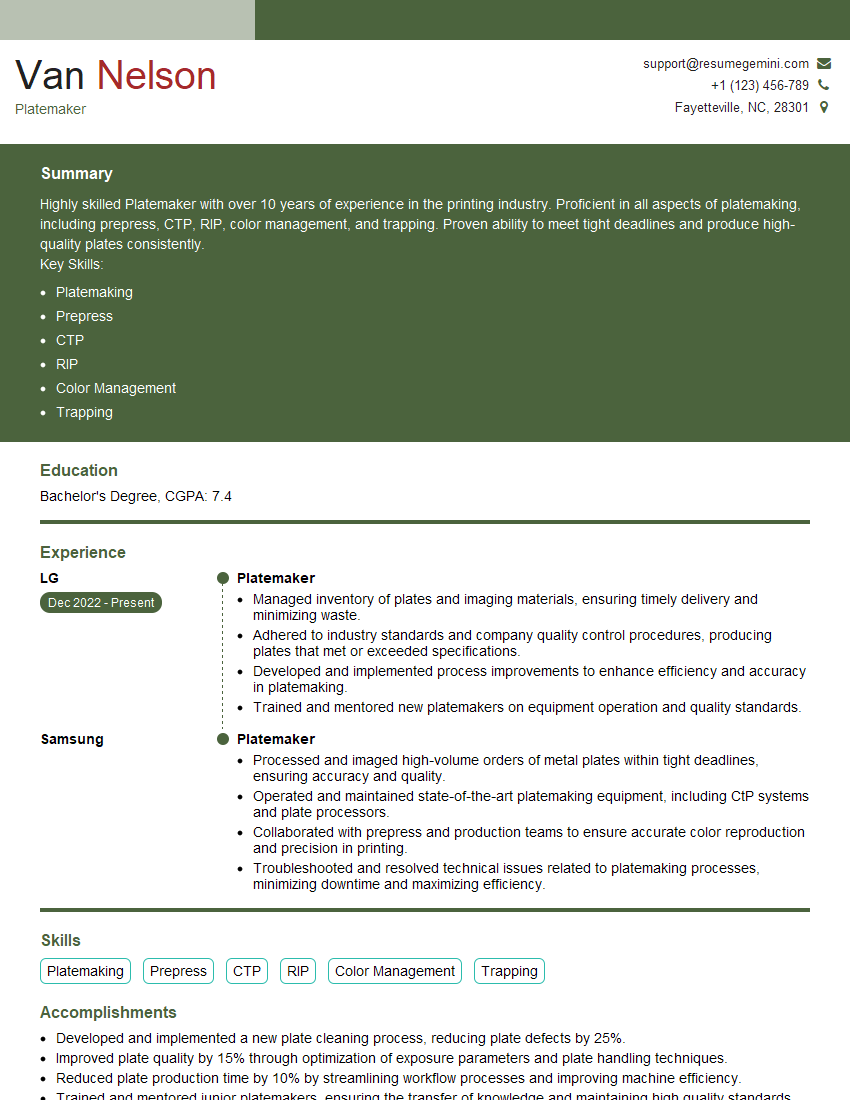
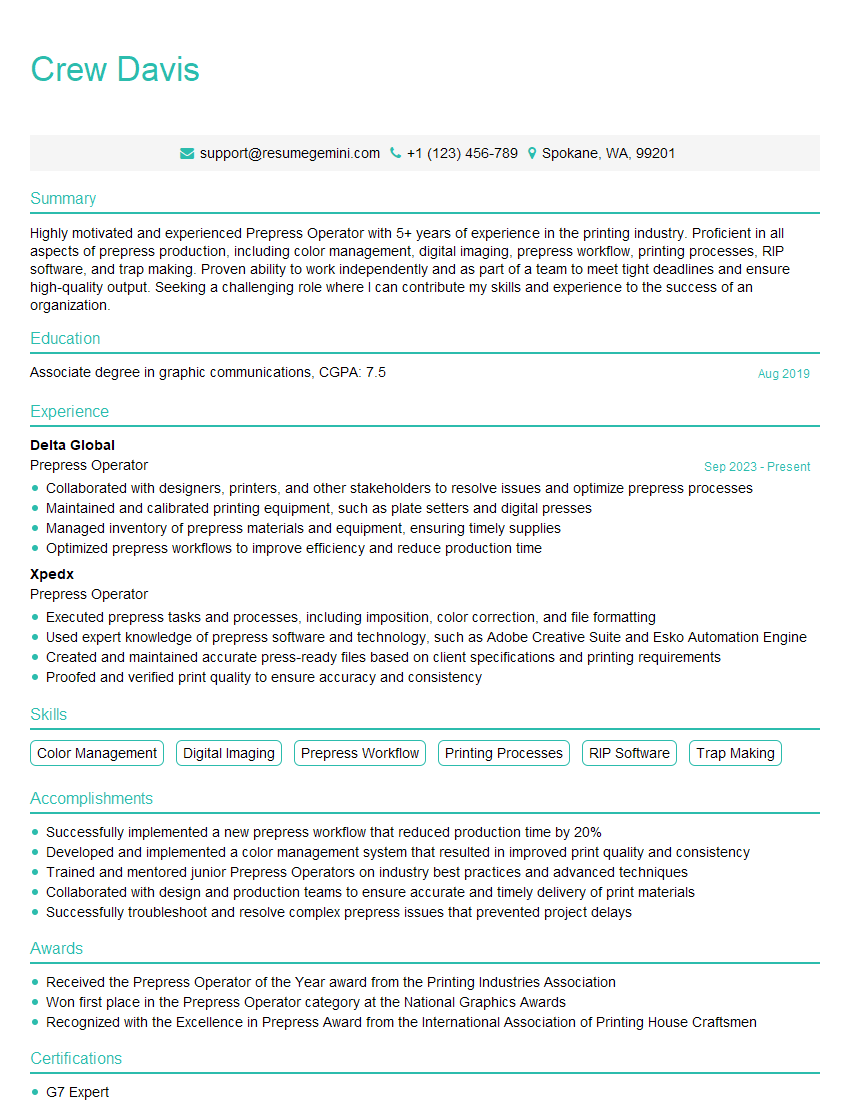
Mastering CTP Plate Making opens doors to exciting career opportunities in the printing industry, offering diverse roles and excellent growth potential. To maximize your job prospects, crafting a strong, ATS-friendly resume is crucial. ResumeGemini can significantly help you build a professional and impactful resume that highlights your skills and experience effectively. We provide examples of resumes tailored to the CTP Plate Making field to guide you through the process. Invest the time to create a compelling resume – it’s your first impression and a vital step towards your dream job.

Explore more articles
Users Rating of Our Blogs
Share Your Experience
We value your feedback! Please rate our content and share your thoughts (optional).
What Readers Say About Our Blog
Very informative content, great job.
good