The thought of an interview can be nerve-wracking, but the right preparation can make all the difference. Explore this comprehensive guide to Cupola Charging interview questions and gain the confidence you need to showcase your abilities and secure the role.
Questions Asked in Cupola Charging Interview
Q 1. Explain the process of cupola charging, including the layering techniques.
Cupola charging is the process of carefully loading the cupola furnace with the correct proportions of charge materials—iron, coke, and limestone—to achieve efficient melting and metal quality. The key is layering, ensuring proper combustion and preventing bridging (blocking of airflow). We employ a systematic layering technique.
Initial Layer: We start with a bed of coke at the bottom, about 12-18 inches high, which is ignited to establish the melting zone. This coke bed is crucial for maintaining heat and airflow.
Layering Sequence: Subsequent layers typically follow a pattern of coke, then iron, then limestone. The ratio depends on the desired metal composition and cupola size. A common rule of thumb is a charge consisting of approximately 12% coke, 1-3% limestone and the rest iron.
Iron Layer Considerations: Iron is added in the form of scrap metal, typically charged in smaller pieces for even melting. The size and shape of the scrap influence the melting rate. We aim for a homogenous layer of scrap metal to prevent uneven melting.
Limestone Layer: Limestone acts as a flux, removing impurities (like sulfur) from the molten iron. The limestone is carefully distributed throughout the iron layers and should not be excessively lumped.
Multiple Charges: The charging process is iterative, with multiple layers of these materials being added as the melting and tapping process continue. The charging system is meticulously monitored to make adjustments depending on the process parameters.
Imagine building a layered cake: each layer has a specific function and the overall structure needs to be stable and well-proportioned for optimal results. Improper layering can lead to inefficient melting, poor metal quality, and operational issues.
Q 2. Describe the role of different charge materials (coke, limestone, etc.) in cupola operation.
Each charge material plays a vital role in cupola operation:
Coke: Acts as the fuel, providing the heat necessary to melt the iron. Its high carbon content contributes to the molten metal’s carbon content, influencing its properties. We choose coke with the right size and quality to ensure efficient combustion and maintain consistent heat levels throughout the melting process.
Iron (Scrap Metal): This is the primary material, being melted to produce molten iron which is later cast. The choice of scrap metal, with regards to its chemical composition, directly impacts the quality of the final product.
Limestone (Flux): This acts as a cleaning agent, reacting with impurities (particularly sulfur) in the iron and coke to form slag. The slag floats on top of the molten metal, facilitating their removal. The correct amount of limestone helps produce cleaner, higher quality metal.
Think of it as a recipe: the right proportions of each ingredient are crucial for the final product. Too much or too little of any component can compromise the quality and efficiency of the cupola process.
Q 3. How do you ensure uniform melting in a cupola furnace?
Uniform melting in a cupola relies on several factors:
Consistent Charging: Precise and even distribution of charge materials is paramount, following the layering techniques previously discussed. Inconsistent charging leads to hot spots and uneven melting.
Controlled Airflow: Proper air distribution through tuyeres (air inlets) ensures that combustion is efficient and consistent across the entire coke bed. We use air volume regulators to manage this.
Proper Coke Size and Quality: Coke with appropriate sizing and reactivity guarantees even combustion. Too small, and it might be consumed too rapidly; too large, and it might not burn effectively.
Regular Monitoring: Constant observation of the cupola’s operation, through visual inspection and temperature monitoring, helps identify and address any inconsistencies in the melting process. Observing the slag and metal flow is crucial.
Imagine trying to bake a cake in an oven with uneven heat distribution – parts will burn, and parts will remain uncooked. In the same manner, even melting requires careful control and monitoring of several factors in cupola operation.
Q 4. What are the safety precautions you must take while charging a cupola?
Safety is paramount during cupola charging. We adhere strictly to these precautions:
Personal Protective Equipment (PPE): This includes safety glasses, heat-resistant gloves, safety shoes, and appropriate clothing to protect from heat, sparks, and molten metal splashes.
Charge Handling Procedures: Using proper lifting equipment and techniques to handle the charge materials is essential to prevent injuries from heavy objects.
Emergency Procedures: We have clear emergency procedures in place in case of fire, molten metal spills, or other accidents. We conduct regular safety training sessions.
No Unauthorized Personnel: Only authorized and trained personnel are allowed near the cupola during the charging and melting processes. This prevents accidents due to lack of awareness of the operation.
Ventilation and Exhaust Systems: Cupola furnaces generate toxic fumes; ensuring proper ventilation and exhaust system function is vital to ensure workers’ safety.
Safety isn’t just a checklist; it’s a culture. We constantly reinforce safe practices to create a zero-accident environment.
Q 5. How do you monitor the temperature of the molten metal in a cupola?
Molten metal temperature is typically monitored using:
Optical Pyrometers: These instruments measure the temperature by detecting the intensity of the infrared radiation emitted from the molten metal. This provides a non-contact method for measuring temperatures in harsh environments.
Thermocouples: Though less common in cupola operation due to the challenging environment, thermocouples can be strategically placed in certain models of cupolas to provide temperature data.
Visual Inspection: Experienced operators can often estimate the temperature of the molten metal based on its visual appearance (color and flow characteristics). We cross-check this method with instrument readings.
Accurate temperature monitoring is critical for ensuring optimal metal quality and avoiding issues such as overheating or incomplete melting.
Q 6. Explain the importance of proper air flow control in a cupola.
Proper airflow control is vital for efficient cupola operation. It directly impacts:
Combustion Efficiency: Adequate airflow ensures complete combustion of the coke, maximizing heat generation and minimizing fuel waste. Insufficient airflow leads to incomplete combustion, lowering the temperature.
Melting Rate: The right amount of air accelerates the melting process, improving productivity. Too much air, though, can cause excessive oxidation of the molten metal.
Metal Quality: Controlled airflow minimizes oxidation and reduces the incorporation of undesirable elements into the molten metal. This produces a higher-quality end product.
Slag Formation: The air flow influences the formation and removal of slag. Too little air can hamper the fluidity of the slag and prevent the removal of impurities.
Airflow control is like the engine of a car: precise regulation ensures optimal performance. We use air volume regulators to fine tune the process based on observation and experience.
Q 7. What are the signs of a malfunctioning cupola, and how would you address them?
Signs of a malfunctioning cupola include:
Uneven Melting: This indicates problems with charging techniques, air distribution, or coke quality. Address it by checking the layering, airflow distribution, and coke properties.
Excessive Slag Formation: This could point to issues with limestone quantity or the presence of excessive impurities. Examine the limestone composition and adjust the proportion in subsequent charges.
Low Metal Temperature: This signals insufficient fuel or inadequate airflow. Increase the fuel (coke) charge or adjust the airflow, carefully monitoring the temperature.
High Metal Temperature: While molten metal does need to reach a specific temperature range, excessively high temperatures can cause oxidation or even damage to the furnace. Adjust the airflow and amount of coke added.
Bridging: If airflow is restricted due to bridging (coke blockage), you’ll notice a drop in the melting rate. This requires immediate action: tapping the cupola walls to dislodge blockages. Improve future charges by considering the size and consistency of coke used.
Troubleshooting a cupola requires careful analysis and adjustment. Experienced operators use their knowledge and observational skills to identify the root cause and implement corrective measures. It’s a process of continuous monitoring and refinement.
Q 8. Describe the process of tapping molten metal from a cupola.
Tapping molten metal from a cupola is a crucial and potentially hazardous process requiring precision and safety protocols. It involves carefully opening a taphole located at the bottom of the cupola furnace, allowing the molten metal to flow into a pre-positioned ladle or trough. Before tapping, the cupola is typically allowed to reach a stable temperature and metal composition. The taphole is usually plugged with clay or a similar refractory material, which is carefully removed using a tapping bar. The flow of molten metal is carefully controlled to prevent splashing or uncontrolled pouring. Once the desired amount of metal is collected, the taphole is quickly plugged to stop the flow. The entire process requires experienced personnel and adherence to stringent safety procedures, including proper personal protective equipment (PPE) such as heat-resistant gloves, aprons, and eye protection.
Think of it like carefully draining a very hot, viscous liquid – precision and caution are essential to prevent accidents. The speed of tapping and the size of the taphole determine the flow rate. A larger taphole will result in a faster flow, which may be needed for high-volume production, but it also increases the risk of accidents if not carefully managed.
Q 9. How do you handle different types of scrap metal during cupola charging?
Handling different types of scrap metal during cupola charging requires careful consideration of their composition and melting points. A well-designed charge will utilize a mix of materials to optimize melting efficiency and the final metal quality. Heavier scrap, like cast iron, is typically charged first to form a base for the melting process. Lighter scrap materials, such as steel, are added later in the process to avoid premature melting. The sequence also helps to maintain a consistent temperature within the cupola. It’s crucial to avoid charging materials with excessive moisture or contaminants, as these can cause explosions or negatively impact the molten metal quality.
For instance, you wouldn’t just throw in a random assortment of scrap – you would strategically layer different types. A common practice is to start with heavier, larger pieces at the bottom, working upwards towards lighter materials. This helps ensure consistent melting and avoids clogging issues. Regular analysis of scrap metal composition is crucial to maintain consistency and prevent defects in the final product.
Q 10. What are the common causes of cupola metal defects, and how can they be prevented?
Common causes of cupola metal defects include improper charging techniques, fluctuating air pressure in the blast, insufficient coke consumption, and inconsistencies in the scrap metal composition. These issues lead to several defects such as high sulfur content, high phosphorus content, excessive carbon, and inclusions like slag or unmelted metal. Prevention relies on careful control of the melting process. Regular monitoring of the air pressure, consistent coke addition, and systematic scrap charging are key. Chemical analysis of the scrap metal before charging helps to predict and prevent issues. Proper maintenance of the cupola lining and the tuyeres (air inlets) is equally important, preventing contamination and ensuring uniform airflow.
Imagine baking a cake – if you don’t follow the recipe carefully, the outcome won’t be desirable. Similarly, a careful, consistent process is essential for high-quality molten metal. For example, inconsistent air pressure might lead to uneven melting and the presence of unmelted metal particles in the final product.
Q 11. Explain the importance of maintaining accurate charging records.
Maintaining accurate charging records is paramount for ensuring consistent metal quality and traceability. These records should include the type and weight of each scrap metal added, the amount of coke used, the air pressure during the melting process, the tapping temperature, and the chemical analysis of the molten metal. Accurate records facilitate process optimization, allowing operators to identify and correct issues promptly. They also aid in troubleshooting problems, enhancing overall efficiency and reducing defects. Furthermore, comprehensive records are essential for complying with environmental regulations and ensuring product liability.
Think of it as a detailed recipe book for your molten metal. It allows you to repeat successful procedures and understand why things might have gone wrong in the past. This information is vital for continuous improvement and ensuring consistent product quality.
Q 12. Describe the process for cleaning and maintaining a cupola furnace.
Cleaning and maintaining a cupola furnace is a crucial aspect of its operational longevity and the quality of the molten metal produced. This process usually involves regular inspection and repair of the refractory lining, ensuring its integrity and preventing heat loss. The tuyeres need regular cleaning to maintain optimal airflow. After each tapping cycle, the taphole is cleaned and repaired to prevent leaks and ensure a smooth tapping process. Regular removal of slag and other accumulated waste materials is also important. The exterior of the cupola requires regular cleaning to prevent buildup of dust and other materials that could affect its performance.
Similar to regularly maintaining your car engine, the cupola’s consistent cleaning and maintenance will prevent costly breakdowns and ensure it operates at peak efficiency, producing high-quality molten metal.
Q 13. What are the environmental considerations involved in cupola operation?
Environmental considerations during cupola operation are crucial due to the potential emissions of particulate matter, carbon monoxide, and other pollutants. These emissions contribute to air pollution and can pose health hazards. Modern cupola operations employ various pollution control measures such as bag filters or electrostatic precipitators to capture particulate matter. Efficient combustion techniques minimize carbon monoxide emissions. Proper waste management practices address the disposal of slag and other byproducts. Adherence to environmental regulations and permits is essential for responsible operation. Regular monitoring of emissions is key to ensuring compliance.
Environmental responsibility is not just about complying with the law; it’s about being a good neighbor and protecting our planet. Modern cupolas use sophisticated technologies to minimize the environmental impact.
Q 14. How do you ensure the quality of the molten metal produced by a cupola?
Ensuring the quality of molten metal produced by a cupola involves several steps. Regular chemical analysis of the molten metal is crucial to determine its composition and identify any deviations from the desired specifications. Temperature monitoring during the melting process ensures that the metal reaches the appropriate temperature for optimal properties. Proper control of the melting atmosphere minimizes the risk of oxidation or other undesirable reactions. Careful monitoring of the cupola operation parameters, including air pressure, coke rate, and scrap charging, ensures consistent metal quality. Regular maintenance of the cupola and its components prevents contamination and ensures efficient operation.
Think of it like a chef meticulously checking their food during the cooking process. Continuous monitoring and control are essential to achieve the desired quality.
Q 15. What is the role of limestone in cupola operation, and what happens if you use too much or too little?
Limestone plays a crucial role in cupola operation primarily as a fluxing agent. It reacts with impurities in the iron charge, such as silica and alumina, forming a molten slag that is less dense than the molten iron. This slag floats to the surface, effectively removing these impurities and improving the quality of the molten iron. Think of it like cleaning the iron – the limestone helps separate the valuable metal from the unwanted ‘dirt’.
Too much limestone: An excessive amount leads to an excessively fluid slag, making it difficult to control and potentially leading to slag carryover into the molten iron, thus degrading the metal quality. It also increases the fuel consumption as more heat is required to melt the extra limestone.
Too little limestone: Insufficient limestone results in a viscous, slow-flowing slag that doesn’t effectively remove impurities. This can lead to a build-up of impurities in the molten iron, reducing its quality and potentially causing operational issues like tuyere clogging.
In practice, the optimal amount is determined through careful analysis of the raw materials and experience, often adjusted based on real-time observations of the slag’s viscosity and appearance.
Career Expert Tips:
- Ace those interviews! Prepare effectively by reviewing the Top 50 Most Common Interview Questions on ResumeGemini.
- Navigate your job search with confidence! Explore a wide range of Career Tips on ResumeGemini. Learn about common challenges and recommendations to overcome them.
- Craft the perfect resume! Master the Art of Resume Writing with ResumeGemini’s guide. Showcase your unique qualifications and achievements effectively.
- Don’t miss out on holiday savings! Build your dream resume with ResumeGemini’s ATS optimized templates.
Q 16. Explain the concept of cupola lining and its importance.
The cupola lining is a refractory material layer that protects the inner walls of the cupola furnace from the extremely high temperatures and corrosive effects of the molten metal and slag. It’s essentially the furnace’s thermal insulation and structural support. Imagine it as the protective skin of the cupola.
Its importance is paramount. A well-maintained lining ensures:
- Longer cupola lifespan: Regular maintenance and careful material selection greatly extend the operational life of the cupola, saving costs on replacements.
- Efficient heat transfer: A well-insulated lining reduces heat loss, improving the melting efficiency and fuel economy.
- Metal quality: A good lining prevents interaction between the molten metal and the refractory material, which would reduce metal quality.
- Safety: A damaged lining can lead to breakages, potential leaks of molten metal, and safety hazards.
Common lining materials include fireclay bricks, rammed mixes (a mixture of refractory materials like magnesite, chromite, and dolomite), and monolithic linings. The choice depends on factors like cupola size, operating temperature, and the type of metal being melted.
Q 17. How do you determine the optimal coke-to-metal ratio for efficient melting?
Determining the optimal coke-to-metal ratio is crucial for efficient cupola melting. It’s a balance between sufficient heat generation (coke) and the metal mass to be melted. Too much coke leads to excessive heat, potentially overheating the cupola and wasting fuel; too little results in incomplete melting and reduced productivity.
The optimal ratio depends on several factors:
- Type of coke: Different cokes have different calorific values and reactivity.
- Metal charge: The metal’s composition and the size of the pieces.
- Desired melting rate: Higher melting rates generally require higher coke ratios, but it increases fuel consumption.
- Cupola size and design: Larger cupolas might require different ratios than smaller ones.
In practice, this ratio is often determined empirically. Experienced operators often start with a known ratio, monitor the melting process closely (observing the temperature, slag characteristics, and melting rate), and then fine-tune it based on observations. Data logging and process monitoring systems help in optimizing this ratio over time.
For example, if the melting rate is slow, and the slag viscosity is high, one might increase the coke ratio. If the cupola temperature is too high and the metal is overheating, it is necessary to reduce the coke ratio.
Q 18. What are the potential hazards associated with cupola charging, and how can they be mitigated?
Cupola charging presents several potential hazards:
- Burns: Contact with hot metal, coke, or slag can cause severe burns.
- Falling objects: Dropping charges or materials from the charging platform poses a significant risk.
- Fumes and gases: Carbon monoxide and other harmful gases are produced during the melting process, potentially leading to respiratory issues.
- Explosions: Improper handling of combustible materials, or moisture in the charge, can create a risk of explosion.
Mitigation strategies include:
- Strict adherence to safety protocols: Well-defined procedures for charging, including use of proper personal protective equipment (PPE) like heat-resistant clothing, gloves, and safety glasses.
- Proper training and supervision: Thorough training of personnel on safe charging practices and regular supervision.
- Mechanical charging systems: Automated or semi-automated charging systems reduce manual handling and associated risks.
- Adequate ventilation: Efficient exhaust systems remove harmful gases from the workplace.
- Regular equipment maintenance: Regular inspection and maintenance of charging equipment to ensure its safe operation.
- Emergency preparedness: Having emergency response plans, first-aid provisions, and access to medical care.
Q 19. Describe your experience with different types of cupola furnaces.
My experience encompasses various types of cupola furnaces, primarily categorized by their size and design features. I’ve worked with:
- Small cupolas (under 1 meter diameter): These are typically found in smaller foundries, ideal for smaller production runs and specific alloy needs. Their operation is often more labor-intensive.
- Medium-sized cupolas (1-3 meters diameter): These offer a balance between capacity and operational flexibility, commonly used in medium-sized foundries for a range of casting applications.
- Large cupolas (over 3 meters diameter): These are deployed in large-scale foundries with significant production demands. They often incorporate advanced features for automated charging, slag tapping, and temperature control.
- Cold blast cupolas: These utilize ambient air for combustion, requiring less energy investment but resulting in slightly lower efficiency.
- Hot blast cupolas: These use preheated air for combustion, significantly improving efficiency but demanding more complex equipment.
The choice of cupola type depends on production volume, metal type, and budgetary constraints. Each type presents its unique operational challenges and advantages. For example, the larger cupolas have higher capacities but require more complex control systems and may be harder to start up and regulate.
Q 20. How do you troubleshoot issues related to slag formation in a cupola?
Troubleshooting slag formation issues in a cupola involves a systematic approach. Problems typically stem from incorrect limestone addition, improper coke quality, or raw material inconsistencies. Here’s a step-by-step approach:
- Analyze slag characteristics: Observe the slag’s fluidity, color, and temperature. A highly viscous slag suggests insufficient limestone or excessive silica content in the charge. A very fluid slag might indicate excessive limestone. A dark color might indicate poor combustion.
- Check the raw materials: Analyze the chemical composition of the limestone, coke, and scrap metal. Variations in their composition can significantly impact slag formation.
- Review the charging process: Ensure proper distribution and mixing of coke and charge materials. Uneven distribution leads to localized temperature differences and uneven slag formation.
- Monitor air flow and blast pressure: Insufficient air supply hampers combustion, leading to incomplete melting and poor slag formation.
- Adjust charging parameters: Based on the analysis, adjust the amount of limestone, coke, or other additives to optimize slag formation. Start with small adjustments and closely monitor their effect.
- Check cupola lining: A damaged lining can contribute to irregular heat distribution and affect slag formation.
Accurate record keeping and data analysis are essential in this troubleshooting process. For instance, keeping track of the amount of limestone, coke added, and the properties of the resulting slag helps to understand patterns and make adjustments for optimization.
Q 21. Explain your understanding of cupola efficiency and how it is measured.
Cupola efficiency refers to how effectively the cupola converts the energy from the coke into molten metal. It’s a measure of the furnace’s productivity and fuel economy. A highly efficient cupola requires less fuel to melt a given amount of metal.
Cupola efficiency is usually measured in several ways:
- Metal production per unit of coke consumed: This is a common metric, expressed as kilograms of metal produced per kilogram of coke used. A higher value indicates better efficiency.
- Thermal efficiency: This measures the percentage of the coke’s heat energy that is actually used in melting the metal. This is often challenging to measure directly and requires sophisticated heat balance calculations.
- Fuel consumption per unit of metal: Similar to the first metric, but expressed as the amount of coke consumed to produce a specific amount of molten metal.
Several factors influence cupola efficiency, including the quality of coke, the effectiveness of the hot blast system (if used), the proper charging technique, the condition of the cupola lining, and the composition of the scrap metal charge. Regular maintenance and monitoring of these factors are essential to maintain high cupola efficiency.
Q 22. Describe your experience with cupola automation or control systems.
My experience with cupola automation encompasses both older, PLC-based systems and more modern, integrated control systems. In one past role, I oversaw the upgrade from a purely manual charging system to a fully automated system using a programmable logic controller (PLC). This involved significant improvements in charging consistency and reduced the risk of human error. We implemented load cells to precisely measure the charge weight and sensors to monitor the coke bed level. The PLC controlled the charging sequence, ensuring optimal charge distribution for consistent melt quality. Another project involved integrating the cupola control system with the downstream processes, like the furnace and metal treatment, resulting in a significant increase in overall efficiency and reduced downtime. The transition to automated systems is often challenging, requiring careful planning, operator training, and meticulous troubleshooting, but the resulting improvements in safety, quality, and productivity are well worth the effort.
Q 23. How do you handle emergencies, such as a cupola fire or metal spill?
Emergency procedures for cupola incidents are critical. A cupola fire, for instance, requires immediate action to prevent escalation. Our protocol involves immediately shutting down the air supply to starve the fire of oxygen. Simultaneously, we use fire-resistant blankets and appropriate extinguishing agents – never water! – to contain the fire. Metal spills require swift response to prevent injury and damage. We use appropriate safety equipment, including personal protective equipment (PPE), to contain the spill. The molten metal is allowed to cool and solidify before carefully removing it using specialized tools. Regular drills and training are crucial to ensure everyone is familiar with the emergency response procedures and can react effectively. We also maintain detailed emergency procedures documentation, readily accessible to all personnel.
Q 24. What is your experience with different types of metal alloys melted in a cupola?
My experience extends to a wide range of metal alloys, including cast iron (gray, ductile, and white), various steel grades (low-carbon, medium-carbon, and high-carbon), and some non-ferrous alloys, although the cupola is less common for non-ferrous melting. In a previous project, we successfully melted and processed a high-silicon cast iron alloy requiring close control of the silicon content. Precise control of charge composition and melting parameters is crucial to achieve the desired alloy composition and properties. The selection of appropriate fluxes and additives is also vital, depending on the type of alloy being melted. This also involves a deep understanding of the chemical reactions occurring during the melting process to fine-tune the process for optimum results.
Q 25. How do you ensure the consistency of metal quality throughout the melting process?
Maintaining consistent metal quality hinges on several key factors. Firstly, rigorous control of the charge materials is essential. This includes using materials with consistent chemical composition and carefully weighing each component to ensure the correct charge ratio. Regular analysis of raw materials is vital. Secondly, consistent operational parameters such as air pressure, coke rate, and tap temperature must be maintained throughout the melt. Automated systems greatly assist with this. Regular monitoring of the molten metal’s temperature and composition using temperature sensors and chemical analysis helps to adjust the melting parameters as needed. Finally, continuous monitoring of the cupola’s performance using data logging and process control allows for the detection and correction of any deviations from the optimal operating range.
Q 26. Describe your experience with cupola maintenance and repair procedures.
Cupola maintenance and repair are ongoing processes to prevent equipment failure and ensure the safety of the operators. This includes regular inspections of the lining, tuyere area, and windbox. Refractory repairs are often necessary to maintain the lining’s integrity. This requires specialized skills in bricklaying and the selection of appropriate refractory materials. Preventive maintenance procedures are strictly followed, such as regular cleaning of the windbox and tuyere, and replacement of worn-out parts to prevent unexpected breakdowns. We maintain detailed records of all maintenance and repair activities, which are essential for tracking equipment performance and ensuring compliance with safety regulations. Regular training programs for maintenance personnel is critical.
Q 27. How do you stay updated with the latest techniques and best practices in cupola operation?
Staying updated in this field requires continuous professional development. I actively participate in industry conferences and workshops, such as those offered by the AFS (American Foundry Society). I also subscribe to relevant trade journals and publications. Further, I actively network with other professionals in the foundry industry to exchange best practices and learn from their experiences. Staying current with the latest advancements in refractory technology, automation systems, and emission control technology is essential to improving efficiency and ensuring compliance with environmental regulations. Online courses and webinars offered by various institutions are also valuable resources.
Q 28. Explain your understanding of the environmental regulations concerning cupola emissions.
Environmental regulations concerning cupola emissions are stringent and vary by location. They primarily focus on controlling particulate matter (dust), carbon monoxide (CO), and other pollutants. Compliance usually necessitates installing and maintaining effective dust collection systems, such as baghouses or electrostatic precipitators. Regular monitoring and analysis of emissions are required to ensure compliance with local and national standards. We adhere to all relevant environmental permits and regulations. These requirements often involve optimizing the cupola’s operation to minimize emissions while maintaining acceptable metal quality. This often involves understanding air/fuel ratios and the appropriate use of additives to control emissions.
Key Topics to Learn for Cupola Charging Interview
- Cupola Operation and Principles: Understanding the fundamental processes involved in cupola charging, including the charging sequence, coke bed management, and the role of air and fuel.
- Material Handling and Selection: Knowledge of proper handling techniques for various charge materials (iron, coke, fluxes), including storage, transportation, and their impact on cupola efficiency and metal quality.
- Metallurgical Aspects: Grasping the relationship between charge composition, melting practices, and the resulting molten iron properties (temperature, chemistry). Understanding how to adjust charging to achieve desired metal quality.
- Safety Procedures and Regulations: Familiarity with relevant safety protocols, including personal protective equipment (PPE), emergency procedures, and regulatory compliance for cupola operation.
- Troubleshooting and Maintenance: Understanding common operational issues like channeling, slag build-up, and hanging charges, and applying practical problem-solving approaches to address them effectively.
- Process Optimization and Efficiency: Exploring techniques to maximize cupola efficiency, minimize waste, and reduce operating costs through strategic charge management and process control.
- Environmental Considerations: Awareness of environmental regulations and best practices related to cupola emissions and waste management.
Next Steps
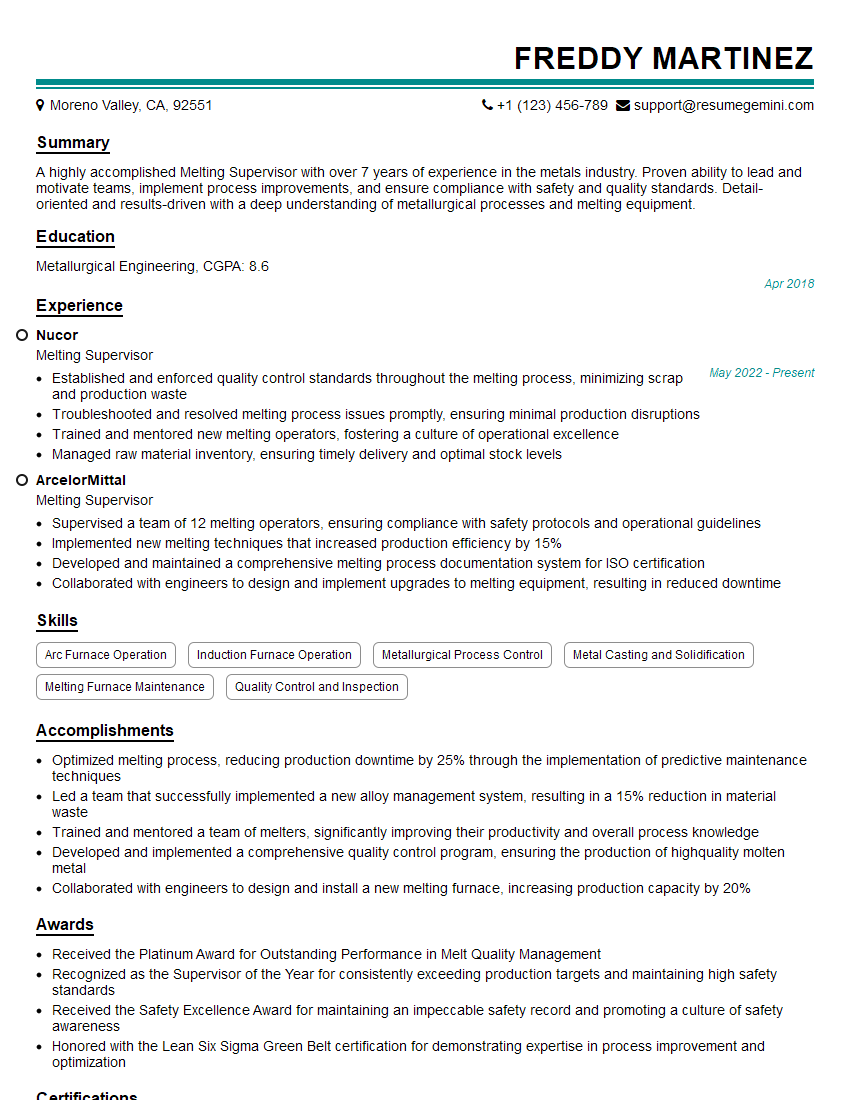
Mastering Cupola Charging opens doors to exciting opportunities in the foundry industry, offering rewarding careers with significant growth potential. A strong understanding of these principles is highly valued by employers. To significantly boost your job prospects, focus on creating an ATS-friendly resume that highlights your skills and experience effectively. ResumeGemini is a trusted resource that can help you build a professional and impactful resume. We provide examples of resumes tailored to Cupola Charging to guide you in showcasing your qualifications. Let ResumeGemini help you land your dream job!

Explore more articles
Users Rating of Our Blogs
Share Your Experience
We value your feedback! Please rate our content and share your thoughts (optional).
What Readers Say About Our Blog
Very informative content, great job.
good