Preparation is the key to success in any interview. In this post, we’ll explore crucial Cupola Operation Improvement interview questions and equip you with strategies to craft impactful answers. Whether you’re a beginner or a pro, these tips will elevate your preparation.
Questions Asked in Cupola Operation Improvement Interview
Q 1. Explain the principles of cupola operation and the factors affecting melting efficiency.
Cupola operation relies on the principle of counter-current flow: hot gases rise while the charge materials descend. Efficient melting hinges on several critical factors. Think of it like baking a cake – you need the right ingredients and heat distribution for optimal results. In a cupola, these factors include:
Coke quality and quantity: Coke provides the fuel and heat source. Its quality (size, reactivity) directly impacts heat generation. Using substandard coke can result in poor combustion and inefficient melting.
Air blast: This provides the oxygen for combustion. The volume and pressure of the air blast influence the intensity and distribution of the heat within the cupola. Insufficient air can lead to incomplete combustion and cold spots; excessive air can result in excessive heat loss.
Charge materials: The size, type, and proportion of scrap metal and other charge materials significantly impact melting rate. For instance, fine scrap melts faster but can cause channeling, reducing melting efficiency. Large pieces may require more time and energy to melt.
Cupola design and lining: A well-designed cupola with proper refractory lining minimizes heat loss to the surroundings, enhancing melting efficiency. Damaged lining leads to heat loss and potential safety issues.
Operating parameters: This includes the charging rate, melting rate, and the rate at which molten metal is tapped. Incorrect parameters can lead to fluctuations in temperature and inefficient operation. Maintaining a consistent operation is crucial for efficiency.
For instance, a foundry experiencing low melting efficiency might investigate the coke quality, air blast pressure, and the scrap metal’s size distribution. Optimizing these factors can significantly improve productivity and reduce fuel costs.
Q 2. Describe the different types of cupola fuels and their impact on melting performance.
Cupola operation typically uses coke as the primary fuel. However, other fuels, such as natural gas or oil, might be used in conjunction with coke or in specific cupola designs. Each fuel type presents advantages and drawbacks:
Coke: The traditional fuel. It provides a stable heat source and facilitates good control over the melting process. However, coke handling can be labor-intensive and create environmental concerns.
Natural gas: Offers cleaner combustion and better control over air-fuel ratios, leading to enhanced melting efficiency. However, initial investment for gas injection systems might be higher.
Oil: Offers similar advantages to natural gas in terms of control but requires specialized burners and careful monitoring to prevent soot formation and ensure safe operation.
The choice of fuel depends on factors like availability, cost, environmental regulations, and the foundry’s specific requirements. For example, a foundry in a region with stringent environmental regulations might opt for natural gas, while a foundry in an area with readily available and inexpensive coke might continue using it.
Q 3. How do you monitor and control the air-fuel ratio in a cupola?
Monitoring and controlling the air-fuel ratio is crucial for efficient and safe cupola operation. This is typically done by adjusting the air blast volume while maintaining a consistent fuel input. Imagine it as balancing the ingredients in a recipe – too much air (oxygen) and the mixture burns too quickly, while too little air leads to incomplete combustion and inefficient heat generation.
Monitoring methods include:
Visual observation: Experienced operators can assess the combustion process by observing the flame color and characteristics. A bright, yellowish-white flame indicates efficient combustion, while a red or smoky flame suggests issues with air-fuel balance.
Temperature measurement: Using thermocouples strategically positioned within the cupola shaft provides data on temperature profiles. Unusual temperature patterns can help pinpoint areas with poor combustion or channeling.
Gas analysis: Analyzing the exhaust gases can determine the completeness of combustion and help optimize the air-fuel ratio. Excess carbon monoxide indicates incomplete combustion.
Control methods include adjusting the air blast blower speed, pressure, and the fuel input rate. These adjustments are typically performed based on the observations and data obtained from the monitoring methods. Modern cupolas often use automated control systems based on real-time data analysis.
Q 4. What are the common causes of cupola hang-ups and how can they be prevented?
Cupola hang-ups, where the melting process temporarily stops due to the blocking of the material flow, are a common issue. These are typically caused by:
Excessive fines in the charge: Fine materials can pack together, restricting airflow and melting.
Uneven charge distribution: Irregular packing of materials can create channels where air flows unevenly, leading to localized melting and potential hang-ups.
Low coke quality or insufficient coke: Insufficient heat generation will lead to bridging or the material becoming too viscous to flow.
Improper charging techniques: Incorrect layering of materials can cause bridging and channeling.
Prevention strategies include:
Careful control of the charge materials’ size distribution: Minimizing fines and ensuring proper sizing of materials enhances flow.
Consistent charging practices: Following a standardized charging procedure, using appropriate charging equipment, and ensuring even distribution of materials across the cross-section of the cupola prevents channeling.
Using high-quality coke: This ensures consistent and sufficient heat generation.
Proper air blast control: Maintaining optimal airflow prevents cold spots which can cause hang-ups.
Addressing these issues through proactive management significantly reduces the likelihood of hang-ups, ensuring uninterrupted and efficient cupola operation.
Q 5. Explain the importance of coke bed management in cupola operation.
Coke bed management is paramount for efficient cupola operation. The coke bed is the heart of the cupola; it generates heat, controls airflow, and influences the melting process. A well-managed coke bed ensures uniform heat distribution, controlled melting rate, and consistent metal quality. Think of it like the coals in a barbecue – you need the right amount and arrangement to evenly cook your food.
Factors impacting coke bed management include:
Coke bed height: Too low a bed reduces preheating, while too high a bed increases fuel consumption and might hinder efficient melting.
Coke size and distribution: Consistent coke size and even distribution across the bed promote uniform heat generation and airflow.
Coke reactivity: The rate at which coke burns influences heat generation. Using coke with low reactivity results in lower temperatures and slower melting.
Proper coke bed management involves careful monitoring and control of these factors. Regular checks on bed height, observation of the coke burn-off rate, and adjustments to the charging rate are essential for maintaining an optimal coke bed.
Q 6. How do you control the temperature in a cupola?
Temperature control in a cupola is achieved through a combination of methods focused on controlling the heat input and heat loss. Imagine it like regulating the temperature of an oven while baking – you need to adjust the heat source and potentially add or remove insulation.
Methods include:
Air blast control: The volume and pressure of the air blast directly affect the rate of combustion and the temperature inside the cupola. Increasing the air blast increases the temperature, while decreasing it lowers it.
Fuel input rate: Adjusting the coke charging rate directly controls the heat generation rate.
Charge material proportion: The proportion of scrap metal and other materials in the charge can influence the temperature. For instance, using more readily meltable materials can increase the overall temperature.
Maintaining the coke bed: A properly managed coke bed ensures consistent and efficient heat generation.
Cupola lining maintenance: Damaged refractory lining can lead to heat loss, requiring more fuel to maintain the required temperature.
Temperature monitoring is crucial using thermocouples or optical pyrometers. These measurements provide data for informed adjustments to the air blast, fuel input, and other parameters to maintain the desired temperature profile for efficient and safe operation.
Q 7. Describe the process of charging materials into a cupola.
Charging materials into a cupola is a crucial step that significantly impacts melting efficiency, metal quality, and safety. It’s like carefully layering ingredients in a cake – the order and method influence the final product.
The process involves:
Pre-preparation of materials: Sorting scrap metal by size and type, ensuring proper moisture content, and preparing other charge materials (flux, etc.) are essential steps.
Charging sequence: A typical sequence involves layering coke, scrap metal, and flux in a predefined ratio. This order is crucial for preheating the materials, ensuring proper combustion, and controlling the melting process.
Charging equipment: This might involve manual charging using buckets or shovels or mechanical charging using automated systems for larger cupolas.
Safety precautions: Proper personal protective equipment, safety training, and adherence to workplace safety regulations are paramount during the charging process.
Charging rate: The rate at which materials are charged must be matched to the melting rate to maintain a consistent coke bed height and temperature.
Efficient charging techniques are crucial for minimizing disruptions, optimizing melting efficiency, and reducing the risk of operational issues. Careful planning and consistent adherence to procedures ensure smooth cupola operation.
Q 8. What are the common methods for slag removal from a cupola?
Slag removal from a cupola is crucial for efficient operation and metal quality. There are several methods, each with its advantages and disadvantages. The most common methods include:
Skimming with a slag hook or ladle: This is a manual process where molten slag is removed from the surface of the molten metal using a hook or ladle. It’s relatively simple but labor-intensive and less effective at completely removing slag.
Slag tapping: A dedicated tap hole, often located lower in the cupola than the metal tap hole, allows for the periodic draining of accumulated slag. This method is more efficient than skimming but requires careful control to avoid metal loss. The timing of the slag tap is critical and depends on the cupola’s operating parameters.
Continuous slag removal systems: These advanced systems utilize mechanical devices to continuously remove slag from the cupola. They often involve a rotating arm or a combination of chutes and conveyors to effectively separate and remove the slag. This method provides the highest degree of cleanliness and efficiency, minimizing downtime and maximizing productivity, although it involves a higher capital investment.
The choice of method depends on factors such as cupola size, production rate, desired metal quality, and budget. In a smaller foundry, manual skimming might suffice, while a large-scale operation might opt for a continuous slag removal system.
Q 9. How do you monitor and control the metal composition in a cupola?
Monitoring and controlling metal composition in a cupola is vital for producing castings of the desired quality. This involves careful control of the raw materials and the melting process itself. Key monitoring and control methods include:
Charge calculations: Precise calculations of the raw materials (pig iron, scrap, coke, limestone) are essential to achieve the desired chemical composition in the molten metal. This is often done using computer software that takes into account the chemical analysis of the raw materials.
Sampling and chemical analysis: Samples of the molten metal are taken periodically using a sampling spoon and analyzed using methods such as optical emission spectroscopy (OES) to determine the chemical composition. This analysis provides real-time feedback and allows for adjustments to the charge to correct any deviations.
Temperature monitoring: The temperature of the molten metal greatly impacts its properties and composition. Accurate temperature monitoring using thermocouples or pyrometers is necessary to ensure proper melting and to prevent overheating or underheating.
Control of air blast: The volume and pressure of the air blast control the combustion process and influence the temperature and metal composition. Careful adjustments to the air blast can correct variations in metal composition.
By combining these methods, foundry operators can maintain tight control over the metal composition, resulting in consistent and high-quality castings. For example, if the analysis shows the carbon content is too low, the operator can adjust the amount of pig iron in the next charge.
Q 10. Explain the importance of proper cupola lining maintenance.
Proper cupola lining maintenance is paramount for ensuring safe and efficient operation, maximizing the life of the refractory lining, and maintaining consistent metal quality. A deteriorated lining can lead to several issues:
Increased metal loss: A damaged lining can cause metal to leak into the shell, leading to metal loss and potential safety hazards.
Uneven heat distribution: A damaged lining can cause uneven heating, affecting the melting process and resulting in inconsistent metal quality.
Reduced cupola life: Regular maintenance prolongs the lining’s life, saving significant costs associated with relining.
Increased refractory consumption: Poor maintenance leads to faster deterioration, and consequently, more frequent and costly repairs.
Maintenance involves regular inspections to detect cracks, spalling, or erosion. Repair techniques include patching with refractory materials, applying coatings, and eventually, complete relining when necessary. Preventing damage through proper operating procedures (like avoiding thermal shock) is equally crucial. Regular maintenance significantly extends the life of a cupola, saving money and improving operational reliability.
Q 11. What are the safety procedures to be followed during cupola operation?
Safety is paramount in cupola operation. Several procedures must be strictly followed to minimize risks:
Personal Protective Equipment (PPE): All personnel must wear appropriate PPE, including safety glasses, gloves, protective clothing, and hearing protection.
Lockout/Tagout procedures: Before any maintenance or repair work, the cupola must be properly shut down and locked out to prevent accidental startup.
Emergency procedures: Clear emergency procedures must be in place for situations such as fires, metal spills, or equipment malfunctions. Personnel should be trained in these procedures.
Ventilation: Adequate ventilation is crucial to remove harmful fumes and gases generated during the melting process.
Hot metal handling: Strict procedures must be followed for handling hot metal to prevent burns and spills.
Regular inspections: Regular inspections of the cupola and its equipment are crucial to identify potential hazards before they become major issues.
A strong safety culture, including regular training and adherence to safety protocols, is crucial for safe cupola operation. Regular safety meetings and audits are essential to ensure that everyone understands and follows the safety procedures.
Q 12. Describe your experience in troubleshooting cupola malfunctions.
Troubleshooting cupola malfunctions requires a systematic approach. My experience involves diagnosing and resolving various issues, ranging from minor operational problems to major equipment failures. I typically follow these steps:
Identify the problem: Clearly define the malfunction—is it inconsistent metal temperature, poor metal quality, or equipment malfunction?
Gather data: Collect relevant data, including operating parameters (air blast pressure, fuel rate, charge composition), metal analysis results, and any error messages from the control system.
Analyze the data: Identify patterns and correlations within the collected data to pinpoint the root cause.
Develop and implement a solution: Based on the analysis, propose a solution and implement it. This could range from minor adjustments to the operating parameters to major repairs or replacements.
Verify the solution: After implementing the solution, monitor the cupola operation to ensure the problem is resolved and the cupola is functioning correctly.
For example, I once encountered a situation where the metal temperature was consistently lower than expected. Through data analysis, we discovered a problem with the air blast system. After repairing a leak in the air line, the temperature issue was resolved.
Q 13. How do you optimize cupola operation for energy efficiency?
Optimizing cupola operation for energy efficiency involves several strategies focused on reducing fuel consumption and improving thermal efficiency:
Proper charge preparation: Using pre-heated materials, optimizing the charge mix, and ensuring consistent charge size can significantly reduce energy consumption.
Improved air blast control: Precise control of the air blast volume and pressure ensures optimal combustion, minimizing fuel waste.
Insulation: Proper insulation of the cupola reduces heat loss to the surroundings.
Waste heat recovery: Implementing systems to recover waste heat from the exhaust gases can be used to preheat incoming materials, thus reducing the overall energy consumption.
Regular maintenance: Keeping the cupola in good condition—including the lining and the tuyeres—improves efficiency.
Adopting these strategies can lead to substantial reductions in energy costs and a smaller environmental footprint. For instance, optimizing the charge mix to reduce the amount of coke needed will directly translate to less fuel consumption and lower greenhouse gas emissions.
Q 14. What are the common environmental concerns related to cupola operation, and how can they be mitigated?
Cupola operation presents several environmental concerns, primarily related to air emissions and waste disposal. Key concerns include:
Air emissions: Cupolas emit particulate matter (dust), carbon monoxide (CO), sulfur dioxide (SO2), and other pollutants. These emissions can contribute to air pollution and respiratory problems.
Slag disposal: Cupola slag is a waste product containing heavy metals and other potentially hazardous substances. Improper disposal can lead to soil and water contamination.
Mitigation strategies include:
Air pollution control equipment: Installing and maintaining effective air pollution control systems, such as baghouses or electrostatic precipitators, to remove particulate matter and other pollutants from the exhaust gases.
Optimized combustion: Precise control of the combustion process to minimize the formation of pollutants.
Use of low-sulfur fuels: Utilizing coke with lower sulfur content to reduce SO2 emissions.
Responsible slag management: Proper handling, treatment, and disposal of cupola slag in accordance with environmental regulations. This might involve recycling the slag for other applications, such as in construction materials.
By implementing these mitigation strategies, foundries can minimize their environmental impact and operate in an environmentally responsible manner. The responsible management of waste and emissions is crucial for maintaining compliance with environmental regulations and ensuring the long-term sustainability of the foundry.
Q 15. What are the different types of cupola designs and their advantages/disadvantages?
Cupola designs vary primarily in their shape, size, and features aimed at improving efficiency and metal quality. Let’s look at a few common types:
- Conventional Cupola: This is the most basic design, cylindrical in shape, with a relatively simple construction. Advantages: Simple to operate and maintain, low initial cost. Disadvantages: Lower efficiency, higher fuel consumption, less control over metal temperature and composition.
- Water-Cooled Cupola: Incorporates water jackets around the shell to improve cooling and control the melting process. Advantages: Better control over the melting rate and metal temperature, improved lining life. Disadvantages: Higher initial cost, increased complexity in maintenance.
- Oxygen-Enriched Cupola: Utilizes oxygen injection to increase combustion efficiency and reduce fuel consumption. Advantages: Higher productivity, lower operating costs, better control over the carbon content of the molten metal. Disadvantages: Requires specialized equipment and control systems, increased complexity.
- Twin-Cupola System: Employs two cupolas operating in parallel, often with one used for preheating the charge. Advantages: Continuous operation, higher productivity, improved metal quality. Disadvantages: Significantly higher initial investment, complex operation and maintenance.
The optimal cupola design depends heavily on factors like production volume, desired metal quality, and available budget. For example, a small foundry might find a conventional cupola sufficient, while a large-scale operation would benefit from the increased productivity of a twin-cupola system or oxygen-enriched design.
Career Expert Tips:
- Ace those interviews! Prepare effectively by reviewing the Top 50 Most Common Interview Questions on ResumeGemini.
- Navigate your job search with confidence! Explore a wide range of Career Tips on ResumeGemini. Learn about common challenges and recommendations to overcome them.
- Craft the perfect resume! Master the Art of Resume Writing with ResumeGemini’s guide. Showcase your unique qualifications and achievements effectively.
- Don’t miss out on holiday savings! Build your dream resume with ResumeGemini’s ATS optimized templates.
Q 16. How do you ensure the quality of the molten metal produced by the cupola?
Ensuring molten metal quality from a cupola is crucial for the final product’s properties. This involves meticulous control over several factors:
- Charge Material Selection: Using consistent, high-quality raw materials (pig iron, scrap, coke) is paramount. Careful analysis of their chemical composition and the precise proportions in the charge are essential.
- Precise Charging Techniques: Maintaining a consistent charging rate and ensuring proper layering of materials within the cupola are key to a stable melting process. Improper charging can lead to uneven melting and variations in the metal composition.
- Air Blast Control: The volume and pressure of the air blast directly affect combustion efficiency and temperature. Precise control is vital for maintaining the desired temperature and minimizing oxidation.
- Slag Control: Regular monitoring and removal of slag are crucial. Slag accumulation can impact metal quality and affect the melting process. The chemical composition of the slag should also be monitored and adjusted as needed.
- Temperature Control: Maintaining a consistent temperature range is essential. Using thermocouples and other monitoring devices allows for real-time adjustments of the air blast and charging rate to maintain the target temperature.
- Chemical Analysis: Regular chemical analysis of the molten metal helps identify and address any deviations from the desired composition. This analysis allows for timely adjustments to the charge composition to compensate.
In my experience, implementing a robust quality control program, combining precise process controls with regular chemical analysis, is the most effective way to guarantee consistent metal quality.
Q 17. Describe your experience in implementing process improvements in a cupola operation.
In a previous role at a steel foundry, I led an initiative to improve cupola efficiency and reduce operating costs. We implemented a three-pronged approach:
- Optimized Charge Design: Through detailed analysis of our charge materials, we were able to refine the mix to minimize fuel consumption and maximize metal recovery. This involved using a more accurate model of cupola performance, and switching to a higher-grade coke.
- Improved Air Blast Control: We installed a more advanced air blast control system, allowing for finer adjustments to air volume and pressure. This resulted in a more stable melting process and reduced fuel consumption.
- Operator Training: We implemented a comprehensive training program to upskill our operators in best practices for cupola operation and maintenance. This resulted in improved consistency and reduced downtime.
These improvements resulted in a 15% reduction in fuel consumption, a 10% increase in productivity, and a noticeable improvement in metal quality, ultimately leading to significant cost savings and improved profitability.
Q 18. How do you use data analysis to improve cupola efficiency?
Data analysis plays a vital role in optimizing cupola efficiency. We collect data on various parameters, including:
- Air blast parameters: Volume, pressure, and temperature.
- Charge materials: Composition and quantity.
- Metal temperature: Measured at various points in the process.
- Fuel consumption: Coke rate and overall energy usage.
- Metal production rate: Tons per hour.
- Metal chemistry: Carbon, silicon, manganese, etc.
Using statistical process control (SPC) techniques, we can identify trends, anomalies, and areas for improvement. For instance, analyzing the relationship between air blast pressure and metal temperature can reveal optimal operating parameters. Similarly, correlating fuel consumption with production rate helps us identify inefficiencies. We utilize software to analyze this data, generating reports and visualizations that aid in identifying problems and evaluating the efficacy of process changes. This data-driven approach allows for continuous improvement and proactive maintenance planning.
Q 19. What are the key performance indicators (KPIs) used to measure cupola performance?
Key Performance Indicators (KPIs) for cupola performance are crucial for monitoring efficiency and productivity. Some vital KPIs include:
- Productivity (tons/hour): Measures the amount of molten metal produced per hour.
- Coke rate (kg/ton): Measures the amount of coke consumed per ton of metal produced—a lower rate indicates better efficiency.
- Metal yield (%): Represents the percentage of charged metal recovered as molten metal.
- Fuel efficiency (%): Indicates the effectiveness of fuel utilization.
- Melting efficiency (%): Measures the percentage of charged material effectively melted.
- Downtime (%): Indicates the percentage of time the cupola is not in operation.
- Metal quality (chemical composition): Assesses adherence to desired chemical specifications.
- Operating cost ($/ton): Measures the overall cost of operating the cupola per ton of metal produced.
By tracking these KPIs, we can monitor performance, identify areas for improvement, and measure the effectiveness of implemented changes. Regular reporting and analysis of these metrics are essential for continuous improvement and effective decision-making.
Q 20. Explain your experience with different types of cupola automation systems.
My experience encompasses various levels of cupola automation. These range from simple automated charging systems to fully integrated control systems.
- Automated Charging Systems: These systems automate the feeding of raw materials into the cupola, improving consistency and reducing manual labor. This can lead to improved efficiency and reduced operating costs. I’ve worked with systems using both conveyor belts and automated charging buckets.
- Automated Air Blast Control Systems: These systems automatically adjust the air blast parameters based on pre-programmed settings or real-time feedback from sensors monitoring metal temperature and other parameters. This improves control over the melting process and leads to better metal quality.
- Integrated Control Systems: These advanced systems integrate all aspects of cupola operation, including charging, air blast control, temperature monitoring, and data acquisition, into a centralized control system. This allows for precise control over the entire melting process and enables real-time optimization.
The choice of automation level depends on factors such as production volume, budget, and desired level of control. While simpler systems offer cost-effective solutions, advanced systems provide greater efficiency and improved metal quality for large-scale operations. For example, in one project I worked with an integrated system that minimized scrap by adjusting the air and charge based on real-time analysis of the molten metal’s chemistry.
Q 21. How do you manage and train cupola operators?
Effective cupola operator training and management are crucial for safe and efficient operation. This involves:
- Initial Training: Comprehensive training programs covering the safe operation, maintenance, and troubleshooting of the cupola, including safety procedures, material handling, and process control techniques.
- On-the-Job Training: Experienced operators should mentor new hires, providing hands-on training and guidance in a practical setting.
- Regular Refresher Training: Periodic training sessions should cover new technologies, safety updates, and best practices to maintain competency.
- Performance Monitoring and Feedback: Regular performance evaluations should be conducted, providing constructive feedback to identify areas for improvement.
- Emergency Procedures: Operators should be thoroughly trained on emergency procedures, including dealing with malfunctions, fires, and other hazards.
- Safety Training: Emphasis on safety procedures is essential, covering proper personal protective equipment (PPE) usage, safe work practices, and hazard identification and control.
I believe that investing in operator training not only improves efficiency and reduces accidents but also increases job satisfaction and reduces turnover. A well-trained and motivated team is critical to the success of any cupola operation.
Q 22. How do you ensure compliance with environmental regulations in cupola operation?
Ensuring environmental compliance in cupola operation is paramount. It involves meticulous adherence to local, regional, and national regulations concerning air emissions, water discharge, and waste disposal. This begins with a thorough understanding of the specific regulations applicable to your location and the type of metal being melted.
Specifically, we need to monitor and control emissions of particulate matter (PM), carbon monoxide (CO), and other potentially harmful gases. This often involves using sophisticated air pollution control equipment like baghouses or electrostatic precipitators to filter out particulate matter before it enters the atmosphere. Regular maintenance and performance testing of these systems are crucial. For water discharge, we must ensure that any wastewater generated during the process meets the required standards for pH, heavy metal content, and other pollutants. This may necessitate the use of treatment systems before discharge. Finally, responsible waste management is key. This encompasses the proper handling, storage, and disposal of slag, dust, and other byproducts, in line with all hazardous waste regulations.
For example, in a previous role, we implemented a new baghouse system that reduced PM emissions by 40%, significantly improving our environmental performance and ensuring we met increasingly stringent EPA regulations. Regular audits and environmental impact assessments are also essential parts of maintaining compliance.
Q 23. Describe your experience with different types of cupola lining materials.
My experience with cupola lining materials spans several common types, each with its own advantages and disadvantages. The choice of lining depends heavily on the type of metal being melted, the operating temperature, and the desired lifespan of the lining.
- Ramming mix: This is a common choice, offering good refractory properties and relative ease of application. It’s often a mixture of refractory aggregates and a bonding agent. However, it requires skilled application to ensure a uniform and durable lining.
- Castable refractories: These are pre-mixed materials that are poured and allowed to set. They offer good consistency and often a longer lifespan than ramming mixes. The downside is the higher initial cost and the need for specialized equipment for placement.
- Brick linings: These use pre-formed bricks laid in a mortar. They offer excellent durability and resistance to wear but require more precise installation and are prone to cracking if not properly done. This option is frequently used for the lower portion of the cupola.
In one project, we experimented with a new type of high-alumina castable refractory, which resulted in a 25% increase in lining lifespan compared to our previous ramming mix, significantly reducing downtime and maintenance costs.
Q 24. How do you maintain accurate records of cupola operations?
Maintaining accurate records of cupola operations is critical for both operational efficiency and regulatory compliance. This involves a comprehensive system for tracking key parameters throughout the entire process.
We typically use a combination of manual logging and computerized data acquisition systems. Manual logs document information such as charge materials (weight and composition of scrap, coke, and flux), air pressure, blast rate, metal temperature, tapping time, and slag analysis. Computerized systems can monitor and record data in real time, such as airflow, temperature readings from multiple points in the cupola, and metal chemistry. This data is stored in a secure database and regularly backed up. The data collected informs decisions about optimizing cupola operation, identifying potential problems, and demonstrating compliance with environmental regulations. Regular audits and cross-checking of data from different sources help to maintain data integrity.
For example, we implemented a software solution that integrates data from various sensors within the cupola and the metal analysis equipment. This allows us to create detailed reports and identify trends in metal quality and operational parameters. This real-time monitoring has been instrumental in preventing inconsistencies and improving overall cupola performance.
Q 25. What is your experience with different types of cupola charging systems?
I have experience with several cupola charging systems, each offering different advantages depending on the specific needs of the operation. The choice depends on factors such as the size of the cupola, the type of scrap being used, and the desired production rate.
- Manual charging: This is the simplest method, involving manually loading materials into the cupola. It’s suitable for smaller cupolas and lower production volumes. However, it is labor-intensive and can be inefficient for large-scale operations.
- Mechanical charging: This uses a mechanical device like a skip hoist or a conveyor system to lift and charge the materials. This is more efficient than manual charging and is commonly used in larger cupolas. It improves safety and productivity.
- Automated charging systems: These systems utilize sophisticated control systems to optimize the charging process based on real-time data. They can precisely control the proportions of different materials and ensure a consistent charge rate. These systems offer the highest level of efficiency and consistency but represent a substantial initial investment.
In one case, we upgraded from a manual charging system to a mechanical skip hoist system, which resulted in a 15% increase in production capacity while also improving worker safety.
Q 26. Describe your experience with preventative maintenance of the cupola and related equipment.
Preventative maintenance is crucial for ensuring the safe and efficient operation of the cupola and related equipment. A well-defined preventative maintenance program minimizes downtime, extends the lifespan of equipment, and improves overall productivity.
Our preventative maintenance program includes regular inspections of all components, including the cupola lining, tuyeres, wind boxes, and related equipment. This involves checking for wear, tear, cracks, or any signs of damage. We also have a schedule for cleaning and repairing components as needed, such as cleaning the tuyeres regularly to prevent clogging and maintaining the air pressure regulating valves. Lubrication of moving parts, such as charging mechanisms, is also a key part of the preventative maintenance plan. The program includes a detailed record-keeping system to document all maintenance activities. This allows us to track the performance of various components and plan for replacements as necessary. The maintenance schedule may be customized based on the usage and operational parameters of the cupola.
For instance, we implemented a computerized maintenance management system (CMMS) that tracks maintenance activities, schedules inspections, and alerts us to upcoming maintenance needs. This has significantly improved our ability to manage the maintenance process efficiently.
Q 27. Explain your understanding of different types of cupola tuyeres and their effects on the melt.
Cupola tuyeres are crucial for delivering the air blast needed for combustion. Different types of tuyeres affect the airflow pattern and the resulting melt quality.
- Simple tuyeres: These are basic, often consisting of a simple pipe or nozzle. They provide a relatively uniform airflow but may not be as efficient as more sophisticated designs.
- Water-cooled tuyeres: These incorporate a water-cooling system to prolong their lifespan and reduce the risk of damage from high temperatures. They are preferred in high-capacity cupolas to handle the increased heat and wear.
- Multiple-jet tuyeres: These distribute the airflow through multiple smaller jets, improving mixing and combustion efficiency. This can lead to a more uniform melt and lower emissions.
The choice of tuyere design affects factors like air distribution, combustion intensity, and the formation of slag. In one instance, we replaced simple tuyeres with water-cooled, multiple-jet tuyeres, resulting in improved combustion, a more uniform melt, and a reduction in energy consumption.
Q 28. How would you address a situation where the cupola is producing metal of inconsistent quality?
Inconsistencies in metal quality from a cupola can stem from various sources, requiring a systematic approach to diagnosis and correction. The first step is to meticulously examine the available data – metal chemistry analyses, cupola operating parameters (air pressure, blast rate, coke rate, charge materials, etc.), and any visual observations of the melt and slag.
We would then systematically investigate potential causes:
- Charge material inconsistencies: Variations in the chemical composition of the scrap metal, coke, or flux can significantly impact the final metal quality. We’d thoroughly review the material specifications and sourcing practices to identify any irregularities.
- Operational parameter fluctuations: Inconsistencies in air pressure, blast rate, or charge rate can create variations in the melting process. Checking the operational logs and reviewing the control systems would be key here.
- Tuyere issues: Clogged or damaged tuyeres can lead to uneven air distribution and affect the melt quality. Inspecting the tuyeres for wear and tear is essential.
- Lining condition: A worn or damaged cupola lining can create irregularities in the melt and affect the chemical composition of the final product.
A structured approach, involving the careful analysis of data and a methodical elimination of potential problems, is essential to pinpoint the exact cause and implement corrective actions. For example, in a past case, seemingly inconsistent metal quality was ultimately traced to inconsistent moisture content in the coke, leading to fluctuations in the combustion process. Addressing this issue through improved coke handling and storage solved the problem.
Key Topics to Learn for Cupola Operation Improvement Interview
- Cupola Metallurgy: Understanding the chemical reactions and processes within the cupola, including coke combustion, metal melting, and slag formation. This includes knowledge of different types of iron and their impact on the final product.
- Operational Efficiency: Analyzing and optimizing cupola parameters such as air flow rate, coke ratio, and charge composition to maximize metal yield and minimize energy consumption. Practical application includes analyzing production data to identify bottlenecks and implement solutions.
- Emission Control and Environmental Compliance: Familiarity with regulations and best practices for minimizing particulate matter, carbon monoxide, and other emissions from cupola operations. This includes understanding and troubleshooting various emission control systems.
- Quality Control: Implementing procedures to ensure consistent metal quality, including monitoring temperature, chemical composition, and physical properties of the molten metal. This includes understanding the impact of various parameters on the final product’s properties.
- Maintenance and Troubleshooting: Knowledge of preventive maintenance schedules and troubleshooting common cupola problems, such as tuyere clogging, refractory wear, and tapping issues. This involves practical experience in identifying and resolving operational challenges.
- Safety Procedures and Regulations: Understanding and adhering to all safety protocols related to cupola operation, including personal protective equipment (PPE) and emergency procedures. This is crucial for a safe and efficient work environment.
- Data Analysis and Process Improvement Techniques: Applying statistical process control (SPC) and other data analysis methods to identify areas for improvement in cupola operation. This includes using data to drive decision-making and optimize processes.
Next Steps
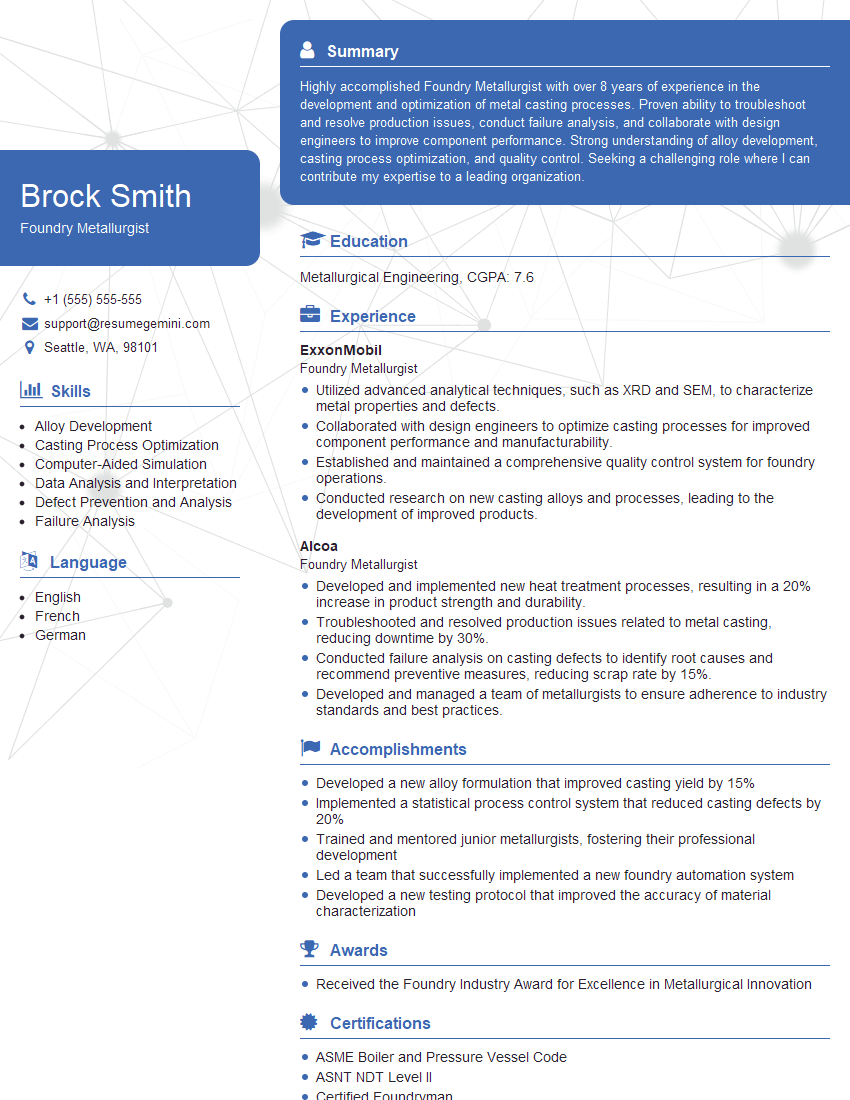
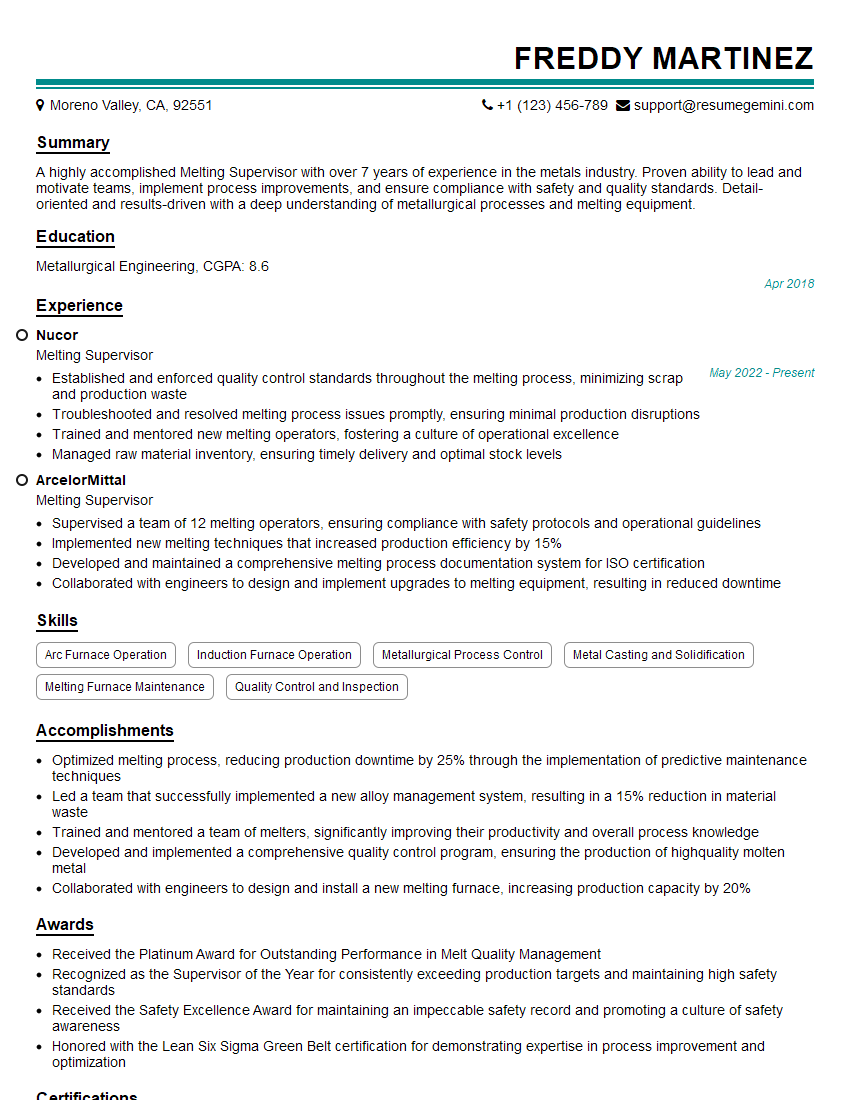
Mastering Cupola Operation Improvement opens doors to exciting career advancements within the foundry industry, offering opportunities for increased responsibility and higher earning potential. A well-crafted resume is crucial for showcasing your skills and experience to potential employers. Creating an ATS-friendly resume significantly increases your chances of getting noticed by recruiters. ResumeGemini is a trusted resource that can help you build a professional and effective resume, tailored to highlight your expertise in Cupola Operation Improvement. Examples of resumes tailored to this specific field are available to guide you. Invest time in perfecting your resume – it’s your first impression on a potential employer.
Explore more articles
Users Rating of Our Blogs
Share Your Experience
We value your feedback! Please rate our content and share your thoughts (optional).
What Readers Say About Our Blog
Very informative content, great job.
good