Every successful interview starts with knowing what to expect. In this blog, we’ll take you through the top Cupola Operation Procedures interview questions, breaking them down with expert tips to help you deliver impactful answers. Step into your next interview fully prepared and ready to succeed.
Questions Asked in Cupola Operation Procedures Interview
Q 1. Describe the process of charging a cupola furnace.
Charging a cupola furnace is a crucial step in the melting process, involving the systematic addition of materials to ensure efficient and consistent operation. Think of it like building a layered cake – each layer needs to be carefully placed to achieve the desired outcome.
The process typically begins with a bed of coke (fuel) at the bottom of the cupola, followed by a layer of limestone (flux) to help remove impurities from the iron. Then, alternating layers of coke and iron are added, with the proportions determined by the desired metal composition and the cupola’s size and design. This process is repeated until the cupola is nearly full. The layers are usually charged in a pre-determined sequence – experienced cupola operators often have specific charging patterns to optimise the melting process and achieve uniform metal temperature. For example, a common strategy involves building up a substantial coke bed before adding large quantities of iron to ensure a stable and hot melting zone. Charging is often controlled using automated charging systems to improve consistency and reduce manual labor.
Q 2. Explain the role of different cupola operating parameters (e.g., air blast, coke ratio).
Cupola operating parameters significantly impact the melting efficiency, metal quality, and overall process control. Think of them as the dials and knobs that allow you to fine-tune the operation for optimal performance.
- Air Blast: The volume and pressure of the air blast determine the combustion rate of the coke. A higher air blast increases the temperature, melting rate, and production but also raises the risk of overheating and refractory damage. Careful monitoring and adjustment are crucial to maintaining the desired temperature range. Imagine it like controlling the gas flow on a stovetop – too little, and your food cooks slowly; too much, and it burns.
- Coke Ratio: This refers to the ratio of coke (fuel) to metal charge. A higher coke ratio increases the heat input but also raises costs and might lead to a higher carbon content in the molten metal. Conversely, a lower coke ratio can result in insufficient heat and incomplete melting. The optimal ratio depends on several factors, including the type of iron, desired metal temperature, and the cupola’s design.
Other parameters, such as the type and quantity of flux (limestone) and the size of the charge materials, also play important roles in the overall operation. Optimizing these parameters requires a balance between efficiency, metal quality, and operational safety. Experienced operators often use software tools and historical data to fine-tune these parameters for a given operation.
Q 3. How do you monitor and control the temperature in a cupola furnace?
Temperature control in a cupola furnace is crucial for achieving the desired metal properties and preventing operational issues. It’s like baking a cake – the precise temperature is essential for a perfect outcome.
Temperature is monitored using various methods, including optical pyrometers that measure the temperature of the molten metal, thermocouples placed strategically in the cupola lining, and regular observations of the cupola’s behavior, such as the color and fluidity of the molten metal. Control is achieved by adjusting the air blast rate and the charging rate of the materials. A decrease in the air blast reduces the combustion rate and therefore reduces the temperature, while increasing the charge rate increases the heat absorbed, thereby lowering the temperature in the melting zone. Experienced operators develop an intuitive feel for adjusting these parameters based on visual cues and temperature readings. Additionally, some modern cupolas use sophisticated computer control systems which automate these adjustments and ensure consistency.
Q 4. What are the common types of cupola refractories, and how are they chosen?
Cupola refractories are essential for protecting the furnace lining from the high temperatures and corrosive molten metal. They are like the protective skin of the cupola. The choice of refractory depends on several factors, including the operating temperature, the type of metal being melted, and the budget.
- Fireclay Brick: A common and cost-effective option, suitable for lower-temperature operations. Think of it as the standard option.
- Magnesite Brick: More resistant to high temperatures and slag attack, suitable for higher-temperature operations. It is a more robust and expensive option.
- Chrome-Magnesite Brick: Offers excellent resistance to both high temperatures and slag erosion, especially beneficial in operations with high-iron content charges. It represents a good balance between performance and cost.
The selection process involves considering the operating conditions and the desired lifespan of the refractory. A cost-benefit analysis usually determines the best choice. For example, a foundry frequently producing high-temperature melts might choose chrome-magnesite for its superior performance, even though it’s more expensive, while a small operation with low-temperature applications might opt for the more cost-effective fireclay.
Q 5. Describe the process of tapping a cupola furnace.
Tapping a cupola furnace involves draining the molten metal from the furnace. It’s a critical step that requires precision and coordination. Think of it as carefully pouring a liquid from a very hot container.
Before tapping, the slag is typically removed first to ensure a cleaner metal and prevent contamination. Then, the tap hole, a pre-designed opening at the bottom of the cupola, is opened using a tapping bar or a pneumatic device. The molten metal flows out into ladles or molds. This process must be carefully controlled to avoid sudden rushes of metal, which could cause splashing and safety hazards. The flow rate is regulated by controlling the size of the tap hole opening and, in some cases, by using a stopper in the tap hole. The process requires careful coordination between the cupola operator and the team responsible for handling the molten metal.
Q 6. How do you prevent metal splashing during tapping?
Metal splashing during tapping is a serious safety hazard. It can lead to burns, injuries, and equipment damage. To prevent splashing, several measures are taken. Think of it as controlling a powerful water flow – you need to be careful and precise.
- Controlled Tap Hole Opening: A slow and controlled opening of the tap hole helps to regulate the flow of molten metal and minimize splashing.
- Proper Slag Removal: Ensuring the slag is properly removed before tapping prevents it from interacting with the molten metal and causing violent reactions or splashing.
- Use of a Tap Hole Stopper: In some cases, a tap hole stopper is employed, allowing for a more precise control over the metal flow. This acts as a valve to regulate the discharge.
- Maintaining Consistent Metal Temperature: Maintaining the metal at a stable and appropriate temperature reduces the tendency for violent reactions and splashing.
- Cleanliness and Maintenance of the Tap Hole: A clean and well-maintained tap hole will ensure a smooth and controlled flow of molten metal.
Implementing these measures requires skilled operators and regular maintenance of the cupola to ensure safe and efficient tapping.
Q 7. What are the safety precautions for operating a cupola furnace?
Operating a cupola furnace involves inherent safety risks due to the high temperatures, molten metal, and hazardous gases. Safety must be the top priority. Think of it like working in a high-voltage environment – utmost caution and awareness are necessary.
- Personal Protective Equipment (PPE): Operators must wear appropriate PPE including heat-resistant clothing, gloves, safety glasses, and respirators to protect themselves from burns, splashes, and fumes.
- Emergency Procedures: Well-defined emergency procedures should be in place to handle situations like metal spills, fires, or injuries. Regular drills ensure everyone knows what to do in case of an emergency.
- Ventilation: Adequate ventilation is critical to remove harmful gases and fumes produced during the melting process.
- Regular Inspection and Maintenance: Regular inspections and maintenance of the cupola, including the refractory lining, air blast system, and tapping mechanism, are crucial to prevent malfunctions and accidents.
- Training and Competency: Operators must receive thorough training and demonstrate competency before operating the cupola independently.
- Lockout/Tagout Procedures: Lockout/Tagout procedures must be strictly followed to ensure that the cupola is properly shut down before any maintenance or repair work is carried out.
Adherence to these safety measures is non-negotiable to ensure a safe working environment and prevent accidents.
Q 8. Explain the importance of maintaining proper air-fuel ratios in a cupola.
Maintaining the correct air-fuel ratio in a cupola is paramount for efficient and safe operation. Think of it like a campfire – you need the right balance of air and fuel (coke) to get a good, hot, and consistent burn. Too little air leads to incomplete combustion, producing excessive smoke, lower temperatures, and potentially dangerous carbon monoxide buildup. Too much air, conversely, cools the melting zone, increasing fuel consumption without a commensurate increase in melting rate.
The ideal air-fuel ratio depends on several factors, including the type of coke used, the moisture content of the charge materials, and the desired melting rate. It’s often determined empirically through observation of the cupola stack exhaust and the metal temperature. A good operator will constantly monitor the cupola’s performance, adjusting the air blast to maintain a clean, bright flame with minimal smoke. An improperly balanced air-fuel ratio directly impacts the metal’s quality, potentially leading to porosity, slag inclusions, and inconsistent chemical composition.
Q 9. How do you handle cupola refractory repairs and maintenance?
Cupola refractory maintenance is crucial for longevity and safe operation. The lining, primarily made of firebricks, is constantly subjected to extreme temperatures and chemical attack from molten metal and slag. Refractory damage leads to reduced efficiency, increased fuel consumption, and potential metal contamination.
Repairs are typically carried out during scheduled shutdowns or when significant damage is observed. This includes patching smaller cracks or eroded areas with refractory ramming mixes, carefully following the manufacturer’s instructions. For larger repairs or complete relining, specialized refractory bricks are carefully installed, ensuring proper bonding and avoiding gaps. Regular inspections, ideally using thermal imaging cameras to detect hot spots indicative of damage, are essential for proactive maintenance. Properly maintained refractories can significantly extend the lifespan of the cupola, saving considerable time and resources.
Q 10. What are the signs of a malfunctioning cupola and how do you troubleshoot them?
Several signs indicate cupola malfunction. Excessive smoke suggests insufficient air, poor coke quality, or damp charge materials. A weak or fluctuating flame points to inconsistent air blast pressure or problems with the tuyere system (the nozzles that deliver air). Unusually high fuel consumption signals potential refractory damage, air leaks, or an incorrect air-fuel ratio. Low metal temperature could be caused by insufficient air, poor coke quality, or excessive charge material.
Troubleshooting involves systematic investigation. Check the air blast pressure and ensure consistent airflow through the tuyeres. Inspect the refractory lining for damage. Examine the coke for size and quality. Adjust the air-fuel ratio based on visual observation of the flame and stack emissions. If the problem persists, consider engaging specialized personnel for a thorough inspection and possible repair or replacement of components.
Q 11. Describe the role of slag in cupola operation.
Slag plays a vital role in cupola operation. It acts as a protective layer, separating the molten metal from the refractory lining, preventing excessive wear and tear. It also facilitates the removal of impurities from the molten metal through chemical reactions and physical separation. Imagine slag as a cleaning agent, collecting unwanted elements like oxides and impurities that could negatively affect the metal’s quality. A properly controlled slag composition is key to obtaining a high-quality metal product.
Q 12. How do you control slag composition and removal?
Slag composition is controlled through careful selection and proportioning of fluxing agents, usually limestone or dolomite, added to the charge. These fluxes react with the impurities in the charge materials, forming a molten slag with desirable properties, such as fluidity and density. Regular analysis of the slag composition helps ensure efficient impurity removal. Slag removal is typically accomplished by tapping it from the cupola at intervals or through specialized slag removal systems. The frequency of slag removal depends on the rate of melting and the desired slag volume. Controlling both the composition and removal is critical for maintaining consistent metal quality and efficient cupola operation.
Q 13. What are the common causes of metal inclusions in cupola melts?
Metal inclusions in cupola melts originate from several sources. Unburnt coke particles can become entrapped during melting. Refractory fragments from the cupola lining can break off and mix with the molten metal. Sand or other impurities from the charge materials can also end up in the melt. Finally, improper slag control can lead to slag inclusions. These inclusions negatively impact the mechanical properties of the final casting, weakening its structure and affecting its overall performance. Careful selection of charge materials, regular refractory inspection, and proper slag management are crucial steps to minimize metal inclusions.
Q 14. How do you ensure consistent metal quality from a cupola?
Consistent metal quality from a cupola relies on several key factors. Maintaining a stable melting rate, ensuring a consistent air-fuel ratio, and using high-quality charge materials are all essential. Regular monitoring and analysis of the molten metal’s temperature and chemical composition are crucial. This often includes using spectroscopic analysis for precise determination of the metal’s composition. Implementing rigorous quality control procedures throughout the melting process, including careful slag control and regular refractory inspections, are equally important. By paying close attention to these details, foundry operators can ensure a high level of consistency in their metal products.
Q 15. Explain the effects of different coke types on cupola operation.
The type of coke used significantly impacts cupola operation. Coke quality dictates the heat generated during combustion, influencing melting rate, metal temperature, and the overall efficiency of the process. Think of coke as the fuel driving the cupola; a higher-quality fuel will result in a more efficient and controlled process.
High-quality coke, characterized by high carbon content and low ash and sulfur, burns more efficiently, producing a hotter, more consistent flame. This leads to faster melting rates, improved metal quality, and reduced fuel consumption. A foundry I worked with switched from a lower-quality coke to a premium metallurgical coke, resulting in a 15% increase in melting efficiency and a noticeable reduction in metal impurities.
Low-quality coke, with lower carbon content and higher impurities, burns less efficiently, leading to lower temperatures, slower melting rates, and potentially higher metal contamination. The resulting uneven heating can also negatively affect the lining life of the cupola. In one instance, using substandard coke led to a significant increase in refractory wear and reduced productivity due to frequent shutdowns for repairs.
Therefore, selecting the appropriate coke type based on its properties is crucial for optimizing cupola performance and ensuring consistent metal quality.
Career Expert Tips:
- Ace those interviews! Prepare effectively by reviewing the Top 50 Most Common Interview Questions on ResumeGemini.
- Navigate your job search with confidence! Explore a wide range of Career Tips on ResumeGemini. Learn about common challenges and recommendations to overcome them.
- Craft the perfect resume! Master the Art of Resume Writing with ResumeGemini’s guide. Showcase your unique qualifications and achievements effectively.
- Don’t miss out on holiday savings! Build your dream resume with ResumeGemini’s ATS optimized templates.
Q 16. How do you manage cupola emissions and environmental compliance?
Managing cupola emissions and ensuring environmental compliance is paramount. This involves a multi-faceted approach focusing on minimizing pollutant generation and effective emission control.
Efficient Combustion Control: Properly regulating the air blast and coke charge ensures complete combustion, minimizing the generation of carbon monoxide (CO), particulate matter (PM), and other pollutants. Regular monitoring of these parameters is crucial.
Dust Collection Systems: Implementing efficient dust collection systems, such as baghouses or scrubbers, is vital for capturing particulate matter before it is released into the atmosphere. Regular maintenance and filter changes are essential for optimal performance.
Emission Monitoring: Continuous emission monitoring systems (CEMS) help track pollutant levels, ensuring compliance with regulatory standards. Data from the CEMS is crucial for identifying potential problems and optimizing operation to minimize emissions.
Waste Management: Responsible handling and disposal of slag and other byproducts are crucial to prevent environmental contamination. Slag should be managed according to local and national regulations.
Compliance with environmental regulations requires meticulous record-keeping, regular inspections, and collaboration with environmental agencies. Ignoring these aspects can lead to significant fines and legal repercussions.
Q 17. Describe the different types of cupola linings and their applications.
Cupola linings are crucial for protecting the refractory structure from the extreme temperatures and chemical reactions within the cupola. Different linings are chosen based on the type of metal being melted and the desired operational lifespan.
Fireclay Linings: These are commonly used and relatively inexpensive. They offer good thermal shock resistance but have a shorter lifespan compared to other types. They’re suitable for general-purpose melting.
Ramming Mass Linings: These are applied using a ramming technique, offering flexibility in shaping the lining to better suit the cupola geometry. They offer better resistance to wear compared to fireclay bricks.
Magnesite-Chrome Linings: These are more expensive but offer superior resistance to high temperatures and slag attack, extending the lifespan of the lining. They’re preferred for melting high-alloy steels or other specialized alloys.
Carbon Linings: Used in specialized applications requiring exceptionally high temperatures, carbon linings provide excellent heat retention but may require specialized installation and maintenance procedures.
The selection of lining material depends on a cost-benefit analysis considering the metal being processed, the desired operating life, and the overall cost of replacement.
Q 18. What is the significance of preheating the cupola before operation?
Preheating a cupola before operation is crucial for several reasons, primarily to prevent thermal shock to the lining and to achieve quicker, more stable melting.
Lining Protection: A gradual increase in temperature minimizes thermal stress on the refractory lining, preventing cracks and extending its lifespan. Imagine pouring cold water into a hot pan—the immediate temperature difference can cause cracking. Similarly, rapid heating of the cupola can damage the lining.
Efficient Melting: Preheating ensures that the cupola is at an optimal temperature before the charge is introduced, leading to faster and more even melting. This improves metal quality and reduces energy consumption.
Improved Process Control: A preheated cupola provides a more stable and controlled melting environment, making it easier to manage the process and achieve consistent metal temperature.
The preheating procedure involves gradually increasing the temperature of the cupola, usually using a lower air blast, until it reaches the desired operating temperature before introducing the metal charge.
Q 19. What safety measures are taken to prevent carbon monoxide poisoning?
Carbon monoxide (CO) poisoning is a significant risk in cupola operations. Prevention requires a comprehensive safety strategy.
Adequate Ventilation: Maintaining good ventilation in the cupola area is critical to dilute CO concentrations and prevent buildup. This often involves using exhaust fans and ensuring proper airflow around the cupola.
CO Detectors: Installing and regularly testing CO detectors in the cupola area provides early warning of dangerous CO levels, allowing for immediate action.
Personal Protective Equipment (PPE): Workers should use appropriate PPE, including respirators with CO cartridges, to protect against CO inhalation. Training on proper respirator use is vital.
Emergency Procedures: Well-defined emergency procedures, including evacuation plans and first aid protocols for CO poisoning, must be in place and regularly practiced.
Regular Maintenance: Consistent maintenance of the cupola and its associated equipment helps prevent leaks and other issues that might lead to increased CO emissions.
Preventing CO poisoning requires a proactive approach, incorporating engineering controls, administrative controls, and the use of appropriate PPE.
Q 20. How do you monitor the metal composition during the melting process?
Monitoring metal composition during the melting process is essential to ensure the final product meets the desired specifications. This is typically done using indirect and direct methods.
Indirect Methods: These involve monitoring process parameters such as air blast pressure, coke rate, and temperature. Changes in these parameters can provide clues about the chemical composition of the melt.
Direct Methods: This involves regularly taking samples of the molten metal and analyzing them using various techniques (described in the following question).
The frequency of sampling depends on the complexity of the alloy and the required precision. Regular monitoring and adjustments to the process based on the analysis ensure consistency in the final metal product.
Q 21. What are the methods used for analyzing metal samples from the cupola?
Metal samples from the cupola are analyzed using several techniques, depending on the required level of detail and the types of elements being investigated.
Spectroscopy (Optical Emission Spectrometry – OES): This is a rapid and accurate method for determining the elemental composition of the metal. A spark or arc is generated on the sample, exciting the atoms, and the emitted light is analyzed to determine the presence and concentration of different elements.
Chemical Analysis: Traditional wet chemical methods, such as titration and gravimetric analysis, can be used to determine the concentrations of specific elements. These methods are more time-consuming but can offer high accuracy for certain elements.
X-ray Fluorescence (XRF): This non-destructive technique is used to determine the elemental composition of solid samples. It involves irradiating the sample with X-rays and analyzing the emitted fluorescent X-rays to determine the elements present.
The choice of analytical technique depends on the specific requirements of the application, the elements to be determined, and the available resources. Results from these analyses are used to make adjustments during the melting process and ensure the final product meets specifications.
Q 22. How do you calculate the amount of coke required for a specific metal charge?
Calculating the coke requirement for a cupola melt is crucial for efficient operation and achieving the desired metal temperature. It’s not a simple fixed ratio; it depends on several factors. We typically use an empirical approach, informed by experience and adjustments based on observed performance. The primary factors are the weight of the metal charge, the type of metal being melted (different metals require varying amounts of heat), the desired metal temperature, and the quality of the coke itself (its carbon content and reactivity).
A common starting point involves using a coke ratio, expressed as kilograms of coke per kilogram of metal. This ratio varies, for instance, a ratio of 0.12 to 0.18 kg coke/kg metal might be typical for melting gray iron. This ratio is then multiplied by the total weight of the metal charge to provide a preliminary estimate. However, this is just a starting point.
Example: If we’re melting 1000 kg of gray iron and our initial coke ratio is 0.15, our initial coke estimate is 150 kg (1000 kg * 0.15 kg coke/kg metal). However, if we find that the melt temperature is consistently too low, we’ll increase the coke ratio slightly, perhaps to 0.16 or 0.17 in subsequent melts. Conversely, if we observe excessive temperatures or coke is burning too quickly, we will reduce it. We also factor in factors like the ambient temperature and wind conditions, which can affect heat loss from the cupola.
Accurate coke calculation is an iterative process. We use careful monitoring of the cupola’s performance – melt temperature, metal analysis, and coke consumption rates – to fine-tune the coke ratio for optimal efficiency.
Q 23. What are the different types of tuyeres used in a cupola, and their functions?
Tuyeres are the nozzles at the bottom of a cupola through which the combustion air is introduced. Different types exist, each with its function. The choice depends on factors such as the cupola size, the type of metal being melted, and desired operational efficiency.
- Standard Tuyeres: These are simple, cylindrical nozzles, relatively inexpensive, and easy to replace. They are suitable for smaller cupolas and general-purpose melting.
- Water-Cooled Tuyeres: These tuyeres have internal water jackets to prevent overheating and prolong their lifespan. They’re crucial for larger cupolas handling high melting rates and higher temperatures, preventing premature failure.
- Self-Cleaning Tuyeres: These have specialized designs to minimize clogging by promoting a more uniform airflow and assisting in the removal of slag and dust. Their increased efficiency often leads to better fuel economy.
The primary function of all tuyeres is to deliver the air efficiently to the combustion zone, ensuring complete combustion of the coke and achieving the required metal temperature. The design influences air distribution, and an uneven distribution can lead to hotspots or inefficient combustion.
Q 24. Explain the role of the wind box in cupola operation.
The wind box is a crucial component located beneath the tuyeres in a cupola. It’s a sealed chamber that receives air from the blower and distributes it evenly to the tuyeres. Think of it as the heart of the cupola’s breathing system. Its primary role is to ensure a uniform and controlled airflow to each tuyere. This is vital for consistent combustion and prevents localized overheating or inefficient melting.
An uneven airflow can result in a variety of problems: incomplete combustion, increased fuel consumption, uneven metal temperatures, and ultimately, a lower quality of the molten metal. The wind box design and its size are carefully selected based on the cupola’s size and the desired airflow rate. Often dampers are included to adjust the airflow to individual tuyeres for finer control.
Proper maintenance of the wind box, including regular inspection for leaks and ensuring the even distribution of air to each tuyere, is critical for efficient and safe cupola operation. A leaky wind box reduces air pressure, compromising combustion and potentially endangering workers.
Q 25. How do you ensure the efficient use of energy in cupola operation?
Efficient energy use in cupola operation is essential for both economic and environmental reasons. Several strategies contribute to this goal:
- Optimized Coke Ratio: As discussed earlier, finding the right coke-to-metal ratio minimizes coke consumption while achieving the desired temperature.
- Proper Air Control: Precise control of the airflow through the wind box ensures complete combustion, avoiding excess coke consumption.
- Regular Maintenance: Maintaining the lining, tuyeres, and wind box prevents leaks and ensures optimal air distribution. A well-maintained cupola minimizes heat loss.
- Insulation: Proper insulation of the cupola shell helps to reduce heat loss to the surrounding environment.
- Preheating the Charge Materials: Preheating the metal charge before charging into the cupola reduces the energy required to reach the melting temperature. Similarly, preheating the air can also significantly increase efficiency.
- Waste Heat Recovery: In some advanced systems, waste heat from the cupola exhaust can be recovered and reused, for example, to preheat the air or other processes. This is a more significant aspect for larger cupolas.
Regular monitoring of energy consumption, tracking coke usage, and analyzing the metal temperature profiles allow for continuous improvement and optimization of the energy efficiency of the cupola operation.
Q 26. Describe the procedure for shutting down a cupola furnace safely.
Safe shutdown of a cupola is critical to prevent accidents and damage to equipment. The process involves a series of steps:
- Reduce Airflow: Gradually reduce the airflow from the blower, allowing the coke to burn down slowly and reducing the temperature inside the cupola.
- Stop Charging: Cease charging any new materials into the cupola.
- Monitor Temperatures: Continuously monitor the temperature using thermocouples to ensure the cooling process is proceeding smoothly.
- Allow for Cooling: Allow the cupola to cool down naturally, without any forced cooling methods which can cause thermal shock. This usually takes several hours, or even overnight, depending on the cupola size and operating temperature.
- Inspect the Interior (with proper PPE): Once the cupola is sufficiently cool, inspect the interior for any damage or irregularities, paying attention to the lining, tuyeres, and the overall structural integrity.
- Clean and Maintain: After cooling and inspection, clean out any remaining slag and debris.
Safety is paramount throughout this process. Appropriate personal protective equipment (PPE), including heat-resistant clothing, gloves, and eye protection, should be worn throughout the shutdown and cleaning procedures.
Q 27. What are the common causes of tuyere clogging and how are they addressed?
Tuyere clogging is a common problem in cupola operation. It can be caused by several factors:
- Poor Quality Coke: Coke with high ash content or irregular size distribution can lead to bridging and clogging of the tuyeres.
- Moisture in the Charge: Moisture in the charge materials can lead to increased steam production, which can cool the air stream and promote clogging.
- Uneven Air Distribution: An uneven airflow from the wind box can lead to localized build-up of slag and other materials, blocking tuyeres.
- Incorrect Coke Bed Depth: An inadequately maintained coke bed height can reduce airflow to the tuyeres, leading to build-up of materials and blockages.
Addressing tuyere clogging involves a combination of preventative and corrective measures. Preventative measures include using high-quality coke, ensuring the charge materials are dry, maintaining the correct coke bed depth, and careful airflow regulation. If clogging occurs, the immediate solution usually involves using a rod or other tool to clear the blockage (always ensuring safety protocols are followed).
In some situations, the tuyeres might need to be replaced to address persistent clogging caused by degradation of the tuyere itself.
Q 28. Describe your experience with different types of cupola automation systems.
My experience with cupola automation systems spans several types, ranging from basic systems to sophisticated, fully integrated control systems. I’ve worked with systems that primarily automate airflow control, providing adjustable settings and feedback loops to maintain optimal combustion. These systems often incorporate sensors to monitor temperature, pressure, and airflow, allowing for adjustments in real-time.
More advanced systems go beyond basic airflow control and integrate with charging systems, allowing for automated charging of materials based on pre-programmed recipes and real-time feedback from sensors. Some systems even incorporate features such as predictive maintenance, analyzing operational data to anticipate potential problems and schedule maintenance before they occur. These advanced systems often integrate with the foundry’s overall management information system, providing valuable data for production planning and optimization.
My experience includes working with both proprietary and open-source automation systems. The choice of system depends on the specific needs of the foundry, the scale of the operation, and the budget available. The most important consideration is always the system’s reliability and its ability to enhance safety and efficiency in the cupola operation.
Key Topics to Learn for Cupola Operation Procedures Interview
- Charging and Melting Processes: Understand the principles of charge preparation, including materials selection, layering techniques, and the impact on melt quality. Explore different charging methods and their advantages/disadvantages.
- Temperature Control and Monitoring: Learn about various temperature measurement techniques, their accuracy, and the importance of maintaining optimal temperatures throughout the melting process. Discuss strategies for troubleshooting temperature deviations.
- Fluxing and Slag Management: Master the role of fluxes in refining the molten metal and removing impurities. Understand different slag types, their properties, and effective slag control practices. Be prepared to discuss slag analysis and its implications.
- Taphole Operation and Metal Pouring: Explain the procedures for tapping the cupola, including safety precautions, and describe different pouring techniques. Understand the factors influencing metal flow and quality during pouring.
- Safety Procedures and Emergency Protocols: Detail crucial safety protocols associated with cupola operation, including personal protective equipment (PPE), handling of molten metal, and emergency response procedures. Discuss relevant safety regulations and best practices.
- Maintenance and Troubleshooting: Become familiar with routine maintenance tasks for the cupola and its associated equipment. Prepare to discuss common problems encountered during operation and their effective troubleshooting techniques.
- Environmental Considerations: Understand the environmental impact of cupola operation and the measures taken to minimize emissions and waste. Discuss relevant environmental regulations and best practices.
- Quality Control and Analysis: Discuss methods for ensuring consistent metal quality, including sampling techniques and analysis methods. Understand the relationship between cupola operation parameters and the final product quality.
Next Steps
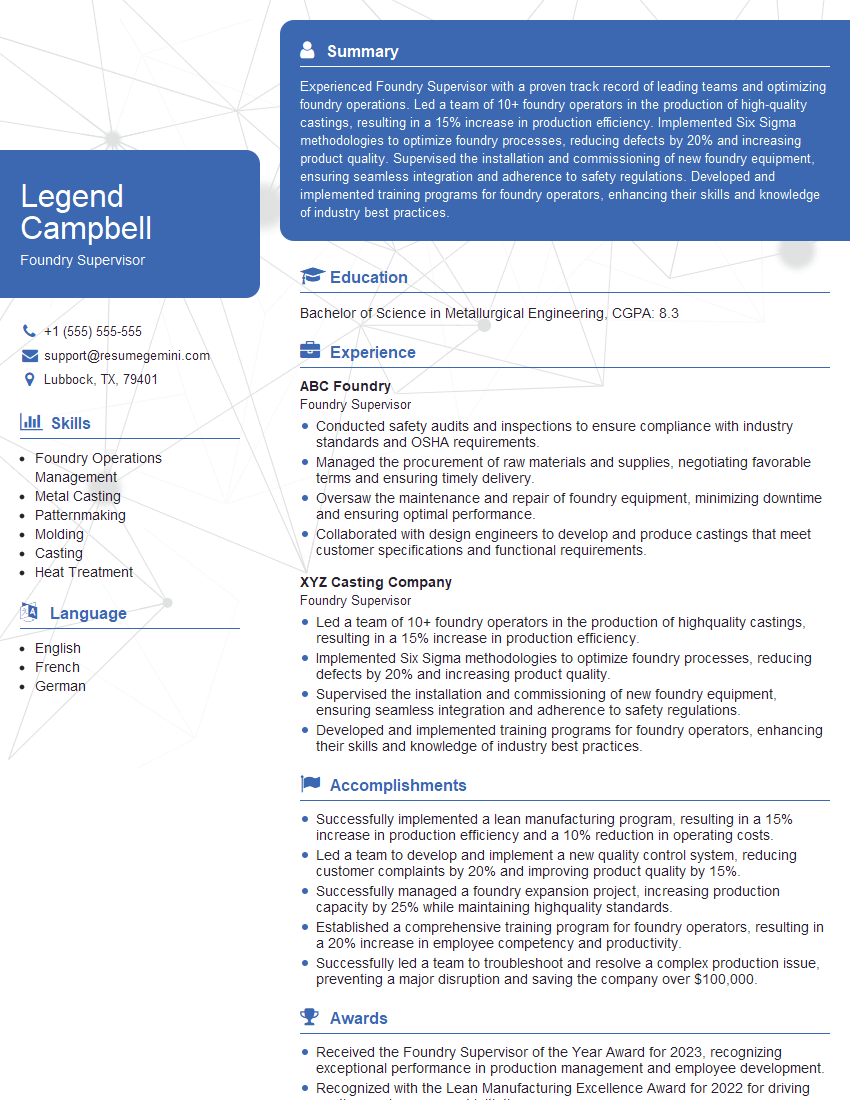
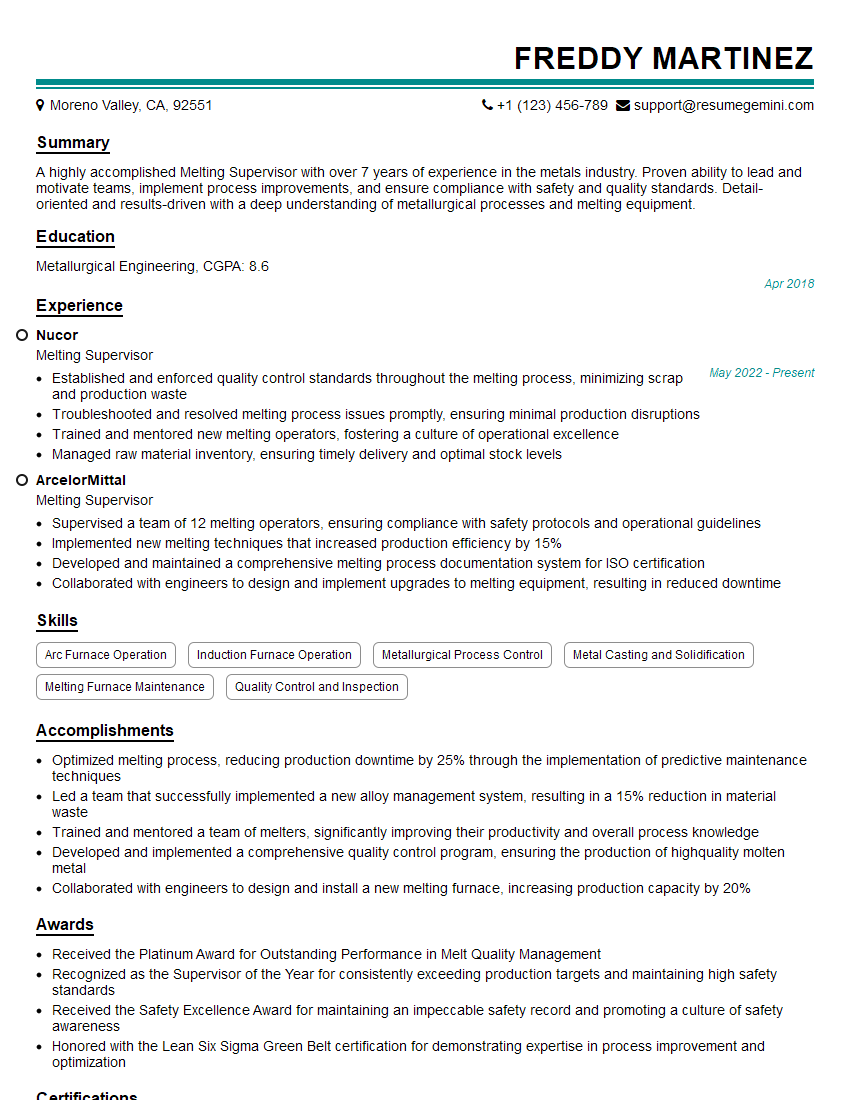
Mastering Cupola Operation Procedures is vital for career advancement in the foundry industry, opening doors to specialized roles and increased responsibilities. An ATS-friendly resume is crucial for maximizing your job prospects. ResumeGemini is a trusted resource to help you craft a compelling and effective resume that highlights your skills and experience. They provide examples of resumes tailored to Cupola Operation Procedures to help you showcase your expertise and secure your next opportunity.


Explore more articles
Users Rating of Our Blogs
Share Your Experience
We value your feedback! Please rate our content and share your thoughts (optional).
What Readers Say About Our Blog
good