Cracking a skill-specific interview, like one for Customer Relations and Salesmanship, requires understanding the nuances of the role. In this blog, we present the questions you’re most likely to encounter, along with insights into how to answer them effectively. Let’s ensure you’re ready to make a strong impression.
Questions Asked in Customer Relations and Salesmanship Interview
Q 1. Describe your experience handling difficult customer interactions.
Handling difficult customer interactions requires a calm, empathetic approach focused on active listening and problem-solving. My strategy involves several key steps: First, I actively listen to understand the customer’s perspective without interruption. This shows respect and allows me to accurately identify the root cause of their frustration. Second, I validate their feelings, acknowledging their concerns and showing empathy. Phrases like, “I understand your frustration,” or “I can see why you’re upset,” go a long way. Third, I take ownership of the issue, even if it’s not directly my fault. This demonstrates accountability and willingness to find a solution. Finally, I work collaboratively with the customer to find a resolution that meets their needs, offering options and explaining the reasoning behind any decisions. For example, a customer once angrily complained about a delayed shipment. Instead of getting defensive, I apologized, explained the unforeseen circumstances causing the delay, and offered expedited shipping as compensation. This proactive approach diffused the situation and turned a potentially negative experience into a positive one. The key is to remain professional, patient, and focused on finding a mutually acceptable solution.
Q 2. How do you prioritize competing customer needs?
Prioritizing competing customer needs often involves a multi-faceted approach. I utilize a combination of factors to determine the order of importance: urgency, impact, and relationship value. Urgency refers to how quickly a need must be addressed. Impact considers the potential consequences of delaying or failing to address a need. Relationship value assesses the long-term implications of prioritizing one customer over another based on their history and potential future business. I often employ a matrix that weighs these factors to create a prioritized list. For instance, a major client facing a critical system failure would take precedence over a smaller client with a less urgent request. Transparency is key; I communicate the prioritization strategy to my clients, ensuring everyone understands the rationale behind the decisions. This open communication builds trust and minimizes misunderstandings.
Q 3. Explain your approach to building rapport with clients.
Building rapport with clients is crucial for long-term success. My approach starts with active listening and demonstrating genuine interest in their needs and business. I ask open-ended questions to understand their challenges, goals, and preferences, creating a conversational atmosphere rather than a transactional one. I focus on finding common ground, sharing relevant experiences, and using their names frequently to personalize the interaction. I also tailor my communication style to match their preferences, being formal or informal as appropriate. For example, I might share a relevant industry article with a client to demonstrate my expertise or offer a personalized solution based on their specific needs. Building trust takes time and effort, but the payoff is significant, resulting in stronger relationships and increased loyalty.
Q 4. What strategies do you use to identify and close sales opportunities?
Identifying and closing sales opportunities involves a systematic process. I begin by actively qualifying leads, focusing on their needs, budget, and decision-making process. Then, I conduct thorough needs assessments to understand their pain points and how my product or service can provide a solution. I develop tailored proposals that address their specific needs and demonstrate value. I leverage storytelling and case studies to showcase successful implementations and build credibility. Throughout the sales process, I actively address objections and questions, ensuring transparency and providing relevant information. Finally, I focus on closing the sale by summarizing the benefits and offering a clear call to action. One effective strategy is to use the ‘BANT’ qualification method (Budget, Authority, Need, Timeline) to ensure the lead is a good fit before investing significant time and resources.
Q 5. How do you manage your sales pipeline effectively?
Effective sales pipeline management relies on organization and consistent tracking. I utilize a CRM (Customer Relationship Management) system to manage leads, track progress, and forecast sales. The CRM allows me to segment leads based on stage, prioritize activities, and identify potential bottlenecks. Regularly reviewing the pipeline helps me identify opportunities for improvement, such as refining my sales process or adjusting my targeting. Using visual tools like Kanban boards helps to provide a clear overview of the pipeline and facilitates efficient progress tracking. I set realistic goals and regularly review my performance against these goals, making adjustments as needed. This systematic approach helps me to ensure no leads slip through the cracks and maximize my sales conversion rates.
Q 6. Describe a time you exceeded a customer’s expectations.
I once exceeded a customer’s expectations by proactively anticipating their needs. A client was implementing a new software system and expressed concerns about the training process. Instead of simply providing the standard training materials, I arranged for a customized, on-site training session tailored specifically to their team’s needs and skill levels. This went beyond the agreed-upon scope of the project. The result was a smoother implementation process, increased employee satisfaction, and a stronger client relationship. This proactive approach fostered immense trust and loyalty. The client subsequently became a strong advocate and referred us to several other businesses.
Q 7. How do you handle customer complaints or objections?
Handling customer complaints or objections requires a calm and professional approach. My first step is to listen empathetically and let the customer fully express their concerns. I then acknowledge their feelings and validate their perspective without interrupting. Next, I ask clarifying questions to gain a deeper understanding of the issue. Once I fully understand the situation, I offer a sincere apology, even if the issue wasn’t directly my fault. Then, I work collaboratively with the customer to find a solution, explaining the process and timeline clearly. If I cannot immediately resolve the issue, I provide regular updates and keep the customer informed. Finally, I follow up after the issue is resolved to ensure their satisfaction. The key is to focus on finding a solution that satisfies the customer and to treat them with respect and empathy throughout the entire process. This approach turns a negative experience into an opportunity to strengthen the relationship.
Q 8. What sales methodologies are you familiar with (e.g., SPIN, Sandler)?
I’m proficient in several sales methodologies, each with its strengths. The SPIN selling method focuses on asking open-ended questions to uncover customer needs (Situation, Problem, Implication, Need-payoff). For instance, instead of directly pitching a software solution, I’d ask about their current workflow challenges, the impact those challenges have, and how solving them would benefit them. Sandler Selling emphasizes building rapport and qualifying prospects early to avoid wasting time on unsuitable leads. This involves identifying the prospect’s pain points and their authority to make a purchase decision. Another methodology I use is Solution Selling which centers around understanding the customer’s problem and presenting a tailored solution. This often includes presenting case studies to demonstrate value. Finally, I also employ elements of Consultative Selling, where I act as an advisor, working closely with the client to understand their long-term goals and develop strategies to achieve them. I adapt my approach based on the specific customer and the sales situation.
Q 9. Explain your understanding of customer relationship management (CRM) systems.
A Customer Relationship Management (CRM) system is a software solution that helps businesses manage and analyze customer interactions and data throughout the customer lifecycle. Think of it as a central hub for all things customer-related. A robust CRM allows me to track leads, manage contacts, log interactions (calls, emails, meetings), forecast sales, and analyze sales performance. Features like lead scoring, automated workflows, and reporting dashboards are crucial for efficient sales management. For example, I’ve used Salesforce extensively; its functionalities in contact management, opportunity tracking, and reporting have significantly improved my sales efficiency. I’m also familiar with HubSpot and Zoho CRM. The key benefit is a 360-degree view of each customer, enabling personalized communication and targeted sales strategies.
Q 10. How do you track your sales progress and key performance indicators (KPIs)?
Tracking sales progress and KPIs is essential for continuous improvement. I use a combination of my CRM system and spreadsheets to monitor key metrics. My primary KPIs typically include: conversion rates (leads to opportunities, opportunities to closed deals), average deal size, sales cycle length, revenue generated, and customer acquisition cost (CAC). I regularly analyze these metrics to identify trends, pinpoint areas needing improvement, and adjust my sales strategies accordingly. For instance, if my conversion rate from leads to opportunities is low, I might need to refine my lead qualification process or improve my initial outreach strategy. Regular reporting, often weekly or monthly, allows for proactive adjustments and keeps me accountable for achieving my targets. Visualizations like charts and graphs help me easily understand the data and communicate progress effectively.
Q 11. How do you identify potential customers and qualify leads?
Identifying and qualifying potential customers is a critical skill. I employ several techniques including market research (understanding industry trends, competitor analysis), networking (attending industry events, connecting on LinkedIn), and online research (using LinkedIn Sales Navigator or similar tools to identify prospects based on specific criteria). Once I identify potential leads, I qualify them using a BANT framework (Budget, Authority, Need, Timeline). This ensures I’m focusing my efforts on prospects who are likely to convert into paying customers. For example, if a lead lacks the budget or the authority to make a purchase decision, it’s unlikely to be a good fit. Further, understanding their timeline helps prioritize leads based on their immediate needs. I also use lead scoring systems within my CRM to prioritize leads based on their behavior and engagement.
Q 12. Describe your experience using sales automation tools.
I have extensive experience using various sales automation tools. These tools significantly improve efficiency and productivity. For email marketing, I’ve used Mailchimp and HubSpot to automate email sequences, personalize messages, and track engagement. For social selling, I’ve leveraged LinkedIn Sales Navigator to find and connect with prospects, track their activity, and engage in targeted outreach. For scheduling meetings, I utilize tools like Calendly and ScheduleOnce. I use CRM features for automated lead nurturing workflows to send timely follow-up messages and content to potential customers. These automation tools free up my time to focus on higher-value activities like relationship building and closing deals. Essentially, automation handles the repetitive tasks allowing me to be more strategic and effective.
Q 13. How do you maintain strong relationships with existing clients?
Maintaining strong relationships with existing clients is crucial for long-term success and repeat business. My approach involves proactive communication—regular check-ins, newsletters, and personalized updates on relevant industry developments. I actively seek feedback on their experiences and use that information to improve our products and services. I also celebrate their successes and acknowledge their contributions. Providing excellent customer service and addressing their concerns promptly is paramount. Organizing exclusive events or webinars for clients can strengthen relationships. Finally, creating a personalized touchpoint strategy—such as sending birthday cards or holiday greetings—demonstrates genuine care and fosters loyalty.
Q 14. How do you measure the success of a sales campaign?
Measuring the success of a sales campaign involves analyzing several key metrics. The most important is Return on Investment (ROI)—calculating the total revenue generated by the campaign against the total cost. Other crucial metrics include conversion rates at different stages of the sales funnel, customer acquisition cost (CAC), and customer lifetime value (CLTV). Analyzing website traffic, engagement rates on marketing materials, and lead generation numbers provides a comprehensive view of the campaign’s effectiveness. I typically use A/B testing to compare different campaign elements (e.g., subject lines, call-to-actions) to optimize results. By regularly monitoring these metrics, I can identify what aspects worked well and what needs improvement for future campaigns. Ultimately, a successful campaign achieves its target revenue while maintaining a healthy ROI and fostering positive customer relationships.
Q 15. How do you adapt your sales approach to different customer types?
Adapting my sales approach hinges on understanding the customer’s needs and communication style. I believe in a consultative sales approach, meaning I prioritize understanding the customer’s problem before presenting solutions. This involves active listening and asking clarifying questions to uncover their pain points, budget, timeline, and desired outcomes.
- For price-sensitive customers: I focus on the value proposition, highlighting how the product/service saves them money in the long run or improves efficiency, leading to cost savings. I might present different packages or payment options to fit their budget.
- For technically inclined customers: I delve into the technical specifications and functionalities, demonstrating my expertise and addressing their questions with precision and detail. I use technical jargon appropriately but ensure the core message is understandable.
- For decision-makers: I focus on the high-level benefits and ROI (Return on Investment), presenting data and case studies to support my claims. I aim to build rapport and present a compelling business case.
- For relationship-oriented customers: I prioritize building trust and rapport, focusing on the long-term relationship and providing personalized service. I make myself available and respond promptly to their queries.
For example, I once worked with a small startup with a limited budget. Instead of pushing the most expensive package, I tailored a solution that addressed their immediate needs while offering an upgrade path for future growth. This approach led to a sale and a strong, long-term client relationship.
Career Expert Tips:
- Ace those interviews! Prepare effectively by reviewing the Top 50 Most Common Interview Questions on ResumeGemini.
- Navigate your job search with confidence! Explore a wide range of Career Tips on ResumeGemini. Learn about common challenges and recommendations to overcome them.
- Craft the perfect resume! Master the Art of Resume Writing with ResumeGemini’s guide. Showcase your unique qualifications and achievements effectively.
- Don’t miss out on holiday savings! Build your dream resume with ResumeGemini’s ATS optimized templates.
Q 16. How do you handle a situation where a customer is unhappy with your product/service?
Handling unhappy customers requires empathy, active listening, and a problem-solving approach. My first step is to acknowledge their frustration and validate their feelings. I would never interrupt or become defensive. I actively listen to understand the root cause of their dissatisfaction.
Once I understand the problem, I offer sincere apologies and work towards a solution. This might involve offering a refund, replacement, repair, or an alternative solution. Transparency is key; I explain the steps I’m taking to address the issue and keep them updated throughout the process.
For instance, if a customer received a damaged product, I’d immediately apologize, arrange for a replacement to be shipped, and possibly offer a small discount as a gesture of goodwill. The goal is not just to resolve the immediate issue but to rebuild trust and maintain the relationship. I document the entire process meticulously, ensuring all communication is logged and accessible for future reference.
Q 17. What is your process for gathering customer feedback?
Gathering customer feedback is crucial for continuous improvement. My process employs a multi-pronged approach:
- Surveys: I regularly distribute online surveys (e.g., via email or in-app) to gauge customer satisfaction, identify areas for improvement, and gather feedback on specific products or services.
- Feedback Forms: Providing easy-to-access feedback forms (online and offline) enables customers to share their experiences at their convenience.
- Social Media Monitoring: I actively monitor social media channels for mentions of the company and its products to gauge public sentiment and address customer concerns promptly.
- Customer Interviews: Conducting occasional in-depth interviews with selected customers provides richer, qualitative data and deeper insights into their experiences.
- Customer Support Interactions: Analyzing customer support interactions provides invaluable feedback on product usability and customer service effectiveness.
I ensure all feedback is analyzed, categorized, and used to inform product development, customer service improvements, and overall business strategy. This data-driven approach is vital to staying customer-centric.
Q 18. How do you contribute to a positive team environment?
Contributing to a positive team environment is essential for productivity and success. I believe in collaboration, open communication, and mutual support. I actively participate in team meetings, sharing my ideas and insights constructively. I am always willing to assist colleagues, mentor new team members, and share my knowledge and expertise.
I foster a positive attitude by being supportive, encouraging, and respectful towards everyone. I believe in celebrating team achievements and acknowledging individual contributions. Furthermore, I am proactive in identifying and resolving conflicts within the team, ensuring everyone feels valued and heard. This approach strengthens teamwork and improves overall morale, leading to a more productive and enjoyable work experience for all.
Q 19. How do you stay updated on industry trends and best practices?
Staying updated on industry trends and best practices is critical in this ever-evolving field. My approach involves a combination of:
- Industry Publications and Blogs: I regularly read industry publications, blogs, and websites to stay abreast of the latest news, innovations, and trends.
- Conferences and Workshops: I actively attend industry conferences and workshops to network with peers, learn from experts, and stay updated on the latest developments.
- Online Courses and Webinars: I regularly participate in online courses and webinars to enhance my skills and knowledge in customer relations, sales techniques, and relevant technologies.
- Networking: I actively network with colleagues, industry professionals, and mentors to exchange ideas and learn from their experiences.
By continuously learning and adapting, I ensure I am equipped with the most effective tools and strategies to succeed in my role.
Q 20. What are your salary expectations?
My salary expectations are in line with the industry standard for similar roles with my experience and qualifications. I’m flexible and open to discussing a competitive compensation package that reflects my value and contributions to the company.
Q 21. Why are you interested in this specific role?
I’m highly interested in this specific role because it aligns perfectly with my skills and career aspirations. The opportunity to work with [Company Name], a company known for its [mention company values or achievements], is particularly appealing. I’m excited by the challenges presented by this role, specifically [mention specific aspects of the role that interest you, e.g., working on a new product launch, leading a team, developing a new customer segment]. I am confident that my experience in [mention relevant experience] makes me a strong candidate for success in this position, and I am eager to contribute to the company’s growth and success.
Q 22. What are your strengths and weaknesses as a sales professional?
My greatest strength as a sales professional lies in my ability to build rapport and understand client needs. I excel at active listening, tailoring my approach to each individual, and identifying their pain points. This allows me to present solutions that are not just effective, but also resonate with their specific situation. For example, in my previous role, I was able to close a significant deal with a hesitant client by taking the time to understand their underlying concerns regarding budget and implementation. By addressing these concerns directly and offering tailored solutions, I transformed a potential loss into a substantial win. A weakness I’m actively working on is delegation. While I’m highly proficient in managing my own workload, I sometimes find it challenging to trust others with certain tasks. I’m currently implementing strategies to improve my delegation skills, such as setting clear expectations, providing adequate training, and regularly reviewing progress. This involves focusing on empowering my team, fostering trust, and improving my own time management to facilitate efficient delegation.
Q 23. Describe your experience with negotiation and closing deals.
Negotiation and closing deals are integral parts of my sales process. My approach begins with thorough preparation – understanding the client’s needs, their budget, and their alternatives. I then enter the negotiation phase with a clear understanding of my own bottom line and a willingness to find mutually beneficial solutions. I leverage active listening to understand their priorities and adjust my approach accordingly. For example, in a recent negotiation, the client was initially resistant to my proposed pricing. By understanding their concerns about long-term cost-effectiveness, I offered a flexible payment plan and value-added services that addressed their specific needs. This resulted in a successful deal that exceeded initial expectations. Closing the deal involves summarizing the key benefits, addressing any lingering concerns, and creating a sense of urgency and excitement. I often use a consultative approach, emphasizing the long-term value and partnership aspect of the deal. The key is not just closing the deal, but building a lasting relationship with the client.
Q 24. How do you leverage social media or other digital channels to reach potential customers?
I leverage social media and digital channels strategically to reach potential customers. I use LinkedIn to connect with professionals in my target industry, sharing insightful content related to my field and engaging in relevant conversations. This builds my professional brand and establishes me as a thought leader. On platforms like Twitter and Instagram, I utilize targeted advertising campaigns to reach specific demographics. I also engage in content marketing, creating valuable resources like blog posts, white papers, and webinars that attract potential clients organically. Data analytics play a crucial role in tracking the performance of each channel, allowing me to optimize my strategies for maximum effectiveness. By monitoring key metrics like engagement rates, website traffic, and lead generation, I refine my approach, ensuring that my digital efforts yield tangible results. This data-driven approach allows for continuous improvement and ensures that resources are allocated efficiently.
Q 25. Describe your understanding of sales forecasting.
Sales forecasting is crucial for accurate business planning. My understanding involves analyzing historical sales data, market trends, and economic indicators to predict future sales. I utilize various forecasting methods, such as moving averages, exponential smoothing, and regression analysis, to create realistic and data-driven projections. These projections aren’t just numbers; they inform key business decisions, such as inventory management, resource allocation, and budget planning. For example, if the forecast predicts a significant increase in demand during a specific quarter, I can proactively adjust inventory levels, hire additional staff, or secure necessary resources to meet the projected demand. Regular review and adjustments to the forecast are critical, as unexpected market fluctuations can significantly impact accuracy. Incorporating qualitative factors, such as market sentiment, competitor activity, and upcoming promotional campaigns, enhances the predictive power of the forecast, ensuring a more comprehensive and informed strategy.
Q 26. What are your long-term career goals?
My long-term career goals involve achieving a leadership position in sales and business development. I aim to build and mentor high-performing sales teams, contributing to the overall growth and success of the organization. I’m passionate about developing innovative sales strategies and leveraging cutting-edge technologies to enhance sales effectiveness. Beyond my individual contribution, I aspire to give back to the industry through mentoring programs and sharing my knowledge and experience with aspiring sales professionals. This reflects a commitment not only to personal growth but also to fostering a positive and collaborative environment within the field of sales.
Q 27. How do you prioritize tasks and manage your time effectively?
Effective task prioritization and time management are paramount in sales. I utilize a combination of techniques, including the Eisenhower Matrix (urgent/important), to categorize and prioritize tasks. I also employ time-blocking, allocating specific time slots for focused work on high-priority activities. Furthermore, I leverage project management tools and technologies to stay organized, track progress, and ensure accountability. To avoid feeling overwhelmed, I break down large tasks into smaller, more manageable steps. Regular review of my schedule and adjusting priorities as needed allows for flexibility and adaptability. Proactive communication with colleagues and clients is also key, ensuring that expectations are aligned and potential conflicts are addressed promptly. This ensures efficient resource utilization and timely completion of tasks.
Q 28. Describe a time you failed and what you learned from it.
In a previous role, I failed to adequately anticipate a significant shift in market demand. This resulted in an overestimation of inventory for a particular product line, leading to increased storage costs and reduced profitability. The lesson learned was the critical importance of rigorous market research and incorporating diverse data points into sales forecasts. Since then, I’ve implemented a more robust market analysis process, incorporating input from multiple sources and regularly reviewing market trends. I’ve also developed stronger relationships with market research teams to improve the accuracy of my predictions. This experience highlighted the importance of adaptability and continuous learning in sales. It reinforced the need to stay informed and proactively adapt to changing market conditions, preventing similar setbacks in the future.
Key Topics to Learn for Customer Relations and Salesmanship Interview
- Understanding Customer Needs: Learn to actively listen, ask clarifying questions, and identify both stated and unstated customer needs. Practice empathetic communication and demonstrate your ability to build rapport.
- Effective Communication Techniques: Master clear and concise verbal and written communication. Practice presenting information professionally, handling objections gracefully, and adapting your communication style to different customer personalities.
- Sales Strategies and Techniques: Explore various sales approaches, including consultative selling and needs-based selling. Understand the sales cycle and be prepared to discuss your experience with lead generation, qualification, and closing.
- Conflict Resolution and Problem-Solving: Develop strategies for handling difficult customers and resolving conflicts effectively. Practice using problem-solving frameworks to address customer issues and find mutually beneficial solutions.
- Building and Maintaining Relationships: Discuss techniques for building long-term customer relationships, fostering loyalty, and driving repeat business. Understand the importance of follow-up and customer retention strategies.
- Product Knowledge and Expertise: Demonstrate a deep understanding of the products or services you’ll be representing. Be prepared to answer questions about features, benefits, and comparisons with competitors.
- Negotiation and Closing Techniques: Practice your negotiation skills and understand various closing techniques. Be prepared to discuss scenarios where you successfully navigated a challenging negotiation.
Next Steps
Mastering Customer Relations and Salesmanship is crucial for career advancement in nearly every industry. These skills are highly valued by employers and directly contribute to your success in building strong relationships with clients, driving sales, and achieving business goals. To significantly enhance your job prospects, creating a compelling and ATS-friendly resume is paramount. ResumeGemini can help you build a professional and impactful resume that highlights your skills and experience in Customer Relations and Salesmanship. Utilize ResumeGemini’s resources to craft a resume that truly showcases your potential. Examples of resumes tailored to Customer Relations and Salesmanship are available to guide your efforts.
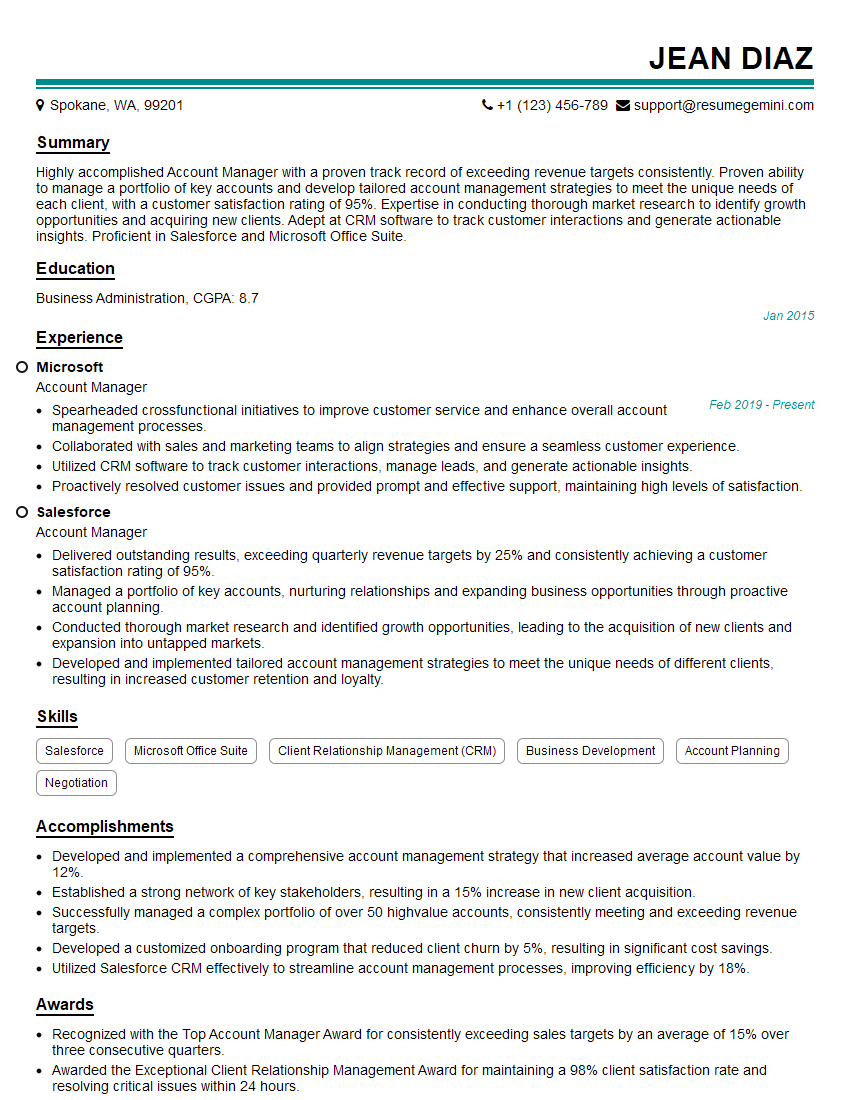
Account Manager Resume Sample
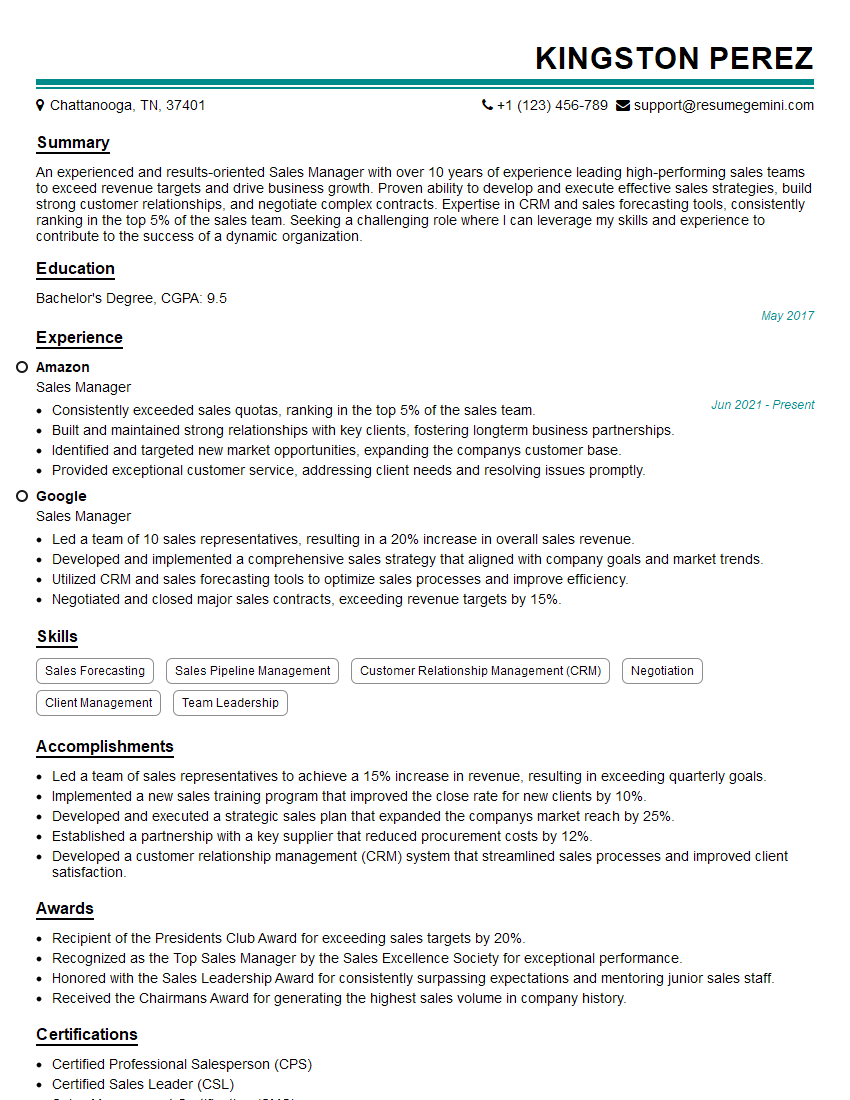
Sales Manager Resume Sample
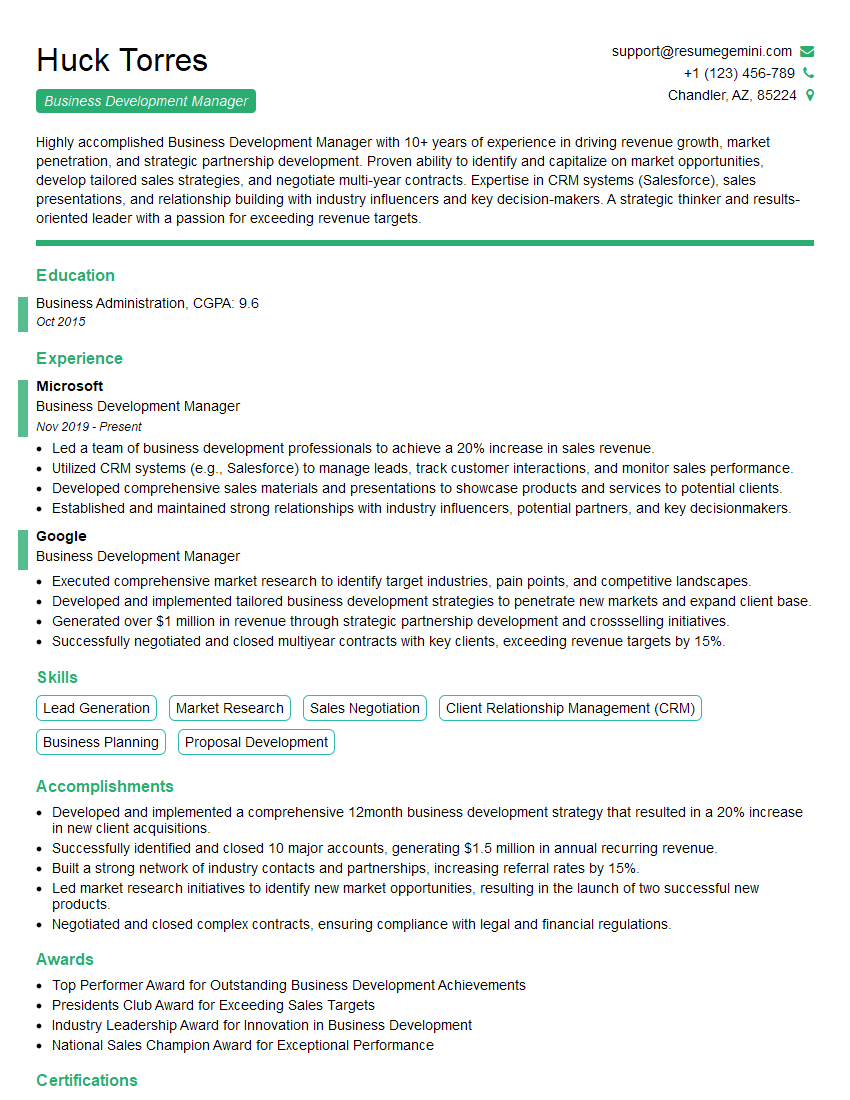
Business Development Manager Resume Sample
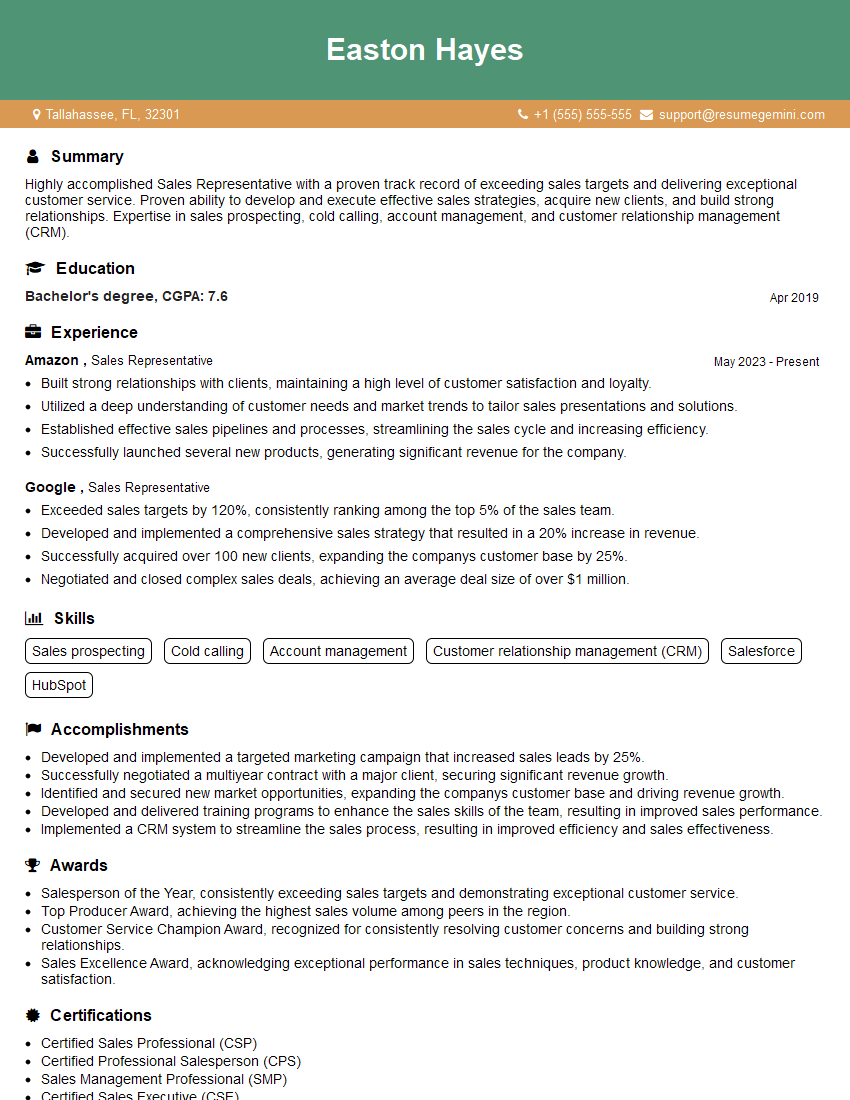
Sales Representative Resume Sample
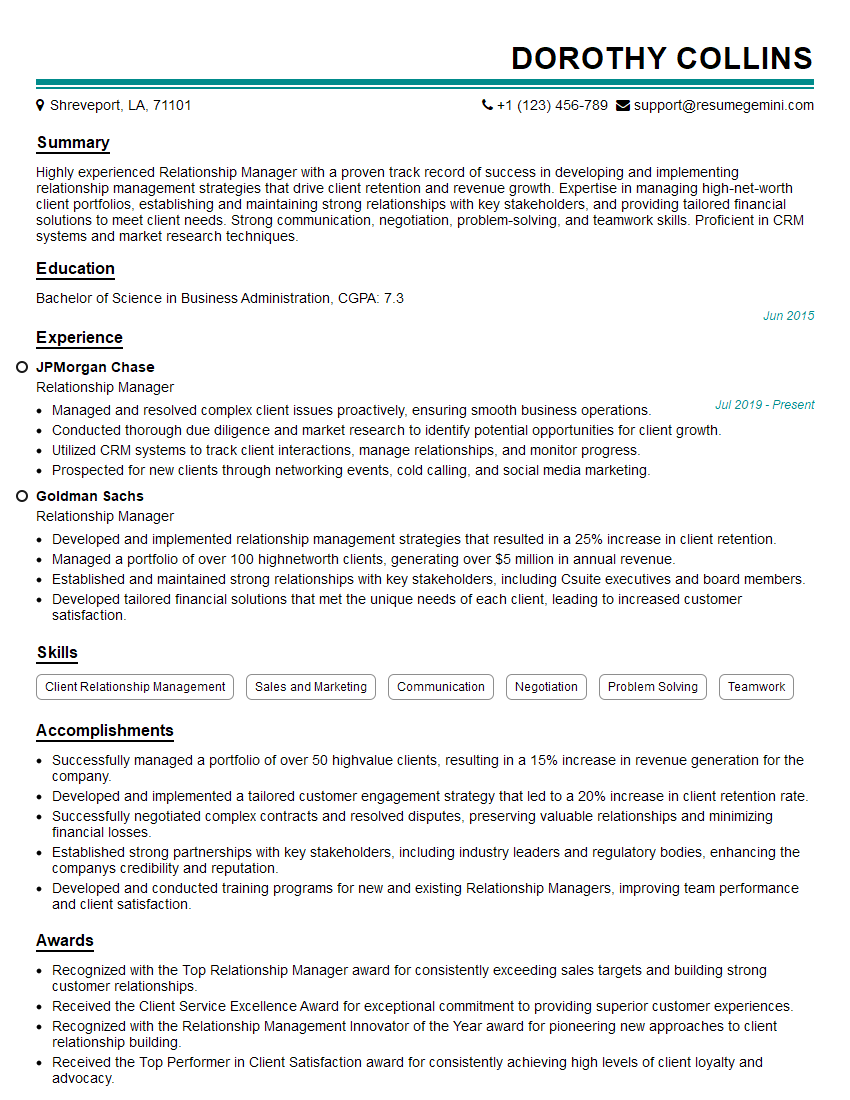
Relationship Manager Resume Sample
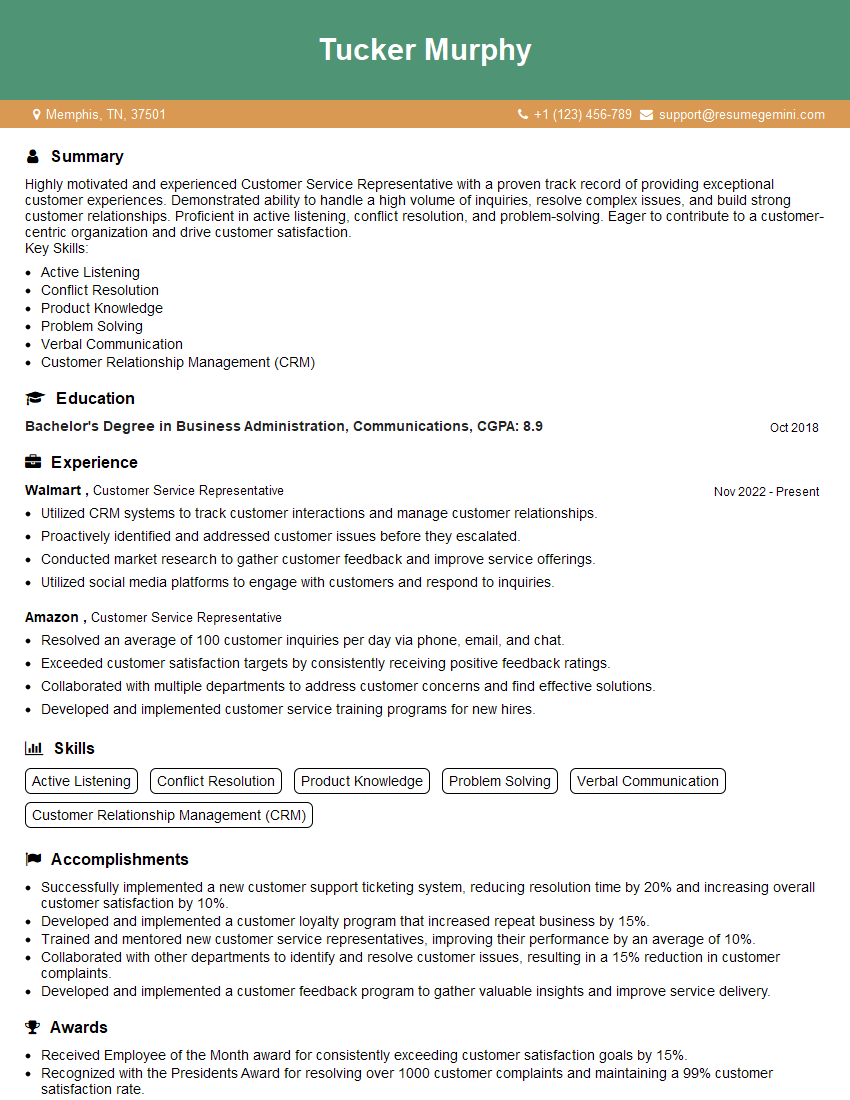
Customer Service Representative Resume Sample
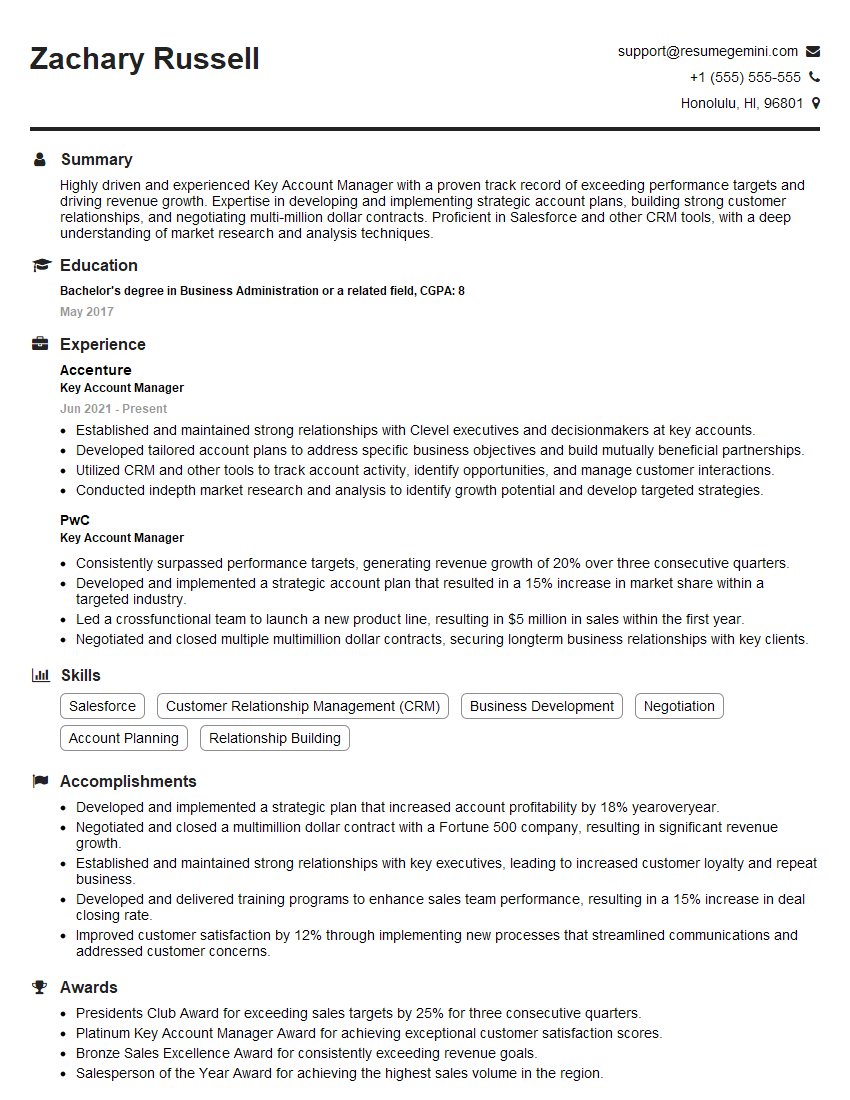
Key Account Manager Resume Sample
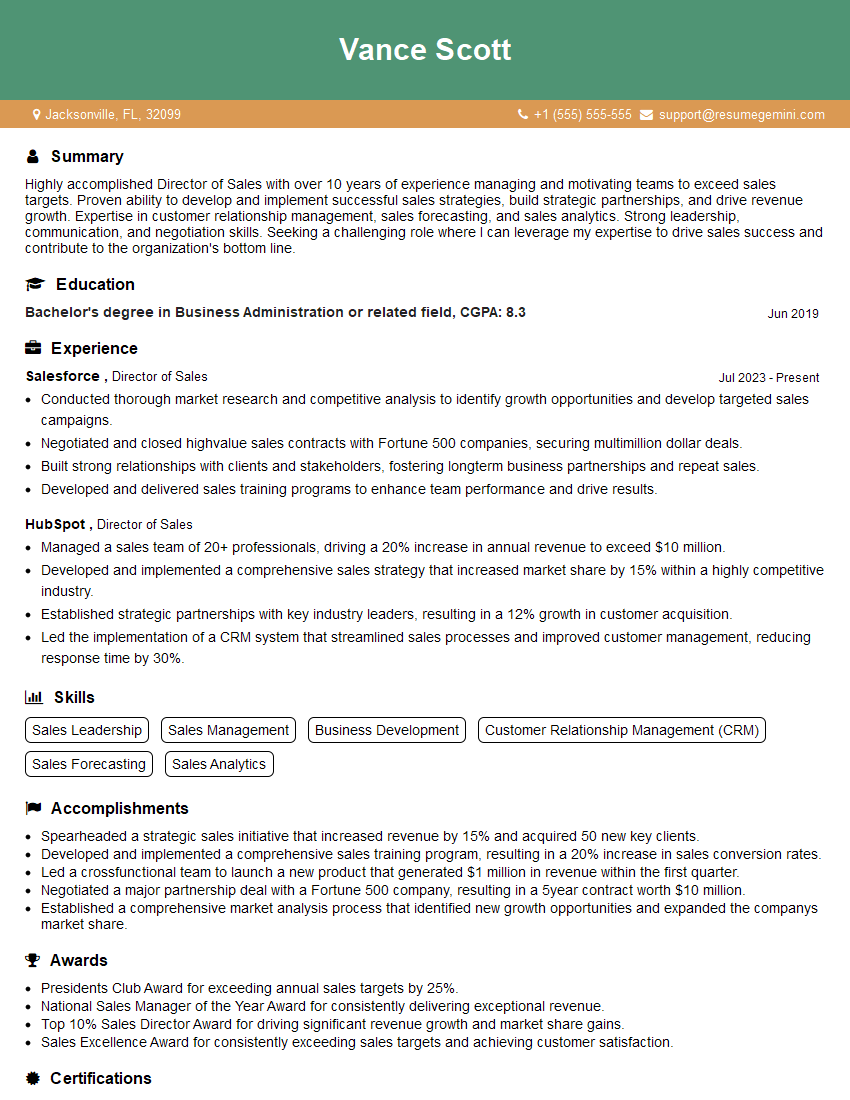
Director of Sales Resume Sample
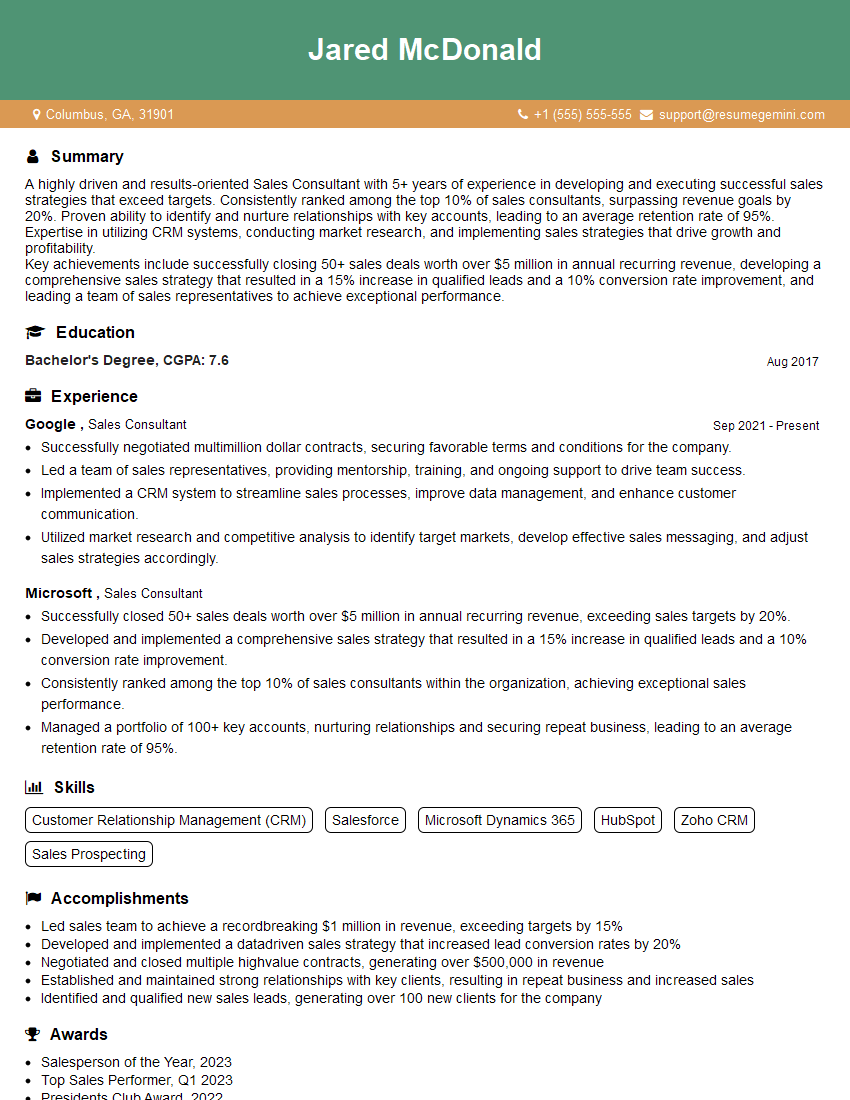
Sales Consultant Resume Sample
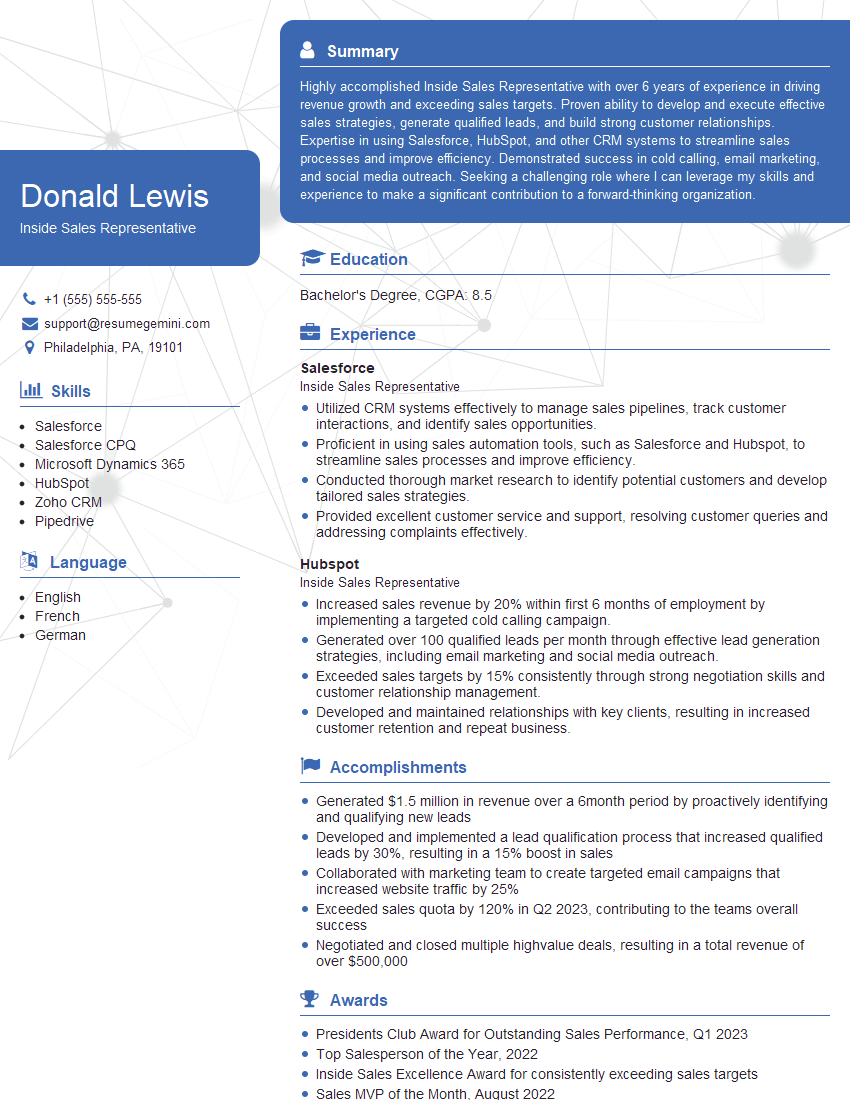
Inside Sales Representative Resume Sample
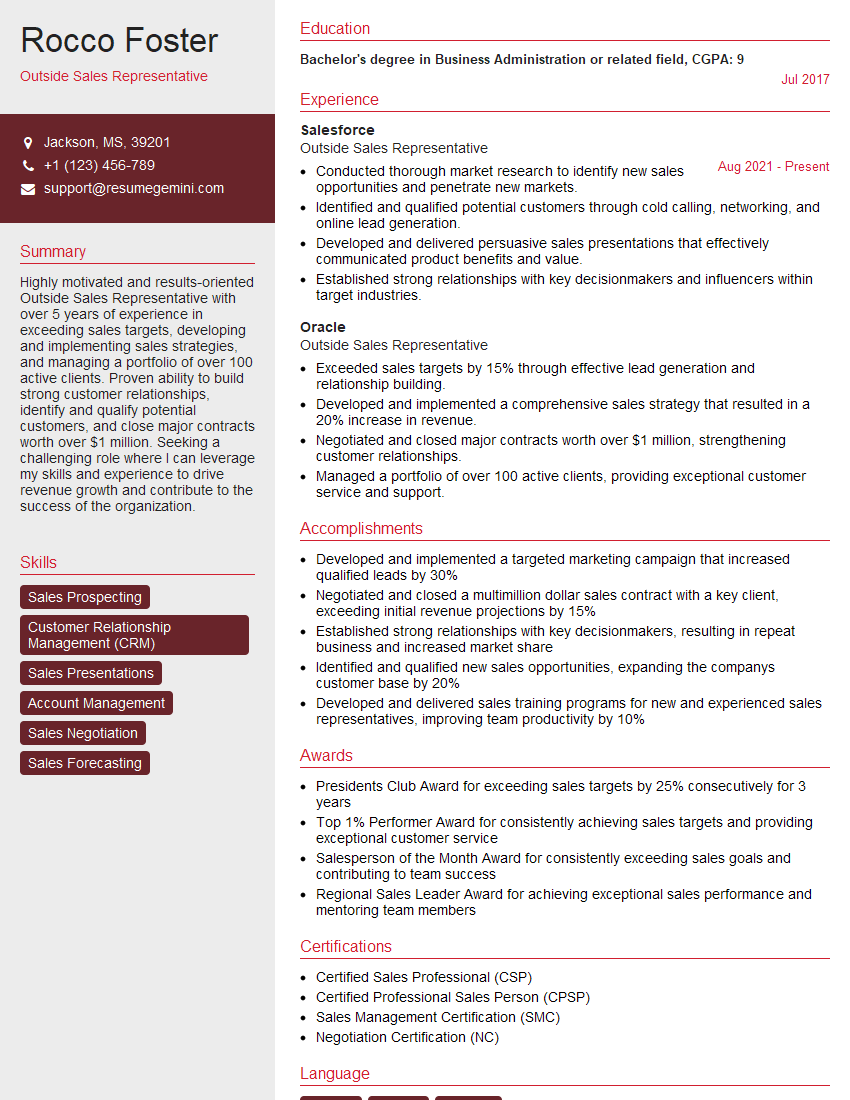
Outside Sales Representative Resume Sample
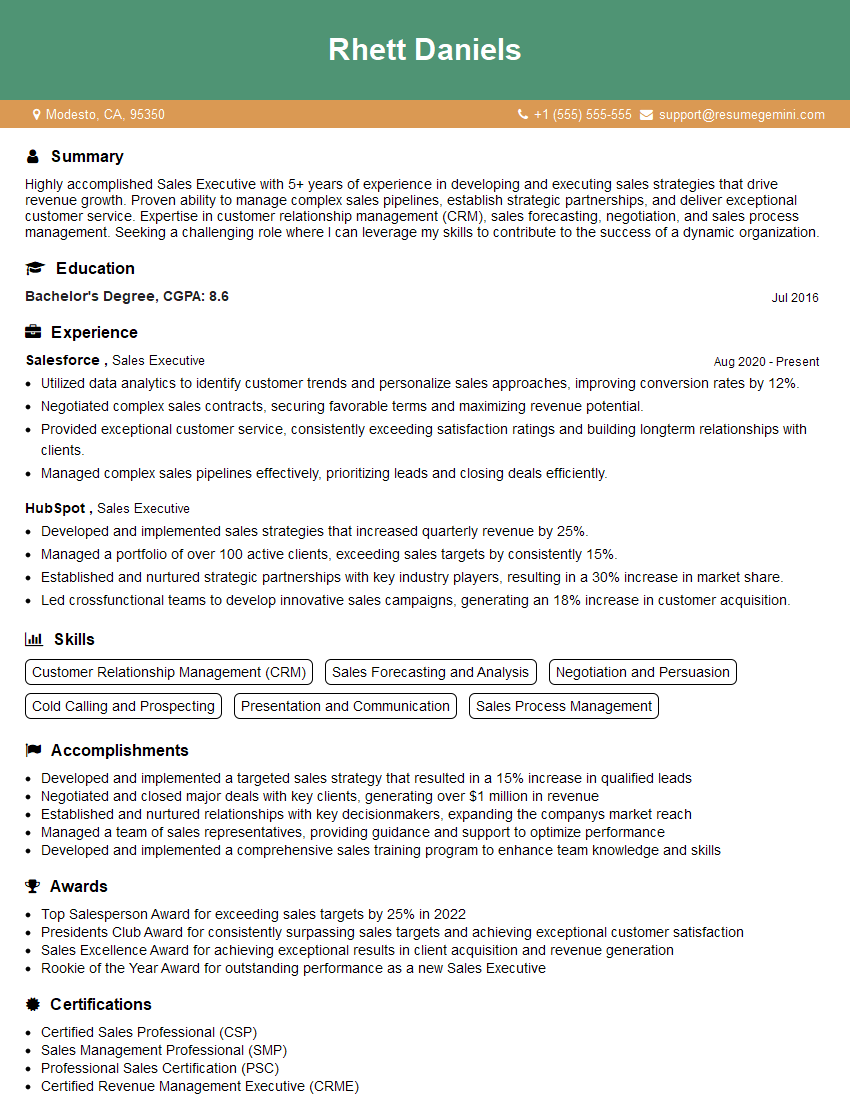
Sales Executive Resume Sample
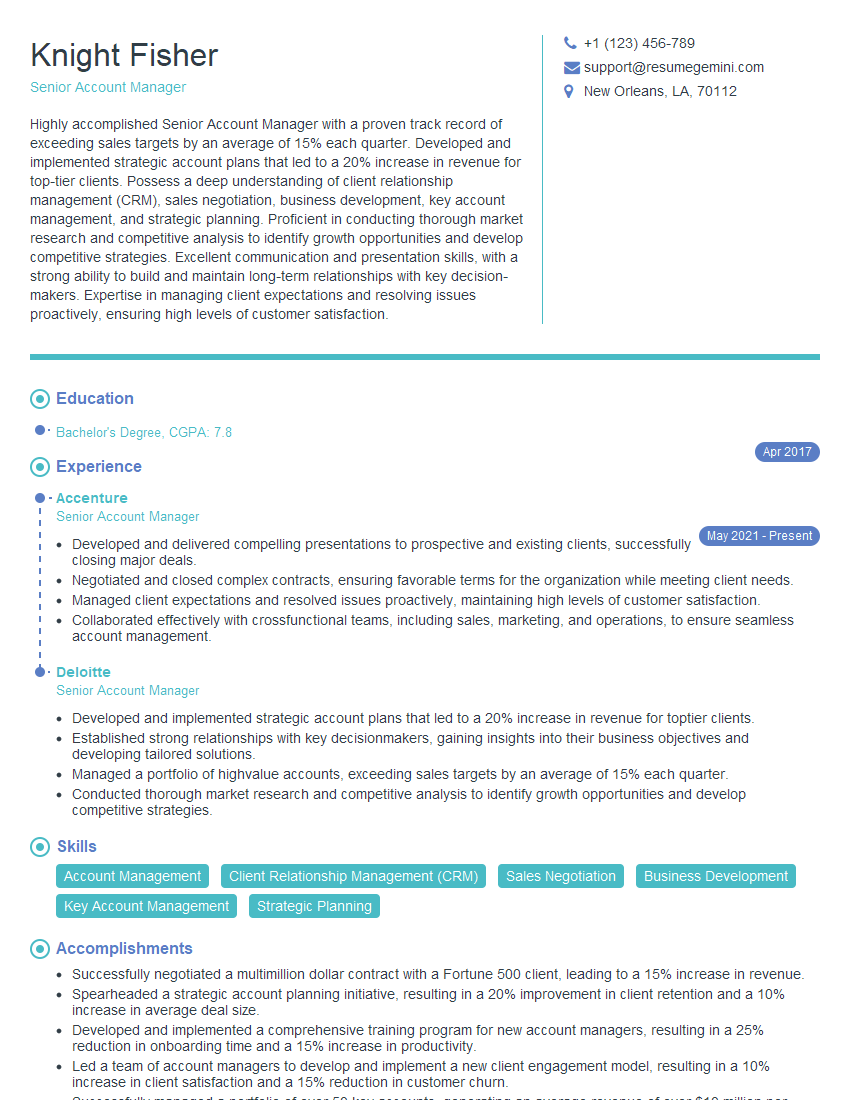
Senior Account Manager Resume Sample
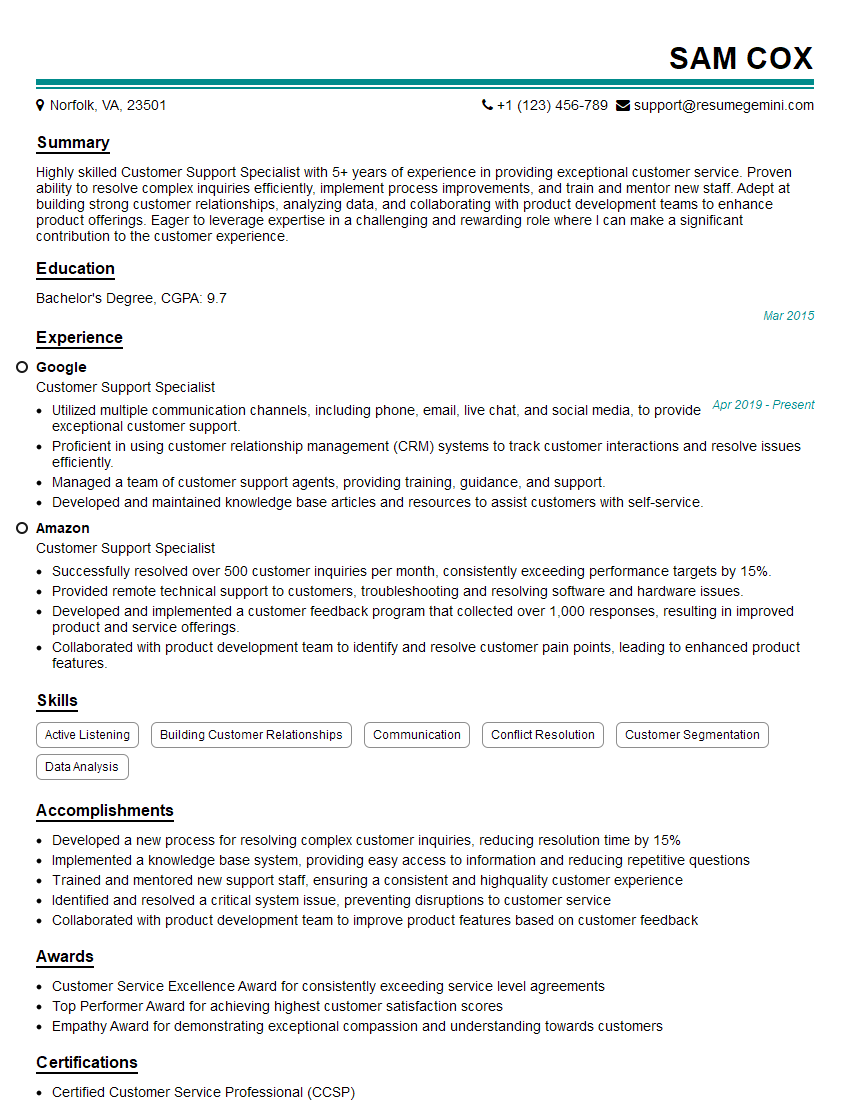
Customer Support Specialist Resume Sample
- Account Manager
- Sales Manager
- Business Development Manager
- Sales Representative
- Relationship Manager
- Customer Service Representative
- Key Account Manager
- Director of Sales
- Sales Consultant
- Inside Sales Representative
- Outside Sales Representative
- Sales Executive
- Senior Account Manager
- Customer Support Specialist
Explore more articles
Users Rating of Our Blogs
Share Your Experience
We value your feedback! Please rate our content and share your thoughts (optional).
What Readers Say About Our Blog
Very informative content, great job.
good