Interviews are opportunities to demonstrate your expertise, and this guide is here to help you shine. Explore the essential Customer Requirements Analysis interview questions that employers frequently ask, paired with strategies for crafting responses that set you apart from the competition.
Questions Asked in Customer Requirements Analysis Interview
Q 1. Explain the difference between functional and non-functional requirements.
Functional requirements define what a system should do, specifying the features and functionalities it must possess. Think of them as the system’s capabilities. Non-functional requirements, on the other hand, describe how the system should perform, focusing on qualities like performance, security, and usability. They define the constraints and standards the system must meet.
Example: Imagine designing an e-commerce website. A functional requirement would be “The system shall allow users to add items to a shopping cart.” A non-functional requirement would be “The system shall respond to user requests within 2 seconds.” The first dictates a specific feature, while the second specifies a performance standard.
- Functional Requirements: Focus on specific actions the system must perform. They are often expressed as user stories or use cases.
- Non-Functional Requirements: Describe quality attributes, such as scalability, reliability, security, and maintainability. They often impact the overall user experience and system efficiency.
Q 2. Describe your process for eliciting requirements from stakeholders.
My process for eliciting requirements involves a multi-faceted approach, ensuring I capture a comprehensive understanding from all relevant stakeholders. I start with initial planning, defining the scope and identifying key stakeholders. Then, I employ various techniques depending on the context and stakeholder preference. This often includes:
- Interviews: One-on-one discussions to gain in-depth insights from individuals.
- Workshops: Collaborative sessions with multiple stakeholders to facilitate brainstorming and consensus building. These are highly effective for resolving conflicts early on.
- Surveys: Useful for gathering information from a larger group, particularly for gathering quantitative data or initial feedback.
- Document Review: Analyzing existing documentation (e.g., business plans, market research) to understand the context and existing constraints.
- Prototyping: Creating low-fidelity prototypes to validate understanding and gather early feedback.
Throughout this process, I prioritize active listening, asking clarifying questions, and documenting everything meticulously. Regular feedback loops are crucial to ensure alignment and address any misunderstandings. After gathering the requirements, I consolidate and analyze the information, often using techniques like affinity diagramming or use case modeling to organize and synthesize the data.
Q 3. How do you prioritize conflicting requirements?
Prioritizing conflicting requirements requires a structured approach, often involving a collaborative decision-making process. I usually employ a prioritization matrix, considering factors like:
- Business Value: How critical is this requirement to achieving business goals?
- Risk: What are the potential consequences of not meeting this requirement?
- Technical Feasibility: How difficult and costly is it to implement this requirement?
- Dependencies: Does this requirement depend on other requirements?
Stakeholders are involved in the prioritization process, often through workshops or facilitated discussions. We use techniques like MoSCoW (Must have, Should have, Could have, Won’t have) or a simple weighted scoring system to rank requirements based on the chosen criteria. Open communication and transparent decision-making are vital for successfully resolving conflicts.
Example: If a requirement for enhanced security conflicts with a requirement for faster processing speed, we would analyze the risks associated with each and the associated business impact. A cost-benefit analysis might reveal that sacrificing some processing speed for robust security is the best choice for the business.
Q 4. What techniques do you use to document requirements?
Effective documentation is key to successful requirements engineering. I utilize a combination of techniques, ensuring clarity, consistency, and traceability. This includes:
- User Stories: Short, simple descriptions of features from the user’s perspective (e.g., “As a customer, I want to be able to filter search results by price so I can easily find products within my budget.”).
- Use Cases: Detailed descriptions of user interactions with the system, outlining various scenarios and possible outcomes.
- Requirement Specifications Document: A formal document that lists all requirements, including functional and non-functional requirements, along with acceptance criteria.
- Data Flow Diagrams (DFDs): Visual representations of how data moves through the system.
- UML Diagrams: Various UML diagrams (e.g., class diagrams, sequence diagrams) can be used to model the system’s structure and behavior.
The choice of documentation technique depends on the project’s complexity and the stakeholders’ preferences. The goal is to create clear, concise, and unambiguous documentation that everyone can understand.
Q 5. How do you handle ambiguous or incomplete requirements?
Ambiguous or incomplete requirements are a common challenge. My approach is to proactively address these issues early in the process. I employ the following strategies:
- Clarification with Stakeholders: I schedule meetings or interviews to discuss ambiguous points with the relevant stakeholders, seeking further details and clarification. Open-ended questions are helpful to encourage detailed responses.
- Assumptions Documentation: If clarity can’t be immediately achieved, I document the assumptions made to proceed with the design and development. This ensures transparency and allows for revisiting the assumptions later if necessary.
- Prototyping: Creating a prototype (even a low-fidelity one) can help visualize the requirement and identify potential gaps or inconsistencies.
- Use Case Modeling: Working through various use cases can help uncover missing scenarios and details.
It’s crucial to iterate on the requirements throughout the development lifecycle. Regular feedback loops allow for early detection and resolution of ambiguities and incompleteness, preventing costly rework later in the process.
Q 6. Explain the importance of using a requirements traceability matrix.
A requirements traceability matrix (RTM) is a crucial tool for managing and tracking requirements throughout the entire software development lifecycle. It provides a mapping between requirements, design elements, test cases, and other project artifacts. Its importance stems from several factors:
- Impact Analysis: The RTM helps to understand the impact of changes to requirements on other aspects of the project.
- Verification and Validation: It ensures that all requirements are properly addressed during design, development, and testing.
- Risk Management: It helps identify potential risks associated with requirements and their implementation.
- Communication and Collaboration: It facilitates communication and collaboration among different teams involved in the project.
- Change Management: The RTM assists in tracking and managing changes to requirements, ensuring that everyone is aware of the updates.
By maintaining a comprehensive RTM, project teams can significantly reduce the risk of misunderstandings, errors, and omissions, leading to higher quality and more efficient software development.
Q 7. Describe your experience with different requirements gathering techniques (e.g., interviews, surveys, workshops).
I have extensive experience with various requirements gathering techniques, and my choice depends on the specific project context and stakeholder preferences. Here are some examples:
- Interviews: I’ve conducted numerous interviews with stakeholders, ranging from individual users to senior management. Structured interviews with pre-defined questions are effective for gathering consistent data, while unstructured interviews allow for more exploratory conversations and in-depth insights.
- Surveys: Surveys are valuable for gathering quantitative data from a large number of stakeholders. I’ve designed and administered online surveys using tools like SurveyMonkey to collect feedback on user needs and preferences.
- Workshops: I’ve facilitated several requirements workshops, bringing together diverse stakeholders to collaboratively define and refine requirements. Techniques such as brainstorming, affinity diagramming, and priority voting are commonly used.
- Prototyping: Creating low-fidelity prototypes allows for early validation of requirements and identification of potential usability issues. I’ve utilized tools like Balsamiq to create quick mockups and gather feedback.
- Focus Groups: I’ve moderated focus groups to observe user interactions and gather qualitative feedback on system functionality and usability.
My experience shows that using a combination of techniques, tailored to the specific situation, yields the best results in understanding and documenting customer requirements.
Q 8. How do you ensure requirements are testable and verifiable?
Ensuring requirements are testable and verifiable is crucial for successful project delivery. It means defining requirements in a way that allows us to objectively assess whether they’ve been met. This prevents ambiguity and ensures we build the right product.
- Specific and Measurable: Instead of saying “The system should be fast,” we’d say “The system should load in under 2 seconds.” This is measurable.
- Observable Results: Each requirement should have a clear, observable outcome. For example, “The user should be able to successfully log in using valid credentials.” We can directly observe a successful login.
- Acceptance Criteria: Define specific criteria for each requirement that determine if it’s been met. This might involve specific test cases, performance metrics, or user acceptance testing (UAT) protocols.
- Traceability: Requirements should be traceable throughout the entire development lifecycle. This means linking requirements to design specifications, test cases, and ultimately, the implemented code. This allows for easy verification and facilitates debugging.
For example, in a recent e-commerce project, instead of a vague requirement like “improve the checkout process,” we defined specific, testable requirements such as: “The checkout process should complete in under 10 seconds,” “The system should accurately calculate taxes based on user location,” and “The system should allow users to save their payment information securely.”
Q 9. What are some common challenges in requirements analysis, and how have you overcome them?
Common challenges in requirements analysis often stem from communication gaps, evolving needs, and a lack of clarity.
- Incomplete or Vague Requirements: Stakeholders may not clearly articulate their needs, leading to misunderstandings.
- Conflicting Requirements: Different stakeholders may have competing priorities, resulting in contradictory requirements.
- Changing Requirements: Business needs can evolve during the project lifecycle, requiring adjustments to the requirements.
- Unrealistic Expectations: Stakeholders might have unrealistic expectations about timelines or functionality.
To overcome these challenges, I employ several strategies:
- Active Listening and Collaboration: I facilitate workshops and interviews to gather detailed requirements, actively listening to stakeholders and clarifying ambiguities.
- Prioritization and Trade-off Analysis: When faced with conflicting requirements, I work with stakeholders to prioritize features based on business value and feasibility.
- Change Management Process: I implement a formal change management process that tracks, assesses, and approves any changes to requirements, ensuring impact assessment is done before implementation.
- Prototyping and User Feedback: Creating prototypes early in the process helps visualize requirements and gather feedback from users, minimizing costly rework later.
In one project, we used a collaborative online platform to document and manage requirements, enabling stakeholders to provide feedback and track changes in real-time, which significantly improved transparency and communication.
Q 10. How do you manage changes to requirements throughout the project lifecycle?
Managing changing requirements is an inherent part of software development. Ignoring change requests can lead to project failure, but uncontrolled changes can derail the schedule and budget. A formal change management process is essential.
- Change Request Form: Establish a formal process for submitting, reviewing, and approving change requests. This form should include details about the requested change, its impact on the project, and the associated costs and timelines.
- Impact Analysis: Assess the impact of each change request on the scope, schedule, budget, and other project aspects. This helps make informed decisions.
- Prioritization: Prioritize change requests based on business value and urgency. This might involve using a weighted scoring system or a prioritization matrix.
- Version Control: Use a version control system for requirements documents to track changes and revert to previous versions if needed. This provides a clear audit trail.
- Communication: Keep stakeholders informed about changes and their impact. Regular communication minimizes surprises and builds trust.
Think of it like building a house. You have initial blueprints, but during construction, the client might decide they want an extra window or a different type of flooring. A good change management process ensures these changes are documented, assessed, and incorporated smoothly without compromising the structural integrity of the house (the project).
Q 11. Describe your experience with requirements management tools.
I have extensive experience using various requirements management tools, including Jira, Confluence, and DOORS. The choice of tool depends on the project’s complexity and the team’s preferences.
- Jira: Excellent for Agile projects, allowing for user story management, sprint planning, and bug tracking. Its integration with other Atlassian tools is a major advantage.
- Confluence: A powerful collaborative platform for documenting requirements, creating wikis, and sharing information with stakeholders. It’s beneficial for knowledge sharing and maintaining a single source of truth.
- DOORS (DOORS Next Generation): A more formal, enterprise-level tool suitable for large and complex projects that require strict change control and traceability. Its features support system engineering and compliance requirements.
My experience spans using these tools to create requirement specifications, track changes, manage versions, and ensure traceability throughout the project lifecycle. I am proficient in using these tools to create reports and dashboards that provide valuable insights into the requirements status and project progress. The selection of the best tool always depends on the project needs and the team’s proficiency.
Q 12. How do you ensure stakeholder buy-in on requirements?
Securing stakeholder buy-in on requirements is essential for project success. It ensures everyone is aligned on the goals and prevents misunderstandings later on.
- Early and Frequent Engagement: Involve stakeholders throughout the requirements elicitation process. This includes conducting interviews, workshops, and demonstrations.
- Clear and Concise Communication: Use clear, concise language and visuals to explain requirements to stakeholders. Avoid technical jargon whenever possible.
- Collaboration and Consensus-Building: Facilitate discussions and workshops to build consensus on requirements. Address concerns and negotiate trade-offs.
- Demonstrations and Prototypes: Creating prototypes and demos helps stakeholders visualize requirements and provide feedback early in the process.
- Documentation and Sign-off: Document the agreed-upon requirements and obtain formal sign-off from key stakeholders. This creates a shared understanding and commitment.
In a previous project, we held regular stakeholder meetings to review progress and address any concerns. We also created a shared online document where stakeholders could provide feedback and track changes, fostering a sense of ownership and collaboration. This proactive approach ensured everyone felt heard and contributed to the final requirements.
Q 13. Explain the concept of user stories and how you utilize them.
User stories are short, simple descriptions of a feature told from the perspective of the person who desires the new capability, usually a user or customer of the system. They follow a simple template: “As a [user type], I want [some goal] so that [some reason].”
Example: “As a customer, I want to be able to add items to my shopping cart so that I can purchase them later.”
I utilize user stories extensively because they:
- Focus on User Needs: They center the development process around the needs and perspectives of the end-users.
- Promote Collaboration: They facilitate discussions between developers, testers, and stakeholders, ensuring everyone understands the requirements.
- Encourage Iterative Development: They support agile methodologies by breaking down large features into smaller, manageable pieces.
- Improve Testability: They help define acceptance criteria, making it easier to test whether a feature meets user expectations.
In practice, I work with stakeholders to create a detailed backlog of user stories, prioritizing them based on business value and dependencies. We then refine the stories during sprint planning, adding acceptance criteria and breaking them down into smaller tasks for development.
Q 14. How do you identify and mitigate risks associated with poorly defined requirements?
Poorly defined requirements are a major risk factor in software development, potentially leading to cost overruns, delays, and even project failure. Identifying and mitigating these risks requires a proactive approach.
- Requirement Reviews: Conduct thorough reviews of requirements documents with stakeholders to identify ambiguities, inconsistencies, and missing information.
- Impact Analysis: Assess the potential impact of poorly defined requirements on the project, considering cost, schedule, and quality implications.
- Prototyping and User Feedback: Build prototypes to test and validate requirements early, gaining early user feedback and identifying potential issues.
- Risk Register: Maintain a risk register to document identified risks, their potential impact, and mitigation strategies. Regularly review and update the risk register throughout the project.
- Traceability Matrix: Use a traceability matrix to link requirements to design specifications, test cases, and code, ensuring all requirements are addressed and verified.
For example, in a previous project, a poorly defined requirement regarding user authentication led to security vulnerabilities and significant rework. By implementing a more robust requirement review process and involving security experts early on, we were able to prevent similar issues in subsequent projects.
Q 15. Describe your experience working with agile methodologies and their impact on requirements.
Agile methodologies, such as Scrum and Kanban, have revolutionized how we handle requirements. Instead of a rigid, upfront specification document that’s rarely revisited, agile emphasizes iterative development and continuous feedback. This means requirements are treated as living, evolving documents, refined throughout the project lifecycle. In my experience, this approach minimizes the risk of building the wrong product because we constantly validate our understanding with stakeholders and adapt to changing needs.
For example, in a recent project developing a mobile banking app, we used Scrum. Each sprint (typically 2 weeks) involved gathering user feedback on the developed features, allowing us to adjust requirements for subsequent sprints. This prevented us from wasting time on features that didn’t align with user needs. The impact on requirements is significant: they become more focused, realistic, and responsive to actual user behavior, resulting in higher quality and user satisfaction.
Career Expert Tips:
- Ace those interviews! Prepare effectively by reviewing the Top 50 Most Common Interview Questions on ResumeGemini.
- Navigate your job search with confidence! Explore a wide range of Career Tips on ResumeGemini. Learn about common challenges and recommendations to overcome them.
- Craft the perfect resume! Master the Art of Resume Writing with ResumeGemini’s guide. Showcase your unique qualifications and achievements effectively.
- Don’t miss out on holiday savings! Build your dream resume with ResumeGemini’s ATS optimized templates.
Q 16. How do you balance the needs of different stakeholders with conflicting priorities?
Balancing conflicting stakeholder priorities is a crucial skill in requirements analysis. It requires strong communication, negotiation, and prioritization. I typically use a combination of techniques, including:
- Prioritization Matrices: Tools like MoSCoW (Must have, Should have, Could have, Won’t have) help categorize requirements based on their importance and feasibility. This allows for a structured discussion and agreement on what should be delivered first.
- Stakeholder Workshops: Facilitated workshops provide a platform for open dialogue, allowing stakeholders to express their needs, understand others’ perspectives, and collaboratively identify compromises and trade-offs. The emphasis is on building consensus.
- Decision-Making Frameworks: Using a defined process (e.g., weighted scoring, voting) helps make objective decisions when consensus can’t be reached, ensuring transparency and fairness.
For instance, in a project developing e-commerce software, the marketing team prioritized flashy design features while the development team prioritized security and performance. Using MoSCoW, we agreed on essential security features as ‘must-haves,’ while prioritizing user-friendly features over purely aesthetic ones.
Q 17. How do you ensure requirements are aligned with business objectives?
Ensuring alignment between requirements and business objectives is fundamental. It prevents building solutions that don’t contribute to the overall business goals. My approach involves:
- Defining clear business objectives: Before gathering any requirements, I work with stakeholders to define specific, measurable, achievable, relevant, and time-bound (SMART) business objectives. This provides a clear framework for evaluating requirements.
- Requirement traceability: Each requirement should be linked to a specific business objective, demonstrating its contribution to the overall goals. This traceability is critical for justifying decisions and managing changes.
- Regular reviews and analysis: Continuously evaluating the requirements against the business objectives ensures they remain relevant and effective. This often involves regular meetings and progress reports to assess the progress and identify any deviations.
Imagine a project aiming to increase customer retention. A requirement focusing on improving customer support would directly contribute to this objective, while a requirement for a new unrelated feature might not. Traceability helps make this connection explicit.
Q 18. Explain the importance of using a consistent requirements vocabulary.
A consistent requirements vocabulary is essential for clear communication and understanding among stakeholders. Using ambiguous or conflicting terms can lead to misinterpretations and errors. Therefore, I always aim to:
- Establish a glossary of terms: This document defines all key terms and concepts used throughout the project, ensuring everyone is on the same page.
- Use standardized templates: Using consistent templates for documenting requirements ensures uniformity and makes it easier to review and analyze them.
- Regularly review and update the vocabulary: As the project evolves, new terms may emerge or existing ones might need clarification. Regular reviews help keep the vocabulary current and accurate.
For example, instead of using vague terms like “user-friendly” or “fast response time”, we would define specific metrics for usability and performance that all stakeholders understand. For example, “user-friendly” might be defined as a system usability score of 80 or higher, and “fast response time” might be defined as a page load time under 2 seconds.
Q 19. How do you deal with conflicting requirements from different stakeholders?
Conflicting requirements are inevitable. Resolving them requires careful analysis, negotiation, and prioritization. My approach involves:
- Identifying the root cause: Understanding the underlying reasons for the conflict is crucial. This often involves probing the stakeholders to understand their needs and priorities.
- Facilitating discussions: Creating a safe space for open communication allows stakeholders to articulate their perspectives and explore potential solutions collaboratively.
- Compromise and negotiation: Finding a mutually acceptable solution often involves compromise. This may involve prioritizing certain requirements over others or finding creative alternatives that address the needs of multiple stakeholders.
- Documentation: Clearly documenting the resolution of conflicts is important to ensure transparency and avoid future misunderstandings.
A common scenario is a conflict between functionality and cost. A stakeholder might desire advanced features, but budget constraints limit what is feasible. Through negotiations and prioritization, we identify which features provide the greatest value while staying within budget.
Q 20. What are some common mistakes to avoid during requirements gathering?
Several common mistakes can derail requirements gathering. Avoiding these pitfalls is crucial for project success:
- Insufficient stakeholder involvement: Failing to engage all relevant stakeholders early and often can lead to incomplete or inaccurate requirements.
- Unclear or ambiguous requirements: Using vague language or failing to define terms precisely can lead to misunderstandings and errors.
- Lack of prioritization: Not prioritizing requirements can lead to scope creep and unrealistic project timelines.
- Ignoring non-functional requirements: Overlooking aspects like performance, security, and usability can result in a system that meets functional needs but is unusable or insecure.
- Insufficient validation and verification: Not adequately validating and verifying requirements can lead to the development of a system that does not meet stakeholder needs.
For example, assuming everyone knows what “user-friendly” means without defining specific criteria, or failing to consider security requirements early in the project, can have disastrous consequences.
Q 21. Describe your experience with requirements validation and verification.
Requirements validation and verification are critical for ensuring the system meets stakeholder needs and complies with specifications. Validation confirms that we are building the right system, while verification confirms that the system is being built right.
Validation typically involves techniques like:
- Prototyping: Creating prototypes allows stakeholders to interact with a simplified version of the system, providing early feedback.
- User testing: Observing users interacting with the system identifies usability issues and areas for improvement.
- Reviews and walkthroughs: Presenting the requirements to stakeholders for feedback ensures clarity and completeness.
Verification often involves:
- Inspection and reviews: Thorough review of requirements documents to identify inconsistencies and ambiguities.
- Traceability matrices: Tracking the flow of requirements from initial conception to implementation to ensure nothing is missing.
- Testing: Ensuring that the system meets the specified requirements through various testing methodologies.
In one project, we used user testing to validate our understanding of user needs. The feedback we gathered from testing early prototypes significantly improved the final product’s usability and efficiency.
Q 22. How do you prioritize requirements based on business value and technical feasibility?
Prioritizing requirements is crucial for successful project delivery. It involves balancing the business value a feature offers against the effort required to implement it. I typically use a weighted scoring system, combining qualitative and quantitative assessments. For example, I might assign weights to factors like ‘impact on revenue,’ ‘customer satisfaction,’ and ‘development complexity.’ Each requirement then receives a score for each factor, and the total score determines its priority.
Business Value: This is assessed through discussions with stakeholders, market analysis, and financial projections. High-impact features that directly contribute to revenue generation or customer retention score higher. For example, a feature that automates a crucial process saving significant man-hours would score highly.
Technical Feasibility: This considers factors like resource availability, existing infrastructure, technical debt, and potential risks. A simple, readily-implementable feature scores higher than a complex one requiring significant investment and expertise. For instance, a feature requiring integration with a legacy system might be downgraded if the integration poses significant technical challenges.
Example: Let’s say we’re building an e-commerce platform. A feature allowing users to create wish lists (high business value, low technical complexity) would get a higher priority than integrating with a new, untested payment gateway (high business value, high technical complexity). We might implement the wishlist feature first, then prioritize the payment gateway integration after assessing potential risks and allocating necessary resources.
Q 23. Explain the difference between a requirement, a use case, and a user story.
While often used interchangeably, requirements, use cases, and user stories represent different levels of detail in capturing customer needs.
- Requirement: A high-level statement of what the system *must* do. It describes a capability or condition that the system should satisfy. It’s often quite broad. Example: The system shall allow users to manage their accounts.
- Use Case: A more detailed description of a specific interaction between a user and the system to achieve a particular goal. It outlines the steps involved, including pre-conditions, main success scenario, and alternative flows (error handling). Example: Use case: Manage Account. The user logs in, views account details, updates their address, and logs out.
- User Story: An informal, agile approach focusing on user needs and value. It follows the format: As a [user type], I want [goal] so that [benefit]. Example: As a registered user, I want to update my address so that I receive orders to the correct location.
In essence, requirements provide the ‘what,’ use cases detail the ‘how,’ and user stories highlight the ‘why’ from the user’s perspective. They work together to provide a complete picture of the system’s functionality.
Q 24. How do you handle situations where stakeholders are unable to clearly articulate their needs?
When stakeholders struggle to articulate their needs, it’s crucial to employ active listening and collaborative techniques. I use a combination of approaches:
- Facilitated workshops: I conduct workshops using visual aids, prototypes, and brainstorming sessions to help stakeholders visualize and express their needs. This helps to uncover hidden assumptions and identify conflicting priorities.
- Storyboarding and prototyping: Creating visual representations of potential solutions allows stakeholders to see tangible examples and provide more concrete feedback. Even simple sketches or wireframes can be incredibly effective.
- Observation and contextual inquiry: Observing stakeholders in their work environment helps uncover implicit needs and workflows. This ethnographic approach can reveal unstated requirements that stakeholders might not have considered explicitly.
- Iterative feedback loops: I present drafts of the requirements documentation and prototypes frequently for review and refinement. This iterative process ensures the evolving requirements accurately reflect stakeholder needs.
Example: In one project, stakeholders struggled to define the requirements for a new reporting system. By conducting a workshop and building a simple prototype, we were able to identify specific reports needed and pinpoint critical data points, leading to much clearer requirements.
Q 25. Describe your experience with creating and maintaining a requirements baseline.
A requirements baseline is a formally approved set of requirements that serves as the foundation for development. Maintaining it is crucial for managing changes and ensuring everyone is working from the same understanding. My experience includes establishing the baseline through a formal review process involving key stakeholders. This process involves:
- Document preparation: Creating a comprehensive requirements specification document with clear and unambiguous language.
- Review and approval: Conducting formal reviews with stakeholders to identify inconsistencies, ambiguities, and missing information.
- Version control: Using a version control system (like Git) to track changes and maintain a history of the requirements document.
- Change management: Establishing a formal process for managing changes to the requirements baseline, including impact assessments and approvals.
Example: In a previous project, we used a formal change control board (CCB) to review and approve all proposed changes to the requirements baseline. This ensured that only necessary and well-justified changes were implemented, maintaining the integrity of the project plan and minimizing scope creep.
Q 26. How do you ensure the quality of the requirements documentation?
Ensuring high-quality requirements documentation is essential. I achieve this through several key practices:
- Clear and unambiguous language: Using precise terminology and avoiding jargon to ensure everyone understands the requirements.
- Traceability: Establishing links between requirements, design specifications, test cases, and other project artifacts, ensuring full traceability throughout the development lifecycle.
- Completeness and consistency: Verifying the requirements are comprehensive, consistent across different sections, and free from contradictions.
- Reviews and inspections: Conducting formal reviews and inspections with multiple stakeholders to identify errors and inconsistencies early on.
- Verification and validation: Using various techniques to verify that the requirements are correctly defined and validated that they meet stakeholder needs.
Example: We used a requirements management tool in one project to enforce consistency and traceability. This tool automatically checked for inconsistencies and generated reports highlighting areas requiring attention.
Q 27. Explain your experience with different modeling techniques for requirements (e.g., UML diagrams).
I have extensive experience using various modeling techniques, particularly UML (Unified Modeling Language) diagrams, to visually represent requirements. Different diagram types serve different purposes:
- Use Case Diagrams: Illustrate the interactions between users (actors) and the system. They are particularly helpful for understanding the high-level functionality of the system.
- Activity Diagrams: Show the flow of activities within a use case or process. They are useful for understanding the detailed steps involved in achieving a specific goal.
- Class Diagrams: Represent the structure of the system by showing the classes, their attributes, and relationships. This is helpful in the design phase but can inform requirements around data structures and relationships.
- State Machine Diagrams: Model the different states of an object or system and the transitions between those states. They are helpful for systems with complex state management.
Example: In a recent project involving a complex workflow management system, we used activity diagrams to model the various steps involved in processing a request. This helped to identify potential bottlenecks and areas for improvement in the system design before development commenced.
Beyond UML, I’ve also utilized other techniques, such as data flow diagrams (DFDs) and entity-relationship diagrams (ERDs), depending on the specific needs of the project. The choice of modeling technique is always driven by the complexity of the requirements and the need for clear and concise communication among the development team and stakeholders.
Key Topics to Learn for Customer Requirements Analysis Interview
- Understanding Customer Needs: Go beyond surface-level requests to uncover the underlying motivations and true needs of the customer. Practice active listening techniques and effective questioning strategies.
- Requirements Elicitation Techniques: Master various methods like interviews, surveys, workshops, and document analysis. Understand the strengths and weaknesses of each technique and when to apply them.
- Requirements Documentation: Learn to create clear, concise, and unambiguous requirements documents using appropriate notations (e.g., user stories, use cases). Practice structuring your documentation for easy understanding and traceability.
- Prioritization and Trade-off Analysis: Develop skills in prioritizing requirements based on business value, feasibility, and risk. Learn how to effectively communicate and justify your decisions to stakeholders.
- Requirements Verification and Validation: Understand the importance of verifying that the requirements are complete and consistent, and validating that they meet the customer’s needs. Explore techniques like prototyping and reviews.
- Stakeholder Management: Practice effective communication and collaboration with diverse stakeholders, including technical teams, business analysts, and end-users. Learn to manage conflicting requirements and expectations.
- Tools and Techniques for Requirements Management: Familiarize yourself with popular requirements management tools and methodologies (e.g., Agile, Waterfall). Understand how to use these tools to track, manage, and trace requirements throughout the project lifecycle.
- Problem-Solving and Critical Thinking: Develop your ability to analyze complex situations, identify potential problems, and propose effective solutions. Practice translating ambiguous customer requests into clear and actionable requirements.
Next Steps
Mastering Customer Requirements Analysis is crucial for career advancement in any software development or project management role. It demonstrates your ability to understand business needs, translate them into technical specifications, and ensure successful project delivery. To significantly boost your job prospects, create an ATS-friendly resume that highlights your relevant skills and experience. We strongly encourage you to utilize ResumeGemini, a trusted resource for building professional resumes that stand out. Examples of resumes tailored to Customer Requirements Analysis are available to help you create the perfect application.
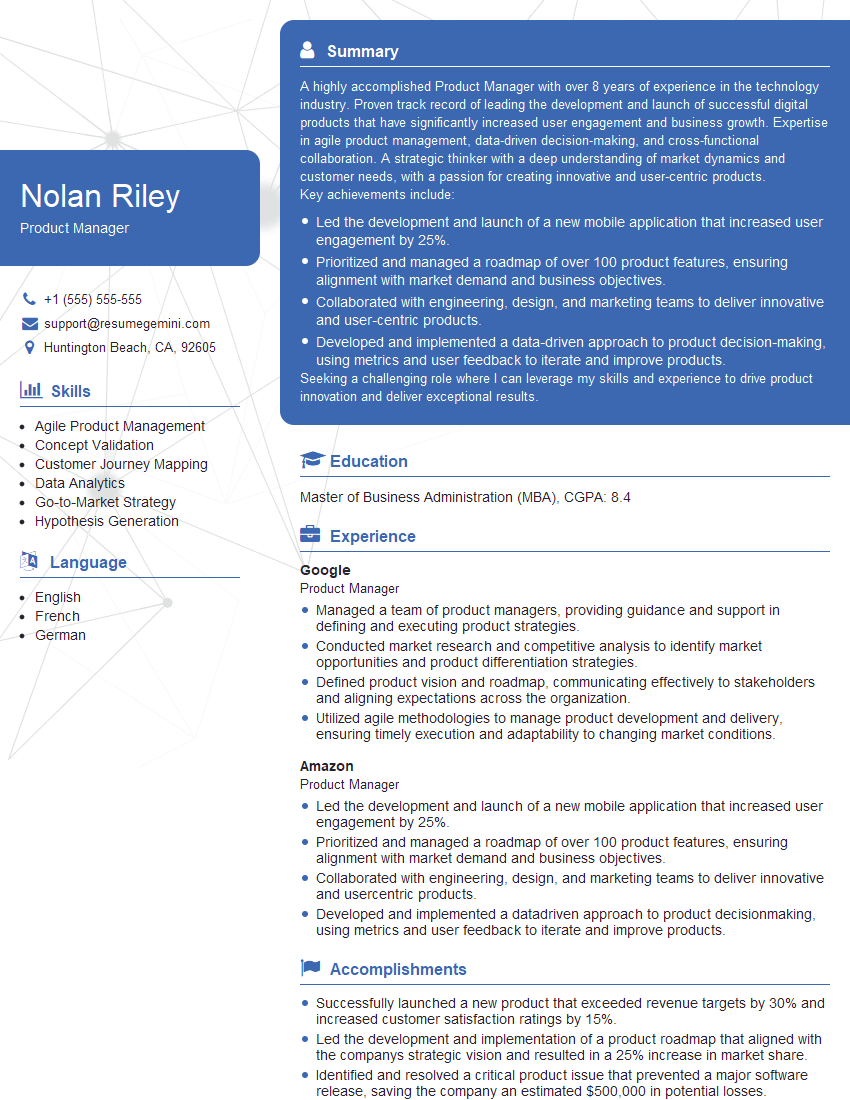
Product Manager Resume Sample
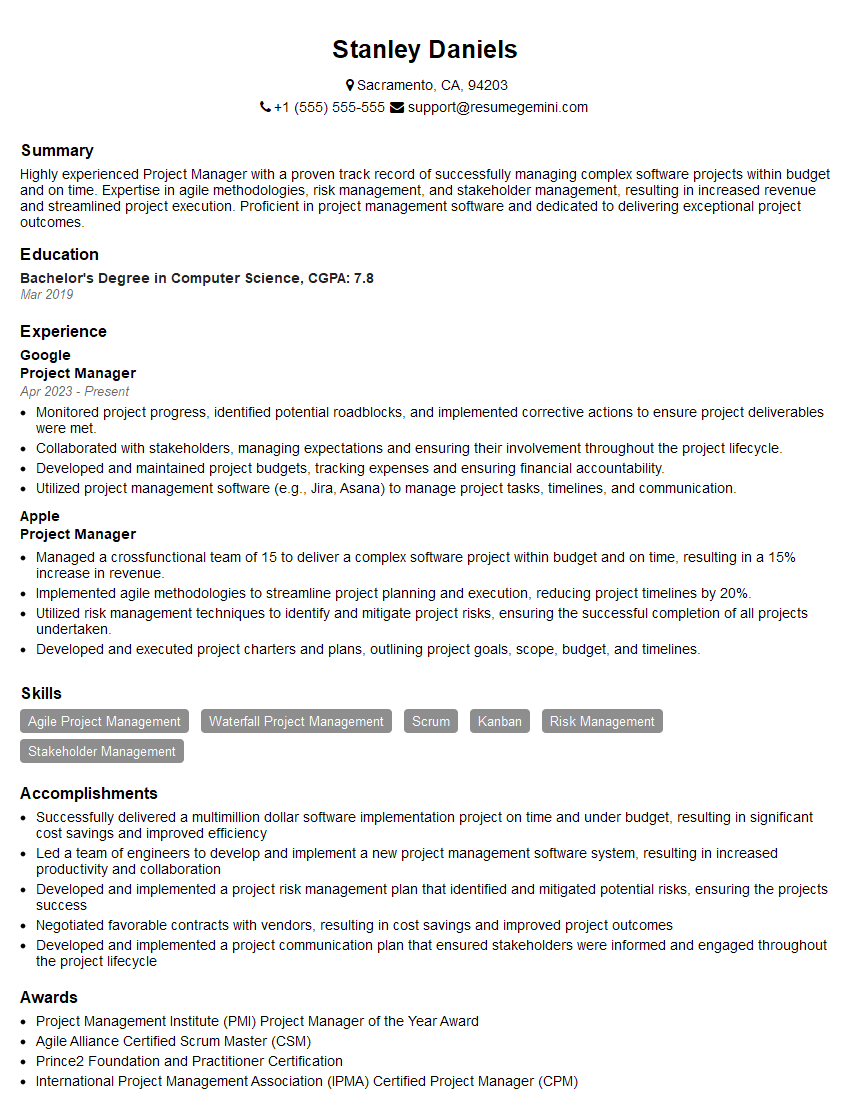
Project Manager Resume Sample
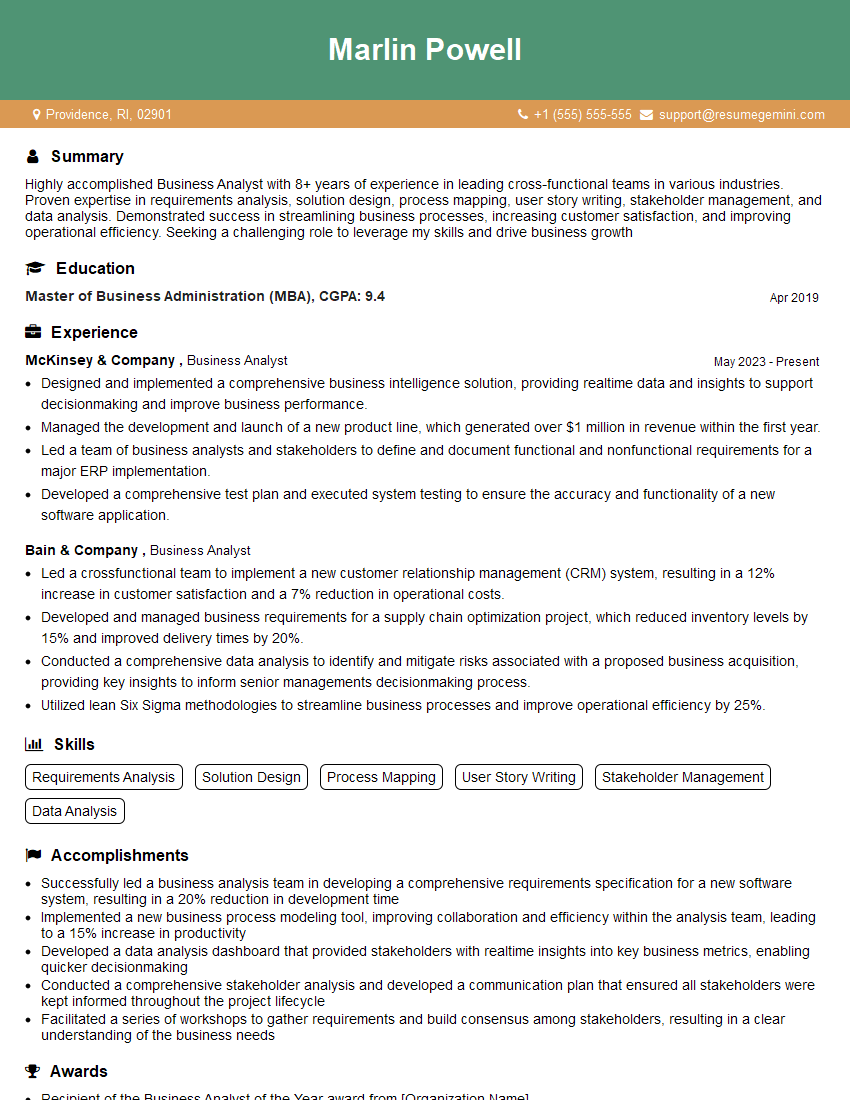
Business Analyst Resume Sample
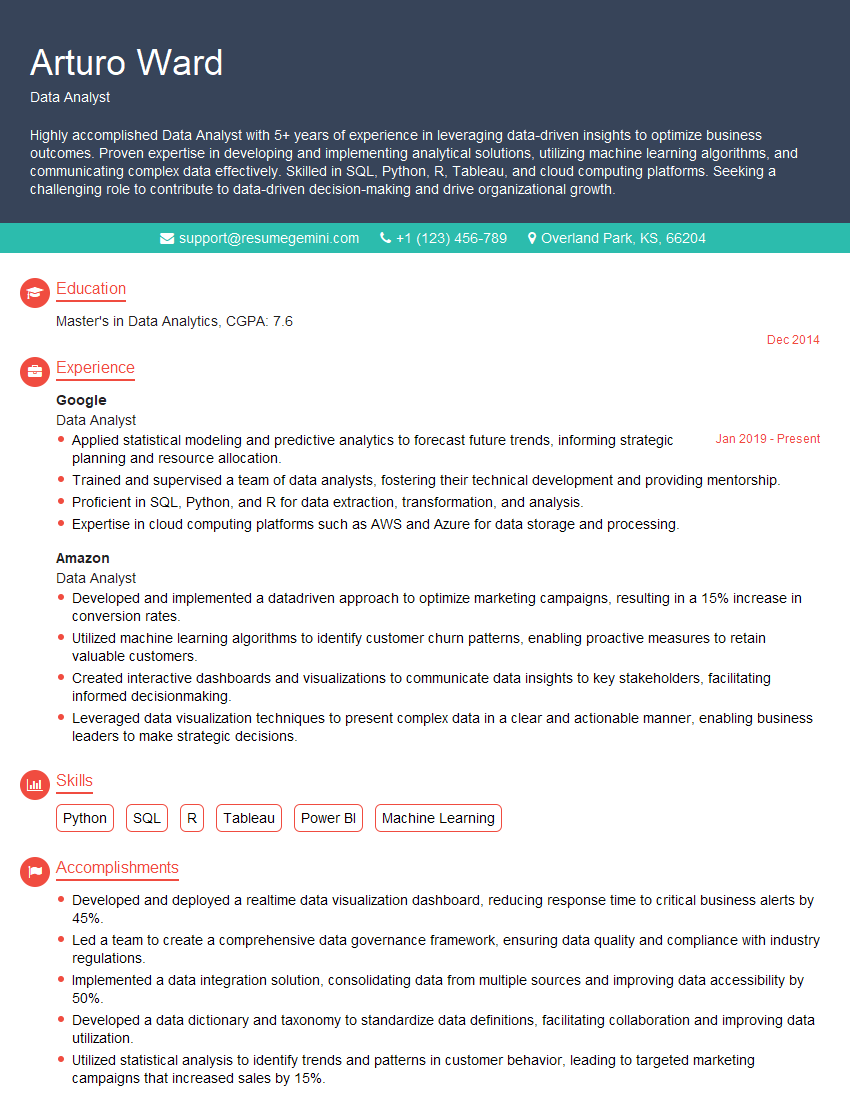
Data Analyst Resume Sample
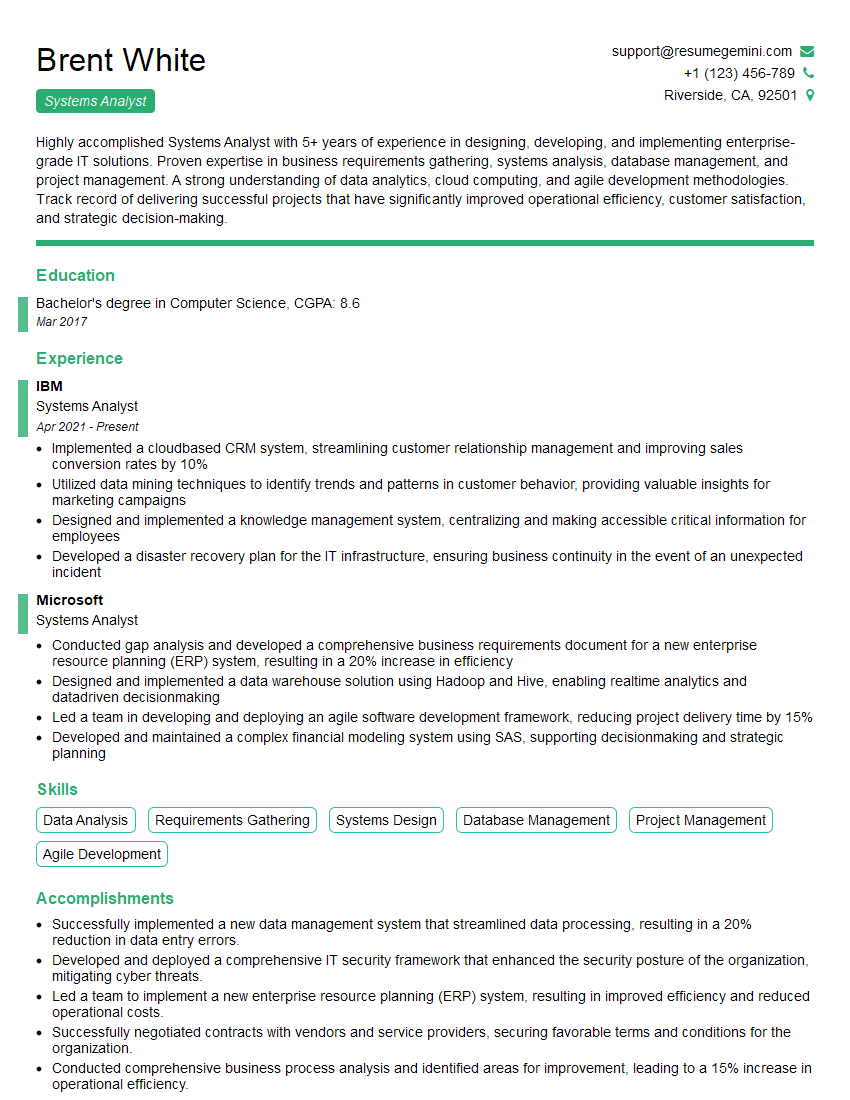
Systems Analyst Resume Sample
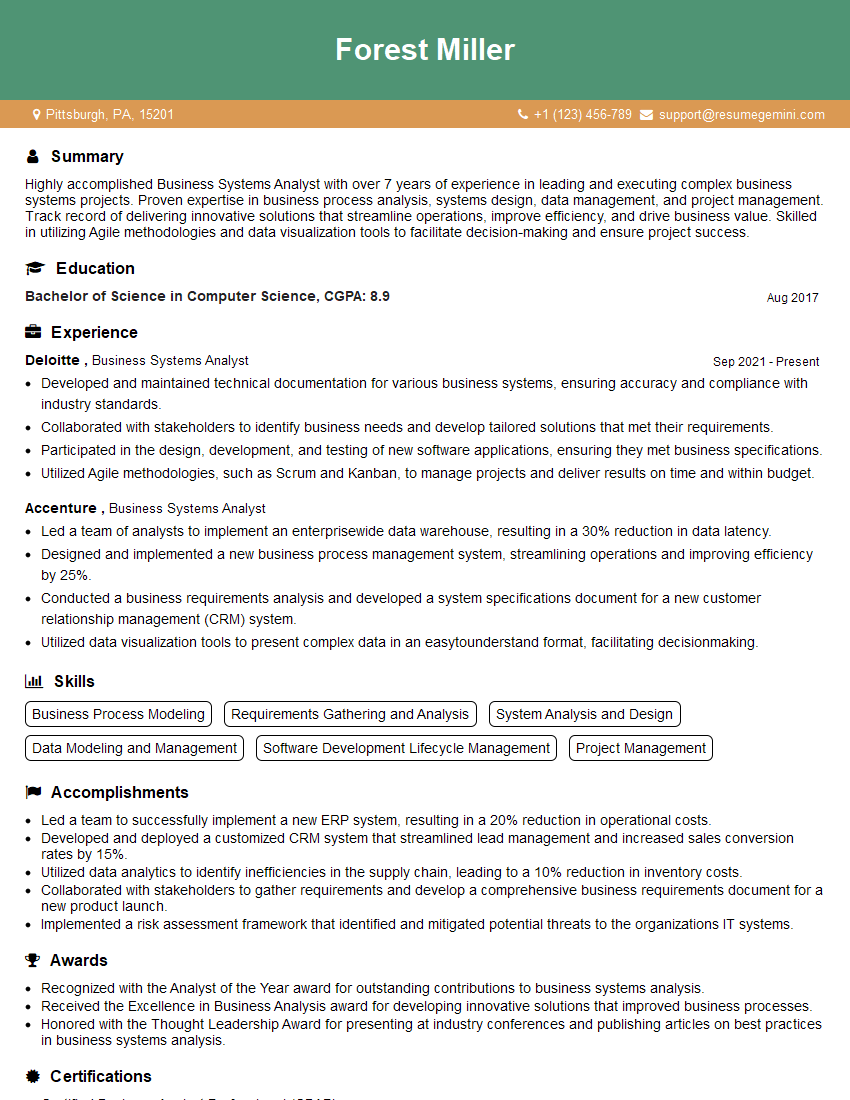
Business Systems Analyst Resume Sample
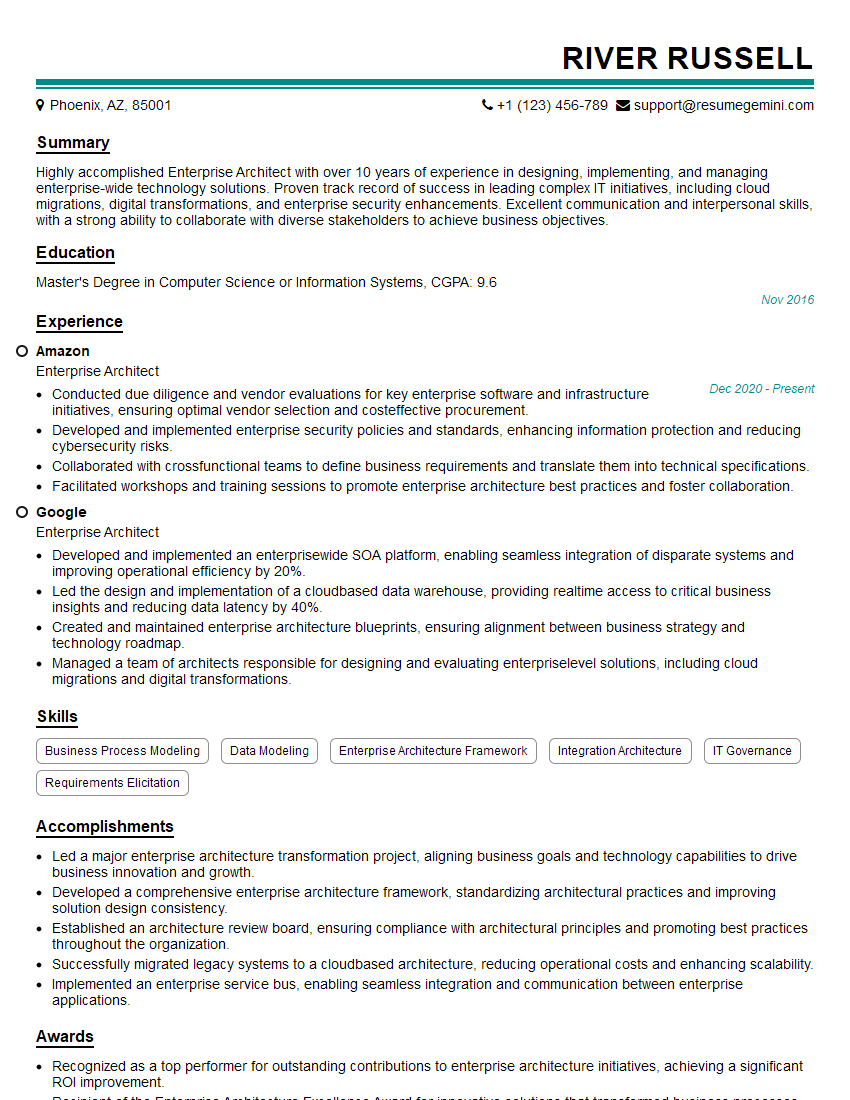
Enterprise Architect Resume Sample
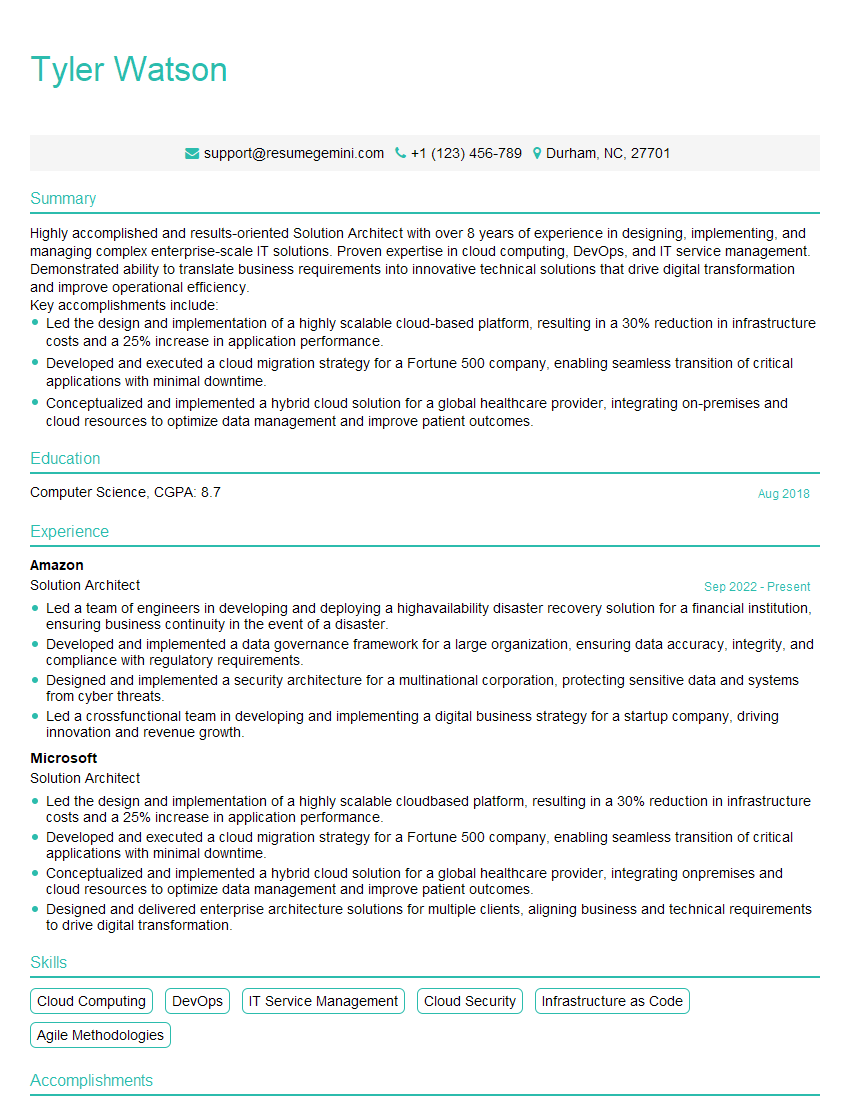
Solution Architect Resume Sample
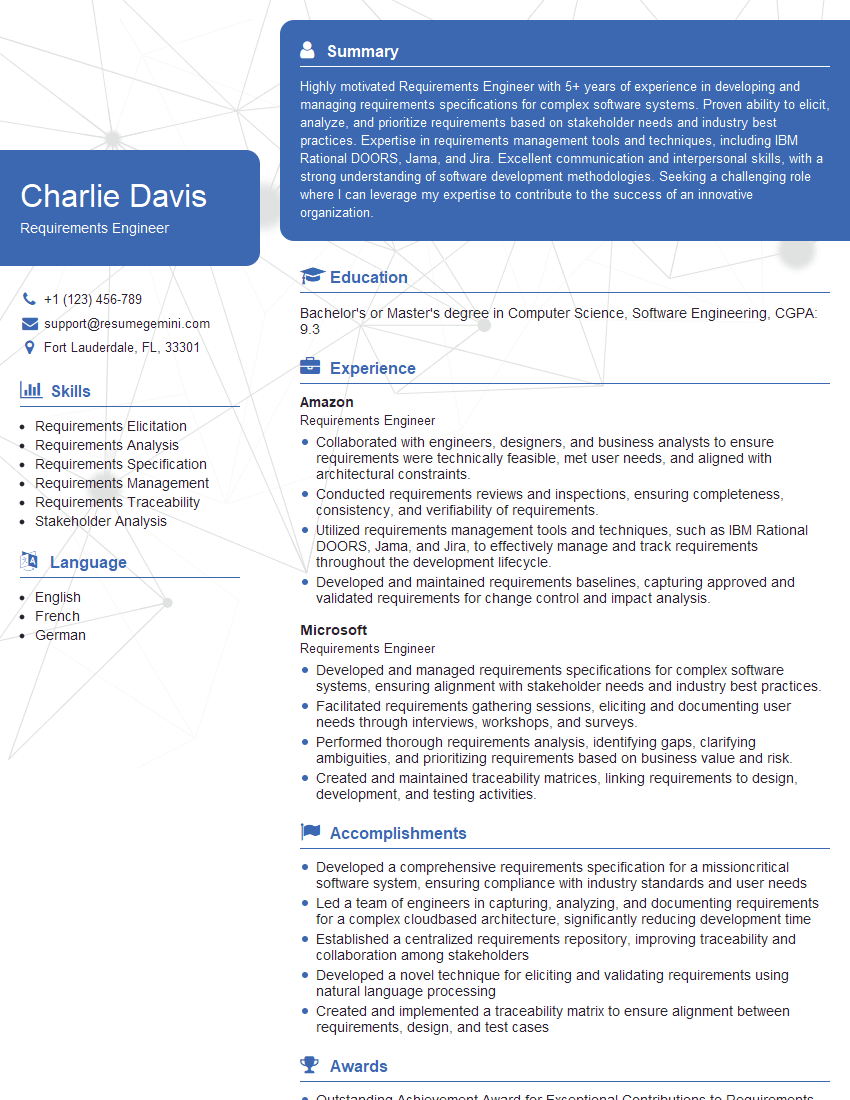
Requirements Engineer Resume Sample
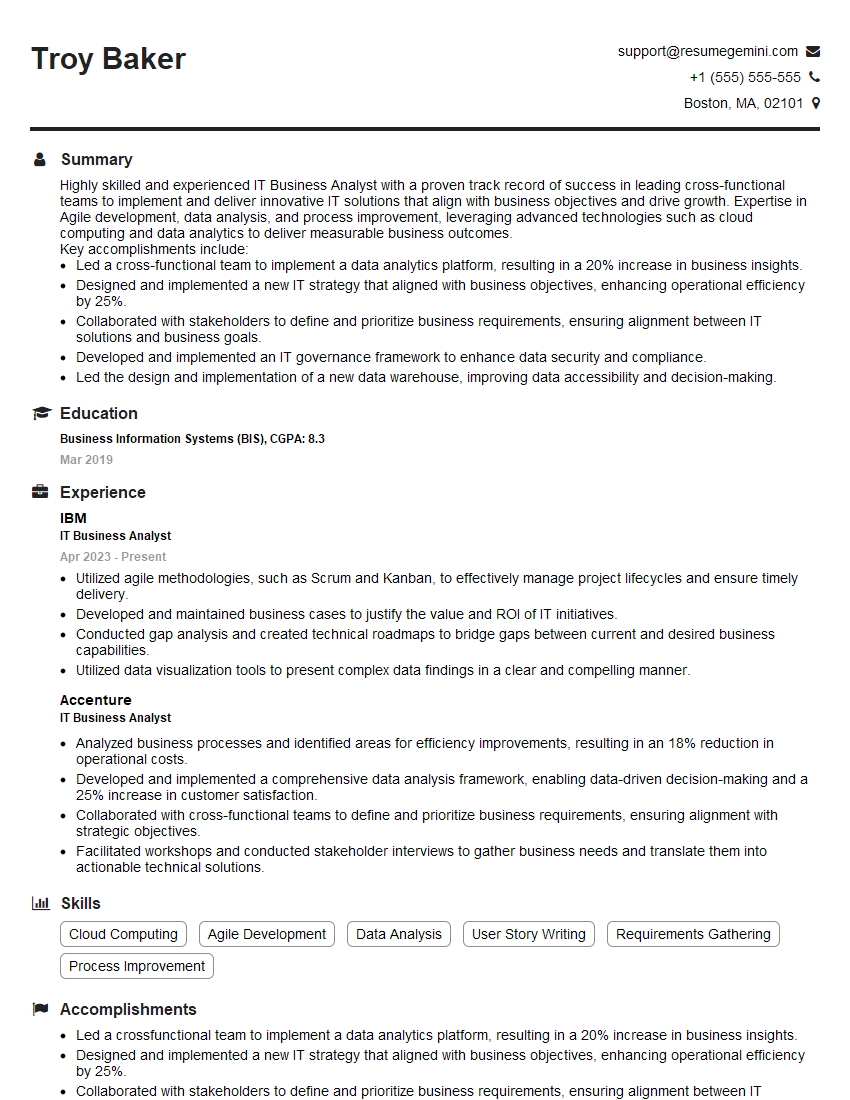
IT Business Analyst Resume Sample
Explore more articles
Users Rating of Our Blogs
Share Your Experience
We value your feedback! Please rate our content and share your thoughts (optional).
What Readers Say About Our Blog
Very informative content, great job.
good