Every successful interview starts with knowing what to expect. In this blog, we’ll take you through the top Customer Service and Relation Management interview questions, breaking them down with expert tips to help you deliver impactful answers. Step into your next interview fully prepared and ready to succeed.
Questions Asked in Customer Service and Relation Management Interview
Q 1. Describe your experience handling difficult customer interactions.
Handling difficult customer interactions requires a calm, empathetic, and solution-oriented approach. It’s about understanding the customer’s frustration, validating their feelings, and actively working towards a resolution. My strategy involves active listening, clarifying the issue, and focusing on finding common ground. I avoid getting defensive and instead concentrate on finding a mutually agreeable solution.
For example, I once dealt with a customer who was extremely upset about a delayed delivery. Instead of immediately apologizing (which can sometimes feel insincere), I first acknowledged their frustration: “I understand your disappointment; a delayed delivery is incredibly inconvenient.” I then actively listened to their concerns, clarified the reasons for the delay (a unforeseen logistical issue), and offered concrete solutions like expedited shipping or a partial refund. By focusing on understanding their perspective and offering practical solutions, I was able to de-escalate the situation and turn a negative experience into a more positive one.
Another example involves a customer with a complex technical issue. Instead of using technical jargon, I used simple language and asked clarifying questions to understand their problem step-by-step. I guided them through troubleshooting steps, patiently explaining each one, and offering support until we identified the solution. This demonstrates patience and a commitment to resolving their issue effectively, even with complex scenarios.
Q 2. How do you prioritize multiple customer requests simultaneously?
Prioritizing multiple customer requests involves a structured approach that balances urgency and importance. I typically use a combination of methods, including:
- Urgency/Importance Matrix: I categorize requests based on urgency (how quickly they need addressing) and importance (impact on the business or customer). Urgent and important requests get immediate attention, while less urgent tasks can be scheduled.
- Ticketing System: I leverage a robust ticketing system to track all requests, assign priorities, and monitor progress. This provides a clear overview of all pending tasks and allows for efficient task management.
- Time Management Techniques: Techniques like time blocking or the Pomodoro Technique help me dedicate focused periods to specific tasks, preventing burnout and ensuring all requests receive the attention they need.
For example, if I have a customer experiencing a critical system outage (urgent and important) and another requesting information about a less time-sensitive issue, I’d immediately address the outage. Once that’s resolved (or appropriately escalated), I would then handle the second request. This ensures that critical situations are handled promptly and no customer is left unattended for too long.
Q 3. What strategies do you use to build rapport with customers?
Building rapport with customers is crucial for effective customer service. It’s about creating a genuine connection and showing that you care about their needs. I use several strategies:
- Active Listening: Paying close attention to what the customer is saying, both verbally and nonverbally, shows that you value their input. I often summarize their concerns to ensure understanding and show that I’m actively listening.
- Empathy and Validation: Acknowledging and validating the customer’s feelings, even if I don’t necessarily agree with them, helps create trust and rapport. Phrases like, “I understand how frustrating this must be,” can go a long way.
- Personalization: When appropriate, using the customer’s name and tailoring my communication to their individual needs helps build a more personal connection. Remembering past interactions also strengthens the relationship.
- Positive Communication: Maintaining a positive and professional tone throughout the interaction, even in challenging situations, makes a significant difference. A smile in my voice (even over the phone) can have a positive impact.
For instance, if a customer is explaining a complex problem, instead of interrupting, I’d listen carefully, ask clarifying questions, and show genuine interest in understanding their situation. This approach makes them feel heard and valued, strengthening our connection.
Q 4. Explain your approach to resolving customer complaints.
My approach to resolving customer complaints is systematic and focuses on finding a fair and mutually acceptable solution. I follow a structured process:
- Listen and Empathize: I begin by actively listening to the customer’s complaint, acknowledging their frustration, and validating their feelings.
- Clarify the Issue: I ask clarifying questions to fully understand the nature and details of the complaint, ensuring no misunderstanding.
- Investigate and Gather Information: I investigate the issue, gathering necessary information from relevant systems or colleagues.
- Propose Solutions: I propose appropriate solutions, explaining the rationale behind each option. This might involve offering a refund, replacement, repair, or other form of compensation.
- Implement and Follow Up: I implement the agreed-upon solution and follow up with the customer to ensure their satisfaction and address any further concerns.
For example, if a customer complains about a faulty product, I wouldn’t simply offer a replacement immediately. I’d first gather information (order details, product specifics, photos of the defect), verify the issue, then propose a solution – in this case, a replacement or repair – explaining the steps involved and keeping the customer updated throughout the process.
Q 5. How do you handle situations where a customer is verbally abusive?
Handling verbally abusive customers requires a calm and professional demeanor, even when faced with unacceptable behavior. My approach is based on de-escalation and maintaining professionalism:
- Remain Calm and Professional: I avoid getting defensive or engaging in arguments. Maintaining a calm and respectful tone can help de-escalate the situation.
- Acknowledge Feelings: I acknowledge the customer’s anger and frustration, even if their behavior is inappropriate. Phrases like, “I understand you’re upset,” can help diffuse the situation.
- Set Boundaries: If the abuse continues, I firmly but respectfully set boundaries, explaining that I will not tolerate abusive language.
- Document the Incident: I thoroughly document the interaction, including the customer’s behavior and my response. This is crucial for future reference and potential escalation if necessary.
- Seek Assistance: If the situation cannot be de-escalated or becomes threatening, I seek assistance from a supervisor or security personnel.
For example, if a customer starts yelling and using abusive language, I wouldn’t respond in kind. I’d calmly state something like, “I understand you’re frustrated, but I won’t tolerate abusive language. Let’s try to discuss this calmly.” I would then try to guide the conversation towards a solution, but if the behavior persisted, I’d politely end the call and document the incident.
Q 6. Describe a time you went above and beyond for a customer.
I once went above and beyond for a customer who was struggling with a complex technical issue affecting their small business. They were on the verge of losing a significant amount of revenue due to this problem, and were feeling overwhelmed and stressed.
After several hours of troubleshooting, I still hadn’t found a solution. Instead of just closing the case, I volunteered to stay late, even though it was well past my working hours. I researched the issue extensively, consulted with colleagues, and ultimately found a solution. I guided the customer through the necessary steps, ensuring they were back online and operational.
The customer was incredibly grateful, and their positive feedback highlighted the value of going the extra mile. It reaffirmed my commitment to customer satisfaction and demonstrated the positive impact of exceeding expectations. This experience reinforced the importance of dedication and problem-solving skills in customer service.
Q 7. How do you identify and address customer needs proactively?
Proactive identification and addressing of customer needs involves anticipating potential issues and providing solutions before customers even raise concerns. This requires a combination of data analysis, customer understanding, and proactive communication.
- Data Analysis: Analyzing customer data (past interactions, purchase history, feedback) can identify trends and potential problems. For example, if a large number of customers are experiencing a specific issue, proactively addressing it through a communication or system update is beneficial.
- Customer Understanding: Understanding customer behavior and preferences allows for anticipatory service. This could involve offering relevant product recommendations or proactively contacting customers to address potential issues (e.g., upcoming software updates).
- Proactive Communication: Regularly communicating with customers (newsletters, updates, surveys) keeps them informed and builds trust. This also provides opportunities for feedback and identifying potential issues early on.
For instance, noticing a significant increase in returns for a particular product could indicate a problem with the product or its description. Proactively investigating the issue and then communicating a solution to existing customers (offering a replacement or discount) prevents further issues and enhances customer loyalty. Regular customer satisfaction surveys also provide invaluable feedback for proactive service improvements.
Q 8. How familiar are you with CRM software (e.g., Salesforce, HubSpot)?
I possess extensive experience with various CRM software platforms, including Salesforce and HubSpot. My proficiency extends beyond basic data entry; I’m adept at leveraging their functionalities for comprehensive customer relationship management. This includes contact management, lead nurturing, sales pipeline management, and reporting and analytics. In Salesforce, for example, I’m comfortable using features like Sales Cloud for opportunity tracking, Service Cloud for case management, and Marketing Cloud for targeted email campaigns. Similarly, with HubSpot, I understand the integration between the sales, marketing, and service hubs to provide a holistic view of the customer journey. I’m familiar with customizing dashboards to monitor key performance indicators (KPIs) and using reporting tools to identify trends and areas for improvement. My experience encompasses both implementing and optimizing CRM strategies within organizations.
Q 9. What metrics do you use to measure customer satisfaction?
Measuring customer satisfaction involves a multifaceted approach utilizing various metrics. Key metrics I consistently employ include:
- Customer Satisfaction (CSAT) Score: This is typically measured through post-interaction surveys asking customers to rate their satisfaction on a scale (e.g., 1-5 or 1-10). A high CSAT score indicates positive customer experiences.
- Net Promoter Score (NPS): This metric gauges customer loyalty by asking customers how likely they are to recommend the company to others. A higher NPS suggests stronger brand advocacy.
- Customer Effort Score (CES): This measures how easy it was for the customer to interact with the company to resolve their issue. Lower scores indicate smoother processes and greater customer ease.
- Average Resolution Time (ART): This measures the average time taken to resolve customer issues. Lower ART shows efficiency in handling customer queries.
- First Contact Resolution (FCR): This metric tracks the percentage of issues resolved on the first contact. High FCR rates suggest effective problem-solving skills and reduced customer frustration.
Beyond these core metrics, qualitative feedback through open-ended survey questions, social media monitoring, and customer reviews provides valuable contextual insights into customer sentiment and areas needing improvement. By analyzing these metrics collectively, I can gain a holistic understanding of customer satisfaction and identify areas needing immediate attention or long-term strategic improvements.
Q 10. How do you handle a situation where you cannot immediately resolve a customer’s issue?
When I cannot immediately resolve a customer’s issue, my approach prioritizes transparency, realistic expectations, and proactive communication. First, I acknowledge the issue, empathize with the customer’s frustration, and clearly explain why an immediate resolution isn’t possible (e.g., needing to consult another department, technical limitations, awaiting external resources). I then outline the next steps: I will investigate the problem, determine the resolution timeline, and keep the customer updated throughout the process. This may involve creating a support ticket, logging the issue in the CRM system, and providing the customer with a reference number for tracking purposes. Regular updates, even if it’s just to acknowledge ongoing efforts, maintain open communication and avoid leaving the customer feeling neglected. For example, if a software glitch requires a developer’s intervention, I’d explain the situation, provide an estimated timeframe for the fix, and follow up with an email summarizing the steps being taken. I also ensure the customer has multiple channels for contact (phone, email) for further questions.
Q 11. Describe your process for escalating a customer issue.
My escalation process is structured to ensure efficient and effective problem resolution. If I’m unable to resolve an issue within my scope of authority, I follow these steps:
- Document the issue thoroughly: I gather all relevant information, including customer details, issue description, steps taken, and any relevant screen captures or logs.
- Identify the appropriate escalation point: Based on the nature of the issue, I determine the appropriate team or individual (e.g., technical support, management, a specific department).
- Communicate the issue clearly and concisely: I present the documented information to the escalation point, ensuring clear communication of the issue, its impact on the customer, and the steps already taken.
- Maintain transparency with the customer: I keep the customer informed about the escalation process and estimated timelines for resolution.
- Follow up: After escalation, I follow up with both the escalated team and the customer to monitor progress and ensure the issue is resolved satisfactorily.
This structured approach ensures accountability and minimizes delays in resolving complex customer issues.
Q 12. How do you stay calm and professional under pressure?
Maintaining composure under pressure is crucial in customer service. My strategies include:
- Deep breaths and mindfulness: Taking a few deep breaths helps regulate my physiological response to stress, allowing me to respond rather than react.
- Active listening: Focusing on understanding the customer’s perspective helps de-escalate situations and prevents misunderstandings.
- Empathy and understanding: Recognizing the customer’s emotional state and responding with empathy helps build rapport and diffuse tension.
- Positive self-talk: Reminding myself of my skills and experience builds confidence and reinforces a positive mindset.
- Strategic pauses: Taking brief pauses before responding allows me to formulate a thoughtful and effective response.
By consistently practicing these techniques, I can effectively manage stress and maintain a professional demeanor even during challenging interactions.
Q 13. How do you handle conflicting priorities between customer needs and company policy?
Balancing customer needs and company policy requires a delicate approach prioritizing ethical and transparent communication. I begin by acknowledging both the customer’s needs and the relevant company policy. I then attempt to find a solution that addresses the customer’s concerns while adhering to company guidelines. If a complete compromise isn’t possible, I explain the limitations imposed by company policy clearly and empathetically. I might offer alternative solutions or explain the rationale behind the policy to foster understanding and build trust. For instance, if a customer requests a refund outside our standard policy, I might explore options like a partial refund, store credit, or expedited service on their next purchase to show good faith. Transparency and open communication are crucial to maintaining customer satisfaction while upholding company policy.
Q 14. What is your approach to conflict resolution?
My conflict resolution approach is based on active listening, empathy, and collaborative problem-solving. I begin by actively listening to both sides of the conflict, seeking to understand each party’s perspective without interrupting. I then paraphrase to confirm understanding, ensuring both parties feel heard and validated. Next, I collaboratively explore potential solutions, focusing on finding common ground and mutually acceptable outcomes. If necessary, I might suggest mediating between parties, focusing on the shared goal of resolution rather than assigning blame. Finally, I document the agreement reached and follow up to ensure the resolution is implemented effectively. The key is focusing on finding a solution that addresses the underlying issues rather than simply settling for a superficial fix. This ensures long-term satisfaction and prevents future conflicts.
Q 15. Describe a time you received negative feedback and how you responded.
Receiving negative feedback is an inevitable part of customer service. It’s crucial to view it not as a personal attack, but as valuable insight into areas for improvement. In one instance, a client expressed significant dissatisfaction with the lengthy turnaround time on a project. My initial response was to acknowledge their frustration and apologize for the delay. I didn’t get defensive; instead, I actively listened to their concerns, validating their feelings.
Next, I explained the reasons for the delay transparently – a confluence of unforeseen technical difficulties and a higher-than-anticipated workload. Crucially, I didn’t make excuses but instead outlined the steps taken to prevent similar situations in the future, such as implementing better project management tools and improved internal communication. I also offered a concrete solution, like expediting the remaining work and providing a discount on their next project. Following up with a thank-you note further reinforced our commitment to rectifying the situation and regaining their trust. The outcome was a satisfied customer who appreciated our proactive response and subsequent actions.
Career Expert Tips:
- Ace those interviews! Prepare effectively by reviewing the Top 50 Most Common Interview Questions on ResumeGemini.
- Navigate your job search with confidence! Explore a wide range of Career Tips on ResumeGemini. Learn about common challenges and recommendations to overcome them.
- Craft the perfect resume! Master the Art of Resume Writing with ResumeGemini’s guide. Showcase your unique qualifications and achievements effectively.
- Don’t miss out on holiday savings! Build your dream resume with ResumeGemini’s ATS optimized templates.
Q 16. How do you measure the success of a customer interaction?
Measuring the success of a customer interaction goes beyond simply resolving an immediate issue. It requires a holistic approach considering multiple metrics. Firstly, customer satisfaction (CSAT) is key, often measured through post-interaction surveys. A high CSAT score indicates a positive experience. Secondly, the efficiency of the interaction – how quickly and effectively the issue was resolved – matters. This can be tracked through average handling time (AHT) and first call resolution (FCR) rates. High FCR rates show fewer follow-up interactions are needed. Thirdly, the overall customer journey is crucial. Did the interaction strengthen their loyalty to the brand? This can be measured through retention rates and Net Promoter Score (NPS), which gauges the likelihood of a customer recommending your services. Finally, measuring the long-term impact of the interaction on the customer’s overall perception of your company is valuable. Analyzing trends and patterns in these metrics can help refine customer service strategies to continuously improve.
Q 17. How do you adapt your communication style to different customer personalities?
Adapting communication style to different customer personalities is paramount for effective customer service. Understanding various communication styles – such as assertive, passive, aggressive, and collaborative – is the first step. For example, a decisive and assertive customer might prefer concise, direct solutions, while a passive customer might need more reassurance and a slower, more empathetic approach.
I assess the customer’s personality during the initial interaction through their tone, language, and body language (if interacting via video or phone). For an assertive customer, I’ll be direct, providing clear solutions and sticking to the facts. With a passive customer, I’ll use active listening, validate their feelings, and offer more explanation and reassurance. For aggressive customers, I’ll maintain composure, acknowledge their frustration, and focus on de-escalation. A collaborative approach, where we work together to find solutions, is generally effective for most customers. Flexibility and empathy are crucial skills in tailoring interactions to meet each individual’s needs.
Q 18. Describe your experience with customer relationship management (CRM) systems.
I have extensive experience using CRM systems, including Salesforce, HubSpot, and Zoho CRM. I’m proficient in using these systems to manage customer data, track interactions, identify trends, and improve overall customer relationships. My experience encompasses data entry, report generation, lead management, and using CRM tools to personalize communication.
For example, I’ve used Salesforce to segment customers based on their purchase history and preferences, allowing for targeted marketing campaigns and personalized support. In another instance, I utilized HubSpot to track customer interactions across multiple channels, enabling a holistic view of the customer journey. This allowed us to identify areas where customer service could be improved and better anticipate future needs. Proficient CRM use significantly enhances customer service efficiency and effectiveness.
Q 19. How do you identify opportunities to improve customer service processes?
Identifying opportunities to improve customer service processes requires a multi-pronged approach. Firstly, regularly analyzing customer feedback, including surveys, reviews, and social media mentions, provides direct insights into pain points. Secondly, tracking key performance indicators (KPIs) such as CSAT, AHT, and FCR helps pinpoint areas needing attention. For example, consistently high AHT might indicate inefficient processes or inadequate training. Thirdly, observing customer service representatives in action through call monitoring or shadowing reveals workflow bottlenecks or opportunities for process improvement. Finally, engaging with customers directly through focus groups or one-on-one interviews provides qualitative data that may highlight issues not apparent in quantitative data. Using a combination of these methods allows for a comprehensive understanding of areas needing improvement, leading to more effective customer service processes.
Q 20. What are your strengths and weaknesses in customer service?
My strengths in customer service include my exceptional empathy and communication skills. I am highly adept at active listening and resolving conflicts effectively. I’m also organized and efficient, able to manage multiple customer interactions simultaneously while maintaining a professional and friendly demeanor. My ability to adapt my communication style to different personalities also allows me to build rapport with a wide range of customers.
One area for improvement is my technical proficiency in specific CRM systems – while I’m well-versed in many, deepening my expertise in newer or more specialized CRM platforms would be beneficial. To address this, I plan on actively seeking out online courses and workshops related to emerging CRM technologies. This proactive approach will ensure I remain at the forefront of customer service technologies and enhance my overall effectiveness.
Q 21. How do you use data to improve customer experience?
Data is crucial for enhancing customer experience. By analyzing customer data, we can gain insights into their preferences, behaviors, and pain points, leading to more personalized and efficient service. For example, analyzing website analytics can reveal which pages are most visited, which indicates popular products or areas of interest. This allows us to tailor website content and support resources to meet customer needs better. Similarly, call center data can highlight common issues or frequently asked questions, providing opportunities for improved training, knowledge base updates, and proactive service solutions. Analyzing customer feedback data can help identify trends, patterns, and areas for process improvement. This data-driven approach ensures that customer service is not only responsive but also proactive, anticipating needs and providing highly personalized support.
Q 22. Describe a time you had to deal with a frustrated customer.
Dealing with frustrated customers is a cornerstone of customer service. It requires a calm, empathetic approach focused on understanding their concerns and finding a resolution. One instance involved a client whose order was significantly delayed due to an unforeseen logistical issue with our shipping partner. The client was understandably furious, expressing their anger through several emails filled with harsh language.
My approach involved acknowledging their frustration without being defensive. I started by saying something like, “I understand your frustration, Mr. Smith, and I sincerely apologize for the delay in your order. This is not the level of service we aim to provide, and I’m truly sorry for the inconvenience.” I then explained the situation transparently, outlining the unexpected shipping complications and providing concrete steps being taken to rectify the issue. I offered several options, including expedited shipping at no extra cost or a full refund. He eventually opted for expedited shipping and while still upset, was significantly calmer, appreciating the transparency and the offered solutions. The key was active listening, empathy, and offering options for resolution. The situation ended positively, with the client receiving their order promptly and expressing a renewed sense of trust in our service following a follow-up email.
Q 23. How do you use empathy in your customer service approach?
Empathy is the cornerstone of effective customer service. It involves truly understanding and sharing the feelings of the customer, putting yourself in their shoes. It’s not just about saying “I understand,” but actually demonstrating that understanding. For example, if a customer is upset about a defective product, I wouldn’t just offer a replacement. I’d acknowledge the inconvenience it caused, perhaps asking, “I can imagine how frustrating it must be to receive a faulty product, especially after looking forward to using it.” This shows that I’m not just addressing the problem but also acknowledging their emotional state.
I utilize empathy by actively listening, paying close attention to both verbal and nonverbal cues. I reflect their feelings back to them to confirm my understanding (“It sounds like you’re feeling very disappointed…”). I also use open-ended questions to encourage them to express themselves fully, and I remain calm and patient even when faced with anger or frustration. This empathetic approach builds rapport, fosters trust, and ultimately leads to more positive interactions and resolutions.
Q 24. How do you stay up-to-date on industry best practices?
Staying current in customer service requires continuous learning. I utilize several methods to stay updated on industry best practices. This includes:
- Professional Development Courses: Regularly enrolling in online courses and webinars offered by platforms like Coursera, LinkedIn Learning, and industry-specific organizations on topics such as CRM software, customer communication strategies, and conflict resolution.
- Industry Publications and Blogs: I subscribe to relevant newsletters and follow leading blogs and journals dedicated to customer service, CRM, and related technologies to gain insights into emerging trends and innovative solutions.
- Conferences and Workshops: Attending industry conferences and workshops provides opportunities to network with professionals, learn from experts, and stay abreast of cutting-edge advancements.
- Professional Networking: Engaging in online communities and forums dedicated to customer service allows for collaboration and sharing of best practices with peers from other organizations.
By consistently employing these methods, I ensure that my knowledge and skills remain relevant and aligned with the latest industry standards.
Q 25. Describe your experience with different customer service channels (phone, email, chat).
I have extensive experience across various customer service channels.
- Phone: Phone interactions require strong communication skills, active listening, and the ability to build rapport quickly. I prioritize clear articulation, patience, and tailoring my communication style to the individual customer. I understand the importance of using a professional tone and actively listening, summarizing key points to ensure understanding.
- Email: Email communication allows for a more detailed and organized approach. I ensure my responses are clear, concise, and professional, using proper grammar and spelling. I acknowledge the customer’s email promptly, outlining the steps taken to address their concern and providing updates as needed.
- Chat: Live chat requires rapid response times and efficient communication. I utilize keyboard shortcuts and readily available information to resolve inquiries promptly. I maintain a friendly and professional tone throughout the conversation, leveraging chat features like canned responses when appropriate to maintain efficiency.
My proficiency in all three channels allows me to adapt to the customer’s preferred method of communication and provide consistent, high-quality support, regardless of the medium.
Q 26. How do you handle customer inquiries that are outside your area of expertise?
When encountering inquiries outside my expertise, transparency and efficiency are crucial. My first step is to acknowledge receipt of the inquiry and thank the customer for contacting us. I then explain that their question falls outside my immediate area of expertise but that I’ll connect them with the appropriate team member or resource. This maintains a positive interaction and avoids prolonged wait times or providing inaccurate information.
I then immediately escalate the issue, using internal communication tools (e.g., ticketing system, internal messaging platforms) to forward the inquiry to the relevant department or individual. I make sure to provide all necessary context to facilitate a timely and accurate response. I follow up with the customer to inform them of the escalation and provide an estimated timeframe for a response. This ensures the customer feels valued and informed throughout the entire process.
Q 27. How do you contribute to a positive team environment in a customer service setting?
Contributing to a positive team environment in customer service requires collaboration, mutual support, and a shared commitment to excellence. I actively participate in team meetings, offering suggestions and sharing my knowledge and experiences to support my colleagues. I’m proactive in helping colleagues who are facing challenging situations, providing assistance where needed and offering constructive feedback.
I always maintain a positive attitude and professional demeanor, creating a supportive and encouraging atmosphere. I celebrate team successes and recognize individual contributions, fostering a sense of camaraderie and shared accomplishment. I also believe in open communication and actively participate in team-building activities, fostering strong relationships with my colleagues.
Q 28. How would you improve customer satisfaction in your previous role?
In my previous role, I identified an opportunity to enhance customer satisfaction by improving our online knowledge base and FAQs. While we had a knowledge base, it was outdated, poorly organized, and difficult to navigate. This led to a high volume of repetitive inquiries. To address this, I proposed a multi-step improvement plan.
- Content Overhaul: We updated existing articles, added new ones addressing frequently asked questions, and ensured all information was accurate and up-to-date.
- Improved Search Functionality: We upgraded the search functionality to make it more intuitive and user-friendly, allowing customers to easily find the answers they needed.
- User-Friendly Design: The knowledge base was redesigned with improved navigation and a more visually appealing layout.
- Proactive Promotion: We implemented a strategy to proactively promote the knowledge base to customers via email signatures, website banners, and social media.
This multi-faceted approach resulted in a significant reduction in repetitive inquiries, freeing up our agents to handle more complex issues and leading to an overall increase in customer satisfaction, as measured by post-interaction surveys.
Key Topics to Learn for Customer Service and Relation Management Interview
- Understanding Customer Needs: Learn to actively listen, empathize, and accurately identify customer needs and pain points. This includes recognizing both verbal and nonverbal cues.
- Effective Communication Techniques: Master clear, concise, and professional communication, both written and verbal. Practice active listening and adapting your communication style to different customer personalities.
- Conflict Resolution and De-escalation: Develop strategies for handling difficult customers and resolving conflicts calmly and efficiently. Practice techniques for de-escalating tense situations and finding mutually agreeable solutions.
- Problem-Solving and Troubleshooting: Hone your problem-solving skills to quickly and effectively address customer issues. Develop a structured approach to troubleshooting and finding solutions, even in complex situations.
- CRM Software and Technology: Familiarize yourself with common CRM systems and their applications in managing customer relationships and tracking interactions. Practice navigating different CRM interfaces.
- Customer Relationship Lifecycle Management: Understand the different stages of the customer journey and how to nurture relationships at each stage. Learn how to identify opportunities for upselling and cross-selling appropriately.
- Data Analysis and Reporting: Learn how customer data can be used to improve service and identify trends. Understanding basic data analysis techniques is beneficial.
- Teamwork and Collaboration: Discuss how you collaborate with colleagues to provide seamless customer support and share knowledge effectively.
Next Steps
Mastering Customer Service and Relation Management is crucial for career advancement in today’s competitive job market. These skills are highly valued across various industries and directly contribute to increased efficiency, customer loyalty, and overall organizational success. To significantly increase your chances of landing your dream job, it’s essential to present yourself with a strong, ATS-friendly resume. ResumeGemini is a trusted resource to help you craft a professional and impactful resume that showcases your abilities effectively. ResumeGemini provides examples of resumes tailored to Customer Service and Relation Management roles to guide your resume building process. Invest the time to create a compelling resume that highlights your skills and experience – it’s your first impression with potential employers!
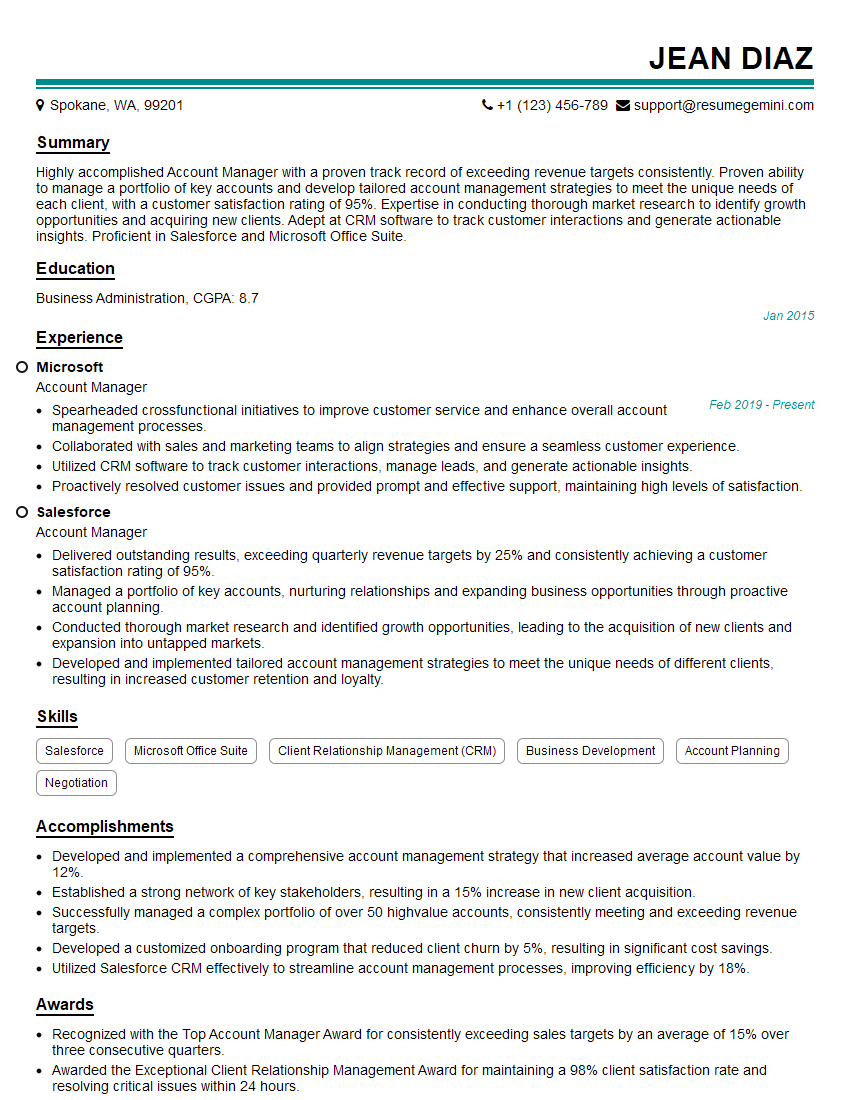
Account Manager Resume Sample

Customer Service Manager Resume Sample
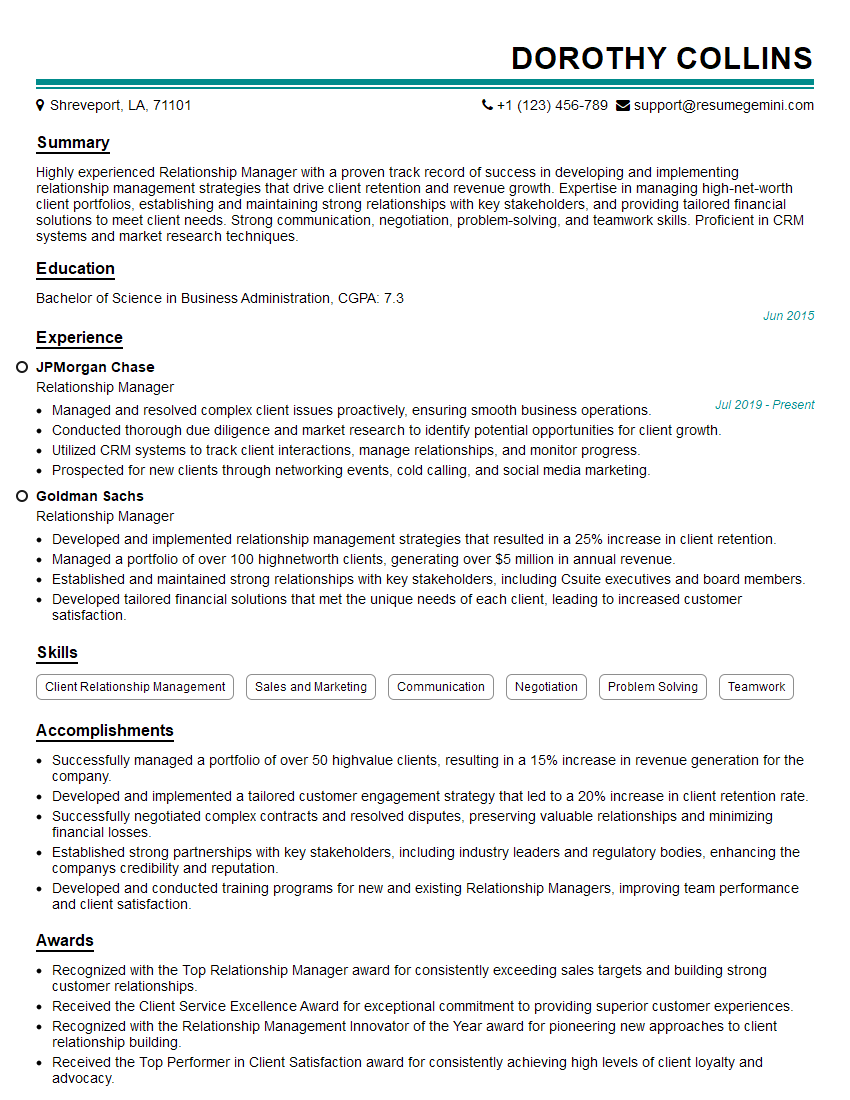
Relationship Manager Resume Sample
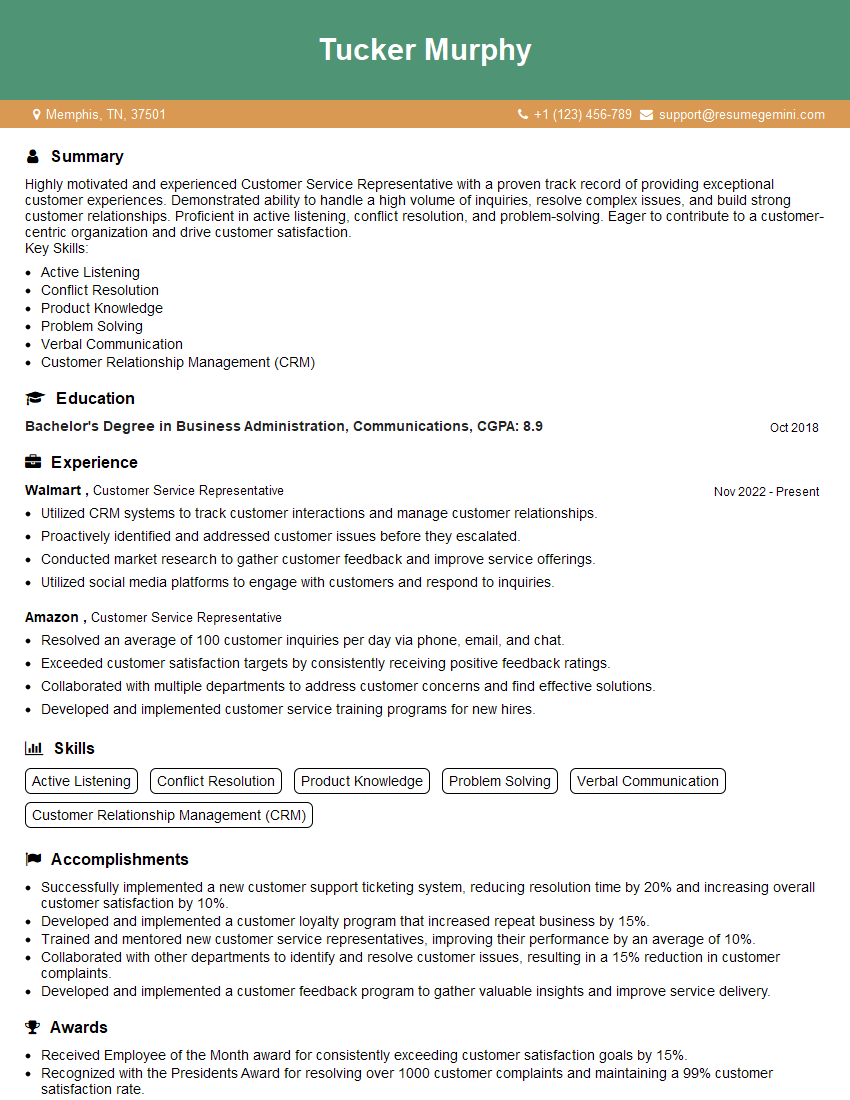
Customer Service Representative Resume Sample
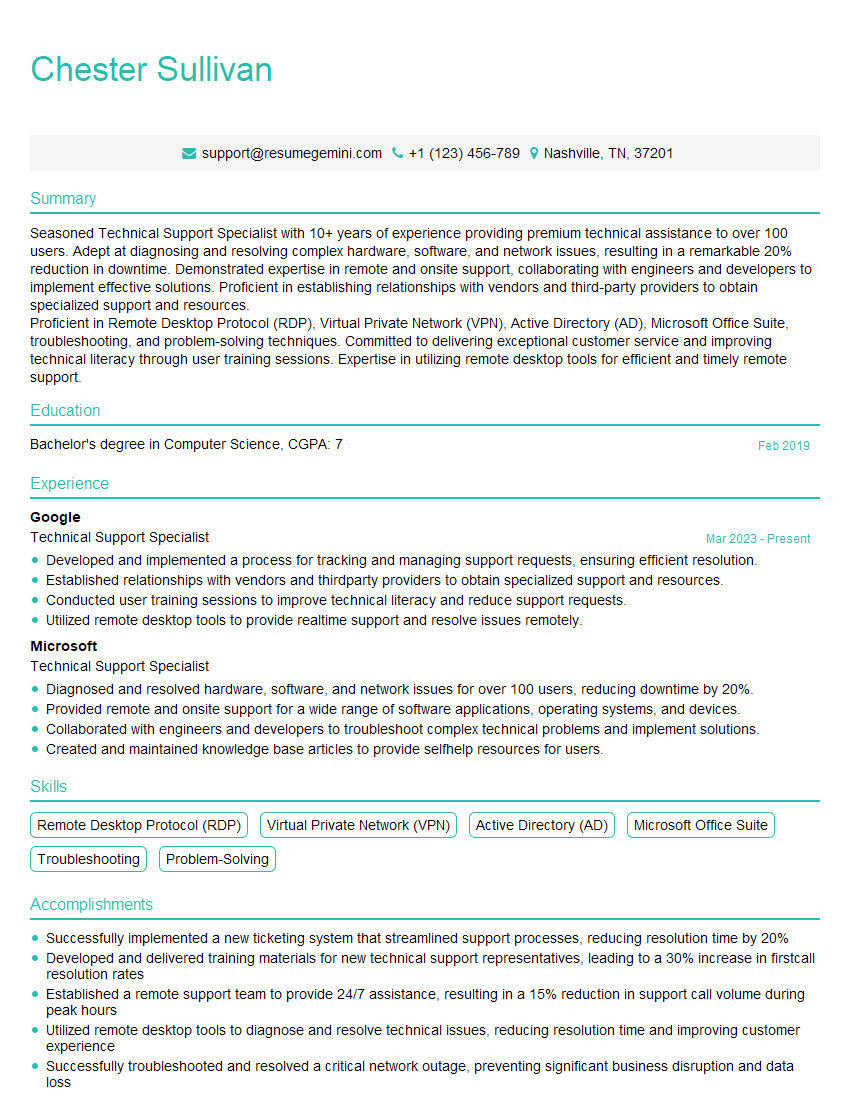
Technical Support Specialist Resume Sample
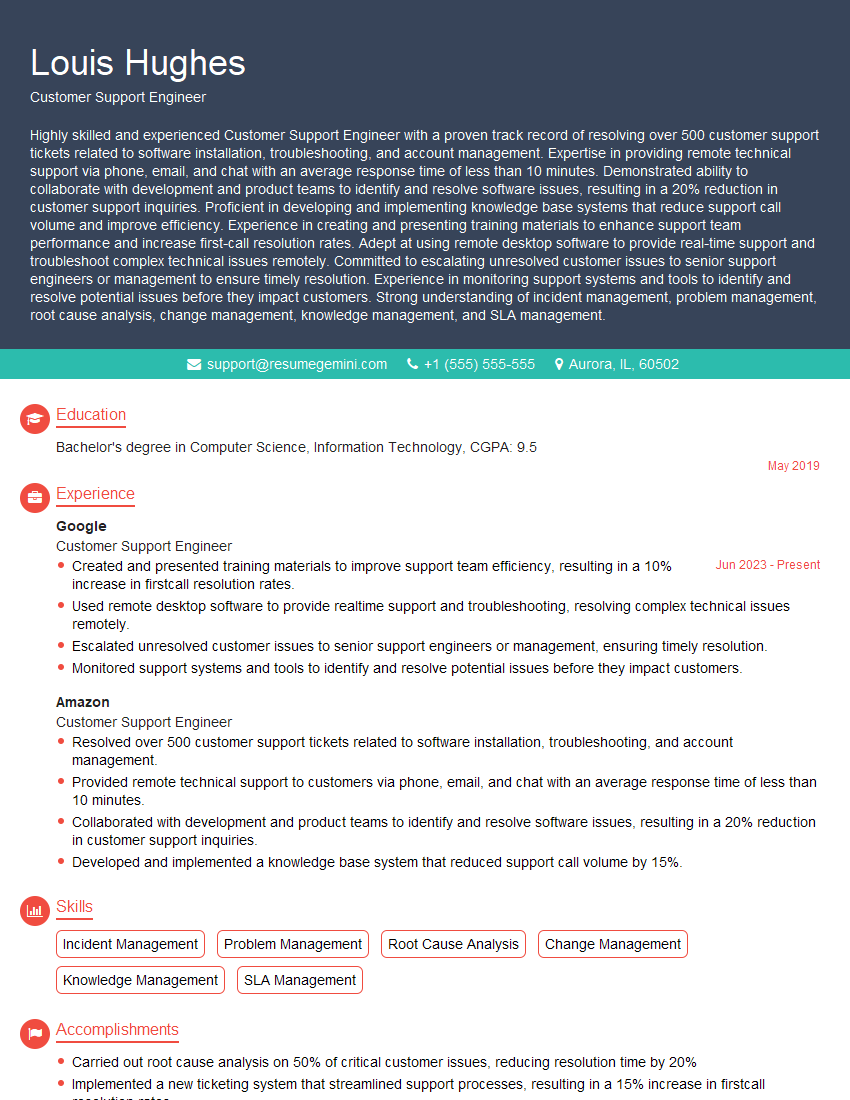
Customer Support Engineer Resume Sample
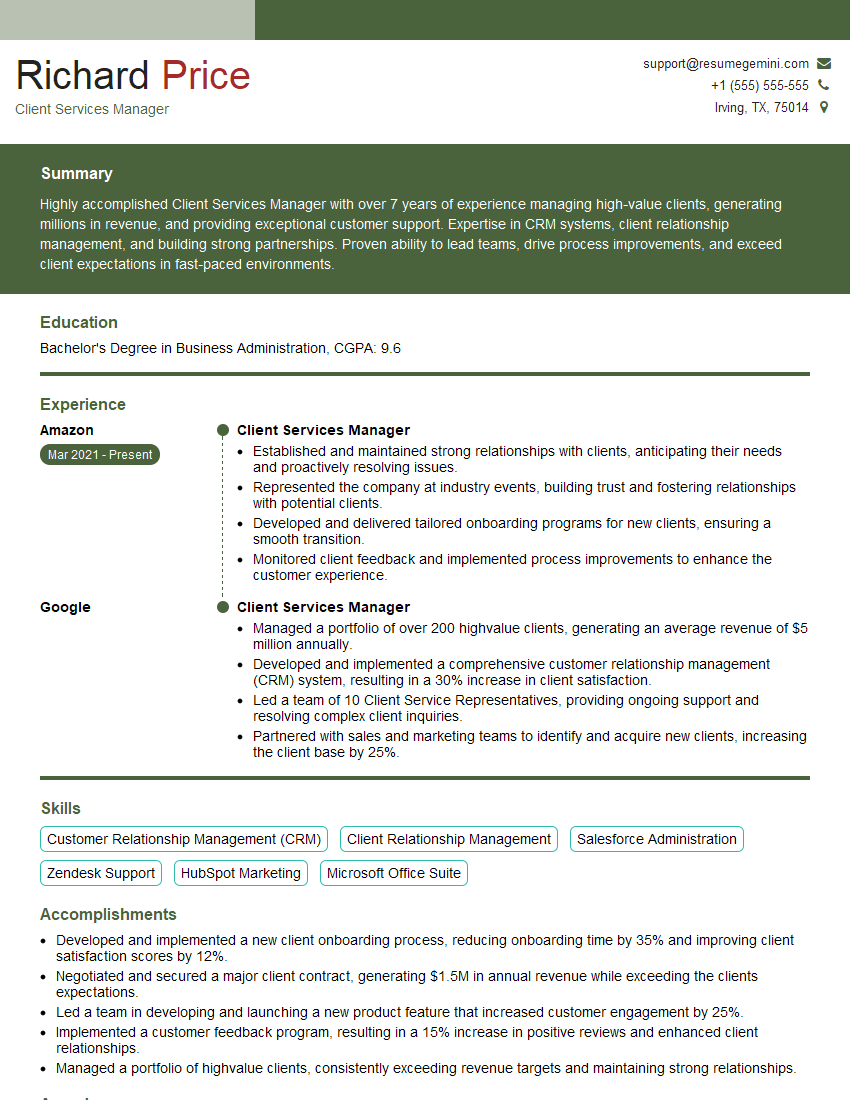
Client Services Manager Resume Sample
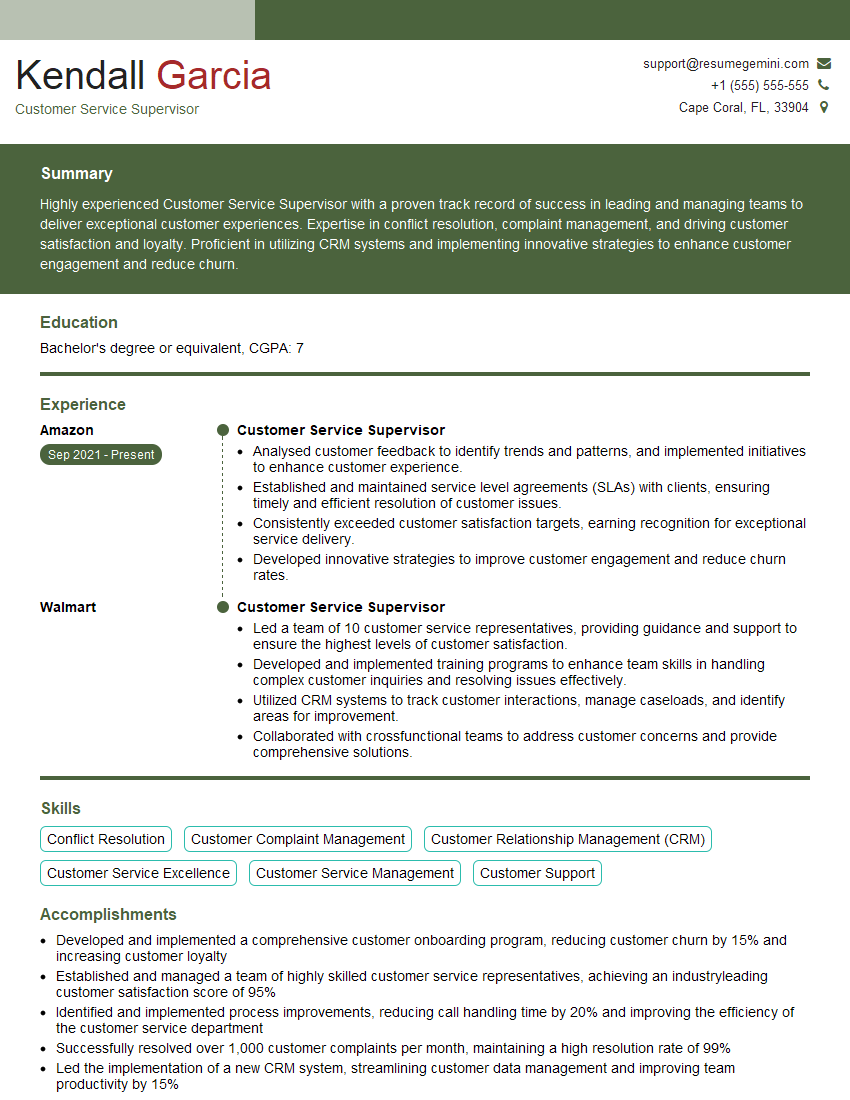
Customer Service Supervisor Resume Sample
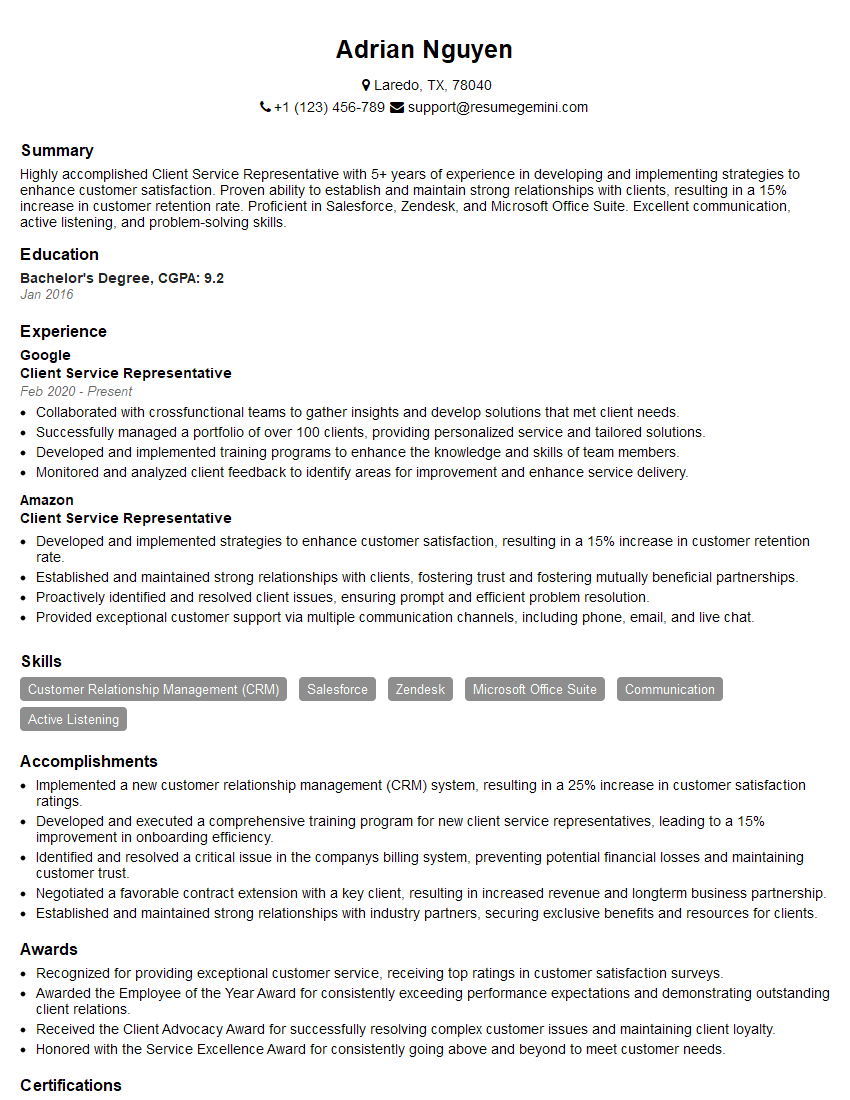
Client Service Representative Resume Sample
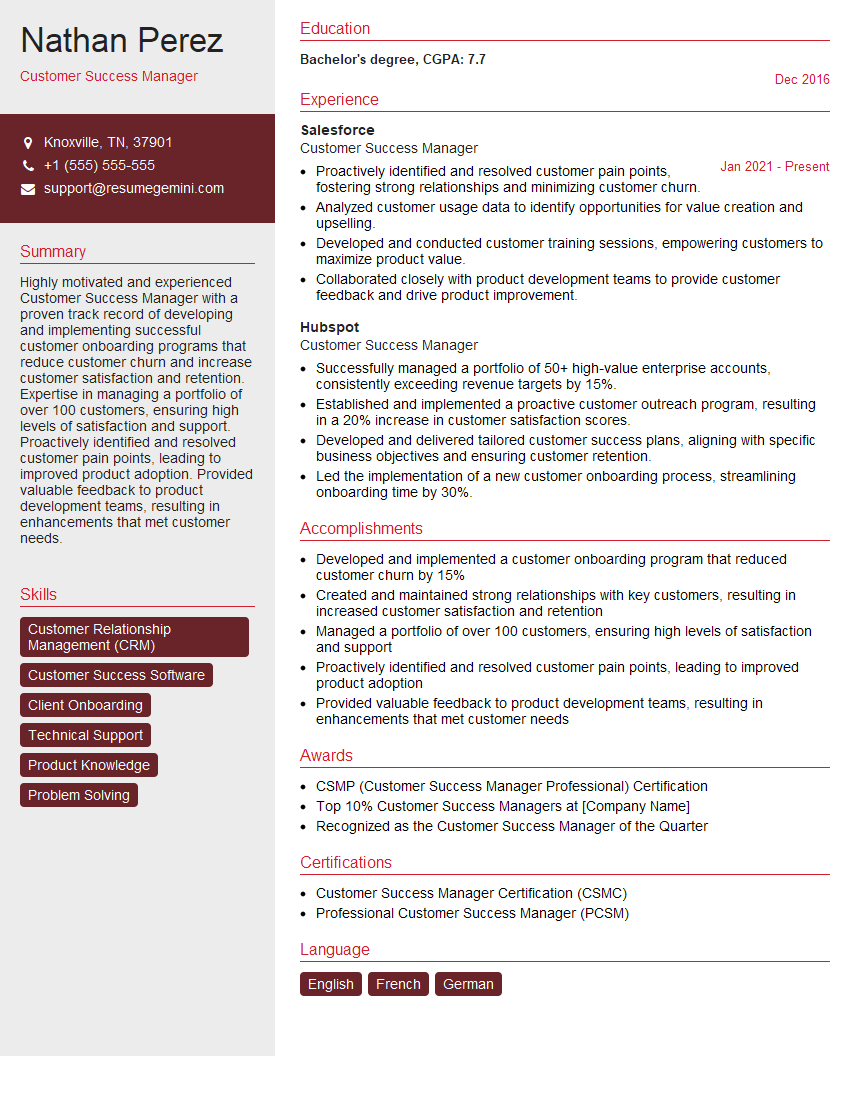
Customer Success Manager Resume Sample
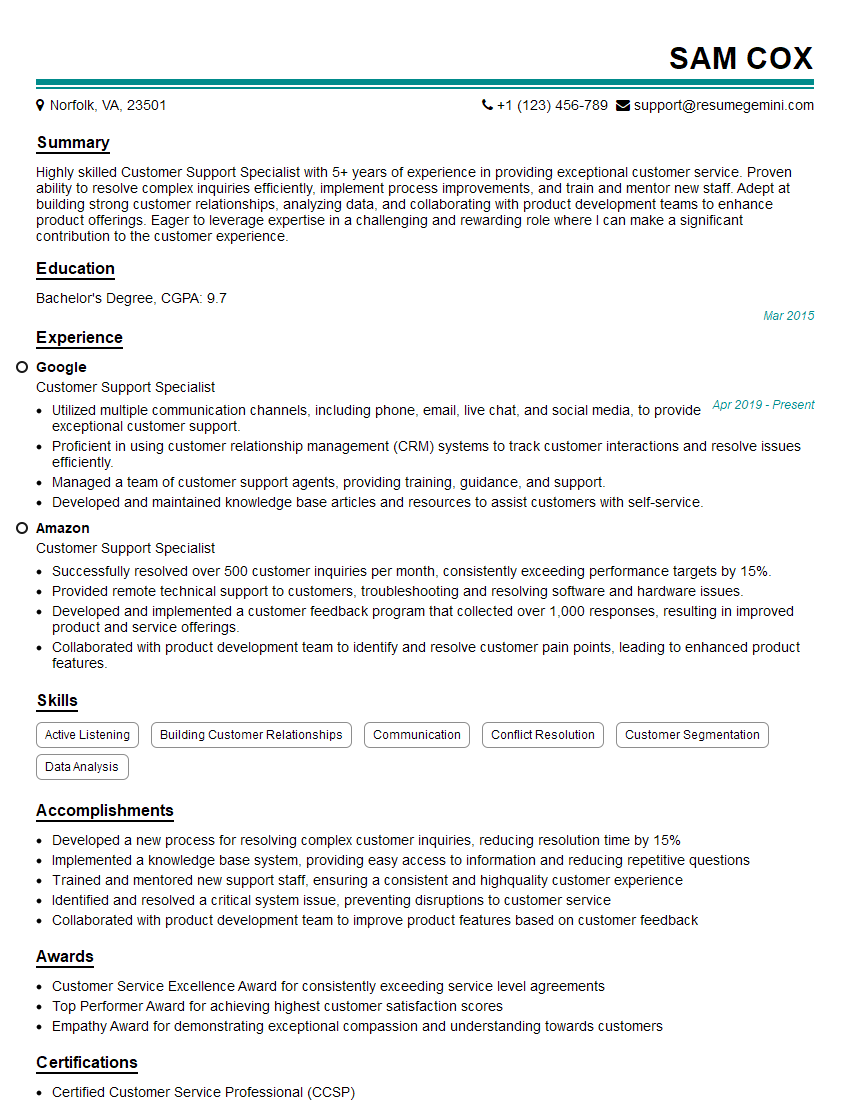
Customer Support Specialist Resume Sample
Explore more articles
Users Rating of Our Blogs
Share Your Experience
We value your feedback! Please rate our content and share your thoughts (optional).
What Readers Say About Our Blog
Very informative content, great job.
good