Cracking a skill-specific interview, like one for Cyber Warfare Planning, requires understanding the nuances of the role. In this blog, we present the questions you’re most likely to encounter, along with insights into how to answer them effectively. Let’s ensure you’re ready to make a strong impression.
Questions Asked in Cyber Warfare Planning Interview
Q 1. Explain the difference between offensive and defensive cyber warfare.
Offensive and defensive cyber warfare are two sides of the same coin, representing opposing strategies in the digital battlefield. Offensive cyber warfare aims to disrupt, damage, or destroy an adversary’s systems or data. Think of it as a strategic attack, utilizing techniques like malware deployment, denial-of-service attacks, or data breaches to achieve specific objectives. Defensive cyber warfare, on the other hand, focuses on protecting one’s own systems and data from attack. This involves measures such as intrusion detection, vulnerability management, incident response planning, and the implementation of strong security protocols.
Imagine a war between two nations. Offensive cyber warfare is like launching a missile strike to cripple an enemy’s infrastructure, whereas defensive cyber warfare is like building and maintaining robust air defenses to protect your own territory.
Q 2. Describe the stages of a typical cyber warfare operation.
A typical cyber warfare operation usually unfolds in several stages. First comes planning and intelligence gathering, where the target is identified, their vulnerabilities are assessed, and the desired outcome is defined. This stage is crucial for success; poor intelligence can lead to wasted resources and failed operations. Next is the weaponization phase, where tools and techniques are selected and prepared for deployment. This might involve developing custom malware or exploiting known vulnerabilities.
The delivery phase involves the actual infiltration of the target system, often using techniques like phishing emails, compromised websites, or exploiting software vulnerabilities. Then comes exploitation – accessing and manipulating data or systems within the target environment. The final phase is exfiltration, where stolen data or compromised systems are secured by the attacker, followed by cleanup, ensuring no trace is left behind to hinder attribution or future operations. This last phase is often overlooked but can be critical in preventing detection and future retaliation. Finally, the assessment phase determines if the objectives were achieved.
Q 3. What are the key components of a robust cyber warfare defense strategy?
A robust cyber warfare defense strategy relies on several key components. Vulnerability management is paramount – regularly scanning for and patching known vulnerabilities is crucial. Intrusion detection and prevention systems (IDPS) act as the first line of defense, monitoring network traffic for malicious activity. A comprehensive incident response plan is essential; this plan outlines the steps to take in the event of a cyberattack, minimizing damage and enabling swift recovery.
Security awareness training for all personnel is vital, as human error remains a major vulnerability. Strong access control measures, including robust authentication and authorization protocols, limit unauthorized access. Finally, data backup and recovery procedures ensure business continuity even if systems are compromised. Regular security audits and penetration testing allow for continuous improvement and identification of weaknesses before an attacker can exploit them.
Q 4. How do you assess the vulnerabilities of a target system or network?
Assessing the vulnerabilities of a target system or network requires a multifaceted approach. Vulnerability scanning tools automate the process of identifying known weaknesses, analyzing software and configurations for flaws. Penetration testing, often involving simulated attacks, identifies exploitable vulnerabilities that automated scanners might miss. This often involves ethical hackers trying various methods to break into a system.
Social engineering techniques can assess human vulnerabilities, identifying weak links within an organization’s security posture. Analyzing public information, such as organizational charts and press releases, provides valuable context and reveals potential weaknesses. Combining these methods – technical and social – provides a comprehensive understanding of the target’s vulnerabilities.
Imagine trying to break into a house. You would start by checking doors and windows (vulnerability scanning), then try picking locks or finding weaknesses in the structure (penetration testing). You might even try befriending the occupants to gain their trust (social engineering) to get information.
Q 5. What are the ethical considerations in cyber warfare planning?
Ethical considerations in cyber warfare planning are paramount. The principle of proportionality dictates that the response to an attack should be commensurate with the initial threat; excessive force is unacceptable. Distinction is also critical – attacks should target only military or government systems, avoiding civilian infrastructure. Military necessity justifies offensive actions only when they are essential to achieving a legitimate military objective.
International law, specifically the Geneva Conventions, provides a framework for ethical conduct in conflict, even in the digital realm, although interpretation and application remain challenging. Adherence to these principles ensures that cyber warfare operations are conducted responsibly and ethically, minimizing collateral damage and upholding humanitarian values.
Q 6. Explain the concept of attribution in cyber warfare.
Attribution in cyber warfare refers to the process of identifying the perpetrator of a cyberattack. It’s a complex challenge, as attackers often employ techniques to mask their identity and location. Digital forensics plays a crucial role, examining logs, network traffic, and malware samples to uncover clues about the attacker’s infrastructure and methods.
Intelligence gathering and analysis from various sources can help connect the dots and build a case. However, even with strong evidence, definitively attributing an attack to a specific actor can be difficult, particularly when nation-state actors are involved. A lack of clarity on attribution can hinder effective response and escalation of conflict.
Q 7. How do you prioritize targets in a cyber warfare campaign?
Prioritizing targets in a cyber warfare campaign involves a careful assessment of several factors. Strategic value is paramount – targeting systems that inflict maximum damage on the adversary’s capabilities is crucial. Vulnerability is another key factor; targets with known vulnerabilities are more easily compromised. Feasibility assesses the likelihood of success, considering the resources and time required. Risk includes potential consequences of failure or unintended collateral damage.
A cost-benefit analysis should weigh the potential gains against the resources and risks involved. This might involve using a scoring system where each factor (strategic value, vulnerability, etc.) receives a numerical weight and ranking, allowing for the objective ranking of targets.
Q 8. What are the different types of cyber weapons and their effectiveness?
Cyber weapons are tools used to attack computer systems and networks. They range in sophistication and impact, from simple malware to highly complex, targeted attacks. Their effectiveness depends on several factors, including the target’s security posture, the weapon’s design, and the attacker’s skill.
- Malware: This encompasses viruses, worms, Trojans, ransomware, and spyware. Ransomware, for instance, encrypts data and demands payment for its release, crippling businesses. Its effectiveness is directly related to the victim’s lack of backups and patching.
- Exploits: These leverage vulnerabilities in software or hardware to gain unauthorized access. Zero-day exploits, targeting unknown vulnerabilities, are particularly effective because they haven’t been patched.
- Denial-of-Service (DoS) attacks: These flood a system with traffic, rendering it unavailable. Distributed Denial-of-Service (DDoS) attacks, utilizing a botnet, can be devastatingly effective, taking down entire websites or services. Effectiveness here depends on the scale of the attack and the target’s ability to mitigate the flood.
- Advanced Persistent Threats (APTs): These are highly sophisticated, long-term attacks often sponsored by nation-states. They often involve multiple stages, sophisticated evasion techniques, and a goal beyond simple disruption. Their effectiveness hinges on stealth and long-term access.
- Logic bombs: These are pieces of code designed to trigger a destructive event at a specific time or under certain conditions, leading to data loss or system failure. Their effectiveness depends on successful deployment and the ability to remain undetected until activation.
The effectiveness of any cyber weapon is a complex interplay of technical capabilities and human factors. A highly sophisticated weapon can be rendered useless by strong security practices, while a simple attack can be devastating if the target is vulnerable.
Q 9. How do you measure the success of a cyber warfare operation?
Measuring the success of a cyber warfare operation is crucial and depends heavily on the operation’s objectives. It’s not simply about causing damage; it’s about achieving specific, measurable goals within a defined timeframe.
- Data Exfiltration: If the goal was to steal data, success is measured by the volume and sensitivity of the data obtained. We might use metrics like the number of records stolen or the impact of the stolen data on the target.
- System Disruption: For operations aimed at disruption, success is measured by the duration and severity of the outage. Downtime, the number of affected users, and the financial impact are key metrics.
- Intelligence Gathering: For intelligence operations, success depends on the quality and relevance of the information gathered. Metrics include the accuracy of the intelligence and its value to the intelligence gathering entity.
- Attribution: While difficult, successfully attributing an attack to a specific actor is also a critical measure of success. This could significantly impact future strategic decisions.
- Maintaining Operational Security (OPSEC): A successful cyber operation also includes avoiding detection and maintaining OPSEC. This success is measured by the absence of any breach in security protocols.
A thorough post-operation analysis, including reviewing logs, network traffic, and other evidence, is vital for evaluating success, identifying weaknesses, and informing future operations. This includes both quantitative and qualitative measures, capturing both tangible outcomes and strategic impact.
Q 10. Describe the role of intelligence gathering in cyber warfare planning.
Intelligence gathering is the cornerstone of effective cyber warfare planning. It provides the crucial information needed to identify vulnerabilities, select targets, develop strategies, and assess risks.
- Target Identification and Profiling: Intelligence helps pinpoint critical infrastructure, systems, and individuals of strategic importance. Profiling reveals their security postures, defenses, and potential vulnerabilities.
- Vulnerability Assessment: Intelligence identifies and assesses known and unknown vulnerabilities in target systems. This includes open-source intelligence (OSINT), technical intelligence (SIGINT), and human intelligence (HUMINT).
- Threat Landscape Analysis: Understanding the broader cyber threat landscape allows planners to anticipate potential countermeasures and adapt their strategies accordingly. This informs the selection of appropriate cyber weapons and techniques.
- Risk Assessment: Gathering intelligence helps assess the risks and potential consequences of a cyber operation. This includes the likelihood of success, the potential for collateral damage, and the possible responses from the target.
- Operational Planning: The intelligence collected informs the development of detailed operational plans, including the selection of tools, techniques, and procedures (TTPs), and timelines.
Imagine planning a military operation without reconnaissance – it would be reckless. Similarly, cyber warfare planning requires comprehensive intelligence to ensure effectiveness, minimize risks, and maximize the chances of success. Different types of intelligence can be integrated into a structured and organized process that informs the complete planning cycle of a cyber operation.
Q 11. What are the legal and regulatory frameworks governing cyber warfare?
The legal and regulatory frameworks governing cyber warfare are complex and evolving. There’s no single, universally accepted treaty specifically addressing cyber warfare, making it a gray area of international law.
- International Humanitarian Law (IHL): While not explicitly mentioning cyberspace, IHL principles like proportionality and distinction apply. Attacks must not cause excessive harm compared to the military advantage gained, and they must distinguish between combatants and civilians. This leads to significant challenges in the application to cyber warfare.
- International Law on the Use of Force: This establishes rules governing the initiation of armed conflict, which can be challenging to apply in cyberspace, with the lines between peacetime and wartime often blurred.
- National Laws: Individual countries have their own laws addressing cybercrime and computer security, focusing on domestic issues. These are not always harmonized, and their application to state-sponsored cyber operations remains debated.
- Cyber Norms and Confidence-Building Measures: There are ongoing efforts to develop voluntary norms and confidence-building measures, such as the UN Group of Governmental Experts (GGE) reports, aiming to create responsible behavior in cyberspace. However, these lack the force of law.
- Treaty-Based Frameworks: There are ongoing efforts to create a binding legal framework, but this will need the consent of multiple states and a universally agreed definition of cyberspace warfare, which currently does not exist.
The lack of clear legal frameworks poses significant challenges. Attribution of cyberattacks is often difficult, making it challenging to hold perpetrators accountable. This necessitates a careful ethical and legal assessment of any cyber operation, balancing national security interests with international law principles.
Q 12. How do you mitigate the risks associated with cyber warfare?
Mitigating the risks associated with cyber warfare involves a multi-layered approach combining technical, procedural, and legal strategies.
- Robust Cybersecurity Defenses: This involves implementing strong firewalls, intrusion detection systems, vulnerability scanning, regular patching, data encryption, and multi-factor authentication. This creates a strong defense-in-depth strategy that can deter attacks and make it difficult to achieve successful outcomes.
- Incident Response Planning: Developing comprehensive incident response plans is crucial. These plans outline procedures for detecting, responding to, and recovering from cyberattacks, minimizing damage and downtime. This involves regular testing and training to make sure that incident response teams are prepared for real world events.
- Intelligence and Threat Monitoring: Actively monitoring the threat landscape helps identify potential vulnerabilities and attacks early. This requires the adoption of appropriate threat intelligence products and services to maintain the situational awareness needed to avoid a breach.
- Legal and Compliance Measures: Adhering to relevant national and international laws and regulations is crucial to minimize legal risks. This helps avoid legal issues with regulatory bodies.
- International Cooperation: Collaboration with other countries on cybersecurity issues can improve information sharing, develop common standards, and enhance collective defense capabilities. This helps to maintain peace and security in the cyberspace domain.
Risk mitigation is an ongoing process requiring constant vigilance, adaptation, and investment in both technology and personnel. A layered approach using technical, legal, and procedural tools leads to better protection against cyber threats.
Q 13. Explain the concept of cyber deterrence.
Cyber deterrence is the strategy of discouraging potential adversaries from launching cyberattacks through the credible threat of retaliation. It aims to create a cost-benefit analysis that makes aggression against a particular state seem undesirable.
Similar to nuclear deterrence, it relies on the potential aggressor believing that the cost of attack will outweigh any potential gains. However, unlike nuclear deterrence, the attribution and response in cyberspace is far more complex.
- Capabilities Demonstration: Demonstrating a nation’s ability to identify, attribute, and retaliate against cyberattacks is a key element of deterrence. This may involve public statements, announcements of new cyber capabilities, or even limited, controlled responses to attacks to show resolve and ability.
- Deterrence Posture: A strong defensive posture, showing a high level of cybersecurity capabilities and resilience, helps deter attacks by raising the bar for adversaries.
- Mutually Assured Destruction (MAD): In a sense, mutual cyber dependency can create a form of MAD. An attack on critical infrastructure could invite a reciprocal response that may cause significant disruption for the initial attacker as well. This however is difficult to establish and maintain.
- International Cooperation: International agreements and cooperation on cyber norms can help establish mutually acceptable standards of behavior and discourage aggressive actions.
- Legal and Regulatory Frameworks: Well-defined laws and regulations, along with their effective enforcement, can enhance deterrence by setting clear boundaries and consequences for cyberattacks.
Effective cyber deterrence requires a nuanced approach, integrating technological, political, legal, and diplomatic strategies. The lack of a clear international legal framework makes cyber deterrence significantly more complex than traditional military deterrence.
Q 14. What are the challenges of defending against advanced persistent threats (APTs)?
Advanced Persistent Threats (APTs) are highly sophisticated and persistent cyberattacks, often sponsored by nation-states or highly organized criminal groups. Defending against them presents unique challenges.
- Stealth and Evasion: APTs employ advanced techniques to evade detection, often using custom malware and exploiting zero-day vulnerabilities. This requires advanced detection technologies and skilled analysts to detect such attacks.
- Long-term Operations: APTs operate over extended periods, gaining persistent access to systems and gradually exfiltrating data or conducting other malicious activities. This prolonged period requires continuous monitoring and improved detection and response capabilities.
- Sophisticated Tools and Techniques: APTs leverage highly advanced tools and techniques, including polymorphic malware, tunneling, and data exfiltration over covert channels. This requires the maintenance of an advanced security infrastructure and sophisticated threat intelligence.
- Attribution Challenges: Attributing APTs to specific actors is often extremely difficult due to their sophisticated techniques for concealing their origins. This makes prosecution of the attackers extremely difficult.
- Limited Visibility: APTs often target deeper areas of the network and are often not easily detected by traditional network security measures. This requires advanced detection techniques and improved network segmentation.
Defending against APTs requires a proactive, multi-layered approach combining advanced threat detection technologies, robust security practices, proactive threat intelligence, and a highly skilled security team capable of investigating and responding to sophisticated attacks. It’s a continuous arms race, demanding constant innovation and adaptation.
Q 15. How do you develop and implement a cyber incident response plan?
Developing and implementing a robust cyber incident response plan is crucial for minimizing damage and ensuring business continuity during a cyberattack. It’s like having a well-rehearsed fire drill; you don’t want to be figuring out what to do in the middle of the crisis.
The process typically involves these key steps:
- Preparation: This includes identifying potential threats, assessing vulnerabilities, establishing clear roles and responsibilities, defining communication protocols, and creating a comprehensive incident response playbook. We use frameworks like NIST Cybersecurity Framework to guide this.
- Detection & Analysis: This phase focuses on establishing robust monitoring systems to detect suspicious activity. Security Information and Event Management (SIEM) systems are vital here. Upon detection, thorough analysis is performed to determine the nature and scope of the incident.
- Containment: This involves isolating the affected systems or networks to prevent further damage. This could involve shutting down servers, blocking network traffic, or disconnecting infected devices. Speed and decisiveness are paramount.
- Eradication: This step focuses on removing the malware or threat actor from the system. This may involve using specialized tools, restoring systems from backups, and patching vulnerabilities.
- Recovery: This involves restoring systems to a fully operational state and ensuring data integrity. This often includes validating data backups and restoring business operations.
- Post-Incident Activity: This crucial phase involves conducting a thorough post-incident review, documenting lessons learned, updating the incident response plan, and implementing preventative measures to avoid similar incidents in the future. This is where continuous improvement happens.
For example, in a ransomware attack scenario, the incident response plan would dictate the immediate steps to isolate infected machines, initiate data recovery from backups, and engage with law enforcement or cybersecurity experts. Regular table-top exercises are crucial to test and refine this plan.
Career Expert Tips:
- Ace those interviews! Prepare effectively by reviewing the Top 50 Most Common Interview Questions on ResumeGemini.
- Navigate your job search with confidence! Explore a wide range of Career Tips on ResumeGemini. Learn about common challenges and recommendations to overcome them.
- Craft the perfect resume! Master the Art of Resume Writing with ResumeGemini’s guide. Showcase your unique qualifications and achievements effectively.
- Don’t miss out on holiday savings! Build your dream resume with ResumeGemini’s ATS optimized templates.
Q 16. Explain the importance of collaboration and information sharing in cybersecurity.
Collaboration and information sharing are the cornerstones of effective cybersecurity. Imagine fighting a fire with only one hose – you’d be overwhelmed. Similarly, tackling sophisticated cyber threats requires a unified effort.
The benefits are manifold:
- Faster Threat Detection: Sharing threat intelligence allows organizations to proactively identify and mitigate emerging threats before they cause significant damage. Think of it as a community watch program for cyberspace.
- Improved Response Capabilities: Collaborative efforts lead to faster incident response, limiting the impact of attacks. Multiple teams can pool resources and expertise to overcome challenges more effectively.
- Enhanced Vulnerability Management: Sharing information about vulnerabilities allows organizations to prioritize patching efforts and address weaknesses more efficiently. This helps prevent similar attacks.
- Better Resource Allocation: Collaboration enables more effective allocation of resources, ensuring that resources are focused on the most critical threats.
Examples of this include Information Sharing and Analysis Centers (ISACs) and collaborative platforms where organizations can share threat indicators and best practices. Participation in such initiatives is essential for strengthening collective defense capabilities.
Q 17. What are the key elements of a successful cyber warfare training program?
A successful cyber warfare training program must be comprehensive, realistic, and engaging. It needs to move beyond theoretical knowledge and simulate real-world scenarios to effectively prepare individuals and teams.
Key elements include:
- Realistic Simulations: Training should incorporate realistic attack scenarios, including diverse attack vectors and tactics. Capture-the-flag (CTF) competitions are an excellent way to test skills.
- Hands-on Exercises: Participants need hands-on experience with security tools and techniques. This could involve using virtualized environments to practice incident response or penetration testing.
- Threat Intelligence Integration: Training should include current threat intelligence data and emerging attack methods. Regular updates are crucial.
- Red Teaming & Blue Teaming Exercises: Red teaming simulates cyberattacks, while blue teaming focuses on defense. This fosters a competitive, learning environment.
- Focus on Communication and Collaboration: Effective communication is crucial during a cyberattack. Training should emphasize clear communication protocols and collaborative techniques.
- Regular Assessments and Feedback: Continuous assessment through quizzes, exams, and performance evaluations allows for identification of knowledge gaps and improvement areas.
For instance, a training program might simulate a sophisticated phishing campaign to teach employees how to identify and report such attacks. Or it might involve a hands-on exercise where participants have to respond to a simulated ransomware attack.
Q 18. Describe your experience with penetration testing and vulnerability assessments.
Penetration testing and vulnerability assessments are critical components of a comprehensive cybersecurity strategy. They’re like a medical checkup for your network, identifying potential weaknesses before attackers can exploit them.
My experience involves conducting both black-box and white-box penetration tests, using a variety of tools and techniques to identify vulnerabilities. This includes:
- Network scanning and enumeration: Identifying active hosts, open ports, and running services.
- Vulnerability scanning: Using automated tools to identify known vulnerabilities in software and hardware.
- Exploitation attempts: Attempting to exploit identified vulnerabilities to assess their impact.
- Social engineering simulations: Testing the effectiveness of security awareness training by simulating phishing attacks or other social engineering techniques.
- Reporting and remediation recommendations: Providing detailed reports with actionable recommendations to mitigate identified risks.
For example, I recently conducted a penetration test for a financial institution, discovering a critical vulnerability in their web application that could have allowed attackers to access sensitive customer data. My report detailed the vulnerability, its potential impact, and provided specific recommendations for remediation, preventing a potential data breach.
Q 19. How do you stay current with the latest cyber threats and vulnerabilities?
Staying current with the ever-evolving cyber threat landscape is crucial. It’s like studying a constantly shifting battlefield. My approach is multi-faceted:
- Subscription to Threat Intelligence Feeds: I subscribe to various threat intelligence feeds from reputable sources, providing real-time updates on emerging threats and vulnerabilities.
- Monitoring Security News and Blogs: I actively follow security news websites and blogs to stay informed about the latest cyberattacks and security breaches.
- Participation in Security Communities: Engaging in online security forums and attending industry conferences allows for the exchange of knowledge and insights with other professionals.
- Continuous Learning: I actively participate in training courses and workshops to enhance my skills and knowledge about the latest technologies and attack techniques. Certifications like OSCP are critical.
- Vulnerability Databases: Regularly reviewing vulnerability databases (like the NVD) helps me identify and address emerging vulnerabilities in our systems.
This combination ensures I remain aware of the latest trends and techniques used by threat actors, allowing me to anticipate and counter potential attacks proactively.
Q 20. Explain your understanding of various cyber warfare attack vectors.
Understanding various cyber warfare attack vectors is essential for effective defense. These are the pathways attackers use to breach your systems.
Common vectors include:
- Phishing and Social Engineering: Manipulating individuals into revealing sensitive information or clicking malicious links.
- Malware: Malicious software designed to damage, disrupt, or gain unauthorized access to systems.
- Exploiting Software Vulnerabilities: Taking advantage of known security flaws in software to gain unauthorized access.
- Denial-of-Service (DoS) Attacks: Overwhelming systems with traffic to make them unavailable.
- SQL Injection: Injecting malicious SQL code into web applications to manipulate databases.
- Man-in-the-Middle (MitM) Attacks: Intercepting communications between two parties.
- Supply Chain Attacks: Compromising a software supplier to attack multiple targets.
- Insider Threats: Malicious or negligent actions by employees or contractors.
Understanding these vectors enables me to develop targeted defense strategies, focusing resources on the most likely attack paths. For instance, strengthening employee security awareness training reduces the effectiveness of phishing attacks. Regularly patching software mitigates vulnerabilities.
Q 21. What are the key performance indicators (KPIs) for a cyber warfare team?
Key Performance Indicators (KPIs) for a cyber warfare team must reflect both defensive and offensive capabilities. They should provide a clear measure of the team’s effectiveness.
Important KPIs include:
- Mean Time To Detect (MTTD): The average time it takes to detect a security incident.
- Mean Time To Respond (MTTR): The average time it takes to respond to and resolve a security incident.
- Number of Security Incidents: Tracking the number of security incidents over time provides insight into the effectiveness of preventive measures.
- False Positive Rate: The percentage of security alerts that are not actual threats.
- Vulnerability Remediation Rate: The percentage of identified vulnerabilities that have been successfully addressed.
- Security Awareness Training Completion Rate: Measuring employee participation in security awareness training reflects the investment in human security.
- Successful Penetration Test Completion Rate: Reflects the team’s ability to successfully identify and exploit vulnerabilities.
Regular monitoring and analysis of these KPIs allow for identifying areas for improvement and optimization of the team’s processes and resources. For instance, a high MTTD suggests weaknesses in threat detection capabilities, prompting the team to investigate and improve monitoring systems.
Q 22. How do you integrate cyber warfare planning with broader national security strategies?
Cyber warfare planning isn’t conducted in a vacuum; it’s intrinsically linked to a nation’s overall security strategy. Think of it as a vital organ within a larger body. We can’t have a robust immune system (national security) without a strong, healthy heart (cybersecurity). Successful integration requires a holistic approach.
- Alignment with National Objectives: Cyber warfare plans must directly support broader national security goals, whether it’s protecting critical infrastructure, deterring aggression, or influencing global events. For example, a national strategy focused on economic growth might necessitate robust cyber defenses to protect financial institutions and intellectual property.
- Resource Allocation: Effective integration requires careful allocation of resources – financial, human, and technological – across all relevant agencies. This involves coordinating efforts between the military, intelligence agencies, law enforcement, and the private sector.
- Information Sharing: Seamless information sharing is paramount. This means establishing clear communication channels and protocols to ensure that cyber threat information is promptly disseminated to all relevant stakeholders, enabling a coordinated response.
- Legal and Ethical Frameworks: Cyber warfare operations must adhere to international law and national legal frameworks. Integration requires careful consideration of these legal parameters to ensure all actions are lawful, ethical, and justifiable.
For example, during a period of geopolitical tension, a national security strategy might prioritize deterrence. This would translate into a cyber warfare plan focusing on strengthening defensive capabilities, developing robust attribution capabilities to deter future attacks, and preparing for potential retaliatory actions within a carefully defined legal and ethical framework.
Q 23. Describe your experience with using cyber threat intelligence to inform defensive strategies.
Cyber threat intelligence (CTI) is the lifeblood of effective defensive strategies. My experience involves leveraging CTI to proactively identify, analyze, and mitigate potential cyber threats. This process typically involves several stages:
- Data Collection: Gathering information from diverse sources like open-source intelligence (OSINT), threat feeds, vulnerability databases, and internal security logs.
- Analysis: Assessing the gathered information to identify patterns, trends, and indicators of compromise (IOCs). This involves correlating data to understand threat actors, their motives, and their capabilities.
- Threat Modeling: Developing detailed threat models that outline potential attack scenarios, their impact, and the necessary defenses.
- Mitigation: Implementing preventative measures, such as patching vulnerabilities, deploying security controls, and developing incident response plans.
In a past engagement, we used CTI to anticipate a sophisticated spear-phishing campaign targeting a major financial institution. By identifying the attacker’s tactics, techniques, and procedures (TTPs) from previous attacks, we were able to develop targeted security awareness training for employees and deploy advanced threat protection solutions. This proactive approach prevented a successful breach.
Q 24. Explain your understanding of the role of AI and machine learning in cyber warfare.
AI and machine learning (ML) are revolutionizing cyber warfare, offering both offensive and defensive advantages.
- Defensive Applications: AI/ML algorithms can automate tasks like threat detection, vulnerability identification, and incident response. They can analyze massive datasets far faster than humans, identifying subtle anomalies that might indicate a compromise. Think of them as tireless security guards constantly monitoring for suspicious activity.
- Offensive Applications: AI/ML can also be used to develop more sophisticated and adaptive malware, automate attacks, and personalize phishing campaigns. For example, AI-powered malware can learn to evade traditional security defenses by adapting its behavior based on the environment.
However, it’s crucial to acknowledge the potential risks. AI/ML-powered attacks can be more difficult to detect and defend against. A key challenge is ensuring the responsible development and deployment of these technologies, avoiding an arms race that could lead to unpredictable and destabilizing consequences.
The ethical implications are also significant, requiring robust oversight and regulation to mitigate potential misuse. We must focus on leveraging AI for defensive purposes while actively developing countermeasures against AI-driven attacks.
Q 25. How do you handle pressure and time constraints during a cyber crisis?
Cyber crises demand rapid, decisive action under immense pressure. My approach involves a structured, methodical response even amidst chaos:
- Prioritization: Quickly assessing the situation to identify the most critical systems and data at risk. This involves a triage process, focusing on immediate threats first.
- Communication: Establishing clear communication channels with all stakeholders – internal teams, law enforcement, and potentially international partners – to ensure coordinated efforts.
- Delegation: Assigning clear responsibilities to team members based on their expertise, empowering them to make critical decisions.
- Decision-Making Framework: Relying on established protocols and incident response plans, but adapting them as needed based on the specific circumstances. Using a decision matrix to help weigh the risks and benefits of different courses of action.
- Post-Incident Analysis: After the immediate crisis is resolved, conducting a thorough post-incident analysis to identify lessons learned and improve future responses.
Imagine a scenario where a critical national infrastructure system is under attack. The pressure is immense. But by following a structured approach, calmly delegating tasks, and making data-driven decisions, we can effectively contain the attack and minimize the damage.
Q 26. Describe your experience with managing and motivating a cyber warfare team.
Managing and motivating a cyber warfare team requires a blend of strong leadership, technical expertise, and an understanding of human dynamics. My experience centers on creating a high-performing, collaborative environment.
- Clear Goals and Objectives: Setting clear, measurable, achievable, relevant, and time-bound (SMART) goals to ensure everyone understands their role and contribution to the overall mission.
- Skill Development: Investing in ongoing training and development to enhance the team’s technical skills and knowledge. This includes both formal training programs and opportunities for mentoring and knowledge sharing.
- Recognition and Reward: Regularly acknowledging individual and team accomplishments to foster a sense of pride and accomplishment.
- Open Communication: Establishing an environment where team members feel comfortable sharing ideas, concerns, and feedback. This involves regular team meetings and one-on-one discussions.
- Collaboration and Teamwork: Encouraging collaboration and mutual support among team members. This can be achieved by designing projects that require teamwork and fostering a positive team culture.
One successful approach I employed was implementing a peer-to-peer mentorship program within the team. More experienced members mentored junior colleagues, resulting in improved skill sets, stronger team bonds, and increased morale.
Q 27. Explain your understanding of different cyber warfare doctrines and strategies.
Cyber warfare doctrines and strategies vary widely depending on the nation-state, the specific objectives, and the target. However, several common approaches exist:
- Deterrence: Demonstrating the capability and willingness to respond forcefully to cyberattacks to discourage adversaries from launching attacks. This often involves a combination of defensive and offensive capabilities.
- Defense: Focusing on protecting critical infrastructure and data from cyberattacks. This involves implementing robust security measures, developing incident response plans, and maintaining strong situational awareness.
- Offense: Using cyber capabilities to attack adversaries’ systems. This might involve disrupting operations, stealing data, or conducting disinformation campaigns. The use of offensive capabilities is often tightly controlled and subject to strict legal and ethical guidelines.
- Information Warfare: Employing cyber capabilities to influence public opinion and manipulate information flows. This can involve spreading propaganda, hacking into news websites, or disrupting social media platforms.
Each doctrine has its own strengths and weaknesses. A balanced approach usually involves a combination of these strategies tailored to specific circumstances and objectives. The choice of doctrine is deeply influenced by international laws, national security policies, and geopolitical considerations. For example, a nation might emphasize defensive measures in peacetime but utilize offensive capabilities in response to a major attack.
Q 28. How do you balance offensive and defensive capabilities in a cyber warfare strategy?
Balancing offensive and defensive capabilities is a critical aspect of any successful cyber warfare strategy. It’s not about choosing one over the other but about integrating them strategically.
- Deterrence: A strong offensive capability can deter potential adversaries from launching attacks. The knowledge that retaliation is possible can be a powerful deterrent.
- Defense in Depth: Layering multiple defensive measures to protect critical systems. Even if one layer is breached, others will remain intact, slowing the attacker down and limiting damage.
- Intelligence Gathering: Offensive capabilities can provide valuable intelligence about adversaries’ networks and defenses. This intelligence can be used to refine defensive strategies.
- Proportionality and Restraint: Offensive actions should be proportional to the threat and should adhere to international law and ethical guidelines. Unrestrained offensive actions can escalate conflict and provoke unintended consequences.
- Attribution: Developing capabilities to attribute cyberattacks to their perpetrators is crucial for deterrence and accountability. This requires careful planning and precise execution of both offensive and defensive operations.
The ideal balance will vary depending on the specific context and national security objectives. For instance, a nation focused on economic stability might prioritize strong defensive capabilities to protect its financial institutions, but it might also maintain a credible offensive capability for deterrence.
Key Topics to Learn for Cyber Warfare Planning Interview
- Network Security Architecture: Understanding network topologies, security protocols (e.g., VPNs, firewalls), and intrusion detection/prevention systems is crucial for planning effective cyber defense strategies.
- Threat Modeling and Vulnerability Analysis: Learn to identify potential threats, assess vulnerabilities in systems and networks, and prioritize mitigation strategies based on risk levels. Practical application involves conducting threat modeling exercises and penetration testing simulations.
- Cyber Warfare Doctrine and Strategy: Familiarize yourself with different cyber warfare doctrines and the strategic implications of cyber operations. Consider case studies and historical examples to understand real-world applications.
- Incident Response and Crisis Management: Understand the phases of incident response (preparation, identification, containment, eradication, recovery, lessons learned) and develop a plan for managing cyber crises effectively. This includes communication protocols and stakeholder management.
- Cybersecurity Laws and Regulations: Be aware of relevant legal and ethical considerations related to cyber warfare planning, including international laws and national regulations.
- Data Analytics and Intelligence: Develop skills in analyzing large datasets to identify trends, patterns, and potential threats. This involves understanding various data sources and utilizing appropriate analytical tools.
- Offensive and Defensive Cyber Operations: Gain a comprehensive understanding of both offensive and defensive cyber capabilities. This includes knowledge of various attack vectors and defense mechanisms. Explore techniques for red teaming and blue teaming exercises.
- Resource Allocation and Budget Planning: Understand how to effectively allocate resources (personnel, technology, budget) for cyber warfare planning and operations. This includes justification and prioritization based on risk and impact.
Next Steps
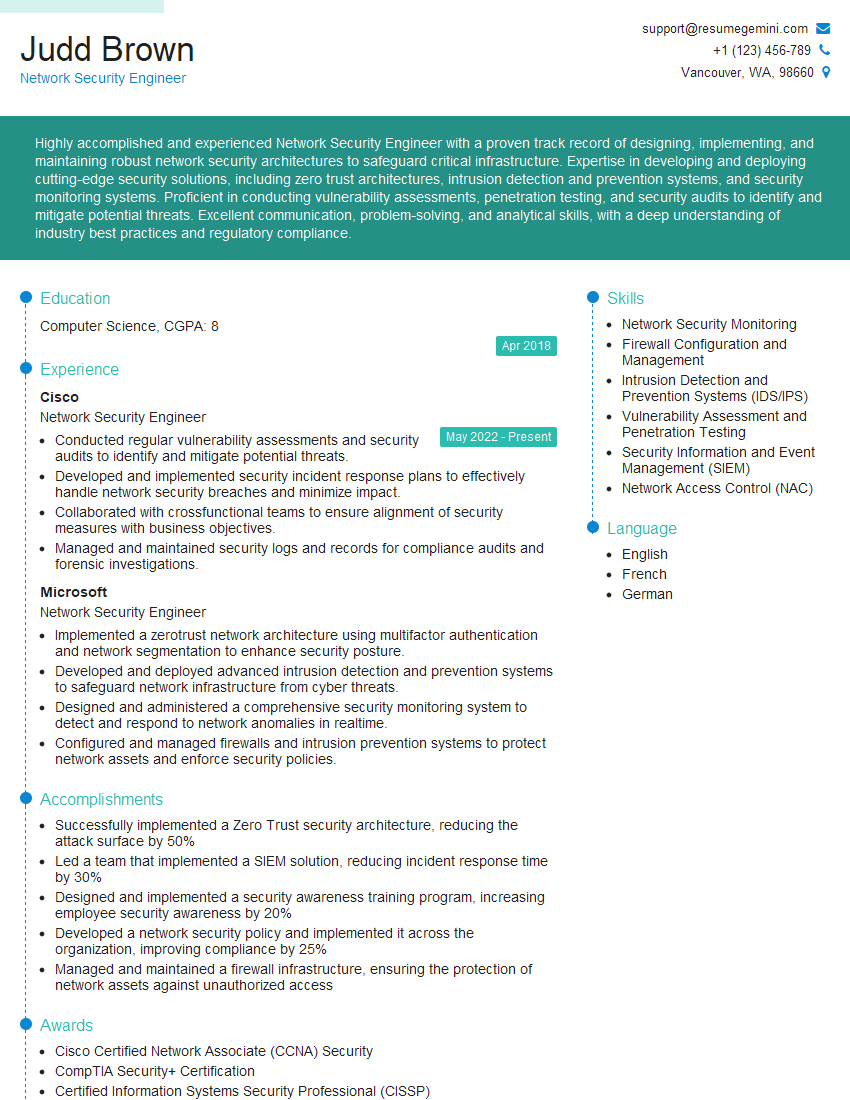
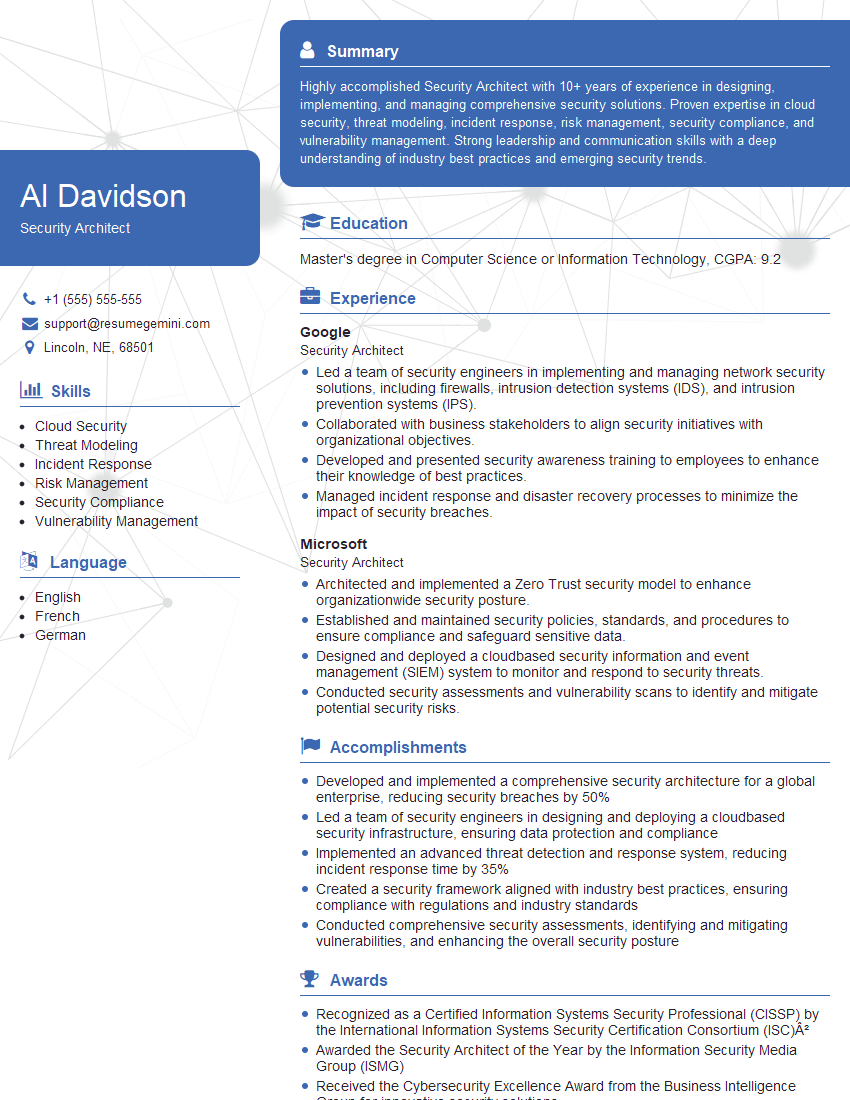
Mastering Cyber Warfare Planning is vital for career advancement in this rapidly evolving field. Demonstrating expertise in these areas will significantly enhance your job prospects. To increase your chances of securing your ideal role, it’s essential to create a compelling and ATS-friendly resume that showcases your skills and experience effectively. We strongly recommend using ResumeGemini to build a professional resume that stands out. ResumeGemini offers a streamlined process and provides examples of resumes tailored to Cyber Warfare Planning to help guide you. Investing time in crafting a strong resume is a crucial step in your job search.
Explore more articles
Users Rating of Our Blogs
Share Your Experience
We value your feedback! Please rate our content and share your thoughts (optional).
What Readers Say About Our Blog
Very informative content, great job.
good