Feeling uncertain about what to expect in your upcoming interview? We’ve got you covered! This blog highlights the most important Dance Rehearsal interview questions and provides actionable advice to help you stand out as the ideal candidate. Let’s pave the way for your success.
Questions Asked in Dance Rehearsal Interview
Q 1. Describe your experience managing rehearsal schedules and budgets.
Managing rehearsal schedules and budgets requires meticulous planning and organizational skills. I begin by creating a detailed schedule, factoring in the specific needs of the production – the number of dancers, the complexity of the choreography, and any technical requirements. This schedule is usually presented in a spreadsheet or project management software, allowing for easy visualization and modification as needed. For example, a large-scale ballet production might require a more extensive rehearsal schedule compared to a smaller modern dance piece. Budget management involves careful tracking of expenses, from studio rental and costume creation to music licensing and dancer fees. I utilize budgeting software to track income and expenses, ensuring transparency and accurate forecasting. I strive to find cost-effective solutions without compromising the quality of the production, such as negotiating lower studio rental fees or sourcing affordable costumes. For instance, I might explore collaborating with local costume designers instead of relying on expensive production houses.
Q 2. How do you handle conflicts between dancers or creative disagreements during rehearsals?
Conflict resolution is a crucial aspect of managing rehearsals. My approach is to create a safe and respectful environment where dancers feel comfortable expressing their opinions. When conflicts arise, I facilitate open communication, encouraging dancers to articulate their concerns and perspectives. I actively listen to all parties involved, striving to understand the root cause of the disagreement. For example, creative disagreements might stem from differing interpretations of the choreography. In such cases, I guide the discussion towards finding a compromise that respects the artistic vision while incorporating valuable input from the dancers. Sometimes, this involves demonstrating various approaches, allowing dancers to try different interpretations and choose the most effective one. If the conflict persists, I might engage in individual conversations with the involved dancers to address specific concerns and find mutually agreeable solutions. The goal is always to foster collaboration and a positive team dynamic.
Q 3. Explain your process for troubleshooting technical issues that arise during rehearsals.
Troubleshooting technical issues during rehearsals demands a proactive and systematic approach. I start by identifying the problem precisely. Is it a lighting malfunction, sound equipment failure, or a problem with the stage setup? Once the problem is identified, I consult with the technical crew, providing them with detailed information. For example, if the lighting isn’t working correctly, I’ll specify which lights are malfunctioning, the desired effect, and the scene it’s affecting. We work together to find the solution, often employing a step-by-step troubleshooting process. This may involve checking cables, replacing bulbs, or resetting equipment. If the issue is complex and beyond our immediate capabilities, I contact outside technicians to assist. The key is to address the problem swiftly and efficiently to minimize disruption to the rehearsal schedule. To mitigate future technical issues, I always conduct thorough technical checks before each rehearsal and keep a comprehensive list of contact information for technical support.
Q 4. What strategies do you use to maintain dancer motivation and energy levels throughout a long rehearsal period?
Maintaining dancer motivation and energy levels throughout long rehearsals requires a multifaceted strategy. I ensure that rehearsals are well-structured and efficient, avoiding unnecessary delays. Regular breaks are incorporated into the schedule to allow dancers to rest and rehydrate. I often incorporate various motivational techniques, such as providing positive reinforcement and celebrating small achievements. Music plays a significant role in setting the mood and energy level of the rehearsal. I use upbeat music during high-energy sections and more calming music during rest periods. I also encourage collaboration and a sense of community among the dancers. This can involve team-building exercises or simple activities like sharing a meal together after rehearsal. Providing clear goals and objectives for each rehearsal also helps maintain focus and purpose, keeping the dancers engaged and motivated.
Q 5. How do you provide constructive feedback to dancers during rehearsal?
Providing constructive feedback is essential for a dancer’s growth and development. My approach is always positive and encouraging, focusing on the strengths of the dancer while highlighting areas for improvement. I use the “sandwich” method, starting with positive feedback, followed by constructive criticism, and then ending with more positive remarks. For example, I might say, “Your leaps are incredibly powerful and dynamic. However, you could improve your landings by slightly bending your knees. Overall, you’re doing a fantastic job, and I’m very impressed with your progress.” I avoid generic comments and use specific examples to illustrate my points. I always encourage questions and allow ample time for discussions, ensuring the dancer understands my feedback and feels comfortable asking for clarification. The goal is not to demoralize the dancer but to help them refine their technique and performance.
Q 6. Describe your experience working with different dance styles and techniques.
My experience encompasses a broad range of dance styles and techniques, including ballet, modern, jazz, contemporary, and hip-hop. This versatility allows me to adapt my approach to different choreographic styles and provide dancers with the necessary instruction and guidance. For example, teaching ballet requires a deep understanding of classical technique, including precise alignment and body placement, whereas teaching hip-hop requires knowledge of rhythm, improvisation, and street dance vocabulary. I adapt my teaching methods to suit each style, using appropriate terminology, demonstrations, and exercises. This diverse experience has also enriched my understanding of how different styles influence and complement each other. I frequently incorporate elements from different styles into my choreography and rehearsals, broadening the dancers’ artistic horizons.
Q 7. How do you adapt rehearsals to accommodate different learning styles and experience levels?
Adapting rehearsals to accommodate different learning styles and experience levels involves creating a flexible and inclusive environment. I utilize a variety of teaching methods, catering to visual, auditory, and kinesthetic learners. Visual learners might benefit from watching video demonstrations or studying written choreography notes, while auditory learners might prefer verbal instructions and music cues. Kinesthetic learners often learn best through physical practice and repetition. I differentiate instruction based on experience levels, offering more advanced exercises and challenges for experienced dancers while providing foundational instruction and support for less experienced dancers. I encourage collaboration among dancers, allowing them to learn from each other’s strengths and expertise. I might pair experienced dancers with those less experienced to promote mentorship and peer learning. This creates a dynamic and supportive learning environment that fosters growth for all participants.
Q 8. Explain your process for incorporating notes from directors or choreographers into rehearsals.
Incorporating director or choreographer notes is crucial for a successful production. My process begins with active listening during feedback sessions. I ensure I understand not just the *what* but also the *why* behind each note. Then, I translate these notes into clear, actionable steps for the dancers. This might involve breaking down complex corrections into smaller, manageable chunks. For example, if a choreographer notes a lack of energy in a particular sequence, we’ll work on individual elements like arm placement, posture, and facial expressions, before putting it all back together. I document these notes meticulously, and I always follow up with the choreographer to ensure we’re on the same page and that the dancers are understanding and implementing the changes effectively. I find that a visual aid, like a short video clip showing the correction, can be incredibly helpful for clarifying specific points. This detailed and collaborative approach ensures that the final performance aligns precisely with the artistic vision.
Q 9. How do you track progress and make adjustments to the rehearsal schedule as needed?
Tracking progress and adjusting the rehearsal schedule is an iterative process. I use a combination of methods. Firstly, I create a detailed schedule at the outset, factoring in the complexity of the choreography, the dancers’ availability, and the overall production timeline. This schedule includes specific goals for each rehearsal session. I then utilize a digital tracking system – I prefer spreadsheets, but project management software could also work – to mark the completion of specific sections of the choreography or the achievement of particular goals. Regularly, I assess progress against the planned schedule. If a section is proving particularly challenging, I’ll allocate additional rehearsal time to it. Conversely, if a section is mastered quicker than anticipated, we can move onto the next element. I also consistently gather feedback from dancers, seeking input on their understanding, physical limitations, and energy levels to ensure the schedule is sustainable and addresses any emerging challenges. Regular evaluations ensure the schedule remains adaptable and productive, leading to a polished final performance.
Q 10. What software or technologies are you proficient in for dance rehearsal management?
Technology plays a significant role in efficient rehearsal management. I’m proficient in using spreadsheets (like Google Sheets or Excel) for scheduling, progress tracking, and documenting notes. I also utilize video recording software (such as OBS Studio or QuickTime Player) extensively to capture rehearsals, allowing for later review and analysis. This helps both me and the dancers to identify areas for improvement. Furthermore, I’m familiar with cloud storage services (like Google Drive or Dropbox) to share files and ensure everyone has access to the most up-to-date materials. Although not essential, I also have experience using project management software such as Asana or Trello for larger productions with multiple collaborators, enabling better task assignment and progress monitoring. This tech stack ensures that we are organized, efficient, and able to seamlessly address any challenges that might arise.
Q 11. How do you ensure the safety of dancers during rehearsals?
Ensuring dancer safety is paramount. Before every rehearsal, I conduct a thorough warm-up focusing on injury prevention and dynamic stretching tailored to the demands of the choreography. The rehearsal space is checked for any potential hazards – ensuring the floor is clear, props are secure, and the lighting is appropriate. During rehearsals, I closely monitor dancers for signs of fatigue or discomfort, encouraging breaks when needed. I emphasize proper technique and alignment throughout the rehearsal process, offering adjustments to prevent strains or injuries. I also incorporate cool-down stretches at the end of each session, focusing on static stretching and muscle recovery. For particularly demanding choreography, I may consult with a physiotherapist or athletic trainer to create customized warm-up and cool-down routines and address any specific safety concerns. Proactive measures and attentive monitoring ensure the dancers remain healthy and injury-free throughout the rehearsal period.
Q 12. Describe your experience with creating and maintaining a positive and collaborative rehearsal environment.
Cultivating a positive and collaborative rehearsal environment is crucial for both artistic success and overall morale. I believe in fostering open communication, actively encouraging dancers to share their ideas and concerns without judgment. I build trust by creating a space where everyone feels comfortable taking risks and making mistakes – these are learning opportunities! I ensure that constructive feedback is delivered in a supportive and encouraging manner, emphasizing individual strengths and offering practical suggestions for improvement. Positive reinforcement is vital; celebrating small successes and acknowledging individual contributions builds team cohesion. I prioritize inclusivity, ensuring that everyone feels valued and respected, regardless of their skill level or experience. A positive and collaborative atmosphere is conducive to creativity and results in better teamwork, leading to a more polished and engaging final performance.
Q 13. What is your process for documenting rehearsal progress and making notes?
Documenting rehearsal progress is integral to tracking development and ensuring consistency. My primary method involves detailed note-taking during each session. I use a combination of written notes and video recordings. Written notes detail the specific aspects of the choreography worked on, the challenges encountered, any changes made to the choreography, and individual dancer feedback. Video recordings allow me to visually review the progress and identify areas requiring further attention. These recordings serve as a valuable reference point, not only for me but also for the dancers themselves. This comprehensive documentation allows me to identify patterns, refine our approach, and track the overall evolution of the piece from the initial brainstorming sessions to the final polished performance. All notes are then neatly collated and stored in a easily accessible system for efficient review.
Q 14. How do you handle unexpected absences or injuries during rehearsals?
Unexpected absences or injuries require flexibility and adaptability. If a dancer is absent, I communicate promptly with them to understand the reason and determine if they need any support. If the absence is due to illness or injury, I prioritize their well-being and provide guidance on recovery. Regarding the rehearsal, I’ll adjust the schedule as necessary, focusing on sections that do not involve the absent dancer. We may review previously learned material or focus on individual work with the dancers who are present. If an injury occurs during rehearsal, my immediate priority is the dancer’s safety. I provide first aid if needed and seek medical attention if required. Once medical guidance is obtained, I adjust the choreography to accommodate the injury, often working with the dancer on modifications or alternative movements. A collaborative approach, focusing on both the injured dancer’s recovery and the overall progress of the piece, ensures a balanced and productive approach to managing unexpected challenges.
Q 15. How do you communicate effectively with dancers and other members of the production team?
Effective communication in dance rehearsal is crucial for a successful production. It’s a multi-faceted approach involving clear, concise language, active listening, and tailored communication styles.
- With Dancers: I prioritize individual check-ins to understand their technical challenges and concerns. I use positive reinforcement, offering constructive feedback that focuses on improvement rather than criticism. Visual demonstrations are often more effective than just verbal instructions. For example, if a dancer is struggling with a specific turn, I’ll demonstrate the correct technique myself rather than just explaining it. I also create a safe and supportive environment where dancers feel comfortable asking questions and voicing concerns.
- With the Production Team: Clear and consistent communication with the lighting designer, sound engineer, costume designer, and stage manager is essential. Regular meetings, detailed emails outlining rehearsal schedules and technical needs, and collaborative problem-solving sessions are key. For instance, I’ll work with the lighting designer to ensure the lighting cues are timed precisely with the choreography, and with the sound engineer to achieve seamless transitions between musical sections.
Ultimately, fostering open communication and mutual respect builds trust and efficiency throughout the rehearsal process.
Career Expert Tips:
- Ace those interviews! Prepare effectively by reviewing the Top 50 Most Common Interview Questions on ResumeGemini.
- Navigate your job search with confidence! Explore a wide range of Career Tips on ResumeGemini. Learn about common challenges and recommendations to overcome them.
- Craft the perfect resume! Master the Art of Resume Writing with ResumeGemini’s guide. Showcase your unique qualifications and achievements effectively.
- Don’t miss out on holiday savings! Build your dream resume with ResumeGemini’s ATS optimized templates.
Q 16. What are your strategies for resolving rehearsal time constraints or delays?
Rehearsal time constraints are a common challenge. My strategies involve careful planning, prioritization, and efficient use of time.
- Proactive Planning: A detailed rehearsal schedule, outlining specific objectives for each session, is vital. This ensures focused work and minimizes wasted time. I also incorporate ‘buffer’ time to account for unforeseen delays.
- Prioritization: I identify the most crucial sections of the choreography and focus on them first. We might spend more time perfecting a complex lift than on a simple transition, allocating time based on the difficulty and importance of the section.
- Efficient Use of Time: I encourage dancers to warm up independently before the rehearsal begins. I also implement short, focused breaks to avoid fatigue and maintain concentration. In one instance, a particularly complex sequence was causing significant delays. By breaking it down into smaller, manageable parts, we were able to address the technical challenges efficiently and resolve the delays.
- Contingency Plans: I always have backup plans in case of unforeseen circumstances such as injuries or technical issues. This might involve adjusting the rehearsal schedule or modifying parts of the choreography.
Q 17. Explain your experience in creating and implementing rehearsal plans.
Creating and implementing effective rehearsal plans requires a systematic approach. It starts with a clear understanding of the choreography, the production’s overall goals, and the dancers’ skill levels.
- Initial Assessment: I begin by analyzing the choreography, identifying challenging sections and potential areas for difficulty. I then assess the dancers’ technical abilities to tailor the rehearsal plan accordingly.
- Detailed Schedule: The rehearsal plan includes specific objectives for each session, outlining which sections of choreography will be worked on, and what specific skills will be practiced. For example, one day might focus solely on partnering work, another on intricate footwork, and another on perfecting transitions between sections.
- Progressive Rehearsal: I employ a progressive rehearsal approach, starting with basic elements and gradually building complexity. This allows dancers to build confidence and master individual components before combining them.
- Regular Review and Adjustment: The rehearsal plan is not static. I regularly review progress and make adjustments as needed. This flexibility allows us to adapt to unforeseen challenges or address areas needing further attention.
For example, in a recent production, we experienced a delay due to a set piece malfunction. I adjusted the rehearsal schedule, prioritizing sections that didn’t require the affected set piece, while simultaneously working with the technical team to expedite repairs.
Q 18. How do you utilize space efficiently during dance rehearsals?
Efficient space utilization is paramount in dance rehearsals, especially in smaller studios. This involves careful choreography planning and mindful use of the space.
- Strategic Blocking: I design the choreography to maximize the use of the rehearsal space. This involves efficient use of pathways and clear staging. Avoid having dancers cross paths unnecessarily.
- Sectioning the Space: Dividing the rehearsal space into designated areas for warm-up, specific choreography sections, and breaks enhances efficiency and prevents congestion.
- Flexible Choreography: If space is limited, I adapt the choreography to fit the available space. This might involve simplifying formations or modifying movements to be performed in a smaller area. For example, instead of a large sweeping formation, we might choose a more compact grouping.
- Clear Instructions: Precise and clear instructions to dancers minimize wasted time and movement in finding their positions.
In one instance, we were rehearsing in a very small studio. By meticulously planning the choreography and using the space strategically, we were able to rehearse the entire piece without compromising the quality of the performance.
Q 19. How do you ensure rehearsals are structured and productive?
Structured and productive rehearsals are built on clear objectives, focused work, and constructive feedback.
- Clear Objectives: Each rehearsal session starts with clearly defined goals. This ensures the dancers know what they are working towards and allows for a focused approach.
- Warm-up and Cool-down: I incorporate appropriate warm-up and cool-down routines to prevent injuries and improve performance.
- Focused Work: I break down complex choreography into smaller, manageable sections. This allows for focused attention and efficient progress.
- Constructive Feedback: I provide dancers with clear, specific feedback, highlighting both strengths and areas for improvement. I use positive reinforcement to encourage progress and maintain motivation.
- Regular Breaks: Short breaks help maintain energy levels and prevent fatigue. I ensure that water is readily available to dancers during rehearsals.
By maintaining a structured and supportive environment, dancers feel empowered to contribute their best work, leading to a highly productive rehearsal experience.
Q 20. Describe your experience with different rehearsal spaces and their limitations.
My experience encompasses a variety of rehearsal spaces, each with its own set of limitations.
- Large Studios: Offer ample space for large-scale choreography and complex formations. However, they can sometimes feel impersonal and lack the intimacy of smaller spaces.
- Small Studios: Present challenges in terms of space limitations but can foster a more intimate and collaborative rehearsal environment.
- Outdoor Spaces: Offer unique opportunities but are subject to unpredictable weather conditions and other environmental factors. For instance, uneven surfaces or strong winds can affect the safety and efficiency of rehearsal.
- Stage Rehearsals: Allow for a realistic simulation of the performance environment, but can sometimes be logistically challenging due to set changes and technical adjustments.
Adaptability is key. I adjust my rehearsal plans and choreography to accommodate the specific limitations of each space. For example, if rehearsing outdoors, I would ensure contingency plans are in place in case of inclement weather and select choreography that is suitable for the particular setting. In smaller spaces, I focus on more intimate choreography that doesn’t require excessive space.
Q 21. How do you use music and other cues effectively during rehearsals?
Music and other cues are integral to dance rehearsals. Effective utilization enhances dancers’ understanding, precision, and timing.
- Music Selection: I choose high-quality recordings that are appropriate for the style of dance. I ensure the music is readily available and easily accessible to all dancers.
- Cueing: I use clear and consistent verbal cues to indicate changes in music or choreography. For example, ‘Ready, set, go’ might start a section, or ‘and five, six, seven, eight’ could mark a phrase.
- Visual Cues: In addition to verbal cues, I utilize visual aids, such as video clips or visual aids, to help dancers understand specific timing or spatial relationships.
- Sound and Lighting Cues (if applicable): When working with a technical team, I coordinate with them to ensure that music and lighting cues are synchronized perfectly with the choreography. This ensures that the dancers are prepared for changes and special effects in the choreography.
Precise cueing and effective use of music are critical for maintaining the rhythm, timing, and overall flow of the choreography. It’s about creating a cohesive and seamless experience both in rehearsal and in the final performance.
Q 22. What is your process for preparing dancers for performances?
Preparing dancers for performances is a multifaceted process that begins long before the actual show. It’s a careful blend of technical training, artistic interpretation, and psychological preparation.
Technical Rehearsal: This phase focuses on perfecting the choreography. We start with individual work, addressing technique and ensuring each dancer understands the steps and transitions. Then, we move to group rehearsals, refining synchronization, formations, and timing. This often involves video recording for detailed analysis and feedback.
Artistic Interpretation: Understanding the story, emotion, and intent behind the choreography is crucial. I guide dancers to connect with the piece on an emotional level, exploring character development and expressive movement. We discuss the choreographer’s vision and encourage individual creative input within the framework of the piece. This might involve incorporating personal experiences or perspectives.
Physical and Mental Preparation: Dancers need to be physically fit and mentally prepared to handle the demands of performance. This includes warm-up routines, injury prevention strategies, and mindfulness techniques to manage stress and anxiety. We might incorporate yoga or meditation sessions into rehearsals, depending on the needs of the dancers and the intensity of the performance.
Stage Rehearsals: Once the choreography and artistic interpretation are refined, we move to rehearsals on the actual stage, if possible. This familiarizes dancers with the lighting, sound, and stage dimensions, helping them build confidence and anticipate potential challenges.
Throughout the entire process, consistent communication and feedback are key. I encourage a supportive and collaborative environment where dancers feel comfortable asking questions, expressing concerns, and offering suggestions.
Q 23. Describe a time you had to solve a problem creatively during a rehearsal.
During a particularly challenging production of a contemporary ballet, we encountered a major setback just two weeks before the premiere. Our lead dancer sustained a minor ankle injury that severely limited their ability to perform certain jumps. Instead of postponing or completely altering the choreography, we embraced a creative problem-solving approach.
We held a brainstorming session with the dancer, the choreographer, and the entire company. The dancer suggested modifications to some of the more demanding sequences, reducing the impact on their ankle. The choreographer, equally creative, helped redefine some sections to accommodate the limitations. The rest of the ensemble were then carefully integrated into the revised sequence. We filmed each session to ensure the continuity of style and precision. The result was not only a successful performance but also a testament to the team’s collaborative spirit and resilience. The adaptation of the choreography highlighted the dancers’ exceptional skill in improvising and adjusting to unforeseen circumstances.
Q 24. How do you balance artistic vision with practical considerations during rehearsals?
Balancing artistic vision with practical considerations is a constant juggling act in dance rehearsal. Artistic vision might dictate complex, intricate movements, while practical considerations include the dancers’ physical limitations, time constraints, budget, and available resources. It’s about finding the optimal intersection between ideal and achievable.
Prioritization: We identify essential elements of the choreography that cannot be compromised and those that can be adapted or simplified if needed. This often involves discussions with the choreographer, understanding their priorities and potential areas of flexibility.
Progressive Development: We build complexity gradually, starting with simpler variations of movements before adding intricate details. This approach allows dancers to master the fundamentals before tackling more challenging aspects, minimizing the risk of injury and maximizing their learning.
Realistic Scheduling: A well-structured rehearsal schedule is critical. It accommodates sufficient time for learning new material, refinement, and rest periods. Overly ambitious scheduling often leads to fatigue, decreased performance, and a higher risk of injury. I always ensure the schedule is realistic and doesn’t push dancers to their physical limits.
For instance, during one production, the choreographer envisioned a stunning lift sequence. However, after assessing the dancers’ physical capabilities, we modified the lift to ensure safety without sacrificing its visual impact.
Q 25. How do you maintain a professional and respectful atmosphere during rehearsals?
Maintaining a professional and respectful atmosphere is paramount for productive rehearsals. This involves setting clear expectations, fostering open communication, and addressing conflicts constructively. It’s about creating a safe space where dancers feel comfortable expressing themselves and pushing their creative boundaries.
Clear Communication: I ensure clear and consistent communication of expectations regarding punctuality, preparation, and behavior. I provide constructive feedback that is specific and actionable, focusing on improving performance rather than criticizing individuals.
Respectful Interactions: I promote a culture of mutual respect and understanding. This involves addressing any conflicts promptly and fairly, ensuring that all voices are heard. We discourage negativity and encourage open dialogue to resolve issues before they escalate.
Positive Reinforcement: Recognizing and celebrating the achievements of the dancers, both individually and collectively, is essential for maintaining morale and motivation. Acknowledging their hard work and commitment to the project fosters a positive and supportive environment.
For example, I regularly start rehearsals with a brief warm-up and a positive affirmation to set a positive tone.
Q 26. What is your experience with different rehearsal methodologies?
My experience encompasses various rehearsal methodologies, each with its own strengths and weaknesses. I’ve utilized traditional methods, focusing on step-by-step learning and refinement, alongside more contemporary approaches.
Traditional Methods: These involve breaking down complex choreography into smaller sections, practicing each section repeatedly until mastery is achieved before moving to the next. This method is excellent for building fundamental skills and ensuring precision.
Contemporary Methods: These often incorporate improvisation, exploration of movement quality, and emphasis on the emotional connection with the choreography. This can lead to more creative and expressive performances.
Iterative Methodologies: This involves creating a work-in-progress structure, reviewing and refining the choreography throughout the rehearsal process, allowing for adjustments based on feedback and creative insight.
My approach is adaptive and depends on the specific demands of the production, the dancers’ experience, and the stylistic requirements of the choreography. I often integrate elements of different methodologies to cater to the needs of each individual and the project as a whole.
Q 27. Describe your familiarity with legal and ethical considerations relevant to dance rehearsals.
Legal and ethical considerations are crucial aspects of dance rehearsals. These encompass several areas, including:
Safety: Prioritizing the physical safety of the dancers is paramount. This involves implementing appropriate warm-up and cool-down routines, ensuring a safe rehearsal environment, and taking necessary precautions to prevent injuries. Having a first aid kit readily available is important.
Intellectual Property: Respecting the copyright of choreographic works is essential. Unauthorized use or reproduction of choreography is illegal. I ensure all necessary permissions and licenses are obtained before using any copyrighted material.
Contracts and Agreements: Having clear and comprehensive contracts with dancers and other collaborators is important, outlining roles, responsibilities, payment terms, and other relevant details. This protects both the dancers and the production company.
Harassment and Discrimination: Creating a safe and inclusive environment that is free from harassment and discrimination of any kind is essential. This involves establishing clear policies and procedures for addressing inappropriate behavior.
Understanding and adhering to these legal and ethical standards is vital to maintaining professionalism and building trust within the dance community.
Q 28. How do you incorporate audience feedback into the rehearsal process (if applicable)?
Incorporating audience feedback into the rehearsal process is incredibly valuable, especially in the development of new works or when refining existing pieces for a specific audience. The most effective way to achieve this is through staged readings or showings for a small test audience.
After these showings, I collect feedback through questionnaires or informal discussions. This feedback often provides valuable insights into the clarity of the narrative, emotional impact of the choreography, and the overall effectiveness of the performance. This information is then discussed with the choreographer and dancers. We determine what aspects of the performance resonated with the audience and what needs improvement. We then incorporate the feedback into subsequent rehearsals, refining the choreography, musicality, or narrative elements as needed. This iterative process helps shape the final product into something that is both artistically fulfilling and resonates with the intended audience.
Key Topics to Learn for Dance Rehearsal Interview
- Understanding Choreographic Intent: Analyze the choreographer’s vision and how it translates into the rehearsal process. Consider the style, emotional arc, and overall narrative.
- Collaborative Teamwork: Discuss your experience working effectively within a dance company, contributing to a positive and productive rehearsal environment. Highlight conflict resolution skills and communication strategies.
- Technical Proficiency & Problem-Solving: Explain your ability to master complex choreography, identify and address technical challenges, and offer creative solutions to overcome obstacles during rehearsals.
- Adaptability & Feedback Integration: Demonstrate your capacity to adapt to different choreographic styles and incorporate constructive criticism to improve your performance and the overall piece.
- Note-Taking & Organization: Explain your systems for recording choreography, noting corrections, and maintaining organization during rehearsals. Discuss the importance of clear and efficient note-taking for personal and group success.
- Physical & Mental Preparedness: Discuss the importance of physical and mental stamina for successful rehearsals. Highlight your approaches to maintaining focus, managing fatigue, and prioritizing injury prevention.
- Staging & Spatial Awareness: Describe your understanding of stagecraft and the importance of spatial awareness during rehearsals. Discuss how you contribute to a visually engaging and dynamic performance.
Next Steps
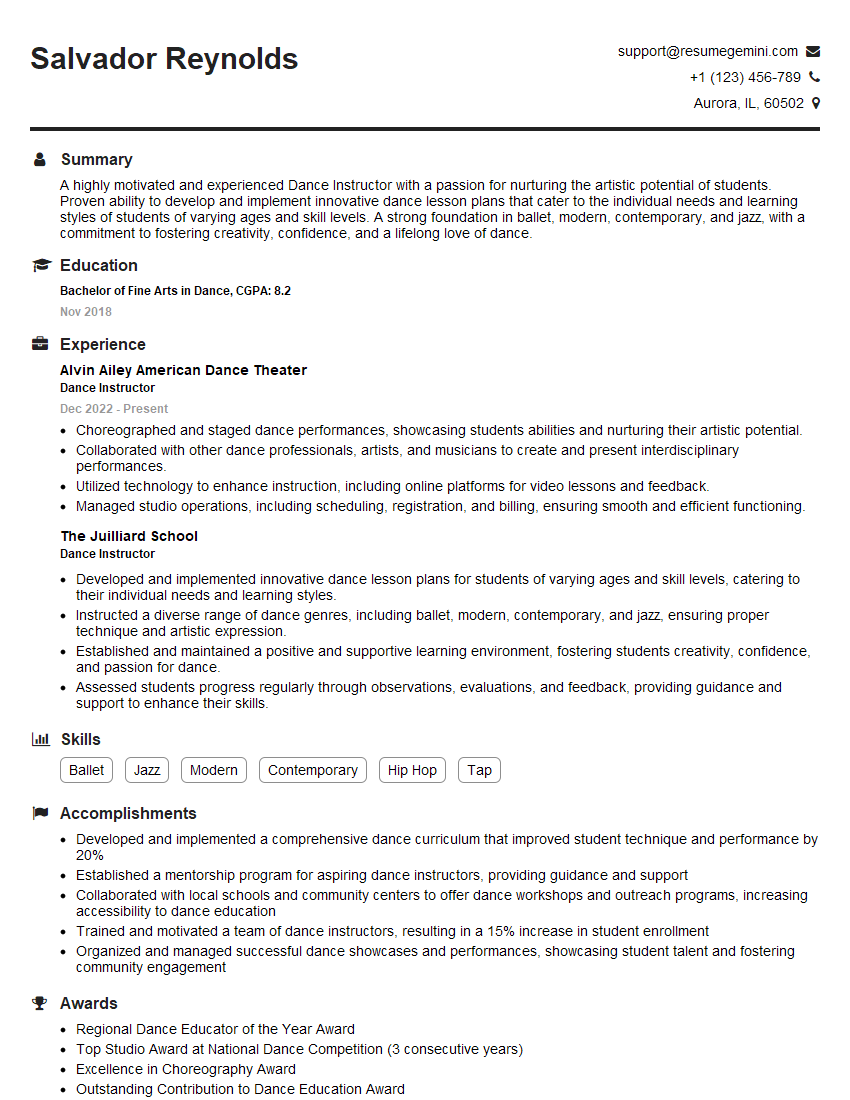
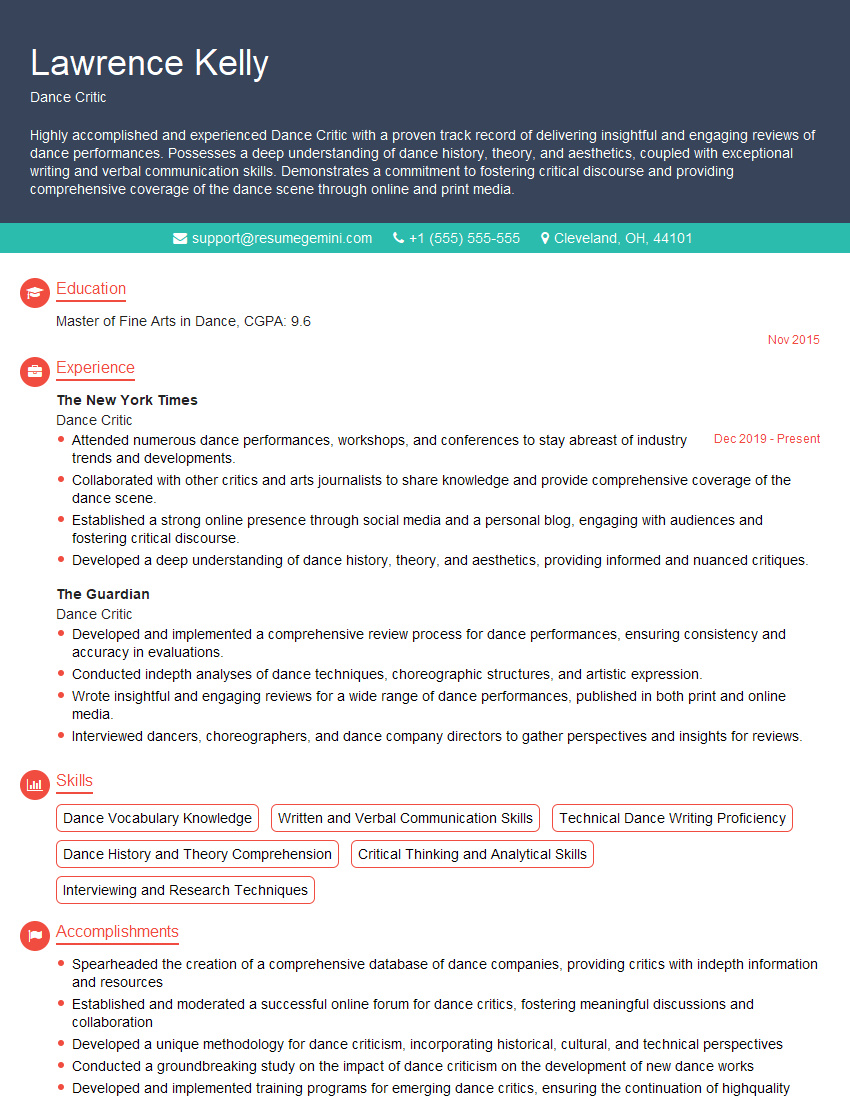
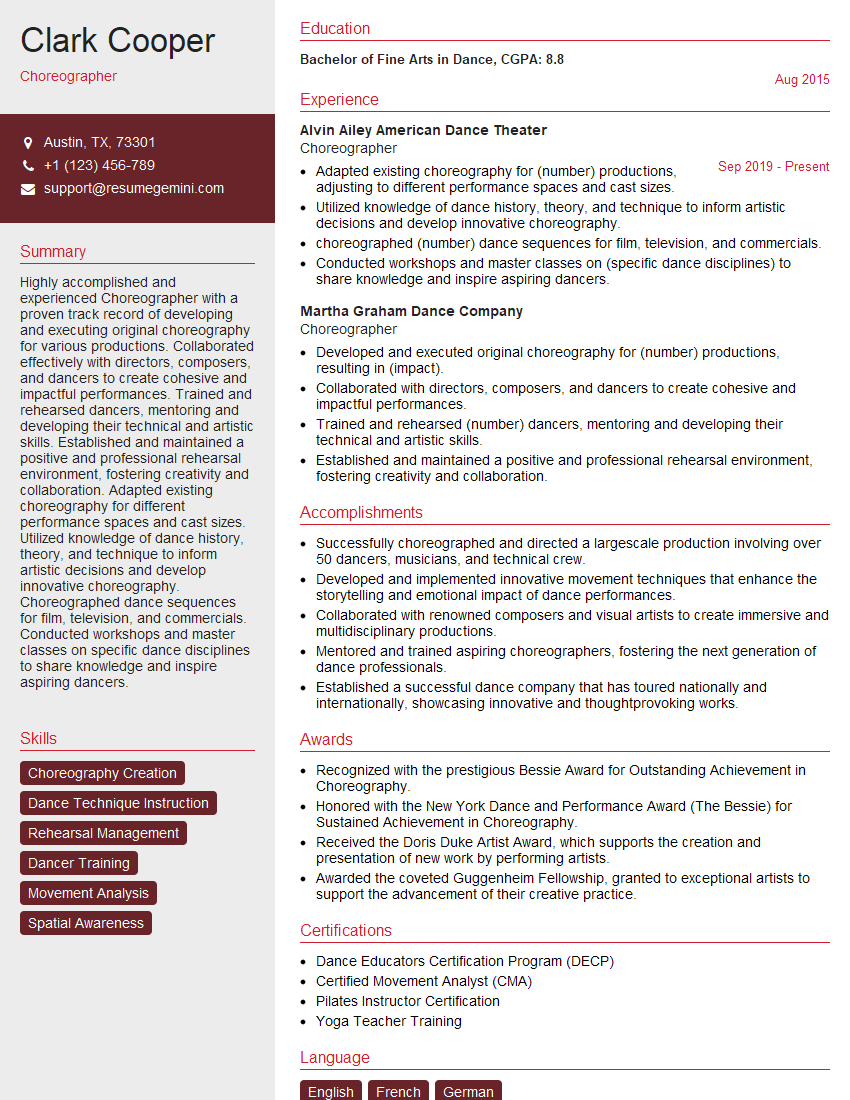
Mastering the art of dance rehearsal is crucial for career advancement in the performing arts. A strong understanding of collaborative processes, technical skills, and problem-solving abilities sets you apart. To significantly increase your job prospects, create an ATS-friendly resume that effectively showcases your qualifications. ResumeGemini is a trusted resource to help you build a professional and impactful resume tailored to your unique experience. Examples of resumes specifically crafted for dance rehearsal roles are available to help guide you.
Explore more articles
Users Rating of Our Blogs
Share Your Experience
We value your feedback! Please rate our content and share your thoughts (optional).
What Readers Say About Our Blog
Very informative content, great job.
good