Interviews are more than just a Q&A session—they’re a chance to prove your worth. This blog dives into essential Data Analysis and Tracking interview questions and expert tips to help you align your answers with what hiring managers are looking for. Start preparing to shine!
Questions Asked in Data Analysis and Tracking Interview
Q 1. Explain the difference between correlation and causation.
Correlation and causation are two distinct concepts in data analysis. Correlation refers to a statistical relationship between two or more variables; it describes how strongly they tend to change together. Causation, on the other hand, implies that one variable directly influences or causes a change in another. Just because two variables are correlated doesn’t mean one causes the other.
Example: Ice cream sales and crime rates are often positively correlated – they both tend to increase during the summer. However, this doesn’t mean that buying ice cream causes crime, or vice versa. The underlying factor, the warm weather, influences both.
Identifying causation requires more rigorous methods than simply observing correlation, such as controlled experiments or sophisticated statistical techniques that account for confounding variables. A strong correlation can suggest a potential causal relationship, but further investigation is always necessary.
Q 2. What are some common data visualization techniques, and when would you use each?
Data visualization is crucial for communicating insights effectively. Choosing the right technique depends on the type of data and the message you want to convey.
- Bar charts: Ideal for comparing categorical data, like sales across different regions.
- Line charts: Show trends over time, such as website traffic over a month.
- Scatter plots: Illustrate the relationship between two continuous variables, revealing correlations. Useful for identifying outliers as well.
- Pie charts: Represent proportions or percentages of a whole, like market share.
- Histograms: Display the distribution of a single continuous variable, showing frequency counts within specific ranges (bins).
- Heatmaps: Excellent for visualizing large matrices of data, revealing patterns or correlations across multiple variables.
For instance, if you want to show the growth of a company’s revenue over the past five years, a line chart would be appropriate. If you’re comparing sales figures across different product categories, a bar chart is a better choice. The key is selecting a visualization that accurately and clearly communicates the story within your data.
Q 3. Describe your experience with SQL and NoSQL databases.
I have extensive experience with both SQL and NoSQL databases. My SQL experience includes designing and optimizing relational databases, writing complex queries using functions and joins, and managing database performance. I’ve worked with various SQL dialects including MySQL, PostgreSQL and SQL Server. I’m proficient in using SQL for tasks such as data extraction, transformation, and loading (ETL).
With NoSQL databases, my experience focuses on document databases like MongoDB and key-value stores like Redis. I understand the strengths and weaknesses of each type and know when to apply them. NoSQL is particularly useful for handling large volumes of unstructured or semi-structured data and supporting high-volume read and write operations, which is crucial for applications with rapidly changing data or high traffic.
I’m comfortable choosing the right database technology based on project requirements, considering factors like data structure, scalability needs, and query patterns.
Q 4. How would you handle missing data in a dataset?
Handling missing data is a critical aspect of data analysis. Ignoring it can lead to biased or inaccurate results. The best approach depends on the nature of the data, the extent of missingness, and the analysis goals.
- Deletion: Removing rows or columns with missing values is straightforward but can lead to a significant loss of information if the missing data is not Missing Completely at Random (MCAR).
- Imputation: Replacing missing values with estimated values. Methods include using the mean, median, or mode (for numerical data); using the most frequent value (for categorical data); or using more sophisticated techniques like k-nearest neighbors (k-NN) or multiple imputation.
- Model-based imputation: This is more complex but also more robust and involves using predictive models to estimate missing values.
The choice of method depends on the context. For instance, if a small percentage of data is missing randomly, deletion might be acceptable. However, if a large portion of data is missing or if the missingness is non-random, imputation techniques are necessary. It’s important to document the chosen strategy and understand the potential impact on analysis results.
Q 5. What are some common data cleaning techniques?
Data cleaning is a crucial step before analysis, ensuring data accuracy and consistency. Common techniques include:
- Handling missing values: As discussed in the previous question.
- Removing duplicates: Identifying and removing redundant entries to avoid bias.
- Data transformation: Converting data types, standardizing formats, and handling outliers.
- Error correction: Identifying and fixing inconsistencies or errors, such as incorrect data entries.
- Data standardization: Transforming data to a common scale (e.g., standardization or normalization) for better model performance.
- Outlier treatment: Removing or transforming outliers to reduce their impact on analysis.
For example, I once encountered a dataset with inconsistent date formats. I used string manipulation techniques and regular expressions to standardize the date format before further analysis. Effective data cleaning ensures that analyses are robust and reliable.
Q 6. How would you identify outliers in a dataset?
Outliers are data points that significantly deviate from the rest of the data. Identifying them is important because they can skew analysis results and affect model performance.
Methods for outlier detection include:
- Visual inspection: Using box plots, scatter plots, or histograms to visually identify unusual data points.
- Statistical methods: Using measures like the Z-score or the Interquartile Range (IQR) to identify data points falling outside a certain threshold. Data points with a Z-score greater than 3 or less than -3 are often considered outliers.
- Clustering techniques: Using algorithms like k-means to group data points. Outliers might be points that don’t belong to any cluster.
The choice of method depends on the data distribution and the context. It’s important to investigate outliers; they may represent genuine extreme values or errors.
Q 7. Explain different methods for data transformation.
Data transformation involves changing the scale or distribution of variables to improve the performance of analytical models or to make data easier to interpret.
- Scaling: Techniques like standardization (Z-score normalization) or min-max scaling transform variables to a common scale, making them comparable and improving the performance of algorithms sensitive to feature scaling (e.g., k-nearest neighbors, support vector machines).
- Normalization: Transforms data to a specific range (e.g., 0-1). Useful when dealing with variables with different ranges.
- Log transformation: Applies a logarithmic function to reduce skewness in data, making it more normally distributed. Useful for variables with long tails.
- Power transformation: A more general transformation that includes log and square root transformations as special cases. Helps to stabilize variance and improve normality.
- Box-Cox transformation: A specific type of power transformation used to make data more normally distributed.
For example, if a dataset has a highly skewed variable, a log transformation can help to make the data more suitable for certain statistical analyses that assume normality.
Q 8. How do you measure the success of a marketing campaign using data?
Measuring the success of a marketing campaign relies heavily on defining clear, measurable Key Performance Indicators (KPIs) beforehand. These KPIs should directly reflect your campaign objectives. For example, if your goal is increased brand awareness, you might track website traffic, social media engagement (likes, shares, comments), and brand mentions. If your goal is driving sales, you’d focus on conversion rates, revenue generated, and customer acquisition cost (CAC).
Once the campaign runs, we analyze the data collected against these pre-defined KPIs. Let’s say we ran a social media campaign. We’d compare the metrics *after* the campaign to a baseline (metrics *before* the campaign or from a control group). A significant increase in website traffic from social media, a higher click-through rate on ads, or a spike in sales attributed to the campaign would all indicate success. We use tools like Google Analytics, social media analytics platforms, and CRM systems to gather and analyze this data. It’s crucial to also track the return on investment (ROI) by comparing the campaign’s costs to the revenue or other benefits it generated.
For example, if a campaign cost $10,000 and generated $30,000 in revenue, the ROI is 200%, indicating a highly successful campaign. However, even a campaign with a lower ROI might be deemed successful if it achieved other important objectives, such as building brand awareness or engaging with a new target audience. The key is aligning data analysis with strategic goals.
Q 9. Describe your experience with A/B testing.
A/B testing, also known as split testing, is a crucial method for comparing two versions of something (e.g., a website page, an email, an ad) to determine which performs better. In my experience, I’ve used A/B testing extensively to optimize website conversion rates, improve email open and click-through rates, and refine online advertising campaigns.
A typical workflow involves creating two versions (A and B), randomly assigning users to each version, and then tracking key metrics to see which version leads to better results. For instance, we might A/B test two different headlines on a landing page to see which drives more conversions. The statistical significance of the results is crucial; we need to ensure the observed difference isn’t just due to random chance. Tools like Optimizely and VWO (Visual Website Optimizer) simplify the process of setting up, running, and analyzing A/B tests. I’ve also developed custom A/B testing solutions using programming languages like Python with libraries such as Statsmodels for advanced analysis.
For example, in a recent project, we tested two versions of an email subject line. Version A had a more direct approach, while Version B used a more intriguing question. Version B significantly outperformed Version A in terms of open rates, leading us to adopt it as the standard for future campaigns. This is a simple example, but the principle applies to many areas, including website design, product features, and marketing copy.
Q 10. What is regression analysis and how is it used in data analysis?
Regression analysis is a statistical method used to model the relationship between a dependent variable and one or more independent variables. In essence, it helps us understand how changes in one or more variables affect another variable. It’s widely used in data analysis to predict future outcomes, identify significant predictors, and quantify the strength of relationships between variables.
There are several types of regression analysis, including linear regression (modeling a linear relationship), multiple linear regression (modeling a relationship with multiple independent variables), and logistic regression (predicting a categorical outcome). In my work, I often use regression analysis to forecast sales based on marketing spend, predict customer churn based on usage patterns, or assess the impact of various factors on customer satisfaction.
For example, imagine we want to predict house prices (dependent variable) based on size (independent variable). Linear regression would help us find the equation of a line that best fits the data, allowing us to estimate the price of a house given its size. The slope of the line represents the impact of house size on price. More complex models can include other variables, such as location, number of bedrooms, and age of the house, to improve prediction accuracy.
Q 11. Explain your understanding of statistical significance.
Statistical significance refers to the probability that an observed result is not due to random chance. In simpler terms, it helps us determine if the results of a statistical analysis are truly meaningful or just a fluke. We typically express statistical significance using a p-value. A low p-value (typically less than 0.05) indicates that there’s a low probability that the observed result occurred by chance, suggesting a statistically significant finding.
Understanding statistical significance is crucial for making informed decisions based on data. For example, if we’re comparing two marketing campaigns and find one performs better, we need to assess whether this difference is statistically significant or simply due to random variation. If the p-value is low, we can confidently conclude that the superior performance is not merely a coincidence. If the p-value is high, we should be cautious about drawing conclusions, as the observed difference might be due to chance. Failing to consider statistical significance can lead to incorrect interpretations of data and potentially flawed decisions.
Imagine we are testing two different website designs. We might see a slight improvement in conversion rates for design B. However, if the p-value is 0.1 (higher than 0.05), we cannot definitively say design B is superior because the observed difference could easily be due to random variation in user behavior. We’d need more data or a more powerful test to draw a firm conclusion.
Q 12. How do you handle large datasets for analysis?
Handling large datasets for analysis requires a combination of technical skills and strategic approaches. The key is to avoid loading the entire dataset into memory at once, which can overwhelm even powerful computers. Instead, we employ techniques like:
- Sampling: Analyzing a representative subset of the data instead of the whole dataset. This significantly reduces processing time and memory requirements while still providing valuable insights.
- Data partitioning: Dividing the dataset into smaller, manageable chunks for parallel processing. This leverages the power of multi-core processors and distributed computing frameworks like Hadoop or Spark.
- Data aggregation: Summarizing data at a higher level to reduce its size. For example, instead of analyzing individual transactions, we might analyze daily or monthly totals.
- Database technologies: Using databases optimized for handling big data, such as NoSQL databases like MongoDB or Cassandra, or cloud-based solutions like Amazon Redshift or Google BigQuery.
- Data compression: Reducing the storage space and processing time by compressing data using techniques like gzip or Snappy.
Choosing the right approach depends on the nature of the data, the analysis goals, and the available resources. Sometimes, a combination of these techniques is necessary to effectively manage large datasets.
Q 13. What tools and technologies are you proficient in for data analysis?
My data analysis toolkit includes a range of tools and technologies, both software and programming languages. I’m proficient in:
- Programming Languages: Python (with libraries like Pandas, NumPy, Scikit-learn, and Statsmodels), R, SQL
- Data Visualization Tools: Tableau, Power BI, Matplotlib, Seaborn
- Big Data Technologies: Hadoop, Spark, Hive
- Database Systems: SQL Server, MySQL, PostgreSQL, MongoDB
- Cloud Platforms: AWS (Amazon Web Services), Google Cloud Platform (GCP), Azure
- Statistical Software: SPSS, SAS
My choice of tools depends on the specific project and the nature of the data. For smaller datasets and quick analyses, I might prefer Python with Pandas, while for large-scale data processing, I might use Spark or Hadoop. My expertise spans the entire data analysis workflow, from data acquisition and cleaning to analysis, visualization, and reporting.
Q 14. Describe your experience with data modeling.
Data modeling involves designing a structured representation of data to facilitate efficient storage, retrieval, and analysis. It’s a crucial step in any data-driven project, ensuring data integrity and consistency. My experience with data modeling spans various approaches, from relational databases to NoSQL databases and data warehouses.
In relational database modeling, I use Entity-Relationship Diagrams (ERDs) to define entities, attributes, and relationships between different data elements. I understand normalization principles to ensure data redundancy is minimized. In NoSQL database modeling, I adapt to the specific characteristics of each database type (e.g., document databases, key-value stores, graph databases) to design efficient data structures. For data warehousing, I employ dimensional modeling techniques like star schemas or snowflake schemas to optimize analytical query performance.
For instance, in a recent project involving customer data, I designed a relational database schema with tables for customers, orders, products, and payments, carefully defining primary and foreign keys to establish relationships between them. This ensured data integrity and enabled efficient querying for various analyses, such as customer segmentation, sales forecasting, and churn prediction. The choice of model depends heavily on the use case. A star schema is ideal for fast analytical queries on large datasets, while a document database can be best for flexible, semi-structured data.
Q 15. How do you communicate complex data insights to non-technical stakeholders?
Communicating complex data insights to non-technical stakeholders requires translating technical jargon into plain language and leveraging visual aids. Think of it like this: you’re a translator, bridging the gap between the data’s story and the audience’s understanding. I begin by identifying the key takeaways – the 2-3 most important points the audience needs to grasp. Then, I choose the most effective communication method. For instance, a simple bar chart might suffice to show sales trends, while a narrative accompanied by a heatmap could better explain regional performance variations. I avoid technical terms like ‘p-value’ or ‘regression analysis,’ opting instead for phrases like ‘significant increase’ or ‘strong correlation.’ Real-world examples are crucial. Instead of saying ‘customer churn is high,’ I might say, ‘We’re losing 15% of our customers each month, costing us approximately $X in revenue.’ Finally, I always encourage questions and discussions to ensure everyone is on the same page. I’ve found that interactive dashboards, where stakeholders can explore the data themselves, are especially effective.
Career Expert Tips:
- Ace those interviews! Prepare effectively by reviewing the Top 50 Most Common Interview Questions on ResumeGemini.
- Navigate your job search with confidence! Explore a wide range of Career Tips on ResumeGemini. Learn about common challenges and recommendations to overcome them.
- Craft the perfect resume! Master the Art of Resume Writing with ResumeGemini’s guide. Showcase your unique qualifications and achievements effectively.
- Don’t miss out on holiday savings! Build your dream resume with ResumeGemini’s ATS optimized templates.
Q 16. What is your experience with data warehousing?
My experience with data warehousing spans several projects, where I’ve been involved in designing, implementing, and maintaining data warehouses using various technologies. In one project, we migrated a legacy system’s data to a cloud-based data warehouse using Snowflake. This involved significant ETL (Extract, Transform, Load) processing, which I’ll detail further in a later answer. We chose Snowflake for its scalability and ability to handle large datasets efficiently. The process involved defining the data model, including dimensional modeling techniques like star schemas and snowflake schemas, to optimize query performance. My responsibilities included data profiling, cleaning, and transformation to ensure data quality and consistency within the warehouse. We also implemented data governance procedures to ensure data security and compliance. The success of this project resulted in significantly improved reporting and analytical capabilities across the organization. In other projects, I’ve worked with traditional relational databases like PostgreSQL and Oracle as the foundation for data warehousing solutions.
Q 17. How do you prioritize different tasks in a data analysis project?
Prioritizing tasks in a data analysis project relies on a combination of urgency, impact, and feasibility. I generally use a prioritization matrix, often a MoSCoW method (Must have, Should have, Could have, Won’t have), to categorize tasks based on their importance and dependencies. ‘Must-have’ tasks are critical for project success and are tackled first. These might include data cleaning and initial exploratory data analysis (EDA) to ensure the data’s validity. ‘Should-have’ tasks are important but less critical; they contribute significantly to the project’s overall value. ‘Could-have’ tasks are desirable but can be deferred if time constraints exist, and ‘Won’t-have’ tasks are not included in the current scope. Furthermore, I also consider dependencies between tasks. For example, I wouldn’t start building predictive models (a ‘Should have’ task) until the data cleaning (‘Must have’ task) is complete. Regular monitoring and adjustments are key; the prioritization might need revision as the project evolves and new information surfaces.
Q 18. Describe your experience with ETL processes.
My experience with ETL processes is extensive, encompassing both manual and automated approaches. I’ve worked with various ETL tools, including Informatica PowerCenter and Apache Airflow. A recent project involved building an automated ETL pipeline using Airflow to ingest data from various sources – CRM systems, marketing automation platforms, and web analytics tools – into our data warehouse. This pipeline involved several stages:
- Extraction: Connecting to different data sources using appropriate connectors and fetching relevant data.
- Transformation: Cleaning, transforming, and enriching the data. This involved handling missing values, data type conversions, and joining data from different sources to create a unified view.
- Loading: Loading the transformed data into the data warehouse, ensuring data integrity and consistency.
# Example Python ETL snippet using Pandas
import pandas as pd
data = pd.read_csv('data.csv')
data['new_column'] = data['column1'] * 2
data.to_csv('transformed_data.csv', index=False)
Q 19. What is your experience with different types of data analysis (descriptive, predictive, prescriptive)?
My experience encompasses all three types of data analysis: descriptive, predictive, and prescriptive.
- Descriptive analysis: This involves summarizing and describing the main features of the data. For example, calculating average sales, identifying the most popular products, or visualizing customer demographics using histograms and bar charts. I frequently use SQL and data visualization tools like Tableau for this type of analysis.
- Predictive analysis: This focuses on forecasting future outcomes based on historical data. I’ve used machine learning algorithms such as regression and classification models (linear regression, logistic regression, random forest) to predict customer churn, sales forecasting, and fraud detection. Tools like Python with scikit-learn are often employed.
- Prescriptive analysis: This goes beyond prediction and recommends actions to optimize outcomes. For example, using optimization algorithms to determine the optimal pricing strategy or inventory management techniques to minimize costs. This often involves simulation and optimization techniques and tools specialized for this purpose.
Q 20. Explain your understanding of different data types (categorical, numerical, etc.).
Understanding data types is fundamental to effective data analysis. Different data types require different analytical approaches.
- Numerical data: Represents quantities and can be continuous (e.g., height, weight) or discrete (e.g., number of children, count of sales). Continuous data can be further classified into interval (e.g., temperature) and ratio (e.g., income) scales based on the presence of a true zero point.
- Categorical data: Represents qualities or characteristics and can be nominal (e.g., gender, color – no inherent order) or ordinal (e.g., education level, customer satisfaction rating – has a meaningful order).
- Text data (string): Unstructured data that requires specific techniques like natural language processing (NLP) for analysis.
- Date and time data: Represents specific points in time or durations, requiring specialized handling for analysis and visualization.
- Boolean data: Represents true/false values.
Q 21. How do you ensure the accuracy and reliability of your data analysis?
Ensuring the accuracy and reliability of data analysis is paramount. My approach involves a multi-step process:
- Data validation: Thoroughly checking the data for errors, inconsistencies, and outliers. This often involves data profiling, which summarizes data characteristics and identifies potential issues.
- Data cleaning: Addressing identified issues, such as missing values, incorrect data types, and duplicates. Techniques include imputation for missing values, data transformation, and outlier treatment (removal or capping).
- Data quality checks: Implementing automated checks throughout the analysis process to ensure data integrity. This might involve using assertions or unit tests to validate data transformations.
- Cross-validation: Comparing results with independent data sources or using techniques like k-fold cross-validation for predictive models to ensure the model’s generalizability.
- Documentation: Maintaining comprehensive documentation of the data sources, cleaning steps, analysis methods, and results to ensure transparency and reproducibility.
Q 22. How would you approach a problem where the data is inconsistent or incomplete?
Inconsistent or incomplete data is a common challenge in data analysis. My approach involves a multi-step process focusing on identification, handling, and validation. First, I’d identify the nature and extent of the inconsistencies. This might involve checking for missing values, outliers, data type mismatches, or duplicated entries. Tools like data profiling reports and exploratory data analysis (EDA) techniques are invaluable here. For example, a simple histogram can reveal unexpected distributions or outliers. Next, I’d determine the best strategy for handling the incomplete data. Options include imputation (filling missing values with estimated values based on other data points – using mean, median, mode, or more sophisticated techniques like K-Nearest Neighbors), removal (if the missing data is a small percentage and not critical), or even using specialized algorithms designed for incomplete datasets. After cleaning, I rigorously validate the results using various checks to confirm that the inconsistencies are resolved and the data integrity is maintained. For instance, after imputing missing salary data, I’d cross-reference it with other relevant variables to ensure plausibility.
Q 23. What are some common challenges in data analysis, and how have you overcome them?
Common challenges in data analysis include data quality issues (like inconsistencies and incompleteness, as discussed above), data scalability (working with extremely large datasets), and the curse of dimensionality (too many variables). Additionally, ensuring data accuracy and avoiding bias are critical. In one project, I faced a significant challenge with inconsistent data formats across different data sources. To overcome this, I developed a robust data transformation pipeline using Python’s Pandas library. This pipeline standardized data types, handled missing values, and ensured data consistency before analysis. The pipeline involved functions to clean, transform, and validate data, improving efficiency and reproducibility.
#Example snippet of data cleaning in pandas
import pandas as pd
data = pd.read_csv('data.csv')
data['column_name'] = data['column_name'].str.strip().fillna('Unknown')
For scalability, I’ve leveraged distributed computing frameworks like Spark, allowing me to process massive datasets efficiently. To combat dimensionality issues, I utilize techniques like Principal Component Analysis (PCA) to reduce the number of variables while retaining essential information.
Q 24. Describe a time you had to analyze a large and complex dataset. What was your approach?
I recently worked on analyzing a large, complex dataset of customer interactions for a telecommunications company. The dataset contained millions of records with various customer attributes, call logs, and service usage details. My approach was iterative and involved several stages. First, I conducted EDA using tools like Tableau and Python libraries (pandas, matplotlib, seaborn) to understand the data structure, identify patterns, and spot anomalies. Next, I employed sampling techniques to create a manageable subset for initial analysis, focusing on specific questions or hypotheses. Once I had initial insights, I designed a more comprehensive analysis plan using a combination of statistical modeling and machine learning. For example, I used regression models to predict customer churn and clustering algorithms to segment customers based on their usage patterns. Finally, I visualized the results using interactive dashboards in Tableau, making the findings easily accessible to stakeholders. The iterative nature of this approach allowed for adjustments based on discoveries throughout the process.
Q 25. What metrics would you use to track the performance of an e-commerce website?
To track the performance of an e-commerce website, I would use a combination of metrics categorized into several key areas: Website Traffic (Unique visitors, page views, bounce rate, average session duration), Conversion Rates (Conversion rate, cart abandonment rate, add-to-cart rate), Sales Performance (Revenue, average order value (AOV), customer acquisition cost (CAC), customer lifetime value (CLTV)), and Customer Engagement (Customer satisfaction scores (CSAT), Net Promoter Score (NPS), email open rates, social media engagement). These metrics provide a holistic view of the website’s performance, allowing for data-driven decisions to optimize sales and improve the customer experience. For instance, a high bounce rate might suggest issues with website design or content, prompting improvements to user experience. Conversely, low conversion rates could indicate problems with the checkout process, requiring optimization for a smoother transaction.
Q 26. Explain your understanding of different types of data biases.
Data bias refers to systematic errors in data collection, analysis, interpretation, or application that lead to inaccurate or misleading results. Several types exist: Selection bias occurs when the sample used for analysis doesn’t accurately represent the population. For example, surveying only university students to understand the preferences of the entire population will lead to a biased outcome. Confirmation bias involves favoring information confirming pre-existing beliefs and ignoring contradictory evidence. Measurement bias arises from flawed measurement tools or methods. This can be seen in poorly designed questionnaires or inaccurate sensors. Sampling bias, as mentioned previously, stems from selecting a non-representative sample. Survivorship bias focuses only on successful cases and ignores failures, leading to skewed conclusions. Understanding these biases is crucial for drawing accurate conclusions. For example, when analyzing market trends, one must be mindful of survivorship bias – focusing solely on companies still in business might neglect important lessons from those that failed.
Q 27. How familiar are you with data governance and compliance regulations?
I’m familiar with various data governance principles and compliance regulations, including GDPR (General Data Protection Regulation), CCPA (California Consumer Privacy Act), and HIPAA (Health Insurance Portability and Accountability Act). Data governance ensures data quality, integrity, and security, while compliance regulations protect user privacy and data rights. My experience includes implementing data anonymization techniques and developing processes for data security and access control. Understanding these regulations is crucial to responsibly handle sensitive data. For instance, GDPR requires explicit consent for data collection and provides users with the right to access and delete their data – procedures that need careful integration into any data handling system.
Q 28. Describe your experience with building dashboards and reports.
I have extensive experience in building dashboards and reports using various tools, including Tableau, Power BI, and custom Python scripts. My approach involves understanding stakeholder needs, selecting appropriate visualizations for the data, and ensuring clarity and accessibility. For example, for a marketing team, I would create a dashboard highlighting key metrics like website traffic, conversion rates, and marketing campaign performance. For a sales team, a dashboard focused on sales revenue, customer acquisition costs and sales funnel would be more appropriate. I always prioritize clear communication and actionable insights. In Python, I use libraries like matplotlib and seaborn for creating custom visualizations, and I can integrate these into interactive web dashboards using frameworks like Dash or Plotly.
Key Topics to Learn for Data Analysis and Tracking Interview
- Data Collection & Cleaning: Understanding various data sources, methods of data acquisition, and techniques for handling missing or inconsistent data. Practical application: Cleaning and preparing a dataset for analysis using SQL or Python.
- Descriptive Statistics & Data Visualization: Mastering descriptive statistics (mean, median, mode, standard deviation, etc.) and effectively visualizing data using appropriate charts and graphs (histograms, scatter plots, box plots). Practical application: Creating insightful visualizations to communicate key findings from a dataset.
- Statistical Inference & Hypothesis Testing: Understanding concepts like p-values, confidence intervals, and different hypothesis testing methods (t-tests, ANOVA). Practical application: Determining statistically significant differences between groups or correlations between variables.
- Regression Analysis: Applying linear and multiple regression models to understand relationships between variables and make predictions. Practical application: Building a model to predict customer churn based on historical data.
- Data Tracking Methods: Familiarizing yourself with various tracking methods (e.g., Google Analytics, event tracking, A/B testing). Practical application: Designing and implementing a tracking strategy to monitor key performance indicators (KPIs).
- Data Interpretation & Storytelling: Communicating complex data insights clearly and concisely to both technical and non-technical audiences. Practical application: Presenting findings from a data analysis project in a compelling and understandable manner.
- SQL & Data Manipulation: Proficiency in SQL for querying, manipulating, and analyzing large datasets. Practical application: Extracting specific information from a relational database to answer business questions.
- Data Analysis Tools & Techniques: Familiarity with popular data analysis tools (e.g., Excel, R, Python with Pandas/NumPy) and techniques (e.g., data mining, predictive modeling). Practical application: Choosing the appropriate tools and techniques to address a specific analytical problem.
Next Steps
Mastering Data Analysis and Tracking skills is crucial for a rewarding and successful career in today’s data-driven world. These skills are highly sought after across various industries, offering excellent career growth potential and competitive salaries. To maximize your job prospects, focus on creating a strong, ATS-friendly resume that effectively highlights your abilities and experience. ResumeGemini is a trusted resource to help you build a professional and impactful resume. Take advantage of their tools and resources, including examples of resumes tailored to Data Analysis and Tracking, to present your qualifications in the best possible light. Invest time in crafting a compelling narrative that showcases your analytical prowess and problem-solving skills—this will significantly increase your chances of landing your dream role.
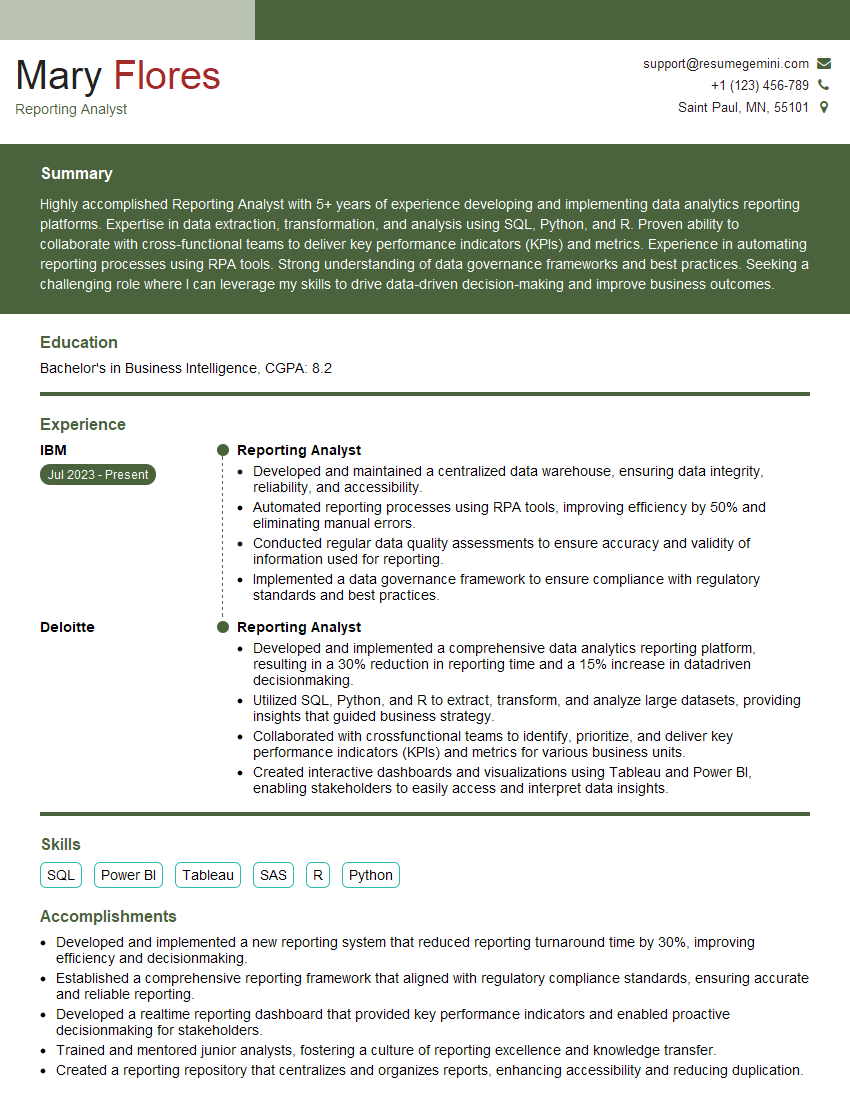
Reporting Analyst Resume Sample
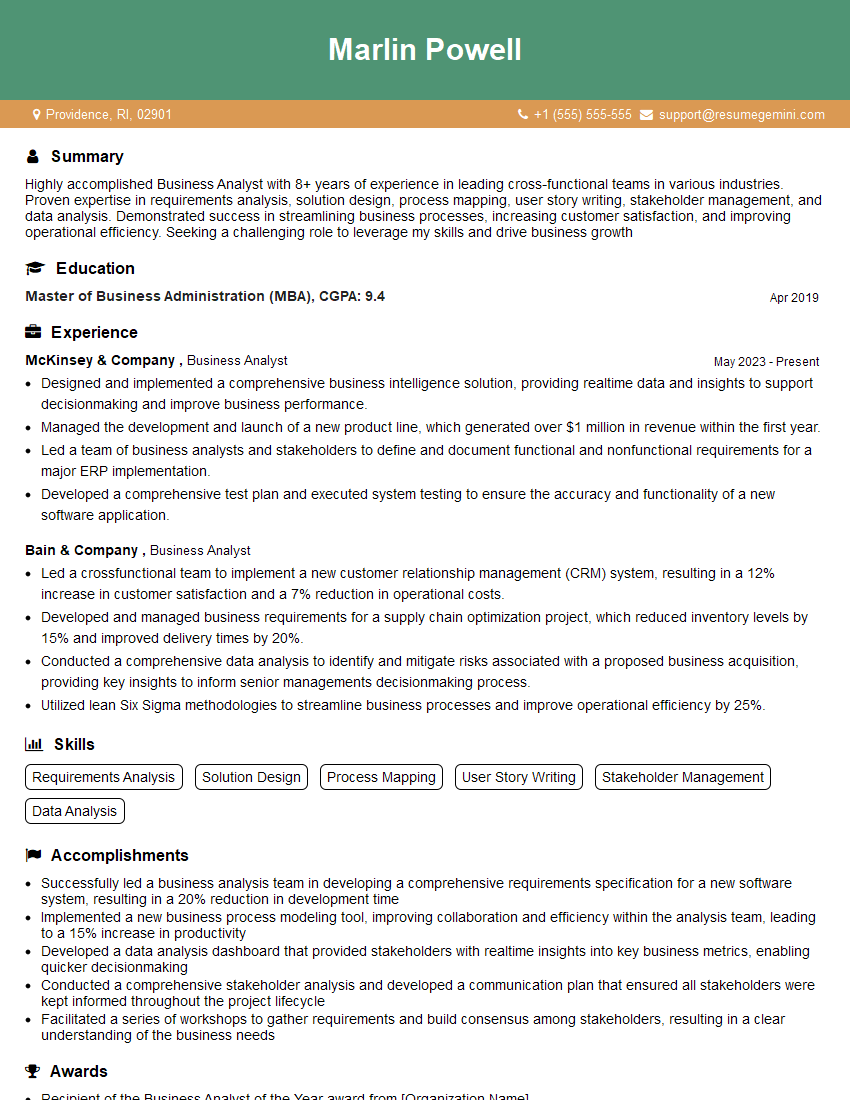
Business Analyst Resume Sample
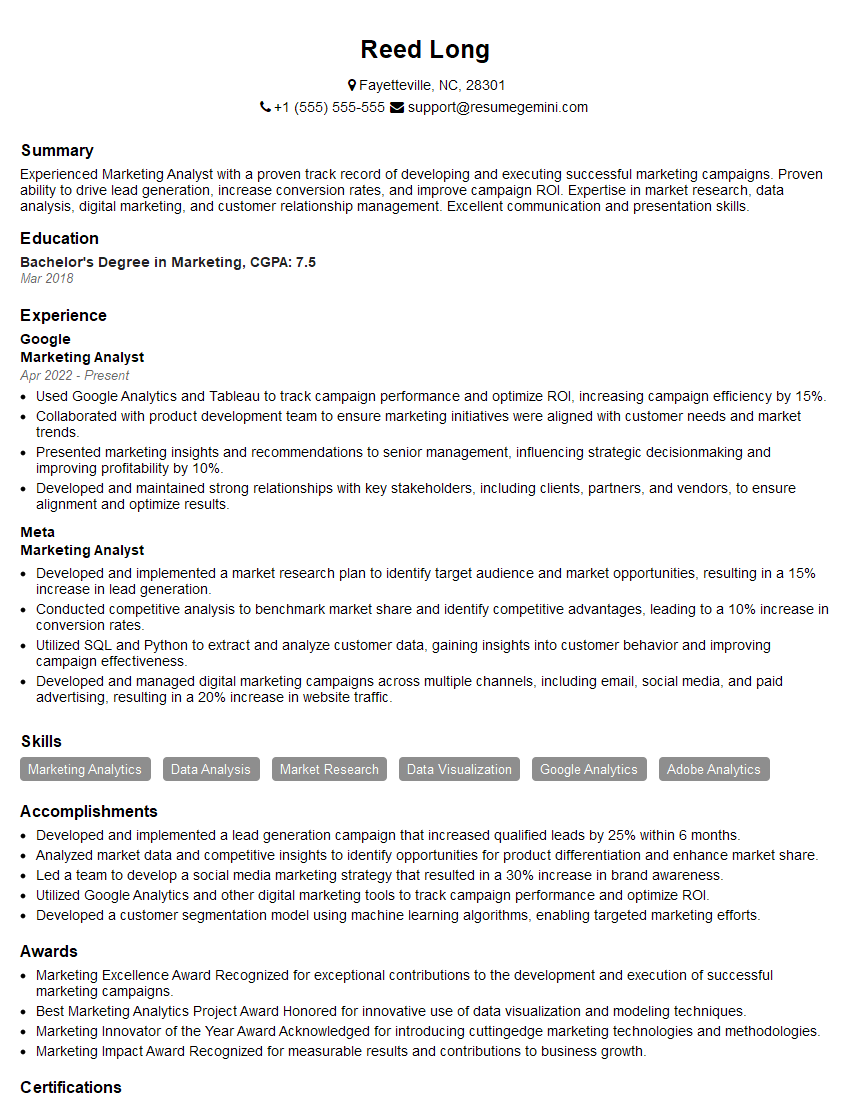
Marketing Analyst Resume Sample
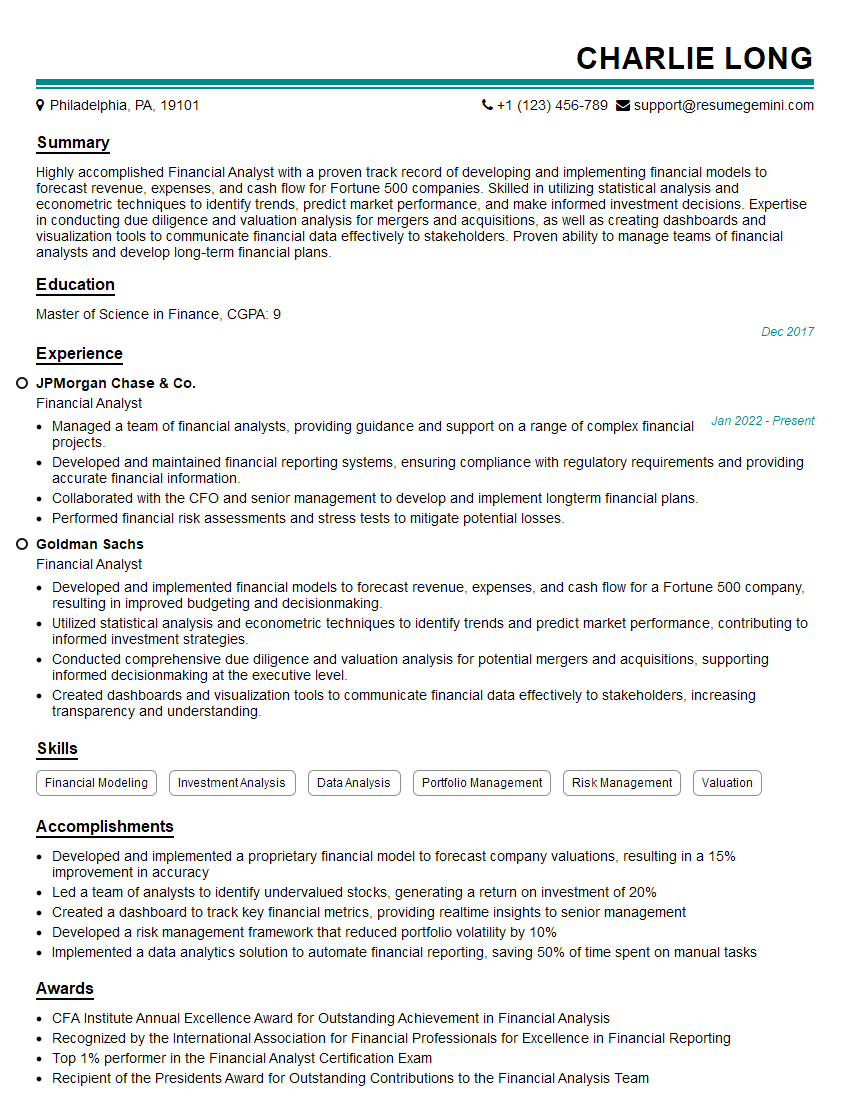
Financial Analyst Resume Sample

Data Analyst Resume Sample
Data Scientist Resume Sample
Web Analyst Resume Sample
Data Architect Resume Sample
Analytics Consultant Resume Sample
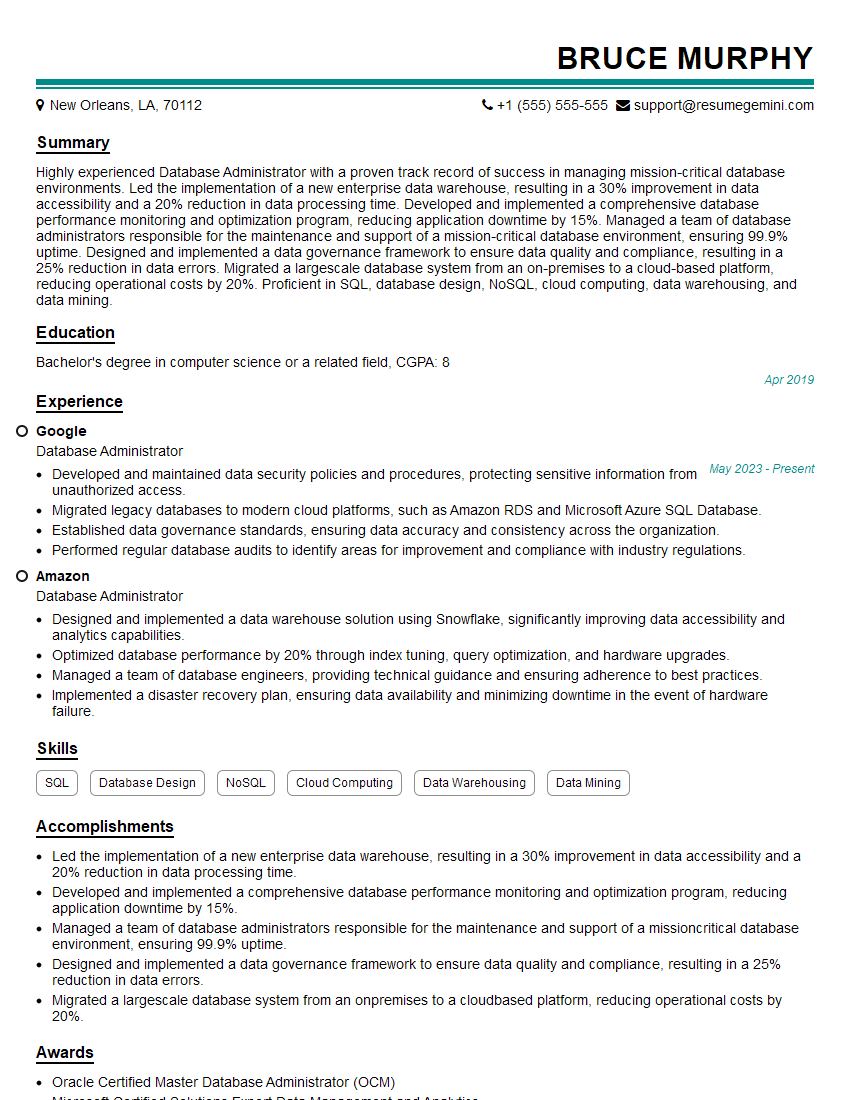
Database Administrator Resume Sample
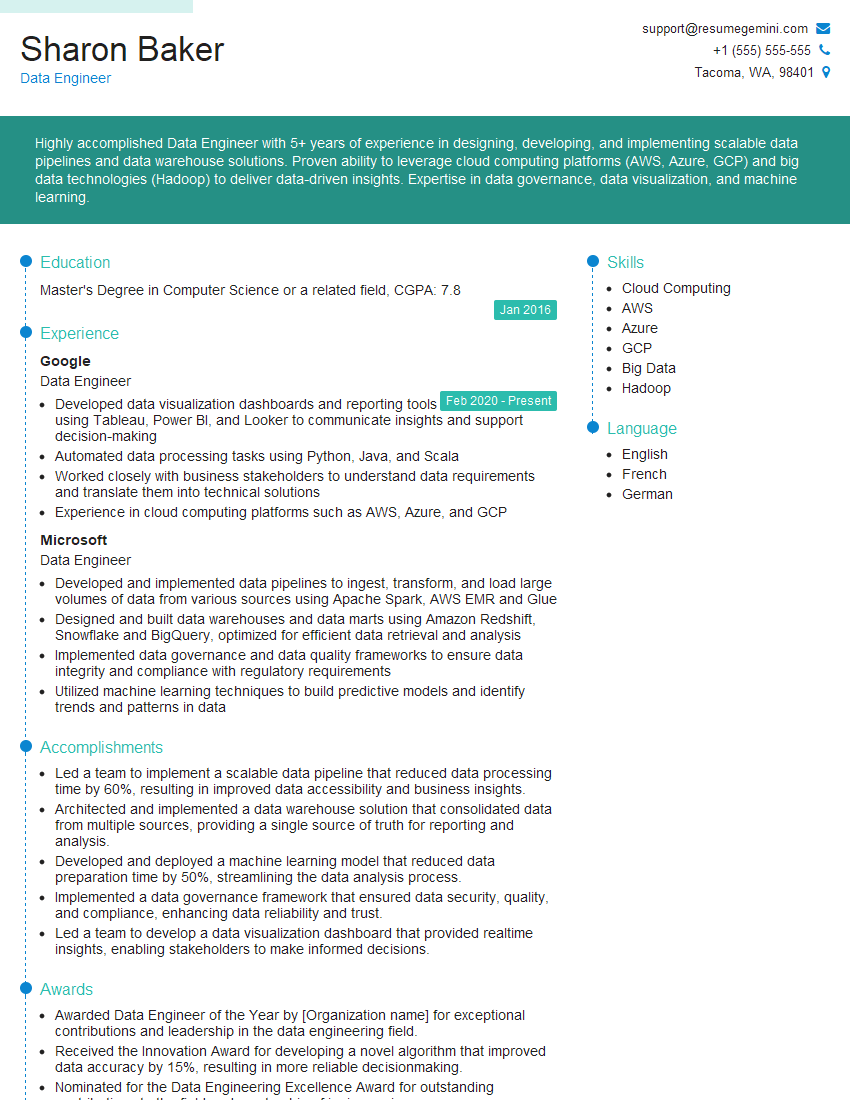
Data Engineer Resume Sample
Explore more articles
Users Rating of Our Blogs
Share Your Experience
We value your feedback! Please rate our content and share your thoughts (optional).
What Readers Say About Our Blog
Hello,
we currently offer a complimentary backlink and URL indexing test for search engine optimization professionals.
You can get complimentary indexing credits to test how link discovery works in practice.
No credit card is required and there is no recurring fee.
You can find details here:
https://wikipedia-backlinks.com/indexing/
Regards
NICE RESPONSE TO Q & A
hi
The aim of this message is regarding an unclaimed deposit of a deceased nationale that bears the same name as you. You are not relate to him as there are millions of people answering the names across around the world. But i will use my position to influence the release of the deposit to you for our mutual benefit.
Respond for full details and how to claim the deposit. This is 100% risk free. Send hello to my email id: [email protected]
Luka Chachibaialuka
Hey interviewgemini.com, just wanted to follow up on my last email.
We just launched Call the Monster, an parenting app that lets you summon friendly ‘monsters’ kids actually listen to.
We’re also running a giveaway for everyone who downloads the app. Since it’s brand new, there aren’t many users yet, which means you’ve got a much better chance of winning some great prizes.
You can check it out here: https://bit.ly/callamonsterapp
Or follow us on Instagram: https://www.instagram.com/callamonsterapp
Thanks,
Ryan
CEO – Call the Monster App
Hey interviewgemini.com, I saw your website and love your approach.
I just want this to look like spam email, but want to share something important to you. We just launched Call the Monster, a parenting app that lets you summon friendly ‘monsters’ kids actually listen to.
Parents are loving it for calming chaos before bedtime. Thought you might want to try it: https://bit.ly/callamonsterapp or just follow our fun monster lore on Instagram: https://www.instagram.com/callamonsterapp
Thanks,
Ryan
CEO – Call A Monster APP
To the interviewgemini.com Owner.
Dear interviewgemini.com Webmaster!
Hi interviewgemini.com Webmaster!
Dear interviewgemini.com Webmaster!
excellent
Hello,
We found issues with your domain’s email setup that may be sending your messages to spam or blocking them completely. InboxShield Mini shows you how to fix it in minutes — no tech skills required.
Scan your domain now for details: https://inboxshield-mini.com/
— Adam @ InboxShield Mini
Reply STOP to unsubscribe
Hi, are you owner of interviewgemini.com? What if I told you I could help you find extra time in your schedule, reconnect with leads you didn’t even realize you missed, and bring in more “I want to work with you” conversations, without increasing your ad spend or hiring a full-time employee?
All with a flexible, budget-friendly service that could easily pay for itself. Sounds good?
Would it be nice to jump on a quick 10-minute call so I can show you exactly how we make this work?
Best,
Hapei
Marketing Director
Hey, I know you’re the owner of interviewgemini.com. I’ll be quick.
Fundraising for your business is tough and time-consuming. We make it easier by guaranteeing two private investor meetings each month, for six months. No demos, no pitch events – just direct introductions to active investors matched to your startup.
If youR17;re raising, this could help you build real momentum. Want me to send more info?
Hi, I represent an SEO company that specialises in getting you AI citations and higher rankings on Google. I’d like to offer you a 100% free SEO audit for your website. Would you be interested?
Hi, I represent an SEO company that specialises in getting you AI citations and higher rankings on Google. I’d like to offer you a 100% free SEO audit for your website. Would you be interested?
good