Preparation is the key to success in any interview. In this post, we’ll explore crucial Data Preparation and Preprocessing interview questions and equip you with strategies to craft impactful answers. Whether you’re a beginner or a pro, these tips will elevate your preparation.
Questions Asked in Data Preparation and Preprocessing Interview
Q 1. Explain the difference between data cleaning and data preprocessing.
Data cleaning and data preprocessing are closely related but distinct steps in data preparation. Think of it like preparing a meal: cleaning is like washing and chopping vegetables, removing inedible parts; preprocessing is like sautéing, boiling, or otherwise preparing those ingredients for the final dish.
Data cleaning focuses on identifying and correcting or removing errors and inconsistencies in the data. This includes handling missing values, removing duplicates, correcting data entry errors, and dealing with outliers that are clearly errors. For example, an age value of -5 is clearly an error and needs to be cleaned.
Data preprocessing encompasses a broader range of techniques aimed at transforming the data into a format suitable for machine learning or other analyses. This involves tasks like feature scaling (normalizing or standardizing values), handling missing values (using more sophisticated methods than simple removal), feature engineering (creating new features from existing ones), and dimensionality reduction. For example, converting categorical variables into numerical ones using one-hot encoding is a preprocessing step.
Q 2. What are the common techniques for handling missing values?
Handling missing values is crucial for data integrity. The best approach depends on the nature of the data, the amount of missing data, and the chosen analytical method. Here are common techniques:
- Deletion: Simple but potentially wasteful. Listwise deletion removes entire rows with missing values, while pairwise deletion removes only the incomplete data points for specific analyses. This is best when missing data is minimal and random.
- Imputation: Replacing missing values with estimated values. Common methods include:
- Mean/Median/Mode Imputation: Replacing with the average (mean), middle value (median), or most frequent value (mode) of the column. Simple but can distort the data distribution if many values are missing.
- K-Nearest Neighbors (KNN) Imputation: Predicting missing values based on the values of similar data points. More accurate than mean/median/mode but computationally more expensive.
- Multiple Imputation: Creating multiple plausible imputed datasets and combining the results. Handles uncertainty better than single imputation.
- Prediction Models: Use regression or classification models to predict missing values based on other features. A powerful technique when missing values have a clear relationship with other variables.
Choosing the right method requires careful consideration. For instance, in a medical dataset, deleting patients with missing blood pressure readings might lead to bias if blood pressure correlates with the outcome variable. Imputation, especially KNN, might be a more appropriate solution.
Q 3. Describe your experience with ETL processes.
ETL (Extract, Transform, Load) processes are the backbone of any robust data pipeline. My experience involves designing, implementing, and optimizing ETL pipelines for various data sources and destinations. I’ve worked with various tools, including Apache Spark, Hadoop, and cloud-based services like AWS Glue and Azure Data Factory.
A recent project involved extracting data from multiple relational databases, transforming it using SQL and Python scripts to handle data cleaning and standardization (such as converting date formats, unifying naming conventions), and then loading it into a data warehouse for reporting and analysis. I tackled challenges like data inconsistencies across sources, managing large datasets, ensuring data quality, and optimizing pipeline performance for efficient data processing.
I’m proficient in writing robust and scalable ETL processes that adhere to best practices for data governance and security. This includes implementing data validation checks at each stage of the pipeline to ensure data quality and identify potential issues early. My focus is on creating maintainable and reusable ETL components.
Q 4. How do you handle outliers in a dataset?
Outliers are data points significantly different from other observations. Handling them depends on whether they represent genuine extreme values or errors. A simple visual inspection using box plots or scatter plots can often reveal them.
Here’s a breakdown of techniques:
- Detection: Identify outliers using methods like the Interquartile Range (IQR) method (data points outside 1.5 * IQR below Q1 or above Q3) or Z-score (data points with absolute Z-score above a threshold, e.g., 3).
- Removal: Directly removing outliers. Simple but can lead to information loss if outliers are genuine.
- Transformation: Applying mathematical transformations (log transformation, Box-Cox transformation) to reduce the influence of outliers. This often works well with skewed data.
- Winsorizing/Trimming: Capping outliers at a certain percentile or removing a certain percentage of extreme values from both ends.
- Imputation: Replacing outliers with less extreme values (e.g., using the nearest value within a certain range).
The best method depends on the context. For example, in fraud detection, outliers might be crucial and should not be removed. In contrast, outliers caused by data entry errors should be addressed through cleaning or imputation.
Q 5. What are some common data quality issues and how do you address them?
Data quality issues are common and can significantly impact analysis results. Here are some examples and how to address them:
- Inconsistent data formats: Dates in multiple formats (e.g., MM/DD/YYYY, DD/MM/YYYY) can cause issues. Standardize formats using appropriate functions.
- Missing values: Already discussed in detail above.
- Duplicate data: Identify and remove duplicates using appropriate techniques (e.g., based on a unique identifier or a combination of columns).
- Outliers: As explained before, careful consideration is needed before addressing outliers.
- Data entry errors: Use data validation rules during data entry or identify and correct them during data cleaning (e.g., ages exceeding a reasonable limit).
- Inaccurate data: Verify data sources and potentially use multiple sources to cross-validate.
Addressing data quality issues proactively is vital. This often involves implementing data validation rules and checks throughout the data pipeline to catch problems early.
Q 6. Explain the importance of data normalization and standardization.
Data normalization and standardization are crucial preprocessing steps that improve the performance of many machine learning algorithms, especially those sensitive to feature scaling. They transform data to a similar scale, preventing features with larger values from dominating the model.
Normalization scales features to a range between 0 and 1. It’s useful when the data distribution is not Gaussian (normal). Common methods include Min-Max scaling.
Standardization transforms data to have a mean of 0 and a standard deviation of 1. It’s particularly beneficial when the data is normally distributed or when algorithms like Support Vector Machines (SVMs) are used. Z-score standardization is the most common method.
Imagine a dataset with house prices (ranging from $100,000 to $1,000,000) and house sizes (ranging from 1000 to 3000 sq ft). Without normalization or standardization, the model might focus disproportionately on price due to its larger scale, ignoring the importance of size. Normalization or standardization addresses this issue, ensuring fair weighting of all features.
Q 7. What are different methods for feature scaling?
Several methods exist for feature scaling, each with its advantages and disadvantages:
- Min-Max Scaling: Scales features to a range between 0 and 1.
x_scaled = (x - x_min) / (x_max - x_min) - Z-score Standardization: Transforms data to have a mean of 0 and a standard deviation of 1.
x_scaled = (x - mean) / standard_deviation - Robust Scaling: Uses the median and interquartile range (IQR) instead of mean and standard deviation, making it less sensitive to outliers.
- Max Absolute Scaling: Scales features to a range between -1 and 1.
x_scaled = x / max(abs(x))
The choice of method depends on the data distribution and the algorithm used. For example, Min-Max scaling is suitable for algorithms sensitive to feature magnitudes, while Z-score standardization is often preferred for algorithms that assume normally distributed data.
Q 8. How do you detect and handle duplicate data?
Duplicate data is a common issue in datasets, leading to skewed analysis and inaccurate results. Detecting duplicates involves comparing rows based on key attributes or a combination of attributes to identify identical or near-identical entries. Handling duplicates depends on the context; you might choose to remove them entirely, keep only the first occurrence, or consolidate information from duplicates into a single row.
Detection Techniques:
- Exact Duplicates: Using SQL’s
ROW_NUMBER() OVER (PARTITION BY column1, column2 ORDER BY column1) as rnfunction, followed by filtering forrn > 1, efficiently identifies exact duplicates across specified columns. In Pandas (Python),df.duplicated()provides a boolean mask highlighting duplicates. - Near Duplicates: This requires more sophisticated techniques such as fuzzy matching (e.g., using the `fuzzywuzzy` library in Python). This handles slight variations in data like typos or inconsistent formatting. For instance, ‘Apple Inc.’ and ‘Apple inc’ would be considered near duplicates.
Handling Techniques:
- Deletion: Simply remove duplicate rows. Be cautious; ensure you understand the implications before deleting data.
- Deduplication: Retain only the first occurrence of a duplicate row. This is often the simplest solution.
- Consolidation: Merge information from duplicate rows into a single row, combining relevant attributes. For instance, if you have two entries for the same customer with different phone numbers, consolidate them into a single entry with both numbers.
Example (Pandas):
import pandas as pd
df = pd.DataFrame({'Name': ['Alice', 'Bob', 'Alice', 'Charlie'], 'Age': [25, 30, 25, 35]})
duplicates = df[df.duplicated(subset=['Name', 'Age'], keep=False)]
print(duplicates)
df.drop_duplicates(subset=['Name', 'Age'], inplace=True)
print(df)
Q 9. What are some techniques for dealing with imbalanced datasets?
Imbalanced datasets, where one class significantly outnumbers others, pose a challenge for machine learning models. They can lead to biased predictions, favoring the majority class. Several techniques address this:
- Resampling: This involves either oversampling the minority class (creating synthetic samples) or undersampling the majority class (removing samples).
- Oversampling Techniques:
- Random Oversampling: Duplicate random samples from the minority class. Simple but can lead to overfitting.
- SMOTE (Synthetic Minority Over-sampling Technique): Creates synthetic samples by interpolating between existing minority class instances. More sophisticated and generally preferred over random oversampling.
- Undersampling Techniques:
- Random Undersampling: Randomly remove samples from the majority class. Simple, but can lead to loss of valuable information.
- NearMiss: Selects majority class samples based on their distance to minority class samples. This aims to retain informative majority class samples.
- Cost-Sensitive Learning: Assign different misclassification costs to different classes. This penalizes errors on the minority class more heavily, guiding the model to pay more attention to it.
- Ensemble Methods: Combine multiple models trained on different subsets of the data or with different resampling techniques. This improves robustness and reduces overfitting.
Example (Python with imbalanced-learn):
from imblearn.over_sampling import SMOTE
from sklearn.datasets import make_classification
X, y = make_classification(n_samples=100, n_features=2, n_informative=2, n_redundant=0, random_state=42, weights=[0.9,0.1])
smote = SMOTE(random_state=42)
X_resampled, y_resampled = smote.fit_resample(X, y)
print(f'Original class distribution: {Counter(y)}')
print(f'Resampled class distribution: {Counter(y_resampled)}')
Choosing the right technique depends on the dataset’s characteristics and the model used. Experimentation and evaluation are key.
Q 10. Explain your experience with data transformation techniques.
Data transformation involves converting data from one format or representation to another to improve its suitability for analysis or modeling. I have extensive experience with various techniques, including:
- Scaling: Transforming features to a similar range of values. Common methods include Min-Max scaling (scales to [0, 1]), standardization (scales to have zero mean and unit variance), and robust scaling (less sensitive to outliers).
- Normalization: Adjusting values to a specific range, often [0, 1] or [-1, 1]. Useful for algorithms sensitive to feature scales.
- Log Transformation: Applying a logarithmic function to reduce the influence of extreme values and handle skewed distributions. Often used with features exhibiting exponential growth.
- Power Transformation (Box-Cox): A family of transformations used to stabilize variance and make data more normally distributed.
- One-Hot Encoding: Converting categorical variables into numerical representations using binary vectors. Useful for algorithms that require numerical input.
- Label Encoding: Assigning unique numerical labels to categorical values. Simpler than one-hot encoding, but might introduce unintended ordinal relationships.
Example (Scaling with Scikit-learn):
from sklearn.preprocessing import StandardScaler
import numpy as np
X = np.array([[1, 2], [3, 4], [5, 6]])
scaler = StandardScaler()
X_scaled = scaler.fit_transform(X)
print(X_scaled)
The choice of transformation depends on the data’s distribution, the algorithm used, and the specific goals of the analysis. For example, in image processing, I’ve used techniques like histogram equalization to improve contrast and enhance features for object recognition.
Q 11. How do you select appropriate data types for different variables?
Selecting appropriate data types is crucial for efficient storage, accurate representation, and effective analysis. The choice depends on the nature of the variable and its intended use.
- Numerical Variables:
- Integer (INT): For whole numbers (e.g., age, quantity).
- Floating-Point (FLOAT): For numbers with decimal points (e.g., price, temperature).
- Categorical Variables:
- Nominal (String or Category): Unordered categories (e.g., color, gender). Often represented as strings or using categorical data types for efficiency.
- Ordinal (Integer or Category): Ordered categories (e.g., education level, customer satisfaction rating). Can be represented as integers or categorical data types with defined order.
- Boolean Variables:
- Boolean (BOOLEAN): Represents true/false values (e.g., is_active, is_subscribed).
- Date and Time Variables:
- Date/Time (DATE, DATETIME): Represents dates and times (e.g., order date, timestamp).
Example (SQL):
CREATE TABLE Customers (
  CustomerID INT PRIMARY KEY,
  Name VARCHAR(255),
  Age INT,
  IsActive BOOLEAN,
  RegistrationDate DATE
);
Inaccurate data type selection can lead to data loss (e.g., truncating floating-point numbers to integers), unexpected behavior in analysis (e.g., treating ordinal categories as nominal), and inefficient storage.
Q 12. What is data profiling and why is it important?
Data profiling is the process of analyzing data to understand its characteristics, such as data types, distributions, completeness, and quality. It’s like conducting a thorough ‘health check’ on your data before using it for any analysis or modeling.
Importance:
- Identifying Data Quality Issues: Reveals missing values, inconsistencies, outliers, and duplicates, enabling early intervention.
- Understanding Data Distributions: Provides insights into data skewness, central tendencies, and variability.
- Informing Data Preprocessing: Guides the selection of appropriate data transformation and cleaning techniques.
- Improving Data Governance: Helps establish data quality standards and monitor data integrity over time.
- Optimizing Data Storage: Informs decisions on data type choices and storage formats.
Data profiling tools often provide summary statistics, histograms, frequency distributions, and data visualizations to effectively communicate the data’s characteristics. For instance, detecting a high percentage of missing values in a crucial variable could lead you to explore data imputation techniques.
Q 13. Describe your experience with different data formats (CSV, JSON, XML, etc.).
I’ve worked extensively with various data formats, each presenting its own challenges and benefits:
- CSV (Comma Separated Values): Simple, widely used, easily parsed by various tools. Suitable for tabular data. However, it struggles with complex data structures and can be less efficient for large datasets.
- JSON (JavaScript Object Notation): Human-readable, flexible, widely used for web applications. Supports nested structures, making it suitable for representing complex data. Parsing requires specialized libraries.
- XML (Extensible Markup Language): Highly structured, hierarchical, commonly used for data exchange. Suitable for complex data with nested relationships but can be verbose and more complex to parse compared to JSON.
- Parquet: Columnar storage format, highly efficient for large datasets, supports various data types. Used in big data environments like Hadoop and Spark.
- Avro: Schema-based binary data format, efficient storage and faster processing. Supports schema evolution, reducing the risk of incompatibility as data evolves. Useful for large-scale data processing.
The choice of format depends on the application, data complexity, and performance requirements. For example, I’ve used Parquet to handle petabyte-scale datasets in a big data analytics project, and JSON when integrating data from various web APIs.
Q 14. How do you ensure data consistency and integrity?
Ensuring data consistency and integrity is vital for reliable analysis. My approach involves several key strategies:
- Data Validation: Implementing checks to verify data accuracy and conformity to defined rules. This includes range checks, data type checks, and consistency checks across related fields. For example, ensuring that an age value is within a reasonable range or that a date value is in the correct format.
- Data Constraints: Defining constraints on data at the database or data structure level to enforce data integrity. This includes primary and foreign keys to establish relationships and prevent inconsistencies.
- Version Control: Tracking changes to data over time, allowing for rollback to previous versions if necessary. Tools like Git can be used to manage datasets and metadata.
- Data Auditing: Regularly reviewing data for anomalies, errors, and inconsistencies. This can involve automated checks and manual inspection.
- Data Governance Policies: Establishing clear procedures and guidelines for data handling, access control, and quality management. This ensures that data is handled consistently throughout its lifecycle.
For instance, in a financial application, robust data validation and constraint enforcement are critical to prevent errors and ensure the accuracy of financial transactions. Implementing comprehensive data governance policies ensures that all these strategies are followed to maintain data quality.
Q 15. Explain your experience with data validation techniques.
Data validation is the process of ensuring data accuracy and consistency before it’s used in analysis or modeling. It’s like proofreading a crucial document before submission – you wouldn’t want errors to undermine your conclusions! My experience encompasses a wide range of techniques, including:
- Range checks: Verifying that numerical values fall within expected boundaries. For example, ensuring age values are within 0-120.
- Format checks: Confirming data adheres to predefined formats, such as date formats (YYYY-MM-DD) or email addresses.
- Consistency checks: Identifying discrepancies between related data points. For example, checking if a customer’s billing address matches their shipping address.
- Completeness checks: Ensuring no critical fields are missing. Imagine a customer database without names – quite useless!
- Uniqueness checks: Making sure values are unique where required, such as customer IDs or product SKUs.
- Cross-field validation: Validating data across multiple fields. For instance, verifying that the sum of individual order items equals the total order amount.
- Data type validation: Confirming that the data type of each field matches its expected type (e.g., integer, string, date).
In practice, I utilize scripting languages like Python with libraries like Pandas to automate these checks. For example, I might use Pandas’ .astype() to ensure correct data types and .isin() for membership checks. I also leverage database constraints and validation rules during data entry to prevent invalid data from entering the system in the first place.
Career Expert Tips:
- Ace those interviews! Prepare effectively by reviewing the Top 50 Most Common Interview Questions on ResumeGemini.
- Navigate your job search with confidence! Explore a wide range of Career Tips on ResumeGemini. Learn about common challenges and recommendations to overcome them.
- Craft the perfect resume! Master the Art of Resume Writing with ResumeGemini’s guide. Showcase your unique qualifications and achievements effectively.
- Don’t miss out on holiday savings! Build your dream resume with ResumeGemini’s ATS optimized templates.
Q 16. What is the difference between supervised and unsupervised data preprocessing?
The key difference lies in the target: supervised preprocessing prepares data for supervised learning algorithms, while unsupervised preprocessing focuses on unsupervised learning.
Supervised preprocessing involves techniques tailored to the target variable. This often includes:
- Handling missing values based on the target: For example, using k-Nearest Neighbors to impute missing values based on the relationship between the missing features and the target variable.
- Feature scaling tailored to the model: Using standardization or normalization, which can be more effective in some algorithms (like linear regression) than others (like tree-based models).
- Feature selection based on correlation with the target: Only selecting features that significantly influence the target, reducing dimensionality and improving model performance.
Unsupervised preprocessing deals with data without a predefined target variable. Its focus is on data exploration, reduction, and transformation to reveal underlying structure. Common techniques include:
- Dimensionality reduction: Techniques like PCA to reduce the number of features while preserving important information.
- Clustering-based preprocessing: Grouping similar data points together for further analysis.
- Handling missing values using unsupervised methods: Imputation techniques that don’t rely on a target variable, such as mean or median imputation.
In essence, supervised preprocessing uses the target variable to guide data preparation steps, optimizing for the specific model, while unsupervised preprocessing prepares data for exploratory analysis or algorithms that don’t use a target.
Q 17. How do you handle categorical data?
Categorical data, representing groups or categories rather than numerical values (e.g., colors, countries), requires special handling. My approach depends on the algorithm and the nature of the categories:
- One-hot encoding: Creates binary features for each category. For example, if we have colors (red, green, blue), we’d get three binary features: is_red, is_green, is_blue. This is useful for many algorithms, but can lead to high dimensionality with many categories.
- Label encoding: Assigns a unique integer to each category. While simple, it can introduce artificial order, which might be inappropriate for some algorithms.
- Binary encoding: Represents categories using a binary code. Less susceptible to introducing artificial order compared to label encoding.
- Target encoding/Mean encoding: Replaces a category with the average value of the target variable for that category in supervised learning scenarios. This can lead to overfitting if not handled carefully (using techniques like regularization or smoothing).
- Frequency encoding: Replaces a category with its frequency of occurrence in the dataset.
The choice depends on the context. For example, one-hot encoding is suitable for linear models, while tree-based models may not need explicit encoding as they naturally handle categorical data. I always consider the potential for overfitting when using methods like target encoding and carefully evaluate the effects of different encoding schemes on model performance.
Q 18. What are some common challenges you encounter during data preparation?
Data preparation is rarely smooth sailing! Common challenges include:
- Missing values: Missing data is ubiquitous. The approach depends on the amount, pattern, and reason for missingness. Strategies range from simple imputation (mean, median, mode) to more sophisticated methods (k-NN, MICE).
- Inconsistent data formats: Data might come from multiple sources with varying formats, requiring standardization.
- Data quality issues: Errors, outliers, and inconsistencies can significantly impact analysis. Robust data validation techniques are essential.
- Data imbalance: In classification problems, one class might have significantly fewer instances than others, affecting model accuracy. Techniques like oversampling, undersampling, or SMOTE are used to address this.
- High dimensionality: Too many features can lead to computational issues and overfitting. Feature selection and dimensionality reduction are vital.
- Data scale variations: Different features might have vastly different scales, impacting algorithm performance. Standardization or normalization helps to address this.
Addressing these challenges often involves iterative refinement. I frequently use exploratory data analysis (EDA) to identify problems and select appropriate solutions.
Q 19. How do you optimize data preparation for large datasets?
Optimizing data preparation for massive datasets requires careful planning and the use of efficient tools and techniques. Key strategies include:
- Distributed computing: Frameworks like Spark allow processing of data across multiple machines, dramatically accelerating computation.
- Data sampling: Using a representative subset of the data for preprocessing can reduce processing time while still providing valuable insights. Careful consideration is needed to ensure the sample reflects the overall population.
- Incremental processing: Instead of reprocessing the entire dataset each time, update the preprocessed data only when new data arrives.
- Optimized data structures: Using efficient data structures like Apache Arrow or Parquet can significantly improve data loading and manipulation speeds.
- Vectorized operations: Using vectorized operations in libraries like NumPy or Pandas avoids explicit loops, improving performance dramatically.
- Data compression: Compressing data reduces storage space and improves I/O performance.
For example, I’ve used Spark to perform distributed imputation on a dataset exceeding 100GB, achieving results in a fraction of the time it would have taken using a single machine. Choosing the right tools and techniques is crucial for efficiency and scalability.
Q 20. Explain your experience with data visualization tools for data exploration and quality assessment.
Data visualization is crucial for exploring data, identifying patterns, and assessing data quality. My experience includes using a variety of tools, depending on the task and the size of the dataset:
- Tableau: Excellent for interactive dashboards and exploratory analysis. Great for communicating findings to non-technical audiences.
- Power BI: Similar to Tableau, offering a user-friendly interface and extensive visualization options.
- Matplotlib and Seaborn (Python): Powerful for creating custom visualizations and generating publication-quality plots. Ideal for deeper, more technical explorations.
- ggplot2 (R): A grammar of graphics system providing flexible and customizable visualization options in R.
For example, when working with a large e-commerce dataset, I used Tableau to create dashboards showing sales trends, customer segmentation, and product performance. For more in-depth analysis, I used Python’s Seaborn to generate histograms, scatter plots, and box plots to identify outliers and explore relationships between variables. The choice of tools often hinges on the project’s scope, the audience, and the level of customization needed.
Q 21. What is your preferred programming language for data preparation and why?
My preferred programming language for data preparation is Python. Its versatility and rich ecosystem of libraries make it an ideal choice for handling diverse data preparation tasks.
- Pandas: Provides powerful data manipulation and analysis capabilities. Its DataFrame structure simplifies data cleaning, transformation, and exploration.
- NumPy: Essential for numerical computing, enabling efficient array operations crucial for data scaling and manipulation.
- Scikit-learn: Offers a wide range of data preprocessing tools, including imputation, encoding, scaling, and dimensionality reduction techniques.
- Data visualization libraries (Matplotlib, Seaborn): Enable quick generation of various plots for exploratory data analysis.
Python’s readability and extensive community support contribute to its ease of use and allow me to efficiently solve complex data preparation challenges. While R is also a strong contender, Python’s broader applicability beyond data science makes it more versatile in my workflow.
Q 22. Describe your experience with SQL for data extraction and manipulation.
SQL is my bread and butter when it comes to data extraction and manipulation. I’ve extensively used it to query, filter, and transform data from various relational databases like PostgreSQL, MySQL, and SQL Server. My proficiency extends beyond basic SELECT statements; I’m comfortable using advanced features such as window functions, common table expressions (CTEs), and stored procedures to perform complex data manipulations efficiently. For instance, I recently used window functions to rank customer purchases by order date, allowing me to identify our top spenders within a specific timeframe. This involved creating a CTE to first filter for a certain product category and then applying the window function to rank customers based on their cumulative spending.
I also regularly employ joins (inner, left, right, full outer) to combine data from multiple tables, which is crucial for creating comprehensive datasets for analysis. Furthermore, I leverage SQL’s aggregate functions (SUM, AVG, COUNT, MIN, MAX) to calculate key metrics and create summary tables. My approach always focuses on writing clean, optimized, and well-documented SQL code to ensure maintainability and reusability.
--Example of a CTE and Window Function
WITH RankedSales AS (
    SELECT customer_id, order_date, total_amount,
           RANK() OVER (PARTITION BY customer_id ORDER BY order_date) as order_rank
    FROM sales_orders
    WHERE product_category = 'Electronics'
)
SELECT * FROM RankedSales WHERE order_rank = 1;
Q 23. Explain your experience with using different data preparation tools.
My experience spans various data preparation tools, catering to different project needs and data scales. For smaller datasets or ad-hoc tasks, I often use spreadsheet software like Excel or Google Sheets, leveraging their built-in functions for cleaning and transforming data. However, for larger, more complex projects, I heavily rely on Python with libraries like Pandas and NumPy. Pandas provides excellent data manipulation capabilities, including data cleaning, transformation, and feature engineering, while NumPy is crucial for efficient numerical computations.
I’m also familiar with specialized ETL (Extract, Transform, Load) tools such as Informatica PowerCenter and Talend Open Studio. These tools provide robust features for handling large datasets and integrating data from diverse sources. In particular, Talend’s graphical interface makes it easier for collaborative projects where visualization and workflow design are key aspects. The choice of tool depends on the specific project requirements, considering factors such as data volume, complexity, and team expertise.
Q 24. How do you assess the quality of prepared data?
Assessing data quality is a critical step, and I use a multi-faceted approach. It begins with understanding the data’s intended use. For example, the quality standards for a model training dataset will be more stringent than for exploratory data analysis.
My assessment involves several checks:
- Completeness: I check for missing values and assess the percentage of missing data in each column. I might decide to impute, remove, or model missing values based on context.
- Accuracy: I validate the data against known sources or business rules. Inconsistencies or outliers might require investigation and correction.
- Consistency: I ensure data conforms to predefined formats and standards (e.g., date formats, data types). I use data profiling techniques to identify inconsistencies.
- Validity: I verify that values fall within acceptable ranges and conform to logical constraints.
- Uniqueness: I check for duplicate entries which may point to data entry errors or problems with data integration.
Ultimately, a combination of automated checks (using Python scripts or SQL queries) and manual review is crucial for a comprehensive assessment. I also generate data quality reports to document the findings and track improvements over time.
Q 25. What is your experience with version control for data preparation projects?
Version control is paramount in data preparation, especially in collaborative projects. I consistently use Git for version control, not just for code but also for data preparation scripts, data files, and documentation. This ensures traceability, facilitates collaboration, and simplifies the process of reverting to previous versions if needed.
I typically use a Git repository (such as GitHub or GitLab) to store my project, and commit changes regularly with descriptive commit messages. This allows for easy tracking of changes made to the dataset and allows for collaboration with team members. Branching and merging are key strategies for managing different versions simultaneously, allowing parallel development of transformations without disrupting the main branch.
Q 26. Describe a time you had to deal with a particularly messy dataset.
In a previous project, I encountered a customer database with numerous inconsistencies. Data was entered inconsistently (e.g., different date formats, inconsistent use of abbreviations for states), contained missing values scattered across columns, and included numerous duplicate entries. Furthermore, data types were incorrectly assigned in some fields.
My approach involved a systematic cleaning process:
- Data Profiling: I began by profiling the data using Pandas to understand the data types, identify missing values, and detect inconsistencies.
- Data Cleaning: I addressed inconsistencies in data formats (dates, states) using Python’s regular expression capabilities and Pandas string manipulation functions. I also identified and removed duplicate entries. I used advanced imputation methods for missing values based on context-specific relationships between variables.
- Data Transformation: I created new features (e.g., age from date of birth) to improve the quality and analytical utility of the data.
- Data Validation: After cleaning, I performed validation checks using assertions and comparisons to ensure data integrity and consistency.
This methodical approach, combined with good documentation, allowed me to transform a messy dataset into a clean, reliable one ready for analysis.
Q 27. How do you handle noisy data?
Noisy data, characterized by irrelevant or erroneous data points, requires careful handling. My approach involves a combination of techniques:
- Filtering and Outlier Detection: I use statistical methods like box plots or Z-score to detect and remove outliers. However, caution is advised because sometimes outliers are legitimate data points and removing them can lead to loss of information. Thus, I carefully consider the implications of outlier removal in each specific case.
- Smoothing: For numerical data, I might apply techniques like moving averages to smooth out fluctuations and reduce noise. This is more appropriate for time series data where trends are important.
- Binning: I can group data into bins to reduce the impact of individual noisy points. This is particularly useful for continuous variables.
- Regression: For certain types of noise, regression analysis can be used to model the relationship between variables and predict values based on the underlying trend.
- Data Transformation: Applying transformations like log transformation can help to normalize data and reduce the impact of extreme values.
The best method depends on the nature and source of the noise. Often, a combination of these techniques is employed.
Q 28. What is dimensionality reduction and when is it useful?
Dimensionality reduction is the process of reducing the number of variables (features) in a dataset while retaining as much of the important information as possible. It’s useful in several scenarios:
- Improving Model Performance: High dimensionality can lead to overfitting in machine learning models. Dimensionality reduction helps to improve model generalization and reduce computational costs.
- Reducing Storage and Computation: Working with fewer variables reduces storage requirements and accelerates processing times.
- Data Visualization: Visualizing high-dimensional data is challenging. Dimensionality reduction allows for visualization in lower-dimensional spaces (e.g., 2D or 3D).
Common techniques include:
- Principal Component Analysis (PCA): Transforms data into a new set of uncorrelated variables (principal components) that capture the most variance in the data.
- Linear Discriminant Analysis (LDA): Maximizes the separation between different classes in the data.
- t-distributed Stochastic Neighbor Embedding (t-SNE): A non-linear technique that is particularly useful for visualizing high-dimensional data in low-dimensional spaces, often used for exploratory data analysis.
- Feature Selection: This involves selecting a subset of the original features based on their importance or relevance to the task at hand. Methods include correlation analysis or recursive feature elimination.
The choice of technique depends on the specific dataset and the goals of the analysis. For example, PCA is suitable for unsupervised learning where there are no predefined classes, while LDA is better suited for supervised learning tasks where class labels are available.
Key Topics to Learn for Data Preparation and Preprocessing Interview
- Data Cleaning: Understanding and handling missing values (imputation techniques, removal strategies), outlier detection and treatment, and noise reduction methods. Practical application: Choosing the appropriate method for handling missing data in a customer churn dataset based on the nature of the missingness.
- Data Transformation: Mastering techniques like scaling (standardization, normalization), encoding categorical variables (one-hot encoding, label encoding), and feature engineering. Practical application: Applying different scaling techniques to improve the performance of a machine learning model on a dataset with features of varying scales.
- Data Reduction: Exploring dimensionality reduction techniques like Principal Component Analysis (PCA) and feature selection methods (filter, wrapper, embedded methods). Practical application: Reducing the dimensionality of a high-dimensional dataset to improve model efficiency and prevent overfitting.
- Data Integration: Understanding methods for merging and joining datasets from different sources, handling inconsistencies in data formats and schemas. Practical application: Combining customer transaction data with demographic data to create a comprehensive customer profile for targeted marketing campaigns.
- Data Validation and Verification: Implementing data quality checks and validation rules to ensure data accuracy and consistency. Practical application: Developing a data validation pipeline to identify and correct errors in a large-scale data warehouse.
- Handling Imbalanced Datasets: Understanding techniques like oversampling, undersampling, and cost-sensitive learning to address class imbalance issues. Practical application: Addressing class imbalance in a fraud detection dataset to improve the model’s ability to identify fraudulent transactions.
Next Steps
Mastering data preparation and preprocessing is crucial for a successful career in data science and related fields. It forms the foundation for building robust and accurate machine learning models. A strong understanding of these techniques will significantly improve your ability to solve real-world data challenges and contribute meaningfully to data-driven projects. To further enhance your job prospects, invest time in creating an ATS-friendly resume that highlights your skills and experience effectively. ResumeGemini is a trusted resource that can help you build a professional and impactful resume. Examples of resumes tailored to Data Preparation and Preprocessing roles are available to guide you in creating your own.
Data Analyst Resume Sample
Data Scientist Resume Sample
Data Modeler Resume Sample
Data Architect Resume Sample
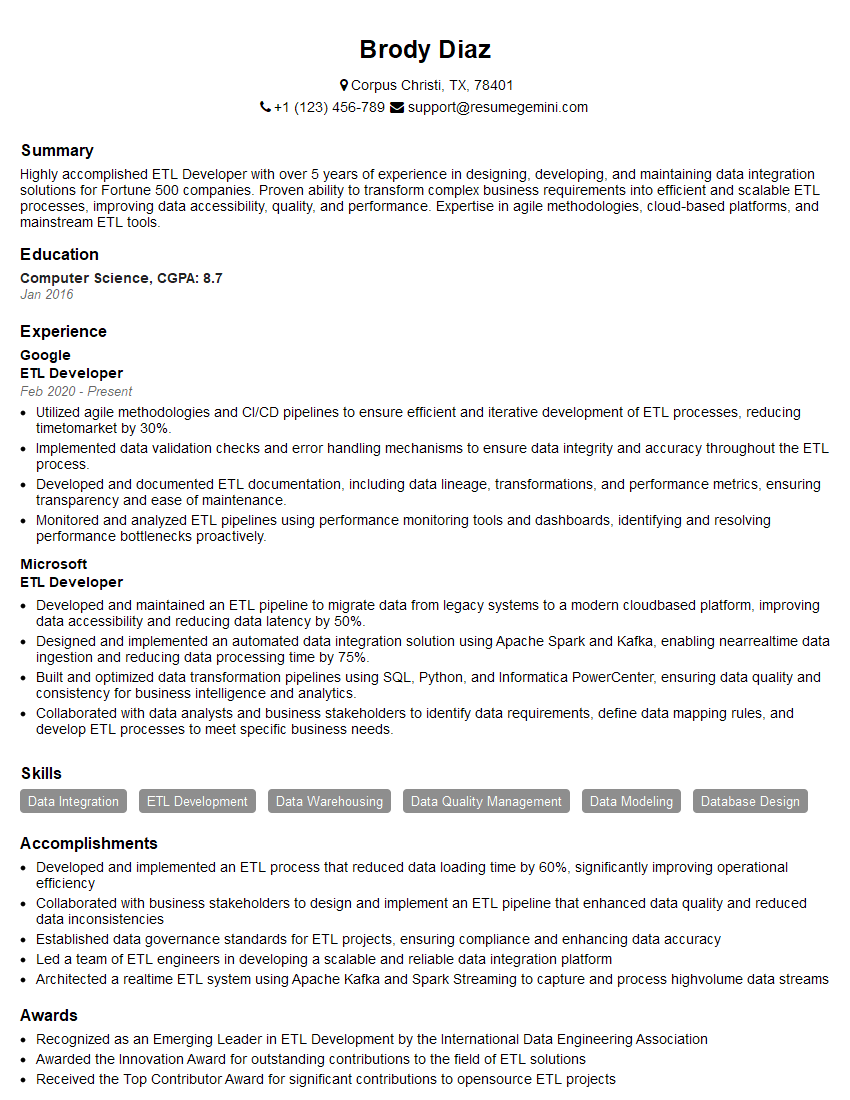
ETL Developer Resume Sample
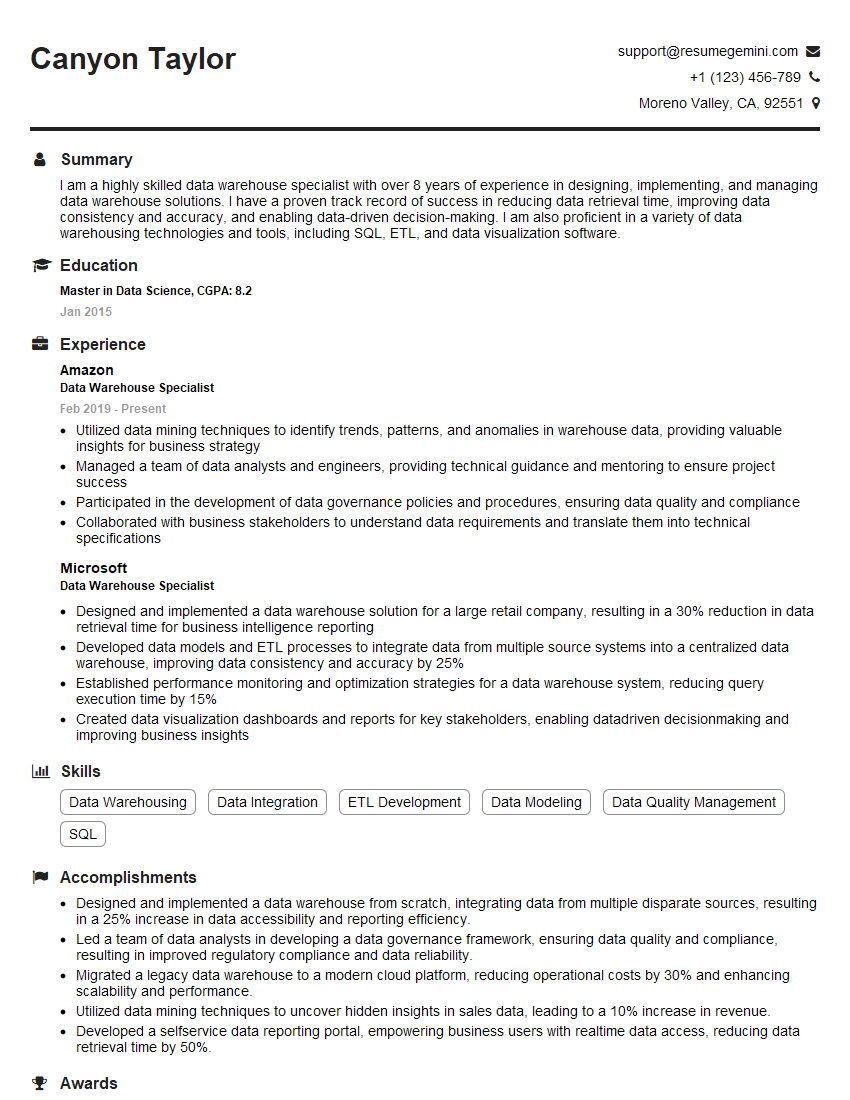
Data Warehouse Specialist Resume Sample
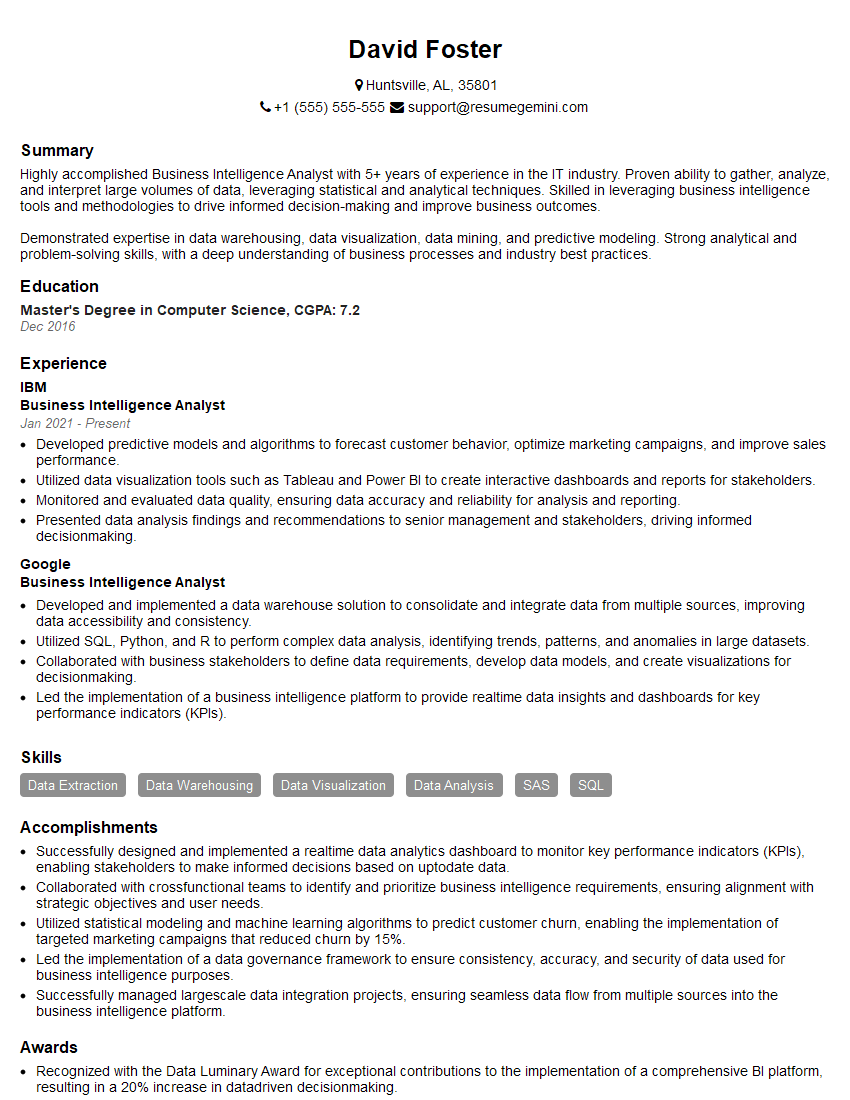
Business Intelligence Analyst Resume Sample

Statistical Analyst Resume Sample
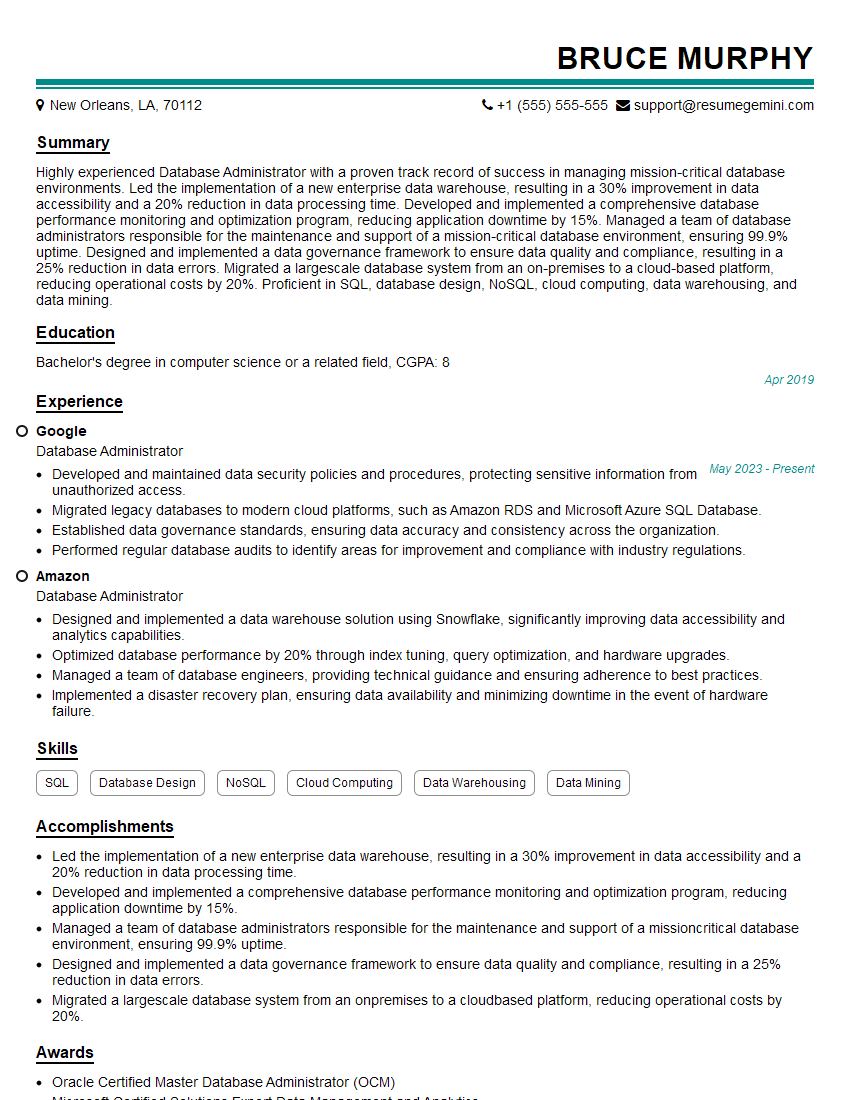
Database Administrator Resume Sample

Machine Learning Engineer Resume Sample
Data Engineer Resume Sample
Explore more articles
Users Rating of Our Blogs
Share Your Experience
We value your feedback! Please rate our content and share your thoughts (optional).
What Readers Say About Our Blog
Hello,
we currently offer a complimentary backlink and URL indexing test for search engine optimization professionals.
You can get complimentary indexing credits to test how link discovery works in practice.
No credit card is required and there is no recurring fee.
You can find details here:
https://wikipedia-backlinks.com/indexing/
Regards
NICE RESPONSE TO Q & A
hi
The aim of this message is regarding an unclaimed deposit of a deceased nationale that bears the same name as you. You are not relate to him as there are millions of people answering the names across around the world. But i will use my position to influence the release of the deposit to you for our mutual benefit.
Respond for full details and how to claim the deposit. This is 100% risk free. Send hello to my email id: [email protected]
Luka Chachibaialuka
Hey interviewgemini.com, just wanted to follow up on my last email.
We just launched Call the Monster, an parenting app that lets you summon friendly ‘monsters’ kids actually listen to.
We’re also running a giveaway for everyone who downloads the app. Since it’s brand new, there aren’t many users yet, which means you’ve got a much better chance of winning some great prizes.
You can check it out here: https://bit.ly/callamonsterapp
Or follow us on Instagram: https://www.instagram.com/callamonsterapp
Thanks,
Ryan
CEO – Call the Monster App
Hey interviewgemini.com, I saw your website and love your approach.
I just want this to look like spam email, but want to share something important to you. We just launched Call the Monster, a parenting app that lets you summon friendly ‘monsters’ kids actually listen to.
Parents are loving it for calming chaos before bedtime. Thought you might want to try it: https://bit.ly/callamonsterapp or just follow our fun monster lore on Instagram: https://www.instagram.com/callamonsterapp
Thanks,
Ryan
CEO – Call A Monster APP
To the interviewgemini.com Owner.
Dear interviewgemini.com Webmaster!
Hi interviewgemini.com Webmaster!
Dear interviewgemini.com Webmaster!
excellent
Hello,
We found issues with your domain’s email setup that may be sending your messages to spam or blocking them completely. InboxShield Mini shows you how to fix it in minutes — no tech skills required.
Scan your domain now for details: https://inboxshield-mini.com/
— Adam @ InboxShield Mini
Reply STOP to unsubscribe
Hi, are you owner of interviewgemini.com? What if I told you I could help you find extra time in your schedule, reconnect with leads you didn’t even realize you missed, and bring in more “I want to work with you” conversations, without increasing your ad spend or hiring a full-time employee?
All with a flexible, budget-friendly service that could easily pay for itself. Sounds good?
Would it be nice to jump on a quick 10-minute call so I can show you exactly how we make this work?
Best,
Hapei
Marketing Director
Hey, I know you’re the owner of interviewgemini.com. I’ll be quick.
Fundraising for your business is tough and time-consuming. We make it easier by guaranteeing two private investor meetings each month, for six months. No demos, no pitch events – just direct introductions to active investors matched to your startup.
If youR17;re raising, this could help you build real momentum. Want me to send more info?
Hi, I represent an SEO company that specialises in getting you AI citations and higher rankings on Google. I’d like to offer you a 100% free SEO audit for your website. Would you be interested?
Hi, I represent an SEO company that specialises in getting you AI citations and higher rankings on Google. I’d like to offer you a 100% free SEO audit for your website. Would you be interested?
good