Cracking a skill-specific interview, like one for Defense Intelligence Analysis, requires understanding the nuances of the role. In this blog, we present the questions you’re most likely to encounter, along with insights into how to answer them effectively. Let’s ensure you’re ready to make a strong impression.
Questions Asked in Defense Intelligence Analysis Interview
Q 1. Explain the difference between strategic and tactical intelligence analysis.
Strategic and tactical intelligence analysis differ primarily in their scope and timeframe. Think of it like planning a military campaign: strategic intelligence focuses on the big picture – long-term goals, overall enemy capabilities, and the broader geopolitical landscape. It informs high-level decision-making, such as resource allocation and overall campaign strategy. Tactical intelligence, on the other hand, focuses on the here and now – immediate threats, short-term enemy actions, and specific battlefield conditions. It directly supports operational-level decisions, like troop deployments and targeting specific enemy positions.
For example, strategic intelligence might analyze a nation’s nuclear weapons program and its potential implications for regional stability, while tactical intelligence might focus on the real-time location of enemy troops and their immediate intentions in a particular region. Strategic intelligence is about long-term trends and potential future threats, while tactical intelligence addresses immediate, short-term challenges.
Q 2. Describe the intelligence cycle and your role within it.
The intelligence cycle is a continuous process encompassing planning and direction, collection, processing, analysis, production, and dissemination. My role as an intelligence analyst primarily falls within the analysis and production phases.
- Planning and Direction: This stage defines intelligence requirements and prioritizes collection efforts. It’s driven by the needs of policymakers and military commanders.
- Collection: Various agencies and assets gather raw intelligence data from various sources, like HUMINT (human intelligence), SIGINT (signals intelligence), IMINT (imagery intelligence), etc.
- Processing: Raw data is converted into a usable format. This involves translating languages, deciphering codes, and geo-locating imagery.
- Analysis: This is where I come in. I take processed data, apply analytic methods, and synthesize it into meaningful assessments and intelligence products.
- Production: This involves creating reports, briefings, and other finished intelligence products suitable for consumption by decision-makers.
- Dissemination: The final product is shared with relevant authorities, policymakers, and military commanders.
I work closely with collection managers to ensure we are addressing the most pressing intelligence requirements and I contribute to the overall cycle through thorough analysis, clear communication, and high-quality intelligence products. My contribution helps bridge the gap between raw data and informed decision-making.
Q 3. How do you assess the credibility of intelligence sources?
Assessing source credibility is critical. We use a multi-faceted approach, considering several key factors:
- Source Track Record: Has this source provided accurate information in the past? A history of reliability is crucial.
- Source Motivation: What are the source’s underlying interests? Are they trying to manipulate us or provide honest information? Understanding motivations is critical to interpretation.
- Method of Collection: How was the information obtained? Direct observation is generally stronger than hearsay. Technical collection methods may also provide better validation.
- Corroboration: Can the information be verified through independent sources? Multiple sources confirming the same information significantly strengthen its credibility.
- Source Expertise: Does the source have the knowledge and experience to make an accurate assessment? A doctor’s assessment on medical matters would carry more weight than a layman’s.
For example, information from a defector may be valuable but needs careful scrutiny due to potential bias or ulterior motives. We might corroborate their claims with other intelligence gathered through different methods to assess their overall trustworthiness.
Q 4. What methods do you use to identify biases in intelligence reporting?
Identifying biases is essential to producing objective intelligence assessments. We use several methods:
- Understanding Source Bias: As previously discussed, understanding the source’s motivations and potential biases is the first step. A government official might present a biased perspective to support their country’s narrative.
- Analyzing Language and Tone: The language used in intelligence reports can reveal underlying biases. Emotional or inflammatory language should raise flags.
- Comparing Multiple Perspectives: Analyzing information from different sources with varying viewpoints helps identify potential biases and reveals the full picture.
- Structured Analytical Techniques: Techniques like matrixes and red teaming provide structured ways to explore potential biases and challenge assumptions. Red teaming is especially effective, simulating an adversary’s perspective to identify vulnerabilities in our own analyses.
- Self-Reflection: Analysts should constantly be aware of their own potential biases and actively work to mitigate their influence on their work. This requires critical self-assessment and a commitment to objectivity.
For instance, if multiple sources consistently report a particular event from a single, specific angle, it’s crucial to actively seek alternate perspectives to detect whether there is an underlying bias influencing the narrative.
Q 5. How do you handle conflicting intelligence reports?
Conflicting intelligence reports are common. Handling them requires careful consideration and a structured approach:
- Source Evaluation: Re-evaluate the credibility of the sources providing the conflicting information. Which is more reliable based on past performance and motivations?
- Data Reconciliation: Try to identify potential inconsistencies in the conflicting reports. Are they reporting on different aspects of the same event, or are they fundamentally contradictory?
- Further Collection: If the conflict is significant, additional intelligence collection may be necessary to resolve the discrepancy. The best way to resolve a conflict is often to get more data.
- Analytic Tradecraft: Employ structured analytic techniques to assess the validity of each report. This might involve creating a matrix comparing the strengths and weaknesses of each perspective.
- Qualitative Assessment: Sometimes, a purely quantitative approach isn’t sufficient. A qualitative judgment is required, weighing the available evidence and considering the overall context.
We might, for example, determine that one report is based on strong HUMINT while another is based on weak SIGINT. This informs our final assessment, giving more weight to the more credible source while acknowledging the conflicting information.
Q 6. Explain the concept of ‘all-source intelligence’ and its importance.
‘All-source intelligence’ refers to the integration and analysis of information from all available sources to create a comprehensive intelligence assessment. This includes HUMINT, SIGINT, IMINT, OSINT (open-source intelligence), MASINT (measurement and signature intelligence), and GEOINT (geospatial intelligence).
Its importance stems from the fact that relying on a single source can lead to incomplete or biased conclusions. By integrating diverse sources, we create a more robust and accurate understanding of a situation. For example, satellite imagery (IMINT) might show troop movements, while intercepted communications (SIGINT) could reveal their intended destination. Combining these with open-source information (OSINT) about recent political statements could provide a complete picture of the situation and its potential implications. All-source analysis significantly enhances the depth and validity of our conclusions and reduces our reliance on individual reports that may be inaccurate or incomplete.
Q 7. Describe your experience with geospatial intelligence analysis techniques.
I have extensive experience utilizing geospatial intelligence (GEOINT) analysis techniques. This involves using imagery, maps, and geospatial data to understand the geographical context of intelligence information. My experience includes:
- Imagery Interpretation: Analyzing satellite and aerial imagery to identify military installations, infrastructure, and other features of interest.
- Geospatial Analysis Software: Proficient in using software like ArcGIS and other geospatial information systems (GIS) to analyze and visualize geographic data.
- Geo-Registration and Rectification: Aligning imagery to geographic coordinates for accurate measurements and analysis.
- Change Detection Analysis: Identifying changes over time in the landscape, such as construction, troop movements, or deforestation.
- 3D Modeling: Creating 3D models of terrain and structures to better understand the operational environment.
In a recent project, I used GEOINT to analyze satellite imagery showing the construction of a new military facility. By comparing images taken over several months, I was able to identify the progression of construction and estimate its completion date, providing crucial intelligence on the adversary’s capabilities.
Q 8. How do you prioritize intelligence requirements in a time-sensitive environment?
Prioritizing intelligence requirements in a time-sensitive environment demands a structured approach. We use a combination of methods, prioritizing based on the immediacy of the threat, the potential impact of the threat, and the value of the intelligence in informing decision-making.
- Immediacy of Threat: Events unfolding rapidly, such as a potential terrorist attack or imminent military action, are prioritized first. This often involves using a ‘kill chain’ analysis to identify critical junctures needing immediate intelligence.
- Potential Impact: We assess the potential consequences of the threat – loss of life, economic damage, geopolitical instability. Higher impact threats naturally take precedence.
- Value to Decision-Making: Intelligence that directly informs crucial decisions is given higher priority. This might be information critical for resource allocation, policy formulation, or military operations.
A common tool is a Prioritization Matrix, which visually represents the urgency and importance of various intelligence needs. This allows for quick identification of the most critical tasks and efficient resource allocation. For example, if we were facing a potential cyberattack, intelligence on the attacker’s infrastructure and planned targets would be prioritized over long-term strategic assessments of their capabilities.
Q 9. What are the ethical considerations in defense intelligence analysis?
Ethical considerations are paramount in defense intelligence analysis. We operate under a strict code of conduct, guided by principles of legality, proportionality, and accountability.
- Legality: All intelligence gathering and analysis must be conducted within the bounds of the law and international agreements. This includes adherence to privacy laws and regulations pertaining to the collection and use of personal data.
- Proportionality: The methods used to gather intelligence should be proportional to the threat. Intrusive techniques are justified only when less invasive methods are insufficient and the threat is sufficiently severe.
- Accountability: Intelligence analysts are accountable for the accuracy and integrity of their assessments. We must ensure that our analysis is unbiased, objective, and based on sound evidence. This includes acknowledging limitations and uncertainties in our assessments.
A specific example of ethical challenges arises when dealing with human intelligence (HUMINT). Balancing the need to protect sources and methods against the potential harm to individuals involved necessitates careful consideration and a robust ethical framework.
Q 10. Explain your understanding of open-source intelligence (OSINT) and its application.
Open-Source Intelligence (OSINT) refers to information gathered from publicly available sources. This includes news articles, social media, academic publications, government reports, commercial databases, and even satellite imagery. OSINT is a crucial component of our intelligence gathering.
Its application is incredibly diverse. We use OSINT to:
- Track events in real-time: Monitor social media for early warnings of unrest or protests.
- Build contextual understanding: Understand the political landscape, economic conditions, and social dynamics of a target region.
- Verify information from other sources: Corroborate intelligence gathered from classified sources, increasing its credibility and reliability.
- Identify potential threats: Detect patterns of behavior that could indicate hostile intent, for instance, through analysis of online forums frequented by extremist groups.
A recent example involves using satellite imagery to verify the size and composition of a suspected military buildup in a specific region. Combining this with news reports and social media posts allowed for a more complete and accurate picture.
Q 11. How do you utilize technology and tools to enhance your analytical capabilities?
Technology and tools are indispensable for modern intelligence analysis. We leverage a wide array of software and platforms to enhance our analytical capabilities.
- Data mining and analysis tools: These tools help sift through massive datasets, identifying patterns and anomalies that might otherwise go unnoticed.
- Geospatial intelligence (GEOINT) software: We use GIS software to analyze satellite imagery, maps, and other geospatial data to track movements, identify infrastructure, and assess terrain.
- Network analysis tools: These tools visualize and analyze relationships between individuals, organizations, and entities, revealing hidden connections and networks.
- Data visualization tools: Tools like Tableau and Power BI allow us to present complex information in easily digestible formats, improving communication and decision-making.
For example, using network analysis software, we can map communication flows between suspected members of a terrorist organization, revealing key leaders and operational structures.
Q 12. Describe a situation where you had to make a critical decision based on incomplete intelligence.
During a crisis involving a potential civil war in a volatile region, we needed to assess the likelihood of widespread violence. Intelligence was incomplete – we had some indicators of escalating tensions, but lacked definitive proof of imminent conflict.
We applied a structured approach:
- Assessment of available data: We analyzed all available information, including open-source reports, HUMINT snippets, and signals intelligence. We acknowledged the gaps in our knowledge.
- Scenario planning: We developed multiple scenarios, ranging from a low-intensity conflict to full-scale civil war, based on different interpretations of the existing intelligence.
- Risk assessment: We assessed the potential impact of each scenario and the likelihood of its occurrence based on our incomplete information. We also considered the consequences of both action and inaction.
- Decision-making: Given the limited intelligence, we recommended a cautious approach, emphasizing preparedness for different potential outcomes. We emphasized the importance of continued intelligence gathering to reduce uncertainty.
While the decision was ultimately based on incomplete intelligence, a structured approach and acknowledging the uncertainties helped mitigate potential negative consequences.
Q 13. How do you present complex intelligence findings to a non-technical audience?
Presenting complex intelligence findings to a non-technical audience requires clear, concise, and visually engaging communication. Jargon should be minimized or clearly defined.
- Use plain language: Avoid technical terms unless absolutely necessary. If you must use jargon, provide a simple explanation.
- Focus on the key findings: Highlight the most important conclusions, avoiding overwhelming the audience with excessive detail.
- Visual aids: Charts, graphs, and maps can effectively communicate complex information. Keep visuals simple and easy to understand.
- Storytelling: Frame the intelligence findings as a narrative, making the information more relatable and memorable.
- Q&A session: Allow time for questions to address any uncertainties or misunderstandings.
For example, rather than discussing complex signal intercepts, we might simply state, ‘Our analysis suggests that there’s a significant increase in military activity in the region, indicating a heightened risk of conflict.’ Then, we would use visuals to show changes in troop movements and equipment deployments.
Q 14. Explain your experience with data visualization and its role in intelligence analysis.
Data visualization is critical for effective intelligence analysis. It helps us identify patterns, trends, and anomalies in large datasets that might be missed through textual analysis alone.
My experience with data visualization involves using various tools to create:
- Geographic maps: Showing troop movements, infrastructure locations, or areas of conflict.
- Network graphs: Illustrating relationships between individuals, organizations, or entities.
- Time-series charts: Tracking changes over time in various metrics, such as economic indicators or social media sentiment.
- Heatmaps: Highlighting areas of high activity or concentration.
For instance, during a counterterrorism operation, visualizing communication networks between suspects using a network graph allowed us to quickly identify key individuals and disrupt the flow of information within the network. Effective visualization tools enhance our ability to understand complex datasets and communicate insights effectively.
Q 15. How do you identify and assess potential threats and risks?
Identifying and assessing potential threats and risks in defense intelligence involves a systematic process that blends open-source intelligence (OSINT), human intelligence (HUMINT), signals intelligence (SIGINT), and geospatial intelligence (GEOINT). It begins with defining the scope of the threat – is it a specific state actor, a non-state actor, a technological development, or a natural disaster?
We use a structured approach. First, we identify potential threats by analyzing available intelligence, looking for indicators such as unusual military movements, cyber activity, political rhetoric, or economic shifts. For example, a sudden increase in satellite imagery showing the deployment of new missile systems in a region would be a significant indicator. We then assess the likelihood and potential impact of these threats using various analytical techniques, often employing matrices to weigh the probability and severity of different outcomes.
Next, we consider the adversary’s capabilities, intentions, and motivations. Understanding their strategic goals, operational plans, and resources is crucial. We leverage analytic techniques such as trend analysis, predictive modeling, and scenario planning to generate potential future outcomes. Finally, we develop risk assessments that quantify the potential damage and recommend appropriate mitigation strategies. This might involve developing early warning systems, strengthening defenses, or deploying intelligence assets for closer monitoring.
Career Expert Tips:
- Ace those interviews! Prepare effectively by reviewing the Top 50 Most Common Interview Questions on ResumeGemini.
- Navigate your job search with confidence! Explore a wide range of Career Tips on ResumeGemini. Learn about common challenges and recommendations to overcome them.
- Craft the perfect resume! Master the Art of Resume Writing with ResumeGemini’s guide. Showcase your unique qualifications and achievements effectively.
- Don’t miss out on holiday savings! Build your dream resume with ResumeGemini’s ATS optimized templates.
Q 16. What are some common challenges faced in defense intelligence analysis?
Defense intelligence analysis presents unique challenges. One major hurdle is the inherent ambiguity and incompleteness of information. We often work with fragmented, contradictory, or unreliable data from various sources. This requires rigorous verification and validation techniques to ensure the accuracy of our assessments. Another significant challenge is the rapidly evolving technological landscape. The proliferation of sophisticated weapons systems, cyber threats, and disinformation campaigns demands constant adaptation and upskilling to stay ahead of the curve.
Time constraints are another factor. Often, we need to provide timely and actionable intelligence to decision-makers facing urgent situations. This requires working efficiently and effectively under pressure. Furthermore, the need to maintain strict confidentiality and security protocols presents significant operational challenges. We must balance the need for information sharing within the intelligence community with the imperative to protect sensitive information from adversaries. Finally, managing the human element – biases, assumptions, and cognitive limitations – remains a constant challenge that we address through rigorous training and the application of structured analytic techniques.
Q 17. Describe your experience with intelligence writing and reporting.
My experience in intelligence writing and reporting spans several years and includes producing a wide range of intelligence products, from short, concise assessments for senior leadership to detailed, analytical reports for operational planning. I am proficient in adapting my writing style and level of detail to suit the intended audience and purpose. I have a strong understanding of intelligence writing principles, including clarity, conciseness, objectivity, and accuracy. I always ensure that my writing is supported by credible evidence and avoids subjective interpretations or opinions.
I’ve contributed to national-level assessments, regional threat analyses, and specific target assessments focusing on adversary capabilities and intentions. For example, in a recent project, I wrote a report detailing the emerging capabilities of a specific adversary’s drone program, analyzing its potential impact on regional stability and providing recommendations for countermeasures. My reports have been regularly cited and used by policymakers and operational commanders for strategic planning and decision-making. I am experienced in using various intelligence writing tools and formatting standards to ensure consistency and quality.
Q 18. How do you ensure the accuracy and reliability of your intelligence assessments?
Ensuring the accuracy and reliability of intelligence assessments is paramount. We employ a multi-faceted approach, starting with source validation. We critically evaluate the credibility of each source, considering its motivations, past performance, and potential biases. We use triangulation, corroborating information from multiple independent sources to build a more robust understanding. We also apply rigorous analytical methods, such as structured analytic techniques (discussed below), to identify potential biases and assumptions in our reasoning.
Furthermore, we utilize quality control measures throughout the entire intelligence production cycle, including peer review and independent validation of key findings. We document our sources and methodologies meticulously, allowing for transparency and traceability of our assessments. Regular feedback loops with consumers of intelligence help us to refine our methodologies and improve the accuracy and relevance of our products. We regularly update our assessments as new information becomes available, ensuring that our analysis remains current and reflects the evolving threat landscape.
Q 19. Explain your understanding of different intelligence methodologies (e.g., structured analytic techniques).
My understanding of intelligence methodologies encompasses a range of techniques, including structured analytic techniques (SATs). SATs are designed to mitigate cognitive biases and improve the objectivity and rigor of analysis. Examples include:
- Analysis of Competing Hypotheses (ACH): This technique systematically evaluates multiple possible explanations for an event or phenomenon, forcing analysts to consider alternative perspectives and challenge their own assumptions.
- Matrixes: These tools provide a visual representation of complex relationships between variables, helping to identify patterns and correlations that might otherwise be missed. For example, a threat matrix might chart the probability and impact of various threat scenarios.
- Key Assumptions Check (KAC): This method identifies and evaluates the underlying assumptions that shape an analysis. It helps to expose potential weaknesses in the reasoning and ensures that conclusions are well-supported.
Beyond SATs, I’m proficient in other methodologies such as trend analysis, scenario planning, and predictive modeling. These techniques allow us to move beyond simply describing the current situation and to anticipate future developments and potential threats.
Q 20. How do you maintain confidentiality and security while performing your duties?
Maintaining confidentiality and security is paramount in defense intelligence. We adhere strictly to all relevant security protocols and regulations. This includes handling classified information only in designated secure facilities, using secure communication channels, and employing strict access control measures. We understand the potential consequences of compromising sensitive information and take every precaution to prevent unauthorized disclosure.
We undergo regular security training and updates on evolving threats. We are mindful of operational security (OPSEC) principles, ensuring that our actions and communications do not inadvertently reveal sensitive information. We utilize various security technologies, such as encryption and data loss prevention (DLP) tools, to protect sensitive data both in transit and at rest. We regularly review our security procedures to identify and mitigate potential vulnerabilities. A strong commitment to security is not merely a matter of compliance; it is a core component of our professional responsibility.
Q 21. Describe your experience with working in a collaborative team environment in intelligence analysis.
Collaboration is fundamental to effective intelligence analysis. I have extensive experience working in diverse, multidisciplinary teams, including analysts with various backgrounds and expertise. I value the contribution of each team member and actively seek input and perspectives from colleagues with different areas of specialization. My experience includes working with teams of analysts from different intelligence disciplines (e.g., HUMINT, SIGINT), each bringing unique skills and insights.
In collaborative settings, I actively contribute to open communication, ensuring that information is shared effectively and efficiently. I value constructive criticism and actively participate in rigorous peer review processes. I facilitate teamwork by effectively communicating tasks and expectations, maintaining a positive and supportive team environment. For example, in a recent project involving a complex transnational threat, successful collaboration across disciplines and team members was crucial to producing a comprehensive and timely intelligence product that directly influenced policy decisions. Effective teamwork and communication were crucial to our success.
Q 22. How do you stay current with the latest developments in your field?
Staying current in Defense Intelligence Analysis requires a multifaceted approach. It’s not just about reading reports; it’s about cultivating a network of information sources and actively engaging with the evolving landscape.
- Open-Source Intelligence (OSINT): I regularly monitor reputable news outlets, academic journals, think tanks (like the RAND Corporation or CNA), and social media platforms for relevant information. This provides a broad overview of events and emerging trends.
- Closed-Source Intelligence: Access to classified intelligence databases and briefings is crucial. This provides in-depth information unavailable to the public, allowing for a deeper understanding of geopolitical events and adversary capabilities.
- Professional Networks: Attending conferences, participating in professional organizations (like the Military Intelligence Professionals Association), and maintaining contact with colleagues across various intelligence agencies facilitates the exchange of information and perspectives.
- Language Skills: Proficiency in multiple languages is essential to access a wider range of information sources and directly engage with diverse perspectives.
- Continuous Learning: I dedicate time to online courses, professional development programs, and independent research on emerging technologies and analytical techniques relevant to the field. This ensures I’m adapting my skills to the ever-changing demands of the profession.
By combining these methods, I ensure a comprehensive and up-to-date understanding of the intelligence landscape.
Q 23. Explain your understanding of national security policy and its implications for intelligence analysis.
National security policy is the overarching framework guiding a nation’s actions to protect its interests, both domestically and abroad. For intelligence analysts, it’s not just a document; it’s the lens through which we interpret all information.
The policy directly shapes our priorities. For example, if a nation prioritizes counterterrorism, intelligence efforts will focus on identifying and neutralizing terrorist threats. If cyber security is a paramount concern, intelligence resources will be directed towards assessing and mitigating cyber risks.
Understanding national security policy allows us to:
- Prioritize Tasks: We can align our analytical efforts with the stated goals of the policy, ensuring our work directly contributes to national security objectives.
- Interpret Information: The policy provides context for understanding the significance of intelligence findings. A seemingly minor event might be crucial based on the specific threats outlined in the national security policy.
- Develop Forecasts: By analyzing the policy and its implications, we can project potential future challenges and threats and recommend appropriate strategies.
- Assess Risks: The policy helps in identifying and quantifying potential risks to national security, enabling us to allocate resources effectively.
Ultimately, effective intelligence analysis is inextricably linked to national security policy. Without a clear understanding of the policy objectives, our analysis risks being irrelevant or misdirected.
Q 24. What are some key indicators of a potential adversary’s intent?
Identifying an adversary’s intent is one of the most challenging, yet crucial aspects of intelligence analysis. It requires careful consideration of multiple indicators, and it’s rarely definitive. We don’t look for smoking guns, but patterns and trends.
Key indicators might include:
- Military Buildup: The deployment of troops, acquisition of new weapons systems, and increased military exercises are obvious signs of potential aggression.
- Cyber Activity: Increased probing of critical infrastructure, data breaches targeting sensitive information, and the development of sophisticated malware are indicators of potential cyberattacks.
- Diplomatic Signals: Changes in diplomatic relations, inflammatory rhetoric, the breaking off of diplomatic ties, or the mobilization of alliances can suggest a shift in an adversary’s intentions.
- Intelligence Reporting: Human intelligence (HUMINT), signals intelligence (SIGINT), and other forms of intelligence gathering can provide direct insights into an adversary’s planning and intentions.
- Economic Actions: Significant changes in economic policy, sanctions imposed, or trade restrictions can indicate a shift in relations and potential future actions.
- Public Statements and Media: While propaganda and disinformation should always be considered, repeated statements or public actions can indicate a pattern of behavior or intention.
It’s crucial to remember that these indicators rarely exist in isolation. We analyze them holistically, considering their context and corroborating evidence to form an informed assessment of the adversary’s intent.
Q 25. How do you use predictive analysis in your work?
Predictive analysis in intelligence work is not about predicting the future with certainty; it’s about assessing probabilities and informing decision-makers. We use various techniques to understand likely future scenarios.
Methods include:
- Statistical Modeling: We use historical data on adversary behavior, economic trends, and other relevant factors to build models that predict future outcomes. For instance, we might model the likelihood of a conflict based on past escalation patterns.
- Machine Learning: Advanced algorithms can analyze vast datasets to identify patterns and anomalies that might indicate emerging threats. This is particularly useful in identifying cyber threats and disinformation campaigns.
- Scenario Planning: We construct hypothetical scenarios based on different potential developments. For example, we might examine the implications of a specific political event on regional stability.
- Expert Elicitation: We engage with subject-matter experts to gather their insights and judgments, combining quantitative data with qualitative assessments.
The output of these analyses isn’t a definitive forecast but a range of potential outcomes, each assigned a probability. This allows policymakers to make informed decisions and prepare for various contingencies. It’s crucial to emphasize that these predictions are always subject to uncertainty, and the models require continuous refinement and validation.
Q 26. Describe a time you had to deal with ambiguity in intelligence data.
During an assessment of a potential adversary’s nuclear capabilities, we encountered conflicting intelligence. One source indicated they had successfully tested a new missile system, while another source, equally credible, suggested the test had failed. Both reports were detailed, but their conclusions were diametrically opposed.
To address the ambiguity, we implemented a structured approach:
- Source Evaluation: We meticulously reviewed the credibility and reliability of each source, considering their track record, motivations, and access to information. This helped us assign a confidence level to each report.
- Data Triangulation: We looked for corroborating evidence from other sources, such as satellite imagery, open-source information, and intercepted communications. This helped us find any supporting or contradicting data.
- Analytical Rigor: We applied rigorous analytical techniques to assess the plausibility of each scenario, considering factors such as technological feasibility and geopolitical implications.
- Presentation of Uncertainty: We presented our findings to decision-makers, clearly acknowledging the remaining uncertainty and emphasizing the need for further investigation.
Ultimately, we couldn’t definitively conclude whether the test had succeeded or failed. However, by clearly articulating the ambiguity and outlining the evidence, we enabled policymakers to make informed decisions despite the incomplete information. Transparency regarding the limitations of intelligence is key.
Q 27. How do you manage information overload in your analytical tasks?
Information overload is a constant challenge in intelligence analysis. To manage it effectively, I employ several strategies:
- Prioritization: I focus on the most critical intelligence requirements and prioritize information relevant to those needs. This requires a clear understanding of the overarching objectives.
- Filtering and Sifting: I utilize automated tools and techniques to filter out irrelevant or redundant information, focusing my attention on the most valuable data points. This includes keyword searches, automated alerts, and data visualization tools.
- Data Aggregation: I consolidate information from multiple sources into a concise, coherent format, reducing the sheer volume of data I need to process. This might involve creating summaries, timelines, or other visual representations of the data.
- Collaboration and Teamwork: I leverage the expertise of other analysts and subject-matter experts. This allows us to divide the workload, share insights, and cross-check information to ensure accuracy and completeness.
- Mindfulness and Breaks: I am aware of the potential for burnout associated with processing large amounts of information, and I take regular breaks and prioritize time management to prevent information overload from impacting my cognitive function.
Managing information overload is not just about efficiency; it’s also about maintaining accuracy and avoiding cognitive biases that can arise from processing excessive amounts of data.
Q 28. Explain your understanding of the legal and regulatory frameworks governing intelligence collection and analysis.
The legal and regulatory frameworks governing intelligence collection and analysis are complex and vary by country. However, some common principles apply.
Key considerations include:
- Constitutionality and Charter of Rights: Intelligence activities must comply with a nation’s constitution and any relevant charter of rights. This usually involves protections against unlawful searches and seizures, limitations on surveillance, and guarantees of due process.
- Statutory Law: Specific laws often govern the powers and limitations of intelligence agencies. These laws outline the permissible methods of intelligence collection, the types of information that can be collected, and the safeguards that must be in place to protect privacy and civil liberties.
- Executive Orders and Directives: Executive orders and directives set policy guidelines and priorities for intelligence activities. These often establish oversight mechanisms and accountability measures.
- International Law: International treaties and conventions also play a role, particularly regarding the collection of intelligence across national borders. These laws often prohibit certain types of intelligence activities deemed unlawful under international humanitarian law or human rights law.
- Oversight Mechanisms: Many countries have established oversight bodies, such as parliamentary committees or independent review boards, to ensure that intelligence agencies operate within the bounds of the law and respect human rights. These bodies monitor intelligence activities and investigate potential abuses.
Compliance with these legal and regulatory frameworks is paramount. Violations can have serious consequences, from legal challenges and reputational damage to criminal prosecution. A deep understanding of the applicable laws and regulations is essential for ethical and legal intelligence work.
Key Topics to Learn for Defense Intelligence Analysis Interview
- Geopolitical Analysis: Understanding international relations, power dynamics, and regional conflicts. Practical application: Analyzing the impact of a specific political event on regional stability.
- Intelligence Collection & Analysis Methods: Familiarization with OSINT, HUMINT, SIGINT, IMINT, and MASINT. Practical application: Evaluating the credibility and reliability of different intelligence sources.
- Data Analysis & Visualization: Proficiency in using statistical software and data visualization tools to identify trends and patterns in large datasets. Practical application: Presenting complex data findings in a clear and concise manner to non-technical audiences.
- Strategic Foresight & Predictive Modeling: Developing scenarios and predicting future trends based on available intelligence. Practical application: Assessing potential risks and opportunities in a specific geopolitical context.
- Threat Assessment & Risk Management: Identifying, analyzing, and mitigating potential threats to national security. Practical application: Developing a risk assessment matrix for a particular security concern.
- Report Writing & Communication: Producing clear, concise, and well-supported intelligence reports tailored to different audiences. Practical application: Crafting a brief summarizing key findings and recommendations.
- Ethical Considerations in Intelligence Analysis: Understanding the ethical implications of intelligence gathering and analysis. Practical application: Applying ethical guidelines in decision-making processes.
- Technical Proficiency (as applicable): Depending on the specific role, this may include programming skills, database management, or specific software expertise. Practical application: Demonstrating competency in relevant tools and techniques during the interview.
Next Steps
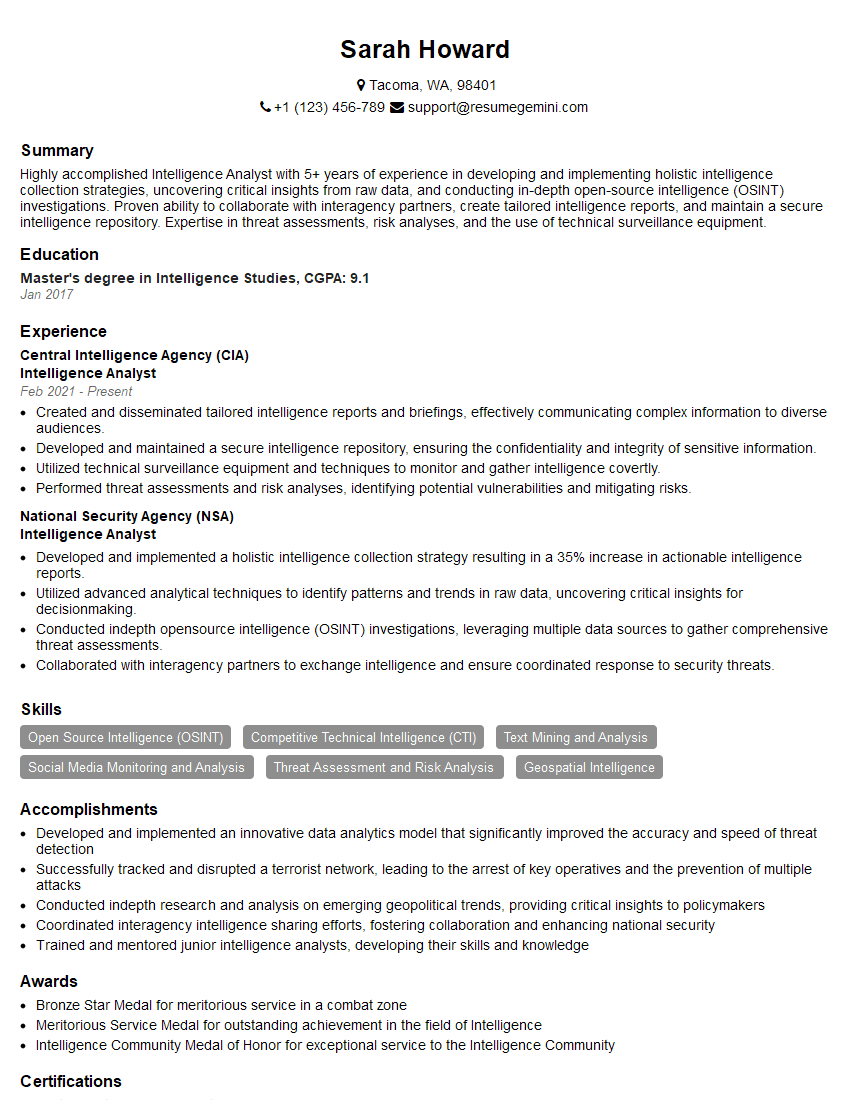
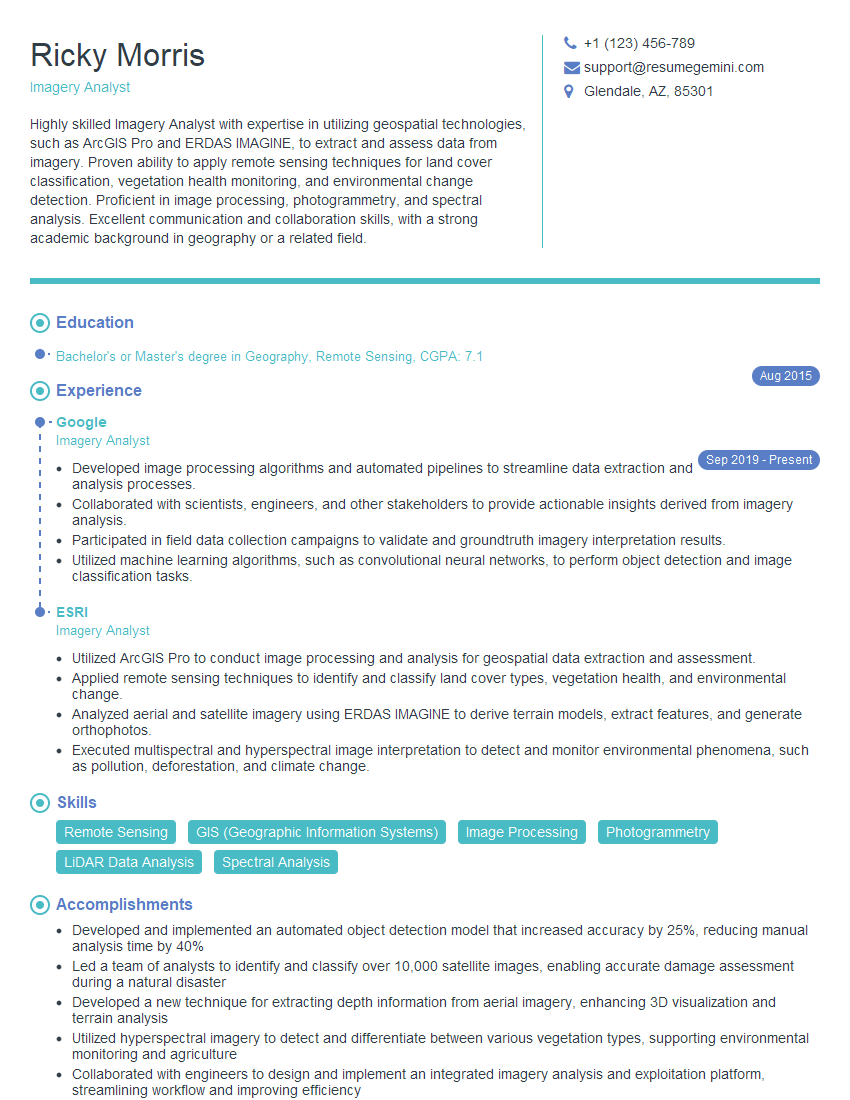
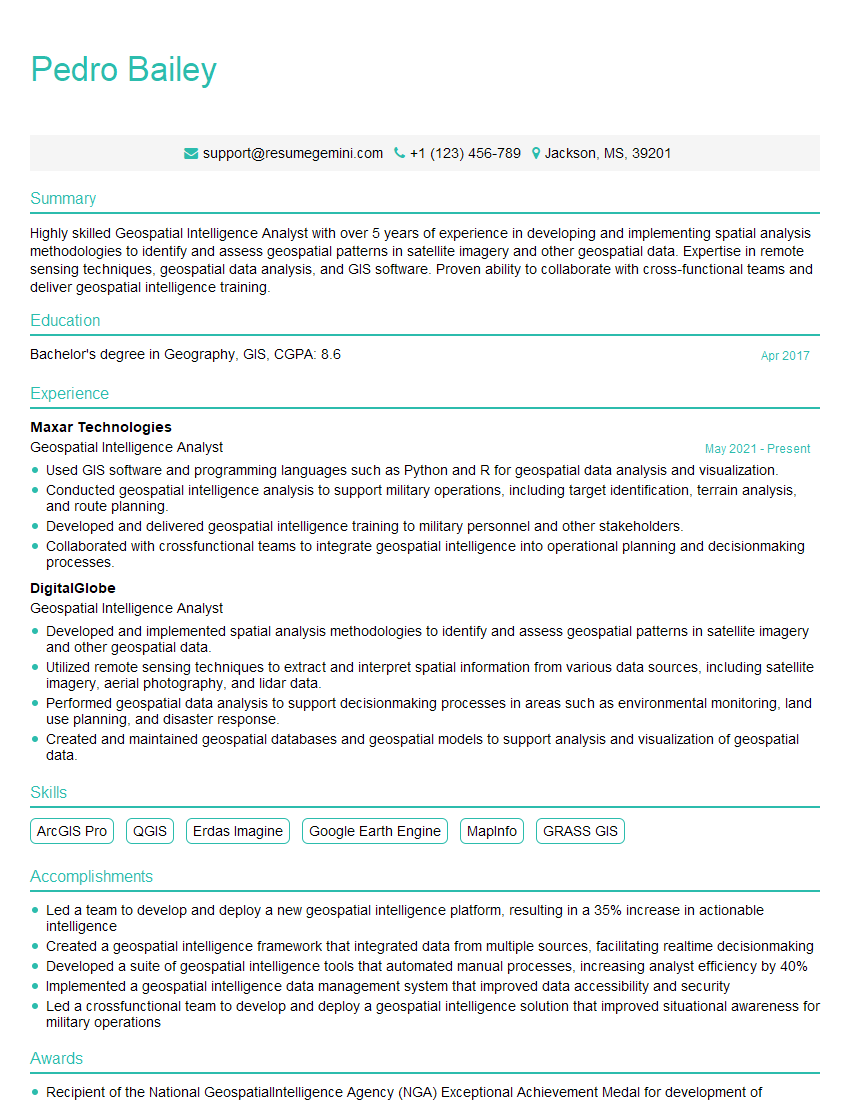
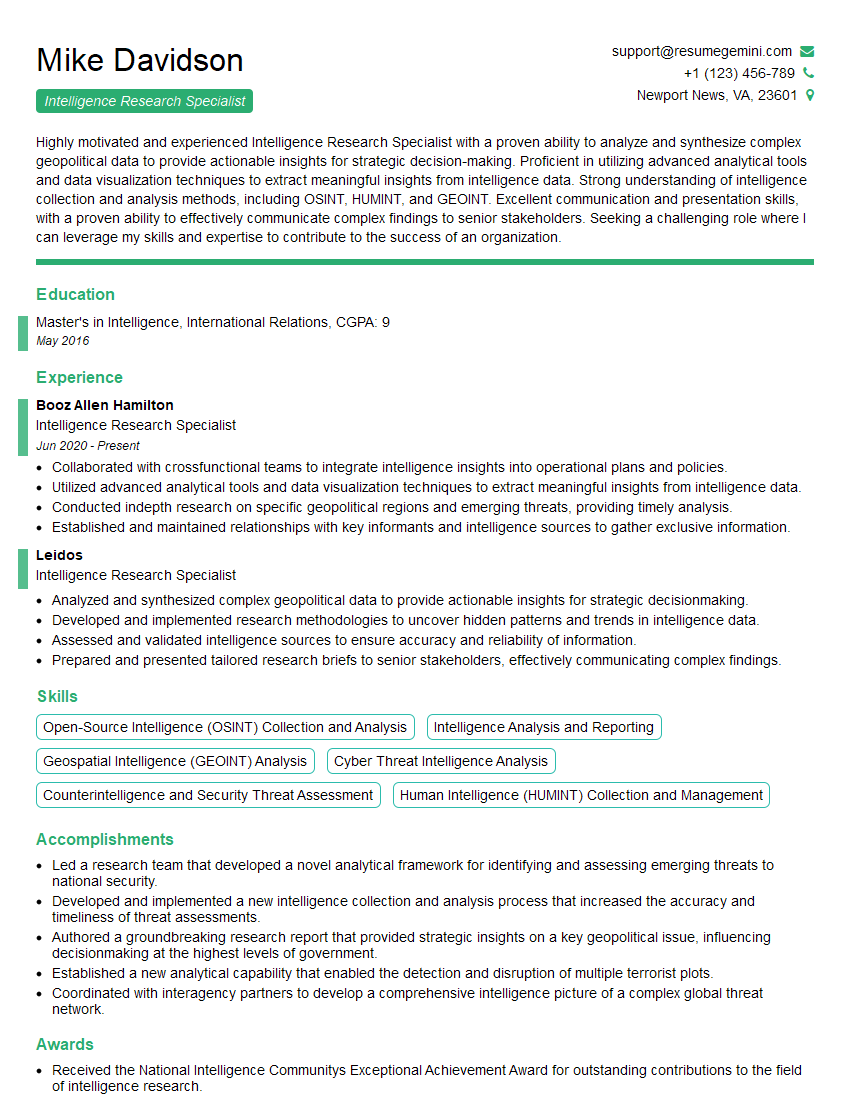
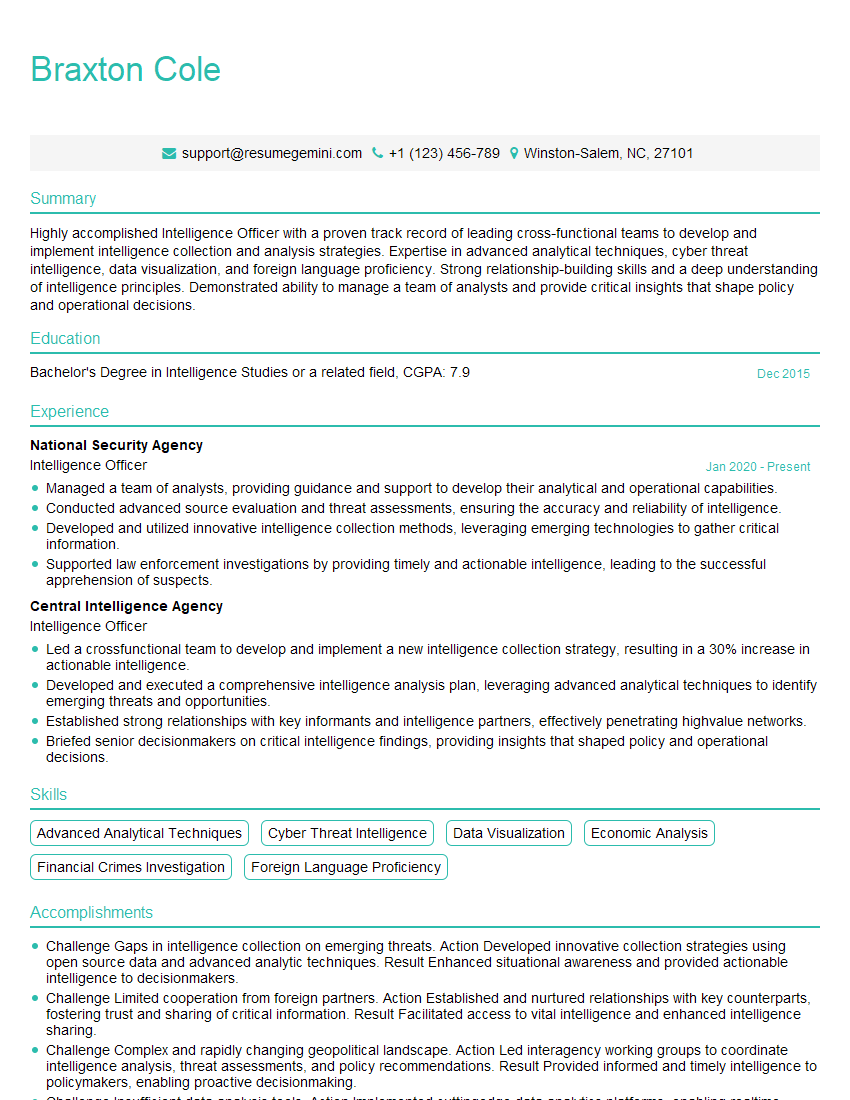
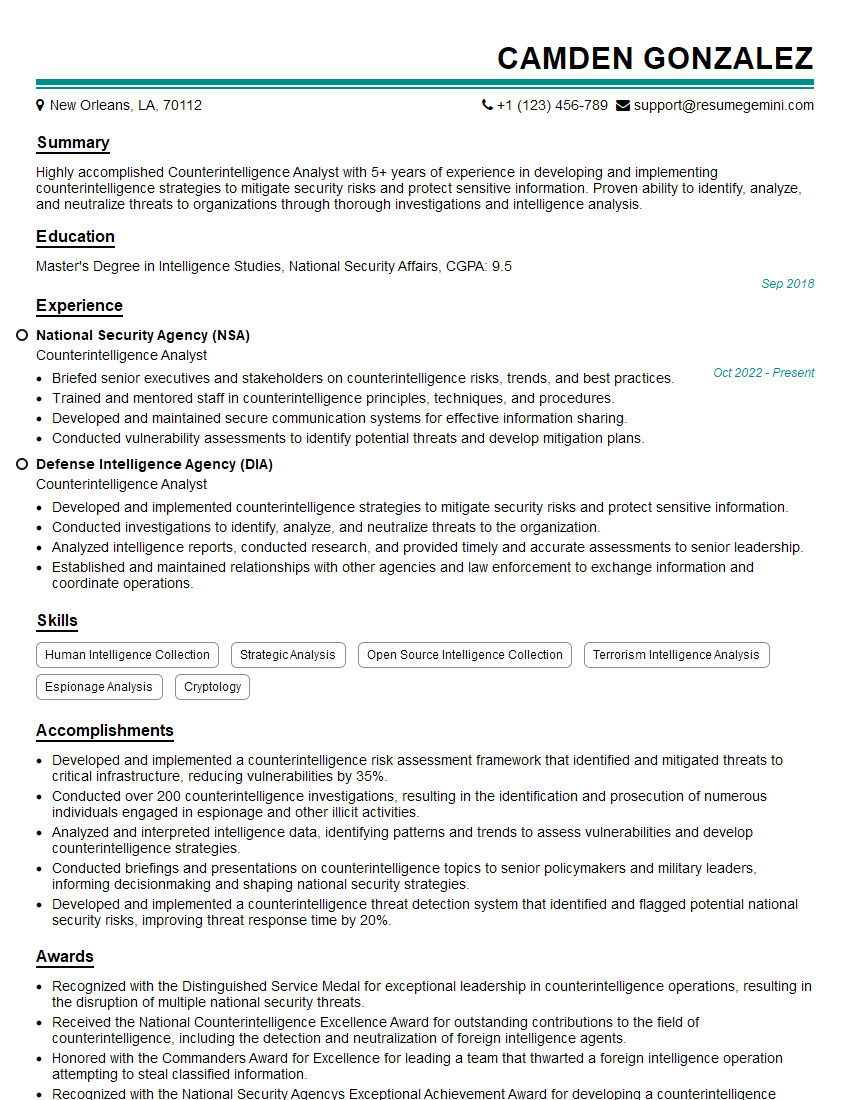
A career in Defense Intelligence Analysis offers immense opportunities for intellectual growth and significant contributions to national security. Mastering these key areas will significantly enhance your interview performance and future career prospects. To increase your chances of success, creating an ATS-friendly resume is crucial. ResumeGemini is a trusted resource to help you build a professional and impactful resume that highlights your skills and experience effectively. Examples of resumes tailored to Defense Intelligence Analysis are available to guide you through the process, ensuring your application stands out.
Explore more articles
Users Rating of Our Blogs
Share Your Experience
We value your feedback! Please rate our content and share your thoughts (optional).
What Readers Say About Our Blog
Very informative content, great job.
good