Feeling uncertain about what to expect in your upcoming interview? We’ve got you covered! This blog highlights the most important Derrick Engineering interview questions and provides actionable advice to help you stand out as the ideal candidate. Let’s pave the way for your success.
Questions Asked in Derrick Engineering Interview
Q 1. Explain the different types of derricks used in drilling operations.
Derricks in drilling operations are classified primarily by their structure and function. The most common types are:
- Mast Derrick: This is a simple, portable structure typically used in land-based drilling for shallower wells. It’s essentially a tall, freestanding tower made of steel or wood, and is relatively inexpensive to erect and dismantle.
- Guyed Mast Derrick: This type uses guy wires (cables) anchored to the ground to provide stability, enabling the use of taller masts and thus, greater drilling depth compared to a simple mast derrick. It’s common in locations where space is limited.
- Substructure Mounted Derrick: Instead of being a freestanding structure, this derrick is integrated onto a platform or substructure, often seen in offshore or challenging terrain drilling. This provides increased stability and often allows for greater operational efficiency.
- Portable Derrick: These are designed for easy transport and setup, making them ideal for smaller operations or those requiring frequent relocation. They are typically less robust than other types but offer flexibility.
The choice of derrick type depends heavily on factors like well depth, terrain, budget, and the overall drilling operation’s requirements. For instance, an offshore platform might necessitate a substructure-mounted derrick due to stability requirements, while a land-based exploration well might use a simpler mast derrick.
Q 2. Describe the process of derrick assembly and disassembly.
Derrick assembly and disassembly are complex, multi-stage processes requiring meticulous planning and adherence to safety protocols. The steps generally include:
- Planning and Preparation: This involves reviewing the derrick’s assembly manual, ensuring all components are available and in good condition, and designating a qualified rigging crew.
- Foundation Preparation (if applicable): For large derricks, a sturdy foundation is crucial. This may involve creating concrete pads or preparing the ground for stability.
- Base Assembly: The derrick’s base section, usually the heaviest, is assembled first. This involves careful lifting and positioning of the components using heavy lifting equipment.
- Derrick Leg and Mast Assembly: The legs or mast sections are progressively added, ensuring proper alignment and secure connections at each stage. Each connection is critically inspected before proceeding.
- Crown Block and Sheaves Installation: The crown block, a crucial part of the hoisting system, is carefully positioned at the top of the derrick.
- Hoisting System Rigging: This includes the installation of the traveling block, hoisting lines, and other components of the drilling hoisting system.
- Disassembly (Reverse Process): The disassembly process mirrors assembly, proceeding in reverse order. Rigorous inspection is conducted at each step to ensure components are correctly detached and secured for transport.
Throughout both assembly and disassembly, adherence to weight limits, proper lifting techniques, and regular safety checks are paramount. Failure to follow these procedures can lead to serious accidents.
Q 3. What are the critical safety procedures for working with a derrick?
Safety is paramount when working with a derrick. Key procedures include:
- Pre-Operational Inspection: A thorough visual inspection of all components before each use is mandatory, checking for cracks, wear, and proper functioning.
- Load Limits: Never exceed the derrick’s designated load capacity. Always calculate loads carefully, accounting for all equipment and materials.
- Rigging Procedures: Follow proper rigging techniques for lifting and moving heavy loads. Using correctly rated slings, shackles, and other equipment is essential.
- Lockout/Tagout: Implement lockout/tagout procedures when performing maintenance or repairs to prevent accidental operation.
- Personal Protective Equipment (PPE): Riggers and other personnel must always wear appropriate PPE, including hard hats, safety glasses, gloves, and high-visibility clothing.
- Emergency Procedures: Everyone involved must be familiar with emergency procedures, such as evacuation plans and communication protocols.
- Training and Competency: Only trained and qualified personnel should assemble, disassemble, operate, or perform maintenance on derricks.
A strong safety culture, emphasizing vigilance and compliance with procedures, is crucial for mitigating risks associated with derrick operations.
Q 4. How do you perform a pre-operational inspection of a derrick?
A pre-operational inspection is a critical safety measure. It should systematically cover:
- Visual Inspection: Examine all derrick legs, the mast, the crown block, and sheaves for signs of damage, such as cracks, bending, or corrosion. Check the condition of all connections and fasteners.
- Structural Integrity: Verify the structural integrity of the entire derrick structure. Look for any signs of misalignment or instability.
- Hoisting System: Inspect the hoisting system components, including the traveling block, sheaves, cables (for wear and fraying), and braking system, ensuring everything operates smoothly and safely.
- Safety Devices: Check all safety devices, such as limit switches, emergency brakes, and safety catches, to make sure they are functional and properly installed.
- Grounding: Verify adequate grounding of the derrick to prevent electrical hazards.
- Documentation: Record all findings of the inspection, noting any defects or required repairs. This documentation serves as evidence of compliance with safety regulations.
Any identified defects should be immediately reported and addressed before the derrick is put into operation. A detailed checklist is typically used to ensure a thorough and consistent inspection process.
Q 5. What are the common causes of derrick failures and how can they be prevented?
Derrick failures can have catastrophic consequences. Common causes include:
- Material Fatigue: Prolonged exposure to stress and cyclic loading can lead to metal fatigue, causing cracks or failures in critical components. Regular inspections and timely maintenance are vital.
- Corrosion: Environmental factors can lead to corrosion, weakening the structural integrity of the derrick. Protective coatings and regular inspections help mitigate this risk.
- Improper Maintenance: Neglecting routine maintenance can result in accumulated damage, leading to unexpected failure. A preventative maintenance program is essential.
- Overloading: Exceeding the derrick’s weight capacity can easily lead to collapse. Careful load calculations are always necessary.
- Improper Assembly/Disassembly: Incorrect assembly or disassembly can compromise the derrick’s stability and strength, potentially leading to catastrophic failure. Following procedures is critical.
- Environmental Factors: Extreme weather conditions (e.g., high winds, storms) can pose significant risks and may necessitate temporary suspension of operations.
Prevention involves proactive measures such as regular inspections, adherence to maintenance schedules, proper training, and careful load management. A robust risk assessment process, addressing both known and potential hazards, is crucial in preventing derrick failures.
Q 6. Explain the role of the crown block and traveling block in a derrick system.
The crown block and traveling block are integral parts of the derrick’s hoisting system, responsible for lifting and lowering the drilling equipment and tools.
- Crown Block: This is a large assembly of sheaves (pulleys) fixed at the top of the derrick. It serves as a crucial anchor point for the hoisting cables, distributing the load and directing the lines. The number of sheaves in the crown block determines the mechanical advantage of the hoisting system.
- Traveling Block: This assembly of sheaves is suspended from the crown block by the hoisting cables. It moves vertically along the derrick mast, raising and lowering the drilling tools and equipment. The traveling block, often containing multiple sheaves, multiplies the pulling force from the draw works, making it possible to lift heavy loads.
Imagine them as two sets of pulleys in a complex system of ropes and cables – the crown block stays fixed at the top, while the traveling block moves, enabling the efficient lifting and lowering of heavy drilling equipment.
Q 7. Describe the function of the top drive system and its interaction with the derrick.
The top drive system is a modern advancement in drilling technology that greatly enhances operational efficiency and safety. Instead of using a rotary table on the drilling floor, the top drive system is mounted on the traveling block and directly rotates the drill string.
Its interaction with the derrick is significant:
- Mounting on Traveling Block: The top drive is suspended from the traveling block, allowing it to move vertically with the drill string. This eliminates the need for constant repositioning during drilling.
- Load Distribution: The weight of the top drive adds to the overall load on the hoisting system, impacting the derrick’s structural integrity. This needs to be factored into the operational parameters.
- Increased Torque and Control: Top drives provide significantly higher torque and more precise control over the rotational speed of the drill string compared to rotary tables.
- Improved Safety: By eliminating the need for manual handling of the drill string near the rotary table, the top drive enhances safety on the drilling floor.
The top drive system’s integration with the derrick highlights the evolving technology within the drilling industry, demanding more precise engineering and consideration of loading and safety during design and operation.
Q 8. How do you calculate the load capacity of a derrick?
Calculating a derrick’s load capacity isn’t a simple formula; it’s a meticulous process considering multiple factors. The primary principle is understanding the derrick’s structural strength and the forces acting upon it. We must consider the weight of the load itself, the boom length and angle, the weight of the derrick structure, the position of the mast and gin pole (if applicable), and importantly, the ground conditions and stability.
The calculation often involves sophisticated engineering software or manual calculations using established formulas based on structural mechanics. These calculations account for tensile and compressive stresses in each component of the derrick, including the mast, boom, guys, and base. Safety factors are crucial and are usually incorporated, typically ranging from 3 to 5, depending on the application and regulatory requirements. A higher safety factor implies a more conservative estimate, leaving room for unforeseen circumstances.
For instance, imagine lifting a heavy piece of equipment with a 50-foot boom. We would input variables like equipment weight, boom angle, and wind speed into the calculation software or apply the relevant formulae, taking into account the material strength (steel grade, etc.) of each derrick component. The output would be the maximum safe load capacity for that specific configuration. It’s vital to remember that exceeding this calculated capacity severely jeopardizes safety and can lead to catastrophic failure.
Q 9. What are the different types of hoisting systems used in derricks?
Derrick hoisting systems can be broadly categorized into several types, each with its own advantages and disadvantages. The choice depends on factors like the load capacity, lifting height, and the nature of the operation.
- Mechanical Hoists: These often involve drums and gears, powered by hand cranks, electric motors, or hydraulic systems. They’re reliable and well-suited for lower capacity applications where precise control is needed. Think of a hand-crank hoist on a smaller derrick used for construction projects.
- Hydraulic Hoists: These utilize hydraulic cylinders and pumps to lift and lower loads. Hydraulic systems offer smooth, powerful lifting, particularly beneficial for heavier loads. They are commonly seen in larger derricks used in industrial applications.
- Electric Hoists: These use electric motors to power the hoisting mechanism. They provide efficient and controllable lifting, perfect for repetitive lifting tasks in settings like ports or refineries. Often these are coupled with wire rope and sheaves to distribute load.
- Pneumatic Hoists: Utilizing compressed air, these are suited for applications demanding explosion-proof equipment, often found in hazardous environments such as oil rigs or chemical plants.
Choosing the appropriate hoisting system is critical for both safety and efficiency; a poorly chosen system can lead to equipment damage or accidents.
Q 10. Explain the principles of derrick stability and how it’s maintained.
Derrick stability is paramount; it’s the difference between a successful lift and a catastrophic failure. The stability of a derrick is determined by the balance of forces acting on it—the weight of the derrick itself, the load being lifted, wind loads, and the reaction forces from the ground or base. Maintaining stability involves adhering to principles of structural mechanics.
A derrick is designed to distribute the loads evenly to prevent toppling. Guy wires (tensioned cables) play a crucial role in stabilizing the derrick, especially against lateral loads like wind. The base of the derrick needs to be firmly anchored to the ground, which often involves using concrete footings or anchoring systems, depending on the ground conditions. The boom angle and the location of the load also impact stability; a longer boom with a heavier load at a high angle increases the risk of instability.
Regular inspection of the guying system is vital; loose or damaged wires can severely compromise stability. Ground conditions should also be frequently monitored, as changes in soil composition, water content, or erosion can affect the base’s support capabilities. Sophisticated software helps to simulate the derrick’s stability under different load and environmental conditions, ensuring safe operation.
Q 11. Describe the process of rigging and unrigging a derrick.
Rigging and unrigging a derrick is a highly specialized procedure that requires careful attention to detail and adherence to safety protocols. It’s a systematic process involving several steps, and any deviation can be dangerous.
Rigging: This includes setting up the derrick, attaching the hoisting mechanism, ensuring proper guying, and securing the base. It starts with assembling the derrick components, erecting the mast, securing the boom, and installing the hoisting system. The guy wires are carefully tensioned and secured to ensure sufficient stability. Finally, the load is attached to the hoisting mechanism using appropriate rigging equipment, always considering the load’s center of gravity and weight distribution.
Unrigging: This involves carefully reversing the rigging process, safely removing the load, releasing the tension on the guy wires, dismantling the derrick components, and storing everything appropriately. The sequence of steps is vital; for instance, the load should always be lowered and removed before releasing the guy wires.
Rigging and unrigging should only be conducted by trained and experienced personnel who understand the procedures and safety precautions. A thorough pre-operation inspection of all components is also crucial.
Q 12. What are the regulations and standards governing derrick operations?
Derrick operations are subject to stringent regulations and standards to ensure worker safety and prevent accidents. These regulations vary by location (country, state, etc.) but often incorporate guidelines from international bodies. Key aspects include:
- Load Capacity Limits: Strict limitations on the maximum load a derrick can handle, based on its design, configuration, and environmental conditions.
- Inspection and Maintenance: Regular inspections and maintenance schedules for all derrick components, ensuring they remain in safe working order.
- Operator Certification: Qualified and certified operators are required to operate derricks, demonstrating competency in safe operating procedures.
- Safety Procedures: Comprehensive safety procedures, including pre-operation checks, emergency procedures, and communication protocols, must be followed.
- Weather Conditions: Limitations on operations during inclement weather to minimize risks associated with high winds or precipitation.
Non-compliance with these regulations can result in significant penalties, potential legal action, and, most importantly, serious injury or fatality. Adherence to standards is critical to responsible derrick operation.
Q 13. How do you troubleshoot common derrick malfunctions?
Troubleshooting derrick malfunctions requires a systematic approach, combining practical knowledge, careful observation, and a methodical diagnostic process. Safety must always be the top priority; if a malfunction is suspected, operation should cease immediately.
Common malfunctions might include issues with the hoisting mechanism (e.g., motor failure, hydraulic leaks), problems with the guying system (e.g., broken wires, insufficient tension), or structural damage to the derrick itself. The troubleshooting process involves:
- Visual Inspection: A thorough visual inspection of all components, checking for signs of damage, wear, or loose connections.
- Operational Checks: Testing the functionality of the hoisting mechanism, brakes, and other systems to identify any anomalies.
- Load Testing (Controlled): Under strict supervision, performing a controlled load test (with significantly reduced weight) to evaluate the performance and stability of the derrick.
- Expert Consultation: If the malfunction is complex or beyond the expertise of on-site personnel, seeking the assistance of qualified derrick engineers or technicians is crucial.
It’s important to maintain detailed records of all inspections, maintenance, and repairs to aid in future troubleshooting and preventative maintenance.
Q 14. Explain the importance of regular maintenance and inspection of derrick components.
Regular maintenance and inspection of derrick components are not just good practice; they’re essential for safety and operational reliability. A failure to maintain a derrick can have catastrophic consequences, resulting in accidents, injuries, and significant financial losses.
A comprehensive maintenance program includes:
- Regular Inspections: Routine visual inspections of all components, looking for wear, damage, corrosion, or loose connections.
- Lubrication: Regular lubrication of moving parts to reduce friction and wear.
- Component Replacements: Timely replacement of worn or damaged components, preventing potential failures.
- Functional Tests: Periodic functional testing of all systems to ensure they operate as intended.
- Documentation: Maintaining detailed records of all inspections, maintenance, and repairs to track the derrick’s condition.
The frequency of maintenance depends on the intensity of use and the environment the derrick operates in. A well-maintained derrick not only prevents accidents but also extends its lifespan and reduces operational costs over the long term. Neglecting maintenance is an unacceptable risk in this field.
Q 15. What are the environmental considerations related to derrick operations?
Environmental considerations in derrick operations are paramount for safety and regulatory compliance. They encompass a wide range of factors, impacting both the immediate environment and potentially broader ecosystems.
- Soil Erosion and Contamination: Derrick operations, especially those involving drilling, can lead to soil erosion and contamination from drilling fluids (muds) and spilled fuel. Effective site preparation, including erosion control measures and spill containment plans, are crucial. For example, using berms and sediment basins prevents mud from entering waterways.
- Air Quality: Diesel engines used in derricks emit particulate matter and greenhouse gases. Employing low-emission engines, regular maintenance, and emission monitoring are necessary to mitigate air pollution. Implementing best practices like using exhaust filtration systems reduces the impact.
- Water Pollution: Drilling fluids, produced water, and accidental spills can contaminate water bodies. Proper handling, storage, and disposal of these materials are essential. This includes the use of specialized containment systems and rigorous waste management protocols.
- Noise Pollution: Derrick operations generate significant noise. Noise barriers, operational scheduling to minimize disruption to nearby communities, and the use of quieter equipment are important considerations. Regular noise monitoring and adherence to noise level regulations are vital.
- Wildlife and Habitat Disturbance: Derrick operations can disrupt wildlife habitats and migration patterns. Environmental impact assessments and the implementation of mitigation measures, such as designated wildlife corridors, are critical to minimize these impacts.
Ignoring these considerations can lead to significant environmental damage, hefty fines, and reputational harm. A proactive and responsible approach is crucial for sustainable operations.
Career Expert Tips:
- Ace those interviews! Prepare effectively by reviewing the Top 50 Most Common Interview Questions on ResumeGemini.
- Navigate your job search with confidence! Explore a wide range of Career Tips on ResumeGemini. Learn about common challenges and recommendations to overcome them.
- Craft the perfect resume! Master the Art of Resume Writing with ResumeGemini’s guide. Showcase your unique qualifications and achievements effectively.
- Don’t miss out on holiday savings! Build your dream resume with ResumeGemini’s ATS optimized templates.
Q 16. Describe the different types of lubricants used in derrick systems.
Derrick systems utilize a variety of lubricants, each chosen based on its specific properties and the component it lubricates. The choice is dictated by factors such as temperature range, load bearing capacity, and chemical compatibility with other system components.
- Gear Oils: These heavy-duty oils are used to lubricate gears and other heavily loaded components. They’re formulated to withstand high pressures and temperatures, ensuring smooth operation and preventing wear. Specific viscosity grades are selected based on operating conditions.
- Hydraulic Oils: These oils are crucial for hydraulic systems powering derrick movements. They must possess excellent viscosity characteristics across a range of temperatures, preventing cavitation and ensuring consistent system performance. Additives often improve properties like anti-wear and oxidation resistance.
- Bearing Greases: These are used to lubricate bearings, providing long-term lubrication and protection against corrosion and wear. Selection is based on the bearing type, operating temperature, and the presence of contaminants.
- Specialized Lubricants: Certain components might require specialized lubricants, such as those with extreme-pressure additives for high-stress applications. For instance, wire rope lubrication often utilizes specialized grease to minimize wear and corrosion.
Regular lubricant analysis is essential to monitor its condition and prevent premature component failure. Using the incorrect lubricant can lead to catastrophic failure, highlighting the importance of proper selection and maintenance.
Q 17. What are the emergency procedures for a derrick failure?
Derrick failure is a critical event demanding immediate and coordinated action. Emergency procedures must be meticulously planned and regularly practiced.
- Immediate Actions: The first step is to immediately shut down all power to the derrick and clear the area. This minimizes the risk of further damage or injury. A clear communication chain ensures all personnel are notified and aware of the situation.
- Emergency Response Team Activation: Contact the designated emergency response team, which may include safety personnel, engineers, and potentially external support. This team will initiate damage assessment and plan for repairs or replacement.
- Securing the Load: The primary focus will be on safely securing any suspended loads to prevent them from falling. This might involve using backup systems or rigging techniques depending on the nature of the failure.
- Injury Assessment and First Aid: Check for injuries among personnel. First aid must be administered immediately, and emergency medical services should be contacted as necessary.
- Investigation and Reporting: Once the immediate danger is mitigated, a thorough investigation is carried out to determine the cause of the failure. This investigation forms the basis for preventative measures and improvement of safety protocols. Comprehensive reports are filed to comply with regulations.
Regular drills and training are essential to prepare personnel for such emergencies, ensuring smooth and efficient execution of the procedures.
Q 18. How do you manage derrick-related risks and hazards?
Managing derrick-related risks and hazards requires a multi-faceted approach that combines risk assessment, engineering controls, administrative controls, and personal protective equipment (PPE).
- Risk Assessment: A detailed risk assessment identifies potential hazards associated with derrick operations. This involves analyzing the entire process, from planning and setup to operation and dismantling, considering human factors, environmental influences, and equipment limitations.
- Engineering Controls: These controls physically reduce hazards. Examples include using load-limiting devices, implementing interlocks to prevent unsafe operations, and providing robust structural design to enhance derrick stability. This minimizes the potential for accidents.
- Administrative Controls: These involve procedures and policies. For example, strict operating procedures, pre-operational checklists, and regular maintenance schedules significantly reduce the chance of accidents. These also cover training protocols and permit-to-work systems.
- Personal Protective Equipment (PPE): Appropriate PPE is critical. This includes hard hats, safety glasses, high-visibility clothing, and hearing protection to minimize the impact of potential accidents. Regular PPE inspections and training are necessary for their proper use.
- Regular Inspections and Maintenance: Rigorous inspection and maintenance schedules are essential to identify and address potential problems before they escalate into failures. This proactive approach prevents costly downtime and minimizes risks.
A robust safety culture, emphasizing communication and teamwork, is vital in ensuring effective risk management. This includes regular safety meetings, reporting of near misses, and continuous improvement efforts.
Q 19. Explain the use of load monitoring systems in derrick operations.
Load monitoring systems are indispensable in derrick operations, ensuring safe and efficient lifting and lowering of loads. They provide real-time data on the weight being handled, preventing overloads and potential structural failures.
- Load Cells: These are sensors that measure the force exerted on them, providing accurate readings of the load’s weight. They are strategically placed in the derrick system to monitor the weight being lifted or lowered.
- Data Acquisition and Display: The data from the load cells is fed into a central system, often displayed on a monitor, providing operators with immediate feedback on the load weight. This allows operators to make informed decisions and avoid exceeding the derrick’s safe working load.
- Alarm Systems: Many load monitoring systems include alarm systems that activate if the load exceeds pre-set limits. This immediately alerts the operators, allowing them to take corrective action before a failure occurs.
- Data Logging and Reporting: The system typically logs the load data over time, providing valuable information for analysis and future improvements. This data assists in tracking performance and identifying potential issues.
These systems significantly enhance safety by preventing overloads and structural damage, reducing the risk of accidents and costly repairs. They also contribute to greater operational efficiency.
Q 20. Describe the impact of weather conditions on derrick operations.
Weather conditions significantly influence derrick operations, posing both safety and operational challenges. Strong winds, heavy rain, snow, and extreme temperatures can impact the stability and performance of the derrick.
- Wind: High winds can exert substantial forces on the derrick structure, potentially leading to instability or even collapse. Operations are often suspended when wind speeds exceed predetermined limits. Detailed wind speed forecasts are crucial for operational planning.
- Rain and Snow: Heavy precipitation can create slippery working conditions, increasing the risk of accidents. It can also affect the visibility and the structural integrity of the derrick if water accumulates in critical areas.
- Extreme Temperatures: Extreme heat can affect the performance of hydraulic systems and other components, while extreme cold can make materials brittle and more susceptible to failure. These factors influence lubricant viscosity and component functionality.
- Ice and Freezing Conditions: Ice accumulation can add weight to the derrick and its components, potentially causing structural damage. Freezing conditions can impact the operation of hydraulic systems and other machinery.
Weather monitoring is crucial, and operations are frequently paused or postponed during inclement weather. The safety of personnel is always the top priority.
Q 21. How do you ensure the structural integrity of a derrick?
Ensuring the structural integrity of a derrick involves a combination of meticulous design, rigorous inspections, and proactive maintenance. It’s a critical aspect of ensuring safe and reliable operation.
- Design and Engineering: Derricks are designed according to stringent engineering standards, incorporating factors such as material strength, load capacity, and wind resistance. Detailed stress analyses are conducted to ensure the structure can withstand the anticipated loads.
- Material Selection and Quality Control: High-quality materials with proven strength and durability are essential. Strict quality control measures are implemented throughout the manufacturing process to ensure compliance with specifications.
- Regular Inspections: Regular inspections, including visual inspections and non-destructive testing (NDT) methods such as ultrasonic testing or magnetic particle inspection, are crucial to detect any signs of damage or degradation. These should be performed at pre-defined intervals and after any significant events.
- Preventative Maintenance: A preventative maintenance program addresses potential issues before they escalate into significant problems. This includes regular lubrication, bolt tightening, and repairs as needed.
- Load Testing: Periodic load testing verifies that the derrick continues to meet its design specifications and can safely handle the intended loads. This involves applying controlled loads to the derrick and monitoring its response.
Maintaining a detailed history of inspections, maintenance, and repairs is essential for tracking the derrick’s condition and demonstrating compliance with regulations. A proactive approach to structural integrity ensures the safety of personnel and equipment.
Q 22. What are the different types of materials used in derrick construction?
Derrick construction materials are chosen based on strength, durability, weight, and cost. The selection heavily depends on the specific application and environmental conditions. Common materials include:
- Steel: The most prevalent material due to its high strength-to-weight ratio. Different grades of steel are used depending on the component’s function. High-strength low-alloy (HSLA) steels are frequently used for derrick masts and substructures to maximize load-bearing capacity while minimizing weight.
- Aluminum Alloys: Used in certain components where weight reduction is crucial, such as platforms or smaller parts. Aluminum alloys offer good strength but are less robust than steel under extreme stress.
- Wood: Traditionally used for smaller derricks or specific components, but its use is diminishing due to the prevalence of stronger, more durable materials like steel. It is still found in some older derricks or niche applications.
- Concrete: Utilized for foundations and base structures to provide stability and support the immense weight of the derrick system. Reinforced concrete is often preferred for its strength and resistance to environmental degradation.
The selection process involves meticulous calculations and simulations to ensure the structural integrity of the derrick under anticipated loads and environmental factors. Material properties are thoroughly tested and certified to meet safety standards.
Q 23. Explain the role of communication and teamwork in derrick operations.
Effective communication and teamwork are paramount in derrick operations, impacting safety, efficiency, and overall project success. Think of a derrick operation like an orchestra – each member plays a critical role, and seamless collaboration is key to producing a harmonious result.
Communication: Clear and concise communication using standardized procedures and terminology (e.g., hand signals, radio communication) minimizes misinterpretations and prevents accidents. Regular pre-job briefings outlining tasks, risks, and emergency procedures are essential. Open communication channels allow for immediate problem reporting and resolution. I’ve seen firsthand how effective two-way radios and well-defined communication protocols are crucial for managing simultaneous operations on a busy drilling site.
Teamwork: A well-coordinated team comprises individuals with specialized expertise – derrick hands, drillers, mud engineers, etc. Effective teamwork relies on mutual respect, trust, and shared responsibility. Cross-training and knowledge sharing are also vital to ensure team members understand each other’s roles and can assist when necessary. A real-world example: During a complex wellhead change, the synchronized movements of the derrick crew and the floorhands are critical for preventing accidents and ensuring a smooth operation.
Q 24. Describe your experience with derrick maintenance software and tools.
My experience with derrick maintenance software and tools encompasses several aspects. I’m proficient in using Computerized Maintenance Management Systems (CMMS) to schedule inspections, track repairs, and manage spare parts inventory. This helps predict potential failures and optimizes maintenance schedules, minimizing downtime.
Specifically, I’ve worked with software platforms such as [mention specific CMMS software or equivalent]. These tools allow for detailed records of each derrick component’s history, including inspections, repairs, and replacements. Data analysis from this software helps identify maintenance trends and patterns, leading to proactive maintenance strategies. Furthermore, I’m familiar with various diagnostic tools, including non-destructive testing (NDT) equipment (e.g., ultrasonic testing, magnetic particle inspection) to assess the structural integrity of derrick components and predict potential failures. The use of these tools ensures adherence to safety regulations and extends the operational lifespan of the derrick.
Q 25. How do you handle conflicts or disagreements within a derrick operation team?
Conflict resolution is a crucial skill in derrick operations where high-pressure situations and safety risks are constant. My approach centers on open communication, active listening, and collaborative problem-solving.
Step-by-step process:
- Identify the issue: Clearly define the source of conflict and gather input from all involved parties.
- Create a safe space: Establish an environment where all team members feel comfortable expressing their concerns and opinions without fear of judgment.
- Active listening: Pay close attention to everyone’s perspective to understand the root cause of the disagreement.
- Collaborative problem-solving: Work together to brainstorm solutions, considering the safety implications of each option.
- Implement and monitor: Put the chosen solution into action and monitor its effectiveness. Regular follow-ups are key to ensuring the issue is resolved and preventing it from recurring.
For example, a disagreement about the proper procedure for a specific derrick operation would be handled by reviewing the relevant safety manuals and established procedures, discussing the risks associated with different approaches, and ultimately agreeing on the safest and most efficient method. The focus is always on maintaining safety and completing the job effectively.
Q 26. Explain your experience with different types of drilling fluids and their impact on derrick operations.
Drilling fluids (mud) play a vital role in derrick operations, affecting numerous aspects of drilling efficiency and wellbore stability. Different types of drilling fluids are selected depending on the geological formation being drilled, the well’s depth, and the operational requirements.
- Water-based muds: The most common type, offering good lubricity and cooling properties. However, they can be less effective in certain formations and may require additives to control shale swelling or improve rheological properties. I’ve observed that using incorrect water-based mud can lead to problems like wellbore instability, increased friction, and increased drilling costs.
- Oil-based muds: Provide excellent lubrication and shale inhibition, making them suitable for challenging formations. However, they are more expensive and pose environmental concerns. My experience with oil-based muds has highlighted the need for strict environmental regulations and responsible waste management. We carefully monitored the mud properties, ensuring they remained within the optimal parameters to prevent any complications.
- Synthetic-based muds: Offer a balance between performance and environmental compatibility. They are less harmful to the environment compared to oil-based muds and provide good lubrication and stability. In my past projects, we carefully chose the type of synthetic-based mud that optimized the drilling process based on the specific well characteristics and environmental concerns.
Changes in mud properties (density, viscosity, pH) directly affect the derrick’s load and operational efficiency. For instance, an increase in mud weight may require adjustments in the derrick’s hoisting capacity and operational procedures. Continuous monitoring of mud properties is crucial for maintaining efficient and safe operations.
Q 27. Describe your experience with different types of drilling rigs and their corresponding derrick systems.
My experience encompasses various drilling rig types and their associated derrick systems. The derrick design is tailored to the rig’s capacity and drilling application.
- Land rigs: Typically feature taller, more robust derricks designed to handle heavier loads and longer drill strings. These derricks often incorporate advanced features like automated crown blocks and top drives to improve efficiency and safety. I’ve worked extensively on land rigs, overseeing the maintenance and operation of various derrick types from conventional mast derricks to advanced cantilever derricks.
- Offshore rigs (Jack-ups, semi-submersibles, drillships): Employ derricks adapted to the marine environment. These derricks often incorporate features to withstand harsh weather conditions and provide stability. The size and design of the derrick can vary significantly, depending on the water depth and rig specifications. While working on an offshore platform, I was directly involved in understanding the unique challenges posed by the marine environment and the need for specialized derrick maintenance procedures.
- Coiled tubing rigs: These rigs utilize smaller, more compact derricks designed to handle coiled tubing operations. The derrick design prioritizes maneuverability and ease of deployment. I have experience with this type, especially regarding the nuances of coiled tubing deployment and its impact on derrick maintenance.
Understanding the specific capabilities and limitations of each derrick system is crucial for safe and efficient drilling operations. This knowledge is essential for proper planning, execution, and maintenance of the entire drilling process.
Q 28. How do you stay updated with the latest advancements in derrick technology and safety standards?
Staying updated on advancements in derrick technology and safety standards is an ongoing process critical to my role. I utilize various methods to maintain this knowledge:
- Professional organizations: Active membership in organizations like the International Association of Drilling Contractors (IADC) and the Society of Petroleum Engineers (SPE) provides access to the latest research, publications, and industry best practices. I attend their conferences and workshops to learn from experts and network with colleagues.
- Industry publications and journals: Regularly reviewing technical publications, such as Oil & Gas Journal and World Oil, keeps me abreast of the newest developments in derrick technology and safety measures.
- Manufacturer training: Participating in manufacturer-sponsored training programs for specific derrick equipment provides hands-on experience with new technologies and safety features.
- Online resources and webinars: Online courses and webinars offered by reputable training providers allow me to deepen my expertise and stay informed about the industry’s latest advancements.
- Safety standards and regulations: I meticulously follow and adhere to all relevant safety standards and regulations set by regulatory bodies like OSHA (in the US) and equivalent international bodies. This is constantly updated, and I make sure to be aware of any changes or new mandates.
Continuous learning is essential for safe and efficient derrick operation. By staying informed, I can contribute to a safer work environment and optimize operational effectiveness.
Key Topics to Learn for Derrick Engineering Interview
- Structural Analysis: Understanding stress, strain, and material properties. Practical application: Analyzing the load-bearing capacity of structures.
- Fluid Mechanics: Principles of fluid flow, pressure, and viscosity. Practical application: Designing efficient piping systems or analyzing fluid behavior in machinery.
- Thermodynamics: Heat transfer, energy conversion, and thermodynamic cycles. Practical application: Optimizing engine performance or designing efficient cooling systems.
- Design Principles: Solid modeling, CAD software proficiency, and understanding design constraints. Practical application: Creating detailed engineering drawings and models.
- Manufacturing Processes: Familiarity with various manufacturing techniques and their applications. Practical application: Selecting appropriate manufacturing methods for specific components.
- Problem-Solving & Analytical Skills: Demonstrating your ability to approach complex engineering problems methodically and efficiently. Practical application: Breaking down large problems into smaller, manageable parts.
- Teamwork & Communication: Highlighting your collaborative skills and ability to effectively communicate technical information. Practical application: Describing your contributions to team projects.
Next Steps
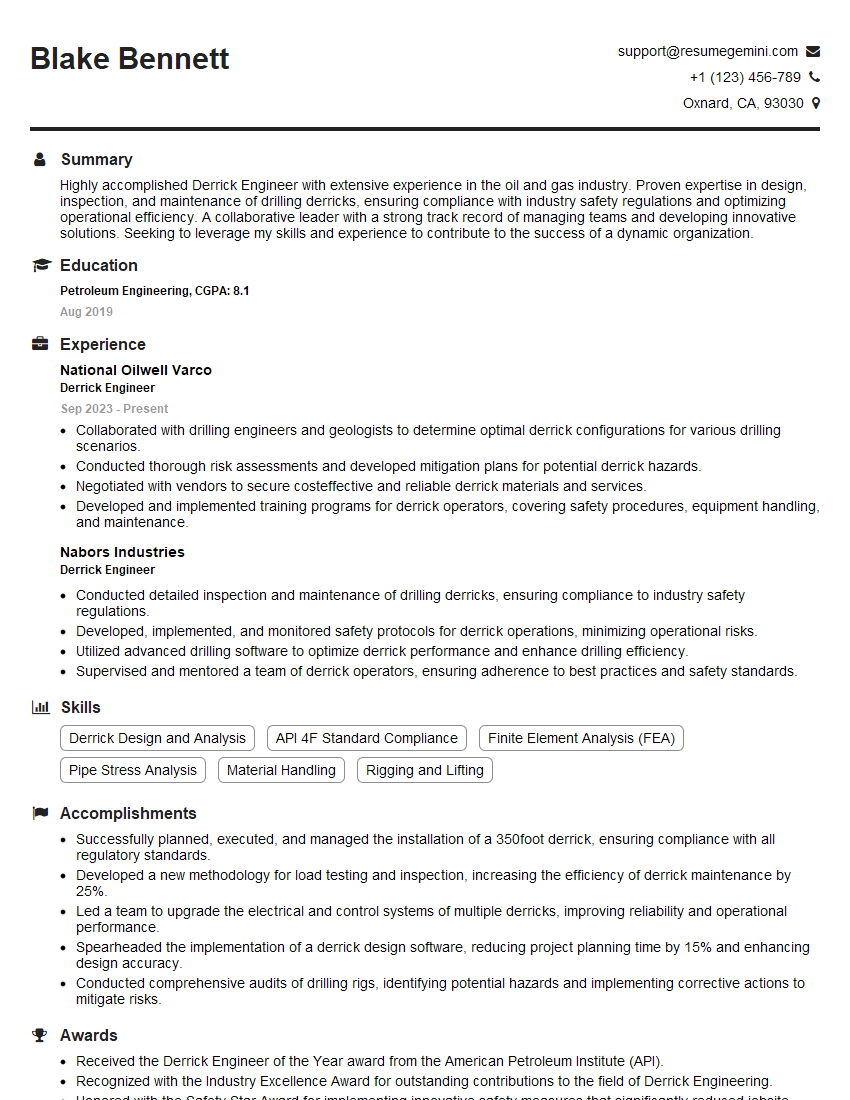
Mastering Derrick Engineering principles significantly enhances your career prospects, opening doors to challenging and rewarding roles within the industry. A strong foundation in these areas demonstrates your technical capabilities and problem-solving skills, making you a highly competitive candidate. To maximize your chances, invest time in creating an ATS-friendly resume that highlights your relevant skills and experience. ResumeGemini is a trusted resource to help you build a professional and impactful resume. Examples of resumes tailored to Derrick Engineering are available to provide further guidance.
Explore more articles
Users Rating of Our Blogs
Share Your Experience
We value your feedback! Please rate our content and share your thoughts (optional).
What Readers Say About Our Blog
Very informative content, great job.
good