Interviews are more than just a Q&A session—they’re a chance to prove your worth. This blog dives into essential Derrick Rigging interview questions and expert tips to help you align your answers with what hiring managers are looking for. Start preparing to shine!
Questions Asked in Derrick Rigging Interview
Q 1. Describe the different types of derricks used in the oil and gas industry.
Derricks in the oil and gas industry are classified primarily by their structure and function. The most common types are:
- Mast derricks: These are the most traditional type, featuring a single, tall mast supported by guy wires. They’re relatively simple to erect and are often used for smaller operations or in locations with limited space. Think of them like a giant, sturdy crane.
- Substructure derricks: These derricks utilize a substructure or platform to provide support for the mast, offering increased stability and load capacity compared to mast derricks. They are suitable for heavier lifting and larger drilling operations.
- Hammer derricks: A variation often seen in offshore environments. These derricks feature a shorter mast and a wider base for enhanced stability in challenging conditions.
- Mobile derricks: These can be transported easily to different locations, offering flexibility for smaller scale or more temporary operations. They often use self-erecting or fast-erecting techniques.
The choice of derrick type depends heavily on the specific project needs, including well depth, anticipated loads, site conditions, and budget constraints. For example, a deepwater offshore platform would almost certainly employ a substructure derrick for stability and heavy lifting capabilities, while a land-based operation with limited space might opt for a mast derrick.
Q 2. Explain the process of assembling a derrick.
Derrick assembly is a complex, multi-stage process requiring meticulous planning and execution. It typically involves these steps:
- Site preparation: A level and stable foundation is crucial. This might involve clearing land, grading, and potentially building a concrete foundation.
- Substructure assembly (if applicable): The base structure, consisting of girders, beams, and other components, is assembled according to the manufacturer’s specifications.
- Mast erection: This is often done using a crane, with sections of the derrick mast being hoisted and bolted together. Safety is paramount here, requiring careful coordination and use of lifting equipment.
- Derrick bracing and guying: Guy wires are carefully tensioned to provide stability and prevent sway. Accurate tensioning is crucial to avoid overloading any single component.
- Crown block and traveling block assembly: The crown block (fixed at the top of the derrick) and the traveling block (moving block) are assembled, along with the associated sheaves (pulleys).
- Drilling line installation: The drilling line (cable or wire rope) is carefully spooled onto the drum and connected to the traveling block.
- Testing and inspection: Before operation, a thorough inspection is conducted to verify proper assembly and identify any potential issues.
Each step involves detailed checklists and rigorous adherence to safety protocols. A single mistake can have severe consequences.
Q 3. What safety measures are crucial during derrick assembly and disassembly?
Safety is paramount throughout the entire derrick assembly and disassembly process. Crucial safety measures include:
- Rigorous adherence to manufacturer’s instructions: This includes detailed assembly sequences, torque specifications, and safety procedures.
- Competent and trained personnel: Only qualified personnel with proven experience in derrick assembly and disassembly should participate.
- Proper use of Personal Protective Equipment (PPE): Hard hats, safety glasses, gloves, and steel-toed boots are mandatory. Fall protection systems are crucial when working at height.
- Regular safety meetings and toolbox talks: These address potential hazards and reinforce safe work practices.
- Use of certified lifting equipment: Cranes and other lifting devices must be regularly inspected and certified.
- Pre-lift and post-lift inspections: Checks are performed before and after each lift to ensure the load is secure and stable.
- Emergency procedures in place: Emergency response plans, including communication protocols and evacuation procedures, are essential.
- Weather monitoring: Assembly and disassembly should be suspended during high winds, storms, or other adverse weather conditions.
Failure to observe these safety measures can lead to serious accidents, injuries, and even fatalities.
Q 4. How do you ensure the stability of a derrick during operation?
Derrick stability during operation is critical. It’s ensured through a combination of factors:
- Proper foundation: A strong, level foundation prevents settling or uneven loading.
- Correct guying and bracing: The guy wires are critical for preventing sway and maintaining stability under load.
- Accurate load calculations: Precise calculations ensure that the derrick isn’t overloaded, which can lead to instability.
- Regular inspections: Identifying and addressing any potential issues early prevents catastrophic failures.
- Proper leveling and alignment: Ensuring the derrick is properly leveled prevents uneven stress on components.
- Environmental factors: Wind speed and direction are crucial considerations, and operations are suspended in unsafe conditions.
- Load monitoring systems: Modern derricks may include sophisticated load monitoring systems that provide real-time feedback on stress levels and stability.
Think of it like building a house – a sturdy foundation and properly framed structure are essential for a building to withstand the pressures of weather and occupation. A derrick needs the same robustness.
Q 5. What are the common causes of derrick failures and how can they be prevented?
Derrick failures are rare but potentially catastrophic. Common causes include:
- Overloading: Exceeding the derrick’s rated capacity can lead to structural failure.
- Improper maintenance: Neglecting regular inspections and maintenance can allow minor defects to develop into major problems.
- Corrosion: Especially in harsh environments, corrosion can weaken the derrick structure.
- Improper assembly or disassembly: Mistakes during these critical phases can lead to significant weaknesses.
- Fatigue: Repeated stress on components can lead to fatigue and eventual failure.
- Adverse weather conditions: High winds or severe storms can overstress the derrick structure.
Prevention involves rigorous preventative maintenance, following manufacturer’s guidelines, regular inspections, and accurate load calculations. A strong safety culture is also essential. Consider fatigue like the constant bending of a paperclip—eventually, it will break.
Q 6. Explain the importance of regular derrick inspections.
Regular derrick inspections are crucial for identifying potential problems before they lead to catastrophic failure. These inspections should be performed at regular intervals (often daily and more comprehensively at set times) and should include:
- Visual inspections: Checking for any signs of damage, corrosion, or wear and tear.
- Structural inspections: Assessing the integrity of the derrick structure, including the mast, beams, and guy wires.
- Mechanical inspections: Inspecting the condition of moving parts, such as sheaves, brakes, and the hoisting mechanism.
- Load testing (periodically): Testing the derrick’s capacity to ensure it meets its rated load.
- Documentation: Detailed records of all inspections, repairs, and maintenance activities should be kept.
Think of it as a regular health checkup for the derrick – catching small problems early can prevent much larger and costlier issues down the line.
Q 7. Describe your experience with different types of rigging equipment.
My experience encompasses a wide range of rigging equipment used in derrick operations, including:
- Wire rope: I’m proficient in selecting appropriate wire rope based on load capacity, diameter, and construction, ensuring proper lubrication and maintenance.
- Shackles and swivels: I have extensive experience with various types of shackles and swivels, understanding their load ratings and ensuring their proper use and inspection for damage.
- Lifting beams and slings: I can select and inspect lifting beams and slings based on load requirements, ensuring their proper attachment to the load and derrick.
- Blocks and sheaves: I’m knowledgeable about different types of blocks and sheaves, ensuring proper lubrication and alignment for efficient operation and minimizing wear and tear.
- Load cells and dynamometers: I am experienced in utilizing these tools for accurately measuring and monitoring load weights to prevent overloading of rigging equipment and the derrick.
- Safety harnesses and fall protection systems: A crucial aspect of my experience involves ensuring proper use of fall protection systems, including harness selection, anchor point installation, and regular inspection of equipment.
I am well-versed in the selection, inspection, maintenance, and safe operation of all this equipment, adhering to industry best practices and safety regulations. Rigging is not just about lifting things; it’s about doing it safely and efficiently.
Q 8. How do you calculate the safe working load of a derrick?
Calculating the safe working load (SWL) of a derrick is crucial for safe operation. It’s not a single calculation but involves several factors. The SWL is the maximum load a derrick can safely lift under ideal conditions. We begin with the manufacturer’s specifications for the derrick itself, which provide a base SWL. However, this needs to be adjusted based on several key variables:
- Derrick boom angle: The SWL decreases as the boom angle increases. A sharper angle means more stress on the derrick structure.
- Radius of the load: The farther the load is from the derrick’s base, the lower the SWL. Think of it like a lever – the longer the lever arm, the greater the force needed.
- Wind speed: High winds significantly reduce the SWL as they create additional forces acting on the load and the derrick. Wind speed data is critical for safe operations.
- Condition of the equipment: Regular inspections are vital. Any signs of wear, damage, or corrosion must be considered, potentially lowering the SWL further.
- Type of load: The nature of the load itself affects the SWL calculation. An unevenly distributed load, for instance, might require a lower SWL than a uniformly distributed one.
The calculation itself often involves using specialized derrick load charts or software that account for these variables. These charts graphically display the derrick’s SWL for various boom angles and radii. We always apply a significant safety factor (often 5:1 or higher) to the calculated SWL to account for unforeseen circumstances.
Example: A derrick might have a manufacturer’s SWL of 100 tons at a 45-degree boom angle and a specific radius. If we increase the boom angle to 60 degrees or the radius, the SWL will be significantly reduced, perhaps to 70 tons, after accounting for all the mentioned factors and applying the safety factor. Always consult the derrick’s specific load charts and manuals for the most accurate calculations.
Q 9. Explain the concept of load balancing in derrick rigging.
Load balancing in derrick rigging is about distributing the weight of the load evenly across all supporting components to prevent stress concentration and maintain stability. Imagine trying to lift a heavy object with one arm – it’s much harder than using both. Similarly, in derrick rigging, uneven weight distribution can lead to structural failure.
Effective load balancing involves several techniques:
- Proper sling placement: The slings must be positioned to support the load symmetrically, ensuring equal weight distribution. Improper placement can lead to twisting or imbalance.
- Use of multiple slings: Using two or more slings can spread the load across a wider area, especially beneficial for unusually shaped or heavy objects.
- Choosing appropriate sling angles: Slings should ideally be as close to vertical as possible. A wide angle (e.g., very shallow angle) places more stress on the slings and the derrick.
- Careful load leveling: Before the lift, check that the load is level. A tilted load puts uneven stress on the rigging system.
Practical Example: When lifting a long steel beam, we might use two slings attached to either end, ensuring both are at similar angles and are carrying roughly equal weight. If we only used one sling, it could create a significant imbalance and potential risk of the beam tilting or the sling breaking.
Q 10. What are the different types of slings used in derrick rigging?
Various slings are used in derrick rigging, each with its own strengths and weaknesses. The choice depends on the load characteristics and the environment:
- Wire rope slings: These are strong and durable, suitable for heavy and abrasive loads. However, they can be prone to damage if not inspected carefully.
- Synthetic fiber slings (Nylon, Polyester): These are lighter than wire rope slings, offering flexibility and shock absorption. They are particularly useful when there is a risk of damaging a load’s surface.
- Chain slings: Chain slings are durable and resistant to abrasion, often used for heavy lifting tasks. However, they can be heavy and might damage delicate surfaces.
- Mesh slings: Designed for lifting large, bulky, or oddly shaped objects, they provide a wider load-bearing surface.
The specific type of sling and its construction (e.g., single-leg, double-leg, bridle) will influence its capacity and suitability for the lift.
Q 11. How do you select the appropriate sling for a given load?
Selecting the appropriate sling requires careful consideration of several factors:
- Load weight and dimensions: The sling’s minimum breaking strength (MBS) must significantly exceed the load weight. The sling’s length and width must accommodate the load’s size and shape.
- Load characteristics: Is the load sharp-edged, abrasive, or corrosive? This influences the material selection; some slings will be better suited than others.
- Environmental conditions: Extreme temperatures, chemicals, or moisture can affect sling performance and longevity. Choose slings appropriate for the conditions.
- Lifting angle: The angle at which the slings will support the load affects the load on each leg of the sling. Always ensure the angle is within the manufacturer’s recommendations to avoid exceeding the safe load.
- sling type: Consider using multiple slings for better load distribution, depending on the shape and weight of the object.
Example: Lifting a delicate piece of equipment might require a soft sling like a synthetic fiber sling, while a heavy steel plate might necessitate a chain sling. Each lift requires a thorough assessment to determine the best sling for the task.
Q 12. Describe your experience with wire rope inspection and maintenance.
Wire rope inspection and maintenance are critical for safety. I have extensive experience performing regular inspections adhering to industry best practices and relevant safety standards. My inspections involve a thorough visual examination, looking for:
- Broken wires: A significant number of broken wires in one section indicates severe damage.
- Corrosion: Rust or pitting reduces the wire rope’s strength.
- Kinking or bending: These deformities weaken the wire rope.
- Bird-caging: This is when the wire rope stretches and the strands separate, reducing its strength.
- Damage to end fittings: Any damage to the sockets or clips can lead to failure.
Beyond visual inspection, I also utilize non-destructive testing methods in some cases. Maintenance involves replacing damaged wire ropes, ensuring proper lubrication, and storing them correctly to prevent deterioration. I maintain detailed records of all inspections and maintenance activities, essential for traceability and compliance.
Real-world Example: During a recent project, I discovered significant corrosion on a wire rope used in a derrick operation. This was immediately reported, and the rope was replaced to prevent any potential accidents. Detailed documentation of this incident was kept for safety audits and records.
Q 13. How do you handle a situation where a load becomes unstable during lifting?
If a load becomes unstable during lifting, immediate action is crucial to prevent accidents. The priority is to ensure the safety of personnel and equipment.
My response would be guided by the following steps:
- Stop the lift immediately: This is the most important step. Do not attempt to continue the lift.
- Assess the situation: Identify the cause of instability (e.g., uneven slinging, wind effect, or load shift). Carefully observe if anything is at risk of being hit by the load.
- Communicate clearly: Inform the crane operator, ground crew, and anyone else in the vicinity of the situation. Use clear and concise commands.
- Take corrective action: Depending on the situation, this might involve re-slinging the load, readjusting the slings, or lowering the load gradually and carefully.
- Investigate the cause: Once the situation is under control, a thorough investigation into the cause of the instability is essential to prevent future incidents.
Example: If a load swings unexpectedly, I would immediately signal the crane operator to stop lifting. We would then carefully assess the situation, determine if the slinging was incorrect, and then carefully correct it. Proper documentation will ensure that future events will be prevented. If the instability cannot be corrected safely on-site, I would call upon an expert to assess the risks and ensure a proper solution.
Q 14. What are the emergency procedures to follow in case of a derrick malfunction?
Emergency procedures for derrick malfunctions are crucial to minimize risks. My approach is based on a structured plan that prioritizes safety:
- Activate emergency stops: Immediately shut down all power to the derrick system.
- Clear the area: Ensure all personnel are evacuated from the immediate vicinity of the derrick. Establish a safe distance.
- Assess the damage: Once the area is safe, determine the nature and extent of the malfunction. Avoid approaching the malfunctioning equipment without proper safety measures.
- Contact emergency services: If necessary, contact emergency services (fire department, paramedics). Have a prepared emergency contact list.
- Investigate the cause (after securing the scene): Once the emergency is over and the area is secure, a thorough investigation should be conducted to pinpoint the cause of the malfunction. This investigation should be documented to prevent future incidents. This investigation will help in improving future safety procedures.
- Implement corrective actions: After the investigation, implement the necessary repairs or replacements to ensure the safe operation of the derrick.
Example: If a derrick’s boom fails, we would immediately cut power, clear the area, call for emergency services if necessary, and then thoroughly document the event. After the emergency is over, we would conduct a thorough investigation, including mechanical inspections and stress analysis, to find out what caused the failure, and implement any needed preventive maintenance.
Q 15. Explain your understanding of OSHA regulations related to derrick rigging.
OSHA regulations concerning derrick rigging are paramount for workplace safety. They cover a wide range of aspects, from pre-operation inspections and operator qualifications to load limits and emergency procedures. Specifically, OSHA’s regulations emphasize the importance of proper training and certification for all personnel involved in derrick operations. This includes riggers, signal persons, crane operators, and anyone working near the derrick. The regulations also detail requirements for load charts, which must be readily accessible and accurate, reflecting the derrick’s capabilities and the environmental conditions. Regular inspections of the derrick itself, including the mast, boom, hoisting mechanism, and rigging hardware, are mandated to prevent equipment failure. Furthermore, OSHA mandates the use of appropriate personal protective equipment (PPE), including hard hats, safety glasses, and fall protection harnesses, depending on the specific task. Failure to adhere to these regulations can result in serious penalties, including fines and even legal action.
For instance, OSHA 1926 Subpart CC specifically addresses cranes and derricks in construction, providing detailed requirements. Understanding and implementing these regulations is not merely a matter of compliance; it’s a crucial step in ensuring the safety and well-being of everyone on the job site.
Career Expert Tips:
- Ace those interviews! Prepare effectively by reviewing the Top 50 Most Common Interview Questions on ResumeGemini.
- Navigate your job search with confidence! Explore a wide range of Career Tips on ResumeGemini. Learn about common challenges and recommendations to overcome them.
- Craft the perfect resume! Master the Art of Resume Writing with ResumeGemini’s guide. Showcase your unique qualifications and achievements effectively.
- Don’t miss out on holiday savings! Build your dream resume with ResumeGemini’s ATS optimized templates.
Q 16. How do you communicate effectively with your team during derrick operations?
Effective communication is the cornerstone of safe derrick operations. My approach centers on clear, concise, and unambiguous communication, using established hand signals, radio communication, and pre-planned operational procedures. Before any lift, I ensure the entire team understands the lifting plan, including the load weight, the rigging configuration, and the designated lifting path. We use a system of pre-determined hand signals for the crane operator and riggers that clearly communicates the desired movements and adjustments. These signals are consistently practiced and understood by everyone. During the lift, we rely on continuous two-way communication via radio to update each other on any changes or potential hazards that we notice. This could involve issues such as unexpected wind gusts or a shift in the load’s center of gravity. Post-lift, we conduct a thorough debriefing to identify any areas for improvement and to reinforce learnings from the operation.
For example, during a recent project involving the lifting of a heavy transformer, a sudden wind gust caused the load to swing slightly. Through immediate radio communication, the operator was able to smoothly correct the swing, preventing a potentially dangerous situation. This efficient communication ensured safety and minimized delays.
Q 17. Describe your experience with different types of lifting techniques.
My experience encompasses a variety of lifting techniques, including standard lifts (vertical lifts), high-angle lifts (lifts involving angles greater than 30 degrees from vertical), tandem lifts (using two or more derricks to lift a single load), and specialized lifts (such as the use of spreader beams or other custom rigging equipment). I am proficient in calculating the center of gravity of loads and selecting appropriate rigging components to achieve the most stable and efficient lift, understanding the specific challenges and safety considerations of each technique. Tandem lifts, for instance, require extremely precise coordination and communication among multiple operators to ensure the load is lifted evenly and safely. This may include precise synchronization via pre-arranged radio communications protocol and using load indicators to ensure balanced load distribution across all lifting points. In high-angle lifts, the angle of the lift introduces additional stress on rigging hardware. So, special attention is given to using the correct hardware with higher safety factors and appropriate load calculations.
I have extensive experience using various types of slings, including wire rope slings, synthetic fiber slings, and chain slings, each suited for different types of loads and working conditions. Choosing the right sling type is essential for ensuring the safety of the load and personnel involved.
Q 18. How do you manage risk during derrick rigging operations?
Risk management in derrick rigging is a proactive process that begins long before the operation itself. It involves a comprehensive assessment of all potential hazards, including environmental factors (wind, weather), ground conditions, load characteristics, and the competence of personnel. I use a systematic approach involving a pre-lift planning meeting, where we identify potential hazards, assess their likelihood and severity, and develop mitigation strategies. This might include using wind monitoring equipment to track wind speed and direction, or implementing ground stabilization measures if the ground conditions are questionable. Throughout the lift, we constantly monitor the situation, being vigilant for any unexpected changes or issues. We establish clear communication channels for reporting any hazards or concerns. Contingency plans are developed and regularly reviewed for various scenarios, including load instability or equipment malfunctions.
For instance, if high winds are forecast, we may postpone the lift until conditions improve. If the load is unexpectedly heavier than originally estimated, we can determine if it can still be safely lifted within the system’s limits, possibly using additional equipment or revising lifting procedures. Continuous monitoring and adaptation are key to minimizing risks.
Q 19. What are your methods for conducting pre-lift inspections?
Pre-lift inspections are meticulously conducted to ensure the safety and integrity of all equipment and personnel involved. My inspection process follows a standardized checklist, covering every aspect of the derrick and its components. This checklist includes a thorough examination of the derrick structure (mast, boom, winches), rigging hardware (hooks, shackles, slings), load-bearing capacity, communication systems, and ground conditions. We carefully inspect all components for any signs of wear, damage, or corrosion. We visually assess the load for any defects or issues. Any deficiencies identified during the inspection will be immediately reported and rectified before the lift can proceed. The load chart, appropriate for the specific derrick model, and load to be lifted, is consulted before the pre-lift inspection and is referenced during the inspection.
The use of a checklist helps to ensure a systematic and consistent approach. This organized method prevents accidental oversights, contributing to improved safety and efficiency. Documentation of this inspection is essential for record keeping purposes and can be critical in the event of an incident.
Q 20. Explain your experience with load charts and their application.
Load charts are indispensable tools in derrick rigging, providing crucial information on the derrick’s safe working load limits under various configurations. They illustrate the maximum weight that the derrick can lift safely at different boom angles and radii. Understanding and correctly applying load charts is non-negotiable for safe operations. I am proficient in interpreting and applying load charts to determine the appropriate rigging configuration and lifting procedures based on the weight and dimensions of the load. Load charts often incorporate corrections for factors such as wind speed and other environmental considerations. Prior to any lift, I thoroughly review the relevant load chart and carefully compare its specifications against the weight, dimensions, and characteristics of the actual load.
For example, if the load chart indicates that a maximum load of 10 tons is permissible at a particular boom angle, and the load weighs 12 tons, it is immediately clear that additional support is required or the lift will have to be modified. Using the incorrect load chart or misinterpreting its information can have disastrous consequences. Therefore, selecting and carefully using the load chart is a critical element in ensuring the safe and effective use of the derrick.
Q 21. How do you address unforeseen challenges during a derrick operation?
Unforeseen challenges during derrick operations are inevitable. My approach to addressing them involves a calm, methodical assessment of the situation, followed by decisive action based on safety and practicality. This may involve a temporary halt to the operation to allow for a thorough assessment and planning for corrective actions. I rely on my training and experience to evaluate the new situation and implement the appropriate response, which often includes consulting with senior personnel or experts when needed. Good communication is paramount, keeping all team members informed and involved in the problem-solving process. The goal is to resolve the issue safely and efficiently, minimizing any potential risks to personnel or equipment. Post-incident analysis is always carried out to identify contributing factors and to implement measures to prevent similar occurrences in the future.
For example, if a sling unexpectedly fails during a lift, the immediate response is to safely lower the load, ensuring the operator takes appropriate control to prevent the load from swinging or dropping. Following this, a thorough investigation would be made to determine why the sling failed, and implement changes to prevent future occurrence. This might include replacing any worn or damaged parts and updating safety procedures.
Q 22. Describe your experience with different types of derrick foundations.
Derrick foundations are crucial for stability and safety. Their type depends heavily on the soil conditions and the weight of the derrick. I’ve worked extensively with several types, including:
- Fixed Foundations: These are typically large concrete pads or mats poured directly onto the ground. They offer excellent stability but require significant site preparation and are less mobile. I remember a project where we used a massive reinforced concrete foundation for a land-based drilling rig in a particularly unstable soil area. The extensive groundwork ensured the derrick remained perfectly stable throughout the operation.
- Pile Foundations: When dealing with soft or unstable ground, piles are driven deep into the earth to provide a stable base. This is especially important for heavy derricks or those situated near water. I’ve personally supervised the installation of multiple pile foundations, using both driven and bored piles, depending on the ground characteristics and project requirements. We carefully analyzed soil reports to determine the optimal pile length and spacing to ensure maximum stability.
- Modular Foundations: These are prefabricated units that can be assembled on-site, offering faster setup compared to fixed foundations. They’re a good choice for projects where time is critical, or when transport to remote locations is a challenge. On one project involving a fast-track operation in a remote region, modular foundations allowed us to get the derrick operational significantly quicker than we would have been able to achieve with a traditional fixed foundation.
Selecting the right foundation is a critical decision, involving geotechnical analysis and careful consideration of the operational requirements.
Q 23. What are the factors to consider when selecting a derrick for a specific operation?
Choosing the right derrick is paramount for operational efficiency and safety. Several key factors influence this decision:
- Lifting Capacity: This is determined by the weight of the heaviest load the derrick will handle. This needs to have a significant safety factor built in.
- Boom Length: This dictates the reach of the derrick. The boom length needs to be selected to ensure that the derrick can reach all of the necessary locations within the operational envelope.
- Derrick Type: Different types, such as guy derricks, gin poles, or stiffleg derricks, suit various applications. A guy derrick might be more appropriate for a smaller-scale operation, while a stiffleg derrick may be used for heavier lifting needs.
- Working Environment: Terrain, weather conditions, and access limitations significantly impact the derrick choice. A portable derrick might be suited for rough or uneven terrain, while a fixed derrick might be suitable for more stable locations.
- Budget and Project Schedule: Cost and time constraints influence the choice between new and used derricks, and the type of foundation required.
Imagine choosing a derrick for an offshore platform installation. A heavy-duty stiffleg derrick with a high lifting capacity and the appropriate foundation is essential for handling large and heavy components under challenging marine conditions. Choosing an inadequate derrick would be extremely risky and could delay the project significantly.
Q 24. How do you ensure the proper alignment and leveling of a derrick?
Proper alignment and leveling are non-negotiable for derrick safety and operational success. We use a combination of techniques:
- Precise Surveying: Before erection, a thorough survey establishes the correct position and level for the foundation. This involves using advanced surveying equipment, ensuring the foundation is perfectly level and aligned according to the derrick’s specifications.
- Plumb Bobs and Levels: During erection, plumb bobs and various levels are utilized to ensure the derrick mast is perfectly vertical. Any deviation is corrected immediately.
- Laser Levels: Laser levels offer greater precision and speed for establishing level and alignment references during erection and operation. We ensure regular calibration to maintain accuracy.
- Regular Checks: Throughout the operation, regular checks are made using levels to ensure the derrick remains properly aligned and leveled, especially after heavy lifting operations or environmental changes. These checks are part of our routine maintenance schedule.
Imagine a slight misalignment causing the derrick to be off balance; this could lead to catastrophic failure and result in serious injury or equipment damage. Rigorous alignment and leveling procedures are essential to prevent such incidents.
Q 25. Explain your understanding of the different types of derrick components.
A derrick comprises several key components, each playing a vital role:
- Mast: The central vertical structure of the derrick. Its strength and stability are paramount.
- Boom: The horizontal or angled member extending from the mast, used to position the load.
- Guys/Stifflegs: Cables or struts providing stability and support to the mast and boom, preventing sway or tipping.
- Hoisting System: This includes the winch, sheaves, and blocks responsible for lifting and lowering loads.
- Swivel: The rotating component at the top of the mast, allowing the boom to swing freely.
- Foundation: The base of the derrick, providing stability.
- Controls: These allow for precise operation of the hoisting system and movement of the boom.
Understanding the function of each component is crucial for safe operation and maintenance. For example, a worn or damaged sheave in the hoisting system could severely compromise the safety and reliability of the entire derrick. Regular inspections are imperative to identify and rectify any such issues.
Q 26. Describe your experience with the maintenance and repair of derrick equipment.
Derrick maintenance and repair require a meticulous approach, emphasizing safety and preventing future failures. My experience involves:
- Regular Inspections: Daily and periodic inspections of all components, checking for wear, damage, or loose connections. We follow stringent checklists and document all findings.
- Lubrication: Regular lubrication of moving parts, such as the hoisting system and swivel, prevents premature wear and tear.
- Component Replacement: Replacing worn or damaged components promptly, using only manufacturer-approved parts. This prevents catastrophic failures and ensures longevity.
- Testing and Calibration: Regular testing of the hoisting system, including load testing to verify its lifting capacity. Calibration of all measuring devices is crucial for accuracy.
- Corrective Maintenance: Promptly addressing any identified issues, documenting the repairs and their effect.
One time, during a routine inspection, we discovered minor cracking in the boom’s base. We immediately halted operations, reported the issue, and had the boom replaced, preventing a potential catastrophic failure. Proactive maintenance prevents costly and dangerous problems.
Q 27. How do you stay updated on the latest safety regulations and best practices in derrick rigging?
Staying current with safety regulations and best practices is a continuous process. I employ several methods:
- Professional Organizations: Active membership in relevant professional organizations, such as those focused on lifting equipment and safety, provides access to the latest standards and updates.
- Industry Publications and Conferences: Regularly reviewing industry publications and attending conferences to keep abreast of the newest developments in derrick technology, safety regulations, and best practices.
- Regulatory Compliance Training: Participating in regular training courses and workshops focused on safety regulations and best practices specific to derrick operations. This ensures I’m familiar with all applicable local, national, and international standards.
- Manufacturer’s Guidelines: Strictly adhering to the manufacturer’s operating and maintenance manuals for all derrick equipment used. We maintain complete records of inspections and maintenance.
Safety is paramount in our industry. Staying updated on regulations ensures compliance and minimizes risks.
Q 28. Describe a situation where you had to troubleshoot a problem with a derrick.
During a project involving a guy derrick, we experienced unexpected oscillations during a heavy lift. Initially, we suspected problems with the hoisting mechanism, but after careful investigation, we discovered that one of the guy wires had a slightly frayed section, causing it to lose tension intermittently. This subtle issue created the oscillations.
Our troubleshooting steps involved:
- Halting Operations: Immediately stopping the lift to prevent any accidents.
- Visual Inspection: Carefully examining all components of the derrick, including the guy wires.
- Load Testing: Applying a controlled load to isolate the problem.
- Repair and Replacement: The frayed guy wire was replaced with a new one, and all other guy wires were inspected for any damage.
- Retesting: After repairs, we performed load tests again to confirm the stability of the derrick.
This situation highlighted the importance of thorough inspection and the need to address even minor issues promptly to ensure safety. A seemingly small issue like a slightly frayed wire could have resulted in a major accident.
Key Topics to Learn for Derrick Rigging Interview
- Derrick Structure and Components: Understanding the various parts of a derrick, their functions, and interdependencies. This includes masts, booms, winches, and associated rigging systems.
- Rigging Techniques and Procedures: Mastering safe and efficient rigging practices for lifting and moving heavy loads. This involves proper knot tying, load calculations, and understanding different rigging configurations.
- Load Calculations and Stability: Accurately calculating loads, considering factors like weight, center of gravity, and wind conditions to ensure safe operations and prevent accidents.
- Derrick Assembly and Disassembly: Knowing the step-by-step processes for safely assembling and disassembling a derrick, including proper sequencing and safety precautions.
- Troubleshooting and Maintenance: Identifying potential problems with derrick systems, performing routine maintenance, and understanding troubleshooting strategies for common issues.
- Safety Regulations and Procedures: Familiarity with relevant safety standards and regulations, including OSHA guidelines and best practices for working at heights and with heavy machinery.
- Practical Applications: Understanding how derricks are used in various industries, such as construction, oil and gas, and mining. Be prepared to discuss specific scenarios and your approach to problem-solving in those contexts.
Next Steps
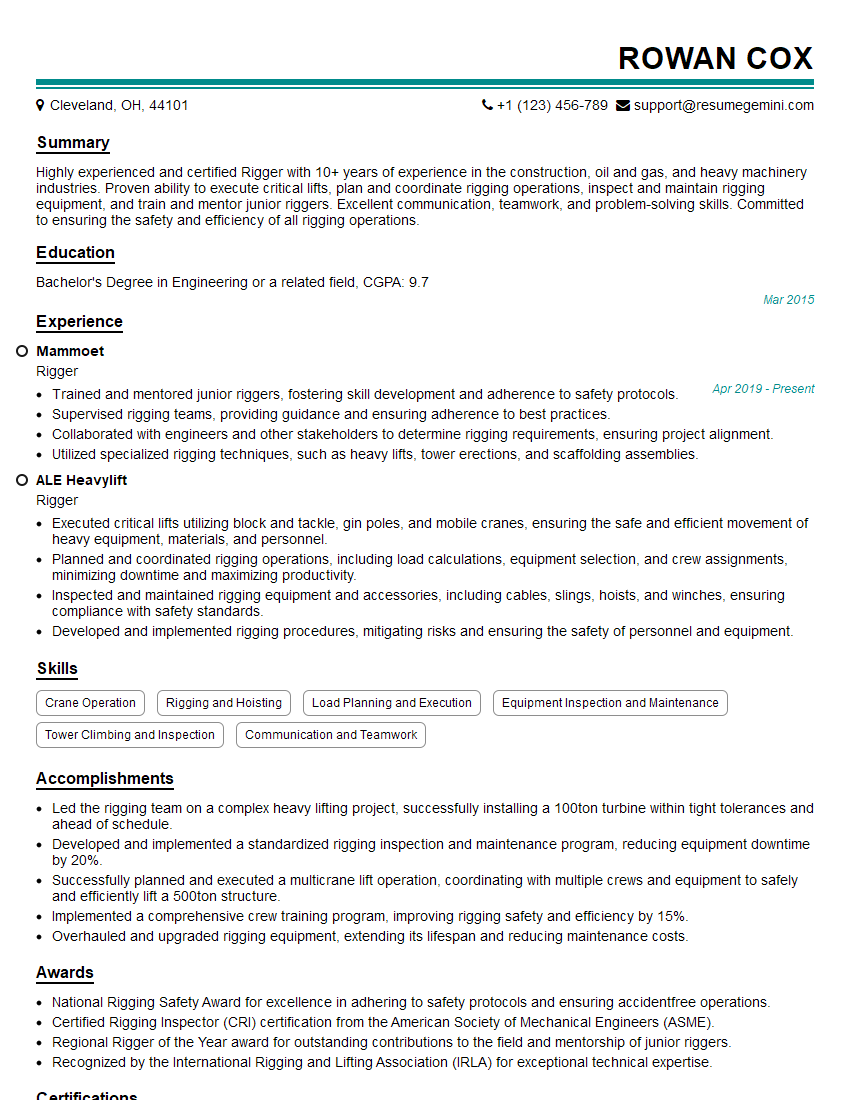
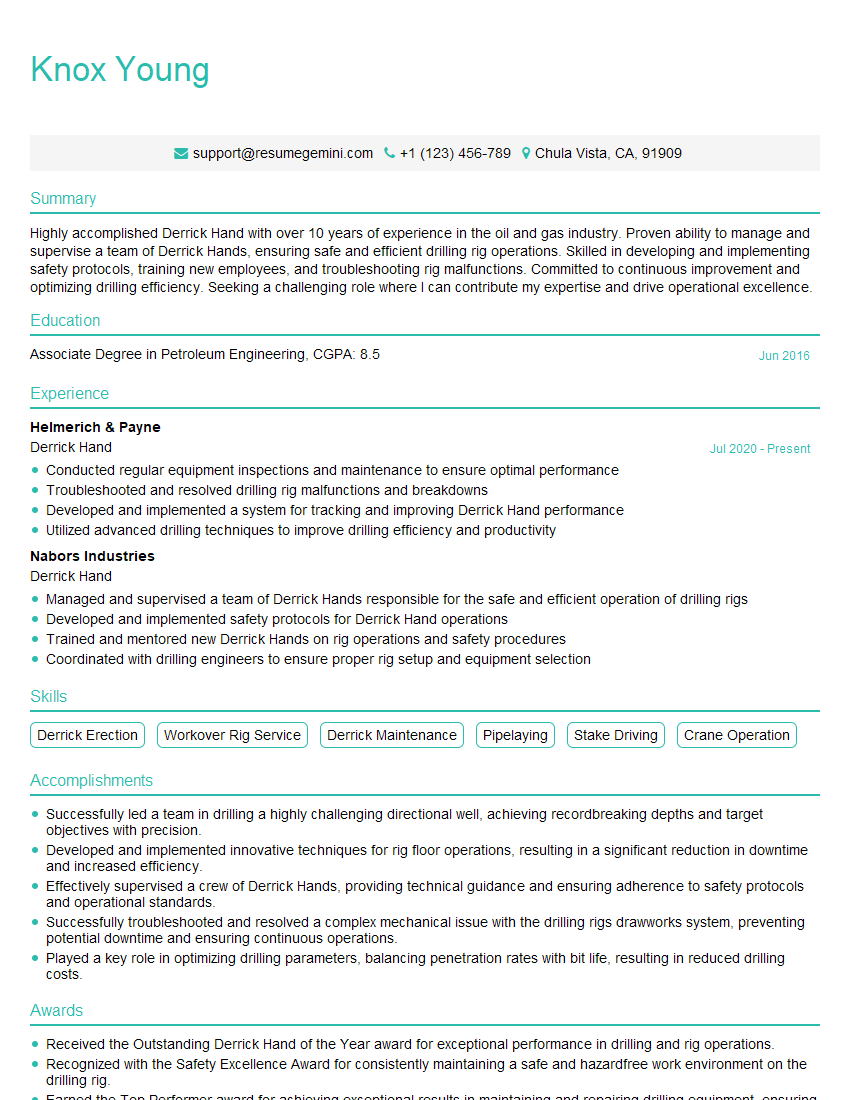
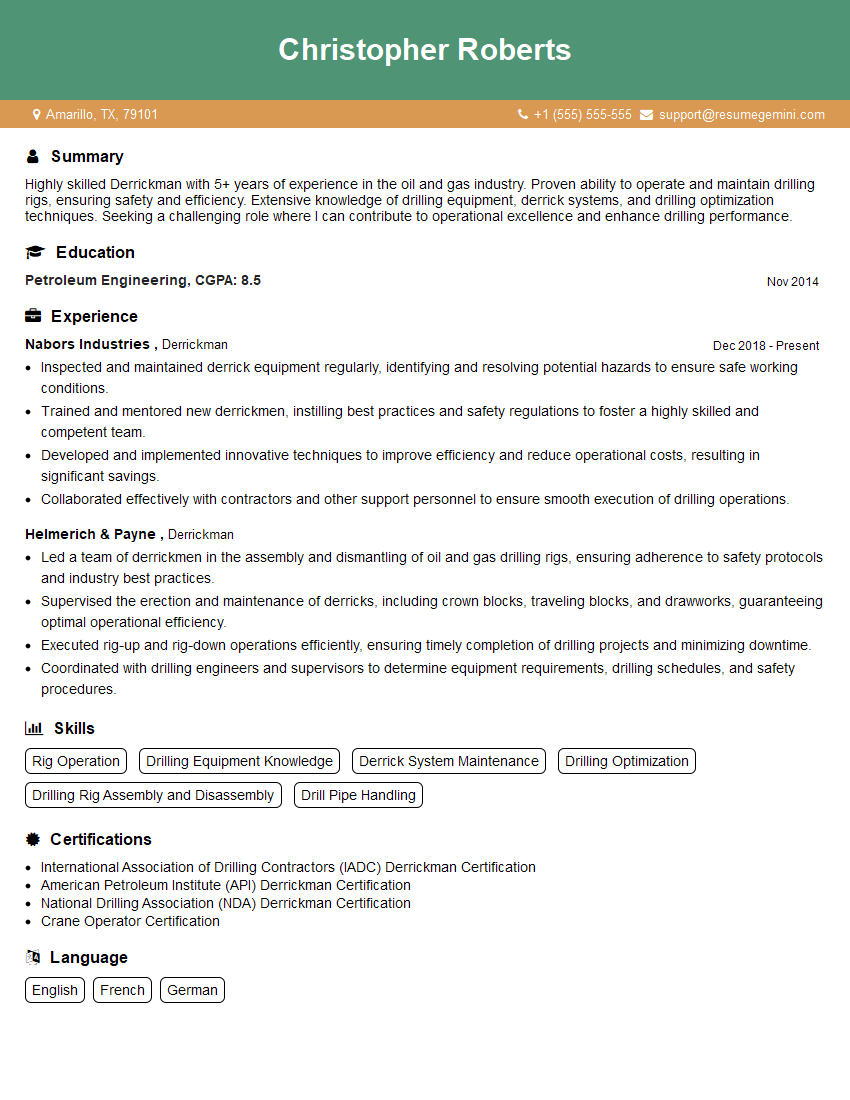
Mastering Derrick Rigging opens doors to exciting and rewarding career opportunities within demanding and specialized industries. A strong understanding of these principles is highly valued by employers and significantly increases your chances of securing a top position. To further boost your job prospects, focus on creating an ATS-friendly resume that effectively highlights your skills and experience. ResumeGemini is a trusted resource that can help you craft a professional and impactful resume. We provide examples of resumes tailored specifically to the Derrick Rigging industry, helping you present your qualifications in the best possible light. Take the next step toward your dream career – build your resume with ResumeGemini today!
Explore more articles
Users Rating of Our Blogs
Share Your Experience
We value your feedback! Please rate our content and share your thoughts (optional).
What Readers Say About Our Blog
Very informative content, great job.
good