Interviews are more than just a Q&A session—they’re a chance to prove your worth. This blog dives into essential Design Calculations interview questions and expert tips to help you align your answers with what hiring managers are looking for. Start preparing to shine!
Questions Asked in Design Calculations Interview
Q 1. Explain the process of conducting a design calculation for a simple beam.
Designing a simple beam involves determining its dimensions and material to withstand anticipated loads without failure. It’s a systematic process, and here’s how it works:
- Determine the Loads: First, identify all forces acting on the beam. This includes dead loads (beam’s self-weight, permanent fixtures), live loads (people, furniture, equipment), and any other applicable loads like snow, wind, or seismic forces. Imagine designing a beam for a balcony – you’d need to consider the weight of the balcony itself, the weight of people standing on it, and possibly the weight of snow in winter.
- Calculate Reactions: Using statics (sum of forces and moments equal zero), calculate the support reactions at each end of the beam. This determines how much force each support needs to handle. For a simply supported beam with a uniformly distributed load, the reactions at each end are equal and half the total load.
- Determine Shear and Bending Moment Diagrams: These diagrams graphically represent the shear force and bending moment along the beam’s length. They are crucial for determining the maximum shear and bending stresses.
- Select Material and Section Properties: Choose a suitable material (steel, concrete, wood) based on strength, cost, and availability. Calculate the section modulus (a geometric property related to the beam’s resistance to bending) for the chosen cross-section (rectangular, I-beam, etc.).
- Apply Stress Formulas: Use appropriate formulas (e.g., bending stress = bending moment / section modulus, shear stress = shear force / shear area) to calculate the stresses in the beam under the maximum bending moment and shear force.
- Check for Failure: Compare the calculated stresses to the material’s allowable stresses (obtained from material property data or design codes). The allowable stress is usually the yield strength or ultimate strength divided by a factor of safety. If the calculated stresses exceed the allowable stresses, you need to redesign the beam (increase size, change material, or both).
This iterative process ensures the beam can safely carry its intended loads.
Q 2. Describe the different types of loads considered in structural design calculations.
Structural design considers various loads, broadly classified as:
- Dead Loads: These are permanent loads, like the weight of the structure itself (beams, columns, walls), fixed installations, and any other permanent components. Think of the weight of the concrete in a building.
- Live Loads: These are temporary loads that can vary with time. Examples include occupancy loads (people, furniture), snow loads, wind loads, and equipment loads. Imagine designing a bridge – you’d need to account for the varying number and weight of vehicles using it.
- Environmental Loads: These loads arise from environmental factors like snow, wind, rain, and earthquakes. Snow accumulation on a roof is a classic example of an environmental load.
- Impact Loads: These are sudden and dynamic loads, like those from machinery, explosions, or vehicle collisions. The impact of a heavy truck hitting a bridge is an example of an impact load, requiring special considerations in the design.
- Thermal Loads: Temperature variations can cause expansion and contraction in materials, leading to thermal stresses. Think of the expansion of a metal beam on a hot summer day.
Accurately assessing all applicable loads is crucial for safe and efficient design.
Q 3. How do you account for factor of safety in your calculations?
The factor of safety (FOS) is a crucial element in engineering design, acting as a buffer against uncertainties and unforeseen events. It’s the ratio of the ultimate strength of a material to the allowable stress:
FOS = Ultimate Strength / Allowable Stress
For example, if a material has an ultimate tensile strength of 500 MPa, and we choose a factor of safety of 2, the allowable stress would be 250 MPa. This means that the design should never experience stresses exceeding 250 MPa to prevent failure. The chosen FOS depends on many factors, including the consequences of failure, the reliability of material properties, and the accuracy of load estimations. A higher factor of safety implies a higher degree of conservatism and reduced risk of failure, but it often leads to heavier and more expensive structures.
Q 4. What are the common methods used for stress analysis in design calculations?
Several methods are employed for stress analysis, each with its strengths and limitations:
- Analytical Methods: These methods use mathematical equations and formulas to determine stresses and deflections. They are suitable for simple geometries and loading conditions. Examples include using simple beam bending formulas to calculate stresses.
- Numerical Methods: These methods employ computational techniques to analyze complex structures and loading conditions. Finite Element Analysis (FEA) falls under this category.
- Experimental Methods: Physical testing of prototypes or scaled models is used to validate analytical or numerical results. Strain gauges can measure stresses directly.
The choice of method depends on the complexity of the structure and the required accuracy. Often a combination of methods is used. For instance, an analytical method might be used for a preliminary design, followed by FEA for refinement and verification.
Q 5. Explain the concept of Finite Element Analysis (FEA) and its applications in design calculations.
Finite Element Analysis (FEA) is a powerful numerical method that divides a complex structure into smaller, simpler elements (finite elements). It then uses mathematical equations to solve for stresses, strains, and displacements within each element. These solutions are then assembled to provide an overall picture of the structure’s behavior.
Applications:
- Stress Analysis: FEA can accurately predict stress distributions in complex geometries and under various loading conditions, even those involving non-linear material behavior.
- Vibration Analysis: Studying how a structure responds to dynamic loads (e.g., engine vibrations, wind gusts) is easily done with FEA.
- Thermal Analysis: Investigating temperature distributions and thermal stresses in components is readily achievable using FEA.
- Fluid-Structure Interaction (FSI): FEA can simulate the interaction between fluids and structures, which is crucial for designing components that operate in fluid environments (like airplane wings or submarine hulls).
FEA has become an indispensable tool in modern design calculations, allowing engineers to optimize designs for performance, safety, and cost-effectiveness, particularly for complex geometries where analytical methods fall short.
Q 6. What is the difference between static and dynamic analysis in design calculations?
The key difference between static and dynamic analysis lies in how they treat time:
- Static Analysis: Assumes loads are applied slowly and gradually, without any significant acceleration or inertia effects. It focuses on equilibrium conditions, where all forces and moments are balanced. This is suitable for structures subjected to slowly changing or constant loads.
- Dynamic Analysis: Considers loads that vary with time, incorporating inertial effects. It involves solving equations of motion to predict the structure’s response to dynamic loads like earthquakes, impacts, or vibrations. Dynamic analysis is more complex than static analysis and requires more computational resources. This is essential for applications such as designing earthquake-resistant structures or machinery operating under high-speed conditions.
Choosing between static and dynamic analysis depends on the nature of the loads and the required level of accuracy. If the loads change rapidly or the structure is subjected to significant vibrations, dynamic analysis is necessary. Otherwise, static analysis might be sufficient.
Q 7. How do you handle uncertainties and tolerances in design calculations?
Uncertainties and tolerances are inherent in engineering design. We address them through:
- Probabilistic Analysis: Instead of using single values for loads and material properties, we use probability distributions to account for variations. This allows us to assess the probability of failure and design for a desired reliability level.
- Load Factors and Material Safety Factors: Building codes and design standards often incorporate load factors (to increase the design loads) and material safety factors (to reduce the allowable stresses) to account for uncertainties.
- Sensitivity Analysis: This involves systematically varying design parameters to see how they affect the performance of the structure. This identifies critical parameters and helps prioritize areas for greater precision.
- Tolerances in Manufacturing: Design specifications must account for the tolerances involved in manufacturing processes. This means that the design should be robust enough to function reliably even with slight variations in dimensions or material properties.
By systematically addressing uncertainties and tolerances, we ensure that the design is reliable and safe, considering the unavoidable variations encountered in the real world.
Q 8. Describe your experience with different design codes and standards (e.g., ASME, ASTM).
My experience with design codes and standards is extensive, encompassing a wide range of applications. I’m proficient in using codes like ASME (American Society of Mechanical Engineers) – specifically ASME Section VIII, Division 1 and 2 for pressure vessel design, and ASME B31.1 for power piping – and ASTM (American Society for Testing and Materials) standards for material properties and testing. ASME codes provide the rules and regulations for designing pressure vessels and piping systems, ensuring safety and reliability. I’ve used these to calculate allowable stresses, wall thicknesses, and perform fatigue assessments. ASTM standards are crucial for selecting appropriate materials and verifying their properties, aligning material choices with specific design requirements. For instance, I’ve used ASTM A53 for pipe specifications and ASTM A36 for structural steel. My experience also includes familiarity with other relevant codes depending on the project, such as those from the American Institute of Steel Construction (AISC) for structural steel design and API (American Petroleum Institute) standards for oil and gas applications. The application of these codes is paramount to ensuring designs meet safety, performance, and regulatory requirements.
Q 9. What software are you proficient in for performing design calculations (e.g., ANSYS, Abaqus, SolidWorks)?
My software proficiency includes a variety of tools crucial for performing design calculations. I am highly experienced with ANSYS, specifically ANSYS Mechanical and ANSYS Fluent, for finite element analysis (FEA) and computational fluid dynamics (CFD) respectively. These are indispensable for complex simulations, stress analysis, and fluid flow modelling. I’m also well-versed in Abaqus, another powerful FEA software, which I utilize for more specialized simulations such as nonlinear analysis and material modelling. For 3D modelling and basic design work, I regularly use SolidWorks. My skills also extend to programming languages like Python, which I utilize for scripting and automating tasks within these software packages and for creating custom design tools. Finally, I am proficient in using spreadsheet software such as Excel for simpler calculations and data management. The choice of software depends heavily on the complexity and nature of the project; a simple beam calculation might be done in Excel, while a highly complex pressure vessel would require the power of ANSYS.
Q 10. Explain your understanding of fatigue analysis and its importance in design.
Fatigue analysis is a critical aspect of design, especially for components subjected to cyclic loading. It involves assessing the potential for a structure to fail due to repeated stress applications, even if those stresses are below the material’s yield strength. Imagine repeatedly bending a paper clip; eventually, it will break even though you never apply a force strong enough to break it immediately. That’s fatigue. In design, we use fatigue analysis to predict the lifespan of a component under cyclical loading. This involves determining the fatigue strength of the material, considering stress concentrations, and applying appropriate fatigue life prediction methods like the S-N curve approach or strain-life methods. The importance of fatigue analysis cannot be overstated; neglecting it can lead to catastrophic failures, particularly in high-cycle fatigue scenarios where the number of load cycles is very large. In aerospace, automotive, and many other industries, fatigue analysis is a crucial step in ensuring the safety and reliability of the designed parts. For example, in designing an aircraft wing, accurate fatigue analysis is essential to ensure it can withstand millions of cycles of stress during its operational lifetime.
Q 11. How do you verify the accuracy of your design calculations?
Verifying the accuracy of design calculations is paramount. My approach employs a multi-pronged strategy. First, I perform independent hand calculations or use alternative software to cross-check results whenever feasible. For instance, I might verify a beam deflection calculated using a FEA software by comparing it with a hand calculation using simpler beam theory. Second, I utilize built-in verification tools and checks within the software packages I use. Third, I review the results critically, considering factors like material properties, boundary conditions, and loading scenarios. Does the solution make physical sense? Are the stress levels realistic? If something appears unusual, further investigation is crucial. Fourth, I often consult relevant design codes and standards to ensure that my results meet regulatory requirements and established best practices. Finally, for complex projects, I involve peer reviews to ensure that another experienced engineer can independently validate the methodology and results. This layered approach significantly reduces the risk of errors and ensures high confidence in the design’s accuracy and reliability.
Q 12. Describe a situation where a design calculation went wrong and how you addressed it.
In a previous project involving the design of a pressure vessel, an initial calculation underestimated the required wall thickness. The initial design utilized a simplified approach neglecting stress concentrations at the nozzle welds. During a subsequent detailed FEA analysis, we found significantly higher stresses in these regions. This oversight could have led to premature failure. We addressed this by incorporating the stress concentrations into the design, resulting in a revised design with a thicker wall in those critical areas. The project timeline was adjusted, and the additional costs associated with the thicker material were considered. This experience highlighted the importance of using appropriate analysis techniques and considering all relevant factors, even those that may seem initially insignificant. Thorough peer review and a more detailed FEA analysis from the beginning would have prevented this issue.
Q 13. How do you manage large and complex design calculation projects?
Managing large and complex design calculation projects requires a structured and methodical approach. I typically begin by breaking down the project into smaller, manageable tasks. This might involve creating a work breakdown structure (WBS) to clearly define deliverables and responsibilities. I use project management software to track progress, assign tasks, and monitor timelines. Collaboration is crucial, so effective communication and regular meetings with the team are essential. I also employ version control systems for all design documents and calculation files, ensuring that changes are tracked and readily accessible. Regular reviews of the design and calculations are implemented to catch any errors early. This proactive approach keeps the project on schedule, within budget, and ensures that quality isn’t compromised. For extremely complex projects, a phased approach is best – completing critical design elements early allows for potential issues to be identified and addressed before more resources are invested.
Q 14. Explain your experience with material selection for design calculations.
Material selection is a critical aspect of design calculations. My experience involves considering various factors such as material strength, stiffness, ductility, fatigue resistance, corrosion resistance, cost, and availability. I start by defining the required mechanical properties and environmental conditions. Then, I consult material property databases and relevant standards (like ASTM) to identify potential candidate materials. Factors like temperature and chemical exposure heavily influence the material choice. For example, high-temperature applications might require specialized alloys, while corrosive environments necessitate corrosion-resistant materials like stainless steel or titanium. The selection process also considers manufacturing processes and joining techniques. For example, weldability is a critical consideration if welding is part of the manufacturing process. Ultimately, a trade-off analysis might be necessary, balancing desired properties with cost constraints. Software tools can be used to assist in material selection, allowing for quick comparisons based on predefined criteria.
Q 15. What are the limitations of the design calculation methods you use?
Design calculation methods, while powerful, have inherent limitations. These limitations stem from the inherent simplifications and assumptions made to make the calculations tractable. For example, we often utilize linear elastic material models, neglecting material nonlinearity like plasticity or creep. This works well for many scenarios, but fails in situations involving high stress concentrations or significant deformation. Another limitation is the reliance on idealized geometries. Real-world components have imperfections and variations not easily captured in simplified models. This can lead to discrepancies between calculated and actual performance.
- Linearity Assumption: Linear elastic models assume stress is directly proportional to strain. This breaks down under high loads.
- Simplified Geometry: We often model complex shapes using simpler geometries (e.g., approximating a curved surface with a series of straight lines). This introduces error.
- Material Property Uncertainty: Material properties are subject to variation. Manufacturing tolerances and inherent material inconsistencies affect the accuracy of the calculation.
- Boundary Conditions: Precisely defining boundary conditions (how a component is supported and loaded) can be difficult, introducing uncertainty into the analysis.
For example, calculating the stress in a complex weld might involve simplifying the weld geometry and using average material properties. This could underestimate the stress concentration at critical points, leading to potential failure. Therefore, we always need to consider the context of our calculations and apply appropriate safety factors.
Career Expert Tips:
- Ace those interviews! Prepare effectively by reviewing the Top 50 Most Common Interview Questions on ResumeGemini.
- Navigate your job search with confidence! Explore a wide range of Career Tips on ResumeGemini. Learn about common challenges and recommendations to overcome them.
- Craft the perfect resume! Master the Art of Resume Writing with ResumeGemini’s guide. Showcase your unique qualifications and achievements effectively.
- Don’t miss out on holiday savings! Build your dream resume with ResumeGemini’s ATS optimized templates.
Q 16. Describe your experience with buckling analysis.
Buckling analysis is crucial for designing slender components like columns, beams, and thin-walled structures. My experience includes using both analytical methods (like Euler’s formula for simple columns) and finite element analysis (FEA) for more complex structures. Euler’s formula provides a good starting point for understanding critical buckling load but often needs refinement for real-world scenarios. FEA allows for detailed modeling of geometry, material properties, and boundary conditions, leading to more accurate results. For example, I recently worked on a project involving the design of a tall communication tower. Using FEA, we were able to account for imperfections in the tower’s geometry and the effects of wind loading to determine the critical buckling load and design for sufficient safety margin.
My experience also encompasses different buckling modes, including local buckling (buckling of a specific part of a cross-section) and global buckling (buckling of the entire structure). Understanding these different modes is crucial for designing robust structures. In addition, I have experience in designing components to avoid buckling through methods such as stiffening, using high-strength materials, or implementing appropriate bracing. I’m proficient in software such as ANSYS and Abaqus for FEA.
Q 17. How do you incorporate thermal effects in design calculations?
Thermal effects are often significant and can’t be ignored in design calculations, especially for components operating at elevated temperatures. I incorporate these effects by considering thermal expansion, thermal stresses, and temperature-dependent material properties. This usually involves using coupled thermal-structural analysis. This approach solves the heat transfer problem first to determine the temperature distribution within the component. These temperatures are then used as input to the structural analysis to calculate stresses and deformations.
For example, in designing a pressure vessel for a high-temperature application, I’d use FEA to model the heat transfer from the process fluid to the vessel wall, accounting for thermal conductivity and convection. The resulting temperature distribution would then be used in a stress analysis to determine the thermal stresses and total stresses (combining thermal and pressure stresses). This analysis helps ensure the vessel’s structural integrity at operational temperatures. I often utilize software like ANSYS or Abaqus for this type of coupled analysis. The process accounts for thermal gradients, ensuring accurate assessment of thermally-induced stresses and deformations.
Q 18. How do you ensure compliance with relevant safety regulations and standards?
Compliance with safety regulations and standards is paramount. My approach involves selecting and applying the relevant codes and standards early in the design process. This includes familiarizing myself with the specific requirements for the application and jurisdiction. I utilize relevant standards such as ASME, ASTM, and Eurocodes, depending on the project’s location and industry. I meticulously document the standards used and how they are applied in the design calculations. This documentation is crucial for auditing and demonstrating compliance.
I employ a combination of analytical calculations and FEA to verify that the design meets or exceeds the required safety factors. For instance, for pressure vessel design, I adhere to the ASME Boiler and Pressure Vessel Code. For structural steel design, I would reference AISC standards. Through this rigorous process, I ensure that my designs meet all relevant safety and quality requirements. Regular internal audits and adherence to company quality management systems further strengthen compliance.
Q 19. Explain your understanding of vibration analysis in design calculations.
Vibration analysis is critical when designing components subject to dynamic loads. This involves determining the natural frequencies and mode shapes of the structure to ensure that they do not coincide with the excitation frequencies. Resonance, where the excitation frequency matches a natural frequency, can lead to excessive vibrations and potential failure. I typically use FEA for vibration analysis, modeling the structure and applying appropriate boundary conditions and dynamic loading. The analysis provides the natural frequencies, mode shapes, and frequency response functions, allowing for assessment of vibration behavior under various operating conditions.
For example, in designing a turbine blade, I’d perform a modal analysis to identify the blade’s natural frequencies. This information would then be used to ensure that the blade’s operating speed is far from resonance. If resonance is a concern, I might explore design modifications like changing the blade’s geometry or material to shift its natural frequencies. I have extensive experience with FEA software such as ANSYS and Abaqus for performing these analyses.
Q 20. What is your experience with Computational Fluid Dynamics (CFD)?
I have significant experience using Computational Fluid Dynamics (CFD) to analyze fluid flow and heat transfer in various applications. CFD enables detailed simulation of complex fluid flow patterns and heat transfer mechanisms. I’ve utilized CFD to optimize designs for reduced drag, improved heat dissipation, and enhanced mixing. My experience includes mesh generation, solver selection, and post-processing of results. I’m proficient in using commercial CFD software packages such as ANSYS Fluent and OpenFOAM.
For example, I used CFD to analyze the flow field around an aircraft wing, helping optimize its aerodynamic performance by minimizing drag. In another instance, I employed CFD to analyze the cooling system of an electronic component, ensuring that the heat generated was effectively dissipated. CFD analysis allows for the prediction of flow patterns, pressure drops, temperatures and other parameters to help make informed decisions during the design process.
Q 21. How do you document your design calculations and ensure traceability?
Thorough documentation and traceability of design calculations are vital for ensuring accuracy, facilitating communication, and meeting regulatory requirements. I maintain detailed records of all calculations, including assumptions, inputs, methodology, and results. My documentation follows a structured format, typically including:
- Project Overview: A clear description of the project and its objectives.
- Assumptions and Limitations: A list of assumptions made and limitations of the methods used.
- Input Data: All relevant input data such as material properties, geometry, and loads.
- Calculation Methodology: Detailed steps involved in the calculations, including equations and references to standards.
- Results: Clearly presented results with appropriate units and significant figures.
- Conclusion: A summary of the findings and recommendations.
I utilize software tools for calculation management, ensuring traceability and allowing for easy revision control. This detailed record-keeping enables others to review and understand the design process, ensuring reproducibility and accountability. This is crucial for legal reasons and helps maintain design integrity.
Q 22. Explain your approach to optimizing designs for cost and efficiency.
Optimizing designs for cost and efficiency is a crucial aspect of engineering. My approach involves a multi-faceted strategy focusing on material selection, structural analysis, and manufacturing considerations.
Material Selection: I start by exploring various materials considering their strength-to-weight ratio, cost, and availability. For instance, using high-strength steel instead of mild steel can reduce weight, leading to lower transportation costs and potentially less material needed. However, the higher initial cost needs careful evaluation against the long-term benefits.
Structural Analysis: Advanced Finite Element Analysis (FEA) is my primary tool. FEA allows me to simulate real-world loading conditions and optimize the design to minimize material usage while ensuring structural integrity. For example, I might use topology optimization within FEA to identify areas where material can be removed without compromising strength, thus reducing the overall weight and cost.
Manufacturing Considerations: The design must be manufacturable efficiently. I collaborate closely with manufacturing teams to understand limitations and choose designs that minimize fabrication time and waste. For example, choosing standard sections for beams and columns, instead of custom-designed ones, can significantly reduce manufacturing lead time and expenses.
Iterative Process: Optimization isn’t a one-step process. I use iterative design cycles, refining the design based on feedback from analysis, cost estimates, and manufacturability studies. This iterative process ensures that the final design balances cost, efficiency, and performance.
Q 23. What is your experience with design reviews and feedback incorporation?
Design reviews are integral to my workflow. I’ve been involved in numerous design reviews, both leading and participating, across various projects. My approach emphasizes constructive feedback and collaborative problem-solving.
Preparation: Before a review, I meticulously prepare comprehensive documentation, including design calculations, FEA results, and drawings. Clear and concise presentations are key to effective communication.
Active Listening: During the review, I actively listen to feedback, asking clarifying questions to ensure I fully understand the concerns. I value diverse perspectives and encourage open discussion.
Feedback Incorporation: I document all feedback and incorporate it systematically, updating the design and calculations accordingly. I also justify design choices clearly, explaining the rationale behind them and how they address concerns raised. I’m proficient in using revision control software to track changes and ensure design consistency.
Example: In a recent project, a design review highlighted potential fatigue issues in a weld joint. By incorporating feedback, I redesigned the joint geometry and performed additional FEA, successfully mitigating the fatigue risk while only slightly increasing the cost.
Q 24. Describe your experience with different types of structural elements (beams, columns, plates).
My experience encompasses a wide range of structural elements, including beams, columns, and plates. I have expertise in analyzing their behavior under various loading conditions using both hand calculations and sophisticated software.
Beams: I am proficient in analyzing beams of different cross-sections (I-beams, rectangular, circular) under bending, shear, and torsion. I can handle both static and dynamic loading scenarios, considering factors like material properties, boundary conditions, and support reactions.
Columns: My expertise includes buckling analysis of columns using various methods, including Euler’s formula and more advanced techniques for non-linear behavior. I consider factors such as column slenderness ratio, effective length, and end conditions to determine the critical load and ensure stability.
Plates: I am skilled in analyzing plates under various loading conditions (uniaxial, biaxial, shear). This includes determining stresses and deflections using classical plate theory and more advanced numerical techniques like FEA when necessary. I can handle plates with various shapes and boundary conditions.
Practical Application: For example, in a bridge design, I would analyze the bridge deck (a plate structure) for traffic loads, while the bridge supports would be analyzed as columns. The main beams supporting the deck would be analyzed under bending and shear. All calculations would be cross-checked and validated using FEA.
Q 25. Explain your understanding of different failure theories.
Failure theories are crucial for predicting when a material will fail under stress. My understanding encompasses several theories, each suited to specific material behavior and loading conditions.
Maximum Principal Stress Theory (Rankine): This theory predicts failure when the maximum principal stress reaches the material’s tensile strength. It’s simple to apply but conservative for ductile materials.
Maximum Shear Stress Theory (Tresca): This theory predicts failure when the maximum shear stress reaches half the material’s yield strength. It’s more accurate for ductile materials than the maximum principal stress theory.
Distortion Energy Theory (von Mises): This theory predicts failure when the distortion energy reaches the distortion energy at yield. It’s generally considered the most accurate for ductile materials under complex stress states.
Maximum Strain Theory: This theory predicts failure based on the maximum principal strain, which is useful for brittle materials.
Mohr-Coulomb Theory: This theory is specifically used for materials that fail under shear, such as soils and rocks.
Choosing the Right Theory: The selection of an appropriate failure theory depends on the material properties (ductile or brittle), the type of loading, and the level of accuracy required. For example, von Mises is often preferred for ductile metals under complex loading, while Mohr-Coulomb is essential for geotechnical applications.
Q 26. How do you handle complex geometries in your design calculations?
Handling complex geometries in design calculations often necessitates the use of advanced computational methods. While hand calculations can be sufficient for simple shapes, complex geometries require sophisticated tools.
Finite Element Analysis (FEA): FEA is my primary method for handling complex geometries. FEA software can discretize complex shapes into smaller elements, allowing for accurate stress and deformation analysis. I’m proficient in using various FEA packages, including ANSYS and Abaqus.
Mesh Generation: Proper mesh generation is critical for accurate results. I carefully refine the mesh in areas of high stress concentration to capture localized effects.
Boundary Conditions: Accurate definition of boundary conditions is essential. I pay close attention to how the structure is supported and loaded to ensure realistic simulation.
Example: Designing a complex cast component with intricate internal features would be challenging using hand calculations. However, using FEA, I can model the part’s geometry accurately and perform simulations to optimize its strength and stiffness while minimizing weight. The results from FEA provide the detailed stress distribution, allowing me to identify potential weak points and refine the design accordingly.
Q 27. What are your preferred methods for presenting design calculation results?
Clear and effective presentation of design calculation results is paramount for easy understanding and communication. My preferred methods include:
Detailed Reports: I create comprehensive reports that document all aspects of the calculations, including assumptions, methodology, inputs, outputs, and interpretations. These reports are well-structured and use clear language to explain complex concepts.
Visualizations: I utilize diagrams, charts, and graphs to visually represent the results. For example, stress contours from FEA are highly effective in showing stress distribution.
Tables: I present key results in tabular format for easy comparison and reference. This is particularly useful for presenting material properties, load cases, and design parameters.
Software: I use professional software for report generation to ensure consistent formatting and high quality.
Verification and Validation: My reports always include sections on verification (checking for calculation errors) and validation (comparing results against experimental data or established standards), ensuring the reliability of the design.
Key Topics to Learn for Design Calculations Interview
- Load Calculations: Understanding different types of loads (dead, live, wind, seismic) and their impact on structural design. Practical application: Analyzing load combinations and determining maximum stresses in a beam.
- Material Properties and Selection: Knowledge of material strengths, stiffness, and behavior under various loading conditions. Practical application: Choosing appropriate materials based on project requirements and budget constraints.
- Stress and Strain Analysis: Applying principles of stress and strain to determine the structural integrity of components. Practical application: Using FEA software or hand calculations to analyze stress concentrations.
- Structural Analysis Methods: Proficiency in various methods like statically determinate and indeterminate analysis, including moment distribution and matrix methods. Practical application: Solving for reactions, internal forces, and deflections in structures.
- Design Codes and Standards: Familiarity with relevant building codes and design standards (e.g., ACI, AISC). Practical application: Ensuring designs meet safety and regulatory requirements.
- Stability and Buckling: Understanding column buckling and other stability issues. Practical application: Designing columns to prevent buckling failure.
- Connections and Joints: Analysis and design of different types of connections (welded, bolted, riveted). Practical application: Detailing connection designs to ensure adequate strength and stiffness.
- Software Proficiency: Demonstrating familiarity with relevant design software (e.g., AutoCAD, Revit, SAP2000). Practical application: Modeling and analyzing structures using chosen software.
Next Steps
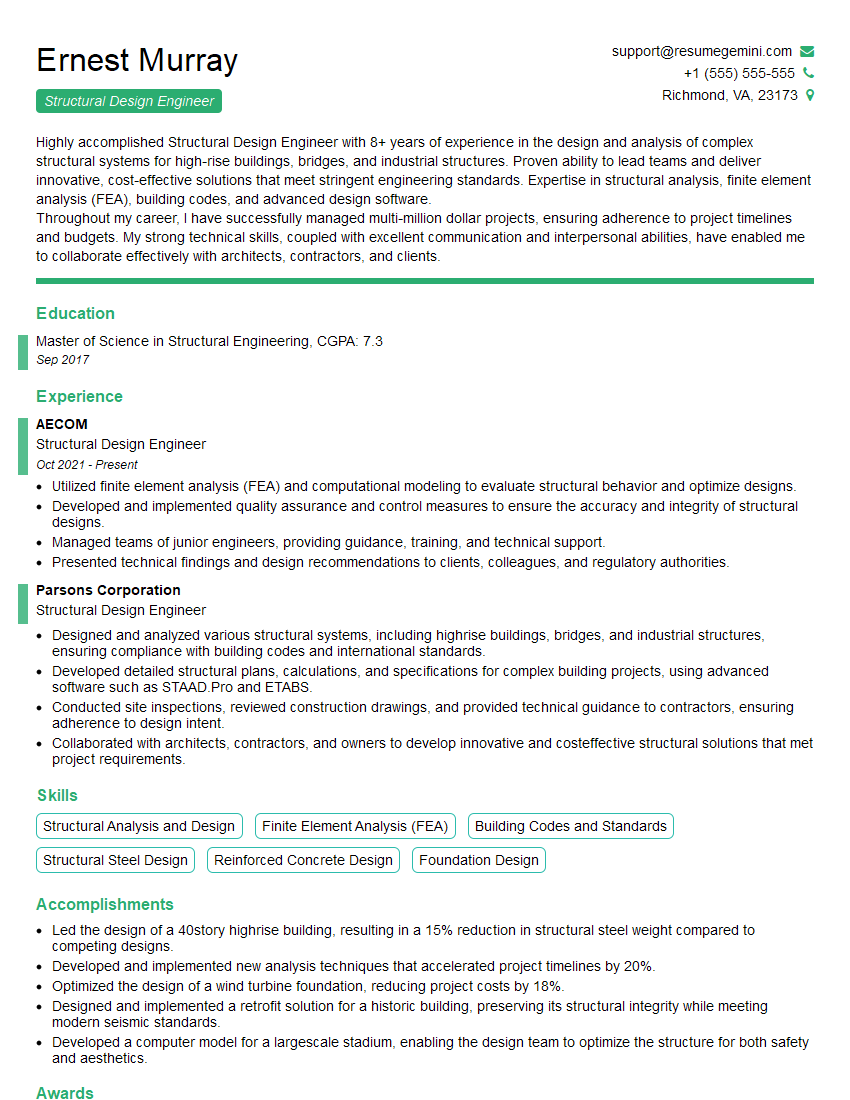
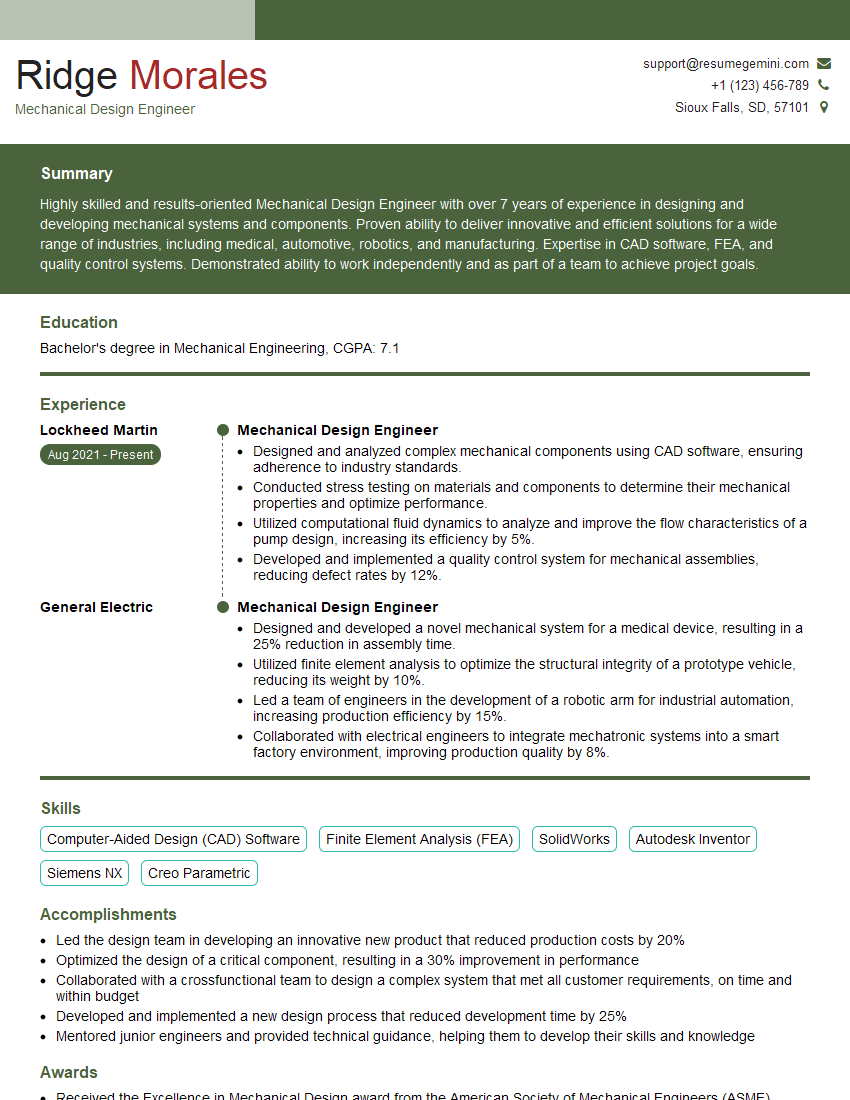
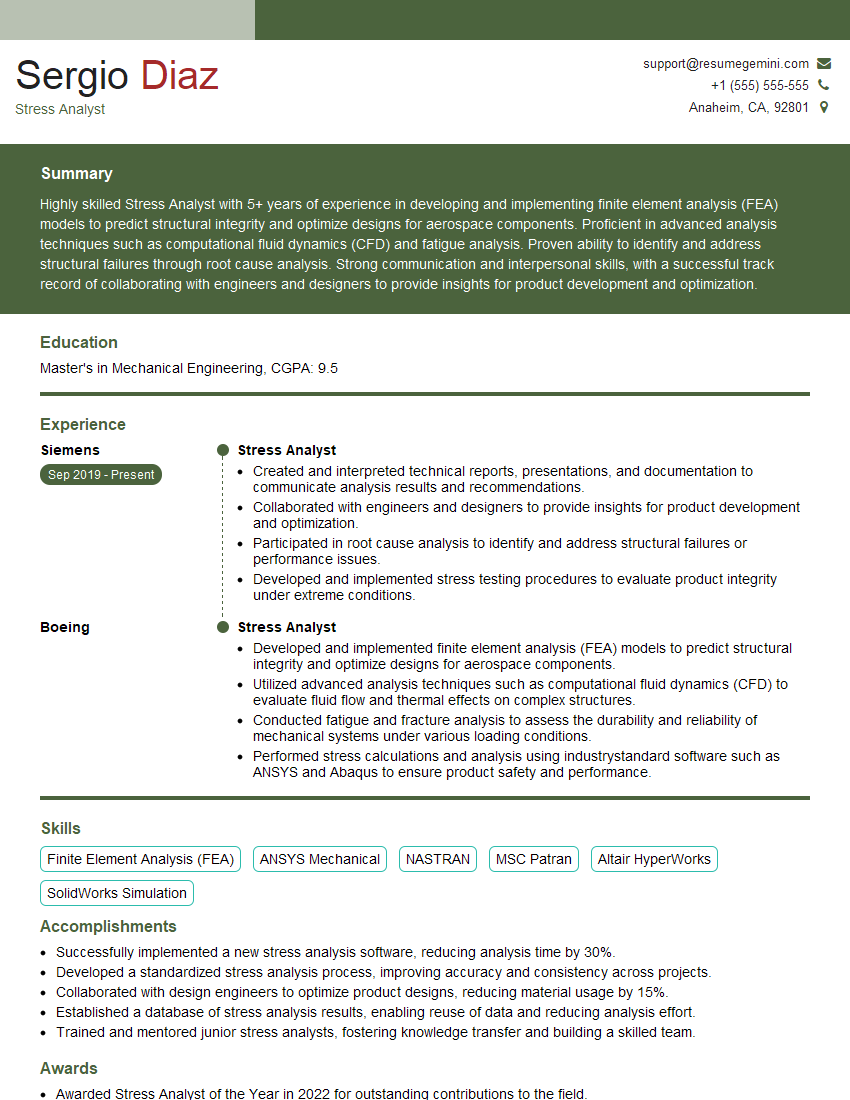
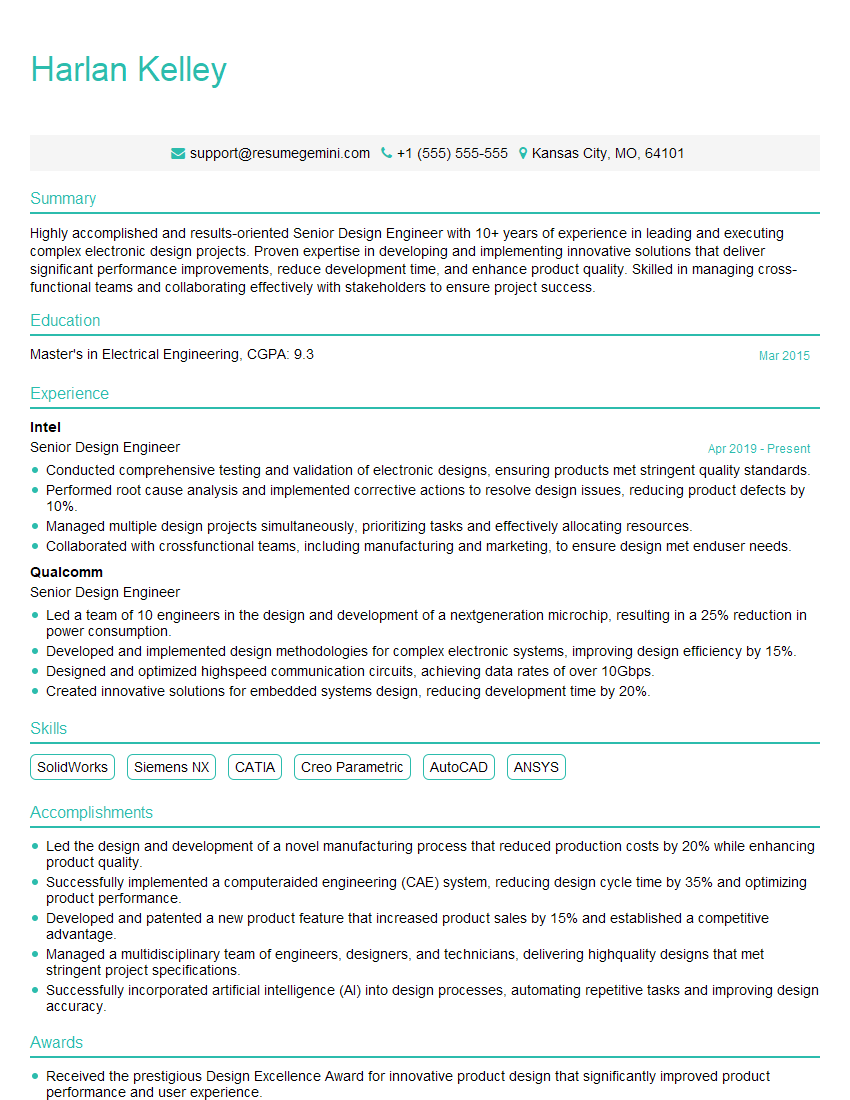
Mastering Design Calculations is crucial for career advancement in structural engineering and related fields. A strong understanding of these concepts opens doors to exciting projects and leadership opportunities. To enhance your job prospects, creating an ATS-friendly resume is essential. This ensures your qualifications are effectively communicated to potential employers. We recommend using ResumeGemini, a trusted resource, to build a professional and impactful resume. ResumeGemini provides examples of resumes tailored to Design Calculations, guiding you in crafting a document that highlights your skills and experience effectively.

Explore more articles
Users Rating of Our Blogs
Share Your Experience
We value your feedback! Please rate our content and share your thoughts (optional).
What Readers Say About Our Blog
Very informative content, great job.
good