The thought of an interview can be nerve-wracking, but the right preparation can make all the difference. Explore this comprehensive guide to Design for Reliability and Durability interview questions and gain the confidence you need to showcase your abilities and secure the role.
Questions Asked in Design for Reliability and Durability Interview
Q 1. Explain the difference between reliability and durability.
Reliability and durability, while both crucial for product success, focus on different aspects of a product’s lifespan. Reliability refers to the probability that a product will perform its intended function without failure for a specified period under stated conditions. Think of it as the consistency of performance. A reliable car starts every time you turn the key. Durability, on the other hand, focuses on the product’s ability to withstand wear and tear, abuse, and the effects of time and environment. It’s about the product’s longevity and resistance to degradation. A durable car can withstand harsh conditions and continue functioning for many years, even with considerable use.
The key difference lies in their emphasis: reliability is about consistent function, while durability is about longevity and resistance to degradation. A product can be reliable but not durable (e.g., a precise instrument that functions flawlessly for a short time but is easily damaged), or durable but not reliable (e.g., a rugged but frequently malfunctioning piece of machinery).
Q 2. Describe common reliability testing methods.
Common reliability testing methods aim to accelerate the aging process or simulate real-world conditions to predict a product’s lifespan and identify potential weaknesses. Some prominent methods include:
- Accelerated Life Testing (ALT): Stressing components beyond normal operating conditions (e.g., higher temperatures, voltages) to observe failure patterns faster. This allows for quicker assessment of reliability and is crucial for products with long expected lifespans.
- HASS (Highly Accelerated Stress Screening): A brutal short-term test intended to identify early failures in a batch. It helps weed out weak units early in the production process, improving overall reliability.
- Environmental Testing: Exposing products to various environmental stressors like temperature extremes, humidity, vibration, and shock to assess their robustness. This is particularly important for products intended for outdoor use or challenging environments.
- Mean Time Between Failures (MTBF) Analysis: Tracking the time between failures in a population of devices to estimate the average time a device will function before failure. This data is crucial for assessing reliability and setting maintenance schedules.
- Reliability Growth Testing: Monitoring reliability throughout the development lifecycle to identify and fix issues before product launch. This involves iterative testing and design improvements.
The choice of method depends on the product, its intended use, and the specific reliability aspects to be evaluated. Often, a combination of methods is employed for a comprehensive assessment.
Q 3. What are the key stages in a Design for Reliability (DFR) process?
A robust Design for Reliability (DFR) process integrates reliability considerations throughout the product lifecycle. Key stages include:
- Planning & Requirements Definition: Defining reliability targets, identifying critical functions, and understanding the operating environment.
- Concept Design & Feasibility Study: Exploring design alternatives and evaluating their reliability potential using tools like FMEA.
- Detailed Design & Prototyping: Developing detailed designs, selecting components with appropriate reliability characteristics, and conducting prototype testing.
- Verification & Validation Testing: Rigorous testing to confirm that the design meets reliability requirements, including environmental testing and accelerated life testing.
- Manufacturing & Process Control: Implementing processes to ensure consistent product quality and reliability throughout manufacturing.
- Field Data Collection & Analysis: Monitoring product performance in the field to identify any unforeseen issues and improve future designs.
Effective DFR is a proactive approach that significantly reduces the risk of costly failures and field returns.
Q 4. How do you perform a Failure Mode and Effects Analysis (FMEA)?
A Failure Mode and Effects Analysis (FMEA) is a systematic method to identify potential failure modes in a system or component, analyze their effects, and estimate their severity, occurrence, and detectability. It’s a crucial tool in risk management and reliability engineering. Here’s how to perform an FMEA:
- Identify System Functions: Break down the system into its constituent parts and define the function of each component.
- Identify Potential Failure Modes: For each component, list potential ways it could fail. Be thorough and consider both component and system-level failures.
- Determine Failure Effects: For each failure mode, determine the effect on the system or product. What happens if this component fails?
- Assess Severity (S): Rate the severity of each failure effect on a predefined scale (e.g., 1-10, where 10 is catastrophic).
- Assess Occurrence (O): Estimate the likelihood of each failure mode occurring on a predefined scale.
- Assess Detection (D): Estimate the likelihood that the failure will be detected before it affects the customer.
- Calculate Risk Priority Number (RPN): RPN = S x O x D. This provides a prioritization metric for addressing potential failures. High RPN values indicate areas needing immediate attention.
- Develop Corrective Actions: Implement changes to reduce the RPN for high-risk failure modes. This may include design modifications, improved materials, enhanced testing, or process improvements.
- Follow-up and Review: Regularly review the FMEA as new information becomes available or as the product evolves.
A well-executed FMEA is a powerful tool for proactive reliability improvement. It helps prioritize resources and prevent costly failures by addressing potential issues early in the design phase.
Q 5. Explain the concept of Weibull analysis and its applications in reliability.
Weibull analysis is a statistical method used to model and analyze time-to-failure data. It’s particularly useful for understanding the failure patterns of components and systems. The Weibull distribution is characterized by two parameters: the shape parameter (β) and the scale parameter (η).
- Shape Parameter (β): Describes the failure pattern. A β < 1 indicates early failures (infant mortality), β = 1 indicates constant failure rate, and β > 1 indicates wear-out failures.
- Scale Parameter (η): Represents the characteristic life, indicating the time at which 63.2% of the population would have failed for β = 1 (exponential distribution).
Applications in Reliability:
- Predicting Product Lifespan: Based on test data, Weibull analysis can estimate the probability of failure at different times, enabling predictions of product lifetime.
- Identifying Failure Mechanisms: The shape parameter helps determine the dominant failure mechanism (infant mortality, wear-out, or random failures).
- Reliability Improvement: By identifying failure patterns, Weibull analysis guides design improvements and manufacturing process optimization.
- Warranty Analysis: It can be used to determine appropriate warranty periods.
Using specialized software, Weibull analysis provides insights into failure rates and assists in making data-driven decisions to improve product reliability.
Q 6. What are some common reliability metrics, and how are they calculated?
Several metrics are used to quantify reliability. Here are some common ones, along with their calculation:
- Mean Time To Failure (MTTF): The average time until a product fails. Calculated as the sum of the times to failure divided by the number of failures.
MTTF = Σ(Time to Failure) / Number of Failures - Mean Time Between Failures (MTBF): The average time between successive failures for repairable systems. Calculated similarly to MTTF but considers repairs.
- Failure Rate (λ): The number of failures per unit time. Calculated as the number of failures divided by the total operating time.
λ = Number of Failures / Total Operating Time - Reliability (R(t)): The probability of a product surviving until time t. Often expressed as a percentage. The calculation depends on the underlying failure distribution (e.g., exponential, Weibull).
- Availability (A): The proportion of time a system is operational.
A = (MTTF) / (MTTF + MTTR), where MTTR is Mean Time To Repair.
These metrics provide quantifiable insights into the reliability of a product or system, enabling comparisons between different designs and informing decisions about maintenance, warranty, and product improvement.
Q 7. Describe your experience with accelerated life testing.
I have extensive experience in accelerated life testing (ALT), having designed and executed several ALT programs for various products, ranging from automotive components to consumer electronics. My approach typically involves:
- Defining Test Objectives: Clearly identifying the reliability characteristics to be assessed and the information needed for decision-making.
- Stress Variable Selection: Choosing appropriate stress factors (temperature, humidity, voltage, vibration) relevant to the product’s operating conditions and failure mechanisms.
- Test Plan Development: Defining the test conditions, sample sizes, and data collection methods to ensure statistical validity and accuracy.
- Test Execution & Monitoring: Rigorously controlling and monitoring test conditions, meticulously recording data, and promptly addressing any deviations from the test plan.
- Data Analysis & Interpretation: Employing statistical methods (Weibull analysis, Arrhenius model) to analyze failure data, estimate failure rates, and extrapolate results to real-world operating conditions.
- Report Generation & Recommendations: Preparing detailed reports summarizing the findings, including reliability estimations, failure analysis, and recommendations for design improvements or process optimizations.
For example, in a recent project involving a new automotive sensor, we utilized high-temperature ALT to accelerate the aging process. This allowed us to identify a weakness in the solder joints within a timeframe significantly shorter than the expected field life, enabling a timely design modification that enhanced its long-term reliability.
Q 8. How do you determine the appropriate life testing duration?
Determining the appropriate life testing duration is crucial for ensuring a product’s reliability. It’s not simply about running a test for as long as possible; it’s about finding the optimal balance between cost, time, and the information gained. The duration depends on several factors, including the desired reliability level, the failure rate of the product, and the available resources.
We typically use statistical methods like accelerated life testing (ALT) or accelerated degradation testing (ADT) to shorten the testing time. ALT exposes the product to harsher conditions (e.g., higher temperature, voltage) to accelerate failures, while ADT measures gradual performance degradation over time. Both methods rely on mathematical models to extrapolate the results to predict the product’s lifespan under normal operating conditions.
For example, if we’re designing a hard drive, we might use ALT to subject it to higher temperatures than it will normally experience, observing the failure rate. We then use statistical models like Weibull distribution to project the expected lifespan at normal operating temperatures. The chosen testing duration should provide sufficient data points to accurately estimate the parameters of the chosen statistical model, enabling us to establish confidence intervals for the product’s reliability predictions. This involves careful consideration of factors like sample size and the desired level of statistical significance.
Q 9. Explain the concept of maintainability and its relationship to reliability.
Maintainability refers to the ease with which a product can be maintained or repaired. It encompasses factors like the time required for repairs, the cost of parts, the availability of skilled technicians, and the ease of accessing components. High maintainability translates to reduced downtime, lower repair costs, and increased overall product availability.
Reliability and maintainability are intimately related. A highly reliable product might still suffer from extended downtime if it’s difficult to repair. Conversely, a product with high maintainability can compensate for lower inherent reliability to some extent. Imagine a car with a slightly less reliable engine but easy access to all parts, simplifying repairs compared to a car with a more reliable engine but a complex engine bay. The latter might lead to much longer downtime despite better inherent reliability. For this reason, they are often considered jointly in the design and manufacturing processes. Design for Maintainability (DFM) principles are incorporated alongside Design for Reliability (DFR) to optimize the balance between these two critical aspects. Techniques like modular design, diagnostic capabilities, and standardized parts are employed to enhance both reliability and maintainability.
Q 10. How do you handle conflicting requirements between cost, performance, and reliability?
Balancing cost, performance, and reliability is a constant challenge in product development. These often conflict: improving one aspect might compromise another. For instance, using higher-quality, more reliable components increases cost, and prioritizing performance can lead to compromises in reliability.
A structured approach is crucial. This usually involves:
- Defining priorities: Clearly establish which attribute is most critical for the product. This might vary depending on the application and target market. A medical device, for example, will prioritize reliability over cost. A toy, on the other hand, might emphasize cost-effectiveness over longevity.
- Trade-off analysis: Evaluate the impact of changes in one area on the others. Quantify the costs (both monetary and otherwise) associated with different design choices. Consider using Design of Experiments (DOE) to systematically explore the design space.
- Optimization techniques: Employ optimization techniques (e.g., weighted scoring, multi-objective optimization) to find the best compromise solution given the constraints and priorities.
- Iteration and refinement: The optimal balance might not be apparent immediately. Iterative design cycles, informed by testing and analysis, are crucial to refine the design and achieve a good balance.
For example, in designing a smartphone, we might initially prioritize performance. However, after evaluating the cost of the high-performance components and considering their potential impact on the product’s long-term reliability, we might choose to slightly reduce performance to achieve a more cost-effective and reliable device.
Q 11. What are some common causes of product failures, and how can they be mitigated?
Product failures stem from numerous sources. Common causes include:
- Material defects: Flaws in materials, like cracks or impurities, can lead to premature failure. This can be mitigated by stringent quality control during material selection and manufacturing.
- Design flaws: Poor design choices, such as inadequate stress analysis or insufficient safety margins, can make a product vulnerable to failure under certain conditions. Robust design techniques, thorough simulations, and rigorous testing are crucial for avoiding such issues.
- Manufacturing defects: Errors in the manufacturing process, such as incorrect assembly or component misalignment, can contribute to product failure. Improved manufacturing processes and quality control measures are vital here.
- Environmental factors: Exposure to harsh environmental conditions, such as extreme temperatures, humidity, or vibrations, can degrade product performance and cause failure. Proper environmental testing and robust design are needed to address this.
- Wear and tear: Repeated use or stress can cause components to wear out over time. This can be mitigated through the use of durable materials, robust designs, and scheduled maintenance.
Mitigation strategies involve a multi-pronged approach, including robust design methods, thorough testing, stringent quality control measures at each stage of production, and incorporating preventative maintenance plans for products post-delivery.
Q 12. Describe your experience with root cause analysis techniques.
I have extensive experience with various root cause analysis (RCA) techniques, including the 5 Whys, Fishbone diagrams (Ishikawa diagrams), Fault Tree Analysis (FTA), and Failure Mode and Effects Analysis (FMEA).
The 5 Whys is a simple yet effective method for uncovering the root cause by repeatedly asking “Why?” until the underlying problem is identified. It’s quick and useful for simpler failures. For example, a failed lightbulb may lead to a chain of 5 whys: 1. Why did the light fail? (Burned out) 2. Why did it burn out? (Filament broke) 3. Why did the filament break? (Overheating) 4. Why did it overheat? (Poor contact) 5. Why was the contact poor? (Improper manufacturing).
Fishbone diagrams visually organize potential causes categorized into broad categories (e.g., materials, methods, manpower, machines, environment, management). They are useful for brainstorming potential causes in a more structured way. Fault Tree Analysis works backward from the undesired event (top event) to identify potential contributing failures. It is more quantitatively focused, enabling the calculation of probabilities of failures. FMEA proactively identifies potential failure modes, their effects, and their severity, occurrence, and detection rates. This allows for preventative measures to be taken before a failure even occurs.
My choice of technique depends on the complexity of the failure and the available data. Often, I combine methods for a more thorough analysis. For instance, I might use a Fishbone diagram to brainstorm initial causes, then follow up with 5 Whys for each potential cause, and finally use data from testing to validate the root causes identified.
Q 13. How do you use reliability data to make design decisions?
Reliability data is the lifeblood of design decisions. It provides quantitative evidence about a product’s performance and lifespan, guiding improvements and mitigating risks.
I use reliability data to:
- Estimate failure rates: Analyze data to determine the frequency of failures and identify failure modes.
- Validate design choices: Compare the reliability performance of different design alternatives. This may involve comparing different materials, component types, or manufacturing processes.
- Assess the effectiveness of mitigation strategies: Evaluate the impact of design changes or quality control measures on the reliability of the product.
- Predict product lifespan: Use statistical models to forecast the expected lifespan of the product under various operating conditions.
- Inform warranty decisions: Reliability data helps in establishing realistic warranty periods based on the anticipated failure rate.
For example, if we observe a higher-than-expected failure rate in a specific component, we might use reliability data to justify switching to a more robust component, even if it’s slightly more expensive. The added cost is justified by the improvement in reliability, leading to a reduction in warranty costs and improved customer satisfaction.
Q 14. How do you communicate reliability information to stakeholders?
Communicating reliability information effectively to stakeholders is crucial for making informed decisions and ensuring that everyone is on the same page. I use a variety of methods depending on the audience and the information’s complexity:
- Clear and concise reports: Provide summaries of key findings, including failure rates, mean time to failure (MTTF), and other relevant metrics. Avoid technical jargon where possible.
- Visualizations: Employ charts, graphs, and diagrams (e.g., histograms, Weibull plots, bathtub curves) to present complex data in an easy-to-understand format. A picture is often worth a thousand words, especially when communicating reliability information.
- Presentations: Use presentations to explain findings and highlight key implications for design and manufacturing. Tailor the presentation’s level of detail to the audience’s technical expertise.
- Interactive dashboards: Create interactive dashboards to track reliability metrics over time and allow stakeholders to explore the data independently. This is particularly beneficial for ongoing monitoring and improvement efforts.
- Risk assessments: Communicate the potential risks associated with low reliability and the potential impact on the business.
It’s essential to tailor the communication style and level of detail to the specific audience. A technical report for engineers will differ significantly from a summary for senior management. The goal is always to ensure that everyone understands the implications of the reliability data and can make informed decisions based on it.
Q 15. Describe your experience with different reliability prediction models.
Reliability prediction models are mathematical tools we use to estimate the likelihood of a product or system failing within a specific timeframe. They’re crucial for proactive design and risk mitigation. My experience encompasses a variety of models, each suited to different situations.
Part Count Models (e.g., MIL-HDBK-217): These are relatively simple models that estimate reliability based on the number and type of components. They’re useful for early-stage design, but their accuracy can be limited because they don’t account for complex interactions between components. I’ve used this extensively for initial feasibility studies.
Physics-of-Failure (PoF) Models: These are more sophisticated and delve into the underlying failure mechanisms of components. They consider factors like stress, temperature, and material properties to predict failure rates. I find PoF models invaluable for understanding the root causes of failure and guiding design improvements. For instance, I used a PoF model to predict the fatigue life of a critical component in an aerospace application.
Statistical Models (e.g., Weibull Analysis): These models use historical failure data to fit a probability distribution and predict future failures. They’re particularly useful for analyzing field data and identifying patterns. In a recent project, Weibull analysis helped us pinpoint a batch of faulty components that were causing premature failures in a consumer electronic product.
Monte Carlo Simulation: This is a powerful technique for incorporating uncertainty into reliability predictions. It runs many simulations, each using different input parameters (drawn from probability distributions), giving a range of possible outcomes. This approach is especially effective for complex systems with many interacting components.
Choosing the right model depends on the available data, the complexity of the system, and the desired level of accuracy. I am proficient in applying and interpreting results from each of these model types, often using specialized software packages.
Career Expert Tips:
- Ace those interviews! Prepare effectively by reviewing the Top 50 Most Common Interview Questions on ResumeGemini.
- Navigate your job search with confidence! Explore a wide range of Career Tips on ResumeGemini. Learn about common challenges and recommendations to overcome them.
- Craft the perfect resume! Master the Art of Resume Writing with ResumeGemini’s guide. Showcase your unique qualifications and achievements effectively.
- Don’t miss out on holiday savings! Build your dream resume with ResumeGemini’s ATS optimized templates.
Q 16. How do you ensure the reliability of software components within a system?
Ensuring software reliability requires a multi-faceted approach that begins early in the design process and continues through development, testing, and deployment. Think of it like building a sturdy bridge: you wouldn’t just throw some planks together; you’d need careful planning, robust materials, and rigorous testing.
Robust Design Principles: Employing techniques to minimize the impact of software variations (e.g., different operating systems, hardware configurations). This involves using modular design, defensive programming techniques (e.g., input validation, error handling), and rigorous testing.
Static and Dynamic Analysis: Using static analysis tools to check code for potential errors and vulnerabilities *before* running the code. Dynamic analysis, such as runtime testing and monitoring, helps identify issues during actual operation.
Software Testing Methodologies: Rigorous testing is paramount. This includes unit testing, integration testing, system testing, and user acceptance testing. Different testing methods are applied across all stages to find defects at various levels.
Version Control and Continuous Integration/Continuous Deployment (CI/CD): Utilizing version control to track changes and revert to stable versions if necessary, and using CI/CD pipelines for automated testing and deployment.
Fault Tolerance and Recovery Mechanisms: Designing software to gracefully handle errors and unexpected events. This involves implementing mechanisms like exception handling, redundancy, and fail-safe operations.
In practice, I utilize a combination of these approaches. For example, in a recent project involving embedded systems, we employed extensive unit testing, static analysis, and robust error handling to achieve a high level of software reliability. A thorough understanding of software engineering principles is crucial for delivering dependable systems.
Q 17. What is the importance of design reviews in ensuring reliability?
Design reviews are critical checkpoints in the design process that serve as a proactive way to identify and mitigate potential reliability issues *before* they become costly problems later on. Think of it as a quality control inspection but at the design stage.
Formal design reviews involve a structured process where a team of experts reviews design specifications, schematics, and other documentation. This multidisciplinary team includes engineers, designers, and potentially even manufacturing specialists.
Early Problem Detection: Reviews identify potential weaknesses, flaws, or omissions in the design that could lead to reliability problems. This allows addressing these issues early on when it’s less expensive to fix them.
Knowledge Sharing and Collaboration: Reviews foster collaboration and knowledge sharing across different disciplines. This leads to a more robust and reliable design by leveraging collective expertise.
Improved Communication: They improve communication and understanding between different engineering teams involved in the project. A clear understanding of design requirements, constraints, and assumptions is very important.
Traceability and Documentation: They improve design traceability and documentation, simplifying troubleshooting and making maintenance simpler.
I’ve personally witnessed instances where design reviews prevented costly field failures. In one project, a design review highlighted a potential thermal issue that could have caused premature component failure. Identifying and resolving this issue during the design phase prevented significant rework and delays during the manufacturing process.
Q 18. Explain the concept of redundancy and how it improves reliability.
Redundancy is a powerful technique for enhancing system reliability. It involves incorporating multiple components or subsystems that perform the same function, such that if one fails, another can take over seamlessly. Imagine it like having a backup generator for your home – if the power goes out, the backup system ensures continued functionality.
Active Redundancy: All redundant components are active and constantly operating simultaneously. This offers the highest level of reliability, but it comes at the cost of increased complexity and power consumption. An example is a flight control system with multiple independent computers.
Passive Redundancy: Only one component is active at any given time. The backup components are activated only when the primary component fails. This is less complex and energy-efficient but might introduce some delay in the event of a failure. A classic example is a spare tire in a car.
N-Modular Redundancy (NMR): This employs N identical components where a voting system determines the correct output based on the majority vote from the working components. This protects against single-point failures, even if multiple components fail simultaneously. This is used commonly in critical systems where failure is not an option.
The choice of redundancy strategy depends on the criticality of the system, the cost constraints, and the acceptable downtime. For instance, in a life-critical medical device, active redundancy with a voting system would be preferred to ensure the highest level of reliability.
Q 19. How do environmental factors influence product reliability?
Environmental factors significantly impact product reliability. They can accelerate degradation and cause premature failures. Think about leaving your phone out in the sun – extreme heat could damage the battery and shorten its lifespan.
Temperature: Extreme temperatures (both high and low) can affect material properties, causing stress cracking, thermal shock, or degradation of electronic components.
Humidity: High humidity can promote corrosion, mold growth, and insulation breakdown. This is especially problematic for electronics and mechanical systems.
Vibration and Shock: Mechanical vibrations and shocks can cause fatigue and loosen components. This is a significant concern in transportation applications.
Pressure: Changes in atmospheric pressure can affect sensitive components, leading to leakage or malfunctions. This is crucial for aerospace and underwater applications.
Radiation: Exposure to radiation can damage electronic components and reduce their lifespan. This is a concern in space applications and near high-energy sources.
To mitigate these impacts, we utilize robust design principles and environmental testing. This includes environmental chambers that simulate extreme conditions to assess product performance. For example, we would subject a product intended for outdoor use to rigorous testing involving extreme temperature cycling, humidity exposure, and vibration testing to ensure long-term durability and reliability in the field.
Q 20. What are some common industry standards related to reliability (e.g., MIL-HDBK-217)?
Several industry standards provide guidelines and methodologies for assessing and improving product reliability. These standards are crucial for ensuring consistent, high-quality products and components. They often involve rigorous testing procedures and specific calculations.
MIL-HDBK-217: This military handbook provides methods for predicting the reliability of electronic parts and systems. It’s a widely used standard that defines failure rates for various components and incorporates factors such as temperature and operating stress.
Telcordia SR-332: This standard provides reliability prediction methods for telecommunications equipment. It considers factors relevant to telecommunication systems, like stress due to traffic loads and operational conditions.
IEC 61709: This International Electrotechnical Commission standard defines guidelines for predicting the reliability of power electronic systems.
Automotive SPICE: While not strictly a reliability standard, it’s a software development process standard for the automotive industry. Adherence to Automotive SPICE practices indirectly contributes to building highly reliable automotive software.
ISO 9001: Though not explicitly focused on reliability, ISO 9001 sets quality management system standards that underpin a reliable product development process.
The choice of which standard to use often depends on the industry and the specific application. In many cases, standards are used in combination to cover all relevant aspects of reliability engineering and product validation.
Q 21. Explain the difference between preventative and corrective maintenance.
Preventative and corrective maintenance are two distinct approaches to maintaining equipment and systems, with differing goals and methods. Think of your car: preventative maintenance is like regularly changing the oil, while corrective maintenance is fixing a flat tire after it happens.
Preventative Maintenance: This involves scheduled maintenance activities designed to prevent failures before they occur. It aims to extend the lifespan of equipment and improve overall reliability. Examples include lubricating moving parts, inspecting for wear and tear, and replacing parts before they fail. It is proactive and cost-effective in the long run.
Corrective Maintenance: This involves repairing equipment after it has failed. It’s reactive and addresses immediate problems. This includes fixing broken parts, replacing faulty components, and troubleshooting issues. Corrective maintenance is often more expensive and disruptive than preventative maintenance, involving emergency repairs and potentially unplanned downtime.
Ideally, a balanced approach that combines both preventative and corrective maintenance is implemented. A good maintenance plan includes a suitable level of preventive maintenance to minimize the need for corrective maintenance, balancing cost and potential downtime. Regular inspections, scheduled servicing, and data-driven insights are crucial for optimizing the maintenance strategy.
Q 22. Describe your experience using reliability simulation tools.
My experience with reliability simulation tools spans several industry-standard software packages. I’m proficient in using tools like ANSYS, Abaqus, and specialized reliability software such as ReliaSoft Weibull++ and BlockSim. These tools allow me to perform a variety of analyses, including Finite Element Analysis (FEA) to predict stress and strain on components under various loading conditions, fatigue analysis to estimate component lifespan under cyclic loading, and reliability block diagrams (RBDs) to model system-level reliability. For example, in a recent project involving the design of a high-speed centrifugal pump, I used ANSYS to model the fluid dynamics and structural stresses within the impeller. This allowed us to identify potential failure points and optimize the design for improved durability and reduced risk of catastrophic failure.
Furthermore, I have experience using Monte Carlo simulations to account for the variability in component parameters and predict the probability of system failure. This probabilistic approach is crucial for a holistic understanding of reliability, going beyond simple deterministic calculations. For instance, in designing a safety-critical system, I leveraged Monte Carlo simulation to quantify the probability of failure under various operating conditions, helping us meet stringent safety standards.
Q 23. How do you validate the reliability of a new design?
Validating the reliability of a new design is a multifaceted process that combines analytical methods, testing, and data analysis. It typically involves several stages:
- Design Reviews: Thorough reviews of the design by a multidisciplinary team to identify potential failure modes and weaknesses early in the design process.
- Accelerated Life Testing (ALT): Subjecting the product to more extreme conditions than normal operating conditions to accelerate the degradation and failure process, thereby obtaining reliability data in a shorter timeframe. This can involve techniques like thermal cycling, vibration testing, and high-humidity testing.
- Reliability Growth Testing: This is an iterative process where failures are identified, root causes are analyzed, and design improvements are implemented to enhance reliability. This usually includes design of experiments (DoE) to optimize testing strategies.
- Statistical Analysis: Utilizing statistical methods (like Weibull analysis) to analyze the failure data obtained from testing and determine key reliability parameters such as mean time to failure (MTTF) and failure rates.
- Field Testing: Deploying a limited number of prototypes in real-world conditions to observe performance and identify any unexpected failure modes or issues not detected during laboratory testing.
Ultimately, validating reliability requires a combination of these methods, tailored to the specific product and its intended application. The goal is to build sufficient confidence that the design will meet its reliability targets under its expected operating conditions.
Q 24. What are some challenges you’ve faced in a reliability engineering role, and how did you overcome them?
One of the biggest challenges I’ve faced was dealing with conflicting priorities between cost, performance, and reliability. Often, improving reliability requires using higher-quality components or implementing more robust designs, which can increase costs. In one project, we were under significant pressure to reduce the cost of a medical device. Initially, proposed cost-cutting measures compromised reliability. To overcome this, I collaborated with the design and manufacturing teams, exploring alternate materials and manufacturing processes that provided similar performance but at a reduced cost without sacrificing reliability. We leveraged Design for Manufacturability (DFM) principles, making the manufacturing process more efficient, thus reducing the overall cost. This demonstrated the value of a proactive and collaborative approach that considered all aspects of the product lifecycle.
Another challenge involved managing expectations around accelerated life testing. Extrapolating results from ALT to real-world conditions can be complex and requires careful consideration of the acceleration factors. To mitigate this, I focused on detailed modeling and validation of the acceleration factors, using advanced statistical techniques to enhance the accuracy of our predictions. Transparency with stakeholders regarding the limitations of ALT was also crucial in managing expectations.
Q 25. How do you stay up-to-date with the latest advancements in reliability engineering?
Staying current in reliability engineering requires a multi-pronged approach:
- Professional Organizations: Active participation in organizations like the American Society for Quality (ASQ) and the Institute of Electrical and Electronics Engineers (IEEE) provides access to conferences, publications, and networking opportunities.
- Industry Publications and Journals: Regularly reading journals like Reliability Engineering & System Safety and attending industry-specific conferences allows me to keep abreast of the latest research and advancements.
- Online Courses and Webinars: Many reputable online platforms offer courses and webinars on various aspects of reliability engineering, helping to deepen understanding and acquire new skills.
- Collaboration and Networking: Engaging with colleagues and experts in the field through conferences, online forums, and professional networks provides valuable insights and exposes me to different perspectives and approaches.
Continuous learning is key in this rapidly evolving field. It’s essential to remain curious and actively seek out new knowledge and best practices.
Q 26. Describe your experience with statistical process control (SPC) techniques.
Statistical Process Control (SPC) is a crucial tool for maintaining consistent product quality and reliability throughout the manufacturing process. My experience includes using various SPC charts, such as X-bar and R charts, p-charts, and c-charts, to monitor key process parameters and detect deviations from established targets. I’ve applied SPC in several projects, for instance, in monitoring the dimensions of critical components during manufacturing. By setting control limits based on historical data, we can promptly identify any shifts in the process mean or increases in variability, preventing defects before they become widespread. This allows for proactive intervention, minimizing waste and improving overall product quality and reliability.
Furthermore, I am experienced in implementing capability analysis to assess the ability of a process to meet specified requirements. This involves calculating process capability indices such as Cp and Cpk, providing quantitative measures of process performance and helping to identify areas for improvement. In essence, SPC helps shift from a reactive approach to quality control to a proactive one, preventing defects and building greater reliability into the manufacturing process.
Q 27. How do you incorporate reliability considerations into the product development lifecycle?
Incorporating reliability considerations into the product development lifecycle (PDLC) is crucial for developing reliable and durable products. This involves integrating reliability engineering principles into each stage:
- Concept Phase: Defining reliability targets, identifying potential failure modes, and selecting appropriate materials and technologies.
- Design Phase: Using reliability simulation tools, conducting design reviews, implementing design for reliability (DFR) and design for six sigma (DFSS) techniques.
- Manufacturing Phase: Implementing SPC and process control methods, monitoring key process parameters, and ensuring consistent product quality.
- Testing Phase: Conducting various reliability tests (ALT, environmental stress screening, etc.), collecting and analyzing failure data, and identifying areas for improvement.
- Deployment Phase: Monitoring product performance in the field, collecting feedback, and performing post-market analysis.
By integrating reliability considerations throughout the entire PDLC, we can proactively mitigate risks, reduce the likelihood of failures, and build products that meet or exceed customer expectations.
Q 28. How do you assess the risks associated with reliability failures?
Assessing the risks associated with reliability failures involves a systematic approach combining quantitative and qualitative methods. This typically includes:
- Failure Modes and Effects Analysis (FMEA): Identifying potential failure modes, their severity, likelihood, and detectability. This helps prioritize the most critical failure modes and guide risk mitigation efforts.
- Fault Tree Analysis (FTA): A top-down approach to modeling the combinations of events that can lead to a specific system failure.
- Risk Priority Number (RPN): Calculating an RPN for each failure mode by multiplying its severity, likelihood, and detectability ratings. This helps prioritize risk mitigation efforts by focusing on high-RPN failure modes.
- Quantitative Risk Assessment: Using reliability data and statistical methods (e.g., Monte Carlo simulation) to quantify the probability and consequences of different failure scenarios.
- Risk Mitigation Strategies: Developing and implementing strategies to reduce the risk associated with identified failure modes, such as redundancy, design improvements, preventative maintenance, and improved testing procedures.
The output of this risk assessment process should inform design decisions, testing strategies, and resource allocation, leading to more robust and reliable products.
Key Topics to Learn for Design for Reliability and Durability Interview
- Fundamentals of Reliability Engineering: Understanding key concepts like Mean Time Between Failures (MTBF), failure rates, and reliability prediction methods. Explore different reliability models and their applications.
- Durability and Fatigue Analysis: Mastering stress-strain analysis, fatigue life prediction, and the impact of different loading conditions on material properties. Learn about various testing methodologies to assess durability.
- Design for Six Sigma (DFSS): Applying DFSS principles to minimize defects and enhance product reliability throughout the design process. This includes understanding DMAIC and DMADV methodologies.
- Failure Mode and Effects Analysis (FMEA): Gain proficiency in identifying potential failure modes, assessing their severity, and implementing preventative measures. Practice conducting FMEAs for various product designs.
- Material Selection and Characterization: Understand the properties of different materials and how to select the most suitable ones for specific applications, considering both reliability and durability requirements. Learn about material testing techniques.
- Testing and Validation: Familiarize yourself with various testing methods used to assess the reliability and durability of products, including accelerated life testing and environmental testing. Understand the importance of test planning and data analysis.
- Risk Assessment and Management: Learn to identify and evaluate risks associated with product reliability and durability, and develop strategies to mitigate those risks throughout the product lifecycle.
- Practical Application: Case Studies: Explore real-world examples of how Design for Reliability and Durability principles have been applied successfully in different industries. Analyze the challenges and solutions employed in these case studies.
Next Steps
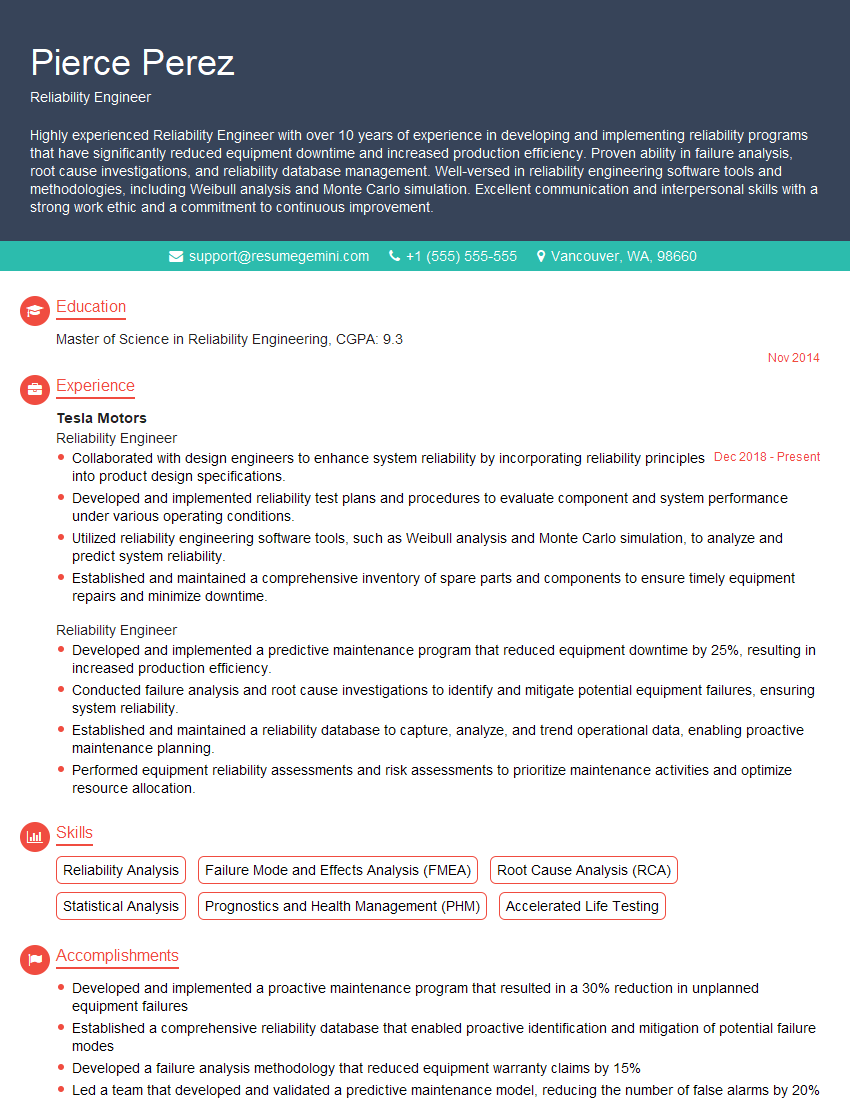
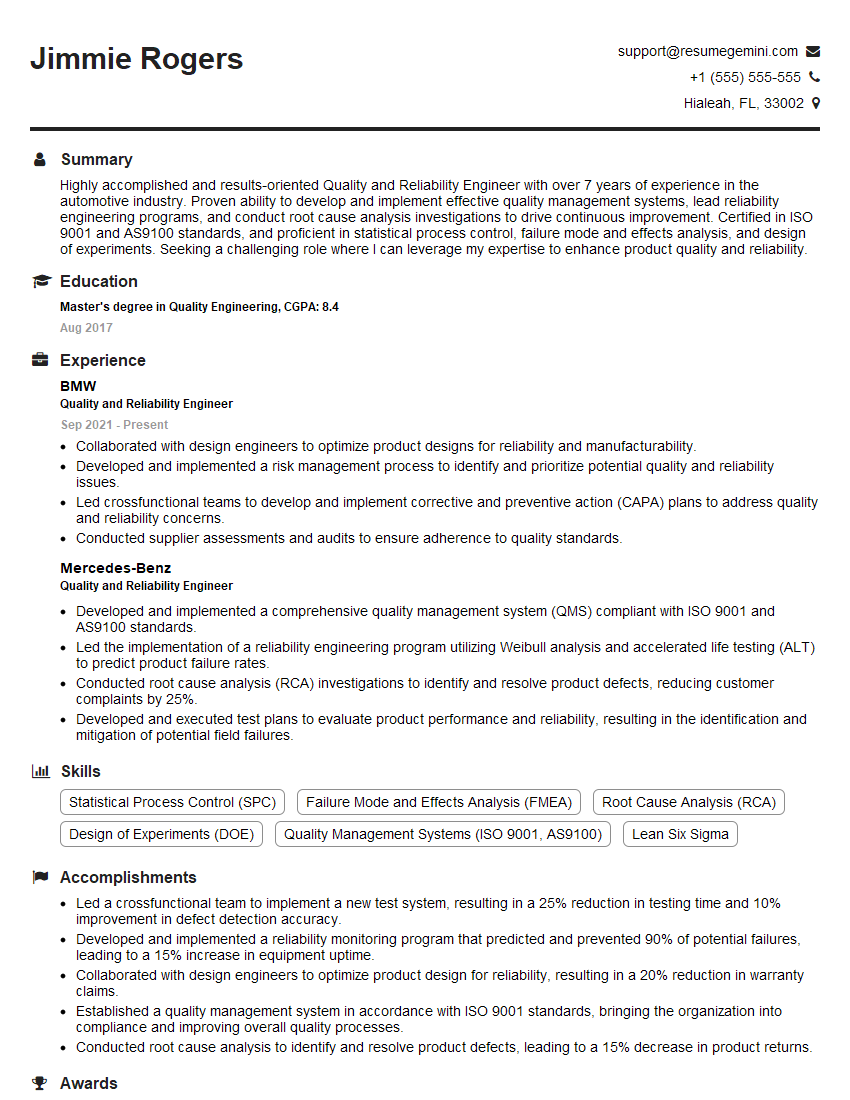
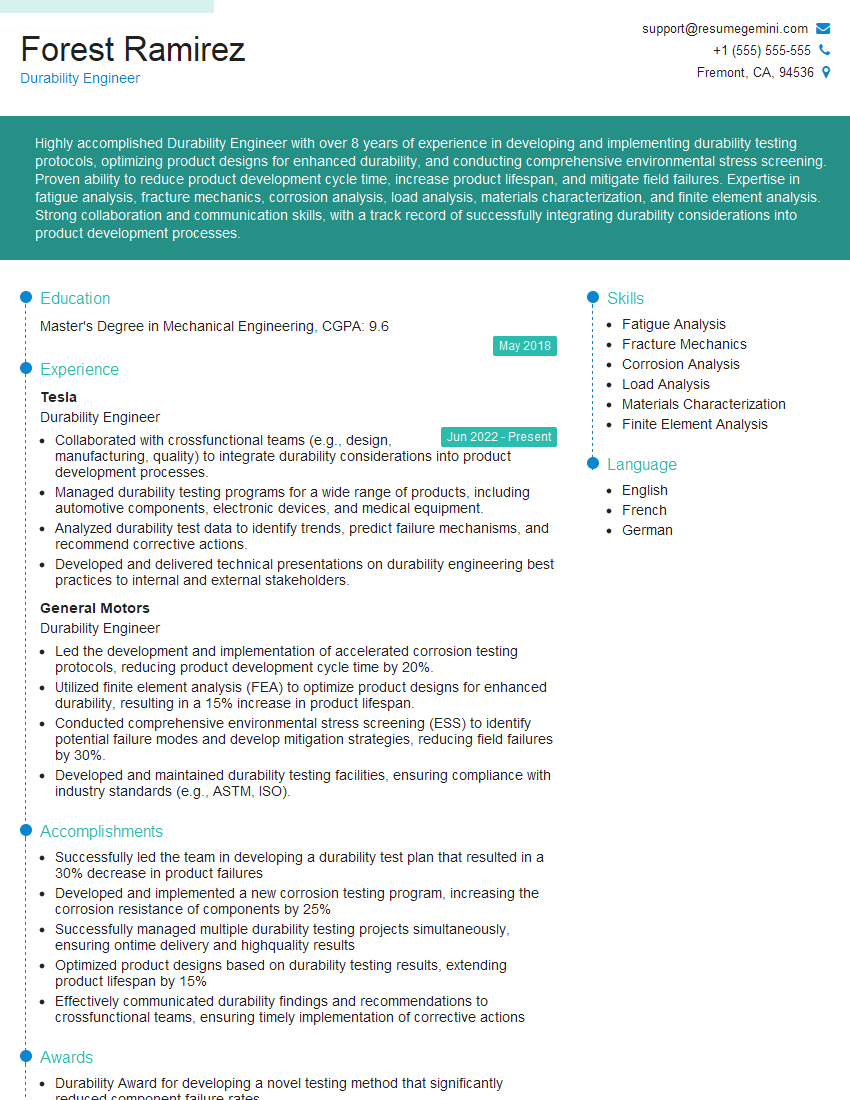
Mastering Design for Reliability and Durability is crucial for career advancement in engineering and related fields. It demonstrates a deep understanding of product development and a commitment to quality. To significantly increase your job prospects, a well-crafted, ATS-friendly resume is essential. ResumeGemini is a trusted resource that can help you build a professional and impactful resume tailored to the specific requirements of your target roles. Examples of resumes tailored to Design for Reliability and Durability are available to guide you through the process. Take the next step towards your dream career – build a resume that showcases your expertise and gets noticed!
Explore more articles
Users Rating of Our Blogs
Share Your Experience
We value your feedback! Please rate our content and share your thoughts (optional).
What Readers Say About Our Blog
Hello,
we currently offer a complimentary backlink and URL indexing test for search engine optimization professionals.
You can get complimentary indexing credits to test how link discovery works in practice.
No credit card is required and there is no recurring fee.
You can find details here:
https://wikipedia-backlinks.com/indexing/
Regards
NICE RESPONSE TO Q & A
hi
The aim of this message is regarding an unclaimed deposit of a deceased nationale that bears the same name as you. You are not relate to him as there are millions of people answering the names across around the world. But i will use my position to influence the release of the deposit to you for our mutual benefit.
Respond for full details and how to claim the deposit. This is 100% risk free. Send hello to my email id: [email protected]
Luka Chachibaialuka
Hey interviewgemini.com, just wanted to follow up on my last email.
We just launched Call the Monster, an parenting app that lets you summon friendly ‘monsters’ kids actually listen to.
We’re also running a giveaway for everyone who downloads the app. Since it’s brand new, there aren’t many users yet, which means you’ve got a much better chance of winning some great prizes.
You can check it out here: https://bit.ly/callamonsterapp
Or follow us on Instagram: https://www.instagram.com/callamonsterapp
Thanks,
Ryan
CEO – Call the Monster App
Hey interviewgemini.com, I saw your website and love your approach.
I just want this to look like spam email, but want to share something important to you. We just launched Call the Monster, a parenting app that lets you summon friendly ‘monsters’ kids actually listen to.
Parents are loving it for calming chaos before bedtime. Thought you might want to try it: https://bit.ly/callamonsterapp or just follow our fun monster lore on Instagram: https://www.instagram.com/callamonsterapp
Thanks,
Ryan
CEO – Call A Monster APP
To the interviewgemini.com Owner.
Dear interviewgemini.com Webmaster!
Hi interviewgemini.com Webmaster!
Dear interviewgemini.com Webmaster!
excellent
Hello,
We found issues with your domain’s email setup that may be sending your messages to spam or blocking them completely. InboxShield Mini shows you how to fix it in minutes — no tech skills required.
Scan your domain now for details: https://inboxshield-mini.com/
— Adam @ InboxShield Mini
Reply STOP to unsubscribe
Hi, are you owner of interviewgemini.com? What if I told you I could help you find extra time in your schedule, reconnect with leads you didn’t even realize you missed, and bring in more “I want to work with you” conversations, without increasing your ad spend or hiring a full-time employee?
All with a flexible, budget-friendly service that could easily pay for itself. Sounds good?
Would it be nice to jump on a quick 10-minute call so I can show you exactly how we make this work?
Best,
Hapei
Marketing Director
Hey, I know you’re the owner of interviewgemini.com. I’ll be quick.
Fundraising for your business is tough and time-consuming. We make it easier by guaranteeing two private investor meetings each month, for six months. No demos, no pitch events – just direct introductions to active investors matched to your startup.
If youR17;re raising, this could help you build real momentum. Want me to send more info?
Hi, I represent an SEO company that specialises in getting you AI citations and higher rankings on Google. I’d like to offer you a 100% free SEO audit for your website. Would you be interested?
Hi, I represent an SEO company that specialises in getting you AI citations and higher rankings on Google. I’d like to offer you a 100% free SEO audit for your website. Would you be interested?
good