Cracking a skill-specific interview, like one for Die-making, requires understanding the nuances of the role. In this blog, we present the questions you’re most likely to encounter, along with insights into how to answer them effectively. Let’s ensure you’re ready to make a strong impression.
Questions Asked in Die-making Interview
Q 1. Explain the difference between progressive and compound dies.
Progressive and compound dies are both used in high-volume stamping operations, but they differ significantly in their design and functionality. Think of them like assembly lines versus individual workstations.
A progressive die performs multiple operations on a single workpiece in a single pass through the press. Imagine a strip of metal feeding into the die; each station performs a different operation (punching, forming, bending) until the final part is ejected. This is highly efficient for mass production, reducing handling and increasing speed. For example, a progressive die might create a complex part like a car body panel in one stroke.
A compound die performs multiple operations simultaneously in a single stroke. This means it has multiple punches and dies working together at once, but all operations occur in that one press cycle. It’s like having several workers on a single assembly line performing different tasks at the same time, but on a single workpiece in the same press stroke. An example could be a compound die that simultaneously blanks and forms a part, creating the final shape in one hit.
The key difference lies in the sequence of operations: progressive dies perform operations sequentially in a single pass, while compound dies perform multiple operations concurrently in a single stroke. The choice depends on part complexity, production volume, and cost considerations. Progressive dies are better for high-volume, simple parts, while compound dies might be preferable for more complex parts where multiple operations are easily performed simultaneously.
Q 2. Describe the process of die tryout and troubleshooting.
Die tryout is a critical phase where the newly manufactured die is tested under actual production conditions. It’s a controlled experiment to ensure the die meets specifications and identify any potential issues before full-scale production.
The process typically involves:
- Initial setup: The die is carefully installed in the press, and the press is calibrated.
- Trial runs: A small number of parts are produced to check for dimensional accuracy, surface finish, and overall part quality.
- Inspection: Each part is meticulously inspected using measuring instruments (calipers, micrometers, CMM) to verify if they conform to the blueprint specifications.
- Troubleshooting: This is where we address problems. Common issues include:
- Punching problems: Burrs, tears, or incomplete punches.
- Forming problems: Wrinkles, cracks, or inaccurate dimensions.
- Die breakage: Cracks or damage to the die components.
- Die adjustments: Based on the inspection results, the die is adjusted to optimize its performance. This often involves shimming, grinding, or other fine-tuning adjustments.
- Repeat and refine: The process of trial runs, inspection, troubleshooting, and adjustment is repeated until the die consistently produces parts that meet the quality standards.
Troubleshooting often involves analyzing the defect patterns to pinpoint the root cause. For example, if we see burrs on the part, we might need to adjust the punch clearance or sharpness. Wrinkles in a formed part might indicate inadequate blank holding or die design issues. Experience and a systematic approach are crucial in identifying and resolving these problems efficiently. The entire process is meticulously documented so changes can be tracked and shared with the engineering department.
Q 3. What are the common materials used in die construction?
Die construction utilizes a range of materials, each chosen based on its specific properties and the demands of the application. The selection of materials is critical to the die’s durability, lifespan, and the quality of the produced parts.
Common materials include:
- Tool steels: These are the workhorses of die-making, offering excellent strength, wear resistance, and toughness. Examples include A2, D2, O1, and various high-speed steels (HSS).
- Powder metallurgy steels: These offer superior hardness, wear resistance, and dimensional stability, often chosen for high-volume applications with intricate details.
- Carbide materials: Extremely hard and wear-resistant, carbides are used for punches and dies that need to withstand high impact and abrasive conditions. Tungsten carbide is a common choice.
- Aluminum alloys: Lighter and less expensive than steel, aluminum is used for prototype dies or less demanding applications.
- Cast iron: Used in die bases and other structural components due to its strength and good machinability.
- Other materials: Specific applications might require specialized materials such as beryllium copper (for electrical conductivity) or other exotic materials with special properties.
Q 4. How do you select the appropriate die material for a specific application?
Selecting the appropriate die material is a crucial decision that significantly impacts the die’s performance and lifespan. It’s not a simple choice and depends on several factors.
Key considerations include:
- Material of the workpiece: The hardness and toughness of the material being stamped directly influence the required hardness and wear resistance of the die material. Stamping harder materials necessitates a harder die material.
- Die life expectancy: High-volume production requires die materials with exceptional wear resistance to minimize downtime and maximize production cycles.
- Required precision and surface finish: If very precise dimensions and a high-quality surface finish are crucial, a material with good dimensional stability and machinability is required.
- Production cost: Expensive, high-performance materials might not be necessary if the application demands are modest. A cost-benefit analysis needs to be done.
- Specific requirements: Factors like heat treatment requirements, the need for electrical conductivity, or corrosion resistance will guide the material selection.
For instance, stamping high-strength steel would necessitate a high-wear-resistance tool steel like D2, while stamping a softer aluminum might only require a more economical material like A2 steel.
Q 5. Explain the importance of proper die maintenance and preventative measures.
Proper die maintenance and preventative measures are vital for extending the die’s lifespan, ensuring consistent part quality, and minimizing downtime. Neglecting maintenance can lead to premature die failure, costly repairs, and production disruptions.
Important maintenance practices include:
- Regular cleaning: Removing chips, debris, and lubricants from the die after each use prevents accumulation and reduces wear.
- Lubrication: Applying appropriate lubricants reduces friction and wear between moving parts, prolonging the die’s life.
- Inspection: Regularly inspecting the die for wear, cracks, or damage allows for early detection of problems, enabling timely repairs and preventing catastrophic failures.
- Sharpening and regrinding: Punches and dies can be sharpened or reground to restore their original dimensions and sharpness, extending their operational life.
- Storage: Proper storage protects the die from corrosion, damage, and environmental factors.
- Preventive maintenance schedule: Creating a schedule for routine maintenance tasks helps to prevent problems before they become major issues.
A well-maintained die runs efficiently, produces high-quality parts, and results in significant cost savings over its lifespan.
Q 6. Describe your experience with different die-making processes (e.g., EDM, CNC machining).
Throughout my career, I’ve had extensive experience with various die-making processes, including EDM (Electrical Discharge Machining) and CNC machining (Computer Numerical Control machining).
EDM is invaluable for creating intricate shapes and features that are difficult or impossible to achieve with conventional machining. I’ve used wire EDM to cut complex profiles and ram EDM to create deep cavities and fine details in hard-to-machine materials like carbide. The precision of EDM is critical for ensuring precise part geometries.
CNC machining is my primary method for creating die components. I’ve worked extensively with various CNC milling machines to manufacture the die blocks, punches, and other components. CNC machining provides flexibility and accuracy, enabling the creation of complex features with high repeatability. I’m proficient in using CAM software (Computer-Aided Manufacturing) to program CNC machines, optimizing toolpaths for efficient material removal and high surface quality.
In addition, I have experience with traditional machining processes like grinding and polishing for achieving the necessary tolerances and surface finishes. The choice of method depends on the specific design and material of the die.
Q 7. How do you interpret engineering drawings for die-making?
Interpreting engineering drawings is fundamental to successful die-making. It’s like reading a recipe for a complex dish; each detail is crucial to achieve the desired outcome.
My interpretation process involves:
- Understanding the overall design: I start by studying the overall design of the part and how it will be produced by the die. This includes understanding the part’s geometry, dimensions, and tolerances.
- Analyzing individual features: Each feature on the drawing is carefully examined. This includes understanding the type of operation required to create that feature (e.g., punching, forming, bending). I check for critical dimensions, tolerances, and surface finish requirements.
- Identifying materials and specifications: The drawing specifies the material of the part, the die materials, and any other relevant information.
- Checking for details: This includes reviewing sections, details, and other annotations on the drawing to ensure a complete understanding of the design intent.
- Verifying clearances and tolerances: Accurate clearances between punches and dies are crucial to avoid binding and to ensure the die produces parts that meet the required tolerances.
- Creating a 3D model (if needed): A 3D model helps visualize the die design and allows for simulations and analysis before actual production.
My experience allows me to quickly and accurately interpret complex engineering drawings, ensuring the die is designed and manufactured to meet the specifications and produce parts that meet the required quality standards.
Q 8. What are the common types of die failures and their causes?
Die failures are a significant concern in stamping, leading to production downtime, scrap, and potential safety hazards. Common types include:
- Fracture: This can occur due to excessive stress on the die components, often from overloading the press or using incorrect material. For example, a punch might fracture if it’s too thin for the material thickness being stamped.
- Wear and Tear: Dies gradually wear down due to repeated impacts. This is especially prominent on the punch and die faces, leading to dimensional inaccuracies and reduced lifespan. Regular maintenance, such as sharpening and polishing, mitigates this.
- Deformation: Excessive pressure can cause the die components to deform, leading to inaccurate parts. This is more common in softer die materials and can be caused by misaligned components or material defects.
- Cracking: Cracks can develop due to thermal stress (rapid heating and cooling during the stamping process), fatigue, or material flaws. They often originate from stress concentration points, such as sharp corners.
- Shearing Failure: Shearing failure occurs when the material being stamped does not shear cleanly, resulting in burrs or incomplete cuts. This often stems from incorrect shear angle design or dull tooling.
Understanding the root cause is critical. A thorough analysis often involves examining the failed component, reviewing the process parameters (press tonnage, speed, material properties), and assessing the die design itself. For instance, if we repeatedly see punches fracturing, we’d investigate whether the material grade is suitable, if the design has adequate strength, or if there’s a press overload issue.
Q 9. How do you troubleshoot die problems during production?
Troubleshooting die problems during production requires a systematic approach. My process typically involves:
- Safety First: Immediately stop the press and ensure the area is safe before attempting any troubleshooting.
- Visual Inspection: Carefully examine the die, looking for obvious signs of damage such as cracks, fractures, or wear. Check the workpiece for defects that might indicate die problems.
- Press Parameters Review: Verify that the press settings (tonnage, speed, stroke) are correct and consistent with the die design.
- Material Analysis: Assess the material properties of the sheet metal. Inconsistencies in thickness, hardness, or surface finish can impact the stamping process and lead to die failure.
- Alignment Check: Ensure that the die components are properly aligned. Misalignment can lead to uneven stress distribution and premature wear.
- Trial Runs: Perform test runs with careful observation to identify the point of failure. This can involve using slower speeds or reduced tonnage to understand the issue better.
- Data Logging: Utilizing press data loggers allows for a more precise analysis of press performance and helps diagnose issues related to tonnage, speed inconsistencies, or other press parameters.
- Component Replacement: If the problem is identified with a specific component (e.g., a worn punch), replacing the faulty part is often necessary.
For example, if we are producing parts with burrs, a visual inspection of the die might reveal a worn shear, indicating the need for sharpening or replacement.
Q 10. Describe your experience with different types of stamping presses.
My experience encompasses various stamping press types, each suited to different applications and production volumes. These include:
- Mechanical Presses: I’ve extensively worked with mechanical presses, utilizing their strength and adaptability for high-volume production. Their crankshaft-driven mechanism offers a consistent and powerful stamping action. Maintenance and adjustment are crucial for optimal performance.
- Hydraulic Presses: Hydraulic presses provide exceptional force control and flexibility in terms of stroke length and speed. They’re particularly useful for deep drawing and other complex forming operations where precise control is essential. However, they are generally slower than mechanical presses.
- Pneumatic Presses: I’ve also utilized pneumatic presses for lighter-duty applications or where a quick cycle time is paramount. They are simpler and require less maintenance but offer lower tonnage capacity compared to mechanical or hydraulic options.
- Servo Presses: My experience also includes using servo presses, known for their energy efficiency and precise control of press parameters. Their ability to precisely adjust speed and tonnage throughout the stroke enhances precision and reduces wear on dies.
The selection of the press type depends on factors such as the complexity of the part, material thickness, desired production rate, and budget considerations. For instance, a high-volume production of a simple part would likely benefit from a high-speed mechanical press, whereas a complex part requiring precise forming might necessitate a hydraulic or servo press.
Q 11. What quality control measures do you employ in die-making?
Quality control in die-making is paramount. My approach incorporates several measures throughout the process:
- Material Inspection: Rigorous inspection of incoming materials, including steel grades and hardness testing, ensures that the die components are of sufficient quality to withstand the stamping process.
- Design Verification: Detailed design review and finite element analysis (FEA) are performed to verify the structural integrity and dimensional accuracy of the die design before manufacturing commences.
- Manufacturing Process Monitoring: Close monitoring of the die-making processes, such as EDM (Electrical Discharge Machining) and grinding, ensures precision and adherence to specifications.
- Dimensional Inspection: Regular dimensional checks using coordinate measuring machines (CMMs) are conducted at various stages of manufacturing to detect and correct deviations from the design.
- Trial Runs and Part Inspection: Before full-scale production, trial runs are performed to verify the die’s functionality and the quality of the stamped parts. This usually includes checks for dimensional accuracy, surface finish, and defects.
- Documentation: Meticulous record-keeping of all inspections and tests provides traceability and assists in problem-solving should any issues arise.
For instance, we might use a CMM to verify the accuracy of punch and die dimensions to ensure they align precisely with the part design. We also use statistical process control (SPC) charts to track process parameters and identify any trends indicating potential problems.
Q 12. How do you ensure the dimensional accuracy of a die?
Ensuring dimensional accuracy is critical to successful stamping. My methods include:
- Precise Design and Manufacturing: Using advanced CAD/CAM software allows for accurate die design and precise control over manufacturing processes such as EDM and wire-EDM, guaranteeing dimensions are adhered to within tolerances.
- Regular Inspection and Measurement: Throughout the die-making process, regular inspections and measurements with high-precision instruments such as CMMs (Coordinate Measuring Machines) and optical comparators are performed to detect and correct any deviations from the design.
- Proper Die Alignment: Correct alignment of all die components is crucial for consistent and accurate stamping. Precise alignment fixtures and shimming techniques are used during die assembly.
- Controlled Environment: Maintaining a controlled environment in terms of temperature and humidity minimizes thermal expansion and contraction, enhancing dimensional stability.
- Material Selection: Choosing die materials with minimal susceptibility to deformation under high stress contributes to better dimensional consistency.
For example, if a CMM inspection reveals slight deviations in a punch dimension, corrective grinding or EDM adjustments can be made to bring it back to the required tolerance.
Q 13. Explain the concept of tolerance and its importance in die-making.
Tolerance in die-making refers to the permissible variation in the dimensions of a die component or the stamped part. It defines the acceptable range of deviation from the nominal or target dimension. It’s expressed as a plus or minus value (e.g., ±0.005mm).
The importance of tolerance cannot be overstated:
- Functionality: Tight tolerances are crucial for ensuring the proper fit and function of die components and the interchangeability of parts.
- Interchangeability: Consistent tolerances allow for the replacement of worn or broken components without requiring adjustments to the press or other tooling.
- Quality: Strict tolerances directly impact the quality of the stamped parts, ensuring they meet the required specifications and are free from defects.
- Assembly: Proper tolerances ensure smooth assembly of the final product, minimizing issues such as interference or loose fits.
For example, if the tolerance on a punch diameter is too loose, the resulting stamped part might have inconsistent dimensions, failing to meet quality standards. Conversely, overly tight tolerances could make the die manufacturing process excessively complex and expensive.
Q 14. Describe your experience with using CAD/CAM software for die design.
CAD/CAM software is indispensable in modern die-making. My experience includes using various software packages for die design and manufacturing. This involves:
- 3D Modeling: Creating precise 3D models of die components, allowing for detailed analysis and visualization before manufacturing. This greatly reduces errors and helps optimize the design.
- Finite Element Analysis (FEA): Utilizing FEA to simulate the stresses and strains on the die during operation, enabling the identification and mitigation of potential weaknesses and optimizing die design for strength and longevity.
- CAM Programming: Generating CNC (Computer Numerical Control) programs for various manufacturing processes such as wire EDM, milling, and grinding. This ensures accurate machining of die components to the specified dimensions and tolerances.
- Toolpath Simulation: Simulating the toolpath to visualize the machining process and detect potential collisions or errors before actual machining, saving time and material.
- Die Assembly Simulation: Simulating the assembly of the die components to ensure proper fit and alignment, facilitating efficient and accurate assembly procedures.
For example, using FEA, we might identify stress concentration points in a punch design and modify its geometry to improve its strength and reduce the risk of fracture. Furthermore, CAM programming allows precise control over machining parameters, ensuring accurate component dimensions and surface finish.
Q 15. How do you manage multiple projects simultaneously?
Managing multiple die-making projects simultaneously requires a structured approach. I utilize project management tools and techniques like Gantt charts to visualize timelines and dependencies. This allows me to prioritize tasks based on deadlines and resource availability. For example, I might dedicate mornings to a high-priority project requiring precise machining, and afternoons to a less urgent project involving simpler assembly. Regular communication with clients and team members is crucial for updates and addressing any potential roadblocks. Breaking down large projects into smaller, manageable tasks also helps maintain focus and prevent feeling overwhelmed. I also regularly review my progress against the project plan, adjusting schedules as needed to maintain efficiency and meet deadlines.
Career Expert Tips:
- Ace those interviews! Prepare effectively by reviewing the Top 50 Most Common Interview Questions on ResumeGemini.
- Navigate your job search with confidence! Explore a wide range of Career Tips on ResumeGemini. Learn about common challenges and recommendations to overcome them.
- Craft the perfect resume! Master the Art of Resume Writing with ResumeGemini’s guide. Showcase your unique qualifications and achievements effectively.
- Don’t miss out on holiday savings! Build your dream resume with ResumeGemini’s ATS optimized templates.
Q 16. What safety precautions do you take while working with die-making machinery?
Safety is paramount in die-making. Working with high-powered machinery demands strict adherence to safety protocols. This includes always wearing appropriate Personal Protective Equipment (PPE), such as safety glasses, hearing protection, steel-toed boots, and cut-resistant gloves. Before operating any machinery, I thoroughly inspect it for any damage or malfunctions. I ensure that all guards and safety interlocks are functioning correctly. Lockout/Tagout procedures are strictly followed during maintenance or repairs to prevent accidental starts. Regular machine maintenance is crucial to prevent malfunctions and accidents. Furthermore, I maintain a clean and organized workspace to minimize the risk of trips and falls, and I regularly participate in safety training sessions to stay updated on best practices and new technologies.
Q 17. Describe your experience with different types of die coatings and their applications.
My experience encompasses various die coatings, each with specific applications. For instance,
- Chrome plating enhances wear resistance and surface hardness, ideal for high-volume stamping applications requiring durability.
- Nickel plating offers corrosion protection and improved surface finish, often used in dies exposed to aggressive environments or requiring a polished look.
- Teflon coatings reduce friction and prevent sticking, beneficial for dies used with materials prone to adhesion, such as plastics.
- Titanium nitride (TiN) coatings provide excellent wear resistance and heat dissipation, frequently applied to dies used in high-speed or high-temperature operations.
Q 18. How do you optimize the design of a die for improved productivity?
Optimizing die design for improved productivity involves several key strategies. First, employing Computer-Aided Design (CAD) software allows for precise modeling and simulation, helping identify potential design flaws early in the process. Secondly, optimizing the die’s geometry, such as reducing the number of punches and dies, can streamline the process and minimize downtime. Strategic use of stripper plates and ejectors ensures efficient part removal. Proper material selection plays a critical role; selecting durable materials reduces wear and tear and extends the die’s lifespan. Finally, incorporating features like quick-change tooling mechanisms reduces setup times and increases overall throughput. For instance, a well-designed progressive die can efficiently produce multiple features on a single part in one stroke, significantly enhancing productivity compared to a series of single-station dies.
Q 19. Explain the importance of proper lubrication in die-making.
Proper lubrication is crucial in die-making for several reasons. It reduces friction between moving parts, thus minimizing wear and tear, increasing the lifespan of the die and reducing maintenance costs. It also prevents seizing and galling, common issues that can cause damage and downtime. Lubrication aids in smoother operation, leading to improved surface finish of the stamped parts and increased productivity. The type of lubricant used depends on the application and materials involved. For instance, a water-based lubricant might be appropriate for low-temperature operations, whereas a high-temperature grease might be necessary for high-speed stamping of metals. Careful selection and application of lubricants are essential for maximizing die life and ensuring efficient production.
Q 20. How do you handle unexpected issues or challenges during the die-making process?
Handling unexpected issues requires a systematic approach. My first step is to identify the root cause of the problem through careful observation and analysis. This might involve examining the die for damage, checking the material properties, or reviewing the stamping process parameters. Once the cause is identified, I develop a solution, which might involve simple adjustments, repairs, or redesigning parts of the die. For instance, if a die breaks due to excessive stress, I might modify the design to distribute the load more evenly. Documenting the issue and its resolution is critical for future reference and preventing similar problems. Communication with the team and client is key to ensuring everyone is informed and aware of the situation and planned resolution.
Q 21. Describe your experience with different types of die steels.
My experience covers a range of die steels, each with unique properties.
- High-carbon high-chromium steels (e.g., O-1, A-2) are known for their excellent wear resistance and hardness, making them ideal for high-volume stamping of tough materials.
- Tool steels with increased toughness (e.g., D-2, M-2) are chosen when impact resistance is critical, often used in dies subject to significant shock loads.
- Pre-hardened steels offer convenience in machining but require careful heat treatment after machining to reach the desired hardness.
- Powder metallurgy tool steels are often preferred for their superior consistency and fine grain structure, leading to enhanced performance.
Q 22. What are your preferred methods for measuring die dimensions?
Precise measurement is paramount in die-making. We employ a combination of methods depending on the specific dimension and the die’s complexity. For macro-level measurements, I rely on high-precision digital calipers and micrometers, ensuring accuracy down to micrometers. These are ideal for checking overall die dimensions, punch and die heights, and clearance measurements. For micro-level measurements, such as checking the sharpness of a cutting edge or the depth of a very small feature, I utilize optical comparators or even coordinate measuring machines (CMMs). CMMs offer 3D measurement capabilities, crucial for complex dies. Regular calibration of all measuring instruments is a strict protocol to maintain accuracy and prevent errors that could compromise the entire die’s performance. Think of it like a chef relying on precise scales and thermometers – without accurate measurements, the final product is compromised.
Q 23. How do you ensure the longevity of a die?
Die longevity is a top priority, significantly impacting cost-effectiveness and production efficiency. It hinges on several key factors. First, material selection is critical; using high-quality tool steels with appropriate hardness and wear resistance is vital. Second, proper heat treatment is essential to achieve the desired hardness and toughness. Improper heat treatment can lead to premature wear or cracking. Third, diligent maintenance plays a significant role. Regular inspection for wear and tear, timely sharpening and polishing of cutting edges, and proper lubrication minimize friction and extend lifespan. Finally, optimizing the die’s design itself contributes greatly. This includes things like strategically placed wear strips or incorporating features that reduce stress concentrations. In one project, we extended the life of a progressive die by 25% simply by optimizing the lubrication system and implementing a preventative maintenance schedule. It’s like caring for a precision instrument – regular cleaning, lubrication, and careful handling significantly extends its operational life.
Q 24. What software are you proficient with for die design and manufacturing?
My expertise spans several software packages crucial for die design and manufacturing. I’m proficient in CAD software like AutoCAD and SolidWorks, which are essential for creating detailed 3D models of the die. These models allow for precise simulations and ensure accuracy before physical production. I also use CAM software such as Mastercam and FeatureCAM for generating CNC programs, translating the 3D models into instructions for the machining centers. Finally, I’m experienced with specialized die design software that assists in calculating stripping forces, material flow, and optimizing die geometry. The use of these software packages allows for efficient collaboration, rapid prototyping, and enhanced accuracy, resulting in higher quality dies. For instance, using simulation software, we were able to identify and rectify potential design flaws in a complex stamping die before production, preventing costly rework and downtime.
Q 25. Describe your experience working with different types of punches and dies.
My experience encompasses a wide range of punches and dies, from simple blanking dies used for cutting flat shapes to intricate progressive dies that perform multiple operations in a single stroke. I have worked extensively with compound dies, which combine several operations like piercing, blanking, and forming in one die set. I’m also familiar with progressive dies for high-volume production, transfer dies for precision parts, and fine-blanking dies for intricate shapes with exceptional surface finish. Each type requires a unique design approach and manufacturing techniques, tailored to the material being processed, the part geometry, and production requirements. Working on a complex progressive die for automotive parts, for example, required expertise in combining various punch and die elements to achieve high-precision forming and trimming operations within a limited space. It’s like working with a complex orchestra – each instrument (punch and die element) plays a vital role in creating a harmonious outcome.
Q 26. Explain your understanding of spring design within a die.
Spring design in a die is crucial for ensuring reliable operation, especially during the stripping process (separating the part from the die after forming). Springs provide the necessary force to push the part clear of the die. The design parameters—spring rate, material, and geometry—directly influence the stripping force. We consider factors like the part geometry, material properties, and the required stripping force during the design phase. Incorrect spring design can lead to issues like insufficient stripping force (resulting in part sticking or damage), excessive force (causing die damage), or inconsistent operation. Choosing the appropriate spring material (often spring steel) and the right spring configuration (e.g., compression, extension, or torsion springs) is critical. The spring’s rate is carefully calculated to provide the optimal stripping force, minimizing wear and tear on the die and ensuring consistent part ejection.
Q 27. How do you calculate the appropriate stripping force for a die?
Calculating the appropriate stripping force requires a thorough understanding of material properties, part geometry, and friction. There isn’t a single formula; instead, we use a combination of empirical data, theoretical calculations, and simulations. Factors to consider include the material’s shear strength (resistance to being cut), its coefficient of friction against the die materials, the surface area of the part in contact with the die, and the geometry of the part itself (especially its shape and surface area). Software tools often help in these calculations. We usually start with a conservative estimate and then refine it through testing and iterative adjustments. It’s an iterative process, involving creating and testing prototypes, refining the calculations based on the initial test results, and ensuring the force is sufficient for reliable part ejection without damaging the die or the part itself.
Q 28. What are some common challenges you face in die-making, and how do you overcome them?
Several challenges arise in die-making. One common challenge is achieving tight tolerances and high precision. This requires meticulous planning, advanced manufacturing techniques, and precise measurements. Another is ensuring the die’s durability and minimizing wear. This requires careful material selection, proper heat treatment, and optimizing the die’s design. We overcome these challenges through careful design, using high-quality materials, advanced manufacturing processes, and rigorous quality control measures. For example, when facing issues with excessive die wear, we may introduce hard coatings, optimize lubrication, or redesign critical areas to reduce stress concentrations. In another instance, we used advanced simulation software to predict and prevent potential cracking issues in a complex die design, saving time and resources. Problem-solving is crucial, and each challenge requires a tailored approach that draws on experience, knowledge, and a willingness to adapt to the situation.
Key Topics to Learn for Your Die-Making Interview
Ace your next Die-Making interview by mastering these key areas. We’ve broken down the essentials to help you confidently showcase your skills and experience.
- Die Design and Engineering Principles: Understand the fundamental principles behind die design, including material selection, stress analysis, and tolerance considerations. Explore different die types and their applications.
- Manufacturing Processes: Demonstrate your knowledge of various die-making processes, such as stamping, forging, and casting. Be prepared to discuss the advantages and limitations of each process.
- Tooling and Equipment: Familiarize yourself with common die-making tools, machinery, and equipment. Be ready to discuss their operation, maintenance, and troubleshooting.
- Material Science and Properties: A strong understanding of different materials used in die-making (e.g., steels, carbides) and their properties is crucial. Be prepared to discuss material selection based on specific applications.
- Quality Control and Inspection: Describe your experience with quality control methods used in die-making, including inspection techniques and the importance of adhering to industry standards.
- Problem-Solving and Troubleshooting: Showcase your ability to identify and resolve common problems encountered during die-making, such as dimensional inaccuracies or tooling failures. Use the STAR method to structure your responses.
- CAD/CAM Software and Applications: Discuss your proficiency with relevant CAD/CAM software used in die design and manufacturing. Highlight your ability to create and modify 2D and 3D models.
- Safety Procedures and Regulations: Demonstrate your understanding of safety protocols and regulations within a die-making environment. Emphasize your commitment to a safe work environment.
Next Steps: Launch Your Die-Making Career
Mastering die-making opens doors to exciting career opportunities and substantial professional growth. To maximize your chances of landing your dream job, focus on creating a compelling and ATS-friendly resume that highlights your skills and experience effectively.
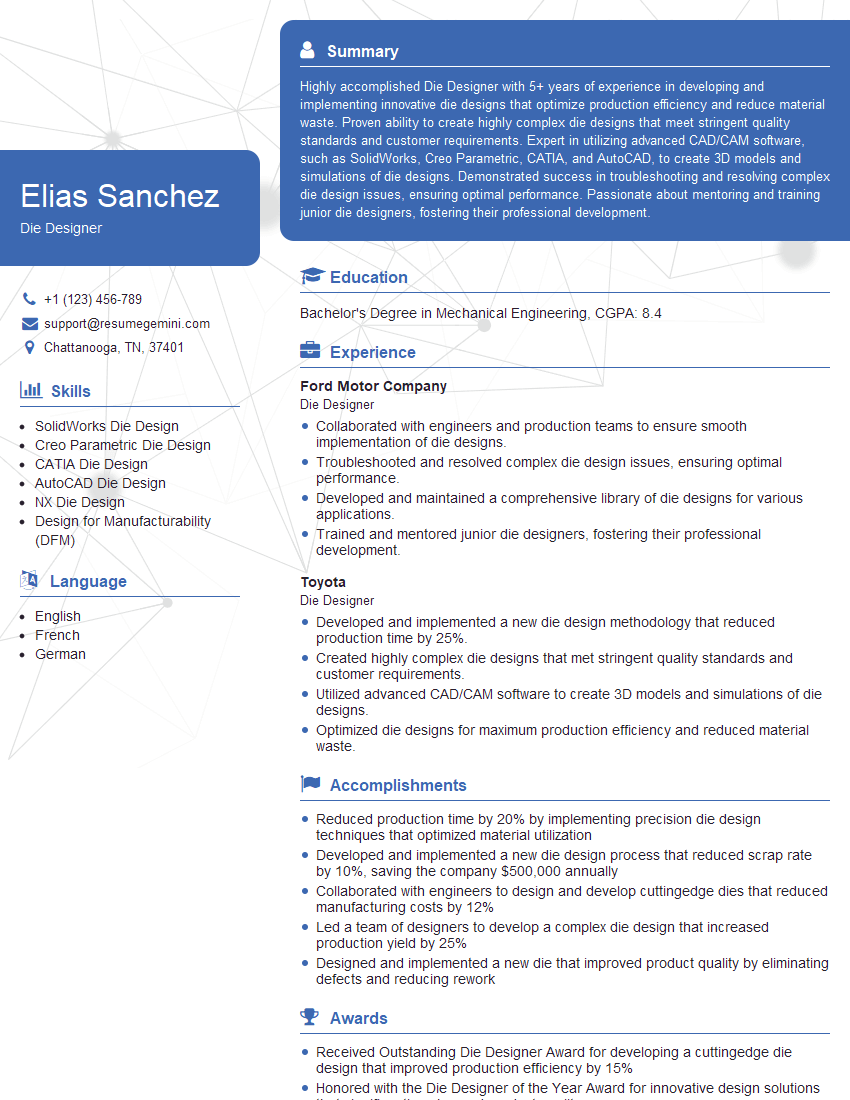
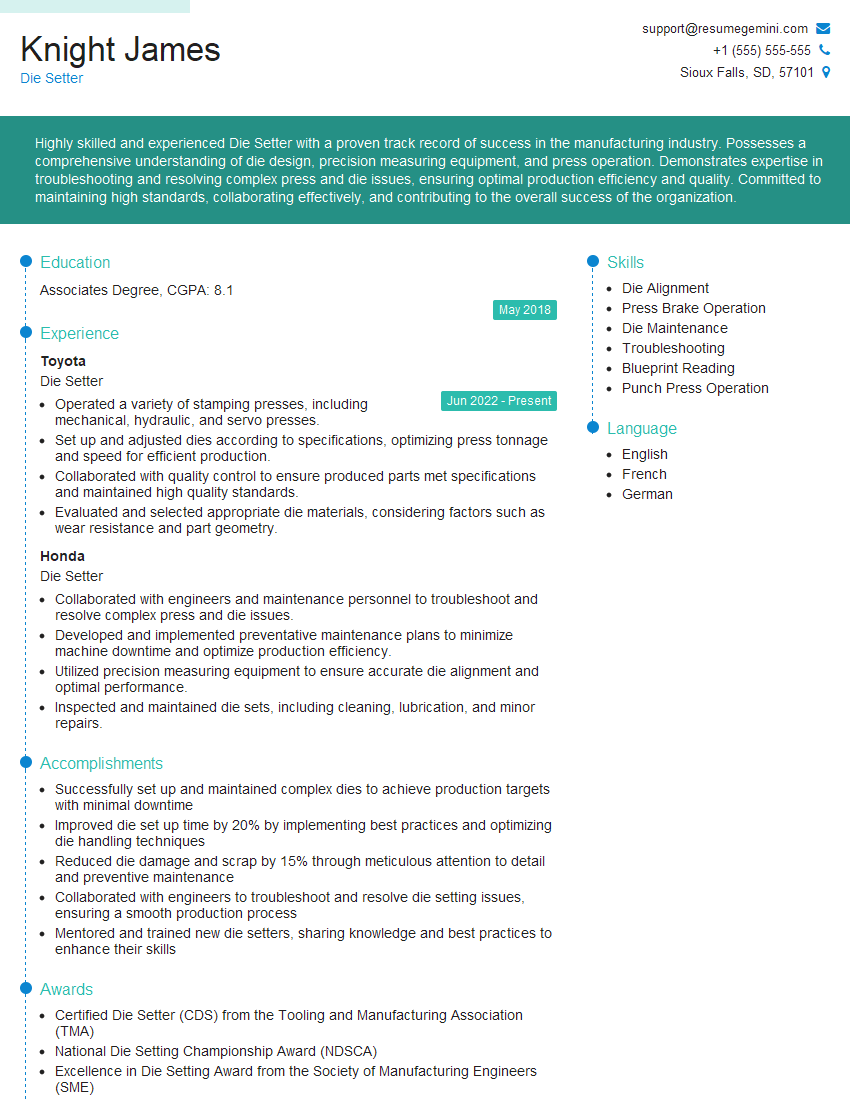
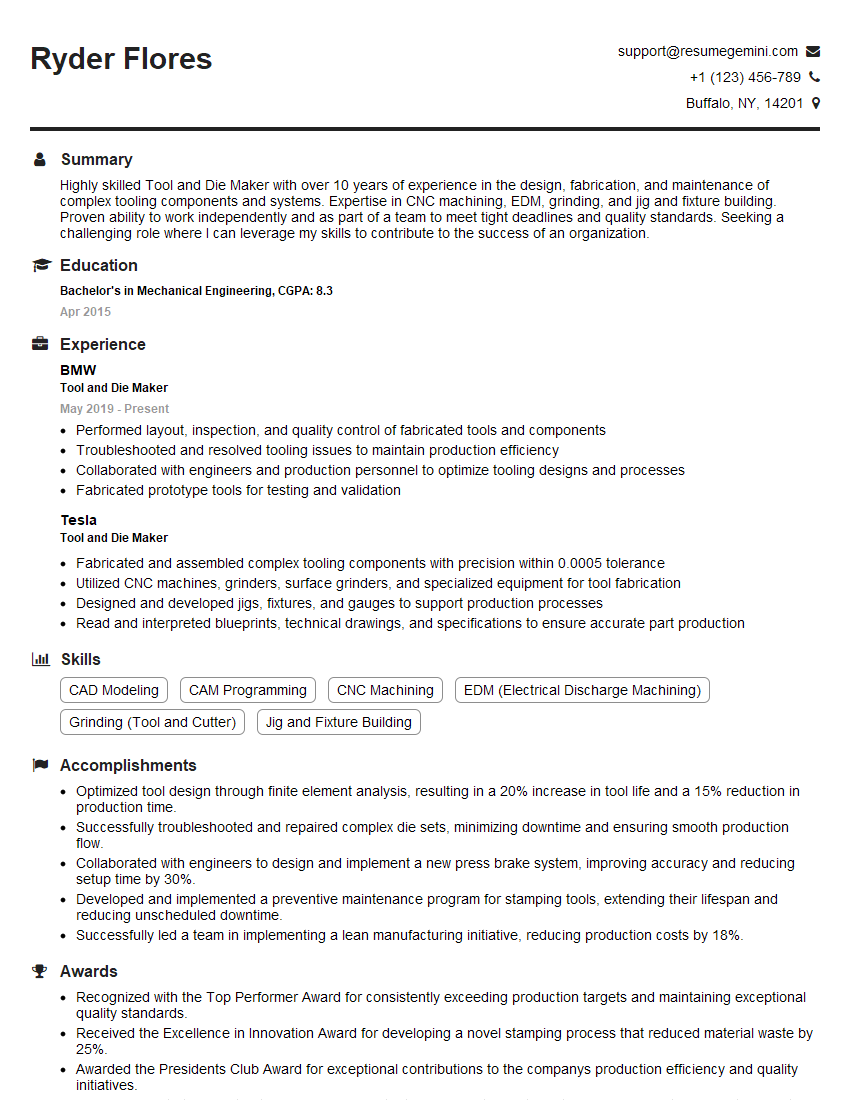
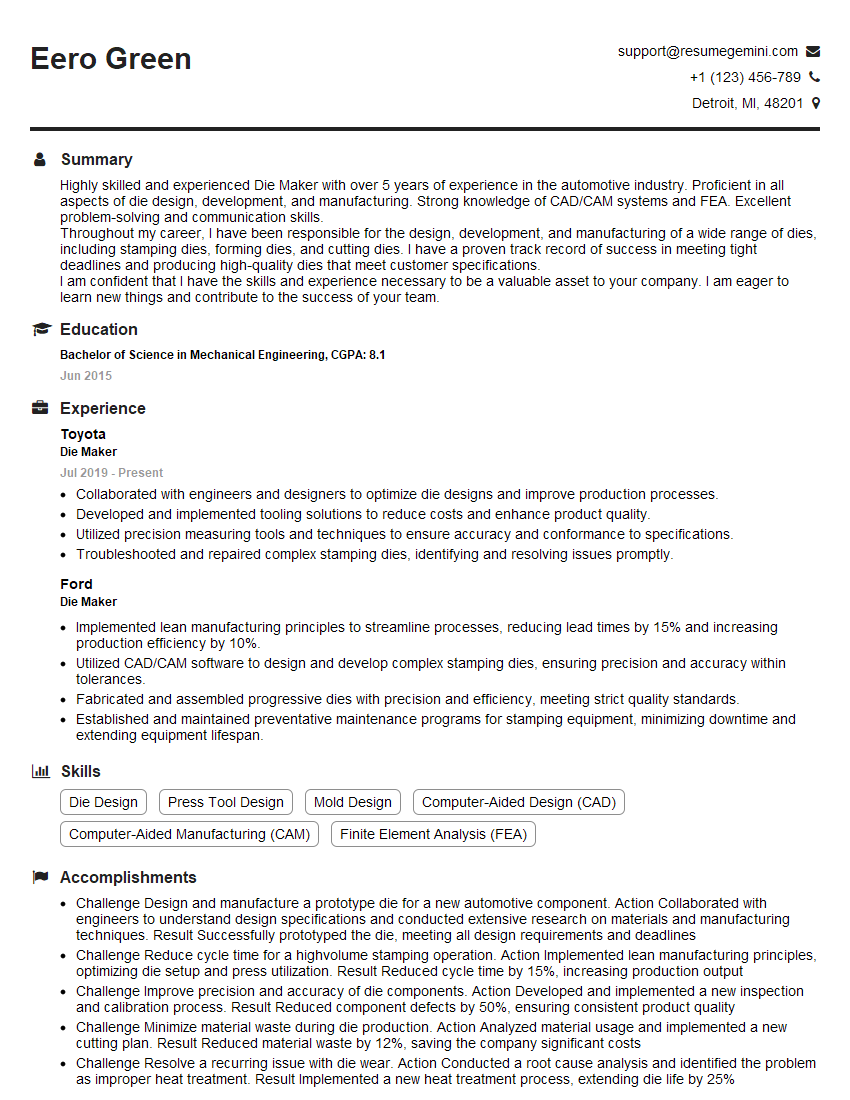
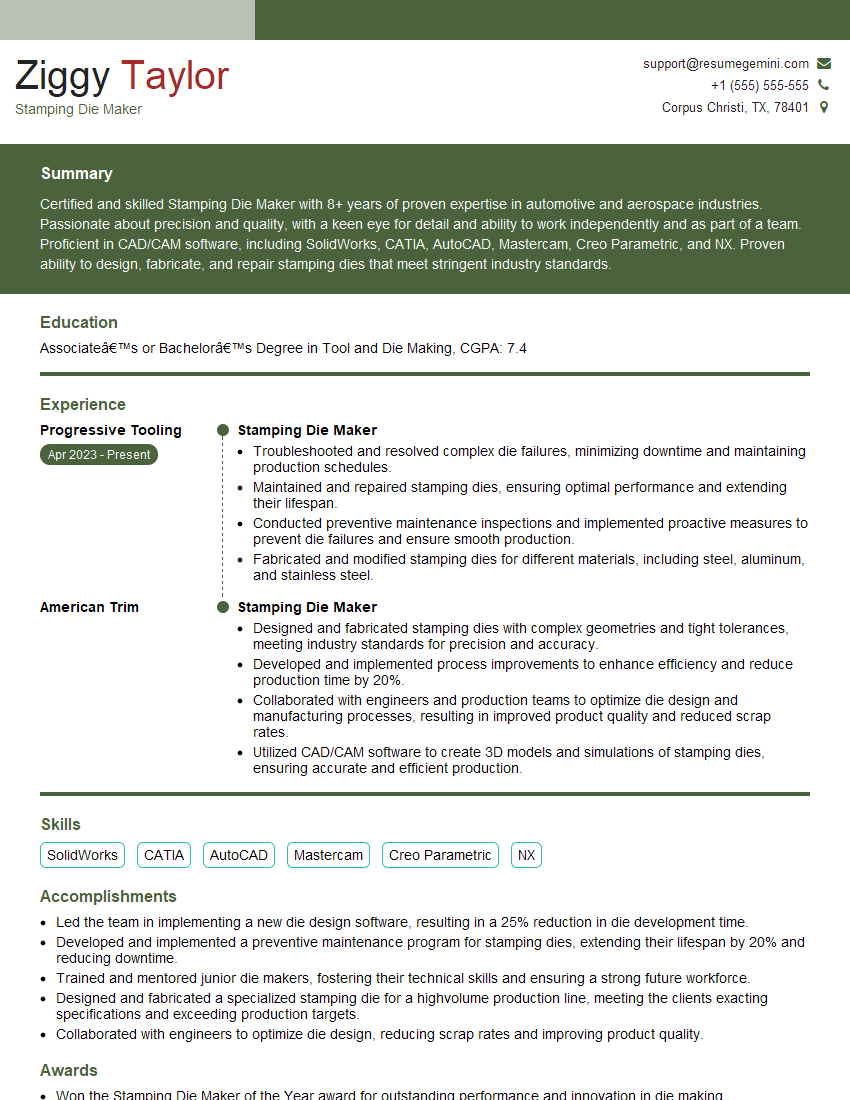
ResumeGemini is a trusted resource to help you build a professional resume that stands out. We provide examples of resumes tailored to the Die-Making industry, ensuring your application makes a lasting impression on potential employers. Take the next step towards your successful career in Die-Making today!

Explore more articles
Users Rating of Our Blogs
Share Your Experience
We value your feedback! Please rate our content and share your thoughts (optional).
What Readers Say About Our Blog
Very informative content, great job.
good