Preparation is the key to success in any interview. In this post, we’ll explore crucial Digital Radiography Interpretation interview questions and equip you with strategies to craft impactful answers. Whether you’re a beginner or a pro, these tips will elevate your preparation.
Questions Asked in Digital Radiography Interpretation Interview
Q 1. Explain the difference between conventional radiography and digital radiography.
The core difference between conventional (film-screen) and digital radiography lies in how the image is captured and processed. In conventional radiography, X-rays expose a film cassette containing photosensitive film and intensifying screens. The film, after development, produces a physical image. Digital radiography, however, uses a digital image receptor (DIR) to capture the X-ray signal, converting it directly into an electronic signal that’s then processed and displayed on a computer monitor. Think of it like the difference between taking a photo with a film camera and a digital camera – one produces a physical print, the other a digital file.
Essentially, digital radiography eliminates the need for film processing, offering numerous advantages we’ll discuss later.
Q 2. Describe the process of image acquisition in digital radiography.
Image acquisition in digital radiography involves several steps:
- X-ray Exposure: The patient is positioned, and an X-ray beam is emitted, penetrating the body. Different tissues absorb varying amounts of radiation, resulting in a differential signal.
- X-ray Detection: The X-ray beam interacts with the digital image receptor (DIR). This DIR converts the X-ray signal into an electrical charge representing the image.
- Signal Conversion and Processing: The electrical charge is converted into a digital signal, a grid of numerical values representing pixel brightness. This signal undergoes various processing steps, including noise reduction and image enhancement, by the digital imaging system’s computer.
- Image Display and Storage: The processed digital image is displayed on a computer monitor and stored in the Picture Archiving and Communication System (PACS).
For example, in a Direct Radiography (DR) system, the X-ray photons directly hit the detector, instantly creating the digital signal. In Computed Radiography (CR), a photostimulable phosphor plate captures the radiation, and a laser scanner later reads this plate to produce the digital signal.
Q 3. What are the advantages of digital radiography over conventional radiography?
Digital radiography offers significant advantages over conventional methods:
- Image Manipulation and Enhancement: Digital images allow for post-processing adjustments such as brightness, contrast, and sharpness, improving image quality and diagnostic accuracy. This is impossible with film.
- Increased Efficiency: No film processing is needed, resulting in faster turnaround times for image acquisition and availability. This significantly improves workflow in busy radiology departments.
- Storage and Retrieval: Digital images are stored electronically in PACS, requiring less space compared to film storage and facilitating easy retrieval and sharing.
- Dose Reduction Potential: Digital systems can potentially reduce radiation dose to patients through various techniques like dose optimization software.
- Image Sharing and Telemedicine: Digital images can be easily transmitted electronically to other healthcare professionals or institutions, improving collaboration and enabling remote consultations.
For instance, imagine a trauma situation where rapid access to images is crucial. Digital radiography’s speed advantage can be life-saving.
Q 4. What are the disadvantages of digital radiography?
While digital radiography has numerous benefits, it also presents some disadvantages:
- High Initial Cost: Digital systems are significantly more expensive than conventional film-screen systems, requiring a large initial investment.
- Technical Expertise Required: Operating and maintaining digital systems requires specialized training and technical expertise.
- Dependence on Technology: System malfunctions or software issues can disrupt workflow and image acquisition, causing delays in diagnosis.
- Data Security and Privacy Concerns: Storing and transmitting medical images electronically raises concerns about data security, privacy, and compliance with regulations.
- Potential for Image Degradation: Improper handling or storage of digital images can lead to image degradation or loss of information.
For example, a power outage could temporarily halt image acquisition, creating delays in patient care.
Q 5. Explain the concept of image matrix and pixel size in digital radiography.
The image matrix in digital radiography represents the image as a grid of square-shaped elements called pixels. The size of the matrix (e.g., 1024 x 1024, 2048 x 2048) determines the spatial resolution of the image; a larger matrix means higher resolution, enabling greater detail visibility. Pixel size refers to the physical dimension of each pixel on the DIR. Smaller pixel size translates to higher spatial resolution, allowing for finer details to be observed.
Think of it as a mosaic: a larger matrix with smaller pixels gives a more detailed and sharper image, while a smaller matrix with larger pixels results in a coarser, less detailed image. The relationship is inverse: Matrix size / Pixel size = spatial resolution
Q 6. Describe different digital radiography image receptors (e.g., DR panels, CR plates).
Several types of digital image receptors (DIRs) are used in digital radiography:
- Direct Radiography (DR) Panels: These panels contain a thin-film transistor (TFT) array directly coupled to an amorphous selenium (a-Se) photoconductor layer. X-rays directly interact with the a-Se, generating electrical charges that are read by the TFT array, resulting in a digital image. DR systems provide immediate image display, without the need for a separate processing step.
- Computed Radiography (CR) Plates: CR uses photostimulable phosphor plates. X-rays expose the plate, storing the image latently in the phosphor. A laser scanner then reads the plate, stimulating the phosphor to emit light which is measured to produce a digital image. CR systems are more economical than direct DR panels but require extra steps for image processing.
The choice of receptor depends on factors like cost, speed requirements, and the specific clinical application.
Q 7. How does post-processing affect the final digital radiographic image?
Post-processing significantly impacts the final digital radiographic image. It allows for adjustments to improve image quality and diagnostic accuracy. Common post-processing techniques include:
- Brightness and Contrast Adjustment: Adjusting brightness and contrast optimizes image visibility and improves the depiction of tissue densities. Too dark and detail is lost; too bright, and overexposed areas lack detail.
- Sharpness Enhancement: Edge enhancement techniques sharpen the image by highlighting boundaries between different tissue densities, enhancing the visibility of subtle details.
- Noise Reduction: Algorithms reduce image noise (random variations in pixel values), improving image quality and reducing artifacts. This is especially helpful with lower-dose images.
- Image Annotation: Adding text, arrows, or other annotations aids in communication between radiologists and referring physicians.
Effective post-processing improves diagnostic accuracy by highlighting important features while mitigating artifacts. Overuse, however, can lead to misleading information or misdiagnosis.
Q 8. What are the common artifacts encountered in digital radiography and their causes?
Artifacts in digital radiography are any undesirable features that appear on the image, obscuring the anatomy of interest and potentially leading to misdiagnosis. They can be broadly categorized into several types, each with specific causes.
- Scatter Radiation: This occurs when x-rays scatter after hitting the patient, degrading image quality. It appears as a general fogging or increased noise. Reducing scatter is achieved by using grids or collimators effectively.
- Motion Artifacts: Patient movement during exposure results in blurring or distortion. Clear instructions and immobilization devices are crucial to mitigate this. For example, a slightly blurred image of the spine could result from the patient’s slight movement during the exposure.
- Ghosting: This is a faint image of a previously acquired image superimposed on the current image, caused by incomplete erasure of the previous image from the detector. It’s often seen as a faint, partially transparent duplication of the previous image. Proper detector cleaning and regular maintenance can reduce ghosting.
- Quantum Noise (Mottle): This appears as granular texture in the image, caused by insufficient x-ray photons interacting with the detector. Increasing the mAs (milliampere-seconds) helps improve the signal-to-noise ratio and reduce mottle. It’s like having a grainy photo – the more photons, the clearer and less grainy the image will be.
- Detector Artifacts: These result from problems with the imaging detector itself, such as dead pixels (non-functional pixels appearing as dark spots), line artifacts (lines of varying intensity), or electronic noise. Detector calibration and maintenance are vital to minimize these.
Understanding these artifacts and their causes is critical for radiographers to optimize imaging techniques and avoid misinterpretations.
Q 9. Explain the concept of image noise in digital radiography.
Image noise in digital radiography refers to the random variations in pixel values that obscure the underlying signal (the anatomical structures). It reduces image clarity and contrast, making it harder to distinguish subtle details. Think of it like static on a radio – it interferes with the actual signal you want to hear.
Noise primarily arises from insufficient x-ray photons reaching the detector (quantum noise/mottle) and electronic noise generated within the detector components. High noise levels can mask small lesions or subtle fractures, leading to missed diagnoses. The signal-to-noise ratio (SNR) is a crucial metric; a high SNR indicates a strong signal relative to noise. Techniques like increasing mAs, optimizing collimation and using appropriate filters help to improve SNR and reduce noise.
Q 10. How do you ensure optimal image quality in digital radiography?
Optimal image quality in digital radiography hinges on a multi-faceted approach, encompassing technical factors, patient management and post-processing.
- Appropriate technical factors: Correct selection of kVp (kilovoltage peak), mAs (milliampere-seconds), and field size is paramount. kVp controls penetration, mAs controls the number of x-rays, and field size defines the area captured. Each needs to be tailored to the specific body part and patient size. A good rule of thumb is to use the lowest kVp that provides sufficient penetration and the highest mAs that is still consistent with radiation protection guidelines.
- Proper patient positioning: Accurate positioning ensures the anatomy of interest is clearly visualized and avoids distortion or superimposition. This involves careful attention to centering, alignment, and rotation.
- Scatter radiation reduction: Employing grids or collimators effectively minimizes scatter radiation, thereby reducing image noise and improving contrast.
- Image processing: Digital post-processing techniques such as image equalization, edge enhancement and noise reduction, can further optimize image quality after acquisition, though careful manipulation is needed to avoid introducing artifacts.
- Regular quality control: Routine quality control checks ensure the proper functionality of the imaging system, the detector and other components.
The goal is to acquire an image with sufficient contrast, sharp detail, and minimal noise, facilitating accurate diagnosis.
Q 11. Describe the role of image processing algorithms in digital radiography.
Image processing algorithms are the backbone of digital radiography, enabling manipulation of raw image data to enhance visualization and diagnostic accuracy. They are implemented in various stages, from image acquisition to final display.
- Noise reduction: Algorithms are used to filter out random noise from the image, thereby improving the clarity of anatomical details. Examples include median filtering or wavelet transforms.
- Contrast enhancement: These algorithms adjust the image’s grayscale values to improve the visibility of subtle differences in tissue density. Histogram equalization is a common technique.
- Edge enhancement: These algorithms sharpen the boundaries between different tissues, making anatomical structures more distinct. Unsharp masking is a common method.
- Image subtraction: This is useful for comparing images acquired at different times, such as subtracting a pre-contrast image from a post-contrast image to highlight vascular structures.
While powerful, it’s crucial to use these algorithms judiciously. Over-processing can lead to the introduction of artifacts or loss of subtle diagnostic information.
Q 12. Explain the importance of proper patient positioning in digital radiography.
Proper patient positioning is crucial for several reasons: it minimizes radiation exposure, prevents anatomical overlap and distortion, and ensures accurate image interpretation. Incorrect positioning can obscure important anatomical structures, leading to misdiagnosis or the need for repeat examinations.
For example, a slightly rotated chest x-ray might overlap the heart over lung fields, hindering the detection of a potential lung pathology. Each projection has specific requirements, including centering over specific anatomical landmarks and maintaining correct patient alignment. This requires a sound understanding of anatomical landmarks and the principles of projection geometry.
Techniques like using positioning aids, providing clear instructions, and confirming correct positioning using image preview are vital to minimize positioning errors.
Q 13. How do you manage radiation exposure to both the patient and yourself?
Radiation protection is paramount in digital radiography. Minimizing exposure benefits both patients and staff.
- Patient radiation protection: This is primarily achieved by optimizing technical factors (kVp and mAs), using appropriate collimation to restrict the x-ray beam to the area of interest, and employing shielding techniques where appropriate. Always use the ALARA principle: As Low As Reasonably Achievable.
- Staff radiation protection: Staff should follow the principle of time, distance, and shielding. Minimize the time spent near the x-ray beam during exposure, maintain a safe distance, and utilize protective barriers such as lead aprons and thyroid shields. This also includes regular monitoring through personal dosimetry.
For example, using collimators to limit the area exposed ensures that only the required anatomy is irradiated. Moreover, keeping a distance from the source and wearing lead aprons dramatically reduces radiation exposure to staff.
Q 14. What are the safety protocols followed during digital radiography procedures?
Safety protocols in digital radiography are designed to protect both patients and personnel from radiation exposure and other potential hazards. They vary somewhat depending on local regulations, but typically include:
- Radiation Safety Training: All personnel must receive comprehensive training on radiation safety, proper equipment operation, and emergency procedures.
- Proper Equipment Operation: Strict adherence to operating procedures is necessary to ensure the equipment functions correctly and safely.
- Protective Shielding: Use of appropriate personal protective equipment (PPE) such as lead aprons and thyroid shields whenever possible.
- Patient Identification and Verification: Accurate patient identification is vital to avoid errors and ensure that the correct examination is performed.
- Image Acquisition Protocols: Adhering to established protocols for patient positioning and technical parameters minimizes radiation dose and optimizes image quality.
- Emergency Procedures: Personnel must be trained on how to respond to emergencies, such as equipment malfunctions or patient distress.
- Quality Control: Regular quality control checks are essential to maintain proper equipment functionality and ensure image quality.
Regular safety audits and adherence to these protocols form the foundation of a safe and effective digital radiography environment.
Q 15. How do you assess the diagnostic quality of a digital radiographic image?
Assessing the diagnostic quality of a digital radiographic image involves a holistic evaluation encompassing several key factors. Think of it like judging a photograph – sharpness, brightness, and the overall clarity are crucial. But with medical imaging, the stakes are much higher.
- Spatial Resolution: This refers to the image’s sharpness and detail. A high spatial resolution allows us to clearly distinguish small structures, like fine bone trabeculae or subtle lung nodules. Poor spatial resolution leads to blurry images, hindering diagnosis. We assess this by looking for crisp edges and the ability to differentiate between adjacent tissues.
- Contrast Resolution: This measures the image’s ability to distinguish between different tissue densities. Good contrast resolution is vital for differentiating soft tissues, like muscle from fat, or identifying subtle changes in bone density indicative of fractures or diseases. We evaluate this by observing the grayscale differences between different structures.
- Noise: Digital images can contain noise – random variations in pixel brightness that obscure details. Excessive noise makes it harder to interpret the image. We assess noise levels visually and can quantify it using software. Think of it like static on a radio – too much noise drowns out the signal.
- Artifacts: These are any unwanted structures or distortions in the image that aren’t related to the patient’s anatomy. Artifacts can be caused by various factors, including motion during exposure, equipment malfunction, or improper image processing. Identifying and understanding the cause of artifacts is crucial because they can easily mimic pathology.
- Exposure: The image must be properly exposed, neither too bright (overexposed) nor too dark (underexposed). Optimal exposure provides adequate visualization of all relevant anatomical structures. We look for a balance of grayscale representation to avoid loss of detail in either the light or dark areas of the image.
In practice, we systematically examine each image, using a standardized checklist to ensure we’ve considered all these elements. This ensures patient safety and accurate diagnosis.
Career Expert Tips:
- Ace those interviews! Prepare effectively by reviewing the Top 50 Most Common Interview Questions on ResumeGemini.
- Navigate your job search with confidence! Explore a wide range of Career Tips on ResumeGemini. Learn about common challenges and recommendations to overcome them.
- Craft the perfect resume! Master the Art of Resume Writing with ResumeGemini’s guide. Showcase your unique qualifications and achievements effectively.
- Don’t miss out on holiday savings! Build your dream resume with ResumeGemini’s ATS optimized templates.
Q 16. Explain the concept of windowing and leveling in digital image post-processing.
Windowing and leveling are post-processing tools that manipulate the image’s grayscale display to improve visualization. Think of it like adjusting the brightness and contrast on your computer screen. They don’t change the underlying image data; they only alter how that data is displayed.
- Windowing: This adjusts the brightness range (or window width) displayed on the monitor. A wide window shows a larger range of gray shades, useful for showing subtle differences in tissue density. A narrow window emphasizes a smaller range, enhancing the visibility of specific tissues or structures. For example, a narrow window might be used to better visualize a subtle fracture line in bone.
- Leveling: This adjusts the center of the window (or window level), changing the overall brightness of the image. Increasing the level brightens the image, while decreasing it darkens it. Imagine using a slider to adjust the overall brightness of your photograph. We use leveling to optimize the image display for better visualization of specific anatomical structures.
These tools are essential for optimizing image interpretation. By selectively adjusting windowing and leveling, we can highlight areas of interest and reduce the visual impact of noise or distracting structures.
Q 17. Describe the different image display modalities used in digital radiography.
Digital radiography images can be displayed on various modalities, each with its own advantages and disadvantages. The choice depends on the context and workflow.
- Monitors: Standard medical-grade monitors are the most common display modality. These monitors are designed to meet specific requirements for grayscale accuracy and resolution to ensure accurate diagnosis. Different sizes and resolutions are available, tailored to specific needs.
- Workstations: Powerful workstations offer advanced image processing capabilities, including multi-planar reconstruction (MPR), 3D rendering, and advanced measurement tools. These are invaluable for complex cases and specialized procedures.
- Mobile Devices: With the growth of teleradiology and remote consultations, viewing images on tablets or smartphones is becoming increasingly common. Specialized apps are used to view images and allow for basic image manipulation, but security and image quality must be carefully considered.
- Printouts: While digital viewing is preferred, hard copies may still be necessary for certain clinical settings or legal documentation. High-resolution printers are needed to avoid information loss during the conversion from digital to hard copy.
The increasing use of PACS (Picture Archiving and Communication Systems) integrates these different display modalities to ensure efficient and secure image access.
Q 18. What is the role of PACS (Picture Archiving and Communication System) in digital radiography?
PACS (Picture Archiving and Communication System) is the backbone of digital radiography workflow. It’s essentially a sophisticated digital library for medical images, providing storage, retrieval, and distribution of images across a network. Imagine a central hub connecting all imaging modalities within a hospital or healthcare system.
- Image Storage: PACS securely stores digital images, eliminating the need for bulky film storage. This reduces physical space requirements and allows for easy access to images from anywhere within the network.
- Image Retrieval: Images can be accessed quickly and easily by authorized personnel, regardless of location. This allows for efficient consultation and reduces turnaround time for patient care.
- Image Distribution: PACS facilitates the sharing of images between different departments and healthcare providers, improving collaboration and allowing for more informed decision-making. This is especially useful for teleradiology and remote consultations.
- Image Management: PACS offers tools for managing and organizing images, including searching, filtering, and annotation. This improves workflow efficiency and helps maintain accurate records.
In essence, PACS transforms the process of managing medical images, contributing significantly to enhanced patient care and operational efficiency. Its integration is fundamental to a modern radiology department.
Q 19. How do you handle image mislabeling or other errors in digital radiography?
Image mislabeling or errors are serious issues that can have significant consequences. Handling these requires a rigorous approach, prioritizing patient safety and maintaining accurate medical records.
- Immediate Correction: If an error is detected immediately, it should be corrected promptly. This may involve re-labeling the image with the correct information, or even re-acquiring the image if necessary.
- Documentation: All errors, including the nature of the error and corrective actions taken, must be meticulously documented in the patient’s medical record. This creates an audit trail and protects against future issues.
- Quality Control Review: Regular reviews of image quality and labeling practices are essential for identifying potential issues and implementing preventative measures. These reviews often highlight recurring problems and improve overall workflow efficiency.
- Workflow Improvements: Implementing measures like double-checking procedures, using barcode scanning systems, and improving staff training can significantly reduce the likelihood of errors. This often involves technological enhancements, but more importantly, attention to detail within the workflow itself.
- Incident Reporting: Significant errors should be reported to the appropriate authorities, possibly including hospital administration or regulatory bodies, following established protocols.
A culture of vigilance and accountability is vital to preventing and mitigating these errors, ensuring patient safety is paramount in every step of the process.
Q 20. Describe your experience with different digital radiography equipment.
Throughout my career, I’ve had extensive experience with a variety of digital radiography equipment from leading manufacturers. This includes systems from GE, Siemens, and Philips. My experience spans different generations of technology, from older CR (Computed Radiography) systems that utilize cassettes and a separate reader, to modern DR (Digital Radiography) systems with direct detectors integrated into the X-ray unit. I am also proficient with various types of detectors, including both indirect (using scintillators) and direct (using amorphous selenium) detectors. This diverse experience gives me a broad understanding of the strengths and limitations of various systems, allowing me to troubleshoot issues effectively and optimize image acquisition parameters to suit different clinical needs. I have routinely worked with both fixed and mobile units, often integrating various vendor systems within our larger hospital network and PACS.
Q 21. How do you troubleshoot common technical issues with digital radiography systems?
Troubleshooting technical issues in digital radiography requires a systematic approach. My process typically begins with assessing the nature and severity of the problem. This involves identifying the affected components (e.g., detector, generator, computer, PACS), whether the problem occurs consistently, or only under specific conditions.
- Basic Checks: This often starts with simple checks like verifying power connections, checking cables, and restarting the system. It may sound basic, but surprisingly often, these simple steps resolve the issue.
- System Diagnostics: Many systems have built-in diagnostic tools that can pinpoint problems. These usually provide error codes that can be used to identify faults with more precision.
- Image Quality Assessment: Is the issue impacting image quality (e.g., poor resolution, artifacts)? If so, this might indicate detector problems, improper exposure parameters, or even software glitches.
- Network Connectivity: Problems with PACS communication often manifest as delays in image retrieval or transmission failures. I would check network connections and system logs to troubleshoot such issues.
- Escalation: If the problem persists after basic troubleshooting and diagnostic checks, I would escalate the issue to the appropriate biomedical engineering team for advanced repair or system maintenance. This often involves generating service requests and providing detailed information about the problem.
My experience has taught me that patience and methodical problem-solving are essential in troubleshooting these systems. A clear understanding of the digital radiography workflow, coupled with a good understanding of the different components involved, ensures efficient troubleshooting and minimizes system downtime. I’ve learned to appreciate the value of keeping detailed logs, which proves invaluable in tracking the evolution and resolution of any technical challenges.
Q 22. What is your experience with quality control measures in digital radiography?
Quality control in digital radiography is crucial for ensuring image quality and patient safety. It involves a multi-faceted approach encompassing regular testing and maintenance of equipment, adherence to strict protocols, and continuous monitoring of image quality.
- Image Receptor Testing: We routinely perform tests such as the sensitivity test (evaluating the detector’s response to radiation) and spatial resolution tests (assessing the system’s ability to distinguish fine details). Any deviations from pre-established benchmarks necessitate recalibration or repair. For example, if the sensitivity test shows a significant drop in response, it indicates a potential malfunction in the detector, requiring immediate attention.
- Image Processing: Regular evaluation of image processing parameters, such as contrast, brightness and noise levels, is essential. We use standardized phantoms to validate the consistency and accuracy of these parameters across various examinations. A phantom is a device that produces a known image response; discrepancies signal the need for adjustments.
- Radiation Safety Checks: Regular testing of radiation output and dose linearity ensures patient safety. This includes checking the accuracy of the exposure settings and performing leakage radiation tests on the equipment. Any issues related to dose must be immediately reported and rectified.
- Personnel Training and Competency Assessment: Continual training and competency assessments ensure all staff operates the equipment correctly and understand quality control procedures. This training covers various aspects, including image acquisition, image processing, and radiation protection.
By implementing these rigorous QC measures, we can minimize errors, enhance diagnostic accuracy, and maintain a consistently high standard of care. Ignoring these could lead to diagnostic errors, repeat examinations, and increased patient radiation exposure.
Q 23. How do you maintain accurate patient records in a digital radiography setting?
Maintaining accurate patient records in digital radiography is paramount for legal, ethical, and clinical reasons. We use a combination of technological and procedural safeguards to ensure this accuracy.
- PACS (Picture Archiving and Communication System): Our primary tool is a PACS, a sophisticated system for storing, retrieving, and managing digital images and associated patient data. This system employs strict access controls to ensure patient confidentiality and data integrity.
- DICOM (Digital Imaging and Communications in Medicine): DICOM standards are used to ensure interoperability of various imaging systems. This allows smooth data exchange between different modalities and ensures consistent image information.
- Barcode Integration: Integrating barcodes into the patient identification process helps avoid mistakes by automatically linking the image data to the correct patient record. We double-check patient identification manually before each examination as an additional safety precaution. This is especially crucial in busy environments where human error might occur.
- Audit Trails: The PACS maintains comprehensive audit trails which record all image accesses, modifications, and other system activities. This ensures accountability and supports investigations in case of any discrepancies.
- Regular Data Backup and Archiving: Regular data backups and archival practices ensure data security and compliance with regulatory requirements. This protects against data loss and ensures long-term accessibility of patient data.
Think of it like meticulously keeping a detailed, secure and organized patient chart but digitally, ensuring its accessibility and integrity for years to come. Any failure in these processes could lead to serious patient safety implications including misdiagnosis or delayed treatment.
Q 24. Explain your understanding of radiation protection principles.
Radiation protection is fundamental to my practice. It’s not just about following regulations but deeply understanding the principles of ALARA (As Low As Reasonably Achievable) and minimizing radiation exposure to both patients and staff.
- Time: Minimizing the time patients spend undergoing X-ray examinations significantly reduces their exposure. Proper positioning and efficient workflows are essential.
- Distance: Increasing the distance between the radiation source and the patient, or the operator and the radiation source, significantly decreases radiation exposure, following the inverse square law. We maintain a safe distance whenever possible.
- Shielding: Using appropriate shielding, such as lead aprons and gonadal shields, helps reduce the amount of radiation reaching sensitive areas. This is crucial especially in prolonged procedures or examinations of vulnerable areas.
- Collimation: Precise collimation, which involves restricting the X-ray beam to the area of interest, ensures the radiation only exposes the necessary anatomical structures, reducing unnecessary exposure to surrounding tissues.
- Optimization of Technique Factors: Correctly selecting the kilovoltage (kVp) and milliampere-seconds (mAs) is critical. Lowering mAs while maintaining adequate image quality reduces patient dose. This is a balance that comes with practice and understanding equipment capabilities. Incorrect technique settings can lead to suboptimal images and unnecessary repeats.
Imagine it as a layered defense – each precaution works in tandem to minimize risk. Consistent application of these principles helps protect patient health and the well-being of radiology staff. Neglecting these principles can have severe long-term consequences such as radiation-induced diseases.
Q 25. What is your experience with different image modalities (e.g., AP, lateral, oblique)?
I have extensive experience with various image modalities used in digital radiography, including AP (anteroposterior), lateral, and oblique projections. Understanding these modalities is crucial for accurate imaging and diagnosis.
- AP: The X-ray beam enters the anterior (front) aspect of the body and exits the posterior (back) aspect. This projection is commonly used for chest X-rays, abdominal radiography and extremity imaging.
- Lateral: The X-ray beam passes from one side of the body to the other. This allows better visualization of structures that might be superimposed in an AP view. For example, a lateral chest X-ray is crucial for assessing subtle lung pathologies.
- Oblique: The X-ray beam enters the body at an angle, offering a unique perspective. Oblique projections are often useful to visualize structures not readily seen in AP or lateral views, for example, certain fractures or joint articulations.
Choosing the right modality depends on the clinical question and the anatomy being studied. For instance, an AP view of the spine might suffice for a simple scoliosis assessment, but a lateral view would be critical for detecting spinal fractures. The experience in selecting the correct projection is key to obtaining diagnostic images. It’s more than just technical skill; it involves clinical reasoning.
Q 26. Describe your familiarity with various anatomical projections.
My familiarity with anatomical projections extends across various body regions and imaging techniques. This knowledge is essential for accurate image interpretation.
- Chest: PA (posteroanterior), lateral, oblique, and apical lordotic views. Understanding the normal anatomy of the lungs, heart, great vessels, and bones is crucial for detecting abnormalities like pneumonia, pneumothorax or heart failure.
- Abdomen: AP supine, AP upright, lateral decubitus. Knowing the location of organs (liver, spleen, kidneys, etc.) helps identify changes like free air (indicating perforation), bowel obstruction, or ascites.
- Skeletal System: AP and lateral views of individual bones (e.g., femur, humerus) are frequently needed, as are specialized projections for specific joints. Recognizing normal bone architecture and identifying subtle fractures, dislocations, or arthritic changes is a cornerstone of skeletal radiography.
- Extremities: AP and lateral views of hands, wrists, feet, and ankles, sometimes requiring oblique or special projections to visualize specific structures like carpal bones or small fractures.
The knowledge of these various projections allows for targeted imaging to answer specific clinical questions with maximum diagnostic yield while avoiding unnecessary exposure. It’s like having a detailed map of the human body, allowing you to navigate to precisely where the problem lies. It’s a continuous learning process as imaging techniques are constantly evolving.
Q 27. How do you interpret and identify abnormalities in digital radiographic images?
Interpreting digital radiographic images involves a systematic approach combining knowledge of anatomy, pathology, and imaging techniques. It’s a crucial step in diagnosis.
- Systematic Review: I start with a comprehensive visual inspection of the image, moving systematically through the various anatomical regions. This prevents missing subtle findings.
- Comparison with Prior Images: If available, comparing current images with prior images is crucial for assessing changes over time and determining disease progression or healing.
- Correlation with Clinical Information: Integrating the image findings with the patient’s clinical history, symptoms, and other diagnostic information is vital for accurate interpretation. An isolated finding might be insignificant without clinical context.
- Identification of Abnormalities: Recognizing deviations from the normal anatomy, including changes in density, shape, size, or position of organs, tissues, or bones. This requires a deep understanding of both normal and pathological anatomy. For example, a hazy opacity in the lung field suggests pneumonia, while a lytic lesion in the bone indicates a possible tumor.
- Generating a Report: After the thorough analysis, a clear, concise report is generated, highlighting the key findings and their clinical significance. This report informs the referring clinician of the radiographic assessment.
Interpreting images isn’t just about identifying abnormalities, but also about understanding their context and implications. It requires experience, anatomical knowledge, and strong diagnostic reasoning. It’s like detective work—piecing together clues to build a complete clinical picture.
Q 28. How would you handle an unexpected situation or a critical finding during a procedure?
Handling unexpected situations or critical findings requires a calm, decisive approach, prioritizing patient safety and immediate action.
- Immediate Assessment: Carefully evaluate the situation to determine the urgency and potential risks. For instance, a sudden deterioration in a patient’s condition or the discovery of a life-threatening pathology (e.g., massive pneumothorax) demands immediate action.
- Notification of the Referring Physician: Immediately contact the referring physician, relaying the critical finding and recommending immediate steps. This communication is done clearly and concisely, avoiding technical jargon that might confuse the referring doctor.
- Patient Management: Collaborate with other medical professionals (such as nurses or intensivists) to provide immediate care to the patient. This might involve initiating resuscitation protocols, administering medications, or arranging for urgent transfer to a higher level of care.
- Documentation: Meticulously document the event, including the findings, actions taken, and communications with the referring physician. This documentation is essential for legal and medical record-keeping purposes.
- Quality Control Review: Depending on the circumstances, a review of the procedure’s quality and associated protocols is conducted to help identify any potential system failures that contributed to the event, if any.
Responding to critical findings involves effective communication, quick thinking, and decisive actions. It’s a high-pressure situation that demands calmness, professionalism and collaboration. The priority is always the patient’s safety and well-being.
Key Topics to Learn for Digital Radiography Interpretation Interview
- Image Acquisition: Understanding the physics behind digital radiography, including the process of X-ray generation, image formation, and detector technology. This includes knowledge of different detector types and their advantages and disadvantages.
- Image Processing and Manipulation: Familiarize yourself with post-processing techniques like windowing, leveling, and image magnification, and how these affect diagnostic accuracy. Understand the impact of various image artifacts.
- Anatomy and Physiology: A strong grasp of relevant anatomical structures and physiological processes is crucial for accurate interpretation. Focus on the areas commonly imaged in digital radiography.
- Pathology Recognition: Develop your ability to identify common pathologies and abnormalities visible on digital radiographic images. Practice differentiating normal anatomy from various disease processes.
- Differential Diagnosis: Learn to formulate a differential diagnosis based on the image findings, considering the patient’s clinical history and presenting symptoms. Practice building logical reasoning skills.
- Radiation Safety and Protection: Understand ALARA principles (As Low As Reasonably Achievable) and the importance of radiation safety protocols in digital radiography.
- Quality Assurance and Control: Become familiar with quality assurance procedures for digital radiography equipment and image processing to ensure optimal image quality and patient safety.
- Reporting and Communication: Practice clear and concise communication of findings in written reports. Understand the importance of accurate and comprehensive documentation.
- Ethical Considerations: Be prepared to discuss ethical considerations relevant to the interpretation of digital radiographic images and patient care.
- Emerging Technologies: Stay updated on advancements in digital radiography, such as AI-assisted interpretation and advanced imaging techniques.
Next Steps
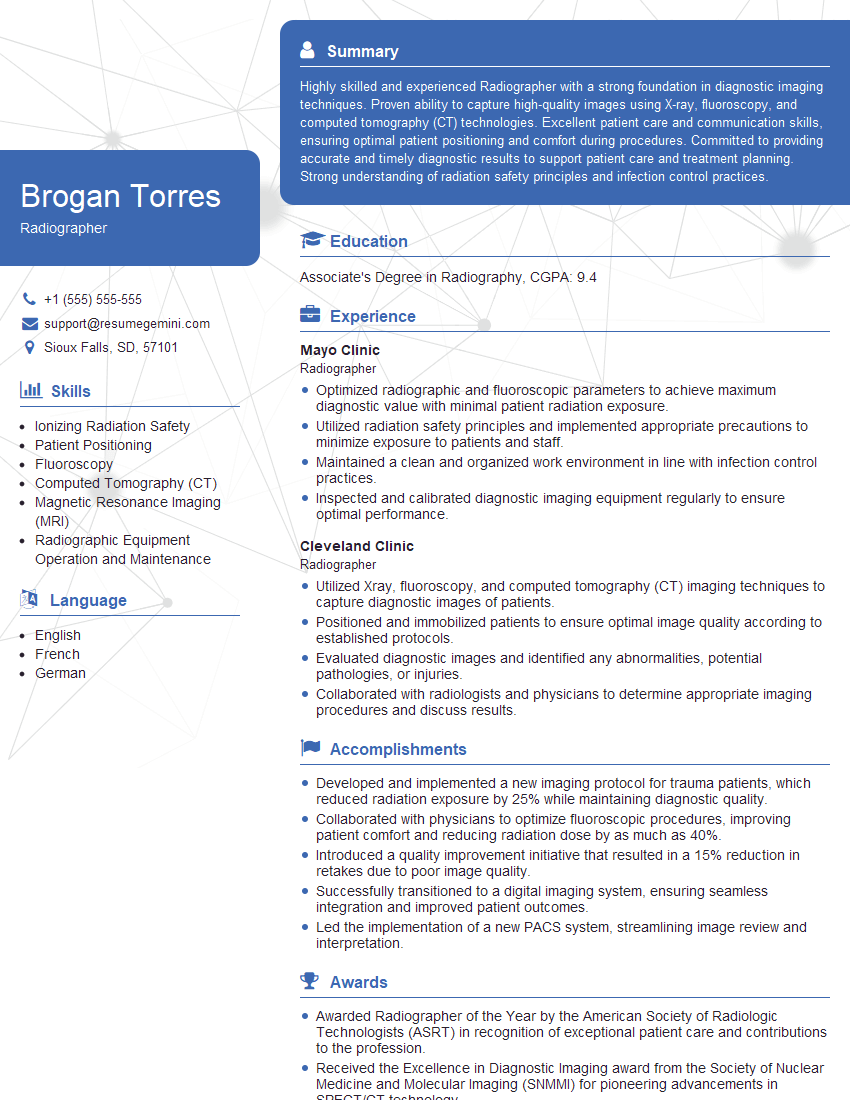
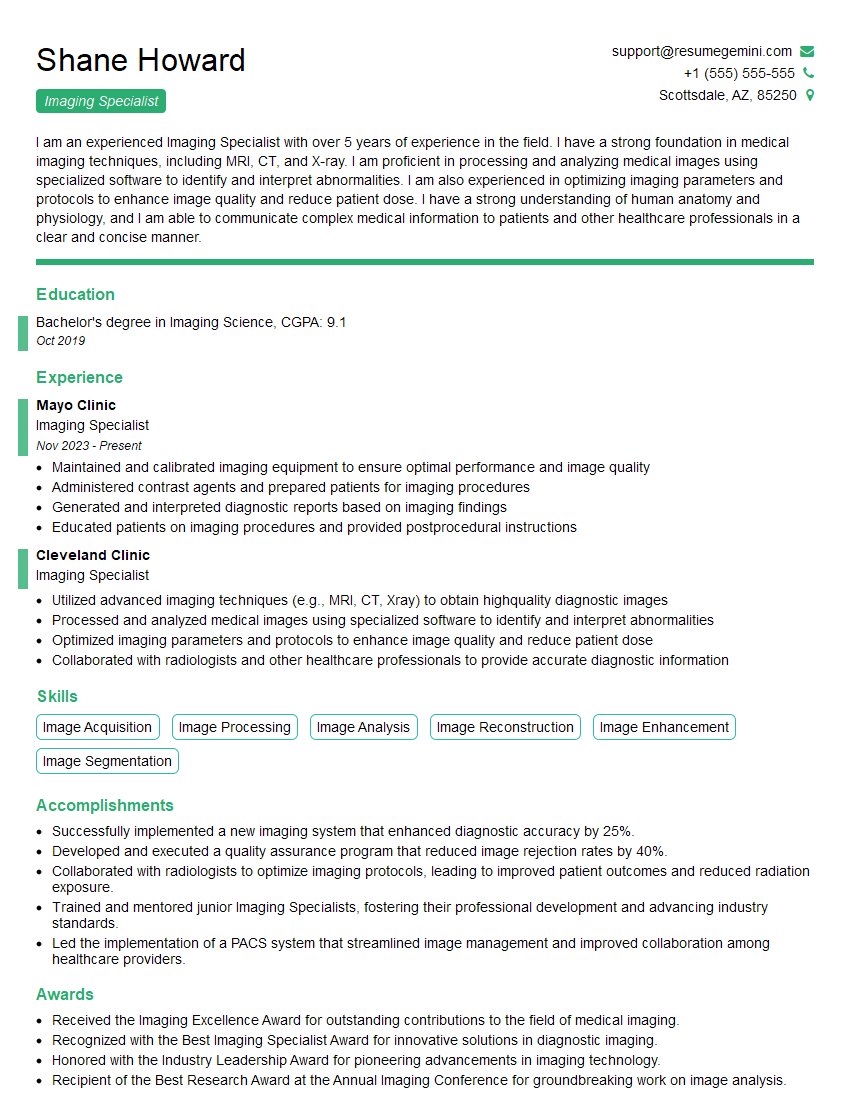
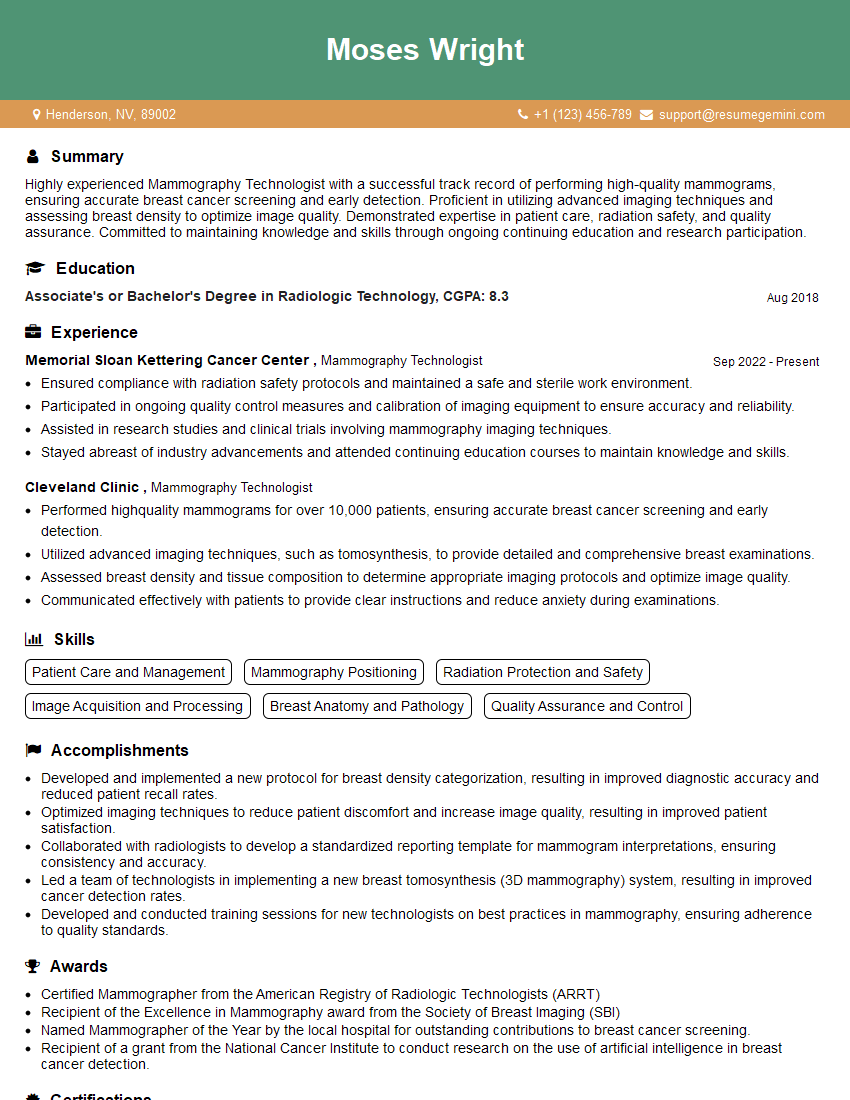
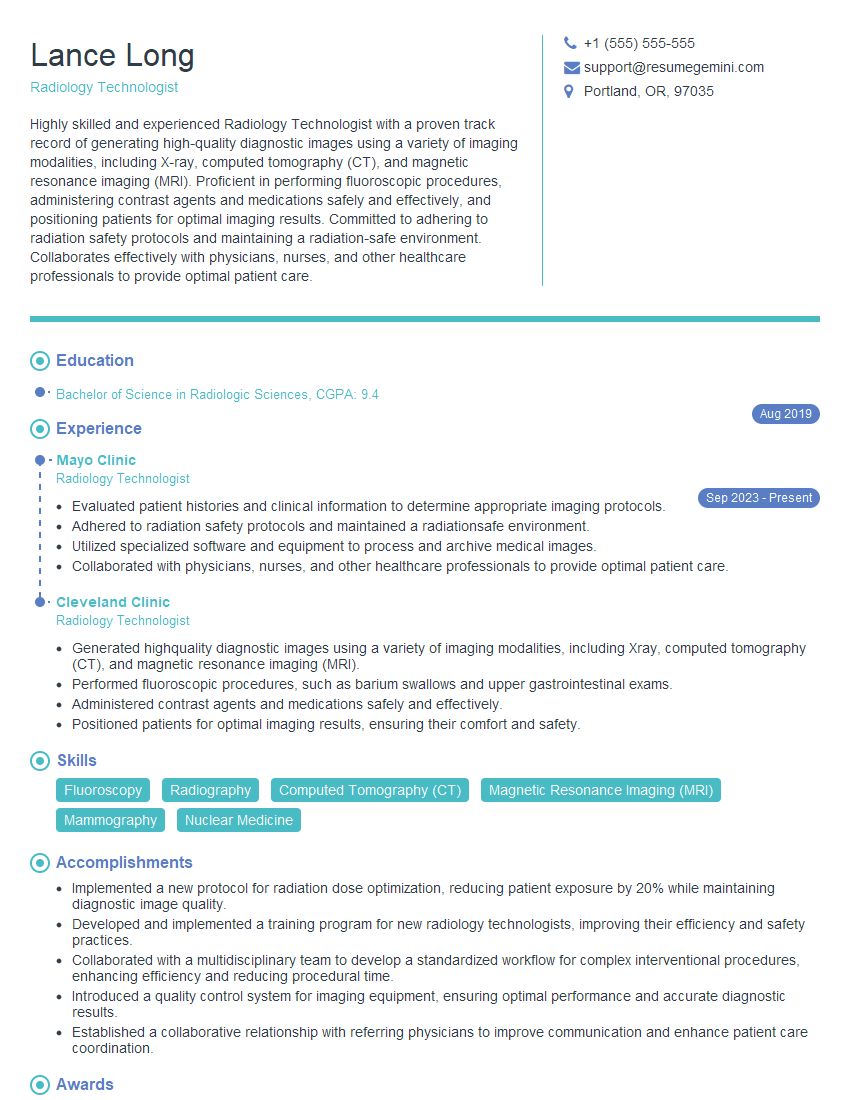
Mastering Digital Radiography Interpretation is key to advancing your career in medical imaging. It opens doors to specialized roles and increased earning potential. To maximize your job prospects, creating a strong, ATS-friendly resume is crucial. ResumeGemini is a trusted resource that can help you build a professional and impactful resume, tailored to highlight your skills and experience in this field. Examples of resumes tailored to Digital Radiography Interpretation are available to help you get started.

Explore more articles
Users Rating of Our Blogs
Share Your Experience
We value your feedback! Please rate our content and share your thoughts (optional).
What Readers Say About Our Blog
Very informative content, great job.
good