Interviews are opportunities to demonstrate your expertise, and this guide is here to help you shine. Explore the essential Digital Rendering interview questions that employers frequently ask, paired with strategies for crafting responses that set you apart from the competition.
Questions Asked in Digital Rendering Interview
Q 1. Explain the difference between ray tracing and rasterization.
Ray tracing and rasterization are two fundamentally different approaches to generating images in computer graphics. Think of it like this: rasterization is like painting a wall, covering it with little squares of color; ray tracing is like meticulously placing each grain of sand on a beach.
Rasterization works by projecting 3D objects onto a 2D screen, dividing it into pixels, and then determining the color of each pixel based on the objects visible at that point. It’s fast, efficient for simple scenes, and suitable for real-time applications like video games. However, it struggles with realistic lighting effects like reflections and refractions.
Ray tracing, on the other hand, simulates the path of light rays from the viewer’s eye backward into the scene. It traces the ray’s path to determine the color of each pixel by calculating reflections, refractions, and shadows based on the objects it encounters. This leads to much more photorealistic images but requires significantly more computing power, making it less suitable for real-time applications.
In short: Rasterization is fast but less realistic; ray tracing is slow but highly realistic.
Q 2. What are the key considerations when choosing a rendering engine for a project?
Choosing the right rendering engine is crucial for project success. Key considerations include:
- Project Scope and Requirements: Are you aiming for photorealism, stylized visuals, or something in between? Real-time needs (games) vs. offline rendering (film) heavily influence the choice.
- Budget and Hardware: Some engines demand powerful hardware, impacting both upfront costs and rendering times. Consider the available resources and the scalability of the engine.
- Software Integration and Pipeline: How well does the engine integrate with your existing modeling, animation, and compositing software? A seamless workflow can save considerable time and effort.
- Features and Capabilities: Do you need specific features like advanced hair rendering, subsurface scattering, or detailed volumetric effects? Each engine excels in different areas.
- Artist Familiarity and Support: Consider the team’s experience with different engines and the availability of tutorials, documentation, and community support. A smooth learning curve can drastically affect productivity.
For example, a high-budget film might use Arnold or V-Ray for their photorealistic capabilities, while a real-time game might opt for Unreal Engine’s built-in renderer or a more efficient solution like Unity’s HDRP.
Q 3. Describe your experience with different rendering software (e.g., V-Ray, Arnold, Octane, Redshift).
I have extensive experience with several leading rendering engines. My experience includes:
- V-Ray: A versatile renderer known for its robust features and excellent integration with 3ds Max and other software. I’ve used it extensively for architectural visualization and product design, leveraging its strengths in physically accurate materials and lighting.
- Arnold: A powerful renderer favored in film and VFX. I’ve worked with Arnold on projects demanding high-quality subsurface scattering and realistic hair rendering, appreciating its speed and efficiency in handling complex scenes.
- Octane: A GPU-accelerated renderer offering impressive speed for complex scenes. My experience with Octane has been focused on architectural and product visualizations, leveraging its real-time capabilities for quick iterations and client feedback.
- Redshift: Another GPU-accelerated renderer known for its ease of use and speed. I’ve used Redshift on several architectural visualization projects, appreciating its intuitive interface and excellent performance with large datasets.
Each renderer has its strengths; the choice often depends on the project’s needs and the team’s familiarity. I’m adept at adapting my workflow to effectively utilize each engine’s unique capabilities.
Q 4. How do you optimize a scene for faster rendering times?
Optimizing a scene for faster rendering is a crucial skill. Here’s a multi-pronged approach:
- Geometry Optimization: Reduce polygon counts where possible. Use level of detail (LOD) techniques to display lower-poly models at a distance. Combine meshes where appropriate to reduce the overall object count.
- Material Optimization: Avoid overly complex shaders; use simpler materials where visual fidelity allows. Consolidate similar materials to reduce rendering overhead. Employ physically-based rendering (PBR) workflows for improved efficiency.
- Lighting Optimization: Use light linking to group lights and minimize calculations. Limit the number of light sources; avoid excessive global illumination calculations unless essential. Use area lights instead of point lights to get softer shadows.
- Scene Organization: Organize the scene efficiently using layers, groups, and instances. This improves render time by enabling efficient visibility culling and reducing rendering overhead.
- Render Settings Optimization: Experiment with render settings to find the optimal balance between quality and render time. Reduce sample counts where acceptable. Use denoising techniques to accelerate rendering and improve image quality.
- Use Render Layers: Break down the render into layers (e.g., characters, environment, effects) allowing independent rendering and compositing, improving manageability and reducing render times.
Remember, profiling your renders is key to pinpoint specific bottlenecks. Every scene requires a different optimization strategy.
Q 5. What are your preferred methods for creating realistic lighting in a 3D scene?
Creating realistic lighting is paramount in achieving believable 3D scenes. My preferred methods involve a combination of techniques:
- Physically Based Lighting (PBR): I utilize PBR principles to ensure accurate interaction of light with materials, leading to a more realistic appearance. This includes using HDRI images (high dynamic range images) for environment lighting, which provides realistic lighting and reflections.
- Global Illumination (GI): GI calculations, like path tracing or photon mapping, are essential for simulating indirect lighting and creating believable bounce light, dramatically improving realism.
- Area Lights and Light Linking: I prefer area lights over point lights to create softer shadows and avoid harsh lighting. Light linking groups lights impacting similar areas for efficient rendering.
- Image-Based Lighting (IBL): Using HDRI maps for environment lighting allows for creating realistic lighting and reflections with minimal setup, adding atmosphere and realism quickly.
- Subsurface Scattering: For materials like skin or wax, accurate subsurface scattering simulations are vital for photorealism. Many renderers provide effective options for this.
The combination of these methods allows me to create lighting that feels both believable and visually appealing.
Q 6. Explain your workflow for creating textures for a 3D model.
My texture creation workflow is iterative and depends on project requirements. It generally involves these steps:
- Concept and Research: Thorough research of reference images is essential. Understanding the material’s properties (roughness, reflectivity, etc.) is crucial for creating believable textures.
- Photographing and Scanning: I frequently utilize photos of real-world objects as a base. Scanning textures provides valuable information and detail.
- Digital Painting and Texture Creation: Software like Substance Painter or Mari is used to create or edit textures, adding details, color variations, and noise for realism.
- Procedural Textures: When needed, I utilize procedural techniques to generate textures efficiently, especially for repetitive patterns or large surfaces.
- Texture Baking: To extract information from high-poly models onto lower-poly versions for game development or real-time applications, texture baking is critical.
- Testing and Refinement: Constant testing in the 3D application ensures the textures render properly and blend seamlessly with the model and lighting.
This process is highly collaborative and involves constant feedback to refine textures until they meet the visual goals.
Q 7. How do you handle complex geometries and high polygon counts during rendering?
Handling complex geometries and high polygon counts requires a strategic approach to avoid render time slowdowns and crashes. Here’s what I do:
- Mesh Reduction and Optimization: Before rendering, I always optimize the mesh by reducing the polygon count using techniques like decimation or remeshing. This is critical for maintaining detail while minimizing rendering time. I assess the model’s visibility and use Level of Detail (LOD) techniques where appropriate.
- Proxy Geometry: For extremely complex models, I frequently use proxy geometry during the lighting and scene setup stages. This allows for faster initial renders and iterations before switching to the high-resolution mesh for the final render.
- Instancing: Repeating elements, like trees or grass blades, can be efficiently rendered using instances. This dramatically reduces memory usage and renders time by reusing a single mesh multiple times.
- Displacement Maps and Normal Maps: Instead of directly using high-poly models for rendering, I often utilize displacement or normal maps to add surface detail to lower-poly models. This maintains visual fidelity while drastically decreasing rendering times.
- Render Settings Adjustment: Adjusting render settings, such as ray bounces and sampling rates, can improve rendering speed with only minimal loss of quality, depending on the project’s needs.
The key is to balance visual fidelity with render time. Understanding the limitations of the hardware and the software is paramount in achieving this balance.
Q 8. Describe your experience with different rendering techniques (e.g., global illumination, ambient occlusion).
My experience encompasses a wide range of rendering techniques, crucial for achieving photorealistic visuals. Global Illumination (GI) simulates the way light bounces around a scene, creating realistic indirect lighting. I’ve extensively used path tracing and photon mapping techniques to achieve this, particularly in scenes with complex interactions between light and surfaces. For example, in a forest scene, GI would realistically illuminate the undergrowth by bouncing light from the sunlit canopy. Ambient Occlusion (AO) simulates the darkening of areas where surfaces are close together, adding depth and realism. I regularly utilize screen-space ambient occlusion (SSAO) for real-time performance and ray-traced ambient occlusion for higher quality offline renders. Imagine a stone statue nestled in a niche – AO would realistically darken the recesses, enhancing the sense of depth.
Beyond GI and AO, I’m proficient in techniques like caustics (simulating light focusing through transparent objects, like light shining through a glass of water), subsurface scattering (modeling how light penetrates and scatters within translucent materials, such as skin or marble), and ray tracing (a technique that simulates the path of light rays to create realistic images).
Q 9. How do you troubleshoot rendering errors and artifacts?
Troubleshooting rendering errors is a critical part of the process. I approach it systematically. First, I examine the render output carefully, identifying the type and location of the artifact. Is it a flickering light, a strange color banding, or geometric distortions? This pinpoints the potential cause.
- Geometric Errors: These are usually due to problems in the 3D model itself, such as overlapping polygons or non-manifold geometry. I’d inspect the model in a 3D modeling software, identify and fix the problematic areas.
- Material Errors: Incorrect material settings, like overly high roughness values or flawed shader code, can result in unrealistic appearances. I carefully review the material settings and adjust them accordingly. For instance, a metallic material incorrectly set as a diffuse material will appear dull and lack reflections.
- Lighting Errors: Problems with lighting setups, such as conflicting light sources or improperly configured shadows, often result in unnatural lighting. I meticulously check the intensity, color, and shadows of each light source.
- Render Settings Errors: Incorrect render settings, such as low sample counts or inappropriate anti-aliasing settings, produce noisy or blurry renders. I’d increase the sample count, adjust the anti-aliasing method, and experiment with different render settings until the artifacts are eliminated.
Using render logs is invaluable in pinpointing software or hardware issues. Sometimes, external factors such as insufficient RAM or GPU memory can also be the culprit.
Q 10. What is your experience with GPU rendering versus CPU rendering?
GPU rendering and CPU rendering are two distinct approaches. GPU rendering leverages the parallel processing power of graphics cards, making it significantly faster for complex scenes and tasks demanding real-time performance, like video games or interactive simulations. CPU rendering utilizes the central processing unit, which is more suitable for highly detailed, photorealistic imagery demanding higher precision. However, it’s generally slower than GPU rendering for complex projects.
My experience includes both. I choose the approach based on project needs. For real-time applications or projects where speed is crucial, I opt for GPU rendering using engines like Unreal Engine or Unity. For high-quality, photorealistic still renders requiring extreme detail and precision, I prefer CPU rendering using renderers like Arnold or V-Ray. Often, a hybrid approach utilizing both is most effective, for example pre-rendering complex elements on the CPU and integrating them into a real-time GPU based scene.
Q 11. Explain your understanding of different rendering passes (e.g., diffuse, specular, reflection).
Rendering passes are stages in the rendering pipeline where specific aspects of the scene are calculated separately and then combined to create the final image. This modular approach allows for greater control and efficiency.
- Diffuse Pass: Calculates the base color and diffuse reflection of surfaces, simulating how light scatters from a surface in all directions. Think of how sunlight illuminates a matte surface.
- Specular Pass: Calculates the shiny, reflective highlights on surfaces, simulating how light reflects at a specific angle. This gives materials like metal their characteristic shine.
- Reflection Pass: Calculates reflections of the environment on reflective surfaces. Imagine a mirror reflecting a room or a polished metal surface reflecting light sources.
- Shadow Pass: Calculates the shadows cast by objects in the scene. This creates depth and realism.
- Ambient Occlusion Pass: Calculates the darkening of areas where surfaces are close together.
- Subsurface Scattering Pass: Calculates how light penetrates and scatters within translucent materials.
Understanding these passes allows for fine-tuning the visual aspects of a render. For example, you could adjust the specular pass to control the shininess of a material or the reflection pass to tweak the reflections of the environment.
Q 12. How do you manage and organize large rendering projects?
Managing large rendering projects requires meticulous organization. I utilize a hierarchical file structure, keeping assets (models, textures, materials) separate from scene files and render settings. This clear organization simplifies asset management and ensures consistency throughout the project. Version control systems, like Git, are indispensable for managing changes to assets and scene files, allowing easy tracking and rollbacks.
Furthermore, I employ render management software, which can automate the rendering process, allowing for batch rendering and managing large render queues. This is particularly helpful for scenes requiring extensive render times. I also extensively use render layers, breaking down complex scenes into manageable components, rendering them separately, and composing them in post-processing. This allows for greater control and flexibility during rendering and compositing, such as adjusting the lighting on specific elements without rerendering the entire scene. Detailed documentation, including naming conventions, and render settings notes, is essential for maintaining order and facilitating collaboration in team projects.
Q 13. Describe your experience with rendering different materials (e.g., glass, metal, wood).
Rendering different materials accurately requires a deep understanding of their physical properties and how light interacts with them. For instance:
- Glass: Requires high transparency and refraction values, accurately simulating how light bends as it passes through the material. I often use ray tracing or path tracing techniques to achieve realistic glass effects, including caustics. The refractive index value is crucial for realistic glass representation.
- Metal: Needs highly specular reflections, often with sharp highlights and strong reflections of the environment. I use special shaders designed for metals, employing parameters like roughness and metalness to control the appearance. A high metalness value creates a strong, mirror-like reflection.
- Wood: Requires careful texturing to replicate the grain and variations in color. I use procedural textures and bitmap textures in combination to create realistic wood appearances, and I might use subsurface scattering to model how light slightly penetrates the wood.
Achieving realism depends on the correct choice of shaders, texture maps, and the careful tuning of material parameters. Extensive experimentation and referencing real-world examples are essential.
Q 14. How do you create realistic shadows in your renders?
Realistic shadows are crucial for adding depth and realism to renders. Several methods contribute to this:
- Ray Tracing/Path Tracing: These global illumination techniques produce highly realistic shadows by tracing the path of light rays. Ray tracing directly computes shadow rays, while path tracing also considers the indirect lighting contributions to shadow formation. These methods often yield the highest quality shadows but are computationally expensive.
- Shadow Maps: These are a more efficient technique for rendering shadows in real-time and pre-rendered environments. They store shadow information in a texture, significantly reducing render times but potentially introducing artifacts (such as shadow acne or peter panning) at close range or with complex geometry.
- Contact Shadows: These shadows represent the subtle darkening at the contact point between objects. They add realism to the scene by emphasizing the interaction between surfaces. They’re often added as a post-processing effect to increase visual fidelity.
- Soft Shadows: These result from light sources having a finite size and spread their illumination, producing softer shadow edges. They add a more natural look compared to sharp shadows which result from a point light source.
The choice of method depends on the project requirements; for example, a real-time game would prioritize shadow maps for performance, while a high-end architectural visualization might use ray tracing or path tracing.
Q 15. What are some common challenges you face when rendering complex scenes?
Rendering complex scenes presents several significant challenges. The primary hurdle is often memory management. Highly detailed models, intricate textures, and vast environments demand substantial RAM, potentially leading to crashes or excessively long render times. For instance, rendering a city scene with millions of polygons and realistic lighting requires careful optimization and potentially the use of distributed rendering techniques.
Another major challenge is render time optimization. Even with powerful hardware, complex scenes can take hours, days, or even weeks to render. Techniques like using proxy geometry, level of detail (LOD) models, and intelligent scene partitioning are crucial for managing this. For example, instead of rendering every individual leaf on a tree, LOD allows for simplified representations at a distance.
Finally, managing complexity itself is a major factor. Tracking materials, lights, and objects in a huge scene can be difficult. Organized scene management, using naming conventions and utilizing scene organization features in the rendering software are vital for maintaining control. A good workflow using layers, groups, and instances helps immensely.
Career Expert Tips:
- Ace those interviews! Prepare effectively by reviewing the Top 50 Most Common Interview Questions on ResumeGemini.
- Navigate your job search with confidence! Explore a wide range of Career Tips on ResumeGemini. Learn about common challenges and recommendations to overcome them.
- Craft the perfect resume! Master the Art of Resume Writing with ResumeGemini’s guide. Showcase your unique qualifications and achievements effectively.
- Don’t miss out on holiday savings! Build your dream resume with ResumeGemini’s ATS optimized templates.
Q 16. How do you ensure consistency in rendering across different platforms and devices?
Consistency across platforms and devices is crucial for delivering a professional product. This hinges on careful color management (discussed further in a later question), using platform-agnostic file formats like OpenEXR for high-dynamic-range images, and ensuring consistent rendering settings. For example, avoid using platform-specific features or render settings that might not translate well to other systems.
To achieve cross-platform consistency, I utilize a workflow that emphasizes linear workflows, working in a scene-referred color space throughout the pipeline. This prevents color shifts caused by gamma correction discrepancies between different displays and software. I also conduct extensive testing on target platforms to verify consistent output and adjust settings as needed.
Q 17. What is your understanding of color management in rendering?
Color management is the cornerstone of achieving realistic and consistent renders. It involves understanding and controlling the color representation throughout the entire rendering pipeline, from scene setup to final output. This includes understanding different color spaces (such as sRGB, Adobe RGB, and Rec.709), color profiles (ICC profiles), and gamma correction.
In a typical workflow, I start by ensuring my scene is set up in a linear workflow. This means that color values are represented linearly, without any gamma correction applied. This prevents color banding and other artifacts during rendering calculations. I’ll also utilize accurate color profiles for my textures and displays. By properly setting these up in my rendering software, I can ensure consistent color representation across different systems.
Accurate color management is critical; a poorly managed color pipeline can result in dull, washed-out, or overly saturated renders, significantly impacting the final visual quality and realism of the output.
Q 18. How do you use post-processing techniques to enhance your renders?
Post-processing is where a render truly comes alive. I frequently use techniques like color grading to refine the mood and atmosphere, enhancing the overall look and feel of my work. For example, I might subtly adjust the color temperature to create a warmer or cooler tone. I’ll use sharpening to enhance details lost in the rendering process and noise reduction to minimize any graininess.
Another technique I often use is depth of field to control focus and draw attention to key areas. Adding a subtle vignette can add a cinematic feel. More advanced techniques, like bloom and lens flares, can add realism and visual interest, but they should always be applied subtly and tastefully to avoid distracting from the main focus.
The application of these effects largely depends on the desired outcome. For a photorealistic render, subtle adjustments are typically preferred, whereas stylistic renders might benefit from a more aggressive approach.
Q 19. Describe your experience with creating realistic human characters.
Creating realistic human characters is a complex undertaking, requiring a strong understanding of anatomy, texturing, and lighting. I typically begin with a high-quality base model, often purchased from reputable providers or sculpted myself. A crucial aspect is ensuring the model has adequate topology – a well-structured mesh is vital for smooth deformations and realistic expressions.
Realistic texturing involves careful application of skin shaders that replicate the subtleties of human skin. This requires creating multiple texture maps: diffuse for base color, normal for surface detail, specular for highlights, and subsurface scattering maps for simulating the way light penetrates the skin. Finally, lighting plays a crucial role. Proper lighting can significantly enhance the realism of the skin, particularly in conveying the subtle variations of light and shadow.
One memorable project involved creating a character for a high-end advertising campaign. The client required photorealism, which demanded meticulous attention to every detail from pores and wrinkles to accurate hair simulation. This project highlighted the importance of collaboration with other artists, particularly character modelers, texture artists and hair sim specialists, to achieve the desired level of realism.
Q 20. What is your experience with integrating renders into other software (e.g., Photoshop, After Effects)?
Integrating renders into other software packages like Photoshop and After Effects is a regular part of my workflow. I often use Photoshop for final compositing, adjusting color, adding details, or retouching imperfections. After Effects is invaluable for animation, creating motion graphics, or adding visual effects like dust particles, lens flares, or camera shake.
For seamless integration, I typically export my renders in high-resolution formats like OpenEXR or TIFF, preserving the maximum amount of color and depth information. I always ensure the color spaces are consistent between the rendering software and the compositing software to avoid color shifts. In After Effects, I’ll often work with layer masks and adjustment layers to precisely control the integration of the render with other elements.
A recent example involved creating a product visualization that required integrating a 3D render of a vehicle into a real-world background photograph. This involved careful masking in Photoshop to blend the elements seamlessly and color matching to ensure a cohesive final image.
Q 21. How familiar are you with different file formats used in rendering?
Familiarity with various file formats is essential. I regularly use formats such as:
- OpenEXR (.exr): A high-dynamic-range image (HDRI) format that preserves color and tonal information far beyond what standard image formats like JPEG can achieve. Ideal for compositing and further editing.
- TIFF (.tif, .tiff): A versatile, lossless format supporting various compression methods and color depths, useful for archival purposes and high-quality image exchange.
- JPEG (.jpg, .jpeg): A lossy format widely used for web and print due to its smaller file size, but it’s not ideal for maintaining image quality in a pipeline.
- PNG (.png): A lossless format supporting transparency, widely used for web graphics and textures.
- FBX (.fbx): A common 3D model exchange format used for transferring models and animations between different 3D applications.
- OBJ (.obj): A simpler 3D model format often used for exchanging geometry without textures or materials. Often used as a base mesh for sculpting software.
Selecting the appropriate format is context-dependent, considering the intended use, desired image quality, and file size constraints.
Q 22. Describe your experience with rendering animations and motion graphics.
My experience with rendering animations and motion graphics spans over [Number] years, encompassing a wide range of projects, from short explainer videos to complex architectural walkthroughs. I’m proficient in various software packages, including [List software e.g., Blender, Cinema 4D, Maya, Houdini], and possess a deep understanding of the animation pipeline, from modeling and rigging to texturing, lighting, and final rendering. For instance, in a recent project creating a promotional video for a new car model, I used Cinema 4D to model and animate the car, utilizing Arnold renderer for photorealistic rendering and After Effects for compositing and final touches. I’ve also worked extensively with motion graphics, creating dynamic title sequences and UI animations using tools like After Effects and Blender’s animation features. My approach prioritizes creating seamless, visually captivating animations that effectively communicate the client’s message. I pay close attention to details, ensuring smooth transitions, accurate character animation, and realistic material behaviors.
I understand the importance of efficient workflow and frequently use techniques like baking animations to reduce rendering times without compromising quality. For complex animations, I often leverage render farms to distribute the workload and meet tight deadlines.
Q 23. How do you collaborate with other artists and team members during a rendering project?
Collaboration is crucial in rendering projects. I thrive in team environments and actively participate in all stages, from initial concept meetings to final reviews. I use clear and concise communication methods, such as regular project updates, detailed feedback sessions, and utilizing project management software like [Mention software e.g., Asana, Trello, Shotgun]. Before starting any significant task, I ensure a complete understanding of the assigned roles and responsibilities.
Specifically, I frequently work closely with modelers to ensure optimal polygon counts and UV mapping for efficient rendering. With texture artists, I ensure the textures meet the requirements of the chosen renderer and lighting setup. And, during compositing, I work with compositors to achieve the desired visual look and feel. Clear communication prevents conflicts and ensures a smooth and efficient workflow. For example, I regularly use version control systems to maintain consistency and track changes across the project timeline.
Q 24. Explain your experience with creating photorealistic renders.
Creating photorealistic renders requires meticulous attention to detail and a deep understanding of lighting, materials, and camera techniques. My experience includes working on projects requiring highly realistic imagery, such as architectural visualizations, product renders, and even character modeling. I frequently utilize physically based rendering (PBR) techniques to achieve accurate and believable results.
For example, when creating a photorealistic render of a luxury watch, I meticulously researched the watch’s materials and their corresponding properties, ensuring that reflections, refractions, and subsurface scattering were accurately simulated. This involved using high-resolution textures, adjusting IOR (index of refraction) values, and carefully positioning light sources to capture the subtle nuances of light interaction on the watch’s polished surfaces. I also leverage techniques like global illumination and ambient occlusion to achieve realistic shadowing and lighting effects. Post-processing techniques in software like Photoshop are also vital to refine the final image.
Q 25. What is your understanding of physically based rendering (PBR)?
Physically Based Rendering (PBR) is a rendering technique that simulates the way light interacts with materials in the real world based on scientifically accurate models. Unlike older rendering methods, PBR doesn’t rely on arbitrary parameters; instead, it uses physically measurable properties such as albedo (base color), roughness, metallic, and normal maps to define how light interacts with surfaces.
This results in more realistic and consistent rendering across different lighting conditions and viewpoints. For example, a PBR material will exhibit accurate reflections and refractions based on its roughness and metallic values, unlike older rendering methods where these effects were often manually adjusted. Working with PBR workflows significantly reduces the need for trial-and-error, resulting in increased efficiency and more predictable results. Modern renderers like Arnold, V-Ray, and Octane Renderer heavily utilize PBR workflows.
Q 26. How do you balance rendering quality with rendering speed?
Balancing rendering quality with speed is a constant challenge. The ideal scenario is to achieve high-quality renders within a reasonable timeframe. I employ several strategies to achieve this balance. First, optimizing the scene geometry is paramount; unnecessary polygons or complex models significantly increase render times. Secondly, I carefully select render settings. Higher sample rates, for instance, increase quality but also the rendering time. Finding the sweet spot requires careful experimentation and understanding the trade-offs.
Furthermore, I use techniques such as using proxy geometry during initial lighting setups, leveraging denoising algorithms to reduce render times, and using render layers for efficient post-processing. In certain situations, I might compromise on certain details for faster renders, such as reducing the resolution for initial tests or only rendering specific sections of the scene initially. In high-demand situations, I also utilize render farms to distribute the workload across multiple machines, drastically reducing overall render times.
Q 27. Explain your familiarity with different types of cameras and lenses in rendering.
My familiarity with cameras and lenses in rendering is extensive. I understand how different focal lengths affect the depth of field and perspective, and I use this knowledge to create visually compelling and appropriate imagery. A wide-angle lens will create a sense of scale and immersion, while a telephoto lens can isolate subjects and compress perspective.
Beyond focal length, I’m adept at utilizing other camera parameters like aperture, shutter speed, and ISO to simulate real-world photography techniques. For instance, a shallow depth of field achieved through a wide aperture can draw attention to the subject while blurring the background. Understanding camera parameters and lens distortions allows me to achieve realistic and visually pleasing renders that are consistent with the intended mood and style of the project. I frequently use camera references and real-world photography to guide my choices and improve realism.
Q 28. How do you stay up-to-date with the latest advancements in digital rendering technology?
Keeping up-to-date with the latest advancements in digital rendering technology is crucial for remaining competitive. I actively engage in various methods to achieve this. I regularly follow industry blogs, publications, and online communities dedicated to rendering and CG. Attending conferences and workshops provides valuable insights and opportunities to network with other professionals.
Additionally, I experiment with new software and rendering techniques to understand their strengths and weaknesses. I actively participate in online tutorials and courses, constantly challenging myself to improve my skillset. A crucial aspect of this continuous learning is experimenting with new rendering engines and plugins to expand my capabilities. For example, I recently explored the capabilities of [Mention a recent advancement/software] and integrated it into a project, significantly improving workflow efficiency.
Key Topics to Learn for Digital Rendering Interview
- Software Proficiency: Mastering industry-standard software like 3ds Max, Maya, Blender, or Cinema 4D. Understand their unique strengths and limitations for different project types.
- Lighting and Shading Techniques: Develop a strong grasp of lighting principles (e.g., three-point lighting, global illumination), shadowing, and material creation for realistic and stylized renderings. Be prepared to discuss your approach to achieving specific lighting effects.
- Texture Mapping and UV Unwrapping: Demonstrate understanding of creating and applying textures, and the importance of efficient UV unwrapping for optimized rendering performance and detail.
- Modeling Techniques: Discuss your experience with various modeling approaches (polygonal, NURBS, subdivision surfaces) and their application in different contexts. Highlight your ability to create efficient and optimized models.
- Rendering Engines and Optimizations: Understand the inner workings of different rendering engines (e.g., V-Ray, Arnold, Cycles) and how to optimize render settings for speed and quality. Be ready to discuss strategies for troubleshooting render issues.
- Workflow and Pipeline: Explain your understanding of a typical digital rendering workflow, from initial concept to final output, including asset management and collaboration strategies.
- Post-Processing and Compositing: Demonstrate familiarity with post-processing techniques in software like Photoshop or After Effects to enhance renderings and create final deliverables.
- Problem-Solving and Troubleshooting: Be prepared to discuss past experiences tackling technical challenges in digital rendering, showcasing your analytical and problem-solving abilities.
Next Steps
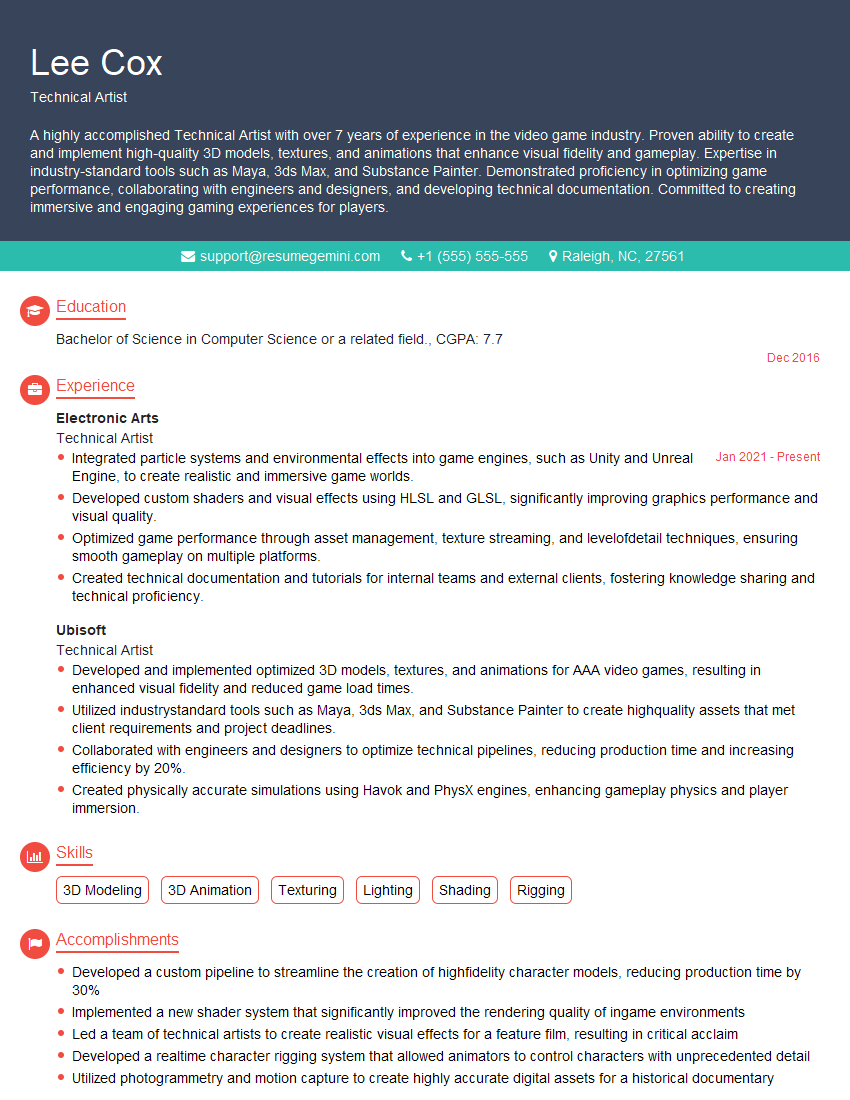
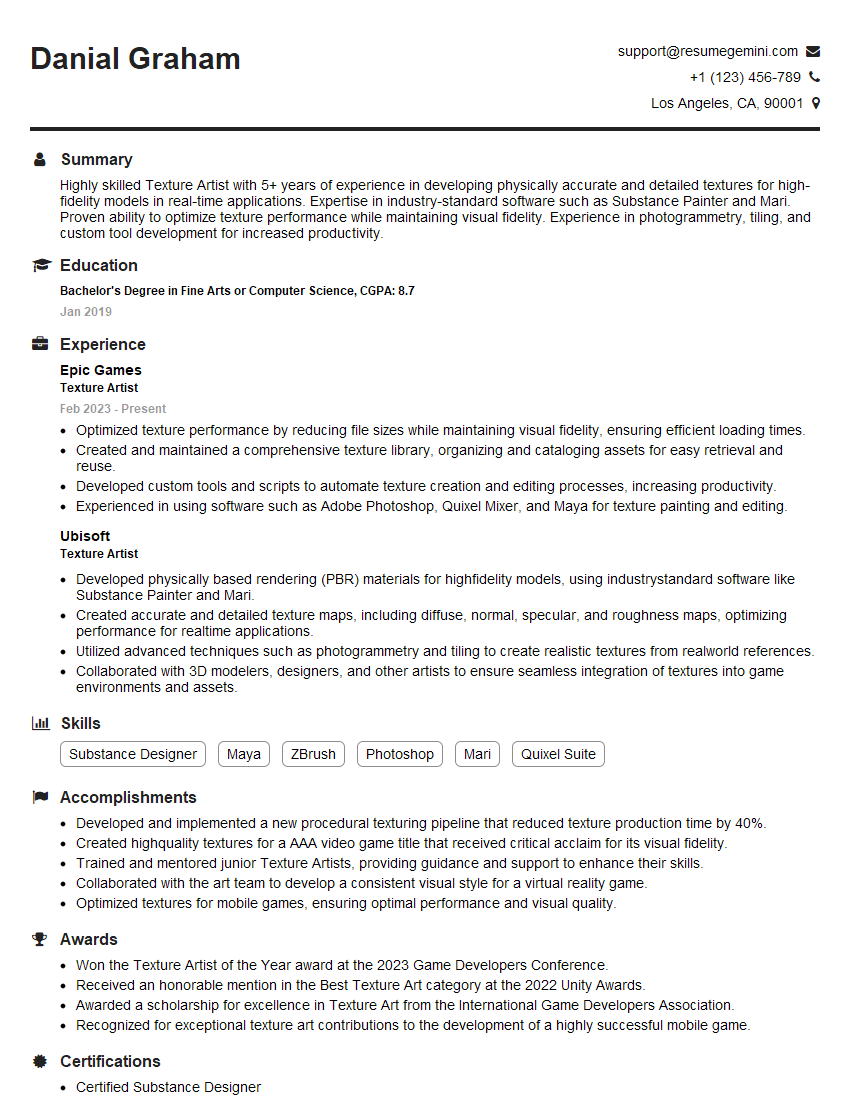
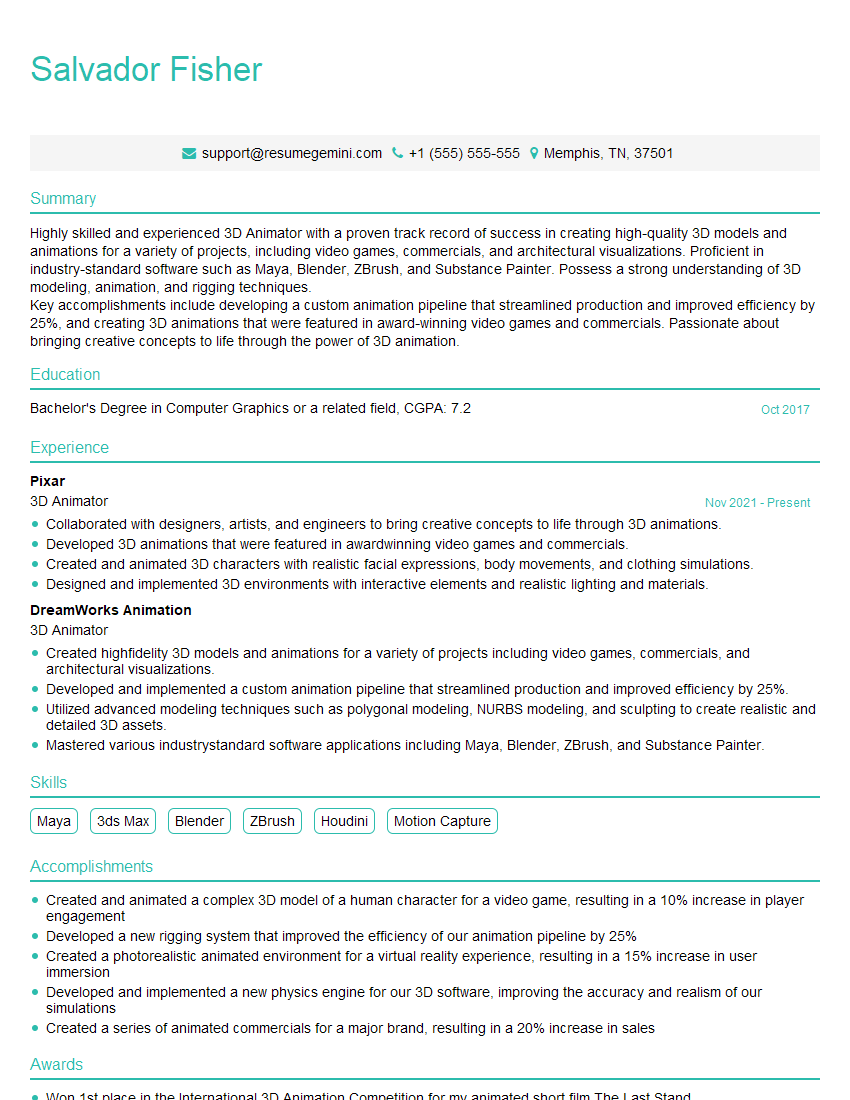
Mastering digital rendering is crucial for a successful and rewarding career in various creative fields, offering opportunities for growth and innovation. An ATS-friendly resume is your first step to landing your dream job. Make sure your resume highlights your key skills and accomplishments effectively. ResumeGemini can help you craft a compelling and ATS-optimized resume that showcases your expertise in Digital Rendering. Examples of resumes tailored to this field are available to guide you. Take the next step towards your ideal career by creating a professional and impactful resume today!



Explore more articles
Users Rating of Our Blogs
Share Your Experience
We value your feedback! Please rate our content and share your thoughts (optional).
What Readers Say About Our Blog
Very informative content, great job.
good