Are you ready to stand out in your next interview? Understanding and preparing for Diploma Finishing interview questions is a game-changer. In this blog, we’ve compiled key questions and expert advice to help you showcase your skills with confidence and precision. Let’s get started on your journey to acing the interview.
Questions Asked in Diploma Finishing Interview
Q 1. Explain the different types of binding methods.
Binding methods secure the pages of a document together, and the choice depends on factors like page count, budget, and desired aesthetic. There are several key types:
- Perfect Binding: This is the most common method for books and magazines. The edges of the pages are glued together to create a square spine, then a cover is wrapped around it. Think of most paperback novels – that’s perfect binding.
- Saddle Stitch Binding: Pages are folded in half and stapled along the spine. This is ideal for brochures, booklets, and magazines with a low page count (usually under 64 pages). It’s quick, cost-effective, and creates a flat document.
- Wire-O Binding: Metal wire loops are inserted through punched holes along the spine. This is excellent for calendars, notebooks, and documents that need to lay flat. It’s durable and allows for easy page turning.
- Spiral Binding (Coil Binding): Similar to Wire-O, but uses a plastic or metal coil. It’s more affordable than Wire-O but slightly less durable.
- Case Binding: A high-quality, durable method used for books and documents requiring longevity. The sections are sewn together to form a text block, then covered with a rigid cover. Think of hardcover textbooks or high-end coffee table books.
The choice of binding method is crucial for the final product’s functionality, durability, and overall look.
Q 2. Describe your experience with die-cutting.
My experience with die-cutting spans over [Number] years, encompassing various projects from intricate business cards to complex packaging designs. I’m proficient in operating both manual and automated die-cutting machines, ensuring precision and accuracy in every cut. I’ve worked with a range of materials, including cardstock, paperboard, and even some plastics. For example, I once worked on a project requiring a very delicate, intricate die-cut for a luxury chocolate box. This demanded meticulous attention to detail and precise machine calibration to avoid damaging the expensive materials. Another project involved large-scale die-cutting for promotional posters, requiring careful planning and efficient machine operation to meet tight deadlines. I understand the importance of proper die maintenance and cleaning to ensure consistent, high-quality results.
Q 3. What are the common issues encountered in folding and how do you troubleshoot them?
Folding is a critical step in the finishing process, and several issues can arise. Common problems include:
- Creasing or Cracking: This often happens when the paper is too thick or the folding machine isn’t properly calibrated. The solution involves adjusting the pressure and speed settings or using a different type of paper.
- Misalignment or Off-Register Folding: This occurs when the folds aren’t aligned correctly, resulting in uneven pages. The cause could be misaligned guides or improper feeding of the paper. Careful adjustment of guides and precise paper handling are key to solving this.
- Paper Jams: These are often caused by wrinkled or damaged paper, or incorrect paper stacking. Proper paper handling and regular machine maintenance are essential.
- Poor Fold Quality: A weak or uneven fold might be due to dull folding blades or incorrect folding settings. Regular blade sharpening and adjusting the settings are necessary solutions.
Troubleshooting involves systematically checking each step, from paper quality to machine settings. I approach it by first visually inspecting the folded material, then checking the machine’s settings, and finally reviewing the paper feed process. It’s a process of elimination, using my experience to pinpoint the root cause.
Q 4. How do you ensure the quality of a finished product?
Quality control is paramount. My approach involves multiple checkpoints throughout the finishing process. This begins with a thorough inspection of the raw materials, ensuring they meet the required specifications. During each stage – folding, binding, die-cutting, laminating – I perform regular quality checks using visual inspection and, where appropriate, precision measurement tools. I also use quality control checklists to ensure no step is missed. Finally, a comprehensive final inspection of the finished product verifies its conformity to the client’s specifications, ensuring that the final product is free from defects and meets the highest standards.
Documentation is crucial. I maintain detailed records of each step, including any adjustments made, which aids in identifying and rectifying problems quickly if they occur. A strong commitment to precision and attention to detail are crucial for maintaining a high level of quality.
Q 5. Explain the process of perfect binding.
Perfect binding is a widely used method, particularly for books and magazines with a higher page count. The process involves several key steps:
- Gathering and Collating: Pages are accurately gathered and assembled in the correct order.
- Edge Trimming: The edges of the pages are trimmed to create a clean, even stack.
- Roughening the Spine: The spine edges are roughened to create a better surface for adhesion.
- Applying Adhesive: A high-quality adhesive is applied to the roughened spine.
- Adhesion and Pressing: The glued spine is pressed to ensure proper adhesion.
- Cover Application: A pre-made cover is wrapped around the glued text block.
- Trimming and Finishing: The final product is trimmed to the correct size, and any necessary finishing touches are added.
The success of perfect binding relies heavily on the quality of the adhesive used and the pressure applied during the pressing phase. An improperly applied adhesive or insufficient pressure can lead to pages falling out.
Q 6. What is the difference between saddle-stitch and perfect binding?
Saddle stitch and perfect binding are both common binding methods, but they differ significantly in their approach and suitability:
- Saddle Stitch: Pages are folded in half, and the folded edges are stapled together. It’s simple, cost-effective, and suitable for documents with low page counts (generally under 64 pages). The finished product lies flat when open.
- Perfect Binding: The edges of the pages are glued together to form a square spine, with a cover wrapped around it. It’s suitable for higher page count documents, offering a more professional and durable finish. The spine is thicker, and the pages do not lie completely flat when open.
In essence, saddle stitch is best for thin booklets, while perfect binding is preferred for books and magazines with substantial page counts. The choice depends on the document’s length, budget, and desired aesthetic.
Q 7. Describe your experience with laminating.
My experience with laminating encompasses various applications, from protecting documents to enhancing the visual appeal of printed materials. I’m familiar with both thermal and cold lamination processes and the different types of laminating films available, such as gloss, matte, and textured finishes. I’ve worked with diverse materials, including paper, cardstock, and photographic prints. For instance, I’ve laminated large-format posters to protect them from damage and enhance their vibrancy, and I’ve laminated high-end business cards to give them a luxurious feel and increased durability. Proper machine calibration is vital to avoid air bubbles or uneven lamination. I’m also experienced in troubleshooting common lamination problems, like wrinkles or bubbling, by adjusting machine settings and ensuring the correct film is used for the substrate.
Q 8. What types of laminating films are you familiar with?
Laminating films are crucial for protecting and enhancing printed materials. I’m familiar with a wide range, categorized primarily by their material and finish.
- Gloss Laminate: Provides a high-shine finish, ideal for vibrant images and eye-catching designs. Think of glossy magazine covers – that’s gloss lamination.
- Matt Laminate: Offers a non-reflective, subdued finish. Great for applications where reducing glare is important, like brochures or high-end business cards.
- Satin Laminate: Falls between gloss and matt, offering a subtle sheen. It provides a balance between protection and a less-reflective surface.
- UV Laminate: Provides superior protection against scratches and UV degradation, extending the life of the printed piece, especially important for outdoor signage or materials frequently handled.
- Soft Touch Laminate: Offers a velvety, luxurious feel. It’s used frequently for high-end packaging or premium marketing materials to enhance tactile appeal.
The choice of laminate depends heavily on the project’s needs and the desired aesthetic and durability. For example, a durable UV laminate might be suitable for a product catalogue that needs to withstand repeated handling, whereas a soft-touch laminate would be a better choice for a luxury invitation.
Q 9. How do you handle color discrepancies in finishing?
Color discrepancies are a common challenge in finishing. Addressing them effectively requires a systematic approach. First, we must identify the source of the discrepancy: is it a printer issue, a problem with the chosen substrate, or an error in the color profile used for printing?
My process involves several steps:
- Visual Inspection: Carefully compare the printed sheet against the approved proof under standardized lighting conditions.
- Color Measurement: Using a spectrophotometer, I accurately measure the color values of both the printed piece and the proof to quantify the discrepancy. This provides objective data.
- Root Cause Analysis: Based on the measurements and visual inspection, I determine the source of the error. This could involve reviewing printer settings, checking the ink profile, or evaluating the substrate’s impact on color reproduction.
- Corrective Action: Depending on the cause, corrective actions could include adjusting printer settings, recalibrating the color profile, reprinting with a different ink or substrate, or even adjusting the artwork itself.
- Verification: After implementing the correction, we repeat the process of visual inspection and color measurement to ensure the problem is resolved.
It’s a collaborative process, often involving communication with the printing team and the client to ensure everyone is on the same page and that the final product meets expectations.
Q 10. Explain the process of embossing and debossing.
Embossing and debossing are techniques used to create raised or indented images on a substrate. They add a tactile dimension to the finished piece and enhance its visual appeal.
Embossing: Creates a raised design. Think of the raised lettering on a credit card or a book cover. The process involves using a male and female die, where the male die presses the design into the material from above, forcing the material to raise in the shape of the design.
Debossing: Creates a recessed or indented design. This often gives a sophisticated, elegant feel. The same principle of male and female dies applies, but here the female die creates a negative impression.
Both processes involve pressure and heat to achieve a clean and well-defined impression on the material. The depth and clarity of the embossing/debossing depend on factors like the type of material, the pressure applied, and the quality of the dies.
Example: A wedding invitation might feature the couple’s names embossed in elegant script, while the date could be subtly deboossed in a classic typeface, creating a visual and tactile contrast.
Q 11. Describe your experience with different cutting and creasing techniques.
My experience encompasses various cutting and creasing techniques, crucial for achieving precise and clean cuts on different substrates. This involves understanding the nuances of each method and selecting the appropriate one based on the material and design.
- Die-cutting: Uses a custom-made steel rule die to create intricate shapes and designs. It’s precise and suitable for large volumes, perfect for things like packaging or stickers.
- Creasing: Forms a score line in the material to enable clean folding, preventing cracking. This is critical for brochures, leaflets, or boxes.
- Perf-cutting: Creates a line of small perforations to allow easy tearing along a designated line. Commonly used for coupons, tickets, or calendars.
- Rotary Cutting: Uses a rotating blade to cut through the material—ideal for long runs and straight cuts.
Selecting the right technique requires considering factors such as the material’s thickness, the complexity of the design, and the quantity required. For instance, die-cutting might be necessary for complex shapes, while rotary cutting would be more efficient for simple, straight cuts on large volumes. The use of appropriate cutting and creasing techniques directly impacts the final product’s quality, ensuring clean, accurate results that meet client specifications.
Q 12. What safety precautions do you follow when operating finishing equipment?
Safety is paramount in the finishing department. I rigorously adhere to all safety protocols to prevent accidents and injuries. This includes:
- Personal Protective Equipment (PPE): Always wearing appropriate PPE, such as safety glasses, gloves, and hearing protection, depending on the equipment being used.
- Machine Operation Training: Undergoing thorough training on all machinery before operating it, understanding its safety features, and adhering to manufacturer guidelines.
- Regular Machine Maintenance: Ensuring all machines are regularly inspected and maintained to prevent malfunctions that could lead to accidents.
- Proper Material Handling: Following safe procedures for handling materials, preventing slips, trips, and falls, and keeping the workspace clean and organized.
- Emergency Procedures: Being familiar with and actively participating in emergency drills and procedures.
- Reporting Hazards: Immediately reporting any hazards or unsafe conditions to my supervisor.
Safety isn’t just a set of rules; it’s a mindset that ensures a safe and productive work environment for everyone.
Q 13. How do you manage deadlines and prioritize tasks in a fast-paced finishing environment?
Managing deadlines and prioritizing tasks in a fast-paced environment is crucial for success. My approach centers on organization and effective time management.
- Detailed Job Breakdown: Upon receiving a project, I create a detailed breakdown of all tasks involved, including time estimates for each. This provides a clear overview of the workflow.
- Prioritization Based on Urgency & Importance: I prioritize tasks based on their deadlines and importance. Urgent and high-priority tasks are tackled first.
- Efficient Workflow Management: I streamline workflows, eliminating unnecessary steps to optimize efficiency. This often involves cross-checking with other teams.
- Regular Progress Monitoring: I regularly monitor progress against the planned timeline, adjusting the schedule if needed. This proactive approach avoids last-minute surprises.
- Communication: Open and clear communication with clients and colleagues is essential to manage expectations and avoid potential delays.
This systematic approach allows me to efficiently manage multiple projects simultaneously, meeting deadlines while maintaining the highest quality standards.
Q 14. Explain your experience with different types of finishing machinery.
My experience with finishing machinery is extensive, encompassing a range of equipment used in various finishing processes.
- Laminators: I have experience with both cold and hot laminators, capable of handling various film types and substrate thicknesses.
- Cutting Machines: Proficient in using both die-cutting and rotary cutting machines, ensuring precise and efficient cuts.
- Creasing Machines: Experienced in operating various creasing machines, creating clean and consistent score lines for accurate folding.
- Embossing/Debossing Machines: Familiar with operating these machines, ensuring high-quality raised or indented designs.
- Folding Machines: Skilled in operating various folding machines, accommodating various paper sizes and fold types.
- Perfect Binding Machines: Experienced in using perfect binding machines for creating books and publications.
My experience extends beyond mere operation; I also understand the maintenance and troubleshooting aspects of this equipment, ensuring optimal performance and minimizing downtime.
Q 15. How do you maintain and troubleshoot finishing equipment?
Maintaining and troubleshooting finishing equipment requires a proactive and systematic approach. Think of it like regularly servicing your car – preventative maintenance is key to avoiding costly breakdowns. My approach involves daily checks, preventative maintenance schedules, and a thorough understanding of each machine’s operational specifics.
Daily Checks: This includes visually inspecting for any signs of wear and tear, checking fluid levels (oil, lubricants), ensuring proper alignment of components, and testing functionality. For example, I’d check the blades on a guillotine cutter for sharpness and alignment to prevent paper jams and skewed cuts.
Preventative Maintenance: This involves following manufacturer-recommended schedules for cleaning, lubrication, and part replacements. This could include regularly cleaning the rollers on a folding machine to prevent paper sticking or replacing worn-out parts in a binding machine to ensure consistent performance. I meticulously document all maintenance activities.
Troubleshooting: When issues arise, I use a structured approach. First, I identify the problem – is it a paper jam, a misalignment, or a more serious mechanical issue? Then, I consult the machine’s manual, troubleshooting guides, or contact technical support if needed. For instance, a recurring paper jam in a folder might indicate a problem with the feed rollers or the folding mechanism requiring adjustment or repair.
My experience encompasses a wide range of finishing equipment including guillotines, folding machines, stitching machines, perfect binders, and digital cutting systems. I’m comfortable diagnosing and resolving most common problems independently, while escalating complex issues to qualified technicians as needed.
Career Expert Tips:
- Ace those interviews! Prepare effectively by reviewing the Top 50 Most Common Interview Questions on ResumeGemini.
- Navigate your job search with confidence! Explore a wide range of Career Tips on ResumeGemini. Learn about common challenges and recommendations to overcome them.
- Craft the perfect resume! Master the Art of Resume Writing with ResumeGemini’s guide. Showcase your unique qualifications and achievements effectively.
- Don’t miss out on holiday savings! Build your dream resume with ResumeGemini’s ATS optimized templates.
Q 16. How familiar are you with different paper stocks and their suitability for various finishing techniques?
Understanding paper stocks is fundamental to successful finishing. Different papers have varying weights, thicknesses, textures, and finishes, impacting their suitability for various techniques. For instance, you wouldn’t use a delicate tissue paper for heavy-duty folding or a heavily coated paper for embossing.
Paper Weight and Thickness: Heavier papers (e.g., 300gsm) might require more robust equipment and adjustments to avoid damage. Lighter papers (e.g., 80gsm) are suitable for delicate techniques like scoring but might tear easily with aggressive folding.
Texture and Finish: Coated papers provide a smooth surface ideal for printing and sharp folds, while uncoated papers offer a more natural feel but can be prone to creasing. Embossing works best with thicker, textured papers.
Paper Type: The type of paper (e.g., offset, bond, cardstock) impacts its behavior during finishing. For example, offset paper is frequently used for brochures due to its printing qualities and foldability.
My experience includes working with a vast array of paper stocks, enabling me to choose the most appropriate paper for a given finishing technique and desired outcome. I always consult the client’s specifications and suggest alternative options when needed, considering factors such as budget and desired aesthetic.
Q 17. Describe your experience with quality control checks in the finishing process.
Quality control is paramount in diploma finishing. It ensures the final product meets the highest standards of quality and accuracy. My approach involves multiple checks throughout the entire process, from initial material inspection to final product verification.
Pre-Finishing Checks: This includes verifying the accuracy of the printed sheets, checking for any defects such as misprints or damaged pages. We use standardized checklists to ensure nothing is overlooked.
In-Process Checks: During the finishing stages, regular checks are conducted to ensure that the equipment is functioning correctly and that the desired results are being achieved. For example, we’d check page alignment during folding, stitching consistency, or binding quality.
Final Product Inspection: The finished diplomas are thoroughly inspected for any defects such as misaligned pages, poor stitching, or damaged covers. This often involves a visual inspection and a random sampling process to ensure consistency.
We maintain detailed records of all quality control checks, including any discrepancies or corrective actions taken. This helps us identify and resolve recurring issues and continuously improve our processes. We are committed to delivering defect-free products, reflecting the importance of this milestone in a client’s life.
Q 18. How do you handle customer complaints regarding finished products?
Handling customer complaints requires empathy, professionalism, and a systematic approach. The goal is to resolve the issue swiftly and maintain a positive relationship. My process involves the following steps:
Listen and Empathize: First, I actively listen to the customer’s complaint, allowing them to fully express their concerns without interruption. I demonstrate empathy and acknowledge their frustration.
Gather Information: I gather detailed information about the complaint, including the specific issue, the batch number (if applicable), and any relevant details about the order. I might examine the returned product to assess the nature of the defect.
Investigate and Analyze: I investigate the root cause of the problem by reviewing our production records and quality control reports. This might involve checking the equipment settings, material used, or operator notes.
Provide a Solution: Once the cause is identified, I present a solution to the customer, which could involve a replacement, a refund, or a discount. I aim to exceed expectations and quickly resolve the issue. I might add a handwritten apology note expressing genuine regret for the issue to enhance customer experience.
Follow-up: After the issue is resolved, I follow up with the customer to ensure they are satisfied and to prevent similar problems in the future.
I believe in building strong customer relationships, and handling complaints effectively is crucial for maintaining trust and loyalty.
Q 19. What is your experience with digital finishing techniques?
Digital finishing techniques have revolutionized the industry, offering increased speed, precision, and customization options. My experience includes working with various digital finishing technologies such as:
Digital Cutting: Using CNC cutters for precise cutting of complex shapes and designs, eliminating the need for manual die-cutting and enabling greater design flexibility.
Digital Printing: Integrating digital printing with finishing processes allows for personalized diplomas and on-demand printing. This is particularly valuable for specialized or small-batch orders.
Die-Cutting with Digital Dies: Creating customized shapes and sizes through digital die creation, reducing setup times and production costs compared to traditional metal dies.
I’m proficient in operating and maintaining these digital systems, ensuring accurate and efficient processing. The ability to quickly adapt to new technologies and workflows is crucial in this dynamic industry, and I’m committed to staying updated on advancements in this field.
Q 20. What software are you proficient in for designing or planning finishing processes?
Proficiency in relevant software is essential for efficient finishing process design and planning. My expertise includes:
Adobe Acrobat Pro: For creating and manipulating PDF files, essential for pre-flight checks and handling digital prints.
Print Production Software (e.g., imposition software): For creating efficient imposition plans to optimize printing and finishing workflows, reducing waste and improving productivity.
Cutting and Folding Software: Software specifically designed to generate cutting and folding paths for digital cutting machines and folders, ensuring accurate and consistent results.
MIS (Management Information Systems): Using job management and cost-tracking systems to streamline scheduling, material management, and cost calculation.
My ability to effectively use these software tools enables optimized workflows and contributes to precise, efficient, and cost-effective production.
Q 21. How do you calculate the cost of different finishing processes?
Calculating the cost of different finishing processes involves considering several factors. It’s more than just the machine’s running time; it includes material costs, labor, and overhead. I use a detailed breakdown to ensure accurate costing:
Material Costs: This includes the cost of paper, ink, binding materials (e.g., thread, glue, covers), and any other consumables used in the finishing process. The cost of materials per unit is calculated and multiplied by the number of units produced.
Labor Costs: This is the cost of the labor involved in the finishing process. We consider the time taken for each stage and the hourly rate of the personnel. This includes setup, operation, and quality control.
Machine Costs: The cost of running the equipment is calculated based on factors such as electricity consumption, maintenance, and depreciation. This might involve hourly costs for machine usage.
Overhead Costs: This includes indirect costs such as rent, utilities, and administrative expenses. These are often allocated based on a percentage of direct costs.
Total Cost = Material Costs + Labor Costs + Machine Costs + Overhead Costs
By meticulously tracking these costs, I can provide accurate pricing to clients and optimize production to maximize profitability.
Q 22. Explain your experience with working with different types of substrates (e.g., paper, cardboard, plastics).
My experience spans a wide range of substrates commonly used in diploma finishing. I’m proficient in handling various paper types, from lightweight papers for certificates to heavier stocks for diplomas requiring embossing or other intricate finishes. Cardboard, especially in its various thicknesses and finishes, is frequently used for diploma presentation boxes or folders, and I’m adept at selecting the appropriate type for the desired aesthetic and durability. I also have experience working with plastics, including PVC and acrylic sheets, for creating protective sleeves or custom presentation elements. Understanding the properties of each material – its weight, texture, absorbency, and suitability for different finishing techniques – is crucial for producing a high-quality final product. For instance, choosing the wrong paper weight for embossing could lead to damage, while selecting an inappropriate plastic for a sleeve could result in poor clarity or cracking.
- Paper: I’ve worked with everything from 80gsm bond paper to 350gsm cardstock, adjusting my finishing techniques accordingly.
- Cardboard: I have experience with various types of cardboard, including corrugated board for packaging and solid board for rigid boxes.
- Plastics: My experience includes working with clear PVC for protective sleeves and more rigid acrylic for custom presentation displays.
Q 23. Describe a time you had to solve a complex finishing problem.
One particularly challenging project involved producing embossed diplomas with a metallic foil stamping. The foil wasn’t adhering properly to the embossed areas, resulting in inconsistent and patchy results. This was a significant problem because the metallic effect was a key design element. I systematically investigated the issue. First, I checked the foil itself for defects and ensured it was compatible with the embossing pressure. Next, I examined the embossing die for any imperfections that might be affecting the foil application. Finally, I adjusted the temperature and pressure settings on the foil stamping machine, conducting test runs with small samples to fine-tune the parameters. Through this iterative process of diagnosis and adjustment, I identified the issue as being caused by slightly inconsistent embossing depth, creating variations in the surface texture. By refining the embossing settings to ensure a consistent depth, and making slight adjustments to the foil stamping pressure, I achieved the desired result. This problem highlighted the importance of understanding the interplay between different finishing techniques and the need for meticulous troubleshooting.
Q 24. How do you ensure consistency in finishing across multiple jobs?
Maintaining consistency across multiple finishing jobs is crucial for delivering a high-quality product. This involves several key strategies. First, I use standardized operating procedures (SOPs) for every finishing process. These SOPs detail each step, including settings for machines like embossers, foil stamping machines, and cutting presses. Second, I meticulously check and calibrate equipment regularly. Third, I utilize color management systems to ensure color accuracy across different batches. Fourth, I maintain detailed quality control checklists for each job and meticulously inspect the final product for any defects. Finally, I train my team thoroughly on these procedures, and we conduct regular quality control sessions together. Think of it like baking a cake – a consistent recipe, properly calibrated oven, and regular quality checks guarantee the same delicious result every time.
Q 25. What are the key performance indicators (KPIs) you monitor in Diploma Finishing?
Key performance indicators (KPIs) I monitor in diploma finishing include:
- Throughput: The number of diplomas finished per hour or per day.
- Defect rate: The percentage of finished diplomas with defects (e.g., misaligned printing, scratches, poor foil stamping).
- Machine uptime: The percentage of time the finishing equipment is operational.
- Material waste: The amount of paper, foil, or other materials wasted during the finishing process.
- Turnaround time: The time taken to complete a job from start to finish.
- Customer satisfaction: Measured through feedback surveys or other methods.
Tracking these KPIs allows for continuous improvement, identifying bottlenecks, and optimizing efficiency.
Q 26. What is your understanding of environmental considerations in print finishing?
Environmental considerations are increasingly important in print finishing. My understanding incorporates several key aspects. We use environmentally friendly materials whenever possible, such as recycled paper and vegetable-based inks. We strive to minimize waste by optimizing material usage and employing efficient finishing techniques. We also focus on energy conservation by using energy-efficient equipment and optimizing machine settings. Finally, we adhere to proper disposal procedures for waste materials, ensuring environmentally responsible practices. We also explore sustainable packaging options for diploma presentations, reducing the overall environmental impact of our processes. For instance, using recycled cardboard boxes and minimizing plastic usage in our packaging.
Q 27. Describe your experience with working in a team environment in the context of Diploma Finishing.
Diploma finishing is inherently a team effort. My experience has involved collaborating closely with designers, printers, and other finishing specialists. I value effective communication, clear role definitions, and collaborative problem-solving. I have found success in creating a positive and supportive team environment where everyone feels valued and empowered to contribute their expertise. Open communication is key to ensuring that the entire team is aware of project deadlines and potential challenges. We regularly hold team meetings to discuss workflow, troubleshoot issues, and share best practices. For example, in a recent project, the design team needed a specific embossing technique which involved a complex die. Through open discussion and team collaboration, we were able to successfully navigate the challenges and deliver a high-quality product.
Q 28. How do you stay up to date with the latest advancements in Diploma Finishing technologies?
Staying up-to-date in this rapidly evolving field requires a multi-faceted approach. I regularly attend industry conferences and trade shows to learn about the latest technologies and best practices. I subscribe to relevant industry publications and online resources to stay informed about new developments. I actively participate in online forums and communities where professionals share their experiences and insights. I also encourage continuous learning within my team, providing opportunities for training and skill development. For example, recently we’ve adopted a new automated finishing system, requiring specialized training for the team – a proactive measure that increased efficiency and reduced errors.
Key Topics to Learn for Diploma Finishing Interview
- Pre-press Techniques: Understanding color profiles, proofing methods, and file preparation for different printing processes. Practical application: Explain how you would troubleshoot a color mismatch between a digital proof and the final printed piece.
- Finishing Processes: Detailed knowledge of various finishing options like binding (perfect, saddle-stitch, wire-o), die-cutting, embossing, laminating, and their suitability for different projects. Practical application: Discuss the advantages and disadvantages of different binding methods for a specific project, considering factors like budget and aesthetic requirements.
- Material Selection: Expertise in choosing appropriate paper stocks, boards, and other materials based on project requirements and printing techniques. Practical application: Justify your choice of paper for a high-end brochure versus a simple flyer.
- Quality Control: Understanding quality control measures throughout the finishing process, including identifying and resolving common issues. Practical application: Describe your approach to ensuring the consistent quality of a large print run.
- Production Planning & Scheduling: Knowledge of efficient workflow management and scheduling to meet deadlines. Practical application: Explain how you would prioritize tasks to meet a tight deadline for a large order.
- Health and Safety: Understanding and adhering to relevant health and safety regulations and procedures within a finishing environment. Practical application: Detail your understanding of safe operating procedures for specific finishing equipment.
- Cost Estimation & Budgeting: Ability to accurately estimate costs for different finishing processes. Practical application: Calculate the estimated cost of finishing a specific project, outlining the factors considered.
Next Steps
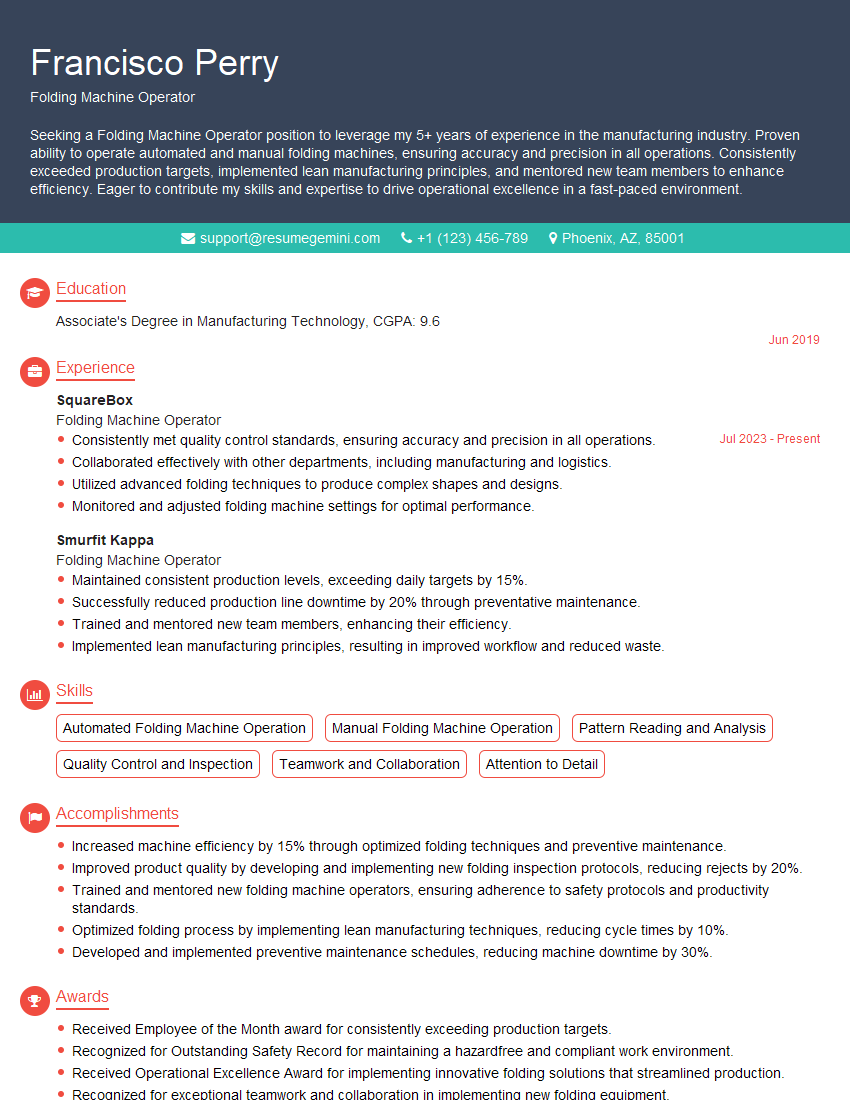
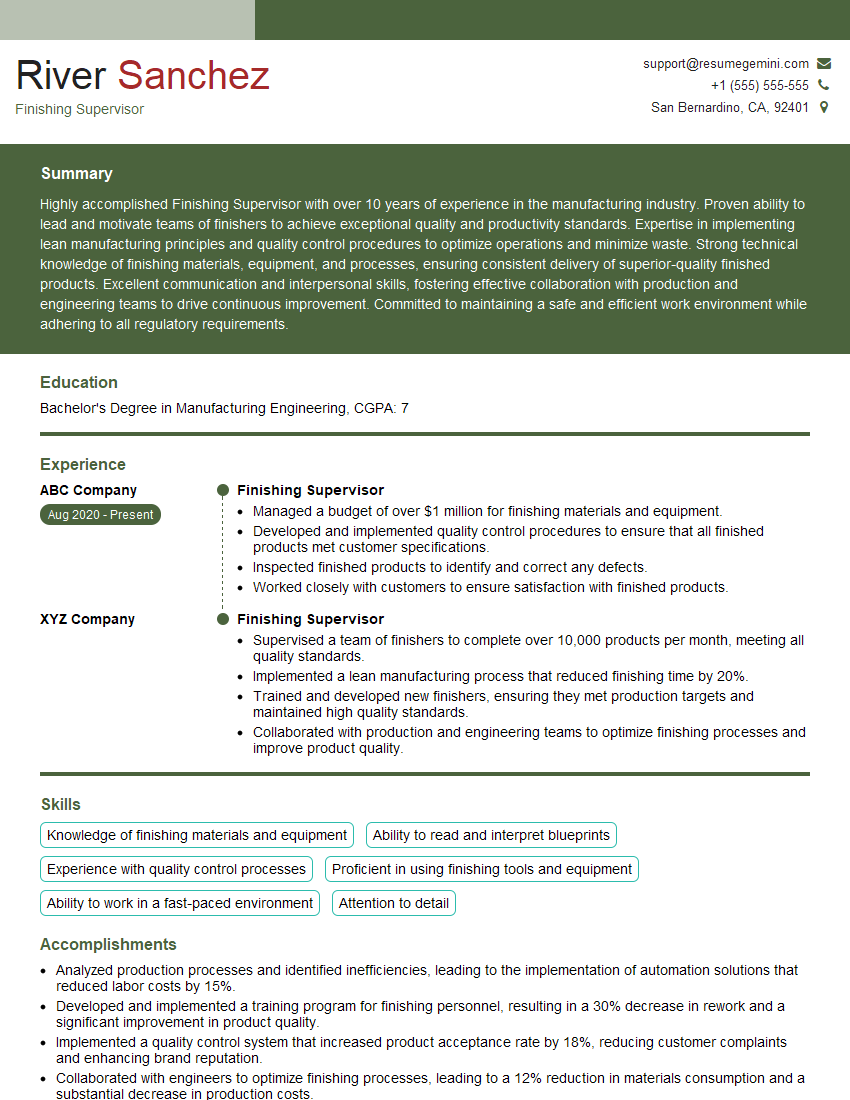
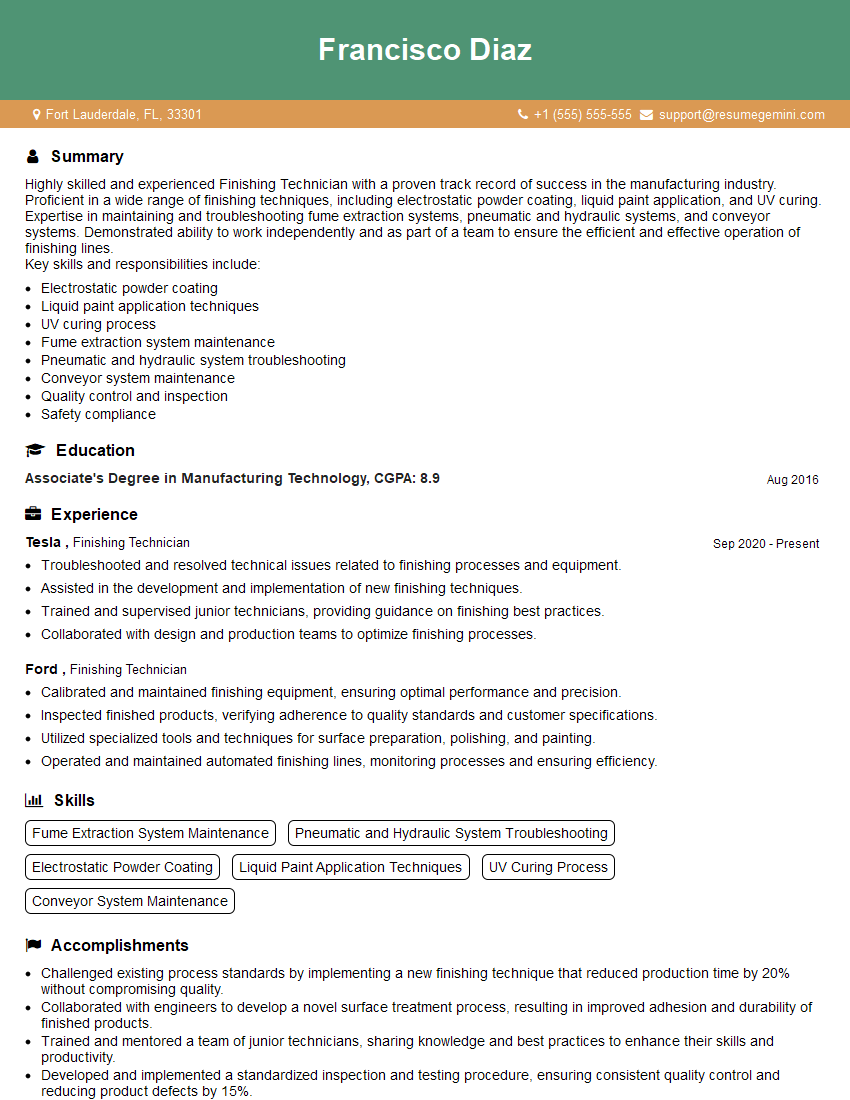
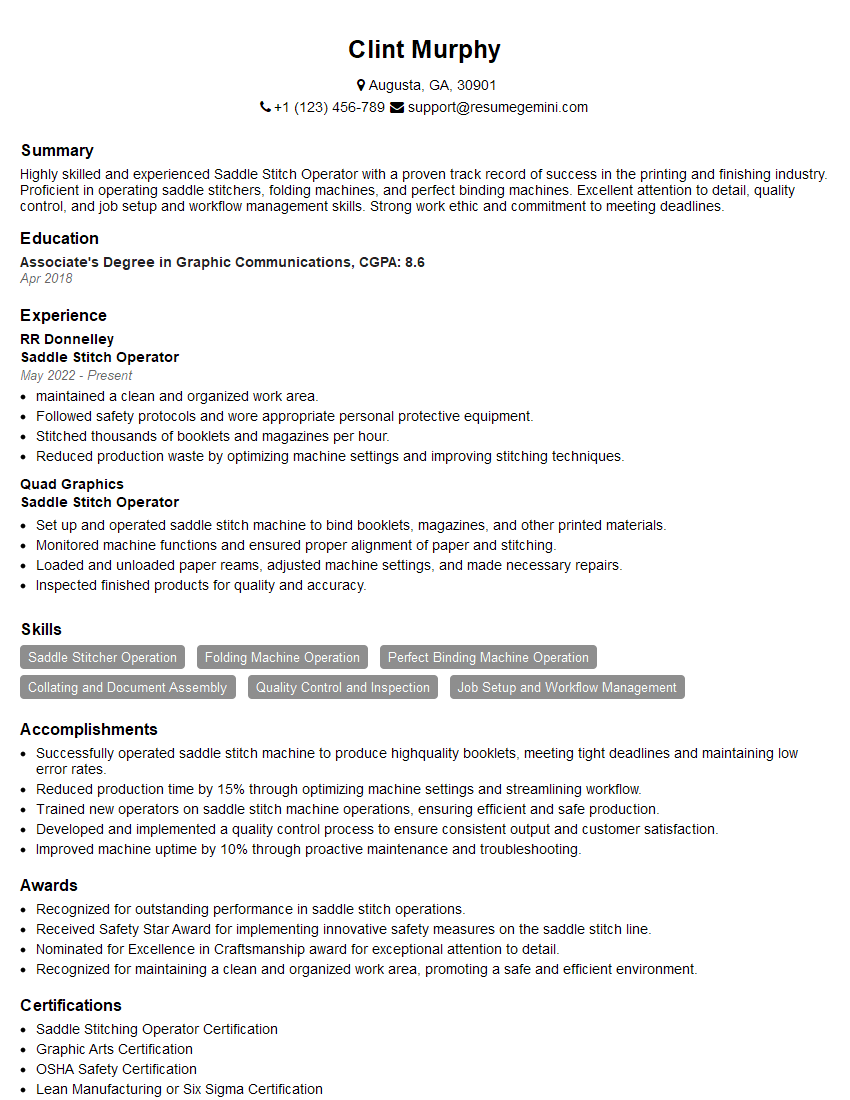
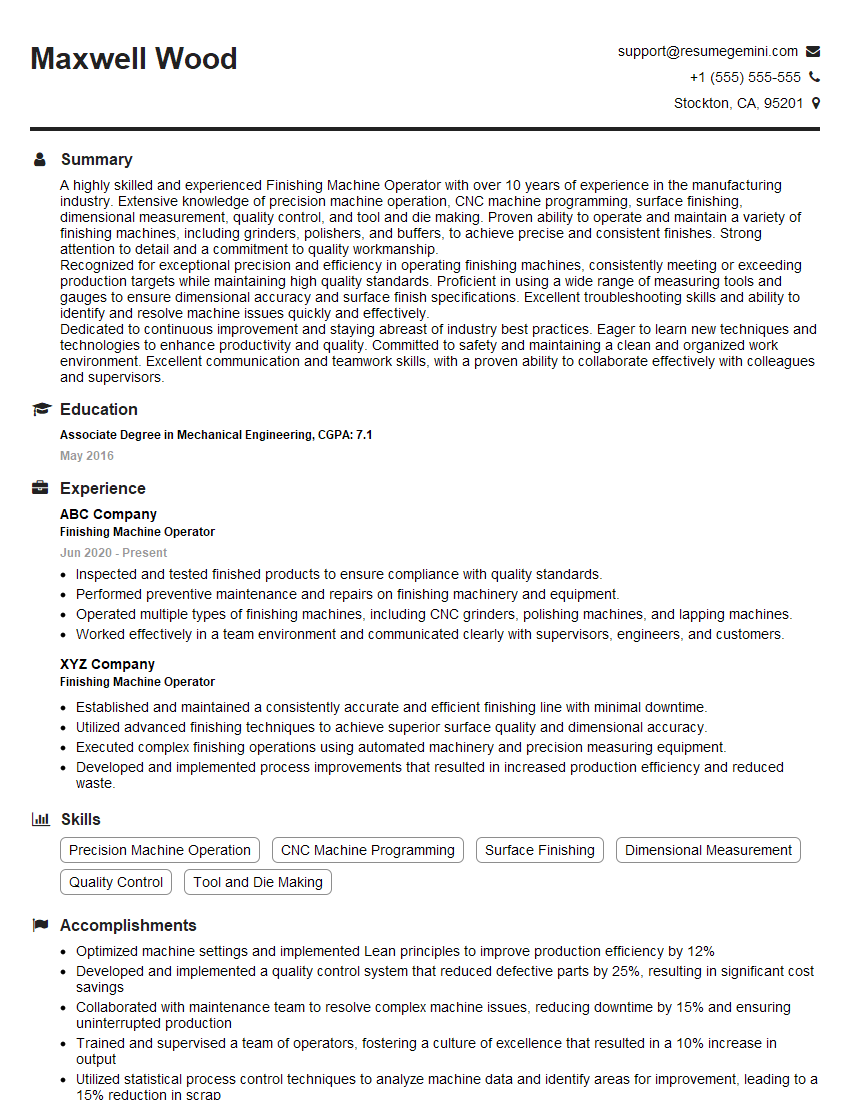
Mastering Diploma Finishing opens doors to exciting career opportunities in the printing and publishing industries. A strong understanding of these processes is crucial for success. To maximize your job prospects, creating an ATS-friendly resume is vital. ResumeGemini is a trusted resource that can help you build a professional and impactful resume. Examples of resumes tailored to Diploma Finishing are available to help guide your process. Invest the time to craft a compelling resume – it’s your first impression on potential employers.
Explore more articles
Users Rating of Our Blogs
Share Your Experience
We value your feedback! Please rate our content and share your thoughts (optional).
What Readers Say About Our Blog
good