The right preparation can turn an interview into an opportunity to showcase your expertise. This guide to Diving Proficiency interview questions is your ultimate resource, providing key insights and tips to help you ace your responses and stand out as a top candidate.
Questions Asked in Diving Proficiency Interview
Q 1. Describe your experience with different types of diving equipment.
My experience encompasses a wide range of diving equipment, from basic open-circuit scuba systems to more specialized gear like rebreathers and technical diving configurations. I’m proficient with various regulator types, including balanced diaphragm and piston designs, understanding their strengths and weaknesses in different diving environments. I’m familiar with different buoyancy compensator (BCD) styles – jacket, back inflate, and wing – and how their design impacts trim and buoyancy control. My experience also includes using various types of dive computers, underwater lights, dry suits, and underwater communication systems. For example, I’ve used both single-tank and twin-tank configurations, appreciating the buoyancy and gas management differences. I’m also familiar with the maintenance and inspection procedures necessary for safe operation of all this equipment.
- Regulators: I’ve worked with Apeks, ScubaPro, and Poseidon regulators, understanding the nuances of their performance in varying conditions (e.g., cold water).
- BCDs: I’ve extensively used both jacket-style and wing-style BCs, understanding the differences in trim and stability they offer.
- Dry Suits: I’m experienced with both trilaminate and neoprene dry suits, and understand the importance of proper undergarment selection and under-suit management for thermal protection and overall comfort.
Q 2. Explain the principles of buoyancy control.
Buoyancy control is the art of managing your position in the water column using your BCD, weights, and breathing techniques. It’s crucial for diver safety, comfort, and efficient air consumption. The principle is based on Archimedes’ principle: an object submerged in a fluid experiences an upward buoyant force equal to the weight of the fluid displaced. To achieve neutral buoyancy (hovering effortlessly), a diver needs to adjust their buoyancy to equal their weight in water. This is done primarily by adding or removing air from the BCD, fine-tuning with small breath adjustments. Too much air makes you ascend, too little makes you descend. Proper weighting is essential for good buoyancy control; too much weight necessitates constant air addition to stay afloat, while too little makes maintaining neutral buoyancy difficult, especially during ascent.
For example, imagine trying to balance a seesaw. Your weight in the water is one side, and the buoyant force is the other. Adding air to your BCD is like adding weight to the other side of the seesaw to balance it out. Maintaining neutral buoyancy is about consistently adjusting your air to match the changes in pressure and your body’s position. Improper buoyancy control can lead to rapid ascents, descents, or increased exertion.
Q 3. What are the different types of dive computers and their functionalities?
Dive computers come in various types, ranging from basic air-integrated models to sophisticated technical units. They all perform essential functions such as tracking dive depth, time, ascent rate, and air pressure. However, their functionalities vary significantly. Basic dive computers display essential dive parameters and provide simple decompression calculations. More advanced models feature multiple gas mixtures (nitrox, trimix), allow for more complex decompression planning (including various algorithms), incorporate GPS functions for navigation, and offer features like digital compass, depth gauge, and even heart rate monitoring. Some even have wireless integration with dive lights or other equipment. Technical dive computers typically have higher memory capacity to record extensive dive data and are more robust to handle the rigors of deep or technical dives.
- Basic Dive Computer: Shows depth, time, ascent rate, and remaining air pressure.
- Nitrox Compatible Dive Computer: Allows the diver to use enriched air nitrox for longer dives.
- Technical Dive Computer: Supports multiple gases and advanced decompression algorithms for complex dives.
Q 4. How do you manage air consumption during a dive?
Managing air consumption during a dive requires a combination of good planning, proper buoyancy control, and mindful breathing techniques. Before a dive, we estimate air consumption based on factors such as dive depth, planned dive duration, and diver fitness. During the dive, maintaining proper buoyancy minimizes unnecessary effort, thus conserving air. Slow, controlled breathing helps maximize oxygen uptake and reduces the rate of air consumption. Avoid rapid ascent or descent, which increases the work of breathing and accelerates air depletion. Regularly checking your pressure gauge and adjusting your dive plan accordingly are crucial for safe and enjoyable dives. Staying calm helps manage air consumption, as panic can rapidly deplete your air supply.
For instance, maintaining neutral buoyancy means I’m not constantly fighting against the water, which would use up more air and cause fatigue. Similarly, by consciously taking slower breaths, I can prolong my dive time significantly. Regularly checking my air supply allows me to adjust my dive profile accordingly, ensuring a safe return to the surface.
Q 5. Explain the importance of decompression procedures.
Decompression procedures are vital to prevent decompression sickness (DCS), also known as the bends. When divers ascend too quickly from depths, nitrogen bubbles can form in the bloodstream and tissues, causing serious health issues. Decompression procedures involve ascending slowly to allow dissolved nitrogen to be gradually released from the body. This is often done through planned ascent rates and potentially staged stops at specific depths (decompression stops) to allow the nitrogen to dissipate harmlessly. The necessity of decompression stops is determined by dive depth and duration, often with the assistance of a dive computer which calculates the decompression profile. Ignoring decompression procedures can result in DCS, a potentially fatal condition.
Think of it like opening a bottle of soda. If you open it slowly, the carbonation releases gradually. If you open it quickly, it fizzes violently. Similarly, ascending slowly allows the nitrogen to diffuse out of the body gradually, avoiding the formation of dangerous bubbles.
Q 6. Describe your experience with dive planning and navigation.
Dive planning and navigation are crucial aspects of safe and efficient diving. Dive planning involves determining the dive site, assessing environmental conditions (currents, visibility, weather), calculating dive times based on air consumption and decompression requirements, choosing appropriate equipment, and establishing communication protocols with dive buddies. Navigation includes using various tools (compass, dive computer, GPS, natural landmarks) to orient oneself underwater and ensure a safe return to the surface. Planning includes contingency plans for potential problems, such as equipment failure or adverse weather. Before any dive, I meticulously check weather forecasts, current conditions, dive site characteristics, and buddy communication procedures. For navigation, I’m skilled in using a compass and relying on natural navigation skills such as using visual references and paying attention to underwater topography. For example, I recently planned a dive involving a drift along a reef, calculating our drift rate, air consumption, and emergency ascent points. Good planning allowed us to enjoy a great dive with plenty of air margin and safety.
Q 7. What are the common signs and symptoms of decompression sickness?
Decompression sickness (DCS) manifests in various ways, making early recognition crucial. Symptoms can range from mild to severe and may appear immediately after a dive or hours later. Mild symptoms include fatigue, joint pain (the bends), itching, and skin rashes. More severe symptoms include neurological issues like paralysis, dizziness, confusion, vision problems, and difficulty breathing. The cutaneous form of DCS can manifest as a skin rash, often described as itching or a burning sensation. Severe DCS can be life-threatening and requires immediate medical attention, including recompression therapy in a hyperbaric chamber.
It’s critical to remember that the absence of symptoms doesn’t guarantee the absence of DCS. Any diver experiencing even mild symptoms after a dive should seek immediate medical evaluation. Early recognition and treatment significantly improve the chances of full recovery.
Q 8. How do you handle an emergency ascent?
An emergency ascent is a controlled, but rapid, return to the surface from a dive, typically performed due to an equipment malfunction, a medical emergency, or running out of air. It’s crucial to remember that this is a last resort, and proper training emphasizes preventing the need for one.
The procedure I follow involves the following steps:
- Controlled Ascent: Rather than bolting straight to the surface, I ascend slowly and steadily, maintaining a controlled rate of ascent (typically less than 30 feet per minute). This minimizes the risk of decompression sickness (the bends). I do this even if I’m low on air.
- Air Sharing (if applicable): If my buddy is also experiencing an emergency, we share air until we reach the surface, using the alternate air source or sharing regulators carefully.
- Signal for Assistance: I continuously signal my ascent using my dive lights or other readily available visual aids. I would also employ a dive computer’s safety stop timer if I had one.
- Surface Protocols: Upon reaching the surface, I immediately signal for assistance to my dive boat or surface support. This often involves an inflatable surface marker buoy (SMB) deployment.
- Post-Ascent Procedures: After the emergency, I’ll report the details to my dive master and/or seek appropriate medical attention if necessary. This ensures a thorough documentation for analysis and preventing future incidents.
I’ve practiced this procedure extensively in controlled training environments, ensuring I can execute it calmly and effectively under pressure.
Q 9. Explain your understanding of different dive profiles.
Dive profiles illustrate the depth and time spent at different depths during a dive. Understanding them is fundamental for safe diving. Different profiles exist depending on factors such as dive type, experience level, and the environment.
Common dive profiles include:
- Recreational dives: These typically involve a slow descent to a relatively shallow depth, a period of bottom time, and a controlled ascent, often including a safety stop.
- Technical dives: These involve more complex profiles, often including multiple decompression stops at various depths to allow the body to safely release dissolved inert gases. This requires specialized training and equipment.
- Penetration dives (caves/wrecks): These require a careful planning and execution of the profile, considering the limited visibility and potential for disorientation.
In addition, the dive profile is affected by factors such as current and water temperature. A strong current might necessitate a faster ascent, whereas cold water increases the risk of decompression sickness requiring longer decompression stops. Using a dive computer is crucial to monitor these parameters and ensure a safe profile.
For example, a recreational dive might look like this: Descent to 40ft over 3 mins, Bottom time 20 mins at 40ft, Ascent to 15ft for a 3-min safety stop, then ascent to the surface. In contrast, a technical dive could involve multiple longer stops at various depths, based on the decompression algorithm used.
Q 10. Describe your experience with underwater communication techniques.
Underwater communication is critical for maintaining safety and effective teamwork. While speech is muffled and unreliable underwater, divers rely on a variety of techniques:
- Hand signals: These are standardized, universally understood gestures for common communications such as ‘okay,’ ‘out of air,’ or ‘problem.’
- Dive slates: These underwater writing boards allow for more detailed messaging, especially when conveying complex issues.
- Line signals: Using a dive line, divers can signal by pulling the line to signal a problem or indicate the need for assistance.
- Dive computers with communications capabilities (for tec diving): Though not always available, some dive computers have the ability to communicate with other divers in close proximity, providing more direct communication than hand signals.
My experience includes extensive training and practice with all these methods. I’m proficient in the use of standard hand signals and can effectively utilize a dive slate to convey information when necessary. I always prioritize clear and concise communication to avoid misunderstandings and maintain safety. For example, during a dive where a buddy’s regulator malfunctioned, the ability to convey that through hand signals and then to utilize a dive slate to detail the nature of the issue and the appropriate solution (switching to an alternate air source) was crucial.
Q 11. How do you perform a buddy check?
A buddy check, also known as a pre-dive safety check, is a crucial step before every dive. It ensures both divers have the necessary equipment, that it’s functioning correctly, and that they’re ready for the dive. It is a team effort that promotes safety.
My buddy check follows a systematic approach (often using the acronym ‘BWRAF’):
- BCD (Buoyancy Compensator Device): Check that it’s inflated and deflated correctly.
- Weights: Verify the correct weight configuration and secure attachment.
- Releases: Inspect all quick-release mechanisms on the BCD and harness.
- Air (Tank): Check the tank pressure, the function of the regulator (first and second stages), and check the alternate air source.
- Final Check: Review personal equipment like masks, fins, and personal gear for any defects or problems.
Beyond the equipment check, we also discuss the dive plan, including the planned depth, bottom time, and any potential hazards. This conversation ensures we’re both on the same page and helps prevent miscommunication under water.
Q 12. What are the limitations of your diving certification?
My diving certification, [Insert Certification Level and Agency, e.g., PADI Advanced Open Water Diver], comes with specific limitations. These limitations concern depth, dive type, and the equipment I’m qualified to use.
Specifically, I am not certified for:
- Technical diving: This includes dives requiring specialized equipment and extensive training for decompression procedures.
- Cave or wreck penetration beyond my training limits: My certification only permits penetration dives to a certain level and with specific procedures.
- Diving in extreme environments: such as very cold or strong current conditions outside of my specific training.
- Diving using certain equipment without proper training: I need appropriate training and certification for using particular equipment, like rebreathers.
Adhering to these limitations ensures my safety and that I do not put myself or my dive buddy at risk.
Q 13. Describe your experience with underwater hazards (e.g., currents, marine life).
My experience encompasses encounters with various underwater hazards, requiring me to manage risk effectively.
- Currents: I’ve encountered strong currents during dives, necessitating careful planning and execution. This includes choosing appropriate dive sites for skill level and deploying a descent line or using a reef hook to avoid being swept away.
- Marine life: I’ve encountered various marine animals, some potentially dangerous like jellyfish or sharks. Knowledge of animal behavior, keeping a safe distance, and refraining from disturbing their environment are crucial. Having knowledge about potentially dangerous creatures is key and I always keep a proper distance, never touching or provoking them.
- Low visibility: I’ve dived in environments with significantly reduced visibility. In these conditions, maintaining close contact with my buddy and using tactile lines is essential to avoid separation and disorientation. Using a dive light is also crucial in low-visibility conditions.
- Equipment malfunctions: I’ve experienced minor equipment issues during dives, such as a minor mask leak or regulator free flow, which I’ve handled calmly, drawing upon my training to resolve them or surface safely if needed.
Managing these hazards involves comprehensive training, experience, and adherence to safe diving practices. It’s crucial to acknowledge potential dangers and prepare accordingly, prioritizing safety throughout the dive.
Q 14. How do you manage stress during a challenging dive?
Stress management is a critical aspect of safe diving, especially during challenging dives. My approach involves:
- Pre-dive preparation: A thorough briefing, equipment check, and understanding of the dive plan significantly reduce anxiety.
- Controlled breathing: Maintaining slow, deep, and rhythmic breaths helps to regulate heart rate and calm nerves.
- Positive self-talk: Encouraging self-affirmations and focusing on the task at hand can help manage anxiety.
- Buddy communication: Openly communicating any concerns or anxieties to my buddy fosters teamwork and support.
- Controlled ascent: In stressful situations, performing a controlled ascent according to protocols is paramount; avoid panic-stricken responses.
- Post-dive debrief: Discussing the dive afterward helps to process the experience and identify potential areas for improvement.
For example, during a dive with unexpectedly strong currents, I maintained controlled breathing, communicated with my buddy, and adjusted our dive plan to navigate the current safely. This calm response allowed us to complete the dive without incident.
Q 15. Explain your understanding of different dive environments (e.g., freshwater, saltwater).
Different dive environments present unique challenges and require specific considerations. Saltwater and freshwater dives differ significantly in buoyancy, visibility, and potential hazards.
- Saltwater: Denser than freshwater, resulting in greater buoyancy. This means divers may need more weight to achieve neutral buoyancy. Visibility can be excellent in clear ocean waters, but it can be drastically reduced by plankton blooms or sediment. Marine life is diverse, ranging from harmless creatures to potentially dangerous species like sharks, jellyfish, and venomous fish. Saltwater corrosion is also a significant factor for equipment.
- Freshwater: Less dense than saltwater, requiring divers to use less weight. Visibility can vary greatly depending on factors such as water clarity, silt, and algae. Freshwater environments can contain hazards such as strong currents, submerged debris, and different types of aquatic life. Cold water diving is more common in freshwater, necessitating appropriate cold water gear and awareness of cold-water risks.
For example, a diver accustomed to the buoyancy of saltwater might find themselves unexpectedly buoyant in a freshwater lake, needing to adjust their weight belt. Conversely, a diver used to freshwater’s often limited visibility needs to practice enhanced situational awareness in clear ocean waters to avoid collisions.
Career Expert Tips:
- Ace those interviews! Prepare effectively by reviewing the Top 50 Most Common Interview Questions on ResumeGemini.
- Navigate your job search with confidence! Explore a wide range of Career Tips on ResumeGemini. Learn about common challenges and recommendations to overcome them.
- Craft the perfect resume! Master the Art of Resume Writing with ResumeGemini’s guide. Showcase your unique qualifications and achievements effectively.
- Don’t miss out on holiday savings! Build your dream resume with ResumeGemini’s ATS optimized templates.
Q 16. What are the procedures for handling lost or entangled equipment?
Handling lost or entangled equipment requires a calm and systematic approach, prioritizing diver safety. The first step is to assess the situation:
- Safety First: Ensure the diver isn’t in immediate danger. If entangled, untangling is secondary to ensuring breathing and a safe ascent.
- Assess the Situation: Determine what equipment is lost or entangled and its severity. Is it vital for safety (e.g., primary regulator) or secondary (e.g., a dive light)?
- Communication: If diving with a buddy, communicate the problem clearly. Use hand signals if necessary.
Procedure for Lost Equipment: If a non-essential item is lost, the dive may continue. If it’s essential, a controlled ascent is necessary, reviewing emergency procedures and signaling to the dive boat.
Procedure for Entanglement: Attempt to carefully disentangle. If unsuccessful or if the entanglement poses a risk, initiate a controlled emergency ascent. This involves carefully releasing the entanglement while maintaining buoyancy and heading towards the surface. Never attempt to force the entanglement free; this could lead to further complications or equipment damage.
Post-Dive Procedures: Thoroughly document the incident and its resolution in the dive log. This helps in learning from the experience and preventing future issues. Damaged or lost equipment should be replaced immediately.
For example, if a dive light becomes entangled, I would first assess whether the entanglement is compromising my ascent. If not, I’d try to carefully free it. If the entanglement prevents a safe ascent, then I would prioritize my safety and release the light to safely ascend.
Q 17. How do you conduct a pre-dive safety briefing?
A pre-dive safety briefing is crucial for ensuring a safe and successful dive. It’s not just a recitation of rules; it’s a collaborative discussion focusing on the specific dive plan and potential hazards.
- Dive Plan Review: Go over the dive site, depth, duration, objectives, potential hazards (currents, marine life, visibility, etc.), and planned ascent and decompression stops.
- Equipment Check: Verify each diver’s equipment functionality – including tanks, regulators, buoyancy compensators (BCs), and dive computers. Ensure proper weight distribution.
- Buddy System: Emphasize the buddy system and its critical role in monitoring each other, providing assistance, and responding to emergencies.
- Hand Signals: Review essential hand signals that will be used during the dive for communication.
- Emergency Procedures: Discuss emergency ascent procedures, out-of-air scenarios, and how to manage potential problems (equipment failure, entanglement, etc.).
- Environmental Awareness: Mention any unique environmental considerations—such as strong currents, potential hazards, or environmentally sensitive areas.
The briefing should be engaging and interactive, encouraging divers to ask questions and express concerns. For example, if we are diving in a known area with strong currents, I’d emphasize the importance of proper buoyancy control and the use of a safety stop line.
Q 18. Explain your knowledge of diving regulations and safety standards.
Diving regulations and safety standards are paramount. These vary by location but typically cover areas like diver certification, equipment requirements, dive planning, and environmental protection. Compliance is not merely a suggestion; it’s crucial for safety and responsible diving.
- Certification and Training: Divers must hold appropriate certifications from recognized organizations (e.g., PADI, SSI, NAUI) corresponding to the planned dive’s complexity.
- Equipment Standards: Equipment should meet specific performance standards, be properly maintained, and undergo regular inspections.
- Dive Planning: Thorough dive planning is essential, including considering weather conditions, water conditions, dive profiles, and potential hazards.
- Environmental Regulations: Divers must adhere to local regulations about marine protected areas, touching or disturbing marine life, and respecting the environment.
- Legal Requirements: Regulations may include licensing, insurance requirements, and reporting procedures for incidents or accidents.
Non-compliance can result in penalties including fines, suspension of certifications, or even legal action. Ignoring safety standards can lead to serious injury or death. A good example of this is the importance of understanding and adhering to no-decompression limits to prevent decompression sickness. Always refer to the local regulations and guidelines before diving.
Q 19. Describe your experience with different types of diving emergencies.
Experience with diving emergencies is crucial for a dive professional. Here are a few examples:
- Out-of-Air Emergencies: I’ve handled multiple instances where a diver ran low on air. The response involves a calm, controlled emergency ascent using the buddy’s alternate air source or emergency ascent procedures.
- Equipment Failure: I’ve encountered regulator malfunctions, BCD inflator issues, and mask flooding. The critical response is to calmly address the problem, using backup systems or alternative techniques if necessary.
- Entanglement: I’ve assisted divers entangled in fishing nets or debris. The key is careful disentanglement, prioritizing safety and avoiding panic.
- Decompression Sickness (DCS): While I haven’t directly treated DCS, I have assisted in the immediate management—providing oxygen and getting the diver to a decompression chamber as quickly as possible.
- Marine Life Encounters: I’ve had encounters with marine life ranging from jellyfish stings to potentially aggressive interactions. Appropriate training and preparedness are vital in these scenarios, often requiring calm and strategic removal from the situation.
In every emergency, maintaining composure, assessing the situation, and taking systematic steps are essential. Post-incident analysis is key to learning from the experience and improving safety protocols.
Q 20. What are your strategies for effective underwater teamwork?
Effective underwater teamwork relies on clear communication, trust, and mutual respect. Here are some strategies:
- Pre-Dive Planning: Collaborate on dive planning, including the dive profile, contingency plans, and assigned roles (e.g., primary diver, secondary diver).
- Clear Communication: Use hand signals proficiently and maintain visual contact as much as possible.
- Buddy Checks: Regularly perform buddy checks to verify equipment functionality and each other’s well-being.
- Situational Awareness: Maintain continuous awareness of the buddy’s position, depth, and behavior. Anticipate potential problems.
- Shared Responsibility: Both divers share responsibility for safety and problem-solving. No single person bears sole responsibility.
- Post-Dive Debriefing: Discuss the dive afterward, addressing issues, sharing observations, and refining teamwork strategies.
For instance, in a challenging dive with limited visibility, maintaining close proximity and regularly confirming each other’s position is crucial. Effective communication, even with simple hand signals, is paramount to team success.
Q 21. How do you maintain your diving equipment?
Maintaining diving equipment is paramount for safety and longevity. This is a continuous process, not a one-time event.
- Regular Cleaning: After every dive, rinse all equipment thoroughly with freshwater to remove salt, sand, and other contaminants. This prevents corrosion and prolongs equipment life.
- Inspection: Regularly inspect equipment for wear and tear, paying attention to hoses, seals, and regulators.
- Service and Maintenance: Schedule regular servicing with certified technicians for critical components like regulators, BCD inflators, and dive computers. Follow manufacturer’s guidelines.
- Storage: Store equipment properly in a dry, cool place to prevent damage and corrosion. Avoid extreme temperatures and direct sunlight.
- Documentation: Keep a log of maintenance activities, including service dates and any repairs or replacements.
Neglecting equipment maintenance can lead to equipment failure during dives, posing a significant safety risk. Regular maintenance is an investment in safety and extends the life of expensive gear. For instance, failing to rinse equipment after a saltwater dive leads to corrosion and potential failure of O-rings, which can compromise the integrity of the scuba system.
Q 22. Describe your experience with underwater photography or videography.
Underwater photography and videography are passions of mine, deeply intertwined with my diving experience. I’ve spent countless hours capturing the beauty and diversity of the underwater world, from vibrant coral reefs teeming with life to the mysterious depths of shipwrecks. My expertise extends beyond simply taking pictures; I understand the technical aspects like proper lighting, composition, and the challenges of working in a dynamic underwater environment. For example, I’ve mastered techniques for shooting macro photography of tiny sea creatures, requiring specialized equipment and extreme patience. I’ve also filmed documentaries showcasing the impacts of climate change on coral reefs, necessitating careful planning and execution to capture compelling footage. My equipment includes a variety of housings for cameras and lighting setups which allow me to adapt to various underwater conditions and photography styles.
I am proficient in using both still cameras and video cameras underwater, and I understand how to manage buoyancy, adjust lighting, and anticipate the behavior of marine life to create stunning and informative visuals. Post-processing and editing my photos and videos is also a crucial part of my workflow, ensuring the final product accurately represents the underwater scenes I’ve captured.
Q 23. Explain your understanding of gas laws related to diving.
Gas laws are fundamental to safe diving. They govern how gases behave under pressure, which is constantly changing as divers ascend or descend. Boyle’s Law states that at a constant temperature, the volume of a gas is inversely proportional to its pressure (P1V1 = P2V2). This means that as a diver descends, the pressure increases, causing the gas in their lungs and other air spaces to compress. Conversely, as they ascend, the pressure decreases, and the gas expands. This expansion is why controlled ascents are crucial; a too-rapid ascent can cause overexpansion injuries such as lung overexpansion trauma or air embolism.
Henry’s Law explains how gases dissolve into liquids, relevant to decompression. It states that the amount of gas dissolved in a liquid is proportional to the partial pressure of that gas above the liquid. During a dive, nitrogen dissolves into the diver’s tissues. Ascent must be slow enough to allow this dissolved nitrogen to be released gradually through respiration, preventing decompression sickness (‘the bends’). Dalton’s Law explains the pressure exerted by each individual gas in a mixture. Understanding partial pressures of oxygen and nitrogen is key to choosing appropriate gas mixes for dives at different depths to avoid oxygen toxicity or nitrogen narcosis.
Q 24. What are your strategies for managing risk during a dive?
My risk management strategy for diving is a multi-layered approach based on meticulous planning, constant awareness, and adherence to established safety protocols. It starts before I even enter the water. This involves a thorough pre-dive check of equipment, understanding the dive site’s conditions (currents, depth, visibility, potential hazards), and reviewing the dive plan with my dive buddy. During the dive, continuous monitoring of air supply, depth, time, and my buddy’s condition is paramount. We maintain constant communication using hand signals and regular checks to ensure our safety.
Emergency procedures, such as dealing with equipment failure or an emergency ascent, are practiced and well-understood. I prioritize good buoyancy control to avoid accidental contact with the seabed or other divers. Awareness of my surroundings – potential hazards like strong currents or marine life – is essential for preemptive risk mitigation. Post-dive, we conduct a thorough debrief to review any challenges faced and identify areas for improvement.
Q 25. Describe your experience with rescue diving procedures.
I’m a certified Rescue Diver, extensively trained in various rescue scenarios. My training includes recognizing signs of distress, performing an effective rescue, providing emergency oxygen, and managing a casualty underwater and on the surface. I’ve practiced rescuing divers experiencing equipment malfunctions, panic attacks, or other emergencies. This requires both technical skill and the ability to remain calm and effectively assess the situation. For example, I’ve practiced rescuing a diver with a free-flowing regulator, where immediate assistance to control the air supply is crucial. In addition, providing assistance to an injured diver and safely transporting them to the surface are key skills I have practiced extensively. This involves understanding how to manage their buoyancy and avoid further injury during ascent.
Q 26. Explain your understanding of nitrogen narcosis and oxygen toxicity.
Nitrogen narcosis and oxygen toxicity are two significant risks associated with diving, especially at greater depths. Nitrogen narcosis, also known as ‘rapture of the deep,’ is an altered mental state caused by increased nitrogen partial pressure at depth. It can manifest as euphoria, impaired judgment, and even hallucinations. Its severity increases with depth and is highly individual; some divers are more susceptible than others. Oxygen toxicity, on the other hand, occurs when the partial pressure of oxygen is too high, leading to central nervous system effects such as convulsions, unconsciousness, and even death. This risk increases with depth and with longer exposure to high partial pressures of oxygen.
Preventing these risks involves careful planning, including appropriate gas mixes and limiting exposure time at depth. For deeper dives, divers often use enriched air nitrox or trimix to reduce nitrogen partial pressure and manage oxygen partial pressure. Staying within safe decompression limits and following established dive tables or using dive computers are crucial to mitigate these risks. Recognizing early symptoms, like disorientation or confusion, is paramount for initiating safe ascent.
Q 27. How do you assess the diving conditions before a dive?
Assessing dive conditions before entering the water is critical for safety. I always start with checking the weather forecast, looking for potential hazards like strong winds, storms, or heavy rain that could impact surface conditions. I then check the sea state, noting the presence of any significant currents or waves. Visibility is another key factor; poor visibility can drastically increase the risk of accidents. I check the tide chart, noting the high and low tides as the currents and accessibility of dive sites can change dramatically with the tide. I research the dive site itself, paying attention to its depth, potential hazards (such as sharp rocks, strong currents, or marine life), and any known restrictions or warnings. Talking to experienced divers who have been to the site is also very helpful.
If I’m diving from a boat, I thoroughly inspect the vessel to ensure it’s seaworthy and properly equipped with safety devices. Once in the water, I always make a visual check of the immediate surroundings, including water clarity and any unexpected changes in current or bottom conditions. Combining this information ensures I’m fully prepared and able to adapt my dive plan as needed.
Q 28. Describe your experience working in a team environment during diving operations.
Teamwork is essential in diving, especially in technical or challenging dives. I’ve worked extensively in team environments, where effective communication, trust, and mutual respect are paramount. We plan dives collaboratively, carefully considering each team member’s experience and skill set. During the dive itself, constant communication through hand signals, regular position checks, and shared situational awareness are fundamental. This enables us to anticipate problems, quickly react to unexpected situations, and provide assistance when needed. My experience includes working on complex projects, such as underwater surveys or underwater construction projects, where seamless teamwork and effective communication among dive teams and support crews are critical for success. This involves careful coordination of multiple divers, ensuring safety and efficient task completion.
Post-dive, we review our performance, identify lessons learned, and discuss any necessary adjustments to improve future team operations. I believe in fostering a positive and supportive team environment where open communication and mutual respect are central to safe and effective diving operations.
Key Topics to Learn for Diving Proficiency Interview
- Dive Planning & Safety Procedures: Understanding dive planning models, risk assessment, emergency procedures, and buddy systems. Practical application includes demonstrating proficiency in creating a detailed dive plan considering environmental factors and diver limitations.
- Dive Physics & Physiology: Mastering the principles of buoyancy, pressure, gas laws, and their impact on the human body at depth. Practical application involves explaining how these principles affect dive planning and diver safety.
- Equipment Knowledge & Maintenance: Detailed understanding of SCUBA equipment, its functionality, and routine maintenance. Practical application includes describing troubleshooting procedures for common equipment malfunctions.
- Navigation & Underwater Communication: Proficiency in underwater navigation techniques, including compass use and landmark recognition. Understanding various underwater communication methods and their limitations.
- Environmental Awareness & Conservation: Knowledge of marine ecosystems, responsible diving practices, and the importance of marine conservation. Practical application includes explaining how to minimize environmental impact during dives.
- Emergency Response & Rescue Techniques: Understanding and application of various rescue and emergency response procedures, including diver recovery and first aid techniques in aquatic environments.
Next Steps
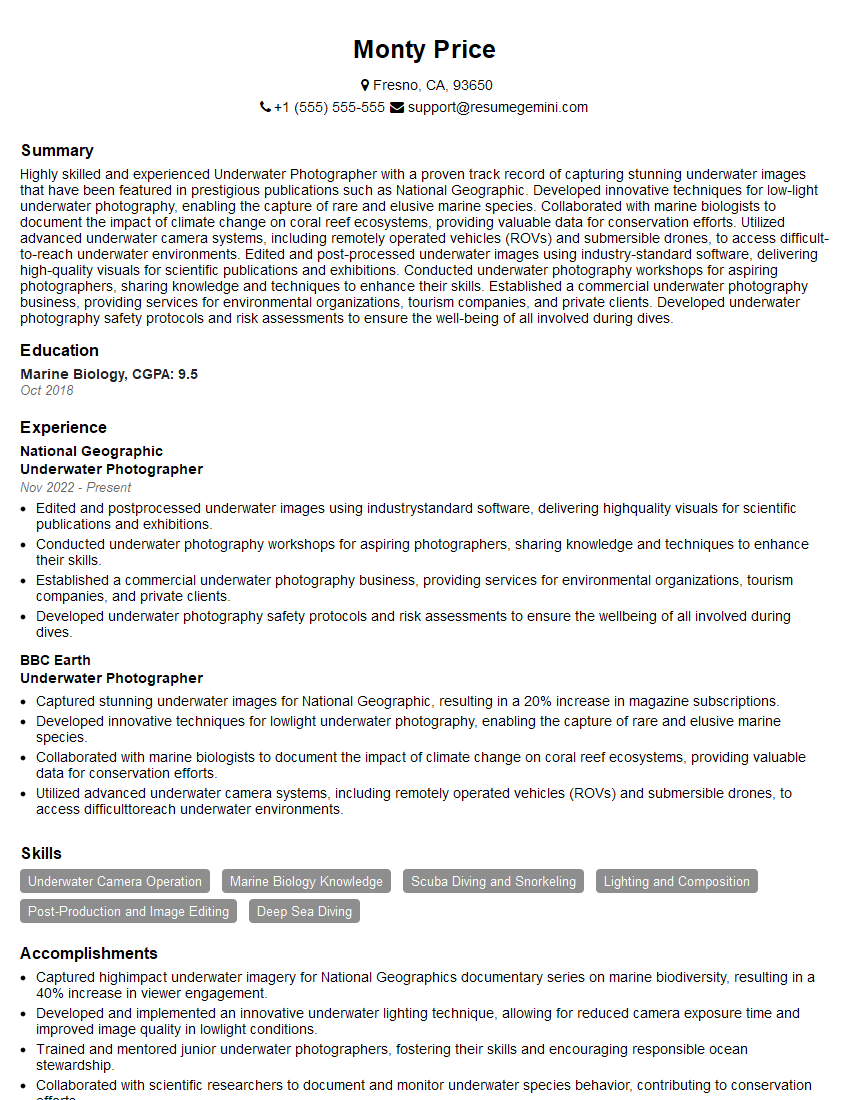
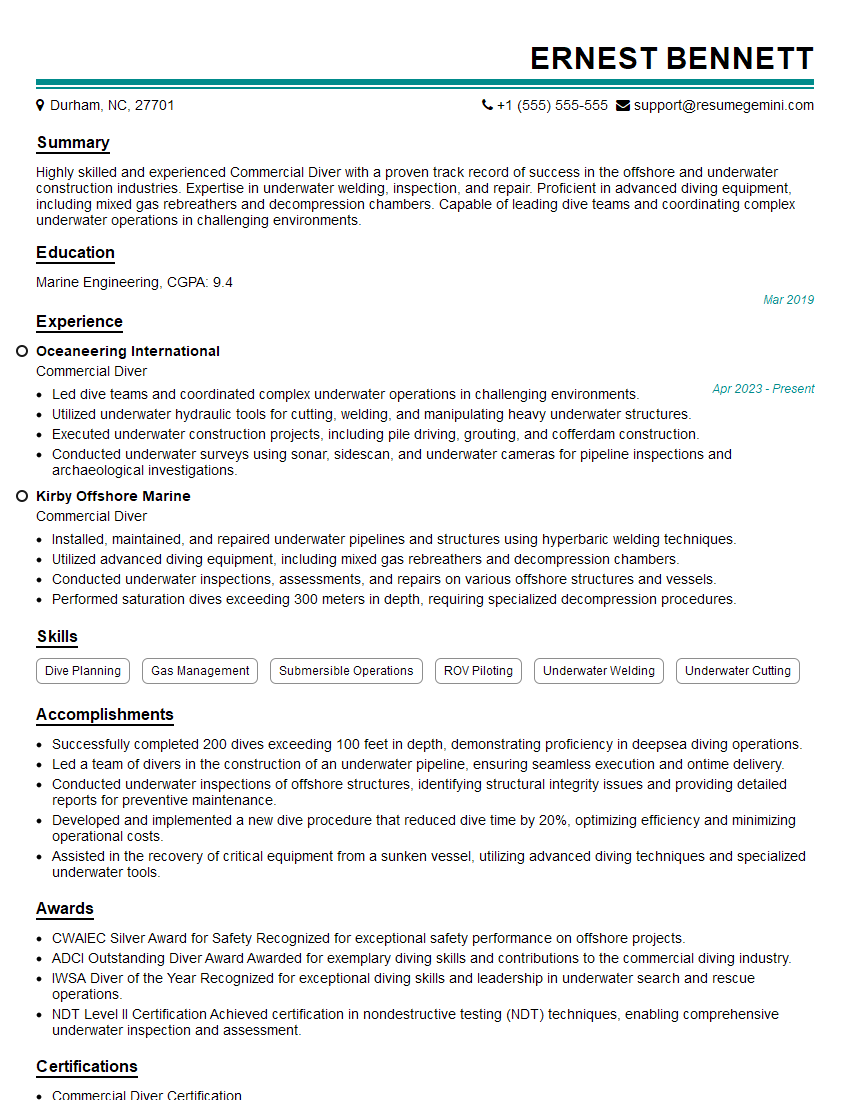
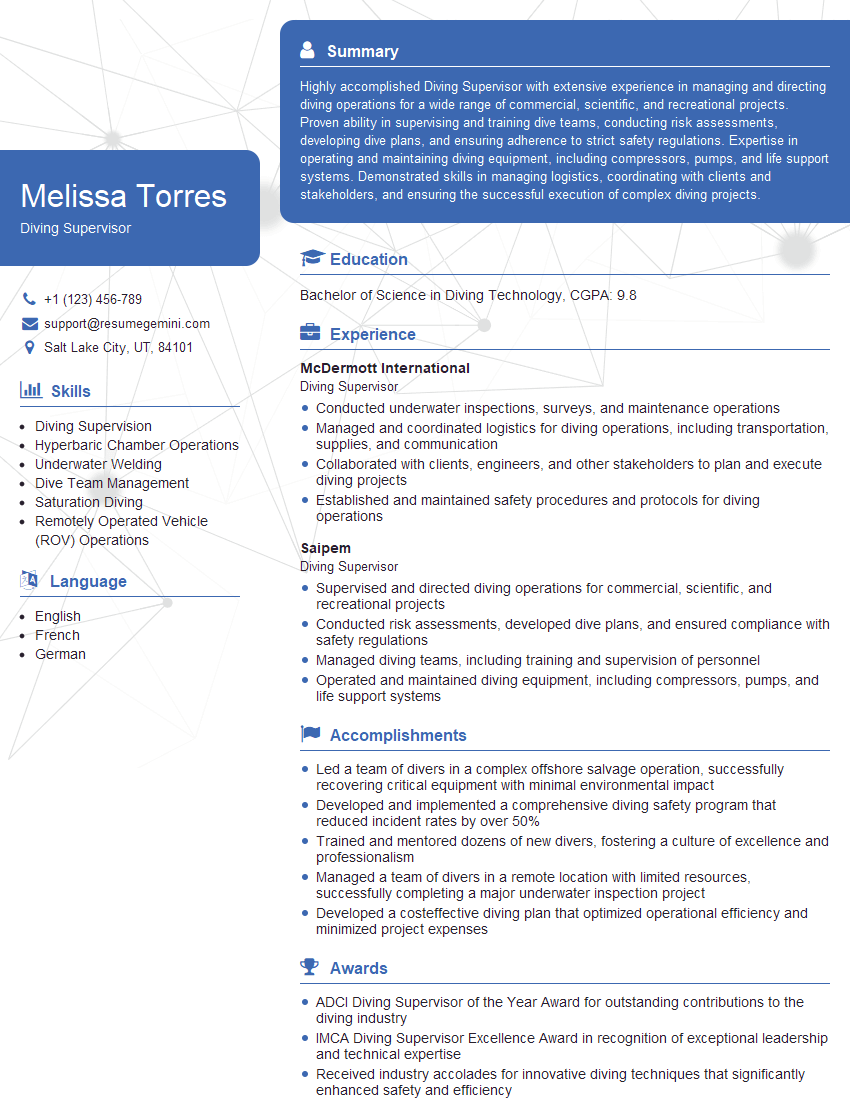
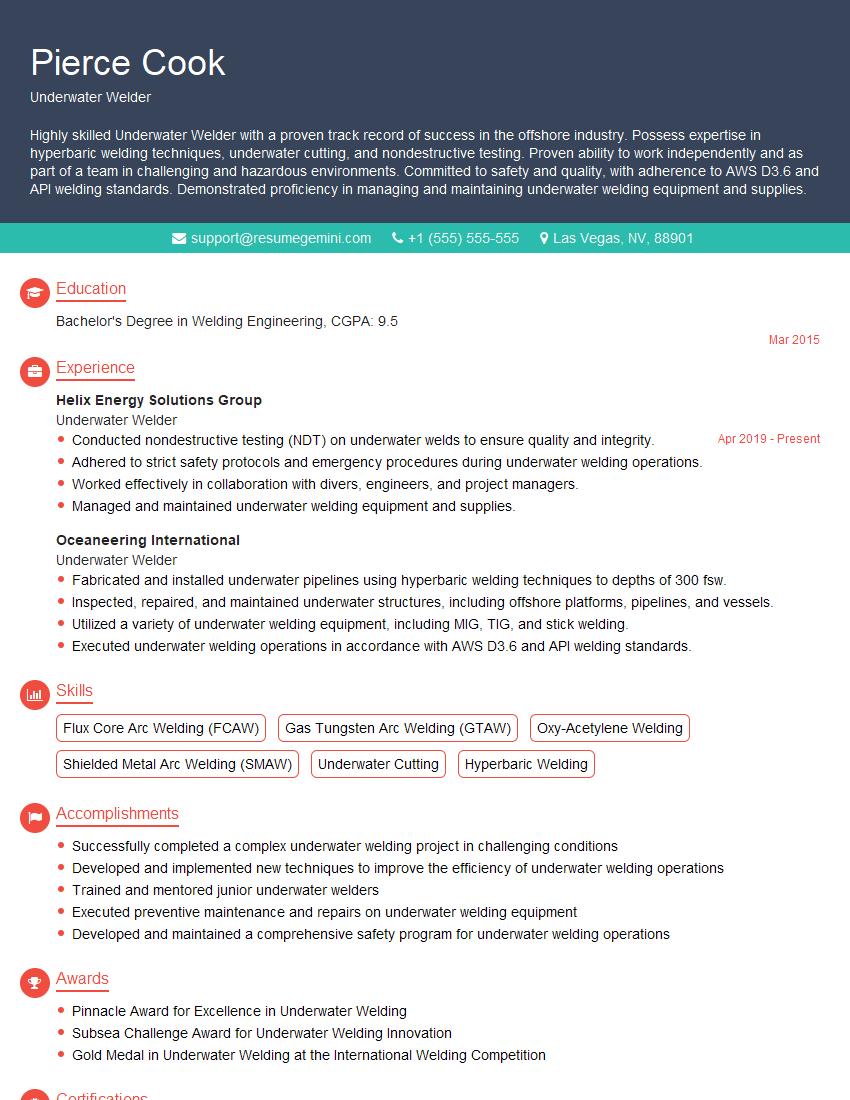
Mastering Diving Proficiency opens doors to exciting career opportunities in various sectors, from commercial diving to scientific research and recreational diving instruction. A strong resume is crucial for showcasing your skills and experience effectively to potential employers. To maximize your job prospects, it’s essential to create an ATS-friendly resume that highlights your key qualifications and achievements. ResumeGemini is a trusted resource that can help you build a professional, impactful resume tailored to the diving industry. Examples of resumes tailored to Diving Proficiency are available to help you get started.


Explore more articles
Users Rating of Our Blogs
Share Your Experience
We value your feedback! Please rate our content and share your thoughts (optional).
What Readers Say About Our Blog
good