Preparation is the key to success in any interview. In this post, we’ll explore crucial Drilled Shafts interview questions and equip you with strategies to craft impactful answers. Whether you’re a beginner or a pro, these tips will elevate your preparation.
Questions Asked in Drilled Shafts Interview
Q 1. Explain the different types of drilled shafts and their applications.
Drilled shafts, also known as bored piles, are deep foundation elements created by drilling a hole into the ground and then filling it with reinforced concrete. Several types exist, each suited for different applications.
- Cast-in-place (CIP) shafts: These are the most common type. Reinforcement is placed in the drilled hole, and concrete is poured directly into it. They’re versatile and used extensively in buildings, bridges, and retaining walls.
- Drilled shafts with belled bottoms: An enlarged bottom is created to increase the shaft’s load-bearing capacity, particularly in softer soils. Think of it like widening the base of a wine glass to improve stability. These are excellent for situations with lower-strength soils.
- Socketed shafts: A portion of the shaft is embedded into a stronger underlying stratum (layer of soil or rock) to enhance its bearing capacity. This is beneficial when the upper soil layers are weaker.
- Underreamed shafts: Similar to belled bottoms but with multiple underreaming steps created along the shaft length, increasing load-bearing capacity throughout the shaft. These are ideal for deeper foundations needing exceptional stability.
- Micropiles: Smaller diameter shafts used for specialized applications like underpinning existing structures or slope stabilization. They are a much smaller scale than traditional drilled shafts.
The choice depends on soil conditions, loading requirements, and project constraints. For example, a high-rise building in soft clay might use drilled shafts with belled bottoms, while a bridge pier in bedrock could utilize socketed shafts.
Q 2. Describe the process of drilled shaft installation.
Drilled shaft installation is a multi-stage process. Imagine it like making a very large, very deep, very strong concrete lollipop!
- Drilling: A rotary drill rig bores a hole to the specified depth and diameter. Different drilling methods (e.g., dry rotary, mud rotary, auger drilling) are used based on soil conditions and shaft requirements. The choice of drilling method often involves balancing soil stability with ease of drilling and cost.
- Cleaning: The hole is cleaned of cuttings and debris to ensure proper concrete placement and bonding with the surrounding soil. The cleaning process is crucial for the integrity and load-bearing capacity of the drilled shaft.
- Inspection: The hole is visually inspected, sometimes including measurements and video recordings, to ensure the dimensions and condition of the hole are acceptable.
- Reinforcement Caging: Steel reinforcement bars (rebar) are placed inside the hole in a pre-designed cage to provide tensile strength to the concrete. This reinforcement is carefully positioned to accommodate anticipated loads.
- Concrete Placement: High-quality concrete is poured into the hole, usually using a tremie pipe to minimize segregation and maintain a consistent concrete mix.
- Curing: The concrete is allowed to cure for a specified period to achieve adequate strength. Curing methods might include protecting the concrete from rapid drying.
Throughout the process, strict quality control measures are followed to ensure the shaft meets the required specifications. This might involve regular testing of the concrete and periodic monitoring of the drilling process.
Q 3. What are the key design considerations for drilled shafts?
Designing drilled shafts involves several key considerations, all working together for a strong, reliable foundation.
- Soil Conditions: The type, strength, and layering of the soil profile directly impact shaft design. Weak soils require larger diameter shafts or special design considerations like belled bottoms or socketed bases. We use the results of geotechnical investigations to understand the soil.
- Load Capacity: The shaft must be capable of supporting the anticipated loads from the structure. Calculations involving soil mechanics and structural engineering are crucial for determining the required shaft diameter and depth.
- Settlement: Predicting and managing settlement is important, as excessive settlement can damage the structure. Careful design ensures the foundation doesn’t settle more than tolerable limits. This requires careful consideration of soil parameters.
- Groundwater: The presence of groundwater influences the drilling method, concrete design, and overall stability of the shaft. For instance, the use of bentonite slurry during drilling can help manage groundwater issues.
- Construction Constraints: Site accessibility, noise limitations, and nearby structures affect equipment selection and construction methodology. This can impact factors like the type of drilling rig that can be used.
A robust design involves sophisticated computer modeling and analysis to ensure the shaft is safe and performs as intended throughout its service life.
Q 4. How do you determine the appropriate diameter and depth of a drilled shaft?
Determining the appropriate diameter and depth involves a geotechnical and structural analysis, not a simple formula. It’s an iterative process, like finding the ‘Goldilocks’ solution—not too big, not too small, but just right!
First, a thorough soil investigation is necessary to characterize the soil layers and their properties. Then, structural engineers perform calculations to determine the loads the shafts must bear. Software tools and specialized analysis methods are used to calculate the required shaft capacity. Then, the diameter and depth are determined to ensure the load capacity, settlement requirements, and other factors are met. Various factors are considered, including safety factors and allowable soil bearing pressure. Often, engineers will use geotechnical software to conduct analyses based on the soil properties and loading conditions. If the preliminary design doesn’t meet the requirements, adjustments are made to the diameter and/or depth until a suitable solution is found.
For example, if the initial design shows insufficient bearing capacity, the diameter or depth may be increased. Conversely, an unnecessarily large diameter might be reduced to optimize cost and construction efficiency.
Q 5. Explain the importance of soil investigation in drilled shaft design.
Soil investigation is paramount in drilled shaft design – it’s the foundation of the foundation! Imagine building a house without knowing the type of ground you’re building on – disastrous, right?
A comprehensive geotechnical investigation involves subsurface exploration techniques like boring, sampling, and in-situ testing to obtain detailed information about the soil profile. This data includes:
- Soil type and stratigraphy: Identifying different soil layers and their properties (e.g., clay, sand, gravel, rock).
- Soil strength and bearing capacity: Determining how much load the soil can support without excessive settlement.
- Groundwater level: Knowing the depth of the water table is crucial for design decisions.
- Soil permeability: Understanding how easily water flows through the soil influences drainage and stability.
This information is essential for accurate design calculations, material selection, and construction planning. Without it, the risk of failure increases dramatically, potentially leading to costly repairs, delays, and safety hazards. A well-executed investigation protects the safety and economy of the project.
Q 6. What are the common methods for soil improvement in drilled shaft projects?
Soil improvement techniques can significantly enhance the load-bearing capacity and stability of the ground before drilled shaft installation. Think of it as preparing the ground before planting a very important tree!
- Compaction: Improving soil density through mechanical compaction methods. This technique is often used for granular soils, increasing their strength and reducing settlement.
- Grouting: Injecting grout (a mixture of cement, water, and additives) into the soil to fill voids and improve its strength and stiffness. Grouting is useful for filling cavities or improving the strength of weaker soils.
- Stone Columns: Creating columns of compacted granular material (like gravel or crushed stone) within the soil mass to increase its bearing capacity. This technique is common in soft clay soils.
- Vibro-compaction: Using vibratory equipment to compact loose granular soils, reducing settlement and increasing stability. This technique is effective for improving granular soils and improving the load-bearing capacity of the ground.
- Deep Soil Mixing: Mixing a cementitious material with the in-situ soil using specialized equipment to create a strengthened soil mass. This technique can improve the load-bearing capacity and reduce settlement in weaker soils.
The choice of method depends on soil conditions, project requirements, and cost considerations. Each method has its own application and limitations, which must be carefully evaluated for effective implementation.
Q 7. Describe different methods for drilled shaft inspection and quality control.
Inspection and quality control are vital throughout the drilled shaft construction process. Regular checks are like regular medical checkups for the foundation, ensuring everything is healthy and working as it should.
- Visual Inspection: Regular visual checks of the drilling process, reinforcement cage placement, and concrete pouring. This helps to ensure consistency and detect potential problems early on.
- Depth Measurement: Accurate measurements of the drilled hole depth to ensure it meets the design specifications. The depth of the drilled shafts is a crucial parameter for the integrity of the foundation.
- Concrete Testing: Testing the concrete’s compressive strength to verify that it meets the specified requirements. Concrete testing is a standard procedure for drilled shafts to ensure that the concrete is of the required strength.
- Load Testing: Performing load tests on completed shafts to verify their load-bearing capacity. This is important for ensuring that the shaft can carry the anticipated loads.
- Integrity Testing: Using techniques like crosshole sonic logging or downhole geophysical logging to assess the internal integrity of the shaft. These methods are important for detecting voids or other irregularities in the shaft.
A thorough inspection and quality control program, involving both visual inspections and in-situ testing, ensures the drilled shafts are constructed according to specifications and meet the required performance standards. Documentation of all inspections and tests forms a critical component of the project’s record.
Q 8. How do you address potential issues like soil instability during drilled shaft construction?
Soil instability is a major concern during drilled shaft construction. Addressing this requires a multi-pronged approach starting with a thorough geotechnical investigation. This involves soil testing to determine the soil’s shear strength, bearing capacity, and susceptibility to things like liquefaction or swelling. Based on these findings, we can implement several mitigation strategies.
- Soil improvement techniques: For loose or unstable soils, techniques like grouting (injecting grout to solidify the soil), stone columns (installing vertical columns of compacted stone), or soil stabilization (using chemical additives) can significantly increase the soil’s strength and reduce the risk of collapse during excavation.
- Casing: Temporary casing is frequently used, especially in unstable or loose soils. The casing is a cylindrical steel shell driven into the ground before excavation, preventing soil collapse and providing support for the shaft walls. It’s removed once the shaft is constructed.
- Drilling methods: The selection of the drilling method itself is crucial. For example, in very soft soils, a dry method (such as rotary drilling with a kelly bar) might be impractical. A slurry method (using a drilling fluid to stabilize the borehole) is usually preferred to prevent cave-ins.
- Careful excavation and monitoring: Throughout the construction process, close monitoring of the excavation is vital. This often includes using inclinometers to measure shaft wall movement and ground settlement. This allows for timely intervention if any unexpected instability occurs.
For example, during a recent project in a region with highly expansive clay, we utilized pre-grouting to consolidate the soil around the shaft perimeter, significantly reducing the risk of shaft wall heave during and after construction.
Q 9. Explain the concept of capacity and settlement in drilled shafts.
In drilled shafts, capacity refers to the load-carrying ability of the shaft, while settlement is the amount the shaft sinks under load. Think of it like this: capacity is how much weight the shaft can support before failing, and settlement is how much it will compress under that weight. Both are crucial for design.
Capacity is determined by analyzing the shaft’s resistance to both end bearing (the load transferred directly to the underlying soil at the shaft tip) and skin friction (the load transferred to the soil along the shaft’s sides). A higher capacity is generally desirable.
Settlement is a function of several factors, including the soil’s compressibility, the shaft’s stiffness, and the magnitude of the applied load. Excessive settlement can lead to structural damage. Acceptable settlement limits are determined based on the sensitivity of the superstructure. For instance, a high-rise building will have much stricter settlement limits than a small residential structure.
Both capacity and settlement calculations require detailed soil analysis and advanced engineering software. Designers typically aim for a shaft with sufficient capacity to meet the required load with minimal and acceptable settlement.
Q 10. What are the common failure modes of drilled shafts?
Drilled shafts can fail in several ways. Understanding these failure modes is critical for designing robust and reliable foundations.
- End Bearing Failure: This occurs when the load exceeds the bearing capacity of the soil at the shaft’s tip, causing the shaft to punch through the soil layer. This is more common in shafts relying heavily on end bearing capacity.
- Shear Failure (Side Failure): This happens when the shear strength of the soil along the shaft wall is exceeded, leading to a reduction in skin friction and potential shaft collapse. This is more likely in weaker soil conditions.
- Buckling: Slender shafts subjected to high compressive loads can buckle, similar to a slender column under compression. This is a more common concern for long, unsupported shafts.
- Pullout Failure (Uplift Failure): The shaft is pulled out of the ground due to inadequate tension capacity. This is common in cases where significant uplift forces are present.
- Construction Defects: Defects like poor concreting, inadequate reinforcement, or damage during installation can significantly reduce the shaft’s overall capacity and increase the risk of failure.
Preventing these failures requires careful design, proper construction techniques, and thorough quality control measures. For example, proper soil investigation and the selection of appropriate drilling methods help to minimize the risk of shear failure.
Q 11. How do you design for uplift capacity in drilled shafts?
Designing for uplift capacity in drilled shafts involves ensuring the shaft can resist forces pulling it upwards out of the ground. This is crucial for structures subjected to wind loads, seismic activity, or other upward forces.
The main mechanism for resisting uplift is the development of tensile capacity within the shaft and the surrounding soil. This is typically achieved through several methods:
- Sufficient Shaft Length: A longer shaft provides a larger surface area for developing frictional resistance with the surrounding soil.
- Bell Bottom or Enlargement: A larger diameter at the base of the shaft increases the soil area resisting uplift. This significantly increases the passive resistance offered by the soil.
- Downward Load Transfer: Pre-stressing or dead loads from the superstructure can aid in increasing the resistance to uplift forces.
- Reinforcement: Steel reinforcement within the concrete shaft can increase its tensile strength, helping to resist cracking and ensure the shaft’s integrity under tension.
- Geotechnical Considerations: Soil conditions are vital. Dense, cohesive soils offer greater resistance to uplift than loose, sandy soils.
A common approach is to use the principles of soil mechanics to estimate the passive soil resistance. This resistance is then compared with the anticipated uplift forces to ensure adequate capacity. Advanced numerical modeling can often be used for complex scenarios.
Q 12. What are the key factors influencing the selection of a drilled shaft versus other foundation types?
The choice between drilled shafts and other foundation types (e.g., piles, spread footings, caissons) depends on various factors, which often involve a cost-benefit analysis.
- Soil Conditions: Drilled shafts are suitable for a wide range of soil conditions, particularly where high capacity and minimal settlement are required. They are especially useful in soft or weak soils where spread footings wouldn’t be practical.
- Load Capacity: For high loads, drilled shafts provide significant capacity, often exceeding that of other foundation types.
- Settlement Requirements: Drilled shafts generally exhibit lower settlement than other deep foundations, making them suitable for structures sensitive to differential settlement.
- Groundwater Conditions: Drilled shafts can be constructed in various groundwater conditions using appropriate drilling techniques and casing strategies.
- Accessibility and Site Conditions: In locations with limited access or congested conditions, the versatility of drilling methods may be advantageous compared to other foundation options.
- Cost: The cost of drilled shafts is often comparable to other deep foundations but can be influenced by site-specific factors, depth, and soil conditions.
For example, a high-rise building in a soft soil area would likely benefit from drilled shafts due to their high capacity and minimal settlement compared to piles which might require extensive driving which can be noisy and cause vibrations in sensitive environments. A smaller residential structure in stable soil might utilize spread footings for a more cost-effective solution.
Q 13. Describe the role of reinforcement in drilled shafts.
Reinforcement in drilled shafts plays a crucial role in enhancing their structural integrity and load-carrying capacity. The concrete used in drilled shafts is strong in compression but weak in tension. Reinforcement provides the necessary tensile strength to resist cracking and failure under various load conditions, including bending and uplift forces.
Reinforcement also significantly improves the shaft’s ductility and ability to deform without fracturing, increasing its overall reliability and lifespan. It helps distribute stresses more uniformly throughout the shaft section, preventing localized stress concentrations that could lead to premature failure.
The design of reinforcement depends on the anticipated loads, soil conditions, and the desired performance of the drilled shaft. It is crucial to ensure proper anchorage of reinforcement at both ends and sufficient spacing to avoid congestion. This ensures effective bond between the steel and concrete, resulting in optimal stress transfer.
Q 14. Explain the different types of reinforcement used in drilled shafts.
Several types of reinforcement are used in drilled shafts, with the choice depending on factors like project requirements, cost, and availability.
- Steel Rebar: This is the most common type of reinforcement. Deformed bars (with ribs for better bond with the concrete) are typically used in various sizes and configurations to meet the required tensile strength. The rebar is placed within the shaft before the concrete is poured.
- Steel Fibers: These are short, randomly oriented steel fibers mixed into the concrete during pouring. They improve the concrete’s tensile strength, toughness, and resistance to cracking. They are often used in conjunction with rebar.
- Fiber-Reinforced Polymers (FRP): FRP bars or grids are becoming increasingly popular as a sustainable alternative to steel rebar. They offer high tensile strength, corrosion resistance, and lighter weight. However, they require specialized design considerations and may not always be cost-competitive.
- Hybrid Reinforcement: This involves using a combination of different reinforcement types, such as steel rebar and steel fibers or steel rebar and FRP. This optimizes strength and durability, often leading to a more sustainable and cost-effective solution.
The selection of the reinforcement type depends on many factors, and detailed calculations considering factors like durability, environmental impact, and cost should be undertaken by qualified geotechnical and structural engineers.
Q 15. How do you design for seismic loads in drilled shafts?
Designing drilled shafts for seismic loads requires a thorough understanding of geotechnical engineering principles and seismic design codes. The primary concern is ensuring the shaft’s capacity to resist both the static and dynamic loads imposed by an earthquake. This involves several key considerations:
- Soil Properties: Accurate characterization of soil properties, including shear strength, stiffness, and liquefaction potential, is crucial. In-situ testing like SPT (Standard Penetration Test) or CPT (Cone Penetration Test) and laboratory testing are essential.
- Seismic Analysis: A dynamic analysis is performed to determine the seismic forces acting on the shaft. This typically involves employing sophisticated software that considers the ground motion characteristics specific to the site, the shaft’s geometry, and the soil’s response.
- Capacity Evaluation: The shaft’s capacity to resist these seismic forces is evaluated using appropriate design methods. This could involve simplified methods or more advanced analyses such as nonlinear finite element analysis depending on the complexity of the project and seismic hazard.
- Design Considerations: Several design strategies can be employed to enhance seismic performance, including:
- Increasing shaft diameter to increase its moment capacity.
- Using high-strength concrete and reinforcing steel.
- Providing adequate embedment depth to ensure sufficient soil resistance.
- Incorporating soil improvement techniques such as ground grouting to improve the soil’s shear strength and stiffness.
- Detailing: Special attention is paid to detailing the shaft’s reinforcement to ensure proper confinement and prevent brittle failure during seismic events.
For example, a project in a high seismic zone might necessitate a larger diameter shaft, higher-strength concrete, and extensive reinforcement compared to a project in a low seismic zone. The selection of design parameters is always governed by relevant building codes and engineering judgment.
Career Expert Tips:
- Ace those interviews! Prepare effectively by reviewing the Top 50 Most Common Interview Questions on ResumeGemini.
- Navigate your job search with confidence! Explore a wide range of Career Tips on ResumeGemini. Learn about common challenges and recommendations to overcome them.
- Craft the perfect resume! Master the Art of Resume Writing with ResumeGemini’s guide. Showcase your unique qualifications and achievements effectively.
- Don’t miss out on holiday savings! Build your dream resume with ResumeGemini’s ATS optimized templates.
Q 16. What are the environmental considerations in drilled shaft construction?
Environmental considerations in drilled shaft construction are paramount to minimize impact on surrounding ecosystems and comply with environmental regulations. Key concerns include:
- Groundwater Protection: Preventing contamination of groundwater is crucial. This requires careful management of drilling fluids, using environmentally friendly bentonite slurries, and implementing effective containment measures to prevent spillage. Proper disposal of drilling waste is also vital.
- Soil Erosion and Sedimentation: Measures are needed to control erosion and sedimentation during excavation, particularly in sensitive areas. This involves using erosion control blankets, silt fences, and minimizing disturbance of the surrounding soil.
- Noise and Air Pollution: Drilling operations can generate noise and air pollution. Mitigation strategies include using noise barriers, dust suppression techniques, and adhering to noise and air quality regulations.
- Waste Management: Proper disposal of excavated materials and drilling waste is essential to avoid environmental contamination. This might involve recycling or utilizing excavated material as fill elsewhere on the project site.
- Protection of Endangered Species and Habitats: Construction in areas with sensitive ecosystems requires careful planning and mitigation measures to protect endangered species and their habitats. Environmental impact assessments and consultations with environmental agencies are often necessary.
- Compliance with Regulations: Strict adherence to all relevant environmental permits and regulations is mandatory throughout the construction process.
For instance, a project near a wetland might require a detailed environmental impact assessment and the implementation of specialized techniques to minimize disturbance to the sensitive ecosystem.
Q 17. Describe the process of grouting in drilled shafts.
Grouting in drilled shafts is a critical process that ensures the shaft’s integrity and load transfer capacity. It fills the annular space between the shaft and the borehole wall, preventing soil settlement, providing support to the shaft, and enhancing its load-bearing capacity. The process typically involves these steps:
- Preparation: The borehole is cleaned thoroughly to remove any loose materials or drilling fluids that could hinder proper grout flow.
- Grout Mixing: Grout is mixed according to the specified mix design, usually using a specialized grout mixer to ensure consistent quality. The mix design is crucial and depends on factors such as the project requirements and the geological conditions.
- Grout Placement: The grout is placed into the borehole using a tremie pipe or other suitable method. The tremie pipe prevents segregation of the grout and ensures uniform placement. The placement rate should be carefully controlled to avoid segregation and ensure complete filling.
- Pressure Monitoring: Grout pressure is monitored during placement to ensure proper flow and penetration into the annular space. High pressure may indicate obstructions while low pressure may suggest insufficient grout volume.
- Curing: The grout is allowed to cure, typically for several days, to reach its design strength. The curing period depends on the type of grout and environmental conditions.
Imagine it as filling a gap between a straw (shaft) and a larger tube (borehole) with a carefully selected glue (grout) to ensure the straw is firmly and stably placed.
Q 18. What are the different types of grout used in drilled shaft construction?
Various types of grout are used in drilled shaft construction, each with its own properties and applications. The choice depends on factors such as the soil conditions, project requirements, and environmental considerations. Common types include:
- Cement Grout: This is the most common type, consisting of Portland cement, water, and sometimes admixtures to enhance its properties. It provides good strength and durability.
- Bentonite Grout: This is a clay-based grout used for sealing and reducing permeability. It’s often used in situations where groundwater control is crucial.
- Chemical Grout: These grouts, such as resin grouts or expansive grouts, are used for specialized applications such as crack sealing or ground improvement. They offer high strength and low viscosity for penetration into tight spaces.
- Fly Ash Grout: Fly ash, a byproduct of coal combustion, can be added to cement grout to improve its workability and reduce permeability.
The selection of grout type requires careful consideration of the specific project needs. For instance, in a project with high groundwater pressure, a grout with low permeability like bentonite or a cement-based grout with a low water-cement ratio might be preferred.
Q 19. How do you ensure the quality of grout in drilled shafts?
Ensuring the quality of grout in drilled shafts involves rigorous quality control measures throughout the process. Key aspects include:
- Mix Design Control: Strict adherence to the specified grout mix design is crucial. This involves carefully measuring and controlling the proportions of ingredients.
- Material Testing: The quality of the cement, admixtures, and other ingredients should be verified through laboratory testing.
- Mixing Process Monitoring: The grout mixing process should be closely monitored to ensure uniform mixing and consistency.
- In-situ Testing: Tests like grout pressure monitoring during placement and grout samples taken at various depths are used to assess the grout’s properties in the field.
- Visual Inspection: Visual inspection of the grout during and after placement can help identify any anomalies, such as voids or segregation.
- Strength Testing: Samples of the cured grout are tested in the laboratory to verify that it meets the specified strength requirements.
Regular quality checks and appropriate documentation throughout the grouting process ensures confidence in the structural integrity and longevity of the drilled shaft.
Q 20. What are the common problems encountered during drilled shaft construction and how are they addressed?
Several problems can be encountered during drilled shaft construction. Effective mitigation strategies are essential for successful project completion. Common problems include:
- Boulders and Hard Strata: Encountering unexpected boulders or hard strata can disrupt drilling operations. Solutions include using specialized drilling equipment or techniques like rock coring or blasting.
- Groundwater Inflow: High groundwater inflow can complicate drilling and grout placement. This can be managed using appropriate bentonite slurries, effective dewatering techniques, or grouting techniques designed for high-water conditions.
- Shaft Alignment Issues: Deviations from the planned shaft alignment can occur. Regular monitoring using surveying techniques and adjusting drilling techniques during construction can address alignment problems.
- Grout Leakage: Leakage of grout during placement can compromise the shaft’s integrity. Careful grout mix design, proper placement techniques, and pressure monitoring can minimize leakage.
- Soil Instability: Soil instability can cause borehole collapse. This is managed by using suitable drilling fluids and supporting the borehole walls with casing.
For example, encountering unexpected hard rock might require a change in drilling methodology, incorporating specialized tools to break through the rock layer before continuing the construction of the shaft. Similarly, a high-water condition may demand the use of a high-viscosity grout to prevent washout during placement.
Q 21. Explain the importance of load testing in drilled shafts.
Load testing in drilled shafts is crucial to verify the shaft’s load-bearing capacity and ensure it meets the design requirements. It provides confidence that the constructed shaft can safely support the intended loads. The test typically involves applying a controlled load to the shaft and monitoring its response (settlement). This data is then used to determine the shaft’s ultimate load capacity.
- Verification of Design: Load testing validates the design calculations and assumptions made during the design phase.
- Assessment of Construction Quality: It helps assess the quality of construction, including the integrity of the concrete, reinforcement, and grouting.
- Risk Mitigation: Early detection of any deficiencies through load testing allows for timely remedial actions, minimizing potential risks.
- Performance Monitoring: It provides valuable data for assessing the long-term performance of the shaft.
Think of it as a final check-up before entrusting a heavy weight on the shaft; load testing is essential to verify that the shaft can indeed hold it.
Q 22. How do you interpret load test results for drilled shafts?
Interpreting load test results for drilled shafts involves a thorough analysis of the load-settlement behavior to determine the ultimate capacity and ensure it meets the design requirements. We look for several key indicators.
- Load-Settlement Curve: The primary focus is on the shape of the load-settlement curve. A gradual, relatively linear increase in load with minimal settlement indicates a healthy, well-performing shaft. A sudden drop in load-carrying capacity or significant settlement indicates potential problems like soil instability or shaft damage.
- Ultimate Capacity: We determine the ultimate capacity, which is the maximum load the shaft can bear before failure. This can be determined using different methods like the tangent method or secant method applied to the load-settlement curve.
- Settlement at Working Load: The settlement at the design working load is crucial. Excessive settlement can lead to structural distress. Acceptable settlement limits are often specified in the project’s design criteria.
- Comparison to Design: We compare the obtained ultimate capacity and settlement with the design values. A significant discrepancy requires investigation and may necessitate design modifications.
For example, if a load test shows a significantly lower ultimate capacity than designed, it might indicate issues with the construction process like insufficient grout quality or inadequate depth. We might then initiate further investigation like drilling core samples to verify the shaft integrity.
Q 23. What are the safety considerations in drilled shaft construction?
Safety is paramount in drilled shaft construction. Several key considerations must be addressed throughout the project lifecycle:
- Excavation Safety: Proper shoring and sloping are crucial to prevent cave-ins, especially in unstable soil conditions. Regular inspections and adherence to OSHA regulations are essential.
- Equipment Safety: All drilling equipment must be properly maintained and operated by trained personnel. Regular safety checks and use of appropriate personal protective equipment (PPE) are mandatory.
- Fall Protection: Safe access and egress from the excavation and drilling platform are crucial. Fall protection systems, such as guardrails and harnesses, must be implemented.
- Ground Conditions: Thorough geotechnical investigation is crucial to anticipate and mitigate potential hazards, such as the presence of groundwater, unstable strata, or underground utilities.
- Confined Space Entry: When working in confined spaces like the shaft itself, proper ventilation and gas monitoring are required to avoid asphyxiation hazards.
- Emergency Preparedness: A comprehensive emergency response plan should be in place, outlining procedures in case of accidents or unexpected events.
A real-world example: On a recent project, we encountered unexpectedly high groundwater levels. We quickly adapted by implementing additional dewatering measures and strengthening our shoring systems to ensure worker safety and prevent potential collapses.
Q 24. Describe your experience with different drilled shaft construction methods.
My experience encompasses various drilled shaft construction methods, each suited to different site conditions and project requirements:
- Dry Method: This involves drilling a dry hole, installing the reinforcement cage, and filling with concrete. This method is suitable for stable soil conditions and where groundwater is not a significant concern.
- Wet Method (Casing Method): Here, a casing is advanced to protect the hole from collapse and to manage groundwater. Reinforcement is placed, and concrete is tremied (placed from the bottom) to displace the water, ensuring complete concrete fill.
- Wet Method (Rotary Drilling with Mud): Drilling fluid (bentonite slurry) is used to stabilize the hole walls and prevent collapse. The reinforcement cage is lowered, and concrete is tremied to displace the drilling fluid. This is ideal for unstable soils and high groundwater conditions.
- Auger Cast-in-Place (ACIP): This method uses a hollow-stem auger to excavate and place concrete simultaneously, offering cost-effectiveness and speed, especially in less challenging soil conditions.
I’ve successfully utilized all these methods on numerous projects, selecting the most appropriate technique based on the specific ground conditions, project constraints, and budget.
Q 25. What software are you familiar with for drilled shaft design and analysis?
I’m proficient in several software packages commonly used for drilled shaft design and analysis:
- LPILE: A powerful program for analyzing the axial and lateral capacity of piles and drilled shafts, considering soil properties and structural characteristics.
- COM646: A comprehensive finite element analysis software used for modeling complex geotechnical problems involving drilled shafts.
- ABAQUS: A more general-purpose finite element software, that can be used for detailed modeling of the shaft and surrounding soil behavior under various load conditions.
- AutoCAD: Used extensively for creating design drawings and detailing of the reinforcement cage.
My expertise extends beyond simply using these tools; I understand the underlying principles of the analysis methods employed by each and can effectively interpret and apply the results to real-world applications.
Q 26. How do you handle changes in design or unforeseen site conditions during construction?
Handling design changes or unforeseen site conditions during construction requires a flexible and proactive approach:
- Immediate Assessment: Upon encountering any deviation from the design, a thorough assessment is carried out, involving the geotechnical engineer and structural engineer.
- Documentation and Reporting: All changes and deviations are meticulously documented, including photographs and field notes. Formal change requests are submitted to the client for approval.
- Design Modification: Based on the assessment, necessary design modifications are made, ensuring they maintain structural integrity and safety. This may involve adjusting the shaft dimensions, reinforcement, or construction methods.
- Communication: Clear and timely communication with all stakeholders (client, subcontractors, engineers) is essential to ensure everyone is aware of the changes and their implications.
- Cost and Schedule Impact: The impact of the changes on the project cost and schedule is carefully evaluated and reported to the client for consideration.
For example, if we discovered unexpected bedrock during excavation, we would need to re-evaluate the shaft’s length and reinforcement design to take advantage of the improved bearing capacity. This would involve adjusting the budget and timeline accordingly, while keeping safety as the priority.
Q 27. Describe your experience with quality control procedures for drilled shafts.
Quality control procedures are integral to ensure the integrity and performance of drilled shafts. Our procedures typically include:
- Material Testing: Regular testing of concrete mix proportions, slump tests, and compressive strength tests.
- Drilling Inspection: Monitoring the drilling process to ensure the hole is drilled to the correct diameter and depth. Checks of drilling fluid properties (in wet methods).
- Reinforcement Inspection: Inspection of the reinforcement cage for proper placement and integrity, verifying the size, spacing, and type of rebar or other reinforcement materials.
- Concrete Placement Inspection: Monitoring concrete placement to ensure proper consolidation and avoid segregation or voids.
- Load Testing (where applicable): Conducting load tests to verify the ultimate capacity and settlement of the shafts.
- Documentation: Maintaining comprehensive records of all inspections, tests, and construction activities, including photos and detailed reports.
We often employ independent third-party inspection services for added assurance and objectivity. For instance, concrete strength tests are usually performed by a licensed testing laboratory to ensure compliance with specifications.
Q 28. How do you manage the budget and schedule for a drilled shaft project?
Managing the budget and schedule for a drilled shaft project requires careful planning and execution:
- Detailed Cost Estimation: This includes the cost of materials (concrete, reinforcement, drilling fluid), labor, equipment rental, and permits.
- Contingency Planning: A contingency budget is crucial to address unforeseen challenges like difficult ground conditions or equipment malfunctions.
- Schedule Development: A detailed construction schedule is developed, incorporating all the stages of the project, from site preparation to load testing and completion.
- Progress Monitoring: Regular monitoring of the progress against the schedule and budget is essential to identify potential deviations early.
- Cost Control: Implementing cost control measures, like optimizing material usage and negotiating favorable contracts with subcontractors.
- Communication: Open communication with the client regarding potential cost or schedule overruns.
We use project management software to track progress, costs, and resources. Regular progress meetings with the construction team and client keep the project on track and ensure that all issues are addressed promptly. For example, we might leverage value engineering to identify cost-saving measures without compromising quality.
Key Topics to Learn for Drilled Shafts Interview
- Geotechnical Considerations: Understanding soil mechanics, bearing capacity, and ground conditions relevant to drilled shaft design and installation.
- Design Principles: Mastering the calculations for shaft diameter, depth, reinforcement, and capacity based on project requirements and load estimations.
- Construction Methods: Familiarizing yourself with various drilling techniques (e.g., rotary, auger, CFA), casing methods, and concrete placement procedures.
- Practical Applications: Analyzing case studies of drilled shaft projects, understanding challenges encountered, and identifying solutions for various soil types and loading conditions.
- Quality Control and Testing: Knowing the importance of in-situ testing (e.g., soil sampling, load testing), and understanding quality control measures during construction.
- Failure Mechanisms: Understanding potential failure modes of drilled shafts (e.g., buckling, shear failure, settlement) and mitigating strategies.
- Code Compliance: Familiarity with relevant building codes and standards related to drilled shaft design and construction.
- Problem-Solving: Develop your ability to troubleshoot common issues encountered during design and construction, and propose effective solutions.
Next Steps
Mastering the intricacies of drilled shafts opens doors to exciting opportunities in geotechnical engineering and construction. A strong understanding of this crucial foundation element is highly sought after by employers and will significantly boost your career prospects. To make the most of your job search, ensure your resume is optimized for Applicant Tracking Systems (ATS). Use ResumeGemini to build a professional, ATS-friendly resume that showcases your skills and experience effectively. We provide examples of resumes tailored to the Drilled Shafts field to help you create a compelling application.
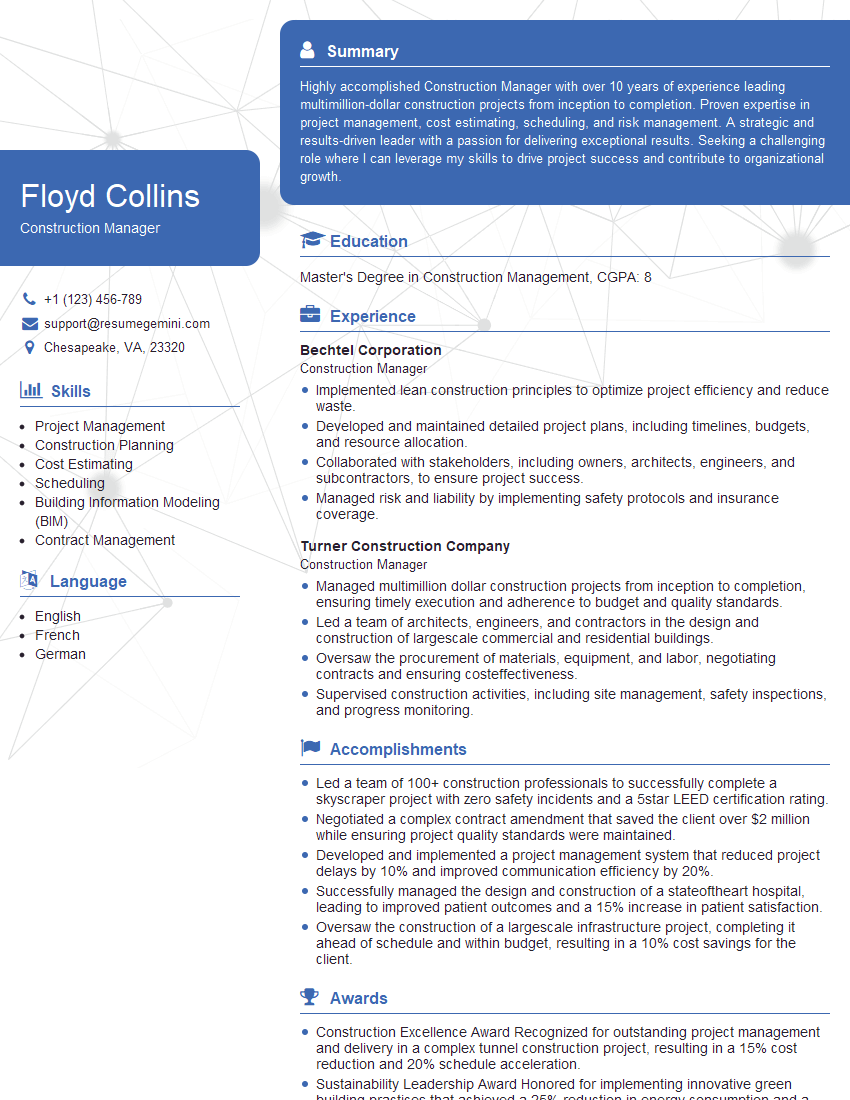
Construction Manager Resume Sample

Construction Superintendent Resume Sample

Project Manager Resume Sample

Engineering Manager Resume Sample

Principal Engineer Resume Sample

Project Engineer Resume Sample
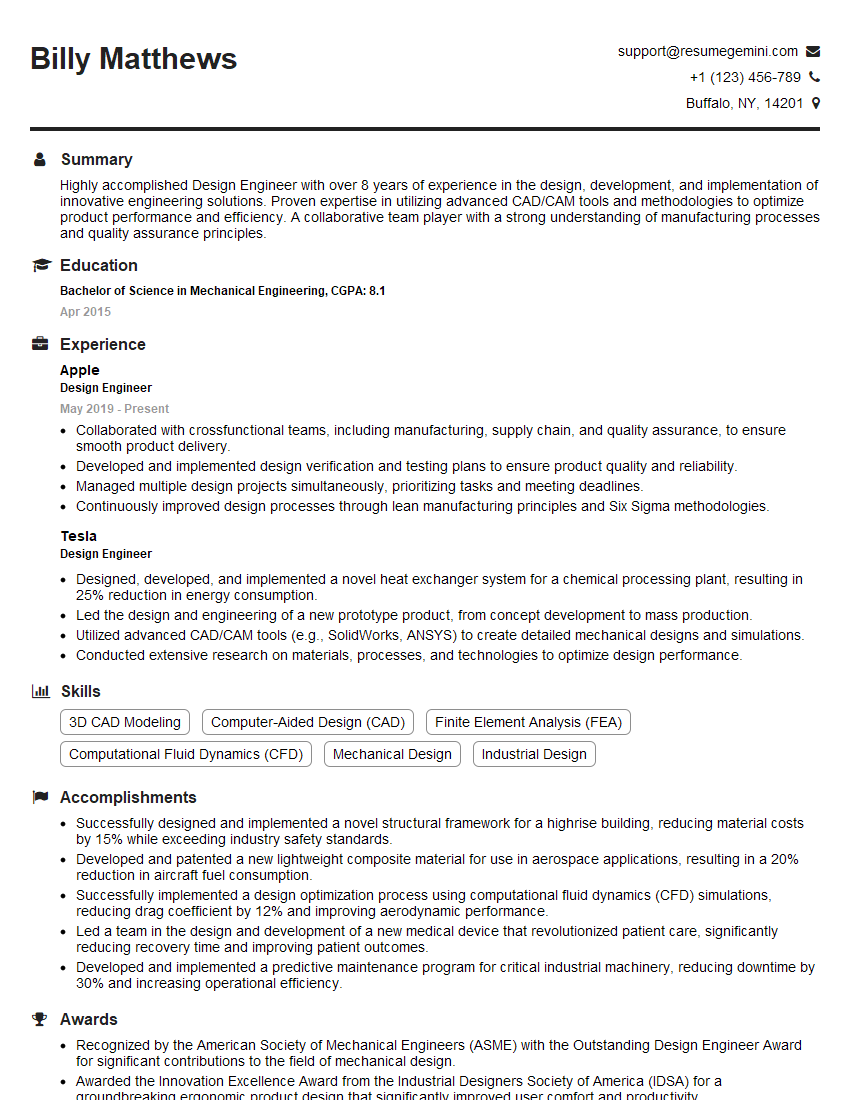
Design Engineer Resume Sample

Civil Engineer Resume Sample

Foundation Engineer Resume Sample
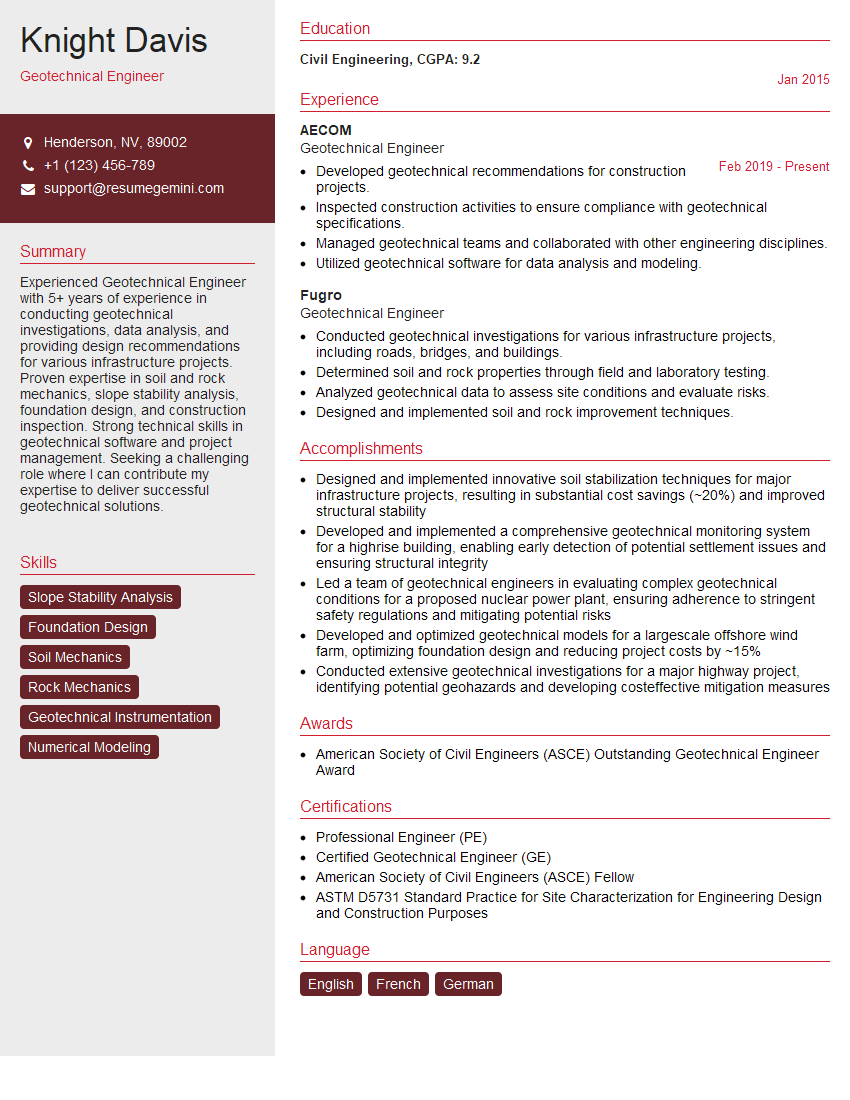
Geotechnical Engineer Resume Sample

Structural Engineer Resume Sample

Field Engineer Resume Sample

Environmental Engineer Resume Sample

Quality Control Engineer Resume Sample

Senior Project Engineer Resume Sample

Drilling Foreman Resume Sample

Site Supervisor Resume Sample

Drilling Supervisor Resume Sample
- Construction Manager
- Construction Superintendent
- Project Manager
- Engineering Manager
- Principal Engineer
- Project Engineer
- Design Engineer
- Civil Engineer
- Foundation Engineer
- Geotechnical Engineer
- Structural Engineer
- Field Engineer
- Environmental Engineer
- Quality Control Engineer
- Senior Project Engineer
- Drilling Foreman
- Site Supervisor
- Drilling Supervisor
Explore more articles
Users Rating of Our Blogs
Share Your Experience
We value your feedback! Please rate our content and share your thoughts (optional).
What Readers Say About Our Blog
Very informative content, great job.
good