Cracking a skill-specific interview, like one for Drilling and Sampling, requires understanding the nuances of the role. In this blog, we present the questions you’re most likely to encounter, along with insights into how to answer them effectively. Let’s ensure you’re ready to make a strong impression.
Questions Asked in Drilling and Sampling Interview
Q 1. Describe the different types of drilling methods and their applications.
Drilling methods are selected based on factors like target depth, ground conditions, and the type of information needed. Let’s explore some key types:
- Rotary Drilling: This is the most common method, using a rotating drill bit to bore into the ground. Subtypes include:
- Auger Drilling: Uses a continuous helical screw to remove soil, ideal for shallow, unconsolidated formations. Think of it like a giant corkscrew.
- Cable Tool Drilling: Employs a heavy bit raised and dropped repeatedly to break rock, suitable for hard rock formations but slower than rotary methods.
- Reverse Circulation Drilling: Air or fluid is pushed down the drill rod, carrying cuttings up an annulus (the space between the drill rod and borehole wall). This is useful in areas with difficult ground conditions or where rapid sample retrieval is essential.
- Percussion Drilling: This method uses repeated impacts to break the rock, often with a chisel-like bit. It’s effective in hard rock but slower and generates more vibrations.
- Sonic Drilling: Utilizes high-frequency vibrations to break and pulverize rock, reducing the need for large amounts of drilling fluid and causing less disturbance to the surrounding ground. It’s particularly effective in environmentally sensitive areas.
The choice of method depends greatly on the project. For instance, auger drilling would be suitable for shallow environmental assessments, whereas rotary drilling might be required for deep geothermal exploration.
Q 2. Explain the process of core sampling and its importance in geotechnical investigations.
Core sampling is the process of extracting a cylindrical sample of intact rock or soil from the borehole. This undisturbed sample provides crucial information about the subsurface’s geological properties and engineering characteristics. Here’s a breakdown of the process:
- Drilling: A special core barrel is attached to the drill string. This barrel contains an inner tube to receive the core sample.
- Cutting: The drill bit cuts a cylindrical sample, which is guided into the core barrel.
- Retrieval: Once the core barrel is full, it’s retrieved from the borehole, carefully removing the core sample.
- Logging & Documentation: The core is then carefully logged, documented (photographed, described, oriented) and stored, maintaining its integrity and orientation for later analysis.
Its importance in geotechnical investigations is paramount. Geotechnical engineers rely on core samples for various analyses such as strength tests, permeability assessments, and mineralogical studies. These tests inform decisions on foundation design, slope stability, and ground improvement strategies. For instance, a core sample revealing weak clay layers would significantly impact foundation design for a large building.
Q 3. What are the safety precautions involved in drilling operations?
Safety is paramount in drilling operations. Precautions include:
- Rig Site Setup: Ensuring a clear and well-organized work area, far from hazards.
- Personal Protective Equipment (PPE): Mandatory use of hard hats, safety glasses, gloves, steel-toed boots, and hearing protection.
- Fall Protection: Implementing fall arrest systems on elevated platforms or during work at heights.
- Traffic Control: Managing vehicle and personnel movement around the drilling rig to prevent accidents.
- Emergency Procedures: Establishing clear emergency response plans and ensuring readily available first aid and communication systems.
- Ground Conditions: Assessment of ground conditions to prevent sinkholes or cave-ins. Soil stabilization methods may be employed.
- Hydrogen Sulfide (H2S) Monitoring: In areas with potential H2S release, continuous monitoring and safety protocols are crucial.
- Regular Inspections: Rig components and safety equipment should be routinely inspected and maintained.
Failure to adhere to these precautions can lead to serious injuries or fatalities. A thorough risk assessment should be performed before any drilling operation commences.
Q 4. How do you ensure the integrity of samples collected during drilling?
Maintaining sample integrity is critical for reliable results. Techniques include:
- Proper Core Handling: Avoid dropping, jarring, or twisting the core samples during extraction and transport.
- Sealed Containers: Store samples in sealed, appropriately labeled containers to prevent contamination or moisture loss. Plastic sleeves can protect cores from mechanical damage.
- Orientation Markers: Marking the core’s orientation (e.g., ‘top’ and ‘bottom’) helps maintain geological context.
- Chain of Custody: Maintaining a detailed record of sample handling and transfer to ensure accountability and traceability.
- Environmental Control: Protecting samples from extreme temperatures or humidity.
- Split Spooning: For unconsolidated soil, split spoons are used to obtain representative and undisturbed samples that are immediately sealed in appropriate containers.
Imagine you’re baking a cake – if you mishandle the ingredients (samples) you won’t get a good result! Maintaining sample integrity is as crucial in geotechnical investigation.
Q 5. Describe the different types of drilling fluids and their functions.
Drilling fluids, or muds, serve various crucial functions during drilling operations. Types include:
- Water-Based Muds: The most common type, using water as the base fluid, often with additives to improve properties.
- Oil-Based Muds: Employ oil as the base fluid, offering better lubrication and shale stability in challenging formations.
- Synthetic-Based Muds: Use synthetic fluids, often environmentally friendly alternatives to oil-based muds, providing similar benefits with reduced environmental impact.
Their functions include:
- Lubrication: Reducing friction between the drill bit and borehole wall.
- Coolant: Removing heat generated during drilling to prevent equipment damage.
- Cleaning: Carrying cuttings (drilled material) to the surface.
- Stabilization: Preventing borehole collapse in unstable formations.
- Pressure Control: Preventing uncontrolled inflow of formation fluids into the wellbore.
Choosing the right mud is crucial; a water-based mud might suffice for soft soil, while an oil-based mud may be needed for shale formations prone to swelling.
Q 6. How do you manage drilling fluid properties to optimize drilling efficiency?
Managing drilling fluid properties is essential for efficient and safe drilling. Key parameters include:
- Viscosity: The mud’s resistance to flow. Too high, and it’s difficult to pump; too low, and it doesn’t carry cuttings effectively.
- Density: The mud’s weight per unit volume. It needs to be sufficient to control formation pressure but not so high as to cause excessive stress on the wellbore.
- pH: The mud’s acidity or alkalinity. This affects its chemical stability and its interaction with the formation.
- Filtrate Loss: The amount of fluid lost into the formation. High filtrate loss can lead to instability and poor hole cleaning.
Optimization involves continuous monitoring and adjustment of the mud properties using various additives (like polymers, weighting agents, and pH adjusters). This is often done through real-time analysis of mud samples. For example, adding a weighting material like barite increases the mud density, which helps control pressure in high-pressure formations. Poor mud management can lead to stuck pipe, wellbore instability, or environmental issues.
Q 7. Explain the concept of mud logging and its significance.
Mud logging is the continuous monitoring and recording of the drilling fluid as it returns to the surface. It provides crucial real-time information about the subsurface geology.
Here’s what it entails:
- Cuttings Analysis: Examining the drilled rock fragments (cuttings) to identify lithology (rock type), fossil content, and other geological features.
- Gas Detection: Monitoring for the presence of gases (e.g., methane, hydrogen sulfide) in the returned mud. This is important for safety and identifying potential hydrocarbon reservoirs.
- Fluid Properties Monitoring: Tracking drilling fluid parameters (density, viscosity, pH, etc.) to ensure optimal drilling conditions.
- Rate of Penetration (ROP) Measurement: Recording the speed at which the drill bit penetrates the formation, indicating rock hardness and drillability.
Mud logging is significant because it provides an immediate picture of the subsurface. This information is vital for:
- Geologic Interpretation: Understanding the stratigraphy and lithology of the drilled formations.
- Hydrocarbon Exploration: Identifying potential hydrocarbon-bearing zones.
- Wellbore Stability Assessment: Evaluating the stability of the borehole and optimizing drilling parameters.
- Environmental Monitoring: Detecting potential environmental hazards such as H2S or other harmful substances.
It’s essentially a continuous geological survey that guides decisions during the drilling process, ensuring efficiency and safety.
Q 8. What are the common challenges faced during drilling operations and how do you address them?
Drilling operations, while crucial for subsurface exploration and resource extraction, face numerous challenges. These can be broadly categorized into geological, mechanical, and logistical issues.
- Geological Challenges: Unexpected geological formations like hard rock layers, unstable strata (e.g., shale prone to swelling), or the presence of high-pressure zones can significantly impede drilling progress and potentially cause wellbore instability or equipment damage. For example, encountering an unexpected fault zone can lead to a complete loss of drilling fluid and even a stuck drill string.
- Mechanical Challenges: Equipment malfunction, bit wear, and downhole tool failures are common mechanical problems. This can be due to wear and tear, poor maintenance, or inadequate equipment selection for the specific geological conditions. A worn drill bit, for instance, can significantly slow down drilling rate and increase the cost of the operation.
- Logistical Challenges: Remote locations, challenging terrain, and limited access to resources can complicate drilling operations. For example, transporting heavy equipment to a remote site might require specialized transport methods, significantly increasing costs and time.
Addressing these challenges requires a multi-pronged approach:
- Advanced Planning: Thorough pre-drilling geological investigations, including seismic surveys and well logs from nearby wells, help anticipate potential challenges. Selecting the right drilling mud type crucial for wellbore stability, is also a critical part of this stage.
- Real-time Monitoring: Closely monitoring drilling parameters (e.g., rate of penetration (ROP), torque, weight on bit) allows for early detection of problems. This is often supported by sophisticated drilling data analysis software.
- Contingency Planning: Having backup plans and equipment readily available is essential to minimize downtime in case of unexpected events. This includes spare drill bits, downhole tools, and specialized equipment for handling specific geological challenges.
- Experienced Personnel: A skilled drilling crew with experience handling various geological conditions and equipment malfunctions is invaluable.
Q 9. How do you interpret drilling data to identify potential geological formations?
Interpreting drilling data to identify geological formations involves analyzing various parameters recorded during the drilling process. This data provides a continuous record of the subsurface encountered, allowing geologists to infer formation properties.
Key data sources include:
- Rate of Penetration (ROP): Changes in ROP can indicate transitions between different rock types. A sudden decrease in ROP might suggest encountering a harder formation.
- Drillstring Torque and Weight on Bit (WOB): These parameters help assess the mechanical properties of the formation. High torque can indicate a hard or sticky formation, while high WOB might be needed for penetration in hard rock.
- Mud Logging Data: Mud logs provide information on the cuttings (rock fragments) brought up by the drilling fluid. Analysis of these cuttings helps geologists identify lithology, formation age and fossil content.
- Wireline Logs: Once the well is drilled, various wireline logging tools are run to measure properties like porosity, permeability, density, and resistivity of the formations. These logs provide detailed information about the subsurface.
Interpretation involves integrating these data types to build a comprehensive picture of the subsurface. For instance, a sudden increase in gamma ray log values alongside a decrease in ROP might suggest encountering a shale formation. Similarly, high resistivity values in a wireline log could indicate the presence of a sandstone reservoir. This process often involves advanced software and expertise in geological interpretation techniques.
Q 10. Explain the importance of wellbore stability and how it is maintained during drilling.
Wellbore stability is crucial for efficient and safe drilling operations. An unstable wellbore can lead to stuck pipe, wellbore collapse, and potential environmental hazards. Wellbore instability arises from the interaction between the drilling fluid (mud) and the surrounding formation.
Maintaining wellbore stability involves several key strategies:
- Proper Mud Selection: The drilling fluid, also known as mud, plays a vital role in wellbore stability. It exerts pressure against the formation, preventing collapse, and transports cuttings to the surface. The properties of the mud, such as density, viscosity, and filtration control, are carefully selected based on the formation’s characteristics to prevent formation swelling, fracturing or fluid invasion.
- Mud Weight Control: Maintaining the appropriate mud weight (density) is critical. Too low a mud weight can lead to formation fracturing, while too high a weight can cause formation collapse.
- Mud Chemistry Control: The chemical composition of the mud is optimized to control factors like shale hydration and formation swelling. Specialized mud additives can be used to enhance wellbore stability in challenging formations.
- Real-time Monitoring: Constant monitoring of wellbore pressure and other parameters helps to identify early signs of instability. This allows for timely corrective actions, such as adjustments to mud weight or chemistry.
- Casing and Cementing: Installing steel casing and cementing it securely protects the wellbore from collapse in unstable sections. Casing placement is determined by geological evaluations and the planned well depth.
For instance, in shale formations prone to swelling, a mud with low filtration properties and specialized shale inhibitors is crucial to prevent shale hydration and wellbore collapse. Likewise, in high-pressure zones, careful mud weight control is paramount to prevent formation fracturing.
Q 11. Describe different types of soil and rock samples and their characteristics.
Soil and rock samples collected during drilling operations provide invaluable information about subsurface conditions. The sampling methods and subsequent analysis vary depending on the material’s properties.
Soil Samples:
- Disturbed Samples: These are samples that have been mixed or altered during the collection process. They are commonly obtained using methods like auger drilling or hand augers. These samples are used primarily for basic characterization such as grain size distribution, moisture content and simple chemical testing.
- Undisturbed Samples: These samples retain their original structure and are crucial for geotechnical analyses. Specialized sampling tools, such as Shelby tubes, are used to extract these samples. Undisturbed samples provide important data about shear strength and consolidation properties.
Rock Samples:
- Core Samples: These are cylindrical samples taken using core barrels. Core samples provide a continuous record of the formations’ lithology and structural features. They are used for detailed petrographic analysis, geomechanical testing, and reservoir characterization.
- Cuttings Samples: These are fragments of rock brought to the surface by the drilling fluid. They are less representative than core samples but provide a continuous record of the formations encountered during drilling. Cuttings are easier to collect but information on rock structure might be limited.
The characteristics of each sample type vary significantly based on the formation. For example, a sandstone core sample will have different properties (e.g., porosity, permeability) compared to a shale cutting sample. Detailed description and documentation of the sample type and its characteristics are crucial for proper analysis and interpretation.
Q 12. What are the methods used for analyzing soil and rock samples in a lab?
Analyzing soil and rock samples in a lab involves a wide array of techniques depending on the specific properties being investigated. These methods can be broadly classified into:
- Geotechnical Testing: This includes tests to determine the strength, compressibility, and permeability of soils and rocks. Examples include shear strength tests, consolidation tests, and permeability tests. These tests are fundamental for evaluating the engineering properties of the materials and are used in geotechnical design.
- Petrophysical Analysis: This involves determining the physical properties of rocks, such as porosity, permeability, and density. These are key in characterizing reservoir rocks for oil and gas exploration. Techniques such as mercury intrusion porosimetry and gas permeability measurements are routinely employed.
- Geochemical Analysis: This involves determining the chemical composition of the samples. Techniques like X-ray fluorescence (XRF) and inductively coupled plasma mass spectrometry (ICP-MS) are commonly used to identify the minerals present and to determine the elemental composition. This data is used for characterizing the origin, alteration, and geological history of the samples.
- Mineralogical Analysis: This is crucial for determining the types and proportions of minerals in the sample. Techniques such as X-ray diffraction (XRD) and optical microscopy are used to identify minerals. This helps characterize rock fabric and geological formations.
- Mechanical Testing: This involves determining the mechanical strength of rocks, such as compressive strength, tensile strength, and elastic modulus. These tests are essential for assessing the stability of rocks in engineering projects and for analyzing rock behaviour in response to stress.
The specific tests conducted will depend on the project’s objectives. For instance, in a geotechnical investigation, focus will be on geotechnical and mechanical tests. In an exploration project, petrophysical and geochemical analyses will be essential.
Q 13. How do you ensure proper documentation and chain of custody of collected samples?
Maintaining proper documentation and chain of custody for collected samples is essential to ensure data integrity and avoid any questions about the sample’s authenticity. This involves a rigorous system of tracking and recording.
Key steps include:
- Unique Sample Identification: Each sample is assigned a unique identification number at the time of collection. This number is recorded in a field log book and permanently marked on the sample containers.
- Detailed Field Logs: A comprehensive field logbook is maintained, recording location, depth, date, time, sampling methods, and any relevant observations made during sample collection. Photographs of the sampling location and any unusual features are also helpful.
- Secure Sample Handling: Samples are transported and stored in a secure manner to prevent contamination or damage. Appropriate containers and preservation techniques (e.g., sealing to prevent moisture loss) are used.
- Chain of Custody Forms: Chain of custody forms document the handling of samples from collection to analysis. Each individual handling the sample signs and dates the form. This ensures a clear record of sample transfers and safeguards against accidental or deliberate contamination.
- Lab Documentation: Upon arrival at the laboratory, samples are logged into the lab’s database, and further documentation related to sample processing and testing is recorded.
A robust chain of custody system guarantees that the samples analyzed in the lab are indeed representative of the subsurface at the location and time specified. This is vital for making accurate geological and engineering interpretations and defending any decisions based on the sample data.
Q 14. How do you select appropriate drilling equipment for a specific project?
Selecting appropriate drilling equipment for a specific project depends on several factors, primarily the target depth, geological conditions, and project objectives.
Key considerations include:
- Drilling Rig Type: Different rig types are suited for various applications. Top drive rigs offer better control and automation, while conventional rotary rigs might be more suitable for simpler projects. The choice is guided by factors such as the depth of the well, the type of formation and the level of automation required.
- Drillstring Components: The drillstring comprises drill pipes, drill collars, and the drill bit. The selection depends on the expected formation hardness, the required drilling rate and the depth of the well. Hard rock formations will require stronger drill bits and drill collars compared to softer formations.
- Drill Bits: Various drill bit types are available, such as roller cone bits (for hard formations), diamond bits (for very hard formations), and polycrystalline diamond compact (PDC) bits (versatile bits for various formations). Bit selection is dictated by the specific rock type and drilling environment.
- Drilling Fluid System: The type of drilling fluid (mud) is crucial for maintaining wellbore stability and transporting cuttings. The selection depends on the formation properties and environmental considerations. For example, specialized muds might be needed for shale formations or high-pressure zones.
- Downhole Tools: Various downhole tools are used for logging, sampling, and other operations. Their selection depends on the project’s objectives. For example, wireline logging tools provide information about the formation properties, while core barrels collect continuous samples.
For example, drilling a deep well in a hard rock formation requires a robust drilling rig with heavy drillstring components and specialized diamond or PDC bits. Conversely, shallow drilling in unconsolidated sediments might only require a smaller rig with less powerful drillstring and auger bits. The entire process of equipment selection requires careful planning and collaboration between drilling engineers, geologists, and project managers.
Q 15. Explain the use of downhole tools and their application during drilling.
Downhole tools are essential instruments deployed during drilling operations to gather data, control the drilling process, and enhance the overall efficiency. These tools are lowered into the borehole and perform various functions depending on their design and purpose. Think of them as the ‘eyes and hands’ of the drilling engineer deep underground.
- Measurement While Drilling (MWD) tools: These collect real-time data such as the inclination and azimuth (direction) of the wellbore, pressure, and weight on bit. This is crucial for accurate well placement and trajectory control. For example, in directional drilling, MWD tools allow us to steer the drill bit precisely to reach a target reservoir hundreds of meters away from the surface location.
- Logging While Drilling (LWD) tools: Similar to MWD, but they also provide information about the formation properties, such as porosity, permeability, and lithology. This information helps geologists understand the composition of the subsurface formations, enabling better reservoir characterization and decision-making on further development.
- Drill bits: These are the cutting tools, and their type and design directly affect the rate of penetration and the quality of the borehole. For instance, a roller cone bit is ideal for hard rock formations, while a PDC (polycrystalline diamond compact) bit is preferred for softer, less abrasive formations.
- Reaming tools: Used to enlarge the diameter of the borehole, ensuring proper casing setting and avoiding issues with stuck pipe.
- Directional drilling tools: These are specialized tools used to steer the wellbore away from a vertical path, allowing access to reservoirs that may not be directly below the surface location.
The application of these tools varies depending on the specific drilling project, but they all contribute to safer, more efficient, and more effective drilling processes.
Career Expert Tips:
- Ace those interviews! Prepare effectively by reviewing the Top 50 Most Common Interview Questions on ResumeGemini.
- Navigate your job search with confidence! Explore a wide range of Career Tips on ResumeGemini. Learn about common challenges and recommendations to overcome them.
- Craft the perfect resume! Master the Art of Resume Writing with ResumeGemini’s guide. Showcase your unique qualifications and achievements effectively.
- Don’t miss out on holiday savings! Build your dream resume with ResumeGemini’s ATS optimized templates.
Q 16. What are the environmental considerations involved in drilling operations?
Environmental considerations are paramount in modern drilling operations. Neglecting these can lead to severe consequences, both legally and environmentally. We must minimize our impact on the surrounding ecosystem.
- Wastewater management: Drilling fluids (muds) contain chemicals that must be managed properly to avoid contamination of soil and water resources. This often involves the use of specialized treatment facilities and responsible disposal practices.
- Air emissions: Drilling rigs use diesel engines, producing greenhouse gases and other pollutants. Minimizing these emissions often involves using cleaner fuels, optimizing engine performance, and adopting emission control technologies.
- Noise pollution: Drilling operations can be noisy, impacting nearby communities and wildlife. Mitigation strategies include using noise barriers, scheduling quieter operations during certain times, and using quieter equipment.
- Spills and leaks: Accidental spills of drilling fluids or fuels can have devastating environmental consequences. Preventive measures, including rigorous maintenance and emergency response plans, are essential.
- Habitat disruption: Drilling sites can disturb local ecosystems. Careful site selection, restoration efforts after drilling, and minimal land disturbance are crucial for minimizing this impact.
Environmental regulations and best practices must be rigorously followed to ensure that drilling operations are conducted in an environmentally responsible manner. For example, detailed environmental impact assessments are typically required before any drilling project can commence.
Q 17. Describe your experience with different types of drilling rigs.
My experience encompasses a variety of drilling rigs, each suited to specific applications and geological conditions. Think of it like choosing the right tool for a particular job.
- Land rigs: These are the most common type, used for onshore drilling. They range from small, portable rigs suitable for shallow wells to massive structures capable of drilling deep, high-pressure wells. I’ve worked extensively with both top-drive and rotary-drive land rigs.
- Offshore rigs: These are platforms or vessels used for drilling in marine environments. I have experience with jack-up rigs, which have legs that rest on the seabed, and floating rigs, such as semi-submersibles and drillships, which maintain stability using dynamic positioning or buoyancy.
- Directional drilling rigs: These are specialized rigs equipped with advanced steering systems to allow for precisely controlled wellbore trajectories. I have been involved in numerous projects using these rigs to drill horizontal and multilateral wells, particularly in unconventional resource extraction.
My expertise extends to the operation, maintenance, and safety procedures associated with each of these rig types. I understand the unique challenges and considerations associated with each, including environmental regulations, operational efficiency, and crew safety.
Q 18. How do you manage risks associated with drilling operations?
Risk management in drilling is critical due to the inherent hazards. A proactive and layered approach is necessary.
- Hazard identification and assessment: This involves a thorough review of all potential hazards, from equipment failures and well control issues to human error and environmental risks. Techniques like HAZOP (Hazard and Operability Study) and risk matrices are commonly used.
- Mitigation strategies: Once hazards are identified, appropriate mitigation strategies must be implemented. This could include implementing safety procedures, using redundant systems, providing specialized training, or using improved drilling equipment.
- Emergency response planning: Detailed emergency response plans are essential for handling unexpected events like well blowouts or equipment failures. Regular drills and training ensure that the response team is prepared to handle these situations effectively. I have personally led multiple emergency response training exercises.
- Data analysis and monitoring: Real-time monitoring of well parameters and equipment performance allows for early detection of potential problems. This data-driven approach helps in predicting and preventing issues before they escalate into major incidents.
- Regular inspections and maintenance: Preventive maintenance of equipment is crucial for minimizing equipment failures and ensuring that safety systems are functional. I have always emphasized regular inspection and maintenance procedures as a cornerstone of risk reduction.
My approach is not simply reactive; I actively work to identify and mitigate risks before they can cause incidents.
Q 19. What software or programs are you proficient in using for data analysis in drilling and sampling?
Proficiency in data analysis software is essential in drilling and sampling. My expertise encompasses several key programs.
- Petrel: This is an industry-standard reservoir modeling and simulation software. I use it for interpreting seismic data, building geological models, and planning well trajectories.
- WellView: This software is used for comprehensive well log analysis and interpretation. I use it to assess formation properties and identify potential hydrocarbon reservoirs.
- DecisionSpaceTM: This integrated software suite is valuable for drilling operations planning, optimization, and performance monitoring. I leverage its capabilities for real-time data analysis and decision-making during drilling.
- Microsoft Excel/Access: While not specialized drilling software, I proficiently use Excel and Access for data organization, manipulation, and report generation.
- Python scripting: My coding skills in Python allow for automation of data processing and creation of custom analysis tools. I often use this to enhance the efficiency of my workflow.
I am comfortable adapting to new software and believe that continuous learning in data analytics is crucial for staying at the forefront of this rapidly evolving field.
Q 20. How do you calculate the rate of penetration (ROP) and what factors influence it?
Rate of Penetration (ROP) is the speed at which a drill bit penetrates a formation. It’s a key indicator of drilling efficiency and cost.
The basic calculation is:
ROP = (Depth drilled) / (Drilling time)For example, if a drill bit penetrates 10 meters in 2 hours, the ROP is 5 meters/hour. However, this is a simplified calculation. Many factors influence ROP:
- Formation properties: Hard rock formations typically have lower ROP than soft formations. Factors like lithology, strength, and abrasiveness significantly impact penetration rate.
- Drill bit type and condition: Different drill bits are designed for different formations, and a worn-out bit will have significantly reduced ROP. Regular bit changes and maintenance are crucial for optimal penetration rates.
- Weight on bit (WOB): Applying more weight increases penetration, but excessive weight can cause bit damage and premature failure. An optimal WOB needs to be maintained.
- Rotary speed (RPM): The speed of rotation of the drill string affects the ROP. This needs to be adjusted based on the formation and drill bit type.
- Drilling fluid properties: The viscosity and density of the drilling mud influence the rate of cutting removal and overall drilling efficiency.
Understanding and optimizing these factors is crucial for maximizing ROP and minimizing drilling costs. It requires a sophisticated understanding of drilling dynamics and constant monitoring of real-time data.
Q 21. Describe the process of preparing a drilling plan.
Preparing a drilling plan is a meticulous process requiring collaboration among geologists, engineers, and other stakeholders. It’s like creating a detailed roadmap for the entire drilling operation.
- Geological and geophysical data analysis: This involves integrating information from seismic surveys, well logs, and other subsurface data to build a detailed geological model of the target formation.
- Well trajectory design: Determining the optimal well path, considering factors like reservoir geometry, surface access, and potential environmental concerns. This may involve horizontal, multilateral, or deviated well designs.
- Drilling program development: This includes specifying the drill bit types, drilling parameters (WOB, RPM), drilling fluid properties, and planned casing programs.
- Risk assessment and mitigation: Identifying potential hazards and developing strategies to mitigate them, including well control measures, emergency response plans, and safety protocols.
- Environmental considerations: Incorporating environmental regulations and best practices into the plan, focusing on aspects like wastewater management, air emissions, and habitat protection.
- Budget and logistics planning: Estimating costs, including equipment rental, labor, materials, and potential contingencies. This includes scheduling operations and managing logistics of equipment and personnel.
- Regulatory approvals: Obtaining necessary permits and approvals from regulatory bodies. This is crucial to ensure legal compliance.
The drilling plan is a dynamic document that may require modifications during the course of the operation. However, a well-prepared plan significantly improves the safety, efficiency, and cost-effectiveness of the entire drilling process.
Q 22. Explain the importance of proper well completion and its relation to sampling.
Proper well completion is crucial because it directly impacts the quality and reliability of subsequent sampling. Think of it like preparing a perfectly baked cake – if the foundation (well completion) isn’t right, the final product (samples) will be compromised. Well completion encompasses all operations conducted after drilling to ensure the wellbore is safe, stable, and ready for its intended purpose, be it producing hydrocarbons, monitoring groundwater, or collecting geological samples. This includes activities like installing casing, cementing, and setting packers to isolate different zones. If these aren’t done correctly, you risk contamination of samples (e.g., mixing fluids from different strata), wellbore instability leading to sample loss, or even compromising the integrity of the well itself.
For instance, if a poorly cemented casing allows groundwater to mix with the formation fluids you’re sampling, your analysis of those fluids will be inaccurate and unreliable, rendering your project’s results invalid. Accurate sampling depends entirely on a well-completed and well-isolated bore hole.
Q 23. How do you identify and address potential drilling problems?
Identifying and addressing drilling problems requires a proactive, multi-faceted approach. It starts with meticulous planning and risk assessment before drilling even begins. This involves reviewing geological data, understanding the subsurface conditions (lithology, stresses, pore pressure), and selecting the appropriate drilling equipment and mud system. During drilling, constant monitoring of key parameters is essential. These include: rate of penetration (ROP), torque, weight on bit, mud pressure, and mud returns. Anomalies in these parameters can indicate problems like stuck pipe, hole collapse, or unexpected formations.
- Stuck Pipe: This is often caused by differential sticking (pressure differences between the wellbore and the formation), key seating (pipe gets wedged), or tight formations. Solutions include releasing the pressure, circulating mud, and possibly using specialized tools to free the pipe.
- Hole Collapse: Weak formations might collapse under the pressure differential. This is addressed by adjusting the mud weight, using specialized drilling fluids, or installing casing to stabilize the wellbore.
- Lost Circulation: This happens when drilling fluids are lost into permeable zones. This can be managed by using lost circulation materials (LCMs) to seal the fractures.
Experience allows for quick identification of anomalies. For instance, a sudden drop in ROP coupled with increased torque often signals a change in formation or a potential stuck pipe situation. Early detection is key to preventing more costly interventions.
Q 24. What is your experience with different types of sampling techniques (e.g., split spoon, Shelby tube)?
I have extensive experience with various sampling techniques, each suitable for specific geological conditions and objectives.
- Split Spoon Sampler: This is a standard penetration test (SPT) sampler, providing in-situ density and strength information. It’s relatively simple and cost-effective but can disturb the sample slightly, especially in very soft or loose formations. The sample is split for visual inspection and laboratory testing.
- Shelby Tube Sampler: This produces undisturbed samples, ideal for geotechnical analysis requiring intact specimens. The thin-walled tube is pushed into the formation, extracting a relatively undisturbed core, although some shearing near the edges is still possible. It’s suitable for cohesive soils but struggles in granular formations or hard rocks.
- Rotary Core Barrel Sampling: This technique is used for recovering continuous cores, providing detailed information about the strata. It’s more complex and expensive than split spoon or Shelby tube sampling, but gives much better sample quality and allows for detailed geological logging.
The choice of sampling technique depends on factors such as the project’s objectives, the geological conditions (soil type, depth, etc.), and the type of analysis required. Sometimes, multiple techniques are employed to get a comprehensive understanding of the subsurface.
Q 25. How do you interpret geological logs derived from drilling data?
Interpreting geological logs requires a thorough understanding of the logging tools, the geological context, and the principles of stratigraphy and sedimentology. Geological logs represent different physical properties of the subsurface, recorded as a function of depth. They provide vital information for subsurface characterization. For example:
- Gamma Ray Logs: Indicate the radioactivity of the formation and help in identifying different lithological units (sand, shale, etc.). Higher gamma ray readings usually correspond to shale layers.
- Resistivity Logs: Measure the electrical resistance of the formation, which is related to the porosity, fluid saturation, and lithology. High resistivity generally indicates a less saturated rock.
- Density and Neutron Logs: Measure the bulk density and porosity of the formations.
Interpretation involves correlating the different log responses to identify lithological units, estimate porosity and permeability, and assess the presence of hydrocarbons or groundwater. Cross-plotting of different logs helps to enhance the interpretation. Prior experience and knowledge of the regional geology are crucial in drawing meaningful conclusions from geological logs.
Q 26. Explain the importance of quality control in drilling and sampling procedures.
Quality control (QC) in drilling and sampling is paramount to ensure the reliability and validity of the data obtained. This includes various aspects:
- Equipment Calibration and Maintenance: Regular calibration of drilling equipment and sampling tools is critical for accuracy. Regular maintenance minimizes the risk of malfunctions and ensures consistent performance.
- Drilling Fluid Control: The properties of the drilling fluid (density, viscosity, etc.) must be meticulously monitored and controlled to prevent wellbore instability, loss of circulation, and sample contamination.
- Sample Handling and Preservation: Samples must be carefully handled, logged, and preserved to avoid alteration or damage. This includes proper labeling, sealing, and storage conditions to maintain the integrity of the samples for subsequent laboratory testing.
- Chain of Custody: Maintaining a strict chain of custody ensures that the samples are traceable and their integrity is maintained throughout the sampling, transportation, and analysis process.
- Data Validation and Verification: All data acquired during drilling and sampling should be verified and validated to ensure accuracy and consistency. This involves cross-checking measurements, reviewing logs, and conducting internal audits.
A robust QC program ensures data quality, minimizes errors, and builds confidence in project results.
Q 27. What is your experience with regulatory compliance for drilling and sampling activities?
Regulatory compliance is a critical aspect of drilling and sampling activities. The specific regulations vary depending on the location (national, state, or local level) and the nature of the project (environmental, geotechnical, or hydrocarbon exploration). My experience includes working within the framework of [mention specific regulations relevant to your expertise, e.g., EPA regulations in the US, relevant state or local environmental regulations, OHSAS 18001 for occupational health and safety].
Compliance involves obtaining the necessary permits, adhering to safety protocols, managing waste disposal correctly, and ensuring that all data and reports are properly documented and submitted to the relevant authorities. A thorough understanding of these regulations is essential to avoid penalties, delays, and potential legal issues. Regular training and updates on regulatory changes are also necessary to stay compliant.
Q 28. Describe a situation where you had to troubleshoot a drilling problem. What was the outcome?
During a geotechnical investigation for a large infrastructure project, we encountered unexpected highly fractured rock formations at a significant depth. Initial attempts to advance the borehole using standard drilling techniques were unsuccessful; the drill string kept getting stuck. The problem was identified as a combination of high stress conditions and the weakness of the rock matrix which was exacerbated by the high water content in the fissures leading to significant water influx and weakening of the formation.
We addressed this by implementing several strategies: first, we carefully adjusted the drilling mud properties to increase its viscosity and minimize further degradation of the formation. Second, we switched to a smaller diameter drill bit allowing better control and reducing the overall stress on the formation. Third, we incorporated a specialized drilling technique using a slower rotation speed and a more controlled rate of penetration. This allowed for a more stable and predictable borehole advance. Finally, we installed casing in stages to better stabilize the wellbore as we progressed. The outcome was successful borehole completion, allowing us to obtain high-quality, reliable samples and data. This experience highlighted the importance of adapting drilling techniques to site-specific conditions and the value of a flexible and problem-solving approach.
Key Topics to Learn for Drilling and Sampling Interview
- Drilling Methods: Understand the principles behind various drilling techniques (rotary, percussion, core drilling) and their suitability for different geological formations and project objectives. Consider the advantages and limitations of each method.
- Sample Recovery and Handling: Learn best practices for maximizing sample recovery, minimizing contamination, and proper sample logging and preservation techniques. This includes understanding the chain of custody procedures.
- Sample Analysis and Interpretation: Familiarize yourself with common laboratory analyses performed on drilling samples (e.g., geotechnical, geochemical) and how to interpret the results in the context of the project goals. Practice data analysis and interpretation skills.
- Health and Safety Regulations: Demonstrate a strong understanding of relevant health and safety regulations and procedures related to drilling and sampling operations. This includes risk assessment and mitigation strategies.
- Equipment and Technology: Become familiar with the types of equipment used in drilling and sampling operations, including drilling rigs, sampling tools, and logging devices. Understand the principles behind their operation and maintenance.
- Geological Considerations: Understand how geological factors (rock type, stratigraphy, structure) influence drilling and sampling strategies. Develop problem-solving skills related to challenging geological conditions.
- Project Planning and Management: Familiarize yourself with the stages involved in planning and executing drilling and sampling programs, including budgeting, scheduling, and resource allocation.
- Data Management and Reporting: Learn how to effectively manage and present drilling and sampling data, including the creation of clear and concise reports for stakeholders.
Next Steps
Mastering Drilling and Sampling techniques is crucial for career advancement in the geosciences and related industries. A strong understanding of these concepts opens doors to diverse and rewarding opportunities. To significantly boost your job prospects, crafting an ATS-friendly resume is essential. This ensures your application gets noticed by recruiters and hiring managers. ResumeGemini is a trusted resource that can help you build a professional and effective resume tailored to the demands of the Drilling and Sampling field. Examples of resumes optimized for this sector are available to help guide your resume creation process. Invest the time to build a standout resume – it’s a key step in landing your dream job.

Operations Manager Resume Sample
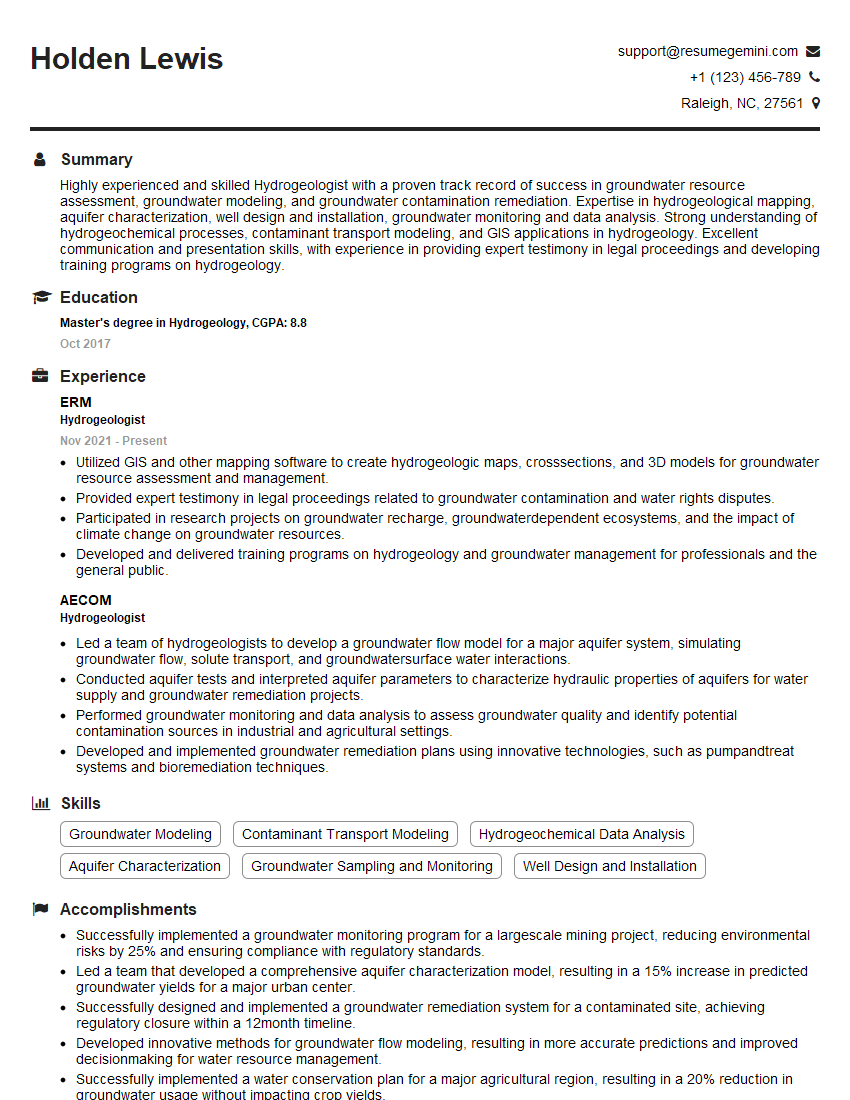
Hydrogeologist Resume Sample

Geotechnical Engineer Resume Sample

Reservoir Engineer Resume Sample

Field Engineer Resume Sample

Environmental Consultant Resume Sample

Exploration Geologist Resume Sample

Mining Engineer Resume Sample

Drilling Engineer Resume Sample

Drilling Manager Resume Sample

Mud Engineer Resume Sample

Petroleum Engineer Resume Sample

Geophysicist Resume Sample

Project Geologist Resume Sample

Geological Technician Resume Sample

Drilling Foreman Resume Sample

Drilling Supervisor Resume Sample
- Operations Manager
- Hydrogeologist
- Geotechnical Engineer
- Reservoir Engineer
- Field Engineer
- Environmental Consultant
- Exploration Geologist
- Mining Engineer
- Drilling Engineer
- Drilling Manager
- Mud Engineer
- Petroleum Engineer
- Geophysicist
- Project Geologist
- Geological Technician
- Drilling Foreman
- Drilling Supervisor
Explore more articles
Users Rating of Our Blogs
Share Your Experience
We value your feedback! Please rate our content and share your thoughts (optional).
What Readers Say About Our Blog
Very informative content, great job.
good