Are you ready to stand out in your next interview? Understanding and preparing for Drilling and Workover Techniques interview questions is a game-changer. In this blog, we’ve compiled key questions and expert advice to help you showcase your skills with confidence and precision. Let’s get started on your journey to acing the interview.
Questions Asked in Drilling and Workover Techniques Interview
Q 1. Explain the difference between rotary and percussion drilling.
Rotary and percussion drilling are two distinct methods used to create boreholes in the earth. Think of it like carving wood: rotary drilling is like using a drill bit that spins rapidly to cut through the material, while percussion drilling is more like repeatedly hitting the wood with a chisel.
Rotary Drilling: This dominant method uses a rotating drill bit to break up rock formations. The bit is attached to a drill string, which is rotated by a top drive or rotary table. Drilling fluid (mud) is circulated down the drill string, through the bit, and back up the annulus (the space between the drill string and the borehole wall), carrying cuttings to the surface. This is highly efficient for penetrating various formations.
Percussion Drilling: This technique employs a bit that strikes the formation repeatedly with a heavy blow. The impact breaks the rock, and cuttings are removed by air or water. Percussion drilling is often used in softer formations or for smaller diameter holes, particularly in applications like well construction where smaller diameter pilot holes are drilled before the main hole.
Key Differences Summarized:
- Mechanism: Rotary uses continuous rotation; percussion uses repeated impact.
- Rock Type: Rotary is more versatile; percussion is better suited for softer formations.
- Efficiency: Rotary is generally faster and more efficient for deep wells.
- Cost: Rotary can be more expensive in terms of initial setup and operation.
Q 2. Describe the various types of drilling fluids and their functions.
Drilling fluids, also known as mud, are crucial for several reasons during drilling operations. They’re like the lifeblood of the well, serving multiple vital functions.
Types and Functions:
- Water-Based Mud (WBM): The most common type, often containing polymers, clay, and weighting agents to control density and viscosity. It’s relatively inexpensive but can be less effective in certain formations.
- Oil-Based Mud (OBM): Provides better lubricity and shale inhibition, particularly useful in challenging formations prone to swelling or instability. However, it’s more expensive and has environmental considerations.
- Synthetic-Based Mud (SBM): Offers a balance between the performance of OBM and the environmental friendliness of WBM. They are more expensive than WBMs but less so than OBMs.
- Air or Gas Drilling: Used in certain situations where the formation is stable and doesn’t require the support of a fluid column. It’s faster but poses risks related to well control.
Functions of Drilling Fluids:
- Cooling and Lubricating the Bit: Preventing overheating and ensuring efficient drilling.
- Carrying Cuttings to the Surface: Removing drilled material from the wellbore.
- Controlling Wellbore Pressure: Preventing formation fluids from entering the well (blowouts) and maintaining borehole stability.
- Supporting the Wellbore Walls: Preventing collapse or caving-in.
- Shale Inhibition: Preventing the swelling and sloughing of shale formations.
Q 3. What are the key parameters monitored during drilling operations?
Monitoring key parameters during drilling operations is crucial for efficient and safe drilling. Think of it as constantly checking the health of the well while it’s being constructed.
Key Parameters:
- Rate of Penetration (ROP): The speed at which the drill bit is penetrating the formation. Slow ROP might indicate a problem with the bit or formation.
- Weight on Bit (WOB): The force applied to the drill bit. Too much WOB can damage the bit; too little may result in slow penetration.
- Torque: The rotational force on the drill string. High torque may indicate a problem with the bit, drill string, or formation.
- Drillstring Rotation Speed: The speed at which the drill string is rotating. This impacts ROP and bit wear.
- Annular Pressure: The pressure in the annulus (space between the drill string and wellbore). It’s essential for well control and preventing kicks (sudden influx of formation fluids).
- Mud Properties: Density, viscosity, pH, and other properties are constantly monitored to ensure optimal drilling fluid performance.
- Mud Return: Monitoring the volume and quality of the mud returning to the surface. Any significant deviation can be an early warning sign.
These parameters are constantly displayed on drilling equipment and rigorously monitored by the drilling crew. Anomalies are quickly identified and addressed to prevent major problems.
Q 4. How do you manage wellbore instability during drilling?
Wellbore instability is a major concern during drilling, as it can lead to stuck pipe, hole collapse, and even blowouts. Managing it effectively requires a multi-faceted approach.
Strategies for Managing Wellbore Instability:
- Proper Mud Selection: Choosing a mud type and properties optimized for the specific formations being drilled. This might involve using specialized mud additives to enhance shale inhibition or prevent formation swelling.
- Mud Weight Optimization: Maintaining the mud weight at an appropriate level to provide sufficient formation support without causing fracturing. This requires careful calculations and monitoring.
- Use of Drill-in Fluids (DIFs): Using low-density fluids during the initial stages of drilling before switching to heavier muds to reduce the risk of formation fracturing.
- Real-time Monitoring and Logging: Implementing tools like formation pressure and stability logs to identify and predict zones prone to instability. This helps optimize drilling parameters and adjust the mud accordingly.
- Casing Design and Placement: Designing and setting casing at appropriate depths to provide support and stability to the wellbore.
- Proper Drilling Practices: Avoiding aggressive drilling practices that can damage the wellbore or induce instability.
Example: In drilling through a shale formation, a properly chosen water-based mud with specialized shale inhibitors might be crucial in preventing the formation from swelling and causing stuck pipe. Without effective mud selection and monitoring, the wellbore could become unstable, leading to costly delays and potential safety hazards.
Q 5. Explain the process of well control and the various types of well control equipment.
Well control is the process of maintaining control over the pressure within the wellbore to prevent unwanted influx of formation fluids (kicks) or uncontrolled loss of drilling fluid (lost circulation). It’s critical for safety and operational efficiency. Think of it as carefully managing the pressure within a pressurized container.
Well Control Process:
- Prevention: Proper mud weight management, casing design, and accurate pressure predictions are crucial for preventing kicks.
- Detection: Regular monitoring of annular pressure, gas detection systems, and mud properties to identify any deviations from normal conditions.
- Response: Having a well-defined plan for handling kicks, including the use of well control equipment to shut in the well and regain control.
Well Control Equipment:
- Blowout Preventers (BOPs): A stack of valves at the wellhead that can quickly shut off the well in case of a blowout. These come in different types, including annular preventers, ram preventers, and shear rams.
- Choke Manifold: Allows for controlled release of fluids to the surface during well control operations.
- Mud Pumps: High-capacity pumps to circulate mud during well control operations.
- Kill Lines: High-pressure lines used to circulate heavy mud or other fluids into the well to kill the pressure.
Q 6. Describe different types of workover operations and their objectives.
Workover operations are procedures performed on existing wells to restore, enhance, or modify their production. These are essential for maintaining or improving the life and productivity of a well after its initial drilling.
Types and Objectives:
- Acidizing: Injecting acid into the formation to dissolve rock and improve permeability, increasing production.
- Fracturing (Hydraulic Fracturing): Creating fractures in the formation by injecting high-pressure fluids to improve permeability and increase production. This is particularly important in low-permeability formations like shale.
- Sand Control: Implementing methods to prevent sand production from the formation, preventing erosion of reservoir rock and damage to surface equipment.
- Well Stimulation: A broad term encompassing techniques aimed at increasing well productivity, often including acidizing or fracturing.
- Fishing: Retrieving lost or damaged tools from the wellbore.
- Plugging and Abandonment: Permanently sealing off the well at the end of its life.
- Recompletion: Modifying the well’s completion design to produce from different zones or improve productivity.
Example: If a well’s productivity declines due to formation damage, acidizing can be performed to dissolve the damaging material and restore flow. Similarly, if a well is producing too much sand, sand control techniques will be implemented to protect the well and surface equipment.
Q 7. What are the safety precautions taken during drilling and workover operations?
Safety is paramount in drilling and workover operations. A strict adherence to safety protocols is essential to prevent accidents and protect personnel.
Safety Precautions:
- Risk Assessments: Conducting thorough risk assessments before starting any operation to identify and mitigate potential hazards.
- Emergency Response Plans: Developing and regularly practicing emergency response plans for situations like well control incidents or equipment failures.
- Personal Protective Equipment (PPE): Requiring the use of appropriate PPE, including hard hats, safety glasses, gloves, and flame-resistant clothing.
- Competent Personnel: Employing trained and qualified personnel to operate equipment and follow safety procedures.
- Regular Equipment Inspection and Maintenance: Ensuring that all equipment is regularly inspected and maintained to prevent malfunctions.
- Hazardous Material Handling: Following strict procedures for handling hazardous materials like drilling fluids and chemicals.
- Communication: Maintaining clear and effective communication among the crew to prevent misunderstandings and accidents.
- Emergency Shut-Down Procedures: Ensuring that everyone knows and understands the procedures for shutting down operations in an emergency.
Example: Regular inspections of BOPs are crucial, as their failure can have catastrophic consequences. Similarly, adherence to strict procedures for handling high-pressure equipment is essential to prevent ruptures and injuries.
Q 8. Explain the procedure for running casing and cementing a well.
Running casing and cementing is a crucial step in well construction, ensuring wellbore stability and preventing fluid migration. It involves lowering steel pipes (casing) into the wellbore and filling the annular space between the casing and the wellbore wall with cement.
- Preparation: Before running casing, the wellbore is cleaned and conditioned. This might involve running a wiper plug to remove cuttings and drilling mud.
- Casing Running: The casing string, made up of individual joints, is assembled and lowered into the wellbore using a top drive or drawworks. Centralizers are used to ensure the casing is positioned correctly in the wellbore, preventing it from sticking to the side.
- Cementing: Once the casing is at the desired depth, cement is pumped down the inside of the casing and then up the annulus. This displaces the drilling mud and forms a solid cement sheath. The cementing process involves carefully monitoring pressure and flow rates to ensure proper placement of the cement.
- Cement Evaluation: After the cement has set, various logging tools, like cement bond logs, are run to evaluate the quality of the cement job. This ensures the cement has properly bonded to the casing and the formation, preventing fluid leakage or gas migration.
Example: Imagine building a house. The casing is like the walls, providing structural support. The cement is the mortar, binding the walls to the foundation and preventing leaks. A poor cement job is like a poorly built house – prone to collapse or leaks.
Q 9. How do you interpret drilling parameters such as ROP, torque, and weight on bit?
Drilling parameters like Rate of Penetration (ROP), torque, and weight on bit (WOB) are crucial indicators of drilling efficiency and formation properties. Analyzing these parameters helps optimize drilling operations and prevent problems.
- ROP (Rate of Penetration): This indicates how fast the bit is drilling. A high ROP suggests efficient drilling, while a low ROP might indicate a hard formation, a dull bit, or problems with the drilling mud.
- Torque: This measures the rotational force on the drillstring. High torque can indicate a problem such as a stuck pipe, a twisting formation, or a worn bit. Low torque might be related to insufficient weight on bit.
- WOB (Weight on Bit): This refers to the force applied to the bit by the drillstring. The optimal WOB depends on the formation and bit type. Too little WOB results in slow penetration, while too much can cause bit damage or stuck pipe.
Interpreting the parameters together: For example, low ROP with high torque and high WOB might suggest a hard formation or a dull bit. Conversely, high ROP with low torque and moderate WOB might indicate easy drilling conditions.
Q 10. Describe different types of drilling bits and their applications.
Drilling bits are the cutting tools at the bottom of the drillstring. Several types exist, each designed for specific applications.
- Roller Cone Bits: These bits use rotating cones with teeth or inserts to crush and cut the formation. They’re effective in hard, abrasive formations but have lower ROP in softer formations. Different types include tooth roller cone bits (for hard formations), insert roller cone bits (for medium-hard formations), and milled tooth roller cone bits (for softer formations).
- PDC (Polycrystalline Diamond Compact) Bits: These bits use synthetic diamonds embedded in a matrix to cut and chip the formation. They are highly efficient in softer to medium-hard formations and offer longer life than roller cone bits. They come in various designs, like button bits for softer formations and blade bits for harder formations.
- Other Specialized Bits: Other types include diamond bits (for extremely hard formations), and various types of specialized bits for specific applications, such as those used in directional drilling.
Example: When drilling through hard, abrasive sandstone, a roller cone bit with hard-metal inserts would be preferable. In a softer shale formation, a PDC bit would likely be more efficient.
Q 11. Explain the concept of directional drilling and its applications.
Directional drilling involves deliberately deviating the wellbore from a vertical path to reach a target location that’s not directly below the surface location. This is achieved using a downhole motor or a steerable mud motor in the drillstring to change the direction of the bit.
- Applications: Directional drilling is crucial for accessing multiple targets from a single surface location (reducing environmental impact and cost), reaching reservoirs under obstacles (like buildings, rivers, or environmentally sensitive areas), and improving reservoir contact in horizontal drilling.
- Techniques: The well trajectory is planned using specialized software that calculates the required direction and inclination changes. Measurement While Drilling (MWD) tools transmit data on the wellbore’s direction and inclination to the surface, allowing real-time adjustments.
Example: Imagine needing to drill a well under a river. Directional drilling allows you to start the well on one side of the river and reach the target reservoir on the other side without drilling directly under the river.
Q 12. How do you manage formation pressure while drilling?
Managing formation pressure is critical to prevent well control incidents like kicks (influx of formation fluids into the wellbore) or blowouts. This involves balancing the pressure in the wellbore with the formation pressure.
- Pressure Monitoring: Continuous monitoring of mud weight, annulus pressure, and wellhead pressure is essential. Changes in these parameters indicate potential pressure changes in the formation.
- Mud Weight Optimization: Mud weight is adjusted to maintain a hydrostatic pressure in the wellbore that is higher than the formation pressure, preventing formation fluids from entering the wellbore. However, excessive mud weight can cause formation fracturing.
- Well Control Procedures: Strict adherence to well control procedures is vital. These procedures include detailed plans for managing various well control scenarios and training for all personnel involved.
Example: If the formation pressure increases unexpectedly, the mud weight must be increased to counter the increase. Failure to do so could result in a kick, requiring immediate action to prevent a blowout.
Q 13. What are the challenges associated with horizontal drilling?
Horizontal drilling, while offering increased reservoir contact and production, presents unique challenges.
- Doglegs and Torque and Drag: Maintaining wellbore stability in long horizontal sections is difficult. Doglegs (sharp bends in the wellbore) can cause increased torque and drag, making it hard to rotate and pull the drillstring. This increases the risk of stuck pipe.
- Hole Cleaning: Removing cuttings from the horizontal section is more challenging than in vertical sections, due to gravity assisting cuttings removal in vertical wells. This can lead to cuttings bed accumulation, which may hinder drilling and reduce ROP.
- Wellbore Instability: Horizontal wells are more susceptible to wellbore instability due to increased exposure of the formation to the drilling fluid. Formation collapse can severely hinder drilling operations.
- Longer Drilling Times: Horizontal drilling usually takes more time compared to vertical drilling, increasing the overall cost of operations.
Example: In a long horizontal section, even minor doglegs can result in significant torque and drag, potentially leading to stuck pipe and costly remedial operations.
Q 14. Describe the process of hydraulic fracturing (fracking).
Hydraulic fracturing, or fracking, is a technique used to enhance the permeability of a reservoir rock, allowing hydrocarbons to flow more easily to the wellbore.
- Well Preparation: A well is drilled and cased to the target formation. Perforations are created in the casing and cement to allow access to the formation.
- Fracturing Fluid Pumping: A high-pressure fracturing fluid (water, sand, and chemicals) is pumped into the wellbore, creating fractures in the formation.
- Fracture Propagation: The pressure from the fracturing fluid propagates fractures in the formation, creating pathways for hydrocarbons to flow.
- Proppant Placement: Sand or other proppants (small particles) are carried with the fracturing fluid to hold the fractures open after the pressure is reduced.
- Production: Once the fracturing fluid is pumped and the fractures are propped open, hydrocarbons are able to flow more easily to the wellbore, improving production.
Example: Think of a sponge. Fracking is like creating more pathways within the sponge, allowing more water (hydrocarbons) to flow through it. This leads to more water being squeezed out (increased production).
Q 15. Explain the different types of workover rigs and their capabilities.
Workover rigs are essentially mobile platforms equipped to perform various maintenance and repair tasks on existing wells. They come in different sizes and configurations, each suited to specific tasks and well conditions. Think of them as the mechanics’ garages for oil and gas wells.
- Conventional Workover Rigs: These are the most common type, offering a balance of power and versatility. They can handle a wide range of operations, from simple repairs to more complex interventions like stimulation treatments.
- Slim-Hole Workover Rigs: Designed for smaller-diameter wells, these rigs prioritize maneuverability and efficiency in tight spaces. They are ideal for older or smaller wells where space is limited.
- Platform Workover Rigs: These are permanently stationed on offshore platforms or land-based structures, providing a fixed base for continuous operations. They often feature greater lifting capacity than mobile rigs.
- Coiled Tubing Workover Units: These use a continuous coil of tubing to deploy tools and perform interventions. They are particularly useful for lighter interventions in deeper wells, offering increased reach and efficiency.
The capabilities vary greatly depending on the rig’s size, horsepower, and the equipment it carries. A larger, conventional rig will be capable of handling much heavier loads and more complex operations than a smaller coiled tubing unit. The choice of rig depends heavily on the specific workover needs of the well.
Career Expert Tips:
- Ace those interviews! Prepare effectively by reviewing the Top 50 Most Common Interview Questions on ResumeGemini.
- Navigate your job search with confidence! Explore a wide range of Career Tips on ResumeGemini. Learn about common challenges and recommendations to overcome them.
- Craft the perfect resume! Master the Art of Resume Writing with ResumeGemini’s guide. Showcase your unique qualifications and achievements effectively.
- Don’t miss out on holiday savings! Build your dream resume with ResumeGemini’s ATS optimized templates.
Q 16. How do you diagnose and troubleshoot problems encountered during drilling or workover operations?
Diagnosing problems during drilling or workover requires a systematic approach combining data analysis, experience, and sound engineering judgment. Think of it as being a detective, piecing together clues to solve a mystery.
The process typically begins with reviewing the available data: drilling parameters (weight on bit, rotary speed, torque), mud properties (density, viscosity, filtration), and logging data. Any anomalies in these parameters often point towards a specific problem.
- Stuck Pipe: If the drillstring becomes stuck, we’ll analyze the data for indications of differential sticking (due to pressure differences), mechanical sticking (due to formations collapsing), or key seizing (due to corrosion).
- Kicks (influx of formation fluids): A sudden increase in pit volume or changes in mud properties may indicate a kick. We’ll immediately shut down the well and initiate procedures to control the influx.
- Wellbore Instability: If wellbore instability is suspected, data analysis will reveal indications of lost circulation (fluid escaping into the formation) or wellbore collapse. This may require interventions like cementing, installing casing or changing mud properties.
Troubleshooting involves carefully examining the data, determining the root cause, and developing a plan to mitigate the problem. This may involve employing specialized tools, modifying operating parameters, or even bringing in additional expertise. Experience is crucial, as it allows for faster and more accurate diagnosis. For example, I once dealt with repeated stuck pipe issues in a well due to unexpected swelling clays. By analyzing the mud logs and using specialized logging tools we identified the problem and implemented a successful remedy by changing mud chemistry.
Q 17. What are the different types of logging tools used in drilling and workover?
Logging tools are essentially sophisticated sensors deployed into a well to gather information about the subsurface formations. Think of them as the eyes and ears of the geologist, providing invaluable information about the formations being drilled or worked on. They are classified into several categories:
- Wireline Logging Tools: These tools are lowered into the wellbore on a wireline cable and can be retrieved relatively easily. Examples include resistivity logs (measuring rock electrical conductivity), porosity logs (measuring pore space), and density logs (measuring rock density).
- Logging While Drilling (LWD) Tools: These tools are integrated into the bottom-hole assembly (BHA) and measure formation properties while the well is being drilled. This provides real-time data, crucial for optimizing drilling parameters and making immediate decisions.
- Measurement While Drilling (MWD) Tools: These tools transmit drilling parameters, such as weight on bit, torque, and inclination, to the surface in real-time. This helps monitor the drilling process and detect any problems immediately.
- Perforating Guns: These aren’t strictly logging tools but are often deployed with logging tools to create holes in the casing allowing hydrocarbon flow. They’re often part of a larger well completion strategy.
The specific type of logging tool used depends on the objective of the operation. For example, during a workover, we might use a caliper log to assess the wellbore condition or a production logging tool to diagnose flow restrictions.
Q 18. Explain the importance of well logging data in decision-making.
Well logging data is absolutely crucial for making informed decisions throughout the entire lifecycle of a well, from exploration to production. It’s the foundation upon which we base our understanding of the subsurface. Think of it as the blueprint of the well, allowing us to visualize and understand what is happening underground.
- Reservoir Characterization: Logging data helps define reservoir boundaries, porosity, permeability, and fluid saturation. This is essential for estimating hydrocarbon reserves and optimizing production strategies.
- Drilling Optimization: Real-time LWD and MWD data allow for adjustments to drilling parameters, reducing costs and improving drilling efficiency. For instance, identifying a particularly hard or soft formation allows us to adapt the drilling parameters accordingly.
- Well Completion Design: Well logs are used to select the optimal completion strategy, including the type and placement of perforations, casing design, and the application of stimulation treatments.
- Workover Planning: Accurate data is essential for diagnosing wellbore problems and planning effective workover operations. We wouldn’t attempt a stimulation treatment without a clear understanding of formation characteristics from logging data.
- Production Monitoring and Optimization: Production logging tools help identify flow restrictions, fluid movement, and other parameters that can be used to optimize production and minimize downtime.
Without well logging data, decisions would be made with significantly increased risk and potentially very high costs, leading to less efficient operations and missed opportunities.
Q 19. Describe different methods used for stimulation of oil and gas wells.
Stimulation techniques aim to enhance the productivity of oil and gas wells by increasing permeability and improving fluid flow. It’s like creating more pathways for hydrocarbons to reach the wellbore. These methods vary depending on the reservoir characteristics.
- Hydraulic Fracturing (Fracking): This is the most common method, involving injecting high-pressure fluids into the formation to create fractures and propagate existing natural fractures. This increases the surface area available for hydrocarbon flow.
- Acidizing: This involves injecting acid into the formation to dissolve minerals and improve permeability in carbonate reservoirs. It is particularly effective in dissolving restricting materials and widening natural pore spaces.
- Matrix Stimulation: This technique aims to improve the permeability of the rock matrix itself, rather than creating large fractures. It typically involves the use of specialized fluids or solvents.
- Sand Control: In some cases, sand production can be a problem. Sand control techniques, such as gravel packing or resin placement, are used to stabilize the wellbore and prevent sand from entering the production stream.
The selection of a stimulation method depends on the specific reservoir type, rock properties, and the objectives of the operation. For example, fracking is commonly used in shale gas reservoirs, while acidizing is often preferred in carbonate reservoirs.
Q 20. What is the role of a mud engineer in drilling operations?
The mud engineer plays a critical role in drilling operations, responsible for designing, preparing, and controlling the drilling mud (or drilling fluid). Think of them as the well’s life support system manager. The drilling fluid serves several essential functions:
- Wellbore Stability: The mud provides hydrostatic pressure to prevent formation collapse and fluid influx (kicks). An improperly designed mud can lead to wellbore instability and potential accidents.
- Removing Cuttings: The mud carries rock cuttings to the surface, keeping the wellbore clean and allowing for efficient drilling.
- Cooling and Lubricating the Drillstring: The mud lubricates and cools the drillstring, reducing friction and extending the life of the equipment.
- Controlling Formation Pressure: The mud’s density is carefully controlled to manage formation pressure, preventing uncontrolled influxes or lost circulation.
The mud engineer monitors the properties of the mud continuously, making adjustments as necessary to maintain optimal performance. They analyze mud samples, conduct tests, and troubleshoot problems related to mud properties. Incorrect mud properties can lead to numerous issues such as stuck pipe, formation damage, or environmental issues.
Q 21. How do you ensure the safety of personnel and equipment during drilling and workover operations?
Safety is paramount in drilling and workover operations. It’s not just a priority, it’s the foundation upon which all operations are built. We use a multi-layered approach involving meticulous planning, rigorous procedures, and continuous monitoring.
- Hazard Identification and Risk Assessment (HIRA): Before any operation begins, a thorough HIRA is conducted to identify potential hazards and assess their risk levels. This allows for the development of appropriate control measures.
- Emergency Response Plans: Detailed emergency response plans are developed and regularly practiced to ensure a quick and effective response in case of accidents or emergencies such as fires, kicks, or equipment failures.
- Regular Inspections and Maintenance: Equipment undergoes regular inspections and maintenance to ensure its proper functioning and prevent failures. This includes everything from the rig itself to the individual tools and safety equipment.
- Safety Training: All personnel undergo rigorous safety training, covering both general safety procedures and procedures specific to their roles. This ensures that everyone is aware of the potential hazards and how to respond accordingly.
- Permit-to-Work Systems: A permit-to-work system ensures that all necessary safety precautions are in place before any work begins on a well. This system is critical in high-risk situations.
Beyond these formal procedures, a strong safety culture is essential. Everyone on the team shares the responsibility for ensuring a safe working environment. I often emphasize the importance of everyone looking out for their colleagues; a culture of ‘no one gets hurt’ is absolutely critical to a successful project.
Q 22. Explain the concept of a kick and the procedures to manage it.
A kick, in drilling terminology, is an uncontrolled influx of formation fluids (e.g., gas, oil, or water) into the wellbore. Think of it like a sudden surge of unexpected pressure. This is a serious safety hazard and can lead to a well blowout if not managed properly. Managing a kick involves a series of well-defined steps aimed at regaining control of the wellbore pressure and preventing further influx.
Detection: Early detection is crucial. This is typically done by monitoring the drilling parameters like the rate of penetration (ROP), pump pressure, and flow rate. Any unusual changes can indicate a potential kick.
Shut-in: The first response is to immediately shut down the drilling pumps, stopping the influx of fluids. This is often referred to as a ‘well shut-in’.
Pressure Monitoring: We need to monitor the well pressure closely. This helps determine the severity of the kick and the type of formation fluid causing it. A rapid increase indicates a significant problem.
Weight-up: Once the well is shut in, we increase the weight on the drilling bit by adding weight to the drillstring. This increased weight helps to overcome the pressure exerted by the formation fluids and prevent them from flowing into the wellbore. The process is gradual and precisely monitored. This is often the most important step in containing the kick.
Circulation: Once the well pressure is under control, we start circulating the drilling mud to remove the formation fluids that have entered the wellbore. This usually involves opening the choke and slowly circulating the mud to remove the fluids. Careful monitoring of the mud pit is done to check for any signs of incoming formation fluids.
Well Control Procedures: Depending on the severity of the kick, more advanced well control procedures might be required, such as using specialized equipment like a blowout preventer (BOP) to completely seal off the wellbore.
For example, during one drilling operation, we experienced a sudden increase in pump pressure while drilling through a high-pressure zone. By quickly implementing these procedures, especially the immediate shut-in and subsequent weight-up, we successfully managed the kick without any major incidents.
Q 23. What are the environmental considerations during drilling and workover operations?
Environmental considerations are paramount in drilling and workover operations. Protecting the environment is not just a regulatory requirement; it’s our ethical responsibility. We focus on several key aspects:
Wastewater Management: Drilling generates significant wastewater. Careful treatment and disposal, often through specialized facilities, are crucial to prevent contamination of soil and water resources. We need to carefully monitor and control the discharge of drilling fluids and cuttings.
Air Emissions: Diesel engines used in drilling rigs produce greenhouse gases and pollutants. Regular maintenance, emission control systems, and fuel optimization are vital to minimize air pollution.
Spill Prevention and Response: The potential for spills of oil, mud, and chemicals exists. We have strict contingency plans in place, including emergency response teams, spill containment equipment, and procedures for rapid cleanup. Regular drills and training help ensure quick and effective responses.
Soil Erosion and Sedimentation: Drilling activities can lead to soil erosion and sedimentation in nearby water bodies. Best practices include proper land clearing, erosion control measures (such as silt fences), and vegetation management to prevent soil erosion.
Biodiversity Protection: We must understand the local ecosystem and take precautions to minimize impacts on sensitive habitats and wildlife. This might include habitat restoration programs or temporary relocation of wildlife.
Compliance with Regulations: Adhering to all relevant environmental regulations and obtaining the necessary permits are fundamental. Regular audits and inspections help to ensure ongoing compliance.
In one project, we developed a detailed environmental management plan that included a comprehensive wastewater treatment system and a rigorous spill prevention program. This proactive approach allowed us to complete the operation with minimal environmental impact.
Q 24. Describe your experience with different types of completion techniques.
My experience encompasses a range of completion techniques, each tailored to specific reservoir characteristics and production goals. These include:
Openhole Completions: Suitable for formations with good natural strength, these are simpler and quicker to implement. However, they lack zonal isolation which can be a drawback.
Cased-hole Completions: These offer better zonal isolation and well integrity, often used in complex formations or for extended well life. They can be more expensive and time-consuming.
Gravel Pack Completions: Employed to prevent formation damage and maintain permeability. A gravel bed is packed around the wellbore to support the formation and prevent fines migration.
Perforated Completions: Involves creating holes in the casing to allow for hydrocarbon flow into the wellbore. Careful selection of perforation parameters is crucial to optimize production.
Fracturing Completions: Stimulation techniques like hydraulic fracturing are used to enhance permeability in low-permeability formations, boosting production significantly.
For instance, in one project with a highly fractured reservoir, we used a combination of cased-hole completion and hydraulic fracturing to maximize production, achieving better results than open hole completions would have.
Q 25. How do you assess the risks associated with drilling and workover operations?
Risk assessment in drilling and workover operations is a critical process. We use a multi-faceted approach, combining quantitative and qualitative methods:
Hazard Identification: This involves identifying potential hazards, including geological risks (high pressure formations, unstable shale), equipment failures, human error, and environmental factors. Checklists and historical data are very useful in this step.
Risk Analysis: We evaluate the likelihood and consequences of each identified hazard using techniques like fault tree analysis or risk matrix. The severity of potential consequences is carefully evaluated based on factors such as environmental impact and potential harm to personnel.
Risk Mitigation: Based on the analysis, we develop strategies to mitigate identified risks. This may involve using specialized equipment, implementing improved procedures, providing additional training, or adjusting drilling parameters.
Monitoring and Review: Risk assessments are not static; they must be continuously monitored and reviewed throughout the operation. Any changes in conditions or unexpected events require reassessment and adaptation of mitigation strategies. The review process may involve a thorough after-action report at the end of each drilling operation.
One project involved drilling in a known geologically unstable area. Our comprehensive risk assessment identified the potential for wellbore instability. We then implemented mitigation strategies, including the use of advanced drilling fluids and real-time monitoring of wellbore conditions, effectively managing this risk.
Q 26. Explain the importance of well integrity and how it’s maintained.
Well integrity is essential to prevent environmental damage, ensure safe operations, and maintain efficient production. It refers to the ability of a well to prevent uncontrolled flow of fluids between different zones or to the surface. Maintaining well integrity involves several key aspects:
Proper Casing and Cementing: Using the right casing design and ensuring proper cement placement are crucial to create a strong barrier between the wellbore and the surrounding formations. This helps prevent leaks and uncontrolled fluid flow.
Regular Well Inspections and Testing: Periodic pressure testing and inspections help identify any potential issues early on. This includes verifying the integrity of the casing, cement, and other components.
Monitoring of Well Pressure and Temperatures: Changes in well pressure and temperature can indicate problems like leaks or formation fracturing. Continuous monitoring and early detection of anomalies are essential for maintaining integrity.
Use of Advanced Materials and Technologies: Using high-quality materials and advanced completion techniques, including advanced cementing techniques and specialized casing, is crucial to ensure well integrity.
Well Abandonment Procedures: When a well reaches the end of its productive life, proper well abandonment procedures are vital to permanently seal the wellbore and prevent any future environmental contamination or safety issues. A well-plugged and abandoned (P&A) operation is crucial.
In a recent workover, we identified a minor leak in the casing during a pressure test. By promptly addressing this issue, we averted a potentially serious environmental incident and maintained the well’s integrity.
Q 27. What are the latest advancements in drilling and workover technologies?
The drilling and workover industry is constantly evolving, with several significant advancements:
Automation and Robotics: Automated drilling systems and robotic intervention technologies enhance efficiency, safety, and precision in drilling and workover operations. Robotics allow for complex tasks to be performed remotely, reducing human exposure to hazardous conditions.
Advanced Drilling Fluids: New drilling fluids are being developed to improve performance and reduce environmental impact. These include environmentally friendly fluids and fluids designed to enhance wellbore stability.
Data Analytics and Machine Learning: Real-time data analysis and machine learning algorithms are used to optimize drilling parameters, predict potential problems, and improve decision-making. Machine learning helps to analyze and identify patterns from the large data volumes we generate during operations.
Digital Twins and Simulation: Digital twins of wells and drilling operations enable better planning, risk assessment, and optimization. Simulation software can test different scenarios and optimize various parameters.
Extended Reach Drilling (ERD): ERD techniques allow drilling of highly deviated and horizontal wells, enabling access to previously unreachable reservoirs. This requires highly sophisticated drilling technology.
For example, we recently implemented a real-time monitoring system that uses machine learning to predict potential problems like sticking or hole collapse. This proactive approach has significantly reduced non-productive time and improved operational efficiency.
Q 28. Describe your experience in using drilling and workover software.
My experience with drilling and workover software encompasses various applications, including:
Well planning software: I’m proficient in using software to design well trajectories, optimize drilling parameters, and model reservoir behavior. Software such as Petrel and Landmark are regularly utilized.
Drilling automation software: Experience with systems that automate various aspects of the drilling process, improving efficiency and safety. These systems often provide real-time data analysis and automated responses to well parameters.
Data management and analysis software: I’m skilled in using software to manage and analyze large datasets from drilling operations, identifying trends and patterns to improve future operations. These data management programs allow for analysis and modeling of operational data.
Reservoir simulation software: Proficient in using software to model reservoir fluid flow and optimize production strategies, which enhances planning and provides insights into reservoir characteristics.
In a recent project, we used a drilling automation system to optimize the drilling parameters in real-time. This resulted in a significant reduction in drilling time and cost.
Key Topics to Learn for Drilling and Workover Techniques Interview
- Well Control Fundamentals: Understanding pressure control equipment, procedures (e.g., kick detection, well shutdown), and safety regulations. This includes theoretical knowledge of pressure gradients and practical experience in recognizing and responding to pressure anomalies.
- Drilling Fluids (Mud) Engineering: Knowledge of mud properties (rheology, density, filtration), their impact on drilling operations, and the selection of appropriate mud systems for different geological formations. Practical application includes troubleshooting mud problems and optimizing drilling parameters based on mud properties.
- Drilling Mechanics and Optimization: Understanding the principles of drilling mechanics (bit selection, rate of penetration, rotary steerable systems), and techniques for optimizing drilling efficiency and minimizing non-productive time (NPT). Practical application includes analyzing drilling data and making informed decisions to improve drilling performance.
- Casing and Cementing Operations: Knowledge of casing design, running procedures, cement slurry design, and evaluation of cementing jobs. This includes understanding the theoretical principles behind wellbore stability and the practical application of ensuring a strong and effective cement sheath.
- Workover Operations and Techniques: Understanding various workover procedures such as fishing, remedial cementing, acidizing, and stimulation treatments. This covers both the theoretical aspects and practical considerations for successful execution, including safety protocols and risk mitigation strategies.
- Completions and Production Techniques: Understanding well completion strategies, including the selection of appropriate completion equipment and methods for different reservoir types. This also includes an understanding of production optimization and troubleshooting production issues.
- Health, Safety, and Environmental (HSE) Regulations: Thorough understanding of relevant HSE regulations and best practices within the drilling and workover industry. This includes practical experience in maintaining a safe working environment and adhering to strict safety procedures.
- Troubleshooting and Problem-Solving: Developing strong analytical skills to diagnose and solve problems related to drilling and workover operations. This is crucial and showcases your ability to apply your theoretical knowledge to real-world scenarios.
Next Steps
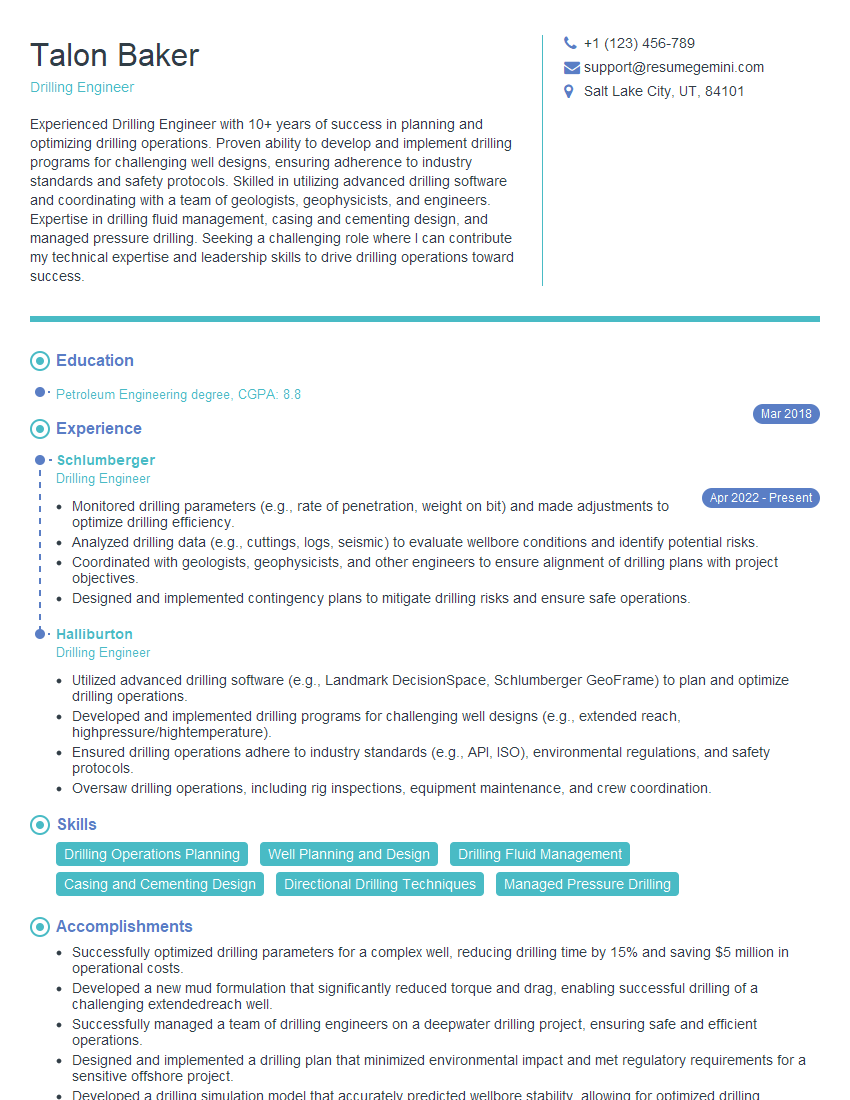
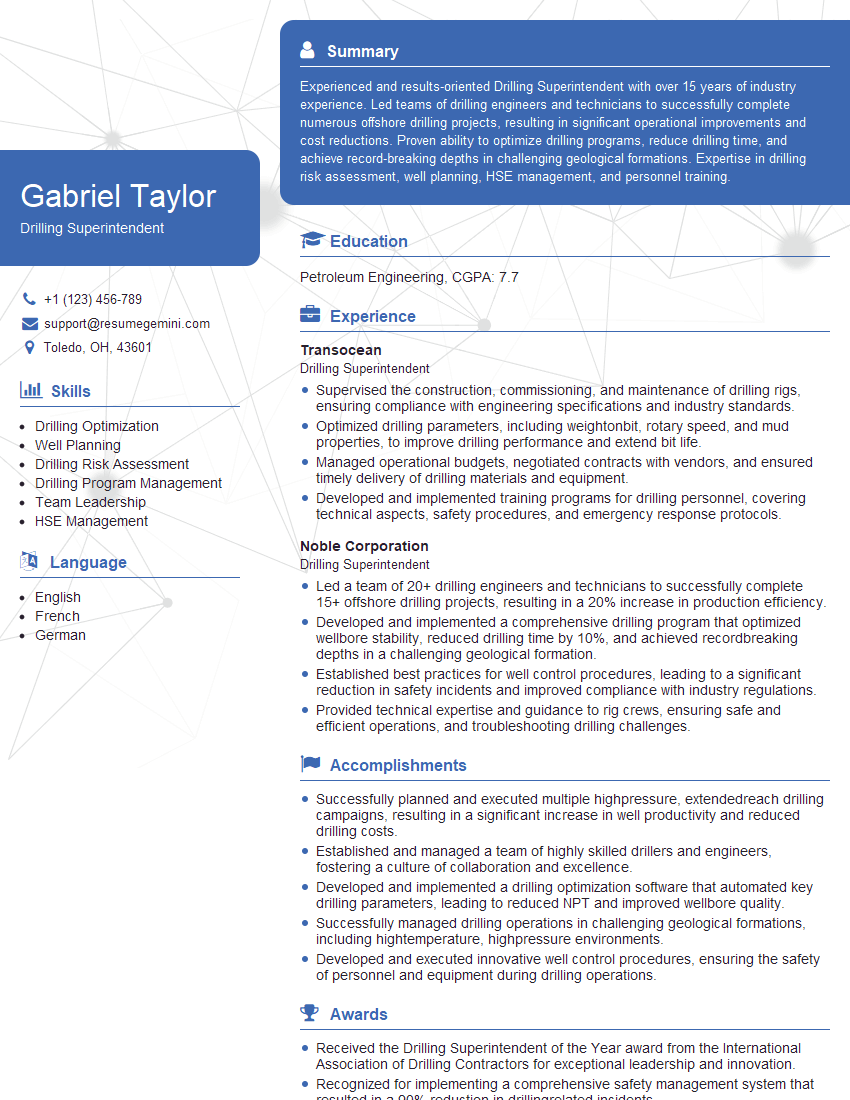
Mastering Drilling and Workover Techniques is crucial for career advancement in the energy sector, opening doors to senior roles and higher earning potential. To maximize your job prospects, it’s essential to create an ATS-friendly resume that effectively highlights your skills and experience. ResumeGemini is a trusted resource that can help you build a professional and impactful resume. We offer examples of resumes tailored to Drilling and Workover Techniques to help guide you in creating a compelling application that showcases your expertise.




Explore more articles
Users Rating of Our Blogs
Share Your Experience
We value your feedback! Please rate our content and share your thoughts (optional).
What Readers Say About Our Blog
Very informative content, great job.
good