Interviews are more than just a Q&A session—they’re a chance to prove your worth. This blog dives into essential Driver Coaching interview questions and expert tips to help you align your answers with what hiring managers are looking for. Start preparing to shine!
Questions Asked in Driver Coaching Interview
Q 1. Describe your experience developing and implementing driver training programs.
Developing and implementing driver training programs requires a systematic approach. It begins with a thorough needs assessment, identifying specific areas where drivers need improvement. This might involve analyzing accident reports, near-miss incidents, or conducting driver surveys to pinpoint recurring issues. For example, I once worked with a fleet of delivery drivers where a high number of accidents were attributed to poor backing skills. Based on this data, I developed a program focused on improved vehicle control, spatial awareness during backing maneuvers, and effective use of mirrors.
The program’s structure usually involves a blended learning approach. This combines classroom sessions covering theory and regulations with hands-on practical training in a controlled environment and on-the-road coaching. The classroom component provides foundational knowledge, and on-the-road training reinforces practical skills and allows for personalized feedback. The program is designed to be modular and adaptable, allowing adjustments based on individual driver needs and feedback throughout the process.
Implementing the program involves rigorous tracking and evaluation. We use a Learning Management System (LMS) to track progress, assign modules, and manage assessments. Regular feedback is incorporated into the process, allowing for ongoing refinement of the program based on observed results and learner needs. Post-training evaluation measures are critical in assessing long-term effectiveness and informing future program iterations.
Q 2. Explain your methodology for assessing driver performance.
Assessing driver performance involves a multifaceted approach that goes beyond simply looking at accident rates. I utilize a combination of methods to paint a complete picture. First, I review driving records, looking for patterns in violations, accidents, and near-miss incidents. Then I conduct on-the-road observations, using standardized evaluation forms to objectively assess driving skills such as vehicle control, hazard perception, and adherence to traffic regulations. This might involve using a driver-rating system with specific scoring criteria for each element.
Vehicle telematics data provides valuable insights into driving behaviors. For instance, we can analyze speed, acceleration, braking, and cornering data to identify areas needing improvement. This objective data can corroborate or challenge initial observations made during on-road evaluations. Finally, I conduct interviews with the drivers to get their perspective, understand their challenges, and gather further qualitative data. This holistic approach provides a more comprehensive and accurate evaluation of the driver’s performance.
Q 3. How do you identify and address high-risk driving behaviors?
Identifying high-risk driving behaviors requires consistent monitoring and proactive analysis. As mentioned before, analyzing accident reports and telematics data (such as harsh braking, speeding, and rapid acceleration) quickly highlights potential issues. During on-the-road observations, I specifically look for indicators like tailgating, unsafe lane changes, failure to check blind spots, and inattention to surroundings. We use a scoring system in the assessment that flags specific behaviors and provides severity levels.
Addressing these behaviors requires a personalized approach. For instance, if a driver consistently speeds, we’ll focus on hazard perception training and strategies for maintaining appropriate speeds. For those with poor lane control, remedial training on steering and vehicle handling techniques will be incorporated. Retraining might include simulator exercises to practice risk mitigation in a safe setting before returning to real-world driving. Consistent follow-up observations and feedback loops are crucial for ensuring improvements are sustained.
Q 4. What techniques do you use to provide constructive feedback to drivers?
Providing constructive feedback is crucial for driver improvement. I focus on a positive and supportive approach, emphasizing the driver’s strengths before addressing areas for improvement. I use the ‘Situation-Behavior-Impact’ (SBI) model: I describe the situation, explain the specific behavior observed, and then outline the impact of that behavior on safety and efficiency. For example, “In the situation where you were approaching a busy intersection (situation), you failed to check your blind spot before changing lanes (behavior), which could have resulted in a collision (impact).”
I avoid accusatory language and instead use objective observations. I always frame feedback as an opportunity for learning and growth. This is coupled with providing suggestions and solutions, illustrating practical techniques to improve driving skills. Active listening and open dialogue are important parts of the feedback process, allowing for clarification and the driver to understand the rationale behind the advice. Regular check-ins ensure that any provided suggestions have been implemented, and any additional support is readily offered.
Q 5. How do you measure the effectiveness of your driver coaching program?
Measuring the effectiveness of a driver coaching program involves tracking several key metrics before, during, and after the program. Pre-training assessments establish a baseline for comparison. Post-training assessments, using the same methods as pre-training, help quantify improvements. We look at changes in accident rates, violations, near-misses, fuel consumption (as a proxy for efficient driving), and driver self-reported confidence levels.
Telematics data plays a crucial role; we track changes in harsh braking, speeding incidents, and other risky behaviors. Driver feedback through surveys and interviews provides valuable qualitative data that complements the quantitative metrics. The long-term effectiveness is monitored over a period of time after training completion to assess the sustainability of the positive changes. If the program isn’t showing positive results, we review the program materials and delivery, and make appropriate changes to ensure the program is maximizing its impact.
Q 6. Describe your experience with various driver training methods (e.g., classroom, online, on-the-road).
My experience encompasses various driver training methods. Classroom training is effective for delivering theoretical knowledge, traffic laws, and defensive driving techniques. Online modules supplement classroom instruction, offering flexibility and self-paced learning. For example, I’ve developed online modules focusing on specific driving maneuvers, hazard perception exercises, and regulatory updates.
On-the-road training is vital for practical skill development and personalized feedback. I use a vehicle equipped with dual controls for added safety and to directly demonstrate correct techniques. Simulators offer a safe environment to practice challenging scenarios, such as emergency braking and skid recovery, without real-world risk. Combining these methods creates a comprehensive and effective training program, catering to different learning preferences and skill levels.
Q 7. How do you adapt your coaching style to different driver personalities and learning styles?
Adapting my coaching style to different driver personalities and learning styles is key to effective training. I utilize different communication styles and teaching methods depending on the individual. For example, I may use a more hands-on, visual approach for kinesthetic learners, employing practical exercises and demonstrations. For visual learners, I might incorporate diagrams, videos, and clear visual aids. Auditory learners might benefit from discussions, explanations, and feedback sessions.
Understanding personality types is equally important. Some drivers respond better to direct, clear instructions; others need more encouragement and positive reinforcement. I build rapport and trust with each driver to create a comfortable learning environment, adapting my approach based on their individual needs and reactions. Regularly assessing learning styles and adjusting techniques is crucial for ensuring the success and engagement of each driver.
Q 8. What are some common challenges faced in driver coaching, and how do you overcome them?
Common challenges in driver coaching often stem from behavioral issues, lack of engagement, and resistance to change. For example, a driver might be resistant to adopting new safety procedures or struggle with maintaining a consistent driving style. Another challenge is managing differing learning styles; some drivers learn best visually, while others prefer hands-on experience.
To overcome these, I employ a multifaceted approach. This starts with building rapport and trust; open communication is key to understanding the driver’s perspective and addressing concerns. Tailoring coaching methods to individual learning styles is crucial. For example, I might use visual aids for visual learners or simulate real-world scenarios for kinesthetic learners. I also leverage positive reinforcement and focus on continuous improvement rather than harsh criticism. Regular feedback sessions and progress tracking help to maintain motivation and identify areas needing further attention.
Furthermore, I utilize technology like driver scorecards to provide objective data, helping drivers understand their performance and pinpoint areas for improvement. If resistance persists, I involve management to provide support and ensure compliance with company policies.
Q 9. Explain your knowledge of relevant safety regulations and compliance requirements.
My knowledge of safety regulations and compliance requirements is extensive, encompassing both federal and state laws, as well as industry-specific standards. I’m familiar with regulations pertaining to hours-of-service (HOS) compliance, including electronic logging devices (ELDs) and their data analysis. I understand the importance of adhering to speed limits, proper use of seatbelts, and maintaining vehicle safety inspections. I’m also knowledgeable about hazardous materials transportation regulations and the relevant documentation requirements.
Staying updated on these regulations is crucial. I regularly review changes through industry publications, attending relevant seminars and workshops. Compliance isn’t just about avoiding penalties; it’s about ensuring the safety of the driver, passengers, and the public. I integrate this knowledge into all training programs, ensuring that drivers understand the consequences of non-compliance and the importance of safe driving practices.
Q 10. How do you ensure driver training programs are compliant with industry standards and best practices?
Ensuring compliance with industry standards and best practices is paramount. I base my driver training programs on a framework incorporating nationally recognized standards like those from the Commercial Vehicle Safety Alliance (CVSA) or relevant professional organizations, tailoring them to specific client needs and legal requirements.
My programs cover all aspects of safe driving, from defensive driving techniques and hazard perception to vehicle inspection procedures and emergency response protocols. Curriculum includes elements focused on regulatory compliance, risk management, and the ethical implications of driving behavior. I regularly review and update the training materials to reflect any changes in legislation or best practices. Post-training assessments and ongoing monitoring ensure drivers retain the knowledge and apply it effectively. Using diverse training methods such as online modules, classroom sessions, and on-road coaching helps caters to different learning preferences and ensures effective knowledge transfer.
Q 11. Describe your experience with driver performance monitoring technologies (e.g., telematics).
I have extensive experience with various driver performance monitoring technologies, primarily telematics systems. I’ve worked with systems that capture data on speed, acceleration, braking, idling time, and geographic location. This data provides invaluable insights into driver behavior and allows for targeted coaching interventions.
For instance, I’ve utilized telematics data to identify drivers who frequently exceed speed limits or engage in harsh braking and acceleration. This information allows for focused coaching sessions that address these specific behaviors. I’ve also utilized software that allows for visual analysis of driving routes, helping identify areas with increased risk potential that need special attention in training sessions.
Q 12. How do you use data from telematics systems to identify areas for driver improvement?
Telematics data provides a wealth of information to pinpoint areas for improvement. I use it to identify trends and patterns in driver behavior. For example, consistently high idling times might indicate a need for training on fuel efficiency techniques, whereas frequent hard braking could suggest the need for refresher training on defensive driving.
My approach involves a detailed analysis of the telematics reports. I focus on specific metrics like harsh braking events, speeding incidents, and fuel consumption. I then correlate this data with other factors such as the driver’s route, weather conditions, and time of day. This helps to avoid unfairly penalizing drivers for circumstances beyond their control. The findings are then used to create customized coaching plans, focusing on the specific areas needing improvement.
Q 13. How do you handle situations where a driver is resistant to coaching or feedback?
Handling resistant drivers requires a sensitive and strategic approach. I start by understanding the root cause of the resistance. Is it due to fear of criticism, lack of understanding, past negative experiences, or simply a lack of trust? Open and empathetic communication is vital. I create a safe space where the driver feels comfortable sharing their concerns.
Instead of directly criticizing, I frame feedback constructively, focusing on specific behaviors and their impact, rather than making personal judgments. I might say something like, “I’ve noticed a pattern in your recent driving data showing frequent hard braking. Let’s explore strategies for smoother transitions that enhance both safety and fuel efficiency.” Involving the driver in the solution-finding process empowers them and increases their ownership of the improvement process. If resistance persists, I may involve a senior manager or union representative, depending on the organizational context. The goal is to find a solution that respects the driver while ensuring safety and compliance standards are met.
Q 14. Describe your experience with coaching drivers on fuel efficiency and vehicle maintenance.
Coaching on fuel efficiency and vehicle maintenance is a significant part of my role. I incorporate this into my training programs using both theoretical knowledge and practical demonstrations. For example, I teach drivers about the impact of aggressive driving on fuel consumption and demonstrate proper techniques for smooth acceleration and braking.
I also provide training on pre-trip inspections, showing drivers how to identify potential issues that could negatively impact fuel efficiency or lead to vehicle breakdowns. I emphasize the importance of regular maintenance, such as tire pressure checks and engine oil changes, and explain how these practices contribute to both cost savings and vehicle longevity. Using telematics data, I can track fuel consumption over time and provide individual feedback to drivers, highlighting areas for improvement. This data-driven approach allows for targeted coaching and helps drivers visualize the impact of their actions on fuel efficiency.
Q 15. How do you create a safe and positive learning environment for drivers?
Creating a safe and positive learning environment for drivers is paramount. It’s about fostering a culture of trust, respect, and open communication where drivers feel comfortable asking questions and admitting mistakes without fear of judgment.
- Safety First Approach: This starts with ensuring the training vehicle is meticulously maintained and that all safety equipment, including seatbelts and emergency flares, is readily available and in working order. The training area should be chosen carefully, avoiding high-traffic zones and opting for locations that offer a variety of road conditions for practice.
- Positive Reinforcement: Instead of focusing solely on errors, I emphasize positive reinforcement. I praise correct techniques and celebrate even small successes. This builds confidence and motivates drivers to continue learning. For example, if a driver successfully navigates a challenging maneuver, I’ll offer specific praise like, “Excellent job using your mirrors and signals to make that lane change safely.”
- Clear Communication and Expectations: Before each session, I clearly explain the objectives, the methods we’ll use, and what I expect from the driver. This includes outlining the code of conduct for the session, ensuring everyone is on the same page and contributing to a respectful and safe learning space.
- Personalized Approach: I tailor the training to the individual driver’s needs and learning style. Some drivers may learn best through visual aids, while others may respond better to hands-on experience. Recognizing and adapting to these differences is key to effective training.
Career Expert Tips:
- Ace those interviews! Prepare effectively by reviewing the Top 50 Most Common Interview Questions on ResumeGemini.
- Navigate your job search with confidence! Explore a wide range of Career Tips on ResumeGemini. Learn about common challenges and recommendations to overcome them.
- Craft the perfect resume! Master the Art of Resume Writing with ResumeGemini’s guide. Showcase your unique qualifications and achievements effectively.
- Don’t miss out on holiday savings! Build your dream resume with ResumeGemini’s ATS optimized templates.
Q 16. What strategies do you use to maintain driver engagement and motivation throughout the training process?
Maintaining driver engagement and motivation requires a multifaceted approach. It’s not simply about lecturing; it’s about creating an interactive and rewarding experience.
- Varied Training Methods: I incorporate diverse training methods, avoiding monotonous lectures. This might include simulations, role-playing scenarios (like responding to unexpected events), and real-world driving exercises with progressive challenges. For example, starting with simple maneuvers in a low-traffic area and then gradually introducing more complex scenarios in busier environments.
- Goal Setting and Feedback: I work with drivers to establish realistic goals for each session and provide regular, constructive feedback. This keeps them focused and motivated. I ensure that feedback is specific, actionable, and balanced, highlighting both strengths and areas for improvement.
- Gamification Techniques: Incorporating elements of friendly competition (with appropriate safety precautions) can make learning more fun and engaging. For instance, drivers might compete on who can perform a specific maneuver most efficiently and safely.
- Regular Check-ins and Open Communication: I maintain open communication channels, encouraging drivers to voice any concerns or questions. Regular check-ins help gauge their progress, address any challenges promptly, and maintain their motivation.
Q 17. Describe your experience with developing driver training materials (e.g., manuals, presentations).
I have extensive experience developing driver training materials. My approach is to create materials that are clear, concise, and engaging, catering to diverse learning styles.
- Driver’s Manual Development: I’ve developed comprehensive driver’s manuals, incorporating visual aids like diagrams and illustrations to clarify complex concepts such as defensive driving techniques and hazard perception. These manuals are designed to be self-explanatory, guiding drivers through theoretical knowledge before practical application.
- Presentation Design: I create visually appealing and informative presentations using multimedia elements, like videos and interactive simulations. For example, I’ve used virtual reality simulations to help drivers experience challenging scenarios like driving in adverse weather conditions in a safe and controlled environment.
- Scenario-Based Training: I design and implement scenario-based training programs that allow drivers to practice reacting to real-world driving challenges. These scenarios might involve unexpected obstacles, emergency stops, or navigating difficult road conditions. This makes the training relatable and enhances practical skills.
- Regular Updates: It’s vital to regularly review and update the materials to keep them current with the latest regulations, technological advancements, and best practices in driver safety.
Q 18. How do you stay up-to-date on the latest advancements in driver training and safety technology?
Staying current with advancements in driver training and safety technology is critical. I utilize a multi-pronged approach to continuous learning.
- Professional Development Courses: I regularly attend workshops and seminars on advanced driver training techniques and new safety technologies. This ensures I am always familiar with the latest industry best practices.
- Industry Publications and Journals: I subscribe to leading journals and publications in the field of transportation safety and driver training, keeping abreast of research findings and emerging trends.
- Online Resources and Webinars: I actively participate in online courses and webinars offered by reputable organizations in the field. This provides opportunities for knowledge sharing and networking with peers.
- Technology Adoption: I actively explore and evaluate new technologies, such as advanced driver-assistance systems (ADAS) and telematics, to integrate them effectively into training programs.
Q 19. What is your approach to addressing driver fatigue and distraction?
Addressing driver fatigue and distraction is crucial for safety. My approach is proactive and multi-faceted.
- Education and Awareness: I educate drivers about the dangers of fatigue and distraction, emphasizing the importance of adequate sleep, regular breaks, and avoiding activities that can impair driving skills. We discuss techniques for identifying signs of fatigue in themselves and others.
- Practical Strategies: I teach drivers practical strategies to combat fatigue, such as regular breaks, proper hydration, and avoiding long stretches of driving without rest. For distraction, we discuss techniques for minimizing distractions like cell phones, and maintaining focus on the road.
- Technology Integration: We explore how technology like lane departure warning systems and driver monitoring systems can help prevent fatigue-related accidents. This enhances awareness and helps drivers stay alert.
- Monitoring and Support: If I notice signs of fatigue or distraction during training, I immediately intervene, and offer the driver assistance and support.
Q 20. How do you handle incidents or accidents involving drivers?
Handling incidents or accidents involving drivers requires a calm, systematic, and thorough approach.
- Immediate Response: In the event of an incident, my priority is ensuring the safety and well-being of all involved. I follow established safety protocols, call for emergency assistance if needed, and secure the scene.
- Investigation and Reporting: I conduct a thorough investigation to determine the contributing factors to the incident, documenting everything meticulously. I complete all necessary reports and adhere to company procedures and regulatory requirements.
- Post-Incident Training: Following an incident, I provide additional training focusing on the specific areas that contributed to the accident. This might involve refresher courses on defensive driving, hazard perception, or emergency response techniques. The goal is to prevent similar incidents from occurring in the future.
- Debriefing and Support: I conduct a debriefing session with the driver, focusing on learning from the experience without blame. I offer support and guidance to help the driver process the incident and regain confidence.
Q 21. Describe your experience with conducting driver evaluations and assessments.
Driver evaluations and assessments form a crucial part of my work. My approach is comprehensive and objective.
- Pre-Training Assessment: I begin with a pre-training assessment to evaluate the driver’s existing skills and identify areas needing improvement. This often involves a combination of written tests, practical driving exercises, and interviews to gauge their knowledge and driving abilities.
- On-Going Evaluation: Throughout the training process, I conduct ongoing evaluations to monitor progress and adjust the training accordingly. This includes observation during practical driving sessions, feedback on performance, and review of any driving logs or reports.
- Post-Training Assessment: I administer a post-training assessment to determine the effectiveness of the training program and whether the driver has achieved the desired competency levels. This might involve a practical driving test and a written examination.
- Objective Feedback: I provide clear and objective feedback to drivers, highlighting both their strengths and areas requiring improvement. I explain my assessment criteria and provide specific examples to illustrate my feedback.
Q 22. How do you use coaching to improve driver adherence to company policies and procedures?
Improving driver adherence to company policies and procedures through coaching involves a multi-faceted approach focusing on education, motivation, and behavioral change. It’s not about punishment, but about fostering a culture of safety and compliance.
- Education: I start by clearly explaining the ‘why’ behind each policy – connecting it to safety, legal obligations, and the company’s overall goals. For example, I’d explain how maintaining a proper speed limit isn’t just about avoiding tickets, but about preventing accidents and protecting lives.
- Interactive Training: Instead of simply presenting policies, I utilize interactive methods like role-playing scenarios, case studies of past incidents, and group discussions. This allows drivers to actively participate, improving understanding and retention. For instance, we might simulate a near-miss scenario and discuss how different choices could have altered the outcome.
- Performance Monitoring and Feedback: Regularly reviewing driver performance data – such as vehicle telematics or driver logs – allows for early identification of trends or potential violations. I then provide constructive feedback, focusing on specific behaviors and offering solutions rather than criticism. For example, if a driver consistently exceeds speed limits, I would analyze the routes they drive, the time of day, and potentially offer strategies for better time management or route planning.
- Positive Reinforcement: Celebrating and acknowledging adherence to policies reinforces positive behaviors. This could involve company-wide recognition programs or individual rewards. Positive feedback is crucial for motivation and encourages continuous compliance.
This approach ensures drivers not only understand the rules but also internalize the importance of compliance, leading to sustained behavioral changes.
Q 23. What is your experience with different types of driving vehicles (e.g., cars, trucks, buses)?
My experience encompasses a wide range of vehicles, including passenger cars, light and heavy-duty trucks, and transit buses. This diverse experience has provided me with a nuanced understanding of the unique safety considerations and operational challenges associated with each vehicle type.
- Passenger Cars: My work with passenger car drivers has focused on defensive driving techniques, fuel efficiency, and safe navigation in diverse traffic conditions.
- Trucks (Light and Heavy-Duty): I’ve worked extensively with truck drivers, focusing on pre-trip inspections, safe loading and unloading procedures, managing fatigue, and complying with Hours-of-Service regulations (HOS). I have a deep understanding of the regulations pertaining to heavy-duty vehicles and the safety implications of non-compliance.
- Buses: My experience with bus drivers involved specialized training on passenger safety, emergency procedures, and managing passenger behavior. This also included the specific challenges related to driving large vehicles in urban and suburban environments.
This breadth of experience allows me to tailor my coaching strategies to the specific needs and challenges faced by drivers of different vehicle types, ensuring optimal safety and efficiency.
Q 24. How do you ensure the confidentiality and privacy of driver data?
Confidentiality and privacy of driver data are paramount. I adhere to strict protocols to ensure all information remains protected.
- Data Security Measures: I use secure systems and databases to store driver data. Access is strictly limited to authorized personnel, and I follow all company policies regarding data encryption and protection.
- Compliance with Regulations: I am thoroughly familiar with and comply with all relevant data privacy regulations, including GDPR and CCPA, where applicable.
- Data Minimization: I only collect and retain the data that is absolutely necessary for coaching and performance improvement.
- Informed Consent: Drivers are fully informed about the type of data collected, how it will be used, and their rights concerning their data. This is often done through a consent form and clear explanations during the initial coaching sessions.
- Anonymization and Aggregation: When sharing data for analysis or reporting, I ensure that individual driver information is anonymized or aggregated to protect identities.
My commitment to data privacy is unwavering, and I take all necessary steps to safeguard sensitive information.
Q 25. How do you measure the return on investment (ROI) of driver training programs?
Measuring the ROI of driver training programs requires a comprehensive approach combining qualitative and quantitative data.
- Reduced Accidents: A primary metric is the reduction in accidents (frequency and severity) following the training. This can be calculated by comparing accident rates before and after the program’s implementation.
- Improved Fuel Efficiency: Training focused on fuel-efficient driving techniques can lead to measurable cost savings. This can be tracked by analyzing fuel consumption data before and after training.
- Decreased Vehicle Maintenance Costs: Proper driving techniques can extend the life of vehicles and reduce maintenance costs. This can be measured by comparing maintenance records before and after the program.
- Improved Driver Compliance: Tracking compliance rates with company policies and regulations – for example, speeding tickets, HOS violations, etc. – provides evidence of the effectiveness of the training.
- Increased Driver Satisfaction: Qualitative data, such as driver surveys or feedback, can gauge the program’s impact on driver morale and job satisfaction.
- Return on Investment Calculation: A comprehensive ROI calculation considers the costs of the training program (instructor fees, materials, etc.) against the savings generated through reduced accidents, fuel efficiency, and maintenance costs. This typically yields a positive ROI demonstrating the value of the program.
By meticulously tracking these metrics, we can demonstrate the financial and safety benefits of driver training programs, justifying continued investment.
Q 26. Describe your experience working with diverse teams and individuals.
I thrive in diverse environments. My experience working with individuals from various backgrounds, cultures, and skill levels has equipped me with excellent communication and interpersonal skills.
- Cultural Sensitivity: I am adept at adapting my communication style to resonate with individuals from diverse backgrounds, ensuring that my coaching approach is inclusive and respectful.
- Individualized Approach: I recognize that each driver has unique learning styles, strengths, and weaknesses. Therefore, I tailor my coaching methods to meet the individual needs of each driver.
- Conflict Resolution: I possess effective conflict resolution skills, enabling me to address disagreements and misunderstandings within a team setting constructively and fairly. I aim for collaborative solutions that are mutually beneficial and respect diverse perspectives.
- Team Building: I actively encourage collaboration and teamwork within driver groups, fostering a sense of camaraderie and mutual support. This can be achieved through team-building activities or by creating opportunities for drivers to share best practices and learn from each other.
My ability to foster effective communication and collaboration in diverse teams ensures that everyone feels valued and supported, maximizing both individual and team performance.
Q 27. How do you maintain professional boundaries while coaching drivers?
Maintaining professional boundaries is crucial in driver coaching. It’s about building trust and rapport while avoiding any appearance of unprofessional conduct.
- Professional Demeanor: I always maintain a professional attitude and avoid casual or overly familiar interactions.
- Clear Communication: I clearly define the scope of my role and the boundaries of the coach-driver relationship from the outset.
- Confidentiality: I strictly adhere to confidentiality protocols, ensuring that sensitive information shared by drivers remains private and protected.
- Avoidance of Social Interactions: I avoid engaging in personal or social interactions outside of the professional coaching setting.
- Reporting Concerns: If a situation arises that crosses professional boundaries, I have clear reporting procedures in place to ensure appropriate action is taken.
By adhering to these principles, I ensure a safe, respectful, and productive coaching environment, fostering trust and open communication with all drivers.
Q 28. What are your salary expectations for this role?
My salary expectations for this role are commensurate with my experience, skills, and the overall compensation package offered. I am open to discussing this further and am confident that we can reach a mutually agreeable figure.
Key Topics to Learn for Driver Coaching Interview
- Driving Techniques & Safety: Understanding defensive driving principles, advanced driving maneuvers, and vehicle control techniques. Practical application: Be prepared to discuss how you would coach a driver struggling with specific safety concerns like blind spot awareness or merging safely.
- Behavioral Observation & Feedback: Mastering the art of observing driver behavior, identifying areas for improvement, and providing constructive, actionable feedback. Practical application: Describe your approach to providing feedback, considering both the driver’s personality and the specific driving issue.
- Communication & Interpersonal Skills: Developing clear and effective communication strategies for coaching in various scenarios. Practical application: Discuss a time you had to address a sensitive driving issue with a driver, emphasizing the importance of active listening and empathy.
- Legal & Regulatory Compliance: Knowledge of relevant traffic laws, regulations, and company policies related to driver safety and compliance. Practical application: Explain how you would ensure drivers are aware of and comply with all relevant safety and legal regulations.
- Performance Evaluation & Metrics: Understanding various methods for assessing driver performance, identifying trends, and setting improvement goals. Practical application: Describe how you would track and measure a driver’s progress and identify areas for improvement using both qualitative and quantitative data.
- Coaching Strategies & Techniques: Familiarity with different coaching styles and techniques to adapt to diverse learning styles and driver personalities. Practical application: Discuss your preferred coaching style and how you would adjust your approach based on individual driver needs.
- Technology & Driver Assistance Systems: Understanding the operation and benefits of various driver assistance systems and telematics technologies used in driver monitoring and coaching. Practical application: Explain how you would leverage these technologies to enhance driver safety and improve efficiency.
Next Steps
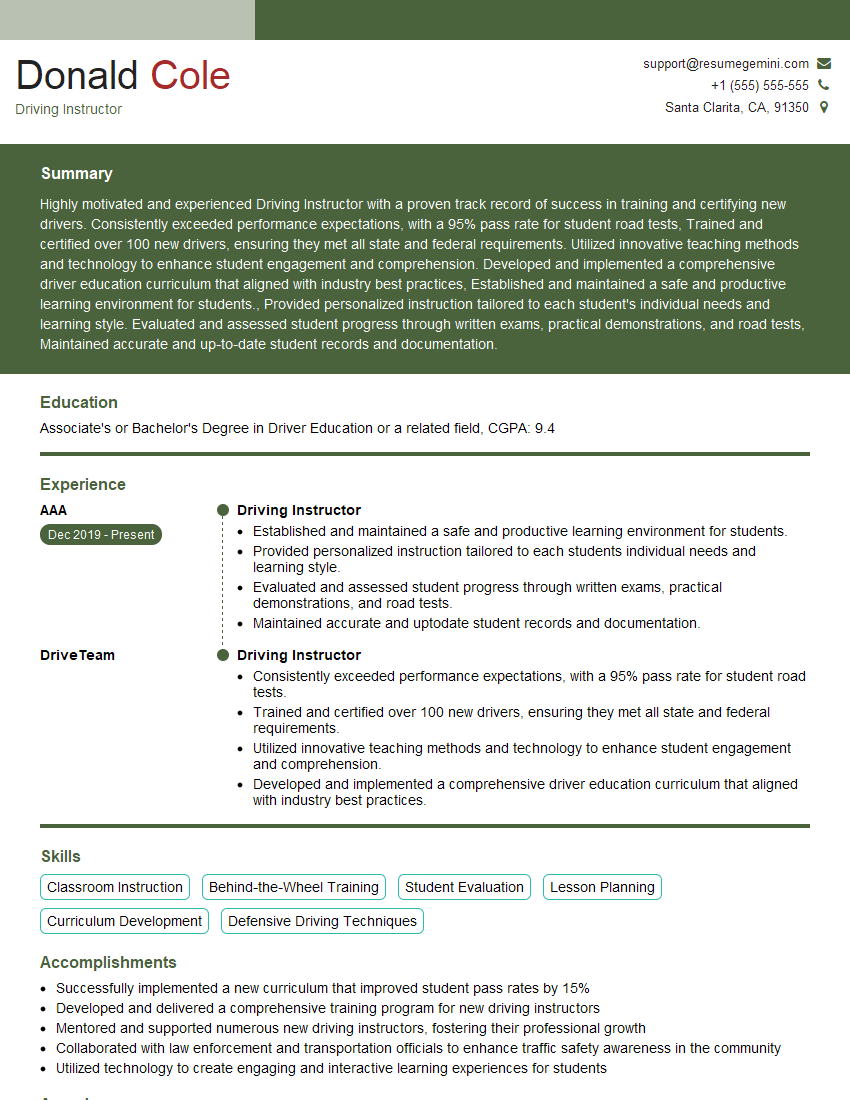
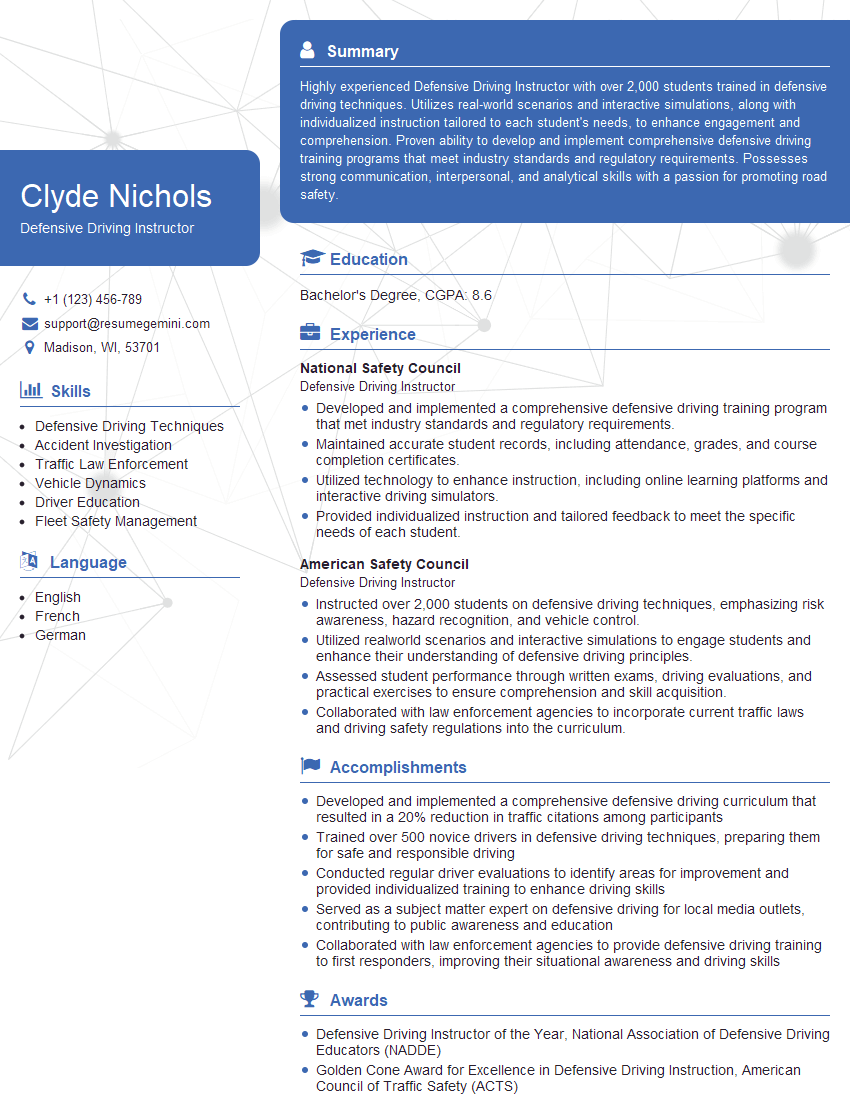
Mastering Driver Coaching opens doors to rewarding careers with significant growth potential. You’ll be instrumental in improving road safety and fostering a culture of responsible driving. To maximize your job prospects, create an ATS-friendly resume that showcases your skills and experience effectively. ResumeGemini is a trusted resource to help you build a professional and impactful resume. We provide examples of resumes tailored to Driver Coaching to guide you, ensuring your application stands out from the competition.
Explore more articles
Users Rating of Our Blogs
Share Your Experience
We value your feedback! Please rate our content and share your thoughts (optional).
What Readers Say About Our Blog
Very informative content, great job.
good