Feeling uncertain about what to expect in your upcoming interview? We’ve got you covered! This blog highlights the most important Dryland Training Techniques interview questions and provides actionable advice to help you stand out as the ideal candidate. Let’s pave the way for your success.
Questions Asked in Dryland Training Techniques Interview
Q 1. Explain the physiological principles underlying dryland training for swimmers.
Dryland training for swimmers aims to improve strength, power, flexibility, and endurance – all crucial for optimal swimming performance. Physiologically, it works by targeting specific muscle groups involved in the swimming stroke, enhancing neuromuscular coordination, and improving cardiovascular fitness. For example, exercises like pull-ups build the latissimus dorsi and biceps, essential for the powerful pull phase. Plyometrics improve power output by enhancing the stretch-shortening cycle in the muscles, mimicking the explosive movements needed for efficient swimming propulsion.
The training also targets core strength for stability in the water and improves flexibility to optimize range of motion during the stroke. Cardiovascular exercises, like running or cycling, improve the swimmer’s ability to sustain high levels of effort during long races. Ultimately, dryland training translates physiological improvements into enhanced swimming performance by improving the force and efficiency of the swimmer’s movements in the water.
Q 2. Describe the benefits of plyometrics in dryland training for athletes.
Plyometrics, or jump training, offers numerous benefits for athletes. It primarily focuses on improving power, which is the rate at which force is produced. Think of a powerful sprint start or a fast underwater dolphin kick; these require explosive power. Plyometrics achieves this by utilizing the stretch-shortening cycle (SSC), where a pre-stretch of the muscle immediately before contraction leads to a more powerful contraction.
Examples include box jumps, depth jumps, and medicine ball throws. Beyond power, plyometrics also enhances neuromuscular coordination, improving the brain’s ability to recruit muscle fibers efficiently. It also boosts speed, agility, and overall explosiveness – all valuable for various sports, including swimming. However, proper technique is crucial to prevent injuries, as plyometrics involves high-impact movements.
Q 3. How would you design a dryland training program for a novice athlete?
A dryland program for a novice should prioritize building a strong foundation of basic strength and endurance before introducing more advanced techniques. We’d start with bodyweight exercises like squats, lunges, push-ups, and planks to develop fundamental strength and stability.
- Phase 1 (Weeks 1-4): Focus on proper form and technique. Low repetitions (8-12) with higher rest periods. Introduce light cardio like jogging or cycling for general conditioning.
- Phase 2 (Weeks 5-8): Gradually increase the intensity and duration of both strength and cardio sessions. Introduce simple plyometric exercises such as jump squats with low impact. Continue with 2-3 sessions per week, focusing on proper form and rest.
- Phase 3 (Weeks 9-12): Incorporate more challenging variations of exercises, slightly increasing weight or resistance as tolerated. Gradually increase plyometrics, always prioritizing form over intensity. Consider adding some flexibility exercises like dynamic stretching.
The program should also incorporate rest and recovery days to allow the body to adapt and prevent overtraining. Regular monitoring of progress and adjustments based on individual response are essential. The key is to build a solid base before progressing to more advanced training.
Q 4. How would you adapt a dryland training program for an athlete recovering from injury?
Adapting a dryland program for an injured athlete requires careful consideration of the specific injury and its limitations. The program must be tailored to avoid aggravating the injury while promoting healing and regaining lost strength and function. The initial phase focuses on restoring range of motion and reducing pain. This might involve gentle range-of-motion exercises, light cardio, and possibly aquatic therapy.
Once the acute phase subsides, we can gradually introduce strength training exercises, initially focusing on low-impact, bodyweight exercises, avoiding any movements that stress the injured area. The intensity and volume of training would be significantly lower compared to a healthy athlete. As the athlete progresses, we’d gradually increase the intensity and introduce more challenging exercises, always closely monitoring for any pain or discomfort. Collaboration with a physical therapist and medical professionals is essential to ensure a safe and effective rehabilitation plan.
For example, an athlete with a shoulder injury might initially focus on exercises that do not involve the shoulder, gradually progressing to strengthening the rotator cuff muscles with low weights or resistance bands once approved by the medical team. The goal is to safely restore functionality and eventually return the athlete to their pre-injury level of performance.
Q 5. What are the key differences between resistance training and plyometric training in dryland programs?
Resistance training and plyometric training both play crucial roles in dryland programs, but they differ significantly in their primary focus. Resistance training emphasizes building strength and muscle hypertrophy (muscle growth) through exercises like weightlifting, using resistance bands or machines. It focuses on generating force over a longer period. This is vital for building a base of strength that supports more powerful movements. Think of a swimmer’s strength in holding a good body position during a long race.
Plyometrics, as discussed earlier, focuses on power development. It’s characterized by quick, explosive movements where the goal is to generate maximum force in a minimal amount of time. Plyometric exercises are crucial for improving the speed and efficiency of a swimmer’s movements. It’s the difference between a strong pull and a powerful, explosive pull. A well-rounded dryland program incorporates both, using resistance training to build a solid base and plyometrics to enhance the power of that strength.
Q 6. Explain the importance of periodization in a dryland training plan.
Periodization is the systematic variation of training variables, such as volume (amount of training), intensity (level of effort), and frequency (number of sessions) over time. It’s essential for preventing overtraining, maximizing performance gains, and optimizing adaptation to training stimuli. Think of it as a carefully planned wave with periods of high intensity followed by rest and recovery.
A typical periodization plan includes distinct phases: a preparatory phase (building a base), a competitive phase (peak performance), and a transition phase (recovery and rest). Within these phases, microcycles (weekly plans) and mesocycles (monthly plans) further structure the training load. For example, during the preparatory phase, the focus might be on high volume and moderate intensity to build a solid base of strength and endurance. As the competitive phase approaches, the intensity increases while the volume decreases to peak performance. The transition phase allows for active recovery and prevents burnout.
Q 7. How do you assess an athlete’s readiness for advanced dryland training?
Assessing an athlete’s readiness for advanced dryland training involves a multifaceted approach. It’s not just about strength; it’s about overall physical preparedness, injury history, and technical proficiency. We need to evaluate several factors:
- Strength and Power Assessments: We’d perform tests like 1RM (one-repetition maximum) for key exercises, assessing strength levels. Vertical jump tests and other plyometric tests gauge power output.
- Flexibility and Mobility Assessments: Range-of-motion tests identify areas needing improvement. Poor flexibility can limit performance and increase injury risk.
- Injury History: A thorough review of past injuries is crucial. We want to avoid aggravating old injuries.
- Technical Proficiency: We assess the athlete’s form during basic exercises. Poor form increases injury risk and limits effectiveness.
- Cardiovascular Fitness: Endurance tests evaluate the athlete’s ability to handle the demands of training.
Based on these assessments, we can determine if the athlete possesses the foundational strength, flexibility, and technical skills to safely and effectively progress to advanced dryland training. If not, we’d focus on addressing the identified weaknesses before progressing.
Q 8. Describe different methods for monitoring athlete progress during dryland training.
Monitoring athlete progress in dryland training requires a multifaceted approach, combining objective measurements with subjective feedback. We use a blend of quantitative and qualitative data to paint a complete picture.
Quantitative Data: This involves tracking measurable metrics such as:
- Strength gains: Recorded using 1 rep max (1RM) testing for major lifts like squats, bench presses, and deadlifts. We also track increases in repetitions at a given weight.
- Power output: Measured through vertical jump height (using a Vertec or similar device), broad jump distance, or medicine ball throws. We analyze improvements over time.
- Speed and agility: Assessed with timed sprints (e.g., 40-yard dash), agility drills (e.g., T-tests, cone drills), and change-of-direction speed tests. Improvements here are crucial for many sports.
- Endurance: Monitored through timed runs or various endurance-based drills. We adapt the tests based on the athlete’s specific sport.
Qualitative Data: This includes subjective observations and feedback:
- Athlete self-reporting: We use questionnaires and regular check-ins to assess fatigue, muscle soreness, and overall feelings about the training program. Open communication is key.
- Coach observation: We assess form, technique, and overall effort levels during training sessions. Identifying subtle changes in movement patterns is essential for preventing injury.
By integrating both quantitative and qualitative data, we gain a comprehensive understanding of the athlete’s progress and can make timely adjustments to the training plan. For example, if an athlete’s 1RM for squats plateaus, but their subjective feedback suggests they’re feeling strong, we might consider altering the training volume or intensity to stimulate further growth. Conversely, if an athlete reports excessive fatigue, we might need to reduce training load to prevent overtraining.
Q 9. What are the potential risks and safety considerations of dryland training?
Dryland training, while incredibly beneficial, presents potential risks if not approached carefully. Safety is paramount, and mitigating risk requires proactive measures.
Muscle strains and tears: Overtraining, improper form, or insufficient warm-up can lead to muscle injuries. We emphasize proper technique, progressive overload, and adequate rest periods.
Joint injuries: High-impact exercises or improper lifting techniques can strain joints. We incorporate exercises that build joint stability and mobility, along with focusing on correct form throughout.
Overtraining: Pushing athletes too hard, too fast, without adequate rest and recovery can lead to burnout, decreased performance, and increased risk of injury. We meticulously monitor training volume, intensity, and recovery periods to prevent this.
Acute injuries: These can occur from accidents or falls. We maintain a safe training environment, ensuring equipment is in good condition, and instructing athletes in proper safety protocols.
To minimize these risks, we implement a comprehensive safety plan that includes proper warm-up and cool-down routines, individualized training programs based on athlete assessment, and continuous monitoring of training load. We also educate athletes on the importance of listening to their bodies and reporting any pain or discomfort immediately.
Q 10. How would you address an athlete’s plateau in dryland training performance?
An athlete’s plateau in dryland training often indicates the need for a strategic shift in the program. It’s crucial to avoid simply increasing volume or intensity without understanding the underlying cause.
Assess the program: We review the current training program, scrutinizing the exercises, sets, reps, intensity, and recovery periods. Has the program been appropriately periodized? Have there been any recent changes in the athlete’s life (sleep, nutrition, stress) that might be impacting performance?
Evaluate the athlete: We reassess the athlete’s strength, power, and endurance levels to identify areas for improvement. Are there any specific weaknesses that need to be addressed?
Adjust the training variables: Based on the assessment, we make adjustments to the program. This might involve:
- Changing the exercises: Introducing new exercises to target the muscles in different ways.
- Altering the training volume or intensity: Reducing volume to allow for recovery or increasing intensity to stimulate further adaptations.
- Modifying the training frequency: Adjusting the number of training sessions per week.
- Incorporating deload weeks: Allowing the body to recover and rebuild.
Consider external factors: We address factors outside of training that may be contributing to the plateau, such as nutrition, sleep, stress management, or any underlying medical conditions.
For example, if an athlete plateaus in their squat 1RM, we might analyze their technique, consider incorporating variations like front squats or paused squats, or even reduce the training volume temporarily before gradually increasing it again. It is a process of continuous evaluation and adaptation.
Q 11. Explain the role of flexibility and mobility exercises in a dryland training program.
Flexibility and mobility exercises are integral components of a comprehensive dryland training program. They play a crucial role in injury prevention, performance enhancement, and overall athletic development.
Improved Range of Motion (ROM): Flexibility exercises, like static stretching (holding a stretch), increase ROM, allowing for greater efficiency and power in movements. Think of a pitcher with limited shoulder flexibility; they won’t be able to generate the same throwing velocity.
Enhanced Performance: Greater ROM translates to improved athletic performance. For example, increased hip flexibility can lead to more powerful strides in running.
Reduced Risk of Injury: Mobility work, focusing on active movement through a full ROM (e.g., dynamic stretching, mobility drills), prepares the body for the stresses of training, reducing the likelihood of muscle strains or joint injuries.
Improved Posture and Balance: Regular flexibility and mobility exercises improve posture and balance, contributing to overall athleticism.
We incorporate a variety of flexibility and mobility exercises, including static and dynamic stretches, myofascial release techniques (e.g., foam rolling), and joint mobility drills into the warm-up and cool-down routines, and sometimes as a dedicated session.
Q 12. How do you incorporate core strength training into a dryland training program?
Core strength is fundamental to athletic performance. A strong core provides stability, power transfer, and injury prevention. We integrate core training into dryland programs systematically.
Specific Core Exercises: We include a variety of exercises targeting different aspects of core strength, including:
- Anti-extension: Exercises like planks, pallof presses, and anti-rotation presses strengthen the muscles that resist spinal flexion and rotation.
- Anti-flexion: Exercises like back extensions and reverse hyperextensions strengthen the muscles that resist forward bending.
- Anti-lateral flexion: Side planks and lateral raises strengthen the muscles resisting side bending.
- Rotation: Medicine ball twists and Russian twists improve rotational strength and power.
Integration with other exercises: We often incorporate core activation into other exercises, such as holding a plank position during a squat or deadlift to enhance stability and power transfer.
Progressive overload: We gradually increase the difficulty of core exercises by increasing reps, sets, or using added resistance to challenge the athlete and promote continuous improvement.
Variety: To prevent boredom and maintain engagement, we use a variety of core exercises, ensuring we target all aspects of core strength.
For example, we might start with basic planks and progress to more challenging variations like side planks or weighted planks. The key is progressive overload and mindful execution.
Q 13. Discuss the importance of proper warm-up and cool-down routines in dryland training.
Proper warm-up and cool-down routines are essential for injury prevention and performance optimization in dryland training. They prepare the body for exercise and aid in recovery.
Warm-up (10-15 minutes): The warm-up gradually increases heart rate and body temperature, preparing the muscles and joints for activity. It includes:
- General warm-up: Light cardio, such as jogging or cycling.
- Dynamic stretching: Active movements that prepare muscles and joints for movement, such as arm circles, leg swings, and torso twists.
- Specific warm-up: Light versions of the exercises to be performed in the main workout.
Cool-down (5-10 minutes): The cool-down gradually lowers heart rate and body temperature, helping the body return to its resting state. It consists of:
- Light cardio: Slow jogging or walking.
- Static stretching: Holding stretches for 20-30 seconds to improve flexibility and reduce muscle soreness.
Think of the warm-up as preparing the engine of a car, and the cool-down as allowing it to cool down gradually after a long drive. Neglecting either is a recipe for potential problems.
Q 14. What are some common mistakes to avoid when implementing dryland training programs?
Several common mistakes can hinder the effectiveness and safety of dryland training programs. Avoiding these pitfalls is crucial for optimal results.
Ignoring individual needs: Not tailoring the program to the athlete’s specific needs, strengths, weaknesses, and training history is a common mistake. Every athlete is unique.
Overtraining: Failing to adequately manage training volume, intensity, and recovery leads to overtraining, increasing injury risk and hindering performance.
Neglecting proper technique: Incorrect form significantly increases the risk of injury and reduces training effectiveness. We emphasize proper technique throughout the program.
Lack of periodization: Not properly structuring the training program with varying phases of training (e.g., strength, power, hypertrophy) impairs long-term results. A structured approach is critical.
Insufficient warm-up and cool-down: Failing to adequately warm-up and cool-down increases the risk of injury and reduces recovery.
Ignoring nutrition and recovery: Proper nutrition and recovery are paramount for muscle growth and optimal performance. Adequate sleep, hydration, and a balanced diet are essential.
By avoiding these common mistakes, coaches can effectively design and implement dryland training programs that maximize athlete performance while minimizing the risk of injury.
Q 15. How do you tailor dryland training to the specific needs of different sports?
Tailoring dryland training to a specific sport requires a deep understanding of the sport’s demands. It’s not a one-size-fits-all approach. We need to analyze the key movements, energy systems used, and injury risks associated with that sport. For example, a marathon runner needs vastly different training than a weightlifter.
- Endurance Sports (e.g., marathon running, cycling): Focus on improving aerobic capacity, muscular endurance, and lactate threshold. Training will incorporate long-duration, low-intensity cardio, plyometrics for power, and strength training emphasizing functional movements with moderate weights and high repetitions.
- Power Sports (e.g., sprinting, jumping): The emphasis shifts to maximal strength and power development. Training includes plyometrics, heavy weight training with lower repetitions, and explosive movements to improve speed and power output.
- Strength-based Sports (e.g., weightlifting, powerlifting): The primary goal is to build maximal strength and muscle mass. This will incorporate heavy weight training, focused on compound movements (squats, deadlifts, bench press), with progressively increasing weight and lower repetitions. Plyometrics may have a smaller role.
- Team Sports (e.g., basketball, soccer): These sports demand a combination of speed, agility, strength, and endurance. The dryland program needs to be multi-faceted, including elements from all the above categories, with an emphasis on agility drills and sport-specific movements to improve coordination and reaction time.
Essentially, the program is built around the specific physical demands of the sport, ensuring the athlete is optimally prepared for competition.
Career Expert Tips:
- Ace those interviews! Prepare effectively by reviewing the Top 50 Most Common Interview Questions on ResumeGemini.
- Navigate your job search with confidence! Explore a wide range of Career Tips on ResumeGemini. Learn about common challenges and recommendations to overcome them.
- Craft the perfect resume! Master the Art of Resume Writing with ResumeGemini’s guide. Showcase your unique qualifications and achievements effectively.
- Don’t miss out on holiday savings! Build your dream resume with ResumeGemini’s ATS optimized templates.
Q 16. Describe your experience with different types of resistance training equipment.
My experience with resistance training equipment is extensive. I’ve utilized a wide range of tools to achieve specific training objectives.
- Free weights (dumbbells, barbells): These are fundamental for building strength and power, offering a high degree of freedom of movement and allowing for a wide variety of exercises. They are excellent for compound movements.
- Resistance bands: These are highly versatile, portable, and offer variable resistance, ideal for rehabilitation, flexibility work, and dynamic warm-ups. They’re also great for assisting or adding resistance to bodyweight exercises.
- Cable machines: These provide consistent resistance throughout the entire range of motion, making them ideal for isolating specific muscle groups and controlling movement patterns.
- Weight machines: These machines offer guidance and support, making them suitable for beginners or individuals recovering from injuries. However, they tend to restrict movement patterns compared to free weights.
- Plyometric boxes and platforms: These are crucial for developing explosive power and improving jump height and speed.
The choice of equipment is dictated by the athlete’s needs, training goals, and the available resources. A well-designed program strategically incorporates the most suitable equipment to maximize effectiveness.
Q 17. Explain your understanding of exercise program design principles.
Exercise program design principles are fundamental to creating effective and safe training plans. They form the cornerstone of my approach.
- Specificity: Exercises should directly relate to the demands of the sport (as discussed previously). If an athlete needs to improve vertical jump height, we use exercises that directly train that specific movement.
- Progressive Overload: Gradually increasing the intensity, volume, or complexity of training over time to continually challenge the athlete and stimulate adaptation. This is often done by increasing weight, reps, sets, or the difficulty of the exercise itself.
- Individualization: The program must be tailored to the individual’s needs, abilities, and limitations. Factors like age, training experience, injury history, and current fitness level are all considered.
- Variation: Introducing variation in exercises, sets, reps, and intensity prevents plateaus and keeps athletes engaged. It also helps prevent overuse injuries.
- Periodization: Structuring the training program into cycles (macrocycles, mesocycles, microcycles) with varying training emphasis across time to optimize performance. For example, an athlete might focus on strength development in the off-season, then shift to power and speed during the pre-season.
- Recovery and Regeneration: Adequate rest and recovery are essential for muscle growth and preventing overtraining. This includes sleep, nutrition, and active recovery techniques.
These principles are interwoven to create a holistic and effective training program. Ignoring any of them can significantly hinder progress or even cause injury.
Q 18. How do you incorporate feedback from athletes into the training plan?
Athlete feedback is crucial for program success. It’s not simply about listening; it’s about actively seeking and integrating it.
I use a multi-pronged approach:
- Regular check-ins: I schedule regular meetings with athletes to discuss their progress, address any concerns, and gather feedback on their training experience. Are they finding the exercises challenging but manageable? Are they experiencing any pain or discomfort? These conversations are vital.
- Training logs and diaries: Athletes are encouraged to track their workouts, including any perceived exertion levels, pain or discomfort, and any unexpected responses to the training stimuli. This provides objective data supplementing subjective feedback.
- Performance monitoring: Objective data like strength gains, speed improvements, jump height, or sport-specific performance tests provides concrete evidence of progress, confirming or refuting subjective feedback.
- Open communication channels: Creating a safe space for athletes to share honest feedback is paramount. This might involve casual conversations, email, or even an anonymous feedback system.
I then use this feedback to adjust the program: modifying exercises, adjusting weights, altering training frequency or volume, providing alternative exercises, or even addressing underlying issues outside of training (sleep, nutrition, etc.).
Q 19. Describe how you would evaluate the effectiveness of a dryland training program.
Evaluating the effectiveness of a dryland training program involves both subjective and objective measures.
- Objective Measures: These are quantifiable metrics that provide concrete evidence of progress.
- Strength and Power Tests: 1RM (one-repetition maximum) tests for major lifts, vertical jump height, sprint times.
- Endurance Tests: VO2 max testing, lactate threshold testing, time trials.
- Agility and Speed Tests: T-tests, shuttle runs, pro-agility tests.
- Sport-Specific Tests: These tests should directly reflect the athlete’s sport-specific skills and abilities.
- Subjective Measures: These involve gathering feedback from the athlete.
- Perceived Exertion: How challenging did the athlete find the workout?
- Recovery: How well did the athlete recover from the sessions? Are they experiencing excessive muscle soreness, fatigue, or other signs of overtraining?
- Mood and Motivation: Are the athletes feeling positive about their progress and engaged in the training?
By combining both objective data and subjective feedback, we can gain a comprehensive understanding of the program’s effectiveness. Any deviations from expected outcomes trigger a review and adjustments to the program.
Q 20. Explain the importance of nutrition and recovery in conjunction with dryland training.
Nutrition and recovery are not add-ons; they are integral parts of a successful dryland training program. They are as important as the training itself.
- Nutrition: Proper nutrition fuels the body for training, supports muscle growth and repair, and enhances recovery. Adequate protein intake is crucial for muscle protein synthesis. Carbohydrates provide energy for workouts, and healthy fats support hormone production and overall health. Hydration is also vital to performance and recovery.
- Recovery: This involves strategies to help the body recover from the stress of training.
- Sleep: 7-9 hours of quality sleep is essential for muscle repair and hormone regulation.
- Active Recovery: Light activities like walking or swimming can promote blood flow and reduce muscle soreness.
- Passive Recovery: Techniques like foam rolling, massage, and ice baths can help reduce inflammation and muscle soreness.
Ignoring nutrition and recovery can lead to decreased performance, increased risk of injury, and overtraining syndrome. A well-rounded program includes nutritional guidance and recovery strategies tailored to each athlete’s needs.
Q 21. How would you handle an athlete who is experiencing muscle soreness after dryland training?
Muscle soreness after dryland training is common, particularly after introducing new exercises or increasing the intensity. However, it’s essential to differentiate between normal muscle soreness (delayed-onset muscle soreness or DOMS) and potential injury.
My approach involves:
- Assessing the Soreness: I would first ask the athlete to describe the soreness: Is it mild, moderate, or severe? Where is the soreness located? Is it accompanied by any swelling, bruising, or limitation in movement?
- DOMS vs. Injury: DOMS is usually diffuse, not localized to a specific point, and is typically less severe. Injury, on the other hand, may involve sharp pain, localized swelling, and a significant limitation in range of motion. If I suspect an injury, I would refer the athlete for medical evaluation.
- Managing DOMS: For DOMS, I would recommend:
- Light Activity: Gentle movement and active recovery can help reduce stiffness.
- Stretching: Static and dynamic stretching can improve flexibility and range of motion.
- Rest and Recovery: Adequate sleep and nutrition are crucial.
- Hydration: Staying properly hydrated supports muscle recovery.
- Foam Rolling or Self-Massage: These can help reduce muscle tension and soreness.
- Program Adjustment: Depending on the severity and location of the soreness, I may need to adjust the training program. This might involve reducing the intensity or volume, modifying exercises, or incorporating more rest days.
It is crucial to remember that ignoring pain or pushing through excessive soreness can lead to further injury. Athlete safety is always the priority.
Q 22. Discuss the role of technology (e.g., wearable sensors) in monitoring dryland training.
Technology plays a crucial role in optimizing dryland training. Wearable sensors, such as GPS trackers, heart rate monitors, and motion capture systems, provide objective data on an athlete’s performance. This data allows for precise monitoring of training load, recovery, and technical efficiency. For instance, a GPS tracker can measure the distance covered during high-intensity interval training, ensuring the athlete is adhering to the prescribed workload. Heart rate monitors provide real-time feedback on cardiovascular response, helping us adjust intensity levels to avoid overtraining. Motion capture can analyze movement patterns, identifying inefficiencies that could lead to injury and optimizing technique. This data-driven approach leads to personalized training plans and faster progress, minimizing the risk of injury.
Imagine trying to improve your running form without visual feedback. It’s like trying to build a house without a blueprint. Technology provides that blueprint, allowing for continuous monitoring and adjustments.
Q 23. Describe your experience working with athletes of different age groups and skill levels.
My experience spans a wide range of athletes, from young, aspiring athletes to seasoned professionals. I’ve worked with children as young as 10, focusing on fundamental movement skills and fostering a love for sports. With these younger athletes, the emphasis is on fun and proper technique development. With adult athletes, the focus shifts to more advanced training techniques, tailored to their specific sport and goals. I’ve worked with Olympic hopefuls, professional athletes, and recreational athletes, and I adapt my approach to their individual needs, skill levels, and physical conditions. The key is understanding the athlete’s current capabilities and setting achievable goals.
For example, I recently worked with a group of teenage swimmers, incorporating plyometrics and agility drills to improve their power and speed in the water. Then, I collaborated with a group of master’s athletes, focusing on strength training and mobility exercises to help manage age-related decline and prevent injuries.
Q 24. How do you adapt dryland training programs for athletes with specific physical limitations?
Adapting dryland training for athletes with physical limitations requires a thorough understanding of their condition and capabilities. This involves close collaboration with medical professionals to ensure the training program is safe and effective. Modifications might include using alternative exercises that don’t stress the injured area, reducing training volume or intensity, or focusing on strengthening compensatory muscles.
For example, an athlete with a knee injury might substitute squats with lunges or leg press, focusing on maintaining strength and flexibility without putting excessive stress on the affected joint. We might replace high-impact plyometrics with low-impact alternatives, like band exercises. We would always prioritize proper form and range of motion to prevent further injury.
Q 25. Explain your understanding of the principles of progressive overload in dryland training.
Progressive overload is a cornerstone of effective dryland training. It involves gradually increasing the demands placed on the athlete’s body over time. This can be achieved by increasing the weight, repetitions, sets, or the intensity of the exercises. The key is to challenge the athlete without overtraining, allowing for sufficient recovery and adaptation. Failure to follow the principle of progressive overload will likely result in a plateau in performance and potential injury.
Consider a weightlifter progressively increasing their weight over time. In the initial phase, they might lift 50kg for 8 reps, gradually progressing to 55kg, 60kg and eventually even more. Similarly, we might increase the intensity of interval training by decreasing rest periods or increasing the duration of high-intensity periods.
Q 26. How would you design a dryland training program that addresses both strength and endurance?
A well-designed dryland training program addressing both strength and endurance requires a balanced approach. I would incorporate both strength training exercises (e.g., squats, deadlifts, presses) and endurance exercises (e.g., running, cycling, rowing). The program would be periodized, with different phases focused on building strength or endurance. This might involve a strength phase followed by a power phase and then an endurance phase. We might even use plyometrics for both power and agility.
For example, a training week might include three strength training sessions, two endurance sessions, and one rest day. Within the strength training sessions, we might focus on different muscle groups each day, while the endurance sessions might incorporate interval training and steady-state cardio. The program will be tailored to the individual athlete’s needs and their specific sport demands.
Q 27. What is your experience with different types of training modalities (e.g., circuit training, interval training)?
I’m proficient in various training modalities, each offering unique benefits. Circuit training involves a series of exercises performed consecutively with minimal rest, enhancing cardiovascular fitness and muscle endurance. Interval training alternates high-intensity bursts with periods of recovery, improving both speed and endurance. Plyometrics focuses on explosive movements to enhance power and agility. Strength training, using free weights or machines, builds muscle strength and size. I select the most appropriate modality based on the athlete’s specific needs and goals.
For example, for a basketball player, I might use plyometrics to improve jumping ability and circuit training to enhance overall fitness. For a long-distance runner, interval training would focus on speed endurance, while strength training would build leg strength to prevent injuries.
Q 28. How do you ensure the safety and well-being of athletes during dryland training sessions?
Ensuring athlete safety is paramount. Before starting any training program, I conduct a thorough assessment of the athlete’s physical condition and any pre-existing injuries. I teach proper exercise techniques to minimize the risk of injury. The training environment is carefully monitored to ensure it is safe and appropriate. We utilize proper warm-up and cool-down routines to prepare the body for exercise and promote recovery. I emphasize the importance of listening to their body and taking rest days when needed. Regular communication with athletes is key to addressing any concerns promptly.
For instance, all sessions start with dynamic stretching to increase blood flow and range of motion and conclude with static stretching to enhance flexibility and recovery. The weight room is equipped with safety bars and spotters to reduce the risk of accidents. Athletes are continuously monitored during high-intensity exercises. Above all, fostering an open communication channel between athlete and coach is essential to address any concerns or discomfort promptly.
Key Topics to Learn for Dryland Training Techniques Interview
- Physiological Principles: Understanding the physiological adaptations to dryland training, including muscle hypertrophy, strength gains, and cardiovascular improvements. Consider the differences in training adaptations between dryland and in-water training.
- Program Design & Periodization: Practical application of periodization models to dryland training programs. This includes designing training plans that address specific needs (e.g., strength, power, endurance) and account for recovery and injury prevention.
- Exercise Selection & Technique: Knowing the appropriate exercises for different training goals (e.g., plyometrics for power, resistance training for strength) and ensuring proper exercise form to maximize effectiveness and minimize risk of injury. Be prepared to discuss modifications for various athlete populations.
- Strength & Conditioning Fundamentals: Demonstrate a solid grasp of core strength & conditioning principles like progressive overload, specificity, and individualization. How do these principles apply uniquely to dryland training for aquatic athletes?
- Monitoring & Evaluation: Understanding how to effectively monitor training progress (e.g., through performance testing, subjective feedback) and make adjustments to training programs based on the data collected. This includes discussing different assessment methods.
- Injury Prevention & Rehabilitation: Discuss common injuries in aquatic athletes and how dryland training can both prevent and aid in the rehabilitation of these injuries. This should include understanding warm-up, cool-down, and recovery strategies.
- Technology & Data Analysis in Dryland Training: Familiarize yourself with the use of technology (e.g., wearable sensors, video analysis) in monitoring and optimizing dryland training programs. How can data inform training decisions?
Next Steps
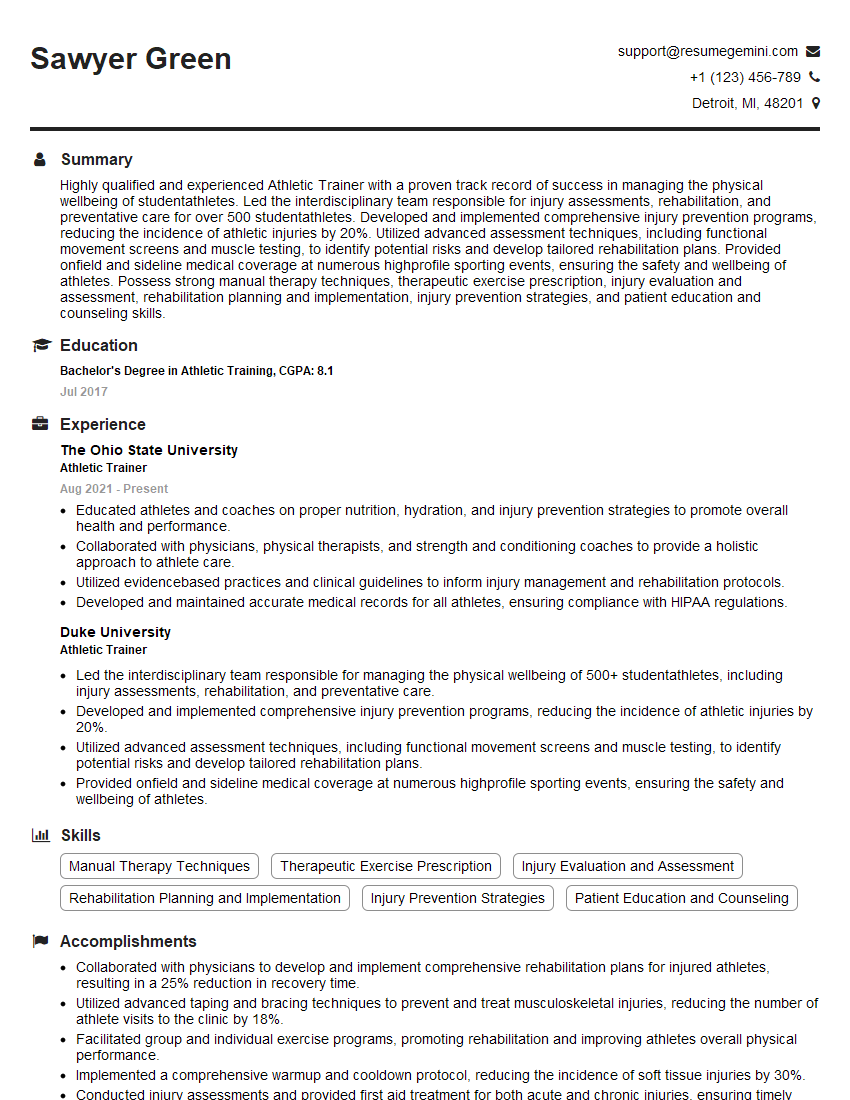
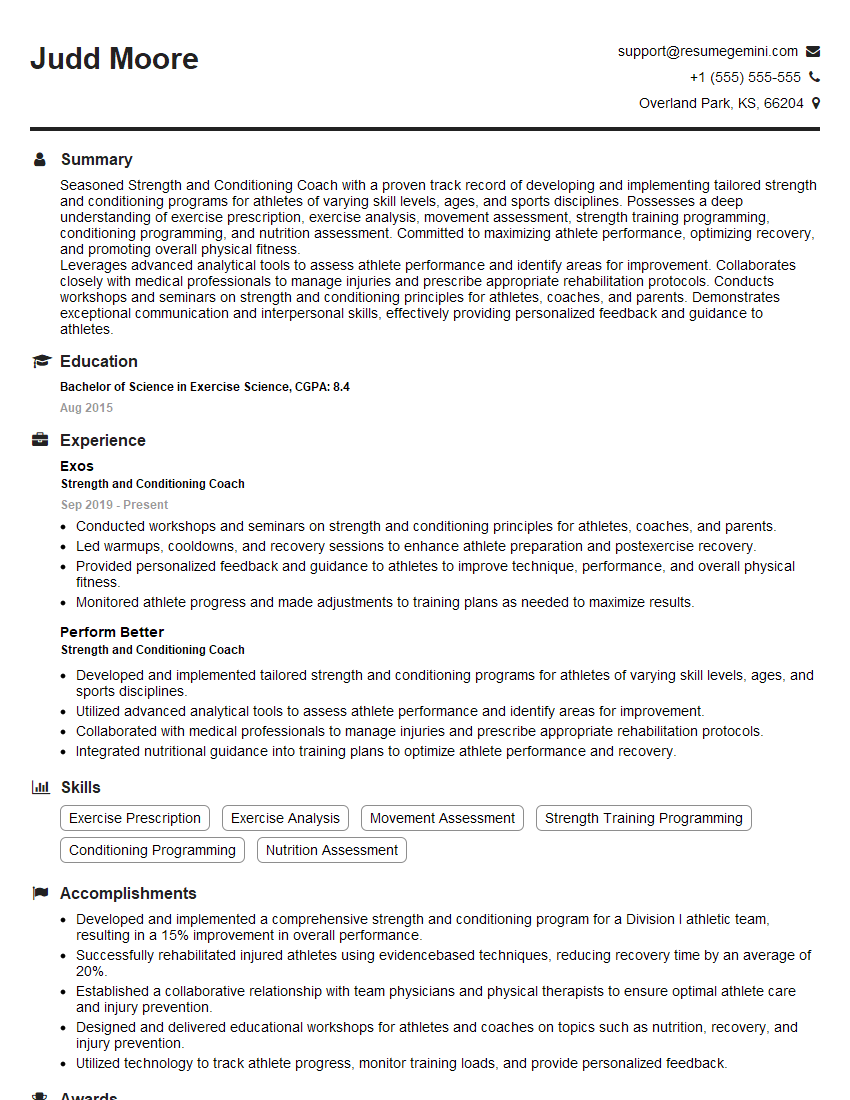
Mastering Dryland Training Techniques is crucial for career advancement in sports science, coaching, and athletic performance enhancement. A strong understanding of these techniques demonstrates your expertise and ability to design and implement effective training programs for aquatic athletes. To maximize your job prospects, focus on building an ATS-friendly resume that highlights your skills and experience. We recommend using ResumeGemini, a trusted resource for creating professional resumes. ResumeGemini provides examples of resumes tailored to Dryland Training Techniques to help you showcase your qualifications effectively. Take the next step towards your dream career today!



Explore more articles
Users Rating of Our Blogs
Share Your Experience
We value your feedback! Please rate our content and share your thoughts (optional).
What Readers Say About Our Blog
Very informative content, great job.
good