Cracking a skill-specific interview, like one for Drywall Repair, requires understanding the nuances of the role. In this blog, we present the questions you’re most likely to encounter, along with insights into how to answer them effectively. Let’s ensure you’re ready to make a strong impression.
Questions Asked in Drywall Repair Interview
Q 1. What types of drywall are you familiar with?
Drywall comes in several types, each suited for different applications. The most common are:
- Standard Gypsum Board: This is the workhorse of drywall, used for most residential and light commercial applications. It’s relatively inexpensive and easy to work with.
- Moisture-Resistant (MR) Drywall: Designed for areas prone to moisture like bathrooms and kitchens, it features a green core and enhanced resistance to mold and mildew. Think of it as having a slightly tougher skin.
- Fire-Resistant (FR) Drywall: Also known as Type X, this drywall contains additives that increase its fire resistance. It’s often required in fire-rated walls and ceilings. This is like adding a fire-retardant layer of protection.
- Water-Resistant (WR) Drywall: This type offers superior protection from water damage compared to standard drywall. While similar in appearance to MR, it offers even more robust water-resistance.
- Foil-Faced Drywall: Used primarily for thermal and vapor barriers, often found in attics or behind walls that need extra insulation. Its reflective foil helps to prevent heat transfer.
Understanding the different types is crucial for choosing the right material for a specific job, ensuring longevity and safety.
Q 2. Describe your experience with drywall taping and finishing.
Drywall taping and finishing is the art of making the seams between drywall sheets virtually invisible. My experience encompasses all aspects, from applying the tape to the final sanding. I’ve worked on projects ranging from small residential repairs to larger commercial installations. I’m proficient in various techniques, including using different types of tape (paper and fiberglass), and applying multiple coats of joint compound (mud) to achieve a smooth, flawless finish. My attention to detail ensures a high-quality result, eliminating visible seams and ensuring a professional look. I’ve found that practice and patience are key to perfecting this process. For example, I’ve learned that feathering the edges of the mud is vital to preventing noticeable ridges, and that using the right tools and materials can drastically reduce the amount of sanding needed.
Q 3. How do you repair a hole in drywall?
Repairing a drywall hole depends on the size and type of damage. For small holes (less than a couple of inches), a simple patch is often sufficient. Larger holes require a more involved process.
- Assess the damage: Determine the hole’s size and if any structural damage exists.
- Prepare the area: Clean out any loose debris and use a utility knife to square off the edges of the hole for a clean patch.
- Cut a patch: If necessary, cut a patch of drywall slightly larger than the hole. It’s best to use a piece of drywall that matches the existing material.
- Install the patch (if needed): Secure the patch using drywall screws, ensuring they don’t penetrate the back of the drywall.
- Apply joint compound: Apply several thin coats of joint compound, allowing each coat to dry before applying the next. Feather the edges to blend seamlessly with the surrounding wall.
- Sand smooth: Once the mud is dry, sand the area smooth with fine-grit sandpaper. Prime and paint to match the existing wall.
For larger holes, you might need to build out the area with a backing of wood or metal lath before patching.
Q 4. Explain the process of mudding and sanding drywall.
Mudding and sanding are crucial steps in drywall finishing, resulting in a smooth, paintable surface. Think of mudding as building up the surface, and sanding as sculpting it to perfection.
Mudding: Involves applying several thin coats of joint compound (mud) over seams, nail holes, or patches. Each coat needs to dry completely before applying the next. The first coat is usually applied to embed the tape and fill any gaps. Subsequent coats smooth out the surface. The key is thin, even coats to avoid cracking and ensure a seamless finish.
Sanding: This step removes excess mud and creates a perfectly smooth surface. It’s essential to use the right sandpaper grit – start with a coarser grit to remove large amounts of mud, then gradually move to finer grits for a smooth, flawless finish. Always use a sanding block or pole sander to avoid creating uneven surfaces. Vacuum regularly to remove dust, preventing respiratory issues and ensuring even sanding.
Proper mudding and sanding are essential for a professional finish. Rushing the process can lead to visible imperfections that will show through the final paint job.
Q 5. What tools and materials are essential for drywall repair?
The essential tools and materials for drywall repair include:
- Drywall knife (6”, 8”, 12”): For applying joint compound and cutting drywall.
- Putty knife (various sizes): For smaller repairs and filling cracks.
- Joint compound (mud): Different types are available for various applications.
- Drywall tape (paper or fiberglass): To cover seams.
- Sandpaper (various grits): For smoothing surfaces. Consider a sanding pole or block for efficient sanding.
- Sanding sponge: To achieve a finer finish and prevent gouging.
- Utility knife: For cutting drywall and removing loose materials.
- Measuring tape and pencil: For accurate measurements and marking.
- Drill with drill bits: For securing drywall patches with screws.
- Safety glasses and dust mask: For protecting your eyes and lungs.
Having the right tools and materials makes the job easier, faster, and more efficient. Using the right tools is as important as knowing how to use them correctly.
Q 6. How do you prepare a surface for drywall installation?
Preparing a surface for drywall installation is crucial for a secure and long-lasting installation. This involves:
- Cleaning the surface: Removing any loose debris, dust, or old materials. A clean surface ensures proper adhesion.
- Structural checks: Ensuring the underlying structure (studs or framing) is properly spaced and plumb. This provides a solid base for the drywall.
- Addressing any issues: Repairing any damage to the underlying structure, such as cracks or gaps, before installing the drywall.
- Installing vapor barriers (if needed): In areas prone to moisture, installing a vapor barrier prevents moisture from penetrating the drywall.
- Checking for electrical and plumbing: Ensuring all electrical and plumbing work is complete and inspected before covering it with drywall.
Proper surface preparation is like building a solid foundation for a house. Skipping this step can lead to problems down the line, such as loose drywall or cracks.
Q 7. How do you handle different types of drywall damage?
Different types of drywall damage require different repair techniques:
- Small holes and dents: Can usually be repaired with a small amount of joint compound and sanding.
- Large holes: Require patching with a piece of drywall or using a more extensive repair method.
- Cracks: Need careful attention to ensure they don’t reappear. Often require applying a flexible mesh tape over the crack before mudding and sanding.
- Water damage: Requires addressing the source of the moisture, removing the damaged drywall, and replacing it with moisture-resistant drywall. In cases of severe water damage, you may also need to address mold.
- Impact damage: Might require more complex repair depending on the severity. This could involve removing and replacing sections of drywall if damage is too extensive.
Knowing how to handle different types of damage ensures you choose the correct repair method, restoring the integrity and appearance of the drywall.
Q 8. What are the common causes of drywall cracks?
Drywall cracks are a common occurrence, often stemming from the natural movement and settling of a house. Think of it like your house breathing – it expands and contracts with temperature and humidity changes. This movement can stress the drywall, leading to cracks.
- Settlement Cracks: These are often hairline cracks that appear vertically and are caused by the foundation settling. They’re frequently found in corners or along long walls.
- Shrinkage Cracks: These occur as the drywall dries after installation. They’re usually less severe and often appear as spiderweb-like cracks.
- Stress Cracks: These can result from external forces, such as poorly installed cabinets, doors that aren’t properly hung, or even the impact of furniture. They are less predictable in appearance.
- Water Damage Cracks: Water damage weakens the drywall, making it prone to cracking. These cracks often appear larger and may be accompanied by discoloration or mold.
Identifying the *cause* of the crack is crucial for effective repair. A simple hairline crack from settling might require a simple patching technique, while a crack caused by water damage requires a more extensive repair, potentially involving removal and replacement of the damaged section.
Q 9. Describe your experience with drywall texture applications.
I have extensive experience applying a variety of drywall textures, from the smooth knockdown to the more textured orange peel and skip trowel finishes. My experience includes both applying new texture to entire walls and carefully matching existing textures during repairs. I’m proficient in using various tools, including hopper guns, hand trowels, and rollers, to achieve the desired effect and ensure a uniform finish. One project I recall involved matching a unique skip trowel finish in a 1920s home. This required careful observation of the existing texture and meticulous application to prevent a noticeable difference between the new and old areas.
The key to successful texture application is consistent technique and the right tool for the job. Each technique requires a specific approach to achieve optimal results. For example, the orange peel texture demands a consistent spray distance and a steady hand to avoid heavy buildup or uneven coverage.
Q 10. How do you ensure a smooth and seamless finish on drywall?
Achieving a smooth and seamless finish on drywall involves a multi-step process that starts long before the final coat of paint. It’s all about preparation and attention to detail.
- Proper Mudding and Taping: This is the foundation. Multiple coats of joint compound are applied and carefully sanded to create a smooth, flat surface.
- Priming: A primer helps to seal the drywall and ensures a uniform paint finish. It also helps prevent the drywall from absorbing excessive paint, which can lead to uneven coloring.
- Sanding: Careful sanding between each coat of joint compound is essential to remove imperfections and create a seamless transition between the drywall and the surrounding surfaces. I always use fine-grit sandpaper to avoid scratching the surface.
- Final Finishing: A light skim coat of joint compound, followed by a very fine sanding, can take care of the smallest imperfections.
Think of it as baking a cake: if you don’t prepare the ingredients properly, the final product won’t be as smooth or delicious. Similarly, meticulous preparation is key to a flawless drywall finish.
Q 11. What safety measures do you take when working with drywall?
Safety is paramount in my work. Drywall work can involve sharp edges, heavy materials, and potentially hazardous dust. My safety protocols include:
- Personal Protective Equipment (PPE): I always wear safety glasses or a face shield to protect my eyes from flying debris, dust masks or respirators to protect my lungs from drywall dust (which can be irritating), and work gloves to protect my hands from cuts and abrasions.
- Proper Lifting Techniques: Drywall sheets are heavy. I use proper lifting techniques, and when necessary, enlist help to avoid back injuries.
- Clean and Organized Workspace: A clean workspace prevents tripping hazards and improves efficiency. I keep walkways clear of debris and tools.
- Tool Safety: I regularly inspect my tools to ensure they are in good working order and properly maintained. Sharp blades are crucial for clean cuts, but safety is top priority.
- Ladder Safety: When working at heights, I use sturdy ladders and ensure they’re placed on a stable surface.
Safety is not just a set of rules; it’s a mindset. I prioritize my well-being and that of others on the jobsite.
Q 12. How do you handle difficult angles or corners during drywall installation?
Handling difficult angles and corners requires precision and the right tools. For inside corners, I use a corner bead, a metal or plastic profile that creates a neat, finished corner. For outside corners, I use a similar approach, often applying joint compound to build the corner and then using a sanding sponge or block to smooth it out.
For more complex angles, I’ll often use a flexible tape or mesh to conform to the shape of the angle. This provides a base for the joint compound, ensuring a smooth transition. Measuring carefully, using appropriate tools, and taking my time is key to getting these areas just right. Precision is key to the final appearance of the drywall.
Q 13. Describe your experience with installing drywall around windows and doors.
Installing drywall around windows and doors requires careful measuring and cutting to ensure a snug, professional fit. I always measure twice and cut once. I use utility knives with sharp blades for clean, precise cuts. The goal is to create a seamless transition between the drywall and the window or door frame. I typically use a finishing tool to create a smooth, even edge around the frames.
One tricky aspect is making sure the drywall is flush with the surrounding surfaces, avoiding gaps or unevenness. Often, I use shims to level the drywall and ensure everything is perfectly aligned. A little extra time spent on this step pays off in the long run with a polished and professional finish.
Q 14. Explain your process for repairing water-damaged drywall.
Repairing water-damaged drywall is more involved than a simple crack repair. It requires addressing the source of the damage first, then meticulously removing the affected drywall. This often involves cutting away a larger section of drywall to ensure all damaged material is removed. You’re essentially creating a clean slate for the repair.
- Assess the Damage: Determine the extent of the water damage, checking for mold or structural issues.
- Remove Damaged Drywall: Cut away the affected drywall, extending the cut beyond the visibly damaged area to ensure all compromised material is removed.
- Treat for Mold (if present): Apply a mold-killing solution and allow it to dry completely before proceeding.
- Install New Drywall: Cut and install a replacement piece of drywall, ensuring a secure fit.
- Mud and Tape: Apply joint compound and tape, sanding smooth to match the surrounding wall.
- Prime and Paint: Prime the repaired area and paint to match the existing wall.
Remember, water damage can be a serious issue. If you suspect mold or significant structural damage, it’s crucial to consult a professional. Attempting to patch over extensive water damage can lead to future problems.
Q 15. How do you match existing drywall texture during repairs?
Matching existing drywall texture during repairs is crucial for a seamless finish. It’s like a painter matching paint colors – you can’t just slap on any texture and expect it to blend in. The process depends heavily on the type of texture present. Common textures include knockdown, orange peel, and skip trowel.
- Knockdown: This involves applying a thick layer of joint compound and then lightly dragging a knife or special knockdown tool across it to create a slightly textured surface. Matching requires carefully replicating the depth and density of the existing knockdown.
- Orange Peel: This fine texture is created by spraying the compound onto the wall. Mimicking it requires using a hopper gun and adjusting the air pressure and distance to achieve a similar appearance. Practice on a scrap piece of drywall is key.
- Skip Trowel: This leaves distinct peaks and valleys in the compound. Achieving a match requires careful handwork and potentially using a special tool to replicate the pattern of the existing texture.
To match, I always start by inspecting a less-visible area to test my techniques. I’ll mix small batches of compound and experiment until I get a close match. Using the correct tools is vital for creating the texture. A combination of careful application, the right tools, and a little practice usually yields excellent results.
Career Expert Tips:
- Ace those interviews! Prepare effectively by reviewing the Top 50 Most Common Interview Questions on ResumeGemini.
- Navigate your job search with confidence! Explore a wide range of Career Tips on ResumeGemini. Learn about common challenges and recommendations to overcome them.
- Craft the perfect resume! Master the Art of Resume Writing with ResumeGemini’s guide. Showcase your unique qualifications and achievements effectively.
- Don’t miss out on holiday savings! Build your dream resume with ResumeGemini’s ATS optimized templates.
Q 16. What is your experience with different types of drywall joint compound?
My experience with different types of drywall joint compound is extensive. It’s not a one-size-fits-all situation; the choice depends on the application and the desired finish.
- All-Purpose Compound: This is a versatile option suitable for most tasks, including taping and finishing. It’s generally easy to sand and provides a good base for various textures.
- Lightweight Compound: This is a lighter compound, useful for large areas and ceilings because it reduces strain on the worker. However, it might require more coats for a smooth finish.
- Fast-Setting Compound: This compound sets quickly, perfect when you need to get the job done rapidly. However, it also requires a faster working pace and can be more difficult to sand.
- Topping Compound: This is generally used for the final coat, producing a very smooth surface ideal for painting. It’s usually much smoother and finer than all-purpose compounds.
I’ve worked with various brands and have a strong understanding of how each type handles, sands, and dries, allowing me to choose the best option for each project and achieve optimal results. For example, I’d use lightweight compound on a large ceiling to minimize the weight and stress on my arms. I prefer all purpose for most patching and repairs because of its versatile nature.
Q 17. Describe your experience working with different types of drywall tools.
My experience with drywall tools is comprehensive. Just like a chef needs a variety of knives, a drywall professional requires a range of tools to handle every situation effectively.
- Knives: From 6-inch taping knives for initial taping to wider 12-inch or even 18-inch knives for finishing coats, the choice depends on the area and the stage of the project. I always ensure my knives are sharp to get clean, smooth coats.
- Putty Knives: These are useful for smaller repairs and filling nail holes. They’re more flexible and easier to handle in tight spaces.
- Taping Tools: These assist in embedding the tape into the compound, ensuring a strong and smooth joint.
- Sanding Tools: These range from sanding sponges to pole sanders, which are crucial for achieving a smooth finish. I always use appropriate sanding tools to minimize dust and achieve a fine finish.
- Texture Tools: These vary depending on the texture. Knockdown knives, hopper guns for spray textures, and other specialized tools are necessary for replicating existing textures successfully. For example, for a skip trowel finish, I may use both a trowel for applying and a specialized texturing tool.
The right tool for the right job is critical, impacting both the efficiency and quality of the repair. I regularly maintain my tools to ensure they are in top condition and properly functioning.
Q 18. How do you assess the structural integrity of drywall before repair?
Assessing the structural integrity of drywall before repair is vital. A seemingly minor repair can become a major issue if underlying structural problems are ignored. It’s like fixing a crack in a car’s windshield without checking if the frame is damaged.
My assessment involves:
- Visual Inspection: I carefully look for signs of water damage, sagging, cracks extending beyond the surface, or loose sections. I pay close attention to the edges of the damaged area and check for signs that the problem might be bigger than initially apparent.
- Sound Testing: I tap on the drywall around the damaged area to check for hollow sounds, which could indicate detachment from the studs.
- Pressure Testing: Gently pushing on the drywall helps assess its firmness and stability. If I detect any significant movement or flexibility, it suggests a potential structural problem.
If I find signs of structural damage, I’ll advise on additional work beyond the simple repair. This may involve reinforcing the affected area or addressing underlying moisture issues to prevent future damage. Ignoring these issues can lead to costly repairs down the line.
Q 19. What is your experience with using a drywall lift?
My experience with drywall lifts is positive. They are essential for handling large sheets of drywall, especially on ceilings and high walls. Lifting heavy drywall manually is dangerous and inefficient.
A drywall lift allows me to safely and easily position large sheets of drywall. It saves significant time and reduces the risk of injuries. This is particularly important on large projects or when working alone. I’m proficient in operating various types of lifts, ensuring safety procedures are followed at all times.
For instance, using a lift allows me to position sheets with precision, reducing the risk of damage during installation and enhancing the overall efficiency of the project. Safety is paramount, and the lift is a crucial safety tool in my arsenal.
Q 20. Explain your troubleshooting process for common drywall problems.
Troubleshooting common drywall problems starts with careful observation and a systematic approach. It’s like diagnosing a medical problem – you need to identify the symptoms before prescribing the treatment.
My process:
- Identify the Problem: Is it a crack, a hole, water damage, or a texture mismatch? Precise identification is crucial for choosing the correct repair method.
- Assess the Severity: Is it a small hole easily patched or a large section requiring replacement? This dictates the scope of the work.
- Determine the Cause: Was it accidental damage, settling of the house, or a plumbing leak? Addressing the root cause is critical to prevent recurrence. For instance, a recurring crack might require addressing foundation settling issues rather than simply patching the drywall.
- Choose the Right Repair Method: This varies depending on the problem and the material involved. It might involve patching, replacing sections, or even more extensive repairs.
- Test and Inspect: After the repair, I inspect the work to ensure a proper fix. I look for evenness of texture, the stability of the patch, and the absence of any further cracks or damages.
My experience allows me to quickly diagnose and resolve most common drywall issues efficiently and effectively. I pride myself on finding solutions that are both cost-effective and long-lasting.
Q 21. How do you manage your time effectively on a drywall project?
Effective time management on a drywall project is essential for meeting deadlines and staying within budget. It’s not just about working fast; it’s about working smart.
My approach:
- Detailed Planning: I always begin with a thorough assessment of the project scope, including measurements, materials needed, and potential challenges. This helps to create a realistic timeline.
- Prioritization: I prioritize tasks based on their urgency and impact on the overall project timeline. For example, major repairs take priority over minor touch-ups.
- Efficient Workflow: I follow a systematic approach, completing each stage before moving to the next. This avoids rework and ensures efficiency. For instance, all taping and mudding are typically completed in one go before sanding.
- Material Organization: I maintain an organized workspace and ensure that all necessary materials are readily available to prevent delays. This includes pre-mixing joint compounds in advance, especially for larger projects.
- Regular Evaluation: I regularly review the project’s progress to adjust the timeline if necessary. This adaptive approach is essential to successfully complete the project within a reasonable time.
This structured approach significantly increases my efficiency, allowing me to complete drywall projects smoothly and promptly while maintaining high standards of work.
Q 22. Describe your experience working in a team environment.
Throughout my career, I’ve consistently thrived in team environments. Drywall work, especially on larger projects, inherently requires collaboration. I’ve worked on teams ranging from two to ten people, and my approach focuses on clear communication, mutual respect, and efficient task delegation. For example, on a recent hotel renovation, our team of five seamlessly divided the tasks: two focused on hanging drywall, one on taping and mudding, one on sanding, and I oversaw quality control and material management. This division of labor, combined with regular communication check-ins, allowed us to complete the project ahead of schedule and within budget. I’m adept at both leading and supporting team members, ensuring everyone feels valued and contributing effectively.
My experience also includes mentoring junior team members. I believe in sharing my knowledge and helping others develop their skills, creating a positive and productive work atmosphere.
Q 23. How do you ensure the quality of your drywall work?
Quality in drywall work is paramount. It’s not just about a smooth surface; it’s about durability, longevity, and a professional finish. My approach is multifaceted:
- Careful preparation: This includes properly prepping the walls – ensuring they’re clean, level, and free of debris before hanging the drywall. Using the correct screws and spacing is also crucial for preventing cracking and ensuring a secure fit.
- Precise cutting and installation: Accurate measurements and cuts are essential to avoid gaps or misalignments. I meticulously check each sheet before fastening to ensure a perfect fit.
- Meticulous taping and mudding: I apply multiple coats of joint compound, carefully feathering the edges to achieve a seamless blend. I use high-quality joint compound and ensure adequate drying time between coats to prevent cracking or imperfections.
- Thorough sanding: This is crucial for a flawless finish. I utilize different grit sandpapers to gradually smooth the surface, paying close attention to detail.
- Quality control checks: Throughout the process, I conduct regular quality checks to identify and address any issues promptly, preventing minor problems from escalating. A final walk-through ensures the work meets the highest standards before painting.
My commitment to quality is reflected in the consistently positive feedback I receive from clients and supervisors. It’s not just about meeting expectations; it’s about exceeding them.
Q 24. What is your experience with estimating materials for drywall projects?
Accurately estimating materials is critical for successful project management and profitability. My experience involves a systematic approach:
- Detailed measurements: I start by carefully measuring the area needing drywall, taking into account any openings for doors, windows, or other features. I always double-check my measurements to minimize errors.
- Material calculations: Based on the measurements, I calculate the required amount of drywall sheets, joint compound, tape, screws, and other materials. I factor in potential waste and add a small buffer to ensure I have enough materials on hand. For example, I calculate an extra 10% for unforeseen cuts or damages.
- Material selection: The choice of materials depends on the project’s requirements. I select appropriate types and thicknesses of drywall based on factors such as location (e.g., moisture-resistant drywall for bathrooms), intended use, and budget considerations.
- Software utilization: I utilize specialized software to aid in material estimation and cost calculations, allowing for accuracy and efficiency.
My experience has honed my ability to accurately estimate materials, minimizing waste and contributing to cost-effective project completion.
Q 25. How do you maintain a clean and organized worksite?
Maintaining a clean and organized worksite is not only crucial for safety but also for efficiency and professional image. I follow a strict routine:
- Daily cleanup: At the end of each workday, I remove debris, leftover materials, and tools, keeping the area organized and safe.
- Proper material storage: Materials are stored neatly and securely, minimizing the risk of damage or accidents. For example, drywall sheets are stacked properly to prevent warping.
- Designated work areas: I establish designated areas for different tasks, keeping tools and materials organized. This prevents confusion and streamlines the workflow.
- Waste disposal: I follow proper disposal procedures for all waste materials, ensuring compliance with environmental regulations.
- Protective measures: I use drop cloths and other protective measures to prevent dust and damage to existing surfaces.
A clean and organized worksite contributes to a safer, more efficient, and professional work environment. It also demonstrates respect for the client’s property.
Q 26. Describe a time you had to overcome a challenge during a drywall project.
During a recent renovation, we encountered unexpected water damage behind a section of wall. This was not initially apparent, and discovering it after we’d already started the drywall installation presented a significant challenge.
Instead of proceeding, I immediately stopped work and reported the problem to the project manager. We then had to carefully assess the extent of the damage and determine the best course of action, which involved additional demolition and remediation. This meant a delay in the project timeline and additional material costs. However, by promptly addressing the issue, we prevented a larger and more costly problem down the line. We worked collaboratively with the plumber to address the source of the leak, and efficiently repaired the damaged section, ensuring the structural integrity of the wall before resuming the drywall work. The project ultimately stayed on track because of the quick reaction and collaborative problem-solving.
Q 27. What are your strengths and weaknesses related to drywall work?
My strengths lie in my attention to detail, my commitment to quality, and my ability to work effectively both independently and as part of a team. I’m also adept at problem-solving and quick to adapt to changing circumstances.
One area I’m continually working to improve is my delegation skills. While I’m proficient at overseeing projects, I recognize that becoming even better at delegating specific tasks will increase efficiency and allow me to focus on the larger picture of project management. I’m actively seeking opportunities to refine my delegation techniques and empower my team members.
Q 28. Where do you see yourself in 5 years regarding your drywall career?
In five years, I see myself in a supervisory or project management role. I aim to leverage my expertise in drywall repair and my team leadership skills to oversee larger projects and mentor new generations of drywall installers. I would like to be a resource for problem-solving and ensuring consistent quality throughout the projects I’m in charge of. My goal is to make a significant contribution to the success of any construction team I’m a part of, continuing to develop my expertise and leadership to further my career.
Key Topics to Learn for Your Drywall Repair Interview
- Understanding Drywall Types: Learn the differences between various drywall types (e.g., standard, fire-resistant, moisture-resistant) and their appropriate applications. This includes understanding their properties and limitations.
- Repair Techniques: Master the practical application of patching, taping, mudding, sanding, and finishing drywall. Be prepared to discuss different techniques for various levels of damage, from small holes to larger sections.
- Tool Knowledge: Demonstrate familiarity with essential tools used in drywall repair, including knives, trowels, sanding tools, and specialized equipment. Understand their proper use and maintenance.
- Surface Preparation: Explain the importance of proper surface preparation before repair, including cleaning, priming, and ensuring a stable base for the patch.
- Finishing Techniques: Discuss various finishing techniques to achieve a smooth, seamless repair that blends seamlessly with the existing wall surface. Understanding different levels of finish is crucial.
- Troubleshooting Common Problems: Be prepared to discuss common issues encountered during drywall repair, such as cracking, water damage, and uneven surfaces, and how to effectively address them.
- Safety Procedures: Highlight your understanding and adherence to safety protocols when working with tools and materials, including proper personal protective equipment (PPE).
- Estimating and Budgeting: Demonstrate your ability to estimate the time and materials needed for a drywall repair job, and explain the importance of accurate budgeting.
Next Steps
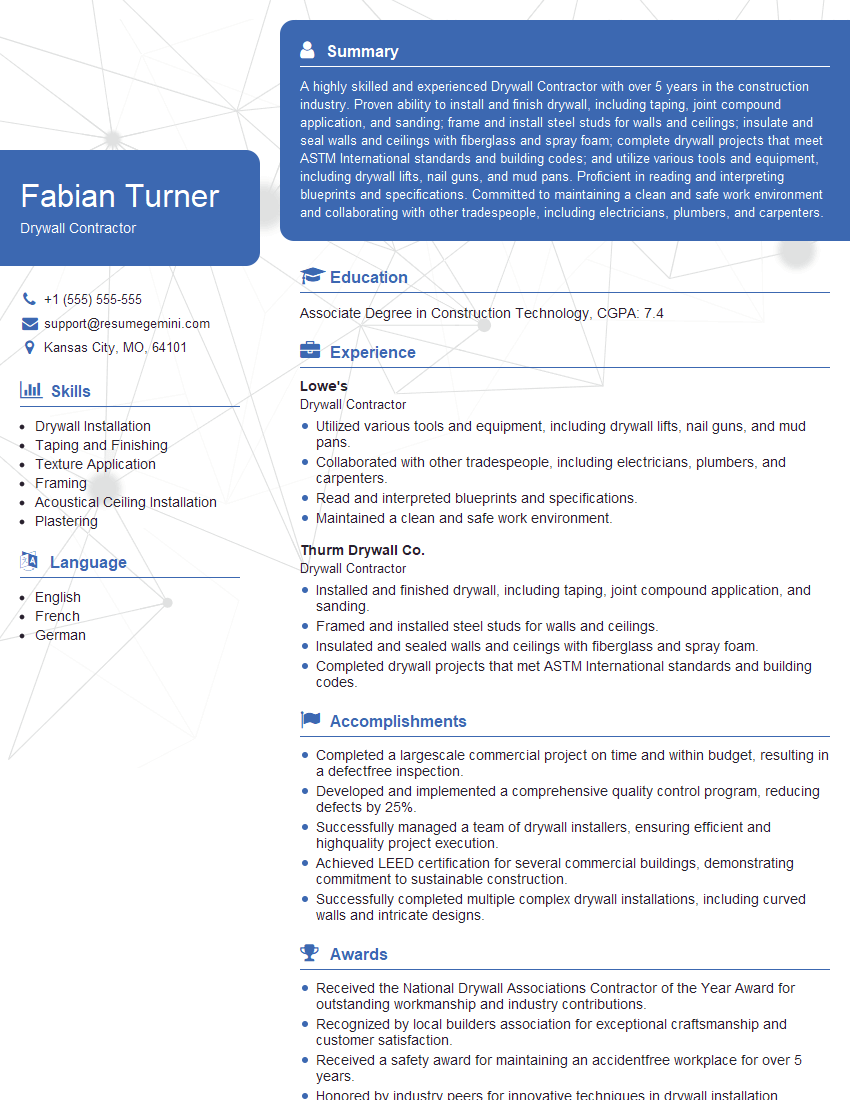
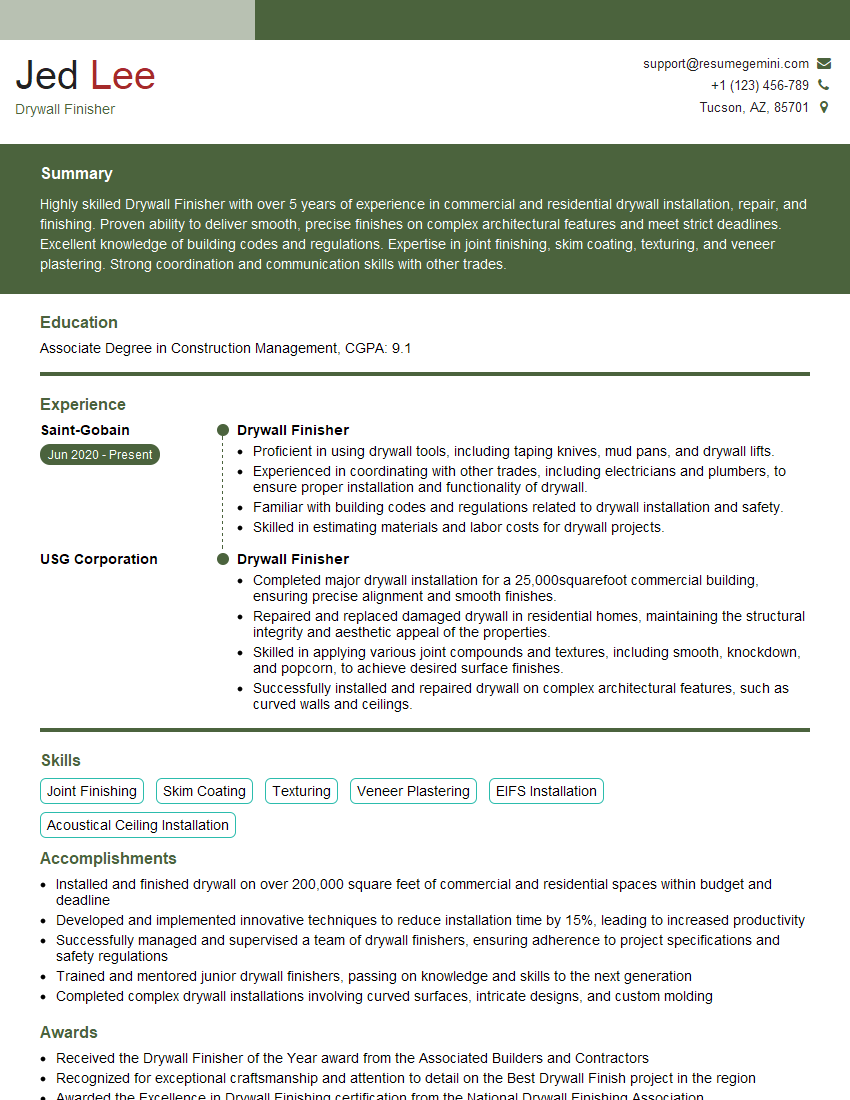
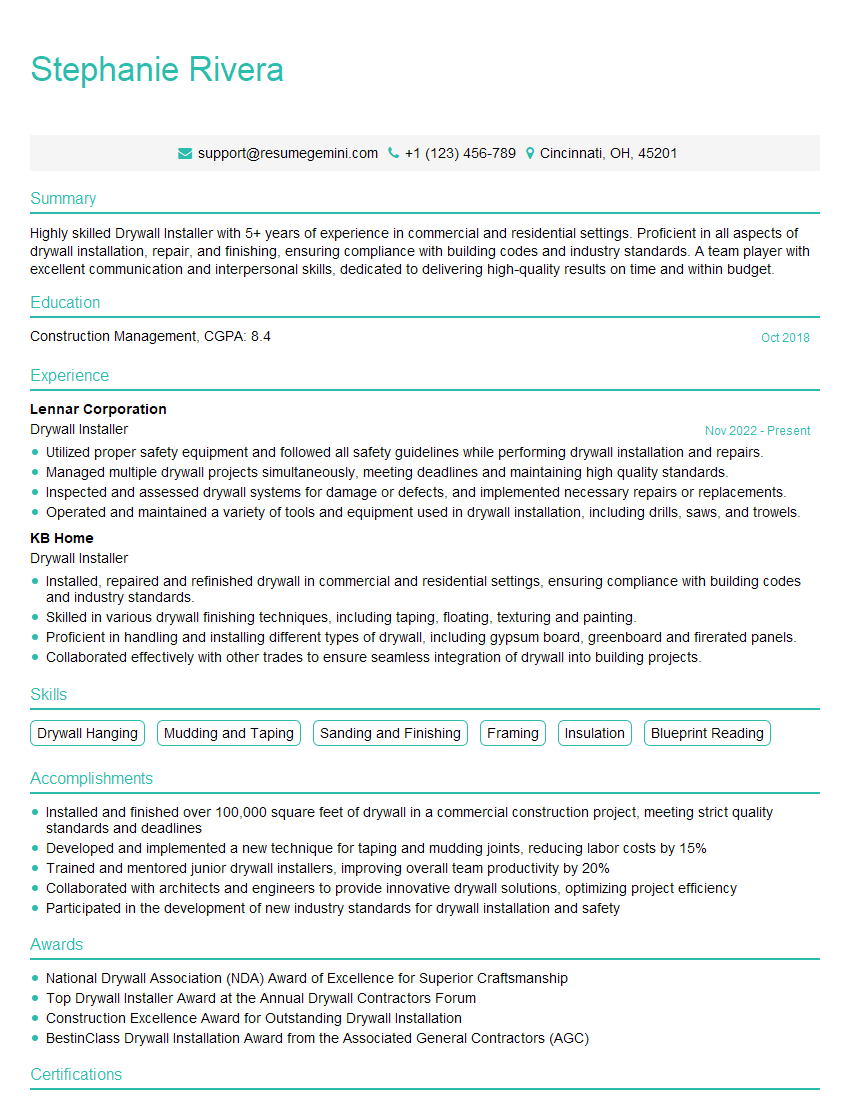
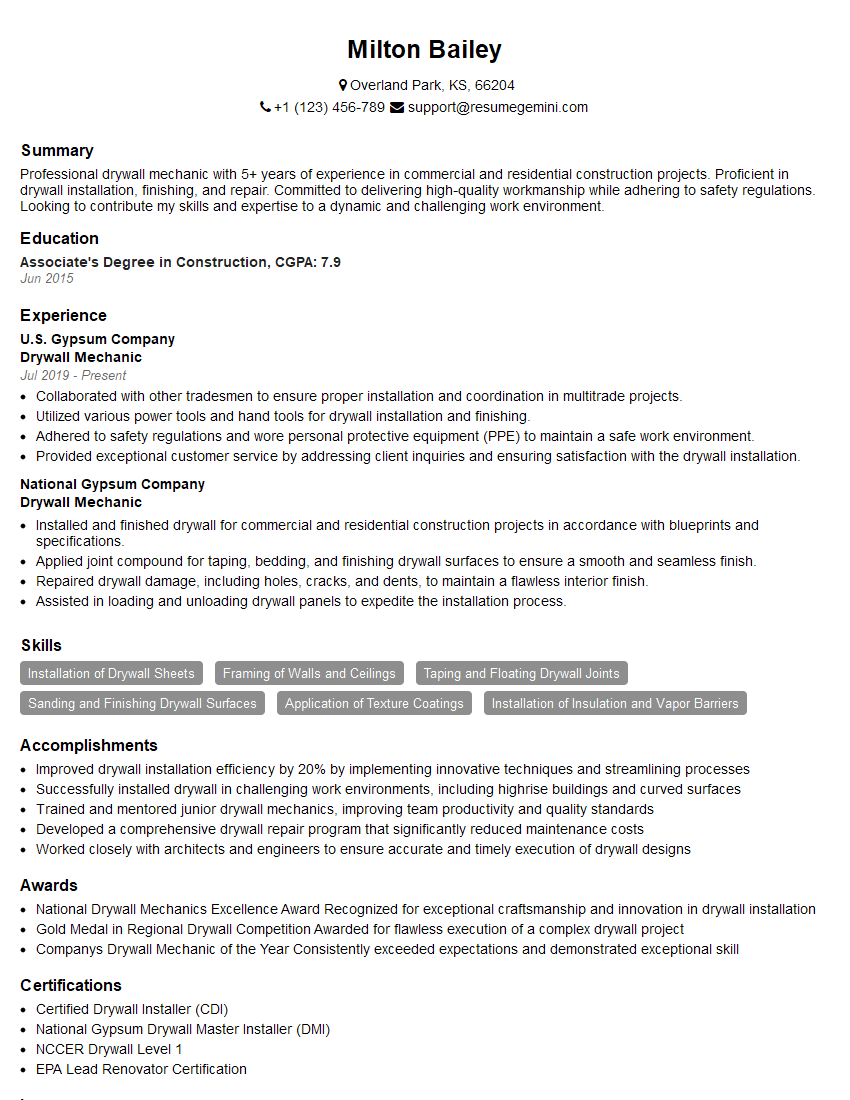
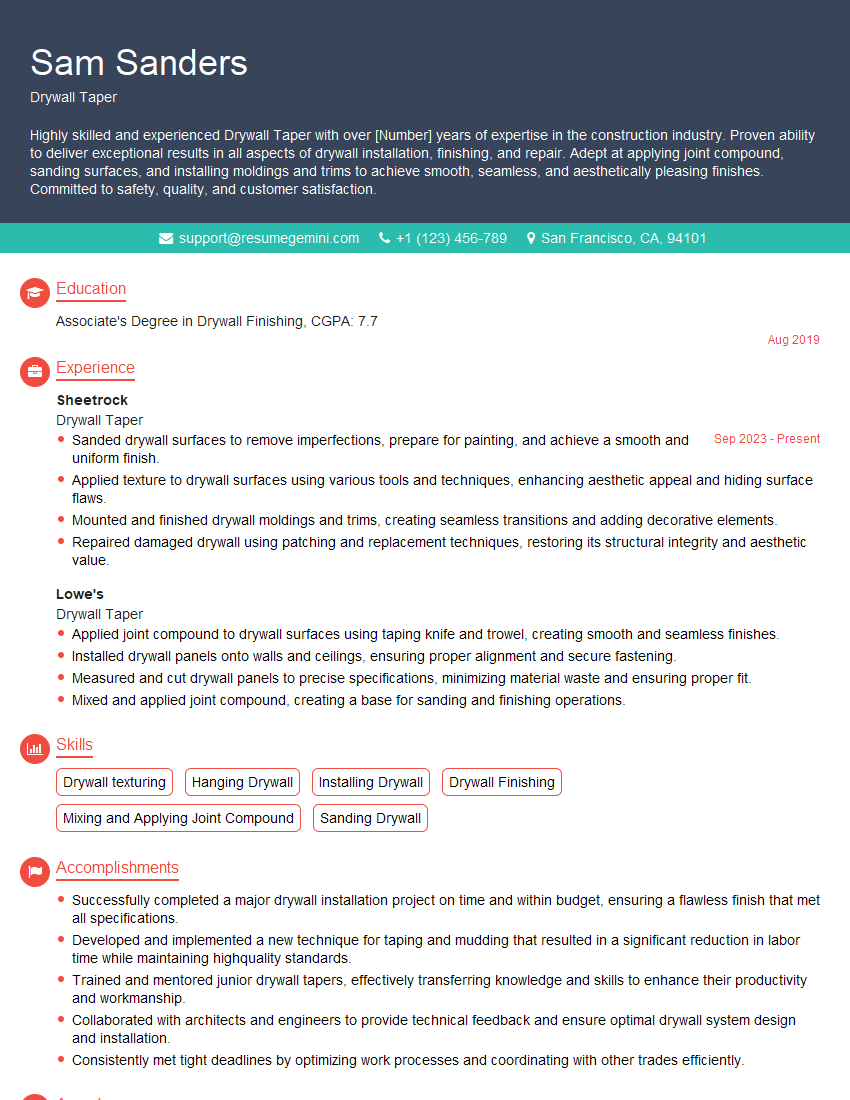
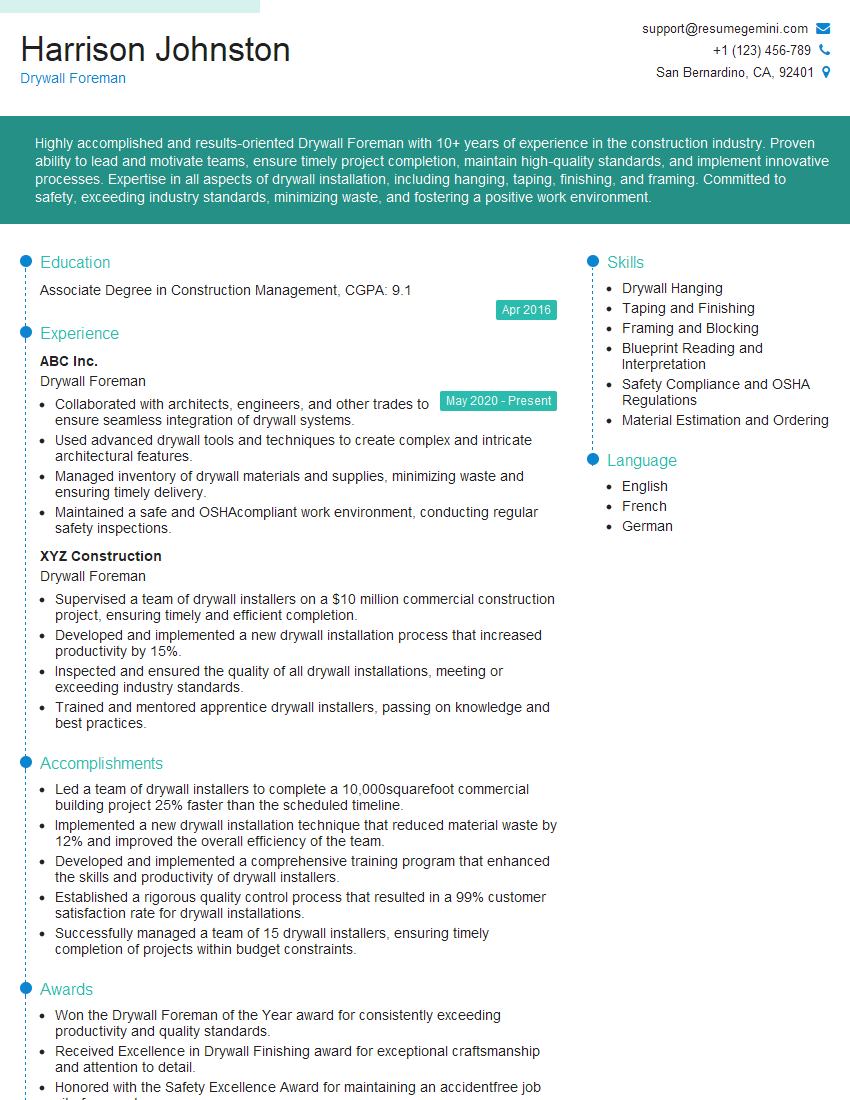
Mastering drywall repair opens doors to a stable and rewarding career with opportunities for growth and specialization. To significantly enhance your job prospects, focus on creating a strong, ATS-friendly resume that showcases your skills and experience effectively. ResumeGemini is a trusted resource to help you build a professional resume that gets noticed. They offer examples of resumes tailored to the Drywall Repair industry to help you get started. Invest time in crafting a compelling resume – it’s your first impression on potential employers.
Explore more articles
Users Rating of Our Blogs
Share Your Experience
We value your feedback! Please rate our content and share your thoughts (optional).
What Readers Say About Our Blog
Very informative content, great job.
good