Interviews are more than just a Q&A session—they’re a chance to prove your worth. This blog dives into essential DUT Characterization and Validation interview questions and expert tips to help you align your answers with what hiring managers are looking for. Start preparing to shine!
Questions Asked in DUT Characterization and Validation Interview
Q 1. Explain the difference between DUT characterization and validation.
DUT characterization and validation are distinct but interconnected phases in the process of verifying a Device Under Test (DUT). Characterisation focuses on understanding the DUT’s behavior and performance across its operational range. Think of it as creating a detailed profile—measuring its capabilities, limitations, and response to various stimuli. Validation, on the other hand, confirms that the DUT meets predefined specifications and requirements. It’s about verifying that the profile created during characterization aligns with the expected performance targets. In short, characterization is about understanding the DUT, while validation is about verifying it.
For example, characterizing an amplifier might involve measuring its gain, bandwidth, noise figure, and distortion across a range of input frequencies and power levels. Validation would then check if these measured parameters meet the specified minimum gain, maximum distortion, and other performance criteria defined in the product specifications.
Q 2. Describe your experience with different test methodologies for DUTs.
My experience encompasses a variety of test methodologies, tailored to the specific characteristics of the DUT. I’ve worked extensively with parametric testing, which involves measuring various electrical parameters like voltage, current, and resistance. This is essential for characterizing analog circuits and components. I’m also proficient in functional testing, which validates the DUT’s functionality against its intended operation, often involving complex test sequences and software interaction. Furthermore, I’ve utilized stress testing to evaluate the DUT’s robustness and reliability under extreme conditions like high temperature or voltage. Finally, I have experience with in-circuit testing (ICT), which verifies the connections and components on a printed circuit board (PCB) before further testing.
For instance, when validating a complex microcontroller, I would employ functional testing, simulating various real-world scenarios through software-driven input signals and checking the output responses against expected behavior. For a power amplifier, parametric testing would be crucial to ensure its output power, efficiency, and linearity meet the design specifications. This multi-faceted approach provides a comprehensive assessment of the DUT’s performance.
Q 3. What are the key performance indicators (KPIs) you consider during DUT characterization?
The key performance indicators (KPIs) I focus on during DUT characterization are highly dependent on the device’s function. However, some common KPIs include:
- Accuracy: How close the DUT’s output is to the expected value.
- Precision: The consistency and repeatability of the DUT’s measurements.
- Sensitivity: The smallest change in input that produces a measurable change in output.
- Linearity: How well the DUT’s output varies proportionally with the input.
- Bandwidth: The range of frequencies over which the DUT operates effectively.
- Power Consumption: The amount of power the DUT consumes during operation.
- Temperature Stability: How well the DUT’s performance remains consistent across varying temperatures.
For example, in characterizing a temperature sensor, accuracy and precision are paramount. For a high-speed data converter, bandwidth and linearity are critical. The choice of KPIs is always driven by the intended application and specifications of the DUT.
Q 4. How do you handle unexpected results during DUT validation?
Unexpected results during DUT validation demand a systematic and thorough investigation. My approach involves a multi-step process:
- Reproducibility Check: First, I attempt to reproduce the unexpected result to confirm it isn’t a fluke. Multiple test runs are conducted under the same conditions.
- Data Analysis: A detailed analysis of the test data is performed, looking for patterns, anomalies, and correlations.
- Equipment Verification: I verify the accuracy and calibration of all test equipment used during the validation process. Faulty equipment is a common cause of unexpected results.
- Test Procedure Review: The test procedures are meticulously reviewed to ensure there are no errors in the methodology.
- DUT Inspection: A visual inspection of the DUT is performed to rule out any physical damage or defects.
- Root Cause Analysis: If the problem persists, a systematic root cause analysis is conducted to identify the underlying reason for the unexpected behavior. This may involve advanced diagnostic techniques.
- Corrective Actions: Once the root cause is identified, appropriate corrective actions are taken, which may involve redesign, re-calibration, or process improvements.
Throughout this process, thorough documentation is maintained, allowing for traceability and future reference.
Q 5. What are some common challenges you face during DUT characterization and how do you overcome them?
Common challenges in DUT characterization include:
- Test Setup Complexity: Setting up accurate and reliable test environments can be demanding, especially for complex DUTs.
- Environmental Factors: Temperature, humidity, and electromagnetic interference can significantly affect test results.
- Limited Test Access: Some DUTs may have limited accessibility, hindering thorough testing.
- Data Analysis: Interpreting large datasets and identifying subtle patterns requires specialized skills and tools.
I address these challenges through careful planning, utilizing advanced test equipment with environmental controls, employing specialized fixtures to improve test access, and leveraging statistical analysis techniques and automation tools to streamline data analysis. For instance, environmental chambers are used to control temperature and humidity during testing, minimizing the influence of external factors.
Q 6. Explain your experience with statistical analysis in DUT characterization.
Statistical analysis is integral to my work in DUT characterization. I routinely employ techniques like:
- Descriptive Statistics: Calculating mean, standard deviation, and other measures to summarize test data.
- Hypothesis Testing: Evaluating whether observed differences in test results are statistically significant.
- Regression Analysis: Modeling the relationship between input and output parameters to predict DUT behavior.
- Analysis of Variance (ANOVA): Determining the impact of different factors on DUT performance.
For example, when comparing the performance of multiple DUT samples, ANOVA can help determine if there are significant differences between the samples or if the variation is simply due to random fluctuations. This rigorous statistical approach ensures that conclusions drawn from characterization are reliable and well-supported.
Q 7. Describe your experience with automated test equipment (ATE) for DUT testing.
My experience with Automated Test Equipment (ATE) is extensive. I’m familiar with various ATE platforms and have used them to automate various aspects of DUT testing, including:
- Test Program Development: I’ve developed and implemented test programs using industry-standard languages such as NI TestStand or similar platforms.
- Test Execution: I’ve used ATE to execute complex test sequences efficiently and repeatedly.
- Data Acquisition and Analysis: I’ve used ATE’s data logging and analysis capabilities to automate data collection and interpretation.
- Failure Analysis: ATE helps in identifying and classifying failures through automated diagnostics.
For instance, I have used ATE systems to test high-volume production runs of integrated circuits, ensuring consistent quality and rapid throughput. The automation offered by ATE significantly increases efficiency and reduces the risk of human error compared to manual testing procedures. The ability to quickly identify faulty units is crucial for improving production yield.
Q 8. How do you determine the appropriate test coverage for a DUT?
Determining the appropriate test coverage for a Device Under Test (DUT) is crucial for ensuring its reliability and functionality. It’s not about testing everything, but about strategically identifying the most critical aspects. We use a risk-based approach, considering factors like the DUT’s intended application, potential failure modes, and regulatory requirements.
- Requirement Coverage: We begin by meticulously analyzing the DUT’s specifications and requirements document. Each requirement is mapped to one or more test cases, ensuring full functional coverage.
- Code Coverage (for embedded systems): For software-intensive DUTs, code coverage analysis helps verify that different sections of the code are exercised during testing. We aim for high statement and branch coverage, complementing functional tests.
- Risk Assessment: We identify potential failure modes and their associated risks. Higher-risk areas warrant more extensive testing. For example, a safety-critical system would require far more rigorous testing than a simple consumer electronic device.
- Stress Testing: To ensure robustness, we subject the DUT to stress conditions (e.g., extreme temperatures, voltage fluctuations) exceeding normal operating parameters. This reveals weaknesses not apparent under standard operating conditions.
For example, testing a medical implant would necessitate extensive testing of its safety mechanisms and longevity, while testing a simple lightbulb might only require basic functional and lifetime tests. The key is tailoring the coverage to the specific risks and consequences of failure.
Q 9. Explain your experience with different test environments for DUTs (e.g., lab, field).
My experience spans various test environments for DUTs, each presenting unique challenges and advantages.
- Laboratory Environment: Controlled lab settings offer precision and repeatability. We use specialized equipment (e.g., environmental chambers, signal generators, oscilloscopes) to precisely control inputs and measure outputs. This allows for systematic testing and detailed data acquisition.
- Field Testing: Field testing provides real-world data, exposing the DUT to realistic operating conditions and environmental factors that might be missed in a lab setting. Challenges include uncontrolled variables and logistical complexities. For example, testing a new cellular antenna would require field trials to assess its performance in different environments, reflecting real-world signal interference and propagation.
- Simulated Environments: We also use simulated environments, like hardware-in-the-loop (HIL) testing for automotive or aerospace applications. These mimic real-world conditions without the cost and complexity of extensive field trials, ensuring safety and reliability before real-world deployment.
The choice of environment depends on the DUT’s purpose and testing requirements. A balance between controlled lab testing and real-world field testing often provides the most comprehensive results.
Q 10. How do you ensure the repeatability and reproducibility of your DUT test results?
Ensuring repeatability and reproducibility is paramount. We achieve this through a rigorous approach focusing on standardized procedures, calibrated equipment, and meticulous documentation.
- Standardized Test Procedures: Detailed, step-by-step test procedures are developed and rigorously followed. This includes specific instructions on equipment setup, test sequence, and data acquisition.
- Calibrated Equipment: All equipment used for testing is regularly calibrated to traceable standards. This ensures the accuracy and reliability of measurements.
- Data Logging and Version Control: We use automated data logging systems to capture all test data, minimizing human error and facilitating analysis. Version control systems are used to track changes in the test procedures and data.
- Blind Testing (where applicable): In some cases, blind testing (where the tester is unaware of the DUT’s identity or expected performance) helps eliminate bias and improve objectivity.
- Statistical Analysis: Statistical analysis techniques are used to assess the variability of results and confirm the repeatability and reproducibility of the tests.
Think of it like baking a cake – a precise recipe (standardized procedure), accurate measuring tools (calibrated equipment), and consistent baking conditions (controlled environment) are necessary to ensure the same outcome every time.
Q 11. What are the critical failure modes you typically consider during DUT validation?
Critical failure modes vary widely depending on the DUT, but common considerations include:
- Functional Failures: The DUT does not perform its intended function. For example, a software application might crash, a circuit might not power on, or a mechanical component might fail to operate correctly.
- Safety-Related Failures: The DUT poses a safety hazard, like overheating, electrical shock, or fire.
- Reliability Failures: The DUT fails prematurely or operates unreliably, demonstrating a shorter lifespan than expected.
- Environmental Failures: The DUT fails due to exposure to extreme temperatures, humidity, or vibration.
- Electromagnetic Interference (EMI) Failures: The DUT malfunctions due to interference from external electromagnetic fields, or conversely, it emits excessive EMI.
Failure modes are identified through a combination of design analysis (Failure Mode and Effects Analysis – FMEA), experience, and past failure data. Each identified failure mode informs the design of specific tests to evaluate its likelihood and consequences.
Q 12. Explain your experience with failure analysis techniques.
My experience encompasses various failure analysis techniques. The choice of method depends on the nature of the failure and the available resources.
- Visual Inspection: Often the first step, providing immediate clues about the cause of failure (e.g., cracks, burns, loose connections).
- Microscopic Examination: Using optical microscopes or scanning electron microscopes (SEM) allows for detailed inspection of surface features and internal structures.
- Electrical Testing: Various electrical tests (e.g., continuity tests, voltage measurements, impedance analysis) identify electrical faults and degradation.
- Thermal Analysis: Thermal imaging and analysis identify hotspots that can indicate overheating or faulty components.
- Chemical Analysis: Techniques such as X-ray fluorescence (XRF) or energy-dispersive X-ray spectroscopy (EDS) determine the chemical composition of materials and identify corrosion or contamination.
For instance, when investigating a malfunctioning power supply, I might start with a visual inspection for obvious damage, followed by electrical tests to measure voltages and currents, and potentially thermal imaging to detect any overheating components.
Q 13. How do you document your findings during DUT characterization and validation?
Documentation is critical for traceability and repeatability. Our documentation process includes:
- Test Plan: A comprehensive document outlining the testing strategy, including objectives, scope, test cases, and resources.
- Test Procedures: Detailed, step-by-step instructions for each test, specifying equipment setup, test parameters, and data acquisition methods.
- Test Results: All raw data from the tests, including graphs, charts, and other relevant information.
- Failure Analysis Reports: Comprehensive reports documenting the investigation of any failures, including root cause analysis and recommended corrective actions.
- Test Summary Report: A concise summary of the test results, conclusions, and recommendations.
We use a combination of electronic documentation systems and physical notebooks (for initial observations and sketches). All documentation is version-controlled, ensuring traceability and facilitating later review.
Q 14. What software tools are you proficient in for DUT testing and data analysis?
Proficiency in various software tools is crucial for efficient DUT testing and data analysis. My expertise includes:
- LabVIEW: For automated test system development, data acquisition, and analysis. I’ve used it extensively to create customized test benches for various DUTs.
- MATLAB: For advanced signal processing, data analysis, and algorithm development. Its powerful scripting capabilities allow for automated data processing and visualization.
- Python with relevant libraries (e.g., NumPy, SciPy, Pandas): For data analysis, scripting, and automation. I frequently use this for post-processing data, generating reports, and integrating with other tools.
- Specialized Test Software: I’m familiar with various commercial software packages for specific test applications, such as those used for network testing, RF testing, or embedded systems debugging.
- Spreadsheet Software (e.g., Microsoft Excel): Essential for data organization, simple analysis, and report generation.
The specific tools used depend heavily on the DUT and the nature of the testing. For instance, when working with RF devices, I might use specialized RF software for signal generation and analysis, but for simple digital circuits, LabVIEW might suffice.
Q 15. Describe your experience with writing test plans and test procedures.
Developing comprehensive test plans and procedures is crucial for successful DUT (Device Under Test) characterization and validation. A well-structured test plan outlines the scope, objectives, methods, and resources required for testing. It acts as a roadmap, ensuring all aspects are covered. My experience involves creating plans that detail test cases, expected results, pass/fail criteria, and risk assessments. Test procedures, on the other hand, provide step-by-step instructions for executing each test case, including equipment setup, connection diagrams, and data acquisition techniques.
For example, in a recent project involving a high-speed data converter, the test plan defined the frequency range, signal levels, and error rates to be tested. The corresponding test procedures detailed the specific instruments (signal generators, oscilloscopes, spectrum analyzers), their settings, and the software used for data acquisition and analysis. Each step included screenshots and detailed explanations to ensure consistent and repeatable testing across different engineers.
I also utilize various testing methodologies such as black box testing, where the internal workings of the DUT are not considered, and white box testing, where internal knowledge is leveraged to create more comprehensive tests. This ensures a balanced approach to testing, covering both functional and structural aspects.
Career Expert Tips:
- Ace those interviews! Prepare effectively by reviewing the Top 50 Most Common Interview Questions on ResumeGemini.
- Navigate your job search with confidence! Explore a wide range of Career Tips on ResumeGemini. Learn about common challenges and recommendations to overcome them.
- Craft the perfect resume! Master the Art of Resume Writing with ResumeGemini’s guide. Showcase your unique qualifications and achievements effectively.
- Don’t miss out on holiday savings! Build your dream resume with ResumeGemini’s ATS optimized templates.
Q 16. How do you manage risks associated with DUT testing?
Risk management in DUT testing is paramount. It involves identifying potential problems early and developing mitigation strategies. I employ a proactive approach, starting with a thorough risk assessment during the test planning phase. This involves identifying potential risks, such as equipment failures, environmental conditions, and unexpected DUT behavior.
For each identified risk, I define the likelihood and impact. This allows for prioritization and the development of appropriate mitigation strategies. For instance, if equipment failure is a high-risk factor, we may use redundant equipment or implement preventative maintenance schedules. If environmental conditions (temperature, humidity) could affect the DUT, we control the testing environment using climate chambers.
Furthermore, robust error handling is incorporated into the test procedures and automation scripts. Data logging and monitoring are crucial, allowing us to identify anomalies and potential issues during the test execution. Regular reviews of test results and risk assessments are performed to ensure continuous adaptation and improvement of the testing strategy.
Q 17. How do you collaborate with cross-functional teams during DUT characterization and validation?
Effective collaboration is key to successful DUT characterization and validation. I work closely with various teams, including design engineers, manufacturing engineers, and software developers. Regular meetings and clear communication channels are essential. I utilize various tools like shared document repositories, project management software, and regular status updates to keep everyone informed.
For example, during a project involving a complex embedded system, I collaborated with the design team to understand the device’s architecture and functionalities. This helped in developing test cases that covered all critical aspects. With the software team, we coordinated on firmware updates and software drivers, ensuring compatibility and stability during testing. With the manufacturing team, we worked to define testing requirements and identify potential manufacturing defects that may be encountered during the validation process.
Using a collaborative platform allows for efficient issue tracking and resolution. This streamlines the feedback loop, improving overall efficiency and minimizing delays.
Q 18. Describe your experience with debugging DUT failures.
Debugging DUT failures requires a systematic and methodical approach. My experience involves a combination of hardware and software debugging techniques. I begin by thoroughly reviewing the test results and logs to identify the point of failure. This often involves analyzing waveforms, data logs, and error messages.
Next, I use a combination of techniques such as signal tracing, logic analyzers, and oscilloscopes to isolate the source of the problem. For software-related issues, debugging tools and simulations are utilized. For example, in a case involving intermittent communication errors, I used a logic analyzer to capture the communication bus signals, revealing timing inconsistencies that led to the error. This systematic approach allows for efficient identification and resolution of complex DUT failures.
Documentation is crucial throughout this process. Detailed records of observations, tests performed, and solutions implemented are meticulously maintained. This ensures traceability and aids in future debugging efforts.
Q 19. What are your preferred methods for identifying and prioritizing bugs?
Identifying and prioritizing bugs is a critical aspect of DUT validation. I employ a multi-pronged approach, combining automated bug tracking systems with manual reviews of test results. Automated systems help in identifying recurring errors, while manual reviews provide a deeper understanding of the context and impact of each bug.
Prioritization is based on several factors: severity (critical, major, minor), frequency of occurrence, and impact on overall functionality. Critical bugs that cause complete system failure are addressed first, followed by major bugs impacting core features. Minor bugs are addressed based on their impact on user experience and development schedule.
I utilize severity matrices and risk assessments to objectively prioritize bugs. This ensures that resources are allocated effectively and that critical issues are addressed promptly. Clear communication with the development team is vital, ensuring everyone is aligned on priorities and solutions.
Q 20. Explain your experience with different testing levels (unit, integration, system).
My experience encompasses all levels of testing: unit, integration, and system. Unit testing focuses on individual components or modules of the DUT. This involves verifying the functionality of each unit in isolation, ensuring correct behavior according to specifications. For instance, testing individual amplifiers or digital signal processing blocks within a larger system.
Integration testing verifies the interaction between different units or modules. It assesses how these components work together as a cohesive system, identifying issues related to interfaces and communication protocols. For example, testing the interaction between a microcontroller and a sensor.
System testing validates the complete DUT as a whole. It covers the overall functionality, performance, and reliability of the entire system, often under realistic operating conditions. This might include environmental stress testing or long-term stability tests.
Employing all three levels ensures thorough testing, identifying issues at every level, reducing the likelihood of late-stage failures.
Q 21. Describe your experience with test automation and scripting languages.
Test automation is crucial for efficient and repeatable DUT testing. My experience includes developing automated test scripts using various languages like Python and LabVIEW. Python’s versatility and extensive libraries (like PyVISA for instrument control) make it ideal for many applications. LabVIEW’s graphical programming environment is well-suited for complex instrumentation control and data acquisition tasks.
For instance, I’ve developed automated test suites using Python and PyVISA to control multiple instruments, automate data acquisition, perform complex calculations, and generate reports. The scripts include comprehensive error handling and logging, ensuring robust and reliable operation. These scripts can run unattended, significantly improving testing throughput and reducing manual effort. Using LabVIEW, I automated the process of measuring and validating the frequency response of a high-speed analog-to-digital converter, a process that previously required significant manual time and effort. This automation reduced testing time by more than 80%.
Choosing the appropriate scripting language depends on the complexity of the test setup and the available resources. However, a strong emphasis is placed on writing modular and maintainable code to facilitate future modifications and updates.
Q 22. How do you ensure the quality and integrity of your DUT test data?
Ensuring the quality and integrity of DUT (Device Under Test) test data is paramount for reliable characterization and validation. It’s like building a house – you need a solid foundation. We achieve this through a multi-layered approach:
- Calibration and Verification: All test equipment undergoes regular calibration to ensure accuracy. We maintain meticulous records of these calibrations, traceable to national standards. We also verify the test setup before each test run to identify and mitigate any potential issues. Think of this as checking your tools before starting construction – ensuring your measuring tape is accurate, your level is true, etc.
- Data Acquisition and Handling: We use robust data acquisition systems with built-in error detection and correction mechanisms. Raw data is processed using validated algorithms, and any anomalies are flagged for investigation. This is akin to meticulously documenting each step of the construction process, checking for inconsistencies as you go.
- Statistical Analysis: Statistical methods are employed to identify outliers and assess data variability. Control charts and other statistical process control (SPC) techniques help us monitor test data quality over time and pinpoint potential drifts or systematic errors. This is like regularly inspecting the house’s structural integrity throughout the construction phase – identifying and addressing any weak points before they become major problems.
- Documentation and Traceability: Comprehensive documentation is key. This includes detailed test plans, procedures, raw data, processed results, and calibration certificates. A complete audit trail allows us to trace any data point back to its origin, enabling thorough analysis and troubleshooting. This is the blueprint and record-keeping that proves the house was built according to specifications.
Q 23. Explain your understanding of Design of Experiments (DOE).
Design of Experiments (DOE) is a powerful statistical technique for efficiently planning experiments and analyzing the results. Instead of testing one factor at a time, DOE allows us to simultaneously vary multiple factors and their interactions, revealing the most significant influences on the DUT’s performance. This is far more efficient than a one-factor-at-a-time approach. Imagine testing a recipe: Instead of changing only one ingredient at a time, you can vary multiple ingredients simultaneously to find the perfect combination.
Common DOE methodologies include:
- Full Factorial Design: All possible combinations of factors and levels are tested. This provides comprehensive data but can become resource-intensive for many factors.
- Fractional Factorial Design: A subset of the full factorial design is used, reducing the number of experiments while still providing valuable insights. This is especially useful when resources are limited.
- Taguchi Methods: Orthogonal arrays are used to optimize parameters and reduce the number of experiments. This method is effective in dealing with noise factors.
In DUT characterization, DOE helps us determine the optimal test conditions, identify critical parameters, and quantify the impact of variations on the DUT’s performance. For example, we might use DOE to determine the optimal temperature and voltage settings for a specific IC under test.
Q 24. How familiar are you with different types of DUTs (e.g., ICs, modules, systems)?
My experience encompasses a wide range of DUTs, including integrated circuits (ICs), modules, and systems. Each type presents unique challenges and requires specific test methodologies:
- ICs: Testing typically involves probing individual pins and measuring electrical characteristics like voltage, current, and timing. Specialized equipment like semiconductor parameter analyzers and logic analyzers are commonly used.
- Modules: These may involve testing functionality, performance, and interfaces. Test methods can range from basic functional tests to more complex system-level simulations.
- Systems: System-level testing often focuses on verifying the overall functionality and performance of the complete system, integrating multiple modules and components. These tests might include environmental stress tests, performance benchmarks, and integration tests.
Understanding the specific characteristics and interfaces of each DUT type is crucial for developing effective and efficient test strategies. I am comfortable working with various test equipment and adapting methodologies to meet the unique requirements of different DUTs.
Q 25. What is your approach to defining acceptance criteria for DUT validation?
Defining acceptance criteria for DUT validation is crucial to ensure the DUT meets its intended specifications. This is not just about whether it works, but about how well it performs. This process involves a detailed analysis of:
- Specifications: We start with the detailed design specifications, which clearly define the expected performance parameters of the DUT. These specifications are often a joint decision between the design and test teams.
- Tolerances: We establish acceptable tolerances around those specifications. These define the allowable range of variations from the ideal performance values. This accounts for manufacturing variability and environmental influences.
- Test Methods: The acceptance criteria should be clearly linked to the specific test methods used. This ensures clarity and consistency in how we evaluate the DUT’s performance.
- Risk Assessment: A thorough risk assessment helps to prioritize critical parameters and set tighter acceptance criteria for those parameters where failure could have significant consequences.
Ultimately, the acceptance criteria should be unambiguous, measurable, and achievable. They form the basis for pass/fail decisions and help ensure that the DUT meets its requirements for deployment.
Q 26. How do you handle conflicting requirements during DUT testing?
Conflicting requirements during DUT testing are unfortunately common. Resolving these requires a structured approach that prioritizes clarity, communication and negotiation:
- Documentation Review: Carefully review all relevant documentation, including specifications, design documents, and test plans, to identify the source of conflict. Often a simple misunderstanding or overlooked detail is the root cause.
- Stakeholder Collaboration: Engage with all stakeholders involved – design engineers, project managers, and customers – to understand the rationale behind each requirement. This collaborative approach is vital to finding common ground.
- Prioritization and Trade-offs: If conflicts can’t be reconciled, prioritize requirements based on risk assessment and criticality. Trade-offs might be necessary, documenting the decisions and their implications clearly.
- Formal Change Management: Significant changes should follow a formal change management process to ensure that all parties are aware of the updates and their impact.
- Formal Documentation: Every decision should be documented, with reasons provided, to avoid future misunderstandings and maintain a clear audit trail.
The goal is to find a solution that balances all requirements, while prioritizing the most critical aspects of the DUT’s functionality and performance.
Q 27. Describe a situation where you had to troubleshoot a complex DUT failure. What was your approach?
During a recent project, we encountered a complex failure in a high-speed data acquisition system. The system intermittently failed to capture data correctly at high sampling rates. Our troubleshooting approach was systematic:
- Initial Assessment: We began by gathering all available data including error logs, environmental conditions during failures and user input.
- Reproducibility: We attempted to reproduce the failure consistently. This involved carefully controlling the test conditions and observing the system’s behavior under different scenarios.
- Isolation: Once the failure was consistently reproduced, we systematically isolated the potential sources of the problem. This involved systematically checking individual components, modules, and connections.
- Analysis: We used advanced diagnostic tools such as logic analyzers and oscilloscopes to analyze signals and timing at different points in the system. This helped identify the root cause of the failure — a timing mismatch between two critical components.
- Resolution and Verification: We implemented a software patch that corrected the timing issue. Thorough retesting then verified that the problem was resolved and the system now performed as expected. We then implemented the corrected firmware into production.
This systematic approach, combining observation, controlled experiments, and advanced diagnostic tools, allowed us to efficiently isolate and resolve the complex issue.
Q 28. How do you stay up-to-date with the latest advancements in DUT characterization and validation technologies?
Staying current in the rapidly evolving field of DUT characterization and validation requires a multifaceted approach:
- Professional Development: I actively participate in industry conferences, workshops, and training courses to learn about new technologies and methodologies. These events provide valuable opportunities for networking and knowledge sharing.
- Technical Publications: I regularly read industry publications, journals, and technical papers to stay abreast of the latest advancements in test equipment and techniques.
- Industry Forums and Communities: Participation in online forums and professional communities enables me to discuss challenges and solutions with peers and learn from their experiences.
- Collaboration with Vendors: Engaging with vendors of test equipment and software provides insights into new technologies and their applications.
- Hands-on Experience: Continuous hands-on experience with the latest test equipment and techniques is crucial for maintaining practical proficiency.
This ongoing commitment to professional development ensures I remain at the forefront of the field, applying the most effective and efficient techniques to characterization and validation projects.
Key Topics to Learn for DUT Characterization and Validation Interview
- Device Under Test (DUT) Fundamentals: Understanding the different types of DUTs, their functionalities, and the challenges in characterizing them. This includes understanding the specific requirements and limitations of your target DUTs.
- Test Methodology & Planning: Developing robust test plans, defining key performance indicators (KPIs), and selecting appropriate test equipment and procedures. This also involves understanding statistical analysis techniques for validating test results.
- Measurement Techniques: Mastering various measurement techniques relevant to your DUT, including electrical, optical, and mechanical measurements. Consider the accuracy, precision, and limitations of each method.
- Data Acquisition & Analysis: Efficiently collecting and analyzing large datasets, identifying trends, and drawing meaningful conclusions from test data. Proficiency in data analysis tools and software is crucial.
- Validation & Verification: Understanding the difference between validation and verification, and applying appropriate methods to ensure the DUT meets specifications and requirements. This includes understanding error analysis and uncertainty quantification.
- Automation & Scripting: Experience with automation tools and scripting languages for efficient test execution and data processing. Discuss your proficiency in relevant tools and the benefits of automation.
- Troubleshooting & Problem-Solving: Demonstrating the ability to identify and resolve issues encountered during characterization and validation processes. Be ready to share examples of complex problems you’ve solved.
- Reporting & Documentation: Clearly and concisely communicating findings through comprehensive reports and documentation. Showcase your ability to present complex technical information in an accessible manner.
Next Steps
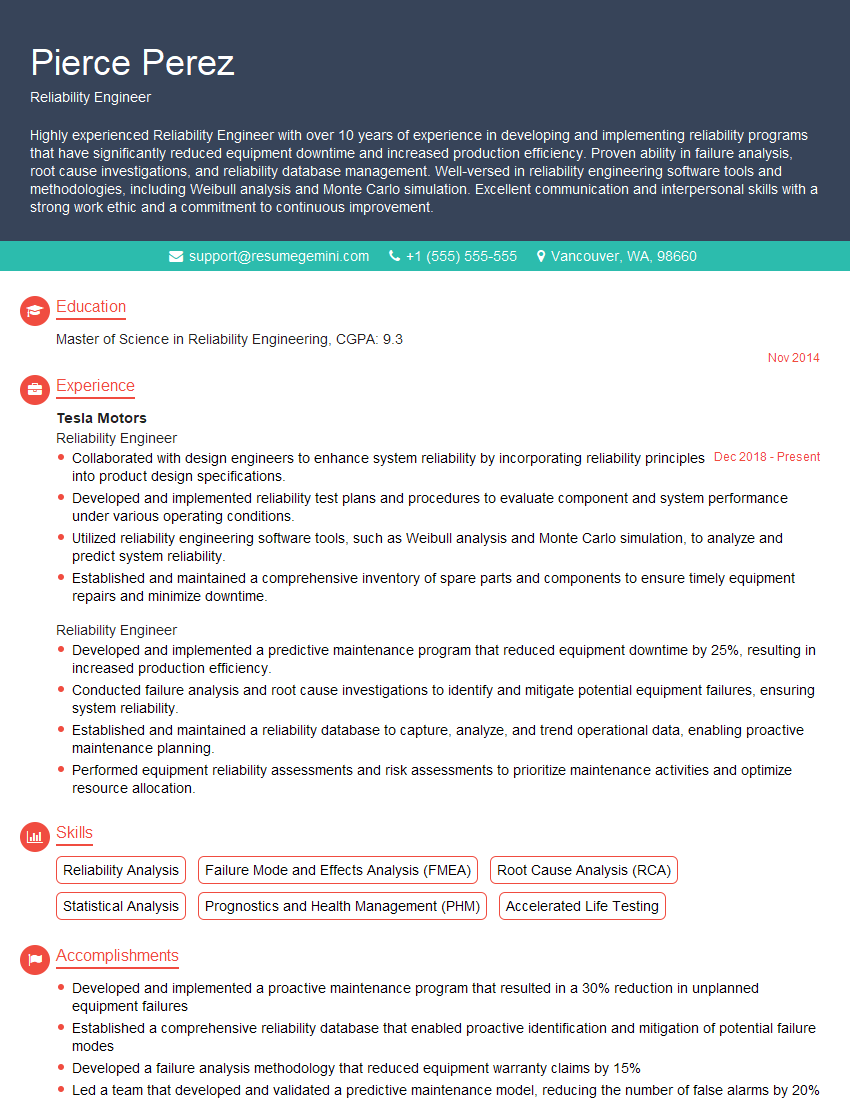
Mastering DUT Characterization and Validation is essential for a successful career in engineering and related fields. It demonstrates a strong understanding of fundamental principles and the ability to apply them to real-world problems. Building a strong, ATS-friendly resume is crucial for maximizing your job prospects. ResumeGemini is a trusted resource that can help you create a professional and impactful resume that highlights your skills and experience. We offer examples of resumes tailored to DUT Characterization and Validation to help you get started. Take the next step towards your dream career – craft a resume that showcases your expertise and lets your qualifications shine!
Explore more articles
Users Rating of Our Blogs
Share Your Experience
We value your feedback! Please rate our content and share your thoughts (optional).
What Readers Say About Our Blog
Very informative content, great job.
good