The thought of an interview can be nerve-wracking, but the right preparation can make all the difference. Explore this comprehensive guide to E-Commerce and Online Event Management interview questions and gain the confidence you need to showcase your abilities and secure the role.
Questions Asked in E-Commerce and Online Event Management Interview
Q 1. Explain your experience with different e-commerce platforms (e.g., Shopify, Magento).
My experience spans several leading e-commerce platforms, including Shopify and Magento. Shopify, known for its user-friendly interface and ease of setup, is ideal for smaller businesses and those needing a quick launch. I’ve utilized its intuitive drag-and-drop functionality to build visually appealing and functional online stores, optimizing them for mobile responsiveness and integrating various apps for enhanced functionality like shipping and payment gateways. Magento, on the other hand, is a more robust and scalable platform suitable for larger enterprises with complex requirements. I’ve worked on Magento projects involving extensive customization, integrations with ERP systems, and the management of large product catalogs. My experience includes migrating stores between platforms, leveraging the strengths of each to meet specific business needs. For example, I once migrated a rapidly growing Shopify store to Magento to handle increased traffic and product complexity, resulting in improved site performance and scalability.
Q 2. Describe your experience with SEO and SEM strategies for e-commerce websites.
My SEO and SEM strategies are data-driven and holistic. For SEO, I focus on keyword research, on-page optimization (title tags, meta descriptions, header tags, and image alt text), and off-page optimization (link building, social media promotion). I use tools like Google Search Console and SEMrush to monitor keyword rankings, identify areas for improvement, and track organic traffic. For SEM (Search Engine Marketing), I manage paid advertising campaigns on Google Ads and other platforms. I focus on creating targeted campaigns with compelling ad copy and landing pages, meticulously tracking click-through rates (CTR), conversion rates, and return on ad spend (ROAS). I employ A/B testing to optimize ad creatives and landing pages. For example, I recently implemented a comprehensive SEO strategy for an e-commerce client that resulted in a 30% increase in organic traffic within six months. In terms of SEM, I managed a Google Ads campaign for a client selling handcrafted jewelry, focusing on long-tail keywords and highly targeted demographics which resulted in a 40% increase in conversions within three months.
Q 3. How would you improve the conversion rate of an e-commerce website?
Improving conversion rates requires a multifaceted approach. It starts with understanding the customer journey and identifying bottlenecks. This involves analyzing website analytics to pinpoint drop-off points, using heatmaps to visualize user behavior, and conducting user surveys to gather feedback. Key strategies include:
- Optimizing the checkout process: Simplify the steps, offer multiple payment options, and clearly display shipping costs.
- Improving website design and UX: Ensure the site is visually appealing, easy to navigate, and mobile-responsive.
- Enhancing product descriptions and images: Provide high-quality images, detailed product descriptions, and customer reviews.
- Implementing compelling calls to action (CTAs): Use clear and concise language, strategically place CTAs throughout the site, and test different variations.
- Offering incentives and promotions: Encourage purchases with discounts, free shipping, or loyalty programs.
- Personalizing the shopping experience: Use data to recommend relevant products and tailor messaging to individual customers.
For example, A/B testing different variations of a checkout page led to a 15% increase in conversion rates for one of my clients by simplifying the process and highlighting security badges.
Q 4. What are your preferred methods for analyzing e-commerce website traffic and performance?
I primarily use Google Analytics to analyze website traffic and performance. I monitor key metrics such as:
- Website traffic sources: Identifying where visitors are coming from (organic search, paid advertising, social media, etc.).
- User behavior: Analyzing bounce rates, session duration, pages per visit, and conversion rates.
- Conversion rates: Tracking the percentage of visitors who complete desired actions (e.g., making a purchase, signing up for a newsletter).
- Customer acquisition cost (CAC): Calculating the cost of acquiring a new customer.
- Return on investment (ROI): Measuring the profitability of marketing campaigns.
I also utilize other tools like Google Search Console for SEO analysis and heatmap tools to visualize user interaction on the website. By analyzing this data, I can identify areas for improvement and make data-driven decisions to optimize website performance. For instance, by identifying a high bounce rate on a specific product page, I was able to redesign the page with more engaging content and better product images, leading to a significant improvement in conversion rates.
Q 5. How do you manage customer relationships in an e-commerce environment?
Managing customer relationships in e-commerce involves building trust and fostering loyalty. This is achieved through:
- Providing excellent customer service: Responding promptly to inquiries, resolving issues efficiently, and offering personalized support.
- Building a strong brand community: Engaging with customers on social media, creating interactive content, and fostering a sense of belonging.
- Implementing a robust CRM system: Managing customer data, tracking interactions, and personalizing communications.
- Collecting customer feedback: Regularly soliciting feedback through surveys and reviews to understand customer needs and improve the shopping experience.
- Implementing a loyalty program: Rewarding repeat customers with exclusive discounts and benefits.
For example, implementing a proactive customer service strategy via email and live chat improved customer satisfaction and increased repeat purchases by 20% for one of my clients. A well-structured CRM system allows for personalized email campaigns and targeted product recommendations, further enhancing customer engagement.
Q 6. Describe your experience with email marketing for e-commerce.
My experience with email marketing in e-commerce encompasses developing and implementing targeted email campaigns to nurture leads, promote products, and drive sales. I use email marketing platforms like Mailchimp or Klaviyo to create segmented email lists, design compelling email templates, and track campaign performance. My approach focuses on:
- Segmentation: Dividing the email list into targeted groups based on demographics, purchase history, and behavior.
- Personalization: Tailoring email content to the individual recipient’s interests and preferences.
- Automation: Automating email workflows, such as welcome emails, abandoned cart reminders, and post-purchase follow-ups.
- A/B testing: Experimenting with different subject lines, email content, and call-to-actions to optimize campaign performance.
- Monitoring key metrics: Tracking open rates, click-through rates, and conversion rates to measure campaign effectiveness.
For instance, an automated abandoned cart email sequence I designed for a clothing retailer resulted in a 15% recovery rate of abandoned carts, significantly boosting sales.
Q 7. Explain your understanding of A/B testing in e-commerce.
A/B testing is a crucial methodology for optimizing e-commerce websites. It involves creating two versions of a webpage (A and B) with a single variable difference and comparing their performance to determine which version converts better. This variable could be anything from a headline or button color to the placement of a call-to-action or the overall page layout. The goal is to identify the version that drives higher conversion rates, leading to improved business outcomes.
For example, I recently ran an A/B test on a client’s product page, comparing two different versions of the call-to-action button. One button used a bright red color and the other a more subtle blue. The results revealed that the red button had a significantly higher click-through rate, leading to a 10% increase in conversions. This highlights the importance of using data-driven decision-making to optimize e-commerce operations. A robust A/B testing strategy, coupled with proper analytics tracking, allows for continual refinement and optimization of various website elements for improved user experience and ultimately higher conversion rates. It’s a key aspect of continuously improving performance and exceeding business objectives.
Q 8. How do you handle customer complaints and returns in an e-commerce setting?
Handling customer complaints and returns in e-commerce requires a structured, empathetic approach focused on swift resolution and customer satisfaction. It’s about turning a negative experience into a positive one, fostering loyalty.
My process typically involves:
- Clear Return Policy: A readily available and easily understood return policy is crucial. This should detail the timeframe for returns, acceptable conditions, and refund procedures.
- Multiple Communication Channels: Offering multiple avenues for complaint resolution – email, phone, live chat – ensures customers can contact us in their preferred manner.
- Empathetic Response: Acknowledge the customer’s frustration and validate their feelings. A simple ‘I understand your disappointment’ goes a long way.
- Efficient Investigation: Thoroughly investigate the issue. Was the product damaged in transit? Was there an order fulfillment error? Gathering evidence is key.
- Fair Resolution: Offer a suitable solution, whether it’s a refund, replacement, or store credit. Aim for a resolution that exceeds the customer’s expectations.
- Follow-up: After resolving the issue, follow up with the customer to ensure their satisfaction and address any lingering concerns. This shows you care.
Example: Once, a customer received a damaged item. After confirming the damage with photos, we immediately issued a refund and sent a replacement via expedited shipping, along with a personalized apology note. This proactive approach turned a negative experience into a positive one, resulting in a loyal customer.
Q 9. What metrics do you consider most important when evaluating the success of an e-commerce strategy?
Evaluating e-commerce success hinges on tracking key metrics that reveal the health and profitability of the business. These metrics should be aligned with overall business goals and regularly monitored.
- Conversion Rate: The percentage of website visitors who complete a purchase. A low conversion rate indicates potential issues with the website’s design, checkout process, or marketing.
- Average Order Value (AOV): The average amount spent per order. Increasing AOV can significantly boost revenue.
- Customer Acquisition Cost (CAC): The cost of acquiring a new customer. A high CAC compared to customer lifetime value is unsustainable.
- Customer Lifetime Value (CLTV): The predicted net profit attributed to the entire future relationship with a customer. A high CLTV indicates customer loyalty and profitability.
- Website Traffic and Engagement: Monitoring website traffic, bounce rate, time on site, and pages per visit gives insights into user experience and website effectiveness.
- Return on Investment (ROI): This assesses the profitability of marketing campaigns and other initiatives.
Practical Application: By regularly analyzing these metrics, businesses can identify areas for improvement, optimize marketing strategies, enhance the customer experience, and ultimately increase profitability. For example, a low conversion rate might prompt a review of the website’s checkout process or a redesign of product pages.
Q 10. How do you stay updated with the latest trends in e-commerce and online event management?
Staying current in the rapidly evolving worlds of e-commerce and online event management is vital. I employ a multi-pronged approach:
- Industry Publications and Blogs: I regularly read trade publications, industry blogs, and research reports from firms like Forrester and Gartner to stay abreast of emerging trends and best practices.
- Conferences and Webinars: Attending industry conferences and webinars allows me to network with peers and learn from experts firsthand.
- Online Courses and Certifications: I actively seek out online courses and certifications to deepen my knowledge in specific areas, such as digital marketing or event technology.
- Competitor Analysis: Regularly reviewing competitor websites and event strategies helps identify innovation and potential opportunities.
- Social Media and Industry Groups: Engaging with online communities, LinkedIn groups, and relevant social media platforms provides insights and updates.
This holistic approach keeps me informed about technological advancements, customer expectations, and emerging marketing strategies, ensuring I’m always at the forefront of industry best practices.
Q 11. Describe your experience in managing online event logistics (registration, ticketing, etc.)
My experience in managing online event logistics encompasses all aspects from initial planning to post-event analysis. I’ve successfully managed events ranging from small webinars to large-scale virtual conferences, employing a robust and scalable process.
- Registration and Ticketing: I leverage event management platforms with integrated registration and ticketing features to streamline the process, ensuring secure payment gateways and automated email communications.
- Scheduling and Agenda Management: I meticulously plan the event schedule, coordinating speaker availability, session times, and breaks. I use project management tools to keep everything organized.
- Speaker Management: I work closely with speakers to ensure they are prepared, have the necessary technical support, and understand the event flow. This involves providing them with clear guidelines and communication protocols.
- Technical Setup and Testing: I conduct thorough technical rehearsals to ensure a smooth event experience, testing audio-visual components and troubleshooting any potential issues proactively.
- Post-Event Follow-up: Post-event, I analyze attendee feedback, conduct surveys, and review event metrics to identify areas for improvement in future events.
Example: For a recent virtual conference, I utilized a platform with built-in analytics which allowed us to monitor attendee engagement in real-time and adjust the program based on feedback.
Q 12. How do you ensure a positive online event attendee experience?
Ensuring a positive online event attendee experience is paramount. It’s about creating an engaging and interactive environment that fosters a sense of community and leaves attendees feeling valued.
- Interactive Elements: Incorporating interactive elements such as polls, Q&A sessions, chat features, and breakout rooms enhances attendee engagement.
- Engaging Content: Delivering high-quality, relevant, and well-structured content that resonates with the audience is key.
- Technical Support: Providing readily available technical support channels throughout the event addresses any technical hiccups swiftly and efficiently.
- Pre-Event Communication: Clear and concise pre-event communication, including detailed instructions on how to access the event and participate, sets the stage for a smooth experience.
- Post-Event Follow-up: Sending out post-event surveys, sharing recordings, and providing access to resources shows appreciation and continues the engagement.
- Personalized Experience: Where possible, creating a personalized experience, such as customized welcome messages or tailored content recommendations, adds a special touch.
Example: In one event, we introduced virtual networking lounges where attendees could connect with each other informally, mimicking the informal networking found in in-person events. This significantly enhanced the overall experience.
Q 13. What are your preferred virtual event platforms and why?
My preferred virtual event platforms depend on the specific needs of the event, but some of my favorites include:
- Zoom: Excellent for webinars and smaller events, Zoom offers user-friendly interfaces and reliable performance. Its ease of use makes it ideal for less tech-savvy users.
- Hopin: A powerful platform for larger virtual conferences and events, Hopin provides features such as networking lounges, expo halls, and interactive sessions.
- GoToWebinar: A strong contender for webinars and online presentations, GoToWebinar offers robust features for engagement and audience management.
The choice ultimately depends on factors such as budget, attendee size, desired features, and level of technical expertise required.
Q 14. How do you handle technical issues during an online event?
Handling technical issues during an online event requires a proactive and well-rehearsed approach. Prevention is better than cure. The goal is to minimize disruption and maintain a positive experience.
- Proactive Testing: Rigorous technical rehearsals and testing are crucial. This identifies and resolves potential problems before the event begins.
- Dedicated Tech Support: Having a dedicated technical support team available during the event is essential to address any issues promptly.
- Clear Communication: Communicating any technical issues to attendees transparently and providing clear instructions on troubleshooting helps mitigate frustration.
- Backup Plans: Having backup plans, such as alternative platforms or content delivery methods, ensures continuity in case of unexpected issues.
- Post-Event Analysis: Analyzing the technical aspects of the event, including any issues encountered, helps identify areas for improvement and prevents similar problems in the future.
Example: In one instance, we experienced an unexpected audio issue during a keynote speech. Our dedicated tech support team quickly identified the problem, switched to a backup audio source, and minimized the disruption. We then followed up with attendees to offer an apology and reiterate our commitment to a smooth experience.
Q 15. How do you measure the success of an online event?
Measuring the success of an online event goes beyond simply counting attendees. It requires a multi-faceted approach, focusing on key performance indicators (KPIs) aligned with the event’s objectives. For instance, a lead generation event will prioritize different metrics than a brand awareness event.
- Registration & Attendance: The number of registrations and actual attendees provides a baseline understanding of reach. We look at the registration-to-attendance ratio to gauge engagement levels.
- Engagement Metrics: This includes things like poll participation, Q&A submissions, chat activity, and social media mentions. High engagement suggests a successful and interactive event.
- Lead Generation: For events focused on lead generation, the number of qualified leads generated and their subsequent conversion rate are crucial. This might involve tracking form submissions, demo requests, or brochure downloads.
- Post-Event Surveys: Collecting feedback through surveys provides valuable insights into attendee satisfaction, content effectiveness, and areas for improvement. Net Promoter Score (NPS) is a useful metric here.
- Social Media Engagement: Tracking mentions, shares, and interactions on social media platforms offers a glimpse into the event’s reach and impact beyond the immediate attendees.
- Website Traffic & Conversions: If the event is tied to a website or product launch, monitor website traffic, conversion rates, and sales generated during and after the event.
For example, a webinar aiming for lead generation might be deemed successful if it achieved a high registration rate, a significant number of completed lead forms, and a high conversion rate from lead to sales opportunity. Conversely, a brand awareness event might prioritize high social media engagement and positive post-event sentiment.
Career Expert Tips:
- Ace those interviews! Prepare effectively by reviewing the Top 50 Most Common Interview Questions on ResumeGemini.
- Navigate your job search with confidence! Explore a wide range of Career Tips on ResumeGemini. Learn about common challenges and recommendations to overcome them.
- Craft the perfect resume! Master the Art of Resume Writing with ResumeGemini’s guide. Showcase your unique qualifications and achievements effectively.
- Don’t miss out on holiday savings! Build your dream resume with ResumeGemini’s ATS optimized templates.
Q 16. Describe your experience with online event marketing and promotion.
My experience in online event marketing and promotion involves a strategic multi-channel approach. I don’t rely on a single platform but create a cohesive strategy across various channels to maximize visibility and attendance.
- Email Marketing: Targeted email campaigns are crucial for pre-event promotion. This involves segmenting audiences to tailor messaging based on their interests and past interactions.
- Social Media Marketing: Leveraging platforms like LinkedIn, Twitter, and even Instagram, depending on the target audience, allows for organic and paid promotion. Paid social media advertising can effectively target specific demographics and interests.
- Search Engine Optimization (SEO): Optimizing the event website and landing pages for relevant keywords ensures that the event shows up organically in search results.
- Paid Advertising (PPC): Using paid advertising on platforms like Google Ads or social media allows for targeted reach to specific audiences.
- Influencer Marketing: Collaborating with relevant influencers can boost event visibility and credibility, particularly for niche topics.
- Public Relations (PR): Press releases and media outreach can generate additional publicity, particularly for large-scale events.
- Affiliate Marketing: Partnering with relevant organizations or individuals can extend the reach of event promotion.
For instance, for a recent virtual conference, we used a combination of LinkedIn sponsored posts, targeted email campaigns segmented by industry, and influencer outreach to tech bloggers. This resulted in a 30% increase in registrations compared to previous virtual conferences.
Q 17. How do you engage attendees during virtual events to increase interaction?
Engaging attendees during virtual events is key to creating a memorable and impactful experience. It’s about making them feel actively involved and valued.
- Interactive Polls & Q&A: Regularly incorporating polls and Q&A sessions allows attendees to participate in real-time and share their opinions.
- Live Chat Features: Enabling live chat allows for informal discussions and direct interaction with speakers and other attendees.
- Breakout Sessions: Smaller breakout sessions facilitate more intimate discussions and networking opportunities.
- Gamification: Integrating elements of gamification, such as leaderboards or quizzes, can boost engagement and encourage participation.
- Networking Activities: Facilitating virtual networking sessions through dedicated platforms or features allows attendees to connect with each other.
- Interactive Content: Using interactive presentations, videos, and other multimedia elements can hold attendees’ attention.
For example, in one webinar, we utilized real-time polling to gauge audience understanding and immediately addressed concerns raised in the Q&A section. This resulted in a significantly higher engagement rate and more positive post-event feedback.
Q 18. How do you manage attendee data and privacy in online events?
Managing attendee data and privacy is paramount in online events. Compliance with data privacy regulations like GDPR and CCPA is crucial.
- Data Minimization: Only collect the necessary data from attendees, such as name, email address, and relevant information for event participation.
- Transparency & Consent: Clearly inform attendees about how their data will be used and obtain explicit consent before collecting any personal information.
- Data Security: Implement robust security measures to protect attendee data from unauthorized access, use, or disclosure.
- Data Storage & Retention: Establish clear guidelines for data storage and retention, ensuring that data is stored securely and only for as long as necessary.
- Data Subject Rights: Provide attendees with easy access to their data and the ability to update or delete it.
- Compliance with Regulations: Ensure compliance with all relevant data privacy regulations, such as GDPR and CCPA. This often involves incorporating detailed privacy policies and providing easy access to opt-out options.
For example, we use a secure event registration platform that complies with GDPR and CCPA regulations. We provide clear privacy policies outlining how data is used and collected, giving attendees control over their personal information.
Q 19. Describe your experience with different online event formats (webinars, virtual conferences, etc.)
I have extensive experience with various online event formats, each serving different purposes and audience engagement needs.
- Webinars: These are excellent for educational purposes, product demos, and targeted lead generation. They often involve a presentation with interactive Q&A sessions.
- Virtual Conferences: These larger-scale events feature multiple sessions, speakers, and networking opportunities. They often span several days or even weeks.
- Virtual Summits: These typically focus on a specific topic or theme, bringing together experts and attendees for a focused discussion.
- Online Workshops: These are hands-on interactive sessions designed to provide practical skills and knowledge.
- Virtual Trade Shows: These replicate the experience of in-person trade shows, allowing exhibitors to showcase their products and services to potential customers.
Each format requires a different approach to planning, promotion, and technology. For example, a virtual conference necessitates a robust platform with multiple concurrent session capabilities and robust networking features, while a webinar might only require a simple video conferencing tool.
Q 20. How do you adapt an in-person event for a virtual or hybrid format?
Adapting an in-person event to a virtual or hybrid format requires careful consideration of the event’s core elements and audience engagement.
- Content Adaptation: Re-format content to be suitable for a virtual setting. Consider shorter sessions, interactive elements, and pre-recorded content to break up live sessions.
- Technology Selection: Choose a suitable virtual event platform that caters to the event’s needs. Factors to consider include scalability, integration with other tools, and ease of use.
- Engagement Strategies: Incorporate interactive elements such as polls, Q&A, chat, breakout rooms, and networking features to maintain audience engagement.
- Logistics & Scheduling: Adjust the schedule to accommodate different time zones if attendees are geographically dispersed. Plan for potential technical issues and have backup plans in place.
- Networking Opportunities: Create virtual networking opportunities through dedicated platforms or features, replacing in-person networking events.
- Hybrid Considerations: If adopting a hybrid format (both in-person and virtual attendees), ensure seamless integration between the two formats. Consider live streaming of in-person sessions and providing interactive elements for virtual attendees.
For instance, when adapting a large in-person conference, we used a virtual event platform with multiple concurrent session rooms, live chat, and virtual networking capabilities. We also created pre-recorded content to supplement live sessions, allowing attendees to catch up on missed sessions.
Q 21. What strategies do you use to generate leads and revenue through online events?
Generating leads and revenue through online events requires a strategic approach that combines effective marketing, engaging content, and clear calls to action.
- Lead Magnets: Offer valuable resources like ebooks, templates, or checklists in exchange for attendee contact information.
- Targeted Advertising: Use paid advertising to reach specific audiences interested in the event topic.
- Sponsorship Opportunities: Offer sponsorship packages to companies wishing to increase their brand visibility to event attendees.
- Product/Service Launches: Utilize online events as a platform to launch new products or services, generating excitement and driving sales.
- Post-Event Follow-up: Nurture leads generated from the event with targeted email campaigns and personalized follow-up communications.
- Upselling/Cross-selling: Offer additional products or services to attendees based on their engagement and interests.
For example, in one virtual summit, we offered a premium membership to attendees, offering exclusive content and networking opportunities. This resulted in a significant increase in revenue and engaged a highly valuable segment of attendees.
Q 22. How do you manage sponsorships and partnerships for online events?
Managing sponsorships and partnerships for online events requires a strategic approach that blends traditional sponsorship models with the unique opportunities of the digital landscape. It’s about identifying mutually beneficial relationships where sponsors gain visibility and attendees receive value.
- Tiered Sponsorship Packages: I create tiered packages offering varying levels of exposure, from basic logo placement on the event website to prominent speaking slots or exclusive virtual booths. Pricing is carefully determined based on the value proposition of each tier.
- Targeted Outreach: Instead of a broad net, I focus on companies whose products or services align with the event’s theme and target audience. This ensures relevance and increases the likelihood of a successful partnership. For example, a virtual conference on sustainable energy would attract sponsorships from renewable energy companies, not fast-food chains.
- Digital Engagement Metrics: Unlike physical events, we can track engagement precisely. I use analytics to monitor sponsor brand mentions, website clicks from sponsor links, and social media interactions originating from sponsored content. This data provides tangible proof of ROI for sponsors.
- Creative Collaboration: I work collaboratively with sponsors to integrate their branding seamlessly into the event experience. This could involve co-creating engaging content, offering exclusive discounts or promotions to attendees, or hosting interactive virtual booths. It’s crucial to make the sponsorship feel integrated, not like an interruption.
- Post-Event Reporting: Transparency builds trust. Following the event, I provide comprehensive reports detailing the performance of each sponsorship, including reach, engagement, and lead generation. This reinforces the value of the partnership and encourages continued engagement.
Q 23. What are the key differences between managing in-person and online events?
Managing in-person and online events differs significantly, impacting everything from logistics to audience engagement.
- Logistics: In-person events demand meticulous planning for venue selection, catering, A/V equipment, and travel arrangements. Online events rely on robust technology, reliable internet connectivity, and virtual event platforms. The complexity shifts from physical to digital infrastructure.
- Audience Reach: Online events can reach a far wider, geographically diverse audience than in-person events, which are constrained by location and venue capacity. However, it requires a strategy to overcome the challenges of maintaining engagement across different time zones.
- Engagement: In-person events foster spontaneous networking and immediate interaction. Online events require careful design to promote interaction, using features like live Q&A sessions, breakout rooms, chat functions, and interactive polls to mimic the energy of a physical event.
- Cost and Budget: Online events typically involve lower overhead costs (no venue rentals, catering, or travel expenses). However, expenses shift towards technology platforms, virtual event software licenses, and potentially marketing to drive online attendance. This needs to be effectively managed.
- Accessibility: While in-person events can present barriers to attendance for individuals with disabilities or geographical limitations, online events can improve accessibility if designed with inclusive features. However, digital equity must be considered to ensure access for everyone.
Q 24. Describe a challenging situation you faced in e-commerce and how you resolved it.
During a major e-commerce campaign, we experienced a significant surge in traffic that overwhelmed our server capacity, resulting in website crashes and frustrated customers. This negatively affected sales and brand reputation.
To resolve this, we implemented a multi-pronged approach:
- Immediate Scalability: We immediately engaged our cloud hosting provider to scale our server resources to handle the increased traffic load. This involved upgrading our infrastructure to handle peak demand.
- Root Cause Analysis: We performed a thorough analysis to pinpoint the bottlenecks and areas for improvement in our website’s architecture and database design. We identified weak points in the code and database queries that contributed to the slowdowns.
- Performance Optimization: We optimized our website’s code, images, and database queries to reduce loading times and improve overall performance. We also employed caching mechanisms to store frequently accessed data, improving response times.
- Load Testing: We implemented rigorous load testing procedures to simulate peak traffic scenarios and identify vulnerabilities before they impacted live operations. This preventative measure was crucial in future events.
- Customer Communication: We proactively communicated with customers about the issue, acknowledging the disruption and offering apologies. We also provided updates on the progress of the restoration.
This situation taught me the importance of proactive infrastructure planning, rigorous testing, and transparent communication with customers during crises.
Q 25. Describe a challenging situation you faced in online event management and how you resolved it.
One of the biggest challenges I faced was managing a large-scale online conference with a simultaneous translation feature. Unexpectedly, the translation service experienced technical difficulties during the keynote speech, causing significant disruption and frustration among attendees who relied on the translation.
My immediate response was:
- Rapid Troubleshooting: I immediately contacted the translation service provider to investigate the issue and work towards a quick solution. We identified that it was a server-side problem, not related to our platform.
- Alternative Solutions: While waiting for the primary translation service to be restored, we offered an immediate alternative — live text-based translation using a chat feature — to partially address the issue and keep the session moving.
- Open Communication: We promptly announced the problem and the temporary solution to the attendees via announcements and chat messages, fostering understanding and transparency.
- Post-Event Compensation: Following the event, we offered attendees affected by the disruption access to a recording of the keynote with fully functional translation, showing commitment to rectifying the situation.
- Process Review: We conducted a thorough post-event review to analyze what caused the failure. This involved examining our vendor selection process, contract terms, and disaster recovery plans for similar situations.
This experience reinforced the importance of having backup plans, strong vendor relationships, and efficient communication strategies to manage unexpected technical issues during live events.
Q 26. What are your salary expectations?
My salary expectations are in line with the market rate for a senior-level professional with my experience and skillset in e-commerce and online event management. I’m open to discussing a specific range based on the full details of the compensation package, including benefits and bonuses.
Q 27. What are your long-term career goals?
My long-term career goals involve leveraging my expertise in e-commerce and online event management to lead innovative projects and teams. I aspire to become a strategic leader within a dynamic organization, spearheading new initiatives and contributing to overall business growth. I envision myself mentoring others and shaping the future of the industry.
Q 28. Why are you interested in this specific role?
I’m particularly interested in this role because it aligns perfectly with my passion for combining technology, marketing, and event planning to create impactful and memorable experiences. The opportunity to utilize my skills in a challenging and rewarding environment, contributing to [Company Name]’s success, is incredibly appealing. I’m excited about [Specific aspect of the job/company that excites you].
Key Topics to Learn for E-Commerce and Online Event Management Interview
- E-Commerce Fundamentals: Understanding key performance indicators (KPIs) like conversion rates, average order value, and customer acquisition cost. Practical application: Analyzing sales data to identify areas for improvement in online store performance.
- Digital Marketing Strategies: SEO, SEM, social media marketing, email marketing, and their application in driving traffic and sales for e-commerce businesses. Practical application: Developing a marketing plan to launch a new product online.
- Online Payment Gateways and Security: Understanding different payment processors, security protocols (SSL/TLS), and fraud prevention measures. Practical application: Evaluating the security and reliability of different payment gateways for an online store.
- Inventory Management and Supply Chain: Optimizing inventory levels, managing stock, and ensuring timely delivery of products. Practical application: Implementing a system to track inventory and predict future demand.
- Online Event Management Platforms: Familiarity with popular platforms for event registration, ticketing, and virtual event hosting. Practical application: Choosing the right platform for a specific event based on its size, needs, and budget.
- Virtual Event Production and Technology: Understanding the technical aspects of hosting virtual events, including streaming, webinar software, and audience engagement tools. Practical application: Planning and executing a successful virtual conference.
- Event Marketing and Promotion: Strategies for promoting online events, including social media marketing, email marketing, and influencer outreach. Practical application: Developing a marketing strategy to increase attendance at a virtual event.
- Data Analytics and Reporting: Analyzing event data to measure success, identify trends, and improve future events. Practical application: Using data to optimize event registration processes and improve attendee engagement.
- Customer Relationship Management (CRM) in E-commerce and Events: Utilizing CRM systems to manage customer interactions, personalize experiences, and build loyalty. Practical application: Segmenting customers based on their behavior to personalize marketing campaigns.
- Problem-Solving and Decision-Making: Analyzing challenges, identifying solutions, and making data-driven decisions in both e-commerce and online event management contexts. Practical application: Developing a contingency plan for technical issues during a live virtual event.
Next Steps
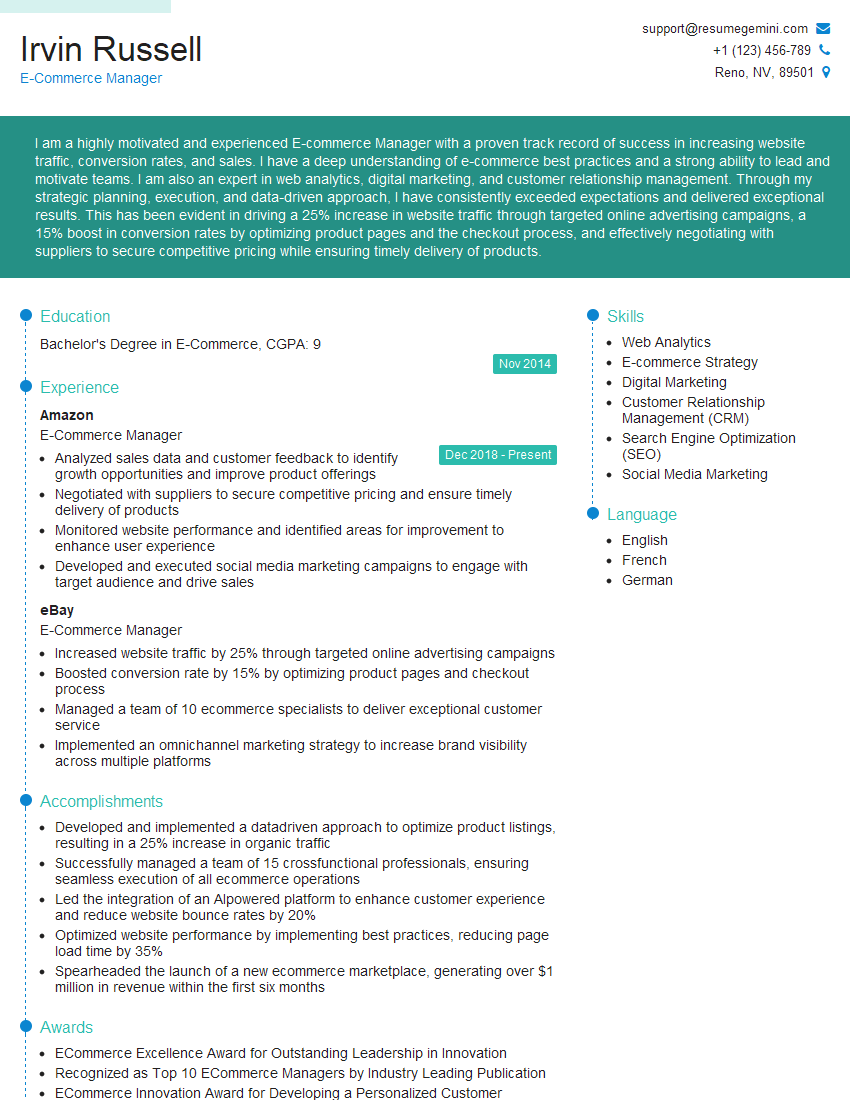
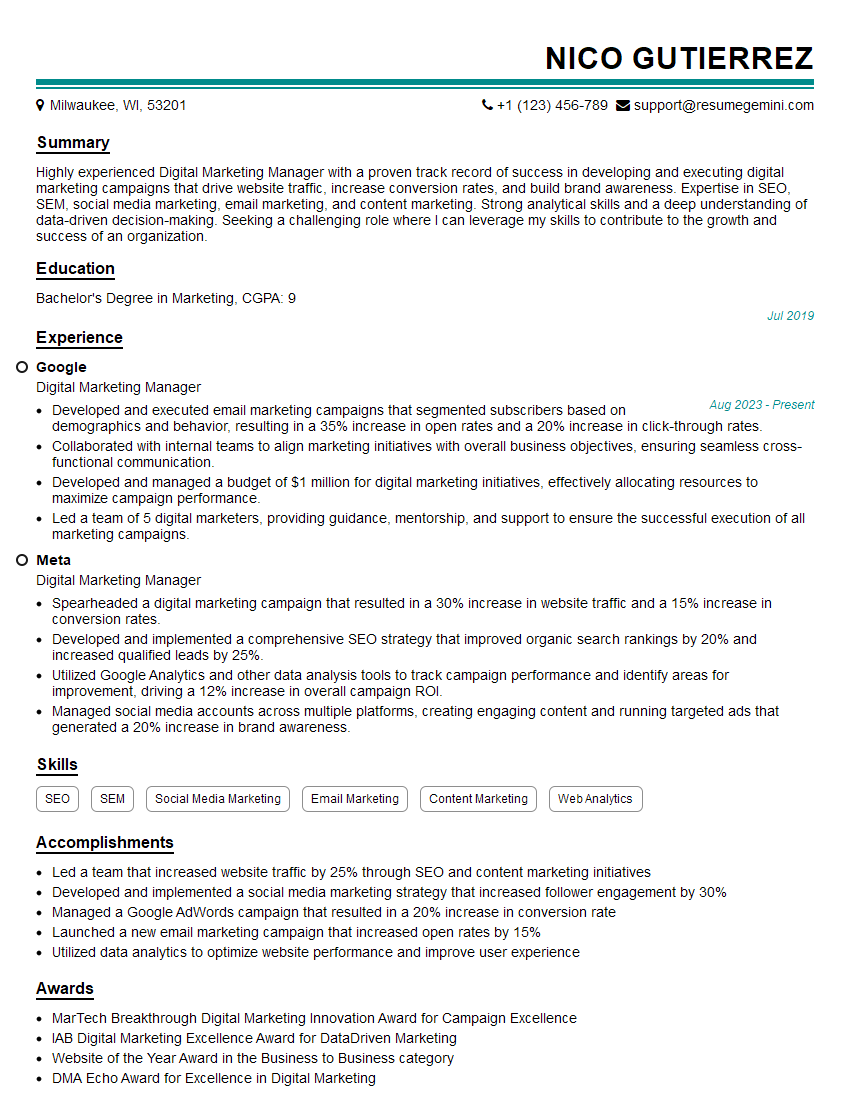
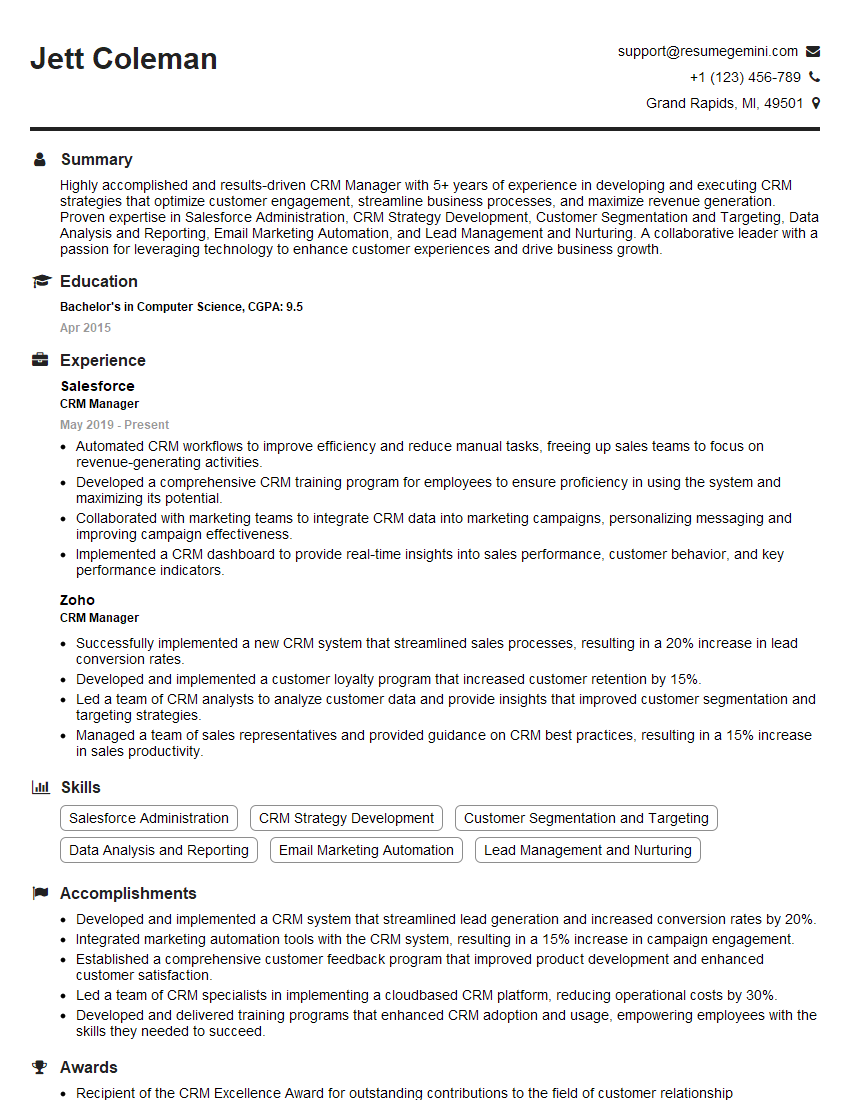
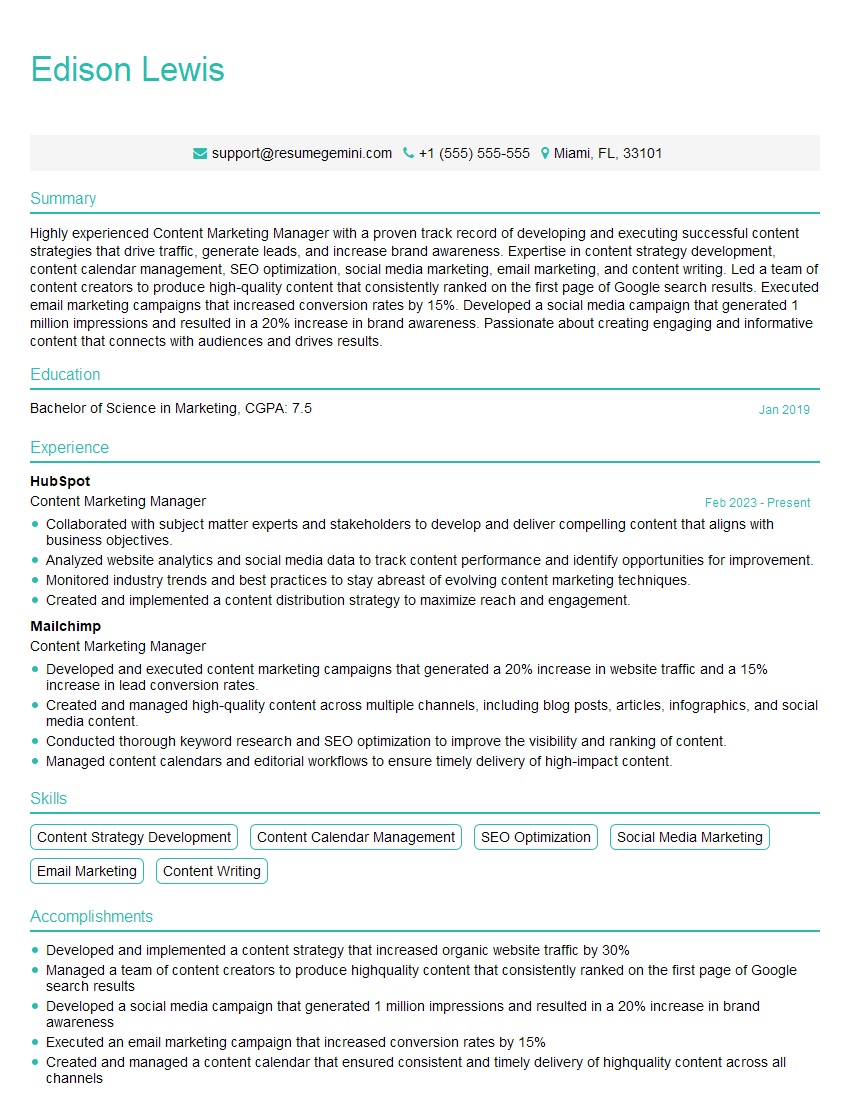
Mastering E-Commerce and Online Event Management opens doors to exciting and rewarding career opportunities in a rapidly growing industry. To significantly increase your job prospects, focus on crafting a compelling and ATS-friendly resume that highlights your skills and experience effectively. ResumeGemini is a trusted resource to help you build a professional and impactful resume. We provide examples of resumes tailored to E-Commerce and Online Event Management to guide you in creating yours. Take the next step towards your dream job today!

Explore more articles
Users Rating of Our Blogs
Share Your Experience
We value your feedback! Please rate our content and share your thoughts (optional).
What Readers Say About Our Blog
Very informative content, great job.
good