Cracking a skill-specific interview, like one for Education and Outreach on Environmental Issues, requires understanding the nuances of the role. In this blog, we present the questions you’re most likely to encounter, along with insights into how to answer them effectively. Let’s ensure you’re ready to make a strong impression.
Questions Asked in Education and Outreach on Environmental Issues Interview
Q 1. Describe your experience developing and implementing environmental education programs.
Developing and implementing effective environmental education programs requires a multifaceted approach. It begins with a thorough needs assessment to identify the target audience’s existing knowledge, interests, and concerns related to environmental issues. This informs the design of curriculum and activities. For example, a program for urban youth might focus on local pollution and conservation efforts, while a rural program might concentrate on sustainable agriculture and water management.
My experience includes designing and delivering programs ranging from interactive workshops for elementary school children on composting and recycling to professional development training for teachers on integrating environmental science into their curricula. I’ve also developed online courses and created engaging multimedia resources, like short documentaries and interactive simulations, to make learning about environmental issues accessible and enjoyable. Implementation involves securing funding, recruiting and training facilitators, and monitoring the program’s impact through ongoing evaluation.
For instance, in one project, I designed a community-based program focused on reducing plastic waste. We started with awareness campaigns using local media and community events, followed by workshops on alternatives to single-use plastics and hands-on activities like creating reusable shopping bags. The program involved collaborating with local businesses and community leaders to create a truly impactful experience.
Q 2. What are your preferred methods for engaging diverse audiences in environmental issues?
Engaging diverse audiences requires understanding their unique cultural backgrounds, perspectives, and learning styles. I employ a variety of strategies to foster inclusivity and make environmental education relevant to everyone.
- Storytelling and narrative approaches: Sharing personal anecdotes or local case studies can create emotional connections and make abstract concepts more relatable.
- Interactive activities and experiential learning: Hands-on activities, games, and outdoor explorations cater to different learning preferences and enhance engagement.
- Community-based learning: Involving community members as facilitators or guest speakers connects learning to real-world issues and fosters a sense of ownership.
- Utilizing diverse media: Incorporating videos, podcasts, art, music, and other media forms ensures inclusivity and accessibility.
- Multilingual resources: Providing information in multiple languages ensures that all community members can participate equally.
For example, when working with a refugee community, I utilized visual aids and storytelling to overcome language barriers and emphasized the importance of environmental sustainability within the context of their cultural traditions.
Q 3. How would you measure the success of an environmental education campaign?
Measuring the success of an environmental education campaign is crucial for demonstrating its impact and improving future programs. My approach involves a combination of quantitative and qualitative methods.
- Pre- and post-tests: Assessing participants’ knowledge and attitudes before and after the program provides a measure of learning gains.
- Surveys and questionnaires: Gathering feedback from participants helps understand their experiences and identify areas for improvement.
- Observation and documentation: Monitoring participants’ behavior during activities provides insights into their engagement and understanding.
- Tracking behavioral changes: Measuring changes in participants’ environmental practices, such as recycling rates or water consumption, demonstrates the program’s real-world impact.
- Longitudinal studies: Following up with participants over time helps assess the long-term effects of the program.
For example, in the plastic waste reduction program, we measured the amount of plastic waste collected before and after the campaign and surveyed residents about their changes in consumption habits. This allowed us to quantify the success of our efforts.
Q 4. Explain your approach to tailoring environmental education materials to different age groups.
Tailoring environmental education materials to different age groups is paramount for effective communication. I adapt content, language, and activities to be age-appropriate and engaging.
- Early childhood (preschool – grade 2): Focus on simple concepts, hands-on activities, storytelling, and sensory experiences.
- Elementary school (grades 3-5): Introduce more complex concepts, use age-appropriate language, incorporate games and interactive simulations, and encourage exploration and discovery.
- Middle school (grades 6-8): Promote critical thinking, problem-solving, and research skills, integrate real-world examples, and incorporate technology.
- High school (grades 9-12): Explore advanced concepts, encourage debate and discussion, connect environmental issues to social justice, and prepare students for civic engagement.
For example, when teaching about climate change, I use simple analogies for younger children (like explaining the greenhouse effect as a blanket trapping heat), while older students engage in discussions about policy implications and solutions.
Q 5. How do you incorporate hands-on activities into your environmental education programs?
Hands-on activities are essential for making environmental education engaging and memorable. I incorporate them in various ways:
- Outdoor explorations and field trips: Visiting nature reserves, parks, or community gardens provides firsthand experience with the environment.
- Citizen science projects: Participating in data collection, monitoring, or research activities allows students to contribute to real scientific understanding.
- Arts and crafts projects: Creating art using recycled materials or natural elements encourages creativity and connects environmental issues to artistic expression.
- Gardening and composting: Growing plants or composting food scraps teaches practical skills and connects students to the food system.
- Building and constructing: Creating models, designing sustainable systems, or building birdhouses connects learning to practical application.
For example, in a program focused on water conservation, students built rain gardens on school grounds to demonstrate how to manage stormwater runoff.
Q 6. Describe a time you had to adapt an environmental education program due to unexpected challenges.
During a program on sustainable agriculture, an unexpected drought significantly impacted our planned outdoor activities. Instead of canceling, we adapted the program by focusing on the challenges and solutions related to water scarcity.
We shifted our focus to classroom-based discussions and simulations. We used interactive online resources and case studies to explore drought-resistant crops and water management techniques. We also invited a local agricultural expert to speak about coping strategies. This unexpected challenge led to a more nuanced and relevant discussion of climate change and its effects on agriculture. The adaptation not only saved the program but also provided a valuable learning experience for participants.
Q 7. What strategies do you use to promote environmental stewardship and responsible behavior?
Promoting environmental stewardship and responsible behavior involves fostering a sense of connection and responsibility towards the environment. I use several strategies:
- Emphasizing the value of nature: Highlighting the beauty, biodiversity, and ecological importance of the natural world can inspire a sense of appreciation and protection.
- Promoting individual actions and collective impact: Showing how small individual actions can collectively make a large difference can empower participants.
- Connecting environmental issues to personal values: Linking environmental conservation to values like health, community well-being, and social justice can increase engagement.
- Empowering civic action: Encouraging participants to engage in advocacy, volunteering, and political action helps build a sense of agency and responsibility.
- Building community partnerships: Collaborating with local organizations and leaders creates a shared responsibility for environmental protection.
For example, one of my programs encouraged students to become environmental advocates within their schools, leading to policy changes regarding waste reduction and energy conservation.
Q 8. How familiar are you with current environmental regulations and policies?
My familiarity with current environmental regulations and policies is extensive. I regularly monitor updates from agencies like the EPA (Environmental Protection Agency), state environmental departments, and international bodies such as the UN Environment Programme. I understand the intricacies of legislation concerning air and water quality, waste management, endangered species protection, and climate change mitigation. For example, I’m well-versed in the Clean Water Act and its impact on water quality standards and permitting processes, as well as the complexities of the Endangered Species Act and its implications for land use planning. This understanding is crucial for designing effective education and outreach programs that are legally sound and aligned with current best practices.
Q 9. How do you use technology to enhance your environmental education efforts?
Technology plays a vital role in amplifying my environmental education efforts. I leverage various digital tools to reach wider audiences and create engaging learning experiences. For instance, I utilize interactive websites and online learning platforms to deliver courses and resources on topics like sustainable living, climate change, and biodiversity. Social media platforms like Instagram, Facebook, and Twitter allow for the dissemination of concise, impactful environmental messages and facilitate discussions with diverse audiences. I also incorporate interactive simulations and virtual reality (VR) experiences, when appropriate, to immerse learners in environmental scenarios and promote deeper understanding. For instance, a VR experience might simulate the effects of deforestation on a forest ecosystem or allow participants to ‘experience’ the impacts of climate change on their local environment. Data visualization tools help communicate complex environmental data effectively through infographics and compelling visuals.
Q 10. Explain your experience working with community stakeholders on environmental projects.
I have a strong track record of collaborating with community stakeholders on environmental projects. For example, I worked with a local community group to develop a composting program for their neighborhood, navigating local regulations and securing funding. This involved multiple meetings, community forums, and workshops to address concerns and build consensus among residents. Another project involved partnering with local businesses to implement sustainable waste reduction strategies, which required understanding their operational constraints and tailoring solutions to fit their needs. Building trust and rapport is key; I actively listen to community concerns, incorporate their feedback into project design, and create opportunities for participation to ensure projects are relevant and effective. Successful community engagement necessitates transparency, open communication, and mutual respect for diverse perspectives.
Q 11. How do you address skepticism or resistance to environmental messages?
Addressing skepticism or resistance to environmental messages requires a nuanced approach. Instead of directly confronting opposing views, I focus on building common ground and fostering respectful dialogue. I often start by acknowledging the validity of concerns, then present scientific evidence in a clear and accessible manner, avoiding jargon. For instance, instead of presenting complex climate models, I might focus on local impacts like changes in weather patterns or increased flooding events. I emphasize solutions and opportunities rather than focusing solely on the problems. Highlighting economic benefits of sustainable practices, like reduced energy costs or job creation in green sectors, can also help overcome resistance. Personal stories and relatable examples from the community increase engagement and build trust. Storytelling is particularly impactful in connecting with individuals on an emotional level, thereby encouraging behavioural change.
Q 12. Describe your experience in creating compelling and informative environmental communications.
Creating compelling and informative environmental communications is a core aspect of my work. I utilize various techniques, including storytelling, data visualization, and multimedia presentations. I avoid overly technical language and focus on clarity and conciseness. For instance, I might use compelling visuals, like photographs and videos, to demonstrate the beauty of nature and the impact of environmental damage. Infographics are particularly effective for presenting complex data in a digestible format. I frequently use the principles of narrative structure – establishing a clear beginning, middle and end – to create engaging stories that highlight environmental issues and their solutions. In addition to written and visual materials, I also create interactive presentations and workshops to engage audiences actively. For example, one of my recent presentations integrated audience participation through interactive polls and Q&A sessions about local environmental challenges.
Q 13. How do you evaluate the effectiveness of various outreach strategies?
Evaluating the effectiveness of outreach strategies involves a multi-faceted approach. I use a combination of quantitative and qualitative methods. Quantitative methods include tracking website visits, social media engagement metrics (likes, shares, comments), and survey responses. These metrics provide valuable insights into the reach and impact of our communications. Qualitative methods, such as focus groups and individual interviews, offer a deeper understanding of audience perceptions, attitudes, and behavioral changes. Analyzing pre- and post-program surveys helps to measure changes in knowledge, attitudes, and behaviors related to environmental issues. Post-program feedback sessions and community forums provide vital feedback. By combining quantitative data with qualitative feedback, we gain a comprehensive understanding of the success of our outreach efforts, allowing us to refine our strategies and improve their impact in the future.
Q 14. What are some key environmental issues affecting your local community?
(Note: This answer will vary depending on your specific local community. Please replace the bracketed information with your own local context.)
Some key environmental issues affecting my local community include [mention specific local issues, e.g., water pollution from agricultural runoff, air pollution from industrial emissions, loss of green spaces due to urban development, increased frequency of extreme weather events]. These issues are interconnected and impact the health and well-being of residents. For example, [explain a specific connection between two issues, e.g., water pollution from agricultural runoff can lead to decreased water quality, affecting both human health and local ecosystems]. Addressing these challenges requires a collaborative effort involving various stakeholders, including local government agencies, businesses, and community members.
Q 15. How do you stay up-to-date on the latest advancements in environmental science and education?
Staying current in environmental science and education requires a multifaceted approach. It’s not enough to simply rely on one source. I actively engage with several strategies:
- Peer-Reviewed Journals and Publications: I regularly read journals like Science, Nature, and specialized publications focusing on environmental education methodologies and research findings. This keeps me abreast of the latest scientific breakthroughs and pedagogical approaches.
- Conferences and Workshops: Attending national and international conferences allows me to network with leading experts, learn about cutting-edge research, and participate in professional development opportunities. I actively seek out sessions on innovative teaching strategies and emerging environmental challenges.
- Online Resources and Professional Organizations: I leverage online platforms like the websites of organizations such as the National Environmental Education Foundation (NEEF) and the North American Association for Environmental Education (NAAEE) for access to reports, webinars, and best practice guidelines. These provide valuable updates and resources.
- Networking and Collaboration: I maintain close contact with colleagues and experts in the field through professional networks, attending webinars, and participating in online forums. These discussions often reveal emerging trends and insights not yet published.
This multi-pronged approach ensures I’m not only informed about new scientific discoveries but also aware of the most effective ways to communicate this information to diverse audiences.
Career Expert Tips:
- Ace those interviews! Prepare effectively by reviewing the Top 50 Most Common Interview Questions on ResumeGemini.
- Navigate your job search with confidence! Explore a wide range of Career Tips on ResumeGemini. Learn about common challenges and recommendations to overcome them.
- Craft the perfect resume! Master the Art of Resume Writing with ResumeGemini’s guide. Showcase your unique qualifications and achievements effectively.
- Don’t miss out on holiday savings! Build your dream resume with ResumeGemini’s ATS optimized templates.
Q 16. How do you build and maintain relationships with key partners in environmental education?
Building and maintaining strong partnerships is crucial for impactful environmental education. I approach this strategically:
- Identifying Key Stakeholders: I begin by identifying organizations and individuals with aligned goals, including schools, government agencies, NGOs, community groups, and businesses. Understanding their individual missions and capabilities is essential.
- Proactive Communication and Relationship Building: I initiate contact through emails, phone calls, and in-person meetings, highlighting shared interests and potential collaborations. I consistently follow up and demonstrate commitment to mutual success.
- Collaborative Project Development: I actively participate in joint projects, offering expertise and resources while valuing the contributions of partners. This fosters trust and shared ownership.
- Open Communication and Feedback: I maintain regular communication, actively soliciting feedback and addressing concerns promptly. Transparency and mutual respect are paramount.
- Formal Agreements and Memoranda of Understanding (MOUs): For larger-scale projects, formal agreements outline roles, responsibilities, and expectations, ensuring clarity and minimizing misunderstandings.
For example, in a past project focusing on water conservation, I partnered with a local school district, a water utility company, and a community environmental group. Each partner brought unique resources and perspectives, ultimately leading to a more comprehensive and impactful program.
Q 17. Explain your understanding of different learning styles and how you cater to them.
Understanding diverse learning styles is vital for effective environmental education. I employ a variety of strategies to cater to different preferences:
- Visual Learners: I use diagrams, maps, charts, videos, and engaging visuals to present information. Real-world examples and images are crucial.
- Auditory Learners: I incorporate discussions, lectures, guest speakers, podcasts, and audio recordings to engage auditory learners. Storytelling and incorporating narratives are particularly effective.
- Kinesthetic Learners: Hands-on activities, field trips, experiments, simulations, and role-playing are essential for kinesthetic learners. Outdoor learning experiences are highly effective.
- Reading/Writing Learners: Providing written materials, worksheets, research projects, and opportunities for reflective writing caters to learners who benefit from textual information.
I also adapt my approach based on the specific age group and context. For younger audiences, interactive games and storytelling may be more effective, while older learners might benefit from more complex discussions and research projects. A combination of approaches is often most successful, ensuring inclusivity and maximum engagement.
Q 18. How do you manage multiple environmental education projects simultaneously?
Managing multiple environmental education projects simultaneously requires effective organization and time management. I utilize several key strategies:
- Project Prioritization and Scheduling: I use project management tools to prioritize tasks based on deadlines, importance, and resource availability. This could involve a simple spreadsheet or more sophisticated software like Trello or Asana.
- Detailed Project Plans: Each project has a detailed plan outlining objectives, timelines, deliverables, and assigned responsibilities. This ensures everyone is clear on their roles and expectations.
- Regular Monitoring and Evaluation: I regularly track progress against project plans, identifying potential roadblocks early on. This allows for timely adjustments and prevents delays.
- Effective Delegation and Teamwork: I delegate tasks effectively to team members based on their skills and expertise, fostering a collaborative environment. Regular team meetings ensure effective communication and coordination.
- Time Blocking and Prioritization: I dedicate specific blocks of time to work on individual projects, avoiding multitasking and ensuring focused effort.
This systematic approach allows me to manage the complexity of multiple projects, ensuring efficiency and delivering high-quality results for each.
Q 19. Describe your experience using data to inform your environmental education strategies.
Data plays a crucial role in informing my environmental education strategies. I utilize data in several ways:
- Pre-Program Assessment: I collect baseline data on participants’ knowledge, attitudes, and behaviors related to environmental issues. This informs the design and content of educational programs.
- Program Evaluation: I use pre- and post-program assessments to measure the effectiveness of educational interventions, determining changes in knowledge, attitudes, and behaviors. This allows for continuous improvement.
- Monitoring Program Outcomes: I track key indicators (e.g., participation rates, changes in environmental practices) over time. This provides evidence of program impact and informs future planning.
- Identifying Target Audiences: Demographic data helps identify specific audiences with unique needs and preferences, allowing for the tailoring of educational materials and strategies.
- Data Visualization and Reporting: I use data visualization techniques (charts, graphs) to communicate findings clearly to stakeholders, demonstrating program impact and justifying continued support.
For instance, in a recent project on composting, pre- and post-program surveys revealed a significant increase in participants’ understanding and adoption of composting practices. This data demonstrated the program’s success and informed future efforts.
Q 20. How do you handle conflict or disagreements within an environmental education team?
Conflict is inevitable in any team environment. My approach to handling disagreements within an environmental education team focuses on open communication and collaborative problem-solving:
- Active Listening and Empathy: I encourage open and respectful dialogue, actively listening to all perspectives without judgment. Understanding the root causes of disagreement is paramount.
- Facilitating Constructive Dialogue: I facilitate discussions to ensure everyone has a chance to express their views. I guide the conversation towards finding common ground and solutions.
- Focus on Shared Goals: I remind the team of the shared goals and objectives of the project, emphasizing the importance of collaboration in achieving them.
- Mediation and Compromise: If necessary, I act as a mediator to help conflicting parties reach a mutually acceptable compromise. Finding a win-win solution is the ultimate goal.
- Documentation and Follow-up: I document decisions and agreements reached, ensuring clarity and accountability. I also follow up to monitor progress and address any lingering concerns.
By fostering a culture of respect and open communication, I aim to transform disagreements into opportunities for learning and growth, strengthening the team’s overall effectiveness.
Q 21. What is your understanding of environmental justice issues?
Environmental justice recognizes that environmental problems often disproportionately affect marginalized communities. These communities may experience higher exposure to pollution, lack access to clean resources (like water and green spaces), and have less political power to address environmental injustices. My understanding encompasses several key aspects:
- Disproportionate Impacts: Certain populations (based on race, ethnicity, socioeconomic status, etc.) often bear a heavier burden of environmental hazards, suffering greater health impacts and reduced quality of life.
- Access to Resources: Environmental justice emphasizes equitable access to clean air, water, healthy food, and green spaces for all communities, regardless of their social or economic status.
- Political Participation: It’s crucial to empower marginalized communities to participate in environmental decision-making processes, ensuring their voices are heard and their concerns addressed.
- Policy and Advocacy: Environmental justice initiatives require policy changes and advocacy efforts to address systemic inequalities and protect vulnerable populations from environmental harms.
In my work, I strive to incorporate environmental justice principles by ensuring educational programs are accessible and relevant to all communities, addressing local environmental concerns, and empowering participants to advocate for environmental justice in their own communities. This involves working with community organizations to raise awareness, build capacity, and promote equitable solutions.
Q 22. How do you promote inclusivity and accessibility in your environmental education programs?
Inclusivity and accessibility are paramount in environmental education. We strive to create programs that welcome everyone, regardless of their background, abilities, or learning styles. This means offering programs in multiple languages, providing materials in diverse formats (e.g., Braille, large print, audio), and adapting activities to accommodate different physical and cognitive needs.
For example, when designing nature walks, we ensure trails are accessible to wheelchair users. We also incorporate sensory activities for visually impaired participants and provide simplified explanations for younger children or those with learning differences. We actively seek out partnerships with organizations specializing in disability inclusion to ensure best practices are integrated into all our programming.
- Multilingual materials: We translate key materials into the most commonly spoken languages in our community.
- Assistive technology: We explore using tools like screen readers and audio descriptions for online resources.
- Adaptive activities: We modify activities to be inclusive of different physical and cognitive abilities, for instance, offering alternative ways to participate in hands-on activities.
Q 23. Describe your experience working with volunteers in environmental education initiatives.
Volunteers are the backbone of many successful environmental education initiatives. My experience involves recruiting, training, and managing teams of volunteers with diverse skills and backgrounds. We leverage their enthusiasm and passion to enhance our outreach capacity. For example, we’ve had volunteers lead nature walks, assist with educational workshops, help maintain our community garden, and even create educational materials.
Effective volunteer management involves clear communication, well-defined roles, and ongoing support and training. We provide comprehensive training sessions to ensure volunteers understand our program goals and possess the necessary skills to effectively engage with participants. Regular check-ins and feedback sessions maintain morale and ensure everyone feels valued and supported. This approach ensures a positive experience for both the volunteers and the participants.
Q 24. What are your thoughts on the role of storytelling in environmental education?
Storytelling is a powerful tool in environmental education because it connects people emotionally to environmental issues. Stories make complex concepts relatable and memorable. They can transport learners to different ecosystems, introduce them to diverse species, and illustrate the consequences of environmental degradation. For instance, sharing the story of a local community affected by pollution can resonate far more deeply than a set of statistics.
We use a variety of storytelling techniques, including personal anecdotes, traditional folktales, and engaging narratives created around specific environmental topics. Incorporating local indigenous knowledge and traditional stories can further add depth and cultural relevance. This method fosters a sense of ownership and connection to the environment, making learning more meaningful and impactful.
Q 25. How do you integrate environmental education into existing curricula or programs?
Integrating environmental education into existing curricula requires a collaborative approach with educators. We work closely with teachers to identify opportunities to weave environmental themes into existing subjects. For instance, we can develop cross-curricular projects linking environmental science to history, art, and literature.
We offer teacher training workshops and provide ready-to-use lesson plans aligned with curriculum standards. This ensures teachers feel supported and equipped to integrate environmental concepts seamlessly into their classrooms. We also develop interactive online resources and hands-on activities that enhance learning beyond the textbook. For example, a unit on ecosystems could include a virtual field trip to a local wetland followed by a hands-on investigation of soil samples.
Q 26. Describe your experience creating educational materials for different platforms (e.g., websites, social media).
Creating engaging educational materials across different platforms requires a multi-faceted approach. For our website, we use clear and concise language, compelling visuals, and interactive elements to keep learners engaged. On social media, we use short, shareable videos, infographics, and quizzes to disseminate information effectively. We use data analytics to track engagement and refine our content strategy.
For example, a website might feature interactive maps showing local biodiversity, while social media posts could highlight captivating wildlife photos with concise descriptions. We ensure consistent branding and messaging across all platforms to reinforce our key messages and maintain a cohesive learning experience. Accessibility remains a key consideration across all platforms.
Q 27. How do you assess the learning outcomes of your environmental education programs?
Assessing learning outcomes is crucial for program improvement. We use a range of methods including pre- and post-tests, quizzes, observations, and feedback surveys. Pre-tests help gauge existing knowledge, while post-tests measure learning gains. Observations during workshops provide insights into participants’ understanding and engagement.
Feedback surveys collect qualitative data on program effectiveness and participant satisfaction. Analyzing this data allows us to identify areas for improvement and ensure programs remain relevant and impactful. For example, low scores on a post-test might indicate a need to revise certain lesson plans or teaching methods. Consistent evaluation ensures ongoing program refinement and optimal learning outcomes.
Q 28. What are your long-term career goals in the field of environmental education and outreach?
My long-term career goals involve expanding the reach and impact of environmental education. I aim to develop innovative educational programs that leverage emerging technologies, such as virtual and augmented reality, to make environmental learning more engaging and accessible. I also aspire to mentor the next generation of environmental educators and contribute to the development of effective policy that promotes environmental sustainability.
I envision collaborating with diverse stakeholders—from educators and community leaders to policymakers and scientists—to create a more environmentally literate and responsible society. My ultimate goal is to empower individuals and communities to become active stewards of the planet.
Key Topics to Learn for Education and Outreach on Environmental Issues Interview
- Environmental Communication Strategies: Understanding diverse audiences and tailoring messages effectively; exploring different communication channels (social media, public speaking, workshops).
- Curriculum Development & Program Design: Creating engaging and impactful educational materials; designing interactive workshops and activities for various age groups and learning styles; aligning programs with environmental education frameworks.
- Community Engagement & Collaboration: Building partnerships with community organizations, schools, and businesses; fostering collaborative projects to address local environmental challenges; mobilizing community action.
- Environmental Education Methodologies: Applying experiential learning techniques; utilizing technology for environmental education; evaluating program effectiveness and impact.
- Sustainability & Behavior Change: Understanding the psychological and sociological factors influencing environmental behaviors; designing interventions to promote sustainable practices; measuring the effectiveness of behavior change programs.
- Environmental Advocacy & Policy: Understanding environmental policy and regulations; effectively communicating scientific information to policymakers; advocating for environmental protection.
- Project Management & Evaluation: Planning and executing environmental education projects; managing budgets and resources; assessing project outcomes and reporting on impact.
Next Steps
Mastering Education and Outreach on Environmental Issues is crucial for a successful and impactful career. It allows you to contribute directly to positive environmental change while developing valuable skills in communication, collaboration, and program management. These skills are highly sought after in various sectors, leading to diverse and rewarding career opportunities.
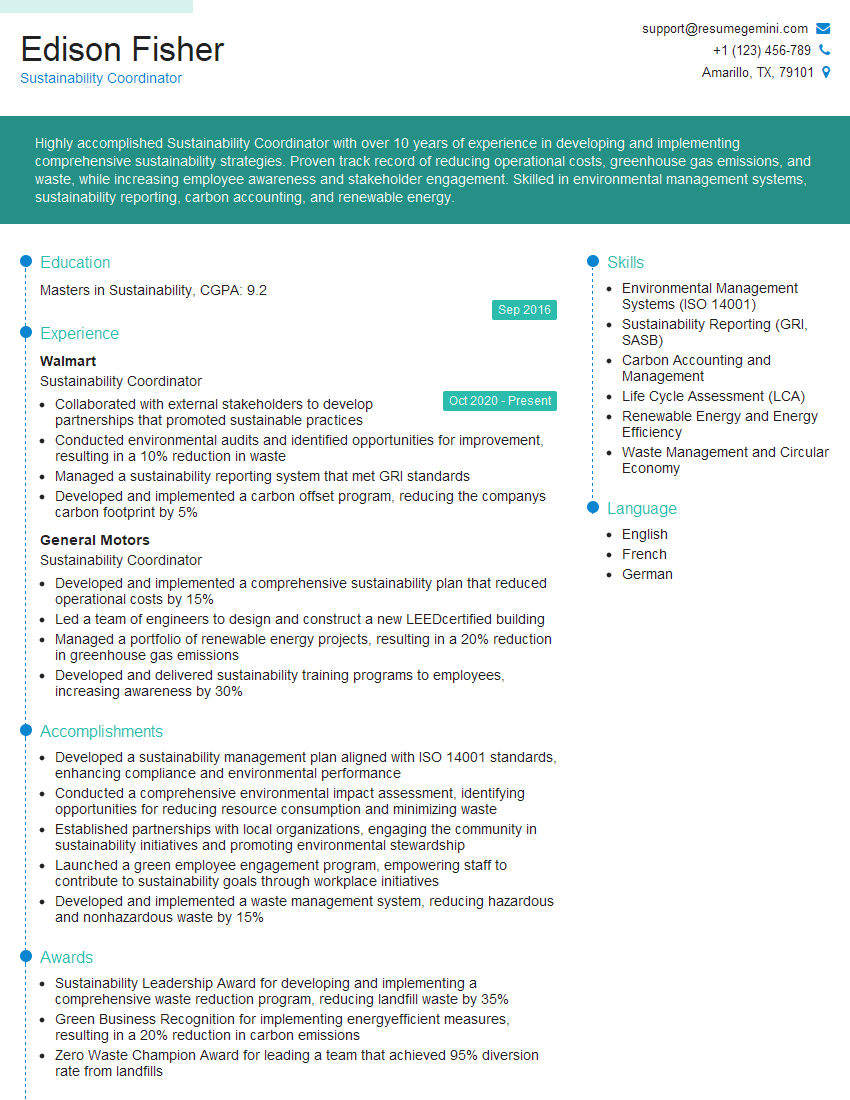
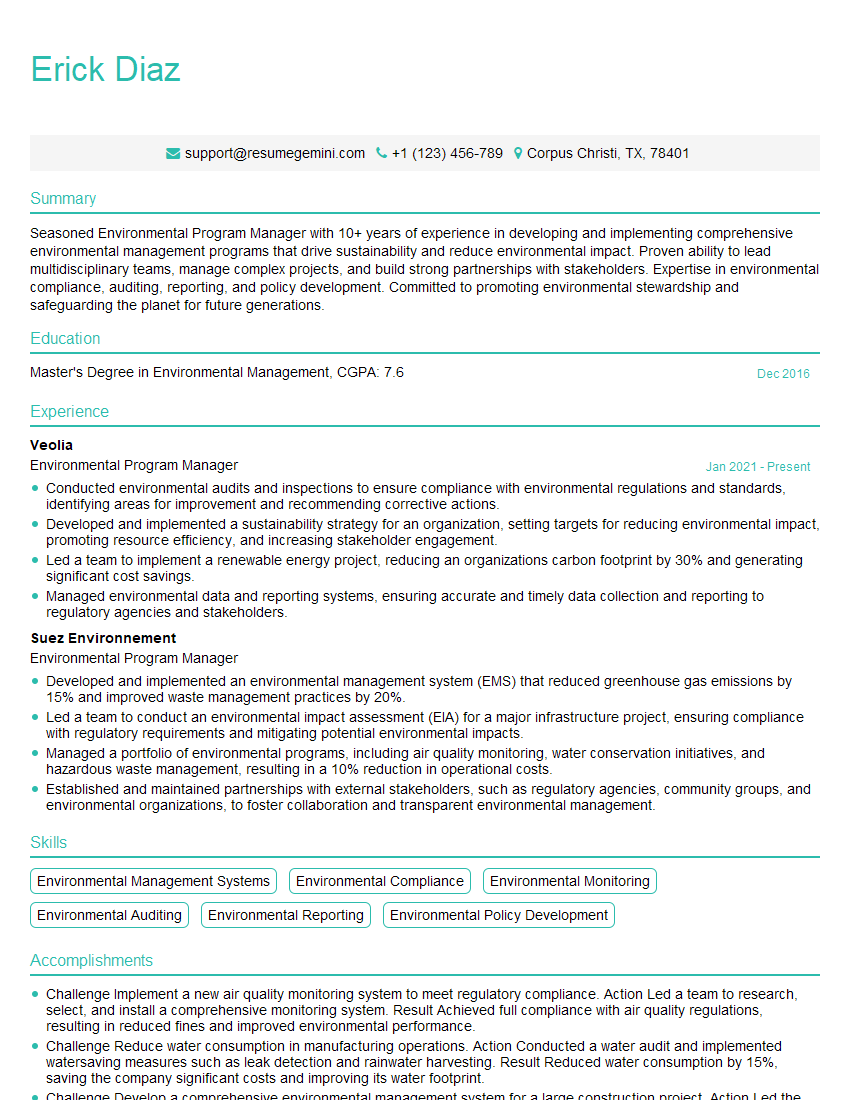
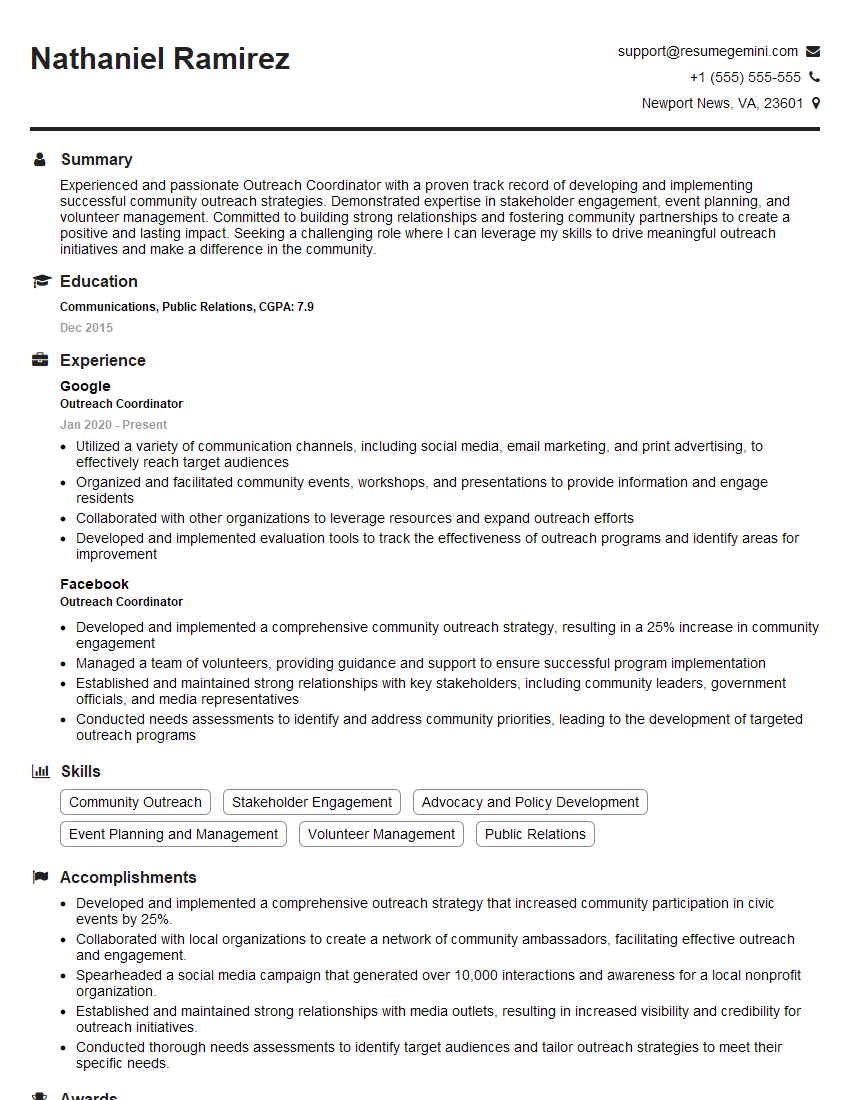
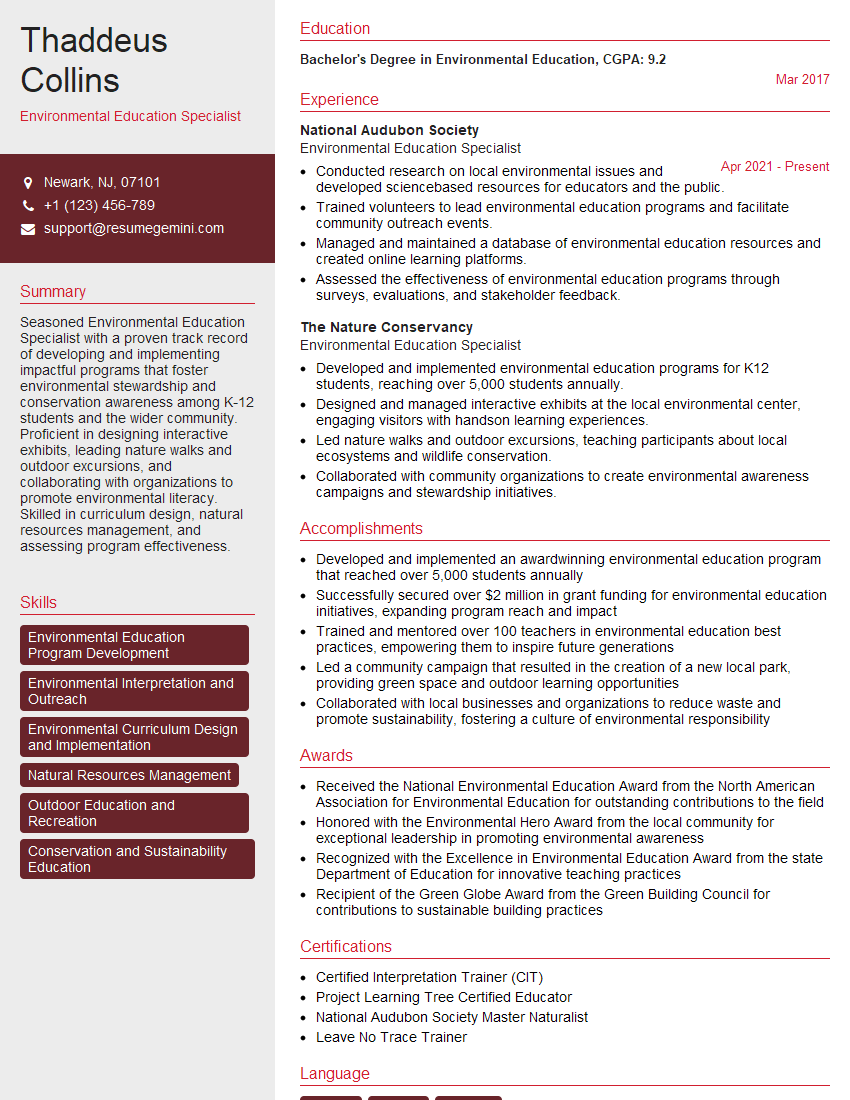
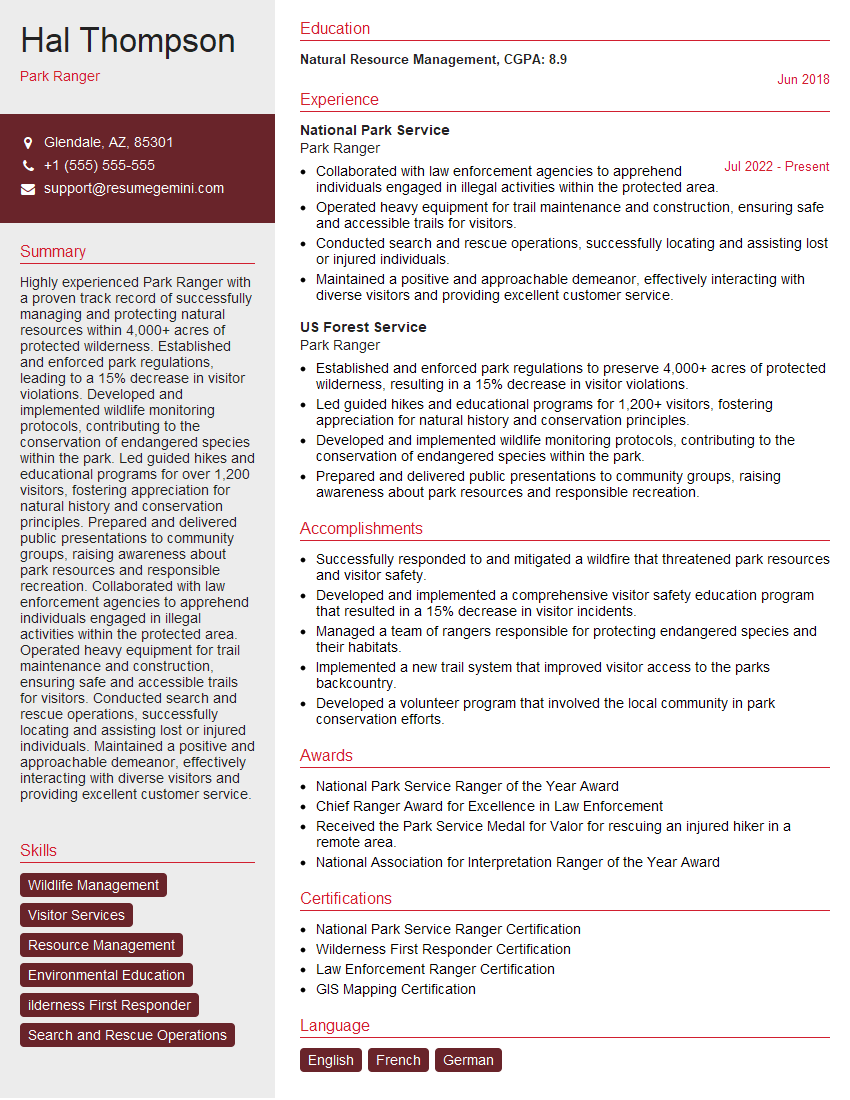
To maximize your job prospects, create an ATS-friendly resume that effectively highlights your relevant skills and experience. ResumeGemini is a trusted resource to help you build a professional and compelling resume that stands out to recruiters. We offer examples of resumes tailored to Education and Outreach on Environmental Issues to help guide your creation process.

Explore more articles
Users Rating of Our Blogs
Share Your Experience
We value your feedback! Please rate our content and share your thoughts (optional).
What Readers Say About Our Blog
Very informative content, great job.
good