Preparation is the key to success in any interview. In this post, we’ll explore crucial Effective in Customer Service and Relationship Management interview questions and equip you with strategies to craft impactful answers. Whether you’re a beginner or a pro, these tips will elevate your preparation.
Questions Asked in Effective in Customer Service and Relationship Management Interview
Q 1. Describe your approach to handling a difficult customer interaction.
My approach to handling difficult customer interactions centers around empathy, active listening, and a problem-solving mindset. I begin by acknowledging the customer’s frustration and validating their feelings. This doesn’t mean agreeing with everything they say, but showing I understand their perspective. Then, I actively listen, asking clarifying questions to fully grasp the issue. This helps avoid misunderstandings and ensures I’m addressing the root cause.
Next, I clearly explain the steps I’ll take to resolve the problem. Transparency is key; I set realistic expectations about timelines and potential outcomes. Throughout the interaction, I maintain a calm and professional demeanor, even if the customer is raising their voice or being aggressive. I remain focused on finding a solution that meets the customer’s needs within the boundaries of company policy. Finally, I always follow up to ensure their satisfaction and to prevent the issue from recurring.
For example, if a customer is upset about a delayed shipment, I wouldn’t immediately become defensive. Instead, I’d start by saying something like, “I understand your frustration about the delay; that’s certainly not the experience we want you to have.” Then I’d investigate the reason for the delay, offer a sincere apology, and explore options like expedited shipping or a partial refund to compensate for the inconvenience.
Q 2. How do you prioritize competing demands from multiple clients?
Prioritizing competing demands from multiple clients requires a structured approach. I utilize a system that combines urgency, importance, and client relationship value. I use a prioritization matrix, often visualizing it with a simple quadrant system.
- Urgent and Important: These tasks require immediate attention, such as resolving a critical issue for a high-value client.
- Important but Not Urgent: These tasks are crucial for long-term client success, such as proactive account management or strategic planning sessions. These are scheduled proactively.
- Urgent but Not Important: These tasks are time-sensitive but might have a lower impact on the overall business. I delegate these whenever possible or look for efficient solutions to handle them quickly.
- Not Urgent and Not Important: These tasks can often be delayed or eliminated entirely. This helps prevent becoming overwhelmed.
Furthermore, I maintain open communication with my clients, keeping them informed about my workload and estimated timelines. Transparent communication builds trust and helps manage expectations, even when I have to prioritize one request over another. This proactive approach minimizes misunderstandings and keeps everyone informed.
Q 3. Explain your experience with CRM software and its impact on customer relationship management.
I have extensive experience using CRM software, primarily Salesforce. CRM systems are indispensable for effective customer relationship management. They centralize all client information—contact details, interaction history, purchase records, support tickets—in one easily accessible database. This allows me to provide personalized service by quickly reviewing a client’s history before engaging with them.
Salesforce, for instance, allows for efficient task management, automated email sequences, and detailed reporting on customer interactions. The impact on CRM is significant. Improved data visibility means more informed decision-making. Automated workflows reduce manual effort and ensure consistent service. Detailed reporting provides valuable insights into customer behavior and allows for identifying areas for improvement in our service delivery. For example, analyzing support tickets can reveal recurring problems requiring system or process improvements.
I’ve used CRM data to personalize marketing campaigns, segment customer base for targeted promotions, and even identify at-risk clients needing proactive attention. This data-driven approach significantly enhances customer retention and satisfaction.
Q 4. How do you build rapport with clients quickly and effectively?
Building rapport quickly and effectively relies on active listening, empathy, and genuine interest in the client. I start by making a positive first impression through a warm greeting and friendly tone. I then actively listen to their needs, showing that I’m genuinely interested in understanding their perspective. I use open-ended questions to encourage them to share more details. For instance, instead of asking, “Do you have a problem?” I might ask, “Can you tell me more about what’s happening?”
Mirroring their body language subtly (not mimicking, but reflecting their energy level) can create a subconscious connection. I use their name frequently throughout the conversation to personalize the interaction. I also find common ground, if appropriate, to create a connection, such as sharing a relevant professional experience or discussing a shared interest. Remember to be authentic, as forced attempts at rapport will be easily detected. Building trust takes time, but initiating connection quickly is possible with these techniques.
Q 5. What metrics do you use to measure the success of your customer service efforts?
Measuring the success of customer service efforts requires a balanced approach encompassing quantitative and qualitative data. Key quantitative metrics include:
- Customer Satisfaction (CSAT) scores: Measured through surveys after interactions.
- Net Promoter Score (NPS): Gauges customer loyalty and likelihood to recommend.
- Average Resolution Time (ART): Tracks the efficiency of resolving issues.
- First Contact Resolution (FCR): Measures the percentage of issues solved on the first contact.
- Customer Churn Rate: Monitors the rate of customer cancellations or loss.
Qualitative data is equally important:
- Customer feedback from surveys and reviews: Provides valuable insights into customer experiences.
- Social media monitoring: Tracks customer sentiment and identifies potential issues.
- Agent performance reviews: Evaluates individual agent performance and areas for improvement.
By analyzing both quantitative and qualitative data, I can identify trends, pinpoint areas for improvement, and demonstrate the overall effectiveness of our customer service strategies. A holistic approach ensures a more comprehensive and accurate assessment of success.
Q 6. Describe a time you went above and beyond for a customer.
In a previous role, a client’s critical system malfunctioned just before a major product launch. This threatened to severely impact their business and reputation. The standard support process couldn’t resolve the issue quickly enough.
Recognizing the urgency, I volunteered to work outside of regular hours to assist the client directly. I collaborated with our engineering team, troubleshooting remotely for several hours into the night. We were able to identify and fix the problem, enabling them to launch their product on time. While it was demanding, witnessing their relief and appreciation made the extra effort worthwhile. They subsequently became one of our strongest advocates, a testament to the power of going the extra mile.
Q 7. How do you handle customer complaints and feedback?
Handling customer complaints and feedback starts with active listening and empathy. I aim to understand the customer’s perspective without interruption. After actively listening, I express empathy and validate their feelings. Then, I clearly explain the steps I’ll take to resolve the issue, even if it involves escalation to a different team. I keep the customer informed of my progress, and I apologize sincerely for any inconvenience caused. Following up after the issue is resolved demonstrates that I value their feedback and am committed to their satisfaction.
I treat all feedback, both positive and negative, as valuable opportunities for learning and improvement. I use this feedback to identify trends, areas needing improvement in our processes or products, and to highlight exceptional performances.
For negative feedback, I use a structured approach: I document the complaint thoroughly, investigate the root cause, and implement corrective actions to prevent similar issues in the future. This detailed process, combined with personalized follow-ups, demonstrates a commitment to continuous improvement and enhanced customer satisfaction.
Q 8. How do you identify and resolve customer issues efficiently?
Efficiently resolving customer issues starts with active listening and clear communication. I begin by understanding the core problem, not just the symptoms. This involves asking clarifying questions to fully grasp the customer’s perspective and needs. Then, I systematically investigate the issue, using available tools and resources to find a solution. This might involve checking order status, troubleshooting technical problems, or researching company policies.
For example, if a customer reports a faulty product, I wouldn’t just offer a refund immediately. I’d first ask specific questions about the malfunction to determine if a simple fix exists (like a software update or a specific cleaning procedure). If it requires further investigation, I’d escalate the issue to the appropriate team while keeping the customer informed every step of the way. My goal is to provide a timely and effective resolution that leaves the customer satisfied and valued.
I also leverage knowledge bases, FAQs, and internal communication channels to quickly find answers and solutions. Prioritizing issues based on urgency and impact is critical. Critical problems, like system failures affecting multiple customers, take precedence over less urgent requests. Finally, I always follow up to ensure the resolution was satisfactory and to identify any areas for process improvement.
Q 9. What strategies do you employ to retain customers?
Customer retention strategies center around building strong, lasting relationships. This involves exceeding customer expectations consistently, providing exceptional service that fosters loyalty. Key strategies include:
- Proactive Communication: Regularly engaging customers with valuable content, updates, or special offers keeps them connected and informed.
- Personalized Experiences: Tailoring interactions to individual needs and preferences makes customers feel valued and understood. This could involve remembering their past interactions or offering customized recommendations.
- Loyalty Programs: Rewards programs incentivize repeat business and recognize valued customers.
- Feedback Mechanisms: Actively soliciting feedback allows for continuous improvement and demonstrates a commitment to customer satisfaction. Surveys, reviews, and direct communication channels are useful tools.
- Handling Complaints Effectively: Turning negative experiences into positive ones through swift and empathetic responses builds trust and demonstrates commitment to resolving issues.
For instance, following up after a purchase with a personalized email expressing gratitude and offering assistance builds a connection. Addressing negative reviews promptly and professionally demonstrates accountability and a desire for improvement.
Q 10. How do you handle conflict resolution with clients?
Conflict resolution involves calm, empathetic communication and a focus on finding mutually acceptable solutions. My approach is to actively listen to the customer’s concerns without interruption, validating their feelings and acknowledging their perspective. I then clearly explain the company’s position, using factual information and avoiding accusatory language. The goal is to find common ground and work together toward a resolution.
If the issue is complex or involves multiple parties, I escalate appropriately, keeping the customer informed. I ensure transparent and timely communication throughout the process. Even when a compromise isn’t possible, maintaining a respectful and professional demeanor is crucial for preserving the customer relationship.
For example, if a customer is upset about a delayed shipment, I would empathize with their frustration, explain the reason for the delay (providing evidence if needed), and offer a fair solution, such as expedited shipping or a discount on their next purchase. Documenting the entire process is also vital for accountability and future reference.
Q 11. Describe your experience with different customer service channels (phone, email, chat).
I’m proficient in various customer service channels and adapt my approach accordingly. Phone calls allow for immediate interaction and personalized support, using a friendly and professional tone. Email provides a written record, enabling detailed explanations and follow-up. I ensure my responses are clear, concise, and professional. Live chat offers a quick and convenient way to resolve simple queries or provide real-time assistance. I maintain a fast response time and use clear, concise language. My communication style is consistent across all channels, emphasizing empathy, professionalism, and efficiency.
In each case, I maintain a consistent brand voice and ensure all interactions are professional and respectful, regardless of the channel. I tailor my approach to the specific context and the customer’s needs and preferences.
Q 12. How do you adapt your communication style to different customer personalities?
Adapting communication style is crucial for effective customer service. I assess each customer’s communication style by observing their tone, language, and preferred interaction style. Some customers prefer formal and direct communication, while others are more informal and conversational. I adjust my language, pace, and tone to match their style, fostering a comfortable and productive exchange.
For example, with a highly technical customer, I might use more specific terminology and explain technical details thoroughly. With a less technical customer, I might use simpler language and avoid jargon. Empathy is key – understanding their emotional state and tailoring my responses accordingly helps build rapport and trust, regardless of personality.
Q 13. How do you manage your workload and prioritize tasks effectively in a customer-facing role?
Managing workload effectively in a customer-facing role requires organization and prioritization. I use task management tools to schedule appointments, track progress on tasks, and ensure timely responses. Prioritization involves categorizing tasks by urgency and importance. Urgent and critical tasks (e.g., resolving major system issues) take precedence. I frequently review my to-do list and adjust priorities as needed. Time management techniques, such as the Pomodoro Technique, help maintain focus and prevent burnout.
I also proactively communicate with colleagues to delegate tasks where appropriate and ensure smooth workflow. Effective time management is crucial for consistently delivering high-quality customer service without feeling overwhelmed.
Q 14. Explain your understanding of customer relationship management best practices.
Customer Relationship Management (CRM) best practices focus on building and maintaining strong customer relationships. This involves using CRM software to centralize customer data, track interactions, and personalize communication. Key aspects include:
- Data Accuracy: Maintaining accurate and up-to-date customer information is crucial for effective communication and personalized service.
- Data Security: Protecting customer data is paramount, adhering to privacy regulations and security protocols.
- Process Automation: Automating repetitive tasks, such as sending follow-up emails or generating reports, frees up time for more complex tasks and improves efficiency.
- Reporting and Analytics: Analyzing customer data to identify trends, preferences, and areas for improvement allows for proactive adjustments and optimized service.
- Integration with other systems: Integrating the CRM with other business systems, such as marketing automation or e-commerce platforms, provides a holistic view of the customer journey.
Implementing a robust CRM system, along with a strong customer-centric culture, ensures that all customer interactions are tracked, analyzed, and used to improve overall service and strengthen relationships.
Q 15. Describe a time you had to deal with a high-pressure customer service situation.
High-pressure customer service situations often involve escalated complaints, tight deadlines, or multiple stakeholders. One instance involved a major software glitch affecting a large number of our clients during a crucial sales period. The volume of calls and emails was overwhelming, and each client was understandably frustrated and demanding immediate resolution.
My approach involved immediately establishing a triage system to prioritize the most critical cases. I delegated tasks effectively, ensuring that each team member had the necessary information and support. I communicated transparently with clients, providing regular updates and realistic timelines for resolution, even when the solution wasn’t immediately apparent. We also proactively sent out system-wide updates and provided workarounds wherever possible to mitigate further disruption. By combining efficient problem-solving with empathetic communication, we managed to resolve the issue and minimize negative impact on customer relations. The experience highlighted the importance of clear communication, resource allocation, and maintaining composure under pressure.
Career Expert Tips:
- Ace those interviews! Prepare effectively by reviewing the Top 50 Most Common Interview Questions on ResumeGemini.
- Navigate your job search with confidence! Explore a wide range of Career Tips on ResumeGemini. Learn about common challenges and recommendations to overcome them.
- Craft the perfect resume! Master the Art of Resume Writing with ResumeGemini’s guide. Showcase your unique qualifications and achievements effectively.
- Don’t miss out on holiday savings! Build your dream resume with ResumeGemini’s ATS optimized templates.
Q 16. How do you proactively identify potential customer problems before they arise?
Proactive problem identification involves anticipating customer needs and potential pain points before they escalate. This involves leveraging several strategies:
- Data Analysis: Regularly analyzing customer data such as usage patterns, support tickets, and website analytics can reveal recurring issues or trends that signal potential future problems.
- Customer Feedback Loops: Implementing regular surveys, feedback forms, and social media monitoring allows you to gather direct input from customers regarding their experience and identify areas for improvement.
- Predictive Modeling: Advanced analytics can be used to predict potential issues based on historical data and current trends. For example, if past data shows a surge in customer support tickets during specific product launches, proactive measures can be implemented to address this.
- Product Knowledge: A deep understanding of your product or service allows you to foresee potential issues. This includes understanding its limitations, common user errors and anticipated challenges.
- Staying Informed: Keeping abreast of industry trends and competitive landscape helps to predict evolving customer needs and potential challenges.
For example, analyzing website traffic data showed a significant increase in users struggling with a specific feature. This allowed us to proactively develop a tutorial and FAQs to address this issue before it escalated into numerous support tickets.
Q 17. How familiar are you with different customer service methodologies (e.g., Agile, Lean)?
I’m familiar with various customer service methodologies, including Agile and Lean. Agile emphasizes iterative development and continuous improvement, focusing on delivering value quickly and adapting to changing customer needs. This is particularly useful in handling customer requests and feedback, allowing for quick iterations to resolve issues. Lean focuses on eliminating waste and streamlining processes to improve efficiency and reduce costs. This can be applied to optimize customer service workflows, reduce response times, and create a more efficient support system.
In practice, I’ve used Agile principles to rapidly deploy solutions to customer issues, using short feedback loops to adapt our approach. Lean methodologies have helped streamline our processes, reducing wait times and improving overall efficiency. The combination of these methodologies ensures that we deliver exceptional customer service that is both efficient and adaptable.
Q 18. How do you gather and analyze customer feedback to improve service?
Gathering and analyzing customer feedback is crucial for improving service. This involves employing multiple channels and techniques:
- Surveys: Using online surveys, feedback forms, and email questionnaires provides structured data on customer satisfaction and areas for improvement.
- Social Media Monitoring: Tracking mentions of your brand and product on social media platforms provides valuable insights into customer sentiment and identifies issues quickly.
- Support Ticket Analysis: Analyzing support tickets reveals recurring issues, highlighting common problems and areas needing immediate attention.
- Customer Interviews: Conducting in-depth interviews with customers provides rich qualitative data, capturing nuanced perspectives and unmet needs.
- Net Promoter Score (NPS): Using NPS surveys helps gauge customer loyalty and identify areas for improvement.
Once collected, feedback is analyzed using various techniques, including sentiment analysis of textual data and statistical analysis of numerical data. This analysis helps identify trends, prioritize areas needing improvement, and inform strategic decisions.
Q 19. What is your experience with customer segmentation and targeted communication?
Customer segmentation involves dividing your customer base into distinct groups based on shared characteristics, such as demographics, purchasing behavior, and engagement levels. Targeted communication tailors messages and services to specific segments to enhance relevance and effectiveness.
I have experience segmenting customers based on their usage patterns, product preferences, and engagement with our support channels. For example, high-value clients receive personalized service and proactive support, while new users receive onboarding materials and targeted tutorials. This approach allows us to provide customized experiences that improve customer satisfaction and loyalty. We use this information to create email campaigns or in-app notifications offering relevant product updates or promotions.
Q 20. Describe a time you had to deal with an irate customer and how you diffused the situation.
Dealing with an irate customer requires empathy, patience, and effective communication. I once encountered a client who was extremely upset due to a prolonged technical issue. My approach involved actively listening to their concerns without interruption, validating their frustration, and expressing sincere empathy for their situation.
I then calmly explained the steps we were taking to resolve the issue, offering transparent updates and realistic timelines. I took ownership of the problem, avoiding defensive responses, and offered a sincere apology. By demonstrating genuine care and understanding, I successfully diffused the situation and transformed their anger into a more collaborative discussion. We eventually found a resolution that satisfied the client, transforming a negative experience into a positive one. The key is to maintain composure, actively listen, and demonstrate a sincere willingness to help.
Q 21. How do you measure customer satisfaction and how would you implement improvements?
Measuring customer satisfaction (CSAT) involves utilizing various metrics and feedback mechanisms. Key metrics include:
- Customer Satisfaction Scores (CSAT): Measuring overall satisfaction through surveys after specific interactions or transactions.
- Net Promoter Score (NPS): Gauging customer loyalty and willingness to recommend your service.
- Customer Effort Score (CES): Evaluating how easy it was for customers to resolve their issues.
- First Contact Resolution (FCR): Measuring the percentage of issues resolved on the first contact.
- Average Handling Time (AHT): Monitoring the average time spent resolving customer issues.
Implementing improvements involves analyzing these metrics to identify areas needing attention. For instance, low CSAT scores might indicate a need for improved training for support staff or product updates. High AHT suggests process inefficiencies that require optimization. Based on these analyses, we can implement targeted improvements, such as updating knowledge bases, improving training programs, or streamlining internal workflows.
Q 22. How do you stay up-to-date on industry trends and best practices in customer service?
Staying current in customer service requires a multi-pronged approach. It’s not a passive process; it demands active engagement.
Industry Publications and Blogs: I regularly read publications like Customer Service Magazine, Harvard Business Review articles on customer experience, and leading blogs focusing on customer relationship management (CRM) best practices. This keeps me informed about emerging trends and innovative solutions.
Conferences and Webinars: Attending industry conferences and webinars offers invaluable networking opportunities and exposure to cutting-edge strategies directly from experts. I actively participate in Q&A sessions to further my understanding.
Professional Development Courses: Continuous learning is crucial. I actively seek out online courses and workshops on topics like emotional intelligence in customer service, conflict resolution, and the latest CRM technologies. Certifications demonstrate commitment to professional growth.
Networking: Connecting with other customer service professionals through online communities and professional organizations allows for knowledge exchange and the sharing of best practices. This peer-to-peer learning is invaluable.
Competitive Analysis: I regularly analyze the customer service strategies of competitors and industry leaders to identify areas for improvement and potential opportunities for innovation in our own approach.
Q 23. How would you handle a situation where a customer’s request conflicts with company policy?
Handling a situation where a customer’s request conflicts with company policy requires a delicate balance of empathy and firmness. The goal is to find a solution that satisfies the customer while upholding company guidelines.
Active Listening and Empathy: First, I would actively listen to the customer’s concern and validate their feelings. Showing empathy goes a long way in diffusing tension.
Clear Explanation of Policy: I would then clearly explain the relevant company policy, using simple, non-technical language, ensuring the customer understands the reason behind it. For example, if it’s a refund policy, I’d explain the rationale behind the time limits or conditions.
Exploring Alternative Solutions: Next, I would explore alternative solutions that may be possible within the framework of the policy. This might involve offering a partial refund, an expedited replacement, or a discount on a future purchase. Creativity is key here.
Escalation (if necessary): If the conflict cannot be resolved, I would escalate the issue to a supervisor or manager who has the authority to make exceptions or handle complex situations. Transparency with the customer about this process is crucial.
Documentation: Throughout the process, I would meticulously document every step taken, including the customer’s request, the explanation of the policy, the proposed solutions, and the final outcome. This ensures accountability and aids in identifying trends or areas for improvement in future policy adjustments.
Q 24. How do you use technology to enhance customer relationships and service?
Technology is indispensable for enhancing customer relationships and service. I leverage several technological tools to improve efficiency and personalize interactions.
CRM Systems: CRMs like Salesforce or HubSpot allow me to centralize customer data, track interactions, and personalize communication. This enables me to understand past interactions and tailor my responses accordingly. For example, I can see a customer’s purchase history to offer relevant product recommendations.
Live Chat and Messaging Platforms: Real-time communication tools such as Intercom or Zendesk Chat enable immediate responses to customer inquiries, providing a quick and convenient solution. This boosts customer satisfaction by reducing wait times.
Self-Service Portals: Providing customers with access to a knowledge base, FAQs, and troubleshooting guides empowers them to resolve issues independently. This frees up time for more complex queries and improves overall efficiency.
Social Media Monitoring: Actively monitoring social media platforms for mentions of the company allows for proactive issue resolution and engagement with customers, turning potential negative experiences into positive ones. This requires a rapid response mechanism.
Data Analytics: Analyzing customer data helps identify patterns, trends, and common pain points, allowing for proactive improvements to products, services, and support processes. This data-driven approach ensures continuous optimization.
Q 25. What are your strengths and weaknesses in customer service and relationship management?
My strengths lie in my ability to build rapport quickly with customers, actively listen to their concerns, and provide solutions efficiently. I’m adept at diffusing tense situations and finding creative solutions to meet customer needs. I’m also highly organized and detail-oriented, ensuring accuracy and follow-through on every interaction.
One area I’m continuously working to improve is my delegation skills. While I enjoy handling a high volume of requests, learning to delegate more effectively will enhance team productivity and allow me to focus on more strategic tasks.
Q 26. Describe your experience with building and maintaining long-term client relationships.
Building and maintaining long-term client relationships involves a commitment to providing consistent value and exceeding expectations. I’ve cultivated strong relationships by prioritizing consistent communication, actively seeking feedback, and demonstrating genuine care for clients’ success.
For example, at my previous role, I worked with a key client who initially had some frustrations with our service. By actively listening to their feedback, addressing their concerns promptly, and going the extra mile to provide additional support, I was able to not only resolve the issues but also transform their perception of our company. This resulted in a long-term partnership and several successful projects.
Q 27. How do you contribute to a positive and collaborative team environment in customer service?
Contributing to a positive and collaborative team environment in customer service is critical for success. I strive to foster this by actively participating in team meetings, sharing knowledge and best practices, and offering support to my colleagues. I believe in teamwork and mutual respect.
I actively participate in brainstorming sessions, offering creative solutions and input. I also readily assist my colleagues when they are overloaded, sharing my workload when possible. A positive team atmosphere leads to better morale and more efficient customer service. This also translates to improved customer outcomes.
Q 28. How do you balance the needs of individual customers with the overall business goals?
Balancing individual customer needs with overall business goals requires a strategic approach. It’s not about choosing one over the other; it’s about finding a balance that benefits both.
For instance, if a customer requests a significant discount that would negatively impact profitability, I would strive to understand their reasoning and explore alternative solutions that provide value while adhering to the company’s financial objectives. This could involve offering additional services, a different product, or a smaller discount coupled with other perks. Documenting each compromise and its rationale is also important.
Ultimately, consistent, fair, and transparent processes ensure that both individual customer satisfaction and business goals are met over the long term. This includes a review of policies and procedures to identify any issues arising from the balancing act.
Key Topics to Learn for Effective in Customer Service and Relationship Management Interview
- Understanding Customer Needs: Active listening techniques, empathy, and identifying unspoken needs. Practical application: Role-playing scenarios demonstrating effective questioning and needs clarification.
- Communication Skills: Verbal and written communication, clarity, and adapting communication style to different customer personalities. Practical application: Preparing examples showcasing clear and concise communication in resolving customer issues.
- Conflict Resolution: De-escalation strategies, problem-solving approaches, and finding mutually agreeable solutions. Practical application: Analyzing case studies of difficult customer interactions and proposing effective resolutions.
- Building Rapport & Trust: Creating positive interactions, demonstrating professionalism, and building lasting customer relationships. Practical application: Developing strategies to build rapport, even in challenging situations.
- CRM Software & Tools: Familiarity with common CRM systems and their application in managing customer interactions and data. Practical application: Demonstrating knowledge of CRM functionality and how it supports customer relationship management.
- Customer Feedback & Improvement: Analyzing customer feedback, identifying areas for improvement, and contributing to process enhancements. Practical application: Developing strategies for gathering and utilizing customer feedback to improve service.
Next Steps
Mastering effective customer service and relationship management is crucial for career advancement. It demonstrates valuable soft skills highly sought after by employers across diverse industries. To significantly increase your job prospects, crafting an ATS-friendly resume is paramount. ResumeGemini is a trusted resource that can help you build a professional and impactful resume tailored to highlight your abilities in this area. We provide examples of resumes specifically designed for candidates specializing in Effective in Customer Service and Relationship Management to guide you in creating a winning application.
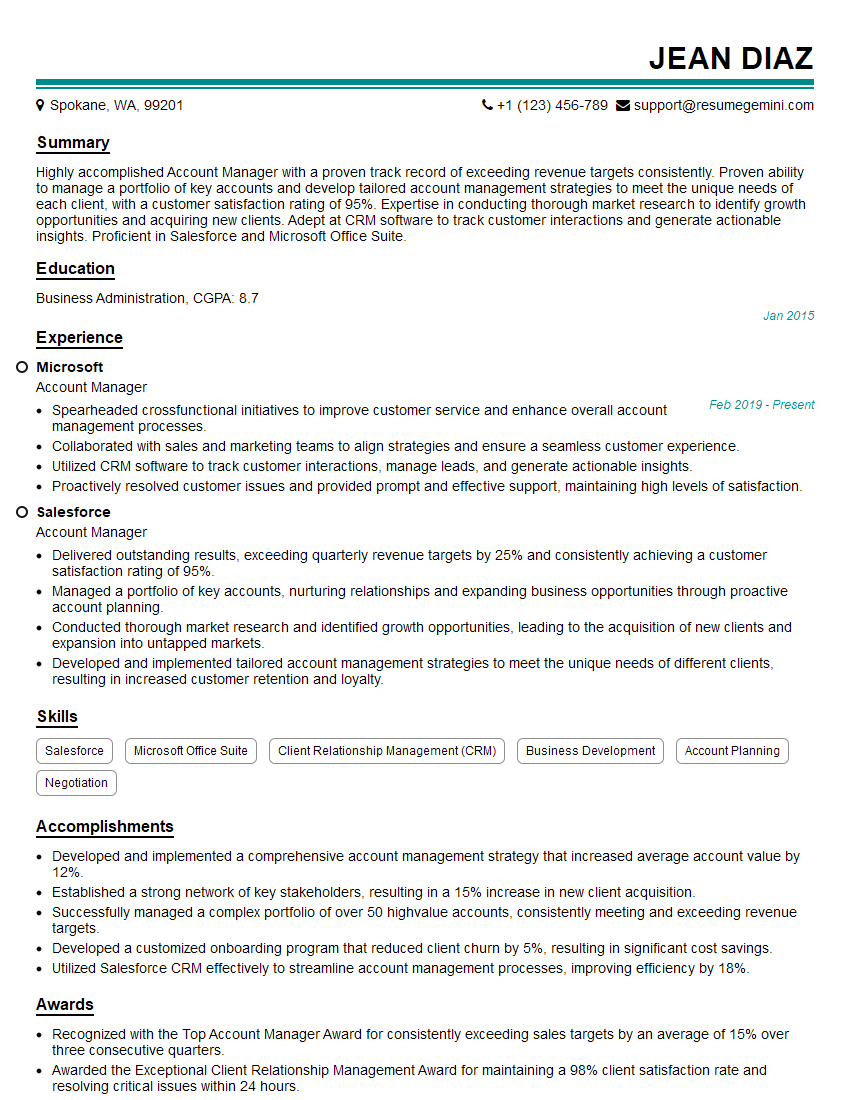
Account Manager Resume Sample
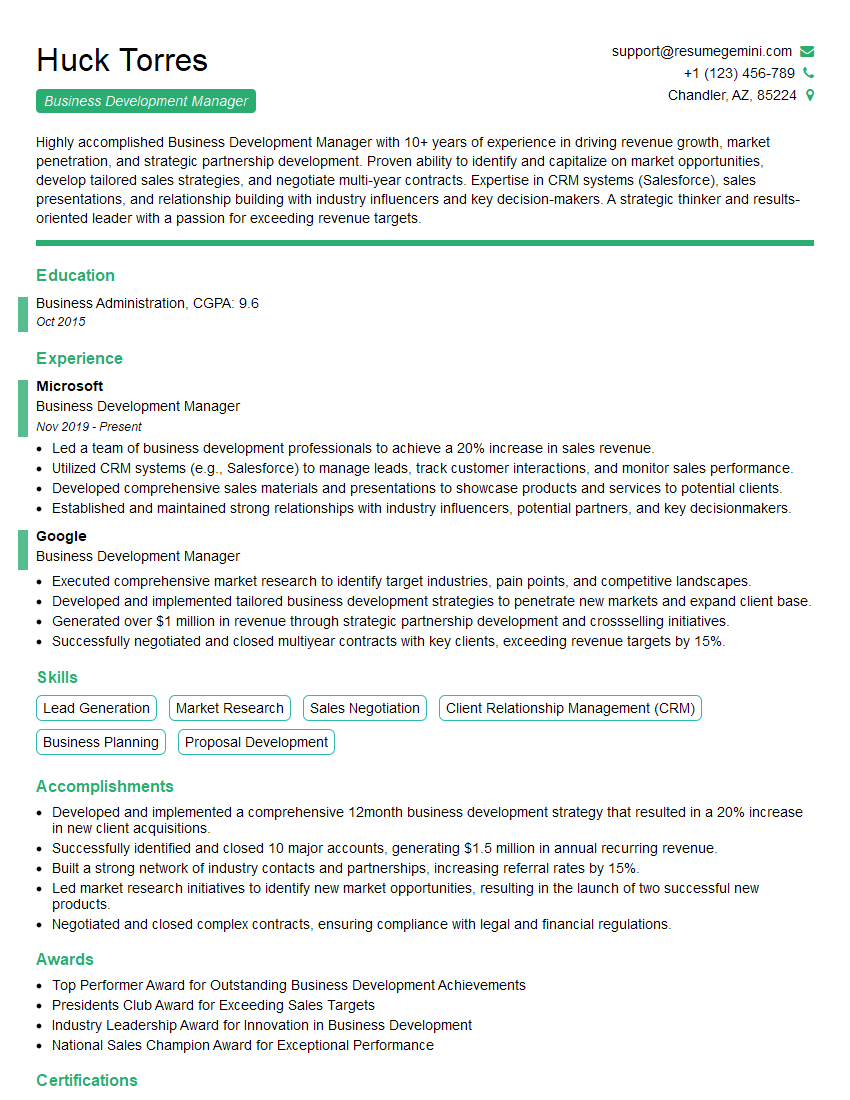
Business Development Manager Resume Sample
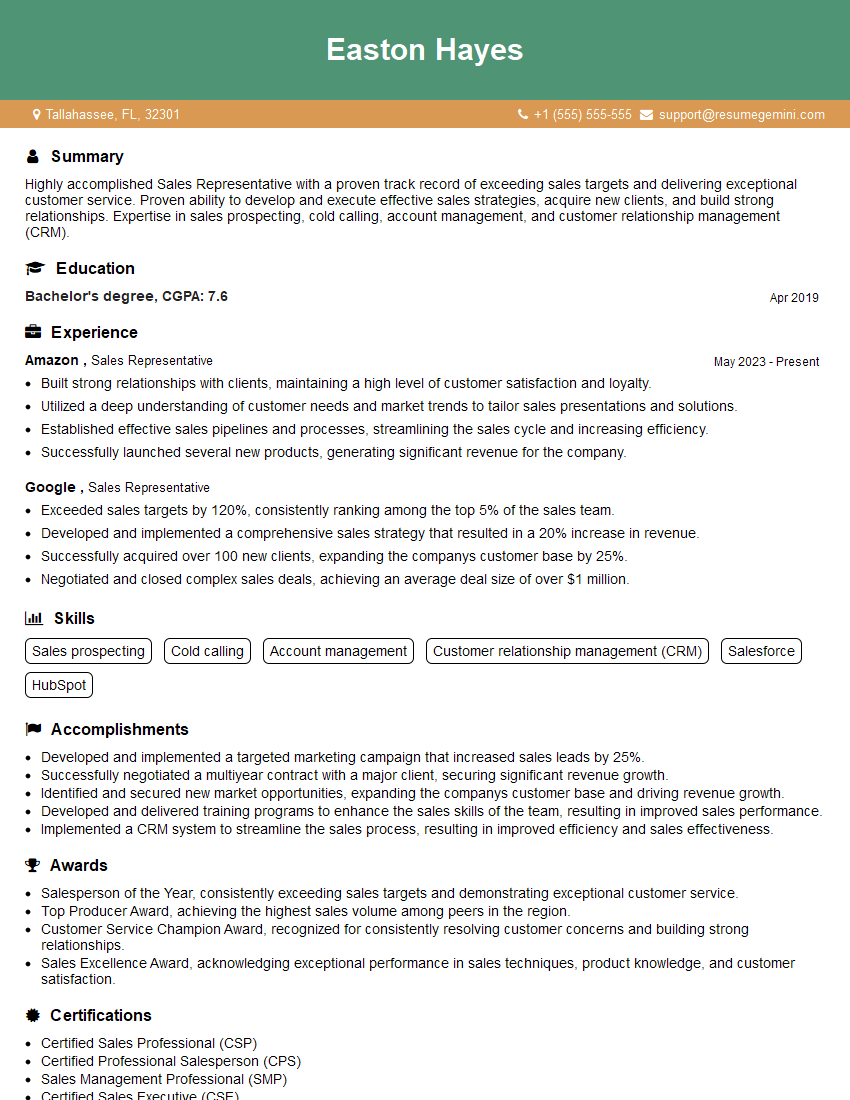
Sales Representative Resume Sample

Customer Service Manager Resume Sample
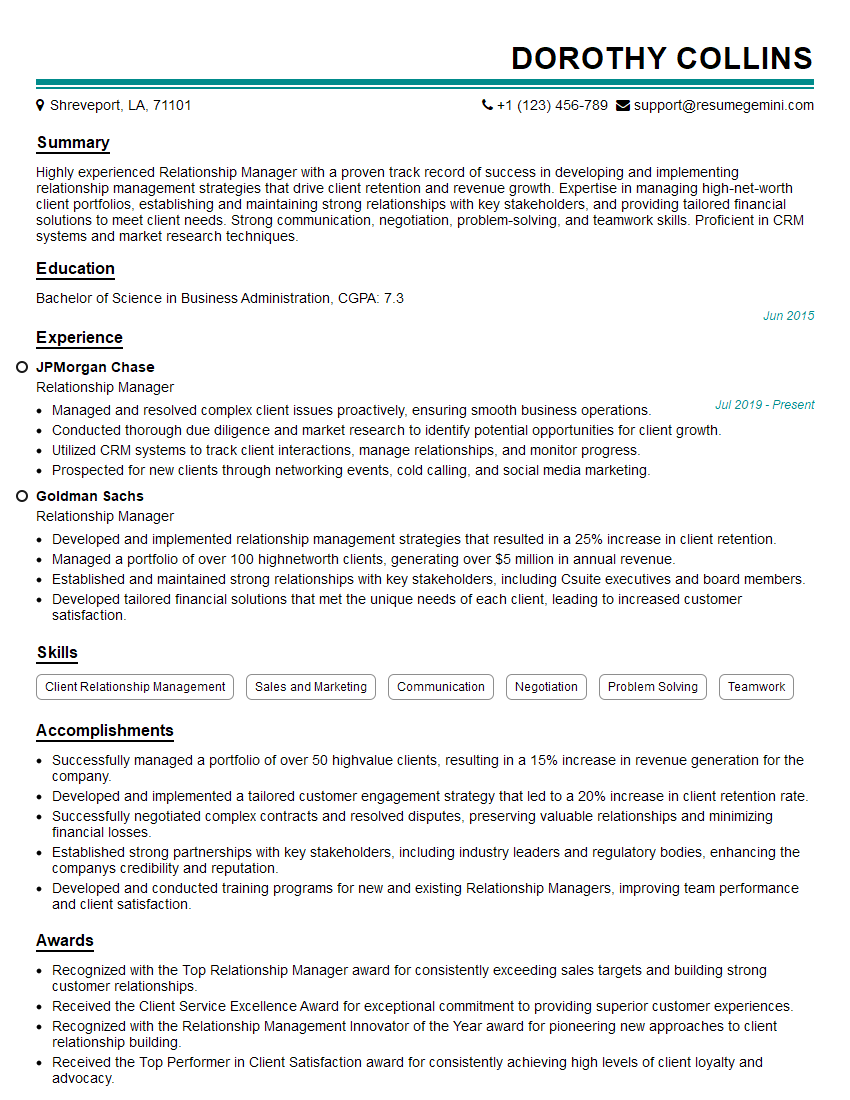
Relationship Manager Resume Sample
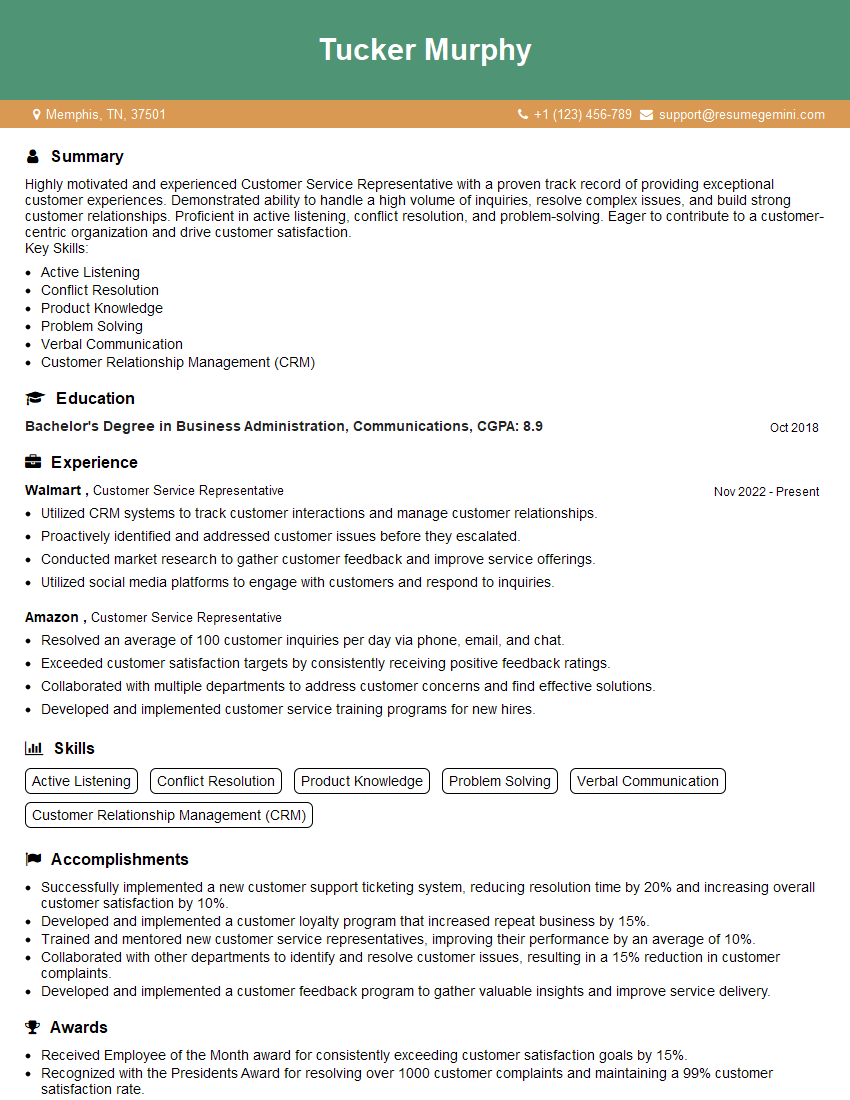
Customer Service Representative Resume Sample
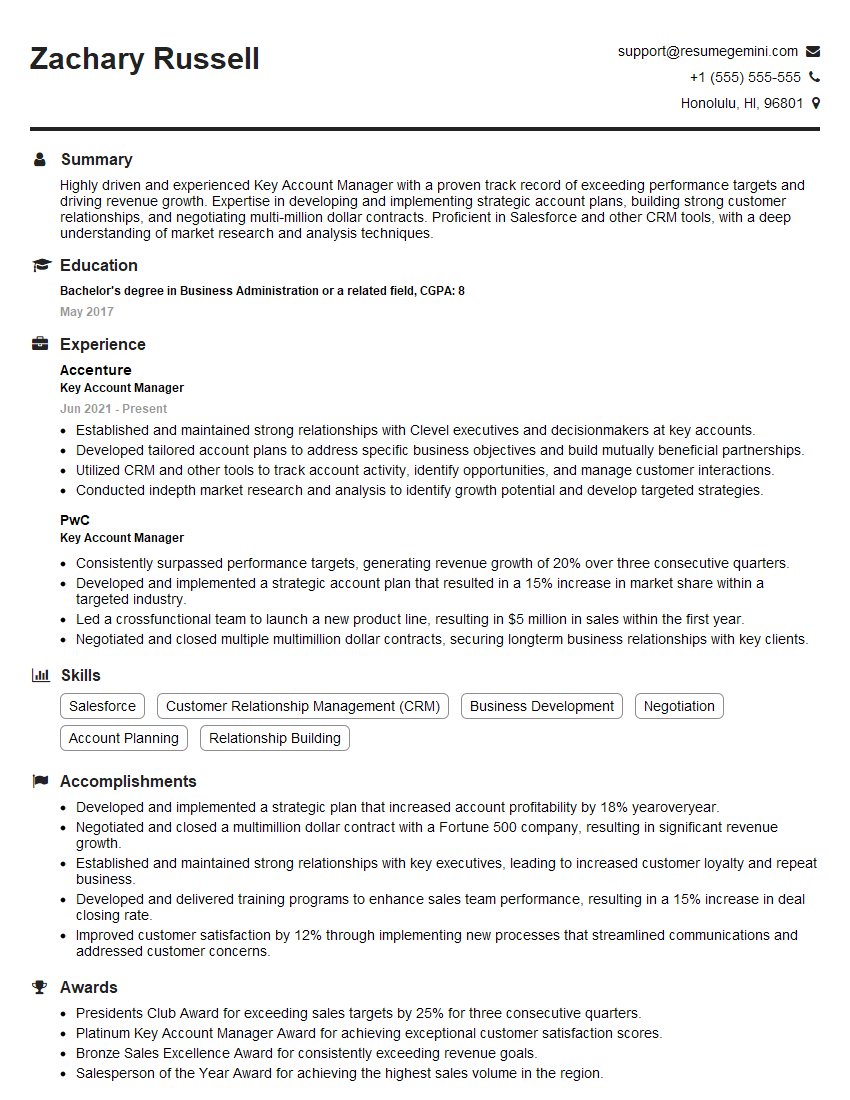
Key Account Manager Resume Sample
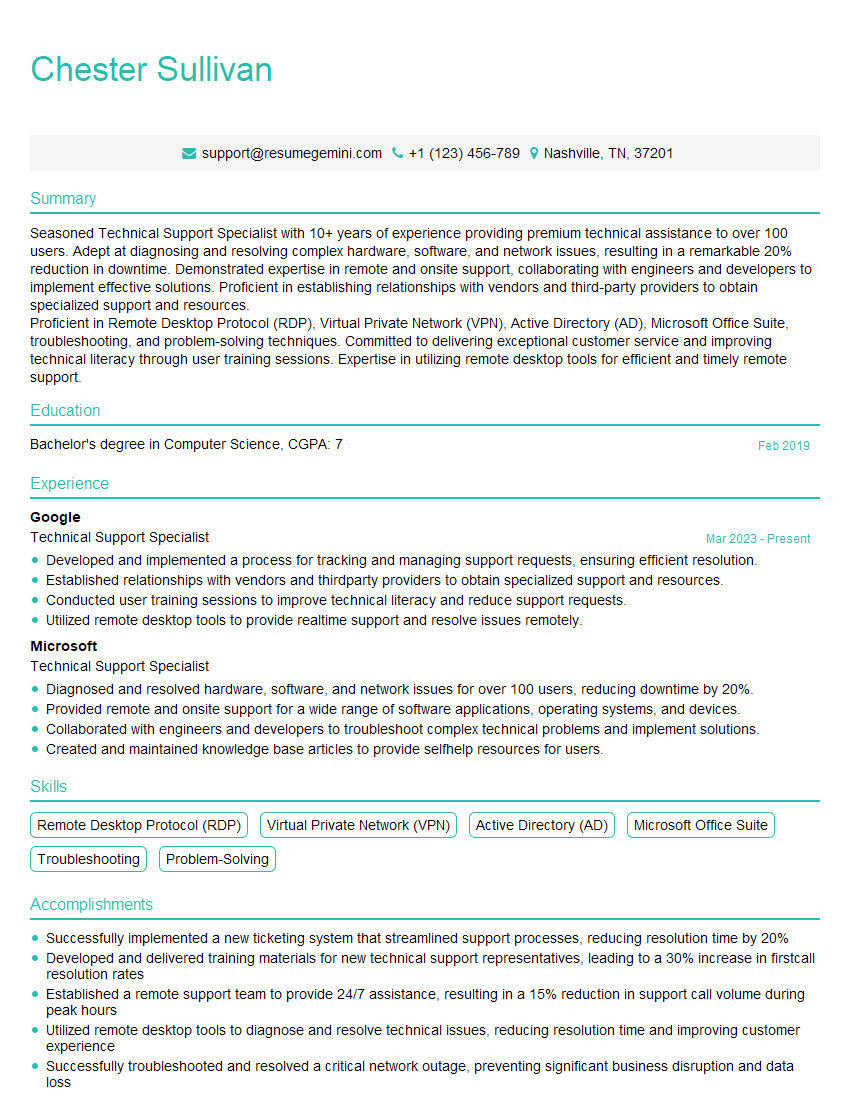
Technical Support Specialist Resume Sample
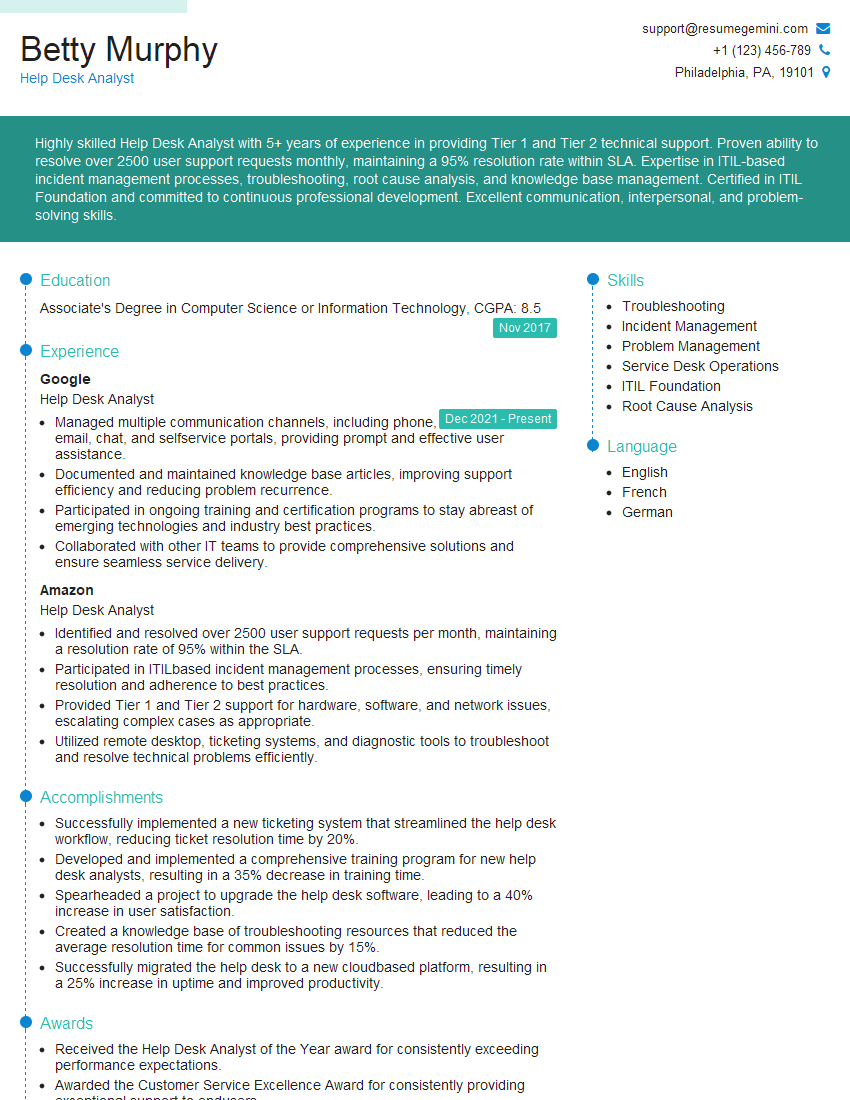
Help Desk Analyst Resume Sample
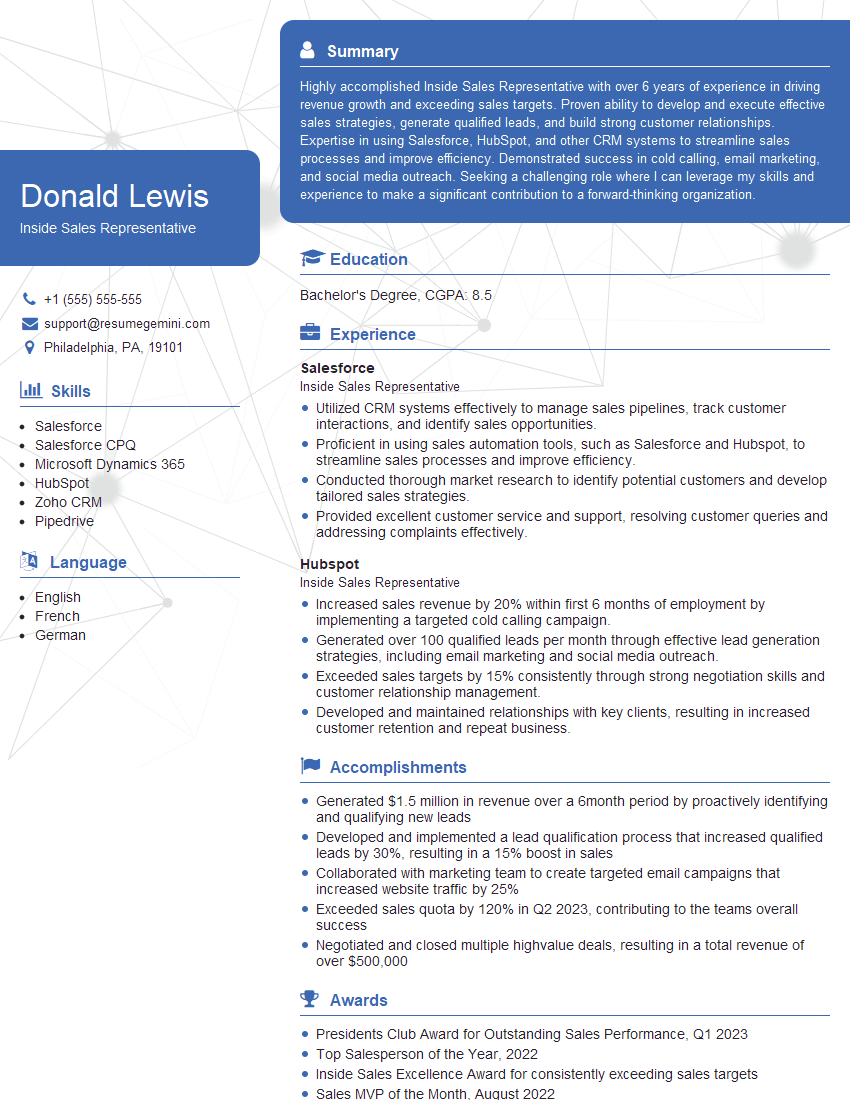
Inside Sales Representative Resume Sample
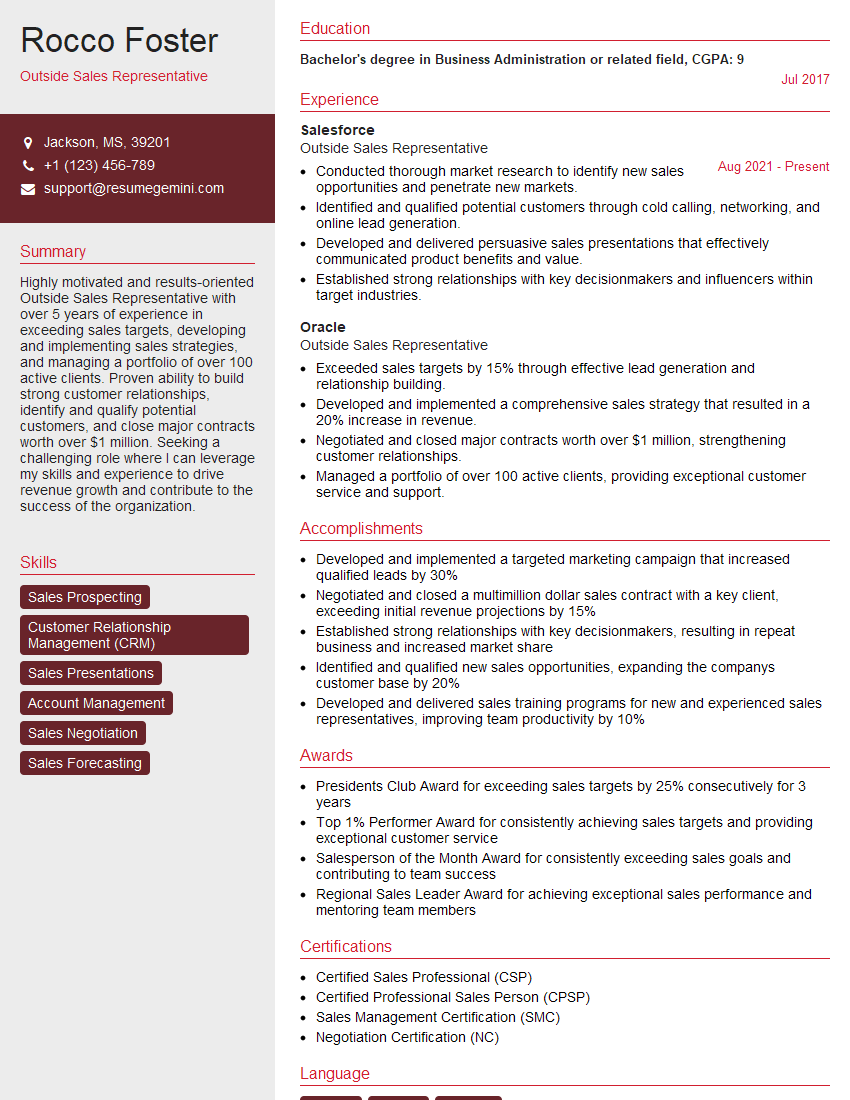
Outside Sales Representative Resume Sample
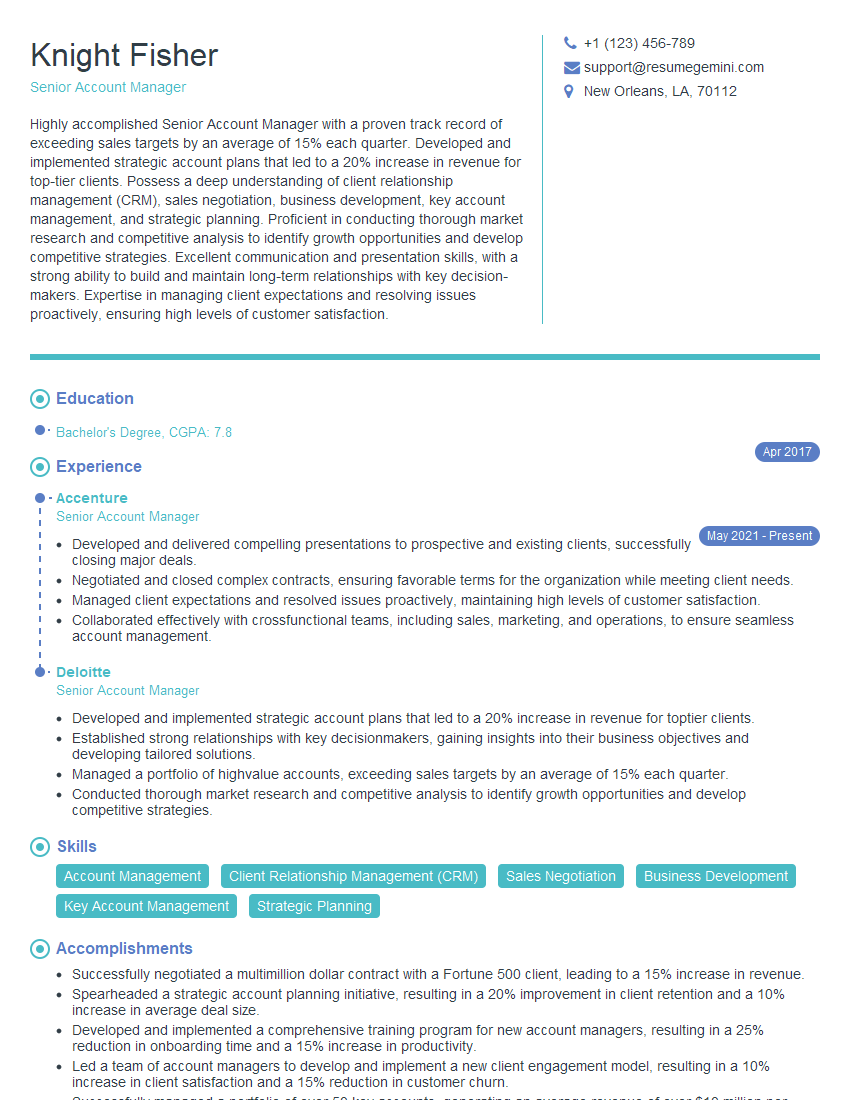
Senior Account Manager Resume Sample
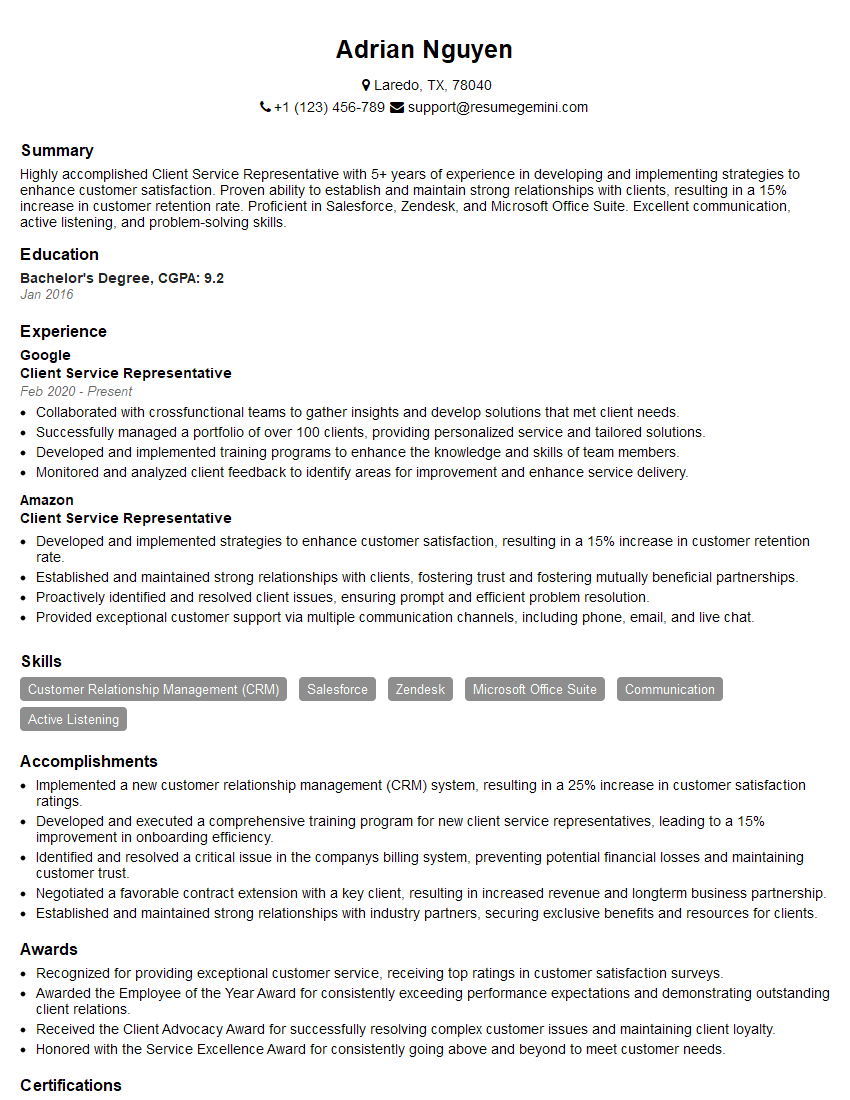
Client Service Representative Resume Sample
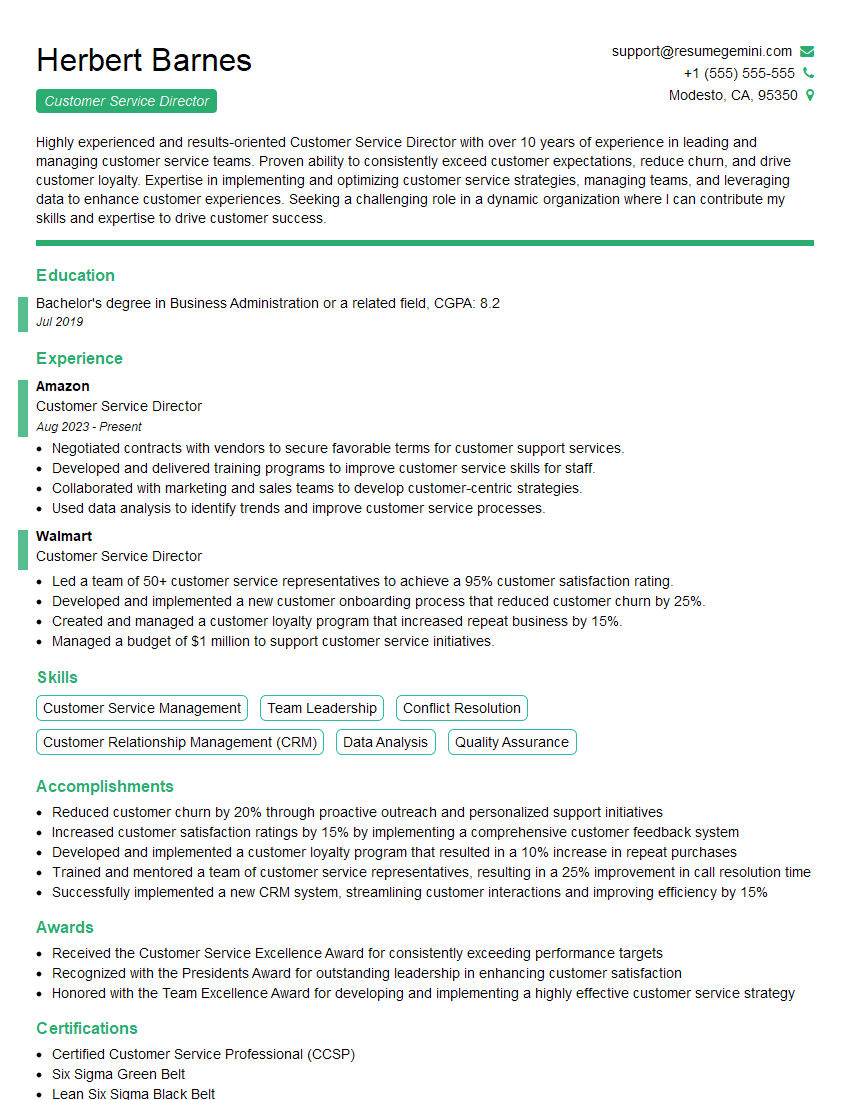
Customer Service Director Resume Sample
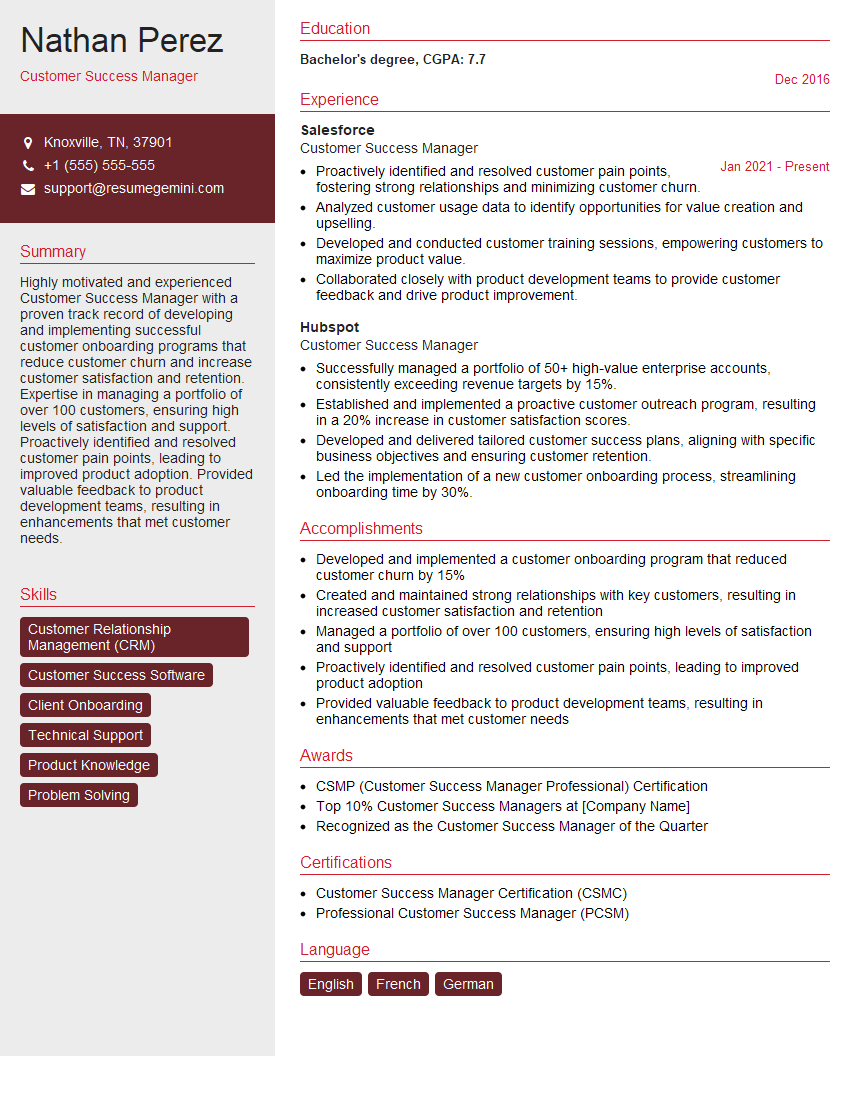
Customer Success Manager Resume Sample
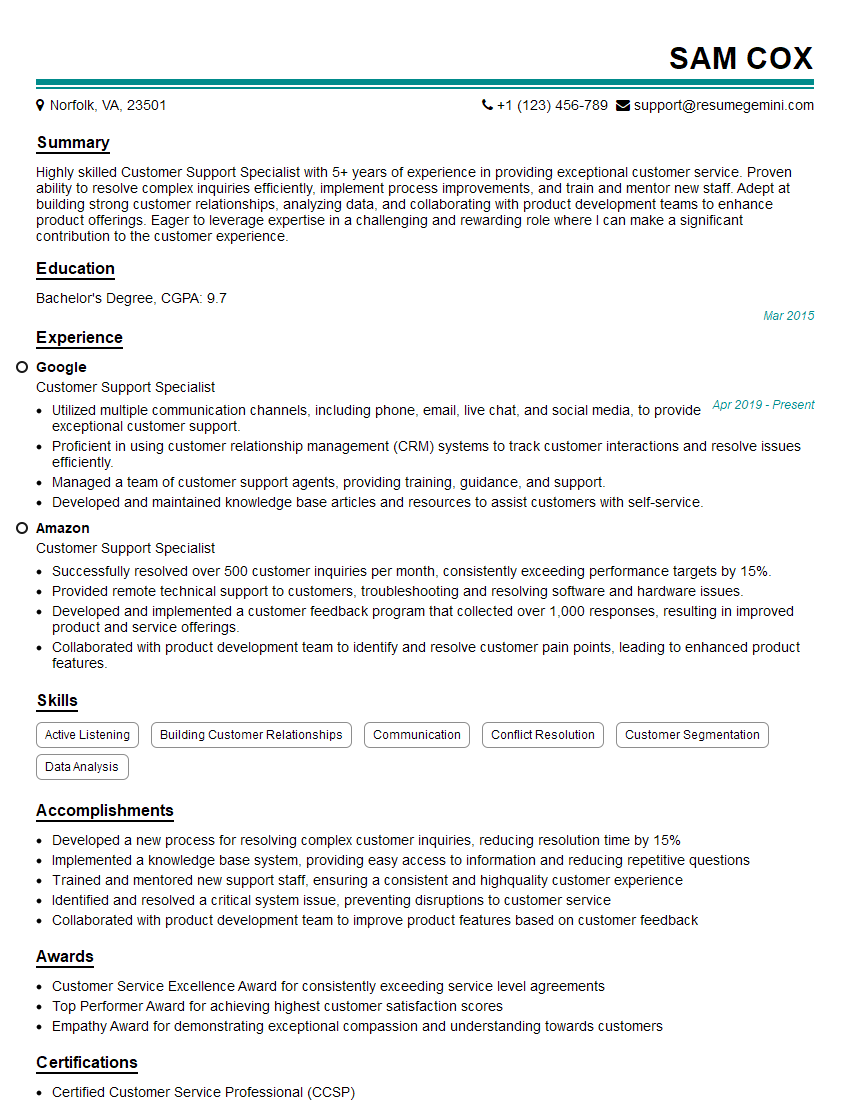
Customer Support Specialist Resume Sample
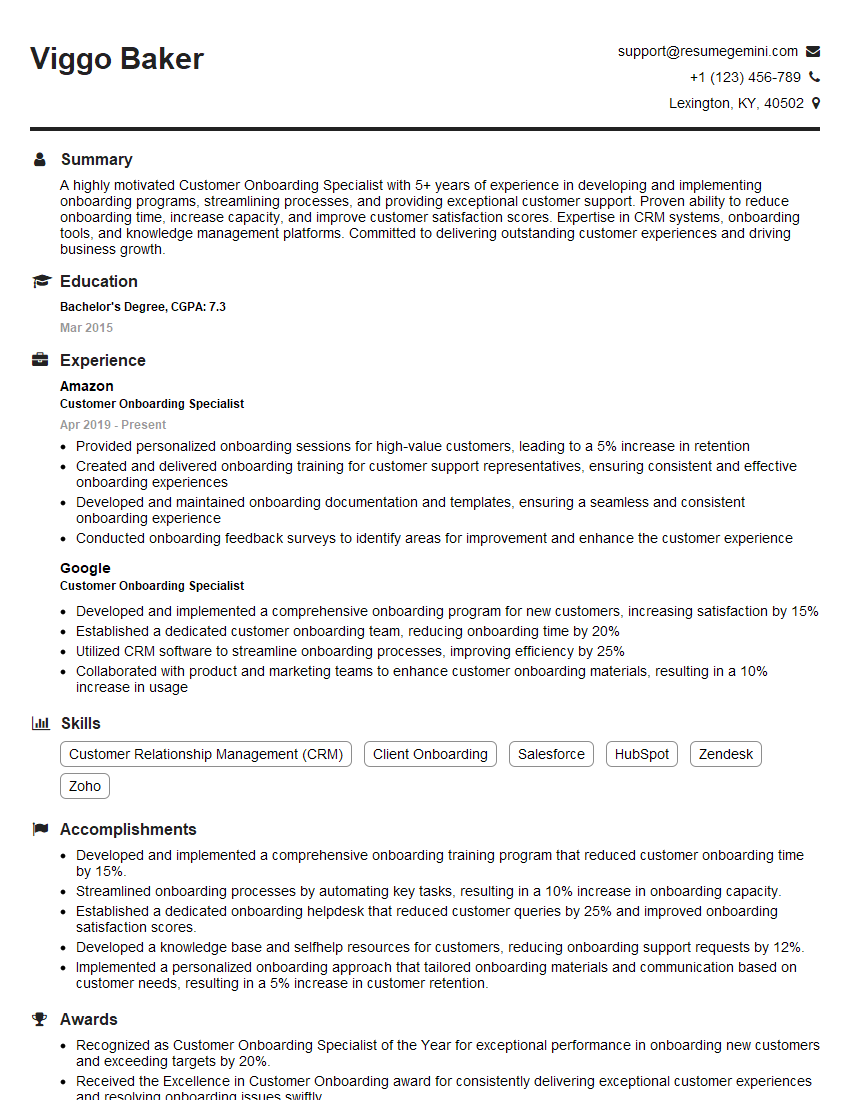
Customer Onboarding Specialist Resume Sample
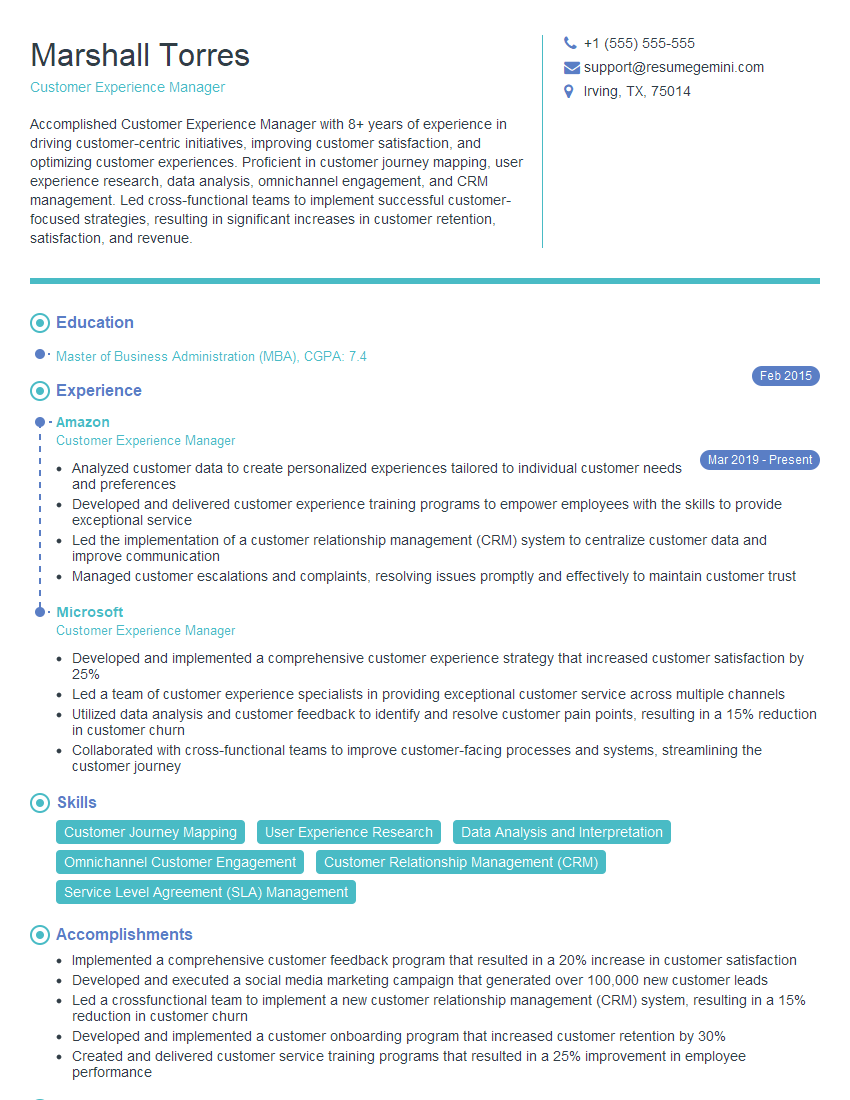
Customer Experience Manager Resume Sample
- Account Manager
- Business Development Manager
- Sales Representative
- Customer Service Manager
- Relationship Manager
- Customer Service Representative
- Key Account Manager
- Technical Support Specialist
- Help Desk Analyst
- Inside Sales Representative
- Outside Sales Representative
- Senior Account Manager
- Client Service Representative
- Customer Service Director
- Customer Success Manager
- Customer Support Specialist
- Customer Onboarding Specialist
- Customer Experience Manager
Explore more articles
Users Rating of Our Blogs
Share Your Experience
We value your feedback! Please rate our content and share your thoughts (optional).
What Readers Say About Our Blog
Very informative content, great job.
good