Are you ready to stand out in your next interview? Understanding and preparing for Efficiency Enhancement interview questions is a game-changer. In this blog, we’ve compiled key questions and expert advice to help you showcase your skills with confidence and precision. Let’s get started on your journey to acing the interview.
Questions Asked in Efficiency Enhancement Interview
Q 1. Describe your experience implementing Lean methodologies.
My experience with Lean methodologies centers around eliminating waste and maximizing value in processes. I’ve implemented Lean principles in several projects, focusing on the five key principles: Value, Value Stream, Flow, Pull, and Perfection. For example, in a previous role at a manufacturing plant, we used Value Stream Mapping to identify bottlenecks in our production line. This involved observing the entire process from raw materials to finished goods, documenting each step, and measuring lead times. We identified significant delays in the packaging process due to inefficient equipment and poor layout. By implementing Kaizen events – small, focused improvement projects – and rearranging the workspace, we reduced packaging time by 20%, directly impacting throughput and reducing costs.
Another project involved implementing Kanban to manage work flow. This visual system helped us limit work-in-progress, reduce inventory, and improve the flow of production. The key was to establish clear workflow definitions, identify bottlenecks and subsequently implementing solutions to improve those areas. The result was a more efficient and predictable process, with reduced lead times and increased customer satisfaction.
Q 2. Explain your understanding of Six Sigma principles.
Six Sigma is a data-driven methodology focused on minimizing variation and defects in processes. Its core principles revolve around DMAIC (Define, Measure, Analyze, Improve, Control). I understand the importance of defining clear project goals, meticulously measuring current performance using statistical tools, analyzing the root causes of variation, implementing data-backed solutions, and finally, controlling the improved process to maintain gains.
For example, I once used Six Sigma to improve the accuracy of a customer service call center. We began by defining the goal – to reduce call resolution time while maintaining a high customer satisfaction rate. Then, we measured key metrics such as average handling time, first-call resolution rate, and customer satisfaction scores. Data analysis revealed that inadequate training was a major contributor to longer call times and lower resolution rates. By implementing a more effective training program, we were able to reduce average handling time by 15% and improve customer satisfaction significantly. This ultimately saved the company money and improved its reputation.
Q 3. How would you identify and quantify inefficiencies in a process?
Identifying and quantifying inefficiencies involves a multi-step process. First, I thoroughly map the process using tools like flowcharts or value stream maps to gain a clear understanding of all steps involved. This visualization helps pinpoint areas with excessive lead times, bottlenecks, or unnecessary steps. Then, I collect data on key performance indicators (KPIs) like cycle times, defect rates, and resource utilization. Statistical analysis techniques are crucial at this stage. For instance, I might use control charts to identify variation and root cause analysis to determine the underlying causes of inefficiencies. Finally, I quantify the impact of these inefficiencies by calculating the cost associated with delays, defects, or wasted resources. This might include direct costs (e.g., labor, materials) and indirect costs (e.g., lost revenue, customer dissatisfaction).
For example, imagine a customer onboarding process taking too long. By mapping it out and analyzing the data, I could identify a bottleneck in the document verification step. If the verification process takes an average of 3 days but 75% of this time is spent manually reviewing documents, that’s a quantifiable inefficiency, potentially costing time and money in terms of processing and customer satisfaction. Automating the verification process through digital tools can significantly reduce time spent and is quantifiable in terms of saved man-hours.
Q 4. What metrics would you use to measure process improvement?
The metrics used to measure process improvement depend on the specific process and its objectives. However, common metrics include:
- Cycle time: The time it takes to complete a process.
- Throughput: The rate at which a process produces outputs.
- Defect rate: The percentage of outputs that are defective.
- Lead time: The time from order placement to delivery.
- Cost per unit: The cost of producing one unit of output.
- Customer satisfaction: Measured through surveys or feedback.
- Resource utilization: How efficiently resources (e.g., equipment, personnel) are used.
It’s essential to track these metrics before, during, and after implementing improvements to measure the impact of changes. Data visualization, such as charts and graphs, helps communicate these improvements effectively.
Q 5. Describe a time you improved a workflow. What was the outcome?
In a previous project, I improved the workflow for processing customer orders. The previous process was highly manual, involving multiple handoffs between departments, resulting in significant delays and errors. Using process mapping, I identified the key bottlenecks and areas where rework was common. I proposed a streamlined process using a centralized order management system, automating many manual steps, reducing handoffs, and integrating error checking throughout the process. I worked with the IT team to implement the new system and trained staff on the new process. The outcome was a 40% reduction in order processing time, a 25% decrease in order errors, and a significant improvement in customer satisfaction. This success highlights the power of data-driven process improvement and effective collaboration across teams.
Q 6. How familiar are you with process mapping tools (e.g., BPMN) ?
I’m very familiar with process mapping tools, including BPMN (Business Process Model and Notation). I regularly use BPMN to visually represent processes, identify bottlenecks, and communicate process improvements to stakeholders. BPMN’s standardized notation makes it easy to understand process flows, even for those unfamiliar with the specific process. I have experience using various BPMN modeling tools to create detailed process maps, simulate process changes, and analyze potential improvements. This allows for a collaborative approach, engaging stakeholders to review and validate the process maps and suggested improvements.
Q 7. What is your experience with data analysis for efficiency improvement?
Data analysis is fundamental to my approach to efficiency improvement. I’m proficient in using various statistical tools and techniques, including descriptive statistics, regression analysis, and hypothesis testing, to analyze data and identify trends, patterns, and anomalies. This helps pinpoint the root causes of inefficiencies and evaluate the effectiveness of implemented improvements. I’m comfortable using software packages like R or Python for data analysis and visualization. For instance, I’ve used regression analysis to model the relationship between process parameters and output quality, allowing for data-driven optimization of process settings. In another project, I used statistical process control (SPC) charts to monitor process performance and identify potential problems before they escalated into major issues. This proactive approach is key to sustaining improvements and preventing regressions.
Q 8. How do you prioritize improvement initiatives?
Prioritizing improvement initiatives requires a strategic approach that balances urgency, impact, and feasibility. I typically use a framework that combines qualitative and quantitative factors. First, I assess the potential impact of each initiative on key performance indicators (KPIs) like cost reduction, cycle time, or customer satisfaction. Then, I evaluate the feasibility, considering resource requirements, technical challenges, and potential risks. Finally, I factor in the urgency, considering deadlines, market pressures, or regulatory requirements.
I often use a prioritization matrix, plotting impact against feasibility. High-impact, high-feasibility initiatives are prioritized first. Low-impact, high-feasibility initiatives might be tackled later, while low-impact, low-feasibility initiatives might be deferred or eliminated. This ensures that resources are focused on initiatives that deliver the greatest return on investment.
For example, in a previous role, we identified several potential improvement areas. Using this matrix, we prioritized improving our order fulfillment process (high impact, high feasibility) over updating our legacy software (high impact, low feasibility), which we planned for a later phase.
Q 9. Describe your approach to root cause analysis.
My approach to root cause analysis is systematic and data-driven. I prefer using the ‘5 Whys’ technique in combination with other tools like fishbone diagrams (Ishikawa diagrams) and fault tree analysis. The ‘5 Whys’ involves repeatedly asking ‘why’ to drill down to the root cause of a problem, moving beyond superficial symptoms. Fishbone diagrams help visualize potential causes, categorized by factors like people, machines, materials, methods, and environment. Fault tree analysis helps identify all possible paths that could lead to a failure.
For instance, if we had consistently late deliveries, I wouldn’t just stop at ‘the trucks were late’. Instead, I would ask ‘Why were the trucks late?’ (e.g., traffic congestion). Then ‘Why was there traffic congestion?’ (e.g., road construction). And so on, until I uncovered the root cause, perhaps a poorly planned logistics route or inadequate communication between the warehouse and the trucking company. The fishbone diagram would help me brainstorm other potential causes while the fault tree analysis would aid in identifying the most critical contributing factors. This systematic approach ensures we address the underlying problem, not just the symptoms.
Q 10. Explain your experience with change management in efficiency projects.
Change management is critical to the success of any efficiency project. My approach is based on the ADKAR model – Awareness, Desire, Knowledge, Ability, and Reinforcement. I start by building awareness of the need for change and its benefits for stakeholders. Then, I foster a desire for change by clearly articulating the positive impact and addressing concerns proactively. This involves transparent communication, active listening, and addressing resistance early on. Next, I provide the necessary knowledge and skills through training and coaching, ensuring stakeholders have the ability to adapt to the changes.
Finally, I reinforce the new behaviors and processes through ongoing support, feedback, and recognition. I use various communication channels, including team meetings, email updates, and even informal discussions, to keep everyone informed and engaged throughout the entire process. For example, during a process re-engineering project, we implemented weekly progress updates, providing employees with a sense of ownership and involvement, leading to better acceptance of the changes.
Q 11. How would you handle resistance to change during an efficiency initiative?
Resistance to change is inevitable in efficiency initiatives. My strategy focuses on understanding the source of resistance, addressing concerns, and building buy-in. I start by actively listening and empathizing with resistant individuals. I try to understand their concerns and address them directly, providing clear and accurate information. I would then engage them in a collaborative approach, actively seeking their input and suggestions, making them feel heard and valued. If possible, I involve resistant individuals in the design and implementation of the changes, giving them a sense of ownership.
Sometimes, offering incentives or addressing specific concerns (like fear of job loss) is necessary. However, I emphasize the benefits of the change, highlighting how it improves efficiency, reduces workload, or enhances their job satisfaction. Ultimately, demonstrating the value of the change through tangible results is the most effective way to overcome resistance. For example, during an automation project, we addressed employee concerns about job displacement by retraining employees for new roles within the organization, demonstrating our commitment to their well-being.
Q 12. How do you measure the ROI of efficiency improvement projects?
Measuring the ROI of efficiency improvement projects is essential to demonstrate their value and justify future investments. I use a combination of methods, starting with a clear definition of the project’s objectives and KPIs. This could involve cost savings, increased productivity, improved quality, or reduced cycle times. I establish baseline metrics before implementing the project to have a benchmark for comparison. After the project’s completion, I measure the actual improvements achieved and calculate the return on investment (ROI).
The ROI calculation typically involves subtracting the project’s costs (implementation costs, training costs, etc.) from the total benefits (cost savings, revenue increases, etc.), and then dividing the result by the project costs. For example, if a project costs $10,000 and generates $20,000 in cost savings, the ROI is 100%. However, it is important to consider both tangible and intangible benefits, such as improved employee morale or enhanced customer satisfaction, which can be challenging to quantify but are still crucial to consider in the overall assessment.
Q 13. Describe your experience with automation tools and technologies.
I have extensive experience with various automation tools and technologies, including Robotic Process Automation (RPA), Business Process Management (BPM) suites, and workflow automation platforms. My experience ranges from implementing RPA bots to automate repetitive tasks like data entry to designing and deploying BPM solutions to optimize complex business processes. I’m familiar with platforms such as UiPath, Automation Anywhere, and Blue Prism (for RPA) and tools like Pega and Salesforce for BPM.
My experience also includes integrating automation tools with existing systems using APIs and other integration technologies. I understand the importance of selecting the right technology based on the specific needs of the project, considering factors like scalability, cost, and maintainability. For example, in a previous role, we successfully implemented an RPA solution to automate the accounts payable process, resulting in a significant reduction in processing time and manual errors.
Q 14. What is your experience with Kaizen events or similar improvement workshops?
I have significant experience facilitating Kaizen events and similar improvement workshops. My approach is highly participative, engaging all stakeholders in identifying and solving problems. I typically start with a clear definition of the scope and objectives of the workshop, involving the team in setting goals and defining success metrics. Then, we use various lean methodologies, such as value stream mapping, to visualize the current process and identify areas for improvement. The team then collaboratively brainstorms potential solutions, prioritizes them based on impact and feasibility, and develops an action plan.
During the workshop, I act as a facilitator, guiding the team through the process, ensuring effective communication, and fostering a collaborative environment. I also ensure that the team documents their findings and actions, and that the agreed-upon improvements are implemented and monitored after the workshop. For example, in a Kaizen event focused on reducing production line downtime, the team identified and implemented several improvements, resulting in a 20% reduction in downtime and a significant increase in productivity. The success was due to the team’s direct involvement and ownership throughout the process.
Q 15. How do you stay current with best practices in efficiency enhancement?
Staying current in efficiency enhancement requires a multi-pronged approach. It’s not a one-time learning event, but rather a continuous process of improvement. I actively participate in several strategies:
- Professional Development: I regularly attend webinars, conferences (like those hosted by APICS or PMI), and workshops focused on Lean methodologies, Six Sigma, and other efficiency improvement frameworks. This ensures I’m exposed to the latest tools and techniques.
- Industry Publications and Research: I subscribe to industry journals and follow leading experts on platforms like LinkedIn and research publications. This keeps me updated on emerging trends and successful case studies.
- Networking: I actively network with other professionals in the field through professional organizations and online communities. Sharing knowledge and experiences is invaluable for staying ahead of the curve. For instance, participating in online forums dedicated to process optimization provides unique insights and alternative solutions.
- Continuous Learning: I embrace continuous improvement myself. I regularly review my own work and actively seek feedback to refine my approaches and identify areas for personal professional growth. I also experiment with new techniques on small-scale projects to test their efficacy.
By combining these methods, I ensure my knowledge remains relevant and applicable to the ever-evolving landscape of efficiency enhancement.
Career Expert Tips:
- Ace those interviews! Prepare effectively by reviewing the Top 50 Most Common Interview Questions on ResumeGemini.
- Navigate your job search with confidence! Explore a wide range of Career Tips on ResumeGemini. Learn about common challenges and recommendations to overcome them.
- Craft the perfect resume! Master the Art of Resume Writing with ResumeGemini’s guide. Showcase your unique qualifications and achievements effectively.
- Don’t miss out on holiday savings! Build your dream resume with ResumeGemini’s ATS optimized templates.
Q 16. Explain your understanding of value stream mapping.
Value stream mapping (VSM) is a lean manufacturing technique used to visually represent the flow of materials and information required to bring a product or service to the customer. It helps identify waste (muda) and areas for improvement within a process. Think of it as a detailed flowchart, but focused on efficiency.
A typical VSM includes elements like:
- Process Steps: Each step involved in delivering the product or service.
- Data Flow: The movement of information throughout the process.
- Inventory Levels: The amount of work-in-progress (WIP) at each stage.
- Lead Time: The total time it takes to complete the process.
- Value-Added vs. Non-Value-Added Activities: Clearly differentiating between steps that contribute directly to customer value and those that don’t.
Example: Imagine mapping the value stream for a pizza restaurant. The VSM would show the steps from ordering ingredients, preparing the dough, taking customer orders, cooking the pizza, and finally delivering it. It would highlight bottlenecks, such as long wait times for ingredients or slow oven times. This visualization would help identify areas for improvement, perhaps by streamlining ingredient ordering or investing in a faster oven.
Ultimately, VSM facilitates collaborative problem-solving and drives data-informed decisions to enhance process efficiency.
Q 17. Describe your experience with project management methodologies in efficiency improvement.
My experience with project management methodologies in efficiency improvement is extensive, encompassing Agile, Waterfall, and Lean methodologies. I’ve successfully led and contributed to projects using these approaches.
Agile: Agile’s iterative and incremental approach works exceptionally well for efficiency projects, particularly when dealing with complex or uncertain requirements. Its emphasis on collaboration and feedback loops ensures the project stays aligned with the needs of the stakeholders and adapts to changing circumstances. For example, in an efficiency project aimed at improving customer service response times, an Agile approach would allow for frequent testing and adjustments based on customer feedback and data analysis throughout the project cycle.
Waterfall: While less flexible than Agile, the Waterfall methodology can be effective for well-defined, stable efficiency projects with clearly defined deliverables. Its structured approach ensures consistent progress and a clear path to completion. This would be suitable for projects with predictable scopes, like optimizing a well-established internal process with minor tweaks.
Lean: Lean principles are deeply embedded in my approach to efficiency improvement. This means focusing on eliminating waste, streamlining processes, and continuous improvement. Regardless of the chosen project management methodology, Lean principles guide my decision-making, ensuring that every step contributes to value creation. For example, identifying and removing unnecessary steps in a document approval process.
I tailor my project management approach based on the specific project requirements, choosing the methodology that best suits the context and maximizing the chances of successful implementation and efficiency gains.
Q 18. How do you identify bottlenecks in a process?
Identifying bottlenecks requires a systematic approach. I typically use a combination of techniques:
- Data Analysis: Analyzing process data, such as cycle times, throughput, defect rates, and wait times, helps pinpoint areas where processes slow down significantly. Tools like process mining can automate much of this data extraction and analysis.
- Visual Management: Utilizing tools like Kanban boards or VSMs provides a clear visual representation of the workflow, making it easy to identify choke points. This facilitates quick identification of areas where work is piling up or waiting for a long time.
- Observations and Interviews: Direct observation of the process and interviews with employees involved provide valuable qualitative insights into the causes of bottlenecks. This helps uncover issues not immediately apparent in data analysis.
- Process Mining: Utilizing process mining tools helps in automatically analyzing event logs to identify bottlenecks based on actual process execution. This gives detailed, precise insights into the flow of work and delays at each step.
Example: In a manufacturing process, a bottleneck might be revealed by consistently high inventory levels at a particular workstation, or by a long wait time before a particular machine becomes available. The cause of the bottleneck could be determined by observing the workstation, interviewing the operators and analyzing data, potentially discovering that the machine requires more frequent maintenance or the workstation needs more staff.
Q 19. What are some common causes of inefficiencies in organizations?
Inefficiencies in organizations stem from various sources. Here are some common culprits:
- Poorly Defined Processes: Lack of clear procedures and guidelines leads to confusion, rework, and delays.
- Lack of Standardization: Inconsistencies in how tasks are performed waste time and resources.
- Information Silos: Information not being shared effectively across departments hinders collaboration and slows down decision-making.
- Lack of Automation: Manual processes that could be automated consume unnecessary time and effort.
- Inadequate Training: Employees lacking the necessary skills and knowledge are less efficient.
- Suboptimal Technology: Using outdated or inefficient technology hampers productivity.
- Lack of Collaboration: Poor communication and teamwork lead to delays and duplicated efforts.
- Bottlenecks: Constraints in the workflow that limit overall throughput.
- Wasteful Activities: Tasks or processes that add no value to the end product or service (e.g., excessive paperwork, unnecessary meetings).
Addressing these issues requires a thorough assessment of the organization’s processes, technology, and human resources, followed by implementing targeted solutions.
Q 20. How would you present efficiency improvement recommendations to stakeholders?
Presenting efficiency improvement recommendations requires a clear, concise, and persuasive approach. I would structure my presentation as follows:
- Executive Summary: Start with a brief overview of the problem, proposed solutions, and expected benefits.
- Problem Statement: Clearly define the inefficiencies identified and their impact on the organization (quantify the impact whenever possible – e.g., cost savings, time savings, improved quality).
- Proposed Solutions: Detail the specific recommendations, including implementation steps, timelines, and resource requirements. Use visuals like charts and graphs to make the data compelling.
- Cost-Benefit Analysis: Show a clear comparison between the costs of implementation and the expected returns on investment (ROI).
- Risk Assessment and Mitigation: Identify potential challenges and outline strategies to address them.
- Implementation Plan: Present a detailed roadmap for implementing the recommendations.
- Q&A: Allow time for questions and address stakeholder concerns.
I would use a combination of data-driven analysis and compelling storytelling to build a strong case for the proposed improvements. Focusing on tangible benefits and addressing potential concerns will ensure stakeholders understand the value and are more likely to support the recommendations.
Q 21. How do you handle conflicting priorities in efficiency projects?
Conflicting priorities are inevitable in efficiency projects. My approach involves:
- Prioritization Framework: Employing a framework like MoSCoW (Must have, Should have, Could have, Won’t have) to prioritize tasks based on their importance and feasibility.
- Stakeholder Alignment: Facilitating open communication and collaboration amongst stakeholders to reach a consensus on priorities. This might involve negotiating trade-offs or adjusting project scopes.
- Data-Driven Decision Making: Using data to support prioritization decisions. For example, focusing on areas with the greatest potential for ROI or impact.
- Project Scope Management: Clearly defining the scope of the project from the outset and managing changes effectively to avoid scope creep that can result from competing priorities.
- Agile Methodology: Utilizing an iterative approach allows for flexibility in adjusting priorities based on feedback and changing circumstances. This ensures that the project adapts to shifting needs and minimizes the negative impact of conflicting priorities.
By proactively addressing conflicting priorities through clear communication, data analysis, and flexible project management, I ensure that projects stay focused on the most impactful efficiency improvements.
Q 22. Describe your experience with different types of process improvement techniques (e.g., DMAIC, DMADV).
I have extensive experience applying various process improvement methodologies, most notably DMAIC and DMADV. DMAIC, which stands for Define, Measure, Analyze, Improve, and Control, is a data-driven approach ideal for improving existing processes. I’ve used it in several projects, such as streamlining a client’s order fulfillment process, reducing their lead times by 20%. This involved carefully defining the current state, measuring key metrics like order processing time, analyzing the bottlenecks using statistical tools, implementing changes like improved inventory management and automated order routing, and then establishing controls to sustain those improvements.
DMADV, or Define, Measure, Analyze, Design, and Verify, is used for designing new processes or products. For example, I led a team in designing a new customer onboarding process from scratch using DMADV. This involved defining the ideal customer journey, measuring potential success factors, analyzing risks, designing a streamlined and intuitive system, and then verifying its effectiveness through pilot testing and data analysis. Both methods require rigorous data analysis and a strong focus on continuous improvement.
Q 23. How do you ensure the sustainability of efficiency improvements?
Ensuring the sustainability of efficiency improvements is crucial. It’s not enough to just implement changes; you need to build them into the organizational culture. I achieve this through several key strategies. First, I focus on training and empowering the team. They need to understand the ‘why’ behind the changes, not just the ‘how’. This fosters ownership and buy-in.
Secondly, I establish clear metrics and monitoring systems. Regularly tracking key performance indicators (KPIs) helps identify any deviations from the improved state early on, allowing for proactive adjustments. Thirdly, I build processes for continuous improvement – fostering a culture where improvement is seen as an ongoing effort, not a one-time project. This often involves regular process review meetings and encouraging team members to suggest improvements.
Finally, I integrate the improvements into standard operating procedures (SOPs) and technology systems. This formalizes the improvements, making them part of the everyday workflow. This prevents the gains from being lost as people change roles or leave the organization.
Q 24. Explain your understanding of different types of waste (e.g., TIMWOOD).
Understanding and eliminating waste is fundamental to efficiency enhancement. TIMWOOD is a helpful mnemonic representing common types of waste: Transportation, Inventory, Motion, Waiting, Over-processing, Overproduction, and Defects.
Let’s consider a manufacturing example: Transportation refers to unnecessary movement of materials; Inventory represents excess stock tying up capital; Motion includes wasted movements by workers; Waiting is idle time due to process delays; Over-processing is doing more work than needed; Overproduction means making more than required; and Defects are errors requiring rework or scrap.
Identifying and tackling these wastes often requires a combination of Lean principles and Six Sigma methodologies. For instance, in one project, we reduced waiting time in a production line by improving the flow of materials, a direct attack on the ‘waiting’ waste, resulting in a significant increase in throughput.
Q 25. What is your experience with benchmarking and best practices?
Benchmarking and best practices are essential for identifying areas for improvement. I have extensive experience in both. Benchmarking involves comparing your organization’s performance against industry leaders or best-in-class companies. This might involve studying their processes, technology, or strategies.
For example, in one project, we benchmarked our customer service response times against a competitor known for excellent customer satisfaction. This revealed areas where we could improve our processes, leading to a 15% reduction in average response time. Identifying best practices involves researching successful approaches used by other organizations, adapting them to your context, and implementing them. This often involves attending industry conferences, reading case studies, and networking with other professionals.
Q 26. How do you build consensus and collaboration within a team for efficiency projects?
Building consensus and collaboration is crucial for successful efficiency projects. I start by clearly communicating the project goals, benefits, and the rationale behind the proposed changes. It is crucial to actively involve team members throughout the process, encouraging their participation in brainstorming, problem-solving, and decision-making. I use collaborative tools like online project management software to foster communication and transparency.
Open communication and active listening are key. I encourage team members to share their ideas and concerns without fear of judgment. Recognizing and addressing their concerns proactively builds trust and fosters a sense of shared ownership. Regular team meetings help track progress, identify potential roadblocks, and ensure alignment. Celebrating successes along the way helps reinforce collaboration and team morale.
Q 27. Describe your experience with using technology to enhance efficiency.
Technology plays a pivotal role in enhancing efficiency. I have experience leveraging various technologies, including process mining software, Robotic Process Automation (RPA), and data analytics platforms. Process mining tools provide visual representations of actual process flows, identifying bottlenecks and inefficiencies hidden within existing processes. I’ve used this to reveal previously unseen process variations leading to significant delays.
RPA is used to automate repetitive, rule-based tasks, freeing up human employees to focus on higher-value activities. For example, I implemented RPA to automate invoice processing, reducing processing time by 75%. Data analytics platforms are used to monitor KPIs, identify trends, and gain insights that inform decision-making. These tools enable data-driven decision-making and allow for continuous monitoring and adjustment of efficiency initiatives.
Q 28. How would you address a situation where an efficiency improvement project is facing significant delays?
Significant delays in efficiency projects demand a systematic response. First, I would conduct a thorough review of the project plan, identifying the root causes of the delays. This might involve reviewing tasks, timelines, resource allocation, and any unexpected challenges encountered. This detailed analysis may reveal issues such as underestimated task complexity, resource constraints, or unforeseen technical difficulties.
Next, I’d prioritize critical tasks, focusing on those that have the greatest impact on project goals. This might involve re-sequencing tasks, adjusting timelines, or reallocating resources. Regular status meetings with the team and stakeholders are crucial, keeping everyone informed and aligned on the revised plan. Transparent communication is vital to maintain morale and trust. Finally, I might need to reassess the project scope, potentially prioritizing core objectives over less critical elements to deliver at least some value within a reasonable timeframe.
Key Topics to Learn for Efficiency Enhancement Interview
- Process Optimization: Understanding Lean methodologies, Six Sigma principles, and Value Stream Mapping. Practical application: Analyzing a workflow to identify bottlenecks and propose improvements.
- Data Analysis for Efficiency: Utilizing data to identify areas for improvement. Practical application: Interpreting key performance indicators (KPIs) to track progress and identify trends.
- Technology & Automation: Exploring how technology can automate tasks and streamline processes. Practical application: Evaluating the feasibility and ROI of implementing new software or tools.
- Change Management: Implementing and managing change effectively within an organization. Practical application: Developing strategies to overcome resistance to change and ensure smooth transitions.
- Project Management Techniques: Applying Agile and other project management frameworks to ensure efficient project delivery. Practical application: Defining clear project goals, timelines, and resource allocation.
- Resource Allocation & Management: Optimizing the use of resources (human, financial, material) to maximize efficiency. Practical application: Developing strategies for effective resource allocation and budgeting.
- Continuous Improvement: Fostering a culture of continuous improvement and learning within a team or organization. Practical application: Implementing regular feedback mechanisms and utilizing data to drive ongoing improvements.
Next Steps
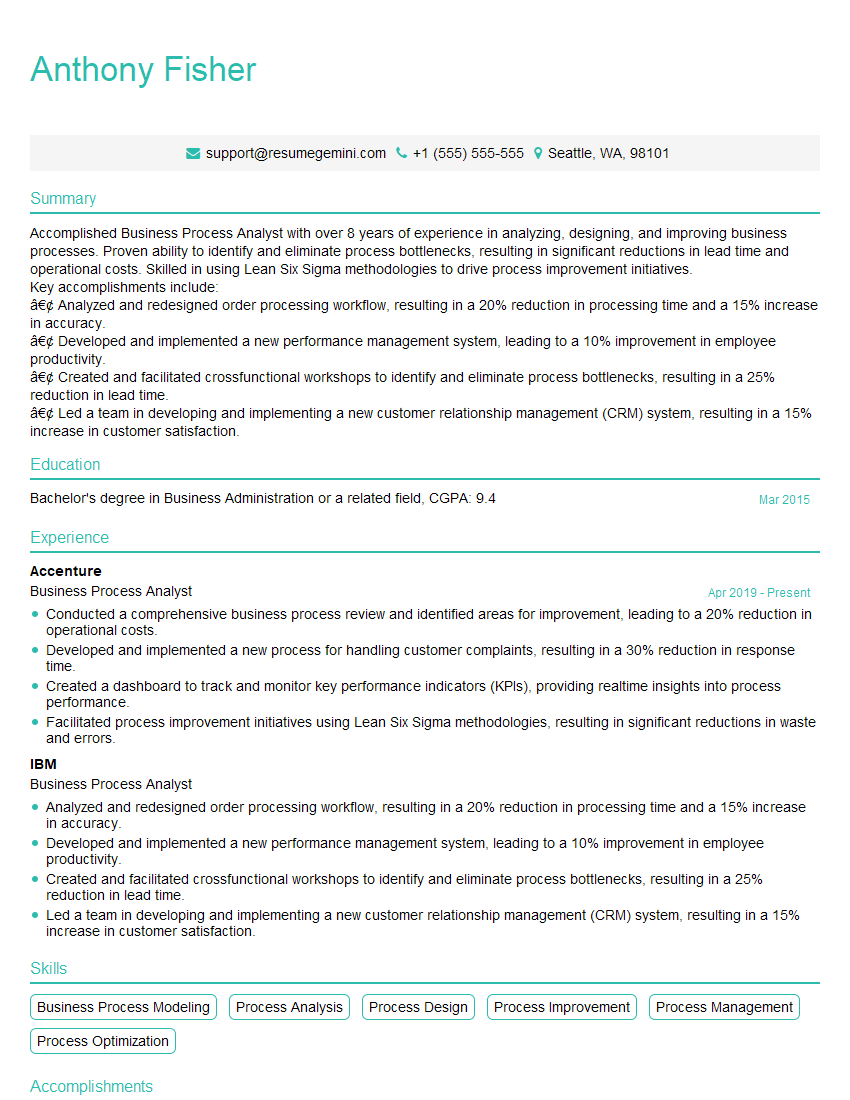
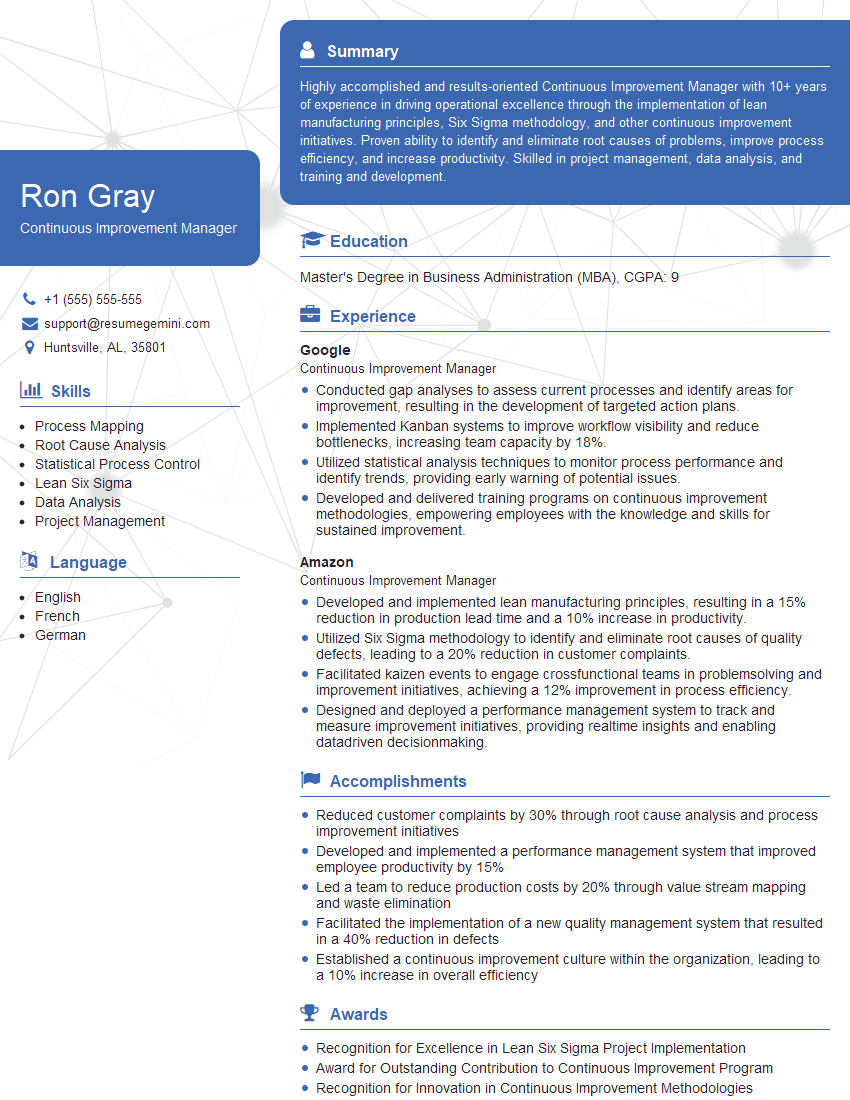
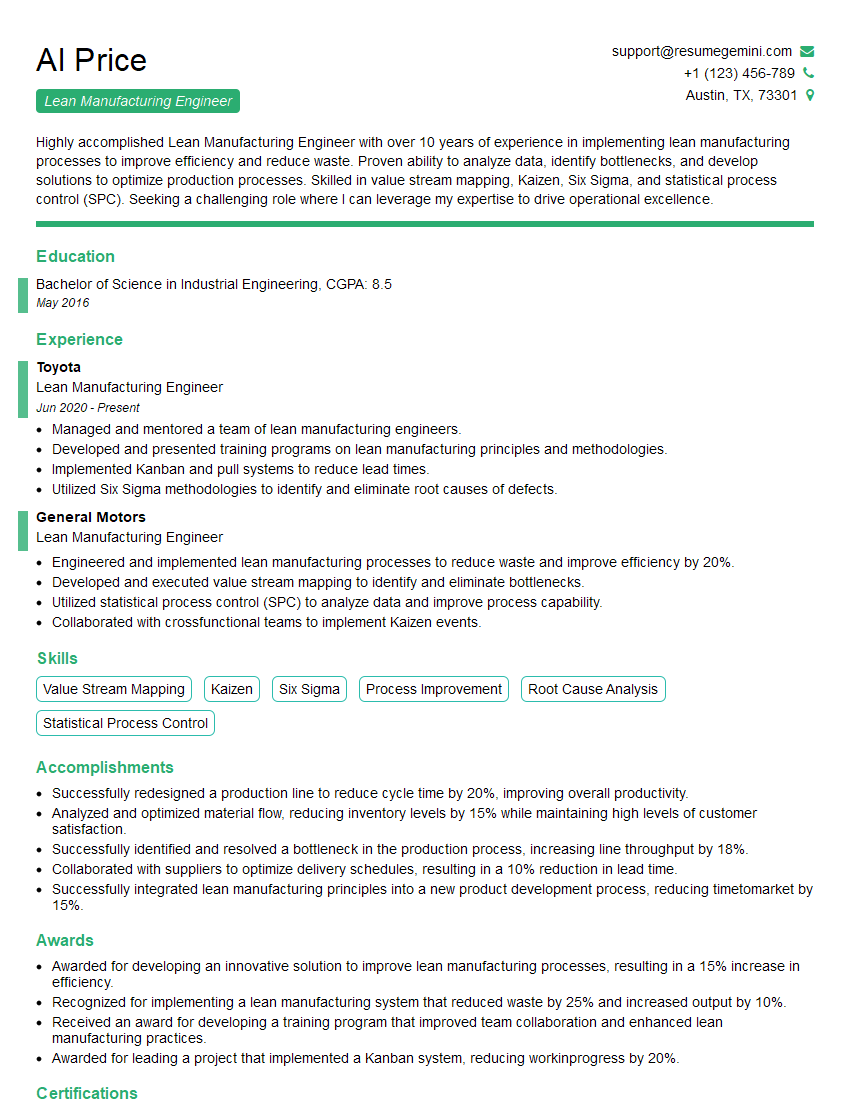
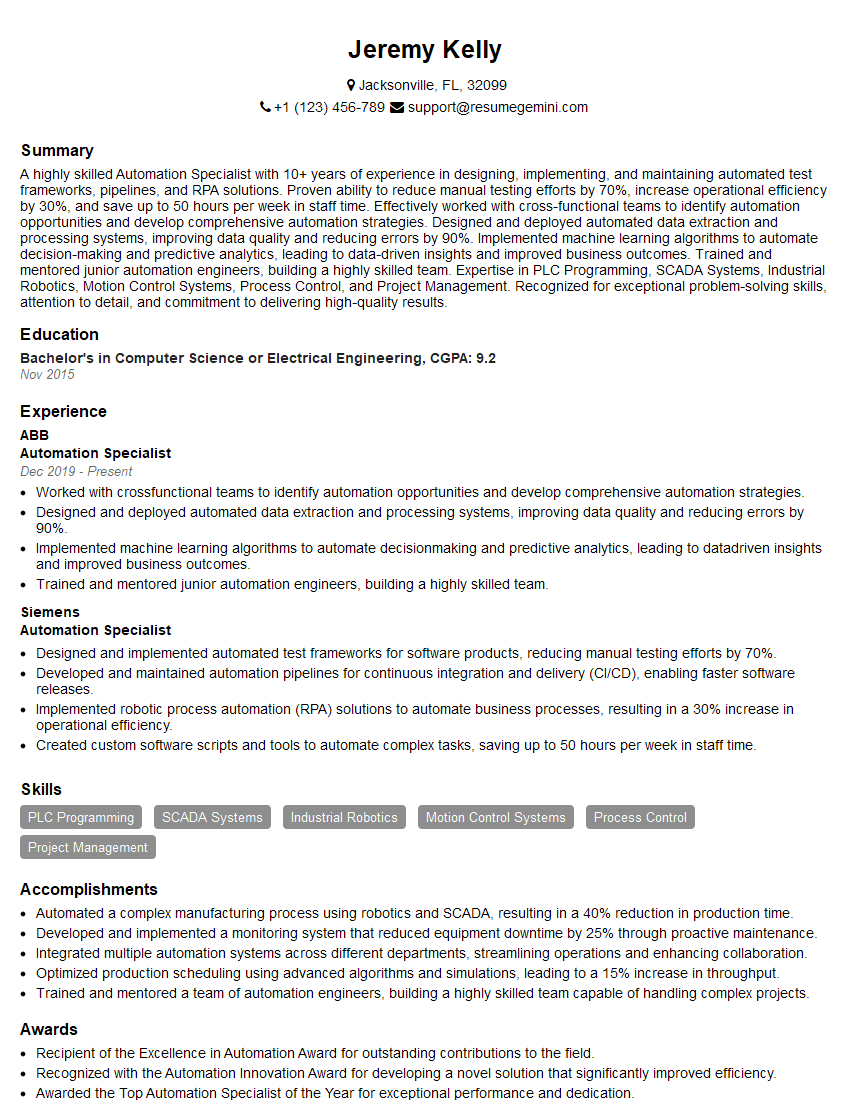
Mastering Efficiency Enhancement is crucial for career advancement in today’s competitive job market. Employers highly value professionals who can identify and implement solutions to improve productivity and reduce costs. To significantly increase your chances of landing your dream role, crafting a strong, ATS-friendly resume is paramount. ResumeGemini is a trusted resource to help you build a professional and impactful resume that highlights your skills and experience in Efficiency Enhancement. Examples of resumes tailored to this field are available below to guide you.
Explore more articles
Users Rating of Our Blogs
Share Your Experience
We value your feedback! Please rate our content and share your thoughts (optional).
What Readers Say About Our Blog
good