Interviews are more than just a Q&A session—they’re a chance to prove your worth. This blog dives into essential Egg Transfer interview questions and expert tips to help you align your answers with what hiring managers are looking for. Start preparing to shine!
Questions Asked in Egg Transfer Interview
Q 1. Describe the procedure for egg transfer in detail.
Egg transfer, also known as embryo transfer, is a crucial step in assisted reproductive technology (ART) where embryos, created through in-vitro fertilization (IVF) or other ART methods, are placed into the uterus to initiate pregnancy. The procedure is minimally invasive and typically performed in a doctor’s office or clinic.
- Preparation: The patient undergoes a transvaginal ultrasound to assess the uterine lining and identify the optimal location for embryo placement. This is usually done the day before or the morning of the transfer.
- Catheter Insertion: A thin, flexible catheter is gently inserted through the cervix into the uterine cavity. This catheter is specially designed to carry the embryos safely.
- Embryo Loading: The embryologist prepares the embryos in a special culture media. These embryos, usually at the blastocyst stage (day 5 or 6 after fertilization), are loaded into the catheter.
- Transfer: Under ultrasound guidance, the catheter is carefully positioned within the uterine cavity. The embryos are then gently expelled from the catheter into the uterus.
- Confirmation: Once the transfer is complete, the catheter is removed, and the patient typically rests for a short period. A final ultrasound image confirms the correct placement of the catheter.
Think of it like planting a seed – the embryo is the seed, and the uterus is the fertile ground. The catheter is simply the tool that carefully places the seed in the best possible spot for growth.
Q 2. What are the different techniques used for egg transfer?
While the basic principle remains the same, there are subtle variations in egg transfer techniques:
- Transcervical Transfer: This is the most common method, described in detail above, where the catheter is passed through the cervix.
- Transvaginal Ultrasound-Guided Transfer: Real-time ultrasound guidance allows for precise placement of the catheter and visualization of the uterine cavity, enhancing accuracy.
- Day 3 vs. Day 5 Transfer: Embryos can be transferred at different stages of development. Day 3 transfers use cleavage-stage embryos, while Day 5 transfers utilize blastocysts, which have undergone more rigorous selection and have a higher chance of implantation (but not always). The choice depends on the patient’s specific circumstances and the quality of the embryos.
The choice of technique is tailored to the individual patient and embryo characteristics and is often determined in consultation with the reproductive endocrinologist and embryologist.
Q 3. What are the potential complications associated with egg transfer?
While generally safe, egg transfer carries some potential risks, though they are relatively infrequent:
- Infection: Although rare, there is a small risk of infection at the site of catheter insertion. This is usually managed with antibiotics.
- Uterine Perforation: This is a very rare complication where the catheter accidentally punctures the uterine wall. This usually requires close monitoring and rarely surgical intervention.
- Multiple Gestation: Transferring multiple embryos increases the chance of a multiple pregnancy (twins, triplets, etc.), which presents its own set of risks.
- OHSS (Ovarian Hyperstimulation Syndrome): In cases where the ovaries are overstimulated during IVF medication, egg transfer might exacerbate the condition, though it is more closely linked to the IVF stimulation phase itself.
- Emotional Distress: The psychological impact of the procedure and its outcome can be significant, requiring support and counseling for many patients.
It’s important to note that these complications are relatively uncommon with experienced professionals utilizing appropriate techniques and precautions.
Q 4. How do you assess the success rate of an egg transfer?
Assessing the success rate of egg transfer focuses primarily on the clinical pregnancy rate and live birth rate. The success rate varies depending on several factors:
- Patient Age: Younger women generally have higher success rates.
- Embryo Quality: High-quality embryos have a higher chance of implantation.
- Uterine Receptivity: The condition of the uterine lining is crucial for successful implantation.
- Underlying Medical Conditions: Pre-existing health conditions can impact success rates.
- Experience of the Clinic: The expertise of the medical team significantly influences outcomes.
Success rates are usually expressed as percentages and are often reported by clinics and research studies. These percentages are population averages and do not guarantee individual results.
Q 5. What is the role of an embryologist during egg transfer?
The embryologist plays a critical role throughout the entire process, but their contribution during egg transfer is crucial:
- Embryo Selection and Preparation: The embryologist carefully selects the best embryos for transfer based on their morphology and developmental potential. They prepare the selected embryos for transfer in a suitable media.
- Catheter Loading: The embryologist loads the chosen embryos into the transfer catheter, ensuring they are handled gently and appropriately.
- Quality Control: The embryologist maintains the highest standards of quality control throughout the process, reducing the risk of contamination and ensuring optimal embryo survival.
- Collaboration: The embryologist works in close collaboration with the reproductive endocrinologist to coordinate the timing and execution of the transfer.
The embryologist is the guardian of the embryos, ensuring their well-being and maximizing their chances of successful implantation.
Q 6. Explain the importance of proper catheter placement during egg transfer.
Proper catheter placement is paramount for successful egg transfer. Incorrect placement can lead to:
- Failed Implantation: If the embryo is not deposited in the uterine cavity, it cannot implant. This is the most common consequence.
- Ectopic Pregnancy: If the embryo implants outside the uterus (e.g., in a fallopian tube), it can lead to a life-threatening ectopic pregnancy.
Ultrasound guidance is critical for precise catheter positioning. The catheter should be placed within the endometrial cavity to maximize the chances of successful implantation. The experience and skill of the physician performing the procedure is vital to ensure proper placement and minimize complications.
Q 7. How do you manage patient anxiety before and during the egg transfer procedure?
Managing patient anxiety before and during egg transfer is a crucial aspect of providing holistic care. This often involves a multifaceted approach:
- Pre-Procedure Counseling: Open and honest communication about the procedure, potential complications, and expected outcomes can reduce anxiety. Explaining the process in detail and answering patient questions can alleviate fear of the unknown.
- Relaxation Techniques: Teaching relaxation techniques like deep breathing exercises or guided meditation can help patients manage anxiety.
- Supportive Environment: Creating a calm and supportive environment in the clinic helps ease patient anxiety. The medical team’s empathy and reassurance play a vital role.
- Medication: In some cases, mild sedatives or anxiolytics might be prescribed to help reduce anxiety, especially for patients with severe anxiety.
- Post-Procedure Support: Providing continued support and follow-up care helps reduce stress after the procedure and during the waiting period for pregnancy confirmation.
Remember, anxiety is a normal response to a significant medical procedure, and addressing it effectively is essential for optimal patient well-being.
Q 8. What are the key factors that influence the outcome of egg transfer?
The success of an egg transfer, ultimately resulting in a healthy pregnancy, hinges on several interconnected factors. Think of it like a perfectly orchestrated symphony – every instrument needs to play its part.
- Embryo Quality: This is arguably the most crucial factor. The embryo’s developmental stage, morphology (physical appearance), and genetic health all significantly impact implantation success. A high-quality embryo, exhibiting proper cell division and a symmetrical structure, has a much greater chance of implanting and developing.
- Endometrial Receptivity: The uterine lining must be adequately prepared to receive and nurture the embryo. Factors like thickness, blood flow, and the expression of specific receptors on the uterine lining influence its receptivity. Think of it as fertile ground for planting a seed.
- Technique of Transfer: The skill and precision of the embryologist performing the transfer are critical. Gentle placement of the embryo into the optimal location within the uterus minimizes trauma and maximizes the chances of implantation. It’s like carefully placing a delicate seedling into the soil.
- Patient-Specific Factors: The woman’s age, overall health, hormonal balance, and any pre-existing uterine conditions can all affect the outcome. A healthy and well-balanced system provides the best environment for success.
- Laboratory Conditions: The quality of the embryology laboratory, including the culture media and equipment used to cultivate the embryos, is also significant. A pristine environment for embryo development is paramount.
For example, a woman with thin uterine lining despite appropriate hormonal stimulation might have a reduced chance of a successful pregnancy, even with a high-quality embryo. Similarly, a poorly performed transfer, with accidental trauma to the uterus, could significantly diminish the chances of success.
Q 9. Describe your experience with different types of embryo transfer catheters.
My experience encompasses a wide range of embryo transfer catheters, each with its own strengths and limitations. The choice depends on factors like the patient’s anatomy, the experience of the practitioner, and the specific needs of the procedure.
- Wallace Catheters: These are commonly used due to their soft, flexible nature and relatively straightforward design. They’re particularly beneficial for patients with slightly difficult access to the uterus.
- Cook Catheters: Known for their longer, slimmer profiles, they are often favored for patients with anatomical challenges, such as a retroverted uterus or a previous uterine surgery.
- Other Specialized Catheters: Some catheters are equipped with features like built-in ultrasound guidance or specialized tips for improved precision. These are typically reserved for more complex cases or situations needing enhanced visualization.
For instance, in a patient with a history of uterine fibroids causing uterine distortion, a Cook catheter with its ability to navigate tight spaces might be preferred over a standard Wallace catheter. The decision is always tailored to the individual circumstances, aiming for the most effective and least invasive procedure.
Q 10. How do you handle complications such as uterine perforation or bleeding during egg transfer?
Uterine perforation and bleeding are rare but serious complications during egg transfer. Immediate and decisive action is crucial.
Uterine Perforation: This usually presents with immediate pain and bleeding. The procedure must be stopped immediately. The next step involves assessing the severity through ultrasound or other imaging techniques. In some cases, conservative management with close monitoring suffices. However, if the perforation is significant, surgical intervention may be required to repair the damage.
Bleeding: Minor bleeding is relatively common and usually resolves on its own. However, significant bleeding requires careful evaluation to rule out other causes. This could include ultrasound to assess the uterine lining and cervix, blood tests to monitor hemoglobin levels, and close observation of the patient’s vital signs. In severe cases, blood transfusion or other interventional procedures might be necessary.
In all cases, the patient’s condition and hemodynamic stability are carefully monitored. Post-procedural follow-up is critical to ensure proper healing and address any potential long-term complications. The patient’s clinical history and the nature of the complication inform my approach to management. We might choose watchful waiting for less severe cases or more aggressive management depending on the specific circumstances.
Q 11. What is the significance of embryo grading in the context of egg transfer?
Embryo grading is a crucial aspect of egg transfer, serving as a predictor of implantation potential. Embryologists assess various characteristics to assign a grade, analogous to evaluating the quality of a fruit before purchasing.
Grading systems typically consider factors like:
- Stage of Development: How many cells the embryo has and whether it’s progressing at an expected rate.
- Morphology: The overall shape and structure of the embryo, including the size, regularity, and fragmentation of cells.
- Symmetry: Uniformity in cell size and distribution within the embryo.
A higher-grade embryo generally indicates better developmental potential and higher chances of successful implantation. While not foolproof, grading helps guide embryo selection and increases the likelihood of pregnancy. For example, an embryo with evenly sized cells, minimal fragmentation, and reaching the blastocyst stage will likely receive a higher grade than an embryo with fragmented cells, uneven size, and slow development.
Q 12. What are the ethical considerations related to egg transfer and embryo selection?
Egg transfer and embryo selection raise several complex ethical considerations. These are not just scientific matters but also profound moral issues requiring careful thought.
- Embryo Selection: Decisions about which embryo to transfer involve considerations about the potential for genetic disorders or the chances of a healthy pregnancy. This can lead to discussions around what constitutes a ‘healthy’ embryo and whether certain characteristics should be prioritized over others.
- Embryo Disposition: The fate of unused embryos raises questions about their moral status and how they should be treated. Options include cryopreservation, donation for research, or disposal, each presenting ethical dilemmas.
- Genetic Screening: The use of preimplantation genetic testing raises concerns about designer babies and the potential for discrimination based on genetic characteristics. We must balance the benefits of genetic screening with the ethical considerations of potential misuse.
- Informed Consent: Couples must be fully informed of all aspects of the process, including the success rates, risks, and ethical implications, before making decisions about embryo selection and transfer. Open and honest communication is vital.
Each of these aspects requires careful consideration, emphasizing respect for patient autonomy, transparency, and the promotion of well-being. There is no simple answer to these complex issues; rather, a continuous and evolving dialogue to determine the best ethical approach.
Q 13. How do you maintain sterility and asepsis during the egg transfer procedure?
Maintaining sterility and asepsis during egg transfer is paramount to prevent infection and ensure patient safety. This involves a meticulous approach that addresses every stage of the procedure.
- Environment Preparation: The procedure room must be meticulously cleaned and disinfected, using appropriate disinfectants to eliminate microorganisms.
- Personnel Attire: The embryologist and other medical personnel must wear sterile gowns, gloves, masks, and head coverings, creating a barrier against contamination.
- Equipment Sterilization: All instruments and equipment used during the transfer, including catheters and transfer media, must be sterile. This involves autoclaving or other appropriate sterilization methods.
- Aseptic Technique: The entire process must adhere to stringent aseptic techniques, minimizing the risk of introducing microorganisms into the reproductive tract. This involves careful handwashing, meticulous handling of equipment, and maintaining a sterile field.
- Post-Procedure Care: Post-procedure instructions are critical to prevent infection and encourage proper healing. We would advise the patient on maintaining hygiene and recognizing symptoms of infection.
For example, any accidental contact with a non-sterile surface during the procedure requires immediate remediation by changing gloves and instruments, ensuring the sterility of the environment is always maintained.
Q 14. Explain the process of embryo selection for transfer.
Embryo selection is a crucial step, involving a careful assessment of various embryo characteristics to identify the best candidates for transfer. It is a collaborative process, often involving the embryologist and the reproductive endocrinologist, and personalized to each patient’s circumstances.
The process typically includes:
- Embryo Morphology Assessment: Embryologists assess the embryo’s physical characteristics, such as cell number, fragmentation, and symmetry, under a microscope.
- Time-Lapse Imaging: Advanced labs might use time-lapse imaging to monitor embryo development over time, providing a more complete picture of its growth and health.
- Preimplantation Genetic Testing (PGT): PGT can assess embryos for genetic abnormalities, helping to select embryos with a higher chance of resulting in a healthy pregnancy. This isn’t always done, depending on patient needs and preferences.
- Patient History and Characteristics: The patient’s age, reproductive history, and any medical considerations will influence the selection process.
The ultimate goal is to select an embryo with a high potential for implantation and subsequent development into a healthy baby, always bearing in mind the patient’s individual circumstances and preferences.
For instance, a younger patient with no history of genetic disorders might opt for a transfer without PGT, focusing primarily on morphology. Conversely, an older patient with a family history of genetic diseases might opt for PGT, prioritizing genetic health over pure morphology.
Q 15. Describe your experience with cryopreservation and its impact on egg transfer.
Cryopreservation, or the freezing of eggs, is a crucial aspect of egg transfer. It allows us to preserve a woman’s fertility, either for later use or in cases where immediate transfer isn’t possible. The process involves a slow, controlled cooling of the eggs in a specialized solution containing cryoprotectants, which prevent ice crystal formation that could damage the egg. These cryoprotectants are carefully removed during the thawing process. The success of an egg transfer hinges heavily on the viability of the cryopreserved eggs, so meticulous attention is paid to every step – from the initial freezing protocol to the warming and subsequent assessment of the egg’s quality before transfer. For example, I’ve seen cases where slow freezing protocols, using controlled-rate freezers, yielded significantly better survival rates compared to vitrification (rapid freezing) in certain patient populations. This highlights the importance of choosing the appropriate cryopreservation method for optimal egg survival and successful transfer.
Career Expert Tips:
- Ace those interviews! Prepare effectively by reviewing the Top 50 Most Common Interview Questions on ResumeGemini.
- Navigate your job search with confidence! Explore a wide range of Career Tips on ResumeGemini. Learn about common challenges and recommendations to overcome them.
- Craft the perfect resume! Master the Art of Resume Writing with ResumeGemini’s guide. Showcase your unique qualifications and achievements effectively.
- Don’t miss out on holiday savings! Build your dream resume with ResumeGemini’s ATS optimized templates.
Q 16. How do you prepare the patient for an egg transfer procedure?
Preparing a patient for an egg transfer involves a multifaceted approach. It starts with a thorough review of her medical history, including any medications she’s taking, to ensure there are no contraindications. We’ll discuss her expectations and answer any questions she may have, alleviating anxiety. Next, an ultrasound is performed to assess the uterine lining (endometrium), ensuring it’s appropriately prepared for embryo implantation. This assessment helps determine the optimal timing for transfer. The patient will also receive specific instructions on medication, if any, to optimize endometrial receptivity. Finally, I often provide relaxation techniques, such as deep breathing exercises, to help the patient remain calm during the procedure. For instance, I recently helped a patient who was quite anxious by providing her with guided imagery techniques before her transfer, which resulted in a much more relaxed and positive experience.
Q 17. What are the post-transfer instructions you provide to the patient?
Post-transfer instructions are vital for successful implantation. Patients are advised to rest for a few hours following the procedure, but avoiding complete bed rest. We usually recommend moderate activity, avoiding strenuous exercise and heavy lifting. They are given specific medication instructions, often including progesterone supplementation to support the pregnancy. Importantly, we advise against smoking and excessive alcohol consumption. We also provide contact information for immediate concerns, emphasizing the importance of reporting any unusual symptoms such as severe cramping or bleeding. I always provide clear and concise instructions, explaining the reasons behind each recommendation to empower the patient and encourage compliance. We offer follow-up appointments to monitor the patient’s progress and answer any questions that may arise during the waiting period. For example, I provide written instructions along with a detailed handout outlining the do’s and don’ts of the post-transfer period.
Q 18. What are the common causes of failed egg transfer?
Failed egg transfers can be attributed to several factors. The most common reason is the quality of the eggs themselves – genetic abnormalities or poor morphology can significantly reduce the chances of successful implantation. Suboptimal endometrial receptivity, where the uterine lining is not adequately prepared to receive the embryo, is another key factor. This can be caused by various factors including hormonal imbalances or underlying uterine conditions. Furthermore, procedural issues such as improper placement of the embryo during transfer can contribute to failure. In addition, underlying medical conditions such as endometriosis or unexplained infertility can also affect the success rate. Addressing each of these aspects requires a thorough investigation, tailored to the individual patient, to optimize the chances of a successful outcome in subsequent attempts.
Q 19. How do you document the egg transfer procedure accurately?
Accurate documentation is paramount in egg transfer procedures. We meticulously document the patient’s identification, medical history, and hormonal profile. The number and quality of eggs transferred are carefully recorded, including any morphological characteristics observed. The exact timing of transfer, the method used (e.g., transcervical catheter), and the location of embryo placement are precisely documented. Any medications administered, patient responses, and any complications or unusual findings are thoroughly noted. This detailed record provides a comprehensive picture of the procedure, allowing for proper analysis and future planning. I use a standardized electronic health record system which integrates seamlessly with our lab’s data management systems, minimizing transcription errors and ensuring data integrity. This system allows for easy retrieval of the data for both clinical and research purposes.
Q 20. Describe your experience with different types of embryo culture media.
Different embryo culture media play a significant role in the development and quality of embryos. The choice of medium depends on several factors, including the stage of embryo development, the specific needs of the patient, and the overall laboratory protocols. There are sequential media, designed for use at different stages of embryo development, mimicking the natural environment. These media are usually formulated with specific concentrations of nutrients, amino acids, and growth factors, carefully balanced to optimize embryo growth. We have extensive experience with several commercially available media and also with customized formulations developed in collaboration with embryology labs. For example, comparing the outcome using sequential media versus single-step media showed a statistically significant difference in blastocyst formation rates, highlighting the importance of selecting the correct medium.
Q 21. How do you address patient concerns and questions about the egg transfer process?
Addressing patient concerns is a crucial part of my role. I make sure to create a safe and open environment where patients feel comfortable asking any questions they may have, no matter how basic. I use clear, non-technical language to explain complex procedures, using analogies whenever appropriate. For example, I’ll compare the uterine lining to fertile soil to help them understand the importance of endometrial preparation. I actively listen to their anxieties, empathize with their concerns, and provide reassurance based on evidence and my own experience. I explain the success rates honestly but also highlight the limitations of predicting outcomes, emphasizing the importance of remaining hopeful. I’ve found that providing written resources alongside verbal explanations further helps patients understand the procedure and process information effectively. I actively follow up after appointments to ensure that they are comfortable and their questions are answered.
Q 22. What is your understanding of the legal and regulatory aspects of egg transfer?
The legal and regulatory landscape surrounding egg transfer is complex and varies by jurisdiction. It’s crucial to adhere to all relevant laws and guidelines, which often address issues of informed consent, patient confidentiality, and donor anonymity. For example, many countries have strict regulations concerning the compensation of egg donors, aiming to prevent exploitation. Furthermore, strict protocols exist for record-keeping, ensuring traceability throughout the entire process, from donor selection to embryo transfer. These regulations are designed to protect both the patients and the donors, while maintaining ethical standards within reproductive medicine. Failure to comply can lead to significant legal and professional consequences. In my practice, we maintain meticulous records and consistently seek legal counsel to ensure full compliance with all applicable regulations.
Q 23. How do you ensure the quality control of the egg transfer process?
Quality control in egg transfer is paramount for success. It starts with rigorous donor screening, which includes thorough medical history assessments, genetic testing, and infectious disease screenings. The laboratory environment is strictly controlled to maintain optimal conditions for egg and embryo handling. This includes using state-of-the-art equipment and following standardized operating procedures. Regular quality control checks are performed on the equipment and media used, ensuring sterility and optimal conditions. Embryo morphology is carefully assessed prior to transfer, using advanced imaging techniques to select the healthiest embryos. Moreover, we use well-established quality assurance metrics, including pregnancy rates and live birth rates, to continuously monitor and improve our procedures. Think of it like a highly specialized manufacturing process where every step is scrutinized for quality and efficiency.
Q 24. Explain the importance of patient education in the context of egg transfer.
Patient education is crucial for successful egg transfer. It empowers patients to make informed decisions and actively participate in their care. We provide comprehensive information about the procedure, its risks, and potential benefits. We explain the process in clear, understandable language, using visual aids when necessary. For example, we use diagrams and videos to show the steps involved in egg retrieval and transfer. Furthermore, we address common concerns and misconceptions, emphasizing realistic expectations. Open communication between the patient and the medical team is key to managing expectations and building trust, leading to a more positive outcome. This also includes counseling patients on the potential emotional impact of the process, both positive and negative.
Q 25. How do you manage different types of uterine anomalies during egg transfer?
Uterine anomalies can significantly impact egg transfer success. We employ various strategies to manage these situations. For example, in cases of fibroids or polyps, hysteroscopic surgery might be necessary to remove these obstructions before transfer. With septate uteri, a minimally invasive procedure can sometimes improve the uterine cavity. In cases of severe uterine malformations, alternative reproductive options might be considered. The selection of the appropriate technique hinges on a careful evaluation of the specific anomaly, the patient’s overall health, and her reproductive goals. Advanced imaging techniques, like hysterosalpingography and 3D ultrasound, are used for detailed uterine assessment prior to any procedure.
Q 26. Describe your experience with assisted hatching and its role in egg transfer.
Assisted hatching is a procedure where a small opening is made in the zona pellucida, the outer shell of the embryo, to help it hatch and implant. It’s considered in specific cases where the zona pellucida is thought to be unusually thick or hardened, potentially hindering implantation. The decision to use assisted hatching is made on a case-by-case basis, considering factors such as the patient’s age, previous IVF attempts, and embryo morphology. My experience shows that while assisted hatching can improve implantation rates in some cases, it’s not a universally beneficial procedure and can potentially increase the risk of complications. We carefully assess each situation to determine if the benefits outweigh the risks. The procedure itself involves utilizing highly specialized laser technology or chemical treatments to create the opening.
Q 27. How do you stay updated with the latest advancements in egg transfer techniques?
Staying updated in the field of egg transfer requires continuous professional development. I regularly attend national and international conferences, workshops, and seminars. I actively participate in professional organizations dedicated to reproductive medicine, allowing me to network and learn from leading experts. I also subscribe to relevant peer-reviewed journals and online resources, keeping abreast of the latest research findings and technological advancements. Continuing medical education is essential to ensuring I deliver the highest quality care to my patients, utilizing the most up-to-date techniques and technologies.
Q 28. Explain the difference between fresh and frozen embryo transfer.
The main difference between fresh and frozen embryo transfer lies in the timing of the transfer. In a fresh embryo transfer, the embryo is transferred to the uterus shortly after retrieval. In a frozen embryo transfer (FET), the embryo is frozen and stored for later transfer. FET offers several advantages, including reduced ovarian hyperstimulation syndrome risk, allowing for better uterine lining preparation, and greater flexibility in scheduling.
For example, a patient undergoing IVF might opt for FET to reduce stress on their body or to time the transfer for a more convenient moment in their lives. The decision between fresh and frozen transfer depends on individual patient factors and circumstances, and a careful discussion with the patient is crucial before making the decision.
Key Topics to Learn for Egg Transfer Interview
- Ovarian Stimulation Protocols: Understanding different stimulation protocols, their advantages, and disadvantages, and selecting the appropriate protocol for individual patient needs. Practical application includes analyzing patient charts and recommending suitable protocols.
- Egg Retrieval Techniques: Mastering the intricacies of egg retrieval procedures, including transvaginal ultrasound guidance, needle manipulation, and safety protocols. Practical application focuses on troubleshooting potential complications and ensuring patient safety.
- Embryo Handling and Culture: Deep understanding of embryo morphology assessment, culture media optimization, and the critical factors influencing embryo development. Practical application includes evaluating embryo quality and making informed decisions regarding embryo selection for transfer.
- Cryopreservation Techniques: Thorough knowledge of vitrification and slow-freezing methods, including the principles, protocols, and potential risks. Practical application includes assessing the viability of cryopreserved embryos and developing strategies for optimal cryopreservation success.
- Ethical Considerations: Familiarity with ethical guidelines surrounding egg donation, surrogacy, and embryo selection. Practical application involves navigating complex ethical dilemmas and ensuring adherence to professional standards.
- Quality Control and Assurance: Understanding the importance of maintaining high standards in laboratory procedures, documentation, and equipment maintenance. Practical application involves implementing and following quality control measures to ensure accurate and reliable results.
- Data Management and Analysis: Ability to effectively manage patient data, interpret results, and communicate findings to colleagues and patients. Practical application includes maintaining detailed records and producing reports for clinical review.
Next Steps
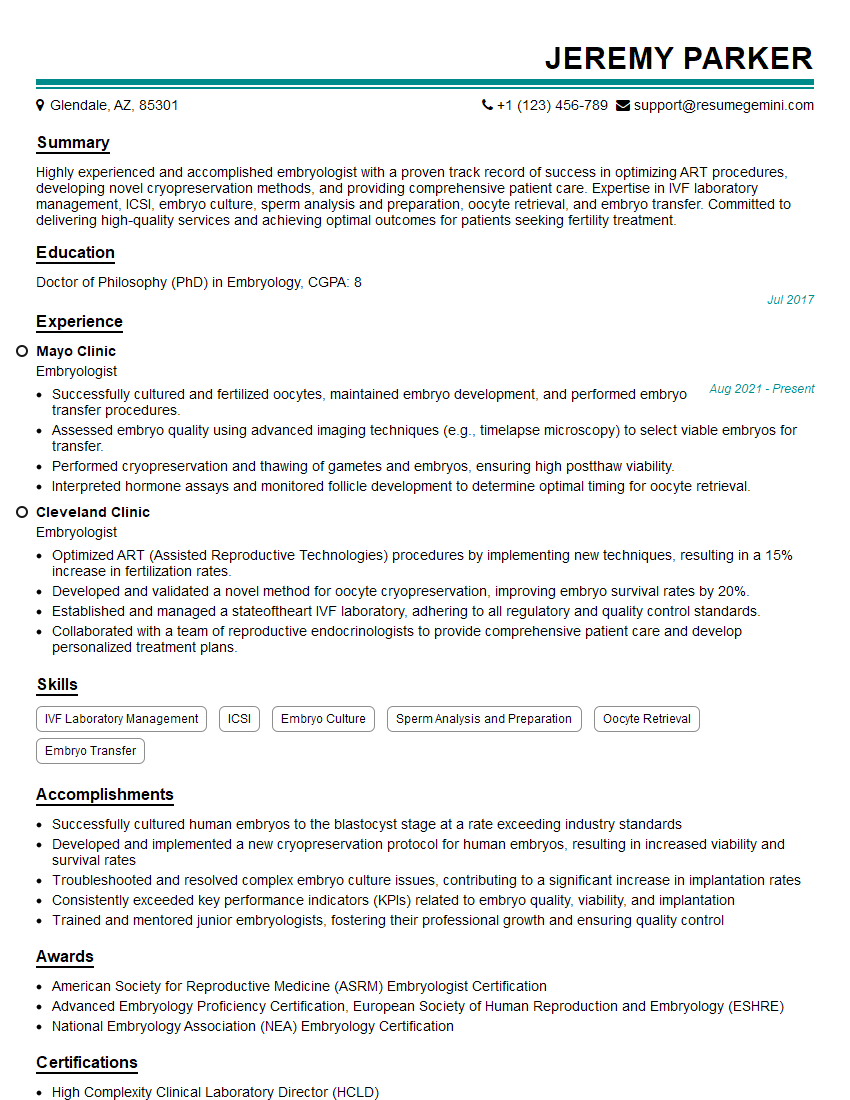
Mastering Egg Transfer procedures is crucial for career advancement in reproductive medicine, opening doors to specialized roles and leadership opportunities. A well-crafted, ATS-friendly resume is vital in showcasing your skills and experience to potential employers. To significantly enhance your job prospects, leverage ResumeGemini to build a professional resume that highlights your qualifications effectively. ResumeGemini provides examples of resumes tailored to Egg Transfer roles, helping you create a compelling application that stands out.
Explore more articles
Users Rating of Our Blogs
Share Your Experience
We value your feedback! Please rate our content and share your thoughts (optional).
What Readers Say About Our Blog
Attention music lovers!
Wow, All the best Sax Summer music !!!
Spotify: https://open.spotify.com/artist/6ShcdIT7rPVVaFEpgZQbUk
Apple Music: https://music.apple.com/fr/artist/jimmy-sax-black/1530501936
YouTube: https://music.youtube.com/browse/VLOLAK5uy_noClmC7abM6YpZsnySxRqt3LoalPf88No
Other Platforms and Free Downloads : https://fanlink.tv/jimmysaxblack
on google : https://www.google.com/search?q=22+AND+22+AND+22
on ChatGPT : https://chat.openai.com?q=who20jlJimmy20Black20Sax20Producer
Get back into the groove with Jimmy sax Black
Best regards,
Jimmy sax Black
www.jimmysaxblack.com
Hi I am a troller at The aquatic interview center and I suddenly went so fast in Roblox and it was gone when I reset.
Hi,
Business owners spend hours every week worrying about their website—or avoiding it because it feels overwhelming.
We’d like to take that off your plate:
$69/month. Everything handled.
Our team will:
Design a custom website—or completely overhaul your current one
Take care of hosting as an option
Handle edits and improvements—up to 60 minutes of work included every month
No setup fees, no annual commitments. Just a site that makes a strong first impression.
Find out if it’s right for you:
https://websolutionsgenius.com/awardwinningwebsites
Hello,
we currently offer a complimentary backlink and URL indexing test for search engine optimization professionals.
You can get complimentary indexing credits to test how link discovery works in practice.
No credit card is required and there is no recurring fee.
You can find details here:
https://wikipedia-backlinks.com/indexing/
Regards
NICE RESPONSE TO Q & A
hi
The aim of this message is regarding an unclaimed deposit of a deceased nationale that bears the same name as you. You are not relate to him as there are millions of people answering the names across around the world. But i will use my position to influence the release of the deposit to you for our mutual benefit.
Respond for full details and how to claim the deposit. This is 100% risk free. Send hello to my email id: [email protected]
Luka Chachibaialuka
Hey interviewgemini.com, just wanted to follow up on my last email.
We just launched Call the Monster, an parenting app that lets you summon friendly ‘monsters’ kids actually listen to.
We’re also running a giveaway for everyone who downloads the app. Since it’s brand new, there aren’t many users yet, which means you’ve got a much better chance of winning some great prizes.
You can check it out here: https://bit.ly/callamonsterapp
Or follow us on Instagram: https://www.instagram.com/callamonsterapp
Thanks,
Ryan
CEO – Call the Monster App
Hey interviewgemini.com, I saw your website and love your approach.
I just want this to look like spam email, but want to share something important to you. We just launched Call the Monster, a parenting app that lets you summon friendly ‘monsters’ kids actually listen to.
Parents are loving it for calming chaos before bedtime. Thought you might want to try it: https://bit.ly/callamonsterapp or just follow our fun monster lore on Instagram: https://www.instagram.com/callamonsterapp
Thanks,
Ryan
CEO – Call A Monster APP
To the interviewgemini.com Owner.
Dear interviewgemini.com Webmaster!
Hi interviewgemini.com Webmaster!
Dear interviewgemini.com Webmaster!
excellent
Hello,
We found issues with your domain’s email setup that may be sending your messages to spam or blocking them completely. InboxShield Mini shows you how to fix it in minutes — no tech skills required.
Scan your domain now for details: https://inboxshield-mini.com/
— Adam @ InboxShield Mini
Reply STOP to unsubscribe
Hi, are you owner of interviewgemini.com? What if I told you I could help you find extra time in your schedule, reconnect with leads you didn’t even realize you missed, and bring in more “I want to work with you” conversations, without increasing your ad spend or hiring a full-time employee?
All with a flexible, budget-friendly service that could easily pay for itself. Sounds good?
Would it be nice to jump on a quick 10-minute call so I can show you exactly how we make this work?
Best,
Hapei
Marketing Director
Hey, I know you’re the owner of interviewgemini.com. I’ll be quick.
Fundraising for your business is tough and time-consuming. We make it easier by guaranteeing two private investor meetings each month, for six months. No demos, no pitch events – just direct introductions to active investors matched to your startup.
If youR17;re raising, this could help you build real momentum. Want me to send more info?
Hi, I represent an SEO company that specialises in getting you AI citations and higher rankings on Google. I’d like to offer you a 100% free SEO audit for your website. Would you be interested?
Hi, I represent an SEO company that specialises in getting you AI citations and higher rankings on Google. I’d like to offer you a 100% free SEO audit for your website. Would you be interested?