Cracking a skill-specific interview, like one for Electric Kiln Firing, requires understanding the nuances of the role. In this blog, we present the questions you’re most likely to encounter, along with insights into how to answer them effectively. Let’s ensure you’re ready to make a strong impression.
Questions Asked in Electric Kiln Firing Interview
Q 1. What are the different types of electric kilns and their applications?
Electric kilns come in various types, each suited for different applications. The most common distinctions are based on size and firing chamber design.
- Front-loading kilns: These are the most common type, ideal for studios and smaller workshops. Their door opens to the front, making loading and unloading easier. They’re suitable for a wide range of pottery, sculpture, and glass work.
- Top-loading kilns: These kilns have a top-opening design, sometimes offering better access for larger pieces or installations. They’re often used for larger-scale projects or situations where front access is limited.
- Kiln furniture differences: Kilns can also be categorized by the type of kiln shelves and posts they accommodate. Some are designed specifically for certain types of shelves made from high-temperature materials like kiln wash-coated shelves or fiber-based supports.
- Rapid-fire kilns: These are designed for faster firing cycles, often saving significant time and energy, but may require specific firing schedules and careful monitoring.
- Specialty Kilns: There are also kilns specifically designed for things like raku firing (requiring rapid cooling), or those with advanced programmable controllers for complex firing profiles.
The choice depends heavily on the scale of your projects, budget, and the specific firing techniques you employ. For example, a small studio might start with a front-loading kiln, while a large pottery studio producing a high volume of work might invest in a larger top-loading kiln or even multiple kilns.
Q 2. Explain the process of loading a kiln for optimal firing results.
Loading a kiln efficiently and effectively is crucial for even heating and preventing cracking or damage. Think of it like baking a cake – you want even heat distribution for consistent results.
- Even spacing: Pieces should be spaced evenly to allow for air circulation. Avoid overcrowding, as this restricts airflow and leads to uneven heating. Imagine arranging cookies on a baking sheet – you leave space for them all to cook evenly.
- Kiln furniture placement: Kiln shelves and posts should be arranged to support the weight of your pieces and distribute it evenly across the kiln chamber. This is especially critical for larger pieces and heavier loads.
- Weight distribution: Heavier pieces should be placed on the lower shelves, distributing the weight evenly across the bottom and center. This minimizes the risk of the shelves sagging or warping.
- Airflow consideration: Leave sufficient space around each piece and between shelves for airflow. You’ll need to consider the type of shelves and supports – some allow more airflow than others.
- Proper stacking: Consider the geometry of your pieces. Taller pieces should be spaced wider to avoid collapse and ensure even heating.
Improper loading can lead to uneven firing, breakage, and even kiln damage. Practice careful arrangement to ensure each piece receives optimal heat exposure.
Q 3. Describe the importance of proper ventilation in an electric kiln room.
Adequate ventilation in an electric kiln room is paramount for both safety and health. Electric kilns generate significant heat, and poor ventilation can lead to dangerously high temperatures and the buildup of potentially harmful fumes.
- Heat dissipation: Proper ventilation removes excess heat from the room, preventing overheating and ensuring a comfortable working environment. This reduces the risk of burns, heatstroke, and equipment malfunction.
- Fume extraction: Some clays and glazes release fumes during firing that can be toxic. A well-ventilated space helps to dilute and remove these fumes, protecting the kiln operator’s health. This is especially important when working with lead-based glazes (which should generally be avoided).
- Fire prevention: Excess heat can be a fire hazard. Good ventilation keeps the surrounding area cool and reduces the risk of ignition from flammable materials nearby.
- Health concerns: Certain glazes and clays can produce toxic fumes, especially during higher temperatures. Ventilation ensures that these fumes are exhausted effectively.
Ventilation systems can range from simple exhaust fans to more sophisticated systems with dedicated ventilation ducts. Always ensure the ventilation system is powerful enough for the size of the kiln and room.
Q 4. How do you monitor kiln temperature and prevent overheating?
Monitoring kiln temperature is critical to achieving desired firing results and preventing damage. Modern electric kilns usually have built-in pyrometers (temperature sensors) and controllers.
- Pyrometer monitoring: Regularly check the pyrometer readings to ensure the kiln is heating according to the firing schedule. This allows for timely adjustments if deviations occur.
- Controller settings: Programmable controllers allow you to set specific temperature ramps and holds, providing precise control over the firing process. Ensure you have correctly programmed your kiln controller according to your chosen firing schedule.
- Overheating prevention: Always have a backup monitoring system or a manual override. In case of controller malfunction, you should be able to quickly shut down the kiln. This might include a separate temperature sensor reading.
- Kiln shutdown: If the kiln overheats, quickly turn off the power and allow it to cool down naturally. Attempting to force cooling can damage the kiln elements.
- Calibration: Periodic calibration of the pyrometer is crucial to ensure accurate readings. An inaccurate pyrometer can lead to over- or under-firing.
Think of it like cooking with a precise oven thermometer. Close monitoring ensures your ‘dish’ comes out perfectly.
Q 5. What safety precautions should be taken when operating an electric kiln?
Safety should always be the top priority when operating an electric kiln. Here’s a list of key safety precautions:
- Proper ventilation: As discussed previously, ensure adequate ventilation to remove heat and fumes.
- Personal Protective Equipment (PPE): Always wear appropriate safety glasses and heat-resistant gloves when handling hot materials or working near the kiln. Avoid loose clothing that could catch fire.
- Fire safety: Keep flammable materials away from the kiln. Make sure you have a fire extinguisher readily available. Regularly check your kiln and the surrounding area for any signs of damage or hazards.
- Electrical safety: Ensure the kiln is properly grounded and connected to a dedicated circuit. Never touch electrical components while the kiln is energized.
- Cooling period: Allow the kiln to cool completely before opening it. The heat retained in the kiln’s chamber and internal components can cause severe burns.
- Lifting procedures: When loading and unloading heavier pieces use appropriate lifting equipment to prevent injury.
- Emergency procedures: Develop and practice an emergency shut-down procedure in case of power failures or other malfunctions. This ensures a swift and safe response to any unexpected situations.
Remember, safety is non-negotiable. Prioritize safety practices to prevent accidents and injuries.
Q 6. Explain the concept of firing schedules and their significance.
Firing schedules, or firing profiles, are carefully planned temperature ramps that dictate how the kiln’s temperature increases and decreases over time. These schedules are crucial to achieve specific aesthetic and structural results in your work.
- Oxidation/reduction firing: Different firing schedules create different atmospheric conditions within the kiln, leading to variations in the final product. For example, oxidation firing (with ample oxygen) produces bright, vibrant colors, whereas reduction firing (with limited oxygen) can create unique metallic and earthy effects.
- Bisque firing: This initial firing at lower temperatures hardens the clay body, preparing it for glazing.
- Glaze firing: The second, and usually higher temperature, firing melts and fuses the glaze to the clay.
- Ramp rate control: The rate at which temperature increases (the ramp rate) is critical to preventing cracking and thermal shock. Slow, controlled ramps reduce stress on the pottery, avoiding damage.
- Soaking stages: The schedule may include ‘soaking’ periods where the temperature is held constant at a specific point. This allows for complete maturation of the clay body and the glaze.
- Cooling rate: The cooling rate is equally important as the heating rate. Rapid cooling can cause cracking. The schedule should include a slow cooling period that gradually lowers the temperature to avoid thermal shock.
The chosen firing schedule depends on the type of clay, glaze, and the desired aesthetic outcome. Experimentation and careful record-keeping are vital in developing optimal firing schedules for your materials.
Q 7. How do you troubleshoot common kiln problems such as uneven heating?
Uneven heating in an electric kiln is a common problem that can lead to unevenly fired pieces and potential damage. Here’s how to troubleshoot this issue:
- Check kiln loading: Overcrowding or uneven placement of pieces is the most common cause. Ensure proper spacing and even weight distribution across shelves (as discussed earlier).
- Inspect kiln elements: Faulty or worn-out heating elements can cause uneven heat distribution. Inspect the elements for signs of damage or breakage. If elements are old and showing signs of wear, replacement may be necessary.
- Kiln insulation: Damaged or inadequate insulation can lead to heat loss and uneven heating. Check the kiln’s insulation for any gaps or cracks.
- Airflow: Restricted airflow caused by obstructions within the kiln can cause uneven heat. Check for any obstructions in the chamber, on shelves, or supports.
- Controller issues: Malfunctioning kiln controllers may not provide even heating. Try resetting the controller or consult a professional if issues persist.
- Kiln positioning: Ensure there are no drafts that could affect even heating in the kiln. This may need adjustments to the kiln’s placement.
Systematic troubleshooting, starting with the most common causes, usually helps pinpoint the source of the problem. If the problem persists despite troubleshooting, consult a kiln repair professional.
Q 8. What are the signs of kiln element failure and how do you address them?
Kiln element failure can be a frustrating experience, but recognizing the signs early can save you time and money. Common signs include a noticeable reduction in heating speed, inconsistent temperatures within the kiln (hot spots or cold spots), the element glowing a dull red rather than a bright orange/yellow during firing, a burning smell during firing (especially a sharp, acrid smell indicating insulation damage near the element), or even a complete failure to heat up.
Addressing these issues requires careful troubleshooting. First, visually inspect the elements for any visible damage like cracks, warping, or discoloration. If you find damage, the element needs replacing. If the problem is inconsistent heating, it might be an issue with the element’s connection to the kiln’s controller, requiring you to check for loose wiring or corroded contacts. If a burning smell is present, you’ll want to turn the kiln off immediately and inspect the kiln interior carefully for possible insulation damage, which is a serious safety concern and should be addressed by a professional if needed. Always remember to disconnect the kiln from the power supply before any inspection or repair work.
For example, I once had a kiln that started heating unevenly. After checking the wiring, I discovered a loose connection at one element. Tightening it solved the problem. However, if an element shows clear signs of physical damage, like cracking, immediate replacement is necessary. Remember to always use elements specifically designed for your kiln model to ensure proper fit and performance.
Q 9. Describe the process of bisque firing and its purpose.
Bisque firing is the first firing of a clay piece, typically fired to a lower temperature (around 1800-2000°F or 982-1093°C), and its purpose is to harden the clay body. This process makes the piece durable enough to handle glazing without deformation. Think of it like baking a cake before frosting – you wouldn’t frost a raw cake, right? The bisque firing expels moisture and volatile organic materials from the clay, resulting in a porous, yet stable body that is ready for decorating and glazing.
During bisque firing, the clay undergoes a transformation. The moisture evaporates, and the clay particles begin to bond together more strongly. This creates a strong, but still somewhat absorbent, substrate. The porosity is vital as it allows the glaze to adhere properly during the glaze firing. If you glaze a piece without bisque firing, the moisture inside the clay will cause the glaze to crack or even explode during the higher-temperature glaze firing. A properly bisqued piece is essential for achieving a successful and durable finished product.
Q 10. Explain the differences between cone firing and temperature firing.
Cone firing and temperature firing are two different methods for controlling the firing process in a kiln. Temperature firing relies on a pyrometer to monitor and regulate the kiln temperature directly. The firing schedule is set to reach specific temperatures, for example, 1000°C for 1 hour then 1200°C for another hour. It’s straightforward but may not always reflect the actual clay body maturity.
Cone firing, on the other hand, uses pyrometric cones – small, tapered clay cones that bend at specific temperatures. These cones are placed in the kiln alongside the ceramic pieces. By observing the bending of the cones, you can determine when the firing has reached the desired maturity of the clay body rather than just a specific temperature. This method is more accurate in terms of material vitrification and often preferred by potters as it accounts for factors such as clay composition and kiln atmosphere which can affect the actual firing temperature. For instance, two kilns may both reach 1200°C, but the material properties and firing outcome might vary considerably due to subtle differences in the atmosphere and heat distribution. Cones provide a visual indicator of this material response.
Q 11. How do you maintain kiln elements and prolong their lifespan?
Regular kiln maintenance is vital for extending the life of your elements. First and foremost, keep the kiln clean. Glaze drips and dust accumulating on the elements can lead to overheating and premature failure. After each firing, sweep out any debris from the kiln chamber. This is crucial. Accumulated dust can act as an insulator, creating inconsistent heat distribution and causing localized overheating of the elements.
Inspect the elements regularly for any signs of damage – cracks, discoloration, or warping. Replace damaged elements promptly. Avoid rapid temperature changes. Let the kiln cool down gradually after firing to prevent thermal shock, which can stress the elements and shorten their lifespan. This is very important; imagine repeatedly heating and cooling metal – it will eventually fail. When using the kiln, make sure that there is adequate airflow within the kiln chamber to prevent hot spots which may overheat certain elements.
Another tip is to use a kiln sitter or monitor the kiln temperature carefully to avoid exceeding the maximum recommended temperature for your elements. Think of it like driving a car – you wouldn’t consistently redline it; similarly, you should avoid pushing your elements to their absolute limits. Proper maintenance translates to longer lasting elements and overall lower cost in the long run.
Q 12. What are the various types of kiln shelves and their uses?
Kiln shelves support your work during firing, and choosing the right type is crucial for successful firings. Hard-fired kiln shelves are the most common and are made from high-temperature clay. They’re robust, durable, and withstand repeated firings. However, they can be heavy. Silica shelves offer better thermal shock resistance and are lighter than hard-fired shelves, but are more expensive and can react with some glazes.
Then there are alumina shelves, often used in high-temperature firings. They’re inert and chemically resistant, making them ideal for certain glazes. Finally, post shelves are designed to create space between stacked shelves, especially helpful for improving air circulation in a kiln. The choice depends on your budget, firing temperatures, and glaze types. For example, if you work with glazes that are known to react with silica, you’d choose hard-fired or alumina shelves. If you frequently fire at high temperatures, silica or alumina might be better options due to their superior thermal shock resistance.
Q 13. How do you identify and address glaze defects resulting from firing?
Glaze defects after firing can be frustrating, but understanding their causes helps in prevention. Common defects include crazing (fine cracks in the glaze), crawling (glaze failing to cover the entire surface), pinholes (tiny holes in the glaze), blistering (bubbles in the glaze), or running (glaze flowing unevenly). These defects often stem from issues such as incorrect glaze application, incompatible glaze and clay body, inappropriate firing temperatures, or improper kiln atmosphere.
Identifying the cause requires careful observation. Crazing usually indicates a mismatch in the thermal expansion coefficients of the glaze and clay. Crawling can be due to excessive oil or dust on the bisque ware. Pinhole defects might occur due to trapped gases during firing. Running happens when the glaze is too fluid for the firing schedule. Addressing these requires reviewing your glaze recipes, cleaning your bisque ware thoroughly, and adjusting the firing process. Keeping detailed notes of your glazes, firing schedules and any observed defects helps to refine techniques over time. For instance, if you encounter consistent crazing with a particular glaze, you might need to either adjust the glaze composition or switch to a clay body with a matching expansion rate.
Q 14. Explain the importance of kiln cleaning and maintenance.
Kiln cleaning and maintenance are paramount for the longevity and safety of your equipment. Regular cleaning prevents glaze drips and dust buildup from affecting the elements and causing inconsistent heating. Accumulated ash and debris can also damage the kiln interior, reducing its efficiency and even causing safety hazards. Think of your kiln like a finely tuned machine – it requires regular servicing to function correctly. A clean kiln will also improve the reliability and consistency of your firings, which leads to less waste and frustration.
Cleaning procedures should include sweeping out the kiln chamber after each firing, removing any glaze drips from shelves and kiln walls, and periodically inspecting the kiln’s interior for signs of damage or deterioration. Proper maintenance also involves checking the kiln’s electrical connections and ensuring the kiln’s insulation is in good condition. This might involve occasionally replacing worn-out elements or repairing damaged insulation. A well-maintained kiln will last significantly longer, deliver more consistent results, and ultimately contribute to a more enjoyable and safe ceramic practice.
Q 15. What are the safety procedures for handling kiln furniture?
Handling kiln furniture, like shelves and posts, requires care to prevent injury and damage. Always use appropriate safety equipment, such as heat-resistant gloves. Kiln furniture can be extremely hot after firing, so allow ample cooling time before handling. Never attempt to move heavy pieces alone; always get assistance to avoid strains or drops. Inspect shelves for cracks or damage before each firing; compromised furniture can lead to uneven heating or even collapse. When stacking, ensure proper spacing to allow for air circulation. Think of it like stacking dishes – you wouldn’t want them to fall and break!
- Wear heat-resistant gloves: Essential to prevent burns.
- Allow ample cooling time: Several hours are usually necessary.
- Use proper lifting techniques: Get help for heavy pieces.
- Inspect for damage: Discard cracked or broken furniture.
Career Expert Tips:
- Ace those interviews! Prepare effectively by reviewing the Top 50 Most Common Interview Questions on ResumeGemini.
- Navigate your job search with confidence! Explore a wide range of Career Tips on ResumeGemini. Learn about common challenges and recommendations to overcome them.
- Craft the perfect resume! Master the Art of Resume Writing with ResumeGemini’s guide. Showcase your unique qualifications and achievements effectively.
- Don’t miss out on holiday savings! Build your dream resume with ResumeGemini’s ATS optimized templates.
Q 16. What is the role of kiln wash and how is it applied?
Kiln wash is a crucial element in electric kiln firing. It’s a refractory coating applied to kiln shelves and other furniture to prevent glaze from sticking and to protect the furniture from damage. It also helps maintain the structural integrity of the kiln shelves, extending their lifespan. Kiln wash comes in different formulations – some are thicker and more durable, others are thinner and easier to apply. Application involves brushing or spraying a thin, even coat onto clean, dry kiln furniture. Avoid excessive build-up as this can create uneven heating. Think of it as a non-stick coating for your baking sheets, but for high temperatures!
- Purpose: Prevents glaze adhesion and protects kiln furniture.
- Application: Thin, even coats using a brush or spray.
- Importance: Extends furniture life and prevents glaze damage.
Q 17. Describe different types of kiln controllers and their functionalities.
Electric kilns utilize various controllers to manage the firing process. Simple on/off switches are the most basic, offering minimal control. Programmable controllers allow for pre-set firing schedules with precise temperature control, often featuring ramps, dwells (holding at a temperature), and cooling stages. These are essential for consistent results. More advanced systems incorporate PID (Proportional-Integral-Derivative) controllers which constantly monitor and adjust the heating elements to maintain the desired temperature with high accuracy. These are like a sophisticated thermostat for your kiln, constantly fine-tuning for perfect firing.
- On/off: Basic, limited control.
- Programmable: Allows for custom firing schedules.
- PID: Advanced control with high accuracy and consistency.
Q 18. How do you interpret a kiln’s firing curve?
A kiln’s firing curve is a graphical representation of temperature versus time. It’s crucial for understanding how the firing process unfolds. The curve shows the rate of temperature increase (ramp rate), the holding times at specific temperatures (dwells), and the cooling rate. Analyzing a firing curve helps identify areas for improvement. For instance, a too-rapid ramp rate might cause cracking, while insufficient dwell time at critical temperatures could affect glaze maturity. Different types of clay and glaze require different firing curves. A good curve will look smooth with gradual changes, avoiding abrupt jumps. I often use my firing curves as reference points and tweaking them over time to see how it can help perfect the process.
Example: A typical curve might show a slow ramp to cone 04, a dwell for vitrification, and a controlled cool-down to prevent thermal shock.
Q 19. What are the potential hazards of improper kiln ventilation?
Improper kiln ventilation poses significant hazards. Kilns generate various gases during firing, some toxic like carbon monoxide. Inadequate ventilation leads to a build-up of these gases, creating a dangerous environment. This can result in headaches, dizziness, nausea, and even unconsciousness. In severe cases, prolonged exposure to these gases can be fatal. Always ensure adequate ventilation, especially in enclosed spaces, and use carbon monoxide detectors when firing. Just as a house needs good ventilation, so does your kiln.
Q 20. Explain the process of troubleshooting a kiln’s malfunctioning controller.
Troubleshooting a malfunctioning kiln controller requires a systematic approach. First, check the obvious – is the kiln plugged in? Is the circuit breaker tripped? Then, examine the controller itself. Are there any error codes displayed? Consult the controller’s manual for troubleshooting guides. If the issue persists, check the wiring connections between the controller and the heating elements. Loose connections can cause inconsistent heating or complete failure. If the problem seems to be with the wiring then it’s best to call a qualified electrician to avoid any serious harm to yourself and potentially the kiln. For more complex issues, contacting a kiln repair technician may be necessary.
Q 21. How do you calculate the energy consumption of an electric kiln?
Calculating an electric kiln’s energy consumption involves several factors. The most significant is the kiln’s wattage (power rating), often expressed in kilowatts (kW). This is usually found on the kiln’s specifications. The firing time is another key factor. Multiply the wattage (in kW) by the firing time (in hours) to get the kilowatt-hours (kWh) consumed. For example: A 10 kW kiln running for 12 hours consumes 120 kWh. Your electricity provider will have information on the cost per kWh. Multiply this cost by the total kWh to get the total energy cost.
Energy Consumption (kWh) = Kilowatt rating (kW) x Firing time (hours)
Q 22. What are the different types of refractories used in electric kilns?
Electric kilns utilize various refractories, materials resistant to high temperatures, to withstand the intense heat during firing. The choice depends on factors like the maximum firing temperature and the kiln’s design.
- High-alumina bricks: These are common, offering excellent thermal shock resistance and strength at high temperatures. They’re often found in the kiln’s walls and floor. Think of them as the kiln’s sturdy skeleton.
- Insulating bricks: These are crucial for energy efficiency. They minimize heat loss, reducing energy consumption and maintaining a stable firing environment. They’re like a thermal blanket for the kiln.
- Silicon carbide (SiC) components: These are used in high-temperature applications, especially for elements and heating zones due to their excellent electrical conductivity and heat resistance. They’re the workhorses that generate the heat.
- Castable refractories: These are poured and cured in place, useful for filling gaps and creating custom shapes within the kiln structure, ensuring a smooth, sealed interior.
The selection process requires careful consideration of the kiln’s operating parameters and the type of ceramic being fired. For example, a kiln firing porcelain at cone 10 (around 1300°C) will necessitate higher-grade refractories than one firing earthenware at lower temperatures.
Q 23. Describe the importance of proper kiln scheduling to optimize production.
Proper kiln scheduling is paramount for achieving consistent, high-quality results and optimizing production. A poorly planned schedule can lead to warping, cracking, or even explosions. Think of it as a precise recipe for your ceramics.
A well-designed schedule includes:
- Slow heating rates: This allows for even heat distribution, preventing thermal shock which can cause cracking.
- Soaking periods: These hold the kiln at a specific temperature to ensure complete vitrification (the point where the clay matures fully). Imagine it like slow cooking – it allows the flavors to develop properly.
- Controlled cooling: A gradual cool-down prevents cracking as the ceramic shrinks, similar to how you shouldn’t rush the cooling process for a hot glass item.
- Specific temperature targets: These targets are crucial for achieving the desired glaze maturity and ceramic properties.
Software or programmable controllers are often used to automate the process, ensuring precise control and consistency across multiple firings. Deviation from the schedule should be carefully considered and documented. For instance, a rapid temperature increase during bisque firing could result in a dull surface finish in the final product.
Q 24. How do you ensure consistent firing results across multiple batches?
Consistency across batches is achieved through meticulous attention to detail and standardized procedures. This involves:
- Accurate weighing and mixing of materials: Precise measurements ensure consistent clay and glaze properties.
- Careful loading of the kiln: Even spacing prevents uneven heating and localized hot spots.
- Strictly adhering to the firing schedule: Deviation can lead to inconsistencies.
- Regular kiln calibration: Temperature sensors need to be checked regularly to ensure accuracy. Just like a chef checking the oven’s thermostat.
- Consistent pre-firing preparation: Making sure the greenware (unfired ceramics) are of the same moisture content each time is also a crucial element.
Maintaining detailed records of each firing, including the schedule used, materials used, and any observed anomalies, allows for the identification and correction of sources of variation. Regularly analyzing these records helps to refine processes and ensure quality control.
Q 25. What are some common causes of kiln explosions and how can they be prevented?
Kiln explosions are rare but serious events often stemming from rapid pressure buildup within the kiln chamber. Several factors contribute:
- Trapped moisture: Moisture in the clay or glaze can vaporize and expand rapidly during firing, leading to pressure buildup.
- Rapid heating rates: Too-quick heating can outpace the rate at which moisture escapes, creating pressure.
- Improperly sealed kiln: Leaks in the kiln can cause uneven heating and stress on the structure, leading to potential failure.
- Overfiring: Exceeding the maximum operating temperature of the kiln can lead to thermal shock and structural failure.
Prevention involves meticulous pre-firing procedures:
- Proper drying: Ensure the ceramic pieces are completely dry before firing.
- Slow heating rate: Adhere strictly to the recommended firing schedule.
- Regular kiln inspection: Check for any cracks or damage in the kiln structure and door seals. Any sign of weakening warrants attention.
- Appropriate ventilation: Ensure adequate venting during the firing process to allow moisture to escape.
Remember, safety is paramount. Proper training, regular maintenance, and adherence to safety protocols are vital to preventing kiln explosions.
Q 26. Explain your experience with different types of glazes and their firing behavior.
My experience encompasses a wide range of glazes, each exhibiting unique firing behaviors. Understanding these behaviors is crucial for achieving desired results.
- Low-fire glazes: These mature at lower temperatures (typically below cone 04), often requiring less precise control during firing. They are generally less prone to cracking.
- High-fire glazes: These mature at higher temperatures (cone 6 and above) and often exhibit more complex melting behavior. Precise temperature control is crucial to prevent cracking or running. These often provide a greater depth of color and luster.
- Crystal glazes: These require specific temperature control and cooling rates to induce crystallization. Their unique shimmering effects require precise timing and understanding of the materials.
- Raku glazes: These involve a reduction firing process, requiring a rapid transition between oxidative and reductive atmospheres. This results in unique metallic effects and often requires specialized equipment and techniques.
I’ve worked with various glaze recipes, modifying them to suit different firing conditions and achieve specific aesthetic effects. For example, I once adjusted a high-fire glaze by adding more silica to increase its fluidity and prevent crazing (fine cracks on the glaze surface). Each glaze is a chemical experiment which requires knowledge of chemistry and ceramics.
Q 27. Describe your experience with kiln repair and maintenance.
Kiln repair and maintenance are essential for ensuring the kiln’s longevity and safe operation. My experience includes troubleshooting and resolving various issues.
- Element replacement: Replacing faulty heating elements is a routine task. This requires knowledge of electrical safety and the kiln’s specific design.
- Refractory repair: Repairing or replacing damaged refractories is crucial to maintain the kiln’s integrity and thermal efficiency. This requires familiarity with different types of refractories and their properties.
- Controller diagnostics and repair: Understanding the kiln’s control system is vital for troubleshooting temperature fluctuations and other issues. This often involves working with electronic circuitry.
- Preventative maintenance: Regular inspections to identify potential problems before they become major issues is key. This includes checking wiring, inspecting elements, and assessing the condition of refractories.
I’ve learned to diagnose issues, procure necessary parts, and carry out repairs efficiently and safely. For example, I successfully diagnosed a temperature fluctuation in a kiln by systematically checking the thermocouple and controller, eventually replacing a faulty sensor and restoring consistent firing performance.
Q 28. How do you prioritize safety when working with high-temperature equipment?
Safety is paramount when working with high-temperature equipment. My approach emphasizes preventative measures and adherence to best practices.
- Personal Protective Equipment (PPE): Always wear appropriate PPE, including heat-resistant gloves, eye protection, and closed-toe shoes.
- Proper ventilation: Ensure adequate ventilation to prevent the buildup of harmful gases during firing.
- Safe handling of materials: Use caution when handling hot ceramics and kiln furniture.
- Emergency procedures: Familiarize yourself with emergency procedures, including fire safety protocols and the location of fire extinguishers.
- Regular safety checks: Conduct regular inspections of the kiln’s electrical system and structure to identify potential hazards.
I always prioritize a methodical approach, following established safety protocols and conducting thorough inspections before each firing. This includes checking wiring, ensuring proper ventilation, and confirming that the kiln is operating within its safe parameters. Safety isn’t just a checklist; it’s a mindset deeply ingrained in my practice.
Key Topics to Learn for Electric Kiln Firing Interview
- Kiln Types and Operation: Understanding the different types of electric kilns (front-loading, top-loading, etc.), their functionalities, and safe operating procedures. This includes preheating, firing schedules, and cooling cycles.
- Temperature Control and Monitoring: Mastering the precise control of temperature throughout the firing process, including the use of pyrometers and thermocouples for accurate measurement and troubleshooting temperature fluctuations.
- Material Science and Clay Behavior: Knowledge of how different clay bodies and glazes react to heat at various stages of firing, including oxidation and reduction firing techniques. Understanding shrinkage rates and potential issues like cracking or warping.
- Firing Schedules and Programs: Designing and implementing appropriate firing schedules based on clay type, glaze composition, and desired outcome. Understanding the impact of different firing rates on the final product.
- Troubleshooting and Problem Solving: Identifying and addressing common issues such as kiln element failure, uneven heating, glaze defects, and potential safety hazards. Developing proactive strategies for kiln maintenance.
- Safety Procedures and Regulations: Demonstrating a thorough understanding of safety protocols related to high-temperature environments, including handling of materials, personal protective equipment (PPE), and emergency procedures.
- Energy Efficiency and Optimization: Understanding methods to maximize energy efficiency during firing and minimize environmental impact. This includes strategies for optimizing kiln loading and utilizing advanced control systems.
Next Steps
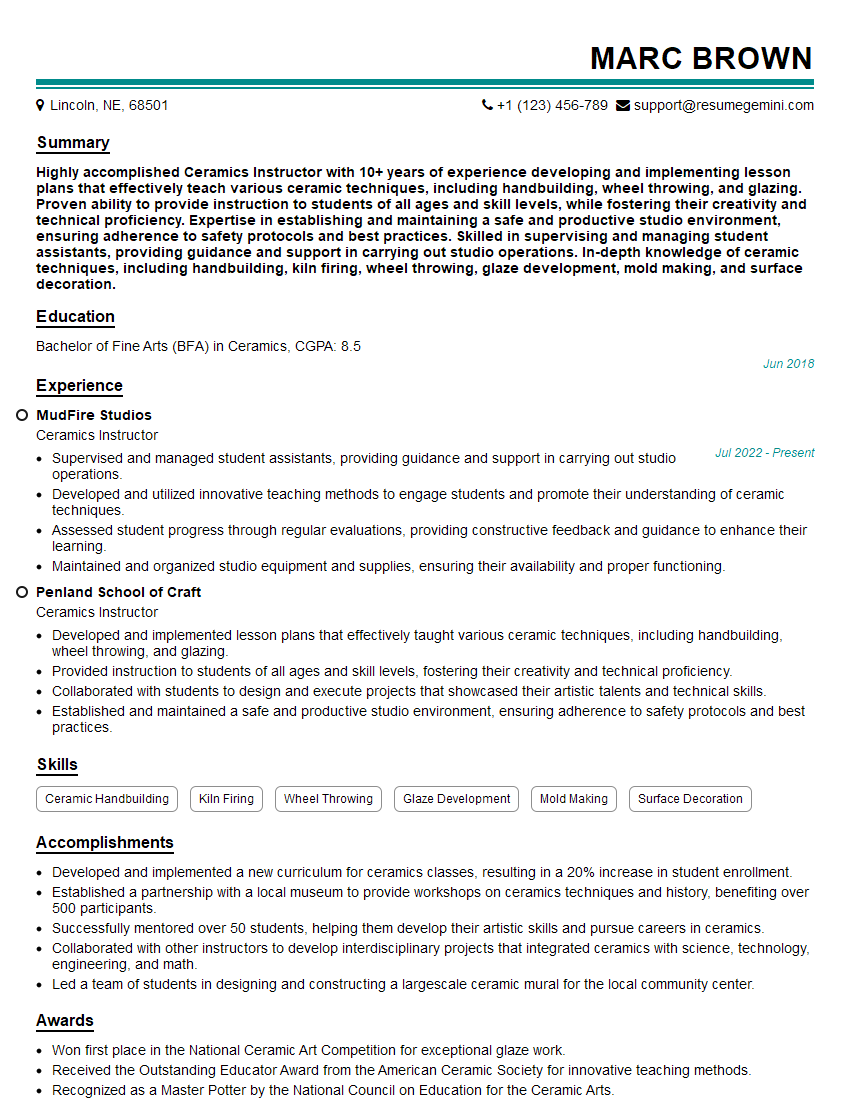
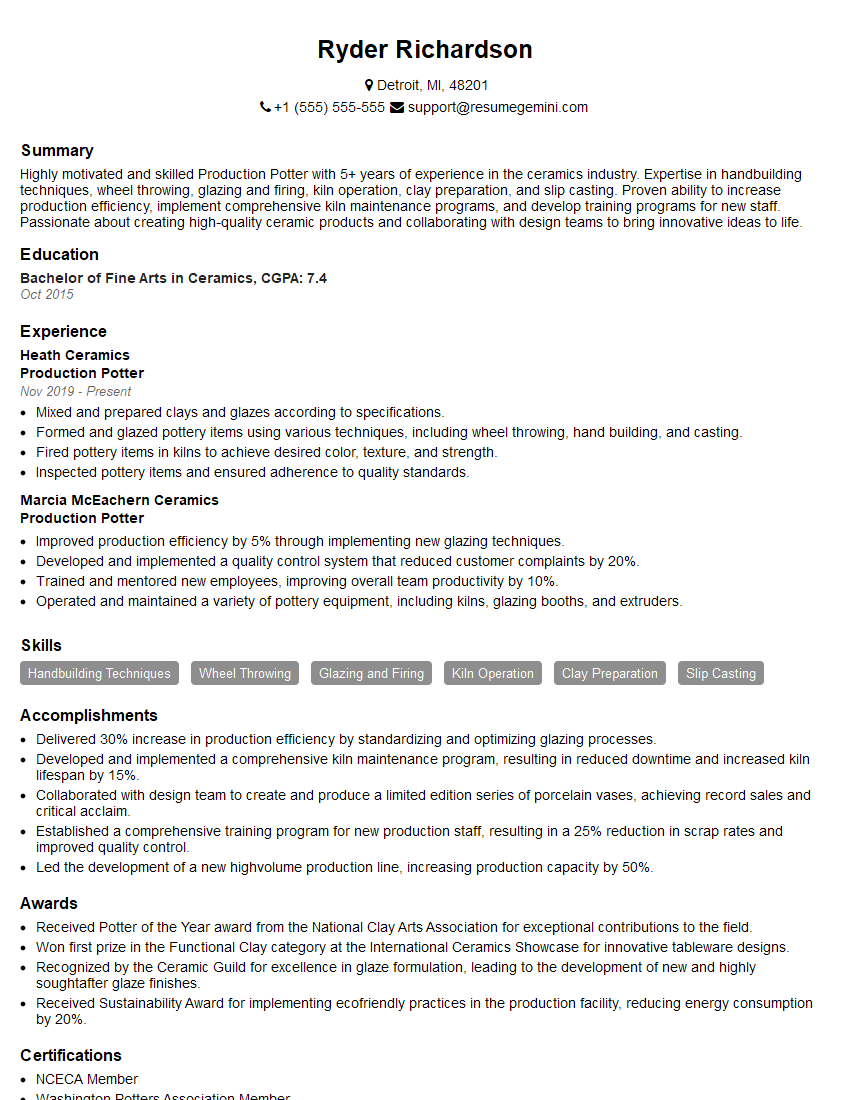
Mastering electric kiln firing opens doors to exciting opportunities in ceramics, art, and industrial manufacturing. To stand out from the competition, a strong, ATS-friendly resume is crucial. ResumeGemini offers a powerful tool to create a professional and effective resume that highlights your skills and experience in electric kiln firing. Take advantage of our resources, including examples of resumes tailored to this field, to maximize your job prospects. Invest in your future and craft a resume that truly showcases your expertise.
Explore more articles
Users Rating of Our Blogs
Share Your Experience
We value your feedback! Please rate our content and share your thoughts (optional).
What Readers Say About Our Blog
Very informative content, great job.
good