Are you ready to stand out in your next interview? Understanding and preparing for Electrical Control System Integration interview questions is a game-changer. In this blog, we’ve compiled key questions and expert advice to help you showcase your skills with confidence and precision. Let’s get started on your journey to acing the interview.
Questions Asked in Electrical Control System Integration Interview
Q 1. Explain the difference between a PLC and a PAC.
Both PLCs (Programmable Logic Controllers) and PACs (Programmable Automation Controllers) are industrial computers used for automation, but they differ significantly in their capabilities and applications. Think of a PLC as a specialized, ruggedized computer designed primarily for logic control – turning things on and off based on pre-programmed logic. A PAC, on the other hand, is a more powerful, versatile device that integrates PLC functionality with advanced capabilities like motion control, data acquisition, and sophisticated process control.
A simple analogy: Imagine a PLC as a sophisticated light switch controlling a factory floor. It can turn lights, motors, and conveyors on and off based on timers, sensor inputs, and other logic. A PAC, however, is like a smart home system managing not only the lights but also the temperature, security, and energy consumption, plus offering data analysis on its performance.
- PLC: Primarily focused on discrete logic control, typically using simple I/O modules. Limited processing power and often lacks advanced functionalities like complex data analysis.
- PAC: Combines PLC functionality with advanced capabilities such as motion control, data acquisition, and real-time control. Possesses more processing power and memory, enabling complex algorithms and integration with other systems.
In essence, a PAC can perform all the functions of a PLC and much more, making it suitable for complex, integrated automation systems. The choice between a PLC and a PAC depends on the application’s complexity and requirements.
Q 2. Describe your experience with different PLC programming languages (e.g., Ladder Logic, Structured Text).
My experience encompasses several PLC programming languages, with Ladder Logic and Structured Text being my most proficient. Ladder Logic, with its visual representation resembling electrical ladder diagrams, is intuitive for representing simple logic and is widely used in industrial settings. I’ve used it extensively for projects involving conveyor systems, robotic control, and machine sequencing. For example, I designed a Ladder Logic program to control a palletizing robot that precisely stacks boxes based on sensor feedback and predefined patterns.
Structured Text, a more powerful and text-based language, allows for complex algorithms and data manipulation. I prefer it for projects needing more advanced control algorithms or sophisticated data analysis. I leveraged Structured Text to develop a PID control loop for a temperature regulation system in a chemical processing plant. This provided more precise and efficient temperature control compared to a simpler on/off approach.
I’m also familiar with Function Block Diagrams (FBDs) and Sequential Function Charts (SFCs), which I’ve used for specific tasks requiring those graphical programming methodologies. My proficiency in these languages allows me to select the best tool for the specific application, optimizing efficiency and maintainability of the control system.
Q 3. What are the common communication protocols used in industrial automation (e.g., Modbus, Ethernet/IP, Profibus)?
Industrial automation relies on various communication protocols to enable data exchange between devices. The choice of protocol depends on factors like speed, distance, and the type of data being transmitted. Some common ones include:
- Modbus: A widely adopted, simple, and robust serial communication protocol that’s relatively easy to implement and works well over long distances. I’ve used it in numerous projects for communicating with various sensors and actuators, including temperature sensors and motor drives.
- Ethernet/IP: An industrial Ethernet protocol offering high speed and efficient communication. I’ve used this for large-scale automation projects involving multiple PLCs and sophisticated devices, where high bandwidth is crucial.
- Profibus: A fieldbus protocol providing reliable communication in harsh industrial environments. It’s especially suited for deterministic applications requiring precise timing, like in robotics or process control.
- Profinet: Another Ethernet-based industrial communication protocol which is widely used in industrial automation.
- CANopen: A communication protocol primarily used in embedded control systems. Its high-speed data transmission is very useful in applications that demand quick responses.
Understanding these protocols and their nuances is vital for designing and troubleshooting industrial control systems. For example, I once had to debug a system where Modbus communication was failing; after careful investigation, I found a misconfiguration in the baud rate settings which resolved the communication error.
Q 4. How do you troubleshoot a faulty PLC program?
Troubleshooting a faulty PLC program requires a systematic approach. My process typically involves these steps:
- Review the program code: Carefully examine the logic, looking for errors in syntax, sequencing, or logic flaws. This often involves using the PLC’s debugging tools to step through the program and observe the variable values at different stages.
- Check I/O signals: Verify that the input signals from sensors and other devices are accurate and that the output signals are correctly controlling the actuators. This involves using a multimeter or the PLC’s I/O monitoring functions.
- Analyze communication: Check the communication links between the PLC and other devices. Verify communication settings, cables, and network connectivity using the PLC’s communication diagnostics tools and network analyzers.
- Simulate the program: If the PLC is still operational, create a virtual simulation to isolate and test parts of the program, which helps to locate potential errors.
- Use the PLC’s diagnostic tools: Most PLCs have built-in diagnostic functions which can pinpoint the exact cause and location of the fault. Using these tools can save a lot of time in debugging.
- Consult documentation and support: If the problem persists, consult the PLC’s documentation, technical manuals, or seek help from the manufacturer’s support team.
For instance, I once encountered a PLC program that was causing a motor to run erratically. By systematically tracing the code, I discovered a timing issue that was causing a race condition, leading to inconsistent motor commands. Correcting this timing issue resolved the problem.
Q 5. Explain your experience with SCADA systems and their applications.
SCADA (Supervisory Control and Data Acquisition) systems are essential for monitoring and controlling industrial processes from a central location. I have extensive experience designing, implementing, and maintaining SCADA systems for various applications. My experience ranges from small-scale systems managing water treatment plants to large-scale systems monitoring entire manufacturing facilities.
I’ve worked with various SCADA platforms, configuring data acquisition, creating alarm systems, designing operator interfaces, and implementing historical data logging and trending. For example, in one project, I designed a SCADA system for a large chemical plant that provided real-time monitoring of critical process parameters, automated alarm responses, and generated detailed reports for regulatory compliance. This significantly improved the plant’s efficiency and safety.
My expertise extends to the integration of SCADA systems with other automation systems, like PLCs and databases. I understand the crucial role SCADA plays in overall plant efficiency, enabling preventative maintenance and timely identification of operational issues. Understanding database interactions in a SCADA environment is crucial to ensure data is stored and reported efficiently.
Q 6. Describe your experience with HMI design and development.
HMI (Human-Machine Interface) design is crucial for effective operator interaction with industrial control systems. I have a strong background in HMI design and development, focusing on creating intuitive and user-friendly interfaces. My approach emphasizes clear visuals, logical layouts, and ease of navigation. I’m proficient in using various HMI software packages to develop screens for controlling and monitoring industrial processes.
I’ve designed HMIs for diverse applications, including automated assembly lines, process control systems, and building management systems. For instance, I once designed an HMI for a complex packaging machine. The old interface was confusing and inefficient, causing operator errors and downtime. My redesigned HMI simplified the interface, providing clear visual representations of machine status and intuitive controls, improving operator performance and reducing downtime significantly. This involved careful consideration of the operator’s workflow and the use of color-coding and graphics to improve information conveyance.
I firmly believe that a well-designed HMI is not just about aesthetics; it’s about improving operational efficiency, reducing errors, and enhancing overall system usability.
Q 7. What are the different types of sensors and actuators used in control systems?
Sensors and actuators are fundamental components of any control system. Sensors provide information about the process being controlled (e.g., temperature, pressure, level), while actuators make adjustments based on that information (e.g., valves, motors, heaters).
Examples of sensors I’ve worked with include:
- Temperature sensors: Thermocouples, RTDs, thermistors
- Pressure sensors: Pressure transducers, pressure transmitters
- Level sensors: Ultrasonic sensors, float switches, radar level sensors
- Flow sensors: Flow meters, vortex flow meters
- Proximity sensors: Inductive, capacitive, photoelectric sensors
And examples of actuators:
- Valves: Solenoid valves, pneumatic valves, control valves
- Motors: AC motors, DC motors, servo motors, stepper motors
- Heaters: Electric heaters, steam heaters
- Pumps: Centrifugal pumps, positive displacement pumps
The selection of sensors and actuators depends heavily on the specific application requirements and the characteristics of the process being controlled. Selecting the right sensor or actuator is vital for the overall accuracy, reliability, and efficiency of the control system.
Q 8. Explain the concept of PID control and its tuning methods.
PID control, short for Proportional-Integral-Derivative control, is a widely used feedback control algorithm for regulating a process variable to a desired setpoint. Imagine you’re trying to maintain a specific temperature in an oven. PID control uses three components to achieve this:
- Proportional (P): This component responds to the current error (difference between setpoint and actual value). A larger error results in a stronger corrective action. Think of it as instantly adjusting the oven’s flame based on how far off the temperature is.
- Integral (I): This component addresses persistent errors. If there’s a consistent offset between the setpoint and the actual value, the integral term accumulates the error over time and applies a corrective action to eliminate this drift. It’s like adjusting the oven’s flame gradually to account for any slow heat loss.
- Derivative (D): This component anticipates future errors based on the rate of change of the error. If the temperature is changing rapidly, the derivative term acts to dampen the change and prevent overshoot. This is like slightly reducing the oven’s flame to prevent it from going significantly beyond the setpoint.
Tuning Methods: Getting the right balance between P, I, and D is crucial. Common tuning methods include:
- Ziegler-Nichols Method: This empirical method involves observing the system’s response to a step change and calculating the PID gains based on the ultimate gain and ultimate period of oscillation. It’s a quick method but can be less precise.
- Cohen-Coon Method: Another empirical method, offering potentially better performance than Ziegler-Nichols, but also requires system response analysis.
- Auto-tuning: Many modern controllers offer automatic tuning features. These algorithms automatically adjust the PID gains based on the system’s dynamic response.
- Trial and Error: While not always the most efficient, manually adjusting the gains based on observed system behavior can sometimes provide optimal results, especially with a deep understanding of the process.
Proper tuning is critical for stability and performance. An improperly tuned PID controller can lead to oscillations, slow response times, or even instability.
Q 9. Describe your experience with safety instrumented systems (SIS).
My experience with Safety Instrumented Systems (SIS) encompasses design, implementation, and testing within various industrial settings. I’ve worked with SIS designed to mitigate hazardous situations in processes involving high pressure, high temperature, or flammable materials. This includes selecting appropriate safety instrumented functions (SIFs), designing the hardware and software architectures, and verifying the system’s performance against safety requirements.
For example, in a recent project involving a chemical processing plant, I was responsible for designing and implementing an SIS to prevent overpressure in a reactor vessel. This involved specifying redundant pressure sensors, logic solvers, and final control elements (e.g., emergency shutdown valves). We conducted extensive testing, including safety integrity level (SIL) verification to ensure the system met the required safety standards (e.g., IEC 61508, IEC 61511).
My expertise extends to the lifecycle of SIS, from initial hazard analysis to ongoing maintenance and modifications. I am familiar with various SIS architectures, including those based on programmable logic controllers (PLCs) and dedicated safety systems.
Q 10. How do you ensure the safety and reliability of a control system?
Ensuring the safety and reliability of a control system is paramount. It involves a multifaceted approach that starts at the design stage and continues throughout the system’s lifecycle.
- Redundancy: Implementing redundant components like sensors, actuators, and processors significantly improves reliability. If one component fails, the system can still operate safely.
- Fail-safe design: Systems should be designed to fail in a safe state. For example, an emergency shutdown system should automatically activate in case of a failure.
- Regular testing and maintenance: Routine testing, including functional safety tests and preventative maintenance, is crucial to identify and address potential problems before they escalate. This could involve automated diagnostics, manual inspections, or more rigorous functional tests.
- Robust software design: Code needs to be thoroughly tested and validated to avoid software errors. This includes code reviews, static analysis, and dynamic testing.
- Proper documentation: Comprehensive documentation of the system’s design, operation, and maintenance procedures is essential for safe and reliable operation.
- Standards Compliance: Adhering to relevant industry standards like IEC 61131-3, IEC 61508, and ISA84.1, provides a framework for safety and reliability and demonstrates due diligence.
A proactive approach to safety and reliability, built into every phase of a project’s lifecycle, greatly reduces risk.
Q 11. Explain your experience with industrial networking and cybersecurity.
My experience with industrial networking spans various protocols including Profibus, Profinet, Ethernet/IP, and Modbus TCP. I’ve worked on projects involving both fieldbus networks connecting sensors and actuators to PLCs and Ethernet networks for communication between PLCs, HMIs, and enterprise systems. I understand the importance of network segmentation, firewalls, and intrusion detection systems to secure industrial control systems (ICS) from cyber threats.
Cybersecurity is a critical aspect of modern ICS. I have experience implementing security measures such as network segmentation, access control lists, and intrusion detection systems to protect against cyberattacks. I’m familiar with industry standards like ISA/IEC 62443, which provides a framework for securing industrial automation and control systems. In one project, we implemented a multi-layered security approach using network segmentation, firewalls, and intrusion detection systems to protect a critical infrastructure facility from cyber threats.
Q 12. Describe your experience with control system documentation and standards.
Control system documentation is critical for maintaining and troubleshooting systems. I have extensive experience creating and maintaining documentation that complies with industry standards. This includes:
- System architecture diagrams: Showing the overall system design and relationships between components.
- I/O lists: Detailing all inputs and outputs of the system.
- PLC programs: Well-commented and structured ladder logic or structured text code.
- HMI screens: User-friendly and informative screens for monitoring and controlling the process.
- Safety manuals: Documentation outlining safety procedures and emergency shutdowns.
- Maintenance manuals: Providing guidance on routine maintenance and troubleshooting.
I utilize standards like ISA-88 batch control standard and ISA-95 enterprise-control system integration to ensure interoperability and consistency. Proper documentation is not just an end-of-project task but a vital part of the project lifecycle; it ensures maintainability, traceability, and ultimately reduces operational risk.
Q 13. How do you handle project delays or unexpected issues during system integration?
Handling project delays and unexpected issues requires a proactive and systematic approach. My strategy involves:
- Early Problem Detection: Regular project reviews and risk assessments identify potential problems early.
- Effective Communication: Open communication with stakeholders to keep everyone informed and manage expectations.
- Prioritization and Rescheduling: Prioritizing critical tasks and rescheduling activities as needed to meet critical milestones. This could include using project management tools such as Gantt charts or critical path analysis.
- Root Cause Analysis: Thoroughly investigating the root cause of delays and unexpected issues to prevent recurrence. This could involve meetings with the relevant teams to establish the reasons behind delays and implement corrective actions.
- Resource Allocation: Adjusting resource allocation to address critical issues, which could include adding personnel or modifying the use of available equipment.
- Change Management: Formally managing changes to the project scope, schedule, or budget.
In a previous project, we encountered a delay in receiving a key component. We quickly implemented a contingency plan, using a temporary substitute while awaiting delivery of the original part. This minimized the overall project impact. It’s about decisive action, clear communication, and adaptability.
Q 14. What is your experience with different control system architectures?
My experience encompasses various control system architectures, including:
- Distributed Control Systems (DCS): I’ve worked with DCS architectures, utilizing redundant processors and distributed I/O for high reliability and scalability, often in large-scale industrial processes.
- Programmable Logic Controllers (PLCs): I’m proficient in programming PLCs using various programming languages (ladder logic, structured text, function block diagrams) and have experience with various PLC platforms.
- Supervisory Control and Data Acquisition (SCADA): I’ve worked with SCADA systems for monitoring and controlling industrial processes, including HMI development and data visualization.
- Industrial Internet of Things (IIoT): I have experience integrating various IIoT devices and platforms to enhance process monitoring, optimization, and predictive maintenance.
The choice of architecture depends on the specific application requirements, scalability needs, and budget constraints. I’m able to select and implement the most suitable architecture for each project, considering factors such as safety requirements, performance needs, and maintainability.
Q 15. Explain your experience with commissioning and start-up procedures.
Commissioning and start-up procedures are critical steps in deploying any electrical control system. It’s essentially the final verification and validation phase, ensuring everything operates as designed before handing it over to the client. My experience involves a methodical approach, starting with a thorough review of the system design documentation, including P&IDs (Piping and Instrumentation Diagrams), electrical schematics, and control logic diagrams. Then comes the physical installation verification – checking wiring, termination, and the correct installation of all hardware components.
Next, I perform a step-by-step commissioning process. This involves testing individual components, modules, and subsystems, meticulously checking for proper functionality and communication. I use specialized commissioning tools for testing and diagnostics, such as loop testers, signal analyzers, and PLC programming software. I systematically work through the sequence of operations, simulating real-world conditions to identify and rectify any discrepancies or malfunctions. For example, in a recent project involving a conveyor system, I simulated various scenarios like jams and speed changes, ensuring the control system responded appropriately and safety interlocks functioned correctly. Finally, I produce comprehensive documentation including test results, reports, and as-built drawings, handing over the system only after complete satisfaction with the performance and safety checks.
A significant part of this is also operator training – ensuring the client’s personnel understand the system’s operation, troubleshooting procedures, and safety protocols. Proper documentation and training are essential for smooth, long-term operation.
Career Expert Tips:
- Ace those interviews! Prepare effectively by reviewing the Top 50 Most Common Interview Questions on ResumeGemini.
- Navigate your job search with confidence! Explore a wide range of Career Tips on ResumeGemini. Learn about common challenges and recommendations to overcome them.
- Craft the perfect resume! Master the Art of Resume Writing with ResumeGemini’s guide. Showcase your unique qualifications and achievements effectively.
- Don’t miss out on holiday savings! Build your dream resume with ResumeGemini’s ATS optimized templates.
Q 16. How do you manage multiple projects simultaneously?
Juggling multiple projects demands strong organizational skills and a robust project management approach. My strategy centers around prioritizing tasks effectively. I use project management tools, like Gantt charts or agile methodologies (Kanban), to visualize project timelines, dependencies, and allocate resources effectively. This allows me to track progress, identify potential bottlenecks early on, and adjust plans accordingly.
Clear communication is crucial. I maintain open communication with all stakeholders, including clients, engineers, and subcontractors, providing regular updates on each project’s status. This prevents misunderstandings and ensures everyone is on the same page. I also delegate tasks efficiently, entrusting responsibilities to capable team members, based on their skills and availability. This not only ensures efficient workflow but also promotes team development. Finally, I regularly review the overall workload and adjust priorities to meet deadlines and maintain a healthy work-life balance, preventing burnout which can drastically affect project efficiency and quality.
Q 17. Describe your experience with different types of industrial drives (e.g., VFDs, servo drives).
My experience encompasses a wide range of industrial drives, from Variable Frequency Drives (VFDs) for controlling AC motors to servo drives for precision motion control applications. VFDs are commonly used in applications requiring speed control, such as fans, pumps, and conveyors. I’m proficient in configuring VFDs from various manufacturers, selecting appropriate motor control algorithms (e.g., vector control, scalar control), and integrating them into the overall control system. I’ve worked with VFDs from leading manufacturers like Siemens, Rockwell Automation, and ABB.
Servo drives, on the other hand, are crucial in applications needing precise positioning and speed control, such as robotic arms, CNC machines, and automated assembly lines. My expertise extends to configuring servo drives, tuning control loops for optimal performance (minimizing overshoot and settling time), and integrating them with motion controllers. For instance, I worked on a project involving a highly precise pick-and-place robotic arm where careful tuning of the servo drives ensured the required accuracy and speed for the operation. Understanding the specific requirements of each application and choosing the right type of drive is critical for ensuring optimal performance and system efficiency. This includes considering factors such as power rating, communication protocols (e.g., CANopen, Modbus), and safety features.
Q 18. Explain the concept of feedback control and its importance.
Feedback control is the cornerstone of modern control systems. It’s a process where the output of a system is constantly monitored and used to adjust the input, ensuring the system operates as desired. Imagine driving a car: you set a speed (desired output), and constantly adjust the accelerator (input) based on the speedometer reading (feedback) to maintain that speed. Similarly, in industrial control, a sensor measures the actual value (e.g., temperature, pressure, speed), which is then compared to the desired setpoint. The difference (error) is used to adjust the control signal, driving the system closer to the target.
Its importance lies in its ability to maintain stability, accuracy, and robustness. Without feedback control, systems would be highly sensitive to disturbances and prone to instability. For example, a simple on/off heating system without feedback might result in extreme temperature fluctuations. Feedback control mechanisms, such as Proportional-Integral-Derivative (PID) controllers, allow precise regulation, compensating for disturbances and ensuring the system remains within acceptable operating parameters. This is essential for maintaining product quality, safety, and overall efficiency in industrial processes.
Q 19. What are the different types of industrial networks?
Industrial networks are the communication backbone of modern control systems, allowing different devices and controllers to exchange information. Several types exist, each with its strengths and weaknesses:
- Profibus: A widely used fieldbus for process automation, offering high speed and reliability.
- Profinet: An Ethernet-based industrial network, providing high bandwidth and flexibility for complex applications.
- EtherCAT: A high-speed Ethernet-based technology known for its real-time capabilities, particularly suitable for demanding motion control applications.
- Modbus: A simple and widely adopted serial communication protocol used in many industrial devices.
- CANopen: Based on the Controller Area Network (CAN) bus, often used in automotive and robotics applications, known for its robustness.
- Ethernet/IP: A widely used industrial Ethernet protocol from Rockwell Automation, offering seamless integration with their automation components.
The choice of industrial network depends on factors like speed requirements, data volume, distance, cost, and compatibility with existing equipment. Proper network design and configuration are crucial for ensuring reliable communication throughout the control system.
Q 20. Explain your experience with data acquisition and logging.
Data acquisition and logging are essential for monitoring system performance, diagnosing faults, and optimizing processes. My experience involves using various hardware and software tools to collect data from different sensors and devices within a control system. This data can include anything from temperature and pressure readings to motor speeds and production counts. I utilize Programmable Logic Controllers (PLCs), data acquisition (DAQ) systems, and specialized software to acquire and store this information.
Effective data logging involves choosing appropriate sampling rates, data formats, and storage methods. For example, I’ve used historical data from a water treatment plant to identify patterns in water quality and optimize the treatment process. The logged data can be analyzed to identify trends, detect anomalies, and improve overall system efficiency. Secure data storage and retrieval methods are crucial for regulatory compliance and ensuring data integrity. I use various techniques to ensure data accuracy and reliability, including sensor calibration and data validation procedures. Moreover, I’m familiar with various data analysis tools and techniques for extracting meaningful insights from the collected data.
Q 21. How do you ensure the accuracy and precision of control system measurements?
Ensuring the accuracy and precision of control system measurements is paramount for the system’s reliability and overall performance. This involves a multi-pronged approach, starting with careful sensor selection. The sensors must be appropriate for the measured variable and its range, and must possess sufficient resolution and accuracy. Regular calibration is critical; I use traceable calibration procedures against certified standards to ensure sensor readings remain within acceptable tolerances. This ensures that the sensors are providing accurate readings.
Beyond sensor selection and calibration, signal conditioning plays a vital role. This includes techniques like filtering (to remove noise and interference) and amplification (to improve signal-to-noise ratio). Effective signal conditioning ensures that the signals sent to the control system are clean and representative of the actual measurement. Furthermore, I employ redundancy and cross-checking where possible. For instance, using multiple sensors to measure the same variable provides a way to detect and compensate for potential errors. Finally, robust data validation procedures in the control system software filter out spurious readings and ensure data integrity. This holistic approach ensures the control system’s accuracy and reliability, preventing costly errors and downtime.
Q 22. Describe your experience with control system testing and validation.
Control system testing and validation is crucial for ensuring a system’s safety, reliability, and performance. My experience encompasses a range of methods, from unit testing of individual components to full system integration testing. This involves creating detailed test plans based on functional and performance requirements.
For instance, in a recent project involving a robotic arm for a manufacturing plant, I designed tests to verify the arm’s accuracy, speed, and response to various commands. This included unit testing of the individual motor controllers, followed by integration testing to ensure coordinated movement and collision avoidance. We used automated test scripts and data logging to track performance metrics and identify any deviations from the specifications.
Furthermore, I have experience with factory acceptance testing (FAT) and site acceptance testing (SAT). FAT ensures the system meets specifications before shipment, while SAT verifies its proper operation within the final environment. These tests include safety checks, functional tests, and performance validation under realistic operating conditions. For example, during SAT, we might simulate various failure scenarios to assess the system’s resilience.
Q 23. Explain your experience with different types of industrial software (e.g., MES, ERP).
My experience with industrial software spans several systems. I’ve worked extensively with Manufacturing Execution Systems (MES) for production scheduling, real-time data collection, and quality control. For example, I integrated a MES system with our plant’s PLC (Programmable Logic Controller) network to track production parameters like cycle time and material usage in real-time. This data then fed into reports to monitor efficiency and identify areas for improvement.
Similarly, I have experience with Enterprise Resource Planning (ERP) systems, which are broader enterprise-level systems used for managing resources, financials, and supply chain. I’ve been involved in projects where we integrated MES data with the ERP system to get a complete overview of manufacturing operations and their impact on the company’s overall performance. The integration helped to streamline processes and eliminate data silos. Understanding the interplay between MES and ERP is vital for optimizing overall operational efficiency.
Q 24. How do you stay up-to-date with the latest advancements in control system technology?
Staying current in the rapidly evolving field of control system technology requires a multi-pronged approach. I regularly attend industry conferences and workshops, such as those hosted by ISA (International Society of Automation) and other relevant organizations. These events offer valuable insights into the latest trends and technological advancements.
I also actively participate in online communities and forums, subscribing to industry publications and newsletters like those from Automation World or Control Engineering. These resources keep me informed about new products, technologies, and best practices.
Finally, I dedicate time to self-directed learning through online courses and webinars offered by platforms like Coursera and edX. This allows me to deepen my knowledge in specific areas like cybersecurity for industrial control systems or the application of new communication protocols. This continuous learning is essential for maintaining a competitive edge.
Q 25. Describe your experience with project management methodologies (e.g., Agile, Waterfall).
My experience encompasses both Waterfall and Agile project management methodologies. The choice depends heavily on the project’s complexity, client requirements, and the level of uncertainty. Waterfall is ideal for projects with well-defined requirements and minimal expected changes. For instance, in a project involving upgrading existing PLC hardware and software with well-established specifications, a Waterfall approach with its structured phases ensured clear milestones and predictable timelines.
However, for projects with evolving requirements or a higher degree of uncertainty, like developing a novel control system with integrated AI, Agile methodologies like Scrum are more suitable. This iterative approach allows for adjustments based on feedback and changing needs. In such projects, I’ve used daily Scrum meetings, sprint reviews, and retrospectives to ensure continuous improvement and client satisfaction.
Q 26. Explain your experience with different types of industrial communication protocols (e.g., HART, Fieldbus).
I’m proficient in a variety of industrial communication protocols, including HART (Highway Addressable Remote Transducer), Profibus, and Ethernet/IP. HART is commonly used for communicating with smart field devices like pressure transmitters and flow meters. I’ve used HART for configuring and monitoring these devices, ensuring accurate data acquisition.
Fieldbuses like Profibus and Ethernet/IP are used for higher-bandwidth communication between PLCs and other automation devices. For example, in a large-scale manufacturing line, I implemented Ethernet/IP to connect various PLCs, robots, and vision systems, facilitating high-speed data exchange and synchronized operations. Understanding the strengths and weaknesses of different protocols is key to selecting the right one for a particular application. For example, choosing a protocol like Modbus for simple applications is cost effective compared to more complex protocols where the added functionality is not needed.
Q 27. How do you handle conflicts between different stakeholders in a project?
Handling stakeholder conflicts requires strong communication, active listening, and a collaborative approach. My strategy involves clearly defining roles and responsibilities at the beginning of the project, ensuring everyone understands their contribution and the project goals. This minimizes misunderstandings and conflicts later.
When conflicts arise, I facilitate open and honest discussions among stakeholders. This includes creating a safe space for expressing concerns, actively listening to all viewpoints, and finding common ground. I often use conflict-resolution techniques such as compromise, negotiation, or mediation to help find mutually acceptable solutions. Documenting agreements and decisions helps maintain transparency and accountability, minimizing the chance of future disagreements.
Q 28. Describe your approach to problem-solving in a high-pressure environment.
My approach to problem-solving under pressure is structured and methodical. I start by clearly defining the problem, gathering all relevant information, and assessing the urgency. This avoids knee-jerk reactions and ensures a focused approach.
Next, I systematically analyze the problem using a structured approach such as the 5 Whys technique to identify the root cause. Then, I brainstorm potential solutions with the team, evaluating their feasibility and potential impact. This may involve prioritizing solutions based on urgency and impact. Finally, I implement the chosen solution, monitor its effectiveness, and make adjustments as needed. Effective communication during this process is crucial, ensuring everyone is informed and working towards the same goal. I’ve found that maintaining composure, remaining objective, and actively seeking help when needed, are vital in high-pressure situations.
Key Topics to Learn for Electrical Control System Integration Interview
- PLC Programming: Understand different programming languages (Ladder Logic, Function Block Diagram, Structured Text) and their applications in industrial automation. Be prepared to discuss practical examples of program development and troubleshooting.
- SCADA Systems: Familiarize yourself with Supervisory Control and Data Acquisition systems. Know how they monitor and control industrial processes, including data acquisition, visualization, and alarm management. Be ready to discuss different SCADA architectures and communication protocols.
- Industrial Networking: Master industrial communication protocols such as Ethernet/IP, Modbus, Profibus, and Profinet. Understand network topologies, data transmission methods, and troubleshooting techniques.
- Sensor and Actuator Integration: Deepen your understanding of various sensor types (temperature, pressure, flow, etc.) and actuators (valves, motors, etc.). Know how to select appropriate devices, integrate them into the control system, and handle signal conditioning.
- Safety Systems: Familiarize yourself with safety standards and practices in industrial automation. Understand safety PLCs, emergency stop systems, and safety interlocks.
- Troubleshooting and Diagnostics: Practice identifying and resolving common issues in electrical control systems. Be prepared to discuss your approach to troubleshooting, using diagnostic tools, and analyzing system logs.
- System Design and Architecture: Understand the principles of designing and implementing robust and reliable control systems. Be able to discuss different system architectures and their trade-offs.
- Human-Machine Interface (HMI) Design: Gain familiarity with designing effective and user-friendly HMIs for industrial control systems. Consider aspects of usability, ergonomics, and safety.
Next Steps
Mastering Electrical Control System Integration opens doors to exciting and rewarding career opportunities in various industries. A strong understanding of these concepts is highly sought after, making you a valuable asset to any team. To significantly boost your job prospects, create an ATS-friendly resume that highlights your skills and experience effectively. ResumeGemini is a trusted resource that can help you build a professional and impactful resume. We offer examples of resumes tailored specifically to Electrical Control System Integration to guide you. Invest time in crafting a compelling resume – it’s your first impression with potential employers.
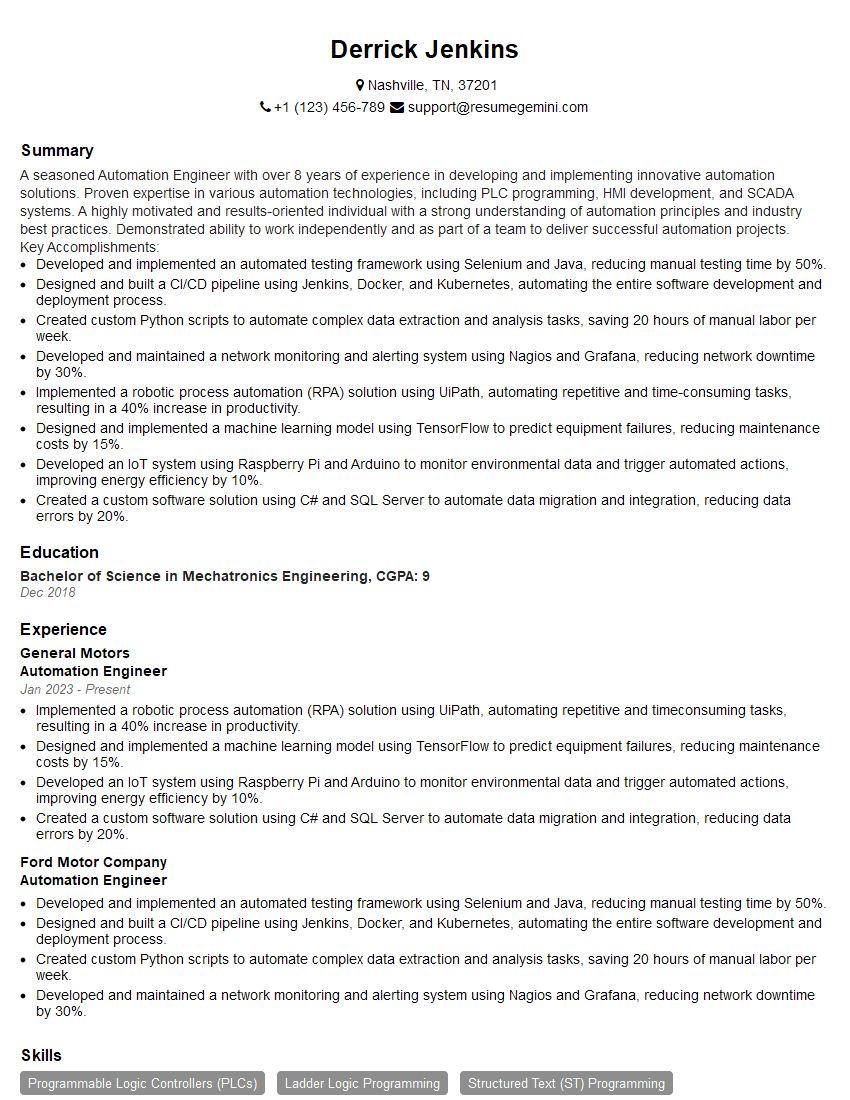
Automation Engineer Resume Sample
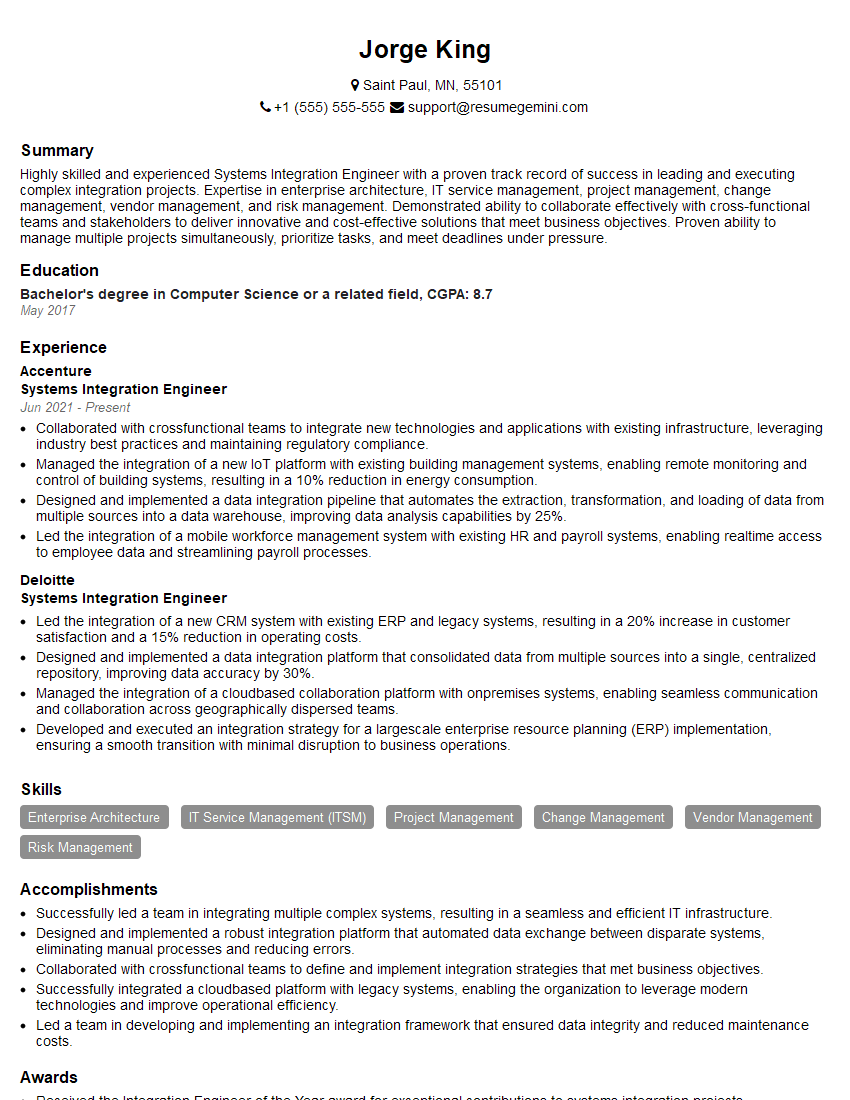
Systems Integration Engineer Resume Sample
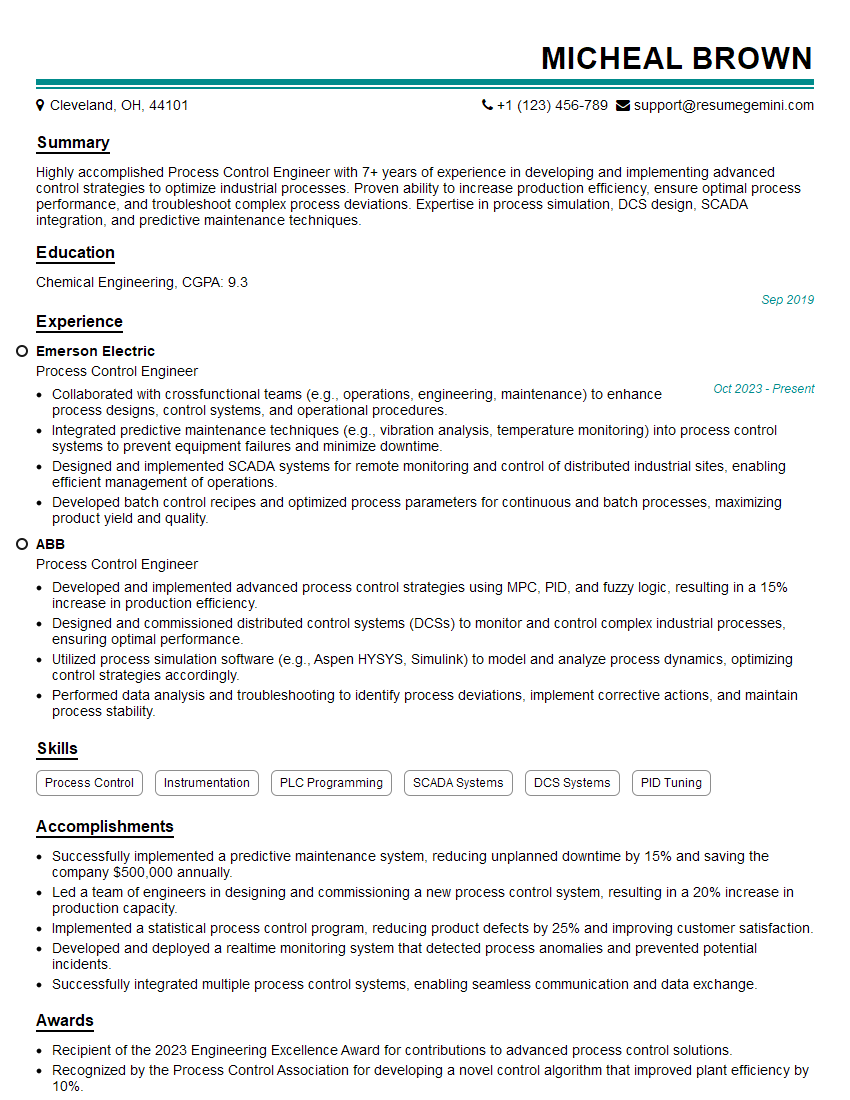
Process Control Engineer Resume Sample
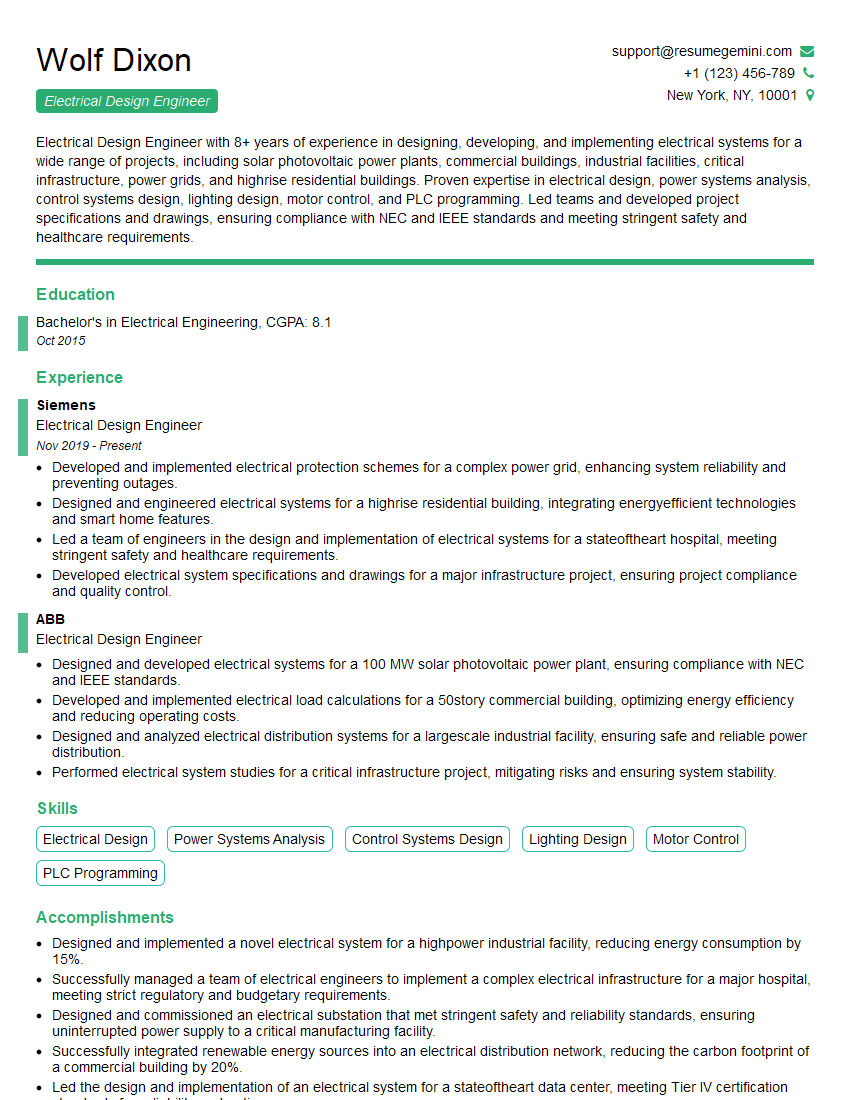
Electrical Design Engineer Resume Sample
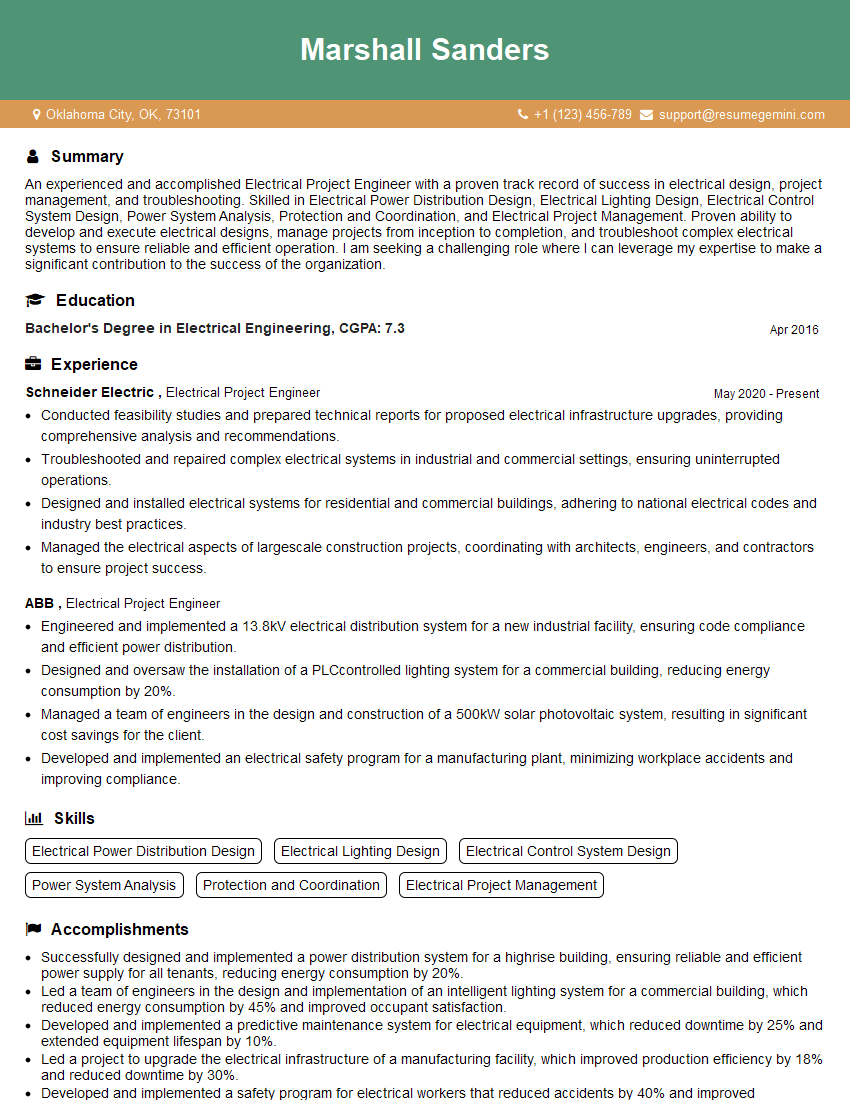
Electrical Project Engineer Resume Sample
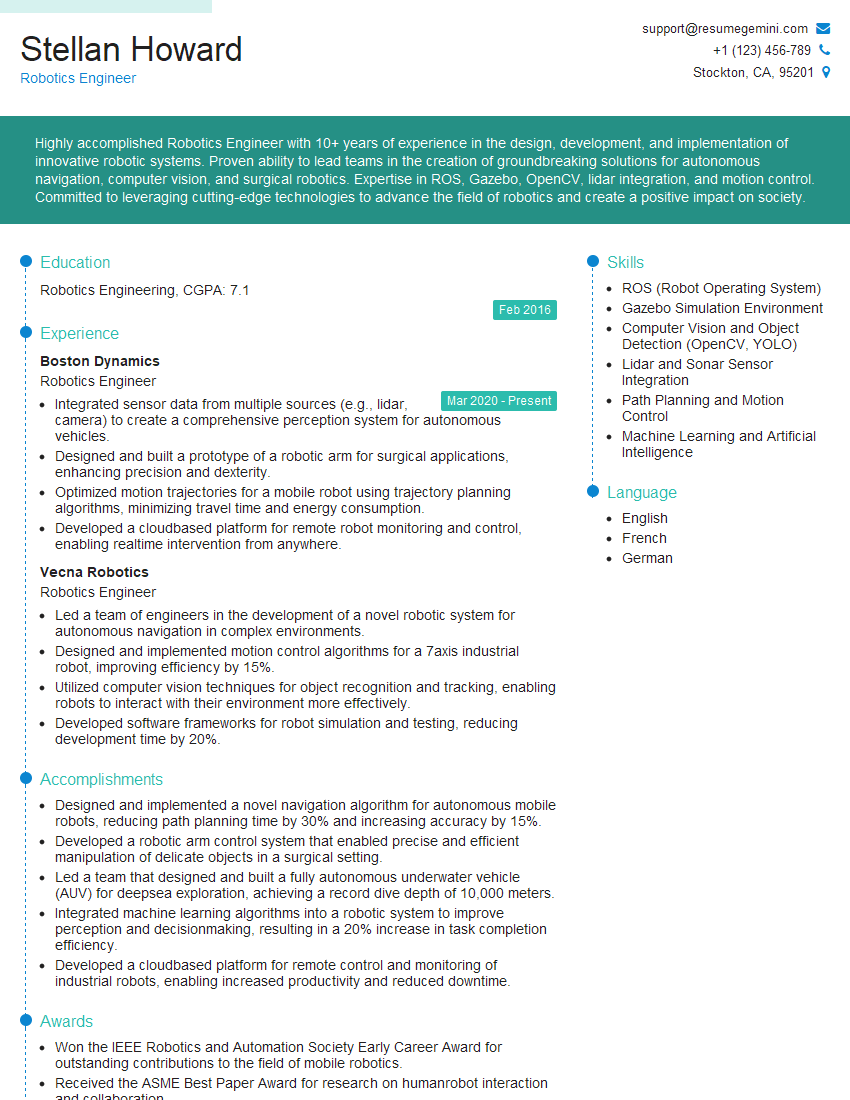
Robotics Engineer Resume Sample
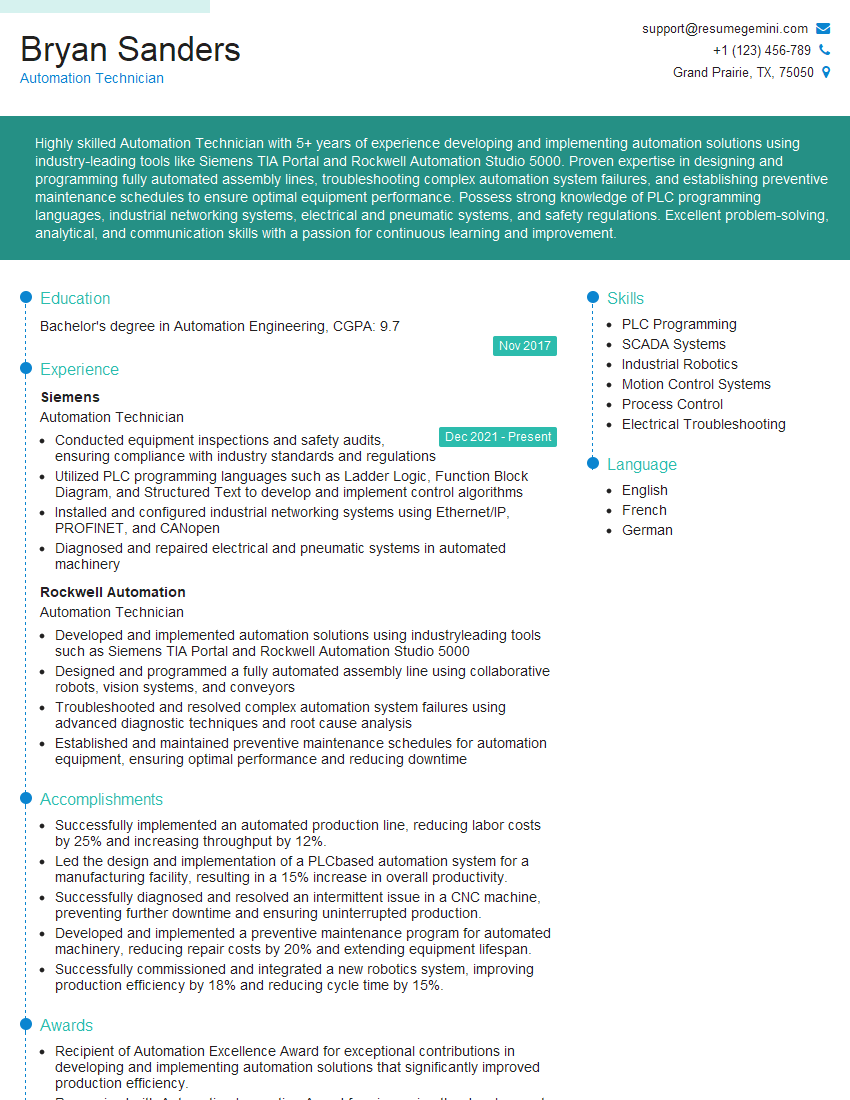
Automation Technician Resume Sample
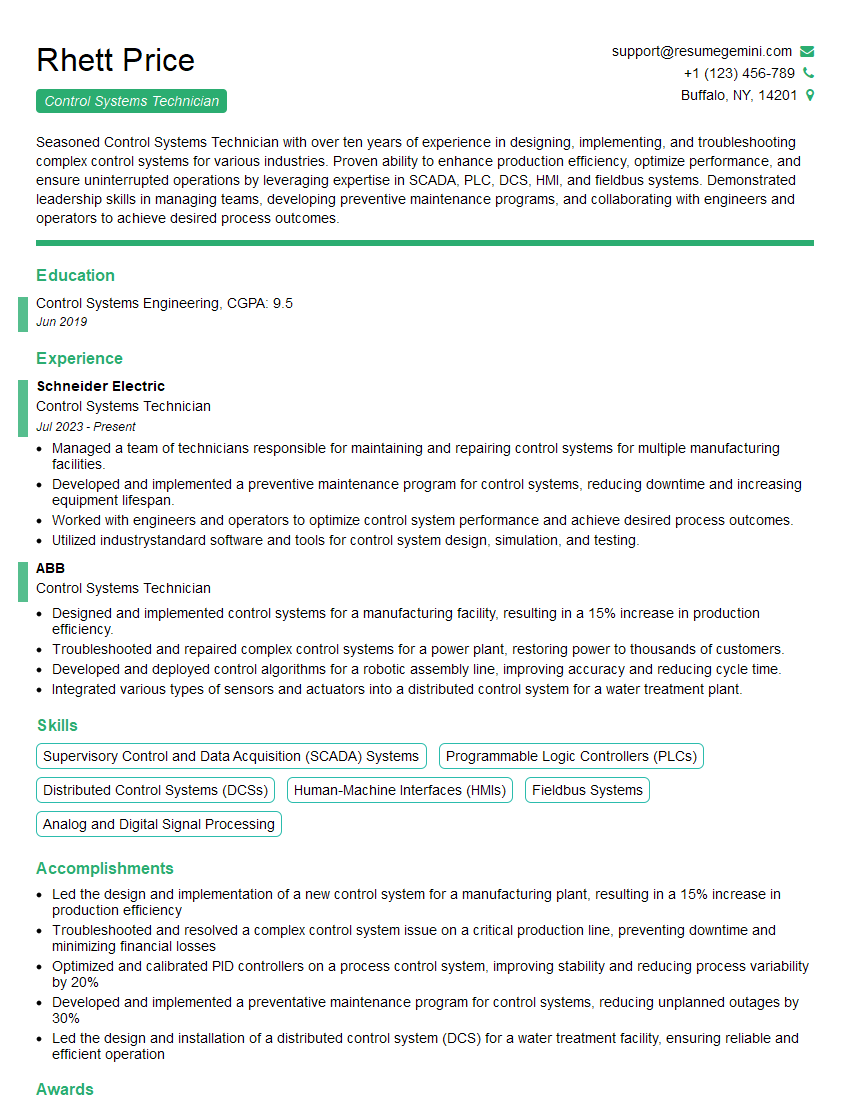
Control Systems Technician Resume Sample
Explore more articles
Users Rating of Our Blogs
Share Your Experience
We value your feedback! Please rate our content and share your thoughts (optional).
What Readers Say About Our Blog
Very informative content, great job.
good