Interviews are opportunities to demonstrate your expertise, and this guide is here to help you shine. Explore the essential Electrical Control System Repair interview questions that employers frequently ask, paired with strategies for crafting responses that set you apart from the competition.
Questions Asked in Electrical Control System Repair Interview
Q 1. Explain the function of a Programmable Logic Controller (PLC).
A Programmable Logic Controller (PLC) is essentially the brain of an automated system. Think of it as a highly specialized computer designed to control machinery and processes in industrial settings. It receives input signals from sensors monitoring various aspects of a system (like temperature, pressure, or position), processes this information according to a pre-programmed logic, and then outputs control signals to actuators (like motors, valves, or lights) to perform specific actions. This allows for precise and automated control of complex systems.
For example, imagine a bottling plant. PLCs monitor the filling level of bottles, the speed of the conveyor belt, and the capping mechanism. Based on these inputs and its programmed logic, the PLC ensures that bottles are filled to the correct level, capped properly, and moved along the conveyor at the optimal speed. Without a PLC, this would require a team of human operators and would be much less efficient and prone to errors.
Q 2. Describe different types of PLCs and their applications.
PLCs come in various sizes and capabilities, categorized by factors like processing power, I/O capacity (number of input and output points), and communication protocols. Some common types include:
- Compact PLCs: Smaller, simpler, and less expensive, ideal for smaller applications with fewer I/O points. Think of a small machine controlling a single process.
- Modular PLCs: These offer flexibility by allowing users to add or remove modules to match the specific requirements of an application. This is perfect for larger systems where needs may evolve.
- Rack-mounted PLCs: Used in larger industrial applications requiring a high number of I/O points and advanced communication capabilities. Imagine a whole factory production line.
- Safety PLCs: Designed to meet stringent safety standards and are commonly used in applications where safety is paramount, such as in robotics or hazardous environments.
The choice of PLC depends entirely on the specific application’s needs. A small-scale process might only require a compact PLC, while a large-scale operation like an entire manufacturing plant might demand a rack-mounted system with numerous modules and extensive networking capabilities.
Q 3. How do you troubleshoot a faulty PLC program?
Troubleshooting a faulty PLC program is a systematic process. It involves careful analysis and utilizes several tools and techniques. Here’s a step-by-step approach:
- Review the Program: Begin by carefully examining the ladder logic program for any obvious errors like incorrect logic, missing rungs, or incorrect addressing of I/O points. This often reveals simple mistakes.
- Check I/O: Verify that all input and output signals are correct. Use a multimeter to check sensor readings and confirm actuator responses. A faulty sensor or actuator can easily lead to incorrect program operation.
- Use Diagnostics Tools: Most PLCs have built-in diagnostic tools that can help identify issues. These tools can monitor program execution, display error messages, and provide information about the PLC’s status.
- Force Inputs/Outputs: Using the PLC’s programming software, you can temporarily force input signals to simulate specific conditions and observe the output. This allows you to isolate sections of the program and identify potential problem areas.
- Simulation: Utilize PLC simulation software to test changes to the program before deploying them to the actual hardware. This prevents accidental damage or downtime.
- Examine PLC Logs: Review the PLC’s event logs for any error messages or unusual activity that may offer clues to the problem.
Remember, a systematic approach is crucial. Start with the simple things, then work your way through more complex aspects of the system.
Q 4. What are the common causes of PLC communication failures?
PLC communication failures can stem from various issues, including:
- Cable Problems: Damaged, loose, or incorrectly wired cables are a frequent cause. Check for breaks, poor connections, or incorrect termination.
- Network Issues: In networked systems, problems like incorrect IP addresses, network congestion, or faulty network devices (switches, routers) can disrupt communication.
- Hardware Failures: Faulty communication interfaces (either on the PLC or the connected device) can prevent communication.
- Software Conflicts: Incorrectly configured communication settings in the PLC’s program or connected devices can lead to failure.
- EMC Interference: Electromagnetic interference can corrupt communication signals, particularly in noisy industrial environments. Shielding or filtering might be necessary.
Troubleshooting communication issues requires a combination of checking physical connections, verifying network configurations, and inspecting the PLC’s communication settings. A systematic approach is essential, ruling out simple issues first before investigating more complex problems.
Q 5. Explain the ladder logic programming language.
Ladder logic is a graphical programming language widely used for PLCs. It’s based on the visual representation of electrical relay logic circuits. Imagine a ladder, with two vertical rails representing power supply and ground. Horizontal rungs connecting the rails represent individual logic instructions. Each rung contains elements that represent inputs, outputs, and logic gates.
Example:
//Rung 1: If Input I:1 is ON, then Output O:1 is ON ---|---[I:1]---[O:1]---|--- //Rung 2: If Input I:2 is ON AND Input I:3 is ON, then Output O:2 is ON ---|---[I:2]---[I:3]---[O:2]---|--- In this simple example, I:1, I:2, and I:3 represent input signals from sensors, and O:1 and O:2 represent output signals to actuators. The brackets [] represent contacts (normally open or normally closed) or coils (outputs). The logic is easy to visualize and understand, making it suitable even for those with limited programming experience.
More complex programs involve numerous rungs, timers, counters, and mathematical functions, allowing for sophisticated automation control.
Q 6. Describe your experience with HMI (Human Machine Interface) programming and troubleshooting.
I have extensive experience with HMI (Human Machine Interface) programming and troubleshooting. HMIs provide a user-friendly interface for operators to interact with PLCs, monitoring the process and making adjustments. My experience encompasses designing and implementing HMIs using various software packages, including but not limited to, FactoryTalk View SE, WinCC, and RSView.
During troubleshooting, I utilize various techniques, including reviewing HMI screens for design flaws or inconsistencies, checking communication between the HMI and the PLC, and analyzing HMI logs for error messages. A faulty HMI can lead to operator errors or prevent proper monitoring of the process. For example, I once diagnosed a situation where an incorrect scaling setting in the HMI was causing incorrect display of pressure values, leading to operator confusion and a potential safety hazard.
My approach often combines understanding the underlying PLC logic with the HMI’s configuration to effectively identify and resolve issues. I ensure the HMI provides clear and concise information to operators, enhancing both efficiency and safety.
Q 7. How do you diagnose and repair faulty sensors and actuators?
Diagnosing and repairing faulty sensors and actuators involves a multi-step process:
- Visual Inspection: Start with a visual inspection, checking for any physical damage, loose connections, or obvious signs of wear and tear. A simple loose wire could easily be the problem.
- Testing with Multimeter: Use a multimeter to check the sensor’s output signal. Compare the readings to the specifications to determine if the sensor is within its operational range. For actuators, check for continuity and correct voltage levels.
- Calibration: If the sensor is within the correct range but provides inaccurate readings, it may need calibration. This procedure involves adjusting the sensor to provide accurate readings according to a known standard.
- Signal Tracing: Trace the signal path from the sensor or actuator to the PLC. Check for voltage drops, signal noise, or interruptions along the path. A broken wire in the middle of a long cable can be tricky to find.
- Replacement: If the sensor or actuator is faulty beyond repair, it needs replacement. Always use a replacement part with the correct specifications.
Thorough documentation of the testing process and findings is critical for efficient troubleshooting and future maintenance.
For instance, I once encountered a situation where a conveyor belt stopped unexpectedly. By systematically tracing the signal from the belt’s speed sensor to the PLC, I discovered a faulty connection at the sensor, which was easily repaired, avoiding significant downtime.
Q 8. What are the safety precautions you take when working with electrical control systems?
Safety is paramount when working with electrical control systems. My approach is always based on a layered safety system, starting with a thorough risk assessment. This involves identifying potential hazards like high voltage, arc flash, and moving machinery. I never work on live equipment unless absolutely necessary and always use appropriate personal protective equipment (PPE), including insulated gloves, safety glasses, and arc flash suits where mandated by the risk assessment.
Before commencing any work, I ensure the power is completely isolated and locked out/tagged out (LOTO). I verify the absence of voltage using a calibrated multimeter. I also work methodically, double-checking my work and ensuring all safety procedures are followed diligently. I regularly refresh my training on relevant safety standards like NFPA 70E. For instance, recently I was working on a conveyor system and followed a rigorous LOTO procedure before checking all points for voltage and then conducting the repairs. A careless mistake here could easily lead to severe injury or even fatality.
Q 9. Explain your experience with different types of motor control systems (e.g., VFDs).
I have extensive experience with various motor control systems, including Variable Frequency Drives (VFDs), soft starters, and traditional motor starters. My experience spans different manufacturers, including Siemens, Rockwell Automation, and ABB, and various applications like conveyor systems, pumps, and HVAC systems. VFDs are a particular area of expertise; I understand their operation, programming, and troubleshooting. I’ve worked with both scalar and vector control VFDs, understanding the differences in their performance and application. For example, I recently resolved a problem with a VFD controlling a large pump where the motor was overheating. Through systematic troubleshooting, which included checking the VFD’s parameters, motor windings and thermal protection, I identified the issue as incorrect V/f ratio settings, which were causing excessive current draw. Rectifying these settings resolved the issue instantly.
Q 10. How do you interpret electrical schematics and wiring diagrams?
Interpreting electrical schematics and wiring diagrams is fundamental to my work. I begin by understanding the symbols used – understanding the standard IEC or ANSI symbols is crucial. I then trace the flow of power and signals through the system, identifying the components and their interconnections. I’m proficient in using software like AutoCAD Electrical to view and analyze these diagrams. A systematic approach is key. I’ll often start with the main power source and trace it through to the loads, looking at the control logic along the way. For example, recently I was presented with a problematic schematic where the control of a series of valves was unusually complex. By carefully tracing the signal paths through the relays and PLCs, I discovered an unintended feedback loop causing erratic valve operation, which we then rectified.
Q 11. Describe your experience with troubleshooting AC and DC drives.
Troubleshooting AC and DC drives involves a systematic approach. I begin by identifying the symptoms, like motor failure to start, unusual noises, or error codes displayed on the drive. I then use diagnostic tools such as multimeters, oscilloscopes, and the drive’s own diagnostics to pinpoint the root cause. For example, a common problem with AC drives is overheating, which can be caused by issues such as incorrect parameter settings, overload conditions, or faulty components. When diagnosing DC drives, I check for voltage issues, brush wear, and armature problems. I have dealt with various issues, from minor parameter adjustments to replacing faulty IGBT modules in high-power AC drives or replacing brushes and commutators in DC drives. I find that a strong understanding of the drive’s operational principles is essential for effective troubleshooting. A recent example included tracing intermittent failures on a DC drive to a faulty connection in the control circuitry.
Q 12. What are the different types of industrial networks (e.g., Ethernet/IP, Profibus)?
Industrial networks are essential for communication between different parts of a control system. I’m familiar with various industrial network protocols, including Ethernet/IP, Profibus, Profinet, Modbus TCP/IP, and ControlNet. Ethernet/IP is a common choice for its flexibility and speed, often used in larger automation systems. Profibus is a robust protocol used in many process control environments. Understanding the strengths and limitations of each protocol is important for choosing the right solution for a specific application. For instance, I recently worked on a project that required integration of several PLCs and I/O modules. We chose Ethernet/IP for its ease of integration and high speed, allowing for efficient communication between different control elements within the system.
Q 13. Explain your experience with SCADA systems.
I have significant experience with SCADA (Supervisory Control and Data Acquisition) systems, typically used for monitoring and controlling industrial processes. This experience includes system configuration, troubleshooting, and operator training. My experience encompasses various SCADA platforms, including Wonderware, Rockwell Automation’s FactoryTalk, and Siemens WinCC. I understand the importance of data visualization and alarm management in ensuring efficient and safe operation. A recent project involved upgrading an older SCADA system, improving its performance and security. This involved migrating data to a new server, configuring remote access, and providing training for plant operators on the new system. This project highlighted the importance of understanding the entire system architecture and its relationship to the underlying control systems.
Q 14. How do you perform preventative maintenance on electrical control systems?
Preventative maintenance is crucial for extending the lifespan and reliability of electrical control systems. My approach is based on a structured program tailored to the specific system. This includes regular inspections, cleaning, and testing of components such as motors, drives, sensors, and relays. I document findings meticulously, ensuring traceability and compliance. I also regularly check for loose connections, worn insulation, and signs of overheating. The frequency of maintenance depends on factors like environmental conditions and operational intensity. For example, a high-usage machine in a dusty environment will require more frequent attention than a lightly used unit in a controlled environment. A well-maintained system avoids unexpected downtime and enhances safety. Preventive maintenance also includes updating firmware and software, ensuring optimal system performance and security.
Q 15. Describe your experience with relay logic.
Relay logic is the foundation of many industrial control systems. It uses electromechanical relays – essentially electrically operated switches – to control circuits based on logical conditions. Think of it as a series of interconnected switches, where one switch turning on or off can trigger a cascade of actions. I’ve worked extensively with ladder logic programming, which visually represents these relay circuits. For instance, I’ve used ladder logic to design and troubleshoot systems for conveyor belts where a sensor detecting an object triggers a relay to start a motor, and another sensor at the end stops it. My experience includes designing systems that handle multiple inputs and outputs, incorporating timers, counters, and sequence control, all using relay logic principles. I’m comfortable with both troubleshooting existing relay logic systems and designing new ones from scratch, taking into account safety and efficiency.
A simple example in ladder logic might look like this: If a Limit Switch (LS1) is closed (representing a true condition), then a motor (M1) is energized. This can be visually represented in a ladder diagram with LS1 on the left rail, a contact (closed) connected to M1, and M1 on the right rail.
//Simplified representation: // LS1 --[ ]-- M1 Career Expert Tips:
- Ace those interviews! Prepare effectively by reviewing the Top 50 Most Common Interview Questions on ResumeGemini.
- Navigate your job search with confidence! Explore a wide range of Career Tips on ResumeGemini. Learn about common challenges and recommendations to overcome them.
- Craft the perfect resume! Master the Art of Resume Writing with ResumeGemini’s guide. Showcase your unique qualifications and achievements effectively.
- Don’t miss out on holiday savings! Build your dream resume with ResumeGemini’s ATS optimized templates.
Q 16. Explain your understanding of safety interlocks and emergency stops.
Safety interlocks and emergency stops are paramount in any industrial setting to prevent accidents and injuries. Safety interlocks are mechanisms designed to prevent hazardous operations until all safety conditions are met. Imagine a machine with a protective door: an interlock prevents the machine from operating until the door is securely closed. If the door is opened during operation, the interlock immediately stops the machine. Emergency stops (E-stops) provide immediate shutdown in case of an emergency. They are typically red buttons easily accessible and prominently positioned. Pressing an E-stop immediately cuts power to all hazardous parts of the machine. My experience includes installing, troubleshooting, and testing both interlocks and E-stops, ensuring they function correctly according to safety standards. I understand the importance of using appropriate safety devices, and regularly inspect and maintain these safety systems. They’re often implemented using PLC (Programmable Logic Controller) programs and associated hardware, such as safety relays, which are designed to fail-safe and independent of the main control system.
Q 17. What software packages are you proficient in (e.g., RSLogix, TIA Portal)?
I’m proficient in several software packages commonly used in industrial automation. My expertise lies in RSLogix 5000 (for Allen-Bradley PLCs) and TIA Portal (for Siemens PLCs). I’m comfortable with programming, troubleshooting, and debugging ladder logic, structured text, and function block diagrams within these environments. I also have working knowledge of other HMI (Human Machine Interface) software to create user interfaces for control panels and supervisory systems. I regularly use these packages to design, implement, and maintain PLC programs in various industrial settings.
For example, I recently used RSLogix 5000 to program a complex robotic arm system which required precise control of multiple axes and sensors, incorporating safety interlocks into the program to prevent collisions and ensure safe operation.
Q 18. How do you handle high-voltage situations?
Handling high-voltage situations requires strict adherence to safety procedures. Before even approaching a high-voltage system, I always ensure that the power is completely isolated and locked out. I use appropriate personal protective equipment (PPE) including insulated gloves, safety glasses, and arc flash protection clothing, depending on the voltage. After lock-out/tag-out procedures, I use a voltage tester to verify the absence of voltage before starting any work. Even then, I treat the system with utmost caution, understanding the potential danger. My experience includes working with systems up to 480 volts, and I always prioritize safe work practices. Knowing the specific voltage and understanding the potential consequences are key to safe working. Thorough training and regular refresher courses ensure I’m up-to-date with the latest safety standards and best practices.
Q 19. Describe your experience with industrial networking protocols.
My experience includes working with several industrial networking protocols, crucial for connecting different components of a control system. I’m familiar with Ethernet/IP, Modbus TCP/IP, and Profibus. Understanding these protocols is vital for integrating PLCs, sensors, and other devices into a cohesive system. For example, I’ve used Ethernet/IP to integrate multiple Allen-Bradley PLCs and various I/O modules in a large manufacturing facility, allowing for real-time data exchange and centralized monitoring. Modbus TCP/IP has been used to integrate third-party devices, demonstrating my adaptability and the ability to work within different systems. I regularly troubleshoot network connectivity issues, identifying and resolving problems effectively.
Q 20. Explain your experience with motor control circuits.
Motor control circuits are a core part of my expertise. I’ve worked extensively with various types of motors, including AC induction motors, DC motors, and servo motors. I’m experienced with designing and troubleshooting circuits that include motor starters, overload relays, and safety devices like emergency stops. I understand different motor control techniques, including start/stop control, speed control using VFDs (Variable Frequency Drives), and more sophisticated methods for precise motion control. For example, I’ve worked on projects requiring precise control of conveyor belts using variable frequency drives to adjust speed based on production demands. I’m also familiar with different motor protection methods including thermal overload protection, short circuit protection, and ground fault protection.
Q 21. What is your experience with PID controllers?
PID (Proportional-Integral-Derivative) controllers are essential for precise process control. They regulate a process variable (like temperature or pressure) by continuously adjusting a control element. The P (proportional) component reacts to the current error, the I (integral) component accounts for past errors, and the D (derivative) component anticipates future errors. Tuning a PID controller is a critical skill, involving adjusting the P, I, and D gains to optimize performance and stability. My experience involves tuning PID controllers for various applications, such as temperature control in ovens or flow rate control in pipelines. I use various tuning methods like Ziegler-Nichols and understand the effects of different controller parameters on system stability and performance. Effective tuning is critical for minimizing overshoot, settling time, and maintaining a stable setpoint. I’m comfortable using PID control in both analog and digital control systems, ensuring efficient and reliable operation.
Q 22. How do you troubleshoot a system with intermittent faults?
Troubleshooting intermittent faults in electrical control systems requires a systematic and methodical approach. Unlike persistent faults, these problems appear and disappear unpredictably, making diagnosis challenging. The key is to carefully document observations, isolate the problem, and employ various diagnostic techniques.
- Detailed Observation and Logging: Begin by meticulously documenting when the fault occurs, what the system is doing at the time (e.g., specific operation sequence, environmental conditions, load), and what the symptoms are. A logbook or digital spreadsheet is crucial. This helps identify patterns.
- System Isolation: Try to isolate the problematic section of the control system. This might involve temporarily disconnecting sections to see if the fault persists. This process of elimination is fundamental.
- Signal Tracing: Use measurement tools like oscilloscopes, multimeters, and logic analyzers to trace signals through the system. Look for anomalies such as voltage drops, signal noise, or unexpected timing issues. Pay particular attention to connections and wiring harnesses.
- Environmental Factors: Consider environmental factors such as temperature fluctuations, humidity, or vibration. Intermittent problems often arise due to loose connections that are exacerbated by these conditions.
- Component Testing: If the problem is narrowed down to a specific component (sensor, actuator, etc.), perform individual component testing, either in-circuit or out-of-circuit, using appropriate testing equipment. Replacing a suspected component as a last resort.
Example: I once worked on a conveyor system where the motor would intermittently stop. By meticulously logging the incidents, I noticed the stops always occurred when the conveyor was heavily loaded and the ambient temperature was high. This pointed towards a faulty thermal overload switch, which was subsequently confirmed and replaced.
Q 23. Explain your experience working with different types of industrial sensors.
My experience encompasses a wide range of industrial sensors, including:
- Proximity Sensors: Inductive, capacitive, and photoelectric sensors for detecting the presence or absence of objects without physical contact. I’ve worked extensively with these in robotic automation and material handling systems. For example, I diagnosed a faulty inductive proximity sensor in a robotic arm assembly line that was causing positioning errors by carefully checking sensor output, coil resistance, and wiring continuity.
- Temperature Sensors: Thermocouples, RTDs (Resistance Temperature Detectors), and thermistors for accurate temperature measurement in various processes. I’ve used these in ovens, kilns, and process control applications. Experience includes troubleshooting issues arising from sensor drift or calibration problems.
- Pressure Sensors: Used in hydraulic and pneumatic systems, as well as fluid level monitoring. These sensors require careful consideration of pressure ranges and signal conditioning for proper functioning. I’ve worked with both analog and digital pressure sensors, including debugging situations where signal noise was interfering with readings.
- Flow Sensors: Used to measure the flow rate of liquids or gases. I’ve worked with ultrasonic, turbine, and variable area flowmeters, troubleshooting issues related to clogging, sensor fouling, and signal attenuation.
- Level Sensors: Ultrasonic, capacitive, or float-based sensors for detecting liquid levels in tanks and reservoirs. These are vital for safety and process control. I have extensive experience in identifying and rectifying false readings, often caused by issues with the sensor’s mounting or the target material’s properties.
Q 24. How familiar are you with different types of electrical enclosures and their purpose?
I’m familiar with various electrical enclosures, each designed for specific purposes and environmental protection:
- NEMA Enclosures: National Electrical Manufacturers Association (NEMA) ratings define the level of protection against environmental factors like dust, moisture, and impact. NEMA 1 is for indoor use, while NEMA 4X offers protection against water jets and corrosion, essential for outdoor or harsh environments.
- IP Ratings: International Protection (IP) ratings provide similar protection classifications, specifying the level of ingress protection against solids (dust) and liquids (water). For example, an IP67 rating indicates complete protection against dust and temporary immersion in water.
- Explosion-Proof Enclosures: Used in hazardous locations (classified areas) where flammable gases or dusts are present. These enclosures are designed to prevent ignition of such materials and are essential for safety.
- General-Purpose Enclosures: Offer basic protection and are suitable for indoor use in less demanding applications.
The choice of enclosure depends heavily on the application’s environment and safety requirements. For example, a motor control center in a chemical plant would require an explosion-proof enclosure for safety, whereas an indoor control panel might only need a basic NEMA 1 enclosure.
Q 25. What is your approach to documentation and record-keeping for maintenance tasks?
My approach to documentation and record-keeping prioritizes clarity, accuracy, and traceability. I use a combination of digital and physical methods:
- Digital Maintenance Management System (CMMS): I use a CMMS software to track maintenance activities, including work orders, parts used, labor hours, and associated costs. This allows for efficient scheduling, reporting, and analysis.
- Detailed Work Orders: Each work order includes a complete description of the task, troubleshooting steps, parts replaced, and verification steps to ensure proper functioning. Photos or videos documenting before-and-after conditions are often included.
- Schematic Diagrams and Wiring Drawings: These are crucial for understanding the system’s layout and tracing signals during troubleshooting. Any modifications or changes to the system are meticulously documented on the diagrams.
- Logbooks/Spreadsheets: For logging observations during troubleshooting, especially for intermittent faults. This aids in identifying patterns and potential causes.
Accurate record-keeping is not just about compliance, but also about preventing future issues. A well-maintained record simplifies future troubleshooting and helps optimize maintenance schedules.
Q 26. Describe a time you had to troubleshoot a complex electrical control system problem.
I once faced a complex problem with a large industrial oven’s control system. The oven was failing to reach the set temperature consistently. Initial checks revealed no obvious problems with heating elements or thermocouples. The problem was intermittent, making diagnosis particularly challenging.
I began by meticulously logging the oven’s temperature profile over several cycles. This revealed a pattern: the temperature would fluctuate erratically only when the cooling fan was operating. Using an oscilloscope, I discovered that the fan’s motor controller was introducing significant noise onto the temperature sensor’s signal line. The noise was sporadic, accounting for the intermittent nature of the fault.
The solution involved implementing a proper filtering system for the temperature sensor’s signal, isolating it from the noise generated by the fan motor controller. This involved adding a shielded cable and a low-pass filter circuit to the sensor’s wiring. After implementing these changes, the oven functioned flawlessly. This experience highlighted the importance of a systematic approach, attention to detail, and the use of appropriate diagnostic tools.
Q 27. How do you stay up-to-date with the latest technologies in electrical control systems?
Staying current in the dynamic field of electrical control systems requires a multifaceted approach:
- Professional Development Courses and Workshops: I regularly attend industry conferences and workshops focused on new technologies and best practices. This allows me to learn about emerging trends and advanced techniques from industry experts.
- Industry Publications and Journals: I subscribe to relevant industry journals and publications to stay informed about the latest research and advancements. This allows me to expand my knowledge of new components, software, and system architectures.
- Online Resources and Manufacturer Websites: Utilizing online resources, including manufacturer websites and online training portals, provides access to the most up-to-date documentation and technical support for specific equipment.
- Networking with Peers: Engaging with other professionals in the field through online forums, conferences, and local chapters provides opportunities for knowledge exchange and collaboration.
Continuous learning is crucial in this rapidly evolving field. It’s essential to adapt to new technologies and best practices to remain competitive and provide the best possible service.
Q 28. Explain your understanding of grounding and bonding practices in industrial settings.
Grounding and bonding are crucial for safety and proper operation of electrical control systems in industrial settings. They provide a path for fault currents to flow safely to earth, preventing electrical shock and equipment damage.
- Grounding: This involves connecting non-current-carrying metal parts of the equipment to the earth. This path provides a low-resistance route for fault currents, minimizing the risk of electric shock. Proper grounding requires low-resistance grounding conductors and electrodes.
- Bonding: This involves connecting metal enclosures and other metallic parts of the system together to equalize their electrical potential. This prevents voltage differences that could lead to dangerous electrical arcs or shocks. Bonding is particularly important in hazardous locations.
- Importance in Industrial Settings: In industrial settings, grounding and bonding are critical for safety and equipment protection. Failure to adhere to proper grounding and bonding practices can result in serious electrical hazards, equipment damage, and even fires.
- Examples: Proper grounding of motor frames, control panels, and other metallic components is essential. Bonding of different parts of the system, such as enclosures and conduits, is equally important to minimize the risk of voltage differences.
Understanding relevant codes and standards (e.g., NFPA 70, the National Electrical Code) is vital to ensure compliance and safety. Regular inspection and testing of grounding and bonding systems are necessary to maintain their effectiveness.
Key Topics to Learn for Electrical Control System Repair Interview
- Fundamentals of Electrical Circuits: Understanding Ohm’s Law, Kirchhoff’s Laws, and circuit analysis techniques is crucial for troubleshooting and repair.
- PLC Programming and Troubleshooting: Gain a strong grasp of ladder logic, programming languages (like Allen-Bradley or Siemens), and effective debugging methods. Practical experience simulating PLC programs is highly valuable.
- Motor Control Systems: Become familiar with different motor types (AC, DC, servo), their control mechanisms (VFDs, starters), and common troubleshooting scenarios related to motor malfunctions.
- Industrial Sensors and Transducers: Understand the operation and application of various sensors (proximity, pressure, temperature, level) and how they interface with control systems. Be prepared to discuss signal conditioning and calibration.
- Safety Regulations and Procedures: Demonstrate knowledge of relevant safety standards (e.g., NEC, OSHA) and safe work practices within industrial environments. Highlight your experience with lockout/tagout procedures.
- Troubleshooting Techniques: Practice systematic approaches to fault diagnosis, including the use of diagnostic tools (multimeters, oscilloscopes, etc.). Be ready to discuss your problem-solving methodologies.
- Electrical Control System Components: Develop a strong understanding of components such as relays, contactors, circuit breakers, fuses, and timers, and their roles within a control system.
- Preventive Maintenance: Discuss your experience with routine inspections, preventative maintenance schedules, and the importance of maintaining system reliability and preventing costly breakdowns.
Next Steps
Mastering Electrical Control System Repair opens doors to a rewarding and in-demand career with excellent growth potential. As you prepare for interviews, creating a strong, ATS-friendly resume is key to maximizing your job prospects. ResumeGemini is a trusted resource that can help you craft a professional and impactful resume tailored to your skills and experience. We provide examples of resumes specifically designed for Electrical Control System Repair professionals to help you get started. Take the next step in advancing your career – build a resume that showcases your expertise and lands you the interview!

Automation Engineer Resume Sample
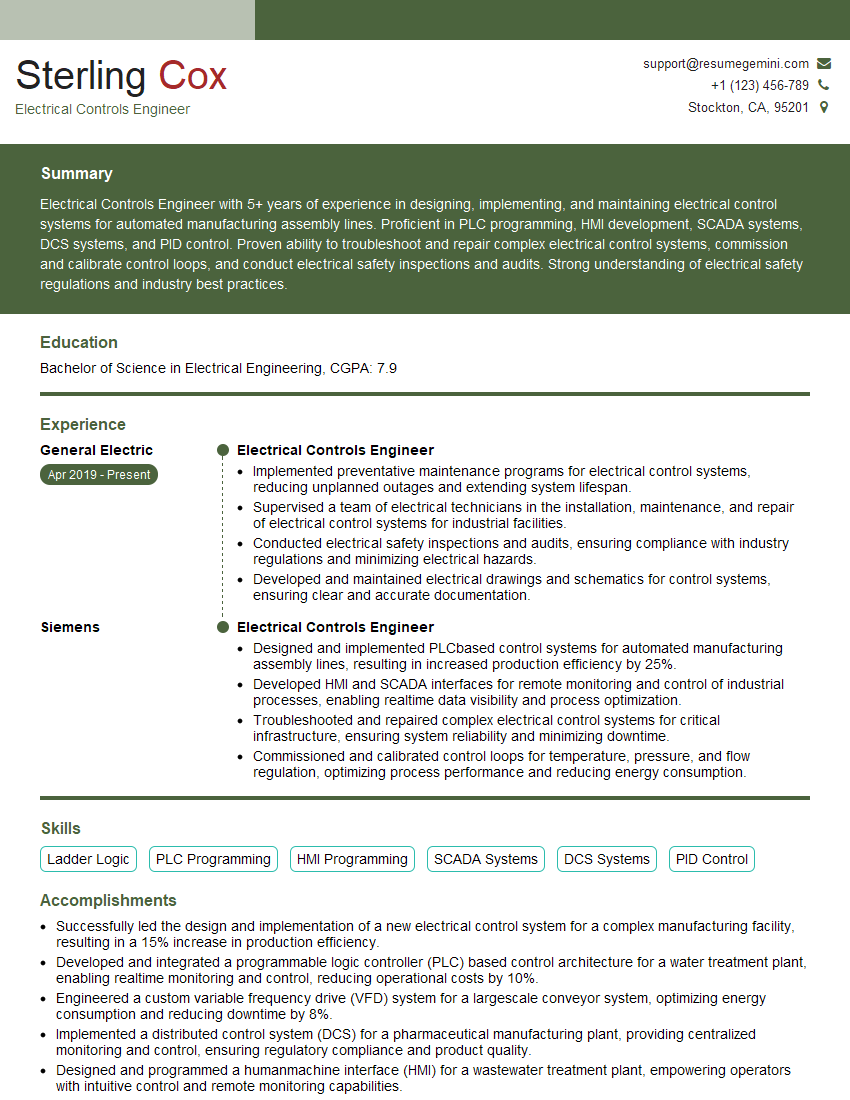
Electrical Controls Engineer Resume Sample
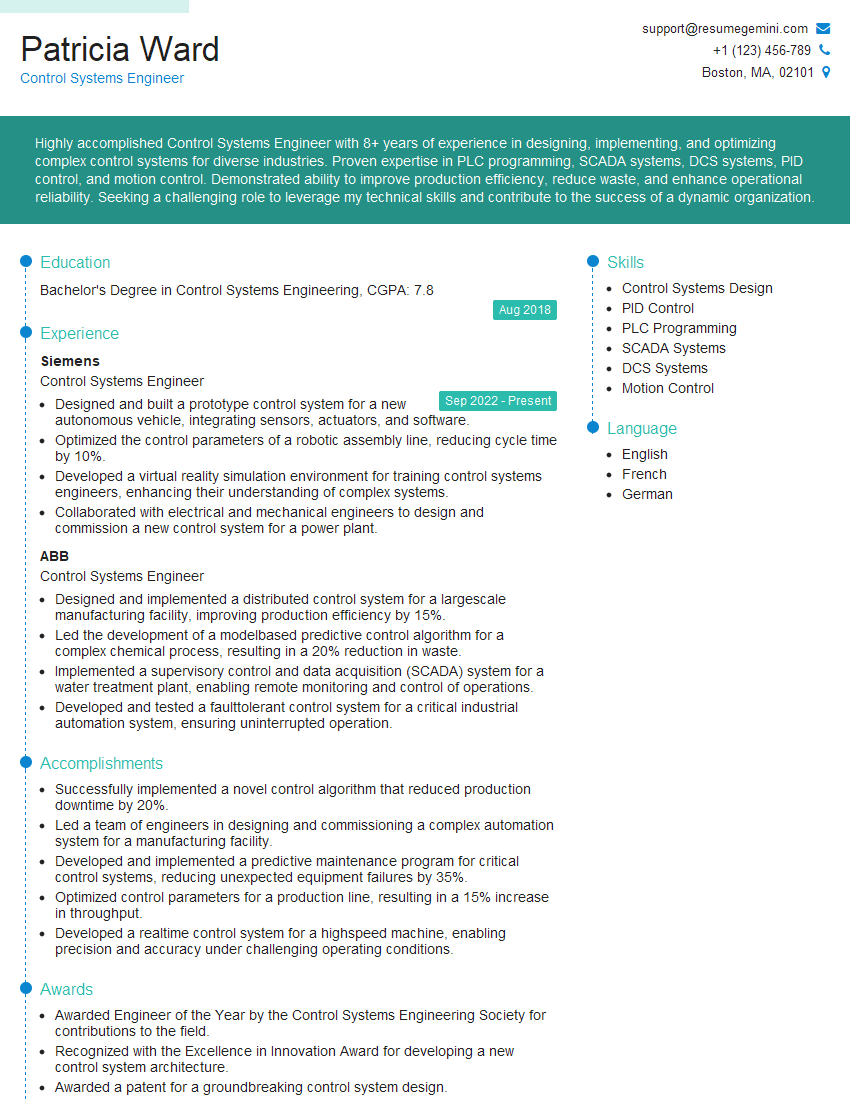
Control Systems Engineer Resume Sample
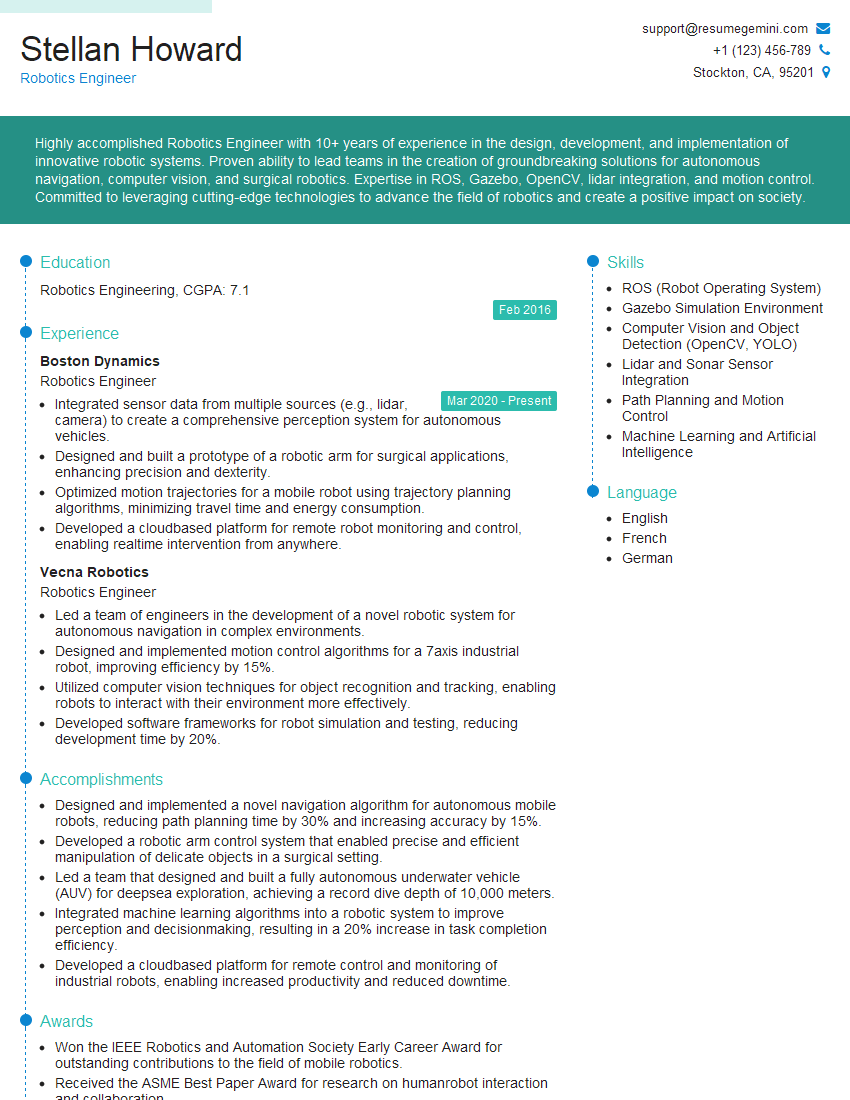
Robotics Engineer Resume Sample
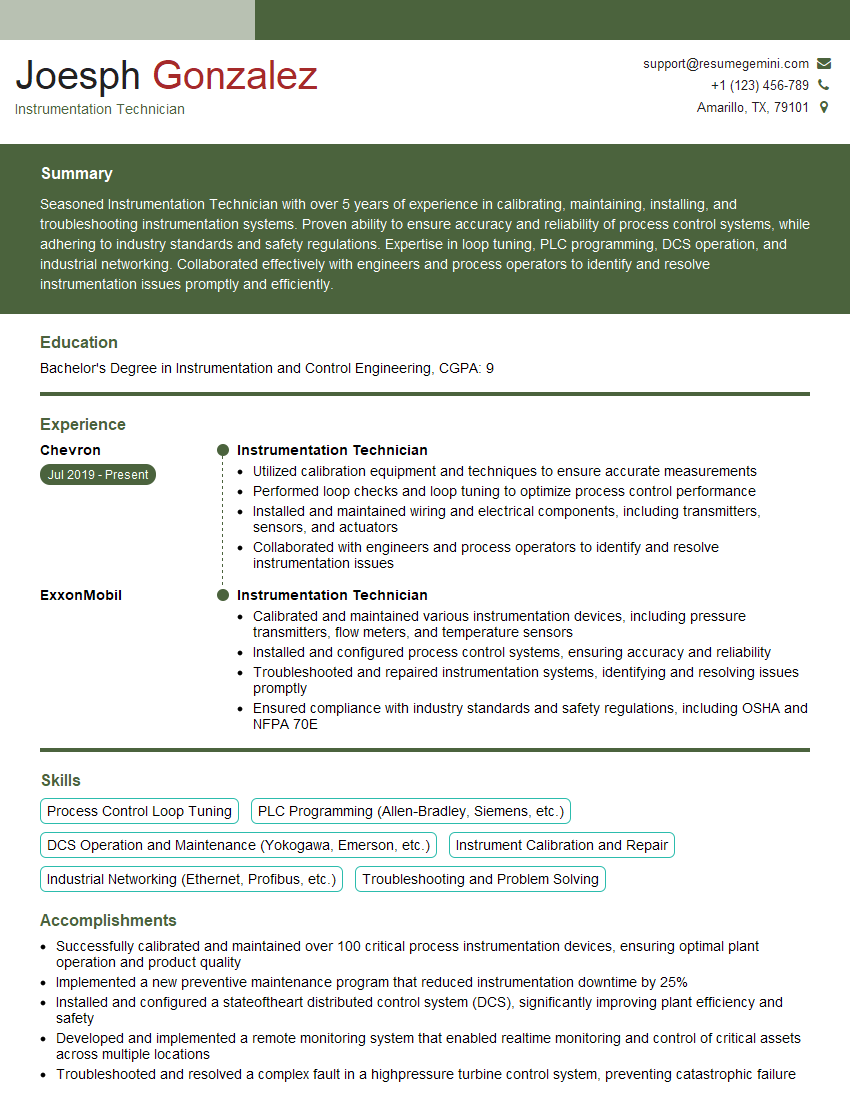
Instrumentation Technician Resume Sample
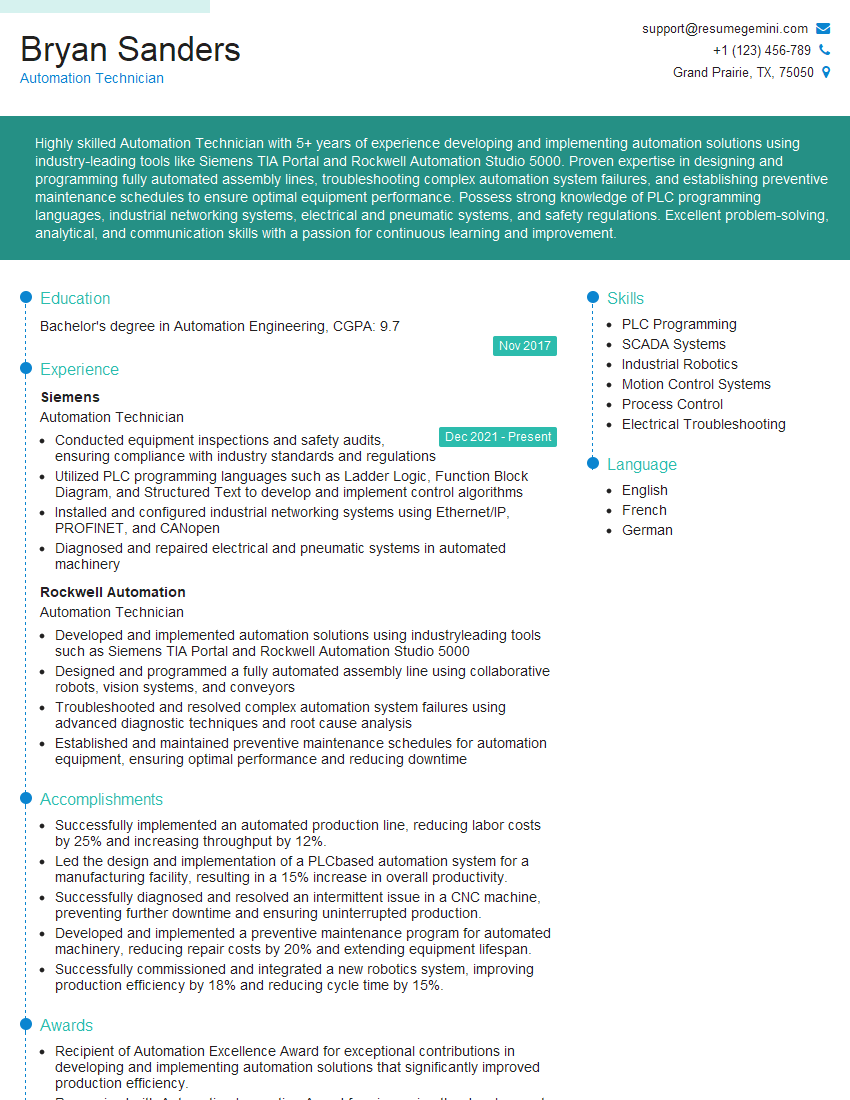
Automation Technician Resume Sample
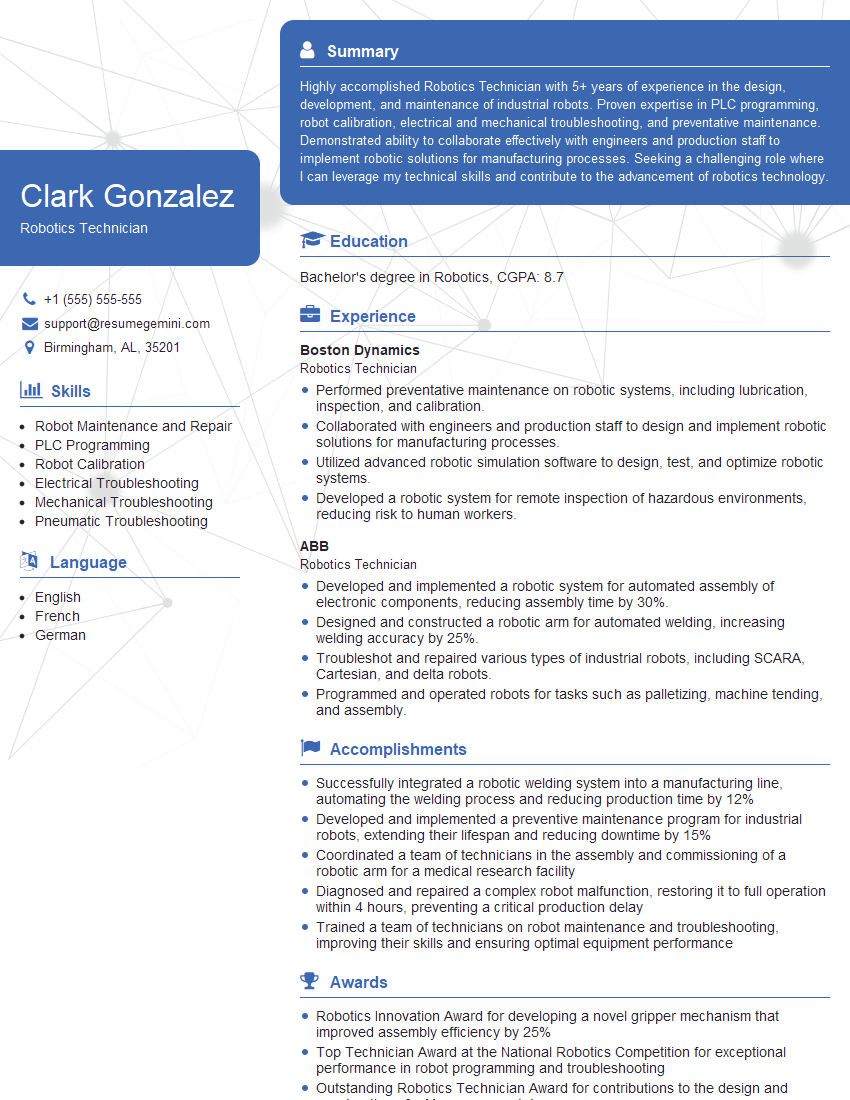
Robotics Technician Resume Sample
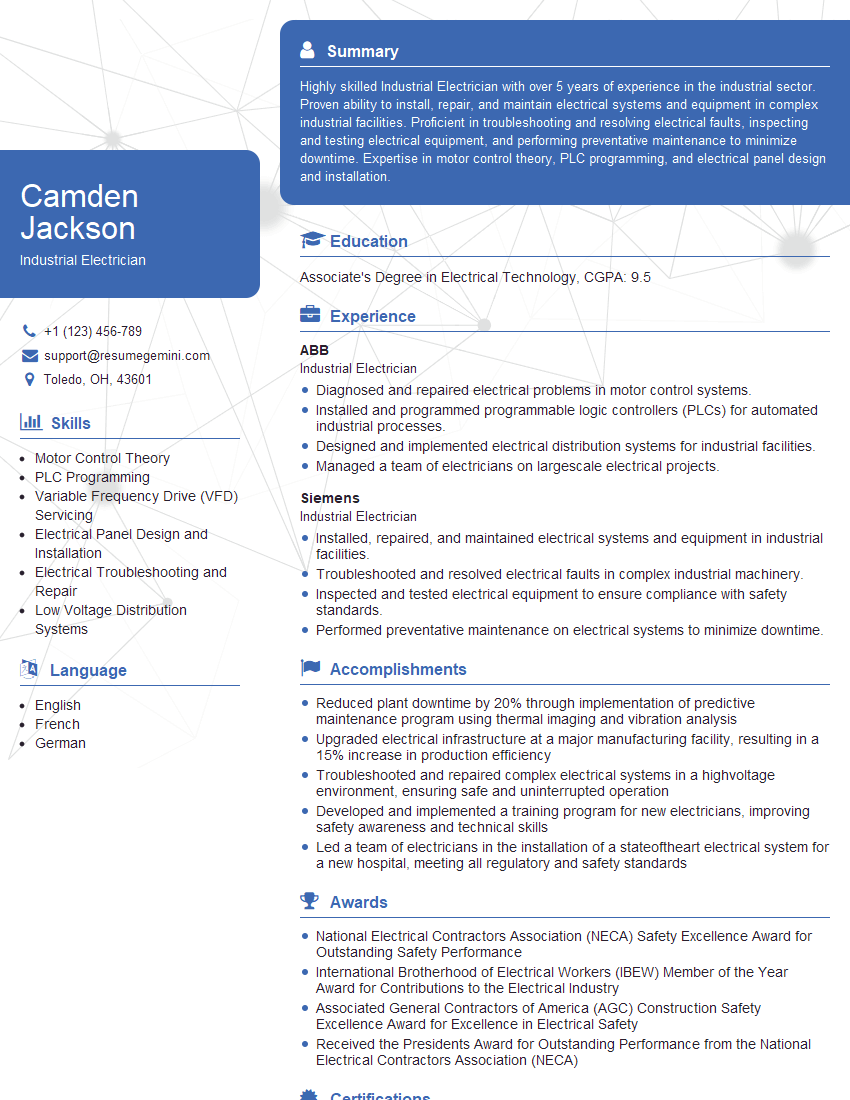
Industrial Electrician Resume Sample

Electrical Maintenance Technician Resume Sample
Explore more articles
Users Rating of Our Blogs
Share Your Experience
We value your feedback! Please rate our content and share your thoughts (optional).
What Readers Say About Our Blog
Very informative content, great job.
good