The thought of an interview can be nerve-wracking, but the right preparation can make all the difference. Explore this comprehensive guide to Electrical Maintenance Best Practices interview questions and gain the confidence you need to showcase your abilities and secure the role.
Questions Asked in Electrical Maintenance Best Practices Interview
Q 1. Describe your experience with preventative maintenance procedures for electrical systems.
Preventative maintenance (PM) for electrical systems is crucial for preventing costly breakdowns and ensuring operational safety. My experience involves developing and implementing comprehensive PM schedules based on equipment age, usage, and manufacturer recommendations. This includes regular inspections, testing, and cleaning of various components.
- Visual Inspections: Checking for loose connections, signs of overheating (discoloration, burnt smells), corrosion, and physical damage to wiring, conduits, and equipment.
- Testing: Utilizing instruments like multimeters, insulation testers, and thermal imagers to assess voltage, current, resistance, insulation integrity, and temperature variations.
- Cleaning: Removing dust, debris, and contaminants from electrical panels, switchgear, and other equipment to improve heat dissipation and prevent arcing.
- Lubrication: Lubricating moving parts of motors and other electromechanical devices to reduce friction and wear.
For example, in a previous role, I implemented a PM program for a large manufacturing facility. This resulted in a 30% reduction in electrical-related downtime and a significant decrease in the need for emergency repairs. The program involved a detailed schedule with specific tasks, assigned personnel, and a record-keeping system to track all maintenance activities. This approach allows for early detection of potential problems, preventing major failures before they impact operations.
Q 2. Explain the importance of lockout/tagout procedures in electrical maintenance.
Lockout/Tagout (LOTO) procedures are paramount for electrical safety, preventing accidental energization of equipment during maintenance. Think of it as ensuring the ‘power is truly off’ before anyone works on it. The process involves isolating the power source, applying a lockout device (like a padlock) to prevent accidental re-energization, and attaching a tag to clearly indicate who has the lockout and why. This prevents electrical shocks, burns, and even fatalities.
My experience includes training personnel on proper LOTO procedures, conducting regular audits to ensure compliance, and actively participating in LOTO processes myself. For instance, I’ve had to troubleshoot issues where employees didn’t follow procedures rigorously, nearly resulting in serious accidents. One such event highlighted the importance of documenting each step of the LOTO process. The documentation ensured that every single step of the procedure was meticulously followed and avoided the chance of an accident. The process included identifying the energy source, verifying the energy isolation, applying the lock and tag, verifying the absence of energy, and finally, removing the lock and tag after the completion of the work.
Q 3. How do you troubleshoot electrical faults in complex industrial machinery?
Troubleshooting electrical faults in complex machinery requires a systematic and methodical approach. I typically start with a thorough visual inspection, looking for obvious signs of damage or malfunction. Then, I use a combination of diagnostic tools and techniques, like:
- Multimeters: Measuring voltage, current, and resistance to identify circuit breaks, short circuits, and other anomalies.
- Logic Analyzers: Investigating digital signals and control systems to pinpoint faults within programmable logic controllers (PLCs) or other control systems.
- Thermal Imagers: Detecting hotspots indicating excessive current flow or insulation breakdown.
- Motor Current Analyzers: Identifying imbalances or high currents in motors which may indicate bearing wear, rotor issues, or other problems.
I always follow a flowchart for troubleshooting. Start with the obvious, then move to more complex issues. It helps to document findings and replace or repair faulty components with the exact equivalent and document everything. Imagine a complex robotics system that failed. I would start by checking the power supply, then the control circuit, moving to individual motors and sensors to identify the fault source systematically. My approach always prioritized safety and documented every step, preventing later misunderstandings.
Q 4. What are the common causes of motor failures and how do you diagnose them?
Motor failures are common in industrial settings. Causes include:
- Bearing Failure: Excessive wear, lubrication issues, contamination, or misalignment lead to noise, vibrations, and ultimately failure.
- Winding Faults: Insulation breakdown due to overheating, moisture, or mechanical damage causes short circuits or open circuits.
- Rotor Problems: Bent shafts, rotor imbalance, or broken rotor bars cause vibrations, noise, and eventual failure.
- Overloading: Exceeding the motor’s rated capacity leads to overheating and premature failure.
Diagnosis involves using a combination of visual inspection, motor current analysis, vibration analysis, and insulation testing. For example, a motor making excessive noise might indicate bearing failure, verified through vibration analysis and manual checks. High motor current without a corresponding increase in load may indicate a winding fault which can be confirmed through insulation resistance testing.
Q 5. Describe your experience with different types of electrical testing equipment.
My experience includes extensive use of a variety of electrical testing equipment including:
- Multimeters: Essential for measuring voltage, current, and resistance; crucial for basic circuit analysis.
- Clamp Meters: Measuring current without breaking the circuit, useful for measuring motor currents.
- Insulation Testers (Meggers): Measuring the insulation resistance of cables and windings, identifying insulation breakdown.
- Thermal Imagers: Detecting heat signatures to identify overheating components before major failures.
- Power Quality Analyzers: Identifying voltage sags, surges, and harmonics that can damage equipment.
- Loop Testers: Testing ground fault circuit interrupters (GFCIs) and other protective devices.
I’m proficient in using these instruments to diagnose a range of electrical problems, and I understand the limitations of each device and always follow manufacturer safety instructions.
Q 6. What safety measures do you follow when working with high-voltage equipment?
Safety is my utmost priority when working with high-voltage equipment. I always adhere to strict safety protocols, including:
- LOTO Procedures: Absolutely essential to prevent accidental energization.
- Personal Protective Equipment (PPE): Using appropriate PPE such as insulated gloves, safety glasses, arc flash suits, and safety footwear.
- Proper Training and Certification: Ensuring I have the necessary qualifications and training to handle high-voltage systems.
- Working with a Partner: Never working alone on high-voltage tasks – always have a qualified colleague present.
- Safety Briefing and Risk Assessment: Before starting any job, a detailed risk assessment and safety briefing is performed. This may include checking the electrical system drawings and reviewing the LOTO procedures.
I’ve always been very diligent about following established safety rules, viewing safety not just as a guideline but as a fundamental principle. Safety isn’t something I take lightly.
Q 7. Explain your understanding of NEC (National Electrical Code) regulations.
The National Electrical Code (NEC) is a cornerstone of electrical safety and design. My understanding encompasses its key provisions on wiring methods, overcurrent protection, grounding, bonding, and arc flash hazard analysis. I’m familiar with the requirements for various installations and applications, including industrial, commercial, and residential settings. I utilize the NEC as a guideline and reference document when designing and inspecting electrical systems. For instance, I know the specific NEC requirements for grounding and bonding systems to ensure personnel and equipment safety, or the requirements for arc flash hazard analysis to protect workers from the dangers of electrical arcs.
Compliance with the NEC is non-negotiable, and I always strive to design and maintain systems that adhere strictly to its regulations to minimize risk and prevent potentially disastrous outcomes.
Q 8. How do you interpret electrical schematics and wiring diagrams?
Interpreting electrical schematics and wiring diagrams is fundamental to electrical maintenance. Think of them as blueprints for the electrical system. Schematics use symbols to represent components (motors, switches, relays) and lines to show connections, illustrating the logical flow of electricity. Wiring diagrams, on the other hand, provide a more detailed, physical representation of how components are wired together, including wire sizes and colors.
My approach involves a systematic process: First, I identify the main power source and trace the flow of electricity through the system, using the schematic as a guide. I pay close attention to component symbols – understanding what each one represents (e.g., a coil symbol for a relay, a circle with a cross for a fuse) is crucial. Next, I correlate the schematic to the actual wiring diagram. This helps me to physically locate components and understand their interconnections. I often use a highlighter to mark paths of interest on both documents. For complex systems, I might break down the schematic into smaller, manageable sections to avoid getting overwhelmed. For instance, understanding the control circuit for a motor separate from the power circuit enhances comprehension. Finally, I always verify my interpretations by cross-referencing documentation and performing on-site checks to validate the accuracy of the diagrams.
For example, if I’m troubleshooting a faulty motor, I’d first consult the schematic to identify the control circuit and the power supply. Then, I’d use the wiring diagram to physically trace the wires, looking for loose connections, broken wires, or other issues.
Q 9. Describe your experience with PLC programming and troubleshooting.
I have extensive experience with PLC (Programmable Logic Controller) programming and troubleshooting, primarily using Allen-Bradley and Siemens PLCs. My experience ranges from simple on/off control systems to more complex systems involving motion control, data acquisition, and HMI (Human Machine Interface) integration. I’m proficient in ladder logic, structured text, and function block programming languages.
Troubleshooting PLCs involves a systematic approach. I start by reviewing alarm logs and historical data to identify potential causes. Then, I use diagnostic tools such as the PLC’s built-in diagnostics and programming software to examine program execution, input/output statuses, and communication links. I’m adept at using logic analyzers and oscilloscopes to isolate problems in the field.
For example, I once troubleshot a production line where a PLC was causing a bottle-filling machine to malfunction. By reviewing the PLC program and monitoring the I/O signals, I identified a timing error in the program that was causing the machine to mis-time its filling operations. The solution was a simple code modification, which fixed the production issue.
Example Ladder Logic (Illustrative): // Check for sensor input and activate output IF Sensor_Input THEN Output_Activate := TRUE; ELSE Output_Activate := FALSE; END_IF;Q 10. What is your experience with different types of electrical motors (AC, DC, Servo)?
My experience encompasses various types of electrical motors, including AC induction motors (single-phase and three-phase), DC motors (brushless and brushed), and servo motors. Each motor type has its own unique characteristics and applications.
AC induction motors are workhorses in industrial settings, known for their robustness and simplicity. I’m experienced in troubleshooting common problems like bearing wear, winding faults, and problems with the starting capacitor. DC motors, especially brushless DC motors, offer precise speed control and are used in applications requiring accurate positioning. I’ve worked with both types, understanding their speed control mechanisms. Finally, servo motors excel in precision motion control applications. I have experience in commissioning and maintaining servo systems, often incorporating motion controllers and feedback mechanisms.
For instance, in a recent project, I diagnosed a problem with a three-phase AC motor driving a conveyor belt. The motor was overheating, and I used a motor current analyzer and vibration analysis equipment to determine the cause was an imbalance in the motor windings, necessitating repair or replacement.
Q 11. How do you maintain and troubleshoot electrical control panels?
Maintaining and troubleshooting electrical control panels is a critical aspect of my work. This involves regular inspections, preventative maintenance, and reactive troubleshooting. My approach involves a multi-step process.
Preventive Maintenance: This includes checking for loose connections, inspecting fuses and circuit breakers, cleaning terminals, and verifying proper grounding. I also perform thermal imaging scans to detect potential overheating issues before they escalate into failures. Regular tightening of screws and visual inspection can significantly reduce breakdowns. I also document maintenance actions and create a schedule based on the operating conditions of the equipment.
Troubleshooting: This often begins with examining the control panel’s status indicators and alarm messages. Then I may use a multimeter to test voltages, currents, and resistances. Logic analyzers can be employed to trace signal paths and pinpoint problems within the control logic.
For example, I recently worked on a control panel that was experiencing intermittent shutdowns. By systematically checking all connections, I discovered a corroded terminal on a power supply causing intermittent interruptions. After cleaning and reconnecting the terminal, the problem was resolved.
Q 12. Explain your experience with electrical power distribution systems.
My experience with electrical power distribution systems encompasses both low-voltage and high-voltage systems, from design review to maintenance and troubleshooting. I understand the importance of safety and compliance with relevant codes and standards. This includes working knowledge of power factor correction, harmonic mitigation, and load balancing.
I am familiar with different types of power distribution equipment, including switchgear, transformers, circuit breakers, and protective relays. I have experience troubleshooting faults in power distribution systems using various testing equipment, such as insulation testers, clamp meters, and power quality analyzers. I have experience with both 480V and 208V systems commonly found in industrial settings, along with understanding the design aspects of proper grounding and bonding within a power distribution network. This includes preventative maintenance like inspecting connections for corrosion and ensuring the proper operation of protective devices.
For instance, I was once involved in troubleshooting a power outage at a manufacturing facility. Through systematic testing and analysis, I identified a faulty circuit breaker causing the problem. Its quick replacement restored power, minimizing downtime.
Q 13. What is your experience with different types of transformers?
My experience includes working with various transformer types, including power transformers, distribution transformers, isolation transformers, and autotransformers. Each type has specific applications and characteristics.
Power transformers are used to step up or step down voltage levels in high-power applications like substations. Distribution transformers serve as the interface between high-voltage transmission lines and lower-voltage distribution networks. Isolation transformers provide electrical isolation between circuits, preventing ground loops and improving safety. Autotransformers provide a variable voltage output by using a single winding. Understanding the principles of transformer operation, including turns ratio, impedance, and efficiency, is critical in maintenance and troubleshooting.
Troubleshooting transformers involves checking for insulation faults using insulation resistance testers, measuring winding resistance, and inspecting oil levels (for oil-filled transformers). I have experience interpreting transformer test reports and determining the health of transformers. For example, I’ve diagnosed a faulty distribution transformer based on excessive winding resistance and high levels of dissolved gas in the oil, indicating potential internal faults that required its replacement.
Q 14. How do you ensure the safety of yourself and others during electrical maintenance work?
Safety is paramount in electrical maintenance. My approach to ensuring the safety of myself and others is based on a strict adherence to lockout/tagout (LOTO) procedures, proper use of personal protective equipment (PPE), and a thorough understanding of electrical safety regulations. I never take shortcuts; safety is always the top priority.
LOTO: Before commencing any work on electrical equipment, I always follow the established LOTO procedure. This involves isolating the power source, locking out the equipment, and tagging it to prevent accidental energization. I verify the absence of voltage using a voltage tester before touching any component.
PPE: Appropriate PPE is always worn, including insulated gloves, safety glasses, and arc flash suits when necessary. I choose the appropriate PPE based on the task and the voltage level involved.
Regulations and Training: I stay current with all relevant safety regulations and codes and regularly participate in safety training programs. This continuous learning ensures I’m aware of the latest safety practices. I also make sure to document all safety procedures and ensure others working with me also follow these protocols.
In short, safety is not just a set of rules but a mindset that guides every action I take while performing electrical maintenance.
Q 15. Describe your experience with root cause analysis for electrical failures.
Root cause analysis (RCA) is crucial for preventing electrical failures from recurring. It’s not just about fixing the immediate problem; it’s about understanding why the problem occurred in the first place. My approach involves a systematic investigation using techniques like the 5 Whys, fault tree analysis, and fishbone diagrams.
For example, imagine a circuit breaker repeatedly tripping. A simple fix might be resetting it, but true RCA would delve deeper. The 5 Whys method might unfold like this:
- Why did the breaker trip? Because the current exceeded its rating.
- Why did the current exceed the rating? Because of a short circuit.
- Why was there a short circuit? Because of worn-out insulation on a wire.
- Why was the insulation worn? Due to excessive vibration from nearby machinery.
- Why was there excessive vibration? Because the machine’s mounting was loose.
This reveals the root cause: loose machine mounting, leading to wire vibration, insulation wear, short circuit, and finally, a tripped breaker. Addressing the loose mounting prevents future problems, rather than just repeatedly resetting the breaker.
I’ve used this method extensively in industrial settings, identifying root causes ranging from faulty components to inadequate maintenance practices, significantly improving system reliability.
Career Expert Tips:
- Ace those interviews! Prepare effectively by reviewing the Top 50 Most Common Interview Questions on ResumeGemini.
- Navigate your job search with confidence! Explore a wide range of Career Tips on ResumeGemini. Learn about common challenges and recommendations to overcome them.
- Craft the perfect resume! Master the Art of Resume Writing with ResumeGemini’s guide. Showcase your unique qualifications and achievements effectively.
- Don’t miss out on holiday savings! Build your dream resume with ResumeGemini’s ATS optimized templates.
Q 16. How do you prioritize maintenance tasks based on criticality and risk?
Prioritizing maintenance tasks is a balancing act between criticality and risk. I utilize a risk matrix that considers the severity of failure (impact on production, safety, etc.) and the likelihood of failure.
For example, a critical piece of equipment with a high likelihood of failure (e.g., a main power transformer) would receive top priority, even if its scheduled maintenance is still some time away. Conversely, a less critical system with a low probability of failure may be scheduled for maintenance later.
This matrix is often visualized as a grid, with severity levels (high, medium, low) on one axis and probability levels (high, medium, low) on the other. Each cell is assigned a priority level. I also factor in factors like age and historical failure rates to fine-tune the process. Software tools and CMMS systems can automate a lot of this, helping to prioritize automatically and alert me to approaching deadlines for high-risk equipment. It’s about ensuring that limited resources are focused on the tasks that offer the greatest return in terms of reduced risk and improved uptime.
Q 17. Explain your experience with computerized maintenance management systems (CMMS).
I have extensive experience with CMMS (Computerized Maintenance Management Systems), having used several different platforms throughout my career. These systems are invaluable for managing and tracking maintenance activities, from scheduling preventative maintenance to recording corrective maintenance actions.
My experience includes using CMMS to:
- Schedule and track preventative maintenance tasks.
- Manage work orders and assign them to technicians.
- Maintain an inventory of spare parts and equipment.
- Generate reports on maintenance costs, equipment reliability, and other key metrics.
- Analyze historical maintenance data to identify trends and patterns that can inform maintenance strategies.
For instance, in a previous role, we implemented a CMMS that significantly improved our maintenance efficiency by reducing downtime and streamlining the workflow. The system’s reporting capabilities allowed us to identify and address recurring issues, leading to substantial cost savings. A CMMS isn’t just software; it’s a crucial tool for optimizing maintenance operations and driving data-driven decisions.
Q 18. How do you handle unexpected electrical emergencies?
Handling unexpected electrical emergencies requires a calm, systematic approach prioritizing safety. My procedure involves the following steps:
- Safety First: Isolate the affected area and ensure that all personnel are safe. This often involves emergency lockout/tagout procedures.
- Assessment: Quickly assess the nature and extent of the emergency. This might involve visual inspection, testing with appropriate equipment (multimeters, etc.), or consulting with colleagues.
- Emergency Response: If the problem is immediately life-threatening (e.g., an electrical fire), I would initiate the appropriate emergency procedures, including contacting emergency services if needed.
- Temporary Repair (if safe): If the situation allows and it’s safe to do so, I would implement a temporary repair to restore functionality while avoiding further damage or risk. This is usually only done to prevent further harm or risk and is always followed by a thorough permanent repair after a full root cause analysis.
- Permanent Repair and RCA: Once the immediate danger is mitigated, I will perform a complete and thorough repair, followed by a comprehensive root cause analysis to prevent future occurrences.
- Documentation: All actions, observations, and repairs are meticulously documented, including photos and test results.
Clear communication with colleagues and management throughout the process is paramount.
Q 19. What are your strategies for improving electrical maintenance efficiency?
Improving electrical maintenance efficiency involves a multi-pronged approach focusing on preventative maintenance, predictive maintenance, and optimized resource allocation.
- Preventative Maintenance (PM): Establish a robust PM schedule based on manufacturer recommendations and historical data. This minimizes unexpected failures and maximizes equipment lifespan. Regular inspections, cleaning, and lubrication are crucial.
- Predictive Maintenance (PdM): Employing sensors and data analytics to predict potential failures before they occur is key. This might involve vibration monitoring, thermal imaging, or motor current signature analysis. Early detection enables proactive repairs, preventing costly downtime.
- Optimized Resource Allocation: Use CMMS software to manage work orders efficiently and assign tasks based on technician skills and availability. Regular training for technicians ensures proficiency and reduces repair times.
- Improved Communication: Fostering open communication between maintenance personnel and operations teams is critical for timely issue reporting and efficient resolution.
- Inventory Management: Maintaining an adequate stock of spare parts significantly reduces downtime during repairs.
Implementing these strategies often results in reduced maintenance costs, increased equipment uptime, and improved overall operational efficiency.
Q 20. Describe your experience with various types of electrical sensors and instrumentation.
I’m experienced with various electrical sensors and instrumentation used in both preventative and predictive maintenance. These include:
- Temperature Sensors (Thermocouples, RTDs): Used to monitor the temperature of equipment and identify potential overheating issues.
- Vibration Sensors (Accelerometers): Detect abnormal vibrations indicating potential bearing failures or other mechanical problems that can indirectly affect electrical systems.
- Current Sensors (Current Transformers, Clamps): Measure the current flowing through circuits, identifying overloading or imbalances.
- Power Quality Meters: Used to monitor voltage sags, surges, and harmonics that can impact equipment reliability and lifespan.
- Motor Current Signature Analysis (MCSA) sensors: Analyze motor current patterns to detect early signs of bearing wear, winding faults, or other motor problems.
- Partial Discharge Detectors: Detect partial discharges in high-voltage insulation, indicating potential insulation failure.
The data from these sensors is often integrated into a CMMS or SCADA system for real-time monitoring and analysis. This enables timely interventions, preventing catastrophic failures and minimizing downtime.
Q 21. How do you document electrical maintenance activities and findings?
Thorough documentation is essential for effective electrical maintenance. My approach involves a multi-layered documentation system:
- Work Orders: Each maintenance activity is documented via a work order in the CMMS, including the task description, assigned technician, start and end times, materials used, and the outcome.
- Inspection Reports: Regular inspections generate detailed reports including observations, measurements (e.g., temperature, vibration levels), and any identified issues. These reports often include photos or videos.
- Test Results: All test results (e.g., insulation resistance tests, continuity tests) are meticulously recorded and stored, often electronically within the CMMS.
- Repair Reports: Detailed reports document all repairs performed, including parts replaced, procedures followed, and verification of correct functionality.
- Root Cause Analysis Reports: When significant failures occur, a detailed RCA report is created, outlining the root cause, corrective actions, and preventative measures implemented.
This comprehensive documentation aids in tracking maintenance history, identifying trends, improving future maintenance practices, and ensuring compliance with safety regulations. I believe it’s not just about ‘fixing’ something, but ‘learning’ from it to prevent future problems and ensuring maintainability for the long term.
Q 22. What are the key performance indicators (KPIs) you use to measure the effectiveness of electrical maintenance?
Measuring the effectiveness of electrical maintenance relies on several key performance indicators (KPIs). These metrics help us track performance, identify areas for improvement, and demonstrate the value of our preventative maintenance efforts. Key KPIs include:
- Mean Time Between Failures (MTBF): This measures the average time between equipment failures. A higher MTBF indicates improved reliability and effectiveness of our maintenance program. For instance, if our MTBF for a specific motor increases from 6 months to 12 months, it’s a clear sign of success.
- Mean Time To Repair (MTTR): This represents the average time taken to restore a failed piece of equipment to operational status. A lower MTTR indicates quicker response times and reduced downtime. We might track this by implementing a computerized maintenance management system (CMMS) that records repair times.
- Maintenance Cost per Unit of Production: This KPI tracks the cost of maintenance relative to the output generated. Lower costs per unit show that our maintenance program is efficient and cost-effective. This requires careful budgeting and tracking of maintenance expenses.
- Safety Incident Rate: A crucial KPI, particularly in electrical maintenance, this tracks the number of safety incidents (near misses and accidents) per employee or per working hour. A lower rate reflects a safer work environment and effective implementation of safety protocols, such as lockout/tagout procedures.
- Percentage of Preventative Maintenance Tasks Completed: This KPI measures adherence to the preventative maintenance schedule. High completion rates indicate proactive maintenance and reduced risk of unplanned downtime. We regularly review our schedule to ensure it’s efficient and comprehensive.
By regularly monitoring and analyzing these KPIs, we can make data-driven decisions to optimize our maintenance strategies, improve equipment reliability, and enhance safety.
Q 23. Describe your experience with different types of electrical protection devices (circuit breakers, fuses, etc.).
My experience encompasses a wide range of electrical protection devices. I’m proficient in the selection, installation, testing, and troubleshooting of various circuit breakers, fuses, and other protective devices.
- Circuit Breakers: I have extensive experience with molded case circuit breakers (MCCBs), air circuit breakers (ACBs), and vacuum circuit breakers (VCBs). I understand the different trip characteristics (thermal-magnetic, electronic) and how to select the appropriate breaker based on the load characteristics and fault current levels. For example, I’ve worked on replacing outdated MCCBs with more modern electronic ones with improved arc flash protection features.
- Fuses: I am familiar with various fuse types, including cartridge fuses, expulsion fuses, and current-limiting fuses. My experience involves correctly sizing fuses based on the circuit requirements, understanding their limitations, and replacing blown fuses safely according to lockout/tagout procedures. I’ve been involved in several projects where we replaced fuse-based protection systems with circuit breakers for improved reliability and remote monitoring capabilities.
- Other Protective Devices: My experience extends to other protective devices such as ground fault circuit interrupters (GFCIs), surge arresters, and motor protection relays. I understand their functions and how they work in coordination with circuit breakers and fuses to provide comprehensive protection for electrical systems. For example, I’ve investigated several incidents where GFCIs prevented serious electrical shocks.
Throughout my career, I’ve emphasized the importance of regular inspection and testing of all protective devices to ensure they function correctly and provide the intended protection.
Q 24. How do you stay up-to-date with the latest advancements in electrical maintenance technologies?
Staying current with advancements in electrical maintenance is crucial. I utilize several methods to ensure I’m up-to-date:
- Industry Publications and Journals: I regularly read trade publications like IEEE Spectrum and Electrical Contractor to learn about new technologies and best practices.
- Professional Organizations: Active membership in organizations like IEEE provides access to conferences, webinars, and networking opportunities with other professionals in the field.
- Vendor Training: Many equipment manufacturers offer training programs on their products and the latest technologies. I actively participate in these to enhance my knowledge of specific equipment.
- Online Courses and Webinars: Numerous online platforms offer courses and webinars on electrical maintenance topics, allowing for convenient and flexible learning.
- Manufacturer Websites and Documentation: Directly accessing manufacturer websites for technical documentation and updates is also very helpful. It is essential to always refer to the latest manuals for equipment maintenance.
By combining these approaches, I maintain a comprehensive understanding of the evolving landscape of electrical maintenance and ensure I’m using the most effective and up-to-date techniques.
Q 25. Explain your experience with arc flash hazard analysis and mitigation.
Arc flash hazard analysis and mitigation are critical aspects of electrical safety. My experience involves performing arc flash studies, implementing mitigation strategies, and ensuring compliance with relevant safety standards (like NFPA 70E).
An arc flash study typically involves analyzing the available fault current, system impedance, and other relevant parameters to calculate the incident energy at various points in the electrical system. This calculation helps determine the appropriate personal protective equipment (PPE) required for working on that specific equipment. For example, a study might reveal that working on a particular switchgear requires arc flash suits with a certain arc rating.
Mitigation strategies may include:
- Engineering Controls: Modifying the electrical system to reduce the available fault current. This could involve upgrading equipment or installing current-limiting devices.
- Administrative Controls: Implementing safe work practices, like lockout/tagout procedures, to minimize the risk of arc flash incidents. Training employees on safe work practices is essential.
- Personal Protective Equipment (PPE): Providing employees with appropriate PPE, such as arc flash suits, face shields, and insulated tools, to protect them from potential arc flash incidents.
I’ve been involved in numerous projects where I’ve conducted arc flash studies, implemented mitigation strategies, and trained personnel on safe work practices, significantly reducing the risk of arc flash hazards in various industrial settings.
Q 26. What is your experience with thermal imaging and its application in electrical maintenance?
Thermal imaging is a powerful tool for preventative maintenance in electrical systems. It allows for the detection of overheating components, which are often indicative of underlying problems. My experience involves using infrared cameras to inspect electrical equipment such as switchgear, motors, and panels.
By identifying hot spots, we can pinpoint potential problems like loose connections, overloaded circuits, failing insulation, and impending equipment failures *before* they cause a major outage or safety hazard. For instance, a thermal image might reveal a connector with significantly higher temperature than others, indicating a high resistance connection that needs attention. This early detection allows for preventative repairs, minimizing downtime and preventing costly failures.
The process typically involves systematically scanning the equipment, recording thermal images, and analyzing the temperature data. Specialized software is frequently used to process the images and generate reports. This process helps us prioritize maintenance tasks and allocate resources effectively.
Q 27. Describe a challenging electrical maintenance problem you solved and how you approached it.
One challenging problem I solved involved a recurring tripping issue on a critical motor in a manufacturing plant. The motor was frequently tripping its overload protection, causing significant production downtime. Initial troubleshooting focused on the motor itself, but tests revealed no internal issues. The issue wasn’t immediately obvious because the problem did not appear in all operating conditions. After thorough investigation that included:
- Systematic Inspection: Careful examination of the motor, wiring, and associated control circuitry.
- Load Analysis: Measuring the actual motor load to determine if it was exceeding its rated capacity. This involved using specialized equipment to accurately measure the torque and current draw under different operating conditions.
- Vibration Analysis: Checking for excessive vibration in the motor and its mounting, indicating potential mechanical issues.
- Thermal Imaging: Utilizing thermal imaging to detect any overheating components.
We eventually discovered that the problem was intermittent high-resistance connections in one of the motor’s control terminals. The connection wasn’t completely broken, which is why the initial checks did not immediately reveal it. We resolved the issue by replacing the damaged terminals and thoroughly cleaning and tightening all connections within the junction box. The careful application of a heat-sink compound also helped improve heat dissipation and stability. After these repairs, the motor operated reliably without further tripping incidents.
Q 28. What are your salary expectations for this role?
My salary expectations for this role are in the range of [Insert Salary Range] annually. This is based on my experience, skills, and the requirements of this position. I am open to discussing this further based on a comprehensive job description and the specific benefits offered.
Key Topics to Learn for Electrical Maintenance Best Practices Interview
- Preventive Maintenance Strategies: Understanding scheduled maintenance, predictive maintenance techniques (vibration analysis, thermal imaging), and their impact on equipment lifespan and operational efficiency.
- Troubleshooting and Diagnostics: Practical application of troubleshooting methodologies, including using multimeters, oscilloscopes, and other diagnostic tools to identify and resolve electrical faults in various systems (e.g., motors, control circuits, power distribution).
- Safety Regulations and Procedures: Deep understanding of relevant electrical safety codes (NEC, OSHA), lockout/tagout procedures, and safe work practices to minimize risks in electrical maintenance environments.
- Electrical System Documentation: Importance of maintaining accurate and up-to-date electrical schematics, diagrams, and maintenance logs for efficient troubleshooting and future reference. Understanding how to interpret these documents is crucial.
- Electrical Power Systems: Knowledge of AC/DC systems, transformers, circuit breakers, and other key components within power distribution networks. Being able to explain their functions and potential failure points is important.
- Motor Control Systems: Understanding various motor types (AC, DC, servo), their control methods (VFDs, PLCs), and common troubleshooting scenarios related to motor operation and performance.
- Instrumentation and Control Systems: Familiarity with sensors, transducers, and control loops used in industrial settings; understanding basic control strategies and their implications for maintaining optimal system performance.
- Root Cause Analysis (RCA): Applying RCA techniques to systematically identify the underlying causes of electrical failures and implement corrective actions to prevent recurrence. This demonstrates problem-solving skills.
Next Steps
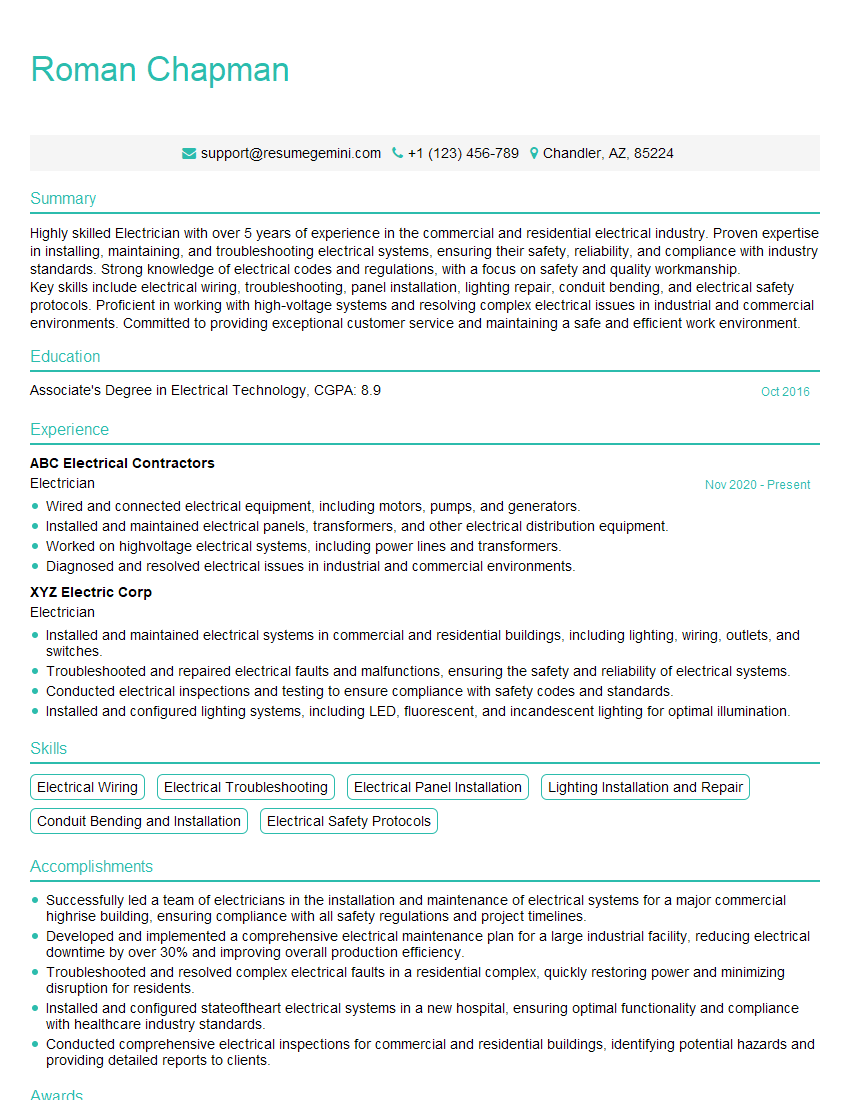
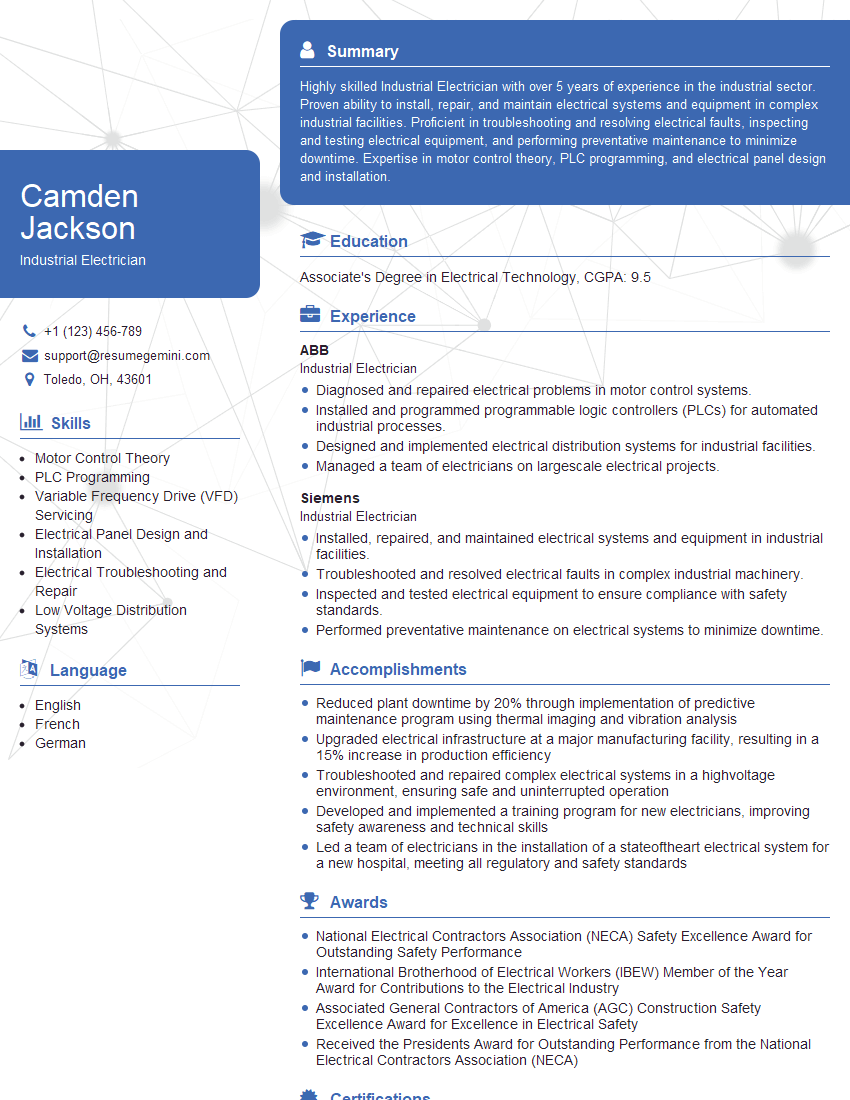
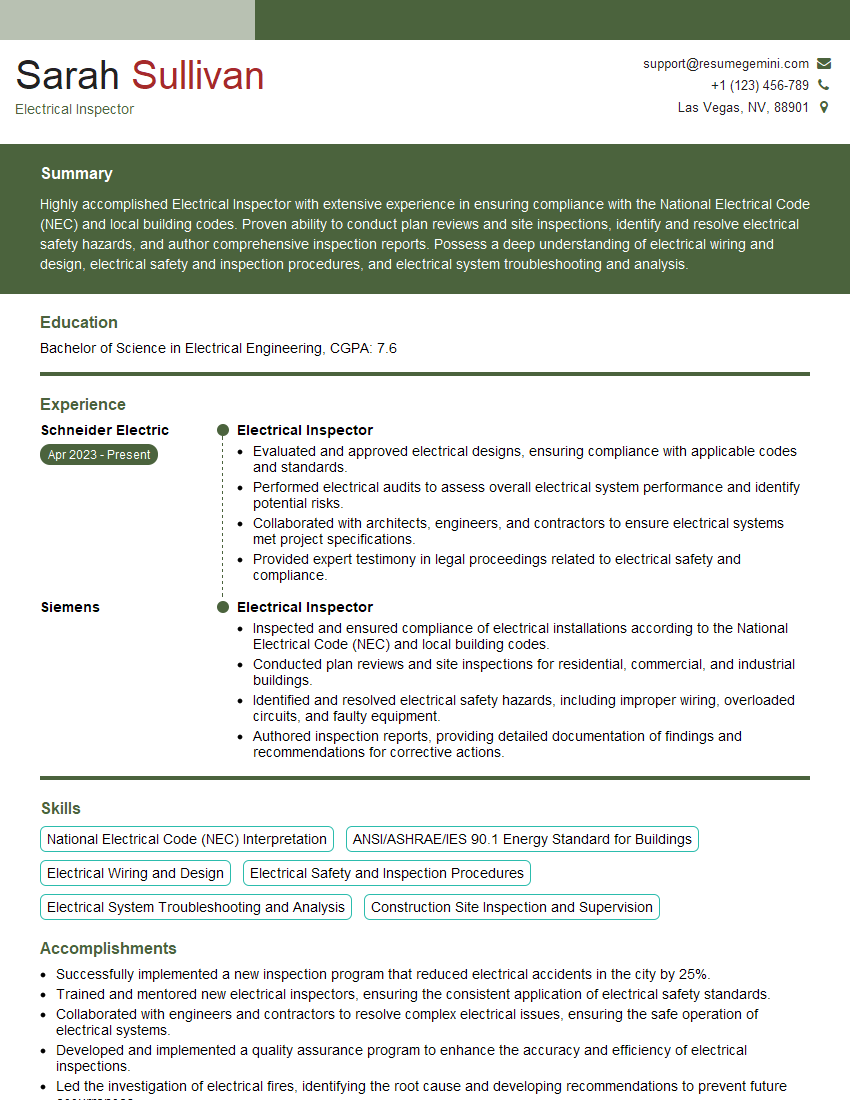
Mastering Electrical Maintenance Best Practices is crucial for career advancement in this highly skilled field. Demonstrating expertise in these areas significantly increases your value to potential employers. To maximize your job prospects, create a compelling and ATS-friendly resume that highlights your skills and experience effectively. ResumeGemini is a trusted resource that can help you build a professional resume tailored to your specific experience. Examples of resumes tailored to Electrical Maintenance Best Practices are available to help guide you in this process.


Explore more articles
Users Rating of Our Blogs
Share Your Experience
We value your feedback! Please rate our content and share your thoughts (optional).
What Readers Say About Our Blog
Very informative content, great job.
good