Preparation is the key to success in any interview. In this post, we’ll explore crucial Electrical Power Distribution Design interview questions and equip you with strategies to craft impactful answers. Whether you’re a beginner or a pro, these tips will elevate your preparation.
Questions Asked in Electrical Power Distribution Design Interview
Q 1. Explain the difference between radial and ring main distribution systems.
Radial and ring main systems are two fundamental configurations for distributing electrical power. Think of them like two different ways to deliver water to houses:
- Radial System: Power flows from the substation outwards along a single path, like a single water pipe leading to each house. If there’s a fault, the entire section beyond the fault loses power. It’s simple and inexpensive but less reliable.
- Ring Main System: Power flows from the substation in a loop, providing redundancy. Imagine a circular water pipe system. If one section fails, power still flows through the rest of the loop, maintaining supply to most consumers. It’s more reliable and resilient to faults but more complex and costly to install.
In a practical setting, radial systems are common in less densely populated areas where the cost of redundancy outweighs the potential benefit. Ring main systems are frequently used in high-density urban areas or critical facilities where uninterrupted power is paramount, like hospitals or data centers.
Q 2. Describe the purpose of a substation and its key components.
A substation is a critical component of the power distribution network. It’s like a central hub that transforms and distributes electricity. Its key components include:
- Transformer: This is the heart of the substation, stepping down the high-voltage electricity from the transmission network to a lower voltage suitable for local distribution.
- Circuit Breakers: These act as safety switches, instantly interrupting the power flow in case of a fault to prevent damage to equipment and ensure safety.
- Protective Relays: These sophisticated devices monitor the electrical system for faults and initiate the opening of circuit breakers.
- Switchgear: This encompasses all the switching and protection devices in the substation, enabling controlled operation and protection of the system.
- Busbars: These are conducting bars that connect various components in the substation, providing a common point for power distribution.
- Control and Metering Equipment: These components allow for remote monitoring and control of the substation’s operation, ensuring efficient and safe operation.
Imagine a large water treatment plant. The substation is like the plant itself, taking in high-pressure water (high voltage), processing it (transforming voltage), and distributing it to the various consumers (homes and businesses).
Q 3. What are the different types of protective relays used in power distribution?
Various protective relays are employed in power distribution systems to detect and respond to faults. Some common types include:
- Overcurrent Relays: These relays detect excessive current flow, indicating a short circuit or overload. They are the most common type of relay.
- Differential Relays: These compare the current entering and leaving a protected zone. Any discrepancy signals an internal fault within that zone.
- Distance Relays: These measure the impedance to the fault location and trip the circuit breaker accordingly. They are crucial for long transmission lines.
- Ground Fault Relays: These detect faults involving ground, which can be particularly dangerous.
- Overvoltage and Undervoltage Relays: These monitor the voltage level and trip the circuit breaker if the voltage deviates significantly from the nominal value.
Think of these relays as highly sensitive security guards, constantly monitoring the electrical system and taking immediate action if a problem arises, ensuring the system’s safety and integrity.
Q 4. How do you calculate voltage drop in a power distribution system?
Voltage drop calculation is crucial in power system design to ensure adequate voltage at the load. The most common method uses Ohm’s Law and considers both resistance and reactance of the conductor:
Voltage Drop (Vd) = I * Z
Where:
- I is the current flowing through the conductor (Amps)
- Z is the impedance of the conductor (Ohms), which is a combination of resistance (R) and reactance (X): Z = √(R² + X²)
Resistance (R) can be calculated using:
R = (ρ * L) / A
where:
- ρ is the resistivity of the conductor material (Ohm-meters)
- L is the length of the conductor (meters)
- A is the cross-sectional area of the conductor (square meters)
Reactance (X) depends on the frequency and conductor geometry. Detailed calculations usually involve tables or software.
In practice, we use software or lookup tables to simplify these calculations. If the voltage drop exceeds acceptable limits (typically a few percent), we need to increase the conductor size or adjust the system design.
Q 5. Explain the concept of power factor correction and its importance.
Power factor correction involves improving the power factor of a load. The power factor is the ratio of real power (kW) to apparent power (kVA). A low power factor means the system is less efficient. Think of it as a water pipe with leaks: some of the water (power) is lost before it reaches its destination.
Importance: A low power factor leads to increased losses in the system, higher electricity bills, and reduced capacity utilization of equipment. Power factor correction is achieved by adding capacitor banks to the system, which compensate for the reactive power consumed by inductive loads (like motors).
How it works: Inductive loads draw reactive power, which doesn’t perform useful work but still stresses the system. Capacitors supply reactive power, neutralizing the inductive reactance and improving the power factor, thus making the system more efficient.
In a real-world scenario, large industrial plants with numerous motors often require significant power factor correction to minimize losses and optimize operational costs.
Q 6. What are the common causes of power outages and how are they mitigated?
Power outages can stem from various sources:
- Equipment Failure: Faulty transformers, damaged conductors, or failing insulators can interrupt power flow.
- Natural Events: Storms, high winds, lightning strikes, floods, and wildfires can cause significant damage to power lines and substations.
- Human Error: Accidents during construction or maintenance, incorrect operation of switches, and vandalism can all trigger outages.
- Overloads: Exceeding the capacity of the distribution system can lead to failures.
Mitigation Strategies:
- Regular Maintenance: Preventative maintenance programs ensure timely identification and repair of aging or defective equipment.
- Redundancy: Implementing ring main systems and backup generators enhance system reliability.
- Protective Devices: Circuit breakers, fuses, and protective relays instantly isolate faulty sections.
- Smart Grid Technologies: Advanced monitoring systems allow for quicker fault detection and restoration.
- Improved Storm Hardening: Strengthening infrastructure to withstand severe weather conditions.
Imagine a city’s water system. To prevent outages, we regularly inspect pipes, have backup reservoirs, and use pressure-regulating valves to prevent overloads. Similarly, a robust power grid relies on a combination of preventative measures, protective devices, and intelligent grid management to ensure reliable electricity supply.
Q 7. Describe your experience with load flow analysis software.
I have extensive experience using various load flow analysis software packages, including ETAP, EasyPower, and PSS/E. I’m proficient in building models of distribution systems, performing steady-state analysis to determine voltage profiles, power flows, and losses under various loading conditions.
For example, in a recent project for a large commercial building, I utilized ETAP to analyze the impact of adding a new HVAC system on the existing electrical infrastructure. The software helped me accurately predict the voltage drop and assess the adequacy of the existing transformers and feeders. This allowed for proactive upgrades to prevent future issues and ensured the new system could be seamlessly integrated. My experience extends to using these tools for planning future expansion, fault analysis, and optimizing power factor correction strategies.
I’m also comfortable interpreting the results of load flow studies and communicating my findings effectively to both technical and non-technical audiences. This includes preparing reports detailing the analysis, findings, and recommendations for system improvements.
Q 8. Explain the principles of fault current calculation.
Fault current calculation is crucial for designing safe and reliable power distribution systems. It determines the magnitude of current that flows during a short circuit, enabling engineers to select appropriate protective devices like circuit breakers and fuses.
The calculation involves applying Ohm’s Law and Kirchhoff’s Laws to a simplified network model. We consider the system’s impedance, which includes the impedance of the source (transformer, generator), the impedance of the cables and other conductors, and the impedance of the fault itself. The fault current is inversely proportional to the total impedance; lower impedance means higher fault current.
Simplified Example: Imagine a simple system with a 480V source with an impedance of 0.1 ohms and a cable with an impedance of 0.05 ohms. A bolted three-phase fault at the end of the cable would result in a fault current of approximately 480V / (0.1 + 0.05) ohms = 3200 Amps. This calculation is simplified; real-world scenarios involve more complex network topologies and require sophisticated software for accurate analysis.
Software like ETAP, EasyPower, or SKM PowerTools are commonly used to perform these complex calculations, considering the different fault types (e.g., three-phase, single-line-to-ground), system configurations, and equipment characteristics. Accurate fault current calculations are vital to ensure protective devices operate correctly and prevent damage to equipment and potential safety hazards.
Q 9. What are the safety considerations when working with high-voltage equipment?
Safety is paramount when working with high-voltage equipment. The potential for severe electric shock, arc flash, and thermal burns necessitates strict adherence to safety procedures and the use of appropriate personal protective equipment (PPE).
Key safety considerations include:
- Lockout/Tagout (LOTO): This procedure ensures that power is completely disconnected and isolated before any work is performed. It involves physically locking out the power source to prevent accidental energization.
- Arc Flash Hazard Analysis: This study assesses the potential for arc flash incidents, determining the incident energy levels and recommending the appropriate PPE (e.g., arc flash suits, face shields, insulated gloves).
- Grounding and Bonding: Properly grounding and bonding equipment prevents voltage buildup and reduces the risk of electric shock.
- Personal Protective Equipment (PPE): Appropriate PPE, including insulated gloves, safety glasses, arc flash suits (as determined by the arc flash analysis), and safety footwear, must be worn at all times.
- Training and Competency: All personnel working with high-voltage equipment must receive comprehensive training and demonstrate competency before working independently.
- Permit-to-Work Systems: Formal permit-to-work systems help manage and control high-risk activities, ensuring all necessary safety precautions are in place.
Ignoring these safety precautions can lead to serious injuries or fatalities. A robust safety program, along with regular training and audits, is essential to maintain a safe working environment.
Q 10. How do you select appropriate cable sizing for a given load?
Cable sizing is critical for ensuring reliable and efficient power distribution. It involves selecting a cable with sufficient current-carrying capacity to handle the load without overheating or voltage drop. Several factors influence cable selection:
- Load Current: The total current the cable must carry, calculated from the connected load and power factor.
- Ambient Temperature: Higher ambient temperatures reduce the cable’s current-carrying capacity.
- Cable Installation Method: Installation method (e.g., buried, in conduit, in air) affects heat dissipation and thus current-carrying capacity.
- Voltage Drop: Excessive voltage drop can impair equipment performance and efficiency. Voltage drop calculations guide cable sizing to maintain acceptable voltage levels.
- Cable Type: Different cable types (e.g., copper, aluminum) have varying current-carrying capacities.
Step-by-step approach:
- Determine the load current: Calculate the total load current considering the connected equipment and power factor (e.g., using the formula I = P / (V * PF)).
- Consult cable ampacity tables: Refer to manufacturers’ data sheets or industry standards (e.g., NEC tables) to find the appropriate cable size based on the calculated current, ambient temperature, and installation method.
- Calculate voltage drop: Verify that the voltage drop across the cable remains within acceptable limits (typically 3% to 5%). If the voltage drop is excessive, a larger cable size may be required.
- Consider derating factors: Apply derating factors as specified in relevant standards to account for multiple cable runs, ambient temperature, and other factors influencing cable ampacity.
Proper cable sizing ensures efficient power delivery, minimizes energy losses, and enhances the longevity of the system.
Q 11. Explain the different types of grounding systems used in power distribution.
Grounding systems play a crucial role in power distribution, enhancing safety and ensuring the reliable operation of equipment. They provide a low-impedance path for fault currents to flow back to the source, protecting personnel and equipment.
Common grounding systems include:
- Solid Grounding: Provides a direct path to earth for fault currents, effectively limiting voltage rise during faults. It’s commonly used in low-voltage systems.
- Resistance Grounding: Uses a resistor in the grounding path to limit fault current magnitude. This is often used in high-voltage systems to reduce the stress on equipment and to help prevent ground faults from tripping the entire system.
- Reactance Grounding: Similar to resistance grounding but utilizes a reactor instead of a resistor to limit fault current.
- Ungrounded (or Isolated) System: Doesn’t have a direct connection to earth. Fault detection is crucial to identify and rectify faults before they pose safety risks.
The choice of grounding system depends on various factors such as voltage level, system configuration, fault current levels, and safety requirements. Proper grounding is vital for ensuring both safety and reliable operation of power distribution networks.
Q 12. What are the benefits of using SCADA systems in power distribution?
Supervisory Control and Data Acquisition (SCADA) systems are invaluable in modern power distribution networks. They offer significant benefits, enhancing efficiency, reliability, and safety.
Key benefits of SCADA in power distribution include:
- Real-time Monitoring: SCADA provides real-time monitoring of voltage, current, power, and other key parameters across the entire distribution network.
- Remote Control: Operators can remotely control switches, breakers, and other equipment, improving system responsiveness and reducing downtime.
- Improved Fault Detection and Isolation: SCADA quickly identifies and isolates faults, minimizing their impact and accelerating restoration times.
- Enhanced System Optimization: SCADA systems can optimize power flow, voltage regulation, and load balancing, improving overall system efficiency.
- Data Logging and Analysis: Comprehensive data logging enables detailed analysis of system performance, aiding in preventive maintenance scheduling and identifying potential weaknesses.
- Improved Grid Stability: SCADA contributes to better grid stability by providing real-time insights into system behavior and facilitating quick corrective actions.
SCADA systems have transformed power distribution management, significantly improving efficiency, reliability, and safety by providing a centralized control and monitoring platform.
Q 13. Describe your experience with protection coordination studies.
I have extensive experience conducting protection coordination studies, a critical aspect of ensuring the selective and reliable operation of protective relays and circuit breakers. These studies analyze the system’s response during faults to ensure that the appropriate protective devices operate in the correct sequence, isolating the fault without causing widespread outages.
My process typically involves using specialized software (such as ETAP or EasyPower) to model the power distribution system. This model includes all protective relays, circuit breakers, transformers, cables, and other relevant components with their specific characteristics. The software then simulates various fault scenarios, analyzing the operation times of the protective devices and ensuring proper coordination.
Key aspects I focus on during protection coordination studies include:
- Time-current curves analysis: Comparing the time-current characteristics of protective devices to ensure that the closest device trips first, isolating the fault.
- Relay settings optimization: Fine-tuning the settings of protective relays to ensure they operate within the desired coordination scheme.
- Fault current calculations: Determining the fault current magnitudes to ensure protective devices can interrupt the fault currents safely.
- Coordination with upstream and downstream protection: Ensuring that the protection system works seamlessly across multiple levels of the distribution system.
I have successfully completed numerous protection coordination studies for various industrial and commercial power distribution systems, ensuring the safe and reliable operation of these critical infrastructures. My experience encompasses both low-voltage and high-voltage systems, working across diverse applications.
Q 14. Explain the importance of insulation coordination in power systems.
Insulation coordination is crucial for ensuring the reliable and safe operation of electrical power systems. It involves selecting and coordinating insulation levels throughout the system to withstand anticipated overvoltages without failure. This prevents equipment damage and ensures personnel safety.
Key aspects of insulation coordination include:
- Overvoltage analysis: Identifying potential sources of overvoltages, such as lightning strikes, switching surges, and faults.
- Insulation levels determination: Selecting appropriate insulation levels for equipment based on the anticipated overvoltages and required reliability.
- Coordination of insulation levels: Ensuring that the insulation levels of different equipment are coordinated to prevent cascading failures during overvoltage events.
- Protective device coordination: Integrating protective devices, such as surge arresters, to limit overvoltages and prevent insulation failure.
Importance: Inadequate insulation coordination can lead to equipment failures, system outages, and potential safety hazards. A properly coordinated insulation system safeguards the system from overvoltages, ensuring its reliable and safe operation, minimizing downtime and reducing the risk of catastrophic failures.
Q 15. How do you ensure compliance with relevant electrical codes and standards?
Ensuring compliance with electrical codes and standards is paramount in power distribution design. It’s not just about avoiding fines; it’s about ensuring safety and reliability. My approach involves a multi-step process. First, I meticulously identify all applicable codes and standards, such as the National Electrical Code (NEC) in the US, or IEC standards internationally. This selection depends on the project’s location and specific requirements. Then, I integrate these standards into every stage of the design, from initial conceptualization to final documentation. This includes using compliant equipment, adhering to wiring methods, and properly sizing protective devices. Regular checks and audits throughout the design process, utilizing software tools for code compliance checks, help maintain adherence. Finally, thorough documentation, including calculations, drawings, and specifications, ensures traceability and facilitates easy review by authorities and stakeholders. For example, I recently worked on a project where the client needed to meet specific requirements under NFPA 70E (electrical safety in the workplace). By rigorously applying the standards concerning arc flash analysis, equipment selection and personal protective equipment, we successfully delivered a safe and compliant design.
Career Expert Tips:
- Ace those interviews! Prepare effectively by reviewing the Top 50 Most Common Interview Questions on ResumeGemini.
- Navigate your job search with confidence! Explore a wide range of Career Tips on ResumeGemini. Learn about common challenges and recommendations to overcome them.
- Craft the perfect resume! Master the Art of Resume Writing with ResumeGemini’s guide. Showcase your unique qualifications and achievements effectively.
- Don’t miss out on holiday savings! Build your dream resume with ResumeGemini’s ATS optimized templates.
Q 16. Describe your experience with short-circuit analysis.
Short-circuit analysis is crucial for ensuring the safety and proper functioning of a power distribution system. It involves determining the maximum possible fault current at various points in the system. My experience encompasses using both manual calculations and specialized software like ETAP or SKM PowerTools. I’ve worked on projects ranging from small commercial buildings to large industrial plants. The process usually starts with defining the system’s configuration, including equipment ratings (transformers, cables, switchgear). Then, impedance values are calculated or obtained from manufacturer’s data. The software or calculation methods use this data to simulate various fault scenarios (e.g., three-phase, line-to-ground faults). The results provide crucial information for selecting appropriate protective devices like circuit breakers and fuses, ensuring they can interrupt the fault current within acceptable limits and preventing damage to equipment and injury to personnel. For instance, on a recent industrial project, a short-circuit analysis revealed a potential fault current exceeding the capacity of the existing protection devices. This led us to upgrade the system’s protection to prevent catastrophic failure and ensure safety.
Q 17. What is the difference between symmetrical and asymmetrical faults?
The difference between symmetrical and asymmetrical faults lies in the nature of the fault’s impact on the power system’s three phases. A symmetrical fault, also known as a balanced fault, involves a simultaneous short circuit on all three phases. Imagine all three wires touching simultaneously – the current flow is balanced across the phases. This simplifies the analysis considerably. An asymmetrical fault, conversely, involves a short circuit on only one or two phases, often involving a ground connection. This creates an unbalanced current flow. Think of only one wire making contact with the ground – the current flow is unevenly distributed. Analyzing asymmetrical faults is more complex because it involves the system’s zero-sequence impedance, which represents the impedance of the neutral path. This difference influences the magnitude and duration of the fault current, affecting the selection of protective devices and equipment rating requirements. For example, asymmetrical faults are often more severe than symmetrical faults because they can involve higher fault currents and potential for ground-related issues.
Q 18. Explain the concept of impedance and its role in power distribution.
Impedance is a measure of the opposition to the flow of current in an electrical circuit. It’s a complex quantity, encompassing both resistance (which converts electrical energy into heat) and reactance (which arises from the energy storage in inductors and capacitors). In power distribution, impedance plays a critical role in determining voltage drop, power losses, and the selection of equipment. Higher impedance leads to larger voltage drops, more power loss as heat, and limits the current carrying capacity of the system. We consider impedance when sizing conductors, selecting transformers, and coordinating protective devices. Think of impedance as a bottleneck in a water pipe – higher impedance is like a narrower pipe, restricting flow. In design, we aim to minimize impedance to reduce losses and maintain voltage levels within acceptable limits. For example, we carefully select conductor sizes based on their impedance to ensure sufficient current carrying capacity and minimize voltage drops over long distances. This is especially important in industrial settings with significant loads.
Q 19. How do you design a power distribution system for a new building or industrial facility?
Designing a power distribution system for a new building or industrial facility is a systematic process. It begins with a thorough load assessment, determining the power requirements of each area and piece of equipment. Next, I develop a system architecture, selecting appropriate voltage levels (e.g., 480V, 208V) and deciding on the arrangement of switchboards, transformers, and protective devices. This is followed by detailed calculations to determine conductor sizes, protective device settings, and equipment ratings. Safety considerations are paramount, encompassing arc flash hazard analysis, grounding design, and compliance with all relevant codes. The design process also involves selecting appropriate equipment, considering factors such as efficiency, reliability, and cost. Software tools are indispensable for load flow studies, short-circuit calculations, and coordination studies. Finally, I prepare comprehensive drawings and specifications for construction and installation. A recent industrial project required a highly resilient and scalable system. By implementing redundant feeds and sophisticated protection schemes, we created a system that is both robust and reliable, exceeding the client’s expectations.
Q 20. What are the challenges of integrating renewable energy sources into existing power distribution systems?
Integrating renewable energy sources like solar and wind into existing power distribution systems presents several challenges. One significant challenge is the intermittency of renewable energy; the power output fluctuates depending on weather conditions. This requires advanced grid management strategies and often necessitates energy storage solutions (batteries) to ensure a stable power supply. Another challenge involves the bidirectional power flow; renewable sources can inject power back into the grid, requiring modifications to protection schemes and control systems to ensure grid stability. Furthermore, the technical requirements of interconnection, including compliance with grid codes and standards, can be complex and involve coordination with utility companies. In terms of system protection, the added complexity of inverters and other renewable energy equipment necessitates careful coordination of protective devices to prevent cascading outages. Finally, integrating these sources requires careful planning and analysis to assess the impact on grid stability and ensure a smooth and safe transition. For example, in a recent project involving solar integration, we had to address the issue of voltage rise due to solar PV injection, which required careful selection of voltage regulation devices.
Q 21. Describe your experience with arc flash hazard analysis.
Arc flash hazard analysis is a critical aspect of electrical safety in power distribution design. It involves identifying potential arc flash incidents, estimating their severity, and implementing appropriate safety measures. My experience includes utilizing software tools and industry standards like NFPA 70E to conduct these analyses. The process typically involves calculating the incident energy and arc flash boundary at various points in the system. This information is then used to determine the required personal protective equipment (PPE) for workers, ensuring their safety during maintenance or troubleshooting. I’ve worked on projects where arc flash analysis led to modifications in system design, such as replacing equipment with arc-resistant alternatives or implementing improved grounding strategies. For example, in a recent substation upgrade, the arc flash analysis revealed a need for enhanced grounding to mitigate the risk of ground faults and reduce the incident energy. By implementing these measures, we significantly reduced the potential for arc flash incidents and ensured a safer working environment for personnel.
Q 22. What are the different types of transformers used in power distribution?
Power distribution systems utilize various transformer types, each optimized for specific voltage levels and applications. The most common are:
- Power Transformers: These large transformers are found at substations, stepping down high-voltage transmission lines (hundreds of kilovolts) to lower distribution voltages (typically 11 kV to 33 kV). They are typically three-phase and designed for high efficiency and reliability. Think of them as the major voltage reducers at the gateway to your local area.
- Distribution Transformers: Located closer to the end-users, these transformers further reduce the voltage from the distribution level (e.g., 11 kV) to the utilization voltage (e.g., 120/240 V for residential customers). These are often smaller, single-phase or three-phase units, commonly seen mounted on poles or in underground vaults.
- Pole-Mounted Transformers (PMT): These are smaller distribution transformers mounted on utility poles, providing convenient access for maintenance and reducing installation costs. They’re a common sight in residential areas.
- Pad-Mounted Transformers: These are larger distribution transformers housed in weatherproof enclosures, often placed underground on pads for safety and aesthetic reasons, especially in commercial or densely populated areas. They provide a safer alternative in areas with pedestrian or vehicle traffic.
- Instrument Transformers: These transformers, including current transformers (CTs) and potential transformers (PTs), are used for metering and protection purposes. They safely step down high currents and voltages to levels suitable for measurement and relay operation; they’re essential for monitoring and safeguarding the power system.
The choice of transformer depends on factors like voltage levels, load capacity, installation location, and environmental conditions. A proper transformer selection is crucial for system efficiency and reliability.
Q 23. Explain the concept of reactive power compensation.
Reactive power compensation addresses the issue of inductive loads in power systems. Inductive loads, such as motors and transformers, consume reactive power, which doesn’t perform useful work but contributes to increased current flow and voltage drops. This leads to reduced efficiency and can even cause instability.
Reactive power compensation involves adding capacitive elements to the system to counteract the inductive reactance. Capacitors generate reactive power, effectively neutralizing the reactive power consumed by inductive loads. This improves the power factor (the ratio of real power to apparent power), reducing current flow, minimizing voltage drops, and increasing system efficiency.
Imagine a water pipe analogy: Real power is like the actual water flow doing useful work. Reactive power is like water sloshing back and forth in the pipe, not contributing to the flow. Capacitors act like a mechanism to absorb this sloshing and reduce the overall pressure (voltage) needed to deliver the same amount of useful water (real power).
Common methods for reactive power compensation include:
- Static VAR compensators (SVCs): These use thyristor-switched capacitor banks to provide fast and accurate reactive power control.
- Synchronous condensers: These are over-excited synchronous motors that act as reactive power sources.
- Fixed capacitor banks: These provide a simple and cost-effective solution for constant reactive power compensation.
Proper reactive power compensation ensures a healthy and efficient power system operation.
Q 24. How do you address power quality issues in a distribution system?
Addressing power quality issues involves a multi-pronged approach, focusing on identification, analysis, and mitigation. Common power quality problems include:
- Voltage sags/dips: Short-term reductions in voltage.
- Voltage swells: Short-term increases in voltage.
- Harmonics: Non-linear loads generate harmonic currents, distorting the sinusoidal waveform.
- Transients: Sudden voltage spikes or surges.
- Flicker: Noticeable voltage fluctuations.
Mitigation strategies depend on the specific issue and its severity. Some common approaches include:
- Power factor correction: Improves voltage regulation and reduces harmonic distortion.
- Uninterruptible Power Supplies (UPS): Provide backup power during outages or voltage dips.
- Surge protective devices (SPDs): Protect equipment from voltage surges and transients.
- Harmonic filters: Attenuate harmonic currents generated by non-linear loads.
- Voltage regulators: Maintain a stable voltage output.
- Load balancing: Distributes load evenly across phases to prevent imbalances.
A thorough power quality study is essential to diagnose the root causes and design appropriate mitigation solutions. This often involves data acquisition and analysis using specialized instruments and software.
Q 25. Describe your experience with using simulation software for power system analysis (e.g., ETAP, PSCAD).
I have extensive experience utilizing simulation software like ETAP and PSCAD for power system analysis. In previous projects, I’ve used ETAP to model and analyze various aspects of power distribution systems including short-circuit calculations, load flow studies, protection coordination, and arc flash hazard analysis. For example, I used ETAP to design and optimize the protection scheme for a large industrial facility, ensuring that all protective devices would function as intended during fault conditions.
PSCAD has been invaluable for simulating more complex transient phenomena like lightning strikes and switching surges. I’ve used it to analyze the impact of these events on sensitive equipment and develop effective mitigation strategies. One specific instance involved using PSCAD to model the effects of a nearby lightning strike on a high-voltage transmission line, identifying potential vulnerabilities and proposing reinforcement measures.
My proficiency in these software packages extends beyond analysis; I can effectively utilize their functionalities for design optimization, ensuring the most efficient and cost-effective solutions for a wide range of power distribution system challenges.
Q 26. What are the key considerations for designing a reliable and efficient power distribution system?
Designing a reliable and efficient power distribution system requires careful consideration of several key factors:
- Reliability: This involves selecting robust equipment, implementing redundant systems (e.g., backup generators, multiple supply paths), and ensuring adequate protection against faults. A system’s reliability is often measured by the frequency and duration of outages.
- Efficiency: Minimizing energy losses through efficient transformer selection, proper conductor sizing, and reactive power compensation contributes to economic operation and reduced environmental impact. A critical aspect is keeping losses low.
- Safety: Adhering to safety standards (e.g., NFPA 70E for arc flash), implementing proper grounding, and utilizing appropriate protective devices are paramount for personnel and equipment safety. This involves minimizing hazards for both workers and the public.
- Capacity: The system must have sufficient capacity to meet current and future load demands. Careful load forecasting is needed to avoid overloading and ensuring sufficient reserve capacity for growth.
- Cost-effectiveness: Balancing the costs of equipment, installation, maintenance, and potential losses, selecting solutions that optimize value and performance is crucial.
- Environmental impact: Minimizing energy losses and using environmentally friendly materials helps ensure sustainability. This consideration is increasingly important.
The design process involves detailed load flow studies, short-circuit calculations, and protection coordination studies to ensure that the system meets these requirements effectively and efficiently.
Q 27. Explain your experience with the different types of circuit breakers used in power distribution.
My experience encompasses a variety of circuit breakers used in power distribution, each with specific applications and characteristics:
- Molded Case Circuit Breakers (MCCBs): These are commonly used in low-voltage applications (up to 600V), providing overcurrent and short-circuit protection for smaller loads. I’ve used them extensively in commercial and industrial settings.
- Air Circuit Breakers (ACBs): These are suitable for medium-voltage applications (up to 38 kV), offering greater interrupting capacity compared to MCCBs. I’ve utilized them in substations and larger industrial facilities.
- Vacuum Circuit Breakers (VCBs): These are known for their superior interrupting capability and longer lifespan due to the absence of arc-quenching media degradation. VCBs offer a maintenance-friendly solution.
- SF6 Circuit Breakers: These use sulfur hexafluoride gas as an arc-quenching medium, offering high interrupting capacity and are commonly found in high-voltage switchgear. However, the environmental concerns surrounding SF6 are increasing.
- Oil Circuit Breakers (OCBs): While largely being phased out due to fire hazards and environmental concerns, older systems still utilize them; understanding their operation and limitations is still relevant.
The selection of circuit breakers depends on voltage level, interrupting capacity requirements, and environmental considerations. Proper coordination of circuit breakers within the overall protection scheme is crucial for selective fault clearing and minimizing system disruption.
Q 28. How do you handle emergencies and unplanned outages in a power distribution system?
Handling emergencies and unplanned outages involves a structured approach, prioritizing safety and prompt restoration of service. My experience includes:
- Rapid Response: Establishing a rapid response team trained to handle emergency situations efficiently and safely. This includes ensuring proper communication channels are established.
- Fault Isolation and Repair: Employing advanced diagnostic tools to pinpoint fault locations rapidly, followed by safe and effective repairs. This often involves using SCADA systems and fault location tools.
- Outage Management: Using SCADA systems to isolate the faulty section and minimize the impact on other parts of the system. This involves intelligent switching and load shedding strategies.
- Customer Communication: Keeping customers informed about the outage, its cause, and the estimated time of restoration. Effective communication is crucial during outages.
- Post-Outage Analysis: Conducting a thorough investigation after each outage to identify the root cause and implement preventive measures to avoid future occurrences. Data analysis and fault reporting is crucial here.
- Preventive Maintenance: Regularly scheduled preventive maintenance helps minimize the chances of unplanned outages by identifying and addressing potential problems before they cause significant disruption.
A well-defined emergency response plan, coupled with continuous training and advanced diagnostic capabilities, forms the bedrock of effective outage management in a power distribution system.
Key Topics to Learn for Electrical Power Distribution Design Interview
- Power System Analysis: Understanding load flow studies, fault analysis (symmetrical and unsymmetrical faults), and power system stability. This is fundamental to designing reliable and efficient distribution systems.
- Protection and Relaying: Knowledge of protective devices (fuses, circuit breakers, relays), their application, coordination, and the principles of protection schemes. Practical application includes designing protection systems to safeguard equipment and personnel.
- Substation Design: Familiarity with the components of substations (transformers, switchgear, busbars, etc.), their arrangement, and the principles of substation grounding. This includes understanding practical considerations like space constraints and safety regulations.
- Distribution System Planning and Design: This encompasses aspects like load forecasting, voltage regulation, capacity planning, and the selection of appropriate equipment. Practical applications involve designing new distribution systems or upgrading existing ones to meet growing demand.
- Distribution Automation and Smart Grid Technologies: Understanding the principles and applications of smart grid technologies, including SCADA systems, advanced metering infrastructure (AMI), and distribution automation systems. This is crucial for modern distribution system design.
- Economic Considerations and Cost Optimization: Analyzing the cost-effectiveness of different design options, considering factors like capital costs, operating costs, and energy losses. Practical application involves making informed decisions to balance performance and budget.
- Electrical Codes and Standards: Familiarity with relevant electrical codes and standards (e.g., NEC) is essential for safe and compliant designs. This ensures the designs meet regulatory requirements.
- Renewable Energy Integration: Understanding the challenges and opportunities associated with integrating renewable energy sources (solar, wind) into existing distribution networks. This is becoming increasingly important for sustainable power distribution.
Next Steps
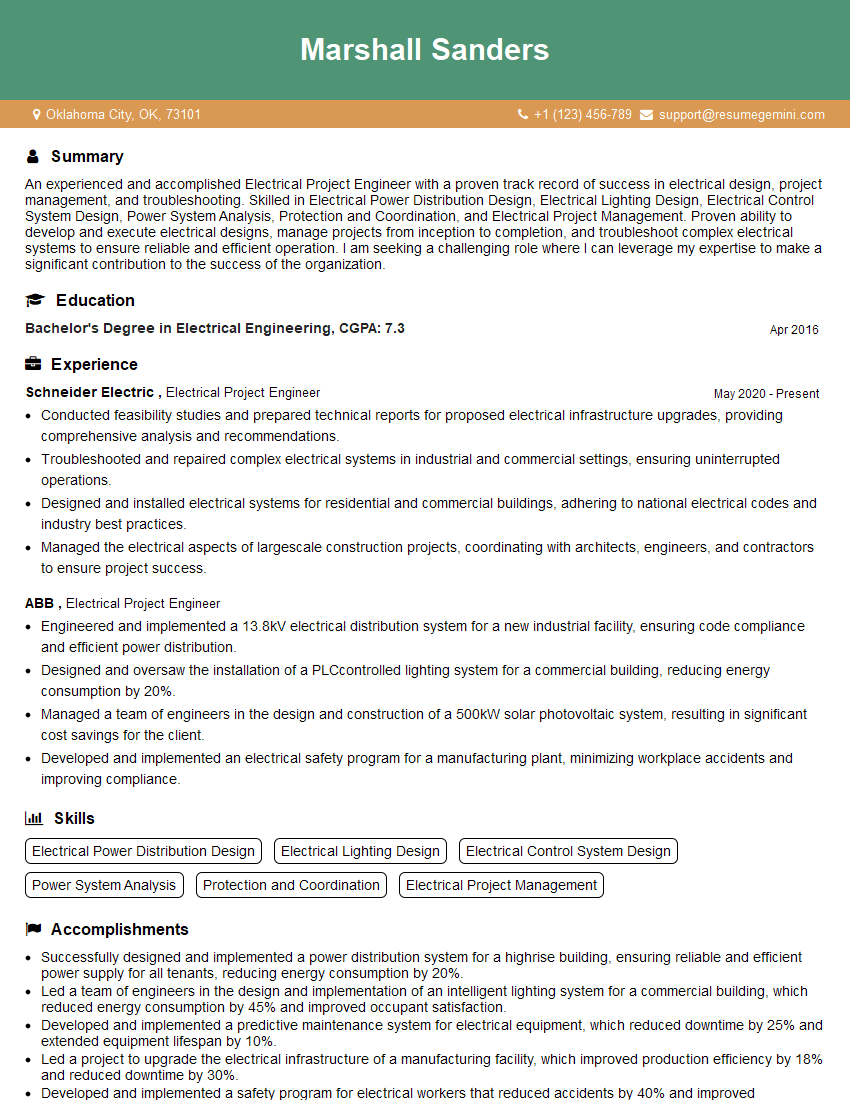
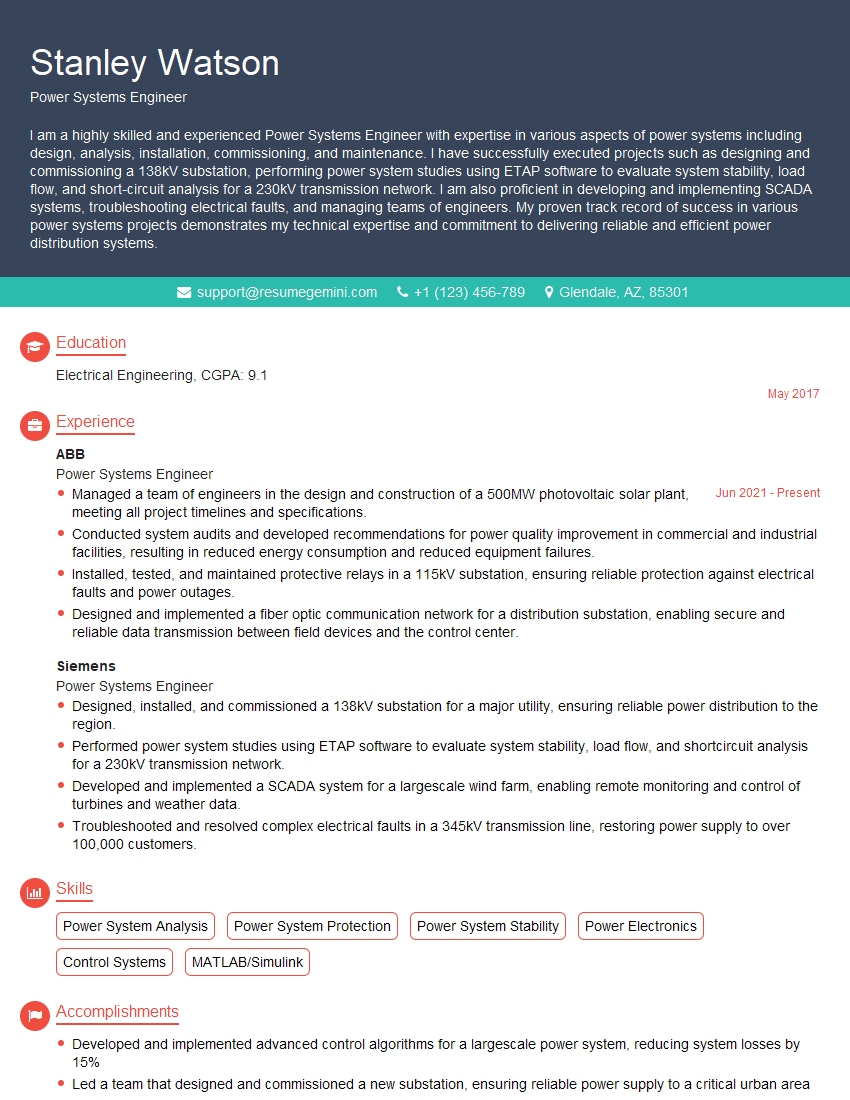
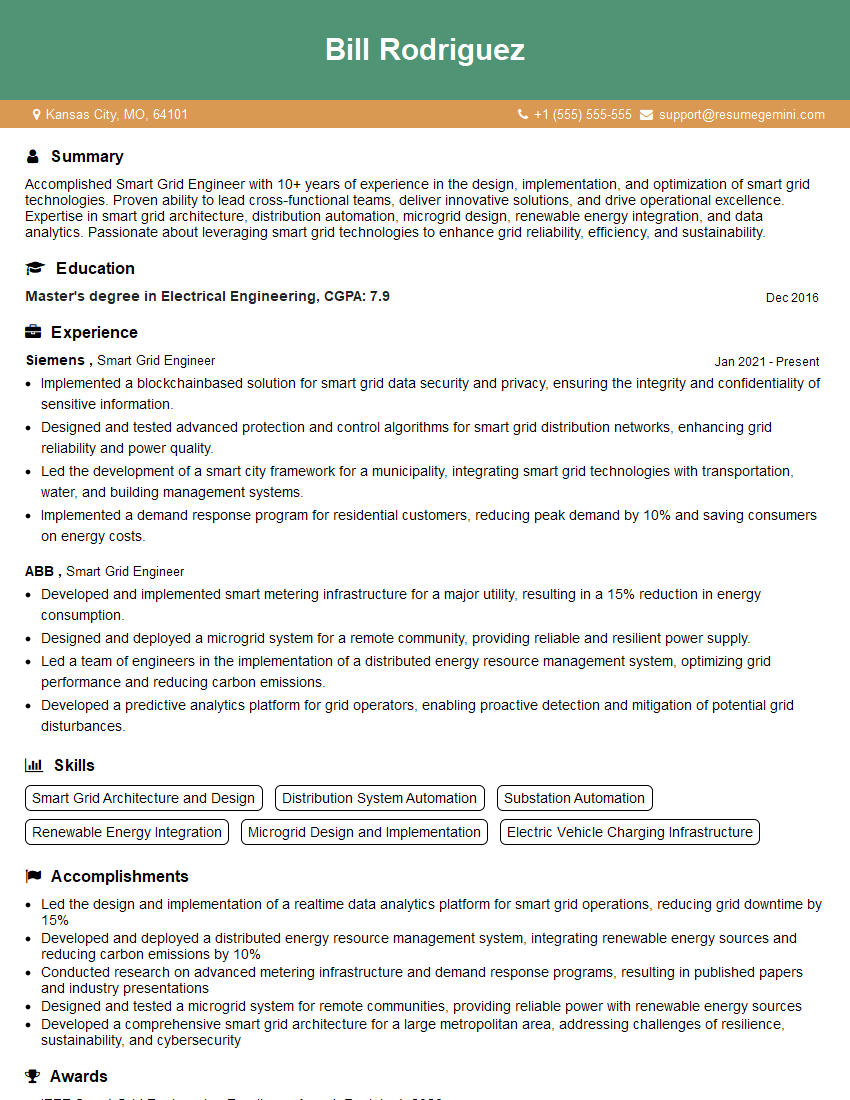
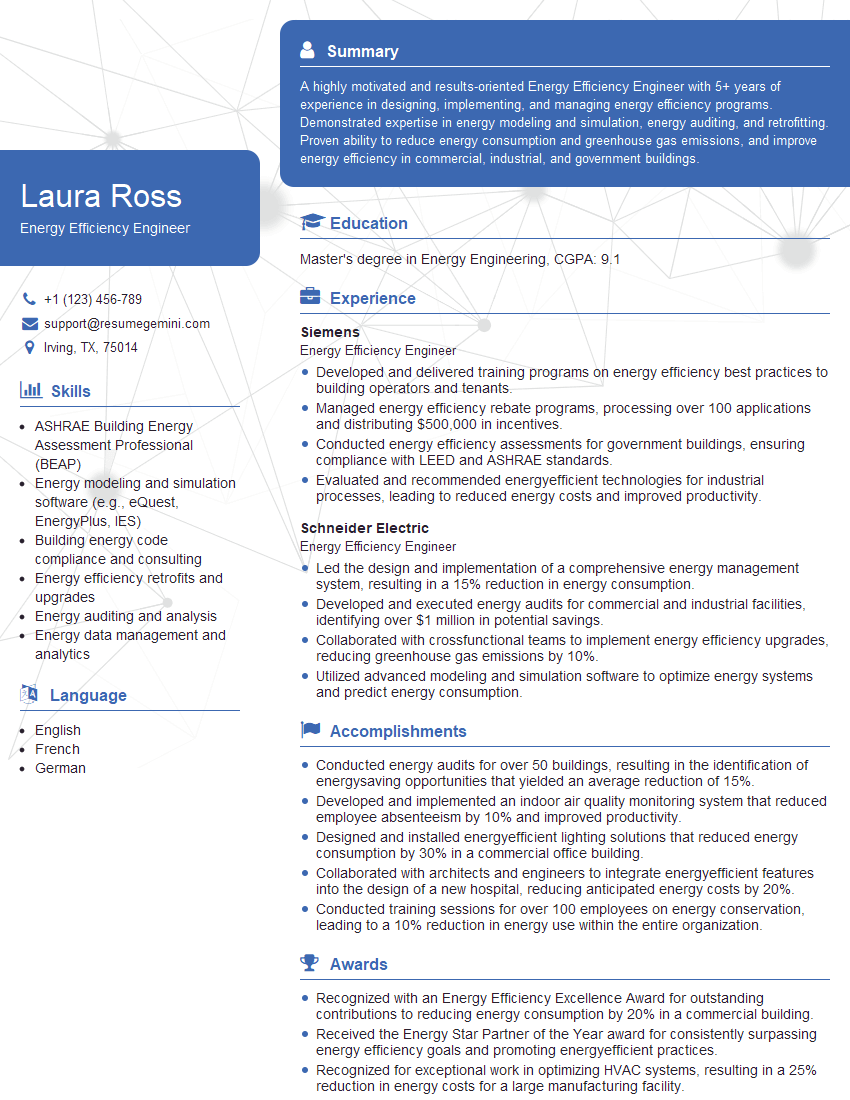
Mastering Electrical Power Distribution Design opens doors to exciting career opportunities and positions you for leadership roles within the power industry. To maximize your job prospects, creating a compelling and ATS-friendly resume is crucial. ResumeGemini can help you build a professional, impactful resume that showcases your skills and experience effectively. They offer examples of resumes tailored to Electrical Power Distribution Design, providing valuable templates and guidance to make your application stand out.

Explore more articles
Users Rating of Our Blogs
Share Your Experience
We value your feedback! Please rate our content and share your thoughts (optional).
What Readers Say About Our Blog
Very informative content, great job.
good