Interviews are opportunities to demonstrate your expertise, and this guide is here to help you shine. Explore the essential Elevator Preventive Maintenance interview questions that employers frequently ask, paired with strategies for crafting responses that set you apart from the competition.
Questions Asked in Elevator Preventive Maintenance Interview
Q 1. Describe your experience with different types of elevator systems (hydraulic, traction, etc.).
My experience encompasses a wide range of elevator systems, primarily hydraulic and traction types. Hydraulic elevators, commonly found in low-rise buildings, use a hydraulic piston and fluid to lift the car. I’ve worked extensively on maintaining these systems, focusing on fluid level checks, pump performance, and seal integrity. Malfunctions often stem from leaks, pump failures, or issues with the hydraulic valve system. In contrast, traction elevators, prevalent in high-rise buildings, use steel cables and a motor to move the car. My experience includes working on various traction systems, including geared and gearless machines. These require a different skillset, concentrating on cable tension, motor performance, governor systems, and safety mechanisms such as the speed governor and safety gear. I’m also familiar with machine room-less (MRL) traction elevators, which offer space-saving advantages and often incorporate advanced control systems.
For example, in one project, I diagnosed a recurring hydraulic leak in a low-rise building. Through careful inspection, I identified a deteriorated seal in the hydraulic cylinder, promptly replacing it and preventing further damage and potential safety hazards. In another instance, I troubleshooted a malfunctioning traction elevator by analyzing the control system’s error codes, identifying a problem with the motor encoder, and recommending its replacement.
Q 2. Explain the importance of a preventative maintenance schedule for elevators.
A preventative maintenance schedule is crucial for elevator safety and reliability. Regular maintenance prevents catastrophic failures, reduces downtime, extends the lifespan of the equipment, and ensures compliance with safety regulations. Imagine an elevator unexpectedly failing during peak hours in a busy office building—the consequences can range from inconvenience to serious injury. A proactive approach minimizes these risks.
A well-defined schedule typically includes regular inspections, lubrication, cleaning, and component replacements. This minimizes wear and tear and allows for early detection of potential problems before they escalate into major malfunctions. For instance, regularly checking and lubricating the elevator’s guide rails prevents excessive wear and friction, which could lead to the car becoming misaligned or even stuck. Similarly, inspecting safety components like the emergency brakes ensures they are functioning correctly and ready to engage in case of an emergency.
Q 3. What are the common causes of elevator malfunctions and how do you troubleshoot them?
Elevator malfunctions have diverse root causes. Common issues include problems with the motor, control system, doors, safety mechanisms, and hydraulic or traction systems (depending on the elevator type). For example, a faulty motor could cause the elevator to stop unexpectedly, while a problem with the door sensors might lead to the doors malfunctioning. A broken safety gear or a malfunctioning speed governor presents significant safety concerns.
Troubleshooting involves a systematic approach. I begin by carefully assessing the situation, gathering information from the user about the nature of the malfunction, and checking any error codes logged by the control system. I then visually inspect the elevator system, testing components and checking their functionality. I might use diagnostic tools to pinpoint the problem more precisely. Once the fault is identified, I implement appropriate repairs, which could include replacing faulty components, adjusting settings, or correcting wiring issues. Documentation is key—I maintain detailed records of all maintenance activities and repairs.
Q 4. How do you perform a safety inspection on an elevator?
A safety inspection follows a comprehensive checklist to ensure all safety mechanisms are functioning correctly. This includes checking the emergency brakes, safety gears, limit switches, buffers, and the emergency lighting. I meticulously inspect the elevator car and its components, including the doors, ensuring that they open and close smoothly and that the safety features, such as door interlocks, function correctly. I also verify the functionality of the emergency communication system, checking that passengers can effectively contact emergency services. The inspection also covers the machine room (or MRL components), thoroughly checking the motor, cables (in traction elevators), and any other critical components. Any identified issues are documented with photos and detailed descriptions.
Think of it as a thorough medical check-up for the elevator. We are examining every vital system to ensure passenger safety and prevent potential accidents. I always prioritize safety during inspections, following all relevant safety protocols and regulations.
Q 5. What are the key components of an elevator system and their functions?
Elevator systems consist of numerous interconnected components. Key components include: the elevator car, counterweights, hoisting machinery (motor, gear, sheave in traction systems or hydraulic pump and piston in hydraulic systems), cables (in traction systems), guide rails, doors, control system, safety devices (limit switches, safety gears, buffers, speed governor), and emergency communication system.
- Elevator Car: The cabin that transports passengers.
- Counterweights: Balance the weight of the car, reducing the power needed for operation.
- Hoisting Machinery: Provides the power to move the car.
- Guide Rails: Guide the movement of the car.
- Doors: Allow passengers to enter and exit the car.
- Control System: Manages the operation of the elevator.
- Safety Devices: Ensure safe operation and prevent accidents.
- Emergency Communication System: Allows trapped passengers to communicate with emergency services.
Q 6. Describe your experience with elevator control systems.
My experience with elevator control systems includes both traditional relay-logic systems and modern microprocessor-based systems. I am proficient in troubleshooting both types, understanding their programming and functionality. Modern systems often provide sophisticated diagnostic capabilities, including error codes and data logging, which are invaluable for identifying and resolving malfunctions quickly. I understand how these systems interact with various sensors, safety devices, and the hoisting machinery. My knowledge extends to different communication protocols used within elevator control systems, allowing me to work effectively with various manufacturers’ equipment.
For instance, I recently worked on an elevator system upgrade, migrating from a legacy relay-logic system to a modern microprocessor-based system. This involved not only the physical installation of the new control system but also careful programming and configuration to ensure smooth operation and integration with existing safety features. This upgrade improved the elevator’s efficiency and reliability, while simultaneously reducing maintenance requirements.
Q 7. How do you handle emergency situations involving elevators?
Handling emergency situations requires a calm and methodical approach. My first priority is ensuring passenger safety. If an elevator becomes stuck, I follow established emergency procedures. This includes immediately contacting emergency services and dispatching a qualified technician to the location. The process involves accessing the elevator car (often through a separate access point), checking on the passengers to assess their well-being, and reassuring them. I then proceed to troubleshoot the cause of the malfunction, attempting to safely restart the elevator if possible, while always prioritizing passenger safety. If the elevator cannot be immediately restarted, passengers are safely evacuated using alternative methods such as emergency exits or rescue equipment. All actions taken during the emergency are carefully documented for future reference and to aid in any investigation.
Throughout the process, clear communication is critical—with passengers, emergency services, and building management. My training emphasizes quick response, calm decision-making, and adherence to safety protocols to mitigate risks and minimize disruption.
Q 8. What are the relevant safety regulations and codes you adhere to?
Elevator safety is paramount, and my work strictly adheres to several key regulations and codes. These vary by location, but generally include national and local building codes, such as the ASME A17.1 safety code for elevators and escalators in the United States. This comprehensive code covers design, construction, installation, testing, inspection, maintenance, and operation of elevators. I also follow OSHA (Occupational Safety and Health Administration) regulations regarding workplace safety during maintenance and repair procedures. These regulations cover everything from proper use of personal protective equipment (PPE), like fall protection harnesses and safety glasses, to lockout/tagout procedures to prevent accidental energization during repairs. Furthermore, I’m familiar with and adhere to any manufacturer-specific guidelines for the elevators I work on. Each manufacturer often has detailed manuals outlining specific maintenance requirements and safety protocols for their models. Regular training and certifications ensure I remain updated on the latest codes and best practices. For example, I’ve recently completed a refresher course on the latest ASME A17.1 revisions concerning emergency power systems.
Q 9. Explain your experience with hydraulic elevator maintenance.
Hydraulic elevators, unlike traction elevators, use a hydraulic piston and fluid pressure to lift the cab. My experience encompasses a wide range of maintenance tasks for these systems. This includes regular inspections of the hydraulic fluid level and quality, checking for leaks in the hydraulic lines and hoses, and maintaining the hydraulic pump and control valve. I’m proficient in troubleshooting issues like slow speed, jerky movement, or complete failure. For instance, I once diagnosed a slow-speed issue in a hydraulic elevator by systematically checking the fluid level (it was low), identifying a small leak in a hose, and repairing the leak. This highlighted the importance of regular fluid level checks and the need for prompt leak repairs to prevent more significant failures. I also have experience working with various types of hydraulic systems – including those that utilize environmentally friendly fluids – and understanding the specific maintenance requirements associated with each. Furthermore, I’m familiar with safety measures, such as ensuring proper pressure relief valves are in place and functioning correctly to prevent over-pressurization.
Q 10. How do you diagnose and repair elevator door malfunctions?
Diagnosing and repairing elevator door malfunctions requires a systematic approach. I begin by visually inspecting the door mechanism for any obvious problems such as loose bolts, damaged cables, or misaligned components. Then, I use diagnostic tools to check the electrical circuits controlling the door operation, looking for voltage issues or faulty sensors. The type of malfunction dictates my next steps. For example, if the doors are failing to close properly, I might check the door interlocks, the limit switches, and the safety edges to ensure they are functioning correctly. If the problem stems from electrical faults, I would use a multimeter to check the voltage and continuity in the control circuits. I’ve encountered situations where a faulty sensor was the cause of doors not closing, requiring its replacement. In another instance, a damaged cable in the door operator resulted in the doors being unable to fully open. A meticulous approach ensures that the repair not only fixes the immediate issue but also prevents future problems.
Q 11. Describe your experience with traction elevator maintenance.
Traction elevators use counterweights and cables to move the elevator cab. My experience with these systems includes regular inspection and maintenance of the cables, sheaves (pulleys), governors, and motor. I’m skilled in diagnosing and repairing a variety of issues, such as slow speed, jerky movement, or complete failure. For example, I once diagnosed a jerky movement in a traction elevator by carefully inspecting the cables and sheaves, identifying wear and tear in the cables, and subsequently replacing the damaged sections. This prevented a more serious incident. I also have experience working on various types of traction elevator systems, including gearless traction elevators and those with different types of controllers. Understanding the nuances of each system is crucial to providing effective maintenance. The maintenance procedures often include lubricating moving parts, checking the braking system, and verifying the proper operation of safety devices.
Q 12. What are your skills in using diagnostic tools for elevator systems?
My skills in using diagnostic tools for elevator systems are extensive. I regularly utilize multimeters to check voltage, current, and continuity in electrical circuits. I’m also proficient in using clamp meters to measure current draw in motors and other components. In addition, I use specialized elevator diagnostic tools that can read error codes from elevator controllers, providing valuable insight into the source of a problem. These tools often provide real-time data on elevator performance, such as speed, position, and door status. For example, recently a high-rise building’s elevator was experiencing intermittent failures. By using a diagnostic tool, we were able to pinpoint a failing component in the controller board before a complete system breakdown, minimizing downtime and ensuring passenger safety. Furthermore, I use advanced diagnostic software to analyze data logs and identify trends that might indicate developing problems.
Q 13. How do you maintain elevator lubrication systems?
Maintaining elevator lubrication systems is critical for preventing premature wear and tear and ensuring smooth, safe operation. This involves using the correct type and grade of lubricant for each component. I meticulously lubricate all moving parts, including guide rails, sheaves, and motor bearings, according to the manufacturer’s recommendations. I also check the lubrication systems regularly for leaks and signs of contamination. Over-lubrication can be just as harmful as under-lubrication, potentially leading to the accumulation of grease and causing damage to components. Therefore, precise application is essential. Regular inspection and cleaning of lubrication points are crucial to maintain a reliable and efficient system. For example, using the wrong lubricant on guide rails can lead to increased friction, causing premature wear and potentially leading to a safety hazard.
Q 14. Describe your experience with elevator modernization projects.
My experience with elevator modernization projects includes upgrading existing elevator systems to improve efficiency, safety, and passenger comfort. This can involve replacing old control systems with modern microprocessor-based systems, updating the cab interiors, installing energy-efficient motors, and incorporating new safety features. In a recent project, we upgraded an aging hydraulic elevator to a more efficient traction system, significantly reducing energy consumption and improving ride quality. This involved careful planning and coordination with building management to minimize disruption to building occupants. Another project involved replacing a complete elevator control system, integrating it with a new building management system for enhanced monitoring and control. These modernization efforts not only enhance performance but extend the elevator’s lifespan and improve its overall safety profile. Understanding both the older and newer systems is key for successful modernization projects.
Q 15. What is your experience with different types of elevator controllers?
My experience encompasses a wide range of elevator controllers, from older, electromechanical systems to modern microprocessor-based controllers. I’m proficient in troubleshooting and maintaining various types, including those manufactured by major players like Otis, Schindler, and ThyssenKrupp. This includes understanding their unique programming languages and diagnostic tools. For example, I’ve worked extensively with Otis’s Gen2 system, which utilizes a rope-less technology requiring specialized maintenance procedures, and Schindler’s PORT technology, known for its advanced destination dispatching algorithm. Understanding the differences in their control logic is crucial for effective preventative maintenance, allowing me to predict potential issues and prevent downtime. I am also familiar with the safety interlocks and communication protocols used by these controllers, essential for ensuring safe and reliable elevator operation.
- Electromechanical Controllers: These older systems require a deep understanding of relays, contactors, and wiring diagrams. Troubleshooting involves methodical tracing of electrical circuits.
- Microprocessor-Based Controllers: These modern systems utilize sophisticated software and diagnostic tools. My expertise includes using these tools for fault diagnosis and programming adjustments.
Career Expert Tips:
- Ace those interviews! Prepare effectively by reviewing the Top 50 Most Common Interview Questions on ResumeGemini.
- Navigate your job search with confidence! Explore a wide range of Career Tips on ResumeGemini. Learn about common challenges and recommendations to overcome them.
- Craft the perfect resume! Master the Art of Resume Writing with ResumeGemini’s guide. Showcase your unique qualifications and achievements effectively.
- Don’t miss out on holiday savings! Build your dream resume with ResumeGemini’s ATS optimized templates.
Q 16. Explain your experience with elevator governor maintenance.
Elevator governor maintenance is critical for passenger safety. The governor is a safety device that prevents the elevator car from exceeding a predetermined speed. My experience includes regular inspections of the governor rope, sheaves, and the governor itself. This involves checking for fraying or damage to the rope, ensuring proper sheave alignment, and verifying the governor’s accurate and timely activation. I’m adept at performing operational tests, checking for proper braking action, and replacing worn components before they become a safety hazard. For instance, I once identified a subtle misalignment in a governor sheave during a routine inspection, preventing a potential catastrophic failure that could have resulted in a high-speed descent.
My maintenance procedures always include:
- Visual inspection for wear and tear
- Functional testing to verify proper operation
- Lubrication of moving parts
- Tightening of bolts and connections
- Documentation of all findings and actions taken
Q 17. How do you manage elevator maintenance records and documentation?
I meticulously maintain elevator maintenance records using a combination of digital and physical methods. Each elevator has a dedicated file, both physically and digitally, containing all inspection reports, repair orders, and preventative maintenance schedules. I utilize Computerized Maintenance Management Systems (CMMS) software to schedule tasks, track completed work, and generate reports. This ensures easy accessibility and analysis of historical data. The CMMS also generates alerts for upcoming maintenance deadlines, improving efficiency and reducing the risk of missed services. Physical files maintain a backup of crucial information, such as original installation documentation and manufacturer’s manuals. I adhere to a standardized format for all documentation to ensure clarity and consistency across all elevator systems.
This rigorous system allows for:
- Easy tracking of maintenance history
- Identification of recurring issues
- Predictive maintenance planning
- Compliance with regulatory requirements
Q 18. How do you prioritize maintenance tasks based on risk assessment?
Prioritizing maintenance tasks is crucial for maximizing safety and minimizing downtime. I employ a risk-based approach, categorizing tasks according to their potential impact on safety and operational efficiency. This involves a thorough risk assessment of each elevator component, considering factors such as age, usage frequency, and previous failure history. High-risk items, such as safety mechanisms (e.g., governors, brakes, emergency lighting), are given top priority. I use a system where tasks are assigned a risk score, allowing for efficient scheduling and resource allocation. For instance, a worn governor rope would be prioritized over a minor cosmetic issue. This systematic approach ensures that critical safety systems receive prompt attention, mitigating potential hazards.
Q 19. Describe your experience with working at heights and following safety protocols.
Safety is paramount in my work. I have extensive experience working at heights and am fully trained and certified in fall protection techniques. I always use appropriate safety harnesses, lifelines, and fall arrest systems when working above ground level. Before commencing any work at heights, I meticulously inspect all safety equipment, ensuring it’s in good working order and correctly fastened. I strictly adhere to all relevant OSHA (or equivalent) safety regulations and company protocols. Furthermore, I conduct thorough site-specific risk assessments before beginning each job, identifying and mitigating potential hazards. This proactive approach has helped to ensure a consistent record of safe work practices throughout my career.
Q 20. How familiar are you with different elevator manufacturers and their systems?
I possess a strong understanding of various elevator manufacturers and their systems. My experience includes working with major brands such as Otis, Schindler, Kone, and ThyssenKrupp. I’m familiar with their respective control systems, safety features, and common maintenance requirements. This understanding extends to both older legacy systems and their latest technological advancements. For instance, I’m knowledgeable about the specific diagnostic tools and procedures required for each manufacturer’s equipment, allowing for efficient troubleshooting and repair. This broad knowledge base ensures I can effectively handle the diverse range of elevator systems found in various buildings.
Q 21. How do you ensure compliance with building codes and regulations?
Compliance with building codes and regulations is essential. I stay updated on the latest codes (e.g., ASME A17.1/CSA B44) and regulations relevant to elevator maintenance and safety. I ensure that all maintenance activities are performed according to these standards, maintaining meticulous records of inspections, tests, and repairs. These records are readily available for audits and inspections by relevant authorities. I’m also familiar with local jurisdiction regulations, which may impose additional requirements. By proactively adhering to these standards, I help ensure the safe and compliant operation of the elevators under my care. Any deviation from these codes would be immediately flagged and addressed.
Q 22. What is your experience with repairing elevator electrical systems?
My experience with elevator electrical system repair is extensive, encompassing over 10 years of hands-on work. I’m proficient in diagnosing and rectifying a wide range of electrical faults, from simple wiring issues to complex problems involving motor controllers, power supplies, and safety circuits. This includes working with various voltage levels and AC/DC systems. For instance, I once resolved a complete power failure in a high-rise building by tracing a faulty connection in the main power distribution panel, preventing a significant disruption to the building’s occupants.
My expertise extends to working with various safety devices like emergency lighting, fire service elevators, and communication systems, ensuring their proper electrical operation. I’m also adept at using diagnostic tools such as multimeters, oscilloscopes, and insulation testers to pinpoint electrical problems quickly and efficiently. I am familiar with various manufacturers’ systems and understand the importance of adhering to strict safety regulations during all electrical repairs.
Q 23. Explain your experience with troubleshooting elevator brake systems.
Troubleshooting elevator brake systems requires a methodical approach and a deep understanding of mechanical and electrical components. I start by visually inspecting the brake assembly for any obvious damage, wear, or misalignment. Then, I use specialized tools to check brake shoe wear, spring tension, and the functionality of the brake release mechanism. A common issue I’ve encountered is sticking brakes, often caused by debris or corrosion. In such cases, I thoroughly clean the brake assembly, lubricate moving parts as needed (using only approved lubricants), and adjust the brake mechanism to ensure proper operation.
Electrical aspects are just as important; I test the brake solenoid and its control circuits to confirm proper energization and de-energization. I utilize schematics and wiring diagrams to trace electrical signals and identify any shorts or open circuits. For example, I recently resolved a problem where a faulty brake solenoid was causing inconsistent braking by replacing the faulty component and verifying the corrected functionality. This required understanding both the mechanical and electrical interactions within the brake system. Safety is paramount, and all work is done following strict safety protocols.
Q 24. How do you identify and resolve elevator speed and leveling issues?
Elevator speed and leveling issues are often interconnected and require a systematic diagnostic approach. I begin by reviewing the elevator’s operational logs to identify any recurring patterns or error codes. These logs often provide clues about the root cause of the problem. Then, I perform a comprehensive inspection of the drive system, checking the motor speed, encoder readings, and the governor’s functionality. Problems with the control system, such as faulty sensors or improperly calibrated parameters, can also lead to speed and leveling issues.
For instance, inconsistent leveling can be caused by problems with the leveling system’s sensors or the controller’s software. I’ve encountered instances where adjusting the controller’s parameters or replacing a faulty sensor was enough to resolve the problem. However, more significant issues may require more in-depth investigation. Using specialized diagnostic software and tools, I can pinpoint the source of the problem and implement the necessary repairs, always prioritizing safety and ensuring the elevator operates within the manufacturer’s specifications. This often involves careful adjustments to the leveling system and drive motor controls.
Q 25. What is your approach to communicating technical issues to non-technical personnel?
Communicating technical issues to non-technical personnel is crucial for ensuring safety and managing expectations. My approach centers around clear, concise language, avoiding technical jargon whenever possible. I use analogies and simple explanations to illustrate complex concepts. For example, instead of saying “the encoder is malfunctioning,” I might say “the elevator is having trouble knowing exactly where it is, which causes it to stop incorrectly.”
I also utilize visual aids like diagrams and photos to help non-technical personnel understand the problem and the proposed solution. I provide regular updates and keep the stakeholders informed throughout the repair process. This approach ensures that everyone understands the situation and is confident that the problem is being addressed effectively and safely. Open communication is key to building trust and confidence.
Q 26. Describe your experience with preventative maintenance on elevator safety devices.
Preventative maintenance on elevator safety devices is paramount for ensuring safe and reliable operation. This involves regular inspections and testing of all safety features, including emergency brakes, safety gears, limit switches, buffers, and emergency lighting. These inspections go beyond simple visual checks; they involve functional tests to ensure each component performs as intended. For example, I would regularly test the emergency brakes by simulating emergency stops to confirm their functionality and braking capability.
I meticulously document all maintenance activities and any findings during inspections, highlighting any necessary repairs or replacements. This documentation is crucial for tracking the elevator’s maintenance history and identifying potential issues before they become significant problems. A proactive approach, involving regular testing and lubrication of components, prevents costly repairs and downtime. This also contributes to the overall longevity of the equipment.
Q 27. How familiar are you with the latest technologies in elevator maintenance?
I’m very familiar with the latest technologies in elevator maintenance, including advanced diagnostic tools, predictive maintenance software, and remote monitoring systems. These technologies offer significant advantages in terms of efficiency, safety, and cost savings. For example, predictive maintenance systems use data analytics to forecast potential equipment failures, allowing for proactive repairs and preventing unexpected downtime. I’m proficient in using various diagnostic tools that can provide detailed information about elevator performance and identify potential problems early on.
Remote monitoring systems allow for real-time monitoring of elevator systems, enabling quick identification and resolution of issues. I actively seek out training opportunities to remain current with the latest technologies and best practices. Keeping up with advancements in the industry ensures I provide the highest quality of service and maintain a competitive edge in my field.
Q 28. What are your strategies for continuous improvement in elevator maintenance practices?
My strategies for continuous improvement in elevator maintenance practices are focused on data-driven decision-making, employee training, and the adoption of new technologies. I regularly analyze maintenance data to identify trends and patterns, allowing me to optimize maintenance schedules and resource allocation. This data helps pinpoint areas where improvements can be made in terms of efficiency and effectiveness. Employee training is a critical aspect of continuous improvement, and I advocate for regular training sessions to keep our team updated on the latest technologies and best practices.
We actively participate in industry conferences and workshops to learn about new techniques and innovations. Finally, adopting new technologies, such as predictive maintenance software and remote monitoring systems, can significantly enhance our maintenance practices by enabling proactive interventions and reducing downtime. By embracing these strategies, I aim to create a culture of continuous learning and improvement, ensuring we deliver top-tier elevator maintenance services.
Key Topics to Learn for Elevator Preventive Maintenance Interview
- Safety Procedures and Regulations: Understanding OSHA regulations, lockout/tagout procedures, and safe work practices related to elevator maintenance.
- Mechanical Systems: Knowledge of elevator components like motors, gears, brakes, sheaves, and cables; troubleshooting common mechanical issues and performing routine inspections.
- Electrical Systems: Familiarity with elevator control systems, wiring diagrams, electrical safety, and troubleshooting electrical malfunctions.
- Hydraulic Systems: Understanding hydraulic elevator mechanisms, including pumps, valves, and cylinders; diagnosing and resolving hydraulic leaks and pressure issues.
- Computerized Systems: Experience with modern elevator control systems, including programmable logic controllers (PLCs) and diagnostic tools; understanding data logging and analysis.
- Preventive Maintenance Schedules: Creating and adhering to preventive maintenance schedules; performing routine inspections, lubrication, and adjustments.
- Troubleshooting and Repair: Diagnosing malfunctions, identifying root causes, and implementing effective repair strategies; utilizing diagnostic tools and technical manuals.
- Record Keeping and Documentation: Maintaining accurate and detailed records of maintenance activities, repairs, and inspections; complying with regulatory requirements for documentation.
- Communication and Teamwork: Effectively communicating with building managers, tenants, and colleagues; working collaboratively as part of a maintenance team.
Next Steps
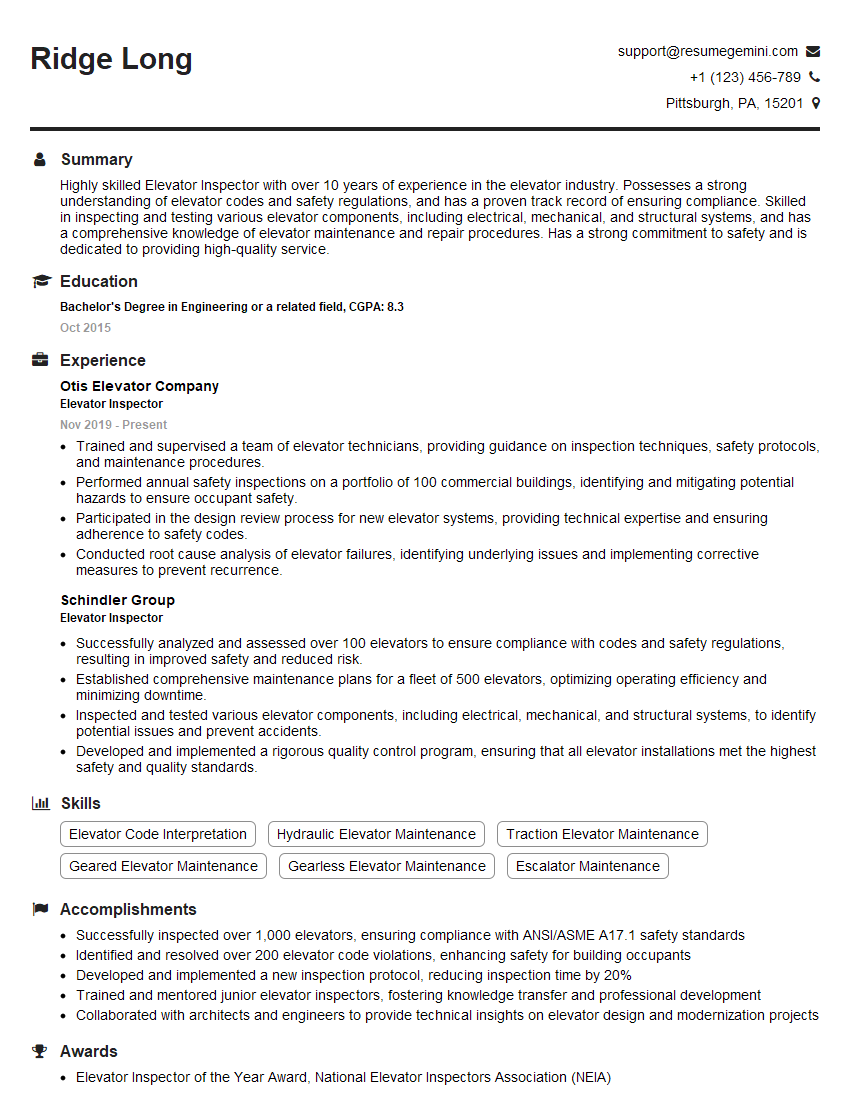
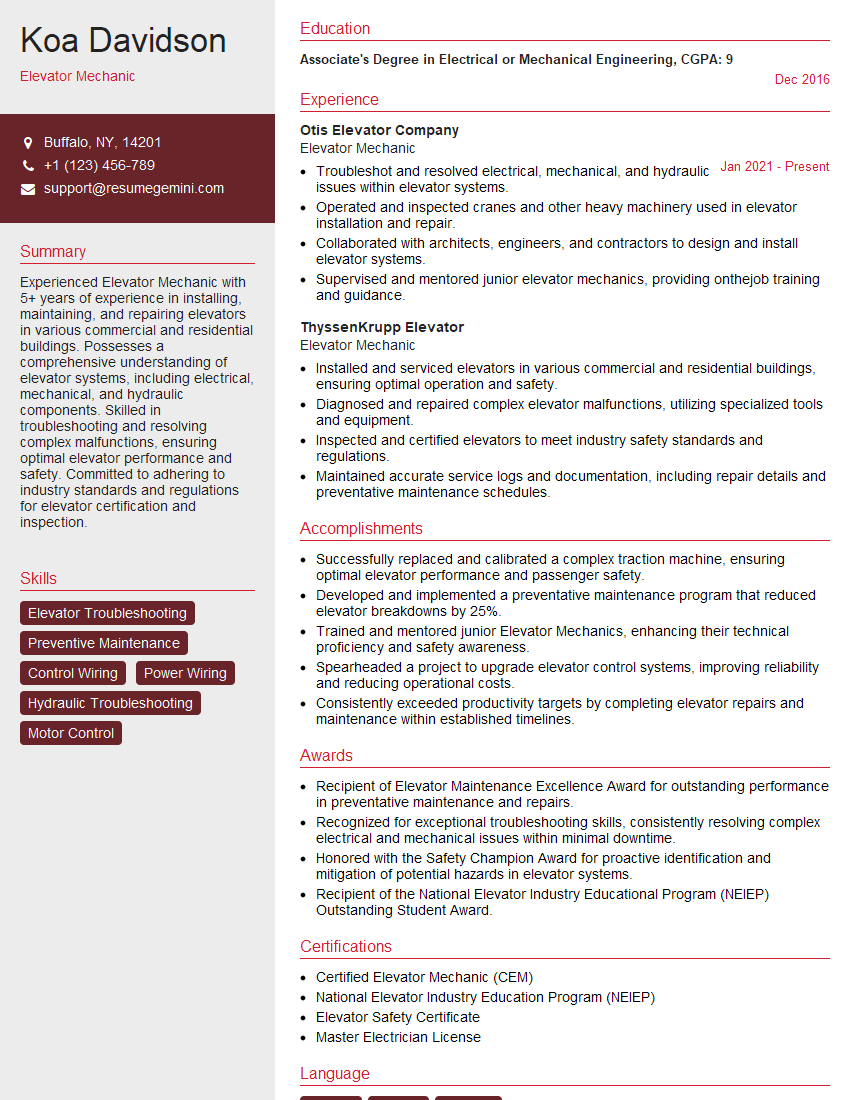
Mastering Elevator Preventive Maintenance opens doors to rewarding and stable careers within a crucial industry. As you prepare, focus on building an ATS-friendly resume that highlights your skills and experience. This ensures your application gets noticed by recruiters and hiring managers. ResumeGemini is a trusted resource to help you create a professional and impactful resume, maximizing your chances of landing your dream job. Examples of resumes tailored to Elevator Preventive Maintenance are available to guide you through the process.

Explore more articles
Users Rating of Our Blogs
Share Your Experience
We value your feedback! Please rate our content and share your thoughts (optional).
What Readers Say About Our Blog
Very informative content, great job.
good