Interviews are more than just a Q&A session—they’re a chance to prove your worth. This blog dives into essential Elevator Repair Techniques interview questions and expert tips to help you align your answers with what hiring managers are looking for. Start preparing to shine!
Questions Asked in Elevator Repair Techniques Interview
Q 1. Describe your experience troubleshooting elevator malfunctions.
Troubleshooting elevator malfunctions is a systematic process that involves a combination of observation, diagnostic tools, and practical experience. I begin by carefully listening to the customer’s description of the problem. Is the elevator stuck between floors? Is it making unusual noises? Does it have a specific error code displayed? This initial information helps me narrow down the potential causes.
Next, I visually inspect the elevator and its surrounding components. I check for any obvious signs of damage, loose wiring, or obstructions. I then use sophisticated diagnostic tools, such as multimeters, to measure voltage, current, and resistance in different parts of the elevator’s electrical system. For hydraulic elevators, I would check fluid levels and for leaks. For traction elevators, I would examine the ropes, sheaves and the motor.
For example, I once encountered an elevator that was repeatedly stopping prematurely. After a thorough inspection, I discovered a faulty limit switch that was sending incorrect signals to the control system. Replacing the switch resolved the issue. Another time, a persistent buzzing sound led me to a worn-out motor bearing. Each case requires a different approach, emphasizing the importance of a comprehensive and methodical diagnostic process.
Q 2. Explain the different types of elevator systems (hydraulic, traction, etc.).
Elevators are broadly categorized into two main systems: hydraulic and traction. Each has its own unique operating principles and characteristics.
- Hydraulic Elevators: These elevators use a hydraulic cylinder and a pump to lift the elevator car. The pump pressurizes hydraulic fluid, which pushes a piston in the cylinder, raising the car. Hydraulic elevators are typically used in low-rise buildings (up to five or six stories) due to their simpler design and lower initial cost. However, they can be less energy-efficient than traction elevators.
- Traction Elevators: These elevators use steel cables and a motor to lift the car. The motor drives a sheave (a grooved wheel) which in turn winds or unwinds the cables, moving the car up or down. Traction elevators are commonly used in high-rise buildings due to their efficiency and ability to handle greater heights and loads. They can be further classified into gearless and geared traction systems, with gearless systems offering smoother and quieter operation.
Other less common systems exist such as machine room-less (MRL) elevators, which compact all the mechanical components into a smaller space on top of the hoistway, and pneumatic elevators which use compressed air to lift the car. Understanding the specific type of elevator system is crucial for efficient troubleshooting and repair.
Q 3. How do you diagnose and repair elevator door malfunctions?
Diagnosing and repairing elevator door malfunctions requires a detailed understanding of the door’s mechanical and electrical components. Elevator doors are complex systems involving sensors, motors, safety mechanisms, and interlocks. Troubleshooting begins with a thorough visual inspection to look for obvious problems like bent or damaged door panels, misaligned tracks, or loose wiring.
I use diagnostic tools to test the electrical circuits and ensure that the safety features, such as the safety edges and infrared sensors, are functioning correctly. Common issues include problems with the door operator’s motor, faulty sensors, damaged safety edges, or malfunctioning interlocks. For example, a malfunctioning infrared sensor might prevent the doors from closing, leading to a service call. I then would check the sensor alignment and wiring.
Repair procedures vary depending on the specific problem. It may involve replacing a damaged component, adjusting door alignment, or reprogramming the control system. Safety is paramount, and proper lockout/tagout procedures are always followed to prevent accidents during the repair process. Testing the repaired system is vital to ensure the doors are operating correctly and safely before returning the elevator to service.
Q 4. What safety procedures do you follow when working on elevators?
Safety is the absolute top priority when working on elevators. I always adhere to strict safety procedures, which include but are not limited to:
- Lockout/Tagout (LOTO): Before starting any work, I completely de-energize the elevator system by locking out and tagging out the power supply. This prevents accidental activation of the elevator during repairs.
- Personal Protective Equipment (PPE): I consistently wear appropriate PPE, including safety glasses, gloves, and steel-toed boots to protect myself from potential hazards.
- Working at Heights: When working at heights, I use appropriate fall protection equipment, such as harnesses and safety lines.
- Confined Space Entry: If working in confined spaces within the elevator shaft or pit, I follow strict confined space entry procedures, including ventilation, atmospheric testing, and buddy systems.
- Following Manufacturer’s Instructions: I always refer to the elevator manufacturer’s service manuals and guidelines to ensure compliance with safety standards.
My commitment to safety is unwavering. It’s not just about following regulations; it’s about protecting myself and others from potentially life-threatening situations.
Q 5. How familiar are you with elevator control systems and their components?
I’m highly familiar with elevator control systems and their components. These systems are essentially sophisticated computer systems that manage all aspects of elevator operation, including door control, hoisting machinery, safety mechanisms, and communication with dispatch systems. I have extensive experience working with various types of control systems, including solid-state, microprocessor-based, and programmable logic controllers (PLCs).
My understanding encompasses both hardware and software aspects. This includes knowledge of various sensors, relays, contactors, motor drives, and the programming languages used to configure these systems. For example, I’m proficient in troubleshooting problems related to the PLC programming, such as adjusting timing parameters, setting operational limits, or diagnosing faults through error codes. I can also interpret schematic diagrams and wiring layouts to trace signals and identify potential faults within the control system.
My familiarity with these systems allows me to diagnose and repair a wide range of issues, from minor malfunctions to complex system failures. I’m also well-versed in modern communication protocols used in elevator systems, which enables me to integrate new technologies into existing infrastructure.
Q 6. Describe your experience with elevator modernization projects.
I have significant experience in elevator modernization projects, encompassing various aspects from planning and design to implementation and commissioning. Modernization projects often involve upgrading old, outdated systems to improve efficiency, safety, and passenger comfort. This could include replacing obsolete components with modern, energy-efficient alternatives, upgrading control systems to enhance performance, and adding features such as destination dispatch systems or improved accessibility for passengers with disabilities.
For example, I recently completed a project involving the modernization of a group of hydraulic elevators in an older office building. This entailed replacing the aging hydraulic system with a more efficient traction system and upgrading the control system to incorporate a modern destination dispatch algorithm. The result was a substantial improvement in energy efficiency, ride comfort, and overall system reliability. Each modernization project is unique, requiring a detailed assessment of the existing system and careful planning to minimize disruption during the upgrade.
My experience includes working with various manufacturers’ equipment and integrating different technologies to create a cohesive and efficient elevator system. I am adept at coordinating with contractors, managing project timelines, and ensuring that all work is completed to the highest standards of safety and quality.
Q 7. Explain your knowledge of elevator codes and regulations.
I have a comprehensive understanding of elevator codes and regulations, including ASME A17.1/CSA B44, which are the primary standards governing the design, construction, installation, operation, maintenance, and testing of elevators. My knowledge extends to both federal and local regulations, which may vary depending on the jurisdiction.
Understanding these codes is paramount for ensuring the safety and compliance of elevator systems. My knowledge covers various aspects, including:
- Safety devices and interlocks: I know the specific requirements and testing procedures for safety devices such as emergency brakes, speed governors, and buffers.
- Regular inspections and maintenance: I understand the frequency and scope of required inspections and maintenance procedures outlined in the codes.
- Accessibility requirements: I am familiar with the accessibility requirements for elevators, ensuring compliance with ADA guidelines.
- Documentation and record-keeping: I understand the importance of maintaining accurate and complete documentation related to elevator inspections, maintenance, and repairs.
Staying current with changes and updates in these codes and regulations is a continuous process and is a critical part of my professional development, ensuring that all my work meets the highest standards of safety and compliance.
Q 8. How do you perform preventative maintenance on elevators?
Preventative maintenance on elevators is crucial for safety and longevity. It’s like regular check-ups for your car – catching small problems before they become major breakdowns. A comprehensive preventative maintenance program involves a systematic inspection and servicing of all elevator components at scheduled intervals.
Routine Inspections: These include visual checks for wear and tear on cables, sheaves, guides, doors, and safety mechanisms. We also check lubrication levels and listen for unusual noises.
Lubrication: Proper lubrication is essential to reduce friction and wear. We use specialized lubricants designed for elevator components.
Electrical Checks: This includes testing the control system, motors, and safety circuits for proper operation and ensuring the correct voltage and current levels.
Mechanical Adjustments: This may involve adjusting brake systems, leveling the car, and ensuring smooth operation of doors and gates. We also check the function of safety devices like the governor and limit switches.
Documentation: Meticulous record-keeping is vital. Every inspection and maintenance task is documented, allowing us to track the elevator’s history and predict potential future issues.
For example, I once prevented a major cable failure by noticing a small fray during a routine inspection. A timely replacement saved the building a costly and dangerous shutdown.
Q 9. How do you handle emergency calls and elevator entrapment situations?
Emergency calls and entrapment situations demand immediate, calm, and efficient action. Safety is paramount. My procedure follows a prioritized, step-by-step approach:
Assessment: First, I establish communication with the trapped person(s) to assess their condition and the nature of the entrapment.
Emergency Response: I contact emergency services if needed (fire department, paramedics) and the building management to inform them of the situation.
Safety Procedures: I follow all safety protocols before entering the elevator hoistway to ensure my own safety and to avoid exacerbating the situation.
Troubleshooting: I attempt to free the elevator using standard emergency procedures, which often involve resetting the control system or using a manual override. The specific procedure depends entirely on the type of elevator (hydraulic, traction, etc.) and the nature of the malfunction.
Rescue: If the elevator cannot be freed quickly and safely, I assist the trapped occupants to evacuate the elevator using an external access.
Post-Incident Report: After the rescue, a detailed report is filed outlining the cause of the entrapment, the steps taken to resolve it, and any preventative measures to be implemented.
Think of it like a medical emergency: fast, calm, and decisive action saves lives and prevents further complications.
Q 10. What experience do you have with hydraulic elevator systems?
Hydraulic elevator systems utilize a hydraulic piston to move the elevator car. I have extensive experience with these systems, encompassing installation, repair, and maintenance. My experience ranges from troubleshooting minor leaks to completely overhauling the hydraulic pump and cylinder assemblies. I’m familiar with various hydraulic components including the power unit, control valves, and accumulator tanks.
One specific instance involved diagnosing a slow descent problem in an older hydraulic elevator. After careful inspection, I found a leak in the hydraulic cylinder seal, which was causing a gradual loss of pressure. Replacing the seal resolved the issue, demonstrating my ability to pinpoint the root cause of hydraulic problems.
Q 11. What experience do you have with traction elevator systems?
Traction elevators use steel ropes and a counterweight system to move the car. I possess significant experience with these systems, encompassing troubleshooting mechanical and electrical issues in traction elevators. My work includes inspection and maintenance of components such as the motor, gearless machine, brakes, governor, and hoisting ropes. I am proficient in diagnosing problems related to rope wear, brake malfunctions, and electrical control faults.
For example, I once resolved a recurring brake problem in a high-rise building’s traction elevator by carefully examining the brake shoes and adjusting their alignment. This meticulous attention to detail prevented a potentially dangerous malfunction.
Q 12. How do you troubleshoot electrical issues in elevators?
Troubleshooting electrical issues in elevators requires a systematic approach, combining theoretical knowledge with practical skills. I use a combination of diagnostic tools, such as multimeters and oscilloscopes, to identify the faulty components. I start by visually inspecting wiring, connections, and components for signs of damage or loose connections. Then I systematically check circuits and components, often using schematics and wiring diagrams. I also use safety precautions to avoid electrical shocks.
For instance, I recently fixed an elevator that was intermittently failing due to a short circuit in the control panel. I used a multimeter to identify the shorted circuit, meticulously repaired the affected wiring, and carefully tested the repair before returning the system to full operation.
Q 13. How do you diagnose and repair mechanical issues in elevators?
Diagnosing and repairing mechanical issues in elevators necessitates a deep understanding of the elevator’s mechanical systems, including the drive mechanisms, brakes, doors, and safety devices. I use a combination of visual inspections, listening for unusual noises, and sometimes using specialized tools to pinpoint the problem. I carefully assess the wear and tear on components, and I regularly check for misalignment, excessive play, or other signs of mechanical problems.
For example, I once repaired a faulty elevator door by carefully examining the door mechanism, identifying a broken spring, and replacing it with a new one. This required precision and attention to detail to ensure smooth and safe door operation.
Q 14. Describe your experience with elevator governor systems.
The elevator governor is a critical safety device that prevents overspeeding. I have extensive experience working with various governor systems. My expertise encompasses their inspection, testing, and repair. I understand how a governor functions to engage safety mechanisms, such as the safety clamps, if the elevator car exceeds a predetermined speed. My work involves checking the governor’s rope for wear, ensuring proper function of the centrifugal mechanism, and verifying its effective connection to the safety clamps.
A malfunctioning governor is a serious safety hazard, so regular inspection and maintenance are paramount. I once prevented a potentially catastrophic accident by detecting a failing governor rope during a routine inspection. A timely replacement prevented a runaway car and ensured the safety of building occupants.
Q 15. What is your experience with elevator safety devices (e.g., buffers, limit switches)?
Elevator safety devices are paramount for preventing accidents. My experience encompasses a wide range of these, including buffers, limit switches, and safety gears. Buffers, essentially large springs or hydraulic cylinders, are crucial for absorbing the impact in case of a catastrophic overspeed. I’ve worked on countless installations where I’ve inspected buffer integrity, ensuring proper compression and free movement. Limit switches act as sentinels, detecting when the elevator car or counterweight reaches its uppermost or lowermost limits, preventing overtravel and potential collisions. I’ve troubleshot numerous instances of faulty limit switches, tracing the problem from malfunctioning microswitches to damaged wiring. Safety gears are mechanical devices that engage in emergency situations, gripping the guide rails to prevent freefall. My expertise extends to their regular inspection, lubrication, and testing, ensuring they’re ready to function flawlessly when needed. For instance, I once diagnosed a faulty safety gear by closely examining its components, identifying worn-out parts, and conducting a comprehensive functionality test to avoid future safety hazards.
Career Expert Tips:
- Ace those interviews! Prepare effectively by reviewing the Top 50 Most Common Interview Questions on ResumeGemini.
- Navigate your job search with confidence! Explore a wide range of Career Tips on ResumeGemini. Learn about common challenges and recommendations to overcome them.
- Craft the perfect resume! Master the Art of Resume Writing with ResumeGemini’s guide. Showcase your unique qualifications and achievements effectively.
- Don’t miss out on holiday savings! Build your dream resume with ResumeGemini’s ATS optimized templates.
Q 16. How do you interpret elevator schematics and blueprints?
Interpreting elevator schematics and blueprints is fundamental to my work. These documents are like maps guiding the repair process. I’m proficient in reading both electrical and mechanical drawings, understanding the intricate relationships between the various components – from the motor and controller to the hoisting ropes and safety mechanisms. For instance, a schematic will show the flow of electrical power through the motor control system, highlighting safety interlocks, relays, and emergency stops. I’ve used this knowledge to pinpoint short circuits, faulty contactors, and other electrical issues. Mechanical drawings showcase the physical arrangement of components, critical for understanding cable routing, pulley systems, and the overall mechanical structure of the elevator. I’ve leveraged this knowledge countless times during installations, troubleshooting, and repairs. Being able to quickly and accurately read these blueprints allows for efficient repairs and minimises downtime.
Q 17. How familiar are you with different types of elevator motors and their maintenance?
I’m familiar with various elevator motor types, including geared traction machines, gearless traction machines, and hydraulic elevators. Each has its own unique maintenance needs. Geared traction machines, common in older installations, require regular lubrication and gear teeth inspection. I’ve overseen numerous overhauls of these systems, replacing worn gears and bearings. Gearless traction machines, more common in modern high-rise buildings, are known for their efficiency and longevity but still require careful monitoring of motor windings, bearing condition and sensor functionality. I’ve worked on several gearless machines diagnosing issues with the sophisticated control systems. Hydraulic elevators, while less common in high-rise scenarios, have their own set of maintenance challenges. I have experience maintaining hydraulic systems ensuring leak checks, fluid level checks and the condition of the hydraulic pump and cylinder. My approach always emphasizes preventative maintenance to minimize downtime and ensure operational safety.
Q 18. Describe your experience with elevator brake systems.
Elevator brake systems are crucial safety components. My experience includes working with both mechanical and regenerative braking systems. Mechanical brakes employ friction to stop the elevator car. Regular inspections, adjustments, and replacements of brake shoes and linings are key elements of my maintenance routine. I’ve also dealt with issues such as brake pad wear, sticking brakes, and brake system leaks, employing systematic troubleshooting techniques to quickly and safely resolve them. Regenerative braking systems, which are becoming increasingly common, use the motor as a generator to slow the elevator, converting kinetic energy into electrical energy. This requires a higher level of expertise in both electrical and mechanical systems and I’m proficient in diagnosing and repairing issues within these complex systems, including assessing encoder signals and power electronics. I always adhere to strict safety protocols, ensuring proper lockout/tagout procedures before working on any brake system.
Q 19. How do you handle repairs on elevator hoisting machines?
Repairs on elevator hoisting machines require a methodical approach, starting with a thorough assessment of the problem. This may involve visual inspection, testing with specialized tools, and referencing schematics. I’ve handled a wide range of repairs, from minor adjustments to major overhauls. For instance, I’ve replaced worn sheaves (pulleys), repaired damaged ropes, and addressed issues with the hoisting machine’s motor and gearbox. When addressing major repairs, I follow a detailed process: Firstly, I secure the hoisting machine and ensure the area is safe; Secondly, I systematically dismantle the relevant components, documenting each step; Thirdly, I repair or replace the faulty components, always using high-quality replacement parts; Lastly, I meticulously reassemble the machine, conducting thorough testing before returning the elevator to service. Thorough documentation is key to ensure future maintainability and traceability of repairs.
Q 20. What is your process for documenting repairs and maintenance?
Accurate documentation is critical for ensuring elevator safety and efficient maintenance. My process involves using a combination of digital and physical records. I start by creating a detailed work order, noting the elevator’s identification number, the nature of the problem, and the date and time of the service call. During the repair process, I meticulously document each step, noting components replaced, adjustments made, and any other relevant information. I also include photographic evidence to support my findings. All of this information is then input into a computerized maintenance management system (CMMS), providing a comprehensive history of the elevator’s service. These records are crucial not only for compliance but also for identifying potential recurring issues and improving preventive maintenance strategies. A well-documented system also streamlines future repairs, saving both time and money. This systematic approach enables efficient tracking of repairs and preventative maintenance schedules.
Q 21. How do you ensure the safety of yourself and others while performing repairs?
Safety is my top priority. Before commencing any repair, I always follow a rigorous safety protocol. This includes ensuring the elevator is properly locked out and tagged out, preventing accidental activation. I use appropriate personal protective equipment (PPE), such as safety harnesses, gloves, and eye protection. I’m also trained in confined space entry procedures, which are essential for working within elevator pits or hoistways. Furthermore, I communicate clearly with colleagues and building occupants, informing them of my work and any potential hazards. Risk assessment plays a crucial role; I identify potential hazards before beginning a task and implement mitigation strategies. I adhere to all relevant safety regulations and best practices, and I’m always mindful of potential risks, using common sense and careful observation to ensure a safe working environment for myself and everyone else.
Q 22. Describe your experience using diagnostic tools for elevator systems.
My experience with diagnostic tools for elevator systems is extensive. I’m proficient in using a wide range of tools, from basic multimeters and voltage testers to sophisticated computer-aided diagnostic systems. For instance, I regularly employ advanced diagnostic software that interfaces directly with the elevator’s control system, allowing me to identify malfunctions by analyzing real-time data like motor currents, door sensor readings, and encoder feedback. This data-driven approach minimizes guesswork and leads to quicker, more accurate repairs. I also utilize specialized tools for specific tasks such as testing safety circuits, checking encoder alignment, and evaluating the condition of hoist ropes.
For example, recently, I used a digital oscilloscope to pinpoint a subtle intermittent short circuit in the motor control circuitry of an older Otis elevator. This would have been difficult to detect using simpler methods. The oscilloscope’s waveform display clearly showed the short occurring during specific operational cycles, allowing for immediate repair.
Q 23. What is your experience with different elevator manufacturers and their specific systems?
Throughout my career, I’ve worked extensively with elevators from various manufacturers, including Otis, Schindler, Kone, and ThyssenKrupp. Each manufacturer has its own unique control system architecture, components, and troubleshooting procedures. I understand the nuances of their specific systems, from the legacy electromechanical systems to the modern, highly computerized systems. For example, Otis’s Gen2 system differs significantly from Schindler’s PORT technology, and this understanding is crucial for efficient diagnosis and repair. I can quickly adapt to the specific features and challenges presented by each manufacturer’s equipment.
Working with older systems often involves understanding legacy components and troubleshooting using schematic diagrams and technical manuals. Newer systems often benefit from integrated diagnostic tools and readily accessible troubleshooting guides. My experience covers this entire spectrum, making me adept at handling any brand or model.
Q 24. How do you prioritize repair tasks based on urgency and safety concerns?
Prioritizing repair tasks involves a careful assessment of urgency and safety. Safety always comes first. Any malfunction that poses an immediate risk, such as a trapped passenger or a malfunctioning safety mechanism, takes top priority. This requires immediate attention and often involves deploying an emergency response team if needed. After addressing immediate safety concerns, I prioritize repairs based on factors like the number of affected elevators, the impact on building occupants, and the potential for further malfunctions if left unaddressed.
I use a system of tagging and documenting repair requests, using a color-coded system (red for immediate safety, yellow for urgent, green for routine) to visually track the urgency of each task. This ensures efficiency and minimizes downtime.
Q 25. Describe a challenging elevator repair you completed and how you overcame it.
One of the most challenging repairs I faced involved a Kone elevator that experienced erratic braking issues. The elevator would stop unexpectedly at various floor levels, and sometimes fail to stop altogether. Initial diagnostic tests didn’t reveal the root cause. The problem wasn’t immediately apparent in the control system logs. After careful inspection and eliminating other possibilities, I discovered a damaged brake magnet coil. The damage was subtle – a hairline fracture not easily visible.
To solve this, I meticulously examined the brake assembly, utilizing a magnifying glass and specialized testing equipment to accurately locate and confirm the fracture. Replacing the brake magnet coil restored the elevator’s proper function. The key to overcoming this challenge was the methodical, systematic approach I used to eliminate potential causes one by one, and my familiarity with the mechanical aspects of the braking system.
Q 26. What are the common causes of elevator malfunctions and how do you address them?
Elevator malfunctions can stem from numerous sources. Common causes include problems with the motor and drive system (worn brushes, faulty motor windings, encoder issues), door malfunctions (sensor problems, damaged door operators), cable issues (worn or frayed cables), and control system problems (programming errors, faulty circuit boards).
Addressing these issues involves a combination of diagnostic testing, component replacement (when necessary), and system reprogramming. For example, a faulty door sensor might trigger a false error, preventing the elevator from operating. Replacing or repairing the sensor resolves the problem. Similarly, a problem with the motor control circuitry often requires advanced diagnostics to identify the specific faulty component, followed by its replacement and testing.
Q 27. How do you stay up-to-date on the latest elevator technology and safety standards?
Staying current in elevator technology and safety standards requires continuous learning and professional development. I actively participate in industry conferences, workshops, and training programs to remain abreast of the latest advancements and safety regulations. I also subscribe to industry publications and online resources, and maintain memberships in professional organizations like the National Association of Elevator Contractors (NAEC), to access the latest safety codes and best practices. This continuous learning is essential to ensuring the safe and efficient operation of elevators.
Regular manufacturer updates and attending continuing education courses are crucial for keeping my skills sharp and addressing new technologies.
Q 28. Describe your experience with working on both older and newer elevator models.
My experience encompasses both older and newer elevator models. Older models often present unique challenges due to their mechanical complexity and the absence of sophisticated diagnostic tools. Troubleshooting these systems often requires a deep understanding of electromechanical principles and the use of traditional diagnostic techniques. However, the simplicity of their design can also make repairs faster and simpler sometimes than in modern systems. Newer elevators, on the other hand, are highly computerized and incorporate advanced control systems. Their diagnostic capabilities are usually better, but repairs can be complex due to the sophisticated software and hardware involved.
Regardless of the model, my approach is always methodical and safety-conscious. I adapt my troubleshooting methodology based on the age and technology of the system while always prioritizing safe practices.
Key Topics to Learn for Elevator Repair Techniques Interview
- Electrical Systems: Understanding elevator control circuits, motor operation, wiring diagrams, troubleshooting electrical faults, and safety regulations related to electrical components.
- Mechanical Systems: Knowledge of hoisting mechanisms, sheaves, cables, brakes, counterweights, governors, and their maintenance. Practical experience diagnosing and repairing mechanical failures is crucial.
- Hydraulic Systems: For hydraulic elevators, understanding hydraulic pumps, valves, cylinders, and accumulators. Troubleshooting hydraulic leaks and pressure issues is a key skill.
- Safety Systems: Comprehensive knowledge of elevator safety devices, including emergency brakes, limit switches, safety circuits, and their role in preventing accidents. Understanding relevant safety codes and regulations is essential.
- Troubleshooting and Diagnostics: Developing systematic approaches to identify and resolve elevator malfunctions. This includes using diagnostic tools, interpreting error codes, and applying logical problem-solving skills.
- Preventive Maintenance: Understanding the importance of scheduled maintenance, lubrication procedures, component inspections, and record-keeping to prevent breakdowns and ensure longevity.
- Modernization and Upgrades: Familiarity with elevator modernization projects, including the integration of new technologies and components, and the upgrade of older systems.
- Code Compliance: Thorough understanding of relevant building codes, safety standards, and regulations pertaining to elevator installation, maintenance, and repair.
Next Steps
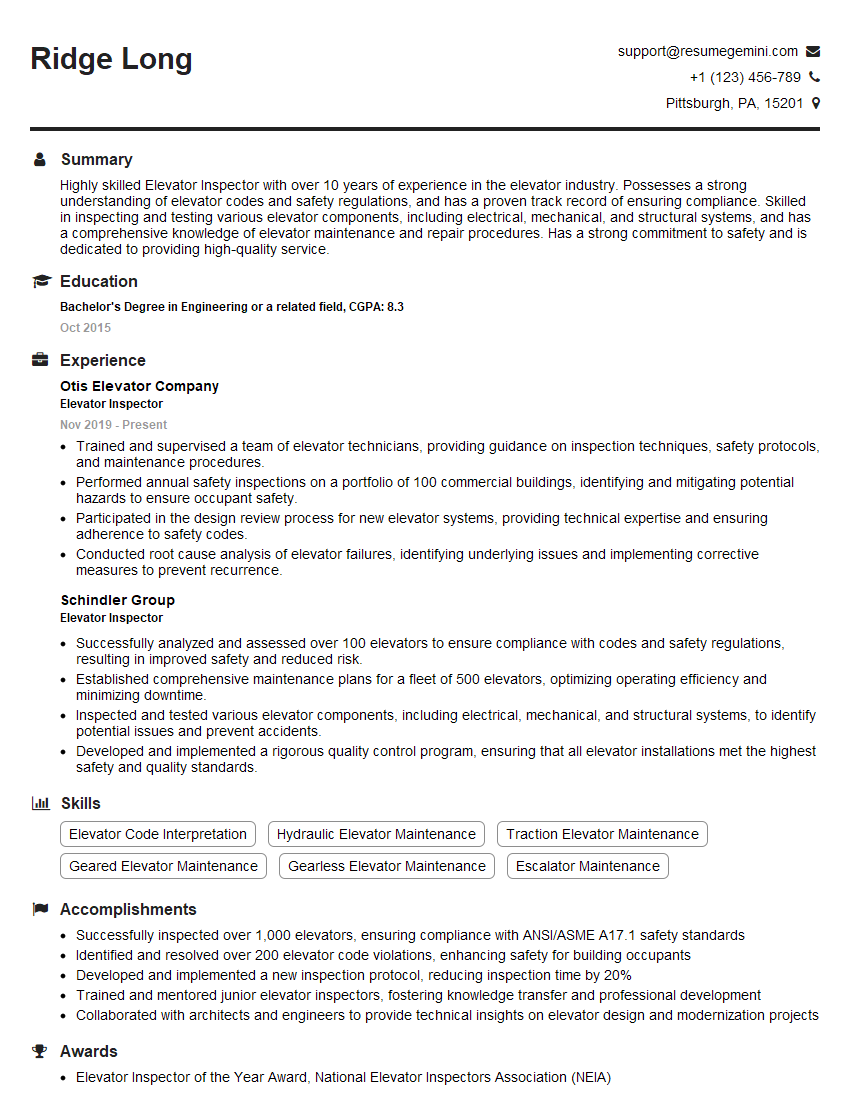
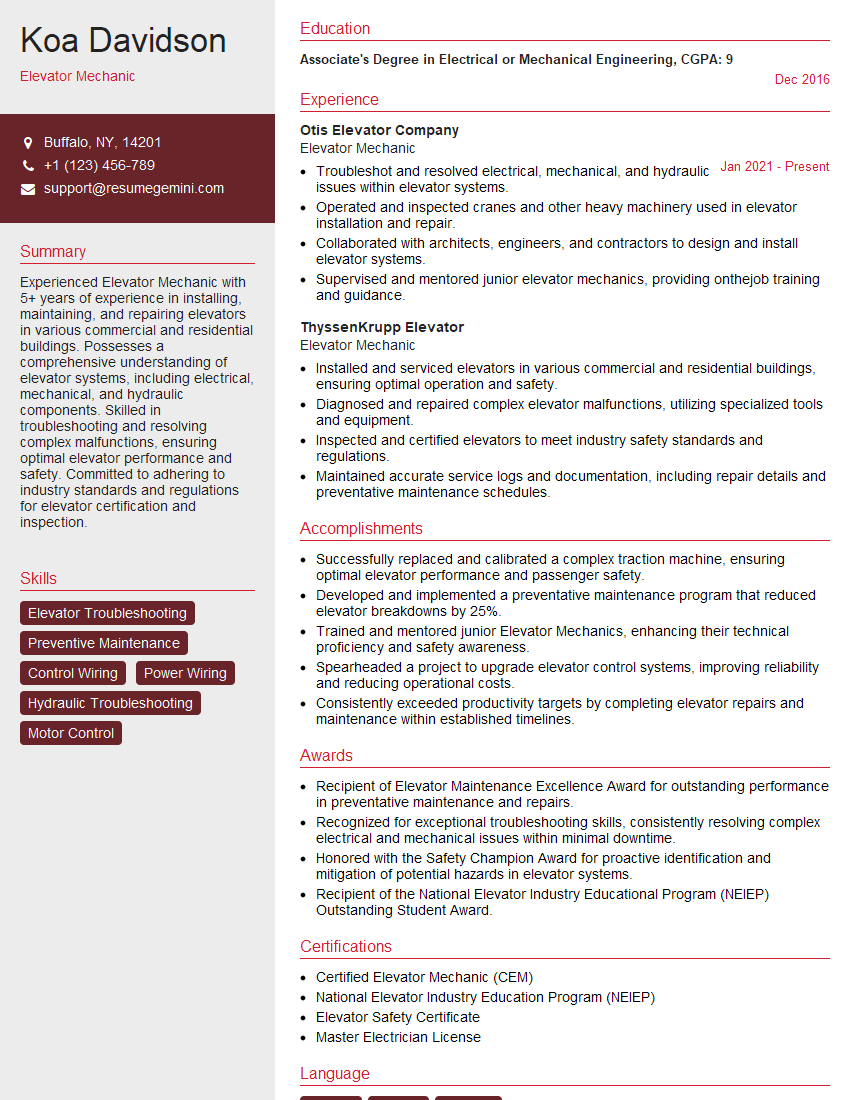
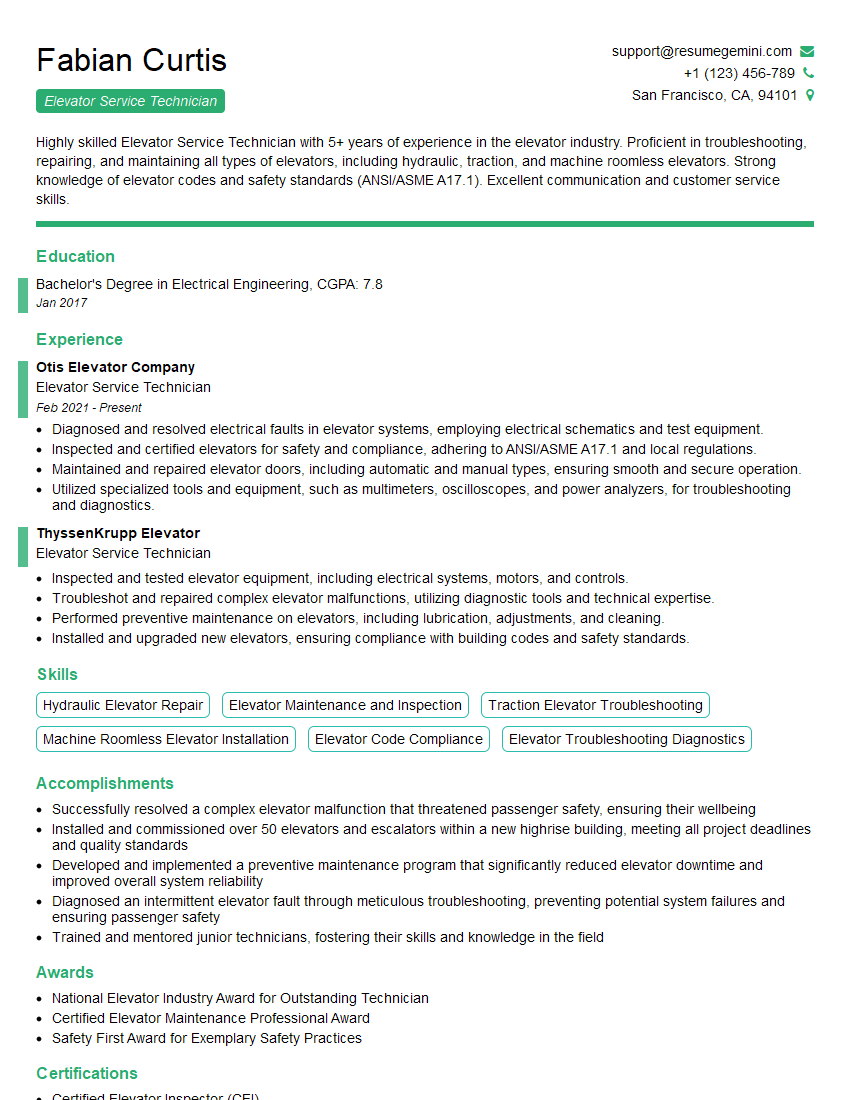
Mastering Elevator Repair Techniques opens doors to a rewarding career with excellent growth potential. As the demand for skilled technicians increases, those with proven expertise are highly sought after. To maximize your job prospects, it’s essential to create a compelling and ATS-friendly resume that showcases your skills and experience effectively. ResumeGemini is a trusted resource that can help you build a professional resume designed to catch the eye of recruiters. ResumeGemini provides examples of resumes tailored to Elevator Repair Techniques, ensuring your qualifications are presented in the best possible light. Take the next step toward your dream career – craft a winning resume with ResumeGemini today.

Explore more articles
Users Rating of Our Blogs
Share Your Experience
We value your feedback! Please rate our content and share your thoughts (optional).
What Readers Say About Our Blog
Very informative content, great job.
good