Preparation is the key to success in any interview. In this post, we’ll explore crucial Elevator Troubleshooting Charts interview questions and equip you with strategies to craft impactful answers. Whether you’re a beginner or a pro, these tips will elevate your preparation.
Questions Asked in Elevator Troubleshooting Charts Interview
Q 1. Explain the purpose of an elevator troubleshooting chart.
An elevator troubleshooting chart is essentially a diagnostic tool, a roadmap that guides technicians through the process of identifying and resolving elevator malfunctions. Think of it like a detailed flowchart for a complex machine. It systematically presents possible causes of problems, along with corresponding tests and solutions, drastically reducing downtime and ensuring safety. Without a chart, troubleshooting would be a chaotic guessing game, potentially leading to costly mistakes and prolonged outages.
Q 2. Describe different types of elevator troubleshooting charts.
Elevator troubleshooting charts come in various forms, tailored to different elevator systems and manufacturers. Some common types include:
- Flowcharts: These visually represent the troubleshooting process using a step-by-step approach, often employing decision points based on test results (e.g., ‘Is the power on? Yes/No’).
- Decision Trees: Similar to flowcharts, but branching out more extensively based on a larger number of potential factors. They are exceptionally useful for complex malfunctions.
- Table-based charts: These organize troubleshooting information into rows and columns, listing symptoms, possible causes, and corresponding solutions. They are best suited when numerous error codes or symptoms need to be cross-referenced.
- Code-based charts: These focus specifically on error codes displayed on the elevator’s control panel. Each code points to a specific problem area, allowing for quick identification.
The choice of chart type depends on the specific elevator system and the complexity of the problem.
Q 3. How do you interpret codes and symbols on an elevator troubleshooting chart?
Interpreting codes and symbols is crucial. Charts typically use a standardized system. Codes (e.g., ‘E123’) often indicate specific faults within the elevator’s control system, while symbols (e.g., a lightning bolt for electrical issues) provide visual cues. Understanding the manufacturer’s specific code and symbol legend is paramount. For instance, an ‘E123’ might indicate a problem with the door safety system, while a ‘—‘ might signal a communication error between components. A detailed legend accompanying the chart is always essential for correct interpretation.
Q 4. What are the common causes of elevator malfunctions as indicated on charts?
Common malfunctions indicated on charts often include:
- Door malfunctions: Issues with opening, closing, or sensing obstructions.
- Electrical problems: Power failures, short circuits, faulty wiring.
- Mechanical failures: Problems with the motor, cables, or hoisting machinery.
- Safety system failures: Malfunctions in emergency brakes, limit switches, or safety sensors.
- Control system errors: Software glitches, communication errors, or faults within the controller itself.
Charts provide a breakdown of these common issues and guide technicians towards the most probable root causes.
Q 5. How do you use a troubleshooting chart to diagnose a specific elevator problem?
Diagnosing a specific problem using a chart involves a systematic process. First, you gather information: What is the exact symptom? Are there any error codes displayed? Once you have this information, you locate the relevant section of the chart. For example, if the elevator is stuck between floors and displays code ‘E456’, you would locate the section dealing with code ‘E456’. The chart will then guide you through a series of tests, possibly involving checking wiring connections, sensor readings, or even inspecting mechanical components. Each test result leads you to the next step, eventually pinpointing the fault.
Q 6. Explain the process of isolating a fault using a troubleshooting chart.
Isolating a fault uses a process of elimination. Imagine it like solving a puzzle. You begin with the most obvious symptoms and work your way through the chart, systematically ruling out possibilities. Each step in the chart may require checking specific components or parameters, like voltage readings or sensor outputs. Let’s say you have a faulty light. The chart might first direct you to check the bulb; if it’s fine, it then leads you to the circuit breaker, then to the wiring, and so on. This structured approach eliminates potential causes one by one until the source of the problem is identified.
Q 7. Describe how you would troubleshoot a stuck elevator using a chart.
Troubleshooting a stuck elevator is a critical scenario requiring swift and safe action. The chart will guide you through safety protocols first – ensuring power is isolated if necessary, and checking for any trapped passengers. Then, based on the specific symptoms (e.g., the elevator is stuck between floors, the doors won’t open, or the indicator lights are flashing), the chart will direct you to specific checks. These could involve testing the emergency brake, checking the power supply, examining the control panel for error codes, and investigating the hoisting mechanism. It’s crucial to follow the chart meticulously, prioritizing safety procedures, and contacting emergency services if needed.
Q 8. How do you differentiate between mechanical and electrical faults using a chart?
Differentiating between mechanical and electrical faults in an elevator using a troubleshooting chart relies heavily on understanding the system’s architecture. Mechanical issues involve the physical components – ropes, sheaves, brakes, doors, and the counterweight system. Electrical faults concern the power supply, control circuits, motors, and safety devices. Charts typically categorize problems based on observed symptoms. For example, a section might be dedicated to ‘Door Problems,’ further subdivided into ‘Door won’t close (mechanical)’ listing causes like damaged rollers or misaligned tracks, and ‘Door won’t close (electrical)’ listing causes such as faulty proximity sensors or control board issues. Another section might cover ‘Car Movement Issues,’ distinguishing between slow operation (potentially a worn motor or brake issue – mechanical) and complete stoppage (potentially a power failure or control system malfunction – electrical). The chart guides the technician to isolate the problem by systematically checking components related to the reported symptom and its likely root cause based on the mechanical versus electrical distinction.
For instance, if an elevator is making unusual grinding noises and experiencing jerky movements, the chart might lead the technician to investigate the mechanical aspects such as guide rails, sheaves, and cables first. On the other hand, if the elevator is simply unresponsive with the lights off, then the chart would immediately direct the investigation towards the electrical components like the main power supply or the control panel. The chart acts as a roadmap, helping us quickly zero in on the problem’s nature and location.
Q 9. How do you handle situations where the chart doesn’t provide a solution?
When a troubleshooting chart doesn’t offer a solution, it means we’ve likely encountered a less common or unusual problem. My approach involves a multi-step strategy:
- Systematic Testing: I perform thorough checks of all related components, even those not specifically mentioned in the chart. This often involves using multimeters, ohmmeters, and other specialized tools to measure voltage, current, and resistance in various parts of the elevator system.
- Referencing Manuals and Schematics: Manufacturer’s manuals and wiring diagrams provide detailed information about the elevator’s internal workings. These are crucial when the chart offers limited guidance.
- Contacting Experts: If the problem remains unresolved, I contact the elevator manufacturer’s technical support or a specialist in elevator repair. They often have access to databases of uncommon faults and solutions.
- Documenting the Issue: Regardless of the outcome, I meticulously document all troubleshooting steps, test results, and observations. This aids in future diagnosis and helps establish a record of maintenance performed.
Think of it like using a map to find your way. The chart is a primary map, but if it leads you to a dead end, you might need to consult a more detailed map (the manual), use a compass (systematic testing) or ask a local (expert consultation).
Q 10. What safety precautions do you take when troubleshooting elevators?
Safety is paramount when troubleshooting elevators. My procedures always include:
- Lockout/Tagout (LOTO): Before commencing any work, I always perform LOTO procedures to de-energize the elevator and prevent accidental activation. This is non-negotiable.
- Personal Protective Equipment (PPE): I use appropriate PPE including safety glasses, gloves, and sturdy footwear. Working at heights or in confined spaces may require additional equipment like harnesses and respirators.
- Visual Inspection: Before touching anything, I thoroughly inspect the area for any potential hazards such as exposed wires, damaged components, or uneven flooring.
- Emergency Procedures: I am familiar with emergency procedures in case of accidents or unexpected equipment failure, and I make sure there’s a clear communication path with colleagues or emergency services.
- Following Manufacturer Guidelines: All work adheres strictly to the manufacturer’s safety recommendations and guidelines specified in their manuals and any accompanying documentation.
Safety isn’t an option; it’s a fundamental principle that guides every step of the troubleshooting process.
Q 11. Describe your experience with different elevator manufacturers’ troubleshooting charts.
My experience spans several major elevator manufacturers, including Otis, Schindler, and ThyssenKrupp. Each manufacturer has its own unique design philosophies and troubleshooting approaches reflected in their charts. Otis charts, for example, tend to be highly detailed and organized, often employing a hierarchical structure that guides the technician through a series of diagnostic steps. Schindler charts, on the other hand, might favour a more visual or flowchart-style approach. ThyssenKrupp documentation often integrates advanced diagnostics using computerized systems. Despite these variations, the underlying principles remain consistent – identifying symptoms, isolating causes, and proposing solutions. The key is understanding the specific terminology and conventions used by each manufacturer. I find it crucial to familiarize myself with the specific documentation provided for each elevator brand and model I work on. This helps me to accurately use and interpret their specific troubleshooting charts and avoid confusion.
Q 12. How do you maintain and update elevator troubleshooting charts?
Maintaining and updating troubleshooting charts is an ongoing process crucial for accuracy and efficiency.
- Regular Review: I review the charts periodically, ideally after completing each significant repair or maintenance task. This allows for incorporating new information and correcting any inaccuracies.
- Feedback Incorporation: Feedback from other technicians or from the manufacturer’s updates is invaluable. Any new findings or solutions are documented and added to the chart.
- Software Integration: For some manufacturers, troubleshooting charts might be integrated into digital diagnostic software or mobile applications. This allows for easier updates and access to the latest information.
- Version Control: To avoid confusion, it’s crucial to maintain version control of the charts, clearly indicating the date of the last revision. This helps maintain the integrity of the information.
- Centralized Storage: Charts should be stored in a secure, accessible, and easily searchable location, whether physical or digital.
Think of the chart as a living document that evolves with our understanding of the equipment and any changes made to the elevator’s systems.
Q 13. What are the limitations of using only troubleshooting charts for diagnostics?
While troubleshooting charts are indispensable tools, they have limitations. They cannot account for every possible scenario. Charts offer a structured approach based on common issues, but unusual failures or complex interactions between components may not be fully covered. Furthermore, charts often rely on observable symptoms, which may not always accurately reflect the root cause. A symptom could arise from multiple sources, requiring further investigation beyond the chart’s guidance. Charts also assume a level of experience and expertise from the technician – a novice might misinterpret information or overlook crucial details. Finally, charts usually don’t provide in-depth electrical or mechanical diagnostics. To diagnose these problems effectively, you may need to use other specialized tools such as multimeters and oscilloscopes.
Q 14. How do you integrate troubleshooting charts with other diagnostic tools?
Troubleshooting charts are most effective when integrated with other diagnostic tools. Charts provide a high-level overview and guidance, but other tools are needed for detailed analysis.
- Multimeters: Used to measure voltage, current, and resistance in various parts of the electrical system, verifying continuity and detecting shorts or open circuits. The chart might suggest checking the voltage at a particular point; the multimeter confirms the reading.
- Oscilloscopes: Allow examination of waveforms, helping identify intermittent faults or problems in the control signals that the chart might not directly reveal.
- Specialized Software: Modern elevators incorporate diagnostic software and communication interfaces, providing access to error codes and real-time data that supplement the information in a chart.
- Infrared Thermometers: Can detect overheating components, providing clues to potential mechanical or electrical issues that aren’t immediately apparent. Charts might indicate overheating as a potential problem, but infrared technology helps pinpoint the location.
The chart serves as the initial roadmap, while the other tools provide the detailed surveying equipment, helping navigate complex situations and provide precise solutions.
Q 15. Explain the role of preventative maintenance in reducing troubleshooting needs.
Preventative maintenance is the cornerstone of minimizing elevator troubleshooting. Think of it like regular check-ups for your car – catching small problems before they become major breakdowns. By proactively inspecting and servicing elevator components according to a schedule, we significantly reduce the likelihood of unexpected failures and costly repairs.
- Reduced downtime: Regularly servicing parts like doors, cables, and motors prevents unexpected stoppages, keeping the elevator operational and minimizing disruption to building occupants.
- Extended lifespan of components: Lubrication, cleaning, and minor adjustments during preventative maintenance extend the life of elevator parts, reducing the need for premature replacements.
- Early detection of potential issues: Regular inspections allow technicians to identify minor wear and tear or potential problems before they escalate into major failures, saving time and resources in the long run.
- Improved safety: Preventative maintenance directly contributes to enhanced safety by ensuring that all safety systems are functioning correctly and identifying any potential hazards before they can cause accidents.
For example, regularly inspecting and lubricating guide rails prevents excessive wear and tear, which can lead to costly repairs or even complete guide rail replacement down the line. Similarly, checking the safety systems during preventative maintenance ensures that they’ll function correctly in an emergency.
Career Expert Tips:
- Ace those interviews! Prepare effectively by reviewing the Top 50 Most Common Interview Questions on ResumeGemini.
- Navigate your job search with confidence! Explore a wide range of Career Tips on ResumeGemini. Learn about common challenges and recommendations to overcome them.
- Craft the perfect resume! Master the Art of Resume Writing with ResumeGemini’s guide. Showcase your unique qualifications and achievements effectively.
- Don’t miss out on holiday savings! Build your dream resume with ResumeGemini’s ATS optimized templates.
Q 16. Describe a situation where a troubleshooting chart helped you solve a complex elevator issue.
I once encountered a situation where an elevator was experiencing intermittent power failures. The initial troubleshooting steps, checking the main power supply and circuit breakers, yielded no results. This is where our comprehensive troubleshooting chart proved invaluable. The chart systematically guides the technician through potential causes based on observed symptoms. In this case, the chart led me to investigate the motor control system. After following the steps outlined for power-related issues, I discovered a loose connection within the motor control panel. Once this connection was tightened, the power failures ceased.
The troubleshooting chart saved me valuable time. Without it, I would have likely spent hours systematically checking every component, potentially overlooking the simple, yet critical, loose connection. It’s a testament to the power of a well-structured, systematic approach to troubleshooting.
Q 17. How do you prioritize troubleshooting tasks based on urgency and safety?
Prioritizing troubleshooting tasks is crucial, especially when dealing with multiple issues simultaneously. Safety always comes first. Issues that pose a direct threat to passenger safety – like a malfunctioning emergency brake or door obstruction – take immediate precedence. We utilize a risk assessment matrix, considering both the urgency and the potential impact of the problem.
- Immediate Safety Hazards (High Urgency, High Impact): These require immediate attention and often involve emergency response protocols. Examples include trapped passengers, malfunctioning emergency brakes, or fire alarm activation.
- High-Impact Issues (High Impact, Moderate Urgency): These might not pose an immediate safety risk but can cause significant disruptions to building operations or substantial repair costs if left unattended. Examples include complete elevator shutdown or persistent operational errors.
- Low-Impact Issues (Low Impact, Low Urgency): These are minor inconveniences that can be addressed during routine maintenance. Examples include minor cosmetic damage or slight noises.
We use a ticketing system that automatically assigns priority levels based on predefined criteria. This ensures that our technicians address the most critical issues first, while maintaining a consistent workflow.
Q 18. What are the key performance indicators (KPIs) you monitor related to elevator troubleshooting?
We monitor several key performance indicators (KPIs) to assess the effectiveness of our elevator troubleshooting and maintenance efforts. These KPIs provide valuable data for continuous improvement.
- Mean Time To Repair (MTTR): This measures the average time it takes to restore an elevator to full operational status after a failure. A lower MTTR indicates efficient troubleshooting.
- Elevator Uptime: This reflects the percentage of time the elevators are operational. Higher uptime is a key indicator of effective maintenance and troubleshooting.
- Number of Service Calls: Tracking the frequency of service calls helps identify trends and potential systemic issues within the elevator system.
- Passenger Complaint Rate: Monitoring the number of complaints received regarding elevator malfunctions helps gauge passenger satisfaction and identify recurring problems.
- Cost per Repair: This KPI helps us track the cost-effectiveness of our troubleshooting and repair processes.
By analyzing these KPIs, we can identify areas needing improvement, optimize our processes, and ultimately enhance the overall performance and reliability of the elevators.
Q 19. How do you document your troubleshooting process and findings?
Thorough documentation is essential for effective elevator troubleshooting and maintenance. We maintain detailed records of every troubleshooting event, utilizing both digital and physical methods.
- Digital Records: We use a computerized maintenance management system (CMMS) to store detailed records of each service call, including the date, time, reported problem, troubleshooting steps taken, parts replaced, and final resolution. This data is easily accessible and searchable.
- Physical Records: We also keep physical records, such as work orders and inspection reports, in case of digital system failures. These hard copies contain detailed information about the repair and ensure data backup.
- Photographs and Videos: Visual documentation, such as photographs and videos, are taken to capture the state of the elevator before, during, and after repairs. This is particularly helpful for complex issues.
All documentation follows a standardized format to ensure consistency and clarity, making it easy for other technicians to understand the history and status of each elevator.
Q 20. Explain the importance of accurate record-keeping in elevator maintenance.
Accurate record-keeping is paramount in elevator maintenance for several critical reasons.
- Compliance and Safety: Accurate records demonstrate compliance with safety regulations and building codes. This documentation is crucial in case of audits or investigations following accidents or incidents.
- Predictive Maintenance: Data from past repairs and maintenance activities helps to identify patterns and predict potential future failures. This allows for proactive maintenance, reducing downtime and preventing costly breakdowns.
- Warranty Claims: Detailed records are essential for processing warranty claims on faulty components or systems. Accurate documentation significantly improves the chances of a successful claim.
- Improved Efficiency: Access to complete and accurate historical data allows technicians to quickly diagnose and resolve issues, reducing repair time and improving overall efficiency.
- Legal Protection: Comprehensive documentation serves as a legal record of performed maintenance and repairs, protecting the company from potential liability.
In essence, accurate record-keeping is not just good practice – it is crucial for safety, compliance, efficiency, and legal protection.
Q 21. What software or tools do you use to manage elevator troubleshooting data?
We utilize a combination of software and tools to manage elevator troubleshooting data effectively.
- Computerized Maintenance Management System (CMMS): Our primary tool is a CMMS, a software platform designed specifically for managing maintenance activities. This system allows us to track work orders, schedule preventative maintenance, store repair histories, and manage inventory.
- Diagnostic Tools: We use specialized diagnostic tools to test electrical systems, hydraulic systems, and other elevator components. These tools provide real-time data and assist in pinpointing the source of malfunctions.
- Mobile Devices: Technicians use mobile devices equipped with the CMMS app to access information, update records in real-time, and submit reports remotely.
- Data Analysis Software: We utilize data analysis software to generate reports and identify trends from our CMMS data. This helps us make informed decisions regarding preventative maintenance scheduling, parts management, and resource allocation.
Integrating these tools enables us to streamline our workflows, improve data accuracy, and make data-driven decisions that enhance elevator reliability and safety.
Q 22. How do you stay updated on the latest elevator technologies and troubleshooting methods?
Staying current in the dynamic field of elevator technology requires a multi-pronged approach. I actively participate in continuing education programs offered by organizations like the National Elevator Industry Educational Program (NEIEP) and attend industry conferences and workshops. These events provide invaluable insights into the latest advancements in control systems, safety features, and troubleshooting techniques. Furthermore, I subscribe to industry-specific journals and online publications, keeping abreast of new regulations and technological innovations. Regularly reviewing manufacturer documentation and participating in online forums dedicated to elevator maintenance and repair also ensures I’m up-to-date on the latest best practices and solutions to emerging challenges. Finally, I actively seek out opportunities to work with new equipment and technologies to gain hands-on experience.
Q 23. Describe your experience working with different types of elevator control systems.
My experience encompasses a wide range of elevator control systems, from older, electromechanical systems to the most modern microprocessor-based systems. I’ve worked extensively with various manufacturers, including Otis, Schindler, ThyssenKrupp, and Kone, each with its unique control system architecture. For instance, I’m proficient in troubleshooting and maintaining both relay logic systems, which utilize interconnected relays and timers, and programmable logic controllers (PLCs), which are computer-based systems offering greater flexibility and diagnostic capabilities. My expertise also extends to understanding the various communication protocols used in modern elevators, such as serial communication (RS-232, RS-485) and fieldbus technologies (e.g., CANopen, Profibus). Understanding these different systems allows me to quickly diagnose and resolve issues regardless of the specific elevator’s age or manufacturer.
Q 24. How do you communicate technical information effectively to non-technical personnel?
Communicating complex technical issues to non-technical personnel requires clear, concise language and the avoidance of jargon. I use analogies and visual aids to explain concepts effectively. For example, instead of saying, “The hall call register is malfunctioning,” I might say, “The system that receives requests to go to a specific floor isn’t working properly, like a phone that doesn’t ring when someone calls.” I also use diagrams and flowcharts to illustrate the problem and the proposed solution. In addition to verbal communication, written reports with clear, simple language are also crucial. I ensure that reports include photos or diagrams whenever possible to aid understanding. Active listening and confirming understanding through follow-up questions are essential to ensure the message is received correctly.
Q 25. How do you handle pressure and tight deadlines during elevator troubleshooting?
Elevator troubleshooting often involves high-pressure situations due to the critical nature of the service. To manage pressure and meet tight deadlines, I employ a systematic approach. This includes prioritizing tasks based on urgency and impact, using effective time management techniques, and delegating tasks where appropriate. I stay calm and focused under pressure by breaking down complex problems into smaller, manageable steps. Regular maintenance and proactive measures can also prevent many issues, thereby reducing emergency calls and the subsequent stress. Maintaining good communication with building management and occupants regarding progress and timelines is also critical to managing expectations and mitigating any potential anxieties.
Q 26. Describe a time you had to troubleshoot a complex elevator problem under pressure.
In one instance, a high-rise building experienced complete elevator failure during a rush hour. The building management was understandably very concerned about the disruption and potential safety hazards. The initial diagnosis pointed to a problem with the main power supply, but after a thorough inspection, it became clear that the issue stemmed from a faulty component within the main control system’s PLC. Under significant pressure, I methodically analyzed the PLC’s diagnostic logs, identified the failing component, and replaced it. To expedite the repair and minimize downtime, I collaborated with a colleague to perform the repair, splitting tasks based on our individual expertise. This collaborative effort allowed us to restore elevator service significantly faster than if I had worked alone, ensuring the building’s tenants and workers were able to leave safely and preventing further disruptions. Effective communication with the building management throughout the process played a critical role in alleviating their concerns.
Q 27. How would you train a new technician on the use of elevator troubleshooting charts?
Training a new technician on elevator troubleshooting charts involves a phased approach. First, I’d start with a basic overview of elevator systems and components, followed by an explanation of how the troubleshooting charts are structured and utilized. This would involve hands-on practice using simplified charts and simulated scenarios. I’d demonstrate how to interpret error codes, understand the logic flow within the chart, and identify potential solutions. The training would progress from simple scenarios to more complex ones, incorporating real-world case studies and practical exercises. Throughout the training, I would emphasize safety procedures and best practices. Regular quizzes and assessments would be used to evaluate the trainee’s understanding and competence. Finally, ongoing mentorship and shadowing experienced technicians would solidify their knowledge and build confidence in real-world situations.
Q 28. What are the ethical considerations related to elevator maintenance and troubleshooting?
Ethical considerations in elevator maintenance and troubleshooting are paramount. Safety is the top priority. This means adhering strictly to all safety regulations, using only approved parts and procedures, and performing regular inspections to identify and address potential hazards. Maintaining accurate records of all maintenance activities and repairs is crucial for transparency and accountability. Honest and transparent communication with clients about the condition of the elevators and the cost of repairs is also essential. Avoiding conflicts of interest, such as accepting bribes or using substandard parts to save money, is vital to maintaining integrity and ensuring public safety. Continuous professional development to stay up-to-date with safety standards and best practices is a crucial element of ethical elevator maintenance.
Key Topics to Learn for Elevator Troubleshooting Charts Interview
- Understanding Elevator Systems: Familiarize yourself with the different types of elevators (hydraulic, traction, etc.) and their core components. This foundational knowledge is crucial for interpreting charts effectively.
- Interpreting Schematic Diagrams: Practice reading and understanding electrical schematics, hydraulic diagrams, and control system flowcharts commonly found in elevator troubleshooting charts. Focus on tracing signal paths and identifying potential points of failure.
- Code Recognition and Troubleshooting: Learn to interpret error codes displayed on elevator control panels and relate them to specific components or system issues using the troubleshooting chart as a guide. Practice diagnosing common malfunctions based on these codes.
- Safety Procedures and Regulations: Understand the importance of safety protocols when working with elevators. Familiarize yourself with relevant industry regulations and how they relate to troubleshooting procedures.
- Practical Application of Charts: Imagine scenarios where you encounter specific elevator malfunctions. Practice using a sample troubleshooting chart to diagnose the problem, identify the likely cause, and outline the steps for repair or maintenance.
- Troubleshooting Methodologies: Develop a systematic approach to troubleshooting. Learn to use elimination techniques, logic, and diagnostic tools efficiently to pinpoint issues quickly and accurately.
- Preventive Maintenance and its Role: Understand how preventive maintenance reduces the need for extensive troubleshooting and contributes to the overall safety and longevity of elevator systems.
Next Steps
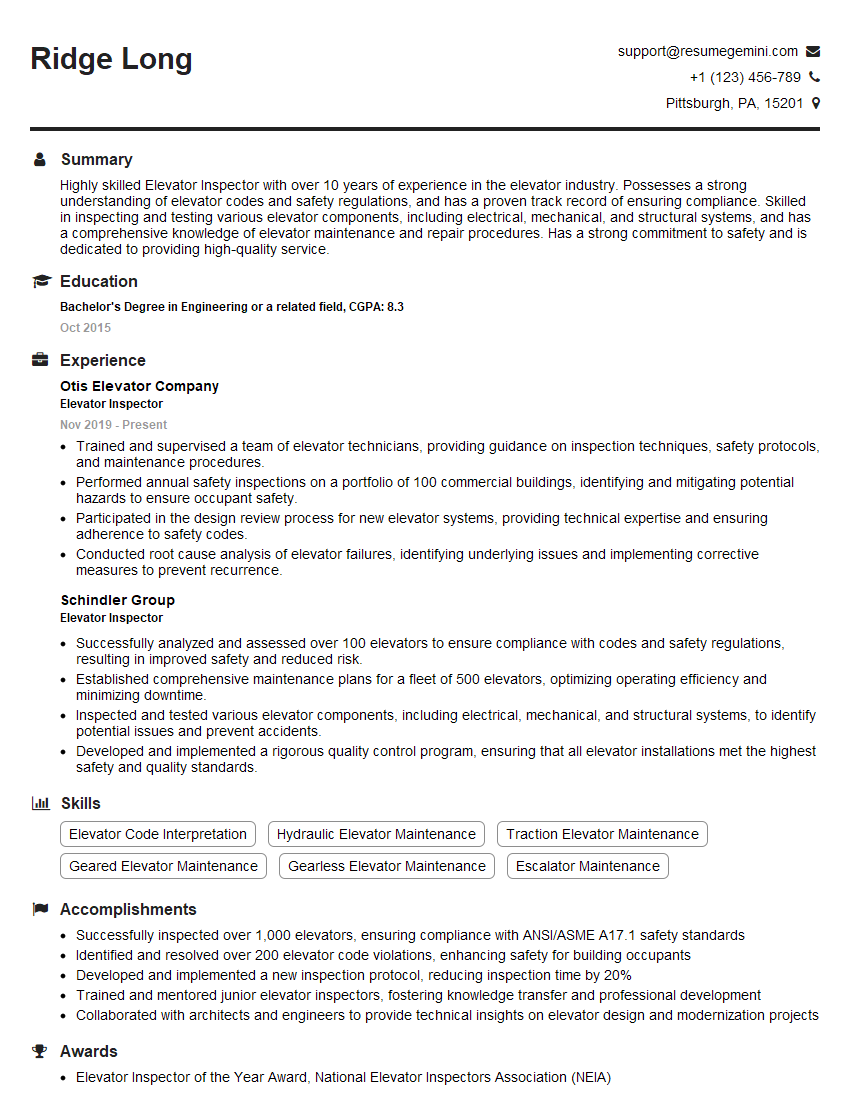
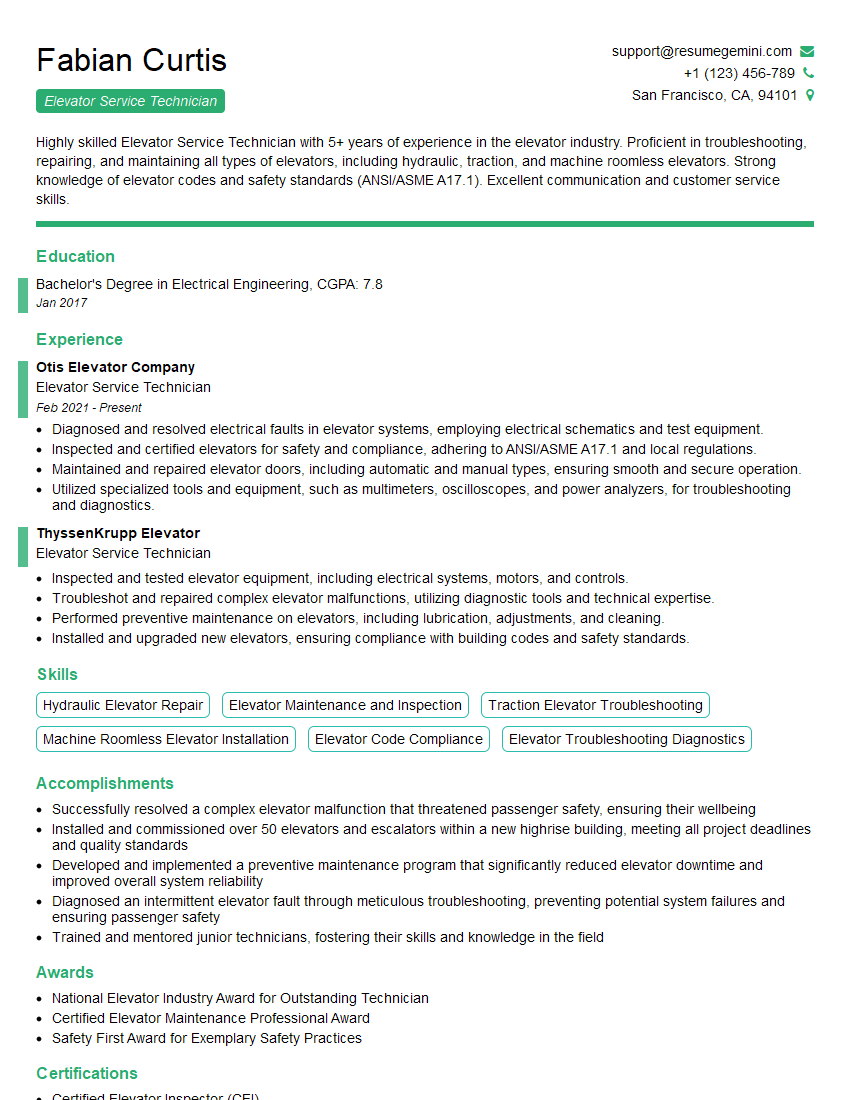
Mastering elevator troubleshooting charts is vital for career advancement in the elevator industry. A strong understanding of these charts demonstrates technical proficiency and problem-solving skills, opening doors to higher-level positions and increased earning potential. To maximize your job prospects, create an ATS-friendly resume that showcases your expertise. ResumeGemini is a trusted resource to help you build a professional and impactful resume. We offer examples of resumes tailored to the Elevator Troubleshooting Charts field to help you get started.


Explore more articles
Users Rating of Our Blogs
Share Your Experience
We value your feedback! Please rate our content and share your thoughts (optional).
What Readers Say About Our Blog
Very informative content, great job.
good