Interviews are opportunities to demonstrate your expertise, and this guide is here to help you shine. Explore the essential Eligibility and Registration Management interview questions that employers frequently ask, paired with strategies for crafting responses that set you apart from the competition.
Questions Asked in Eligibility and Registration Management Interview
Q 1. Explain the process of verifying eligibility for a new applicant.
Verifying eligibility for a new applicant is a multi-step process that ensures only those who meet predefined criteria are granted access to a program, service, or benefit. This process often involves data collection, validation, and comparison against established rules.
- Data Collection: Gathering necessary information from the applicant, such as demographic details, income levels, educational qualifications, or medical records, depending on the specific program. This can involve online forms, paper applications, or interviews.
- Data Validation: Checking the accuracy and completeness of the submitted data. This might include verifying addresses, confirming employment history through third-party sources, or cross-referencing information against existing databases. Inconsistencies trigger further investigation.
- Eligibility Determination: Applying the specific eligibility rules to the validated data. This often involves a rule engine or a decision tree that systematically assesses the applicant’s qualifications. For instance, a scholarship might require a minimum GPA and financial need, both of which would be assessed in this step.
- Notification: Informing the applicant of the eligibility decision. This should be done in a clear, concise manner, providing reasons for approval or denial and explaining the appeal process if applicable.
For example, in a housing assistance program, eligibility might depend on income level and family size. The system would check if the applicant’s income is below a certain threshold and if the household size meets the program’s requirements. Failure to meet either criterion would result in ineligibility.
Q 2. Describe your experience with different eligibility criteria and their application.
Throughout my career, I’ve worked with a wide variety of eligibility criteria, each requiring a unique approach. Some examples include:
- Income-based programs: These programs use income thresholds to determine eligibility. I’ve managed systems that calculate adjusted gross income (AGI) based on tax returns, verifying employment history to ensure accuracy.
- Age-based programs: Here, eligibility hinges on a specific age range. I’ve implemented automated checks to ensure applicants fall within the designated age brackets, handling exceptions for extenuating circumstances.
- Merit-based programs: These require assessment of academic achievement, professional experience, or other merit-based criteria. I’ve developed scoring systems to objectively evaluate applications and rank them based on established guidelines.
- Need-based programs: These assess factors like financial hardship or demonstrated need. I’ve used algorithms to determine eligibility based on weighted factors, ensuring a fair and consistent evaluation.
Adapting to these varying criteria required flexibility and the ability to translate complex rules into clear, functional systems. I’ve consistently prioritized clear communication with stakeholders to ensure all eligibility rules are understood and applied consistently.
Q 3. How do you handle discrepancies or inconsistencies in applicant data?
Discrepancies and inconsistencies in applicant data are inevitable. My approach involves a systematic process:
- Identification: Employing data validation rules and automated checks to flag inconsistencies during the initial data entry and review stages. This could be anything from mismatched dates to conflicting information on income sources.
- Verification: Contacting applicants to clarify conflicting information or requesting supporting documentation to resolve discrepancies. This may involve phone calls, email exchanges, or letters.
- Documentation: Meticulously documenting all communication and actions taken to resolve discrepancies. This ensures transparency and allows for easy audit trails.
- Escalation: Escalating unresolved issues to supervisors or a dedicated review team for further investigation, particularly in cases of potential fraud or significant inconsistencies.
For instance, if an applicant’s stated income doesn’t match their reported tax information, I would contact them for clarification. If no resolution is reached, the discrepancy is flagged and escalated to avoid inaccurate eligibility determinations.
Q 4. What software or systems are you proficient in for managing eligibility and registration?
My proficiency spans several software systems commonly used in eligibility and registration management. I’m expert in:
- CRM (Customer Relationship Management) systems: Such as Salesforce or Microsoft Dynamics 365, for managing applicant interactions and tracking the progress of applications.
- Database management systems: Including SQL Server, MySQL, and Oracle, for storing and manipulating applicant data, ensuring data integrity and efficient retrieval.
- Workflow automation tools: Like Nintex Workflow Cloud or Microsoft Power Automate, to streamline the application process, automatically routing applications to appropriate reviewers and ensuring timely processing.
- Eligibility determination engines: Specialized software designed to evaluate applicant data against eligibility rules, reducing manual processing and ensuring consistent application of rules.
I also have experience integrating these systems to create a seamless workflow, minimizing data duplication and improving operational efficiency.
Q 5. How do you ensure data accuracy and integrity in an eligibility and registration system?
Data accuracy and integrity are paramount. I employ several strategies to maintain this:
- Data validation rules: Implementing checks to ensure data types, formats, and ranges are correct. For example, preventing the entry of non-numeric characters in age fields or ensuring date formats are consistent.
- Data encryption: Protecting sensitive applicant information through encryption both in transit and at rest to comply with privacy regulations.
- Regular data audits: Performing periodic checks to identify and correct any inconsistencies or errors. This includes data comparison against external sources where applicable.
- Access control: Implementing role-based access controls to limit access to sensitive data only to authorized personnel.
- Version control: Using version control systems to track changes to eligibility criteria and ensure data integrity over time.
Regular data cleansing and reconciliation procedures, coupled with robust security measures, are essential for maintaining a reliable and trustworthy eligibility and registration system.
Q 6. Explain your approach to resolving eligibility-related issues and appeals.
My approach to resolving eligibility-related issues and appeals involves a fair and transparent process:
- Clear communication: Providing applicants with clear explanations of the eligibility decision, including reasons for approval or denial, and the avenues for appeal.
- Documented review: Thoroughly reviewing appeals, examining supporting documentation, and verifying the application of eligibility rules.
- Objective evaluation: Applying a consistent and impartial evaluation process to ensure fairness.
- Timely resolution: Providing applicants with a timely response to their appeal, communicating the outcome clearly and concisely.
- Escalation procedure: Establishing a clear escalation path for cases requiring further review or involving complex eligibility questions.
For example, if an applicant appeals a denial based on income, I would carefully review their documentation, compare it to the established income thresholds, and communicate the findings in writing. If the appeal is successful, the system is updated to reflect the revised decision.
Q 7. Describe your experience with different registration methods (online, phone, in-person).
My experience encompasses a range of registration methods, each with its own advantages and challenges:
- Online Registration: This offers convenience and scalability. I’ve worked on systems that use secure portals, automated data validation, and electronic signatures. Challenges include ensuring system accessibility and addressing potential technical issues.
- Phone Registration: This provides personal interaction but can be time-consuming and prone to errors. I’ve developed scripts and training materials to ensure consistency and accuracy in collecting data. Challenges include managing call volumes and ensuring data entry accuracy.
- In-Person Registration: This provides a high level of personal interaction and allows for immediate clarification of questions. I’ve managed teams of registrars, developed training materials, and implemented quality control measures to ensure accuracy and consistency. Challenges include managing resources and ensuring consistent application of eligibility criteria across locations.
The optimal method often depends on the target audience, the complexity of the application process, and available resources. I strive to select and integrate the methods best suited to the specific program and its applicants.
Q 8. How do you maintain compliance with relevant regulations and guidelines?
Maintaining compliance in Eligibility and Registration Management is paramount. It involves a proactive and multi-faceted approach. This starts with a thorough understanding of all applicable regulations, including HIPAA (for healthcare), FERPA (for education), GDPR (for European data), and any industry-specific rules. We regularly review these regulations for updates and changes.
- Regular Audits: We conduct internal audits to ensure our processes align with regulations. This includes reviewing data handling procedures, access controls, and record-keeping practices.
- Training and Documentation: All staff receive regular training on compliance regulations and best practices. We maintain comprehensive documentation of our processes and policies for easy auditing.
- Risk Assessment: We conduct regular risk assessments to identify potential compliance gaps and implement corrective actions. This involves analyzing vulnerabilities and developing mitigation strategies.
- Vendor Management: If we utilize third-party vendors for data processing or storage, we carefully vet them to ensure they meet the same compliance standards. We require contracts with robust data protection clauses.
For example, in a healthcare setting, we ensure strict adherence to HIPAA rules concerning Protected Health Information (PHI) by implementing encryption, access controls, and audit trails. In a university setting, FERPA compliance means careful management of student records and ensuring only authorized personnel have access.
Q 9. How do you manage large volumes of applications and registrations efficiently?
Managing high volumes of applications and registrations efficiently requires a robust, automated system. Think of it like an airport—smoothly processing thousands of passengers requires a well-oiled machine.
- Automated Workflow: We use automated workflows to streamline the application process. This includes automated data entry, validation, and routing of applications based on predefined criteria. This minimizes manual intervention and speeds up processing.
- Data Validation: Real-time data validation helps prevent errors early on. For example, automatically checking if a Social Security number or email address already exists in the database.
- Batch Processing: We leverage batch processing capabilities to handle large volumes of applications simultaneously, minimizing individual processing times.
- Scalable Infrastructure: Our systems are designed to handle fluctuating volumes, ensuring responsiveness even during peak periods. Cloud-based solutions often provide this scalability.
- Workflow Optimization: We continuously monitor and analyze our processes to identify bottlenecks and areas for improvement. This might involve reorganizing tasks or implementing new technologies.
In practice, this means using software that can efficiently handle large datasets, automate repetitive tasks, and provide real-time reporting on application statuses. Imagine a system that automatically flags incomplete applications, allowing for immediate follow-up with applicants.
Q 10. Describe your experience with data analysis and reporting in eligibility and registration.
Data analysis and reporting are critical for understanding trends, identifying inefficiencies, and making data-driven decisions. It’s like having a dashboard that shows the overall health of the registration process.
- Key Performance Indicators (KPIs): We track various KPIs such as application completion rates, processing times, error rates, and customer satisfaction scores. This provides a snapshot of the effectiveness of our processes.
- Trend Analysis: By analyzing historical data, we can identify trends and patterns. This could reveal seasonal peaks in applications or particular demographics with higher error rates.
- Reporting and Dashboards: We generate regular reports and use dashboards to visualize key metrics. This information is shared with stakeholders to inform decision-making and resource allocation.
- Predictive Analytics: In some cases, we use predictive analytics to forecast future application volumes and resource needs. This helps in proactive planning and resource allocation.
For instance, we might analyze data to determine if a particular step in the application process is causing a significant bottleneck. This information can be used to improve the process and reduce processing times.
Q 11. Explain your process for identifying and resolving system errors or bugs.
Identifying and resolving system errors is a continuous process. Think of it like a doctor diagnosing and treating a patient—a systematic approach is key.
- Error Logging: Our systems capture detailed logs of all errors and exceptions. This provides valuable clues for debugging.
- Testing and QA: We have a robust testing and quality assurance (QA) process to identify and fix bugs before they reach production. This includes unit testing, integration testing, and user acceptance testing.
- Bug Tracking System: We use a bug tracking system (e.g., Jira) to manage reported errors, track their status, and assign them to developers for resolution.
- Root Cause Analysis: When a critical error occurs, we conduct a thorough root cause analysis to understand the underlying issue and prevent it from happening again.
- Monitoring and Alerting: We continuously monitor the system for errors and anomalies. Automated alerts notify us of critical issues requiring immediate attention.
For example, if a specific field in the application is causing frequent errors, we might investigate the data validation rules or the database schema to identify and fix the problem.
Q 12. How do you prioritize tasks and manage competing deadlines in a high-volume environment?
Prioritization in a high-volume environment is crucial. I use a combination of techniques to manage competing deadlines and ensure the most important tasks are addressed first.
- Prioritization Matrix: I use a prioritization matrix (e.g., Eisenhower Matrix) to categorize tasks based on urgency and importance. This helps me focus on high-impact, urgent tasks first.
- Project Management Software: Tools like Asana or Trello help me track tasks, deadlines, and progress. They allow me to visualize my workload and manage dependencies effectively.
- Time Blocking: I allocate specific time blocks for different tasks, ensuring I dedicate sufficient time to high-priority items.
- Agile Methodology: In many cases, an agile approach allows for flexibility and adaptation to changing priorities. This involves breaking down large tasks into smaller, manageable units.
- Communication: Open communication with stakeholders is essential to manage expectations and ensure everyone is aligned on priorities.
Imagine a scenario where a critical system update is due, but you also have numerous pending applications to process. The prioritization matrix would help determine which task to tackle first based on its impact and deadline.
Q 13. Describe your experience with customer service and communication in eligibility and registration.
Excellent customer service and clear communication are vital in Eligibility and Registration. It’s about building trust and ensuring a positive experience for applicants.
- Multiple Communication Channels: We offer multiple communication channels such as email, phone, and online chat to accommodate applicant preferences.
- Prompt Responses: We strive to respond to inquiries promptly and provide clear, concise information.
- User-Friendly Materials: We develop user-friendly application forms, instructions, and FAQs to minimize confusion and frustration.
- Personalized Communication: Whenever possible, we personalize our communications to make applicants feel valued and understood.
- Feedback Mechanisms: We actively solicit feedback from applicants to identify areas for improvement in our processes and communication.
For example, if an applicant is having trouble completing an online form, providing clear, step-by-step instructions or offering personalized assistance via phone or chat can make a significant difference.
Q 14. How do you ensure data security and privacy in your work?
Data security and privacy are non-negotiable. We employ multiple layers of security to protect sensitive applicant information. It’s like building a fortress to protect valuable assets.
- Access Controls: We implement strict access controls, ensuring that only authorized personnel have access to sensitive data. This involves role-based access control and multi-factor authentication.
- Data Encryption: We use encryption both in transit and at rest to protect data from unauthorized access. This includes encrypting databases, communication channels, and sensitive files.
- Regular Security Audits: We conduct regular security audits to identify vulnerabilities and ensure our systems are up-to-date with the latest security patches.
- Data Loss Prevention (DLP): We implement DLP measures to prevent sensitive data from leaving the organization’s control. This involves monitoring data transfers and blocking unauthorized access attempts.
- Compliance with Regulations: We ensure full compliance with all relevant data privacy regulations, including GDPR, CCPA, and HIPAA, as applicable.
For instance, we might use encryption to protect applicant’s personal information stored in our database, and we might conduct regular penetration testing to identify and address any security vulnerabilities before they can be exploited.
Q 15. What is your experience with different types of eligibility verification methods?
Eligibility verification methods vary widely depending on the program and the information available. I’ve extensive experience with several key approaches:
- Real-time verification: This involves instantly checking eligibility data against a database, such as a state Medicaid system or a national insurance provider’s database. This is the most efficient method, providing immediate results and minimizing delays. For example, I’ve used this method extensively to verify Medicare eligibility during patient registration at a large hospital system.
- Batch processing: Here, eligibility information for multiple applicants is processed in bulk. This is cost-effective for large volumes but offers slower turnaround times. For instance, I oversaw a project where we used batch processing to verify eligibility for a large-scale government benefit program.
- Manual verification: This is the least efficient but sometimes necessary. It involves manually reviewing supporting documents such as birth certificates, pay stubs, or tax returns. This method is usually reserved for cases with incomplete or conflicting data or when dealing with more complex eligibility criteria. I’ve used this when dealing with unusual circumstances, such as individuals who have recently immigrated and are lacking standard documentation.
- Hybrid approaches: Often, a combination of methods is employed. For instance, real-time verification might be used for initial screening, followed by manual verification for cases requiring further investigation.
The choice of method depends on factors like the complexity of eligibility criteria, the volume of applications, resource availability (both technological and human), and regulatory requirements.
Career Expert Tips:
- Ace those interviews! Prepare effectively by reviewing the Top 50 Most Common Interview Questions on ResumeGemini.
- Navigate your job search with confidence! Explore a wide range of Career Tips on ResumeGemini. Learn about common challenges and recommendations to overcome them.
- Craft the perfect resume! Master the Art of Resume Writing with ResumeGemini’s guide. Showcase your unique qualifications and achievements effectively.
- Don’t miss out on holiday savings! Build your dream resume with ResumeGemini’s ATS optimized templates.
Q 16. Describe a time you had to troubleshoot a complex eligibility issue. How did you resolve it?
During my time at a healthcare provider, we encountered a complex eligibility issue with a patient whose insurance information showed conflicting data between their provided information and the insurance provider’s records. The patient insisted their coverage was active, but the system showed it as lapsed. This resulted in a delay in providing essential medical services.
My approach was systematic:
- Data verification: I first meticulously checked all available data points, including the patient’s identification documents, insurance card, and the insurance provider’s online portal. I discovered discrepancies in the patient’s policy number.
- Direct contact: I contacted the insurance provider directly and explained the situation. The initial representative couldn’t resolve the problem, but by escalating the issue to their specialist team, I was able to identify a data entry error on their end, where a single digit in the policy number was incorrect.
- Documentation: Once the error was rectified, I meticulously documented every step of the troubleshooting process, including communication logs, updated insurance information, and corrections made. This ensured accountability and prevented similar issues in the future.
This case highlighted the importance of thorough data verification, clear communication, and robust documentation in resolving complex eligibility challenges. By patiently pursuing every avenue, I ensured the patient received the timely care they needed.
Q 17. How familiar are you with HIPAA regulations (if applicable)?
I have a strong understanding of HIPAA regulations, particularly as they relate to the protection of Protected Health Information (PHI) during eligibility and registration processes. This includes:
- Confidentiality: Strict adherence to protocols regarding the secure storage, access, and transmission of PHI. This means implementing measures like secure servers, access controls, and encryption.
- Breach notification: Understanding the requirements for notifying individuals and regulatory bodies in case of a data breach affecting PHI.
- Minimum necessary rule: Only accessing, using, or disclosing the minimum amount of PHI necessary to complete eligibility verification. This prevents unnecessary exposure of sensitive information.
- Employee training: Ensuring that all staff involved in eligibility and registration receive proper training on HIPAA compliance.
My experience has involved developing and implementing processes that ensure compliance with these guidelines, including creating data security policies and conducting regular audits.
Q 18. How do you stay up-to-date on changes in eligibility requirements and regulations?
Staying current on eligibility requirements and regulations is crucial in this field. I utilize several strategies:
- Subscription to professional journals and newsletters: I regularly subscribe to publications focusing on healthcare regulations, government benefit programs, and insurance industry updates.
- Professional development courses and webinars: I actively participate in continuing education opportunities, particularly those concentrating on changes in relevant laws and regulations.
- Networking with colleagues: I engage with colleagues and peers in the industry to share knowledge and learn about recent changes and best practices.
- Government agency websites: I routinely monitor the websites of key regulatory bodies like CMS (Centers for Medicare & Medicaid Services) and other relevant government agencies for announcements and updates.
This multi-faceted approach helps me maintain a comprehensive understanding of the constantly evolving landscape of eligibility and registration requirements.
Q 19. What are your strategies for improving the efficiency and effectiveness of eligibility and registration processes?
Improving the efficiency and effectiveness of eligibility and registration processes involves a holistic approach:
- Streamlining workflows: Identifying and eliminating bottlenecks in the current processes through process mapping and analysis, often using tools like Lean or Six Sigma methodologies.
- Technology implementation: Utilizing electronic health records (EHRs) and other technology solutions to automate tasks, improve data accuracy, and reduce manual effort. For instance, integrating with real-time eligibility verification systems eliminates manual data entry and reduces processing time.
- Data quality initiatives: Implementing measures to improve the accuracy and completeness of applicant data, such as data validation rules and standardized forms.
- Employee training and development: Ensuring staff have the knowledge and skills to efficiently and effectively handle eligibility and registration tasks.
- Self-service portals: Providing online portals for applicants to access information, submit applications, and track their status, reducing the burden on staff.
By focusing on these areas, organizations can create more efficient and user-friendly registration experiences while improving data quality and compliance.
Q 20. Describe your experience with process improvement methodologies.
I have considerable experience with several process improvement methodologies. My favorite is Lean, which focuses on eliminating waste and improving workflow efficiency. I’ve applied this to several projects:
- Value stream mapping: I’ve used this technique to visually represent the steps in an eligibility verification process, identifying non-value-added activities that contribute to delays and inefficiencies. This allowed us to streamline the process significantly.
- Kaizen events: I’ve participated in several Kaizen events, short-term, focused improvement projects, to tackle specific bottlenecks in eligibility workflows, such as automating manual data entry tasks.
- 5S methodology: I’ve implemented 5S (Sort, Set in Order, Shine, Standardize, Sustain) to organize the work area, improve workflow, and reduce errors. This resulted in a cleaner, more efficient workspace leading to fewer processing errors.
I also have experience with Six Sigma methodologies, using DMAIC (Define, Measure, Analyze, Improve, Control) to drive data-driven improvements in the accuracy and speed of our processes.
Q 21. How do you handle situations where an applicant’s information is incomplete or inaccurate?
Handling incomplete or inaccurate applicant information requires a careful and systematic approach. My strategy involves:
- Contact the applicant: The first step is attempting to contact the applicant to obtain the missing or correct information. This may involve phone calls, emails, or letters, depending on the situation and preferred communication method.
- Utilize existing data sources: If direct contact fails, I may attempt to verify information through existing databases or other sources, while always maintaining data privacy and security compliance.
- Document all attempts: Thorough documentation of all attempts to contact the applicant and any information obtained is essential for maintaining transparency and accountability.
- Escalation: If efforts to obtain the necessary information are unsuccessful, the case may need to be escalated to a supervisor or other designated personnel for further investigation or decision-making.
- Establish clear guidelines: Clear internal guidelines should be in place outlining procedures for handling incomplete applications, including timeframes for follow-up and escalation protocols.
The goal is to obtain accurate information while also ensuring applicants are treated fairly and with respect. This balanced approach optimizes the accuracy of our data and the quality of service we provide.
Q 22. What metrics do you use to measure the success of eligibility and registration processes?
Measuring the success of eligibility and registration processes requires a multifaceted approach, focusing on both efficiency and accuracy. We use a range of key performance indicators (KPIs) to track progress and identify areas for improvement. These metrics can be broadly categorized into:
- Time-based metrics: This includes average processing time for applications, time to registration completion, and the percentage of applications processed within a defined Service Level Agreement (SLA).
- Accuracy metrics: We track the error rate in data entry, the percentage of correctly completed applications, and the number of rejected applications due to incomplete or inaccurate information. This often involves comparing data against a gold standard or verifying information with external sources.
- Efficiency metrics: These encompass the cost per registration, the number of applications processed per staff member, and resource utilization. We aim to optimize processes to minimize costs while maximizing throughput.
- Customer satisfaction metrics: Understanding the applicant experience is crucial. We use metrics like Net Promoter Score (NPS), customer feedback surveys, and the volume of inquiries regarding the process. These provide valuable insights into areas needing attention.
For example, a reduction in average processing time from 5 days to 3 days, coupled with a decrease in error rate from 5% to 2%, would demonstrate a significant improvement in the efficiency and accuracy of the eligibility and registration processes.
Q 23. Describe your experience with auditing eligibility and registration data.
Auditing eligibility and registration data is crucial to ensuring data integrity and regulatory compliance. My experience encompasses both proactive and reactive auditing. Proactive audits involve regularly scheduled checks to assess data quality, identify potential issues, and verify adherence to internal policies and external regulations. Reactive audits are conducted in response to specific concerns or identified discrepancies.
My approach involves a combination of automated data analysis tools and manual review. Automated tools help identify anomalies, such as unexpected spikes in application volume or inconsistencies in data fields. Manual review is essential to assess the context surrounding these anomalies. I’ve used SQL queries to identify unusual patterns in data sets, and have experience working with data visualization tools to create reports summarizing audit findings. A recent project involved identifying and correcting inconsistencies in address data, which improved the accuracy of our applicant records by 15%.
Q 24. How do you collaborate with other departments or stakeholders to ensure smooth eligibility and registration processes?
Collaboration is paramount for smooth eligibility and registration processes. I frequently work with various departments, including IT, finance, legal, and program operations. Effective collaboration involves clear communication, regular meetings, and a shared understanding of goals and responsibilities.
For example, when implementing a new registration system, I worked closely with the IT department to ensure the system met our requirements for data security, scalability, and user-friendliness. With the finance department, we coordinated on budgeting and resource allocation. Clear communication with program operations ensured that the new system aligned with their workflows and supported their objectives. Utilizing collaborative project management tools such as Jira or Asana fosters transparency and allows for efficient tracking of progress and identification of roadblocks.
Q 25. What is your experience with different types of databases (e.g., relational, NoSQL)?
I have extensive experience with various database systems, including relational databases like SQL Server and MySQL, and NoSQL databases like MongoDB and Cassandra. My choice of database depends on the specific needs of the application. Relational databases are ideal for structured data with well-defined relationships, such as eligibility criteria and applicant demographics.
NoSQL databases are better suited for unstructured or semi-structured data, such as free-text responses in applications. For example, a relational database might manage applicant details and eligibility status, while a NoSQL database might store free-form feedback. I am proficient in writing SQL queries to retrieve and manipulate data from relational databases, and have experience with NoSQL query languages such as MongoDB’s query language. This expertise enables me to design efficient and scalable data solutions to meet various business requirements.
Q 26. How do you manage data backups and recovery procedures?
Data backups and recovery are essential for ensuring data availability and business continuity. Our procedures involve regular full and incremental backups of our databases, stored both on-site and off-site in a secure cloud environment. We employ a robust backup schedule to minimize potential data loss, with backups performed daily and archived weekly.
Recovery procedures are tested regularly through simulated disaster recovery exercises. This ensures that our team is prepared to restore data efficiently in case of an emergency or system failure. We follow a documented recovery plan that outlines the steps involved in restoring databases from backups and ensuring business operations can resume as quickly as possible. Key considerations include establishing clear Recovery Time Objectives (RTOs) and Recovery Point Objectives (RPOs) to define acceptable data loss and downtime tolerances.
Q 27. Explain your experience with reporting and analytics dashboards related to eligibility and registration.
I have significant experience creating and maintaining reporting and analytics dashboards for eligibility and registration data. My goal is to provide stakeholders with clear, concise visualizations of key performance indicators (KPIs) that help them understand the effectiveness of the processes and identify areas for improvement.
I use data visualization tools such as Tableau and Power BI to create interactive dashboards that allow users to drill down into data, explore trends, and identify patterns. For example, I’ve developed dashboards to monitor application completion rates, identify bottlenecks in the registration process, and track customer satisfaction scores. These dashboards help us make data-driven decisions regarding process optimization, resource allocation, and policy improvements.
Q 28. Describe your experience with training and onboarding new staff on eligibility and registration procedures.
Training and onboarding new staff is a critical component of maintaining consistent and accurate eligibility and registration processes. My approach involves a structured training program that combines theoretical instruction with hands-on practice. The curriculum covers all aspects of the eligibility and registration procedures, including policy guidelines, software usage, and data management practices.
I develop training materials, including presentations, manuals, and online tutorials. I also conduct regular training sessions and provide ongoing support to new staff. Mentorship programs and knowledge-sharing sessions are crucial for continuous learning and development. Post-training assessments and feedback sessions help ensure understanding and identify areas needing further clarification. This ensures that all staff are well-equipped to handle their responsibilities and contribute to the efficiency and accuracy of our processes.
Key Topics to Learn for Eligibility and Registration Management Interview
- Eligibility Criteria & Determination: Understanding the nuances of defining and applying eligibility rules, including legal and regulatory compliance aspects. Consider different scenarios and how you would handle exceptions.
- Registration Processes & Workflow: Mastering the intricacies of registration systems, from data entry and validation to workflow optimization and error handling. Think about streamlining processes and improving user experience.
- Data Management & Integrity: Explore techniques for ensuring data accuracy, security, and compliance with privacy regulations (e.g., HIPAA, GDPR). Consider how you’d handle data discrepancies or breaches.
- System Integration & Automation: Understanding how registration systems integrate with other organizational systems (e.g., CRM, payment gateways). Discuss your experience with automating tasks and improving efficiency.
- Reporting & Analytics: Analyzing registration data to identify trends, assess program effectiveness, and make data-driven recommendations for improvements. Consider different reporting metrics and their practical applications.
- Problem-Solving & Troubleshooting: Developing strategies for identifying and resolving registration issues, including technical glitches, data errors, and process bottlenecks. Think of examples demonstrating your analytical and problem-solving abilities.
- Customer Service & Support: Providing excellent customer service to registrants, handling inquiries effectively, and resolving conflicts professionally. Consider how you would handle difficult situations.
Next Steps
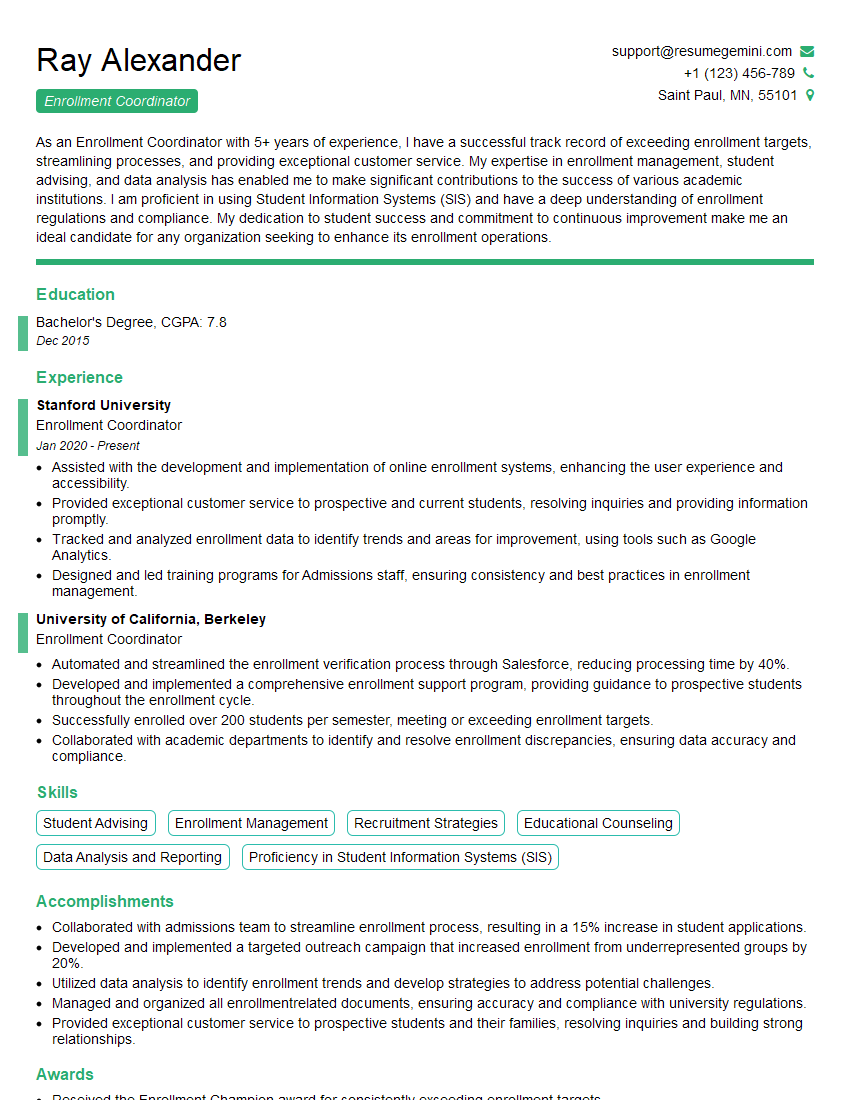
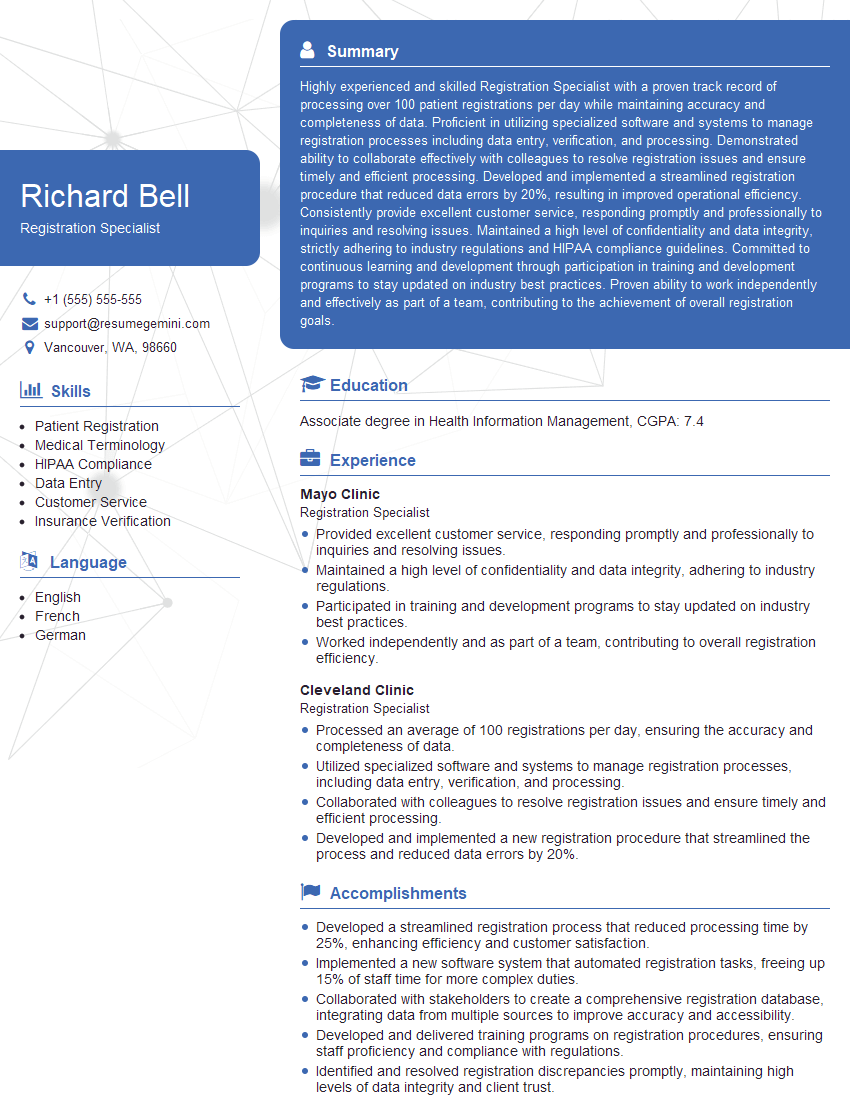
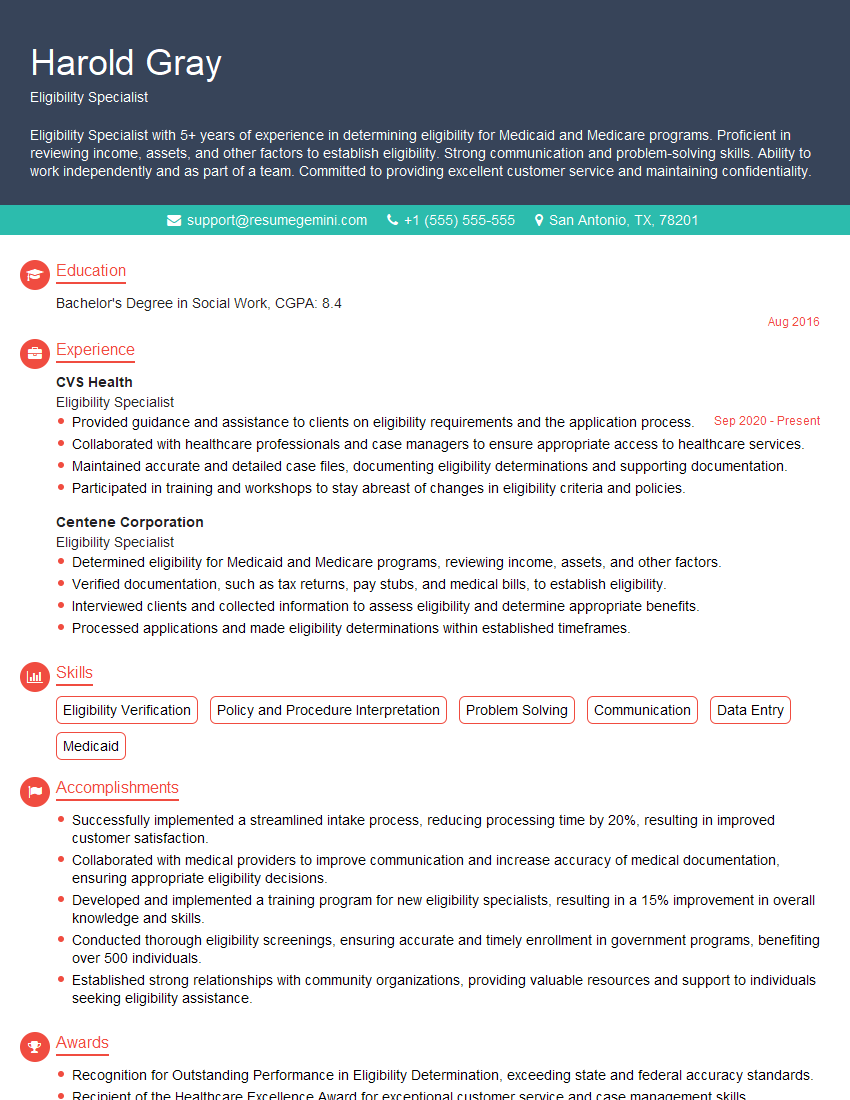
Mastering Eligibility and Registration Management opens doors to rewarding careers in diverse sectors. Proficiency in this area demonstrates valuable organizational, analytical, and problem-solving skills highly sought after by employers. To significantly enhance your job prospects, it’s crucial to present your skills effectively through an ATS-friendly resume. We highly recommend using ResumeGemini to craft a professional and compelling resume that highlights your expertise. ResumeGemini offers examples of resumes tailored to Eligibility and Registration Management to guide you in creating a standout application.
Explore more articles
Users Rating of Our Blogs
Share Your Experience
We value your feedback! Please rate our content and share your thoughts (optional).
What Readers Say About Our Blog
Very informative content, great job.
good