Every successful interview starts with knowing what to expect. In this blog, we’ll take you through the top Embryo Transfer and Cloning Techniques interview questions, breaking them down with expert tips to help you deliver impactful answers. Step into your next interview fully prepared and ready to succeed.
Questions Asked in Embryo Transfer and Cloning Techniques Interview
Q 1. Describe the process of in vitro fertilization (IVF) from oocyte retrieval to embryo transfer.
In vitro fertilization (IVF) is a complex process involving several steps to achieve pregnancy. It begins with oocyte retrieval, where mature eggs are collected from the ovaries using a transvaginal ultrasound-guided needle. These eggs are then retrieved and prepared for fertilization.
Next comes fertilization. The retrieved oocytes are mixed with prepared sperm in a culture dish, allowing fertilization to occur. Alternatively, intracytoplasmic sperm injection (ICSI) can be used, where a single sperm is directly injected into the egg cytoplasm. Following fertilization, the eggs are monitored for successful fertilization and early embryonic development in a laboratory incubator.
The next crucial stage is embryo culture. Fertilized eggs develop into embryos over several days, typically reaching the blastocyst stage (a hollow ball of cells) by day 5 or 6 post-fertilization. During this time, embryologists carefully monitor their growth and development.
Finally, embryo transfer takes place. Using a thin catheter, one or more carefully selected embryos are transferred into the uterus, ideally near the uterine lining, aiming to improve implantation chances. This procedure is usually performed under ultrasound guidance to ensure accurate placement. After the transfer, patients typically need a period of rest, and a pregnancy test is conducted several weeks later.
Q 2. Explain the different methods of embryo assessment and selection.
Embryo assessment and selection are critical steps in IVF to improve pregnancy rates and reduce the risk of multiple pregnancies. Several methods are employed:
- Morphological assessment: This is a visual evaluation of the embryo’s shape, size, and cell number at various stages of development. Experienced embryologists score embryos based on established criteria, looking for characteristics associated with high implantation potential, such as symmetrical cleavage and minimal fragmentation.
- Time-lapse imaging: This advanced technique involves continuously monitoring the embryo’s development in an incubator using automated imaging systems. This provides a detailed record of the embryo’s growth kinetics, allowing for more precise assessment of its developmental potential. We can identify subtle developmental variations not visible through conventional methods.
- Preimplantation genetic testing (PGT): This involves removing a few cells from the embryo to analyze its chromosomes or genes. PGT can screen for aneuploidy (abnormal chromosome number), helping select embryos with the correct number of chromosomes, reducing the risk of miscarriage or genetic disorders. Different types of PGT exist, targeting various genetic conditions.
The selection process considers a combination of these methods, aiming to choose embryos with the highest likelihood of successful implantation and a healthy pregnancy outcome. It’s crucial to note that even the best embryos don’t guarantee pregnancy.
Q 3. What are the key factors influencing embryo implantation?
Successful embryo implantation is a complex interplay of factors, including:
- Embryo quality: As mentioned, genetic health, developmental competence, and morphology play a crucial role.
- Endometrial receptivity: The uterine lining must be adequately prepared to receive and support the implanting embryo. This involves appropriate thickness, blood flow, and expression of specific receptors.
- Immune system interactions: A balanced immune response in the mother is vital. An overactive or suppressed immune system could lead to implantation failure.
- Hormonal balance: Adequate levels of progesterone and other hormones are crucial for maintaining a receptive endometrium.
- Genetic compatibility: HLA compatibility between the mother and embryo, though less prominent than other factors, can play a subtle role.
- Embryo-uterine dialogue: The embryo’s signaling capacity to communicate with the uterus and initiate the implantation process is critical. The cross talk is crucial for successful implantation
Optimizing these factors through various treatments and monitoring techniques can significantly improve the chances of successful implantation. For instance, tailored hormonal therapies can enhance endometrial receptivity, while PGT helps select genetically healthy embryos.
Q 4. Describe the various methods of cryopreservation for embryos and gametes.
Cryopreservation, or freezing, is essential for preserving embryos and gametes (eggs and sperm) for future use. Two primary methods are used:
- Slow-freezing: This involves gradually lowering the temperature of the cells in a controlled manner, using cryoprotective agents (CPAs) to protect against ice crystal formation. CPAs are chemical compounds that help prevent ice crystal damage during freezing. The process involves controlled cooling rates using specific solutions and equipment.
- Vitrification: This rapid-freezing technique involves plunging the cells into liquid nitrogen. Vitrification drastically reduces the formation of ice crystals, resulting in higher survival rates compared to slow freezing, considered as the gold standard for gamete cryopreservation.
Embryos are usually cryopreserved at the cleavage or blastocyst stage, while gametes can be frozen individually. After thawing, the survival rates are monitored before utilization. The appropriate method depends on the type of cell, stage of development, and laboratory resources.
Q 5. What are the ethical considerations surrounding embryo transfer and cloning?
Ethical considerations surrounding embryo transfer and cloning are complex and multifaceted. Key issues include:
- Status of the embryo: The moral status of an embryo is a central point of debate. Different religious and philosophical perspectives exist regarding when life begins and the moral permissibility of manipulating or destroying embryos.
- Selection and disposal of embryos: The process of selecting embryos for transfer inherently involves the disposal of others. This raises ethical concerns regarding the waste of potential human life.
- Genetic manipulation: Techniques like PGT raise ethical questions about selecting embryos based on genetic traits, potentially leading to genetic bias and social inequalities.
- Cloning: Reproductive cloning, using somatic cell nuclear transfer (SCNT), raises profound ethical and social concerns about human identity and individuality. Therapeutic cloning, which uses SCNT to generate stem cells for research or therapy, also involves ethical debates surrounding the use of embryos.
- Informed consent: Patients undergoing IVF or other assisted reproductive technologies should receive comprehensive information and counseling to ensure they make informed decisions.
Robust ethical guidelines and regulations are essential to navigate these complex issues and ensure responsible use of these technologies.
Q 6. Explain the differences between somatic cell nuclear transfer (SCNT) and other cloning techniques.
Somatic cell nuclear transfer (SCNT) is a cloning technique involving transferring the nucleus from a somatic cell (a non-reproductive cell) into an enucleated egg (an egg with its nucleus removed). The egg then develops as if fertilized, eventually potentially generating a clone of the nucleus donor.
Other cloning techniques differ significantly. Embryo splitting, also known as embryo twinning, is a simpler technique involving splitting an early embryo into two or more parts, creating genetically identical embryos. This is a natural process that sometimes occurs spontaneously. It’s a less complex method than SCNT, creating genetically identical embryos from a single embryo.
Artificial embryo twinning is a laboratory-based procedure designed to split embryos into multiple parts. The embryos are carefully separated into multiple embryos. This technique is used in fertility clinics to increase the number of embryos available for transfer.
SCNT is distinct because it involves transferring genetic material from a somatic cell, enabling the creation of a clone from an adult cell, rather than just generating genetically identical embryos from an already existing embryo.
Q 7. What are the potential risks and complications associated with embryo transfer?
Embryo transfer, while generally safe, carries potential risks and complications:
- Multiple pregnancy: Transferring multiple embryos increases the risk of twins, triplets, or higher-order multiples, which carry significant risks for both the mother and the babies.
- Ectopic pregnancy: This is when the embryo implants outside the uterus, often in the fallopian tube, requiring immediate medical attention.
- Miscarriage: Embryo transfer does not guarantee pregnancy, and miscarriage can still occur.
- Ovarian hyperstimulation syndrome (OHSS): This complication is associated with ovarian stimulation medication used to retrieve multiple eggs. OHSS can range from mild discomfort to life-threatening symptoms.
- Infection: Although rare, there’s a risk of infection at the transfer site.
- Emotional distress: The IVF process is emotionally and physically demanding, and the uncertainty of the outcome can cause significant stress.
Minimizing these risks requires careful patient selection, meticulous procedures, and appropriate management strategies. For example, single-embryo transfer is often recommended to reduce the risk of multiple pregnancies, while careful monitoring of ovarian response during stimulation can help prevent OHSS.
Q 8. How do you handle a failed embryo transfer?
A failed embryo transfer is unfortunately a common occurrence in Assisted Reproductive Technology (ART). The first step is to offer the patients empathy and support. It’s crucial to avoid blaming them, as many factors contribute to success or failure. We then undertake a thorough review of the entire process. This includes a detailed analysis of the patient’s medical history, ovarian stimulation protocol, embryo quality assessment, the transfer procedure itself, and the laboratory conditions.
- Analyzing the Embryo: We meticulously re-examine the embryo’s morphology (appearance) and developmental stage during its culture. Were there any signs of poor quality, such as fragmentation or uneven cell division?
- Reviewing the Transfer: We look at the uterine lining thickness and receptivity on the ultrasound images. The transfer technique itself is also scrutinized. Was there any difficulty during catheter placement?
- Investigating the Laboratory: We ensure our laboratory procedures and media adhere to the highest standards and are rigorously tested and monitored. Any deviation from our established protocols would be investigated.
- Patient Factors: We review the patient’s hormonal profile and any underlying health conditions that may have impacted implantation.
Based on this comprehensive analysis, we can then formulate a personalized plan for future attempts. This may involve adjustments to stimulation protocols, modifications to culture media, or exploring alternative techniques, such as assisted hatching.
Q 9. Describe your experience with micromanipulation techniques.
Micromanipulation is a cornerstone of my work. I have extensive experience with techniques such as intracytoplasmic sperm injection (ICSI) and assisted hatching. ICSI involves directly injecting a single sperm into a mature egg, overcoming male factor infertility issues. Assisted hatching uses a laser to create a small opening in the zona pellucida, the protective layer around the embryo, assisting in its hatching from the zona and improving implantation.
For ICSI, precision is paramount. We use specialized microneedles and inverted microscopes with advanced magnification to select the best sperm and perform the injection with utmost care. The process requires steady hands, years of training, and a detailed understanding of the delicate cellular structures. Assisted hatching requires a similar level of precision, using lasers to make controlled incisions without damaging the embryo. Proper training, extensive experience and ongoing proficiency testing are critical for preventing errors that can lead to embryo damage or failure. Both techniques demand a high level of concentration and skill, honed through years of practice and constant refinement of technique.
Q 10. Explain the importance of maintaining sterility in an ART laboratory.
Maintaining sterility in an ART laboratory is absolutely critical. Embryos are highly susceptible to contamination, which can lead to infection, developmental abnormalities, and ultimately, failure of the treatment cycle. It’s not just about the embryos’ health; it’s about patient safety. A contaminated environment can introduce pathogens that might affect the patient’s reproductive health.
- Laminar Flow Hoods: We use laminar flow hoods to create a sterile environment for manipulating gametes and embryos. These hoods constantly filter air to remove contaminants.
- Strict Protocols: We adhere to strict protocols for handwashing, gowning, and equipment sterilization. All equipment and work surfaces are regularly disinfected using appropriate disinfectants.
- Quality Control: We conduct regular environmental monitoring to detect any potential contaminants. Air and surface samples are routinely tested for bacterial and fungal growth.
- Training: All laboratory personnel receive comprehensive training on aseptic techniques to minimize the risk of contamination.
Think of it like a surgical operating room – the level of sterility must be meticulously maintained to ensure a successful outcome and to safeguard patient health. Compromising sterility can result in catastrophic consequences.
Q 11. How do you monitor and manage embryo culture conditions?
Monitoring and managing embryo culture conditions are crucial for optimal embryo development. We use sophisticated incubators that precisely control temperature, gas composition (oxygen and carbon dioxide), and humidity. These parameters are meticulously monitored and recorded throughout the culture period.
Temperature: Must be tightly regulated at 37°C. Even slight variations can disrupt cellular processes.
Gas: The precise mixture of oxygen and carbon dioxide mimics the physiological environment of the fallopian tubes and uterus. The balance of these gases is critically important, as is the continuous monitoring of incubator atmospheric conditions.
Humidity: High humidity prevents the culture media from evaporating, maintaining a stable environment for the embryos.
Media: The culture media itself is regularly checked for pH, osmolarity, and contamination.
Any deviation from these parameters is carefully addressed. Regular calibration of the equipment and preventative maintenance are part of our routine procedures. We carefully record all conditions, so if an issue arises, we can trace it back to the source. Regular audits and quality checks are used to assure the quality and reliability of incubator performance.
Q 12. What are the indicators of successful embryo development?
Several indicators help assess successful embryo development. These indicators are used cumulatively to make informed decisions about embryo selection for transfer.
- Cleavage Stage: Early embryos (2-8 cell stage) should exhibit symmetrical cleavage and minimal fragmentation. Asymmetrical cells or excessive fragmentation can indicate developmental problems.
- Blastocyst Formation: The development of a blastocyst (day 5-6 post-fertilization) is a key indicator of good quality. A good quality blastocyst has a distinct inner cell mass (ICM) and trophectoderm (TE).
- Morphology: Embryos are assessed for their morphology – their overall appearance, including the size, shape, and uniformity of the cells.
- Time-lapse Imaging: Advanced time-lapse imaging systems allow us to continuously observe embryo development without disrupting the culture environment. This provides detailed information about the kinetics of cleavage and other developmental events.
No single indicator is definitive, and the assessment considers a combination of these factors. Experienced embryologists are trained to evaluate these factors cumulatively to select the highest-quality embryos for transfer, greatly increasing the chances of a successful pregnancy.
Q 13. Describe your experience with different types of media used in embryo culture.
A variety of culture media are used in embryo culture, each with unique formulations aimed at optimizing embryo development. The choice of medium depends on several factors, including the stage of embryo development and the specific needs of the patient.
- Sequential Media: These media are designed to mimic the changing environment of the fallopian tubes and uterus. Different media are used at different stages of embryo development.
- Single-step Media: These media are formulated to support embryo development from fertilization to the blastocyst stage in a single medium.
- Chemically Defined Media: These are formulated with precisely defined components, eliminating the potential variability associated with the use of serum or other undefined supplements. This provides a highly consistent and well-controlled environment.
My experience encompasses the use of numerous commercial and custom-formulated media. The choice of the ideal medium is influenced by factors like the specific needs of the patient and the laboratory’s established protocols and quality control measures. Furthermore, we may use different media compositions for various reasons; for example, some media are optimized for specific patient populations or for supporting specific phases of embryo development.
Q 14. How do you assess embryo morphology?
Embryo morphology assessment involves a detailed visual evaluation of the embryo’s physical characteristics under a high-powered microscope. We carefully examine several features.
- Number of Cells: The number of cells at each cleavage stage is noted. This indicates the rate of cell division.
- Symmetry of Cells: The size and shape of the cells are evaluated for symmetry. Asymmetrical cells are often indicative of developmental problems.
- Fragmentation: The presence of cytoplasmic fragments is noted. Excessive fragmentation is a negative indicator of embryo quality.
- Appearance of the Zona Pellucida: The thickness and appearance of the zona pellucida (the protective layer surrounding the embryo) are assessed.
- Blastocyst Morphology (if applicable): Blastocysts are graded based on the expansion of the blastocoele (fluid-filled cavity), the size and morphology of the inner cell mass (ICM) and the trophectoderm (TE). This involves scoring the ICM and TE grades according to established criteria.
The assessment is based on standardized scoring systems, and the evaluation is documented using detailed notes and images. This meticulous evaluation helps us select the embryos with the highest chance of successful implantation. Experience and precise knowledge of grading systems are essential for accurate morphology assessments.
Q 15. What are the different types of assisted hatching techniques?
Assisted hatching techniques aim to improve embryo implantation by weakening or creating an opening in the zona pellucida, the tough outer shell of an embryo. This helps the embryo to hatch out of the zona and attach to the uterine lining. Different techniques exist, each with its own advantages and disadvantages.
- Mechanical Assisted Hatching: This involves creating a small hole or weakening the zona pellucida using a laser or a specialized micro-needle. It’s a relatively straightforward technique. For example, a laser can be precisely targeted to create a small opening, minimizing damage to the embryo.
- Chemical Assisted Hatching: This method uses chemicals, such as Tyrode’s acid, to weaken the zona pellucida. The chemicals dissolve parts of the zona, making hatching easier for the embryo. However, it’s crucial to control the exposure time and chemical concentration to avoid damaging the embryo.
- Acid Tyrode’s Solution: A common chemical method utilizing a solution of Tyrode’s balanced salt solution with a slightly acidic pH. The precise pH and exposure time are critical for success and must be precisely controlled.
The choice of technique depends on various factors, including the embryo’s quality, the patient’s history, and the laboratory’s expertise. It’s important to note that assisted hatching isn’t always necessary and may not improve success rates in all cases.
Career Expert Tips:
- Ace those interviews! Prepare effectively by reviewing the Top 50 Most Common Interview Questions on ResumeGemini.
- Navigate your job search with confidence! Explore a wide range of Career Tips on ResumeGemini. Learn about common challenges and recommendations to overcome them.
- Craft the perfect resume! Master the Art of Resume Writing with ResumeGemini’s guide. Showcase your unique qualifications and achievements effectively.
- Don’t miss out on holiday savings! Build your dream resume with ResumeGemini’s ATS optimized templates.
Q 16. Explain the role of time-lapse imaging in embryo assessment.
Time-lapse imaging is a revolutionary tool in embryo assessment. It involves taking sequential images of embryos over a period of several days in a specialized incubator. This provides a detailed record of the embryo’s development, allowing embryologists to identify subtle differences in growth patterns that might not be apparent with conventional methods.
Instead of observing embryos only at specific time points, time-lapse imaging allows us to see the entire developmental process. We can analyze key events like pronuclear formation, cleavage, and blastocyst formation with greater precision. This can help us identify embryos with a higher potential for implantation. For instance, we can observe the speed and symmetry of cleavage divisions, identifying embryos that have a healthier division pattern compared to others that might show irregular divisions.
Furthermore, time-lapse imaging helps reduce the number of times the embryos are taken out of the incubator, thereby minimizing their exposure to environmental changes. This helps to preserve embryo health and reduces stress on them during the critical stages of development. The data generated provides a comprehensive profile for each embryo, allowing for a more informed decision in embryo selection for transfer. In essence, it transforms our understanding of embryo development from snapshots to a continuous movie.
Q 17. Describe your experience with preimplantation genetic testing (PGT).
Preimplantation Genetic Testing (PGT) is an integral part of our assisted reproductive technology (ART) practice. I’ve been extensively involved in performing and interpreting PGT-A (aneuploidy screening), PGT-M (monogenic disease testing), and PGT-SR (structural rearrangement testing).
My experience includes selecting appropriate biopsy techniques (e.g., trophectoderm biopsy for blastocysts), coordinating with genetic laboratories, and carefully interpreting results to counsel patients on the genetic health of their embryos. One particularly memorable case involved a couple who were carriers for a recessive genetic disorder. Through PGT-M, we were able to select an embryo free from the disease, leading to a healthy pregnancy and delivery. This highlighted the transformative power of PGT in helping couples avoid the heartache of genetic conditions.
PGT is a constantly evolving field. I actively stay updated on the latest advancements, including improvements in biopsy techniques, genetic analysis platforms, and the interpretation of complex genetic data. This ensures that our patients receive the best possible care and benefit from the most accurate and reliable genetic testing available.
Q 18. How do you manage patient expectations in ART procedures?
Managing patient expectations in ART is crucial for a positive experience. It’s a delicate balance of providing hope and managing realistic expectations given the inherent complexities and uncertainties involved.
Open and honest communication is paramount. From the initial consultation, I clearly explain the procedure, potential success rates (emphasizing that these are probabilities, not guarantees), and potential risks and complications. I use clear and straightforward language, avoiding medical jargon where possible. We discuss potential scenarios – both positive and negative – ensuring patients understand that multiple cycles might be necessary.
I encourage patients to ask questions, creating a safe space for them to express their anxieties. I share success stories of other patients, ensuring that the stories are anonymized to respect confidentiality and provide a relatable perspective of the chances of success. A strong support network, be it the patient’s partner or family, can be a great asset and we work on building these positive support structures. This balanced approach empowers patients to make informed decisions while fostering trust in the process.
Q 19. Explain the legal and regulatory aspects of ART procedures.
The legal and regulatory landscape surrounding ART is complex and varies across jurisdictions. It’s governed by a mix of federal and state laws, ethical guidelines, and professional standards. Key aspects include:
- Informed Consent: Patients must provide informed consent for all procedures, fully understanding the risks, benefits, and alternatives.
- Embryo Disposition: Laws governing the storage, donation, or disposal of embryos vary considerably. Careful adherence to local regulations is crucial.
- Third-Party Reproduction: Regulations related to surrogacy, egg donation, and sperm donation differ significantly across regions.
- Genetic Testing: Laws concerning PGT, including testing parameters and data privacy, need careful consideration.
- Licensing and Accreditation: ART clinics are subject to stringent licensing and accreditation requirements to ensure quality control and patient safety.
Staying abreast of these legal and regulatory changes is a crucial part of my professional responsibility. We work with legal professionals to ensure all our practices are fully compliant, safeguarding both patient rights and the integrity of the procedures.
Q 20. What are the potential long-term effects of assisted reproductive technologies?
While ART has enabled countless individuals to build families, the long-term effects on offspring born through these technologies are still being studied. Current research is ongoing, and the evidence available remains largely observational.
Some potential long-term effects being investigated include:
- Increased risk of low birth weight and preterm delivery: These are more frequently observed in ART pregnancies but are not always directly attributable to the technology itself.
- Slightly elevated risk of certain birth defects: This is a complex area, with studies yielding varying results and emphasizing the need for careful observation and ongoing research.
- Long-term health outcomes: Studies are underway to investigate the potential impact of ART on various aspects of children’s health throughout their lives. It’s imperative to follow cohorts of children born through ART long-term to assess potential long-term health impacts.
It’s important to note that many children born through ART grow up to be healthy adults, and the risks associated with ART are often comparable to or lower than those associated with spontaneous conceptions in women of advanced maternal age. The ongoing research helps refine our understanding and optimize procedures to minimize potential risks.
Q 21. How do you maintain accurate and detailed records in an ART laboratory?
Maintaining accurate and detailed records is fundamental in an ART laboratory. It’s crucial for ensuring quality control, patient safety, and legal compliance. We employ a comprehensive system incorporating both electronic and paper-based records.
Our system includes:
- Patient Management System (PMS): A dedicated software stores all patient data, including medical history, treatment plans, test results, and embryo tracking information. Data entry is meticulously validated and audited.
- Embryo Tracking System: Every embryo’s journey is meticulously documented – from retrieval to cryopreservation, or transfer. This includes detailed annotations on morphology, development, and any procedures performed.
- Quality Control Logs: Regular quality control checks are recorded, covering equipment calibration, reagent inventory, and staff training. This guarantees adherence to strict quality standards and regulatory requirements.
- Chain of Custody Documentation: This guarantees proper tracking of biological samples and helps prevent misidentification or sample mix-ups.
Regular audits and internal quality reviews ensure the accuracy and completeness of all records. Our documentation system is designed to allow for easy retrieval and analysis of data for research purposes, contributing to the advancement of ART techniques.
Q 22. What quality control measures do you implement in your work?
Quality control in embryo transfer and cloning is paramount, ensuring the safety and success of the procedures. It’s a multi-layered process starting from meticulous sample preparation to rigorous monitoring throughout the entire procedure. We employ a robust system incorporating several key measures:
- Strict Aseptic Techniques: We maintain a sterile environment using laminar flow hoods and adhering to strict protocols for handwashing, gowning, and equipment sterilization. This minimizes the risk of contamination, crucial for embryo viability.
- Cryopreservation Monitoring: During freezing (vitrification) and thawing of embryos and gametes, we meticulously monitor temperature and cryoprotectant concentration using calibrated equipment and software. Deviation from predetermined protocols triggers immediate investigation and corrective actions.
- Microscopic Evaluation: Every embryo is thoroughly assessed under a high-powered microscope to evaluate morphology (size, shape, and cell number), identifying those with the best potential for successful implantation. This qualitative assessment is supported by time-lapse imaging in some cases, offering detailed developmental information.
- Regular Equipment Calibration and Maintenance: All equipment, including incubators, centrifuges, and microscopes, undergoes regular calibration and preventative maintenance to ensure accuracy and reliability. Maintenance logs are meticulously kept.
- Detailed Record Keeping: We maintain comprehensive records of every step of the procedure, including patient information, embryo characteristics, treatment protocols, and any observed anomalies. This detailed documentation allows for continuous improvement and traceability in case of any issues.
- Quality Audits: Regular internal audits and external proficiency testing are conducted to assess our adherence to best practices and identify areas for improvement. These processes allow us to benchmark against other high-quality facilities.
By implementing this comprehensive quality control system, we significantly enhance the chances of successful embryo transfer and reduce the risk of complications.
Q 23. How do you address and troubleshoot equipment malfunctions in the lab?
Equipment malfunctions in a lab setting can have significant consequences, especially when dealing with delicate biological samples. Our troubleshooting strategy focuses on swift, efficient problem-solving while prioritizing the safety of the samples:
- Immediate Assessment: Upon detecting a malfunction, we immediately assess the nature and severity of the problem. Is it a software glitch, a mechanical issue, or a power supply problem? We prioritize identifying the root cause before attempting any repair.
- Safety First: If the malfunction poses a risk (e.g., leaking chemicals, electrical hazards), we prioritize safety and immediately isolate the equipment, evacuating the area if necessary.
- Check-List Approach: We have established checklists for troubleshooting common equipment problems. These checklists guide us through a systematic process of checking power supplies, connections, software settings, and other potential causes before moving to more advanced troubleshooting steps.
- Preventive Maintenance: Regular maintenance significantly reduces the likelihood of malfunctions. Our preventative maintenance schedule includes regular cleaning, calibration, and replacement of parts as needed. This proactive approach minimizes downtime and ensures consistent performance.
- Manufacturer Support: In cases where internal troubleshooting is unsuccessful, we contact the equipment manufacturer for technical support. We maintain a detailed record of all service calls and repairs.
- Redundancy Systems: Where feasible, we utilize redundant equipment to minimize disruptions in case of failure. For example, having two incubators ensures that samples can be safely transferred to a backup system in case of a primary incubator malfunction.
Our multi-pronged approach minimizes equipment downtime and ensures the continued safe and reliable operation of our laboratory.
Q 24. Describe your experience with different types of cloning vectors.
Cloning vectors are essential tools in molecular biology, serving as vehicles to introduce foreign DNA into host cells. My experience encompasses a wide range of vectors, each with its own advantages and limitations:
- Bacterial Plasmids: These circular DNA molecules are widely used for cloning relatively small DNA fragments. I have extensive experience using various plasmids, including those with antibiotic resistance genes for selection and those containing inducible promoters for controlled gene expression. For example, I’ve utilized pUC19 and variations for basic cloning projects.
- Viral Vectors: These vectors use viruses to deliver DNA into target cells, often providing higher efficiency than bacterial plasmids, especially for gene therapy applications. I’ve worked with adenoviral, retroviral, and lentiviral vectors, choosing the appropriate vector depending on the target cells and the size of the DNA to be delivered. Lentiviral vectors, for instance, are particularly useful for stable integration into the host genome.
- Cosmids: Cosmids combine features of plasmids and phage λ DNA, allowing the cloning of larger DNA fragments than is possible with plasmids alone. This was particularly relevant in projects involving large genomic sequences.
- Bacterial Artificial Chromosomes (BACs): BACs are utilized for cloning very large DNA inserts, even entire genes or gene clusters, which are essential in complex genetic manipulation projects. Their low copy number minimizes recombination issues.
Selecting the appropriate vector is critical to the success of any cloning experiment. The choice depends on factors such as the size of the DNA insert, the target cells, and the desired level and duration of gene expression.
Q 25. Explain the concept of embryonic stem cells and their potential applications.
Embryonic stem cells (ESCs) are pluripotent cells derived from the inner cell mass of a blastocyst (an early-stage embryo). Their pluripotency means they have the remarkable ability to differentiate into any of the three germ layers (ectoderm, mesoderm, and endoderm), giving rise to all cell types in the body. This feature has made them a focus of intense research.
Potential Applications:
- Disease Modeling: ESCs can be used to create disease models in vitro, allowing researchers to study the pathogenesis of diseases and test potential therapies without the need for human subjects.
- Drug Discovery and Development: ESC-derived cells provide an excellent platform for high-throughput drug screening and testing toxicity of new drugs.
- Regenerative Medicine: ESCs hold immense potential in regenerative medicine, offering the possibility of replacing damaged or diseased tissues and organs. For example, research is underway to use ESCs to generate replacement cells for Parkinson’s disease, spinal cord injuries, and heart failure.
- Cell Therapy: ESCs can be used to generate specific cell types for therapeutic purposes, such as generating insulin-producing cells for diabetes treatment.
Despite their incredible potential, there are ethical and technical challenges associated with the use of ESCs, including ethical concerns regarding embryo usage and the risk of tumor formation.
Q 26. What are the challenges in achieving successful cloning?
Achieving successful cloning, whether somatic cell nuclear transfer (SCNT) or other methods, is challenging due to several factors:
- Incomplete Reprogramming: The donor cell’s nucleus must be completely reprogrammed to erase its epigenetic modifications (chemical tags on DNA that affect gene expression) and adopt a totipotent state. Incomplete reprogramming can lead to developmental abnormalities.
- Cytoplasmic Compatibility: The cytoplasm of the recipient oocyte (egg cell) plays a crucial role in supporting embryonic development. Incompatibility between the donor nucleus and recipient cytoplasm can result in developmental arrest or embryonic death.
- Low Efficiency: Cloning is inherently inefficient. Even with optimized techniques, only a small percentage of cloned embryos develop to term, many failing at early stages.
- Large Offspring Syndrome (LOS): Cloned animals often exhibit increased size and other developmental abnormalities. The exact cause of LOS remains not completely understood, and involves genomic instability.
- Epigenetic Aberrations: The cloned embryos may show epigenetic abnormalities, which can alter gene expression, leading to various developmental problems and potentially increased health issues in the offspring.
- Technical Challenges: SCNT is a highly technical procedure requiring specialized equipment, expertise, and precise handling of embryos. Any minor errors during the process can significantly impact the outcome.
Overcoming these challenges requires continuous refinement of techniques, a deeper understanding of developmental biology, and advances in genomic manipulation technologies.
Q 27. Describe your understanding of reproductive immunology.
Reproductive immunology explores the complex interplay between the maternal immune system and the fetus (or embryo in the case of assisted reproductive technologies). The fetus, genetically different from the mother, is essentially a ‘foreign’ entity that should, theoretically, trigger an immune response leading to rejection. However, this doesn’t happen due to a delicate balance of immune tolerance mechanisms.
My understanding encompasses various aspects of reproductive immunology relevant to embryo transfer and cloning:
- Immune Tolerance: The mechanisms by which the maternal immune system tolerates the fetus are still being actively researched. These mechanisms involve specific immune cells and molecules that suppress the immune response against fetal antigens.
- Uterine Environment: The uterine environment is unique, featuring specialized immune cells and molecules that create a tolerogenic microenvironment, conducive to successful implantation and fetal development.
- Immune-related Infertility: Immune dysfunction can contribute to infertility by impairing fertilization, implantation, or early embryonic development. We consider immune factors when evaluating couples struggling with infertility.
- Pre-eclampsia and Recurrent Miscarriages: Immune dysregulation can contribute to pregnancy complications like pre-eclampsia (high blood pressure and proteinuria) and recurrent miscarriages. Appropriate immunological tests may be performed to identify and manage this.
- Impact of Assisted Reproductive Technologies: ART procedures may themselves impact the maternal immune system, and understanding these effects is critical to optimizing successful outcomes.
Integrating knowledge of reproductive immunology in ART procedures is crucial for improving success rates and preventing adverse pregnancy outcomes.
Q 28. Explain your experience with different types of vitrification procedures.
Vitrification is a rapid freezing technique used for cryopreservation of embryos, oocytes, and sperm. It involves plunging the samples into liquid nitrogen, minimizing ice crystal formation that could damage the cells. My experience includes several vitrification procedures:
- Open Pulled Straw (OPS) Vitrification: This is a commonly used technique, particularly simple and cost-effective for vitrifying embryos. Samples are loaded into a narrow, open-ended straw and rapidly plunged into liquid nitrogen.
- Cryoloop Vitrification: In this method, embryos or oocytes are loaded onto a cryoloop (a small metal loop) and exposed to cryoprotectant solutions before being plunged into liquid nitrogen. It offers a fast and efficient method for vitrifying numerous samples simultaneously.
- Solid Surface Vitrification: Samples are vitrified on a small solid surface, using specialized carriers designed to improve the cryopreservation process. This can be combined with the use of specialized vitrification solutions and devices.
- Variations in Cryoprotectants: Different cryoprotective agents (CPAs) are used depending on the sample type and the vitrification protocol. These are carefully optimized to minimize toxicity while maximizing cell survival post-thaw. Examples include ethylene glycol (EG), propanediol (PROH), and dimethyl sulfoxide (DMSO).
Choosing the appropriate vitrification procedure depends on several factors, including the sample type, laboratory resources, and the desired level of efficiency. Each method has its own advantages and disadvantages regarding complexity, cost, and success rates. Post-thaw survival rates are meticulously monitored to optimize our protocols.
Key Topics to Learn for Embryo Transfer and Cloning Techniques Interview
- Embryo Culture and Development: Understanding in-vitro fertilization (IVF) techniques, embryo grading systems, and the factors influencing embryo viability. Practical application: Troubleshooting developmental abnormalities observed in cultured embryos.
- Embryo Transfer Procedures: Mastering the techniques involved in embryo transfer, including catheterization, embryo placement, and post-transfer care. Practical application: Analyzing and adapting transfer protocols based on patient-specific factors and embryo quality.
- Cloning Techniques: Familiarization with somatic cell nuclear transfer (SCNT), its applications, and ethical considerations. Practical application: Evaluating the efficiency and limitations of various cloning methodologies.
- Assisted Hatching Techniques: Understanding the different methods of assisted hatching and their impact on implantation rates. Practical application: Choosing the appropriate assisted hatching technique based on embryo morphology and patient history.
- Cryopreservation Techniques: Knowledge of freezing and thawing techniques for both embryos and oocytes. Practical application: Optimizing cryopreservation protocols to maximize embryo survival rates.
- Genetic Testing and Screening: Understanding preimplantation genetic testing (PGT) methods, including PGT-A, PGT-M, and PGT-SR. Practical application: Interpreting genetic test results and advising patients on appropriate next steps.
- Quality Control and Assurance: Implementing quality control measures in all aspects of the lab procedures to maintain high standards and ensure patient safety. Practical application: Designing and implementing quality control protocols for your specific laboratory setting.
- Ethical and Legal Considerations: Understanding the ethical implications of embryo transfer and cloning techniques, and relevant legislation. Practical application: Discussing ethical dilemmas and making informed decisions in a clinical setting.
Next Steps
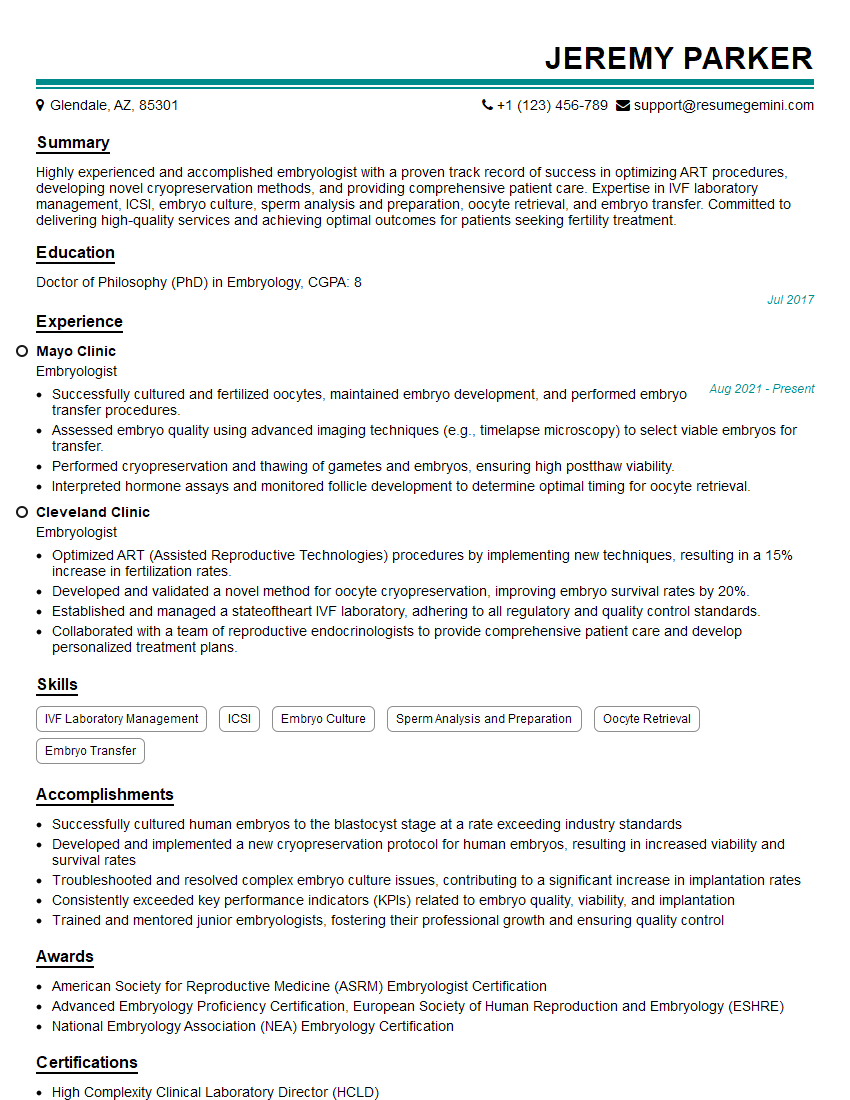
Mastering Embryo Transfer and Cloning Techniques is crucial for career advancement in reproductive medicine and related fields. A strong understanding of these techniques will significantly enhance your job prospects and allow you to contribute meaningfully to a leading-edge field. To optimize your job search, creating an ATS-friendly resume is paramount. ResumeGemini is a trusted resource that can help you build a professional and impactful resume tailored to the specific requirements of the jobs you’re targeting. Examples of resumes specifically designed for professionals in Embryo Transfer and Cloning Techniques are available to guide you through the process.
Explore more articles
Users Rating of Our Blogs
Share Your Experience
We value your feedback! Please rate our content and share your thoughts (optional).
What Readers Say About Our Blog
Very informative content, great job.
good