Interviews are more than just a Q&A session—they’re a chance to prove your worth. This blog dives into essential Emergency Medical Technician (EMT) or Paramedic interview questions and expert tips to help you align your answers with what hiring managers are looking for. Start preparing to shine!
Questions Asked in Emergency Medical Technician (EMT) or Paramedic Interview
Q 1. Describe the steps you would take when encountering an unresponsive patient.
Encountering an unresponsive patient is a critical situation requiring immediate action. My approach follows a systematic process, prioritizing the ABCs (Airway, Breathing, Circulation) and then a detailed assessment.
- Safety First: Assess the scene for any immediate dangers to myself or the patient (e.g., fire, traffic, downed power lines).
- Check Responsiveness: Gently tap the patient’s shoulder and shout, ‘Are you okay?’
- Activate EMS System: If the patient is unresponsive, immediately call for emergency medical assistance (911 or your local equivalent). Clearly communicate the patient’s condition and location.
- Airway: Open the airway using the head-tilt-chin-lift maneuver (unless a neck injury is suspected; in that case, use the jaw-thrust maneuver). Check for any obstructions.
- Breathing: Look, listen, and feel for breathing. If not breathing, initiate rescue breaths (e.g., CPR).
- Circulation: Check for a carotid pulse. If no pulse, begin chest compressions.
- Detailed Assessment: Once the ABCs are addressed, I would conduct a rapid physical assessment to identify any life-threatening conditions (e.g., severe bleeding, obvious injuries).
- Patient Monitoring and Treatment: Continuously monitor vital signs, provide oxygen, and administer appropriate treatments based on the patient’s condition and my training level, including managing bleeding, providing spinal immobilization if necessary, etc.
- Transfer of Care: Once EMS arrives, I provide a clear and concise handover report, outlining the patient’s history, assessment findings, and interventions performed.
For example, I once responded to a call where an elderly man was found unresponsive in his home. Following this protocol, we were able to restore his breathing and maintain his circulation until advanced medical care arrived, ultimately contributing to a positive outcome.
Q 2. Explain the difference between stable and unstable angina.
Angina is chest pain caused by reduced blood flow to the heart muscle. The key difference between stable and unstable angina lies in the predictability and severity of the pain.
- Stable Angina: Occurs predictably, usually during exertion or stress, and is relieved by rest or nitroglycerin. The pain’s characteristics (location, intensity, duration) remain relatively consistent over time. It’s a sign of coronary artery disease, but the blockage is relatively stable.
- Unstable Angina: This is a much more serious condition. The pain occurs unpredictably, often at rest, and is not always relieved by rest or nitroglycerin. The pain may be more severe or prolonged than stable angina. Unstable angina indicates an acute coronary syndrome and is a strong warning sign of an impending heart attack. It often reflects a worsening of the blockage in the coronary arteries, and immediate medical attention is crucial.
Imagine stable angina like a partially clogged drain – it slows the flow of water but doesn’t completely stop it. Unstable angina, on the other hand, is like the drain becoming completely clogged, threatening to overflow.
Q 3. How would you manage a patient experiencing anaphylactic shock?
Anaphylactic shock is a life-threatening allergic reaction. Management requires immediate intervention. My approach would include:
- Assess the Situation: Ensure scene safety and identify the allergen if possible.
- Airway Management: Assess and maintain a patent airway. If the patient is having difficulty breathing, assist with airway management. This might involve using an airway adjunct like an oropharyngeal airway if tolerated and appropriate.
- Epinephrine Administration: Administer epinephrine intramuscularly (IM) via auto-injector (EpiPen or similar) according to established protocols. This is the cornerstone of anaphylaxis treatment.
- Supplemental Oxygen: Provide high-flow oxygen via a non-rebreather mask.
- Monitoring and Support: Continuously monitor vital signs (especially blood pressure and respiratory rate), maintain IV access, and provide supportive care as needed.
- Rapid Transport: Arrange for immediate transport to the nearest hospital.
It’s important to note that epinephrine is a crucial intervention in anaphylaxis and should be administered promptly if there’s a reasonable suspicion of anaphylaxis, even before lab confirmation. Delay can be fatal.
Q 4. What are the signs and symptoms of a stroke?
Stroke, or cerebrovascular accident (CVA), occurs when blood supply to the brain is interrupted, leading to cell death. Recognizing the signs and symptoms is critical for timely intervention.
The most common and easily remembered signs are summarized by the acronym FAST:
- Facial drooping: One side of the face may droop or be numb.
- Arm weakness: Weakness or numbness in one arm.
- Speech difficulty: Difficulty speaking or understanding speech (aphasia).
- Time: Time is crucial; call emergency services immediately if any of these signs are present.
Other symptoms may include:
- Sudden severe headache
- Vision changes (blurred vision, double vision, loss of vision)
- Dizziness or loss of balance
- Confusion or disorientation
- Nausea or vomiting
Remembering FAST is a simple but effective way to quickly identify a possible stroke and prompt rapid medical attention. The quicker treatment begins, the better the chances of minimizing long-term effects.
Q 5. Describe your approach to assessing a patient’s airway, breathing, and circulation (ABCs).
Assessing a patient’s ABCs is the foundation of emergency medical care. My approach is systematic and prioritizes immediate life threats.
- Airway: I begin by assessing the patient’s airway for patency (openness). I look for obvious obstructions, such as vomitus or foreign bodies. I listen for abnormal sounds like gurgling or stridor. I feel for airflow by placing my hand near the patient’s mouth and nose. If necessary, I open the airway using head-tilt-chin-lift or jaw-thrust maneuver.
- Breathing: Once the airway is open, I assess breathing. I look for chest rise and fall, rate and rhythm of breathing, and the depth of respirations. I listen for breath sounds and note any abnormalities. I feel for the movement of air at the patient’s mouth and nose.
- Circulation: I assess circulation by checking the patient’s pulse (carotid or femoral), skin color (pale, cyanotic, flushed), temperature (hot, cold, clammy), and capillary refill time. I also look for any signs of bleeding.
This systematic approach allows me to rapidly identify and address any immediate life threats. For example, if a patient is not breathing, I would immediately initiate rescue breaths and chest compressions (CPR). If there is significant bleeding, I would control that bleeding before moving on to other aspects of the assessment.
Q 6. How do you prioritize patients in a multiple-casualty incident (MCI)?
In a multiple-casualty incident (MCI), patient prioritization is crucial. I use the START triage system (Simple Triage And Rapid Treatment) or a similar system.
START uses a simple color-coding system to categorize patients based on their immediate needs:
- Red (Immediate): Patients with life-threatening injuries requiring immediate attention (e.g., respiratory distress, absent pulse, uncontrolled bleeding).
- Yellow (Delayed): Patients with serious injuries that require medical attention, but are not immediately life-threatening (e.g., fractures, burns).
- Green (Minor): Patients with minor injuries who can wait for treatment (e.g., abrasions, sprains).
- Black (Expectant/Deceased): Patients who are deceased or have injuries so severe that they are unlikely to survive.
The process involves quickly assessing respiration, pulse, and mental status. This allows for a rapid initial sorting of patients, ensuring those with the most critical needs receive immediate attention.
Consider a scenario like a bus accident: I would swiftly move through the scene, assessing each patient’s breathing, pulse, and mental status. Those who aren’t breathing or have no pulse would be tagged red immediately. Those with significant injuries but are breathing would be tagged yellow. Individuals with minor injuries would be green, and any deceased patients would be black.
Q 7. What are the different types of shock, and how would you treat them?
Shock is a life-threatening condition where the body’s tissues and organs are not receiving enough oxygenated blood. There are several types, each with its own cause and treatment:
- Hypovolemic Shock: Caused by significant blood or fluid loss (e.g., hemorrhage, severe dehydration). Treatment: Fluid resuscitation (IV fluids), blood transfusions if needed, controlling bleeding.
- Cardiogenic Shock: Caused by the heart’s inability to pump enough blood (e.g., heart attack, heart failure). Treatment: Medications to support heart function (e.g., inotropes), oxygen, possibly mechanical circulatory support.
- Obstructive Shock: Caused by obstruction of blood flow (e.g., pericardial tamponade, pulmonary embolism). Treatment: Addressing the underlying cause (e.g., pericardiocentesis for tamponade, thrombolytics for PE).
- Distributive Shock: Caused by widespread dilation of blood vessels, leading to decreased blood volume (e.g., septic shock, anaphylactic shock, neurogenic shock). Treatment: Addressing the underlying cause (e.g., antibiotics for sepsis, epinephrine for anaphylaxis, fluids).
Regardless of the type, treatment generally includes:
- Maintaining a patent airway
- Providing supplemental oxygen
- Monitoring vital signs
- Transport to a hospital
Understanding the different types of shock allows for targeted treatment. For example, treating hypovolemic shock with fluids is crucial, but wouldn’t be effective for cardiogenic shock, which requires support of heart function.
Q 8. Explain the proper technique for performing CPR.
Proper CPR (Cardiopulmonary Resuscitation) technique is crucial for saving lives. It involves a coordinated sequence of chest compressions and rescue breaths. The steps are as follows:
- Check for responsiveness: Gently shake the person and shout, “Are you okay?”
- Call for help: If the person is unresponsive, immediately call emergency services (911 or your local equivalent).
- Check for breathing: Look, listen, and feel for normal breathing for no more than 10 seconds.
- Start chest compressions: Place the heel of one hand in the center of the chest (between the nipples), and place your other hand on top, interlacing your fingers. Keep your arms straight and push hard and fast, compressing the chest at least 2 inches deep and at a rate of 100-120 compressions per minute.
- Give rescue breaths (if trained and comfortable): After 30 chest compressions, give two rescue breaths, each lasting about 1 second, ensuring the chest rises.
- Continue cycles: Continue cycles of 30 compressions and 2 breaths until the person shows signs of life, EMS arrives, or you are too exhausted to continue.
Important Considerations: Proper hand placement, depth and rate of compressions, and avoiding interruptions are key. Using an AED (Automated External Defibrillator) as soon as it’s available significantly improves survival chances. Regular CPR training and practice are essential for maintaining proficiency.
For example, I once responded to a cardiac arrest where bystander CPR was in progress. Their proper technique ensured the patient had a better chance of survival upon arrival at the hospital.
Q 9. How do you handle a patient who is combative or uncooperative?
Handling combative or uncooperative patients requires a calm, de-escalation approach, prioritizing safety for both the patient and the responders. Our first step is to assess the situation and identify any potential triggers. Is the patient experiencing pain, confusion, or a mental health crisis?
- Safety First: Ensure personal safety and the safety of those around you. Maintain a safe distance and consider requesting additional support if necessary.
- Communication: Use a calm and reassuring tone, speaking clearly and slowly. Avoid confrontation. Try to understand their perspective, even if their behavior is disruptive.
- De-escalation Techniques: Use active listening, empathetic statements, and open-ended questions to try and understand their needs. Offer choices whenever possible to give them a sense of control.
- Physical Restraints (if necessary): Only use physical restraints as a last resort, and then only with appropriate training and following established protocols. Document the reason for restraints and continuously monitor the patient’s vital signs and overall well-being.
- Collaboration: Collaborate with law enforcement or mental health professionals as needed.
In a real scenario, I encountered a patient experiencing a psychotic episode. By calmly communicating, explaining my actions, and providing space, I was able to safely assess and transport the patient without escalation.
Q 10. Describe your experience with administering medications.
My experience with administering medications is extensive and covers a broad range of drugs, including those used for pain management (morphine, fentanyl), allergic reactions (epinephrine), cardiac emergencies (nitroglycerin), and respiratory distress (albuterol). Administration is always performed according to established protocols, following the “six rights” : right patient, right drug, right dose, right route, right time, and right documentation.
I’m proficient in various routes of administration, including intravenous (IV), intramuscular (IM), subcutaneous (SQ), and intranasal. Prior to administering any medication, I verify the patient’s identity, assess their vital signs, and review any known allergies or contraindications. Thorough documentation is critical, including the medication’s name, dose, route, time, and any patient responses.
For instance, I’ve administered IV morphine to a patient experiencing severe post-surgical pain, carefully monitoring their respiratory rate and level of consciousness to avoid respiratory depression. This requires close observation and precise titration of the dosage.
Q 11. How would you manage a patient with a suspected spinal injury?
Managing a patient with a suspected spinal injury requires meticulous care to prevent further damage. The primary goal is to maintain spinal stabilization to protect the spinal cord.
- Manual Stabilization: Immediately manually stabilize the patient’s head and neck to prevent movement. This usually involves using your hands to support the head and neck in a neutral position.
- Log Roll (if necessary): If the patient needs to be moved, a log roll technique must be used with several people to ensure synchronized movement and proper spinal alignment. This is a coordinated effort to carefully roll the patient onto a backboard.
- Backboarding/Collar application: The patient is secured to a long spine board using straps to provide additional immobilization. A cervical collar is placed to prevent neck movement.
- Assessment and Monitoring: Conduct a thorough neurological assessment, including checking motor function, sensation, and reflexes in all extremities. Continuously monitor their vital signs, paying close attention to any changes.
- Transport: Transport the patient to the hospital with continuous spinal immobilization, ensuring careful handling during the transfer process.
One instance involved a motor vehicle accident victim. Immediate manual stabilization prevented any further damage while we carefully placed a collar and backboarded the patient. The patient’s condition remained stable during transport because of this careful approach.
Q 12. What are the indications for using an AED?
An AED (Automated External Defibrillator) is used in cases of cardiac arrest where the heart has stopped beating effectively. The indications for AED use are:
- Unresponsiveness: The patient is unresponsive and not breathing normally (gasping breaths are considered abnormal).
- No Pulse: The patient lacks a palpable pulse.
- Witnessed Cardiac Arrest: If the cardiac arrest is witnessed, AED use should be initiated immediately after checking for responsiveness and pulse.
The AED analyzes the heart rhythm and delivers a shock if a shockable rhythm (ventricular fibrillation or pulseless ventricular tachycardia) is detected. It is crucial to follow the AED’s prompts and ensure that no one is touching the patient during the shock delivery. CPR should continue between shocks and after shock delivery until the patient regains a pulse or advanced life support arrives.
In my experience, quick AED use following bystander CPR played a critical role in the successful resuscitation of a patient who had collapsed during a recreational sporting activity. Rapid deployment and appropriate use dramatically increased the patient’s chance of survival.
Q 13. How would you manage a patient with a severe bleeding injury?
Managing severe bleeding requires immediate action to control blood loss and prevent shock. The steps involve:
- Direct Pressure: Apply direct pressure to the wound using a clean dressing or cloth. Press firmly and continuously, even if it’s painful for the patient.
- Elevation: If possible, elevate the injured limb above the heart to reduce blood flow to the area.
- Pressure Points: If direct pressure doesn’t control bleeding, apply pressure to major pressure points (e.g., brachial artery for upper arm injuries, femoral artery for lower limb injuries) to temporarily restrict blood flow.
- Tourniquet (if necessary): Use a tourniquet as a last resort, only if direct pressure and pressure points fail to control life-threatening bleeding. A tourniquet should be applied tightly above the wound, and its placement should be clearly marked.
- Monitor Vital Signs: Continuously assess the patient’s vital signs (pulse, blood pressure, respiratory rate) and look for signs of shock (pale skin, rapid pulse, dizziness).
- Rapid Transport: Transport the patient to the hospital promptly.
Once, I encountered a patient with a severe leg laceration resulting in heavy bleeding. By applying direct pressure and elevating the leg, I was able to effectively control the bleeding and prevent significant blood loss during transport to the hospital. This prompt action was crucial in improving the patient’s survival chances.
Q 14. Describe your experience with intubation.
My experience with intubation includes both orotracheal and nasotracheal intubation, performed under various circumstances, including respiratory failure, cardiac arrest, and trauma. I am proficient in using various intubation techniques, including direct laryngoscopy and video laryngoscopy. I am also well-versed in managing potential complications, such as esophageal intubation or airway trauma.
Before intubation, I thoroughly assess the patient’s airway and perform any necessary preoxygenation. During intubation, I utilize proper technique to visualize the vocal cords, carefully insert the endotracheal tube, confirm placement with various methods (auscultation, waveform capnography, chest rise/fall), and secure the tube. Post-intubation, I carefully monitor the patient’s respiratory status and provide ventilation as needed.
For example, I successfully intubated a patient experiencing respiratory distress secondary to a severe asthma exacerbation. Using video laryngoscopy, I was able to visualize the airway effectively and secure the tube, allowing for controlled mechanical ventilation, which ultimately stabilized their condition.
It is important to highlight that intubation is a complex procedure requiring advanced training and continuous skill maintenance. Proper training, including regular practice and simulation drills, is essential for proficient and safe execution.
Q 15. Explain the different types of intravenous (IV) fluids and their uses.
Intravenous (IV) fluids are essential in emergency medicine for fluid resuscitation, medication administration, and maintaining electrolyte balance. Different fluids serve distinct purposes.
- Normal Saline (0.9% NaCl): This is the most common IV fluid, used for fluid replacement in dehydration, hypovolemia (low blood volume), and to provide a route for medication administration. It’s isotonic, meaning it has the same salt concentration as blood, preventing fluid shifts.
- Lactated Ringer’s (LR): Similar to normal saline, LR contains electrolytes like potassium, calcium, and lactate, making it more suitable for patients with electrolyte imbalances or who have experienced significant blood loss. It’s also isotonic.
- Dextrose Solutions (e.g., D5W, D10W): These solutions contain dextrose (sugar) and water. D5W is commonly used to provide calories and prevent hypoglycemia (low blood sugar), particularly in patients who are unable to eat. These are isotonic initially, but become hypotonic as the body metabolizes the dextrose.
- Colloids: These fluids contain large molecules that remain in the bloodstream, increasing blood volume more effectively than crystalloids (like saline or LR). Examples include albumin and dextran. They are used in situations of severe hypovolemic shock.
The choice of IV fluid depends on the patient’s specific condition. For instance, a patient with severe dehydration might receive normal saline, while a patient with hypovolemic shock might require a colloid solution in addition to crystalloid fluids. The rate of administration is also carefully determined based on the patient’s needs and hemodynamic status, constantly monitored by the provider.
Career Expert Tips:
- Ace those interviews! Prepare effectively by reviewing the Top 50 Most Common Interview Questions on ResumeGemini.
- Navigate your job search with confidence! Explore a wide range of Career Tips on ResumeGemini. Learn about common challenges and recommendations to overcome them.
- Craft the perfect resume! Master the Art of Resume Writing with ResumeGemini’s guide. Showcase your unique qualifications and achievements effectively.
- Don’t miss out on holiday savings! Build your dream resume with ResumeGemini’s ATS optimized templates.
Q 16. How would you handle a patient with a suspected heart attack?
Suspected heart attack (acute myocardial infarction or AMI) requires immediate action. My approach involves:
- Scene Safety and Primary Assessment: Ensure scene safety, then assess airway, breathing, and circulation (ABCs). Check for responsiveness, pulse, and breathing.
- High-Flow Oxygen: Administer high-flow oxygen via a non-rebreather mask to improve oxygen saturation.
- 12-Lead ECG: Obtain a 12-lead electrocardiogram (ECG) to identify ST-segment elevation, a key indicator of AMI. This is crucial for diagnosis and treatment decisions.
- Aspirin: Administer 324mg of chewable aspirin (unless contraindicated) to help prevent further clot formation.
- Nitroglycerin (if appropriate): Administer nitroglycerin sublingually (under the tongue) to reduce chest pain and improve blood flow to the heart, if the patient has no contraindications (such as low blood pressure).
- Rapid Transport: Transport the patient to the nearest appropriate hospital (preferably one with a cardiac catheterization lab) immediately. Continuous monitoring and supportive care, such as IV access and fluid administration, are provided en route. I will communicate with the receiving hospital early to expedite care.
Throughout the process, I’d maintain constant communication with the patient, provide reassurance, and monitor their vital signs closely. Accurate documentation of all interventions and findings is paramount.
Q 17. What are the signs and symptoms of respiratory distress?
Respiratory distress signifies difficulty breathing. Signs and symptoms vary in severity but can include:
- Increased Respiratory Rate (Tachypnea): Rapid, shallow breaths.
- Use of Accessory Muscles: Visible use of chest and neck muscles to aid breathing.
- Retractions: Indrawing of the skin between the ribs or above the clavicles during inspiration.
- Nasal Flaring: Widening of the nostrils during breathing.
- Wheezing, Crackles, or Rhonchi: Abnormal breath sounds heard on auscultation (listening with a stethoscope).
- Cyanosis: Bluish discoloration of the skin and mucous membranes due to low blood oxygen levels.
- Altered Mental Status: Confusion, agitation, or lethargy due to hypoxia (low oxygen in the tissues).
- Cough: May be present, with or without sputum production.
The combination and severity of these signs determine the urgency of treatment. For instance, a patient with mild shortness of breath might require supplemental oxygen, whereas a patient in severe respiratory distress may require advanced airway management and ventilatory support.
Q 18. Explain your understanding of the chain of command in EMS.
The EMS chain of command ensures efficient and effective patient care. It typically follows a hierarchical structure, with clear lines of authority and responsibility.
- Medical Director: The physician who oversees and provides medical oversight for all EMS operations. They develop protocols and guidelines.
- EMS Supervisor/Dispatch: The dispatchers coordinate and oversee the response of ambulances and other resources. They often have the authority to change task assignments.
- Paramedics: Typically have the most advanced training and skills, including advanced life support procedures. They are often responsible for on-scene leadership.
- EMTs: Provide basic life support and work under the direction of paramedics or supervisors.
- First Responders: May arrive first on scene and initiate basic care until EMS arrives.
Effective communication and collaboration are vital. Paramedics often report significant findings to the supervising physician or medical director for guidance and consultation, especially in complex cases. The chain of command isn’t rigid; flexibility is crucial, especially in critical situations.
Q 19. How do you maintain your certifications and continuing education?
Maintaining my certifications and continuing education is paramount to providing safe and effective patient care. This includes:
- Regular Renewal of Licenses and Certifications: I ensure timely renewal of my EMT/Paramedic license and all relevant certifications (e.g., ACLS, PALS, etc.) through completing the required hours of continuing education.
- Continuing Education Courses and Conferences: I regularly participate in continuing medical education (CME) courses, workshops, and conferences to stay up-to-date on the latest advances in emergency medical care, treatment protocols, and research.
- Professional Development Activities: This might involve attending webinars, reading medical journals, and participating in journal clubs to remain current on best practices and new treatment guidelines.
- Self-Directed Learning: I dedicate time to reviewing medical literature, practicing skills, and refreshing my knowledge on infrequently used procedures. This proactive approach is vital for maintaining proficiency.
Continuous learning allows me to adapt to evolving medical practices and improve the quality of care provided to my patients.
Q 20. Describe a time you had to make a quick, critical decision under pressure.
During a motor vehicle accident, I encountered a patient with severe chest trauma and signs of hemorrhagic shock. He was unresponsive, had a weak pulse, and was rapidly losing blood from a large laceration. We had limited supplies and were several minutes from the hospital.
I had to quickly decide whether to attempt to control bleeding on-scene (risking delaying transport) or immediately transport to the hospital for definitive care. Considering the patient’s critical state and the potential for fatal blood loss, I opted for rapid transport, prioritizing immediate access to advanced medical resources and blood products. While en route, I initiated advanced airway management and performed other life-saving interventions to stabilize the patient. We arrived at the trauma center swiftly, and the patient received life-saving surgery.
This decision highlights the balance between on-scene interventions and rapid transport in time-sensitive situations. It emphasized the importance of quickly assessing the patient’s condition and adapting my approach to maximize their chances of survival.
Q 21. How do you handle stress and high-pressure situations in EMS?
EMS is inherently stressful. I employ several strategies to manage stress and high-pressure situations:
- Effective Teamwork and Communication: Working effectively as part of a team reduces individual burden and enhances situational awareness.
- Maintaining Physical and Mental Health: Regular exercise, sufficient sleep, a healthy diet, and stress-reduction techniques (e.g., meditation, mindfulness) are essential.
- Debriefing and Peer Support: Participating in critical incident stress debriefings and engaging with peer support networks helps process emotionally challenging events and prevent burnout.
- Setting Boundaries: It’s crucial to recognize my limitations and seek help or supervision when necessary.
- Maintaining a Positive Attitude: Focusing on the positive aspects of the job and celebrating successes, no matter how small, helps manage the negative emotional impacts.
Self-care isn’t selfish; it’s essential for providing optimal patient care and maintaining my well-being. A healthy and resilient provider is a more effective provider.
Q 22. How do you communicate effectively with patients, family members, and other healthcare providers?
Effective communication is the cornerstone of successful patient care. I approach communication with patients, families, and colleagues using a structured, empathetic, and clear approach. With patients, I prioritize active listening, using plain language avoiding medical jargon, and ensuring they understand the situation and the treatment plan. I regularly check for understanding, using techniques like ‘teach-back’ to confirm comprehension. With family members, I offer compassionate updates, acknowledging their emotions and providing support as needed, respecting their involvement in the patient’s care while maintaining professional boundaries. When communicating with other healthcare providers, I use standardized reporting methods (like SBAR – Situation, Background, Assessment, Recommendation), ensuring concise and accurate transfer of essential patient information, promoting a smooth handoff.
- Example: When explaining a procedure to an anxious patient, I use simple analogies – for example, comparing an IV line to a garden hose delivering fluids.
- Example: With a distraught family member, I actively listen to their concerns, validate their feelings, and offer reassurance while providing factual updates on the patient’s condition.
Q 23. Explain your understanding of patient confidentiality (HIPAA).
Patient confidentiality, as governed by HIPAA (Health Insurance Portability and Accountability Act), is paramount. HIPAA mandates the protection of Protected Health Information (PHI). PHI includes any individually identifiable health information – names, addresses, medical records, etc. My understanding of HIPAA includes strict adherence to its provisions regarding access, use, and disclosure of PHI. I understand that only authorized personnel can access a patient’s records and that any disclosure must be justified and documented. I am trained to recognize potential breaches and follow established protocols to report and mitigate them. I am familiar with the different levels of access depending on roles and responsibilities within the EMS system.
Practical Application: Before discussing a patient’s case with colleagues, I verify their authorization to access that information. I would never discuss a patient’s case in public spaces or with unauthorized individuals. All patient records are handled with utmost care and securely stored in accordance with established protocols.
Q 24. What are your strengths and weaknesses as an EMT/Paramedic?
My strengths include strong critical thinking skills, the ability to remain calm under pressure, and effective teamwork. I am proficient in advanced life support procedures and possess excellent assessment and clinical decision-making abilities. I am also adept at adapting to diverse and high-stress situations.
A weakness I am actively working on is delegation. While I am capable of handling a multitude of tasks simultaneously, I sometimes hesitate to fully delegate tasks to team members, potentially slowing down the process. I am actively improving this by consciously delegating more tasks and trusting my team’s expertise, thereby improving our overall efficiency.
Q 25. Describe your experience with working as part of a team.
My experience working in teams has been extensive, both in simulation training and real-world emergency response. I value collaboration, communication, and mutual respect. I’ve participated in countless emergency responses, trauma scenes, and inter-facility transports requiring seamless teamwork. I have consistently demonstrated my ability to work effectively within a team, contributing my skills and expertise while supporting my colleagues. I adapt my communication style based on individual team member skills and experience. I am comfortable taking leadership when needed, but also readily follow directions when appropriate, understanding that a hierarchy is necessary for optimal team performance and patient safety.
Example: During a multi-casualty incident, I seamlessly integrated with fire and police personnel, effectively communicating patient status and directing resources to prioritize care according to severity. This required efficient task delegation and collaboration amongst various first responders.
Q 26. How would you handle a difficult or challenging patient interaction?
Difficult patient interactions are inevitable in EMS. My approach is to de-escalate the situation through calm and empathetic communication. I strive to understand the patient’s perspective and address their concerns with patience and respect, even if their behavior is challenging. I use active listening skills to identify the root cause of their distress. If necessary, I would involve a supervisor or behavioral health specialist for support. Physical restraint is only used as a last resort and only when necessary for the safety of the patient or others, always adhering to established protocols and documenting the incident thoroughly.
Example: I once encountered a patient who was verbally abusive and uncooperative. By maintaining a calm demeanor, actively listening to their concerns (which stemmed from fear and anxiety), and offering reassurance, I was eventually able to gain their cooperation.
Q 27. What are your salary expectations?
My salary expectations are commensurate with my experience, qualifications, and the prevailing market rate for EMT/Paramedics in this region. I am open to discussing specific figures once I have a better understanding of the full compensation package, including benefits.
Q 28. Why are you interested in this particular EMS position?
I am interested in this EMS position because of [Organization Name]’s reputation for providing high-quality care and its commitment to its employees’ professional development. The opportunity to work with a team of experienced professionals, using advanced equipment, and serving the community aligns perfectly with my career goals. The emphasis on [mention specific aspect like community outreach, specialized training, or advanced technology] is particularly appealing, and I believe my skills and experience would be a valuable asset to your team.
Key Topics to Learn for Emergency Medical Technician (EMT) or Paramedic Interview
- Patient Assessment: Mastering the primary and secondary assessments, including vital signs interpretation and the systematic approach to identifying and prioritizing patient needs. Practical application: Describe your process for assessing a patient with altered mental status.
- Airway Management: Understanding various airway techniques (e.g., oral and nasal airways, advanced airway management). Practical application: Explain the steps involved in managing a patient with a compromised airway and the decision-making process behind choosing a specific technique.
- Trauma Management: Knowledge of trauma assessment, including the mechanism of injury, and the management of shock, hemorrhage control, and spinal immobilization. Practical application: Describe your approach to a multi-system trauma patient found at a motor vehicle accident.
- Medical Emergencies: Understanding the assessment and management of various medical emergencies, including cardiac arrest, stroke, diabetic emergencies, and respiratory distress. Practical application: Explain your treatment plan for a patient experiencing acute chest pain and how you’d differentiate between cardiac and non-cardiac causes.
- Medication Administration: Safe and effective administration of medications, understanding indications, contraindications, dosages, and potential side effects. Practical application: Describe your knowledge of specific medications commonly used in prehospital care and the circumstances in which you would administer them.
- Teamwork and Communication: Effective communication with patients, families, and other healthcare professionals. Practical application: Describe a situation where effective teamwork was crucial in resolving a complex medical emergency.
- Legal and Ethical Considerations: Understanding the legal and ethical aspects of prehospital care, including patient confidentiality, consent, and scope of practice. Practical application: Discuss your understanding of informed consent and the implications of providing care without it.
- Emergency Vehicle Operation and Safety: Safe driving techniques and understanding emergency vehicle operation protocols and safety procedures. Practical application: Explain how you ensure patient and crew safety while operating an emergency vehicle in various conditions.
Next Steps
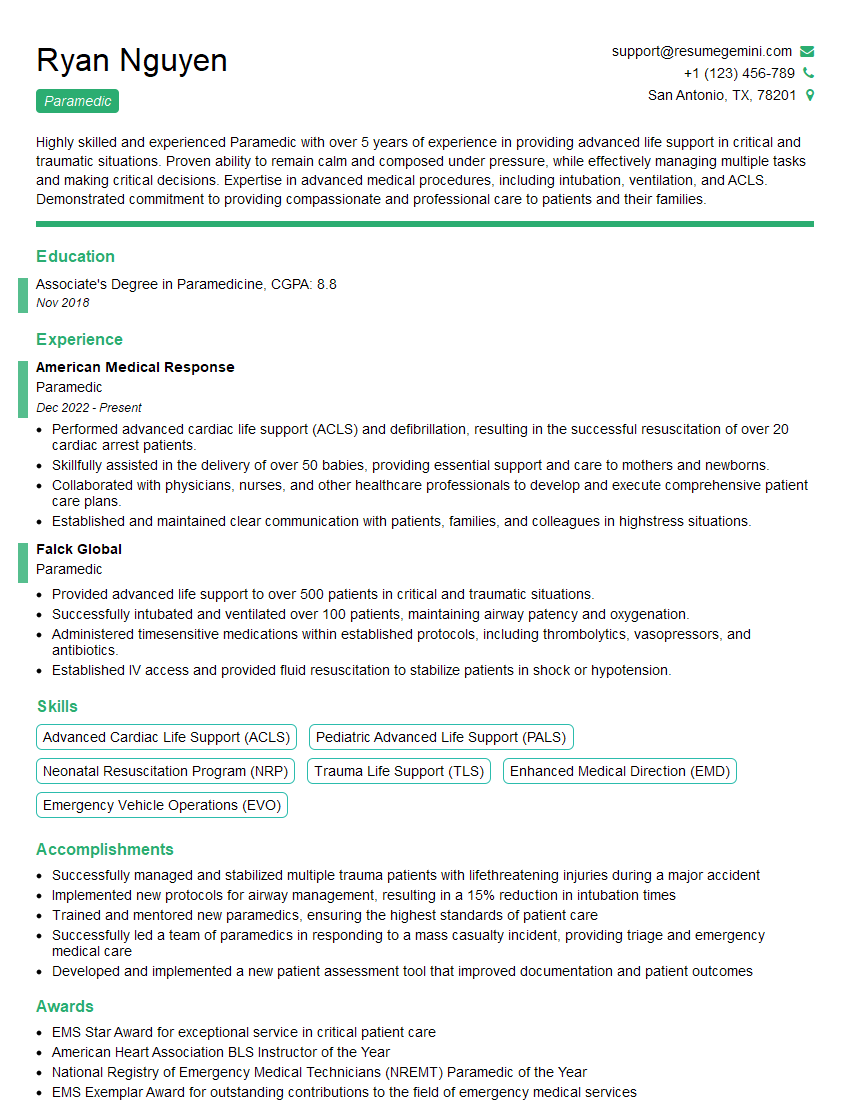
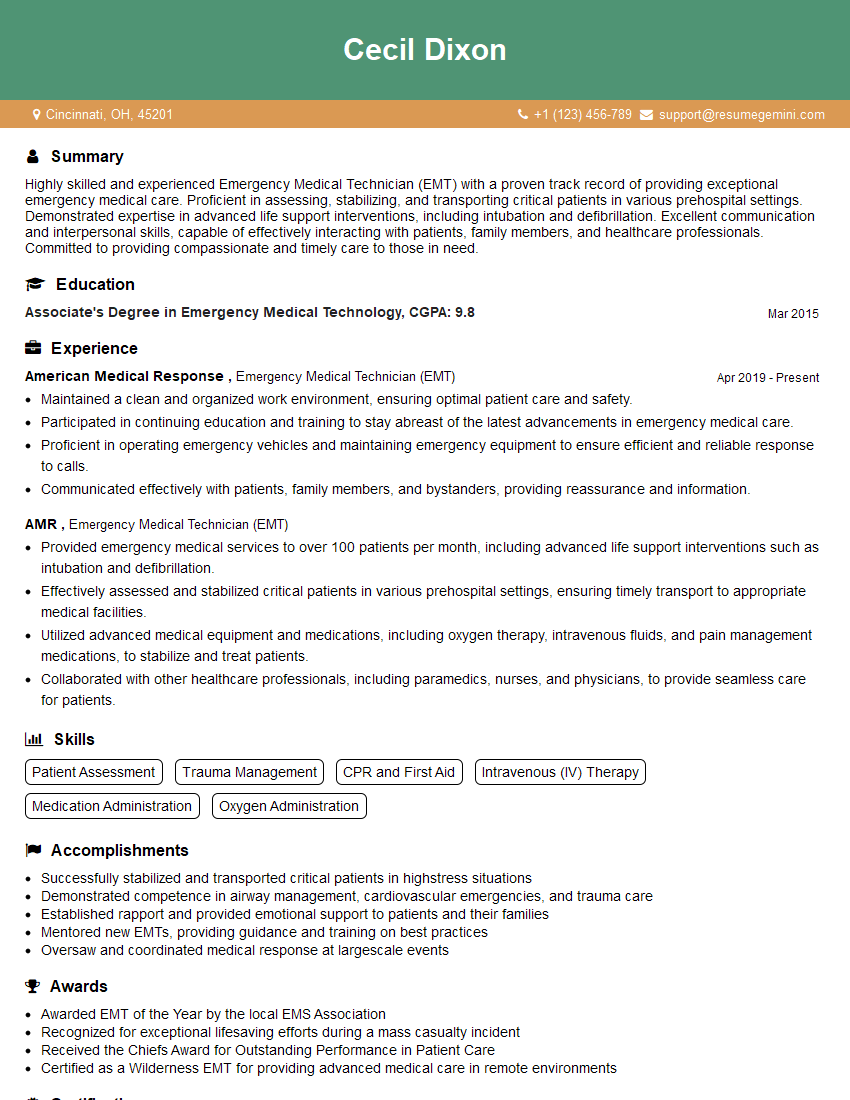
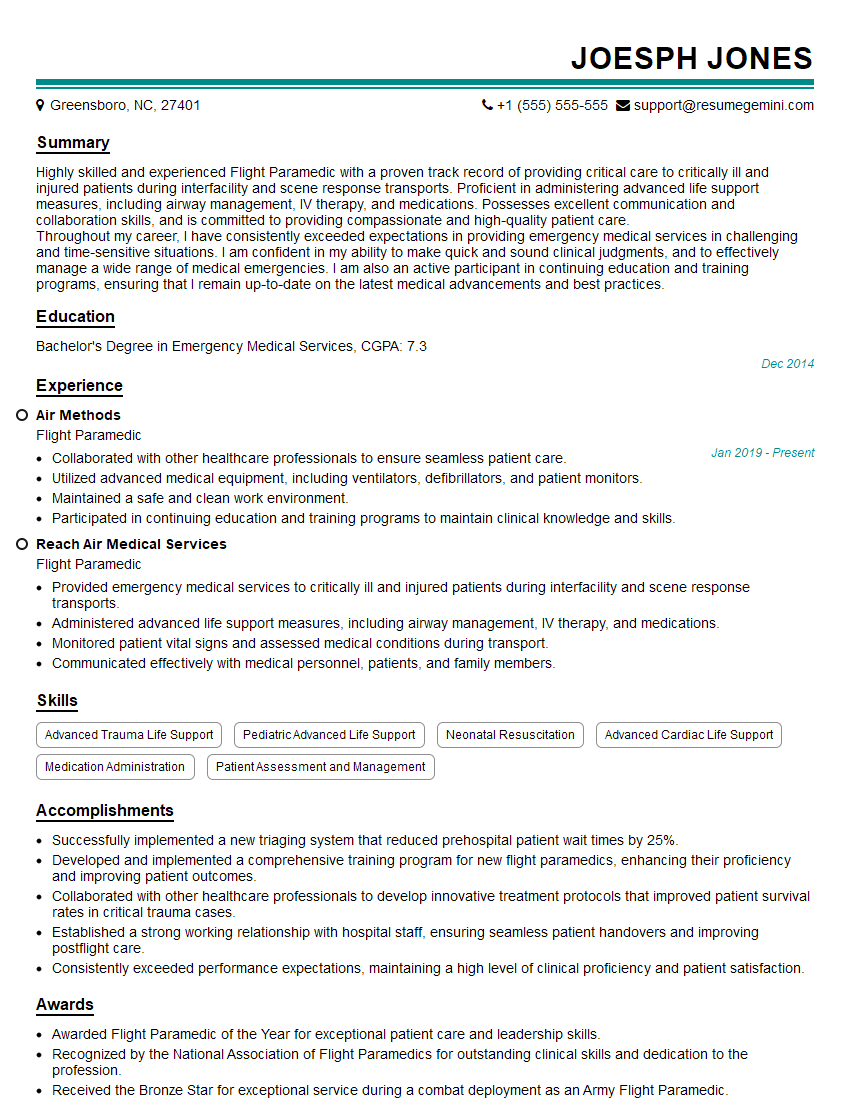
Mastering the skills and knowledge of an EMT or Paramedic opens doors to a rewarding career with significant opportunities for growth and specialization. To maximize your job prospects, focus on creating a strong, ATS-friendly resume that highlights your accomplishments and skills effectively. ResumeGemini is a trusted resource that can help you build a professional and impactful resume tailored to the demands of the Emergency Medical Services field. Examples of resumes tailored to Emergency Medical Technician (EMT) or Paramedic positions are available to help guide you.
Explore more articles
Users Rating of Our Blogs
Share Your Experience
We value your feedback! Please rate our content and share your thoughts (optional).
What Readers Say About Our Blog
Very informative content, great job.
good