Unlock your full potential by mastering the most common Emerging Technology Market Analysis interview questions. This blog offers a deep dive into the critical topics, ensuring you’re not only prepared to answer but to excel. With these insights, you’ll approach your interview with clarity and confidence.
Questions Asked in Emerging Technology Market Analysis Interview
Q 1. Explain the difference between qualitative and quantitative market research methods in the context of emerging technologies.
In emerging technology market analysis, both qualitative and quantitative research methods are crucial, but they offer different perspectives. Quantitative research focuses on numerical data and statistical analysis to understand market size, adoption rates, and other measurable aspects. Think of it like measuring the temperature – you get a precise number. Qualitative research, on the other hand, explores the ‘why’ behind the numbers. It delves into opinions, motivations, and perceptions through interviews, focus groups, and case studies. It’s like understanding *why* the temperature is what it is – perhaps due to seasonal changes or specific weather patterns.
Example: For a new AI-powered medical diagnostic tool, quantitative research might analyze sales figures and market penetration in different regions. Qualitative research would involve interviewing doctors and patients to understand their acceptance of the technology, perceived risks, and willingness to adopt it. A blended approach offers a much more comprehensive understanding.
- Quantitative: Surveys, experiments, statistical analysis of market data.
- Qualitative: Interviews, focus groups, case studies, ethnographic research.
Q 2. Describe your experience with market sizing and forecasting for emerging technologies.
My experience in market sizing and forecasting for emerging technologies involves a multi-stage process. It starts with identifying the target market and defining its boundaries. Then, we use a combination of top-down and bottom-up approaches. Top-down analysis starts with the overall market size and breaks it down into segments, while bottom-up analysis aggregates individual market segments to estimate the total market size. For instance, forecasting the market for autonomous vehicles, we might start with the total number of vehicles on the road and extrapolate the percentage likely to be autonomous in the coming years (top-down). We would also analyze the potential adoption rates across various segments (e.g., personal vehicles, commercial fleets) to refine our forecast (bottom-up).
Crucially, we incorporate several factors into the forecasting model, including technological advancements, regulatory changes, economic conditions, and competitive dynamics. We often use statistical modeling techniques like regression analysis and time series forecasting to project future market growth. Sensitivity analysis is also critical; this helps us understand the impact of uncertainties on our projections.
Q 3. How do you identify and assess the competitive landscape for a new emerging technology?
Assessing the competitive landscape for an emerging technology is a dynamic process that requires a thorough understanding of the current players, potential entrants, and the competitive dynamics at play. We begin by identifying all companies operating in the relevant space, categorizing them based on their business models, technological capabilities, and market share. Then we create competitive profiles for each key player, analyzing their strengths, weaknesses, opportunities, and threats (SWOT analysis). This includes examining their funding, intellectual property, partnerships, and go-to-market strategies.
Beyond direct competitors, we also analyze indirect competitors offering substitute solutions or technologies that could potentially disrupt the market. For example, analyzing the market for virtual reality headsets requires consideration of other entertainment and gaming technologies that might compete for consumer spending. Finally, we use competitive analysis frameworks like Porter’s Five Forces to identify the overall attractiveness and potential profitability of the market.
Q 4. What are some key metrics you use to evaluate the market potential of an emerging technology?
Evaluating the market potential of an emerging technology involves analyzing a range of key metrics. These metrics need to be tailored to the specific technology, but some commonly used ones include:
- Market Size and Growth Rate: Current and projected market size, Compound Annual Growth Rate (CAGR).
- Adoption Rate: The speed at which the technology is being adopted by consumers and businesses.
- Customer Acquisition Cost (CAC): The cost of acquiring new customers or users.
- Customer Lifetime Value (CLTV): The total revenue generated from a single customer over their relationship with the company.
- Technological Readiness Level (TRL): A measure of the maturity of the technology.
- Regulatory Landscape: The presence or absence of regulations that could impact market growth.
- Return on Investment (ROI): The financial returns expected from investing in the technology.
Analyzing these metrics together provides a more holistic view of the market’s potential. For example, a large potential market size (high TAM) is less useful if the adoption rate is extremely slow.
Q 5. How do you incorporate technological disruption into your market analysis?
Incorporating technological disruption into market analysis is crucial, as it can significantly alter market dynamics. We use several methods to achieve this. First, we continuously monitor emerging technologies that could disrupt the market we are analyzing. This involves tracking industry news, research publications, patent filings, and the activities of innovative startups. We then assess the potential impact of each disruptive technology on existing players and markets.
Second, we use scenario planning to explore various possible futures, considering the potential impact of disruptive technologies under different assumptions. For instance, we might model the impact of quantum computing on the data security market. Third, we incorporate disruption into our forecasting models by assigning probabilities to different disruption scenarios. This probabilistic approach allows us to provide a range of possible outcomes, acknowledging the uncertainties inherent in forecasting technology-driven change.
Q 6. How do you identify and evaluate emerging technology trends?
Identifying and evaluating emerging technology trends is an iterative process involving several steps. We start by monitoring a wide range of sources, including industry publications, academic research, technology blogs, patent databases, and venture capital investments. We use this information to identify potential trends based on frequency of mention and alignment with broader societal and technological shifts.
Next, we assess the validity of these trends by evaluating their underlying technological feasibility, market demand, and potential economic impact. We use various analytical frameworks, including PESTLE analysis (political, economic, social, technological, legal, environmental) to understand the broader context of these trends. We also consider factors such as the rate of technological progress, the availability of skilled labor, and the potential for regulatory hurdles. This allows us to prioritize the most promising and impactful trends for further analysis.
Q 7. Describe your experience using market research tools and databases.
My experience encompasses a wide array of market research tools and databases. I am proficient in using databases such as Statista, IBISWorld, and Gartner for accessing industry reports, market data, and competitive intelligence. I also leverage specialized databases like LexisNexis for patent research and competitive landscaping. For quantitative analysis, I utilize statistical software packages such as R and SPSS to perform data analysis, build forecasting models, and visualize market trends.
Furthermore, I am experienced in using qualitative data analysis software such as NVivo to analyze interview transcripts and focus group data. Finally, I regularly utilize online tools for social media monitoring and web analytics to identify emerging trends and assess market sentiment. Proficiency in these tools ensures that our analysis is data-driven, rigorous, and informed.
Q 8. Explain your approach to analyzing patent data for emerging technologies.
Analyzing patent data for emerging technologies is crucial for understanding innovation trends, competitive landscapes, and potential market disruptions. My approach involves a multi-step process: First, I identify relevant keywords and classifications to target patents related to the specific emerging technology. This often involves collaboration with subject matter experts to ensure comprehensive coverage. Next, I utilize patent databases like Google Patents, Espacenet, and Derwent Innovations Index, employing sophisticated search strategies to filter and refine the results. The raw data is then cleaned and structured for analysis, focusing on aspects such as patent applicants, assignee companies, technology classifications, and citation networks.
Analyzing the citation network reveals key technological relationships and identifies influential patents. This network analysis helps in mapping technology evolution and identifying emerging technological clusters. Finally, I visualize the data using tools like Gephi or Python libraries like NetworkX to create insightful charts and graphs that depict technology trends, competitive landscapes, and potential innovation hotspots. For instance, analyzing patent data for autonomous vehicles would reveal key players, dominant technologies (e.g., sensor fusion, machine learning algorithms), and emerging areas of research (e.g., V2X communication). This helps assess the technological maturity, competitive intensity, and future directions of the market.
Q 9. How do you handle conflicting data sources when analyzing an emerging technology market?
Conflicting data sources are a common challenge in market analysis. My approach involves a structured process to reconcile discrepancies and ensure data integrity. Firstly, I critically evaluate the credibility and reliability of each source, considering factors such as the source’s reputation, methodology, and potential biases. This may involve checking the data against multiple sources, and referencing industry reports and expert opinions. Secondly, I look for patterns and commonalities across data sources. Where data points are similar across multiple reliable sources, it increases confidence in the findings. Discrepancies are investigated further to identify the root cause. Sometimes, the conflict is due to different methodologies or definitions; other times, it may indicate the need for further investigation or the presence of conflicting interests. Where possible, I utilize statistical techniques to estimate the likely range of values, incorporating uncertainty and acknowledging the limitations of the available data. For example, differing market size estimations from different research firms might be reconciled by examining the underlying assumptions and methodologies and potentially calculating a weighted average, reflecting the credibility of each source.
Q 10. Discuss your experience with scenario planning for emerging technologies.
Scenario planning is crucial for navigating the uncertainties inherent in emerging technology markets. My approach involves identifying key drivers of change, such as technological breakthroughs, regulatory shifts, or consumer adoption patterns. I then develop multiple plausible scenarios—optimistic, pessimistic, and most likely—considering how these drivers might interact and shape the future. Each scenario outlines a distinct path for the technology’s development, market adoption, and its impact on various stakeholders. For example, for a new medical device, scenarios could explore a rapid adoption rate due to positive clinical trials (optimistic), slow adoption due to regulatory hurdles (pessimistic), or a gradual uptake dictated by market dynamics (most likely). This process creates a range of potential futures, enabling proactive strategic planning and risk mitigation. The resulting scenarios are visualized using narrative descriptions, timelines, and potential impact matrices, which facilitate communication and collaborative decision-making.
Q 11. How do you assess the regulatory landscape’s impact on an emerging technology?
Assessing the regulatory landscape’s impact on emerging technologies is vital, as regulations can significantly influence market entry, product development, and overall success. My approach involves systematically analyzing relevant regulations at national and international levels. This includes identifying specific regulations governing the technology (e.g., data privacy, safety standards, intellectual property rights), analyzing the potential impact of those regulations on different aspects of the technology lifecycle, and tracking regulatory changes over time. I use a combination of legal databases, government websites, and expert consultations to gain a comprehensive understanding of the legal and regulatory frameworks. For example, analyzing the regulatory landscape for AI-powered medical devices would involve reviewing FDA guidelines, HIPAA regulations, and international standards to understand compliance requirements, potential regulatory hurdles, and implications for product development and market access. This analysis helps assess the level of regulatory risk, identify opportunities for regulatory arbitrage, and inform product development and market entry strategies.
Q 12. Describe your experience with financial modeling in the context of emerging technologies.
Financial modeling is essential for evaluating the commercial viability of emerging technologies. My approach involves constructing detailed financial models that project revenue, costs, and profitability over time. These models account for various factors specific to the emerging technology, such as market size, adoption rates, pricing strategies, manufacturing costs, and potential risks. For example, when modeling the financial viability of a new renewable energy technology, the model will incorporate factors such as installation costs, energy output, government subsidies, and expected lifespan of the technology. I also use sensitivity analysis to determine how changes in key parameters, such as market growth or production costs, impact the overall financial performance. This allows for a better understanding of the financial risks and opportunities associated with the technology. Furthermore, the models incorporate discounting techniques to translate future cash flows into present values, enabling a more accurate assessment of the technology’s net present value and internal rate of return.
Q 13. How do you communicate complex market analysis findings to both technical and non-technical audiences?
Communicating complex market analysis findings effectively to both technical and non-technical audiences requires tailoring the message to the audience’s understanding and needs. For technical audiences, I provide detailed data, sophisticated analyses, and technical jargon where appropriate. For non-technical audiences, I focus on clear and concise language, emphasizing key findings and implications without getting bogged down in technical details. Visualizations such as charts, graphs, and infographics are crucial tools for conveying complex information in a readily understandable manner for both types of audiences. I use storytelling techniques, analogies, and real-world examples to make the analysis more engaging and relatable. For example, while explaining complex statistical models to a technical audience, I can discuss the statistical significance of the results and the underlying assumptions. For a non-technical audience, I would focus on the practical implications of these findings – how they affect market decisions or strategic planning. The presentation format also varies, employing detailed reports for technical audiences and executive summaries or presentations for non-technical stakeholders.
Q 14. What are some of the ethical considerations when analyzing emerging technology markets?
Ethical considerations are paramount in analyzing emerging technology markets. Bias in data collection and analysis is a significant concern. For example, relying solely on publicly available data might overlook insights from underrepresented groups or regions. Ensuring data diversity and applying appropriate statistical methods to address potential biases is vital. Privacy concerns also need careful consideration. When handling data related to individuals or businesses, strict adherence to data protection regulations (e.g., GDPR) is necessary. Transparency is crucial in both data collection and reporting. Clearly articulating the methods used and acknowledging any limitations of the analysis helps maintain credibility and promotes responsible research. Finally, the potential societal impact of the technology under analysis should be considered. Responsible innovation requires assessing potential risks and benefits, fostering ethical discussions, and advocating for equitable access and benefits distribution. This includes evaluating potential implications of the technology on employment, social equity, and environmental sustainability.
Q 15. How do you stay up-to-date on the latest developments in emerging technologies?
Staying ahead in the rapidly evolving landscape of emerging technologies requires a multi-pronged approach. It’s not enough to simply read industry news; you need a structured system for continuous learning.
Industry Publications and Research Reports: I subscribe to leading publications like Gartner, Forrester, IDC, and specialized journals focusing on areas like AI, blockchain, and quantum computing. These reports often provide in-depth analyses and future predictions.
Conferences and Webinars: Actively participating in industry conferences and webinars allows direct engagement with experts and access to the latest breakthroughs. I prioritize events focused on specific emerging technologies relevant to my current projects.
Online Communities and Forums: Engaging with online communities like Reddit’s technology subreddits, Stack Overflow, and industry-specific forums provides exposure to diverse perspectives and real-world applications of emerging technologies. It’s a valuable source of early adopters’ feedback.
Networking: Building relationships with researchers, developers, and entrepreneurs in the field is crucial. Attending meetups and networking events helps stay informed about cutting-edge developments before they hit mainstream media.
Patent Databases: Monitoring patent filings offers insights into the direction of research and development in various technological fields. This provides a glimpse into future innovations even before products launch.
By combining these methods, I create a comprehensive picture of the latest advancements, allowing me to identify trends, assess market potential, and anticipate future disruptions.
Career Expert Tips:
- Ace those interviews! Prepare effectively by reviewing the Top 50 Most Common Interview Questions on ResumeGemini.
- Navigate your job search with confidence! Explore a wide range of Career Tips on ResumeGemini. Learn about common challenges and recommendations to overcome them.
- Craft the perfect resume! Master the Art of Resume Writing with ResumeGemini’s guide. Showcase your unique qualifications and achievements effectively.
- Don’t miss out on holiday savings! Build your dream resume with ResumeGemini’s ATS optimized templates.
Q 16. Describe your experience with presenting market research findings to executive leadership.
Presenting market research findings to executive leadership requires a clear, concise, and impactful communication style. My approach focuses on translating complex data into actionable insights that align with the company’s strategic objectives.
Storytelling: Instead of simply presenting data points, I weave a narrative around the findings, highlighting key trends and their implications. For example, when presenting research on the market potential of a new AI-powered solution, I would begin by outlining the problem it solves, then detail the market size and growth potential, finally concluding with clear recommendations for investment and market entry.
Data Visualization: I use visually appealing charts, graphs, and infographics to make complex data easily digestible. A well-designed presentation is crucial for maintaining audience engagement and ensuring key messages are understood.
Focus on Key Metrics: I focus on the most relevant metrics that directly impact decision-making, such as market size, growth rate, competitive landscape, and potential ROI. This ensures that the presentation remains concise and focuses on the most critical information.
Q&A Session: I always allocate time for a Q&A session to address any questions or concerns from the executive team. This allows for a dialogue and demonstrates my understanding of the topic.
In one instance, I presented research on the potential of blockchain technology for supply chain management to the CEO and CFO. By clearly demonstrating the cost savings and increased transparency that blockchain could provide, I was able to secure funding for a pilot project.
Q 17. How do you prioritize market research activities when faced with limited resources?
Prioritizing market research activities with limited resources requires a strategic approach focused on maximizing impact. I utilize a framework that balances urgency, potential return, and resource requirements.
Impact Assessment: I begin by assessing the potential impact of each research activity on the company’s strategic goals. Activities with the highest potential for influencing key decisions receive higher priority.
Resource Allocation: I carefully evaluate the resources (time, budget, personnel) required for each activity and compare this to its potential impact. This allows for an efficient allocation of resources to maximize return on investment.
Prioritization Matrix: I often use a prioritization matrix, such as a MoSCoW method (Must have, Should have, Could have, Won’t have) or Eisenhower Matrix (Urgent/Important), to rank activities based on urgency and importance. This structured approach ensures that critical research is completed first.
Agile Approach: In many cases, I adopt an agile approach to market research, breaking down large projects into smaller, manageable tasks. This allows for flexibility and adaptability to changing priorities or new information.
For example, if faced with limited resources to investigate three emerging technologies, I might prioritize the one with the most immediate market opportunity and the clearest path to commercialization, focusing initial research on a proof of concept before committing to larger scale research.
Q 18. How do you incorporate customer feedback into your market analysis?
Customer feedback is invaluable for refining market analysis and ensuring that research findings are relevant and actionable. I employ several methods to effectively incorporate customer feedback:
Surveys: I conduct targeted surveys to gather quantitative and qualitative data directly from customers. This helps measure satisfaction, identify unmet needs, and gauge preferences for new products or services.
Focus Groups: Focus groups provide a platform for in-depth discussions with customers, allowing for a more nuanced understanding of their needs and perceptions.
Interviews: One-on-one interviews with key customers offer valuable insights and provide a deeper understanding of specific issues or challenges.
Social Media Monitoring: Tracking social media conversations and online reviews provides real-time insights into customer opinions and sentiment towards a company’s products or services.
Online Review Platforms: Analyzing reviews on sites like Yelp, Amazon, and Google reviews reveals customer experiences and areas for improvement.
For instance, when analyzing the market for a new augmented reality application, we incorporated feedback from early testers through beta programs. This feedback was crucial in identifying usability issues and features desired by target customers, influencing the final product design and significantly improving market acceptance.
Q 19. What are some common pitfalls to avoid when conducting market analysis for emerging technologies?
Conducting market analysis for emerging technologies presents unique challenges. Avoiding common pitfalls is crucial for generating accurate and reliable findings.
Technological Hype: Emerging technologies are often surrounded by hype, leading to inflated expectations. It’s crucial to critically evaluate the technology’s actual capabilities and limitations, rather than relying solely on marketing claims.
Limited Data Availability: For truly nascent technologies, reliable data might be scarce. This requires creative data gathering techniques and a careful assessment of data reliability.
Rapid Technological Change: The fast-paced nature of emerging technologies means that findings can quickly become obsolete. Regular updates and iterative analysis are necessary.
Bias and Assumptions: Researchers may unconsciously introduce biases based on personal beliefs or preconceived notions. Objectivity and rigorous methodology are essential.
Ignoring Competitive Landscape: Failing to thoroughly analyze the competitive landscape can lead to inaccurate market sizing and strategy development. A comprehensive competitive analysis is crucial.
For example, an overreliance on early adopter enthusiasm for a new VR headset without considering the high price point and limited content availability could lead to an overestimation of market demand.
Q 20. How do you use data visualization techniques to communicate market research findings?
Data visualization is essential for effectively communicating market research findings. It transforms complex data into easily understandable and memorable visuals.
Charts and Graphs: Line graphs are ideal for showing trends over time, while bar charts compare different categories effectively. Pie charts represent proportions, and scatter plots illustrate correlations between variables.
Infographics: Infographics combine visuals, text, and data to create engaging and informative summaries of research findings.
Interactive Dashboards: For dynamic data, interactive dashboards allow users to explore data at their own pace and filter information based on their interests.
Maps: Geographic maps are valuable for visualizing market penetration, regional variations, and customer distribution.
Choosing the Right Visual: The choice of visualization technique should depend on the type of data and the message you want to convey. A poorly chosen visual can be confusing or misleading.
For example, when presenting market share data for a new software product, a segmented bar chart would clearly show the company’s performance compared to competitors. An interactive map could then show regional variations in market penetration.
Q 21. Explain your experience with SWOT analysis in the context of emerging technologies.
SWOT analysis (Strengths, Weaknesses, Opportunities, Threats) is a crucial tool for evaluating the market potential of emerging technologies. It helps identify factors that could influence success or failure.
Strengths: These are internal positive attributes, like a strong team, proprietary technology, or existing customer base. For example, a company’s strong brand reputation could be a significant strength when entering a new market.
Weaknesses: These are internal negative attributes, such as lack of experience, insufficient funding, or limited resources. A lack of technical expertise in a particular area could be a weakness.
Opportunities: These are external factors that could benefit the company, such as a growing market, technological advancements, or favorable government regulations. A surge in demand for a certain technology presents an opportunity.
Threats: These are external factors that could harm the company, such as intense competition, regulatory hurdles, or economic downturns. The emergence of a disruptive competitor poses a significant threat.
By systematically analyzing these factors, I can identify potential risks and opportunities for emerging technologies. This provides a more comprehensive understanding of the market landscape and enables a strategic approach to product development and market entry. For instance, when evaluating the market for a new AI-powered medical device, we might find that a strength is our strong R&D team, but a threat could be the stringent regulatory requirements for medical devices. Opportunities might include the increasing demand for AI-driven healthcare solutions, and weaknesses could be limited marketing budget.
Q 22. Describe your experience using statistical software for market analysis.
My experience with statistical software for market analysis is extensive. I’m proficient in a range of tools, including R, Python (with libraries like Pandas, NumPy, and Scikit-learn), and SPSS. I use these tools throughout the entire analytical process, from data cleaning and preprocessing to advanced statistical modeling and visualization. For instance, in a recent project analyzing the market for quantum computing hardware, I used R to perform time-series analysis on patent filings to predict future market growth. Python’s data manipulation capabilities were crucial for cleaning and merging datasets from various sources – including market research reports, government databases, and industry publications. I then leveraged Scikit-learn to build predictive models, forecasting market share based on various factors like technological advancements and government funding. Finally, I used data visualization techniques to present my findings clearly and concisely to stakeholders.
Specifically, I often utilize regression analysis (linear, logistic, and polynomial) to identify relationships between variables, forecasting models (ARIMA, Prophet) for predicting future market trends, and clustering algorithms (K-means, hierarchical) for market segmentation. My expertise also extends to hypothesis testing and statistical significance analysis, ensuring the robustness of my findings.
Q 23. How do you assess the adoption rate of a new emerging technology?
Assessing the adoption rate of a new emerging technology requires a multi-faceted approach. It’s not just about sales figures; it’s about understanding the technology’s penetration into various market segments and its overall impact. I typically use a combination of quantitative and qualitative methods.
- Quantitative methods involve analyzing sales data, market share, user base growth, and the number of deployed systems. For example, tracking the number of installed 5G base stations provides a quantitative measure of 5G adoption. I might also analyze social media mentions and online search trends using tools like Google Trends to gauge public interest and awareness.
- Qualitative methods involve gathering insights through surveys, interviews, and focus groups with potential and current users. This helps understand the reasons behind adoption (or lack thereof), identify barriers, and pinpoint areas for improvement. For instance, conducting interviews with early adopters of augmented reality glasses would reveal valuable insights into user experience and identify potential usability challenges.
Combining these approaches allows for a comprehensive understanding of adoption rates, revealing not only the speed of uptake but also the factors driving it, thus enabling better strategic decision-making. This holistic approach is crucial, as simply looking at sales might miss important nuances.
Q 24. How do you account for uncertainty and risk in your market forecasts?
Uncertainty and risk are inherent in market forecasting, especially for emerging technologies. I employ several strategies to account for these:
- Scenario Planning: Instead of relying on a single forecast, I develop multiple scenarios based on different assumptions about key variables (e.g., technological breakthroughs, regulatory changes, economic conditions). This allows for a range of possible outcomes and helps assess the impact of uncertainty.
- Sensitivity Analysis: This involves systematically varying the input parameters of the forecast model to see how sensitive the results are to changes in these parameters. This helps identify the key drivers of uncertainty and the areas where more information is needed.
- Monte Carlo Simulation: This statistical technique uses random sampling to model the probability of different outcomes. It’s especially useful when dealing with multiple uncertain variables that may interact in complex ways. For example, simulating different levels of consumer adoption and competing technological advancements in the electric vehicle market provides a more robust forecast than a deterministic model.
- Risk Assessment Matrix: I use a risk assessment matrix to identify and prioritize the most significant risks. This helps focus resources on mitigating the highest-impact risks. This could involve identifying risks like regulatory hurdles or the emergence of a disruptive competitor.
By incorporating these approaches, I can create more robust and realistic market forecasts that acknowledge and quantify uncertainty, helping clients make more informed decisions.
Q 25. Describe your experience working with cross-functional teams on market research projects.
My experience working with cross-functional teams is a cornerstone of my success. I’ve collaborated extensively with teams comprising engineers, product managers, marketing professionals, and sales personnel. Effective collaboration hinges on clear communication and a shared understanding of objectives.
For example, in a project analyzing the market for autonomous vehicles, I worked closely with engineers to understand the technological challenges and timelines, with product managers to define the target market segments, and with marketing to assess consumer perception and brand positioning. This interdisciplinary collaboration ensures that the market research accurately reflects the technical realities, business objectives, and market dynamics.
I leverage project management methodologies (like Agile) to manage team workflows, utilize collaboration tools such as Slack and Microsoft Teams for seamless communication, and prioritize regular progress meetings to ensure alignment and address potential roadblocks. My approach always focuses on fostering a collaborative environment where everyone’s expertise is valued and contributes to the success of the project.
Q 26. How do you measure the success of your market research efforts?
Measuring the success of market research efforts goes beyond simply producing a report. It’s about assessing the impact of the research on decision-making and business outcomes. I employ both leading and lagging indicators:
- Leading indicators: These measure the quality and timeliness of the research. Examples include client satisfaction with the research process, the accuracy of the data collected, the clarity and effectiveness of the reporting, and the timeliness of delivery.
- Lagging indicators: These measure the impact of the research on business decisions and outcomes. Examples include the success of product launches based on the research findings, the accuracy of the sales forecasts, the effectiveness of marketing campaigns informed by the research, and the overall return on investment (ROI) of the research project.
Furthermore, I track the utilization of research findings in subsequent business strategies and measure the actual outcomes against projected outcomes. This feedback loop is vital for continuous improvement. For instance, if our market research predicted a high demand for a new product, and that product significantly outperformed sales projections, it indicates the success of the research.
Q 27. Discuss your experience with market segmentation for emerging technologies.
Market segmentation for emerging technologies requires a nuanced understanding of the technology’s unique features and potential applications. Unlike established markets, emerging tech markets often exhibit significant heterogeneity in terms of user needs, technological readiness, and adoption drivers. Therefore, a simple demographic segmentation might be insufficient.
I typically utilize a multi-dimensional approach to market segmentation for emerging technologies, incorporating:
- Technological Readiness Levels: Segmenting based on the level of technological sophistication required for adoption. For example, in the AI market, some segments may embrace cloud-based AI solutions, while others require on-premise solutions due to data sensitivity concerns.
- Application-Based Segmentation: Identifying specific use cases and applications of the technology, targeting different industry verticals or consumer groups based on their specific needs. For instance, in the drone market, you might segment by agriculture (crop monitoring), construction (site surveying), or delivery services.
- Adoption Stages: Dividing the market into segments based on the stage of adoption (innovators, early adopters, early majority, late majority, laggards). This allows for tailored marketing strategies and product development efforts targeted at the characteristics of each group.
- Value-Based Segmentation: Identifying different customer segments based on the value proposition they seek from the technology. Some users may prioritize cost-effectiveness, others may be willing to pay a premium for advanced features or superior performance.
By using a comprehensive approach that combines these factors, I ensure that the market segments are not just descriptive, but also actionable, allowing for the development of effective marketing strategies and product roadmaps.
Key Topics to Learn for Emerging Technology Market Analysis Interview
- Market Sizing and Forecasting: Understanding methodologies like top-down and bottom-up analysis, and applying them to emerging technologies like AI, IoT, or blockchain. Practical application includes developing market size projections based on various growth drivers and inhibitors.
- Competitive Landscape Analysis: Identifying key players, analyzing their strengths and weaknesses, and understanding competitive strategies within the emerging technology landscape. Practical application includes creating competitive matrices and SWOT analyses for specific technologies.
- Technological Trends and Disruption: Analyzing emerging technologies’ impact on existing industries and identifying potential disruption scenarios. Practical application involves researching and evaluating the potential of new technologies to reshape markets.
- Data Analysis and Interpretation: Utilizing various data sources (market research reports, patents, news articles) to extract meaningful insights and inform market analysis. Practical application involves using statistical tools and data visualization techniques to communicate findings effectively.
- Financial Modeling and Valuation: Applying financial modeling techniques to assess the market potential and investment attractiveness of emerging technologies. Practical application includes building financial models to project revenue, profitability, and market share.
- Strategic Implications and Recommendations: Developing actionable insights and strategic recommendations based on market analysis findings. Practical application includes creating presentations and reports communicating market analysis results to stakeholders.
- Ethical Considerations and Societal Impact: Understanding the ethical implications and societal impact of emerging technologies, including potential risks and benefits. Practical application involves conducting responsible technology assessments and incorporating ethical considerations into market analysis.
Next Steps
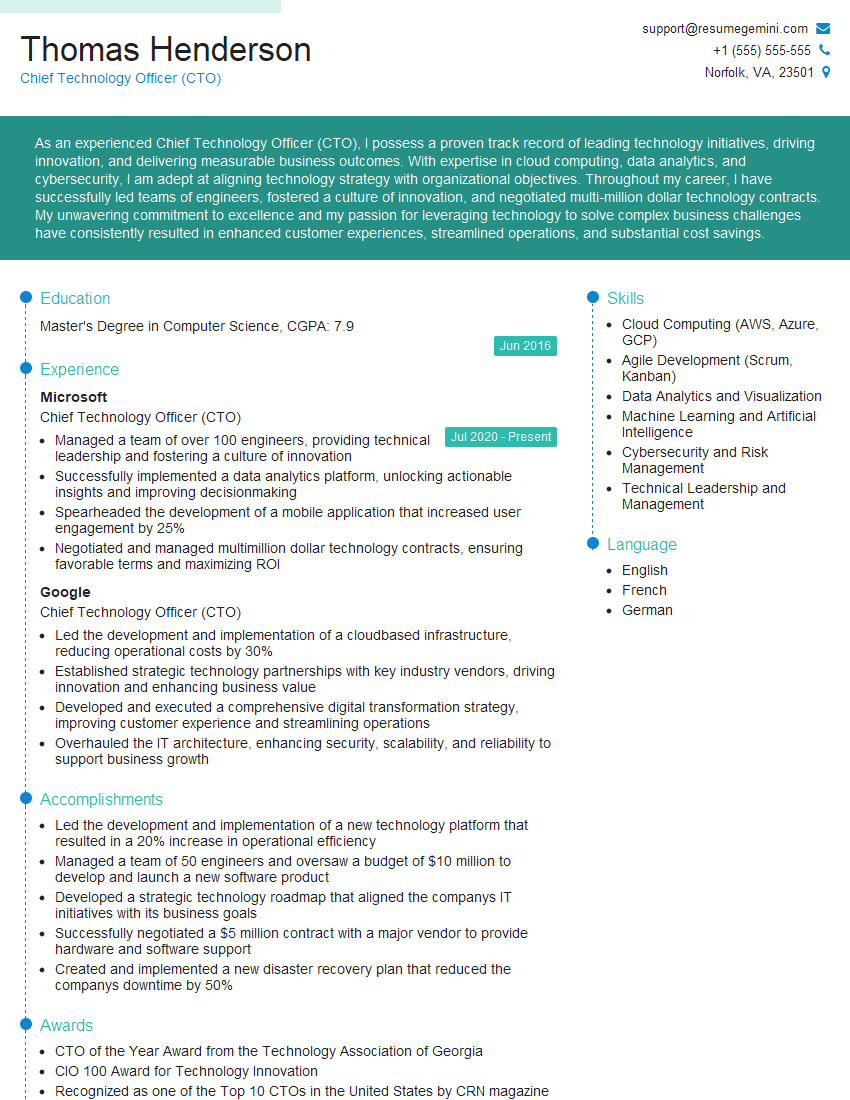
Mastering Emerging Technology Market Analysis is crucial for career advancement in today’s rapidly evolving technological landscape. It opens doors to exciting roles with high growth potential and allows you to contribute significantly to strategic decision-making. To maximize your job prospects, creating a strong, ATS-friendly resume is essential. ResumeGemini is a trusted resource that can help you build a professional and impactful resume tailored to your skills and experience. Examples of resumes specifically crafted for Emerging Technology Market Analysis roles are available to guide you. Invest time in crafting a compelling resume; it’s your first impression on potential employers.
Explore more articles
Users Rating of Our Blogs
Share Your Experience
We value your feedback! Please rate our content and share your thoughts (optional).
What Readers Say About Our Blog
Very informative content, great job.
good