Unlock your full potential by mastering the most common EMR interview questions. This blog offers a deep dive into the critical topics, ensuring you’re not only prepared to answer but to excel. With these insights, you’ll approach your interview with clarity and confidence.
Questions Asked in EMR Interview
Q 1. Describe your experience with different EMR systems (e.g., Epic, Cerner, Meditech).
My experience spans several leading EMR systems, including Epic, Cerner, and Meditech. Each offers a unique approach to data management and clinical workflows. With Epic, I’ve worked extensively on their robust order entry system, noting its strength in integrated clinical decision support tools and seamless interoperability. My Cerner experience involved managing user training and troubleshooting, highlighting the system’s powerful reporting capabilities and adaptability to various healthcare settings. Finally, with Meditech, I focused on optimizing workflows for ambulatory care, appreciating its flexibility and customizable modules. In each case, I gained valuable insight into the specific strengths and weaknesses of each platform, and how to best leverage them to improve patient care and operational efficiency. For example, Epic’s robust reporting features allowed us to identify and address bottlenecks in our medication reconciliation process, leading to significant improvements in patient safety.
Q 2. Explain the differences between EMR and EHR.
While often used interchangeably, EMR (Electronic Medical Record) and EHR (Electronic Health Record) have key distinctions. An EMR is a digital version of a patient’s chart, primarily focused on the data generated during a single provider’s encounter. Think of it like a snapshot of a visit. An EHR, on the other hand, is a broader, more comprehensive record encompassing the patient’s entire healthcare history, including data from multiple providers, hospitals, and labs. It’s like a complete medical narrative. The EHR integrates data from different sources to provide a holistic view of a patient’s health, facilitating better coordination of care and reducing medical errors. Imagine a patient with diabetes: their EMR from their primary care physician would show their recent blood sugar levels and medication adjustments, while their EHR would also include data from their endocrinologist, ophthalmologist (for diabetic retinopathy screenings), and even their pharmacy, painting a complete picture of their diabetes management over time.
Q 3. What are the key security considerations for EMR systems?
Security in EMR systems is paramount. Key considerations include:
- Access Control: Implementing robust role-based access control (RBAC) to ensure only authorized personnel can access specific data. This involves assigning different levels of access based on job roles and responsibilities.
- Data Encryption: Encrypting data both in transit (during transmission) and at rest (while stored) to protect against unauthorized access. This is crucial for protecting sensitive patient information.
- Audit Trails: Maintaining detailed audit trails to track all user activities within the system, allowing for identification of suspicious actions and potential security breaches.
- Regular Security Assessments: Conducting regular vulnerability assessments and penetration testing to identify and mitigate potential security weaknesses.
- Compliance: Adhering to relevant regulations such as HIPAA (Health Insurance Portability and Accountability Act) in the US or GDPR (General Data Protection Regulation) in Europe. This ensures the system meets stringent data privacy standards.
- Employee Training: Educating staff on security protocols and best practices to prevent phishing attacks and other social engineering attempts.
Q 4. How do you ensure data integrity within an EMR system?
Ensuring data integrity in an EMR system requires a multi-faceted approach. This includes:
- Data Validation: Implementing data validation rules to prevent entry of incorrect or incomplete data. For example, ensuring that dates of birth are formatted correctly and that lab values fall within realistic ranges.
- Regular Backups: Regularly backing up the EMR database to a secure location to protect against data loss due to hardware failure or cyberattacks. Implementing a robust disaster recovery plan is critical for business continuity.
- Version Control: Tracking changes made to patient records and allowing for the retrieval of previous versions if necessary. This is especially important for tracking changes to diagnoses, medications, or treatment plans.
- Data Reconciliation: Regularly comparing data from different sources to identify and resolve discrepancies. This ensures accuracy and consistency of patient information.
- Data Governance: Establishing clear policies and procedures for data management, access control, and quality assurance. This requires strong leadership and collaboration across departments.
Q 5. Describe your experience with EMR data migration.
My experience with EMR data migration involves a systematic, phased approach. It begins with a thorough assessment of the source and target systems, followed by data cleansing and transformation to ensure data integrity. We meticulously map data fields to minimize information loss during the migration. The migration itself is usually done in stages, with rigorous testing and validation at each step. We also implement data validation checks to prevent errors, and ensure all critical data is accurately transferred. One project involved migrating patient data from a legacy system to a new Epic instance. We employed a phased approach to minimize disruption to clinical workflows. First, we migrated inactive patients. Then, we migrated active patients in batches, allowing us to thoroughly test the migration process and make adjustments as necessary before the entire system went live. Post-migration, we conduct comprehensive data reconciliation to ensure all data is accurately reflected in the new system.
Q 6. How do you handle EMR system downtime or outages?
Handling EMR system downtime requires a well-defined disaster recovery plan. This plan outlines procedures for maintaining critical functions during an outage, including:
- Redundancy: Implementing redundant systems and backups to ensure availability during failures. This can involve having a secondary EMR system or using cloud-based solutions.
- Emergency Procedures: Developing procedures for clinicians to access critical patient information using alternative methods, such as paper charts or backup systems. This allows for seamless care delivery during disruptions.
- Communication: Establishing a robust communication system to inform staff and patients of the outage and provide updates on restoration efforts.
- Post-Outage Analysis: Conducting a thorough analysis of the cause of the outage and implementing corrective measures to prevent similar events in the future. This ensures continuous improvement in system reliability.
Q 7. What is your experience with EMR reporting and analytics?
My experience with EMR reporting and analytics involves using the system’s built-in reporting tools and external analytics platforms to generate meaningful insights from patient data. I’ve created reports to track key performance indicators (KPIs), such as patient wait times, medication adherence rates, and readmission rates. I’ve also used data analytics to identify trends and patterns in patient populations to improve clinical decision-making and resource allocation. For instance, by analyzing patient data, we were able to identify a significant increase in the number of patients experiencing a specific adverse drug reaction, prompting a targeted intervention and education program to reduce future occurrences. This demonstrates the power of data-driven insights to improve healthcare delivery and patient outcomes. Proficiency in SQL and other data analysis tools is essential for effective data extraction and analysis within the EMR environment.
Q 8. Explain your understanding of HL7 standards and their role in EMR interoperability.
HL7 (Health Level Seven) is a set of international standards for the exchange, integration, sharing, and retrieval of electronic health information. Think of it as a common language that allows different EMR systems to ‘talk’ to each other. This interoperability is crucial because it prevents data silos and allows for seamless patient care across different healthcare settings.
In practice, HL7 utilizes various message types, such as ADT (Admissions, Discharges, and Transfers), ORU (Observation Result), and ORM (Order Result Management), each with a specific structure defined by HL7 specifications. For example, an ADT message would notify other systems when a patient is admitted to a hospital, ensuring that all relevant systems are updated. These messages are formatted using specific data structures and codes, guaranteeing consistent interpretation across systems. Without HL7, transferring patient data between an EHR system used by a doctor’s office and a hospital’s system would be incredibly difficult and prone to errors.
My experience includes working extensively with HL7 v2 and v3 messaging, troubleshooting integration issues, and ensuring data integrity during the exchange. I’ve also worked with FHIR (Fast Healthcare Interoperability Resources), a newer standard designed to improve interoperability with web-based APIs, which is increasingly important in modern healthcare.
Q 9. How do you ensure compliance with HIPAA regulations when working with EMRs?
HIPAA (Health Insurance Portability and Accountability Act) compliance is paramount when dealing with EMRs. It mandates the protection of patient health information (PHI). To ensure compliance, I follow a multi-layered approach. This includes:
- Strict Access Control: Implementing role-based access control (RBAC) to limit access to PHI based on job responsibilities. Only authorized personnel can access specific data.
- Data Encryption: Utilizing encryption both in transit and at rest to protect PHI from unauthorized access. This means data is secured during transmission and while stored on servers.
- Audit Trails: Maintaining comprehensive audit trails to track all accesses, modifications, and deletions of PHI. This allows for thorough monitoring and investigation of potential security breaches.
- Security Awareness Training: Conducting regular training for all staff on HIPAA regulations and security best practices. This includes awareness of phishing scams and other common threats.
- Regular Security Assessments: Conducting regular risk assessments and vulnerability scans to identify and address potential security weaknesses in the EMR system and its infrastructure.
For example, during a recent project, we implemented multi-factor authentication and enhanced encryption protocols, leading to a significant reduction in security risks. I am familiar with HIPAA’s various regulations, including the Privacy Rule, Security Rule, and Breach Notification Rule, and I am adept at applying these regulations to EMR systems in practical settings.
Q 10. Describe your experience with EMR system upgrades and maintenance.
My experience with EMR system upgrades and maintenance is extensive. Upgrades involve careful planning, testing, and validation. I typically follow a structured approach, which includes:
- Needs Assessment: Defining the objectives of the upgrade, including performance improvements, new functionality, and security enhancements.
- Testing and Validation: Conducting thorough testing in a staging environment before deploying the upgrade to production. This includes unit testing, integration testing, and user acceptance testing (UAT).
- Data Migration: Developing and executing a plan for migrating data to the upgraded system, ensuring data integrity and minimal downtime.
- Training and Support: Providing comprehensive training to staff on the new features and functionalities of the upgraded system.
- Post-Upgrade Monitoring: Closely monitoring the system’s performance after the upgrade to detect and address any issues.
In one instance, we successfully upgraded a large EMR system from a legacy version to a cloud-based solution, resulting in improved scalability, performance, and cost-effectiveness. Maintenance involves regular patching, system monitoring, and proactive troubleshooting to prevent outages and ensure data integrity. Regular backups are critical, and I ensure we have comprehensive disaster recovery plans in place.
Q 11. What are some common challenges encountered during EMR implementation?
EMR implementation presents several common challenges. These frequently include:
- Resistance to Change: Clinicians may be resistant to adopting new technology due to unfamiliarity or concerns about workflow disruption. Effective communication and training are critical here.
- Data Migration Issues: Migrating data from legacy systems can be complex and time-consuming, requiring careful planning and execution. Data cleansing is often a significant component.
- Integration with Existing Systems: Integrating the EMR with other healthcare systems (e.g., billing, lab systems) can be challenging, requiring careful coordination and testing.
- Cost: The initial investment for an EMR system can be substantial, including software, hardware, implementation, and training costs.
- Workflow Disruption: Implementation often causes temporary disruption to workflows, requiring careful planning to minimize disruption and maintain patient care.
For example, during one implementation, we addressed user resistance by conducting extensive hands-on training sessions tailored to specific specialties. This helped users build confidence and embrace the new system.
Q 12. How do you troubleshoot EMR system errors or performance issues?
Troubleshooting EMR errors requires a systematic approach. I typically start by:
- Gathering Information: Collecting details about the error, including error messages, timestamps, user actions, and affected systems.
- Reproducing the Error: Attempting to reproduce the error to understand the circumstances that trigger it.
- Checking Logs: Reviewing system logs to identify any underlying issues or patterns.
- Testing Connectivity: Verifying network connectivity between different systems.
- Escalating to Vendors: If the issue cannot be resolved internally, I escalate it to the vendor for support.
For performance issues, I analyze resource utilization (CPU, memory, disk I/O) and look for bottlenecks. Tools like performance monitors and database query analyzers are helpful. A recent example involved a performance bottleneck caused by a poorly written database query. By optimizing the query, we significantly improved system responsiveness.
Q 13. What is your experience with EMR training and user support?
EMR training and user support are vital for successful implementation and adoption. I have extensive experience in delivering training using various methods, such as:
- Classroom Training: Conducting instructor-led training sessions to provide comprehensive overview and hands-on practice.
- Online Training: Developing and delivering online training modules that can be accessed at users’ convenience.
- On-the-Job Support: Providing direct support to users during their daily work, answering questions, and resolving issues.
- Developing User Manuals and Guides: Creating comprehensive documentation to help users navigate the system and solve common problems.
- Establishing a Help Desk: Setting up a help desk or support system to provide timely assistance to users.
I’ve found that a blended learning approach—combining classroom training with online resources and on-the-job support—is often most effective. In a previous role, I designed and implemented a comprehensive training program that significantly improved user satisfaction and proficiency with the EMR system.
Q 14. Describe your experience with workflow optimization within an EMR system.
Workflow optimization within an EMR system involves analyzing existing processes, identifying bottlenecks, and implementing improvements to enhance efficiency and user satisfaction. This often involves:
- Process Mapping: Documenting existing workflows to identify areas for improvement.
- Time and Motion Studies: Observing users to understand how they interact with the system and identify inefficiencies.
- System Configuration: Customizing the EMR system to streamline workflows and reduce unnecessary steps.
- Template Development: Creating standardized templates for common tasks to reduce data entry time and improve data consistency.
- Integration with Other Systems: Integrating the EMR with other systems to automate processes and reduce manual data entry.
For instance, in a previous project, we redesigned the order entry process, resulting in a 20% reduction in the time it took to complete orders. This was achieved by optimizing templates, improving system navigation, and automating certain steps. A key part of this involved actively collaborating with clinicians to understand their needs and ensure the system supports their workflow effectively.
Q 15. How do you handle data discrepancies within an EMR system?
Handling data discrepancies in an EMR requires a multi-pronged approach focusing on prevention, detection, and resolution. Think of it like a quality control system for medical records.
- Prevention: Implementing data validation rules during data entry (e.g., checking for realistic age ranges, ensuring consistent data formats) is crucial. Regular data audits and staff training on accurate data entry protocols also play a significant role.
- Detection: We use automated tools to flag inconsistencies. For example, a system might alert us if a patient’s blood pressure reading is unusually high compared to previous entries, or if conflicting diagnoses exist. Data reconciliation reports comparing data sources (e.g., lab results vs. physician notes) can also reveal discrepancies.
- Resolution: Once a discrepancy is identified, a clear process for investigation and correction is vital. This might involve reviewing original source documents, contacting the responsible clinician for clarification, or implementing a workflow for documenting and resolving the conflict. A clear audit trail of all changes is essential for compliance and accountability.
For example, if a patient’s weight is recorded as 1000 lbs. compared to a previous entry of 150 lbs., the automated system would immediately flag this for review. A nurse would investigate, potentially discovering a data entry error and correcting it, documenting the error and correction in the audit trail.
Career Expert Tips:
- Ace those interviews! Prepare effectively by reviewing the Top 50 Most Common Interview Questions on ResumeGemini.
- Navigate your job search with confidence! Explore a wide range of Career Tips on ResumeGemini. Learn about common challenges and recommendations to overcome them.
- Craft the perfect resume! Master the Art of Resume Writing with ResumeGemini’s guide. Showcase your unique qualifications and achievements effectively.
- Don’t miss out on holiday savings! Build your dream resume with ResumeGemini’s ATS optimized templates.
Q 16. Explain your understanding of different EMR data structures.
EMR data structures are complex and vary depending on the system and its design, but some common structures include:
- Relational Databases: This is a standard approach where data is organized into tables with rows (records) and columns (fields). Relationships between tables (e.g., patients and their appointments) allow for efficient data retrieval. Think of a spreadsheet on steroids – very structured and organized.
- NoSQL Databases: These are becoming more common, offering greater flexibility for handling unstructured or semi-structured data such as free-text physician notes or images. They might use key-value stores or document databases, making them efficient for certain types of data but potentially less structured for reporting.
- Object-Oriented Databases: These store data as objects with attributes and methods, potentially offering advantages in representing complex relationships, but they can be more challenging to implement and manage.
Understanding these different structures is key to designing efficient data retrieval processes, ensuring data integrity, and facilitating seamless integrations with other healthcare systems.
Q 17. What is your experience with EMR system customization and configuration?
My experience with EMR customization and configuration involves working with various systems to optimize workflows and meet specific clinical needs. This ranges from simple configuration changes (e.g., adjusting user interfaces, modifying report templates) to more complex tasks such as integrating external systems or developing custom modules.
For instance, I worked on a project to customize our EMR to automatically generate referral letters based on specific diagnosis codes. This streamlined the referral process, reducing administrative burden on physicians and improving patient care. Another example is configuring the EMR to integrate with a pharmacy system to automatically transmit medication orders, reducing medication errors and improving patient safety.
I am proficient in using configuration tools, scripting languages (such as SQL or Python), and API integrations to achieve these customizations.
Q 18. Describe your approach to managing EMR system access control.
Managing EMR access control is paramount for maintaining patient privacy and data security. The principle of least privilege should always guide access decisions. This means granting users only the access they need to perform their job functions.
- Role-Based Access Control (RBAC): This approach defines roles (e.g., physician, nurse, administrator) and assigns specific permissions to each role. This allows for efficient management of user access, as changes are made at the role level rather than individually for each user.
- Authentication and Authorization: Strong authentication mechanisms (e.g., multi-factor authentication) are essential to ensure only authorized users can access the system. Authorization controls determine what actions each user can perform within the system (e.g., view, edit, delete patient data).
- Auditing and Monitoring: Regular auditing of user activity is crucial to detect any unauthorized access attempts or suspicious behavior. Real-time monitoring tools can detect unusual activity, such as a user accessing a large number of patient records in a short period.
For example, a nurse might have permission to view and update patient medical records but not to modify billing information, while an administrator might have full access to manage users and system settings. Regular audits help ensure compliance with HIPAA and other relevant regulations.
Q 19. How do you ensure the accuracy and completeness of patient data in an EMR?
Ensuring data accuracy and completeness requires a combination of proactive measures and ongoing monitoring. Think of it like carefully maintaining a highly detailed and accurate library.
- Data Validation Rules: As mentioned earlier, implementing robust data validation rules during data entry helps prevent errors. This includes range checks, data type validation, and consistency checks.
- Data Entry Standards: Clearly defined data entry standards and training for all users are essential to ensure data consistency. Standardizing terminology and using controlled vocabularies can reduce ambiguity.
- Regular Audits: Periodic audits of patient data help identify missing information or potential inaccuracies. This might involve reviewing a random sample of records or focusing on specific data points that are prone to errors.
- Automated Data Reconciliation: Comparing data from multiple sources (e.g., lab results, physician notes, imaging reports) helps ensure data consistency. Any discrepancies should be investigated and resolved.
For instance, a hospital might implement a policy requiring a second nurse to review all medication orders entered into the system. This additional layer of verification significantly improves data accuracy and patient safety.
Q 20. What are the benefits of using a cloud-based EMR system?
Cloud-based EMR systems offer several advantages over traditional on-premise systems.
- Scalability and Flexibility: Cloud systems can easily scale to meet changing needs, accommodating growth in patient volume or increased data storage requirements. They offer greater flexibility in terms of access and deployment.
- Cost-Effectiveness: Cloud providers often handle infrastructure maintenance and upgrades, reducing the need for large upfront investments in hardware and IT personnel. This can translate into significant cost savings in the long run.
- Accessibility: Cloud-based EMRs can be accessed from anywhere with an internet connection, improving collaboration among healthcare providers and enhancing patient care, especially in geographically dispersed settings.
- Enhanced Security: Reputable cloud providers invest heavily in security infrastructure and offer robust security features, often exceeding the capabilities of smaller healthcare organizations.
For example, a rural clinic could leverage a cloud-based EMR to access specialist consultations remotely, improving access to care for their patients. This would be far more cost-prohibitive with an on-premise system.
Q 21. Explain your experience with different EMR interfaces and integrations.
My experience with EMR interfaces and integrations spans various technologies and approaches.
- HL7: I have extensive experience working with HL7 standards for exchanging healthcare data between different systems. This includes using HL7 messages to integrate the EMR with laboratory information systems (LIS), radiology information systems (RIS), and pharmacy systems.
- FHIR: I am familiar with the newer FHIR standard, which offers a more flexible and modern approach to data exchange. FHIR’s ability to use APIs for integration offers a more modern and adaptable approach.
- APIs: I am proficient in using APIs to integrate the EMR with various external systems. This has included using APIs to access patient data from other healthcare systems, integrating with telehealth platforms, and connecting with wearable device data.
For example, I worked on a project to integrate our EMR with a local health department’s disease surveillance system using HL7. This allowed for automated reporting of infectious diseases, improving public health surveillance and response times.
Q 22. How do you stay current with the latest EMR technologies and best practices?
Staying current in the rapidly evolving field of EMR technology requires a multi-pronged approach. It’s not enough to rely solely on one method; a combination of strategies is key.
- Professional Organizations and Conferences: Active membership in organizations like the American Health Information Management Association (AHIMA) or HIMSS provides access to webinars, journals, and conferences featuring the latest advancements and best practices. Attending these events allows for networking and learning from industry leaders.
- Industry Publications and Journals: Regularly reading publications like Healthcare Informatics, Modern Healthcare, and peer-reviewed journals keeps me updated on emerging technologies, regulatory changes, and successful implementations.
- Online Courses and Certifications: Platforms like Coursera, edX, and professional certification programs (e.g., Certified EMR Implementation Specialist) offer structured learning opportunities to deepen my expertise in specific areas, such as interoperability or data analytics within EMR systems.
- Vendor Websites and Documentation: Staying informed about updates and new features from major EMR vendors is crucial. Reviewing their documentation and attending vendor-specific webinars helps understand the practical applications of new technologies.
- Networking and Collaboration: Engaging with colleagues through online forums, professional groups, and industry events fosters knowledge sharing and provides valuable insights into real-world challenges and solutions.
By combining these methods, I ensure I remain at the forefront of EMR technology and best practices, allowing me to contribute effectively and efficiently in any EMR-related role.
Q 23. Describe your experience with using APIs to interact with EMR systems.
My experience with EMR APIs is extensive, encompassing both development and integration. I’ve worked with various API standards, including FHIR (Fast Healthcare Interoperability Resources), which is becoming increasingly prevalent. I understand the importance of secure and efficient data exchange.
For example, I was involved in a project where we needed to integrate a new telehealth platform with our existing EMR system. Using the EMR’s RESTful API, we built a custom application that allowed clinicians to initiate virtual visits, access patient records directly within the telehealth platform, and seamlessly update the EMR with consultation notes and results. This significantly improved workflow and enhanced patient care.
The API calls involved secure authentication and authorization, ensuring adherence to HIPAA regulations. We used techniques like OAuth 2.0 to manage access tokens and protect sensitive patient data. A snippet of the code to retrieve patient information might look like this (using Python and assuming a RESTful API):
import requests
url = "https://api.example.com/patients/{patient_id}"
headers = {"Authorization": "Bearer {access_token}"}
response = requests.get(url, headers=headers)
patient_data = response.json()
Understanding API specifications, data formats (like JSON), and security protocols is essential for effective integration. My experience encompasses not only the technical aspects but also the strategic planning necessary for successful API-driven integrations.
Q 24. What is your experience with EMR system audits and compliance reviews?
EMR system audits and compliance reviews are critical for maintaining data integrity, ensuring patient privacy, and adhering to regulatory requirements like HIPAA in the US. My experience involves both performing audits and collaborating with auditors.
- HIPAA Compliance: I’m thoroughly familiar with HIPAA regulations concerning Protected Health Information (PHI) and the necessary safeguards to maintain its confidentiality, integrity, and availability. This includes understanding access controls, audit trails, and encryption protocols.
- Data Integrity Checks: I have experience conducting data quality checks to ensure the accuracy and consistency of patient records within the EMR. This involves identifying and resolving discrepancies, verifying data completeness, and implementing data validation rules.
- Security Assessments: I have participated in security vulnerability assessments and penetration testing to identify weaknesses in the EMR system and recommend corrective actions. This includes reviewing access controls, network security, and application security.
- Documentation Review: Compliance reviews require meticulous documentation review, ensuring all policies and procedures related to data security and privacy are up-to-date, comprehensive, and followed consistently.
- Audit Trail Analysis: Analyzing audit trails to detect unauthorized access attempts, data breaches, or inconsistencies is a vital part of compliance. I can interpret these logs and identify potential security issues.
Throughout my experience, I’ve found that proactive measures, such as regular security updates, staff training, and robust access controls, are far more effective and less costly than dealing with security breaches or regulatory violations after the fact. A well-defined compliance program is fundamental to the secure and responsible operation of any EMR system.
Q 25. Describe a time you had to solve a complex problem related to an EMR system.
During a large-scale EMR implementation, we encountered a critical issue with patient scheduling. The new system’s scheduling module failed to integrate properly with the existing billing system, leading to significant delays and frustration among staff. The problem was multifaceted, involving incompatible data formats, conflicting API calls, and a lack of clear communication between the development teams and the clinical staff.
My approach to solving this problem was systematic:
- Problem Definition: First, I clearly defined the problem: inability to schedule patients due to integration failures between the scheduling and billing systems.
- Root Cause Analysis: I collaborated with the development team, IT support, and clinical staff to investigate the root cause. We discovered inconsistencies in data formats between the two systems, leading to API request failures.
- Solution Development: We developed a custom data transformation module to convert the data formats into a mutually compatible structure. This required understanding both systems’ API specifications and data structures.
- Testing and Validation: Before deployment, the module underwent rigorous testing to ensure it resolved the scheduling issues without creating new problems. We tested various scenarios and data types.
- Implementation and Monitoring: The module was carefully deployed to the production environment, and we closely monitored the system to detect any further issues. We implemented additional logging to proactively identify and address future problems.
This experience reinforced the importance of thorough planning, robust testing, and clear communication during EMR implementations. The successful resolution of this complex problem significantly improved staff efficiency and patient satisfaction.
Q 26. What are the ethical considerations related to EMR data privacy and security?
Ethical considerations surrounding EMR data privacy and security are paramount. The sensitive nature of patient health information necessitates a strong ethical framework to guide the handling of this data. Key considerations include:
- Confidentiality: Maintaining the strictest confidentiality of patient data is a fundamental ethical obligation. Access to EMR systems should be strictly controlled, with access granted only to authorized personnel on a need-to-know basis.
- Integrity: Ensuring the accuracy and completeness of patient data is crucial. Any modifications or updates to the EMR must be properly documented and authorized to maintain data integrity.
- Availability: Patient data must be readily accessible to authorized individuals when needed. This requires robust system security and redundancy to ensure system uptime and prevent data loss.
- Data Security: Implementing strong security measures, such as encryption, access controls, and regular security audits, is vital to protect patient data from unauthorized access, use, disclosure, disruption, modification, or destruction.
- Informed Consent: Patients must be fully informed about how their data will be used and stored, and their consent must be obtained before using their data for any purpose beyond direct patient care.
- Data Minimization: Only the minimum necessary patient data should be collected and stored to minimize the risk of breaches.
Ethical breaches can have severe legal and reputational consequences, highlighting the need for a robust ethical framework and strong commitment to data protection.
Q 27. How do you balance the needs of different stakeholders during an EMR implementation?
Balancing the needs of different stakeholders during an EMR implementation is a crucial aspect of project success. Stakeholders typically include clinicians, administrative staff, IT personnel, patients, and vendors. A structured approach is essential:
- Needs Assessment: Begin with a thorough assessment of each stakeholder’s needs and expectations. Conduct interviews, surveys, and focus groups to gather comprehensive feedback.
- Prioritization: Prioritize the needs based on their impact on the project’s overall goals and feasibility. This may involve trade-offs and compromises.
- Communication and Collaboration: Establish open communication channels and foster collaboration among stakeholders. Regular meetings, updates, and feedback sessions are crucial.
- Change Management: Develop a comprehensive change management plan to address the impact of the new system on workflows and processes. Provide adequate training and support to all users.
- Conflict Resolution: Establish a clear process for resolving conflicts that inevitably arise among stakeholders with differing priorities. Mediation and negotiation are key skills.
- Feedback Mechanisms: Implement mechanisms for ongoing feedback throughout the implementation process. This allows for continuous improvement and adaptation.
By actively engaging with all stakeholders, addressing their concerns, and fostering collaboration, you can ensure a smoother implementation and increase the likelihood of user adoption and overall project success. Ignoring any stakeholder group can lead to resistance and ultimately project failure.
Q 28. What is your experience with using telehealth platforms integrated with EMR?
My experience with telehealth platforms integrated with EMR systems involves several key aspects, focusing on seamless data exchange and efficient workflows.
I’ve worked with several platforms that integrate directly with EMRs through APIs, allowing clinicians to conduct virtual visits and seamlessly document the visit in the patient’s electronic chart. This integration eliminates the need for manual data entry, reducing errors and improving efficiency. For example, information from the telehealth visit (diagnosis, medication changes, etc.) is automatically populated within the patient’s record in the EMR.
Furthermore, I’ve been involved in projects ensuring HIPAA compliance within the telehealth integration, including secure data transmission and authentication protocols. Features like end-to-end encryption and robust access controls are critical. Ensuring patient privacy and the security of their health information remains a top priority during these integrations.
The benefits of integrated telehealth platforms include improved access to care, especially for patients in rural areas or with mobility limitations. It also reduces the risk of infection transmission compared to in-person visits. However, careful planning and robust testing are necessary to ensure the system meets the clinical and technical requirements, and respects patient privacy.
Key Topics to Learn for EMR Interview
- EMR System Architecture: Understand the different components of an EMR system (e.g., database, user interface, APIs) and how they interact. Consider exploring client-server models and database design principles.
- Data Management in EMR: Learn about data entry, storage, retrieval, and security within EMR systems. Practice explaining strategies for data integrity and efficient data handling.
- EMR Workflow and Processes: Familiarize yourself with typical EMR workflows, including patient registration, charting, order entry, and reporting. Be prepared to discuss how you would optimize these processes for efficiency and accuracy.
- Patient Privacy and Security (HIPAA): Master the crucial aspects of HIPAA compliance and data security within the context of EMRs. Be ready to discuss best practices for protecting patient information.
- Reporting and Analytics: Understand how EMRs generate reports and facilitate data analysis for clinical decision-making. Explore different reporting tools and techniques.
- Interoperability and Data Exchange: Learn about the exchange of patient data between different EMR systems and healthcare organizations. Discuss HL7 standards and other interoperability protocols.
- Troubleshooting and Problem Solving: Prepare to discuss your approach to identifying and resolving common issues within an EMR system. Highlight your problem-solving skills and experience.
- Specific EMR Software (if applicable): If you have experience with a specific EMR system (e.g., Epic, Cerner), be prepared to discuss your experience in detail.
Next Steps
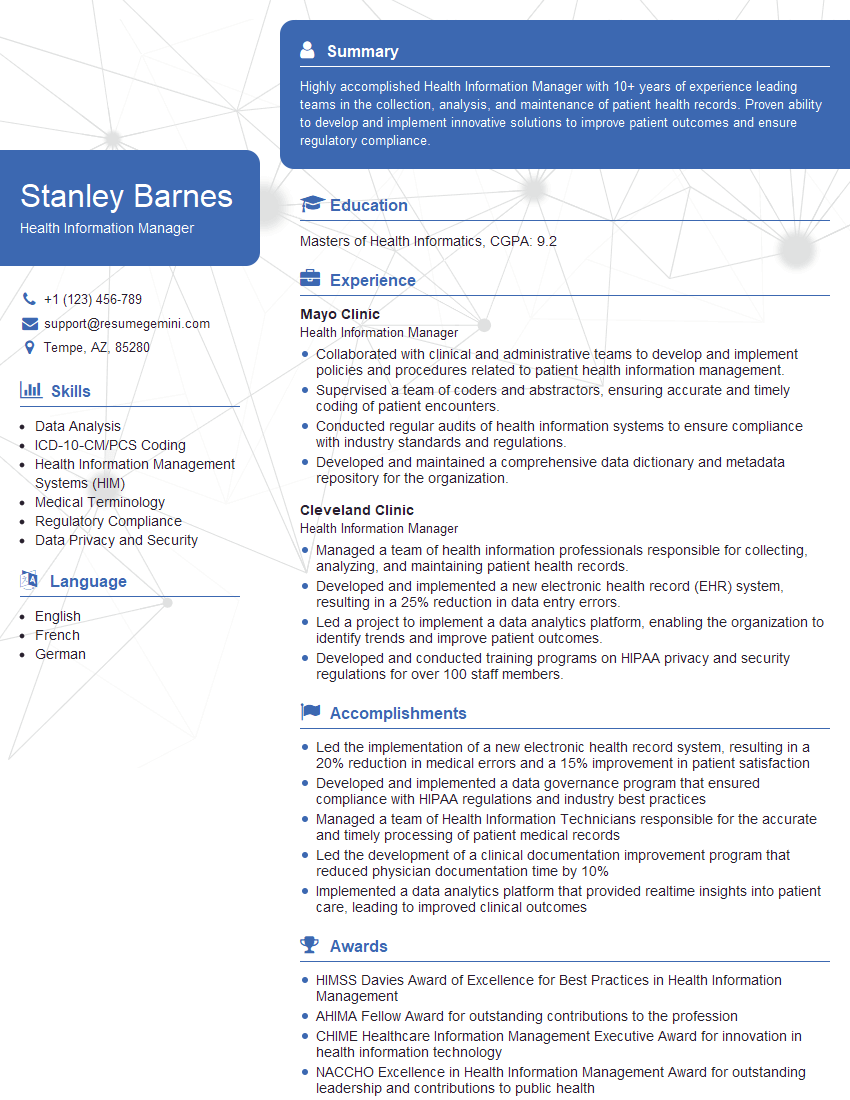
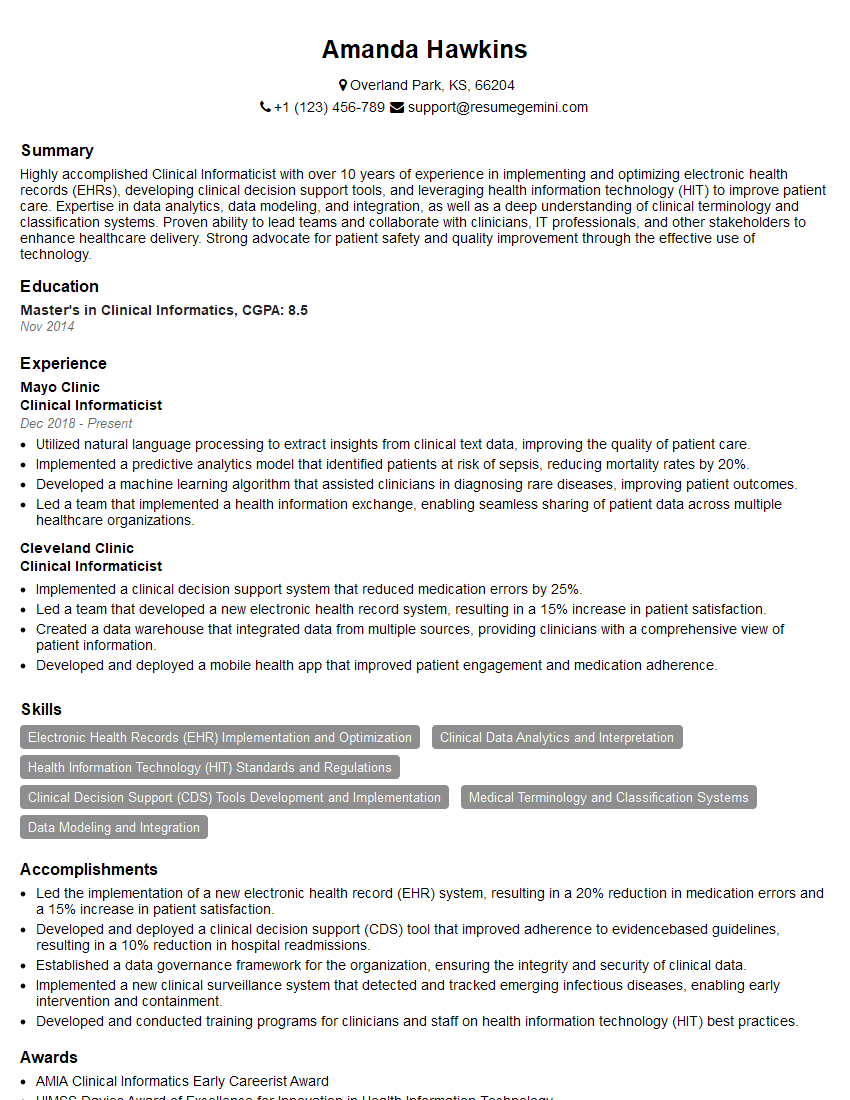
Mastering EMR systems is crucial for career advancement in healthcare IT. A strong understanding of EMR functionality and best practices significantly increases your value to potential employers. To maximize your job prospects, invest time in creating an ATS-friendly resume that highlights your relevant skills and experience. ResumeGemini is a trusted resource that can help you build a professional and impactful resume, ensuring your qualifications stand out. Examples of resumes tailored to EMR positions are available to guide you through the process.
Explore more articles
Users Rating of Our Blogs
Share Your Experience
We value your feedback! Please rate our content and share your thoughts (optional).
What Readers Say About Our Blog
Very informative content, great job.
good