The right preparation can turn an interview into an opportunity to showcase your expertise. This guide to Energy Codes Compliance interview questions is your ultimate resource, providing key insights and tips to help you ace your responses and stand out as a top candidate.
Questions Asked in Energy Codes Compliance Interview
Q 1. What are the key differences between ASHRAE 90.1 and IECC?
ASHRAE 90.1 and the IECC (International Energy Conservation Code) are both widely adopted energy codes in the United States, but they differ in scope and approach. ASHRAE 90.1 is a consensus standard developed by the American Society of Heating, Refrigerating and Air-Conditioning Engineers, offering more prescriptive and performance-based options for achieving energy efficiency. The IECC, on the other hand, is a model code adopted by many states and localities, providing a more prescriptive path to compliance.
Key Differences:
- Prescriptive vs. Performance: ASHRAE 90.1 allows for both prescriptive (meeting specific requirements) and performance-based (meeting overall energy targets) compliance pathways, offering greater flexibility. The IECC is primarily prescriptive, though some jurisdictions may offer alternative compliance methods.
- Scope: ASHRAE 90.1 covers a broader range of building types and systems than the IECC, including more detailed requirements for HVAC, lighting, and building envelope.
- Stringency: The stringency of requirements can vary between ASHRAE 90.1 and the IECC depending on the adopted version and any local amendments. Generally, ASHRAE 90.1 tends to be more stringent in its requirements for energy efficiency.
- Adoption and Enforcement: ASHRAE 90.1 is a voluntary standard, while the IECC becomes legally binding once adopted by a jurisdiction. Enforcement mechanisms differ accordingly.
Think of it this way: ASHRAE 90.1 provides a more detailed toolbox with more advanced options, while the IECC offers a simpler, more standardized set of instructions. The best choice for a project depends on the specific requirements and the jurisdiction’s regulations.
Q 2. Explain the process of conducting an energy audit for a commercial building.
An energy audit for a commercial building is a systematic process to identify energy-saving opportunities. It involves a thorough assessment of the building’s energy consumption, systems, and operational practices.
Process Steps:
- Preliminary Review: Gather information on building operations, utility bills, architectural drawings, and existing systems.
- On-site Inspection: Conduct a visual inspection of the building’s envelope, HVAC systems, lighting, and other energy-consuming components. This often includes using specialized equipment such as infrared cameras to detect thermal deficiencies.
- Data Collection: Collect energy consumption data from utility bills, submeters, and building management systems (BMS).
- Analysis and Modeling: Use energy modeling software (e.g., EnergyPlus, eQUEST) to simulate the building’s energy performance under various conditions and evaluate different energy-saving measures. This helps prioritize the most cost-effective improvements.
- Reporting: Prepare a comprehensive report that details the findings, recommendations for energy efficiency improvements, projected cost savings, and payback periods.
- Implementation and Verification: Assist with the implementation of recommended measures, and verify the effectiveness of the implemented measures through post-retrofit monitoring.
For example, during an audit, I once discovered that a commercial building’s outdated HVAC system was operating at significantly reduced efficiency due to improper maintenance. The audit’s recommendations led to a comprehensive system overhaul resulting in substantial energy savings and improved indoor comfort.
Q 3. How do you determine compliance with energy code requirements during the design phase?
Ensuring compliance during design requires proactive engagement throughout the design process. This involves carefully reviewing the energy code requirements early on and incorporating them into the design specifications.
Methods for Design-Phase Compliance:
- Early Code Consultation: Engage with energy code experts early in the design to ensure the design meets the requirements and explore opportunities for exceeding compliance.
- Energy Modeling: Utilize energy modeling software to simulate the building’s energy performance based on the design specifications. This allows for early identification and correction of design flaws impacting energy efficiency.
- Material Selection: Select building materials with high thermal performance values (e.g., R-value for insulation, U-value for windows) that meet the code’s requirements.
- System Design Optimization: Design HVAC systems, lighting systems, and other energy-consuming elements to meet energy efficiency requirements and minimize energy losses.
- Documentation: Maintain meticulous records documenting compliance with energy code requirements, including calculations, software outputs, and material specifications. This becomes crucial during inspections and audits.
For instance, in a recent project, we used energy modeling to demonstrate compliance with ASHRAE 90.1 for a high-rise office building. By adjusting the building’s facade design and optimizing the HVAC system, we achieved a design that not only met but exceeded the code’s energy efficiency requirements.
Q 4. Describe your experience with energy modeling software (e.g., eQUEST, EnergyPlus).
I have extensive experience with energy modeling software, including eQUEST and EnergyPlus. My proficiency extends beyond simple model creation to include advanced analysis techniques for optimizing building designs.
eQUEST: I’ve used eQUEST for numerous projects, leveraging its user-friendly interface and comprehensive library of building components to quickly generate energy simulations for various building types and climates. Its streamlined reporting features make it efficient for documentation and communication with clients and stakeholders.
EnergyPlus: For complex projects requiring a high degree of accuracy and detailed analysis, I utilize EnergyPlus. Its open-source nature and detailed simulation capabilities allow me to thoroughly investigate the impact of specific design decisions on energy consumption. This often involves developing custom scripts to automate simulations and analyze results.
In one project, using EnergyPlus, I identified an unintended energy loss in a high-performance atrium design. By conducting a series of simulations with varying design parameters, we pinpointed the source of the problem and implemented a solution that significantly improved the atrium’s thermal performance without compromising its aesthetic appeal.
Q 5. What are the common energy code violations you’ve encountered and how were they resolved?
Common energy code violations I’ve encountered include improper insulation installation, insufficient window U-values, lack of airtightness in the building envelope, and incorrect sizing of HVAC equipment.
Examples and Resolutions:
- Improper Insulation: In one case, insufficient insulation in the attic led to significant heat loss during winter. The resolution involved removing the existing insulation and installing new insulation that met the required R-value, resulting in improved energy efficiency and reduced heating costs.
- Insufficient Window U-values: Another common violation involves windows with U-values exceeding code requirements. We resolved this by specifying high-performance windows with lower U-values or applying external shading devices to minimize solar heat gain.
- Lack of Airtightness: Air leakage through gaps and cracks in the building envelope can lead to significant energy loss. We addressed this by implementing airtight construction practices, such as sealing gaps and cracks with appropriate sealant, and installing continuous air barriers.
- Incorrect HVAC Sizing: Oversized HVAC equipment can lead to short cycling and reduced efficiency. We resolved this by conducting load calculations and specifying correctly sized equipment to match the building’s heating and cooling loads.
In each case, the resolutions involved a combination of careful investigation, code interpretation, and implementation of appropriate corrective measures. The focus was always on achieving compliance while minimizing cost and disruption.
Q 6. How do you stay current with changes and updates to energy codes?
Staying current with energy code updates is critical. I utilize multiple strategies to maintain my expertise.
Methods for Staying Updated:
- Professional Organizations: Active membership in organizations like ASHRAE and involvement in their committees keeps me abreast of the latest code changes and industry best practices.
- Code Publications and Websites: I regularly review updated versions of the IECC and ASHRAE 90.1, along with relevant state and local code amendments. Accessing online resources from governmental agencies and code publishers provides quick updates and notifications.
- Industry Conferences and Workshops: Attending industry conferences and workshops provides valuable insights into the latest advancements in energy-efficient technologies and code interpretations. Networking with other professionals provides invaluable insights.
- Online Resources and Training: I subscribe to relevant newsletters, webinars, and online training courses focused on energy codes and building performance to ensure that my knowledge remains current.
For example, I recently completed a training course on the 2021 IECC changes and the integration of new technologies into energy modeling. This training enhanced my ability to incorporate these updates into my work, ensuring compliance and improved project efficiency.
Q 7. Explain the concept of building envelope performance and its impact on energy efficiency.
The building envelope is the exterior layer of a building that separates the conditioned indoor space from the uncontrolled outdoor environment. Its performance directly impacts energy efficiency by controlling heat transfer, air leakage, and moisture control.
Impact on Energy Efficiency:
- Heat Transfer: A well-performing building envelope minimizes heat transfer through conduction, convection, and radiation. This reduces the heating load in winter and the cooling load in summer. Higher R-values (resistance to heat flow) in insulation and lower U-values (rate of heat transfer) in windows greatly improve the building envelope’s ability to limit heat transfer.
- Air Leakage: Air leakage through the building envelope can cause drafts, discomfort, and significant energy losses. Air sealing and proper installation of air barriers are crucial to reduce air leakage.
- Moisture Control: Proper moisture control prevents moisture accumulation within the building envelope, which can lead to mold growth, material degradation, and reduced thermal performance. The use of appropriate building materials and construction techniques is crucial to manage moisture properly.
Think of the building envelope as a thermos. A well-designed and constructed building envelope is like a well-insulated thermos—it keeps the conditioned air inside and the outside air out, minimizing energy loss and maximizing efficiency.
Q 8. How do you calculate building energy loads?
Calculating building energy loads involves determining the heating, cooling, and lighting energy required to maintain a comfortable and functional indoor environment. This is a complex process that considers various factors, and different software and methods are employed.
The process typically involves these steps:
- Defining the building’s characteristics: This includes factors such as the building’s geometry, construction materials (insulation R-values, window U-values), climate zone, occupancy, internal heat gains from equipment and people, and window orientation and shading.
- Using software: Energy modeling software, such as EnergyPlus, eQUEST, or HAP, are commonly used to simulate the building’s performance throughout the year. These programs use sophisticated algorithms and weather data to calculate hourly energy loads.
- Inputting data: Accurate input data is crucial. This includes detailed information on building materials, HVAC systems, lighting fixtures, and operational schedules.
- Analyzing results: The software generates reports showing energy consumption for heating, cooling, lighting, and other systems. This information is essential for designing energy-efficient buildings and complying with energy codes.
For example, a poorly insulated building in a cold climate will have significantly higher heating loads compared to a well-insulated building in the same climate. Similarly, a building with large south-facing windows might require less heating but more cooling than a building with fewer windows.
Q 9. Describe your experience with commissioning and its relation to energy codes.
Commissioning (Cx) is a quality assurance process that verifies that building systems perform as designed and intended. It’s crucial for ensuring energy efficiency and compliance with energy codes. My experience includes conducting both design and construction commissioning on various building types.
During design commissioning, I review the design documents to identify energy-saving opportunities and ensure the design aligns with energy codes and best practices. This involves collaborating with architects, engineers, and contractors to optimize system performance.
Construction commissioning involves on-site testing and verification of all building systems, including HVAC, lighting, and building envelope components. I use testing and balancing reports, data loggers, and other tools to ensure that systems operate efficiently and meet the design specifications.
Energy codes mandate certain levels of energy efficiency, and commissioning ensures these requirements are met. For instance, if an energy code requires a certain level of insulation in the walls, commissioning will verify that the specified insulation has been installed and properly documented. Failure to meet the required energy performance, as verified by the commissioning process, can result in delays and penalties.
Q 10. What are the strategies for improving the energy efficiency of HVAC systems?
Improving HVAC system energy efficiency is crucial for reducing a building’s overall energy consumption. Strategies include:
- Optimizing sizing: Ensuring the HVAC system is appropriately sized for the building’s load is paramount. An oversized system cycles on and off frequently, wasting energy. Proper sizing ensures the system runs efficiently at its optimum load point.
- Improving insulation and air sealing: Reducing air leakage minimizes the amount of conditioned air that escapes, leading to significant energy savings. Proper insulation in walls, roofs, and floors also reduces the heating and cooling load.
- Using high-efficiency equipment: Employing high-efficiency HVAC equipment (like Variable Refrigerant Flow (VRF) systems or heat pumps with high SEER/EER ratings) significantly reduces energy use. Consider using energy recovery ventilators (ERVs) or heat recovery ventilators (HRVs) to recover energy from exhaust air.
- Implementing smart controls: Installing intelligent control systems allows for better management of the HVAC system based on occupancy, temperature, and other factors. This can include scheduling, zoning, and demand-controlled ventilation.
- Regular maintenance: Preventative maintenance is key to maintaining HVAC system efficiency. Cleaning filters, checking refrigerant levels, and ensuring proper operation significantly improves the system’s performance and lifespan.
For example, a project I worked on saw a 20% reduction in energy consumption by simply upgrading to high-efficiency chillers and implementing a building automation system to better control operation.
Q 11. Explain the impact of lighting systems on overall building energy consumption.
Lighting systems represent a significant portion of a building’s energy consumption. The impact depends on several factors, including the type of lighting fixtures, their efficiency, control systems, and usage patterns.
In older buildings, incandescent and fluorescent lighting can consume a substantial amount of energy. However, modern high-efficiency LED lighting systems significantly reduce energy consumption. The difference can be dramatic. For example, an LED fixture might use only 10-20 watts compared to 60+ watts for an incandescent bulb, offering the same light output.
In addition to fixture type, control strategies play a major role. Sensors that detect occupancy and ambient light levels can drastically reduce energy waste by turning off lights when they’re not needed. Daylighting strategies, maximizing the use of natural light, further reduces the reliance on electric lighting.
For instance, I consulted on a retrofit project where we replaced old fluorescent lighting with LEDs and added occupancy sensors. This resulted in a 60% reduction in lighting energy use, demonstrating the significant impact lighting systems have on overall energy consumption.
Q 12. How do you interpret energy code requirements for different building types?
Energy codes vary depending on several factors including the building type, location (climate zone), and year of construction. Each code establishes minimum energy performance standards, often expressed as an Energy Use Intensity (EUI) or other metrics.
Interpreting these requirements involves understanding the specific provisions for each building type. For example, residential codes might focus on insulation levels, window U-values, and HVAC system efficiency, while commercial codes might include additional requirements for lighting power density, building envelope performance, and HVAC system controls. The complexity increases when dealing with high-performance buildings aiming for LEED certification or Passive House standards.
I often use reference manuals and software tools to interpret energy code requirements. It’s essential to stay current with code updates and amendments. Understanding the code’s intent and rationale helps in finding compliance solutions.
For example, a school building will have different code requirements than a hospital, reflecting their unique operational characteristics and occupant loads. Understanding these differences is vital to ensure compliance and design an energy-efficient building suitable for its specific purpose.
Q 13. What are the common methods for verifying energy code compliance?
Verifying energy code compliance typically involves several methods, including:
- Design review: This involves a thorough review of the building plans and specifications to ensure they meet or exceed code requirements. This often includes energy modeling to predict building energy performance.
- Construction observation: Observing the construction process to confirm that materials and systems are installed according to the plans and specifications.
- Testing and commissioning: Testing and verifying the performance of building systems (HVAC, lighting, etc.) to confirm that they meet the design requirements and code compliance. This often involves specialized testing equipment and procedures.
- Calculations and simulations: Performing calculations or running energy modeling software to demonstrate compliance with code requirements. This provides a quantitative assessment of the building’s energy performance.
- Third-party verification: Engaging a qualified third-party expert to independently review the design, construction, and testing to ensure compliance. This provides an objective assessment of energy performance.
Often, a combination of these methods is necessary to provide comprehensive verification of energy code compliance. The specific requirements and methods may vary depending on the jurisdiction and the specific building type.
Q 14. Explain your experience with energy code compliance documentation.
Comprehensive energy code compliance documentation is essential for demonstrating compliance and avoiding potential penalties. My experience includes creating and managing various documentation types.
This typically includes:
- Energy modeling reports: These reports detail the energy analysis performed using software and demonstrate compliance with energy codes.
- Commissioning reports: These reports document the testing and verification of building systems to ensure they perform as designed and meet energy code requirements.
- As-built drawings: These drawings show the final installation of building systems and components, confirming compliance with design specifications.
- Material data sheets: These sheets provide information on the energy performance of building materials (insulation, windows, etc.).
- Calculations and spreadsheets: Supporting calculations and spreadsheets demonstrating compliance with specific code requirements.
- Compliance certifications: Formal certifications obtained from authorized agencies confirming compliance with relevant codes.
Maintaining meticulous records is crucial for successful code compliance. Organizing and storing this documentation is critical, whether electronically or physically, for easy access during audits or inspections.
In one project, thorough documentation helped resolve a dispute with the authorities over the compliance of a particular HVAC system, avoiding potential delays and costly penalties. It emphasizes the crucial role of comprehensive and well-organized documentation in ensuring energy code compliance.
Q 15. Describe your experience with energy code appeals or variance requests.
Energy code appeals and variance requests are crucial processes when a project encounters challenges in meeting specific code requirements. My experience involves meticulously documenting why strict adherence to the code is impractical or infeasible. This often includes presenting alternative solutions that achieve equivalent or better energy performance. For example, I successfully argued for a variance on window-to-wall ratios in a historic renovation project, demonstrating that maintaining the building’s architectural integrity while meeting modern energy efficiency standards required a slightly less stringent approach, backed by energy modeling to prove equivalent overall performance. I thoroughly understand the relevant code sections, the appeal process itself, and preparing compelling arguments that address both the technical aspects and the broader context of the project.
Another example involved a project where the available site space constrained the installation of a larger solar array as originally envisioned to meet the renewable energy requirements. I worked with the project team to propose a combination of high-efficiency HVAC systems and optimized building envelope design, presenting a comprehensive energy model demonstrating compliance. The key is to present thorough documentation, technical justifications, and viable alternatives ensuring energy efficiency isn’t compromised.
Career Expert Tips:
- Ace those interviews! Prepare effectively by reviewing the Top 50 Most Common Interview Questions on ResumeGemini.
- Navigate your job search with confidence! Explore a wide range of Career Tips on ResumeGemini. Learn about common challenges and recommendations to overcome them.
- Craft the perfect resume! Master the Art of Resume Writing with ResumeGemini’s guide. Showcase your unique qualifications and achievements effectively.
- Don’t miss out on holiday savings! Build your dream resume with ResumeGemini’s ATS optimized templates.
Q 16. How do you balance energy code compliance with project budget and schedule constraints?
Balancing energy code compliance with budget and schedule requires a proactive, integrated approach. It starts with early engagement. In the design phase, I work closely with architects, engineers, and contractors to identify potential conflicts early on. This involves exploring cost-effective strategies from the start. For instance, selecting high-performance building materials might have a slightly higher upfront cost, but they often lead to significant long-term energy savings. We use energy modeling software to compare different design options, evaluating their impact on both energy consumption and the project’s overall cost.
In cases where strict compliance pushes the project beyond budget, I identify a range of options: Prioritizing energy-efficient measures that yield the greatest return on investment; exploring less expensive alternatives; and negotiating with stakeholders to adjust the scope of work, focusing on the most impactful energy-saving measures. It’s important to document all decisions and alternatives, showing the trade-offs made to maintain transparency.
Q 17. Explain the role of renewable energy sources in achieving energy code compliance.
Renewable energy sources play a vital role in achieving energy code compliance. Many modern energy codes incentivize or require the integration of renewable energy systems, such as solar photovoltaic (PV) systems, solar thermal systems, or wind turbines. These systems directly reduce a building’s reliance on the grid, lowering its overall energy consumption and carbon footprint. The inclusion of renewable energy sources often allows for a reduction in the stringency of other energy-efficiency requirements, creating flexibility in the design process.
For example, a project might need to meet a certain level of energy efficiency based on the building’s size and location. By installing solar panels, the building’s energy demand from the grid decreases, potentially allowing for less stringent requirements in other areas, like insulation levels. Accurate energy modeling is critical in determining the appropriate size and type of renewable energy system needed to achieve code compliance.
Q 18. Describe your understanding of life-cycle cost analysis and its relevance to energy codes.
Life-cycle cost analysis (LCCA) is a crucial tool for evaluating the long-term economic performance of building systems, especially in the context of energy codes. LCCA considers all costs associated with a building component or system throughout its lifespan, including initial investment, operation, maintenance, and replacement. It’s particularly relevant to energy codes because it helps determine whether the upfront cost of high-efficiency measures is justified by the long-term energy savings they provide.
For instance, installing a more expensive high-efficiency HVAC system might seem costly initially. However, an LCCA would reveal that the lower operating costs and longer lifespan could ultimately result in significant cost savings over the system’s lifetime. This analysis enables informed decision-making, ensuring that projects meet both energy code requirements and financial targets, leading to a more sustainable and cost-effective building.
Q 19. What are some strategies to reduce energy consumption in existing buildings?
Reducing energy consumption in existing buildings requires a multi-faceted approach. High-priority strategies focus on areas with the biggest energy impacts. Improving the building envelope is critical. This could involve upgrading insulation in walls, roofs, and floors, replacing windows with higher-performance units, and sealing air leaks. Upgrades to the HVAC system are another major opportunity. This could range from simple repairs and maintenance to replacing old, inefficient equipment with high-efficiency models. Smart controls, such as programmable thermostats, can help optimize energy usage based on occupancy schedules.
Other impactful strategies include installing LED lighting, which significantly reduces energy consumption compared to traditional lighting. Improving the building’s energy management system and implementing energy audits are equally essential steps to identifying areas for further improvements. Each measure’s impact can be assessed through energy modeling to determine cost-effectiveness and prioritize improvements.
Q 20. How do you handle conflicting requirements between different energy codes or standards?
Conflicting requirements between energy codes or standards are not uncommon. Resolution requires a thorough understanding of all applicable codes and standards. The most stringent requirements typically prevail. However, it’s vital to document the conflict and the rationale for selecting the prevailing code requirement. Sometimes, it involves consultation with the authorities having jurisdiction (AHJ) to clarify any ambiguities or to obtain a variance if strict adherence to one code proves impractical or creates an undue hardship. In some cases, finding an alternative solution that satisfies all codes without compromising energy efficiency may be possible.
For instance, a conflict could arise between a local code requiring a specific level of insulation and a national code specifying different requirements. The most stringent one should be adhered to while properly documenting the conflict, the resolution, and any potential impact on the building’s overall energy performance.
Q 21. Explain your understanding of the International Energy Conservation Code (IECC).
The International Energy Conservation Code (IECC) is a widely adopted model code providing minimum requirements for energy efficiency in buildings. It’s a comprehensive document covering various aspects of building design and construction, aiming to reduce energy consumption and greenhouse gas emissions. The IECC prescribes energy efficiency measures for building envelopes (walls, roofs, windows), HVAC systems, lighting, and other building components. It uses a prescriptive approach, specifying minimum requirements for these components, and a performance approach, where the building’s overall energy performance must meet certain criteria, often determined using energy modeling software. The IECC is regularly updated to reflect advancements in building technology and energy efficiency strategies.
Understanding the IECC is critical for ensuring compliance. It requires familiarity with its various sections, the different pathways to compliance (prescriptive vs. performance), and the appropriate use of energy modeling tools to demonstrate compliance, especially in complex projects. This knowledge allows for optimal design and construction, contributing to cost-effective and energy-efficient buildings.
Q 22. Describe your experience with energy code simulations and analysis.
My experience with energy code simulations and analysis spans over ten years, encompassing a wide range of projects from single-family homes to large commercial buildings. I’m proficient in using various software packages like EnergyPlus, eQUEST, and IESVE, to model building performance and assess compliance with energy codes like ASHRAE 90.1 and IECC. For instance, in a recent project involving a multi-family dwelling, I used EnergyPlus to simulate different envelope designs, HVAC systems, and lighting strategies. This allowed me to identify the most energy-efficient options while ensuring compliance with the local energy code, ultimately leading to significant cost savings for the client. My analysis always includes a detailed report outlining the simulation methodology, key findings, and recommendations for optimization. I also leverage my expertise to perform sensitivity analysis, identifying parameters having the greatest impact on energy consumption, enabling focused design improvements.
Q 23. What are the key considerations for energy code compliance in residential buildings?
Key considerations for energy code compliance in residential buildings involve a holistic approach encompassing several critical areas. First, building envelope design is crucial; this includes factors such as insulation levels in walls, roofs, and floors; window U-factors and SHGC (Solar Heat Gain Coefficient); and air sealing techniques to minimize air leakage. Second, HVAC system selection and sizing is paramount; efficient heating and cooling equipment (like high-efficiency furnaces and heat pumps) alongside proper ductwork design are critical. Third, lighting systems must meet efficiency standards, often requiring the use of energy-efficient lighting fixtures and controls. Fourth, water heating systems need to comply with energy efficiency requirements, often achieved by selecting high-efficiency water heaters and implementing strategies to reduce hot water consumption. Finally, compliance verification requires meticulous documentation, including calculations, equipment specifications, and commissioning reports. Ignoring any of these areas could lead to non-compliance and potential penalties.
Q 24. How do you communicate complex energy code information to non-technical stakeholders?
Communicating complex energy code information to non-technical stakeholders requires a simplified and visual approach. I avoid jargon and use clear, concise language. I often employ analogies and visual aids like charts and graphs to illustrate key concepts. For example, instead of discussing ‘U-factors,’ I might explain how a lower U-factor is like a thicker jacket keeping you warmer, reducing energy loss. I also break down complex information into smaller, digestible chunks, and I always encourage questions and provide feedback. Furthermore, I prepare tailored presentations that focus on the financial benefits of energy efficiency improvements, such as reduced utility bills and increased property value. This practical approach helps stakeholders understand the importance of energy code compliance and makes the information relatable and meaningful.
Q 25. Explain your experience with energy code enforcement.
My experience with energy code enforcement includes working closely with building inspectors and code officials to ensure compliance throughout the construction process. I’ve participated in plan reviews, field inspections, and commissioning activities. My role involves providing technical support to contractors and developers to address any code-related issues proactively. In cases where non-compliance is identified, I assist in developing and implementing corrective action plans. This often includes suggesting cost-effective solutions that meet code requirements without compromising the project timeline or budget. A recent example involved a project where the initial design did not meet the required insulation levels. By collaborating with the design team, we identified a suitable alternative insulation material that met the code requirements while staying within the budget. This collaborative approach ensured timely project completion and avoided any penalties.
Q 26. What are some innovative technologies or strategies to improve energy efficiency?
Innovative technologies and strategies for improving energy efficiency are constantly evolving. Some prominent examples include:
- Building-integrated photovoltaics (BIPV): Integrating solar panels into building materials to generate renewable energy while reducing reliance on the grid.
- Smart building technologies: Implementing advanced control systems that optimize energy consumption based on real-time occupancy and weather data.
- Heat pump technologies: Utilizing high-efficiency heat pumps for both heating and cooling, offering significant energy savings compared to traditional systems.
- Advanced insulation materials: Employing innovative materials such as aerogel or vacuum insulation panels to achieve superior thermal performance with reduced thickness.
- Passive design strategies: Incorporating design elements that maximize natural lighting and ventilation to reduce the need for artificial lighting and mechanical systems.
Q 27. Describe your experience with energy code software and databases.
I possess extensive experience using various energy code software and databases, including EnergyPlus, eQUEST, IESVE, and the International Energy Conservation Code (IECC) database. I’m adept at using these tools to model building performance, analyze energy consumption patterns, and generate compliance reports. For example, in a recent project involving a large commercial building, I utilized EnergyPlus to model several different HVAC system configurations, ultimately selecting the most efficient option that met code requirements and minimized life-cycle costs. My familiarity with these databases extends to navigating complex regulations, finding relevant data, and applying it effectively to real-world projects. I leverage this knowledge to ensure accuracy and reliability in energy modeling and analysis, resulting in confident compliance reports.
Q 28. Explain the importance of continuous improvement in achieving energy code compliance.
Continuous improvement in achieving energy code compliance is essential for several reasons. Firstly, building codes and technologies are constantly evolving, demanding ongoing learning and adaptation. Secondly, continuous improvement fosters innovation, allowing for the exploration of new techniques and strategies that may lead to even greater energy savings. Thirdly, a commitment to continuous improvement demonstrates a proactive approach to sustainability, leading to greater environmental responsibility. Finally, it ensures that projects remain at the forefront of best practices, leading to optimized building performance and reduced operational costs. This involves staying updated on the latest code revisions, attending industry conferences and workshops, and actively seeking opportunities to learn and implement new best practices. A culture of continuous learning and improvement ensures projects not only meet current code standards but also remain at the cutting edge of energy efficiency for years to come.
Key Topics to Learn for Energy Codes Compliance Interview
- Building Envelope Performance: Understanding insulation requirements, air sealing techniques, window and door specifications, and their impact on energy efficiency. Practical application: Analyzing building plans to identify potential code violations related to the building envelope.
- HVAC Systems and Equipment: Knowledge of different HVAC system types (e.g., heat pumps, furnaces, air conditioners), their efficiency ratings (SEER, HSPF), and compliance with sizing and installation requirements. Practical application: Calculating heating and cooling loads to select appropriately sized equipment that meets code.
- Lighting and Electrical Systems: Familiarity with energy-efficient lighting technologies (LEDs, etc.), lighting power density calculations, and compliance with lighting control requirements. Practical application: Reviewing electrical plans to ensure compliance with energy code requirements for lighting systems.
- Renewable Energy Systems: Understanding the integration of solar photovoltaic (PV) systems, solar thermal systems, and other renewable energy sources into building designs and their compliance requirements. Practical application: Evaluating the feasibility and compliance of proposed renewable energy systems in a building project.
- Energy Modeling and Simulation: Proficiency in using energy modeling software to predict building energy performance and demonstrate compliance with energy codes. Practical application: Creating energy models to optimize building design and demonstrate compliance with energy codes.
- Code Interpretation and Application: Ability to interpret and apply relevant energy codes (e.g., IECC, ASHRAE 90.1) to specific building projects and situations. Practical application: Identifying and resolving discrepancies between building plans and energy code requirements.
- Verification and Commissioning: Understanding the process of verifying building energy performance against design specifications and energy code requirements through commissioning. Practical application: Developing and executing a commissioning plan to ensure building systems operate as designed and meet energy code compliance.
Next Steps
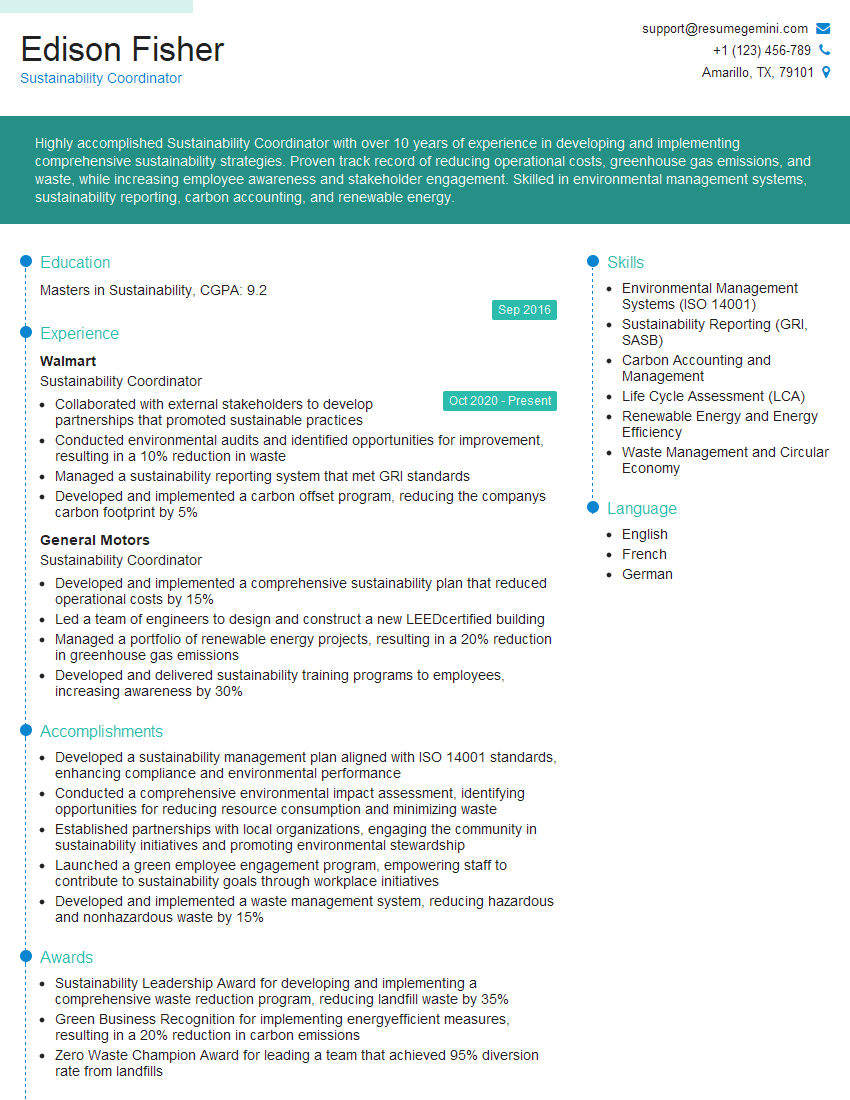
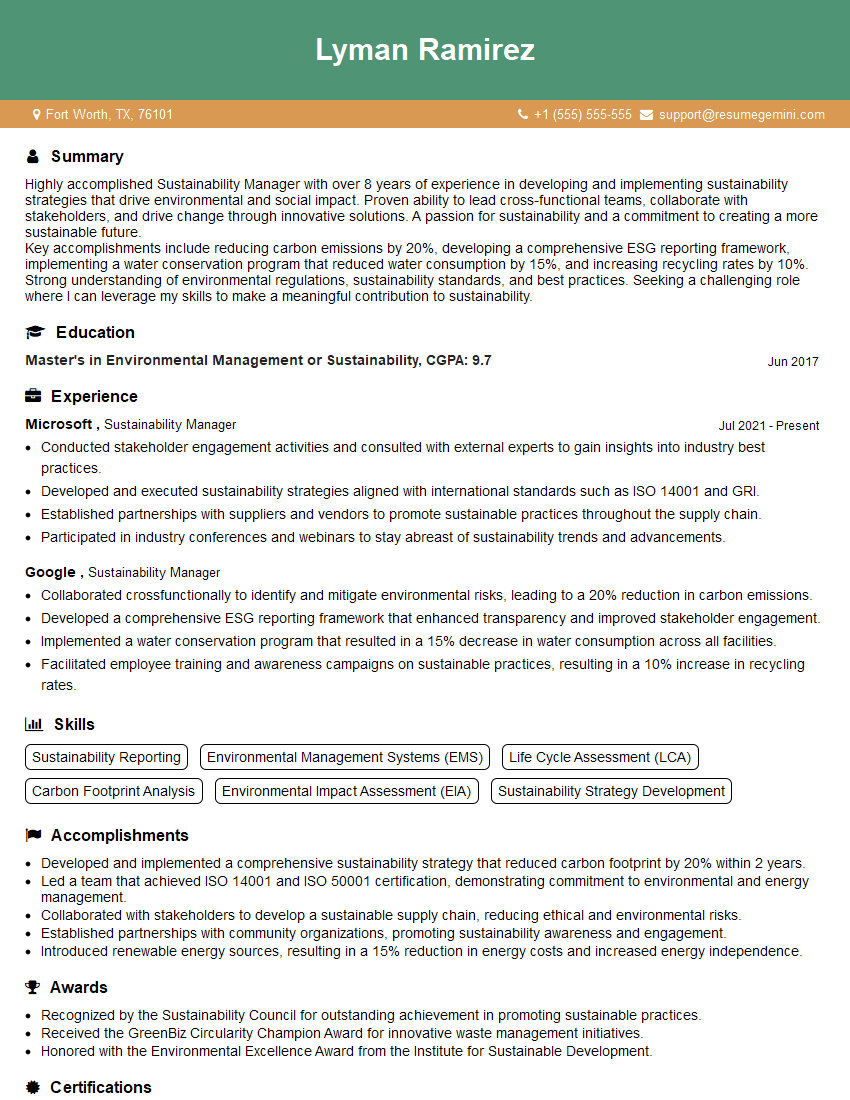
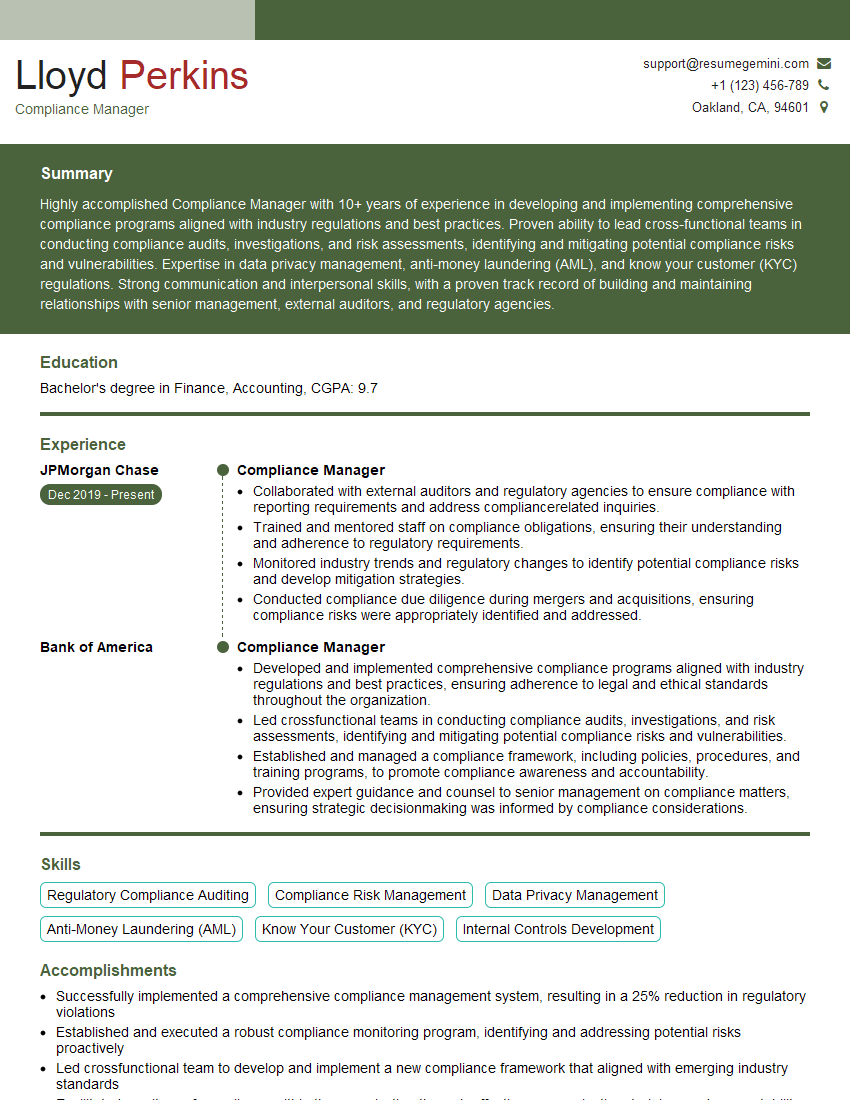
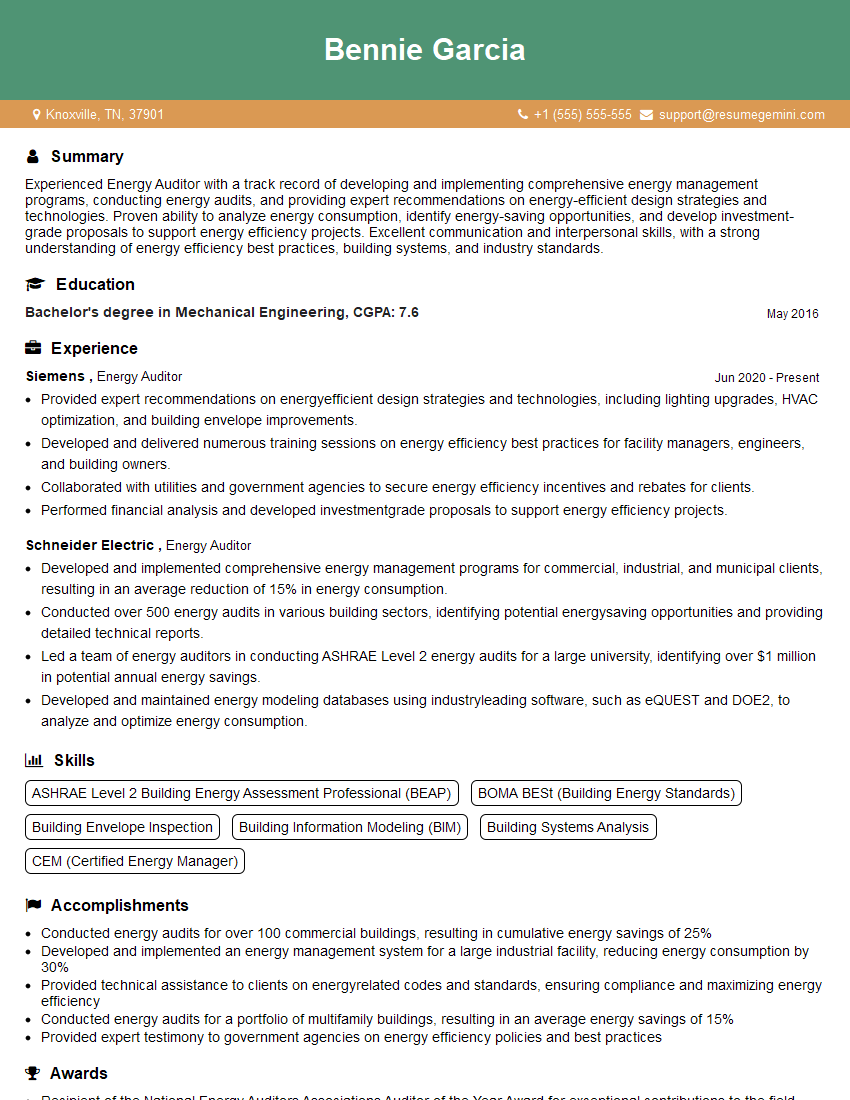
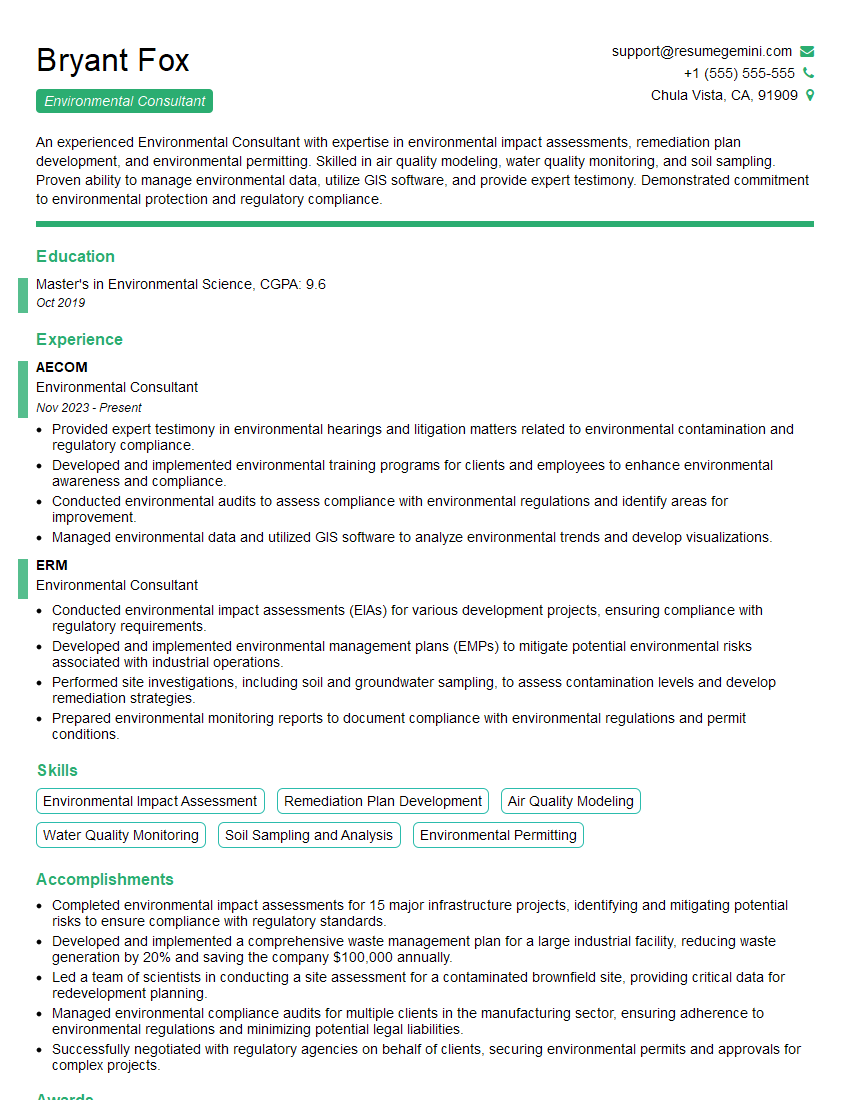
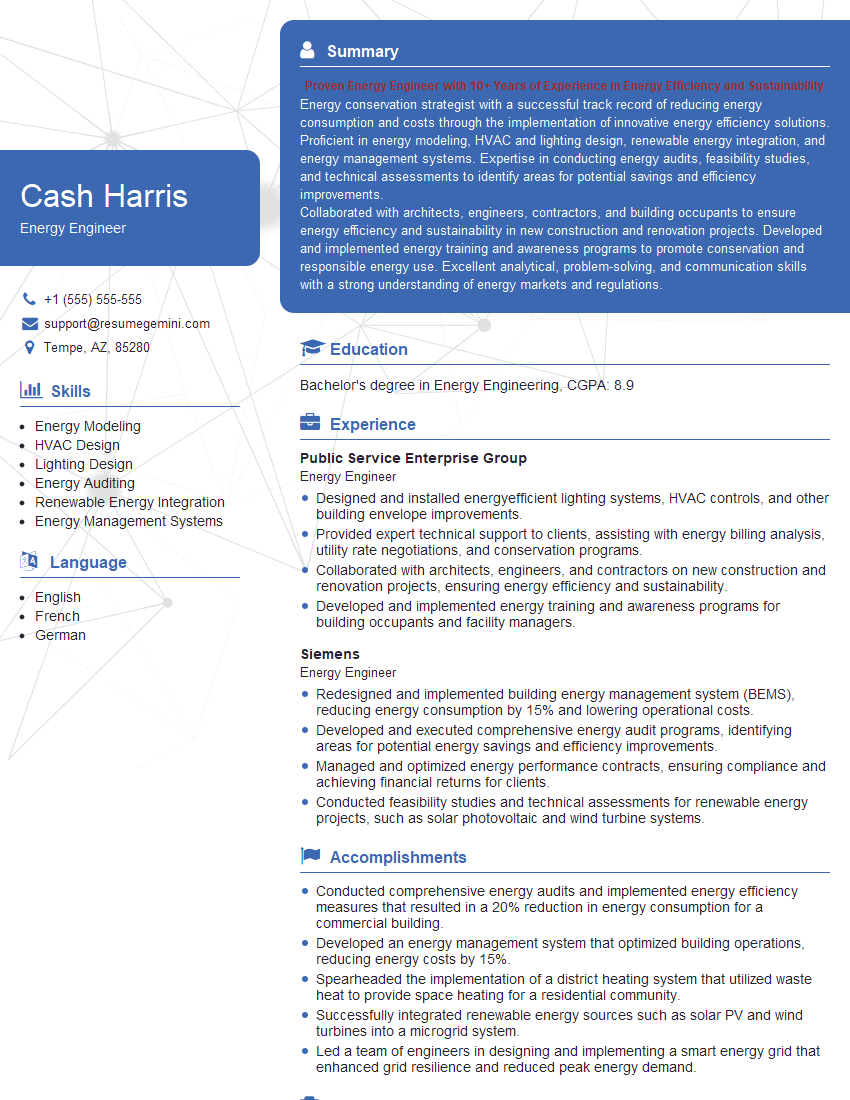
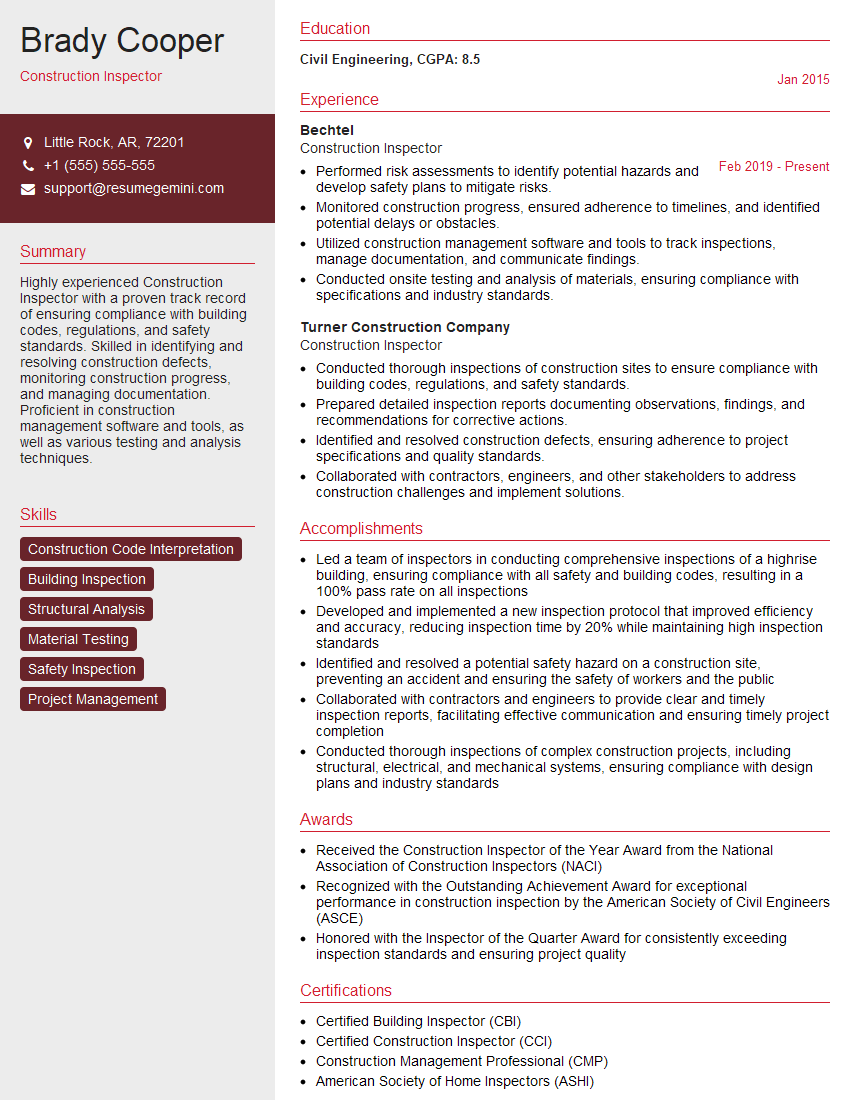
Mastering Energy Codes Compliance significantly enhances your career prospects in the sustainable building industry, opening doors to exciting roles with higher earning potential and greater responsibility. To increase your chances of landing your dream job, crafting an ATS-friendly resume is crucial. ResumeGemini is a trusted resource that can help you build a professional and impactful resume, maximizing your visibility to potential employers. Examples of resumes tailored specifically to Energy Codes Compliance professionals are available – take advantage of this valuable resource to showcase your skills and experience effectively.
Explore more articles
Users Rating of Our Blogs
Share Your Experience
We value your feedback! Please rate our content and share your thoughts (optional).
What Readers Say About Our Blog
Very informative content, great job.
good